Police are calling for the public’s help to track down two men after a road rage incident ended in a man being stabbed on a Melbourne street in the middle of the afternoon.
The attack occurred on Carinza Avenue near Oakdene Grove in Altona Meadows, in Melbourne’s west, just before 2.30pm on Tuesday, November 2, 2021.
The victim, a 53-year-old Altona Meadows man, was driving a white Ford Ranger utility when he got into a verbal incident with two men in a gray Volkswagen hatchback.
Police are calling for help to identify these men after a stabbing in Altona Meadows. (Victoria Police)
All three men then got out of their vehicles and got involved in an altercation, which ended in the driver of the ute being stabbed in his upper body.
He was taken to hospital with serious injuries.
The other two men fled in the hatchback and were last seen traveling north towards the Werribee area.
Police have released images of the men and CCTV footage in the hope someone recognizes them and contacts police.
Police have released CCTV from the time of the road rage incident in Altona Meadows. (Nine)
The men are both perceived to be African in appearance and aged in their early 20s.
Anyone who witnessed the incident, has dash cam footage or information is urged to contact police.
Police are calling on the public to help solve an assassination cold case from more than 40 years ago involving a Turkish diplomat and his bodyguard by listening to a phone call recording in the hopes of identifying the caller and to decipher its message.
Turkish Consul-General Sarik Ariyak, 50, and his bodyguard Engin Sever, 28, were shot outside a residence in Dover Heights in Sydney’s east on December 17, 1980, by two men who fled on motorcycles after the shooting.
Turkish diplomat Sarik Ariyak was approached by two unknown men and shot in Sydney’s eastern suburbs.Credit:Barry James Gilmour
Ariyak died at the scene while Sever died a short time after in hospital.
Shortly after the shooting, an Armenian terrorist group – the Justice Commandos of the Armenian Genocide – claimed responsibility for the killings but no one has ever been charged despite an extensive investigation by police.
It was one of the first international politically motivated attacks on Australian soil, described by police as “calculated, deliberate” and “brutal”.
In 2019, the NSW Joint Counter Terrorism Team – consisting of the NSW Police, Australian Federal Police, the Australian Security Intelligence Organization and the NSW Crime Commission – launched a review and re-investigation into the case.
As part of its re-opening, detectives released an audio recording on Wednesday that contains the voice of a person who claims responsibility for the attack. The call was made by a woman to multiple media outlets after the shooting.
Investigators are asking for help to decipher inaudible words spoken in the audio clip after the words “the authors of” to identify their significance to the investigation, and for help to identify the woman.
Traditional owners of a popular tourist destination in Victoria’s north west are calling on the federal environment department to urgently intervene and protect the area from further desecration.
Key points:
Mallee traditional owners have applied to the Commonwealth for Lake Tyrrell to be culturally protected
Elders say the site is home to burials and culturally significant archeology
Traditional owners have proposed an eco-tourism alternative that won’t desecrate sacred sites
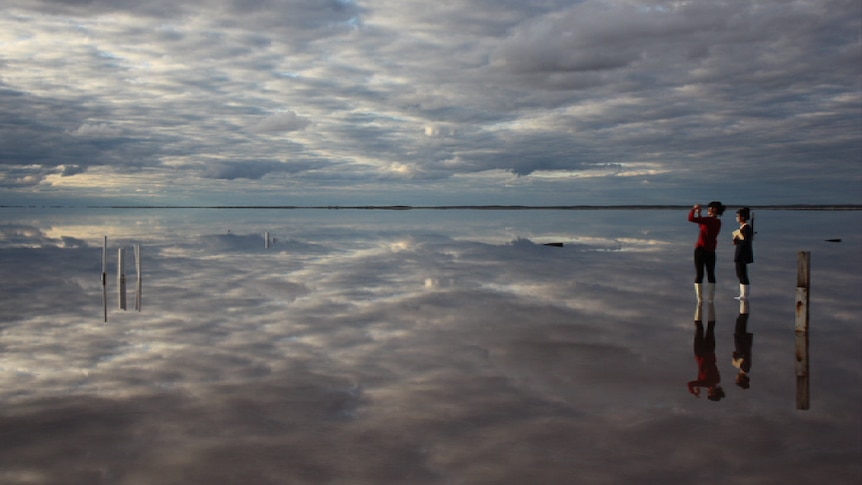
Lake Tyrrell, an ancient saltwater lake that is dry most of the year, is a tourist drawcard for the small but vibrant town of Sea Lake.
Indigenous elders from Wemba Wemba Aboriginal Corporation made the application to Tanya Plibersek’s office after the local council approved plans to build a tourist park and put its in-principle support behind the resumption of the Mallee Rally, an off-road dune buggy race.
The rally that runs around the lake, also known to traditional owners as Direl, started in 1973 but was discontinued in 2019 after Victoria’s Department of Environment, Land, Water and Planning (DELWP) recommended it stop because of heritage concerns.
Traditional owners from the Mallee including Gary Murray and Bobby Nicholls say their application is a last resort.(ABC Wimmera: Alexander Darling)
Preventing further damage
The report found hearths, flaked stone material, directly on the race track indicating the presence of culturally significant artefacts.
Direl, meaning ‘sky’ because of its mirror-like reflections of the sky when wet, is also an ancient meeting place for traditional owners and home to burial grounds, artefacts, mounds, and middens.
One of the lead applicants, Gary Murray, a Wemba Wamba and Wergaia elder, said Direl is culturally significant because it is the home to creator spirits like the dark emu that was also central to First Nations astronomy used for foraging.
He said while the report recommended the race stop, there was a chance it could summarize as the report did not offer the same protections from private development that a Cultural Heritage Management Plan did.
Gary Murray would like the lake to be permanently protected from the Mallee Rally, unregulated tourism, and private development.(ABC Lateline)
“The root cause of our concerns is the Mallee Rally, the lack of heritage protection progress, and poor planning and development regimes around Direl by the Shire of Buloke and [the] state,” Mr Murray said in the application.
He also said the DELWP report did not analyze the salt mining activities and tourism park, even though water and electricity infrastructure that had been installed — according to a specialist First Nations archaeologist who visited the site in November 2021 — had already caused damage.
He said traditional owners were worried that tourism, while encouraged, would be unregulated and lead to damage, pollution, and desecration of sacred sites.
Bobby Nicholls, a multi-clan Aboriginal elder and applicant, says governments have failed Indigenous landowners.(ABC News: Joseph Dunstan)
Mr Murray criticized the DELWP conservation plan for failing to survey large portions of the lake and shoreline.
Organizers of the rally, the Sea Lake Off Road Club, had offered to modify the route but fellow applicant and Wergaia elder Bobby Nicholls said the rally in any way made it incompatible with preserving cultural heritage because it was an uncontrolled environment.
“They tear around open county … and given there are some very sensitive areas where we need protection … [the buggies] can go anywhere off the track,” Mr Nicholls said.
“We have no choice but to engage the Commonwealth as a last resort.”
An eco-tourism alternative
Mr Murray said traditional owners had proposed an eco-tourism precinct that would preserve the cultural heritage of the site and bring greater economic benefit to the region than the Mallee Rally.
The rally was estimated to bring in $250,000 over a single long weekend.
Mr Murray said the precinct would also include a planetarium for the study of First Nations astronomy and culture, and a research facility on the history of First Nations of the Mallee.
He said the cultural heritage values of Direl were comparable to Uluru, Kakadu, and Lake Condah, which were UNESCO World Heritage-listed.
Lake Tyrrell is renowned for its astronomy, which traditional owners want to see hosted at a planetarium.(ABC News: Danielle Grindlay)
“The concept would attract schools, universities, government agencies, domestic and international tourists on a major scale,” Mr Nicholls said.
He compared the rally to running a bulldozer through the MCG or local cemeteries.
“There’d be a massive outcry, yet when we talk about preserving and protecting our sites whether they be burial sites, middens, mounds or whatever, people don’t take that into consideration.”
Lake Tyrrell, also known as Direl, means ‘sky’ and is known for its mirror-like reflections when wet.(ABC News: Danielle Grindlay)
Mr Nicholls and Mr Murray said hearing the federal Opposition Aboriginal affairs spokesperson and Member for Murray Plains, Peter Walsh, voice his support for the rally was concerning.
Buloke Shire Council said development works for the caravan park were halted until a cultural heritage management plan was completed.
The Victorian government confirmed that a Cultural Heritage Management Plan had not been lodged buy the caravan park developers.
It also confirmed that the Lake Tyrrell Conservation Management Plan recommended the Mallee Rally not continue and that a Cultural Heritage Permit would be required for the rally to proceed.
Perth has endured a second night of gale force winds and sideways rain as another monster cold front smashed the southern parts of the State.
Power blackouts are continuing to cause headaches with Western Power reporting 74 known outages affecting 8,100 customers – 4,200 in the metropolitan area and 3,900 in regional areas and in the South West.
Many of those people can expect to be without electricity until at least Wednesday afternoon.
A large tree lies across the road in Maddington after strong winds brought it down overnight. Credit: 7NEWS/7NEWS
Perth Airport was sent into chaos on Tuesday night after the power went out for hours, delaying check-ins and flights after a high-voltage transmission pole was damaged.
Flights were back up and running on Wednesday morning but the airport was backlogged with passengers attempting to get through security, with the flow on effects of the impact still being felt.
Hundreds of people in high-vis were at Terminal 2 as regional flights were taking off. The line to get through to security was almost out the door as people raced to make their flight on time.
A Western Power spokeswoman said crews and the network operations center worked through the night in difficult circumstances to make hazards safe and restore power where they could with around 1000 homes restored during the night.
“While further hazards and faults were reported overnight, storm-related damage to infrastructure was less than experienced yesterday where a peak of 35,000 customers experienced interruptions to their power supply.”
Houses damaged due to severe weather in Port Kennedy overnight. Credit: 7NEWS/7NEWS
All available crews are working to restore power however the spokesperson warned there may be some homes and businesses that experience an extended outage due to continuing bad weather.
“Damaging and destructive winds associated with the front experienced during the last 24 hours have thrown debris, including tree branches, into the network, damaging equipment and bringing down powerlines.
“Our priority during the storm is responding to reported hazards first before we repair and restore.”
Homes have also copped a lashing, with damaged roofs and fallen trees blocking roads.
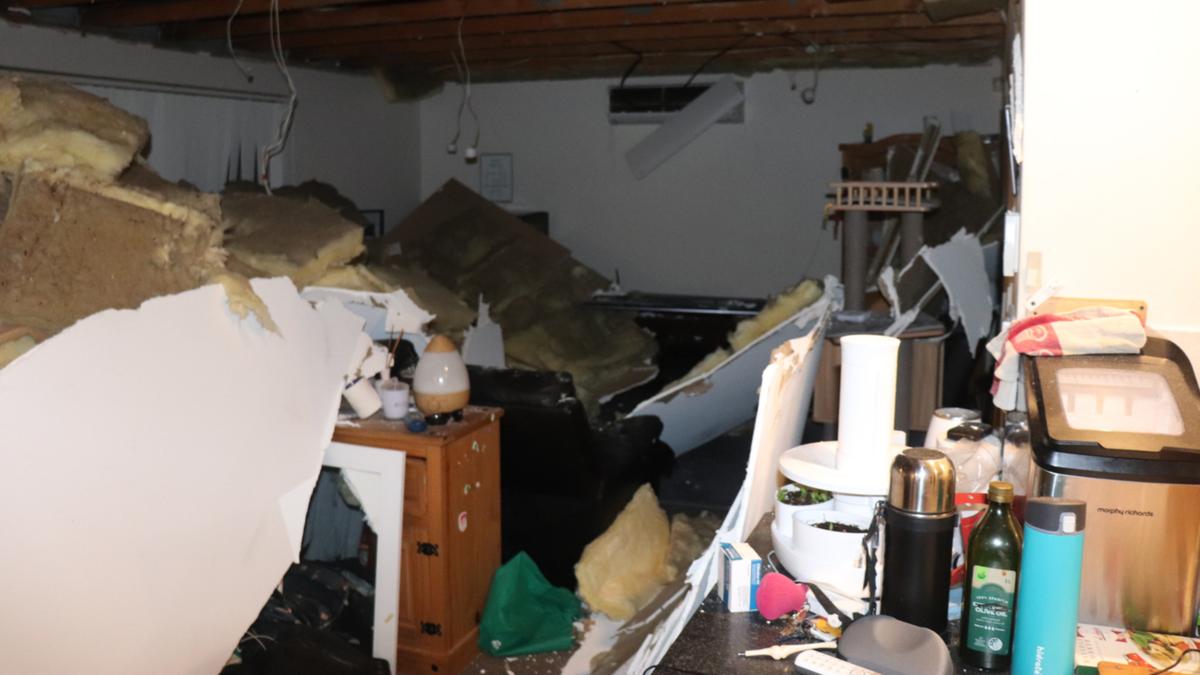
There are report a ceiling has collapsed at a property on Lakeside Drive in Joondalup and emergency services are responding to storm damage in Maddington.
Houses damaged due to severe weather in Port Kennedy overnight. Credit: 7NEWS/7NEWS
In the South west, power lines are down in Margaret river with reports of lines down on Railway Terrace and Wallcliffe Road and Ashton Street and Nebbiolo Place.
A severe weather warning remains for Perth and the southern parts of WA. Stormy conditions are set to ease later this afternoon.
The smell hits Kayshun Murray when his chainsaw is almost through the trunk.
Standing in a helmet and steel-capped boots in the West Australian desert, the young ranger inhales a fragrance judged to be among the world’s best.
“You can actually smell all the beauty in it,” he said.
The scent of the sacred sandalwood tree has wafted over Yilka country, more than 1,000 kilometers north-east of Perth, for millennia.
It has long been coveted by international perfume houses and incense makers from New York to Beijing.
Western Australia has harvested the trees and distilled their valuable oil to help meet that demand since 1845.
But Mr Murray and other Yilka traditional owners were only granted a seat at that table a year ago when they received a license to harvest wild sandalwood on their country.
They are determined to retain that right into the future.
Push to ban wild harvest
Calls have been made to ban the harvest of wild sandalwood amid fears it is being pushed towards the brink of extinction.
A law that determines how much can be taken will be reviewed before the end of 2025.
The government will call for public comments about a management program in the coming months.
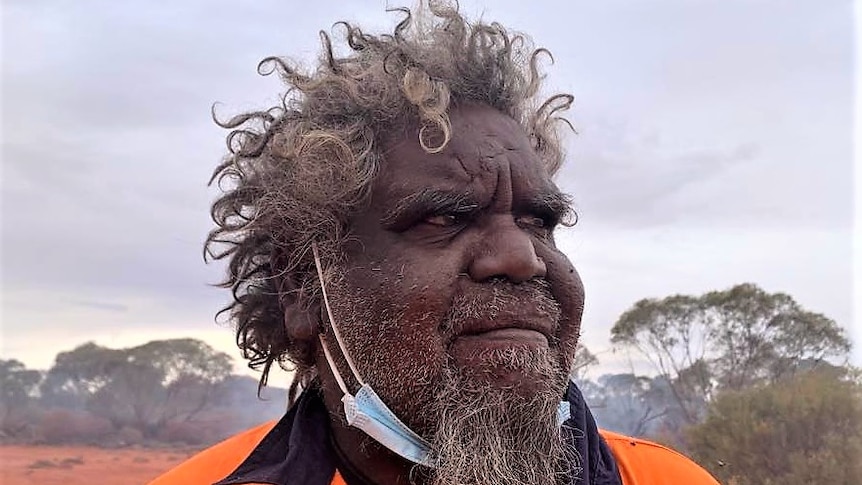
HM has wanted to see sandalwood harvested on Yilka country for decades.(ABC News: Madison Snow)
The driving force behind the Yilka sandalwood operation, known as HM for cultural reasons, said he understood those concerns.
But the Yilka Talintji Aboriginal Corporation chairperson said Aboriginal people should have the opportunity to benefit from industry on their land — as the WA government had for years.
Figures from WA’s Forest Products Commission (FPC) show that total revenue from wild sandalwood is expected to exceed $21 million, excluding costs, in the past financial year.
Yilka secured native title to the Cosmo Newberry reserve in 2017.
That meant, after receiving its harvesting license, it could profit from harvesting the wild tree.
HM said all earnings were invested back into the land after paying rangers’ wages and buying new equipment.
“That way, you don’t have to depend on government,” he said.
Sandalwood is worth up to $25,000 a tonne.(ABC News: Madison Snow)
‘Regeneration is happening’
HM said his organization hired an external consultant who said a 100-tonne annual wild harvest would be sustainable on Yilka country.
But he said Yilka Heritage and Land Care rangers would instead harvest 60 tonnes, 20 of which would be dead wood.
He said rangers harvested “every second legal tree” from pre-determined lots.
He said they would not return to that lot for 45 years — the time it took for trees to grow.
HM said 20 seeds were thrown down to replace every felled tree.
WA’s Forest Products Commission has attributed the decline of wild sandalwood to the disappearance of small marsupials that buried and dispersed seeds, overgrazing, and reduced winter rainfall rather than harvesting.
It believes regeneration work could help turn things around.
Plant equipment has been customized to pull sandalwood trees.(ABC News: Madison Snow)
HM said the junior ranger program — made up of school-aged children from Cosmo Newberry — helped with regeneration by measuring, photographing, and recording the coordinates of pulled and planted trees.
“So when we go for our next license we can prove to the government that all this regeneration is happening from where we pulled last year,” HM said.
social sustainability
The harvested sandalwood is taken to Dutjanh Sandalwood Oil’s distillery in Kalgoorlie where oil is extracted and sold to the international fragrance market.
Distillery chief executive Guy Vincent, who recently returned from the World Perfumery Congress in Miami, said a combination of cultural stewardship and scientific expertise was key to ensuring the wild sandalwood industry was sustainable.
A ranger holds a small bottle of sandalwood oil from Yilka country.(ABC News: Madison Snow)
Mr Vincent also said Dutjanh, who was half-owned by Aboriginal Australians and invested about 30 per cent of earnings back into communities, and Yilka had clear commitments towards social sustainability.
But he said the industry needed to do more in that space.
“Purchasing the wood through groups like Yilka is economically and socially sustainable because we have our benefit sharing,” Mr Vincent said.
“[But] we’re a very rare case in the industry.”
Ranger Jessica Sullivan with a sandalwood tree on Yilka country.(Supplied: Bridie Hardy)
The WA government recently appointed an Aboriginal Sandalwood Advisory Group to help increase First Nations’ involvement in the industry.
It said it increased the wild sandalwood quota available for Aboriginal people seeking a license last year while reducing the FPC’s quota.
It also said social sustainability was among the criteria that wild harvest sandalwood quantities would be reviewed again by 2026.
‘You can walk in freedom’
Ranger Lyall Westlake said he felt at peace on country.
Lyall Westlake says he loves working on country.(ABC NewsEmily Smith)
“The land is really perfect,” he said, standing under rain clouds on the Great Central Road.
“You can smell the breeze. Smell the wind.”
He said it was different from in town where there were more cars and people.
“You don’t know who is coming and going,” he said.
“But here you can walk in freedom.”
Fellow ranger Gwenetta Westlake said she loved working with her younger sibling, Chelsea.
Gwenetta and Chelsea Westlake love their work as rangers.(ABC News: Madison Snow)
“She always chases me, wherever I go because she’s my baby sister,” she said.
The Cosmo Newberry residents are among the 45 rangers HM has on the books to manage the sandalwood operation, as well as cool burns and care for cultural sites.
Rangers conduct cool burns on Yilka country.(ABC News: Madison Snow)
HM said the work provided alternative jobs to the local mining industry and was a better fit culturally for many of those involved.
He said a well-managed industry could pave the road to a better future for many residents.
“Looking after country is the most important thing for us,” he said.
New South Wales Trade Minister Stuart Ayres has resigned from the ministry after an inquiry “raised concerns” about his conduct in the appointment of John Barilaro to a lucrative US trade role.
Mr Ayres has been the deputy leader of the New South Wales Liberal Party, and also served as the investment, tourism, sport and Western Sydney minister.
Premier Dominic Perrottet revealed that Mr Ayres had offered his resignation, but that he continues to deny any wrongdoing.
The resignation comes after Mr Perrottet ordered a review into the recruitment of former deputy premier, Mr Barilaro, to the key New York-based role of US senior trade and investment commissioner.
“Late last night, Minister Stuart Ayres informed me he would resign from his ministerial positions and as deputy leader of the NSW parliamentary Liberal Party,” Mr Perrottet said.
“His intention to resign follows a briefing I received from the Department of Premier and Cabinet secretary Michael Coutts-Trotter on a section of the draft Graham Head report relevant to Mr Ayres.
“I subsequently discussed the issues raised in that briefing with Mr Ayres.
“Mr Head’s draft findings raised a concern about whether Mr Ayres had complied with the Ministerial Code of Conduct.”
There has been intense scrutiny over the conduct of Stuart Ayres (right) in the appointment of John Barilaro (centre) to the US trade job.(Supplied)
Mr Ayres’s conduct in the process — which ended in the appointment of Mr Barilaro to the lucrative US trade role — has been under increasing scrutiny in recent days.
Documents released to a parliamentary inquiry investigating the appointment appeared to contradict public statements Mr Ayres made about the recruitment process.
He maintained the process was completed at arm’s length from him, and that he had done nothing wrong.
On Monday, Mr Ayres admitted to sending a job ad for the position to Mr Barilaro and later said he would have “discouraged” his former cabinet colleague from applying if he had his time again.
Mr Perrottet today said Mr Ayres denies any wrongdoing, but there was “no doubt” the findings in Mr Head’s draft report raised questions “in relation to whether or not there has been a breach of the Ministerial Code of Conduct”.
Mr Ayres is expected to stay on in parliament, the Premier said.
“When I spoke to him last night, he told me his intention was to remain as the Member for Penrith.”
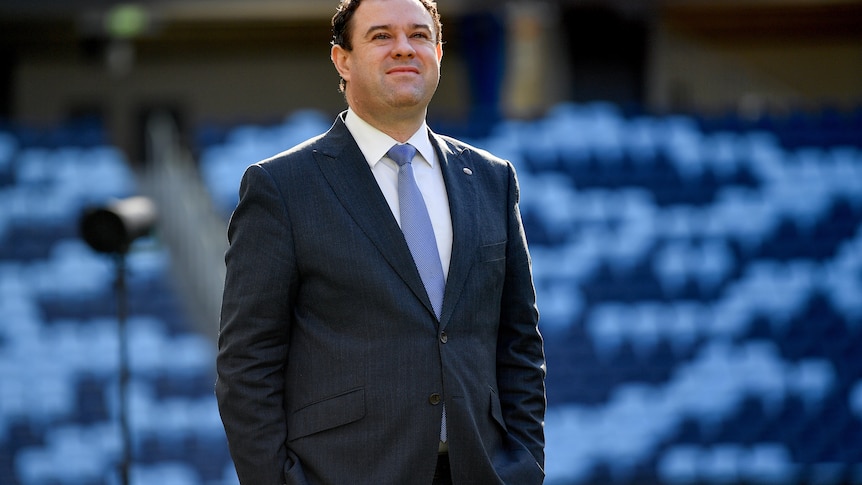
Stuart Ayres has resigned as a minister in the NSW government.(AAP: Bianca De Marchi)
In a statement, Mr Ayres accepted Mr Head’s review “creates a question” about whether he breached the code of conduct but said: “In my view, no such breach has occurred.”
“However, I agree it is important that this matter is investigated appropriately and support the Premier’s decision to do so,” he said.
“I have always applied the highest levels of integrity in my conduct as a minister.
“To maintain the integrity of the cabinet, I have decided to resign as a minister to allow the investigation to be completed.
“Accordingly, I will also be resigning as the Deputy Leader of the Liberal Party.”
Mr Perrottet said the issues raised by the draft report “go directly to the engagement of Minister Ayres with the Department secretary”, Amy Brown, during the recruitment process.
Stuart Ayres says Investment NSW boss Amy Brown (pictured) was wholly responsible for Mr Barilaro’s recruitment.(AAP: Dan Himbrechts)
He said there was no evidence that Mr Ayres had “lied” about his conduct.
Mr Perrottet defended his handling of the matter, which has dragged on for several days, saying he acted as soon as information came to light.
“What I will not do is make decisions based on media pressure or political pressure,” he said.
“I’ll make decisions, as I’ve always done, in relation to what I believe is right.”
Ms Brown, the Investment NSW chief executive, is today due to give evidence again at the parliamentary inquiry into the matter.
Mr Perrottet said he was unaware of what Ms Brown would say, and that — as far as he was concerned — he acted as soon as he received information.
“I have said from the outset the upper house inquiry will do its work,” he said.
“My job was to implement an independent review and that’s exactly what I have done.”
But Lowe acknowledges the path to achieving the balance between getting inflation down and keeping the economy on an even keel is “clouded in uncertainty” – not least because of global developments.
Markets – globally and in Australia – have recently taken the view, for example, that slowing growth means less need for central banks to raise rates as high or as long as expected in June. Sharemarkets have been lifting again in response. Yet, there are contradictions and risks in every morsel of evidence that inflationary pressures will recede as supply chains recover and interest rates start to bite.
The impact of Russia’s invasion of Ukraine on energy and food prices is just the most brutal model of unexpected shocks that have disrupted the supply of goods and services indefinitely.
From continued COVID-19 lockdowns in China, to floods in northern NSW, to the resilience of the US, the Australian economy is regularly buffeted by the unexpected or the uncontestable.
The RBA can really only target the level of short-term demand in the domestic economy, boosting or suppressing it via the pulley of interest rates.
Just how hard to pull the cord in either direction is less obvious – particularly when it has to cycle along in unofficial tandem with the government’s fiscal speed.
Home owners face budget squeeze
Treasurer Jim Chalmers is more cautious than a prime minister who was criticized for saying the RBA needs to be careful it doesn’t overreach.
Even though Chalmers has announced a review of the bank, he stresses the independence of a Reserve Bank “doing its job”. His own job, he says, is “not to take potshots” at the governor but to do what he can to get the economy growing faster without adding to those inflationary pressures.
That is easy enough for a new treasurer to say, much harder to achieve.
Chalmers is certainly talking tough, including on the need to end the halving of the fuel excise on schedule next month. But his commitment to him to substantial cuts in a budget he describes as “heaving with $1 trillion of Liberal party debt” is much vaguer, while some of the most significant drivers of inflation are far less predictable, let alone controllable by any Australian government .
Delivering on repeated exhortations about the importance of boosting Australia’s flagging productivity has also long remained elusive – with any improvement under Labor’s “economic plan” requiring years at best to show promised results.
Interest rate policy is more immediate – and punitive. The accumulated increase over four months mean those with a mortgage of $500,000 over 25 years must find almost an extra $500 a month.
The squeeze is more than double that for many recent buyers in Sydney and Melbourne who stretched themselves to take out million-dollar-plus mortgages as house prices soared in the last few years. What could possibly go wrong?
Traditional community concerns about Australia’s unaffordable housing, especially for first home buyers, have already switched direction again. Over the three months to June, average dwelling prices dropped by 4.7 per cent in Sydney and 3.2 per cent in Melbourne. Lending for housing reduced by 4.4 per cent in June.
The falls so far are probably only a modest down payment on the prospect of much steeper declines ahead – with all the flow-on effects of the reverse wealth effect on consumer confidence and spending overall.
As befits a phlegmatic central banker, Lowe insists the board is committed to doing what is necessary to ensure inflation in Australia returns to target over time.
The human response is considerably less formulaic than central bank forecasts. Lowe says a key source of uncertainty continues to be the behavior of household spending.
He points to the pressure of higher inflation and higher interest rates on household budgets, with consumer confidence falling along with housing prices in some markets after large increases in recent years.
But he argues that people finding jobs and obtaining more hours of work is working in the other direction, while many households have built up large financial buffers. The banks are also anticipating a lift in wages growth as companies compete for staff in a tight market.
“The board will be paying close attention to how these various factors balance out,” he said.
Large swathes of South Australia, Victoria and Western Australia were battered by wild winds overnight on Tuesday, leveling trees and leaving homes without power, with no reprieve expected until Sunday.
Potentially destructive winds have been forecast for much of southern Australia as a series of cold fronts moves across the country.
Severe weather warnings are current for parts of WA, SA, NSW and Victoria, as several locations gear up for a trifecta of damaging winds, heavy rainfall and flooding.
Watch the latest News on Channel 7 or stream for free on 7plus >>
In NSW the BOM is warning of damaging winds and heavy rainfall across the Illawarra, South Coast, Southern Tablelands, South West Slopes, Snowy Mountains and Australian Capital Territory forecast districts.
Blizzard conditions are possible in Alpine areas above 1900m, and the BOM is also warning of damaging wind gusts up to 90km/h in the state’s west.
The Victorian SES received 216 calls for assistance in the 24 hours to 6am Wednesday, mainly over fallen trees.
The busiest volunteer units were Emerald (24 calls), Pakenham (19) and Upper Yarra (15), with about 17,000 households in the Emerald and Pakenham areas without power.
VIC SES chief officer of operations Tim Wiebusch told Sunrise only a small percentage of trees had fallen onto structures.
“The problem has been trees across the road, and so I can’t emphasize enough this morning, be cautious, be alert to conditions when driving to work,” he said.
Trees down in Victoria. Credit: 7NEWSSES crew clear up trees that have fallen near properties and on roads in Victoria. Credit: 7NEWS
Watch and act warnings have been declared for The Great Dividing range, with residents in the area urged to prepare to take shelter.
However, the severe weather warning for Central Highlands and Mount Dandenong has now been cancelled.
Gusts in the Grampians reached almost 110km/h overnight, with Melbourne’s northern suburbs expected to be hit with wild winds later today.
Damaging winds averaging 65km/h with peak gusts up to 110km/h are occurring over elevated areas of Victoria’s eastern ranges, which are expected to ease on Wednesday afternoon.
However destructive gusts are expected to re-develop in the southwest of Victoria during Wednesday evening, with wind speeds averaging 50-60km/h expected and peak gusts of 90km/h.
Heavy rainfall is predicted in coming days across much of southern Australia. Credit: BoM
WA SES was called to 345 jobs in the past 24 hours to 6:30am Wednesday morning, 300 of those in the metro area.
Damage has occurred from Butler in the north of Perth to Mandurah on the southwest coast.
Most calls were related to fallen trees on roofs, damaged power lines, with some reports of patios and verandahs being ripped from homes.
There has also been one report of a roof that has collapsed in Joondalup.
According to the Bureau of Meteorology, a series of vigorous cold fronts will continue to cross the south of WA through to early Thursday.
Gusty showers and thunderstorms are likely along these fronts, as well as in the westerly flow in their wake.
Those in the Goldfields-Midlands, Midwest-Gascoyne, Perth Metropolitan, South West, Lower South West, Great Southern have been warned to take action.
South Australia’s SES received 51 call outs in the 24 hours up until Tuesday night, with another 10 received on Wednesday morning.
Most were pertaining to fallen trees, however none have created any significant damages to property.
SA SES told 7NEWS.com.au the state was not hit as hard as it was initially forecast.
SA Minister for Human Services Nat Cook has announced a code Blue has been introduced from Wednesday across the metro Adelaide due to the weather, meaning homelessness services will visit known rough sleeper locations to make people are aware of available support.
“Code Blue continues in regional centers until 9 August in the Riverland, Limestone Coast, Victor Harbor, Kangaroo Island, Port Lincoln, Clare, and Kadina,” she wrote on Twitter.
Strong to damaging northwesterly winds averaging 50-65 kilometers per hour with peak gusts of around 90km/h, are still possible across parts of the warning area during Wednesday afternoon and early evening.
The risk of severe winds will ease Wednesday evening, but conditions will remain comfortable near some coastal areas throughout the night.
Conditions are expected to ease across southern Australia this Sunday.
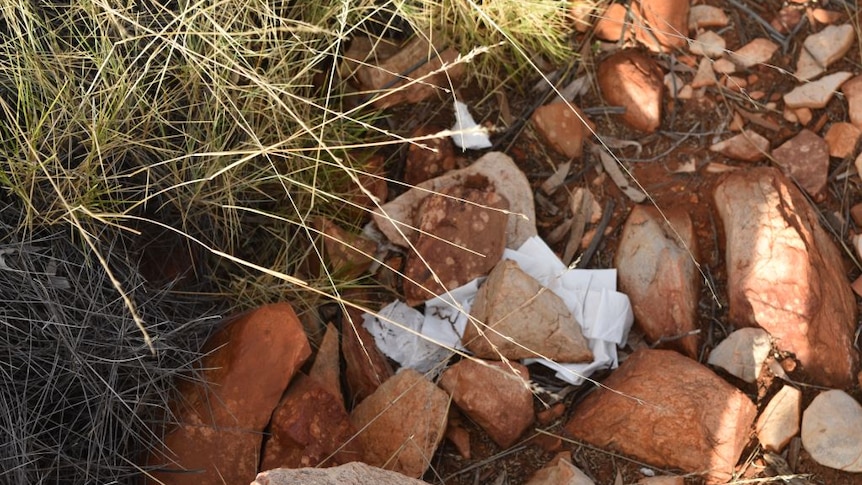
The Larapinta Trail near Alice Springs is renowned for its spectacular views and scenery, but its increasing popularity among bushwalkers this year is generating a less impressive sight — deposits of toilet paper.
Key points:
NT Parks and Wildlife says this year’s season is one of the busiest ever
There are 16 toilets along the 230km trail, but still mounds of toilet paper are seen at some of the highest points
Rangers and seasoned walks urge people to bury their waste appropriately
According to Northern Territory Parks and Wildlife, 2022 is shaping up to be the busiest season for the 230-kilometre trail in the heart of the West MacDonnell National Park.
“In the first two weeks of July the numbers of independent walkers, not including those on commercial tours, averaged at just over 300 people per night,” NT Parks and Wildlife operations director Chris Day said.
But experienced Victorian hiker Michelle Forrer said the amount of toilet paper she saw scattered across the trail during July was disconcerting.
Views are being hampered on the Larapinta Trail by the amount of toilet paper visible.(Supplied: Chris Day)
“This was definitely the biggest downside to my experience on the trail and I was wondering what could be done about it,” she said.
“Some of it may have been dug up by animals but a lot of it looked discarded.”
Ms Forrer said the trail was very busy at the time with “hundreds of people along the track.”
“For many, it was their first hike,” she said.
She said education was the key to reducing human impact on the trails.
“A month before I walked the Larapinta, I had walked the Australian Alpine Walking Track,” Ms Forrer said.
“[There was] not a trace of paper to be seen out there but numbers are fewer and it’s not popular with beginner hikers.”
Leave no trace
Mr Day said evidence of human waste on the trail had been a problem for many years but it typically became more apparent as the tourism season wore on.
“One of the things that we’ve noticed is there’s probably a slightly different market on the trail this year,” he said.
“There’s probably a lot of people who are not what you call seasoned bushwalkers.”
Mr Day said these visitors might not be aware of a key bushwalking principle, which is to leave no trace.
Parks and Wildlife urge walkers to bury their waste if nature calls in between toilets.(Supplied: Annette Forde)
He said there were 16 toilets along the track and he encouraged hikers to plan ahead and use the facilities.
“But where you get caught short and there is no toilet, the recommendation is to get at least 100 meters away from the trail, the campsite, any waterhole or watercourse, and dig a shallow hole and bury [the waste and the toilet paper] properly,” he said.
Mr Day said another key principle was to be considerate of the park’s hosts, such as its traditional owners and the staff who look after the trail, as well as other visitors.
FIFO toilets
NT Parks and Wildlife is in the early design stages of installing toilets on some of the higher sections of the Larapinta trail, with location approvals by traditional owners and funding yet to be secured.
One of the 16 toilets along the Larapinta Trail.(ABC Alice Springs)
Mr Day said a big challenge was vehicle access to higher campsites, with one solution to use a helicopter.
“It’s a problem of not only getting in and building infrastructure in those locations, but then the ongoing servicing,” he said.
Mr Day said using a helicopter to fly out waste would not be cheap, with hire costs amounting to $1,500 per hour.
“Realistically, to service Mt Sonder, it’s over an hour flight,” he said.
Mt Sonder one of the jewels on the Larapinta Trail.(ABC Alice Springs: Samantha Jonscher)
With the toilets likely to be several years away, Mr Day said it was vital that bushwalkers did the right thing so that nature could take its course.
He said it was fortunate that the Larapinta Trail had time to recover over the hot summer months, which gave human waste time to biodegrade naturally.
“Particularly if people are doing the right thing and digging their cat hole away from the trail, it will break down quite rapidly,” Mr Day said.
Jodie Hirst was a professional sports dietitian for 10 years before she felt drawn to the classroom.
Like many people during the COVID-19 lockdowns of 2021, Ms Hirst reassessed her career and realized that she loved helping and inspiring people to learn.
Ms Hirst, a mother of two, is currently six months into a Masters of Teaching at Macquarie University.
“The transition from going back to university has been challenging but I am really enjoying it,” she said.
“I would love to inspire people to respect science and continue to want to learn in that field. I am hoping I can bring that into schools.”
Ms Hirst is taking part in New South Wales’ first mid-career teachers program to support people from other areas of the community to transition to teaching.
Bulli High School has more than 1,000 students and 70 teachers.(ABC Illawarra: Sarah Moss)
She is working as a para-professional — helping with paperwork, resource development and classroom activities — at Bulli High School, in the northern Illawarra region.
Principal Denise James said she was “a bit in awe” of mid-career teachers such as Ms Hirst.
“I think it’s phenomenal and I hope more people do it,” she said.
“It’s invigorating for students to know teachers’ stories and to know they have had this other life and are experts in other things. It brings a whole lot of possibilities.”
changing the world
Ms James hoped more people would come to look at teaching as a great career.
“I admire someone who is already performing very well in their own field who wants to become a teacher,” she said.
“We know that the better education they [students] get, the better the world is.
“Jodie [Hirst] is here as a para-professional learning from our science faculty, but Bulli High is also learning with Jodie.
Principal Denise James says the majority of teachers at Bulli High have decades of teaching experience.(ABC Illawarra: Sarah Moss)
“That is the beauty of this program — we are learning from her how science operates outside of our school, in the real world … and we are also being able to use her skills in classrooms.”
But Ms James did warn that people’s expectations of teaching could sometimes differ from reality.
“You picture yourself in classrooms, you don’t realize that a lot of the work is happening alongside your colleagues in staff rooms in conversations and in meetings,” she said.
“So the paraprofessional role is a really great program.”
Along with 70 permanent teachers, the school relies on a pool of long-term temporary and casual teachers, who Ms James said it could not do without.
“We need the flexibility especially with a lot of illness in the world today,” she said.
Learning how to teach
Ms Hirst said she was looking forward to being able to increase the supply of science and technology teachers across the state.
“I’ll be teaching science, biology, chemistry and junior science … but I am relearning the content which is a part of the degree I am doing now, so learning the syllabus and how to teach that,” she said.
Jodie Hirst is transitioning from a career as a sports dietitian to being a secondary science teacher.(ABC Illawarra: Sarah Moss)
“Yes, I have a HECS debt now but with this mid-career transition, they [the Education Department] do provide some funding for the first six months of study, and then being employed three days a week at Bulli High, that’s going to help.”
Delivering group presentations in her former role as a consultant dietician for the Illawarra Academy of Sport helped give her the confidence to be at the front of the classroom.
“People were so motivated and generally interested that it became the favorite part of my job,” Ms Hirst said.
Professionals on the move
More than 4,000 new teachers have entered the workforce this year after gaining accreditation, according to the state’s Education Department, with at least 28 of them transitioning from other careers.
A productivity commission report in NSW recently investigated how to get more people from other careers into teaching.
NSW Minister for Education Sarah Mitchell saluted the program and was “excited to welcome a further 3,000 teachers by the end of the year”.
Professor Sue Bennett says there are different teaching strategies across different subject areas.(Supplied UOW: Paul Jones)
Professor Sue Bennett from the University of Wollongong said the extra teachers were much-needed.
“We’ve always had a group of people who have got significant experience in other roles… who want to make a change and they seek that pathway into the [teaching] profession,” Ms Bennett said.
“Around Australia there are universities and private providers that offer degrees in teaching with many variations available designed for people to find the right fit for them.”
The next round of applications for the mid-career program is open until September 11, with successful candidates due to commence studies in 2023.