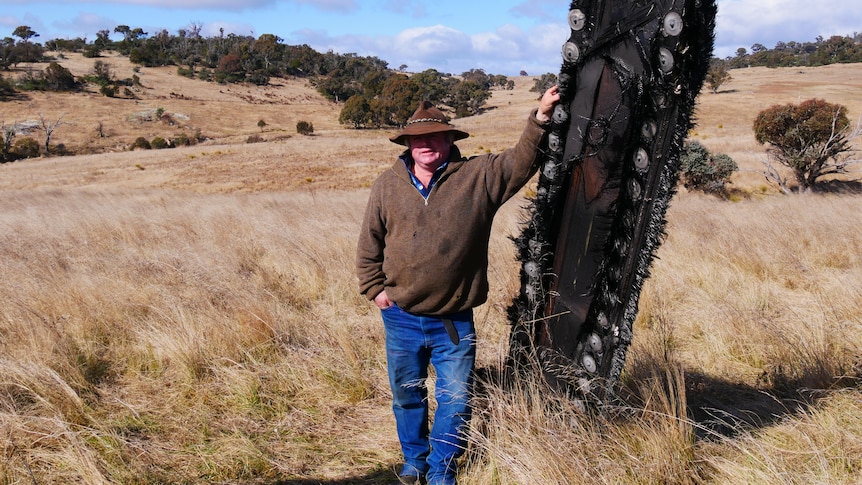
A SpaceX representative says a team will travel to Australia after the recent discovery of a large piece of space junk on an outback property, saying the incident is “within the expected analyzed space of what can happen.”
Key points:
SpaceX will send a team to Australia after their space debris was found in the NSW Snowy Mountains
The fragments were found after locals heard a sonic boom on July 9
A space law lecturer is calling on better communication between SpaceX and Australia
Fragments of the SpaceX Dragon capsule were found in the NSW Snowy Mountains, after locals heard a loud bang on July 9, believed to be caused by the spacecraft re-entering Earth’s atmosphere.
Addressing reporters during a live streamed media conference from NASA’s Johnson Space Center on August 4, senior director of the SpaceX Human Spaceflight Program Benjamin Reed acknowledged the incident.
“We did get reports of debris of the Dragon trunk that had landed in the outback of Australia,” he said.
“We actually have a team that’s going to check that out.”
Mr Reed told the conference SpaceX had been working with the Federal Aviation Administration and the Australian Space Agency as part of this process, saying the incident fell within expectations.
“The important news is of course there was no injury or damage,” he said.
“Also importantly is this was all within the expected analyzed space of what can happen.”
This piece of space junk is estimated to be about three meters long.(ABC South East NSW: Adriane Reardon)
Companies require permission from the US government prior to launching space craft, which includes filling out an orbital debris report.
Mr Reed alluded to that as part of his response.
“You have an expected path of where things may come down and this particular debris was within that analyzed space,” he said.
“It’s part of the process we do with NASA, with FAA, internally and we use models that are all jointly approved to predict and plan for these things.”
Mr Reed’s comments to the August 4 conference appear to be the only public comments that have been made by SpaceX about the incident so far. The ABC has contacted SpaceX.
so arrogant
The discovery of SpaceX debris has triggered both intrigue and concern from space experts about whether space activity needs to be better managed.
Space Law Lecturer at UNSW Canberra Duncan Blake says the explanation from Mr Reed about the incident was too vague.
“I’m not satisfied with that response,” he said.
“I think it’s a bit dismissive and I think that SpaceX ought to be doing more than simply saying that it was within their analysis.”
Duncan Blake is a space law lecturer at UNSW Canberra.(Supplied: Duncan Blake/UNSW Canberra)
Mr Blake believes the comments imply that SpaceX was aware before hand of the possibility of space debris would land in somewhere like Australia, and decided the risk was acceptable.
He says the company needs to be more open and communicative with Australia if that’s the case.
“I wonder whether they coordinated with Australia when they made that risk assessment,” he said.
“If they didn’t, then that seems somewhat arrogant to make a decision that affects Australia without consulting Australians.”
Coverage cost
Confirmation that SpaceX will eventually visit Australia has been welcomed, with an expectation the pieces will have to be repatriated back to the US.
“They need to come to Australia,” Mr Blake said.
“The space object belongs to SpaceX and they may want the space debris returned to them.”
“If there are any costs involved in doing that, in cleaning up, then they’re obliged to cover those costs.”
Jock Wallace found this piece of space junk on his sheep farm.(ABC South East NSW: Adriane Reardon)
As part of the media conference, SpaceX’s Mr Reed noted that there was always room for improvement.
“We look very closely at the data, we learn everything that we can,” he said.
“We always look for the ways we can improve things but again, this was within analyzed space, within expectation.”
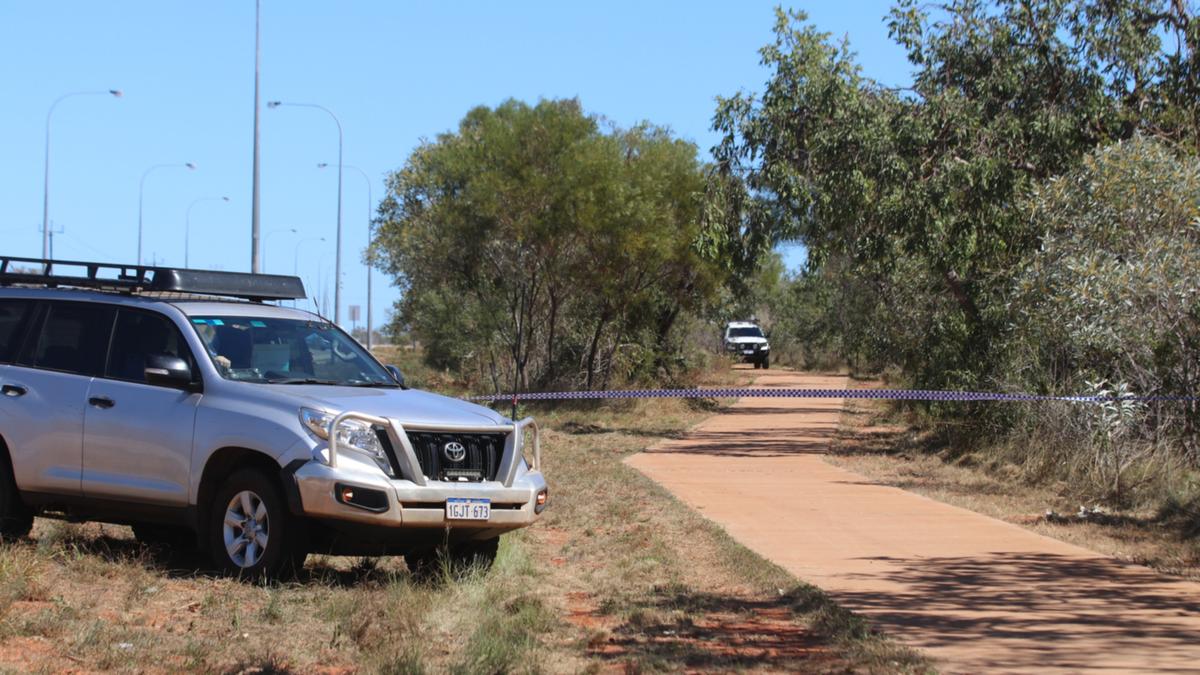
Police have charged a man over the terrifying rape of a woman as she was out on her morning jog in Broome.
The woman, aged in her 40s, was running on a track alongside Gubinge Road, between Jigal Drive and Sayonara Road, when she was approached by a man walking in the opposite direction on Friday.
Police allege that as the pair crossed paths, the man grabbed the victim and sexually assaulted her.
The woman fought him off and screamed for help. Several members of the community came to her aid from her, and police say the alleged rapist threatened those who had come to help.
“There was no physical altercation, but the man made verbal threats to the members of the public who tried to intervene before he ran away,” Det-Sen. Sgt Brian Beck said last week.
Police have charged a man over the terrifying rape of a woman as she was out on her morning jog in Broome. Credit: Broome Advertiser/Jane Murphy
Police on Sunday revealed Broome Detectives had executed a search warrant at a hotel at Cable Beach on Saturday and arrested a 52-year-old man — who is from Midland — who was staying there.
The accused has been charged with three counts of aggravated sexual penetration without consent.
He is due to appear in Perth Magistrates Court on Sunday.
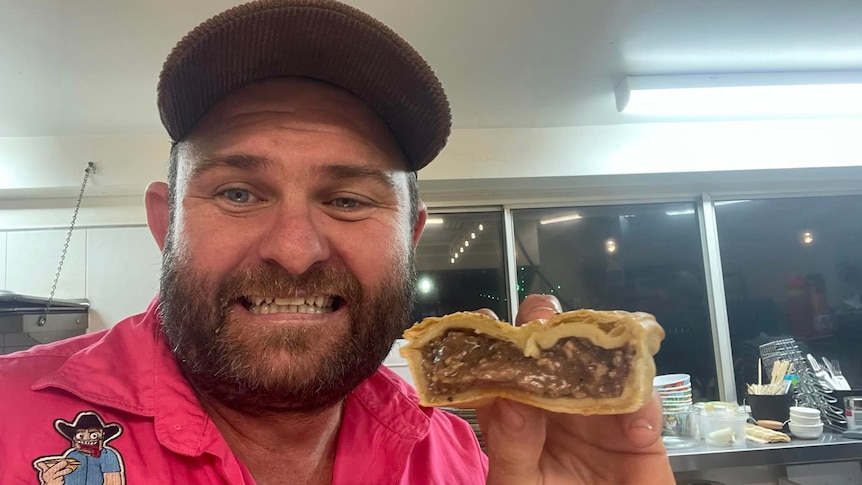
A former mortgage broker on a mission to review every pie shop in Australia has taken his pastry pilgrimage to the farthest reaches of North Queensland — and delivered a verdict on the age-old tomato sauce debate.
Shaun Pyne ran a successful finance business for more than 20 years before selling up and hitting the road to realize his life’s ambition of visiting every pie vendor and bakery in Australia, bar none.
Over the intervening years, his Pyney’s Pie Reviews person has developed a huge social media following and raised tens of thousands of dollars for charity along the way.
Shaun Pyne made it to the northernmost tip of Australia during his tour of Cape York.(Supplied)
Five secrets to a perfect foot
Mr Pyne is halfway through a schooner of beer at the Peninsula Hotel in Laura — a Cape York town famed for its Quinkan Aboriginal rock art, but not its pastries — when he gets a call from the ABC.
The baked-good gourmand already has a few weeks’ travel under his belt on this leg of his Australian tour, with a loaded caravan and an insatiable appetite for adventure, great yarns and the perfect meat-to-crust ratio.
And it turns out, he has distilled the foot assessment criteria down to a fine science.
“The five categories that I do my scoring on are value for money, meat ratio, flavour, pastry and temperature,” he explains.
“They get scored out of 10 … and they’re all equally important.
“If you have a hot pie, it’s going to burn your taste buds … if the pastry falls apart while you’re driving that’s going to be a massive issue.
“For me, a real pie, you’ve got to be able to eat in your car – so it’s got to stay stable.”
loading
Given the price of fuel and the clicks clocked up by his nationwide mission, value for money is obviously going to be a major factor in any foot’s overall score.
“Look, the cost of living is expensive, the meat prices have gone up and yes, pies have gone up,” Mr Pyne says.
“At the end of the day, that’s life.
“But I’ve visited so many bakeries, with the cheapest being $4.10 to the dearest being $8.50.
“But even the $8.50 one, it’s massive, it’s a big pie and it’s great value for money.”
Shaun Pyne travels across Australia in a caravan to try every foot he can.(Supplied: Pyney’s Pie Reviews)
Can Australia really claim the meat pie?
Historical evidence of meat pies can trace their origin back to the Neolithic period of about 6,000 BC, and more recently they were staple dishes sold by street vendors as convenience food to the poor in Medieval Britain.
The dish features throughout British literature and nursery rhymes – take the philandering “Georgie Porgie, pudding and pie” for example, or the ditty about baked blackbirds that now lends its name to Australia’s biggest pie brand, Four’N Twenty.
But even the most parochial Brit must admit the tradition has taken flight since the pie arrived on a new continent with the First Fleet.
Mr Pyne’s recent discovery of a crocodile pie in Port Douglas and a crayfish pie at Bamaga certainly lends evidence to that claim.
Medieval pie bakers didn’t have to worry about the taste of their pastry – it wasn’t for eating.(Image: The Bodleian Library, Oxford/Public Domain)
The ‘dog’s eye and dead horse’ debate
Not every Aussie pie tradition gets the thumbs up from this crust crusader.
Whatever you do, don’t mention the dead horse.
“We’ve had a couple of huge heated debates,” he warns.
“To me, a good Australian pie does not need any sauce whatsoever.
“The only time I put sauce on my feet is when I go to the cricket or the footy.
“The flavors should be just riddled through the pie.
“By putting tomato sauce or some other sauce on, you’re taking away from the aroma and the actual true flavor of the pie.
“Square pie, round pie, oval pie — that’s been a separate debate.”
Mr Pyne falls into the square pie camp but acknowledges rules are made to be broken when it comes to this beloved foodstuff.
Shaun Pyne gets a taste for tropical rock lobster pies at Bernie’s Kai Kai Bar in Bamaga.(Supplied)
A controversy erupted from the recent 2022 Australia Best Pie and Pastie Competition, which he helped judge, after the top award went to a pie that had no meat.
My Pyne said the creamy mushroom and truffle creation was a revelation.
“There was no meat in there … but you know what, I had the privilege of tasting that pie on Wednesday and it was absolutely stunning, beautiful,” he says.
“They’ve come under fire a little bit because the judges did award that best pie… but it is Australia’s best pie competition – it’s not Australia’s best meat pie.
“To be honest, I think the judges got it right.
“This was a beautiful, beautiful foot.”
Shaun Pyne just cannot get enough of the humble meat pie.(Supplied)
h]
Creativity lies just under the lid
That fungal triumph was nowhere near the strangest meal to pass his lips.
“I’ve had a camel pie [at Birdsville] which was awesome,” he says.
“Roberta from Blackbutt Bakery, she was my first ever perfect score.
“She sells a Big Mac pie and it literally tastes exactly like a Big Mac.
“Whittlesea Bakery in Melbourne, it was another of my perfect scores – it was a slow-cooked brisket, camembert cheese and caramelised onion.”
The remoteness of the Cape meant feet were few and far between during Mr Pyne’s most recent northern journey, but he made up for it by hitting every bakery from the Atherton Tablelands to Innisfail at least once on the way back down.
“My mantra has always been, don’t go to Bali, go to Broken Hill,” he says.
“Get out and see this great country.
“Get out and see North Queensland.
“There’s so much to see up here and I can’t wait to get into the bakeries.”
Early Australian convicts were allotted rations, including salted meat, flour and butter, that could be used to make a pie.(Image: State Library of NSW)
Pyney’s great lifestyle shift
So how does a mortgage broker become a roving gastronomist of the pie variety?
It all started as a bit of nonsense between two mates on the long and dusty trip to the Birdsville Big Red Bash in 2019.
“One of my mates said, ‘I’m gonna have a schooner at every pub ’cause my missus normally drives, blah blah blah,” Mr Pyne explains.
“And I said, look, if you do that I’ll have a walk at every town we stop at while you have your beer.
“So he had plenty of beers and I had plenty of pies, and I just started blogging about it at the end of 2019.”
A couple of horses show interest in Shaun Pyne’s breakfast as his pie review tour takes him to Mareeba(Supplied)
Covid-19 put Mr Pyne and his wife’s travel plans on ice, but a three-and-a-half month trip around the NT last year brought the social media reviews back to the fore.
Selling the family mortgage brokering business helped make it all possible, and writing pie reviews was as good excuse as any to get out and see Australia.
It also helps pay some of the bills.
“It’s a labor of love, mate,” Mr Pyne says.
“We’re lucky, we’ve got older kids and we’ve done very well out of our business.
“And I’ve got merchandise that I sell, so pie bikinis, pie boardshorts, T-shirts, that sort of stuff.
“I’ve got great partners that have sponsored me behind the scenes, which is awesome.
“But we were going to travel anyway, and this is just a great way to get out there and help people.
“Unfortunately it’s a dying profession, so if I can do my little bit to raise tourism, to get people out there spending money in these little communities, it obviously helps them.”
Sometimes on foot cooked in a caravan’s travel oven was the best Pyney could muster during his Cape York trip.
(Supplied)
All things in moderation
Mr Pyne is probably Australia’s best-known pie aficionado behind the late and great Shane Warne, whose fans mourned his passing earlier this year by laying offerings of meat pies, cigarettes, beer and baked beans alongside the flowers at the foot of his statue at the CGM.
Warnie’s shock death in Thailand gave Mr Pyne enough of a fright about his own diet to go see his own GP.
“It’s funny, because obviously with Shane Warne earlier this year, I went straight in,” he says.
“Since Christmas, I’ve lost 14kg, so I’ve been on a diet myself.
“My heart was all good, check-up was all good.
“I go to the gym every day, I work out every day.
“I do smash feet, but I do [social media] content on different days.”
A can of beer and a meat pie are seen amid floral tributes for Shane Warne left at the MCG on March 5, 2022.(ABC News: Danny Morgan)
and]
You can call them meat pies, dog’s eyes, maggot bags or rat coffins.
As long as the meat ratio is right, it doesn’t send you broke or skin your tongue, the flavor is spot-on and the pastry is flaky and structurally sound, what you call them matters very little.
Adam Bandt could have rightly felt bemused as he was walking through federal parliament.
Barely a day earlier, he’d announced the Greens’ bolstered political ranks would back Labor’s climate change bill, giving the new Prime Minister the votes he needed for landmark laws to reduce carbon emissions.
Bandt cut a lonely figure as he walked alone behind a press gaggle the size you so often only see for major party leaders.
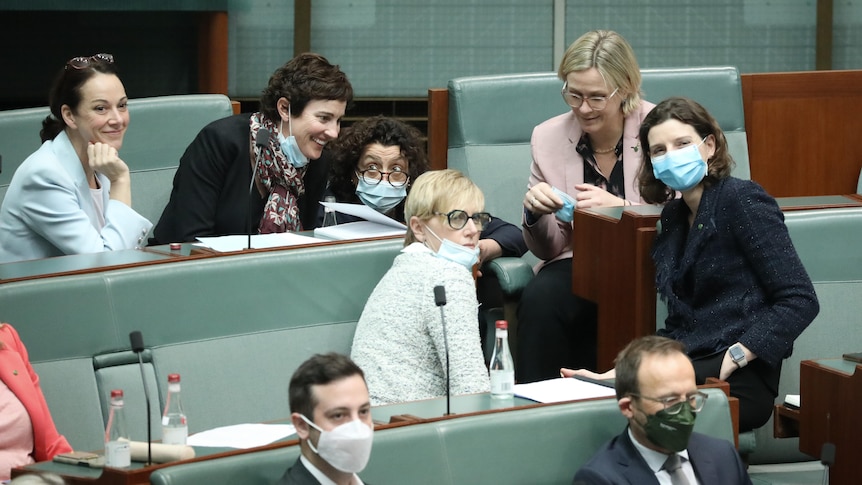
In front of the microphones were six women, all but one new faces in a parliament more diverse than any that came before it.
If success has many fathers and failure is an orphan, then Labor’s climate change bill was a child with more parents than it could poke a stick at.
“The climate wars are nearly over,” Zali Steggall cautiously said.
Zali Steggall is providing a mentor for the teal independents who have followed her into parliament. (ABC News: Nick Haggarty)
pure political maths
In many ways, Labor and the crossbench have plenty to celebrate after this week.
Labor, once the legislation passes the Senate, will have enshrined laws in a policy area fraught with toppling prime ministers.
Bandt too has done what former leaders of his party baulked at.
Arguably, he’s transforming the Greens from a movement to a political party by adopting a pragmatic approach that gets something, even if it’s not as much as his party might have wanted.
And the teals were successful in making minor amendments, ensuring they could go back to their communities by selling a win.
But suggestions that Australian politics has been radically changed since the election are certainly premature.
“Teals get a win and we get a win” is how one in Labor dubbed it.
What was at play was pure political maths.
Labor knows that if the teals succeed, it all but consigns the Coalition to the opposition benches.
The teal amendments didn’t require the government to add anything it didn’t want to.
It was the Greens who delivered Labor the votes it needed, or at least will when the Senate considers the laws later this year.
It’s why Bandt could be forgiven if he was frustrated that the teals were attracting the credit at their press conference for what was, in fact, a gift his party had given the government.
Yet to just view this in purely political win-loss metrics perhaps misunderstands both the election and broader political movement.
The teal MPs have stuck closely together during the first sitting fortnight.(ABC News: Nick Haggarty)
Taking the ‘fight’ out
Zali Steggall led the teals to their press conference early on Thursday morning.
She’s not the first community-backed independent to arrive in Canberra but there’s no doubt she created the mold the teals have followed.
“Just a brief thank you to Zali Steggall, who worked tirelessly over the last three years for us to be in this position,” Sydneysider Sophie Scamps said at the press conference.
Steggall is proving not just a mentor among the teals but also a bridge between new and old members of the crossbench and with the government.
What unites these independents is they’re political newbies, leaders in their former lives, now setting their sights on doing politics differently.
Anne Aly happily entertained Lisa Chesters’ son Charlie during the climate change debate.(ABC News: Nick Haggarty )
You only had to hear Kylea Tink to get a sense that conventional political thinking is the last thing on her mind.
After a journalist quoted the Greens saying the “fight” was just beginning to force the government to be more ambitious, she argued that it was the wrong approach.
Tink said it should be the “planning” that starts now and that politicians across the political aisle needed to work together, rather than fight.
She also was quick to “reframe” a question being put to the crossbenchers.
“The comment you just made was that the government doesn’t need my vote as a crossbencher to get this legislation through,” Tink said.
“That may be the case but any government that seeks to lead the nation needs to take its people with it.
“What we’ve seen here is a government that recognizes that just because you don’t sit on a side on the government’s side doesn’t mean that your community’s voice doesn’t matter.
“If I wasn’t an independent, it wouldn’t have been heard.”
Adam Bandt’s Greens delivered the government the votes it needed to legislate an emissions reduction target.(ABC News: Matt Roberts)
‘The Liberals have disenfranchised people’
After the first sitting fortnight, some in the building have wondered if the teals are yet to regret entering politics.
At least a couple of moments from the week might have given them moments of doubt about their new career.
As bells rang for politicians to vote on the climate bills, Tink and Scamps were regularly spotted darting out of the chamber, returning minutes later before the bells stopped ringing.
Their distraction, it transpired, were pieces of toast being consumed outside the chamber. Finding time to eat in Canberra is no longer something you can do on a whim.
Victorian Monique Ryan, too, might have had pangs of doubt after one of her staff pulled down her mask during that press conference and pushed her fingers up the sides of her mouth, signaling for her boss to smile.
Being told to smile was arguably something she’d have never heard as she ran the neurology department of the Royal Children’s Hospital.
She didn’t need to be told to smile as she found her way to the microphone and took aim at the Liberals who refused to negotiate with the government over the emissions target.
“This is just the end of the beginning in our action on climate change,” Ryan said.
“To make progress, to be at the table you have to have a voice at the table and in taking themselves out of the discussion, the Liberals have disenfranchised the people in the electorates they represent.”
Tasmanian Liberal Bridget Archer likely agrees.
She again proved she’s willing to do what so often men in her party appear unable to follow through on — saying they’ll cross the floor on an issue and actually doing it.
Bridget Archer was the only Coalition MP to vote for the government’s climate bill.(ABC News: Nick Haggarty )
But it’s far from perfect
The teals arrived in Canberra after their communities turfed out the Liberals who had long dominated the electorates they now hold.
They’ve been pleasantly surprised at the spirit of collaboration that they’ve found in Labor — at least for now.
But no-one is saying parliament is anywhere near perfect.
“We’re still seeing in Question Time old-style politics play out,” Steggall says.
“I don’t think it impresses many of us and it certainly doesn’t impress the Australian public.”
In last year’s IPSOS global survey of trustworthiness of various professions, while doctors and scientists scored well, journalists did OK (considering) and advertising executives fared badly. Right down in last place were “politicians generally”, with only 10 per cent of those polled ranking them “trustworthy”. Given recent events in Victoria, even that seems charitable.
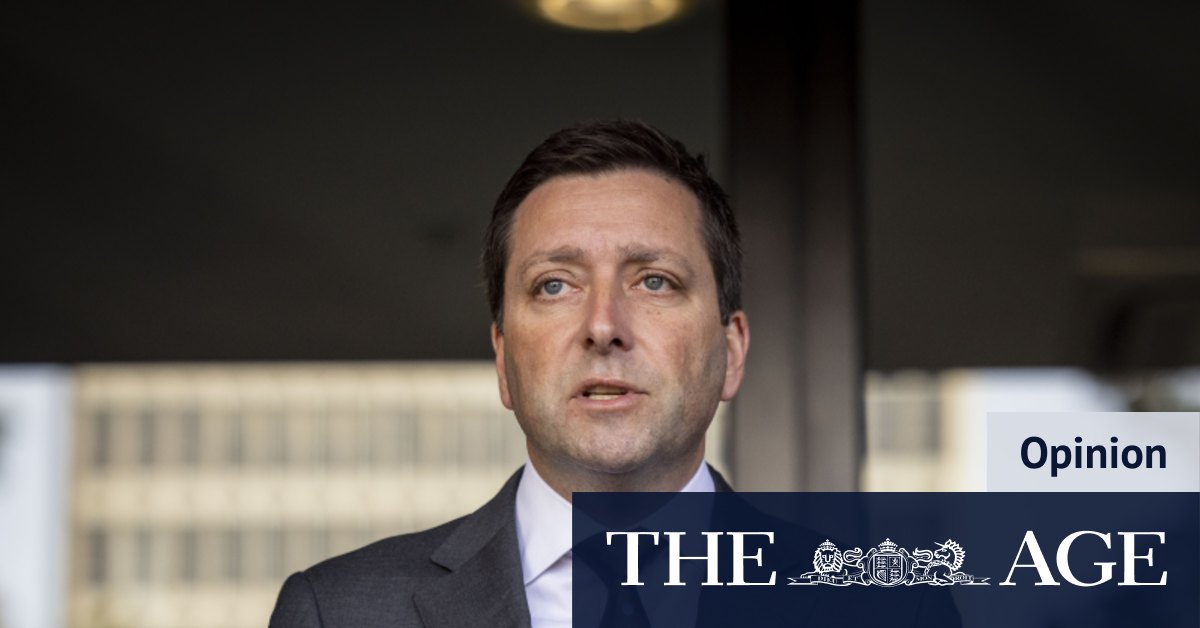
Victorian Liberal leader Matthew Guy has denied involvement in requesting payments from a Liberal donor.Credit:Wayne Taylor
Whatever slim chance the Coalition had of winning the state election in November was further weakened on Tuesday when The Age revealed Opposition Leader Matthew Guy’s chief of staff, Mitch Catlin, had drawn up a contract to solicit a billionaire donor to make more than $100,000 in payments to his private marketing business. In return for what we are yet to be enlightened, but it looked grubby.
Catlin resigned, Guy tried to tough it out as questions mounted about his knowledge of the proposal and the subsequent viability of his leadership, and Premier Daniel Andrews couldn’t believe his luck – just a fortnight earlier it was he who had been in the harsh glare of the integrity spotlight.
Last month Guy would have been delighted at the findings of Operation Watts, a joint investigation by the Independent Broad-based Anti-corruption Commission and the Victorian Ombudsman instigated two years ago after an exposé by The Age and 60 minutes into industrial-scale branch-stacking and influence-peddling within the Victorian Labor Party.
loading
The Watts report chronicled a “catalogue of unethical and inappropriate behavior and concerning practices” within the ALP, including that grants to community groups were handed out with inadequate scrutiny due to their importance in factional influence; staff at head office turned a blind eye to evidence of branch stacking; staff and MPs knew of signatures being forged and MPs’ staff had unauthorized access to sensitive information on ALP databases.
At least a normally combative Andrews took his medicine, admitting the culture was “shameful” and “absolutely disgraceful behaviour” and vowed to implement all 21 of the report’s recommendations.
All is not forgiven, Premier. The Watts findings were not a one-off. Indeed, as The Age‘s political editor Annika Smethurst wrote, Labor “has amassed an impressive portfolio of scandals since coming to office”, accused of, among other things, unwarranted secrecy around its controversial health decisions, withholding documents from public scrutiny, dodgy deals with unions and cozy bar-room chats with development lobbyists.
Guy claimed, rightly, the Watts report showed “a Labor government mired in corruption, cover-ups and political games at the expense of Victorians.” Yet Guy’s occupation of the moral high ground was brief: just days later he was facing his own allegations.
The man accused of murder after mass shooting in rural Queensland has been revealed to be local farmer Darryl Young.
The 59-year-old has been charged with murdering his neighbours, Mervyn Schwarz, 71, his wife Maree, 59, and her son Graham Tighe, 35.
The neighbors had a long-running dispute about boundary lines at their properties, in the rural town of Bogie, police say.
Watch the latest News on Channel 7 or stream for free on 7plus >>
It is alleged that Young invited his neighbors to meet him at the edge of his Shannonvale Road property on Thursday.
Young is accused of then shooting the couple, and Maree’s sons Graham and Ross Tighe, ‘execution-style’ with a rifle.
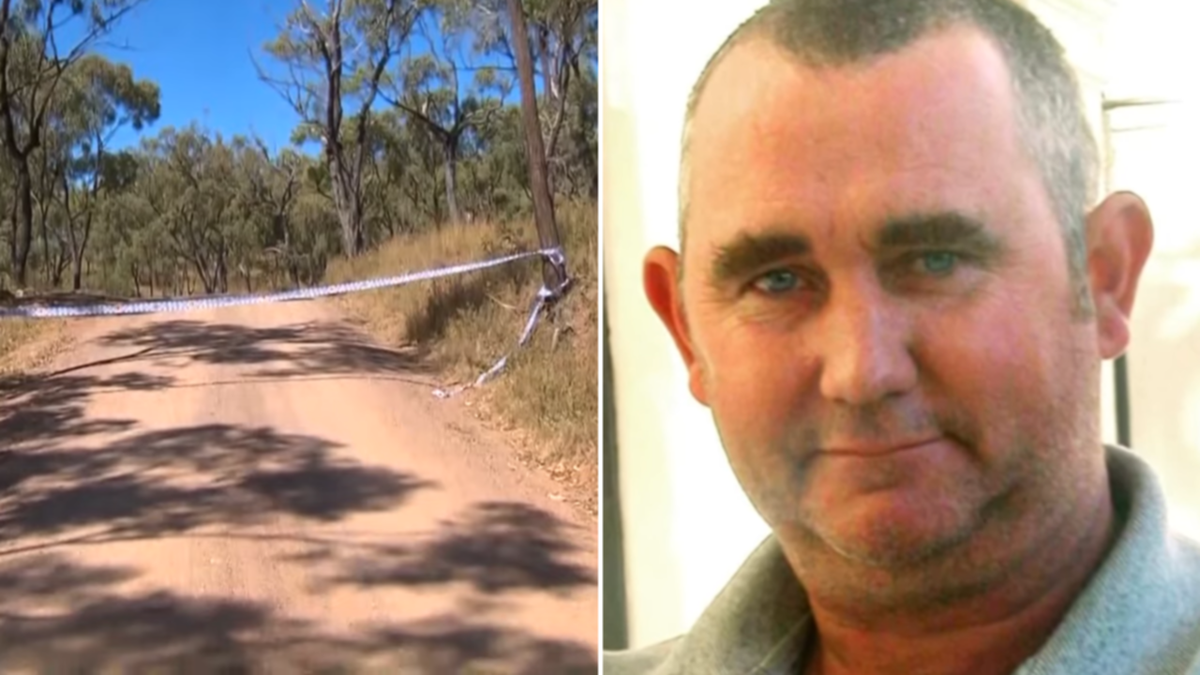
Darryl Young has been identified as the accused murderer. Credit: 7NEWSMaree and Mervyn Schwarz. Credit: Supplied
Ross, who was shot in the stomach, miraculously survived the shooting, and managed to escape in a ute and call for help.
Ross was able to escape in a ute and call for help. Credit: 7NEWS
He remains in Mackay Base Hospital in a stable condition.
Graham’s brother Ross survived and was able to flee into remote bushland with a gunshot wound to his stomach. Credit: 7NEWS
On Friday, Young was charged with three counts of murder and one count of attempted murder.
He is due to appear in the Proserpine Magistrates Court on Monday.
Acting Superintendent Tom Armitt said the property where the shooting allegedly took place was “tens of thousands of acres”.
“It’s actually a 45-minute drive between the neighbours,” he said.
“At the crime scene, which is at the front gate of one of the premises, it is a 3km drive between the gate and the house at that location.”
The shooting occurred at the gate of Young’s rural property. Credit: 7NEWS
Armitt said because Ross had been so far from the crime scene, and it was unclear whether the alleged gunman was still at large, police were cautious in their approach to the property.
“At that time, not knowing whether the armed offender was present or not, putting their lives in grave danger, especially when the report was that the people had been shot with a rifle,” Armitt said.
“So that was slow and meticulous work and extremely brave of the officers who were involved at that time.”
The charges come as new tragic details emerge that Graham’s partner Lucy had only recently given birth to their second child.
Graham’s partner Lucy had given birth to their second child just weeks before. Credit: 7NEWS
Graham’s uncle, Greg Austen, told 7NEWS the father had only spent a few days with the newborn before the baby was taken to Brisbane to visit Lucy’s mother.
“It’s just devastating shock that things can happen so quickly in the blink of an eye and ruin so many lives so quickly,” he said.
Lucy had been stuck in Brisbane, as she was unable to fly on commercial airlines weeks after giving birth.
On Friday, the charity Angel Flight arranged a charter for Lucy and her two young children to fly home to north Queensland.
Horrific footage of crowd falling as railing collapses
Horrific footage of crowd falling as railing collapses
Journalist, author and federal press secretary David Barnett has died in Canberra at the age of 90.
Barnett was press secretary to Malcolm Fraser in opposition and in government at the height of the 1975 crisis and its aftermath, when Fraser led the Liberal Party in challenging then-prime minister Gough Whitlam and blocking supply in the Senate.
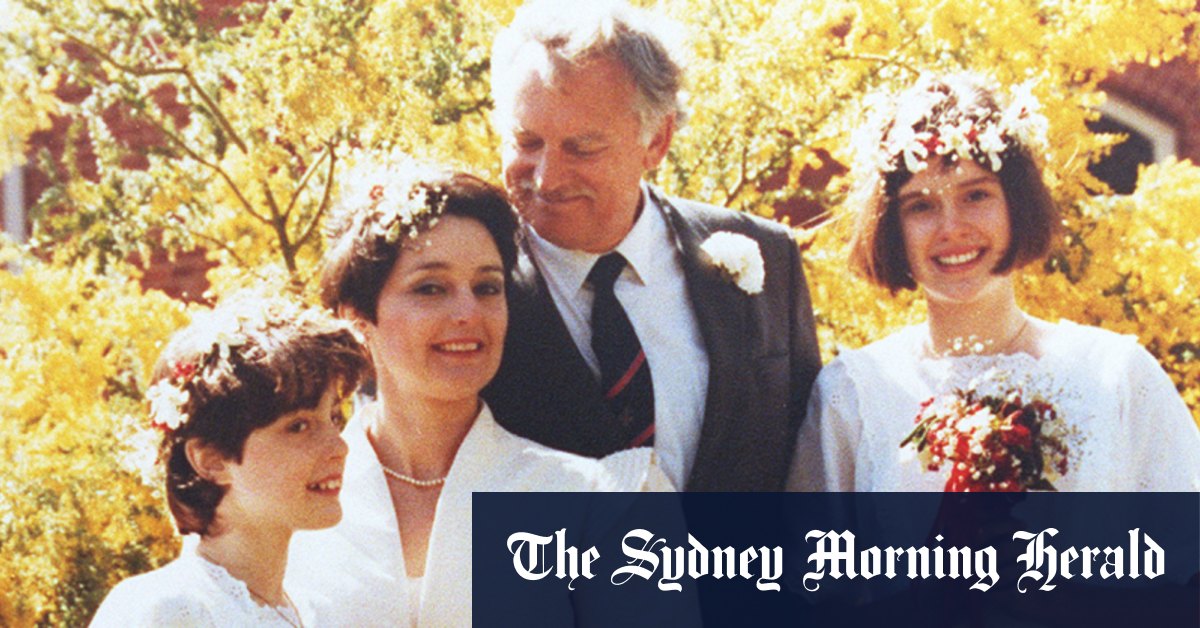
Pru Goward and David Barnett on their wedding day with Pru’s daughters Kate Fischer, 12, right and Penny, 11.Credit:
He served as press secretary for seven years after Fraser won the 1975 election before returning to journalism in the press gallery of Parliament House in Canberra.
“He was a tremendous worker,” he said of Fraser in an ABC interview in 2015. “He didn’t spare us much either. His hair turned gray in the job and so did mine really.
After leaving government, Barnett went on to write a biography of John Howard soon after Howard led the Liberals to victory at the 1996 federal election. Barnett wrote the book, John Howard: Prime Ministerwith his wife, Pru Goward, a fellow journalist who became the federal Sex Discrimination Commissioner, a Liberal member in the NSW Parliament and a minister in the state government.
David Barnett when he was PM Malcolm Fraser’s press secretary in 1980.Credit:
In a statement released on Sunday morning, Howard said Barnett was an invaluable adviser to Fraser and his death marked the departure of a highly significant figure in the national media.
“I counted him as a good friend,” Howard said.
Barnett’s colleagues noted he was still writing for his local paper, the Yass-Tribune, in regional NSW, when he was in his 80s. He had started in journalism as a copy boy on The Sun in Sydney in 1949.
Can you imagine wearing the same suit your dad wore for his 21st birthday to your formal school?
Key points:
Students at a regional Victorian schools have put on a Recycled Dance after missing their year 10 formal due to COVID-19
The students invented a thrifty theme to tackle fast fashion
Young people are making the most of being together after two years of remote learning
In regional Victoria, some students have borrowed, swapped and op-shopped to make a statement about fast fashion and climate change.
After missing out on many school-age rites of passage through the pandemic, one school put on a dance with a difference.
Year 11 Emmanuel College students trawled through op shops, their parents’ and grandparents’ wardrobes, and swapped outfits for their first-ever Recycled Dance.
The thrifty theme invented by the students was also about tackling fast fashion, a growing threat to the environment.
Students trawled through op shops and their parents’ wardrobes, and swapped outfits.(Supplied)
One of the students behind the project, Paige Armistead, wore a green dress sourced from her mum’s wardrobe.
“After missing out on many events such as the year 10 formal due to COVID it was great to get back together as a year level and have some fun,” she said.
“We wanted to do a formal in a way that’s going to sustain our environment.
“From there we came up with the recycled theme. A lot of people buy stuff online, wear it once and don’t wear it again. We wanted to reduce waste and keep it sustainable.”
Kids embraced the frills of the ’60s and the fur coats of the ’70s, and one student had on the brown suit his dad wore to his 21st birthday.
George Stevens wore his dad’s 21st brthday suit to his school formal.(Supplied: George Stevens)
With the increasing costs of living impacting on families’ bottom lines, students also wanted to make the event more affordable.
“We had kids come in their parents’ suits and their mums’ dresses, it was really cool,” Paige said.
Young people have missed out on many coming-of-age events in the past two years of the pandemic, such as school formals, sporting carnivals, debutante balls and musicals.
Young people have missed out on many coming-of-age events during the pandemic.(Supplied)
But these students aren’t dwelling on what they’ve lost and are making the most of the time together they’ve yearned for.
“It was so good coming together after everything we’ve gone through, we’ve been so separated,” Paige said.
She said they hoped to continue the theme at their formal year 12.
A large steel container of unknown origin has been found floating in the Gulf of Carpentaria.
Key points:
A large steel container has been found floating in the Gulf of Carpentaria
Container has been marked and flagged with maritime authorities
Marine debris is an ever-present issue on the Arnhem Land coast
The crew of the Wildcard fishing vessel spotted the object to the north-east of Groote Eylandt while looking for mackerel this week.
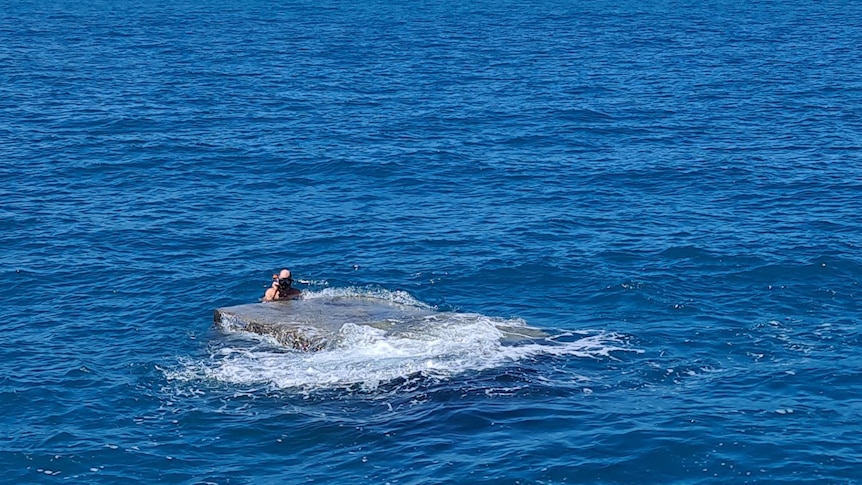
“It’s about 5 meters by 3 meters by 4 meters — it’s a sizeable chunk of steel,” the Wildcard’s Tiger Davey said.
“It must be a bit empty because it is floating just below the surface, bobbing in and out of the water.
The crew of the Wildcard investigated the floating container but could not open it.(Supplied: Bruce Davey)
“We were only passing about 300 meters off [the container] when we spotted it.
“If you weren’t paying attention or it was night time, it is highly unlikely that it would have been visible on radar or seen by somebody.”
The Wildcard pulled up beside the container, with a crew member diving into the water to inspect the object, but they were unable to open its hatch.
Mr Davey said it was not a regular shipping container.
“We think it’s a fuel pod or some sort of storage pod because it has some lifting lugs and a big hatch on the top,” he said.
“It has a hose coming off it, so I would say it’s off a boat and it’s been lost overboard or dropped.”
The container was too big for the Wildcard to tow to a safe location, so the crew tied a marker buoy to it and flagged it as a navigational hazard with maritime authorities.
Thousands of tonnes of rubbish wash up on remote Arnhem Land beaches every year.(ABC News: Michael Franchi)
Marine debris a major issue in Gulf
The Gulf of Carpentaria has a significant marine debris problem, with ghost nets, fishing equipment, and rubbish from Indonesia and Papua New Guinea regularly washing up on remote beaches.
“With the major shipping routes we have over the top end of Australia, [the container] could have come from anywhere,” Mr Davey said.
“The currents push everything into the Gulf and then the south-easterly winds push everything over to this side [near Groote Eylandt].
“Hence the huge issue with ghost nets and rubbish on this western side of the Gulf… we have quite a bit of flotsam and nets through this area.”
Maritime Safety NT has issued a marine navigation warning about the container.
“A coastal notice to mariners has been issued for the waters off North East Groote Eylandt after a large floating container was spotted in the area,” the Maritime Safety NT notice said.
“All vessels in the vicinity to keep a sharp lookout and navigate with extreme caution.”
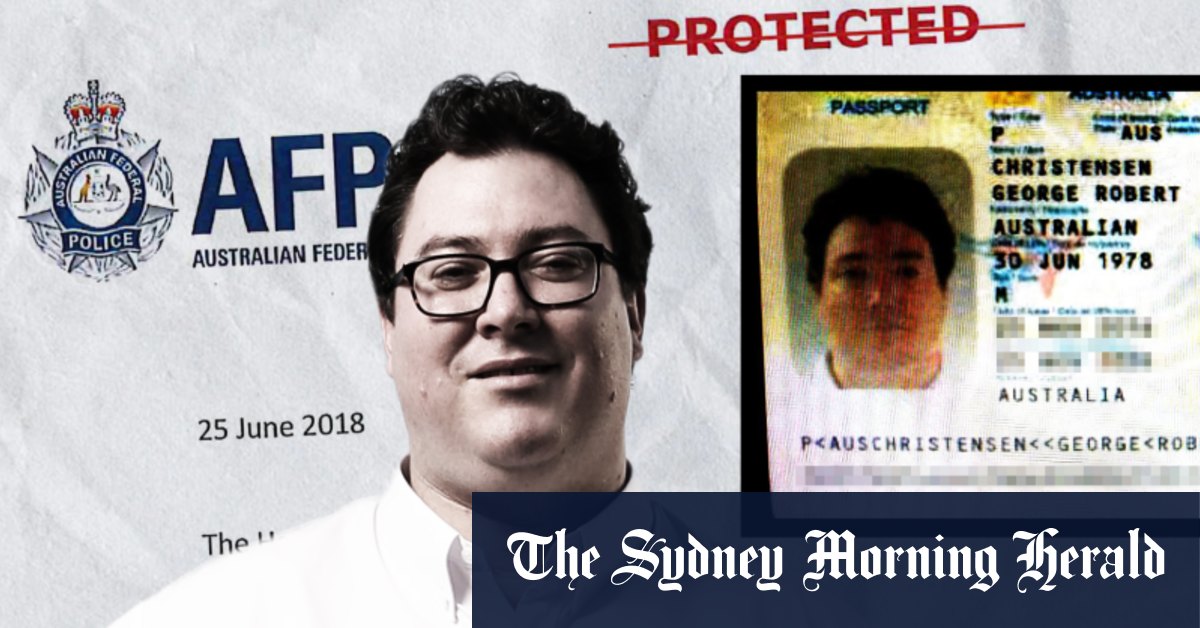
When Australian Federal Police commissioner Reece Kershaw took over the agency, he promised a new era of transparency.
“If it’s going to get out, we might as well be the ones actually saying it,” he told The Sydney Morning Herald and The Age in late 2019, referring to the increasingly long delays to access documents under freedom of information laws.
George Christensen spent 294 days in the Philippines over a four-year period.Credit:Andrew Mears
Back then, the AFP was mired in controversy over raids on multiple media outlets and the nation’s new top law enforcer was keen to project a transparency-trumps-all approach.
But what Kershaw might not have been aware of at the time was this: his agency had already begun what would turn into a more than three-year legal fight to block the release of a single-page document.
Five months earlier, Nine News and this masthead had applied to obtain a letter the AFP sent then-home affairs minister Peter Dutton regarding Nationals MP George Christensen’s activities in the Philippines. When Kershaw made his promise to him, the AFP had already issued its first rejection.
The AFP firstly opposed the release of the letter on privacy grounds, arguing it would be an unreasonable disclosure of Christensen’s personal information.
After the matter was appealed to the information commissioner, the AFP added more arguments on national security grounds. The police agency contended that releasing the letter would have a “substantial adverse effect” on its operations by compromising the “provision of frank and candid briefings to the minister of home affairs in relation to sensitive matters”.
The matter was further delayed by Christensen making three separate submissions arguing against the letter’s disclosure.
The long-running fight to obtain the document ended this week, when the AFP was forced to release the document after a ruling by the information commissioner found its disclosure was in the public interest.
In the letter sent to the then-home affairs minister Peter Dutton on June 25, 2018, the AFP said a police probe into Christensen’s frequent travel to the region had found no evidence of criminal conduct but the politician had “engaged in activities” that put him at risk of being compromised by foreign interests.
loading
The stonewalling by the AFP has opened itself up to accusations that it was trying to serve the then-Coalition government, rather than acting as the cops on the beat.
Sydney barrister Geoffrey Watson, SC, a former counsel assisting the NSW Independent Commission Against Corruption, says: “I can’t impute bad or political motives to the AFP, but that’s the practical effect of what they did.”
Watson says the three-year delay to release the letter is “scandalous” and “appalling” because now there is a new Labor government and Christensen is out of federal parliament.
He says he understands the AFP’s privacy arguments, even if they were outweighed by the public interest, but the agency’s national security arguments were “specious” and “baseless”.
“I found it laughable to think that it could have some effect on AFP operations.”
Asked why it fought the request for the document for so long, the AFP says it “respects the decision of the Information Commission and has released the document to the applicant”.
Christensen, who was privately dubbed the “Member for Manila” by colleagues, took at least 28 trips to the Philippines, spending almost 300 days in the country, between 2014 and 2018.
He would wander the streets of Angeles City – an urbanized area more than 80km from the capital Manila known for its red light district – in a Hawaiian-style shirt, board shorts and thongs, buying giant teddy bears and chocolates for women in the bars.
One of his favorite bars was Ponytails, which advertised itself as an “adult entertainment service” employing 100 female dancers and 50 female wait staff.
According to Marjorie Lamsen, the manager of the Ponytails, Christensen was a “very regular visitor” at the venue.
“He was always very good… He was a big spender,” Lamsen said in late 2019.
“The weakness of George is women. He would usually give allowances to these people … He would keep his job from him a secret but now we know he’s a politician.
It is here he would meet his wife, April, in early 2017. He would tell Queensland’s Courier Mail that a friend had introduced them at a “small karaoke” bar and his “singing talents obviously impressed her”.
Christensen has long denied any wrongdoing in relation to his activity in South East Asia, pointing to the fact that federal police never found any evidence of criminality.
He has previously claimed he spent so much time in the country to be with his now wife, but he made 19 trips – totaling 205 days – in the country before he ever met her.
loading
Alarm bells started ringing for federal police officers in early 2017, when Christensen’s regular trips to the Philippines and Thailand started catching their attention.
The AFP then became aware of multiple aliases Facebook pages Christensen appeared to be using to communicate with people in the Philippines. Officers were also concerned about payments Christensen was making to women in the country.
Christensen went to great lengths to normalize his trips. He would often fly straight to Manila from Canberra at the end of sitting weeks. He was, after all, chairman of the Parliamentary Friends of the Philippines. He would tell colleagues he visited regularly to do charity work for orphanages.
The Queenslander would holiday there over Christmas and New Year only to fly home and be seen in the electorate on Australia Day, or Anzac Day – post an image on Facebook before flying back.
On September 7, then-AFP commissioner Andrew Colvin briefed the country’s most senior bureaucrat, Martin Parkinson, the secretary of the Department of Prime Minister and Cabinet, on the matter. Parkinson advised Colvin he should brief then-prime minister Malcolm Turnbull, who was subsequently provided six briefings over the course of the next year.
Colvin told Turnbull that the Philippines police were aware of the concerns and that this raised the possibility Christensen could be questioned in Manila on an upcoming trip.
“Colvin described how Christensen had an unusually complex online presence and had been spending substantial sums in Manila bars and nightclubs as well as making many small payments to women there,” Turnbull writes in his memoir, A Bigger Picture.
“Against the advice of our embassy in the Philippines, he had been staying in seedy hotels in Angeles City, which was not only recklessly unsafe but made him vulnerable to being compromised.”
Over the coming months, then-deputy prime minister Barnaby Joyce, his successor Michael McCormack and Dutton were also all provided briefings on the police probe.
At some point during this time, there was a growing concern by some people within the government and the AFP that Christensen had been tipped off about the police probe.
Watson says if this did occur, it would be “disgraceful conduct” on behalf of the politicians.
“They engaged in briefings and it seemed to have been leaked to Christensen,” Watson says. “If you can’t trust senior politicians not to leak this information for political advantage then the country is in a woeful place.”
On May 24, 2018, the AFP met with Christensen and told him of their concerns that he could be compromised, including by foreign intelligence services. A month later, they sent the letter to Dutton, Turnbull and McCormack closing the case but warning of the ongoing risk.
Watson says it appeared the AFP were pursuing two different avenues: the allegation of criminal conduct, which was found to have no basis, and the national security concerns of Christensen being potentially compromised.
“Having investigated the criminal aspect and found nothing… I cannot understand why it wouldn’t be escalated if there was a risk, or why it wasn’t transferred to [counter-espionage agency] ASIO or why it just seemed to fall away to nothing.”
He also points out the AFP later raised national security grounds in the FOI process, despite dropping the inquiry into security concerns.
“The AFP was raising national security in relation to a matter they appeared not to pursue. How does that work out?
loading
Anthony Whealy, QC, chair of the Center for Public Integrity and a former Court of Appeal judge, says national security is an important concern but too often it is thrown up as a “cloak to avoid a situation”.
“This example of the AFP letter is a classic example of a completely artificial claim for national security protection,” he says.