Categories
Australia

Telegram app becoming neo-Nazi propaganda haven

‘Keen to do a sticker run’

Well before neo-Nazi propaganda began appearing this year at sites around the city of Wollongong and in Sydney’s CBD, the man calling himself Underland had started networking online across Australia’s extremist scene. Records of his communications from him obtained by this masthead reveal Telegram served as the perfect platform. It allowed him to mask his identity as he sought counsel and new introductions from entrenched extremist figures.

After Underland had been directed towards the Melbourne-based European Australian Movement on a Telegram-hosted neo-Nazi channel, Underland began communicating. His contact with him uses the alias “Aussie Meditations”. In February, The Age and The Sydney Morning Herald identified the user of this alias as Stefan Eracleous, a former young Liberal member turned neo-Nazi from Victoria. Eracleous was responsible for a January 19 propaganda video depicting three masked neo-Nazis burning an Aboriginal flag, reciting a white supremacist manifesto and attacking Greens senator Lidia Thorpe.

In May, Underland asked Eracleous what “stickers have you got an [sic] how much are they… Me and a few of the boys are keen to do a sticker run.”

Eracleous responded swiftly, offering extremist stickers and posters that were “very cheap and good designs.”

It is unclear if Eracleous helped Underland obtain neo-Nazi material, but it seems likely. After the pair’s exchange of messages, Underland embarked on a propaganda campaign around Wollongong, placing stickers and posters up at several sites.

One of Underland’s aims appears to have been recruited. Posters encouraged people to connect with his new neo-Nazi cell, the Illawarra Active, via its dedicated Telegram page. Young Australians were particular targets, with graffiti, stickers and posters posted on walls and signs at the University of Wollongong. Underland and a small number of others also targeted local migrant communities. One Telegram post uploaded by the group shows it placing “Islamists not welcome” posters at Wollongong’s Omar mosque.

The message exchange in which 'Underland' asks for neo-Nazi material from a Melbourne-based extremist.

The message exchange in which ‘Underland’ asks for neo-Nazi material from a Melbourne-based extremist.

Budding racists who responded to the request to follow Illawarra Active’s Telegram account were confronted online with material that became increasingly disturbing. On May 21, the account shared a video promoting the European Australia Movement and urged supporters to help “free” one of its leaders. The man is on bail in Melbourne while facing charges relating to an assault allegation. His case of him has been turned into a rallying point by neo-Nazi groups across Australia.

On June 2, the Illawarra Active account shared material created by a group that is proscribed as a terrorist organization in Australia, the overseas-based National Socialist Order. It included a video outlining the core beliefs set out in a white supremacist book, siegewhich has been used as inspiration by terrorist actors across the world and which champions violent conflict with mainstream society.

‘Terrorgram’

The New Zealand Royal Commission called after the Christchurch massacre noted the Australian terrorist who committed the atrocity was an adherent to the views espoused in siegeparticularly the idea that violent action should be embraced to accelerate the reach and power of white nationalism.

An image on the Illawarra Active social media site.

An image on the Illawarra Active social media site.

The number of Australians who responded to the propaganda drive by following the Illawarra Active’s Telegram account appears to have been no more than about 50 at any time, even after the group gained a publicity bounce from an Illawarra Mercury story on June 6 headlined “Police investigate the ‘white supremacy, neo-Nazi’ flyers found at University of Wollongong campus”.

But while the group remains small, its Telegram channel reveals devoted followers using the encrypted platform to communicate, publicize events and liaise with other neo-Nazi cells across Australia.

Researchers from the US’s Center on Terrorism, Extremism and Counterterrorism recently described how Telegram had enabled the formation of a so-called “Terrorgram” community, which uses the encrypted platform as “the main point of online organizing, identity building, propaganda distribution, and more”.

The researchers analyzed thousands of Telegram messages from two new militant neo-Nazi networks to form insights into their “diffuse networks” and how they relate to the “threats of real-world violence they pose”.

The report warns that even small online cells may pose a tangible terror risk, citing the June 2021 warning of a terror plot in Texas by a member of one of the two networks analyzed in the report.

“Telegram is in many ways an ideal platform for dangerous actors. It has good functionality, communications are encrypted, its user base is expanding and content moderation is practically non-existent,” says Lydia Khalil, a Lowy Institute research fellow and author of the upcoming book Rise of the Extreme Right.

Evident in Underland’s Telegram history is a hunger to move off the internet and into the real world. In one message thread with the Adelaide terror suspect, Eracleous and several EAM members, Underland discusses buying a large block of land to “set up a decent community” and creating a White Australia political party. Political or racist violence is a deliberate theme in many posts.

Unintended consequences

But Underland’s online activity also has an unintended consequence, revealing a series of clues about his true identity. Three years of his internet posting of him, reviewed by anti-fascist researchers from The White Rose Society, reveals a job (arborist), a first name (Adrian) and a middle initial (J), all pointing to a 34-year-old old Wollongong man called Adrian John Carr.

Adrian John Carr claims his social media sites have been hacked.

Adrian John Carr claims his social media sites have been hacked.

More online digging shows that Carr used his real email and name to set up a Skype account. Its profile photo displays the name Underland. An archived Twitter account reveals a similar link between Carr and the alias Underland.

When called by this masthead, Carr denied he was Underland, claiming his various social media accounts had been hacked. “I got defrauded, my identity got stolen,” he said. He did confirm, however, that he was the author of a since-deleted post from his Facebook page that described Jews as “scum”.

Carr’s fellow cell members include Wollongong man Ben Thomas, 36, whose identity is given away by the distinctive hand tattoos that appear both on his Facebook page and on the Illawarra Active’s Telegram page. Thomas’s hands can be seen on some of the cell’s propaganda videos plastering neo-Nazi propaganda around Wollongong. He could not be reached for comment.

Ben Thomas.

Ben Thomas.

Another cell member, 30-year-old Geoff Abel, shares with Carr and Thomas a history of police attention for alleged criminal activity, with Abel spending several stints in jail.

A NSW man who had been approached to join the group described Carr as its key actor and noted its members had nearly all experienced family and mental instability and trauma as younger men. The man, who asked to remain confidential, blamed “people on the internet” for radicalizing Carr.

“I don’t like what AJ [Adrian] is doing. I don’t like the hate that is being spread. But you need to ask, ‘why is Adrian the way he is? What is causing these young men in the regions to slip through the cracks?’”

A global challenge

The young men in Illawarra Active appear to relish the brotherhood formed first in the Telegram neo-Nazi community and then in person, as they urge each other on to become more radical.

Geoff Abel.

Geoff Abel.

As overseas researchers have observed of European and American Telegram neo-Nazi and white supremacist groups, the Australian “terrorgram” community is also notable not only for its extremist camaraderie, but its resilience.

The chats involving Carr and his fellow cell members appear to observe the recent arrest of like-minded Australians by the federal police counter-terror teams as reason to continue their fight, rather than to rethink their views.

It also shows how quickly a small band of disorganized and disillusioned men from regional Australia can fall into the orbit of highly organized international extremist groups. The National Socialist Order is banned in Australia as a terror group, but Illawarra Active has freely shared its propaganda online.

Terror watcher Khalil says local extremist groups are increasingly reaching over state and international borders.

“Right-wing groups are increasingly convinced they must organize globally to meet global challenges,” she says.

The Morning Edition newsletter is our guide to the day’s most important and interesting stories, analysis and insights. Sign up here.
Categories
Australia

John Howard’s climate doubts reveal more about conservative identity politics than anything else | Graham Readfearn

The former prime minister John Howard remains an elder statesman among conservatives so when he’s asked on primetime television if he doubts that climate change is happening, his response is revealing.

That moment happened on the ABC on Tuesday evening during an interview with actor David Wenham, who asked: “You’re not refuting the fact that there’s climate change?”

Given the decades of scientific inquiry on the subject, the most obvious answer to this question would have been a firm, declarative “no”.

But instead, Howard offered this.

“Well… well… I think some aspects of the debate have become greatly exaggerated,” he said. “Every time there’s any kind of disaster it’s always put down to climate change. In some cases that’s fair and in other cases it’s not fair.”

Howard didn’t say which disasters he was referring to, but those most fresh in the minds of Australians are the devastating east coast floods and the horrors of the Black Summer bushfires.

Climate scientists prefer to carry out studies to carefully attribute the role of rising greenhouse gases in the atmosphere to natural disasters. It’s not a simple task.

Studies of those 2019/2020 bushfires have shown climate change did increase the risk of those fires happening, and their severity (which one assessment said had killed or displaced about 3 billion animals).

Prof David Karoly, a leading Australian climate scientist, has said the devastating floods earlier this year were an example of how burning fossil fuels had put the climate system “on steroids” and amplified the rainfall.

Burning fossil fuels and chopping down forests has loaded the atmosphere with 50% more carbon dioxide than before the Industrial Revolution.

Some climate scientists will point out that by changing the composition of the atmosphere so fundamentally, and by adding heat to the ocean, the influence of the climate crisis on all weather is now inescapable.

identity politics

Even without specifics, Howard’s position tells us plenty about his understanding of the science, his regard for the risks from global heating and how he wants to frame the issue.

During the interview, Howard made a philosophical point about the state of political discourse saying there was “too much of an obsession with identity politics and single issues like climate change”.

Expressing skepticism about the causes of climate change, its impacts or the motives behind calls for action, has become a part of the political identity of many conservatives, particularly in the US and Australia.

Howard was trying to pin the “identity politics” label on progressives.

But by continuing to express skepticism on climate change only seconds later shows how a politician who reached their heights well before the term “identity politics” was invented, can still engage in it.

The IPCC’s hidden agenda?

Howard’s public stance on climate change has flip-flopped over the years.

In late 2006 and under political pressure in the run-up to an election, he said he wasn’t a climate science denier and quoted scientific evidence that rising greenhouse gas levels were “significant and damaging”.

But in a London speech to a climate contrarian thinktank in 2013, he said he had always been “agnostic” on the issue which, given the overwhelming evidence gathered over many decades, is a bit like saying you’re agnostic about gravity.

During that 2013 speech, Howard quoted Prof Ottmar Edenhofer, a lead author of a UN climate assessment at the time.

“One has to free oneself from the illusion that international climate policy is environmental policy,” Howard quoted Edenhofer as saying. “This has almost nothing to do with environmental policy any more.”

Revealing his “real agenda”, Howard said Edenhofer had gone on to say: “One must say clearly that we de facto redistribute the world’s wealth by climate policy.”

This quote has been used over and over by climate science contrarians for years as evidence that the UN’s climate convention represents a hidden socialist agenda to redistribute wealth.

Just last week, Maurice Newman – a business adviser to another former Liberal prime minister, Tony Abbott – used the exact same quotes to make the exact same point in an article in the Spectator.

“At least the leftist Potsdam Institute’s Prof Ottmar Edenhofer has the courage to say out loud what is becoming more obvious by the day,” Newman wrote, not mentioning that the quotes are 12 years old.

The source is an English translation of an interview Edenhofer gave to Swiss newspaper Neue Zürcher Zeitung in 2010.

Edenhofer told Temperature Check the quotes were taken “completely out of context” and had been spread by opponents of climate action “again and again”.

Discover the Australia Weekend app

“Fortunately, the full version of the interview is still available on the internet,” he said.

“As usual, context matters: My point was that climate policy is, by its very nature, economic policy. Economic policy includes setting rules in the distribution struggle for scarce resources, and in such a distribution struggle there are always winners and losers. That’s why it is important to always consider climate and development policy jointly.

“That climate protection would be only a pretext and that it would in fact all be about redistribution from rich to poor is complete nonsense.”

He said that pricing greenhouse gas emissions should indeed penalize fossil fuel use, and any redistribution of wealth “is merely a consequence of the necessity to stop using fossil fuels in order to limit global warming and avoid dangerous climate impacts”.

climate of blame

In the Netherlands, farmers and their supporters have been protesting against new rules proposed by the government to radically cut the use of ammonia, nitrogen oxides and nitrous oxide.

They’ve been dumping manure on roads and blockading routes, saying the government’s cuts are unrealistic and will see many farms needing to close.

Like several other conservative commentators around the world, Sky News host James Morrow has been keen to lay the blame at the door of climate change policies.

“[Farmers] are being told they are going to have to cut production at a time of global food insecurity to basically follow climate mandates,” Morrow said.

No doubt that cutting nitrogen use would have benefits for the climate, but that’s not what the rules are about. The Dutch government’s efforts to cut nitrogen are aimed at cutting localized pollution threatening habitats next to farming operations.

The head of programs at Dutch environment group Natuur & Milieu, Rob van Tilburg, told Temperature Check: “The reason for the necessary intervention by the Dutch government is the continuing loss of nature that has arisen as a result of exceeding nitrogen standards for years. It’s definitely not the climate.”

He said three-quarters of Dutch nature reserves were affected by nitrogen pollution and the country’s intensive agriculture industry – one that keeps 115 million pigs, cows, chickens and goats in a country with only 17 million people.

The nitrogen standards applied to all countries in Europe, but the country’s highest court had declared three years ago the government’s policies were invalid.

Van Tilburg said: “As a result of this, it’s not allowed any more to issue permits for activities and projects that cause nitrogen emissions. Nitrogen pollution is making the soil acidic and we are losing nitrogen-sensitive plants and animal species rapidly.”

Categories
Australia

Australian man jailed over sex abuse ring after more than a dozen children rescued

An Adelaide man, 68, who remotely instructed and recorded the sexual abuse of children on 55 occasions over webcam has been sentenced to 15 years in jail.

The investigation led to the rescue of 15 victims in the Philippines and the arrests of five women accused of facilitating the “horrific” abuse, some of whom are the mothers and relatives of the victims.

The predator had pleaded guilty in February 2021 to 50 offenses between March 2018 and January 2020, but was charged with further offenses as investigations uncovered more information.

Watch the latest News on Channel 7 or stream for free on 7plus >>

Police believe the youngest child was aged just three when they were first abused.

Thirteen children and two young adults were removed from harm in the Philippines following a major investigation by Australian Federal Police (AFP), Australian Border Force, SA Police, Anti-Child Exploitation teams, and multiple agency partners in the Philippines.

AFP Commander Erica Merrin said: “Children are being forced into the most appalling violence and torment on camera by the people who are meant to love and to protect them.

“The abuse is then live-streamed to customers in Western nations, shamefully that includes Australia.

“This Adelaide man did not just watch children being hurt – he ordered specific abuse to happen and preyed on the economic vulnerability of the people involved.”

The five alleged facilitators were aged between 18 and 29 at the time.

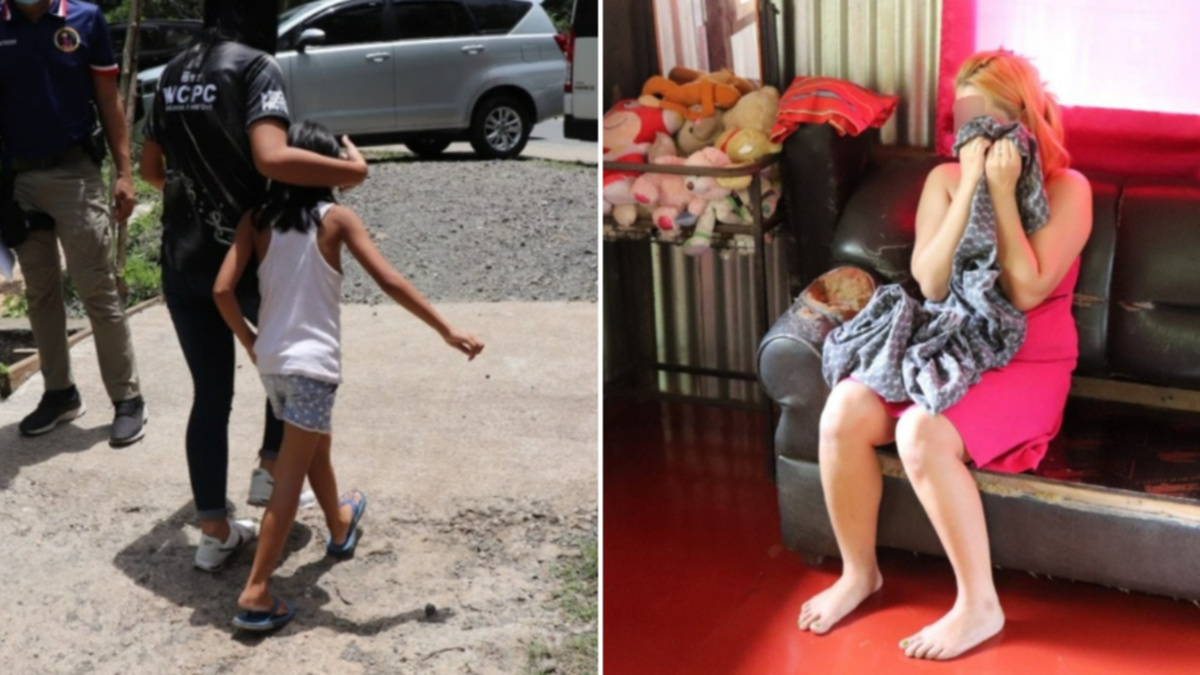
One of the 15 young victims being rescued by Philippine authorities. Credit: AFP
One of the alleged offenders of the ongoing child sex abuse hides her face inside a premises in the Philippines before her arrest. Credit: AFP

“One of the women charged was then an 18-year-old who was allegedly offering three girls online to offenders – her nine-year-old niece, 12-year-old cousin and 18-year-old best friend,” the AFP said.

The Adelaide man was first caught at Melbourne Airport with child abuse material on his mobile phone by Australian Border Force officials as he returned to Australia on an international flight in February 2020.

A forensic examination of the man’s digital storage devices “uncovered horrific footage of sexual acts involving children”, and police found more than 55,000 images and videos of child abuse material.

The man was charged over the illegal content.

Five alleged female facilitators of exploitation and child sex abuse were arrested by Philippines authorities. Credit: AFP

Further investigation found that the man “communicated with adult ‘facilitators’ in the Philippines to procure several children for his depraved requests,” AFP said.

“The children were forced to perform sexually explicit acts on camera which he watched live from his suburban Adelaide home. “

He was charged with the additional offenses in April 2020.

In November 2020 and May 2021, the AFP obtained a restraining order in relation to the property where many of his internet-based offenses allegedly took place.

The case served as the first example where an AFP taskforce had sought to confiscate the home of a person charged with sex offences. Credit: AFP

He was ordered to pay a total of $165,000, half of what his home was worth. This was the first time the AFP-led Criminal Assets Confiscation Taskforce (CACT) had sought to confiscate the home of a person charged with sex offences.

This is because he was allegedly using his property as “an instrument of crime”.

The AFP worked with its partner agencies in the Philippines, including the Philippine Internet Crimes Against Children Center (PICACC), to continue the investigation there.

Philippines authorities executed search warrants at multiple locations in Bislig City, a remote area in the country’s east, in August 2020.

“The rescues and arrests are a powerful reminder of why the AFP works closely with partners around the globe, sharing intelligence and the resources necessary to target anyone who preys on children, no matter where in the world they are hiding,” AFP International Command Detective Superintendent Andrew Perkins said.

The Adelaide man has been sentenced to a total of 15 years, three months and 19 days’ imprisonment, with a non-parole period of 10 years, for the commonwealth offences, as well as nine months for a state offence. They will be served cumulatively.

Girl hospitalized in inner Melbourne sex attack.

Girl hospitalized in inner Melbourne sex attack.

.

Categories
Australia

What is a void and how did it bring Brisbane’s CBD to a standstill?

Towering cranes and scaffolding dominate inner-city Brisbane right now with major infrastructure projects like the Cross River Rail, Brisbane Metro and Queen’s Wharf set to change the face of the CBD.

The developments are also occurring in some of the oldest parts of the city.

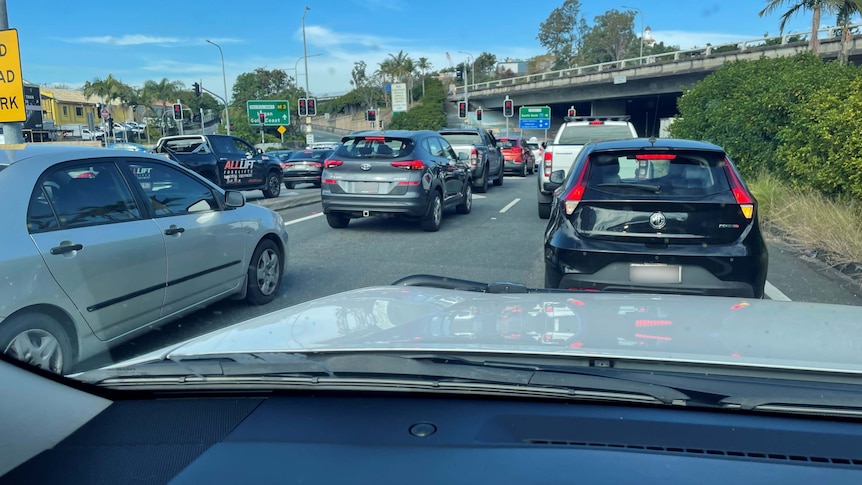
Then on Wednesday morning, traffic gridlock and hours-long delays gripped the CBD after contractors working on the city’s new bus network, Brisbane Metro, discovered a “void” below Adelaide Street.

Brisbane City Councillor Ryan Murphy said a decision was made “out of an abundance of caution” to close the stretch between George Street and North Quay, to ensure no vehicles drove over the weak point.

Could this happen again as the city develops?

This is what those in the know say about what could have caused the “void” and the likelihood of it happening again.

What is a void and how common are they?

Put simply, it’s a hole.

Professor David Williams, director of the Geotechnical Engineering Center at the University of Queensland, said in this instance a void “is a loss of support below the ground surface leading to surface settlement”.

“Most people would agree it’s not that common, we don’t usually have the whole of Brisbane brought to a standstill because … a void is revealed,” Professor Williams said.

“It’s more likely a bit of a one-off — it makes sense that it’s related to the construction activity.”

A man with short gray hair and beard smiling outdoors
Professor David Williams says voids are uncommon. (Supplied: Professor David Williams )

A void is also referred to as “ground subsidence”.

It can cause major disruption to roads, resulting in fracture, unevenness, and in some cases, sinkholes.

What happened under Adelaide Street?

The exact cause of yesterday’s void is yet to be determined, but Mr Murphy said it was “uncovered through excavation works”.

“We don’t know how long it was there, we don’t know exactly the cause.

“Workers were doing vacuum excavation … which found a void below one of the traffic lanes on Adelaide Street,” he told ABC Radio Brisbane.

“Some free-flowing material … flowed onto our work site which caused a slight sag in the road.

“Essentially a void [was] created, and that void needed to be filled before we could safely reopen that road – this is not a tunnel collapse.”

Professor Williams said “it’s a little unclear” whether the “excavation activity revealed or caused the void.”

A bus on Adelaide Street in Brisbane
Adelaide Street is subject to heavy traffic and was partially closed as a precaution.(ABC News: Lucas Hill)

What could have caused a void?

Tom Brown from the Rail Tram and Bus Union questioned Brisbane City Council’s explanation.

“The story doesn’t seem to stack up to me, because if there was a void underneath Adelaide Street surely the city’s engineers would’ve picked it up with the ultrasounds when they were marking up this job,” Mr Brown said.

.

Categories
Australia

NSW and Victoria weather forecast predicts rain, winds and floods

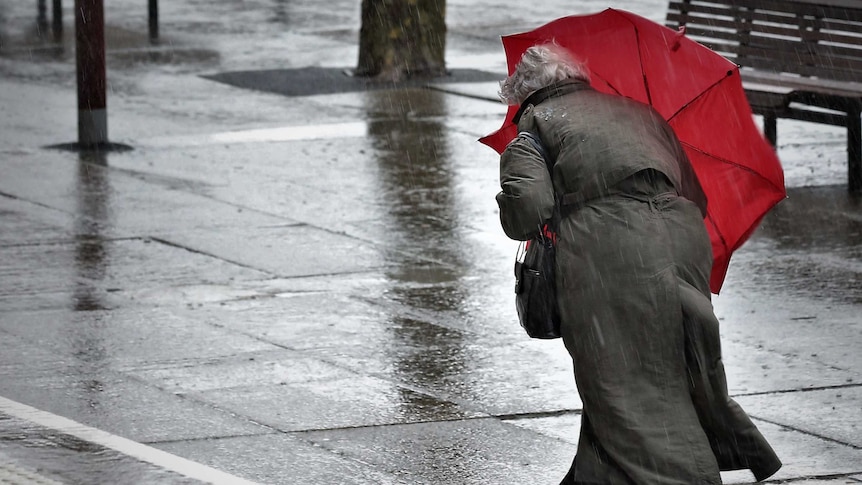
The weather is expected to keep getting wetter for inland NSW and Victoria’s alpine regions today as the biggest frontal system of the season sweeps through.

The complex low pressure system is not being followed by the usual piercingly cold change, which is great news for those who are sick of shivering but a worry for the ski fields.

Why all the wild weather?

The first in a series of cold fronts moved through Western Australia on Monday, where some Perth suburbs were hit by their highest wind gusts on record and power outages caused havoc at the airport.

loading

The next swept across South Australia on Tuesday.

Today a third is sweeping across the south-east.

“That’s going to tap into some tropical moisture, leading to widespread rainfall across much of inland New South Wales and north-eastern parts of Victoria,” weather bureau meteorologist Dean Narramore said.

“The main band will really start to pick up on Thursday morning and then become widespread across New South Wales and north-eastern Victoria Thursday afternoon and Thursday night.”

He said the heaviest falls were expected west of the Great Dividing Range.

Map of Australia green over southern states indicating rainfall expected
Heavy rain is expected over the next few days.(Supplied: Bureau of Meteorology)

“This is more of an inland rain event,” Mr Narramore said.

loading

He said more than 100 millimetres of rain could fall on Victorian alpine regions today.

“That could lead to minor to moderate flooding on some of our rivers, creeks and streams,” he said.

“So something to watch as you move through later into Thursday into Friday.”

Rain is also expected to continue over northern and western parts of Tasmania, where flood warnings are also current.

Wind impacts are not expected to be as bad as in the past few days.

But Mr Narramore warned likes of about 100 kilometers an hour were still likely through north-eastern parts of Victoria, particularly for alpine areas.

He said elevated parts of New South Wales were also at risk of strong winds, with likes of up to 125 kilometers an hour predicted in the Snowy Mountains.

Watch for warnings

Victoria State Emergency Service chief officer of operations, Tim Wiebusch, urged people to keep up with emergency information.

“Ensure you listen to the advice of emergency services, and secure loose items in and around your home, park your vehicle undercover, away from trees and remain indoors until the severe weather has passed,” he said.

“As we are expecting heavy rain in parts of Victoria, it’s important you never drive through floodwater.

“Attempting to drive through flood waters may be the last decision you make,” he said.

Bad news for the snowfields

Cold fronts are usually followed by a blast of icy southerly air. But this time around temperatures have remained remarkably balmy.

.

Categories
Australia

Great Barrier Reef coral cover at record levels after mass-bleaching events, report shows

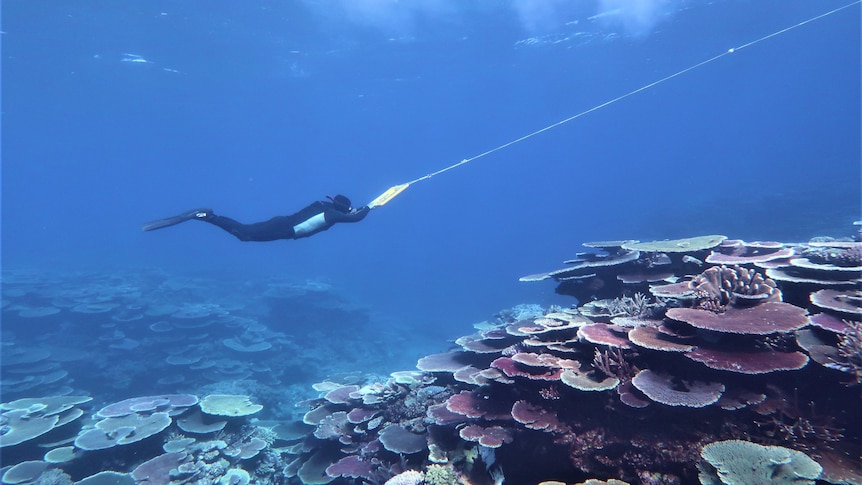
Record coral cover is being seen across much of the Great Barrier Reef as it recovers from past storms and mass-bleaching events. But the new coral taking over is leaving the reef more vulnerable to future devastating impacts, according to the Australian Institute of Marine Science (AIMS).

AIMS’ 36-year Long-Term Monitoring Program has seen continued dramatic improvement in coral cover in the northern and central sections of the reef, following a period without intense disturbances.

The results come off the back of mass coral bleaching events that have happened at an unprecedented frequency — four out of six occurred in the last seven years. Mass bleaching, caused by marine heatwaves, was not known to occur at all prior to 1998.

When the water gets too hot, the algae that live inside the coral and provide it with most of its energy is expelled. If it remains too hot for too long, the coral stars and dies.

“The 2020 and 2022 bleaching events, while extensive, didn’t reach the intensity of the 2016 and 2017 events and, as a result, we have seen less mortality,” AIMS chief executive Paul Hardisty said.

“These latest results demonstrate the reef can still recover in periods free of intense disturbances.”

Line graphs show coral cover in the northern and central Great Barrier Reef declined after 2012, but increased after 2020.
The percentage of coral cover in the northern and central Great Barrier Reef has increased.(Supplied: Australian Institute of Marine Science)

Eighty-seven reefs were surveyed between August 2021 and March 2022 as part of the report, which showed cover in the north increased from 27 per cent to 36 per cent, and from 26 per cent to 33 per cent in the central section.

That recovery has led to the highest-ever coral cover the Long-Term Monitoring Program has recorded in those sections, which begin north of Mackay.

But Dr Hardisty said the frequent bleaching showed how vulnerable the reef remained.

Despite the good news, the southern section, which extends from the Whitsundays down past the Keppel group of islands, has seen a small reduction in coral cover largely due to an ongoing outbreak of coral-eating crown-of-thorns starfish.

Some thick, spiky red crown-of-thorns starfish are seen crawling around branches of white coral.
Crown-of-thorns starfish (seen in the front) continue to decimate coral reefs.(Supplied: Australian Institute of Marine Science)

“This shows how vulnerable the reef is to the continued acute and severe disturbances that are occurring more often, and are longer lasting,” Dr Hardisty said.

But even the southern section of the reef remains in relatively good health, with 34 per cent coral cover, a reduction from a recent peak of 37 per cent in 2017.

Increased coral cover could come at a cost

The rapid growth in coral cover appears to have come at the expense of the diversity of coral on the reef, with most of the increases accounted for by fast-growing branching coral called acropora.

Those corals grow quickly after disturbances but are very easily destroyed by storms, heatwaves and crown-of-thorns starfish. By increasing the dominance of those corals, the reef can become more vulnerable.

Colorful little fish swim among a variety of healthy-looking corals on the Great Barrier Reef.
Acropora corals have proliferated across much of the northern and central parts of the reef.(Supplied: Australian Institute of Marine Science)

It is a point acknowledged by Jodie Rummer, a marine biologist at James Cook University in Townsville.

“While it’s great to see increases in coral cover of a particular species, we can’t ignore that the diversity is really what we need to emphasise, and that’s going to be key to a healthy ecosystem over the longer term,” Professor Rummer said .

“While one species might be fast growing and repopulating very quickly, that also might be the most susceptible to some of the stressors that the Great Barrier Reef has faced over and over and over again over the past decade.”

Mike Emslie wearing an Australian Institute of Marine Science T-shirt, and smiling in a portrait taken near the ocean.
Mike Emslie says Acropora corals are vulnerable to wave damage and bleaching.(Supplied: Australian Institute of Marine Science/Marie Roman)

Senior research scientist Mike Emslie, who leads the AIMS Long Term-Monitoring Program, agreed the news was mixed when it came to acropora.

“These corals are particularly vulnerable to wave damage, like that generated by strong winds and tropical cyclones,” Dr Emslie said.

“They are also highly susceptible to coral bleaching, when water temperatures reach elevated levels, and are the preferred prey for crown-of-thorns starfish.

“This means that large increases in hard coral cover can quickly be negated by disturbances on reefs where acropora corals predominate.”

Reef remains in danger from rising temperatures

Around the world, coral reefs face a grim future unless urgent action is taken to drastically halt man-made global warming.

In 2018, the United Nations released a report warning that coral reefs worldwide were projected to decline by up to 90 per cent even if warming was capped at 1.5 degrees Celsius.

On a shelf of coral, some corals are a stark white colour.
In February 2022, various types of corals experienced bleaching, pictured here in the central part of the reef.(Supplied: Australian Institute of Marine Science)

Great Barrier Reef campaigner with the Australian Marine Conservation Society Cherry Muddle said while the findings were promising, the reef remained in danger.

“The fact remains that unless fossil-fuel emissions are drastically cut, the reef remains in danger from rising temperatures and more mass bleaching events,” she said.

“In the wake of the State of the Environment report, which showed Australian inshore reefs were in a poor and deteriorating condition due to climate- and water-pollution pressures, it is more important than ever that we ensure urgent action is taken to address all threats to the reef.”

.

Categories
Australia

Police release images, footage of alleged gunmen involved in Fawkner shooting

Detectives say one of two gunmen who crashed into a fire hydrant after shooting ex-Mongols bikie Suleiman “Sam” Abdulrahim also tried to hide in a restaurant garbage bin when fleeing the crime scene.

Police have released CCTV footage of two men they say were in a Mazda SUV when they ambushed and shot Abdulrahim, 30, multiple times as he left a funeral at Fawkner cemetery in June.

The Mazda sped away from the scene before crashing into a fire hydrant and a pole on Box Forest Road, near Sydney Road, where the pair ran from the damaged vehicle.

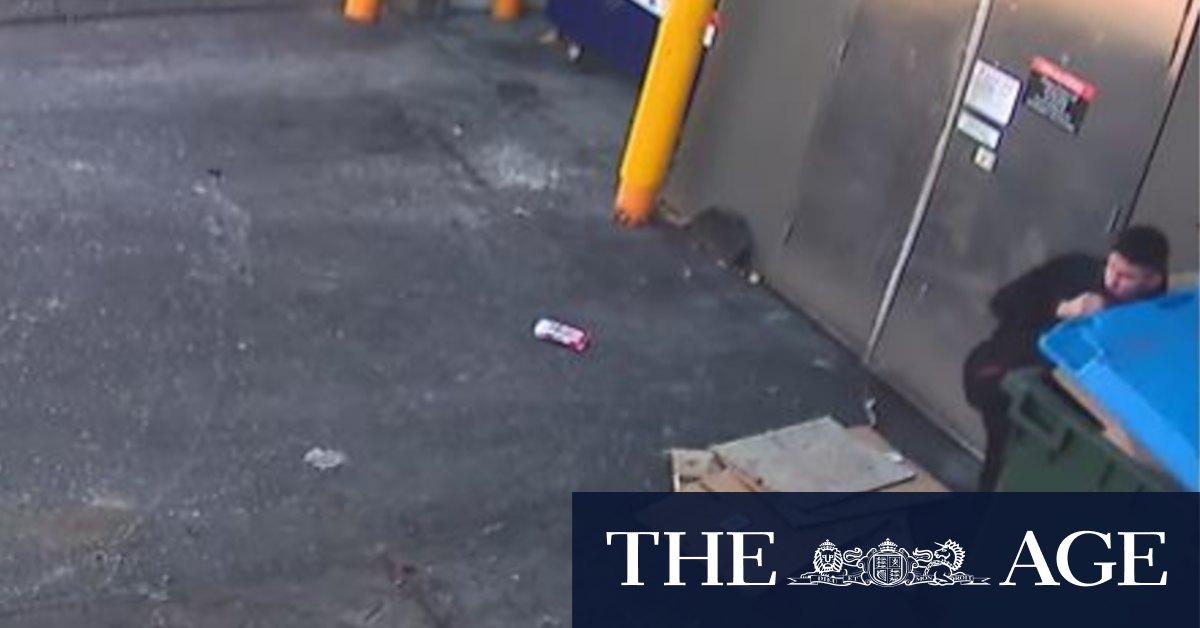
The footage shows one of the alleged offenders, dressed in black and attempting to hide his face with an item of clothing, climbing into a bin filled with cardboard boxes near a fast food restaurant on Sydney Road.

loading

He momentarily hides in the bin before climbing out and walking away, the CCTV vision shows.

The second man allegedly carjacked a woman and child at gunpoint, taking a Ford Territory wagon that police later located at Brunswick Drive in Epping

Police said CCTV footage shows the man walking in Epping wearing a black hoodie and carrying a bag.

Police also believe one of the men attended a hardware store in Epping on June 15, 10 days before the shooting, purchasing two petrol cans that were later located in the crashed Mazda SUV.

Categories
Australia

A wounded environment leads to an unliveable economy

That’s why the most important economic event of recent times is not the latest rise in interest rates, it’s last month’s State of the Environment report – whose release was delayed until we found a government with the courage to break the bad news.

The report’s significance is not only its roll call of how much damage we’ve done so far, but its account of the way that damage is damaging the humans who’ve done it.

We’ve been damaging the environment in many ways – loss of habitat and species, introduction of invasive animals and plants, pollution and waste disposal, salinity and other damage to soil and waterways, overfishing – but the greatest single source of damage, of course , is climate change.

The five-yearly report brings the bad news that climate change is compounding all the other problems. And whereas previous reports warned of future damage from climate change, this one shows it’s already happening – and getting worse.

It documents the extreme floods, droughts, heatwaves, storms and bushfires that have occurred across Australia in the past five years. The immediate effects have been millions of animals killed and habitats burned, enormous areas of reef bleached, and people’s livelihoods and homes lost.

But there are many longer-term effects still to play out. Extreme conditions put immense stress on species already threatened by habitat loss and invasive species. An extreme heatwave in 2018, for example, killed 23,000 spectacled flying foxes, making them an endangered species.

loading

Many of our ecosystems have evolved to rebound from bushfires. But now that the fires are coming more often and are more intense, the bush doesn’t have enough time to recover, which scientists expect will make it weedy – only those species that live fast and reproduce quickly will thrive.

But enough about plants and animals, what about us? While cyclones, floods and bushfires directly destroy our homes and landscapes, Professor Emma Johnston, of Sydney University and an author of the report, writes that heatwaves kill more people in Australia than any other extreme event.

Heatwave intensity has increased by a third over the past two decades. And climate change worsens air quality through dust, smoke and emissions. The Black Summer of 2019-20 exposed more than 80 per cent of our population to smoke, killing about 420 people.

As Liz Hanna and Mark Howden, of the Australian National University, remind us, clean air is just one of the “ecosystem services” the environment provides to you and me in the economy. Another is clean food. A lot of our recent complaints about the cost of living – the high cost of meat and vegetables, the mythical $10 iceberg lettuce – come from the delayed effect of the drought and the recent effect of the floods.

Yet another service is clean water. But many country towns had to truck in water during the last drought. Land clearing affects water quality. Run-off from agriculture damages water ecosystems and encourages algal bloom and species loss. More than 4 million people depend on the Murray-Darling rivers for their water, but the catchments are rated as poor or very poor.

loading

Finally, the report reminds us that contact with (healthy) nature is associated with mental health benefits, promotes physical activity and contributes to overall wellbeing. Biodiversity and green and blue spaces in cities are linked to stress reduction and mood improvement, increased respiratory health, and lower rates of depression and blood pressure. Enjoy ’em while they last.

The Opinion newsletter is a weekly wrap of views that will challenge, champion and inform your own. Sign up here.

Categories
Australia

Murray system reaches full allocation before spring making river operators and landholders ‘nervous’

Authorities are warning landholders downstream of the Hume Dam near Albury-Wodonga to prepare for flooding as spring approaches.

Up to 100 millimetres of rain is predicted this week in Victoria’s north-east and the New South Wales Southern Riverina region with Upper Murray, Mitta Mitta, Kiewa, Ovens, and King rivers expected to see flooding.

After a fairly dry July, Hume Dam is sitting at 92 per cent capacity and is expected to fill this season.

The dam filled in September last year.

Yesterday the Murray-Darling Basin Authority (MDBA) advised landholders downstream from Hume Dam “to be flood ready as we enter the wettest period for southern basin catchments.”

MDBA executive director of river management Andrew Reynolds said the Hume Dam currently had 250 gigalitres of airspace available before the dam was considered full.

“We’ve been in close contact with the Bureau of Meteorology, we’re anticipating that we will be able to manage this rain event with the airspace that we have got,” Mr Reynolds said.

“We will make further releases to preserve further airspace in advance of future events.”

Farmers downstream of Hume Dam said the abundance of water already in the system was “very concerning.”

Chairman of the Murray River Action Group, Richard Sarsgood, said landholders along the Murray would be checking storage levels every day in anticipation of flooding.

“Everybody is watching this coming rain event and we’ll see how much airspace it soaks up in Hume Dam,” he said.

“By the next rain event people will start looking at moving stock to higher ground or out on agistment.”

Murray at full allocation

Irrigation season officially starts on August 15. Already Victoria irrigators have their 100 per cent high reliability allocation.

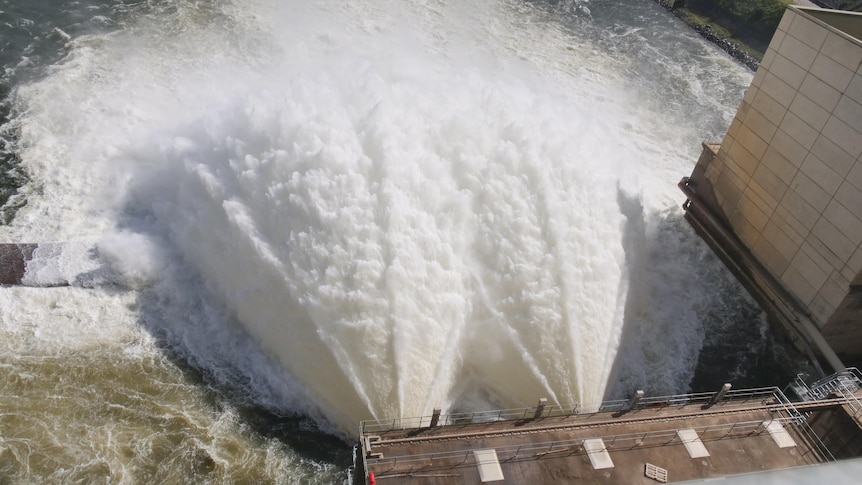
A dam wall has water being released.
Hume Dam reached capacity in September 2021 for the first time since 2016.(Rural ABC: Annie Brown )

Resource manager with Goulburn Murray Water, Mark Bailey, said this was the earliest the system had reached full allocation in 20 years.

“The last time we were at this level was 2002/2003. It’s something that we haven’t seen in a very long time,” Mr Bailey said.

Authorities are anticipating a wetter year, warning irrigators and landholders to expect more water.

“It’s something that makes a river operator quite nervous in terms of what’s happening with potential inflows and where the dams are,” Mr Bailey said.

‘High probability’ Dartmouth will spill

Further upstream from Lake Hume, Victoria’s largest capacity dam in Dartmouth is sitting at around 95 per cent capacity, holding 3.8 million megalitres of water.

The view of Dartmouth Dam's signage over the water.
Dartmouth Dam is Victoria’s largest storage with a capacity of 4 million megalitres.(Rural ABC: Annie Brown)

The last time Dartmouth dam spilled was in October 1996, and excitement has been building that the mega dam could overflow for the first time in more than a quarter of a century.

“There’s a reasonably high probability that Dartmouth will fill this year,” MDBA’s Andrew Reynolds said.

“It is a much bigger storage than Hume, however it’s also has a much smaller catchment upstream, so the inflows are not necessarily as large.

“We’re not pre-releasing water from Dartmouth because it would just make its way into Hume and we would have more water to manage there.

“At the moment it’s better that we protect the airspace at Hume Dam.”

Living on the floodplain

A full river.
The Murray system has reached full water allocation.(Rural ABC: Annie Brown)

Richard Sarsgood has been farming along the Murray River outside Howlong, NSW, for 66 years.

Among the 120 members of the River Action Group living between Lake Hume to Yarrawonga, Mr Sarsgood said there was a higher concern for flooding this year with an abundance of water already in the system in August.

“There’s a lot of concerned landholders and tourism operators because the system has been fully charged since February,” Mr Sarsgood said.

“With the rain event this week, and future events, there’s a lot of concern there’s going to be repeat flooding like in previous years.

“To the MDBA’s credit, they have drawn Hume dam down to 92 per cent which is a step in a right direction.

“However with Dartmouth so full, and the Bureau of Meteorology predicting a wetter than average next three months, we are really concerned the flooding will be heading our way.”

.

Categories
Australia

Parents ask if councils can step in to solve regional ‘childcare deserts’

Port Lincoln mother of four Krystal Miller lives with debilitating Crohn’s disease and after-school-hours care has become essential for her family.

However, the past six months have been a roller-coaster ride as BYK Kids after-school-hours care faced an uncertain future following the non-renewal of its lease.

Last week it closed its doors to more than 100 families after being unable to find new rental premises.

A photo of care provider staff and children sitting down looking sad.
BYK Kids was the only after-school-hours care service in Port Lincoln.(ABC Eyre Peninsula: Bernadette Clarke)

Ms Miller said the closure would have an impact on her life, and many other parents.

“I am immune-compromised and when I’m sick, it’s been so important to be able to have somewhere that I can trust with my kids,” Ms Miller said.

“So now that’s gone, I have no options anymore — it’s quite stressful.

BYK Kids was the only service offering after-school care and vacation care in the region.

But Ms Miller still counts herself lucky because her parents live in Port Lincoln, and while they both work, they do help.

“There are a lot of professional women and men here in Port Lincoln, who are not able to actually go back to work because there’s nowhere to put their kids,” Ms Miller said.

Program manager Cassandra Bilney held back tears on the final day of care after six years of helping Port Lincoln families.

“I don’t know what the solution is,” Ms Bilney said.

“I don’t know if the council could look at having something council owned but the lack of services is definitely a problem.”

.