Categories
Australia

Redland Mayor Karen Williams investigated for misconduct over drink driving offense

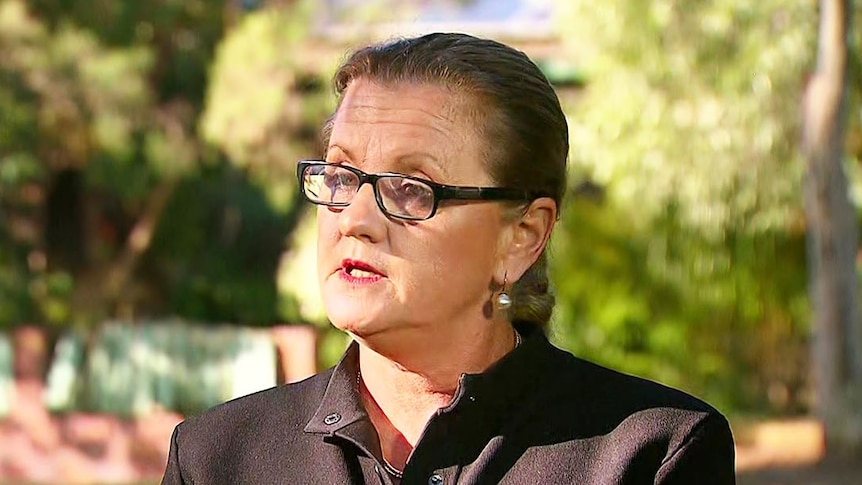
Redland Mayor Karen Williams has been investigated for misconduct by an independent assessor after complaints about her drink driving offence.

The Office of the Independent Assessor (OIA) confirmed it concluded an investigation into Ms Williams, relating to her crash in Cleveland in June, and the matter could be referred to the Councilor Conduct Tribunal.

Ms Williams was sentenced to 80 hours of community service and had her license disqualified for six months after pleading guilty to drink driving at the Cleveland Magistrates Court on Monday.

Her blood alcohol concentration was 0.177, more than three times the legal limit when she crashed her car on June 23.

The court heard Ms Williams crossed four lanes of traffic before she left the road, entered a ditch and struck a tree in the single-vehicle crash.

No conviction was recorded, and she was not fined over the offence.

The Redland Mayor described the incident as a “lapse in judgment” and has committed to return to work this week.

.

Categories
US

Manchin Won a Pledge From Democrats to Finish a Contested Pipeline

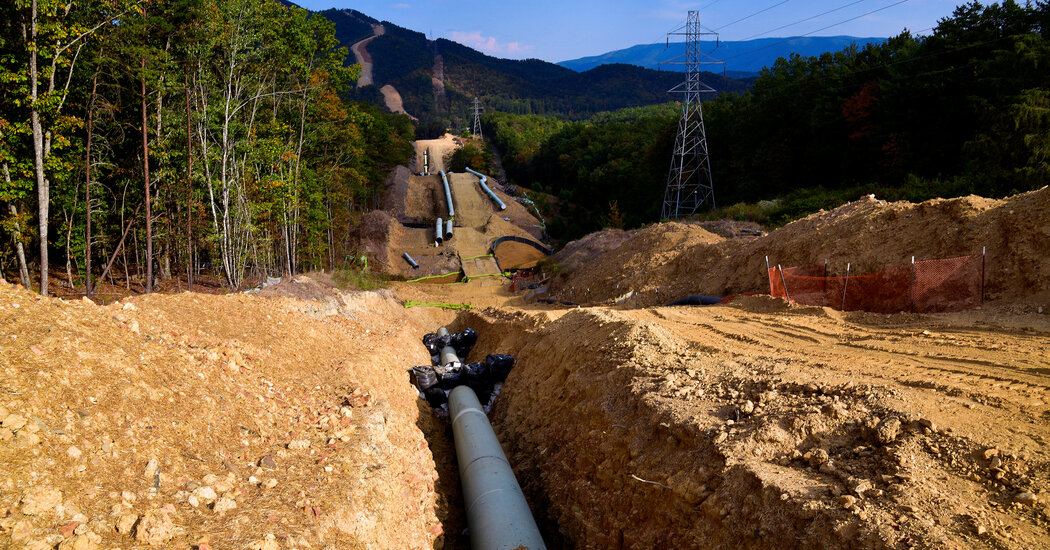
WASHINGTON — Senator Joe Manchin III of West Virginia has secured a promise from Democratic leaders and the White House to complete a highly contested 304-mile gas pipeline in his state, his office said, a major concession won as part of negotiations over a climate and tax bill.

Mr. Manchin, who clinched a surprise agreement last week among Democrats to pass landmark climate legislation, made easing permits for energy projects a requirement of the deal. On Monday, his office made public details of the side agreement he struck with Senator Chuck Schumer of New York, the Democratic majority leader, House Speaker Nancy Pelosi and President Biden.

It would ensure that federal agencies “take all necessary actions to permit the construction and operation” of the gas line, known as the Mountain Valley Pipeline. The project — which has been opposed for years by environmentalists, civil rights activists and many Democratic state lawmakers in Virginia — would carry natural gas from the Marcellus shale fields in West Virginia across nearly 1,000 streams and wetlands before ending in Virginia.

The pipeline was originally supposed to be completed by 2018 but environmental groups have successfully challenged a series of federal permits for the project in the United States Court of Appeals for the Fourth District in Richmond, Va.

The court has overturned permits issued by the Fish and Wildlife Service, the Bureau of Land Management and the Forest Service, saying that their analyzes about adverse impacts on wildlife, sedimentation and erosion were flawed.

The delays have been so extensive that the project’s certification from the Federal Energy Regulatory Commission will expire in October. The developers are seeking an extension for a second time.

Jared Margolis, a senior attorney for the Center for Biological Diversity, one of the groups fighting the pipeline, acknowledged that Congress does have the ability to override the courts and move the project forward. But, he said, “That’s not going to prevent a challenge” from opponents.

The side deal cut by Mr. Manchin and Democratic leaders would give the United States Court of Appeals for the District of Columbia Circuit jurisdiction over all future legal challenges, taking the case away from the Fourth District, where environmentalists had found success.

Other parts of the agreement would make it harder for opponents to hold up energy projects under the National Environmental Policy Act, a bedrock environmental law, by setting a two-year time limit for challenges. It would also require the president to establish 25 “priority” projects on federal lands that must include fossil fuels and nuclear energy. And it would review a section of the Clean Water Act in a way that would make it more difficult to block or delay pipeline projects.

Neither Mr. Schumer nor Ms. Pelosi responded to requests for comment. A White House spokesman also did not respond.

Some Democrats like Raúl Grijalva, the chairman of the House Committee on Natural Resources, have said they will not support any measures that fast-track pipelines or other energy projects.

But three people familiar with Mr. Manchin’s agreement said Democratic leaders were likely to insert the Mountain Valley Pipeline and permitting provisions into a must-pass piece of legislation, such as the bill that funds the federal government, to maximize its chances.

Mr. Manchin on Monday said he believed the United States needed to reform the rules around permits to increase energy production.

“Why are we going around the world asking people to do what we want to do for ourselves?” Mr Manchin said. “How do we get a permitting process to meet the challenges that we have today and the urgency that we can’t do because of our permitting.”

Environmental activists denounced the Mountain Valley Pipeline and permitting deal, and called on Democrats to rethink that agreement with Mr. Manchin.

“The implications of this side deal are very significant especially as Congress is poised to accelerate the development of energy projects,” said Abigail Dillen, president of Earthjustice, an environmental group. She said she was particularly concerned that limiting the time to review and challenge projects could allow developers to “run roughshod over communities.”

Opponents of the Mountain Valley Pipeline called Mr. Manchin’s deal dangerous for water quality and the climate, noting that the creation of a new pipeline would guarantee additional greenhouse gas emissions into the future. The pipeline is expected to deliver more than two billion cubic feet of natural gas per day.

Notably, none of the environmental groups called for lawmakers to vote against the climate and tax package, which currently includes $369 billion over ten years to pivot the nation away from fossil fuels. Energy experts have calculated the overall package will reduce emissions as much as 40 percent below 2005 levels by the end of this decade, even with eased permitting and other measures that Mr. Manchin secured for fossil fuel development.

Some called the permitting deal to win for all energy development.

“This strikes me as a balanced approach,” said Neil Chatterjee, the former chairman of the Federal Energy Regulatory Commission.

Mr. Chatterjee said making it easier to acquire permits for projects could also help add wind, solar and other renewable energy to the electrical grid more quickly.

Mr. Schumer has indicated he hopes to hold a vote on the broader climate and tax bill as early as this week.

Categories
Business

Australian tech company Metigy collapses impacting 75 staff

Staff who worked for an Australian tech company have been left “shell-shocked” by its sudden collapse after it planned to raise money with a valuation of $1 billion.

The company called Metigy was founded in 2015 and offered an artificial intelligence platform that provided insights into customers for small business marketing.

But its demise has impacted around 75 staff, who appeared to have been blindsided when informed on Monday that the company had gone into administration.

Some staff members had joined the company, which was founded by David Fairfull and Johnson Lin, just a few months ago.

One employee, who had been with Metigy for almost 18 months, said two weeks ago she “never thought” that the company would have gone under.

“All of us employees were informed today and we are shell-shocked to say the least,” she wrote on LinkedIn.

“It’s heartbreaking to have our journey cut short so early, when I could see that we were turning a corner with the product in the last few months and what was coming up in the next few months.”

Another staff member revealed plans they were making “for all the great work we could do with a new brand and communications function at Metigy” that she hoped to lead, but instead found herself suddenly unemployed.

“We’re pretty shell-shocked. It’s not because we didn’t care enough or because we did a bad job or the market conditions weren’t in our favor – and that will always be the toughest thing to deal with when you work as hard as we did,” she wrote .

“I am beyond grateful to have met this group of people who I now call friends and I’m so sad that we don’t get to continue on this rollercoaster together.

“My heart is always in start-up land regardless of how hard it gets. It’s an experience that teaches us so much about ourselves and I will always choose it.”

The company’s collapse is a particular shock as it planned to raise money just two months ago.

A recent presentation from a Metigy investor showed the company’s revenue had grown more than 300 per cent in both the 2020 and 2021 financial years, and had more than 25,000 clients across 92 countries, the Australian Financial Review reported.

Meanwhile, Australian private equity firm Five V Capital had recently presented Metigy as a case study showing it was valued at $105 million in October 2020 when it invested and its last evaluation sat at $1 billion in April this year.

Metigy’s collapse came as a “big shock” and had caused “a great deal of sadness”, one employee added on LinkedIn.

He said that the “growth team never failed to deliver” with a list of achievements in their short time, including acquiring roughly 38,000 users from a base of just a few thousand, rebuilding the website leading to significant improvements in conversion rates and a full rebrand .

Simon Cathro and Andrew Blundell of Sydney-based firm Cathro Partners were appointed as administrators on Friday night.

The duo said they are working with investigators and creditors to assess the business commercials and explore the possibility of its sale.

“We are exploring the urgent sale of Metigy’s assets and intellectual property as part of the voluntary administration process and consider a sale could be an outcome in this process,” they said.

Metigy has more than 30 shareholders, according to documents lodged with the Australian Securities and Investments Commission.

Tech companies are struggling in Australia after a share market bloodbath, which has left investors spooked and made funding harder to find.

Other failed businesses include grocery delivery service Send, which went into liquidation at the end of May, after the company spent $11 million in eight months to stay afloat.

Last month, Australia’s first ever neobank founded in 2017, Volt Bank, went under with 140 staff losing their jobs, while 6,000 customers were told to urgently withdraw their funds.

A Victorian food delivery company that styled itself as a rival to UberEats and Deliveroo also collapsed in July as it became unprofitable, despite making more than $6 million worth of deliveries since it launched in 2017 and had 18,000 customers.

A venture capital firm issued a sobering message about the state of Australia’s start-up industry, warning that more new companies would go bust and pulling back on funding as a result.

.
Categories
Technology

Klonoa Phantasy Reverie Series (Switch) Review

Klonoah; everybody’s favorite hat-wearing, dream-travelling, wind-bullet-shooting cat-rabbit-thing is back for two colorful adventures in one. After a mighty long time in IP limbo, he returns to the Switch looking to have some fun!

Klonoa Phantasy Reverie Series packages and remasters the classic Namco (now Bandai Namco) games Klonoa: Door to Phantomile and Klonoa 2: Lunatea’s Veil, initially released for the PS1 and PS2 in 1997 and 2001. Following a Wii-make (a remake on the Nintendo Wii) of the first game in 2008, Klonoa has been largely absent from the video game landscape, but given the current platforming and remaster renaissance, it was about time he popped back up!

Developers Monkey Craft have taken the reigns on Klonoa Phantasy Reverie Series, the team who looked after Katamari Damacy Reroll in 2018, and they’ve done a stellar job. They’ve revitalized the duo of classic games, all while retaining that colorful quirkiness unique to turn of the century platformers we all know and love.

Klonoa cleverly combines 2D and 3D elements, bridging the gap between the two innovatively. As a new generation of 3D consoles came about in the mid-90s, many developers got in way over their heads as they rushed into an additional third dimension (see Bubsy 3D released in 1996 if you don’t know). Klonoa, on the other hand finds an elegant middle ground. The games see the player jog along a 2D plane as they twist and turn through sprawling 3D environments, occasionally spiraling back on themselves. It’s a harmonious union of dimensions that utilizes the tried and true 2D platforming staples with a splash of exciting, new 3D technologies. Klonoa didn’t invent 2.5D, but it sure as heck owned it! And in 2022, it’s amazing to look back on.

Klonoa: Door to Phantomile sees you playing as Klonoa, dashing about, hopping and hovering over chasms, blasting baddies with wind-bullets, and collecting Dream Stones and more. The second title also adds in some very 2000s 3D board-riding segments for good measure, but is otherwise pretty similar to the first. Klonoa hasn’t got any abilities beyond hovering and shooting, but hitting an enemy with a wind-bullet will grab them, letting you toss ’em forward or into the foreground or background, or even use their unique powers depending on who you’ve grabbed. On your way to save the day you’ll be traversing towns, meeting the citizens, solving puzzles and battling bosses, all of which are full of charm and life. Especially those 2.5D boss battles – chef’s kiss!

As a whole the game handles great with some amazing ideas to boot, but Klonoa’s movement seems to be a little on the sluggish side. Or maybe I’ve been spoiled by the countless fast and fluid platformers released in the past two decades. If I’d played Klonoa back in the day I’m sure I’d be into it more, but that slow movement doesn’t quite do it for me – no offense Klonoa fanboys.

In terms of the remaster itself, Monkey Craft have done a great job breathing new life into this recently stale franchise. The new HD graphics look wonderful, especially after going back for a look at the original PS1 title, and the music is as bubbly as the lands of Phantomile and Lunatea are vibrant. Now I could be wrong, but it also seems as though some, if not all of the original dialogue audio was used in the remasters. This is especially apparent when listening to the first game’s villain Ghadius who sounds particularly compressed. I personally love the choice if that’s the case, but I can see how it might be jarring to some.

Monkey Craft has also added a few new features for the Klonoa remaster. There’s some quality of life stuff like a fast-forward option in addition to a skip button during cutscenes now, and a new difficulty setting with reduced damage and such. There’s also a new ‘Support Mode’, which lets a second player jump in. This is unfortunately just a helper character which can give Klonoa an extra high jump, and little else – definitely just for the kid in the room at the time.


Altogether, the Klonoa Phantasy Reverie Series is an awesome little package. Monkey Craft were expertly able to resurrect Klonoa after an extended hiatus with flying colors – a lot of colors in fact. This game is sure to be a hit with long-time fans of the series and young kids looking for a bright platformer full of charm. Go Klonoa!

Rating: 4/5

Categories
Entertainment

Alan Fletcher reveals major career change after Neighbors finale

Neighbors veteran Alan Fletcher is the third longest serving actor in Australian soap opera history, having starred on the iconic soap for almost three decades.

And after the long-running show’s emotional finale last week, which saw viewers say farewell to the residents of Ramsay Street after 37 years on-air, the 65-year-old actor is considering a major career change.

Fletcher, who had played Dr Karl Kennedy since 1994, told Magic Radio’s breakfast-show: “Now that I’ve finished neighborsI’m thinking about actually going into medicine.”

The Perth-born TV star added he had always tried to keep his personal life separate from his on-screen persona, but was now having a change of heart.

“While I’ve been on neighborsI religiously don’t give medical advice, because I’m really worried about the authorities tracking me down,” he joked.

It comes after Fletcher’s co-star Ryan Moloney, who had played Jarrod “Toadie” Rebecchi on the show since 1995, revealed his own big career move away from the small screen.

The 42-year-old actor said he was planning to settle into post-neighbors life as a humble tradition.

“I’m not ruling anything out,” Moloney told The Daily Telegraph. “I’m doing civil construction course which is about driving excavators and building roads.”

Moloney added: “I like playing with those kinds of machines. I like doing earthworks, all that kind of manual labor stuff.

“That’s where I’m at, but who knows where it’s all going to end up?”

After 37 years and 8903 episodes, neighbors finally drew to a close in a tear-jerking finale last week.

The nostalgia-filled episode saw the return of Australia’s brightest names who got their big break on the soap opera, including Kylie Minogue, Guy Pearce, Holly Valance, Natalie Imbruglia, Delta Goodrem, and the show’s most famous alumna, Margot Robbie.

Up to 3 million people tuned into the finale in the UK, while almost 900,000 viewers watched in Australia.

It was announced in March that neighbors was being axed after Australian production company Fremantle media failed to find a new broadcast partner, following UK network Channel 5’s decision to withdraw its partnership.

Channel 5 had been covering the majority of the production bill.

.

Categories
Sports

Greg Norman’s LIV Tour forces PGA Tour’s $590m prizemoney first

Faced with a growing challenge from the Saudi-backed LIV Golf Series, the US PGA Tour announced a 2022-23 season schedule on Monday offering a record $AUD590 million in prize money.

The PGA increased the prize money at eight invitational tournaments, with The Players Championship set to pay out $35m, and will offer $206m in bonus money, including $107m for the FedEx Cup playoffs, which will be trimmed to 70 players from the current 125.

Watch LIVE coverage from The USPGA Tour with Fox Sports on Kayo. New to Kayo? Start your free trial now >

The move comes as the LIV Golf Series — spearheaded by Aussie legend Greg Norman — has offered the highest purses in history to lure big-name talent from the PGA to its upstart tour, which is set to rise from eight events in 2022 to 14 in 2023.

LIV Golf has drawn protests and claims of “sportwashing” from critics citing Saudi human rights issues but such stars as Dustin Johnson, Phil Mickelson, Henrik Stenson, Bryson DeChambeau, Paul Casey and Patrick Reed have jumped to the rebel series that debuted in June.

The US PGA, which will return to a season that coincides with the calendar year starting in 2024, tightened its playoffs and boosted select purses after comments from fans, PGA commissioner Jay Monahan said.

“The overwhelming sentiment was they wanted more consequences for both the regular season and the playoffs and to further strengthen events that traditionally feature top players competing head-to-head,” Monahan said. “We feel strongly we’ve accomplished all of these objectives.”

The 2022-23 PGA season will have 47 tournaments, including three playoff events next August with a field of 70 at the St. Jude Championship in Memphis, 50 at the BMW Championship in Chicago and the top 30 in points advancing to the season-ending Tour Championship at East Lake in Atlanta.

After the season ends, late 2023 will feature events for those outside the top 70 to earn status for the 2024 PGA campaign plus a series of “international events” featuring the PGA top 50 in a limited field, no-cut format. No other details were revealed about those events.

The St. Jude and BMW will see a jump in prize money from $21 million to $28 million.

The January Tournament of Champions will see its purse rise from $12 million to $21 million next year. It will become the lead-off event of the PGA season when the schedule changes in 2024.

Four events will see prize money jump from $17 million to $28 million — the Genesis Invitational in February hosted by Tiger Woods, the Arnold Palmer Invitational at Bay Hill in March, the Jack Nicklaus-hosted Memorial in June and the WGC Match Play in March.

Prize money will jump from $28 million to $35 million for The Players Championship in March.

The Scottish Open, Barbasol Championship and Barracuda Championship will remain co-sanctioned with the DP World Tour.

The 2022-23 campaign will begin on September 15-18 with the Fortinet Championship at Napa, California, with the Presidents Cup the following week at Quail Hollow.

The CJ Cup has been moved from South Korea to South Carolina and will be played in October with the Bermuda Championship the following week.

The Rocket Mortgage Classic, won Sunday by Tony Finau, will start June 29 next year while the 3M Open moves to the end of July.

.

Categories
Australia

Scientists discover cause of catastrophic mangrove destruction in Gulf of Carpentaria

In the summer of 2015-16, one of the most catastrophic mangrove diebacks ever recorded globally occurred in the Gulf of Carpentaria.

Some 40 million mangroves died across more than 2,000 kilometers of coastline, releasing nearly 1 million tonnes of carbon — equivalent to 1,000 jumbo jets flying back from Sydney to Paris.

After six years of searching for answers, scientists have formally identified what is causing the mass destruction. They hope the discovery will help predict and possibly prevent future events.

Valuable mangroves ‘died of thirst’

Map showing areas affected by severe mangrove dieback in late 2015.
Areas affected by severe mangrove dieback in late 2015 (grey shaded) along the gulf. Aerial surveys (red lines) were undertaken in 2016.(Supplied: NC Duke)

Mangrove ecologist and senior research scientist at James Cook University (JCU) Norman Duke was behind the discovery.

Dr Duke found that unusually low sea levels caused by severe El Niño events meant mangrove trees “essentially died of thirst”.

“The key factor responsible for this catastrophe appears to have been the sudden 40-centimetre drop in sea level that lasted for about six months, coinciding with no rainfall, killing vast areas of mangroves,” he said.

Author assisting with data analysis and JCU researcher Adam Canning said the study’s evidence for sea-level drop being the cause was found in the discovery of an earlier mass dieback in 1982, observed in satellite imagery.

Mass die-off of mangroves off Karumba on Queensland's Gulf Country coast
Hundreds of kilometers of mangroves along the coast of Karumba have turned a ghostly white.(Supplied: James Cook University)

“The 1982 dieback also coincided with an unusually extreme drop in sea level during another very severe El Niño event. We know from satellite data that the mangroves took at least 15 years to recover from that dieback,” Dr Canning said.

“Now they are caught in a vicious collapse and recovery cycle because of repeated pressure from climate change — the question remains when or if they will recover.”

Economic impact

Mangroves are valuable coastal ecosystems providing buffer shorelines against rising sea levels, protection against erosion, abundant carbon sinks, shelter for animals, nursery habitats, and food for marine life.

The destruction of mangroves can lead to a loss of fisheries, increased flooding, increased coastal damage from cyclones, and increased salinity of coastal soils and water supplies.

Mangroves stripped of foliage along a small tidal channel near the Robinson River.
Mangroves stripped of foliage along a small tidal channel near the Robinson River.(Supplied: Dr Norman Duke)

In the gulf, the mangrove dieback threatens a $30 million fishing industry, Dr Duke said.

“The fishing industry relies on these mangroves, including for redleg banana prawns, mudcrabs and fin fish,” he said.

“When the El Niño of 2015-16 struck, redleg banana prawn fishers reported their lowest-ever catches.”

Dr Duke said it was unlikely the gulf’s mangroves would recover due to the growing intensity of El Nino events.

“Our research reveals the presence of a previously unrecognized ‘collapse-recovery cycle’ of mangroves along gulf shorelines,” he said.

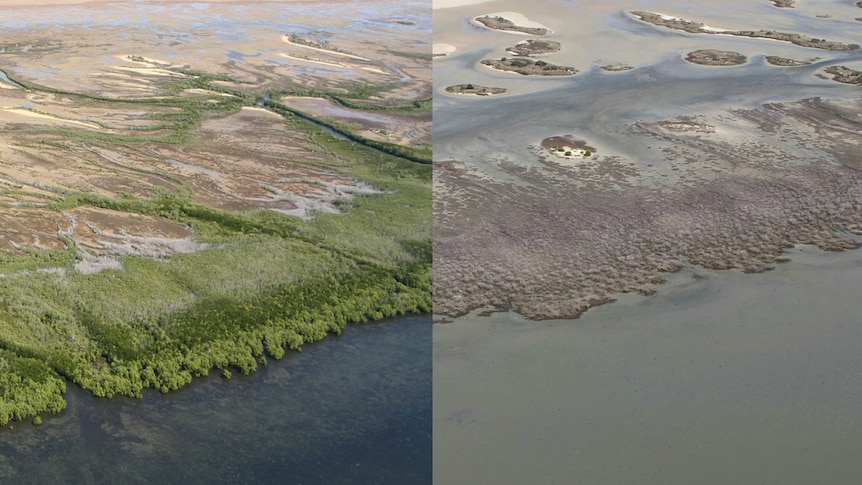
Composite image of NT mangrove dieback
Images of different sections of foreshore taken months apart show the extent of mangrove dieback in the NT.(Supplied: NC Duke)
Before and after mangrove death
Before and after the loss of a section of mangroves in the Gulf of Carpentaria.(Supplied: Dr Norman Duke)

“The threat of future El Niño-driven sea level drops appears imminent, as evidence points to a link between climate change and severe El Niño and La Niña events.

“Indeed, El Niño and La Niña have become more deadly over the last 50 years, and the long-term damage they inflict is expected to escalate.

“Under these circumstances, the potential for the mangroves to recover is understandably low.

Protecting future ecosystems

Dr Duke said closer monitoring was key to preventing future mass diebacks. He said regular aerial surveys were a place to start.

“Tropical mangroves need much greater protection, and more effective maintenance with regular health checks from dedicated national shoreline monitoring,” he said.

Mangrove dieback in the Northern Territory
Mangroves have died along a 2,000km stretch of coastline in the Gulf of Carpentaria.(Supplied: NC Duke)

“Our aerial surveys of more than 10,000 kilometers of north Australian coastlines have made a start.

“We’ve recorded environmental conditions and drivers of shoreline change for north-western Australia, eastern Cape York Peninsula, Torres Strait Islands and, of course, the Gulf of Carpentaria.

“As the climate continues to change, it’s vital to keep a close eye on our changing shoreline wetlands and to ensure we’re better prepared next time another El Niño disaster strikes.”

.

Categories
US

Sandy Hook parents under protection after Austin encounters

Categories
Business

Appen woes worsen as EBITDA, revenue tank

“This has especially impacted our global division, particularly those customers with a high exposure to digital advertising. While only 26 per cent of our first half global revenue supports digital advertising, we are seeing a flow on effect to non ad-related projects and some of our core programs, as our customers reduce their overall spend,” he said.

“As stated in February, costs in this half are higher primarily due to transformation costs, and investment in product and technology resulting in higher employee expenses, recruitment, and IT costs. Together with lower-than-expected revenue, this has impacted earnings and margins.”

sliding value

The disappointing earnings come after an 86 per cent slide in the company’s share price since August 2020, when it was trading at more than $40. On Monday, it closed at $5.71.

Appen founder Julie Vonwiller and former chairman Chris Vonwiller remain the company’s largest shareholders with a 7.5 per cent stake of the business.

Appen earnings typically skew to the second half of the calendar year. The business still expects more revenue to flow through in the second half as seasonal projects are delivered and existing work ramps up, but, the business conceded that there had been no improvement last month.

Given the tenuous position of the business, Appen is now reviewing its investment strategy to find a way to increase productivity and improve margins.

“The fundamentals of our business remain strong and our operational performance and the quality of our service we provide customers continue to improve, evidenced by higher NPS. We are increasing our range of products and through our product investments remain well positioned to serve our customers,” Mr Brayan said.

Although Appen has invested in automating more of its processes, at its core, it is still a data annotation company that uses a crowd of 1 million people to label data that feeds the artificial intelligence algorithm of tech companies.

It has been attempting to diversify its customer base and has made a push into China, which was a bright spot in its results in the middle. China revenue was up 141 per cent to $US18 million.

In May, Appen was briefly a takeover target of Canadian rival Telus, which owns its competitor Lionbridge. But, within hours of the non-binding, unsolicited bid being announced to the ASX, the company announced that Telus had backed out of the negotiations with no explanation.

Following the failed deal, investors asked if it was time for Mr Brayan to step down, but at the time he still had the support of the board, which is led by chairman Richard Freudenstein.

Categories
Technology

Battlefield 2042 Update Is Going To Give Everyone Beards

Beleaguered multiplayer shooter Battlefield 2042which has not exactly been the success EA would have been hoping for, will take another step towards being an actual video game this week with the release of its next update.

While the game has been justifiably lambasted by fans (and non-fans) alike, I’ve always had a soft spot for it, partly because the stuff I like in a Battlefield game has been there since launch, but also because this game — developed partly during the worst months of the pandemic — was clearly nowhere near being done when publishers EA rushed it out the door.

Developers DICE have thus basically had to spend the months since launch…finishing the game, adding things like scoreboards and extra UI that under less hellish circumstances would just have made up part of the regular development process and been with Battlefield 2042 at launch.

The game’s Season One update made a lot of players happy because it simply dragged the game so much closer to what they would have expected in October 2021, and the 1.2 update — out tomorrow, August 2 — inches even closer.

It introduces some fixes for the game’s weakest map (Kaleidoscope), finally gives players a lifetime statistics page (letting you track stuff like your K:D ratio, games played, etc) and perhaps most noitceable, makes the first of a number of planned “Style and Tone” changes for the game’s Specialists.

Battlefield 2042’s Specialists, characters similar to those you’d pick in other shooters like, say, apex legendsare a first for the series, and have been pretty poorly received, not only for the changes they’ve made to the game’s structure (replacing traditional classes like Medic), but for the way their cocky swagger and corny one-liners were at odds with the game’s grim, climate apocalypse setting.

Dice’s first move to fix this was to simply shut them up, so that the characters no longer shouted catchphrases during the end-of-game roundups, but the next step here will be to make them all look a bit more appropriate for the setting. This means making them all just generally look more tired, dirty and haggard, and in the case of the male Specialists, giving them beards. And if they already had a beard, giving them more beard, and some extra wrinkles to boot. Here’s a look at the changes:

The two guys on the left used to be clean-shaven, now they have got beards.  The guy on the right, Pyotr, already had a beard, but now it's beardier.  (Image: DICE)The two guys on the left used to be clean-shaven, now they have got beards. The guy on the right, Pyotr, already had a beard, but now it’s beardier. (Image: DICE)

I like it, everyone does indeed look a bit more appropriate for the setting. I will say though, as someone who mains Mackay — for gameplay reasons, not aesthetic — I was hoping for a bit more of an improvement considering his original look (Guy Who Stans Elon Musk Under Tesla Car Reviews On YouTube) has now been turned into Guy Who Thinks Wrestling Is Too Woke Now.

The update will also introduce some other smaller nerfs and changes to gameplay, and you can read all about it here.