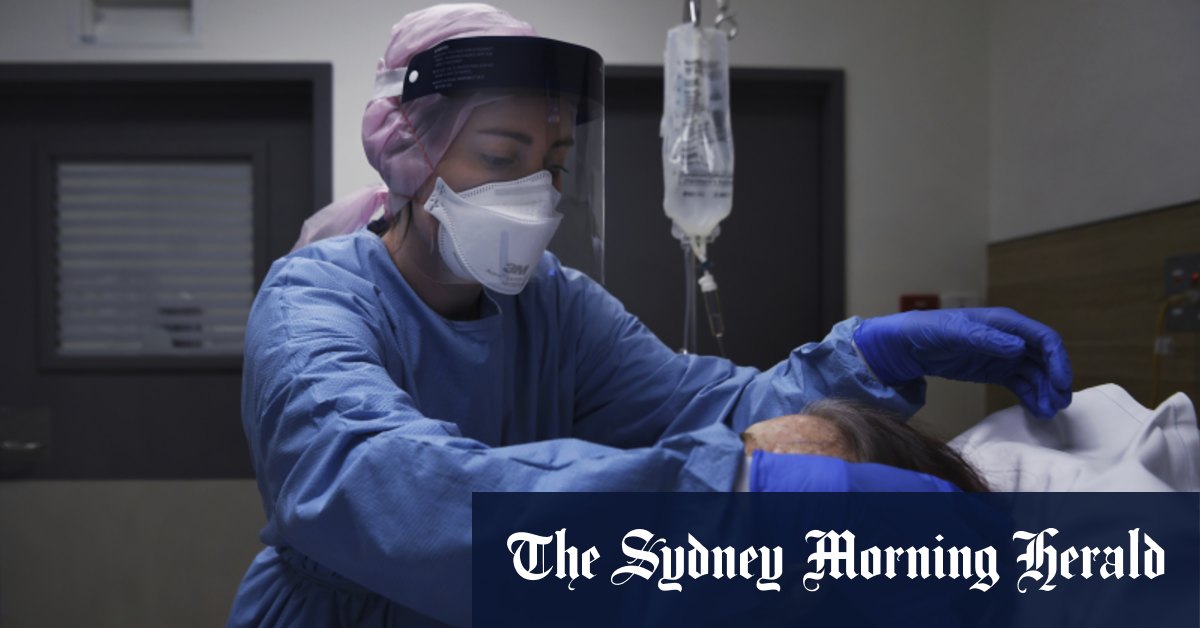
Deaths from COVID-19 used to peak three weeks after cases, although University of NSW mathematician and pandemic modeller, associate professor James Wood, said this had been closer to two weeks with the Omicron variant, which has been dominant in Australia throughout 2022.
After cases peaked in mid-to-late July, Wood said the current wave “should have just passed [its] peak-in-mortality”.
However, with more COVID deaths occurring outside public hospitals, and so being tallied by other agencies such as births, deaths and marriages, the time when a virus death is reported by state health departments is less uniform than in earlier waves of infection.
“The level of case reporting is also not as high as it used to be, so the level of known cases relative to the number of deaths we see may not necessarily match up,” Lang said.
In February, the working group warned Australia would experience excess annual mortality, or more overall deaths from all causes than expected, in 2022, unless there was a significant reduction in cases. Lang said excess mortality was now expected.
David Muscatello, an associate professor in infectious diseases epidemiology at the University of NSW, agreed this was a foregone conclusion, mostly due to high COVID-19 deaths.
The recent wave has been driven by the BA.4 and BA.5 Omicron sub-variants, known to evade immunity gained from earlier infection or vaccination. It has also seen a higher proportion of older people catching the virus, which has affected the death toll.
Of the 164 people NSW virus deaths reported in the week ending July 30, 124 were aged 80 and over, data from NSW Health’s latest surveillance report showed. Sixty-five were in their 90s and 79 were living in residential aged care.
Old age is a risk factor for severe COVID-19.
However, the return of school has shifted the outbreak’s demographics, with NSW data showing cases now rising among 10 to 19-year-olds.
Cases in aged care also appear to have peaked: the number of homes with an active outbreak fell from 1064 to 952 last week, according to federal government weekly reports.
loading
“The age profile of people who are getting infected does seem to change somewhat as each [virus] lineage comes along,” Muscatello said. However, I believed the volume of cases was what was driving Australia’s death toll.
The mother who pulled her unconscious son from a car and cradled him on a busy north-west Melbourne roadside has been reunited with the good Samaritan couple who rushed to help her.
Key points:
Madeleine Crawford’s child had a seizure on the way to hospital on August 3
Thi and Cindy Le assisted in getting him there but the group did not exchange details
They were all reunited after Ms Crawford put the call out through ABC Radio Melbourne
Madeleine Crawford, and 20-month-old Stirling, met Thi and Cindy Le of North Sunshine at an emotional weekend reunion.
It was the first time they had come together since Ms Crawford put out a call to find them so she could finally say thank you.
Suffering a fever, chesty cough and struggling to breathe, Stirling was being driven by Ms Crawford to the Royal Children’s Hospital emergency department on August 3 when he started having a seizure in the back seat.
Space to play or pause, M to mute, left and right arrows to seek, up and down arrows for volume.
Melbourne mum searches for ‘good Samaritans’ who came to her aid when her son had a seizure
A clean bill of health
Desperate for help, Ms Crawford pulled over on the corner of Churchill Avenue and Ballarat Road in Maidstone, grabbed Stirling from the back seat, and stepped onto the median strip.
Ms Le and her husband had been driving only a few vehicles behind and did not hesitate after spotting Ms Crawford gesturing wildly at passing traffic.
“I immediately knew something was wrong,” she said.
“I didn’t know what else to do so I told Madeleine I’d hold baby Stirling while she drives to the closest hospital.
“Thankfully my husband was a quick thinker and drove in front with hazard lights on to escort us to the hospital safely.”
They made it to Footscray Hospital where Ms Crawford ran inside and Stirling was immediately triaged by the nurses.
Reunited via radio
There was no time to exchange details.
Ms Le said when the pair arrived home, she could not stop thinking about what had happened.
“As a mother myself, I knew how distressing it would’ve been to have experienced that,” she said.
“But I would never have thought Madeleine would try to find us. I just did what I could at the time to help.”
Both families were reunited on Sunday after Ms Crawford put out the call to find them via ABC Radio Melbourne.
“It was incredible to be able to express our gratitude in person,” Ms Crawford said.
“It was a very special afternoon — lots of hugs and smiles.”
Ms Crawford wanted to thank the couple who came to her aid.(Supplied: Madeleine Crawford)
A clean bill of health
Stirling was diagnosed with respiratory syncytial virus but has since been issued a clean bill of health.
Ms Crawford said it was his seizure that had caught her off guard and urged other parents to learn how to respond to a similar situation.
In a twist, the Le family revealed their own granddaughter, Aria, had been through a similar experience only months ago.
Their daughter, Anita, had phoned them for help after her sick toddler started having a seizure.
According to the Victorian government, about one in every 20 children between six months and six years old will experience a febrile seizure while suffering a high fever. While alarming, it is not epilepsy and it does not cause brain damage.
“It is absolutely terrifying if it happens to your child,” Ms Crawford said.
“I would recommend parents read the guidance so they can be as prepared as they can if or when it happens.”
A Federal Court injunction that halted the construction of a contentious $1.25 billion highway in Western Australia’s south has been extended, as an environmental legal challenge gets underway.
Key points:
At $1.2 billion, the road is WA’s most expensive
A last minute environmental challenge has been mounted in court
A halt on construction has been extended as proceedings enter a second day
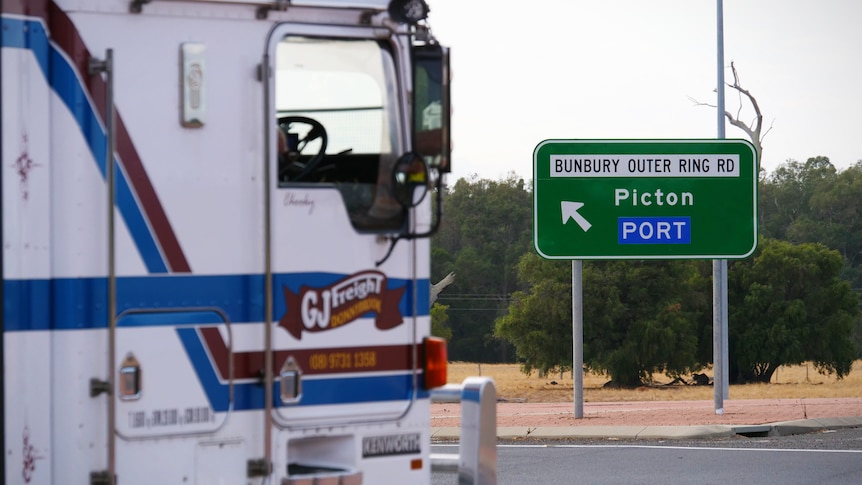
Bulldozers began clearing bushland for the final leg of the Bunbury Outer Ring Road last week but work suddenly stopped on Friday afternoon when a local environmental group mounted a legal challenge, and an injunction was enforced.
Opponents say the road’s environmental and social impact is too great, but both the state and federal governments say the risks can be managed.
In the first day of proceedings, Justice Craig Colvin heard arguments for and against Environment Minister Tanya Plibersek’s approval of the project in late June.
Justice Colvin ordered a pause on construction must remain until midday tomorrow as the case enters its second day.
Possum species ‘might vanish’
Lawyer Angel Aleksov, representing the Friends of the Gelorup Corridor group, put forward a series of legal arguments he said proved the ministerial approval of the project had been unlawful.
That included a claim that much of the environmental mitigation plan the project’s approval rested on would not occur until much later.
He said by that stage, it would be too late for animals such as the critically endangered western ringtail possum, which “might vanish from this earth.”
Western ringtail possums are only found in pockets of WA’s south west.(Supplied: GeoCatch )
Mr Aleksov claimed Main Roads WA was working on an assumption that 9,000 western ringtail possums remained in the region but that “Wikipedia” showed there could be as few as 3,000 possums left.
I have conceded delaying the project was costly but said the cost “does not outweigh risk to species that might leave this earth”.
It was revealed in court the project had already been delayed from April to August, at a cost of up to $10 million.
“There are large financial ramifications, but there are very, very large environmental consequences,” Mr Aleksov said.
Lawyers argue all procedures followed
Both the Solicitor General of WA, Joshua Thomson, and Commonwealth lawyer Emrys Nekvapil argued all procedures had been followed and every measure taken to mitigate environmental damage.
Mr Thomson argued the Friends of Gelorup Corridor’s legal argument was not strong enough to grant an injunction.
“If so…why was it overlooked until this time?” he said.
The northern section of the Bunbury Outer Ring Road largely passes through cleared farmland.(ABC South West: Anthony Pancia)
Mr Thomson said if the project was stalled now, it would have to be delayed another seven months, due to the western ringtail possums’ breeding patterns.
He said there were major benefits to the completion of the Bunbury Outer Ring Road, including separation of freight and local traffic and economic benefits to the entire region.
“This must be weighed against bringing [the project] to a shuddering halt for seven months,” he said.
He said three western ringtail possums had been found dead due to predation during the past weeks’ clearing.
A tree taped off within the Gelorup road reserve that is marked for clearing to make way for the highway.(ABC South West: Asha Couch)
Mr Thomson said there were very strong steps in place to project animals including fauna spotters on site and GPS collars tracking the locations of possums at all times.
Mr Emrys Nekvapil, acting for the Ms Plibersek’s office, said there was “not a serious question to be tried”.
He said the plan to ameliorate or mitigate the impact on the environment was completely orthodox.
Justice Craig Colvin ordered court resume at 9.30am WST on Tuesday.
Bunbury bypass ‘not Roe 8’
Opponents of the road had likened its construction through the Gelorup corridor to the aborted Roe 8 highway project in Perth.
Land clearing for the six-lane freeway through the Beeliar wetlands had well progressed in the lead-up to the 2017 WA election.
The McGowan government had campaigned on canceling the $1.9 billion project, which they did almost immediately after winning the election.
Amid a large amount of community opposition, the McGowan government campaigned on canceling the Roe Highway extension which traversed the Beeliar Wetlands.(Supplied: Main Roads WA)
But speaking ahead of today’s hearing, Premier Mark McGowan said it was an incorrect comparison to make.
“They’re very different projects. Roe 8 and Roe 9 weren’t really necessary because the port was going to fill,” Mr McGowan said.
“Whereas a road around Bunbury will just save many lives and ensure that people’s commute between the south west and the city is much more efficient and quick.”
Mark McGowan said his government was committed to building the road.(ABC News: James Carmody)
Mr McGowan defended the project’s environmental merits.
“Look, it’s been through two rounds of environmental approvals,” he said.
“We’ve done everything we can to ameliorate the environmental impacts by offsets and other plantings and fauna initiatives costing many millions of dollars.
“I understand people’s concerns. We just want to get on and complete this project.”
Concerns for community, environment
The southern section of the road, which involves the clearing of 71 hectares of native vegetation, has received full state and federal environmental approvals.
Clearing on the southern section of the Bunbury Outer Ring Road was stopped after five days due to the court injunction.(ABC South West: Anthony Pancia)
In May, Environment Minister Reece Whitby said it was clear the proposal would have a long-term impact on the local environment, and noted the “uncertainty” as to whether the Gelorup population of western ringtail possums could recover in 10 or 15 years.
“It is accepted that 72 [western ringtail possums] will be lost from the area due to the permanent loss of habitat,” he said.
He said that environmental offsets to counterbalance the loss of habitat would include acquisition of land and revegetating other areas, including in nearby state forest.
The road has garnered bitter debate in the south west, with locals expressing concern it will split the suburb of Gelorup in two.
Main Roads has long said that the chosen route has the least environmental impact, compared to other options.
The Fair Work Ombudsman has announced that a record $532 million in unpaid wages and entitlements was recovered for more than 384,000 workers in 2021-22.
Key points:
Deputy Fair Work Ombudsman Kristen Hannah says the recovered wages are good news for workers and compliant businesses
More than half of the recoveries – almost $279 million – came from large corporate employers
The Fair Work Ombudsman currently has about 50 investigations underway into corporates that have self-reported underpayments
The amount is more than three times that of last year’s figure.
“It’s clearly a problem,” AMP senior economist Diana Mousina said.
Deputy Fair Work Ombudsman Kristen Hannah announced the figures in a speech to the Policy-Influence-Reform (PIR) conference in Canberra this afternoon and said they were good news for workers and compliant businesses.
“The Fair Work Ombudsman’s strengthened compliance and enforcement approach has seen another record amount of back-paid wages for Australian workers in the last financial year,” Ms Hannah said.
On the other hand, it’s also an indication of how large the problem of worker underpayment has become.
More than half of the recoveries – almost $279 million – came from large corporate employers.
In June, the Fair Work Ombudsman (FWO) took Woolworths to court in relation to “major underpayments” of its salaried managers.
But Woolworths is just one of a long list of major employers that have underpaid their workers, including Wesfarmers, Qantas, the Commonwealth Bank, Super Retail Group, Michael Hill Jewelers and the Australian Broadcasting Corporation.
Diana Mousina says wage underpayments are “clearly a problem.”(ABC News: Billy Cooper)
The Fair Work Ombudsman currently has about 50 investigations underway into large corporations that have self-reported underpayments, including some of Australia’s largest companies.
“I don’t know how much longer it will take to resolve,” Ms Mousina said.
“[But] I don’t think it’s part of the normal part of working in Australia.”
In 2021-22, the federal workplace regulator filed a record 137 litigations.
This was close to a doubling of the number of new matters put into court the year before.
Workers’ pay has become a crucial economic issue.
Today Labor made a submission to Fair Work asking for a “significant” increase to the pay of aged care workers, who make up roughly 2.6 per cent of the workforce.
Earlier this year, Fair Work raised the minimum wage by 5.2 per cent and raised award wages by 4.6 per cent.
Larger wage increases have become vital for economic growth as inflation threatens to push over 7 per cent.
Treasury figures show real wages are going backwards and will continue to do so for the remainder of 2022, until they start to turn up again in 2023.
“This is a great result for the workers who have been reunited with their withheld wages, and also for the businesses that pay correctly and are no longer at a disadvantage as a result,” Ms Hannah said.
It’s clear though that millions of workers who may be struggling to make ends meet are keen to find out how they might be able to receive wages back that they believe they’re entitled to.
The Fair Work web page had 22.6 million hits in 2021-22 which was another yearly record.
The site contains information, tools and resources about workplace relations rights and obligations for employees and employers.
A man accused of fatally shooting three members of the same family kept his gun license more than a decade ago despite police applying to revoke it.
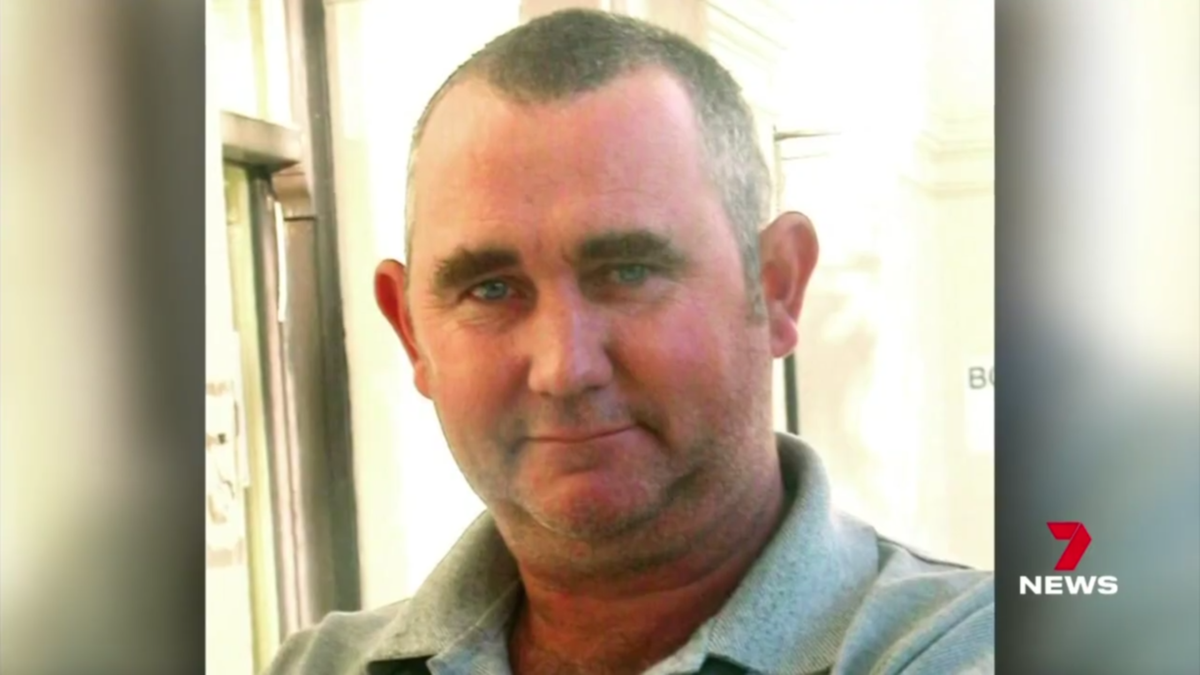
Darryl Young, a farmer from Bogie in regional Queensland, appeared in court on Monday charged with the murders of Graham Tighe, his mother Maree Schwarz and her husband Merv.
Watch more on this story in the video above
Watch the latest News on Channel 7 or stream for free on 7plus >>
He was also charged with the attempted murder of Graham’s brother Ross, who survived the alleged shooting on Thursday morning and raised the alarm.
7NEWS understands that Young has held a gun license for decades. But in 2010, police rejected his renewal application.
Darryl Young. Credit: 7NEWS
He challenged the decision in the Queensland Civil and Administrative Tribunal, saying he “used weapons on two properties to control feral animals”.
He also answered that he “had not contravened the weapons-related laws at any stage”.
Police argued at the time: “You are presently not a fit and proper person to hold a license.”
QCAT ruled in Young’s favour, saying: “Mr Young is a fit and proper person to hold a weapons license… (I) set aside the refusal to allow him to renew his license.”
Young’s case was heard early on Monday morning, the accused shooter appearing via video link.
His charges were read out before he was remanded in custody until November.
Graham had welcomed his second child with his partner just weeks before he was fatally shot. Credit: 7NEWSGraham’s brother Ross survived and was able to flee into remote bushland with a gunshot wound to his stomach. Credit: 7NEWS
Ross remains in hospital, recovering in a stable condition.
A GoFundMe page has been set up to raise money for him and his family.
“We have created this fund to help them with the aftermath of suddenly having their worlds turned upside down,” it said.
“Please help us lessen some of this burden and unforeseen future costs.”
On Monday morning, almost $11,000 had been raised.
Slain husband and wife Merv and Maree are remembered as a ‘lovely, hardworking’ family. Credit: Supplied
It’s understood that police will allege Young met his neighbors at the boundary line of their properties before the alleged shooting occurred.
Ross managed to flee by car before raising the alarm and being airlifted to Mackay Base Hospital, undergoing multiple emergency surgeries.
Police then swept the surrounding rural cattle properties.
Young and four other people were taken into custody, with all but the accused released without charge.
He will next appear in court on November 1.
Man with 2 boomerangs smashes window in road rage incident.
Man with 2 boomerangs smashes window in road rage incident.
A woman whose husband took his own life after a decade of serving in the Air Force has described the Department of Veterans’ Affairs as “cruel” and “inhumane”.
Key points:
Madonna Paul’s husband Michael was eventually diagnosed with depression and received a white card for PTSD after he was discharged
Following Michael’s death, Ms Paul struggled to access support from the Department of Veterans’ Affairs, until she contacted the ABC’s 7.30 program
She says the experience of dealing with the DVA deprived her of having a “half-decent life”
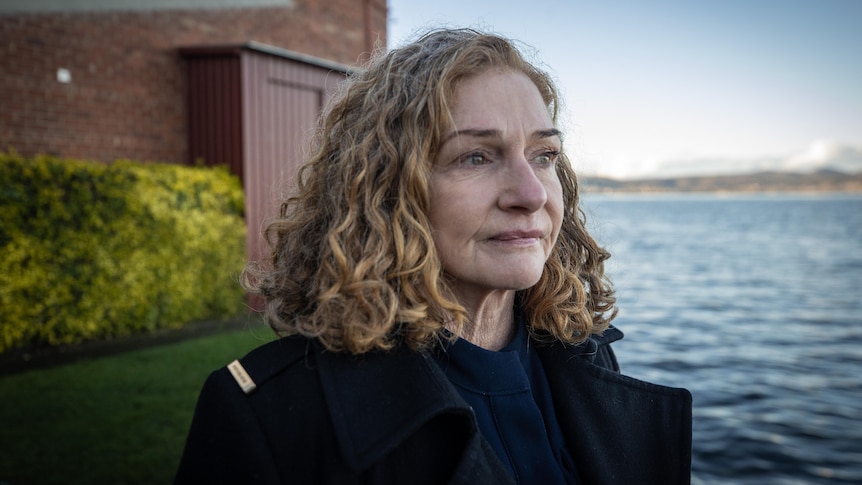
Madonna Paul’s husband Michael died in 2004 after struggling with post-traumatic stress disorder (PTSD) and mental health issues.
Ms Paul told the Hobart sitting of the Royal Commission into Defense and Veteran Suicide that early in their marriage, Mr Paul was a “really easy-going guy” who “just loved life”.
She said his behavior changed after raising concerns with his superiors at the Swartz Barracks in Queensland about the safety of Nomad Aircraft, which had been nicknamed “Widowmaker”.
“Eventually he was called in and was told to shut up … do your job,” she said.
In 1991, one of the Nomad Aircraft crashed, killing all four crew members — an incident his wife said would change his life forever.
Ms Paul told the commission she was not aware of any debriefing or any critical incident discussions being offered in the wake of the crash.
“He would come home from work and sit in the dark,” she said.
“His moods became very erratic, there was some aggression.”
Eventually, the couple was offered a social worker at the Air Force Base in Townsville.
“And I never got to meet her, but Michael did. And he told me that she had said that we just have marriage problems,” Ms Paul said.
“I was just shocked because I knew that before. And I never did. I’d never met her. So she’d made a call without talking to me.
“I commenced marriage counselling, thinking that was the issue, that obviously somebody’s told him that’s the issue, but it wasn’t.”
Light aircraft trip in storm triggered ‘complete breakdown’
The commission heard that after being discharged from the Australian Army in 1994, Mr Paul was “relaxed for a bit” before having a “complete breakdown”.
“He was on his first light aircraft trip … when they hit a storm,” Ms Paul said.
“He called me when they landed and told me what had happened, and he was crying. And he said, ‘I can’t do this. I can’t get on these aircraft and keep doing this’.'”
The commission heard after a period of living rough, Mr Paul was eventually diagnosed with depression and received a white card for PTSD.
Struggling with their son’s attempt on his own life, Mr Paul was then prescribed medication by a psychiatrist.
“And when Michael was on [that] change of medication, that’s when the moods would become very erratic,” Ms Paul said.
“So I was always adamant because I did have a power of attorney, with his physicians that he’d be hospitalized for that changed medication.
“Unfortunately, the week before he died, he was on changed medication. And the physician didn’t contact me to hospitalize him.”
Dealing with department deprived widow of ‘half-decent life’
Following Mr Paul’s death, Ms Paul struggled to access support from the Department of Veterans’ Affairs (DVA), until she contacted the ABC’s 7:30 program.
“And within 24 hours [of the story airing]I had DVA calling me, people assigned to my case, and they awarded me a war widow’s pension,” she said.
She was given $130,000 in compensation from the DVA but said she has had around $220,000 deducted as part of her war widow payment.
“To find out, you know, I said to them, I think you’ve made an error because I’ve just done simple maths and I’ve already paid this. Why is this still being deducted?” she said.
“and [a woman from the DVA]she sort of scoffed, and said, ‘it’s perpetual, you will be doing this for the rest of your life’.”
Ms Paul said Australia needed to examine how other countries were helping veterans.(ABC News: Luke Bowden)
Ms Paul said the experience of dealing with the DVA after her husband’s death nearly 20 years ago had deprived her of having a “half-decent life”.
“Because you’re living on next to nothing anyway, and trying to make everything ends meet, it’s stressful,” she said
“It just brings it all back up, and you have to go through it again, and tell the story again.
“I don’t understand the politics behind it, but it’s a very cruel and inhumane treatment.”
Ms Paul called for Australia to examine how other countries were helping veterans, including having services delivered by people with lived experience.
“I have suffered at the hands of DVA generational and systematic abuse, and it needs to stop,” she said.
“No-one knows what to say after a suicide. They do not know what to say. I mean, like, I can remember people saying time is the greatest healer.
“Honestly, time does not heal it. Having a great trauma specialist heals it.”
More support needed as personnel move out of service
National Mental Health Commissioner Alan Woodward told the hearings this morning that any government policy aimed at preventing suicide must be driven by those with lived experience.
“The quest for suicide prevention will be so much more effective if we listen and respond to the people we’re seeking to serve and support, than if we try to do it without those voices,” Mr Woodward said.
“This has been a problem in suicide prevention, where the input perhaps at times been dominated by those who do not have the lived experience perspective.”
Mr Woodward said a disproportionate number of Australian veterans were dying by suicide.
Julie-Ann Finney (L) came to support Ms Paul.(ABC News: Luke Bowden)
He told the commission that statistics showed deaths by suicide were more common for those who had left service involuntarily.
“Which further raises for me the importance of not just looking at the transition process where a person is moving from defense to non-defence status, but when they’re doing that not necessarily of their own accord, for whatever reason might be associated with it,” he said.
Mr Woodward said more support was needed during that transition period.
“Big changes are stressful … but where a change is brought about from someone else’s decision, not your own, then that is going to be even more magnified stress,” he said.
“It may raise all sorts of profound issues for that person about their sense of purpose, who they are and identity, where they go from here.”
The commission will finish its Hobart hearings this week and hand an interim report to the Governor-General on Thursday.
Homeowners trying to get storm-damaged properties repaired face massive waits as tradies are nearly impossible to hire.
The well-documented skills and supply shortages blighting the State have left people hoping to fix their houses wondering where to turn.
One roofing company said it had been inundated with 60 phone calls a day last week, while another said it was already booked out until next year.
The savage storms knocked out power to Perth Airport as well as 35,000 homes and wreaked havoc across Perth and the south-west last week, leaving a trail of damaged properties in their wake.
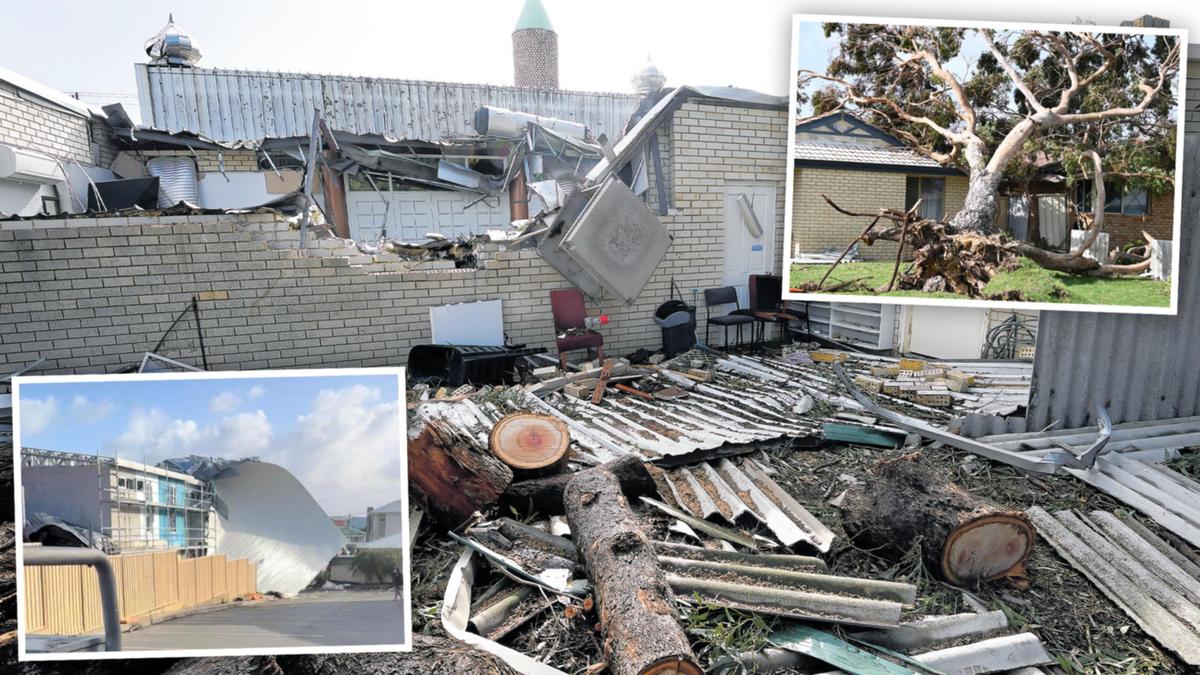
It’s not just homes that are affected. Canning Mosque in Queens Park was severely damaged during the storm when a large tree was uprooted and smashed into the prayer hall.
One of the walls was knocked down, part of the roof collapsed, structural beams were wrecked and flooding destroyed the interior.
Mosque president Bekir Serin said the damages were still being assessed by the insurance company, however, it was possible the Mosque would need to be demolished.
Amid the traditional shortages, and soaring labor and material costs, Mr Serin said the prospect of rebuilding was a big concern.
“It will be a serious challenge if we need to rebuild the Mosque. It won’t be cheap and it could take a long time,” he said.
The total cost of damages is still unknown, but a Go Fund Me has been set up to raise $1.5 million to aid construction.
A ceiling collapsed inside a Joondalup house. Credit: 7NEWS/Supplied
There are warnings from within the construction industry about the prospect of cowboys swooping on desperate homeowners.
Chaley Kelly, from roof leak repair business Roofology, said in the past week she had been forced to turn away a lot of prospective clients, many of them elderly, because her company was already booked out until January.
Before closing its appointment book last month, the waiting list had grown to as many as 200 customers.
Mrs Kelly said she had noticed a troubling growth in the numbers of cowboy tradesmen operating.
She urged people to ask how long a company had been in business, and request a written quote outlining the scope of work, with photos taken before and after the repairs.
Storm damage on Discovery Crescent, Port Kennedy. Credit: Ian Munro/The West Australian
“We’ve seen some horror stories, so it’s important to ask some basic questions,” she said.
Shannon Hartfield, the general manager of Buss Roof Plumbing, aided the storms had sent his phone running off the hook, with about 60 calls a day.
Mr Hartfield said it had exposed the extent of shoddy workmanship on some newly built homes, with an astonishing 25 per cent of all storm damage-related repair work this week done on homes built in the past 12 to 18 months.
He said some of the basic errors included incorrectly installed gutters.
“Essentially, there are no falls on gutters — the gutters are falling the wrong way,” he said. “We are noticing gutters are being installed going up, rather than going down.”
He blamed increasingly rushed training, claiming some apprentices were being signed off before they were fully competent as the industry struggled to find enough workers.
A roof detached from a home on James Street. Credit: WA Incident Reports/Supplied
Jazz Monroe said her Ashby roofing contractor Upon The Roof was booked out for a month even before inquiries jumped by 100 per cent last week.
She said the delays caused by excess demand had been exacerbated by ongoing supply chain issues, including delays of up to eight weeks for gutters.
For the Johns Lyng Group — an emergency response builder contracted by insurance giant RAC — last week’s damage adds to a heavy workload which still includes some repairs from last year’s Cyclone Seroja in the Geraldton region.
General manager Daryl Carmody said the average weekly calls his company dealt with rocketed from around 300 to around 1000 after the storm, and he expected the volume to continue this week as people took stock of the damage.
SES workers in Port Kennedy. Credit: Ian Munro/The West Australian
He said all urgent repair jobs had already been given a temporary Band-Aid fix to stem further leaking or problems. But it would take months to properly repair some of the more serious damage, like collapsed ceilings.
RAC has lodged more than over 4,800 storm claims at a cost of $8.7 million, with the bill set to increase this week.
“We see this type of storm damage two to three times a year,” Mr Carmody said.
RAC home claims manager Glen Walker said the storm damage would also create additional demand for ceiling fixers, plasterers, painters and electricians.
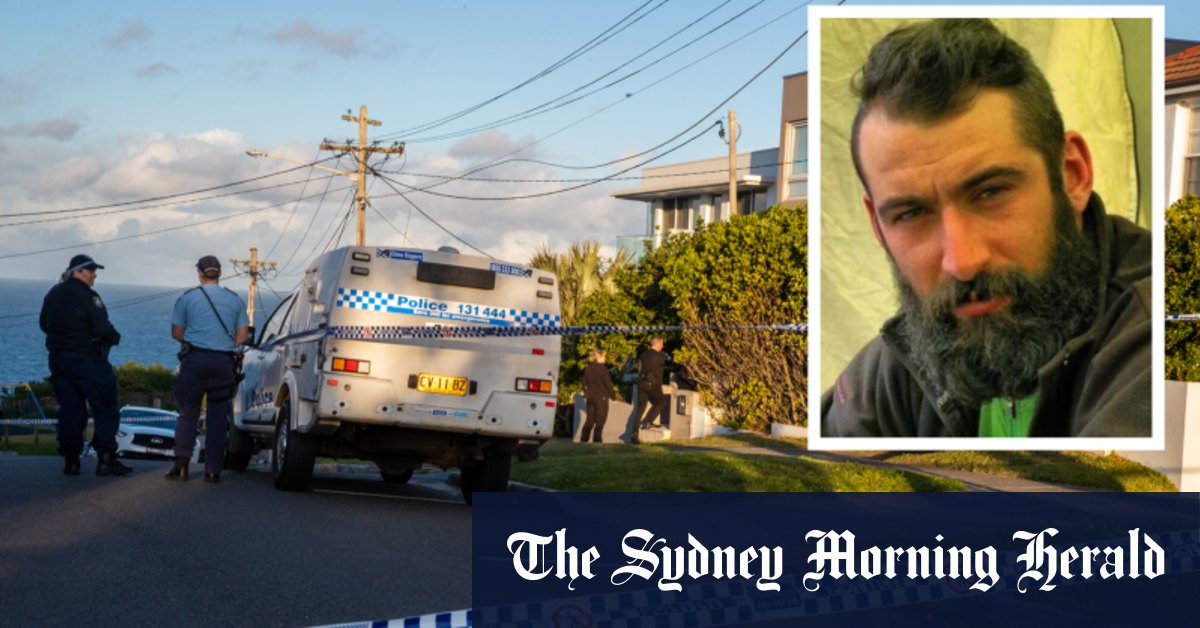
A tradesman who came to the aid of a stabbed woman said he distracted an alleged attacker long enough for her to grab the knife and throw it onto the footpath.
Helen Coulston, 46, is now fighting for her life after the daylight attack at the home on Weonga Road in Dover Heights, one of Sydney’s most exclusive addresses.
A woman is fighting for her life after she was stabbed by a man who came to her door on Monday. Credit:edwina pickles
Builder Peter Haramis, 37, was eating lunch on a nearby block with two concreters when they heard the woman’s screams and began walking, then running up the hill as the sounds became more panicked.
Coulston was screaming, “help me, help me, he’s gonna kill me”, he said.
When he arrived at the triple-level home, the woman was doubled over at her door with a man standing over her. The man was not her her husband Walt Coulston.
“He sort of, he looked at me and he froze… so I thought to myself, this is it, I think I have to fight him here,” he said. But just as he was about to start running, the woman took advantage of the split second her attacker had stopped.
“She grabbed the knife and threw it past me onto the footpath.”
Haramis said he was able to pick up the knife, which had “about four centimeters of blood” along it, and the woman ran inside her house and locked the door.
Coulston was wearing a white shirt. Haramis said “you could see red, she was bleeding”.
A Perth man has been denied bail after it was revealed he allegedly shaved his beard to avoid identification over a sexual assault on a jogger in Broome last week.
Key points:
Dean Osborne has been charged with three counts of rape after allegedly attacking the jogger early on Friday morning
Police say DNA evidence and CCTV appears to link him to the offense
Mr Osborne was denied bail due to the seriousness of the allegations
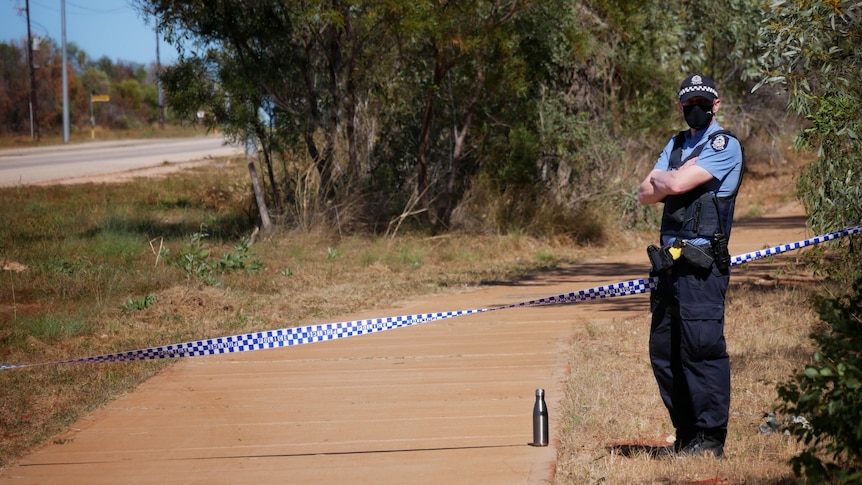
Dean Osborne, 52, appeared in the Broome Magistrate’s Court on Monday, charged with three counts of aggravated sexual penetration without consent, over the incident in Broome’s north on Friday morning.
Police allege Mr Osborne, an electrician on a contract working in the tourist town, was walking in the opposite direction to a woman who was out on a run around 5am.
The court heard as he passed her, he allegedly pushed her into bushes and sexually assaulted her.
Several residents nearby heard the woman screaming.(ABC Kimberley: Jessica Hayes)
Several members of the public heard the screams as well as neighbors in surrounding houses, but despite attempts to stop the accused he left the scene on foot.
In determining bail, Magistrate Andrew Maughan asked the prosecution to determine the strength of the police case against Osborne.
Police said they had found DNA on the victim in “multiple locations”, including Mr Osborne’s possessions at the scene.
They said his legs and arms appeared to be covered in scratches from the alleged victim, and he was caught on CCTV going from the scene back to his accommodation.
Police also said when Mr Osborne was arrested late on Saturday evening, they believed he had shaved his facial hair so he could not be identified by the description officers had released to the public on Friday.
The court also heard Mr Osborne had two prior convictions, including indecent acts in a public place stemming from an incident in Perth in July 2019.
Despite his lawyer offering a potential $20,000 surety and protective bail conditions that would see him return to Perth via plane, Magistrate Maughan denied his application and remanded him in custody.
Broome detectives were in court to witness the decision. The investigation continues.
A wintry mix of hail, blustery thunderstorms and even snow flurries is on the cards for Western Australia, as the south-west corner of the state, including Perth, braces for what could be its coldest day of the year so far.
Key points:
Temperatures are expected to plummet in WA’s South West on Tuesday
The weather system could also bring strong winds and hail to parts of WA
Bluff Knoll in the Stirling Ranges could get a dusting of snow
A gusty cold front reached Perth just before midday on Monday, and is set to sweep over the remainder of the South West Land Division, reaching Geraldton to Hopetoun this evening.
While this event is not likely to be as strong or prolonged as the system that hit WA last week, causing record wind gusts in some places, it is still expected to pack a punch.
Cape Leeuwin and Ocean Reef have already recorded wind gusts nearing 90 kilometers per hour.
Trees and power lines were brought down by a storm that hit Perth last week.(Supplied: Rowan Newton)
Hail could impact large swathe of state
Bureau of Meteorology senior forecaster Caroline Crow said the initial cold front would be followed by a pool of cold air on Tuesday, which would send maximum temperatures plummeting and bring hail to a large area of the state.
David Zander from Parmelia said it hailed at their house last Tuesday morning.(Supplied)
“Coming into tomorrow there will be potential hail though the South West Land Division from about Jurien Bay to Lake Grace to Esperance,” she said.
“Broadly speaking, it’s the coldest outbreak for the south-west of the state that we’re looking at for this season so far, given the region of hail potential which is quite far inland.”
SES officers were kept busy with calls for help from residents across Perth last Tuesday and Wednesday.(ABC News: Nic Perpitch)
She said maximum temperatures would generally be between two and six degrees Celsius lower than average on Tuesday, with temperatures in the Great Southern region struggling to reach the low teens.
“The Great Southern and south coastal district is looking at temperatures around 10C to 12C,” she said.
“And from Bunbury into inland parts of the South West Land Division, all the way to the south-east coastal district around that 12C mark.”
Perth is also forecast for cooler-than-normal weather, with a maximum of 15C expected in the city and 14C in Mandurah.
The coldest day of the year so far in Perth was on July 17, when the temperature peaked at 14.2C.
In Katanning, the coldest day was on July 30 when the mercury reached just 11.1C, Mount Barker’s chilliest day was on August 3 (11C) and Bunbury’s coldest day was on July 30 (13.9C).
The weather is not expected to get as wild as it did last week, when a tree branch pierced the roof of this Mt Helena home.(ABC News: Nic Perpitch)
Bluff Knoll could get more snow
Ms Crow said the cold blast could mean snow on Bluff Knoll, in the Stirling Ranges, for the second time in a fortnight.
loading
“It might get cold enough tomorrow to see a little bit of snow up Bluff Knoll, early in the morning around 4am to 5am through until midday,” she said.
“It’s more likely to be flurries rather than really settling on Bluff Knoll.”
One weather app, Windy, has even forecast the chance of light snow on the Perth Hills early on Tuesday. However Ms Crow said that was unlikely.
“The darling scarp doesn’t have a freezing level low enough or cold enough to get a dusting of snow like Bluff Knoll,” she said.
‘Unseasonal’ rain for northern parts of WA
It’s not just the south of the state expecting a wintry blast.
Ms Crow said a band of cloud was starting to thicken up over western Pilbara and central WA, which would likely bring showers by mid-week.
“Come tomorrow, we will start seeing the potential for showers and patchy rain out of it,” she said.
“And then coming into Wednesday the eastern parts of the Pilbara and into the interior could get falls of 10 millimetres, with isolated showers up to 20mm.”
Ms Crow said the showers were unusual for this time of year, with the north of the state currently in the middle of its dry season.
She said there would also be cool temperatures for the region.
“It looks like underneath that cloud, band temperatures could be four to eight degrees below average,” she said.
Miserable weather forecast for Perth
Tuesday: Min 7C, Max 15C, Very high chance of rain
Wednesday: Min 7C, Max 18C, High chance of rain near the coast
Thursday: Min 5C, Max 18C, Partly cloudy
Friday: Min 7C, Max 20C, Mostly sunny
Saturday: Min 11C, Max 20C, Very high chance of rain
Sunday: Min 11C, Max 21C, Very high chance of rain