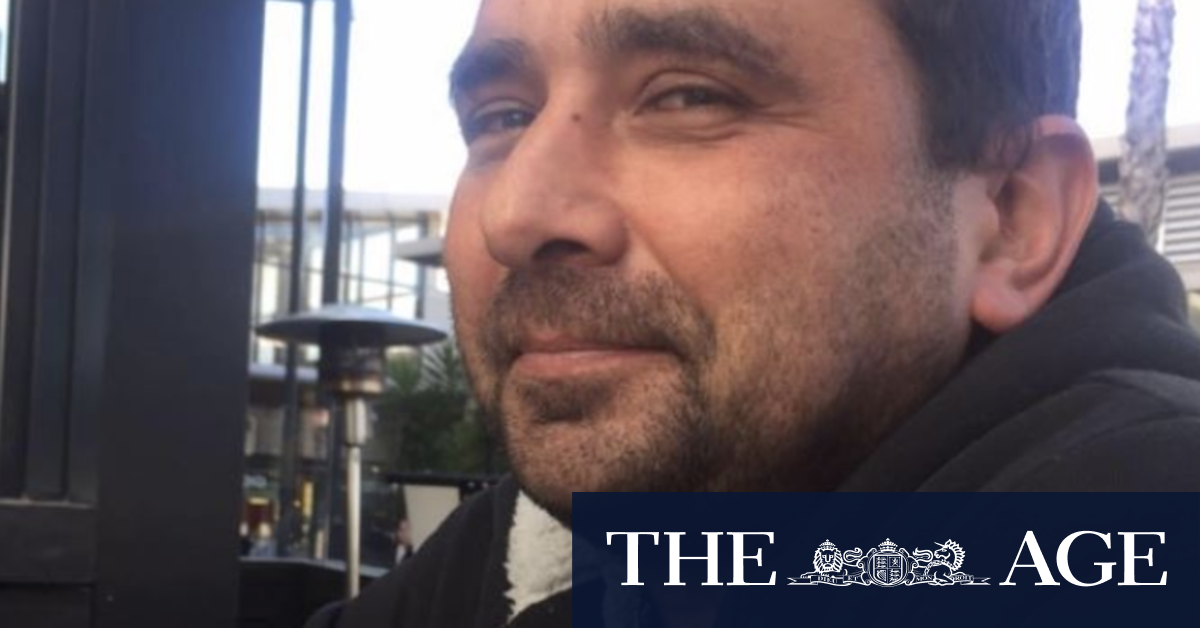
He had suffered a laceration to the skull, bruising of the face and abrasions across his body, Hollingworth said on Tuesday, but authorities were unable to determine a cause of death because Mammone had ice and cannabis in his system and had prior heart problems.
The woman went to police about a month later and was later jailed for armed robbery. McEachran was initially charged with murder, but this year pleaded guilty to manslaughter and armed robbery.
Hollingworth jailed him for nine years and nine months. With two years served since his arrest, the 44-year-old will be in prison for another five years before he is eligible for parole.
Police investigate outside Rangebank Primary School in June 2020.Credit:Joe Armao
The judge said: “Mr Mammone was lured to a remote location in the middle of the night by someone he knew and trusted. Having been tricked into getting out of his car, he was confronted by two offenders who were attempting on taking his car from him.
“He was unarmed and did nothing to start the violence that you [McEachran] influenced on him. Despite Mr Mammone’s resistance, you overpowered him and knocked him to the ground.”
Mammone was a grandfather and a father of three daughters, the court heard. Hollingworth said his family of him “are heartbroken that they will not be able to share the rest of their lives with him”.
McEachran had a disadvantaged childhood, with a violent father, used drugs and alcohol from his teens, left school early and had no work history, the court heard.
He has previous jail time for violent assaults, and Hollingworth said his rehabilitative prospects were poor because he had no family support other than contact with his teenage daughter and former partner.
The Morning Edition newsletter is our guide to the day’s most important and interesting stories, analysis and insights. Sign up here.
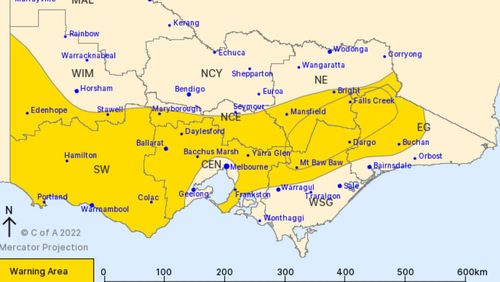
Large parts of Victory are facing a severe weather event, with authorities urging residents to prepare for damaging and destructive winds.
The Bureau of Meteorology (BOM) has warned winds could peak up to 100 km/h, reaching 110 km/h over elevated areas.
The strongest winds are expected this afternoon and will continue into Wednesday morning.
weather-warning (Bureau of Meteorology)
The bureau said a strong cold front will enter the west of the state late today, bringing a “vigorous north to north-westerly flow.”
Showers and thunderstorms are also likely for the affected areas.
A Watch and Act warning is now in place for resident’s to “prepare to take shelter” for the Central Highlands, Dandenong, Great Dividing Range.
A severe weather warning is in place for areas including Stawell, Hamilton, Warrnambool, Portland, Maryborough, Castlemaine, Kyneton, Ballarat, Frankston, Bacchus Marsh, Bright and Falls Creek.
Victorians urged to “prepare now”
The State Emergency Service has urged impacted residents to “prepare now” ahead of the wild conditions.
VICSES Chief Officer Operations Tim Wiebusch said it was important for residents to remain vigilant.
“Our volunteers across the state are prepared to assist communities with the severe weather conditions forecast for overnight tonight,” he said.
“However with damaging to destructive winds possible, it’s vital you remain vigilant and up to date on the latest warnings and advice.”
“Ensure you listen to the advice of emergency services, and secure loose items in and around your home, park your vehicle undercover, away from trees and remain indoors until the severe weather has passed.”
‘River City’ wakes to white-out as fog swallows city
Wiebusch said residents should ensure gutters, downpipes and drains are not blocked to cope with the potential of heavy rainfall.
There’s a high chance of showers in Melbourne tomorrow, and a possibility of a thunderstorm.
Temperatures are forecast to reach a top of 19C.
Call 132 500 for emergency assistance from VICSES.
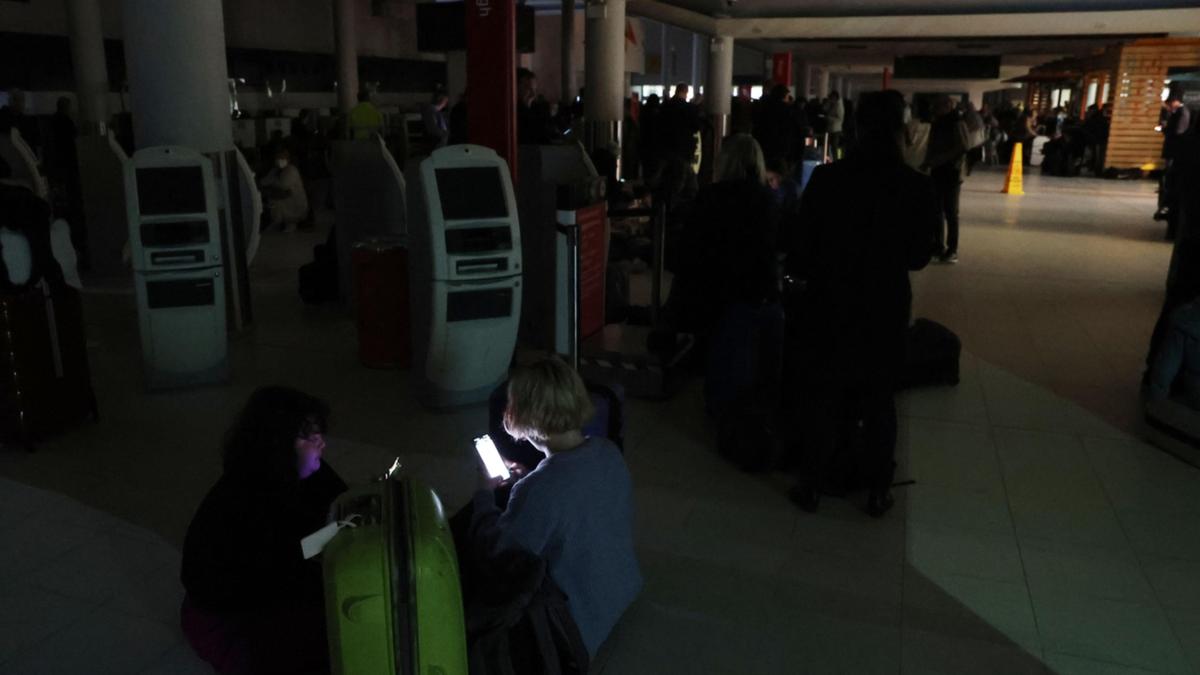
Air traffic has ground to a halt at Perth Airport after severe storms caused a power outage on Tuesday evening.
Perth Airport announced the news about 5.15pm, warning that a power outage would result in delays for the next two hours.
The airport warned of lengthy delays and apologized to passengers, some of whom are understood to be stranded at other airports because they’re unable to land in Perth.
It said the decision was made based on the advice of Western Power.
“Perth Airport has made the decision to delay all outbound services currently scheduled to depart before 7.30pm,” the statement said.
“All enroute inbound flights will be able to arrive safely. All scheduled flights into Perth which have not yet departed will be delayed until further notice.”
Travelers were warned to expect delays or even canceled flights.
A power outage has delayed flights at Perth Airport. Credit: Lincoln Baker/The West Australian
“The safety of everyone who works in or is traveling through our airport remains our highest priority,” the airport said.
“We apologize to our passengers and customers for any inconvenience.”
Western Power crews are on site working to repair the damage.
Western Power says emergency crews are working hard in difficult conditions to restore power across Perth.
“Damaging and destructive winds associated with the front have thrown debris, including tree branches, into the network, damaging equipment and bringing down powerlines,” a spokesperson said.
“Our priority during the storm is responding to reported hazards to ensure the safety of the community and our crews.
“Our network operations team is working to isolate damaged parts of the network and back feed where possible to restore power where it is safe to do so.”
It comes as Perth braces for more damaging winds set to smash the State after thousands were left without power and properties damaged overnight.
The Bureau of Meteorology has issued a severe weather warning for Goldfields, Eucla, Lower West, South West, South Coastal, South East Coastal, Great Southern, Central Wheat Belt and parts of Gascoyne, South Interior and Central West districts.
A strong wind warning is also in place for Melville Waters and the Gascoyne Coast.
These winds are forecast to continue through to dawn on Wednesday and the Bureau has warned that wind likes may cause damage to homes and property, particularly along the coast and nearby inland, becoming more isolated further inland.
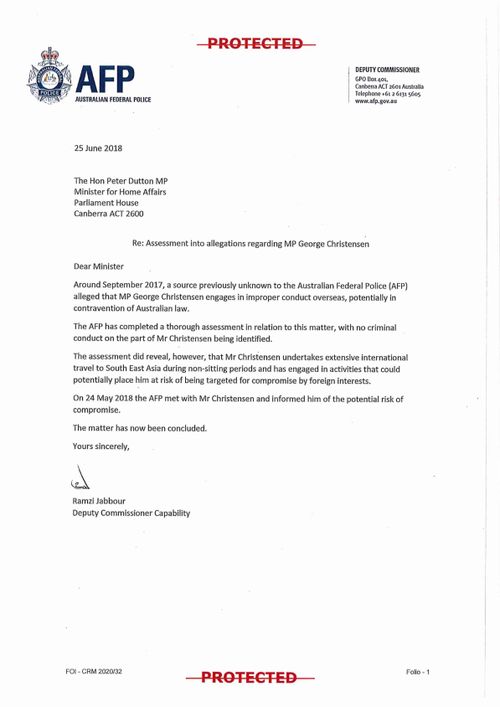
“The AFP has completed a thorough assessment in relation to this matter, with no criminal conduct on the part of Mr Christensen being identified,” the letter says.
“The assessment did reveal, however, that Mr Christensen undertakes extensive international travel to Southeast Asia during non-sitting periods and has engaged in activities that could potentially place him at risk of being targeted for compromise by foreign interests.”
“On May 24, 2018, the AFP met with Mr Christensen and informed him of the potential risk of compromise.”
The letter did not go into detail about the nature of Christensen’s alleged “activities” in Southeast Asia.
This masthead has previously reported that a staff member at an adult entertainment bar in Angeles City claimed Christensen was a regular at the venue.
loading
At the height of the AFP’s probe, Dutton and then-prime minister Malcolm Turnbull discussed the prospect of disendorsing Christensen before the 2019 election, according to multiple Liberal sources. But the matter was complicated by the fact that Christensen was a Nationals MP.
Christensen, who has a Filipina wife, has attacked media coverage of his visits to the Philippines as a “vile smear” and insisted he did nothing wrong.
Asked last year why he was fighting the release of the document, Christensen said: “I am not happy with documents that basically falsely accuse me of a serious crime being made public because, therefore, people will get to then report what you are falsely accused of and that’s just wrong for anyone.”
Turnbull, former deputy prime minister Michael McCormack, Dutton and Nationals Leader Barnaby Joyce were all briefed on the probe at least once by the AFP.
loading
In her decision handed down on June 30, Information Commissioner Angelene Falk rejected the AFP’s submissions that the release of the document was an unreasonable disclosure of Christensen’s personal information, saying personal privacy considerations were outweighed by the public interest.
“I am persuaded that a public purpose would be served through the release of the document by increasing scrutiny, discussion, comment and review of government’s activities in accordance with … the FOI Act,” Falk said in her decision. “I am satisfied that disclosure would not be unreasonable in this case.”
The AFP also argued the release of the letter would damage the security of the Commonwealth and have a “substantial adverse effect” on its operations by compromising the “provision of frank and candid briefings to the minister of home affairs in relation to sensitive matters”.
loading
But after inspecting the document, Falk said she was “not satisfied that the AFP has discharged its onus” in establishing that the document’s release would adversely affect its operations.
Christensen had not responded to requests for comment at the time of publication.
Cut through the noise of federal politics with news, views and expert analysis from Jacqueline Maley. Subscribers can sign up to our weekly Inside Politics newsletter here.
The government will expand a scheme allowing Pacific Islanders to work in Australia to include jobs in aged care to help fill tens of thousands of job vacancies in the crises-riddled sector.
Prime Minister Anthony Albanese emphatically back broadening the Pacific Australia Labor Mobility Scheme after former NSW premier and head of aged-care provider Hammondcare, Mike Baird, urged the government to let Pacific Island workers fill jobs in areas where there were critical shortages.
Minister for International Development and the Pacific, Pat Conroy, announced in Question Time on Tuesday the government would be expanding the scheme to include aged care.
Minister for International Development and the Pacific Pat Conroy.Credit:Joe Armao
“Back during the recent very successful Pacific Islanders Forum in Fiji, I visited the Australia Pacific Coalition facility in Suva with the Prime Minister,” he said.
“We met 40 enthusiastic women who were trained to work on aged care centers in regional Queensland from Mackay to Toowoomba.”
He also said the government was expanding the scheme to reduce travel costs for employers, who foot upfront costs for workers, allowing Pacific workers to bring in family members, and improving protections against worker exploitation.
loading
The Australian Workers’ Union is calling on the government to impose protections after MADEC, a prominent labour-hire firm under the PALM scheme, had license restrictions imposed on it after paying back $70,000 in wages deducted from workers for accommodation. AWU national secretary Daniel Walton said many deductions were “plainly rorts.”
“Most PALM workers work in excess of 30 hours a week and can earn over $800. But their take-home is less than $100 a week after dubious deductions for accommodation and Transport,” he said.
Allegations over wage deductions were aired in a Senate inquiry led by Labor Senator Tony Sheldon.
“This saga sums up why we must be wary of calls for significantly increased worker migration,” he said.
“Unless unions are empowered to have greater involvement in migrant worker schemes, these stories of exploitation will continue.”
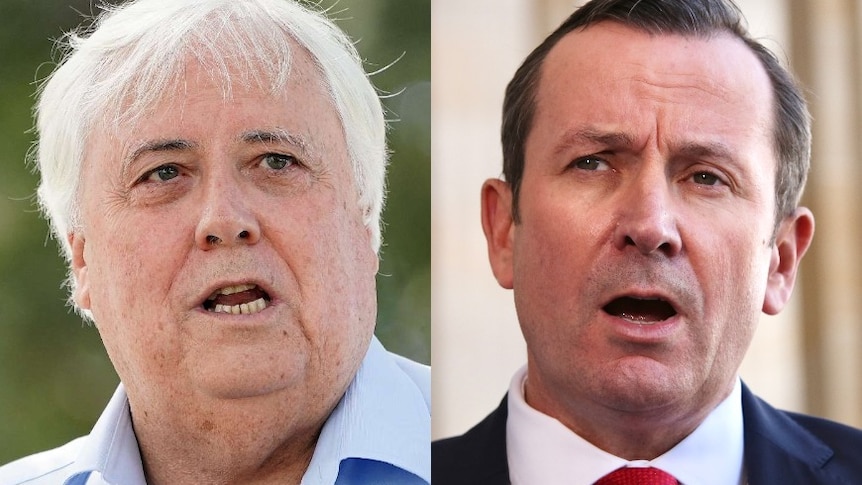
Mining tycoon Clive Palmer and WA Premier Mark McGowan defamed each other, the Federal Court has found, in a war of words over WA’s hard border and a damage claim for a failed mining project worth up to $30 billion.
Key points:
Both Clive Palmer and Mark McGowan were awarded damages
The case related to comments made after the closing of WA’s borders
Costs will be assessed at a later court hearing
Mr Palmer was awarded $5,000 while Mr McGowan won a counter-claim of $20,000, in a judgment handed down by Justice Michael Lee today.
Mr Palmer launched legal action against Mr McGowan after a series of comments made at press conferences in 2020, during the early days of the coronavirus pandemic.
The Queensland mining magnate told the Federal Court he was brought into “hatred, ridiculous and contempt” after Mr McGowan called him an “enemy of the state” over his challenge that sought to overturn WA’s hard border policy.
Mr McGowan counter-sued Mr Palmer over comments centered on legislation that prevented the Queensland businessman from claiming up to $30 billion in damages over a mining development by his firm Mineralogy.
Justice Lee said when assessing damages, he considered the fact much of the public would already have “well-entrenched perceptions” as to the character and reputations of political figures.
However, when deciding damages for Mr McGowan, Justice Lee said although the damage to his reputation was “non-existent”, “Mr McGowan’s evidence as to an aspect of the subjective hurt he suffered was compelling”.
In delivering his judgement, Justice Lee noted the significant costs incurred in prosecuting this case.
“The game has not been worth the candle,” he said.
“These proceedings have not only involved considerable expenditure by Mr Palmer and the taxpayers of Western Australia, but have also consumed considerable resources of the Commonwealth,” he said.
“Importantly (they have) diverted court time from resolving controversies of real importance to persons who have a pressing need to litigate.”
At a press conference, Mr McGowan said the last thing he wanted to be doing was fighting a defamation action, adding the start of the pandemic was a “highly anxious time”.
But he defended the steps he took in putting in place the hard border and mineralology legislation.
“I’ll go to my grave proud of what we did,” he said.
“I actually think it was one of the proudest moments, that and the hard border, in recent West Australian history.”
The court will reconvene at a later date to assess costs, which are expected to far outstrip the damages awarded.
McGowan, Palmer chose ‘hurly burly’ of political life
In his ruling, Justice Lee referred to conservative British MP Enoch Powell’s remark “for a politician to complain about the press is like a ship’s captain complaining about the sea”.
“As these proceedings demonstrate, a politician litigating over the barbs of a political adversary might be considered a similarly futile exercise,” Justice Lee said.
The judge said Mr McGowan and Mr Palmer chose to be part of the “hurly burly” of political life, despite Mr Palmer resisting characterization as a political figure.
He described Mr Palmer as an “indefatigable litigant”.
The public spat between mining magnate Clive Palmer (pictured) and Mark McGowan erupted at the start of the coronavirus pandemic.(ABC News: Steve Keen)
“This was evidently not his first experience in a witness box … he carried himself with the unmistakable aura of a man assured as to the correctness of his own opinions,” Justice Lee noted.
The judge described Mr Palmer as a generally “combative and evasive witness” who on more than one occasion was unwilling to make obvious concessions.
He also rubbished Mr Palmer’s claim he feared for his, his family’s and his employee’s safety and lives, after the Mineralogy legislation was passed.
“To even his most-rusted on partisans, Mr McGowan would be unlikely to have thought to resemble Ian Fleming’s fictional MI6 character James Bond,” Justice Lee said.
Justice Lee described Mr Palmer’s evidence that Mr McGowan had been given a “license to kill” as “fanciful”.
Feud erupts over WA hard border
The stoush began whenWA shut its border to the rest of the country in 2020, which Clive Palmer challenged in the High Court, drawing the ire of Mr McGowan.
The court heard Mr McGowan made comments about an alleged plan by Mr Palmer to promote the drug hydroxychloroquine, which in the early days of the pandemic was briefly touted as a potential treatment.
Mr Palmer brought the defamation action against Mr McGowan over his comments about the mining magnate’s attempt to enter the state in 2020.(Facebook: Clive Palmer, Mark McGowan)
After a series of trials, it became clear the drug was not effective.
Mr McGowan told a press conference in August 2020 that Mr Palmer was coming to “promote” hydroxychloroquine, when all the evidence showed it was not a cure and was in fact dangerous.
In the defamation proceedings, Mr Palmer argued this implied he sought to harm the people of Western Australia by providing them with a drug he knew was dangerous and dishonestly promoted it as a cure for COVID-19.
Justice Lee did not accept this, saying “it is too much of a stretch to say that vehement disagreement with Mr Palmer’s view conveys that Mr Palmer subjectively intended to cause harm or behaved dishonestly”.
Multi-billion dollar mining damages claim at heart of case
The defamation proceedings also examined a state agreement held by Mr Palmer’s company Mineralogy for the Balmoral South iron ore project.
Mr Palmer sought to develop that site in 2012 but was knocked back by the then-Barnett government, prompting him to launch legal action against the WA Government seeking damages for what he said was a breach of the state agreement.
The WA Government then passed extraordinary legislation that prevented Mr Palmer from succeeding in that claim, which was estimated at $30 billion, amounting to the state government’s 2020 annual budget.
Mr Palmer lashed out at Mr McGowan as the architect of that legislation.
Mark McGowan said Mr Palmer’s comments had aroused “anger and madness” in the community. (ABC News: Cecilia Connell)
The court heard in an August 2020 interview with ABC radio, Mr Palmer described Mr McGowan as “an outlaw swinging his gun around to protect him and his Attorney General from the criminal law”.
“What crime did you commit Mark, that you want to be immune from?”
Mr McGowan countered Mr Palmer on those and other comments, which he said suggested he had acted corruptly.
Palmer defamed McGowan for claiming he ‘lied’
Mr McGowan also argued Mr Palmer had defamed him when he claimed he had lied about the health advice he relied on when deciding to close the state’s border.
Justice Lee upheld that claim.
However, the judge said while Mr McGowan was generally an impressive witness, he “skirted” around the substantive question as to whether Dr Robertson, the Chief Health Officer, had given advice to this effect.
Justice Lee noted however that the impact on Mr McGowan’s reputation was “inconsequential”, citing his personal approval polling of 89 per cent and Labor’s sweeping victory in the 2021 state election, in which he increased the margin in his seat of Rockingham to 37.7 per cent .
WA government’s behavior ‘highly disturbing’: Palmer
Mr Palmer responded to Tuesday’s finding by saying it highlighted the extent to which the WA Premier and Attorney-General had conspired in secrecy to change legislation.
This was designed to deprive Mineralogy of its property, according to Mr Palmer.
“Today’s judgment in Sydney from Justice Michael Lee revealed that Mark McGowan and John Quigley plotted between themselves with late-night texts to have legislation changed,” he said.
“It is highly disturbing that this is how the WA government acts.”
Premier’s relationship with media mogul under microscope
The very public spat played out in the Federal Court has also revealed aspects of Mr McGowan’s relationship with the state’s only daily newspaper owner, Kerry Stokes.
Texts between Mr McGowan and Mr Stokes were read in court regarding the introduction of legislation that prevented Mr Palmer from claiming damages in relation to the failed Balmoral South mining project.
A text from Mr McGowan flagged the legislation in question, which was a closely-guarded secret, just minutes before it was introduced to Parliament, saying he would call Mr Stokes to discuss.
Subsequent front pages of The West Australian newspaper featured images of Mr Palmer digitally manipulated to appear as a cane toad and a cockroach, prompting Mr McGowan to thank him for the “marvelous front pages”.
At a press conference, Mr McGowan was asked a series of questions about the nature of his relationship with Mr Stokes.
Mr McGowan defended his decision to let Mr Stokes know about the legislation before it was read into parliament.(ABC News: James Carmody)
He denied Mr Stokes was one of the few people informed of the legislation before it was introduced, saying he had told the expenditure cabinet review committee on the previous Friday.
He said he briefed a number of people before the legislation went before the Upper House, including senior members of the federal government, state opposition, former Premier Colin Barnett, industry associations and groups and a “range of journalists”.
The Premier said he rarely contacted Mr Stokes for advice or discussion around state issues, and could not remember if he called him that day.
Justice Lee also noted WA Attorney General John Quigley’s evidence was “confusing” but he did not believe he was trying to be dishonest.
Mr Quigley later corrected evidence he gave at the trial, while insisting his evidence could be relied upon.
Opposition slams McGowan over trial
Opposition Leader Mia Davies said the trial was a “waste of money and the government’s time.”
Mia Davies says Mr McGowan should have been attending to issues affecting WA rather than spending time in court. (ABC News: Keane Bourke)
“This case wasted time that the Premier could have spent dealing with the multitude of crises on the home front in health, housing and easing the cost of living for everyday West Australians,” Ms Davies said.
She called for Mr Quigley to be given the boot, saying the Premier “needs to wake up and take responsibility for his embattled Cabinet”.
WA Liberals leader David Honey said the defamation trial was an insult to the WA taxpayer, who were “undeservedly footing the bill for Premier McGowan’s bruised ego.”
“WA’s Premier needs to be leading the state, not embarking on unnecessary legal action,” he said.
“The vanity exercise by the Premier has wasted considerable public money but also wasted, as Justice Lee highlighted, valuable court time for far more pressing legal matters affecting the lives of everyday Australians.”
Dr Honey also called for the Attorney General’s role to be immediately reviewed following his “memory failure” in court.
The ACT government has today released its 2022-23 budget, setting out its spending for the coming year.
There are few surprises enclosed in the documents, with major announcements for health and housing already made in the past week.
But what the papers do reveal is an ACT economy that is thriving, despite outside forces continuing to threaten Canberrans’ hip pockets.
1. Things are better than we thought
First, the good news: the territory is faring better than expected.
In October last year, ACT Chief Minister Andrew Barr delivered an economic update. An outbreak of the Delta variant of COVID-19 had forced a lengthy lockdown, leading to a $951.5 million deficit.
But, according to the budget papers released today, that position has improved, with the deficit now sitting at $580.4 million.
“The ACT economy has outperformed expectations, demonstrating resilience and flexibility in the face of the COVID-19 pandemic and other adverse global and national events,” the budget papers state.
Today, Mr Barr, who is also the ACT’s Treasurer, credited that improved economic position largely to a surging population.
“Revenue has driven that improved situation, which is largely a reflection of the territory’s increased population,” he said.
The ACT economy’s recovery from the effects of lockdowns has been stronger than expected.(ABC News: Ian Cutmore)
But it’s not all good news — that boom in people also has a downside.
“The fact that our population has grown by nearly 90,000 people demonstrates that people want to live in Canberra,” Mr Barr said.
“And that explains why we have seen such strong demand for housing, such strong enrollments in our schools and pressure on our health system.”
And it’s that growth and demand that has guided much of the budget spending announced today.
2. Costs are going up, but the government says we can afford it
Some costs are expected to increase, including parking fees and gas bills.(ABC Everyday: Fiona Purcell)
Over the past two years, many costs have been mitigated or put on pause by the government to ease financial pressures brought about by the COVID-19 pandemic.
But those measures are gradually ending.
A pause on an increase to government paid parking is set to end, which means Canberrans will notice a jump in prices.
Home owners will also notice an increase in household rates of 3.75 per cent on average.
For homes, that means $111 more per year and, for units, an extra $67.
Other levies will also go up — the fire and emergency services levy by 3.25 per cent and the safer families levy by $5.
A trip to Access Canberra will also incur a greater cost, with car registration fees set to increase by $27.
One cost that won’t go up, however, is public transport fares.
Of course, the cost of living overall is being impacted by pressures further afield — the ongoing pandemic and the conflict in Ukraine having the greatest effect.
Weighing on many Canberrans’ minds is the announcement of yet another interest rate rise, but the ACT projects government Canberrans can weather the storm better than most other Australian jurisdictions.
“These effects are expected to be temporary, with the economy expected to continue to grow at 3 per cent over the coming years, supported by population, employment and wage growth,” the budget papers state.
While there are some relief measures outlined in the budget, such as a utilities concession increase of $50 for more than 31,000 low-income households, overwhelmingly, these are costs the government says most Canberrans are expected to manage well thanks to higher than average incomes.
3. The long shadow of COVID-19 remains
The ACT budget shows the risk COVID-19 still poses to the economy.(ABC News: Mark Leonardi)
Canberra is experiencing strong economic growth. And, as industry booms, there are a lot of jobs up for grabs.
But budget papers reveal China’s ongoing lockdowns to mitigate the spread of COVID-19 are having far-reaching effects, including on the ACT’s economy by limiting the arrival of workers.
And with Omicron sub-variants running rampant, this lack of workers is being felt especially harshly across the healthcare system.
The ACT government’s “upside scenario” in the latest budget papers assumes that these pressures will ease in the near future and the flow of migrants will increase steadily.
The government is also cautiously optimistic that the number of international students and tourists coming into the ACT will increase — two important revenue streams for the territory.
But the government’s optimistic budget forecasts have been wrong before and the potential risks posed to the ACT’s economy, from a myriad of external forces beyond the control of local government — including COVID-19, are also laid bare in the budget papers.
4. Another budget devoted to health
Health is a major part of the ACT budget, as the government aims to create more jobs and continue expanding the hospital campus.(ABC News: Penny McLintock)
Healthcare is, predictably, a major focus of this budget.
Record levels of COVID-19 patients, illness within the healthcare workforce, long emergency department wait times and a shortage of specialist doctors are not new problems for the government.
But how to solve them remains less of a sure thing.
The budget papers list a number of funding announcements—some already unveiled—aimed at addressing these issues.
$59 million has been set aside in the 2022-23 budget solely for the ACT’s COVID-19 response.
Further investments are also aimed at boosting the workforce, with plans to employ an additional 400 healthcare workers “ahead of schedule”, the budget papers reveal.
And with eight per cent of Canberrans surveyed reporting experiencing high levels of psychological distress in late 2021, the budget named mental health as an area of community concern.
As a result, $70 million will go towards mental health over four years.
There are few surprises in the budget spending, as the same projects that have been underway for some months continue to be funded.
This includes the Canberra Hospital master plan, which was launched late last year, and will see the existing facility expanded over 20 years.
5. A necessary debt, but cautious optimism
Chief Minister Andrew Barr said the ACT was accruing necessary debt in order to grow.
Throughout the pandemic, the government drove economic growth through infrastructure, and the zest for building shows no signs of slowing down.
Mr Barr said the government was prioritizing a few key areas as part of a $7 billion five-year infrastructure program — $1.4 billion in 2022-23 — including health, education, and emergency services.
“These are assets that will be enjoyed by generations of Canberrans,” Mr Barr said.
But they’re assets that come with a large price tag, with the ACT debt expected to grow from an estimated $4.9 billion to $9.8 billion over the next four years.
“They’re assets that we need to build now, and so it is appropriate to borrow in order to build those assets, and that the users of those assets over the decades and sometimes centuries ahead will make a contribution to that cost over time, Mr Barr said.
He said that debt was “sustainable” and would be financed largely through land releases.
The budget details plans for 30,000 extra dwellings in Canberra over the next five years.
But there’s no quick fix — at least, not in this budget — for the ongoing crisis in housing affordability and rental availability.
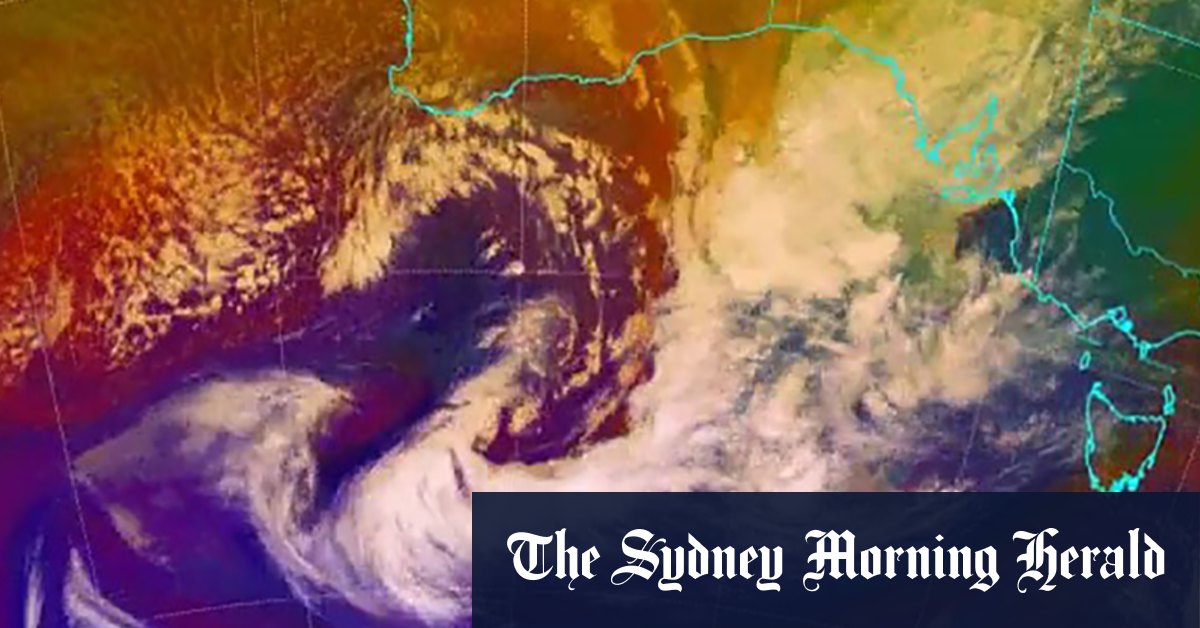
As the north-west cloud bands drift across the continent, most of the rain will fall on the western side of the Great Dividing Range, a different weather pattern that has caused flooding in Sydney and other regions over the past eight months.
loading
It may also reach some areas of southern NSW and northern Victoria that have had below-average rainfall this year.
There are not enough long-term trustworthy records to be able to say if climate change is a factor in this back-to-back negative IOD, says University of Melbourne climate scientist Andrew King.
There is some evidence we may be seeing more extreme IOD conditions as the planet warms, he said. Earth’s background climate is warming because of greenhouse gas emissions, but there is also climatic variability that is influenced by the Indian and Pacific oceans, he said.
“When we look back in time, we see we sometimes have these conditions – warmer sea temperatures in the east Indian Ocean … and wetter conditions over south-east Australia,” King said.
It comes as the BOM has issued a severe weather warning and minor to major flood warning over much of NSW. The flood warning, driven by a series of throughs and a cold front, covers the central west and south-west of the state from Wednesday to Friday.
loading
NSW SES spokesman Greg Nash said the worst of the wet weather was likely to hit on Wednesday and into Thursday, with some areas to receive between 20 and 50 millimeters of rain.
“The forecast that has been provided to us is that there is going to be substantial rains coming up around the western slopes and around the ACT,” he said. “The SES is preparing by moving additional resources into those areas.”
The BOM previously warned that saturated soil from recent rainfall events, as well as full water systems – including most dams around NSW above 70 per cent capacity – would exacerbate flooding risks. It will be several more months until the agency can declare a third successive La Niña event, but there is a 50 per cent chance one could occur.
Sydney recorded its wettest July on record after 404 millimeters of rain fell in the CBD. The previous wettest July was 1950 with 336 millimeters. The usual average rainfall in July for Sydney is 96 millimetres. During August, the city records an average of 80 millimetres.
Meanwhile, a severe weather warning is in place in Victoria with large parts of the state to see damaging winds of up to 100km/h occurring overnight and during Wednesday.
Get to the heart of what’s happening with climate change and the environment. Our fortnightly Environment newsletter brings you the news, the issues and the solutions. Sign up here.
The former Coalition government was warned by federal police former Nationals MP George Christensen was at risk of being blackmailed because of “activities” he engaged in in South-East Asia.
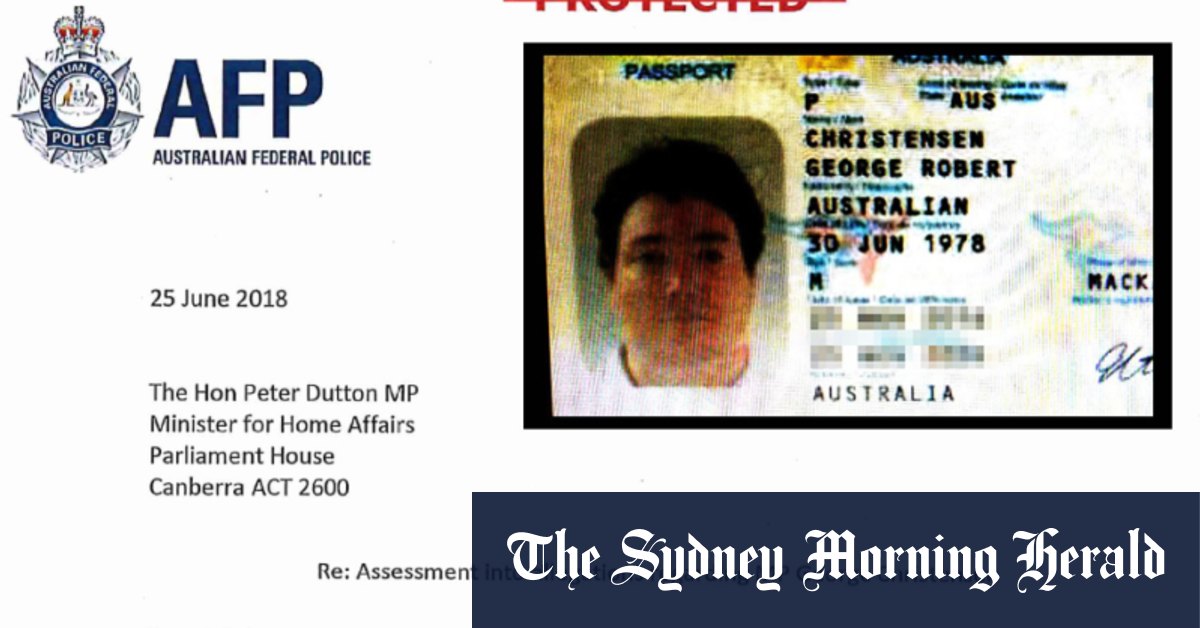
The detail is contained in a 2018 letter from the Australian Federal Police (AFP) to then-Home Affairs Minister Peter Dutton, which police and Christensen fought on numerous occasions since 2019 to keep secret.
In the letter written by former Deputy Commissioner Ramzi Jabbour, police said a probe into the former Nationals MP’s frequent travel to the area did not find evidence of “criminal conduct” but did warn he had “engaged in activities that could potentially place him at risk of being targeted for compromise by foreign interests”.
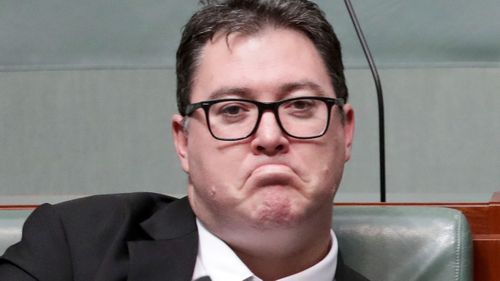
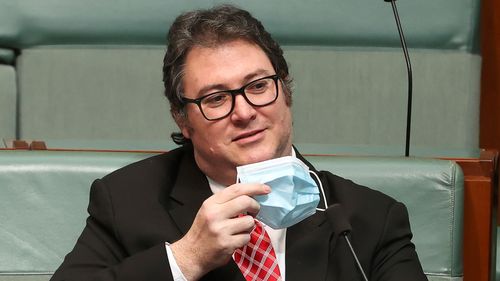
Then-Nationals MP George Christensen during question time in 2020. (Alex Ellinghausen)
It revealed the police assessment started following a tip-off in September 2017, after a “source previously unknown to the AFP” alleged Christensen “engages in improper conduct overseas potentially in contravention of Australian law”.
9News has been fighting since July 2019 for this letter to be made public under Freedom of Information laws.
Australian Federal Police argued it shouldn’t be released on the grounds of privacy, then later argued it could damage national security.
Christensen has always claimed coverage and questioning of his frequent travel to South-East Asia was a vile smear.
He made three secret submissions to the information watchdog in his fight to prevent the letter from being released.
Christensen spent 294 days in the Philippines over four years from 2014-2018, leading to him being dubbed the “Member for Manila” by some of his colleagues.
Christensen spent 294 days in the Philippines over four years from 2014-2018. (Alex Ellinghausen)
Last October, the former MP denied trying to block the release of the letter, but said he objected to it being public.
“I’m not happy with, basically documents that falsely accuse me of a serious crime being made public because therefore people will get to then report what you are falsely accused of and that’s just wrong for anyone,” he told 9News.
Dutton was among a number of high-profile government figures to be briefed by the AFP on its assessment of Christensen’s travel.
Former Prime Minister Malcolm Turnbull was briefed six times while he was in the job, and former Nationals leaders Barnaby Joyce and Michael McCormack also received police briefings.
The Information Commissioner ruled in favor of 9News, handing down its finding on the letter on June 30. It was only released after an appeal deadline lapsed.
In her report, Commissioner Angeline Falk said she was “persuaded that a public purpose would be served through the release of the document by increasing scrutiny, discussion, comment and review of government’s activities”.
The letter sent by the AFP to then-Home Affairs Minister Peter Dutton. (Nine)
Christensen did not respond to requests for comment on Tuesday.
“Enoch Powell once remarked: ‘for a politician to complain about the press, is like a ship’s captain complaining about the sea’. As these proceedings demonstrate, a politician litigating about the barbs of a political adversary might be considered a similarly futile exercise,” Lee said in his opening remark to the court.
“Both the applicant, Mr Palmer, and the respondent, Mr McGowan, have chosen to be part of the hurly-burly of political life.
“Many members of the public will have instinctive views about them absent any personal interaction.”
He said Palmer’s commentary may have actually enhanced McGowan’s reputation—referring to friendly texts between the premier and The West Australian owner Kerry Stokes revealed during the trial that showed the media mogul backed the government’s action on the stalled mining project legislation.
“It is more likely that Mr McGowan’s reputation was enhanced, as the coverage Mr McGowan celebrated with Mr Stokes revealed, and as his language in the cross-claim matters made plain, they provided a common foe against which Mr McGowan could unite Western Australians, ” he said.
“As Mr McGowan accepted, Mr Palmer was someone with whom Mr McGowan was ‘happy to have a blue with’.”
Lee described both Palmer and McGowan as “political antagonists” and rubbished claims by Palmer during the hearing that he was not a political figure at the time.
“No-one picking up a newspaper in Australia in 2020 could be in any doubt as to the political profile of Mr Palmer,” Lee said.
“Although he was not running for office in 2020, he was the chairman of the United Australia Party, and was one of the most well-known figures operating in the sphere of Australian politics generally.”
Palmer, McGowan, Quigley evidence criticized
Lee also took aim at Palmer, McGowan and WA Attorney-General John Quigley’s testimony while in the witness stand.
He said Palmer was often willing to fashion his evidence to suit what he perceived to would be best for his case.
“His confidence and self-assuredness was evident, indeed, he carried himself with the unmistakable aura of a man assured as to the correctness of his own opinions,” Lee said.
Lee was bewildered by evidence from Palmer that he thought the $30 billion damages legislation gave McGowan a “license to kill” himself and his family because it provided some exemptions from criminal liability.
“To even his most rusted-on partisans, Mr McGowan would be unlikely to have been thought to resemble Ian Fleming’s fictional MI6 character, James Bond,” Lee said.
Lee said McGowan was generally an impressive witness but, when pressed on aspects of his evidence, exhibited the “muscle memory” of a politician in being non-responsive.
But Lee was also not impressed with Quigley, who was re-examined during a trial after he conceded he had given “misleading evidence” during his first time in the box.
“Regrettably, his evidence was both confused and confusing,” Lee said.
“I do not consider it is safe to place any reliance upon Mr Quigley’s evidence.”
‘I started it’: McGowan responds
WA taxpayers are being charged for McGowan’s defense and counter-suit, of which the cost has so far remained private.
McGowan would not reveal what the case would cost WA taxpayers but defended his strong public commentary against Palmer in 2020.
“Western Australia was dragged, and myself were dragged, into this court process. To be clear, Clive Palmer took action against the state of Western Australia. And then he sued me,” he said.
“I didn’t bring the action in the courts, just so you all understand, I didn’t do it. I responded to it.
“Obviously, my preference would be the action had not been brought, my very strong preference, but I didn’t bring it. I can’t control what other people do.”
loading
Questioned about Lee’s criticisms of himself and Quigley, McGowan said he accepted the judgment of the court.
McGowan also supported Quigley to remain in his cabinet.
“I actually think the attorney-general was fantastic, magnificent in coming up with ways of saving lives and saving the state’s finances and I think he should be congratulated for that,” he said.
WA Opposition Leader Mia Davies said the spat had cost taxpayers money and time the premier could have spent dealing with crises in health, housing, and cost of living.
She also called for Quigley to leave McGowan’s cabinet.
“Clearly, it is time for Mr Quigley to go – the premier needs to wake up and take responsibility for his embattled cabinet,” Davies said.
Shadow attorney-general Nick Goiran said it was a “damning indictment” for law and order in the state to have an attorney general taken apart in the witness box and have his evidence deemed unreliable.
“The premier now has two gigantic headaches to resolve: when to come clean on how much taxpayer money has been wasted in this pointless extravagance and who to appoint as replacement attorney-general,” he said.
A hearing to determine legal costs has been set down for August 11.