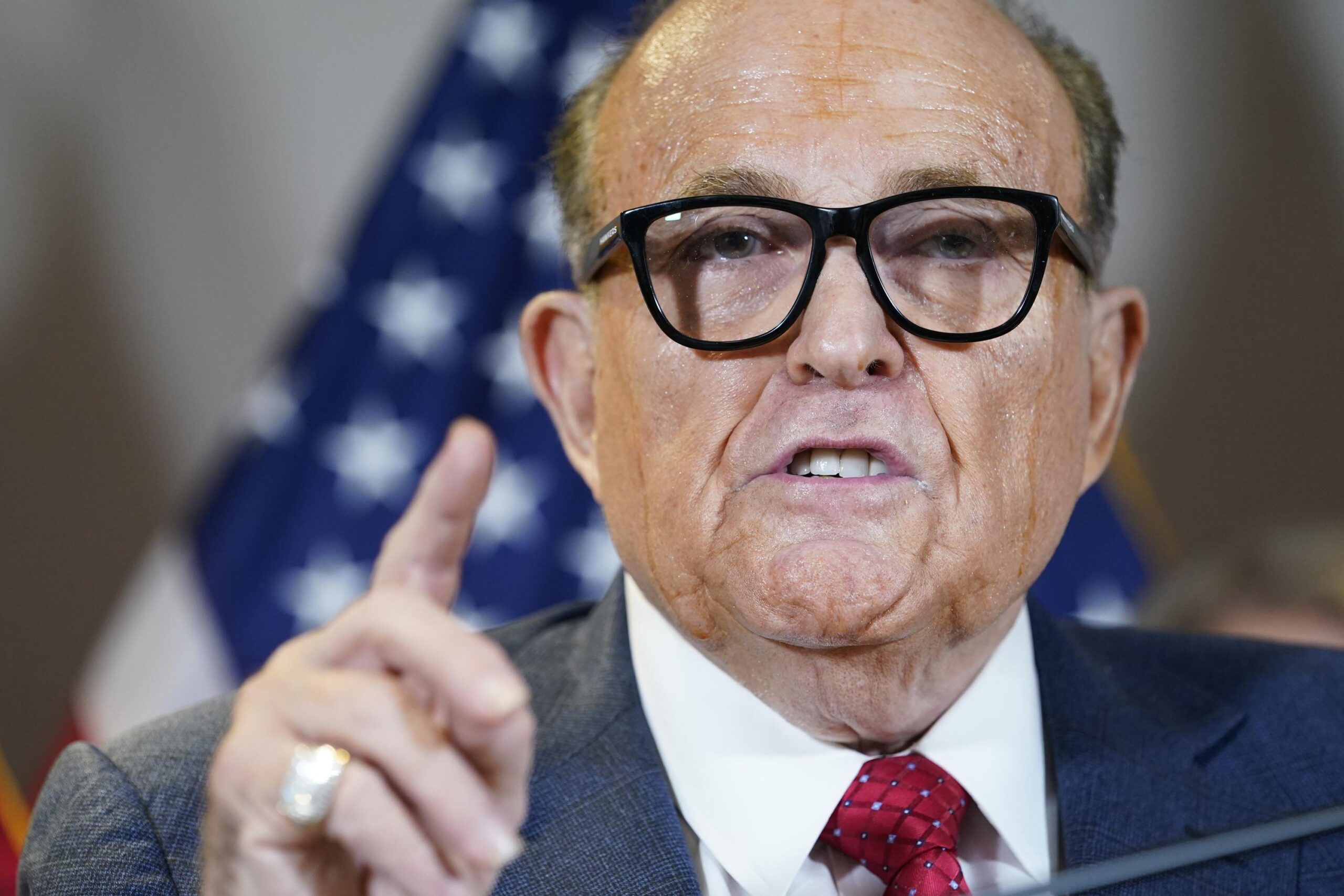
ATLANTA (AP) — Rudy Giuliani will not appear as scheduled Tuesday before a special grand jury in Atlanta that’s investigating whether former President Donald Trump and others illegally tried to interfere in the 2020 general election in Georgia, his lawyer said.
A judge last month had ordered Giuliani, a Trump lawyer and former New York City mayor, to appear before the special grand jury Tuesday.
But Giuliani’s attorney, Robert Costello, told The Associated Press on Monday that Fulton County Superior Court Judge Robert McBurney, who’s overseeing the special grand jury, had excused Giuliani for the day.
Nothing in publicly available court documents indicates that Giuliani is excused from appearing, but McBurney has scheduled a hearing for 12:30 pm Tuesday to hear arguments on a court filing from Giuliani seeking to delay his appearance. In a court filing Monday, Fulton County District Attorney Fani Willis asked the judge to deny Giuliani’s request for a delay and to instruct him to appear before the special grand jury as ordered.
Willis opened an investigation early last year, and a special grand jury with subpoena power was seated in May at her request.
Last month she filed petitions seeking to compel testimony from seven Trump advisers and associates, including Giuliani. Because they don’t live in Georgia, she had to use a process that involves getting a judge in the state where they live to order them to appear.
New York Supreme Court Justice Thomas Farber on July 13 issued an order directing Giuliani to appear before the special grand jury on Aug. 9 and on any other dates ordered by the court in Atlanta.
Giuliani’s legal team last week asked Willis’ office to delay his appearance, saying he was unable to travel because of a medical procedure. That request was rejected after Willis’ team found evidence on social media that he had traveled since his medical procedure.
A Giuliani attorney then clarified to Willis’s team that Giuliani is not cleared for air travel, but Willis still refused to postpone his appearance, the motion says.
In her Monday court filing, Willis wrote that her team had obtained records indicating that between July 19 and July 21, Giuliani bought multiple airline tickets, including tickets to Rome, Italy, and Zurich, Switzerland, for travel dates between July 22 and July 29 Willis said her team offered to provide alternative transportation — including bus or train fare — if Giuliani wasn’t cleared for air travel.
Giuliani had also offered to appear virtually, for example by Zoom, his motion says.
“It is important to note here that Mr. Giuliani is no way seeking to inappropriately delay, or obstruct these proceedings or avoid giving evidence or testimony that is not subject to some claim of privilege in this matter,” the motion says, noting that Giuliani had appeared virtually before the committee investigating the Jan. 6, 2021, attack on the US Capitol and testified for more than nine hours.
“Mr. Giuliani is willing to do the same here under conditions that replicate a grand jury proceeding,” the motion says.
In the petition for Giuliani’s testimony, Willis identified him as both a personal attorney for Trump and a lead attorney for his campaign.
She wrote that he and others presented a Georgia state Senate subcommittee with a video recording of election workers that Giuliani allegedly showed them producing “suitcases” of unlawful ballots from unknown sources, outside the view of election poll watchers.
Within 24 hours of that hearing on Dec. 3, 2020, Secretary of State Brad Raffensperger’s office had debunked the video and said that it had found that no voter fraud had taken place at the site. Nevertheless, Giuliani continued to make statements to the public and in subsequent legislative hearings claiming widespread voter fraud using that debunked video, Willis wrote.
Evidence shows that Giuliani’s appearance and testimony at the hearing “was part of a multi-state, coordinated plan by the Trump Campaign to influence the results of the November 2020 election in Georgia and elsewhere,” the petition says.
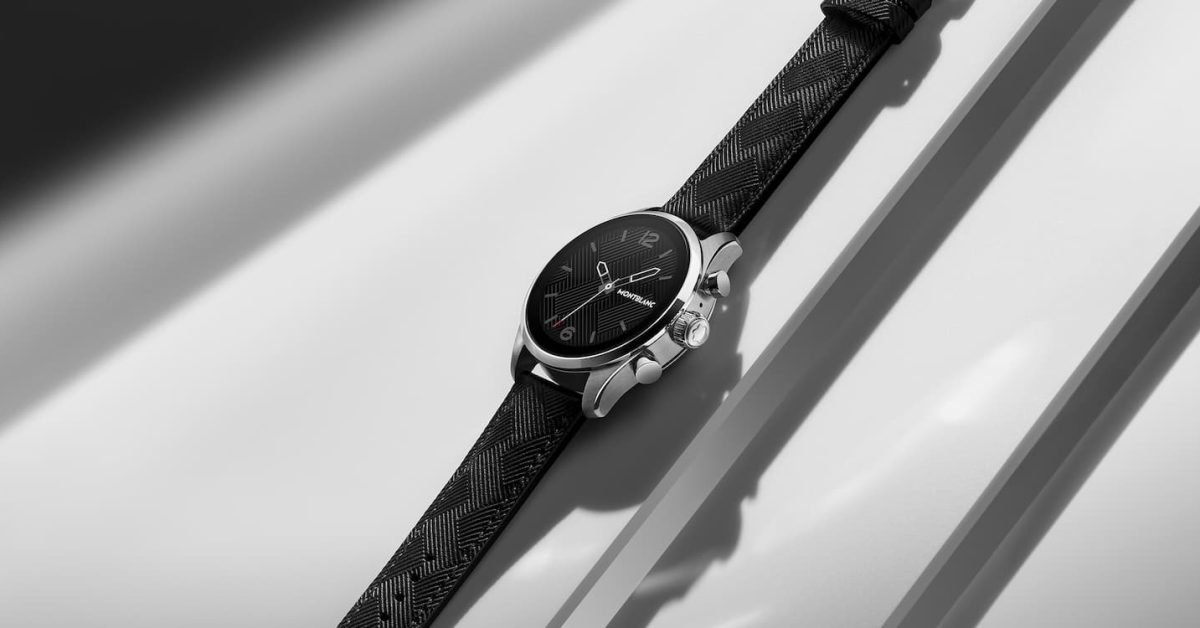
Wear OS 3 is finally on its way to other smartwatches, but its first new option is lacking a major feature. The Montblanc Summit 3 lacks support for Google Assistant entirely.
Announced last month, the Montblanc Summit 3 is a luxury smartwatch running Wear OS 3, the first smartwatch outside of Samsung’s Galaxy Watch 4 lineup to use the OS to date. The short story on the watch is that it runs with a Snapdragon 4100+, has a new companion app for setup, and Wear OS 3 in a relatively stock form, just with several of Montblanc’s apps pre-installed.
In a video from our friend Michael Fisher, it’s been fully confirmed that the Montblanc Summit 3 launches without support for Google Assistant in any capacity. That’s certainly a shocker, as Google Assistant has been a core part of Wear OS for years now.
why?
Unfortunately, there’s no clear answer on that just yet. Fisher says that he got the impression that Montblanc would have included Google Assistant on the Summit 3 if it were available, and Google only offered a generic response when asked about the state of the voice assistant on this watch in particular.
Our priority with Wear OS is to deliver a high performing platform for our partners and users, and we are taking the time to ensure our apps and services deliver a quality experience. We have nothing more to share at this time.
Also gone is Wear OS’s left-most screen that showed contextual information akin to the Google Now of yesteryear, but that was long-suspected in early Wear OS 3 previews. Rather, Google has opted to use both sides of the watchface for Tiles, with swipes up or down reaching the quick settings and notifications as was the case previously.
It’s probably safe to speculate that, going forward, Google Assistant on Wear OS is going to behave a lot more like what we see on the Galaxy Watch 4 series – an app that can be triggered using hardware keys or hotwords, rather than a core part of the operating system. In that light, it makes sense why it’s not pre-loaded on the Montblanc Summit 3, but it certainly has us curious where Google Assistant will be available – and even more so where it won’t – on future Wear OS 3 products.
You can check out Fisher’s full hands-on with the Summit 3 below, and we’re hoping to get our hands on the product soon!
More on Wear OS:
FTC: We use income earning auto affiliate links. More.
The “Slim Reaper” nickname might apply off the court, too.
Kevin Durant is trying to become both a coach and GM-killer.
Watch Live & Free Coverage of The 2022 NBL1 Championship Season on Kayo Freebies. Join now, no credit card required >
The Nets superstar issued an ultimatum to Joe Tsai over the weekend that the team owner needs to choose between Durant and the pairing of head coach Steve Nash and GM Sean Marks, The Athletic reported Tuesday (AEST).
Durant, who requested a trade in June and has not been moved, had a face-to-face meeting with Tsai in London in which he did not rescind his demand.
According to the report, the Nets have “direct knowledge” concerning why the 12-time All-Star has asked out a year after he signed a four-year, $198 million extension.
The Nets have not found a trade offer that could satisfy losing the all-time great, and according to the report, Tsai and the Nets have made it known they will take “every last asset from a team that trades for Durant.”
In stating the lofty hope for the trade return, perhaps the Nets think Durant would be less motivated to leave.
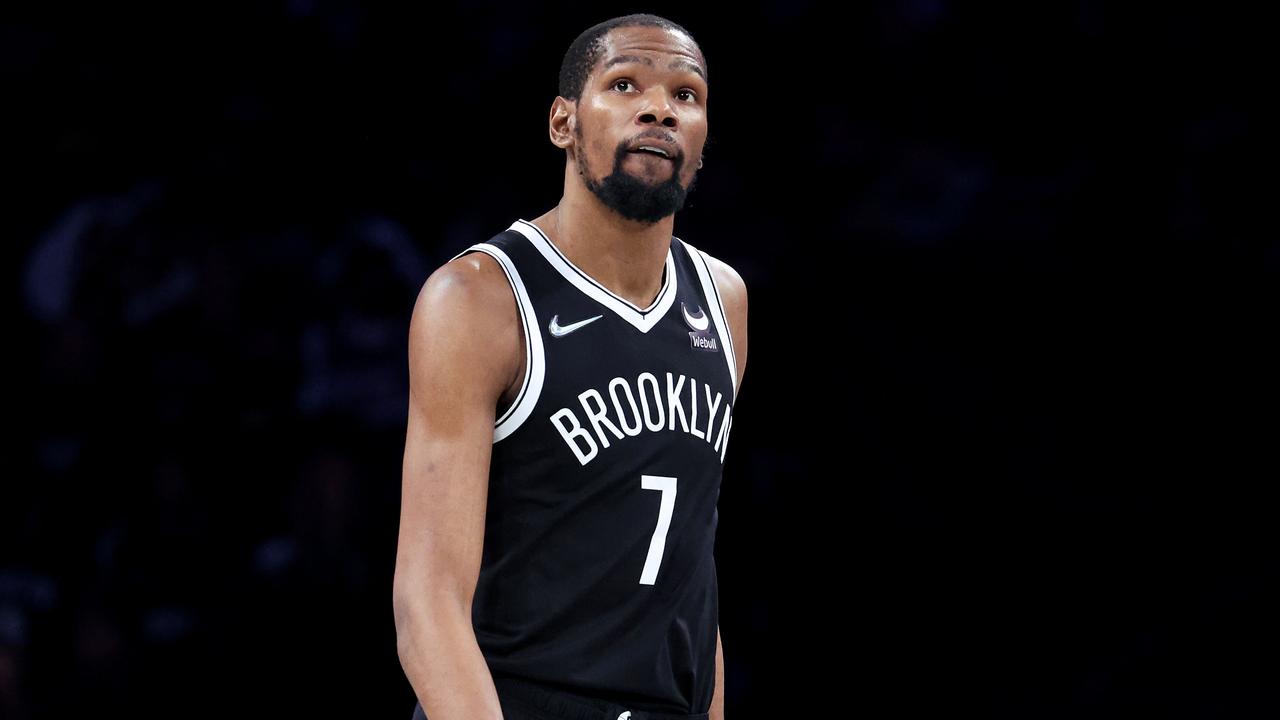
Will Kevin Durant stay in Brooklyn? Al Bello/Getty Images/AFP.Source: AFP
MORE COVERAGE
NBL emerges as shock option for Bronny James as LeBron’s master plan revealed
Real reason behind Ben’s messy Philly exit as Sixers coach ‘had nothing’ to do with departure
KD set for showdown with Nets owner over NBA trade bombshell as likely resolution revealed
The Nets are coming off a chaotic and wildly disappointing season in which the unvaccinated Kyrie Irving was banned until December and then primarily could only play in road games; James Harden, dealing with a heavier burden without Irving, requested a trade and was flipped for Ben Simmons, who never actually stepped foot on the court; and Brooklyn eventually was swept out of the first round by the Celtics.
In the aftermath, Marks said the team culture “isn’t what it quite was” and said it was his and Nash’s “job to pick that up.”
Durant reportedly does not want the GM and coach combination to be able to follow through.
After the Game 4 loss to Boston, Durant expressed his appreciation for Nash and said he was the right coach to lead the Nets into the future.
“Steve’s been dealt a crazy hand the last two years,” Durant said.
“He’s had to deal with so much stuff as a head coach, a first-time coach. Trades, injuries, COVID and just a lot of stuff he had to deal with.
“I’m proud of how he’s focused and his passion for us. We all continue to keep developing over the summer and see what happens.”
This article originally appeared on the New York Post and has been reposted with permission
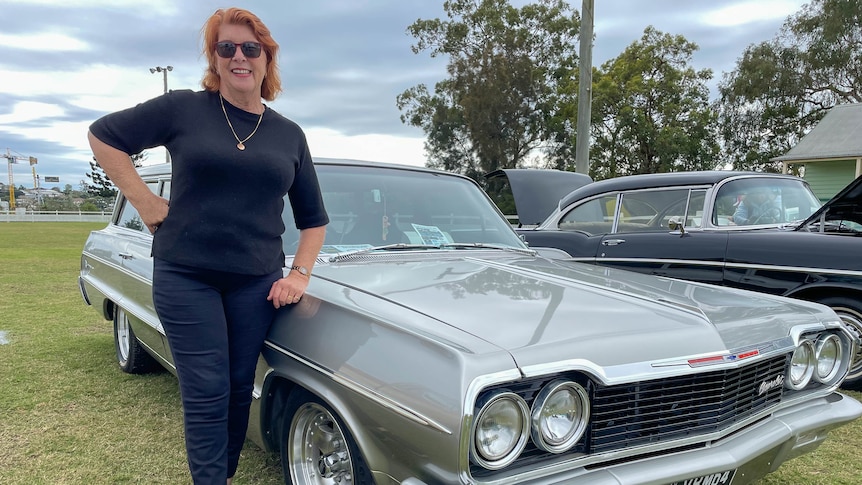
For Bec Harding and Valda Moore, there’s nothing more enjoyable than telling people they’re the owners of classic cars.
“We get asked all the time: ‘Is this your husband’s car?'” Ms Moore said.
“We love it as I always strike back saying: ‘No mate, it’s mine. Why would it be my husband’s?'”
Both are proud owners of classic Chevies which they show as part of the Queensland Chevrolet Club.
Bec Harding loves telling people the story behind the car.(ABC Radio Brisbane: Jessica Hinchliffe)
For Ms Harding, her 1983 C10 Silverado came with a slice of Hollywood.
“My Chevy was imported from Virginia by the producers of Aquaman and it was used in the film before being put on display at Movie World,” she said.
loading
“It was then road registered in Queensland and sold at auction with other props after the movie was shot.
“A lady at the Gold Coast bought it and had it for a year then I bought it off her.”
The car came equipped with re-upholstered seat covers proudly sporting tridents as a nod to the film, which Ms Harding said was a conversation starter.
The car’s interior just screams Aquaman.(ABC Radio Brisbane: Jessica Hinchliffe)
“When I tell them it was in Aquaman, they say: ‘Oh my God, did Jason Momoa sit in it? Can I touch it?'”
But what she loved most about the car was its authenticity.
“It has its original 350 Chevy engine and paint job, and I’ve just had a few bits and pieces done to it like the sound system, but I really love the original factor and like to keep it stock-standard.”
Aquaman on the dash is a reminder of the car’s Hollywood ties.(ABC Radio Brisbane: Jessica Hinchliffe)
Why the Chevrolet?
Both women said the “cool factor” was a big part of being a Chevy owner.
“They’re cool classic cars and many are rare here in Australia,” Ms Harding said.
“Mine is a long bed and you just don’t see as many of them as most are short beds.”
The 1983 Chevrolet has appeared in films and was once housed at Movie World.(ABC Radio Brisbane: Jessica Hinchliffe)
The car’s length does have its challenges when it comes to everyday use.
“It’s like driving a battleship and sometimes it’s got a turning ratio of one too,” Ms Harding said.
“It has a left-hand drive so you have to think about where you’re going as you can’t do drive-throughs — they don’t fit.
“You can’t get tickets in ticket windows and you can’t really go to shopping centers as they’re too big, but it’s worth it.”
‘She’s special to me’
Ms Moore’s prized possession is her 1964 Impala wagon which originally had a life as a hearse.
“The Impala has the right-hand drive and most Chevies have left-hand drive coming from the States so she’s unique,” she said.
“I’m her second owner as she was first bought by a funeral home in Caloundra and used as a hear.
“She has seats at the back, but we don’t use them so the kids can put a mattress in the back and take it to the drive-in.”
Valda Moore with her classic Chevy which was once a hearse.(ABC Radio Brisbane: Jessica Hinchliffe)
Ms Moore said she was often asked about how she parked such a car.
“She’s a big girl and they make the parks for smaller cars now, so she can be hard to park but you get used to it.
“I’m always told how cool it is; she’s very special to me this girl.”
The classic Chevy has right-hand drive which is rare as most are left-hand drive.(ABC Radio Brisbane: Jessica Hinchliffe)
With dozens of members in their club, Ms Moore said she enjoyed being able to talk to people about her pride and joy and the other cars the club showed.
“It’s wonderful to be able to share our love for cars, and being ladies of the group, we get to show everyone that anyone can drive a classic car.”
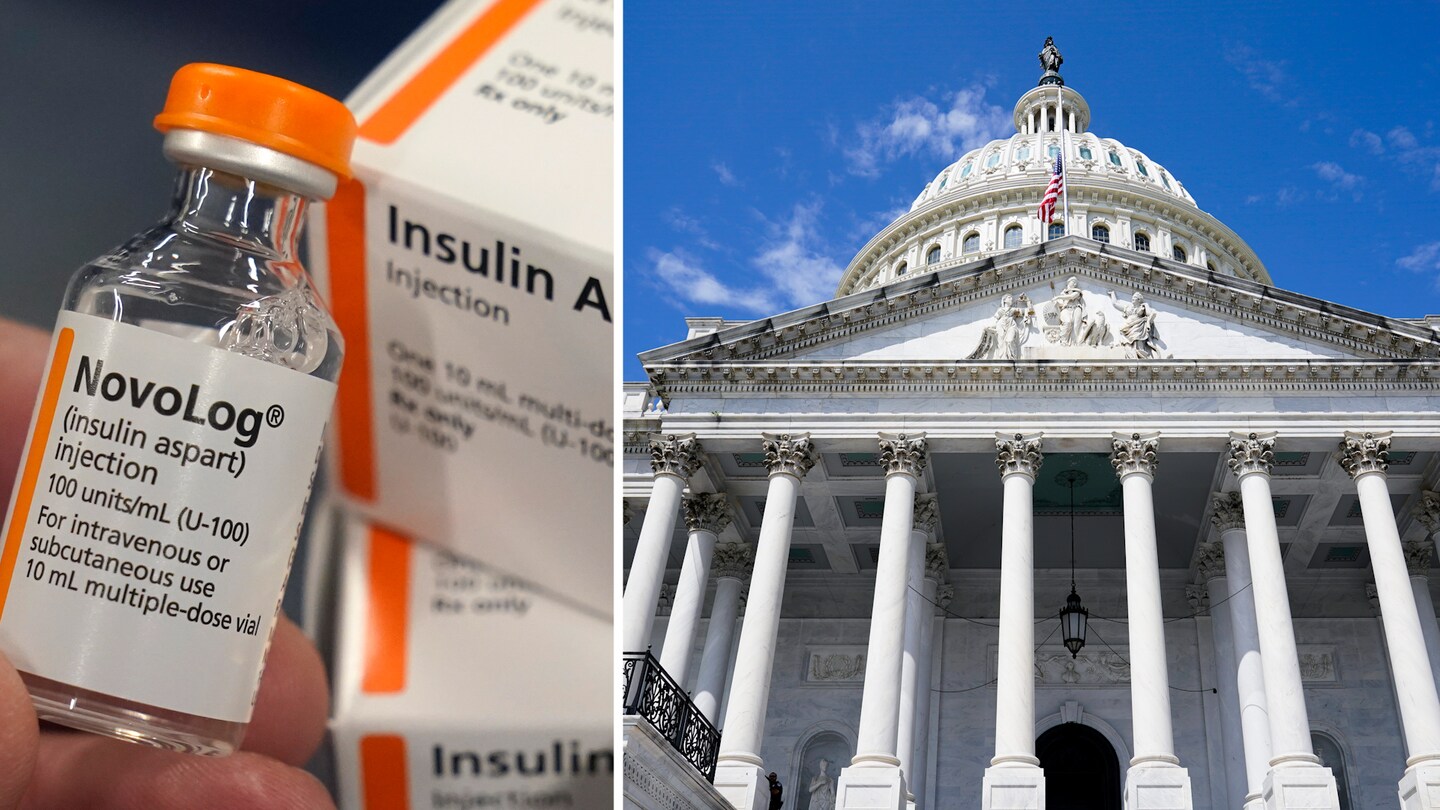
The Senate passed a sweeping budget package Sunday intended to bring financial relief to Americans, but not before Republican senators voted to strip a proposal that would have capped the price of insulin at $35 per month for many patients.
A proposal that limits the monthly cost of insulin to $35 for Medicare patients was left untouched. But using a parliamentary rule, GOP lawmakers were able to jettison the part of the proposal that would apply to privately insured patients.
How the Inflation Reduction Act might impact you — and change the US
Seven Republicans joined Democrats in supporting the broader price cap, but that wasn’t enough for passage. A number of Republican senators who voted for the proposal to be removed come from states with some of the highest mortality rates for diabetes, according to data from the Centers for Disease Control and Prevention, including Arkansas, Oklahoma and Tennessee.
Lowering the price of drugs such as insulin, which is used by diabetics to manage their blood sugar levels, is widely popular with voters, polling shows. Senate Democrats denounced Republicans for voting against relief for Americans struggling to pay for the lifesaving drug.
More than 30 million Americans have diabetes, and about 7 million require insulin daily to manage their blood sugar levels.
Here’s what we know about how Americans would be affected by the Senate vote:
Republicans block cap on insulin costs for millions of patients
What would the insulin price cap do?
The insulin price cap, part of a larger package of proposals to cut prescription drug and other health-care costs, was intended tolimit out-of-pocket monthly insulin costs to $35 for most Americans who use insulin.
More than 1 in 5 insulin users on private medical insurance pay more than $35 per month for the medicine, according to a recent analysis from the Kaiser Family Foundation. The same analysis found that the median monthly savings for those people would range from $19 to $27, depending on their type of insurance market.
The average Medicare patient using insulin paid $54 for prescriptions, according to KFF, an increase of nearly 40 percent since 2007.
With the Republican vote to strip the provision, only Medicare recipients would be eligible for the cap. The legislation still must pass the House.
Why is insulin so expensive?
Insulin was discovered in Canada in the 1920s, and the researchers, who won the Nobel Prize, sold their patent to the University of Toronto for $3. Since then, the drug has become a major commercial enterprise.
The global insulin market is dominated by US-based Eli Lilly, the French company Sanofi and the Danish firm Novo Nordisk. A report released in December by Democrats on the House Oversight and Reform Committee accused the drugmakers of repeatedly raising their prices in lockstep and working to “maintain monopoly pricing,” allegations the companies have denied.
In a statement, Novo Nordisk said the complexities of the US health-care system influence the insulin market and that “many factors” determine what a person pays out of pocket for insulin. The company said net prices for its products have “continued to decline over the past 5 consecutive years.” A Sanofi spokesperson said in a statement that “despite rhetoric about insulin prices,” the net price of its insulin has failed for seven straight years, “making our insulins significantly less expensive for insurance companies.”
Eli Lilly did not immediately respond to requests for comment.
A generic insulin is slated to come on the market in 2024 and could help drive down prices.
Researchers also blame issues such as increasingly complicated supply chains for the dramatic rise in drug prices over the past decade. US insulin prices are well above the average price paid in other developed countries, according to a government report.
A Yale University study found insulin is an “extreme financial burden” for more than 14 percent of Americans who use it. These people are spending more than 40 percent of their income after food and housing costs on the medicine.
What does this mean for uninsured patients and Medicaid recipients?
The legislation doesn’t limit the cost of insulin for uninsured patients, despite last-minute lobbying from some House lawmakers to add in such protections. Uninsured Americans with diabetes are more likely to be using less costly formulations of insulin compared with those on private insurance or Medicaid, yet they have a higher tendency to pay full price for the lifesaving medication, according to a 2020 report from the Commonwealth Fund, a health care think tank.
For those on Medicaid, many don’t have co-pays for insulin, though some states may have modest amounts beneficiaries must pay, such as $2 for a standard prescription, according to Sherry Glied, dean of the Robert F. Wagner Graduate School of Public Service at New York University.
But in general, costs for those with diabetes can vary widely from person to person, except for those on Medicaid.
“There’s no average person with diabetes, right, and so no two people are managing their diabetes in the exact same way,” said Aaron Turner-Phifer, advocacy director for JDRF, an organization funding research into Type 1 diabetes. “Folks are taking different types of insulin, they’re taking them via pens, they’re taking them via pumps, some are using different devices. … The amount of insulin that they’re taking varies from person to person”
What are Republicans saying about the insulin price cap?
Many Republicans have opposed the $35 cap, saying the measure did not address the root problem of skyrocketing insulin prices. Instead, they said, it would force insurance companies to pass on the cost through premiums.
The cap would have also been a major win for Democrats ahead of the midterm elections in November, possibly feeding GOP opposition to the proposal.
Still, other Republicans decried what they have called “socialist” government interference in the free market. “Today it’s the government fixing the price on insulin,” said Rep. Cathy McMorris Rodgers (R-Wash.), the top Republican on the House Energy and Commerce Committee. “What’s next, gas? Food?”
Did President Donald Trump lower the price of insulin?
In 2020, PresidentDonald Trump claimed that he had drastically lowered the price of insulin: “Insulin, it’s going to — it was destroying families, destroying people. The cost,” Trump said in a debate. “I’m getting it for so cheap it’s like water.” His statement from him drew criticism from patient advocates and people still struggling to afford their medication.
In 2020, drugmakers reduced the cost of insulin for some patients who lost jobs, health insurance or both as a result of the pandemic.
Trump signed an executive order to lower the price of insulin as one of his final health-care acts in office. The ruling was narrow, experts said, and would have lowered the cost of insulin for certain patients who go to certain federally qualified health centers.
It was rescinded by the Biden administration. Health officials said at the time that the rule would have imposed “excessive administrative costs and burdens” on health centers — and reduced resources for other health services.
Where have Democrats and Republicans historically stood on insulin prices?
Both Democrats and Republicans have blasted the high price of insulin, including in congressional hearings and in bipartisan investigations. But they’ve taken different approaches toward curbing the cost of the medicine.
Republicans have long proposed alternatives to Democrats’ drug-pricing measures. In the House, key GOP lawmakers have released plans to place a monthly $50 cap on insulin and its supplies for those in Medicare’s drug benefit after seniors hit their deductibles. In the Senate, top-ranking Republicans have crafted a bill to make permanent an existing temporary pilot project that gives those on Medicare the option to get a voluntary prescription drug plan where insulin costs $35 per month.
Meanwhile, a bipartisan pair of senators unveiled legislation in June aimed at tackling the cost of insulin, which was the result of months of work to forge a compromise. But the legislation hasn’t come up for a vote and faces daunting political odds in its quest to obtain 10 Republican votes to pass the bill in the Senate.
Evan Halper, Bryan Pietsch and Tony Romm contributed to this report.
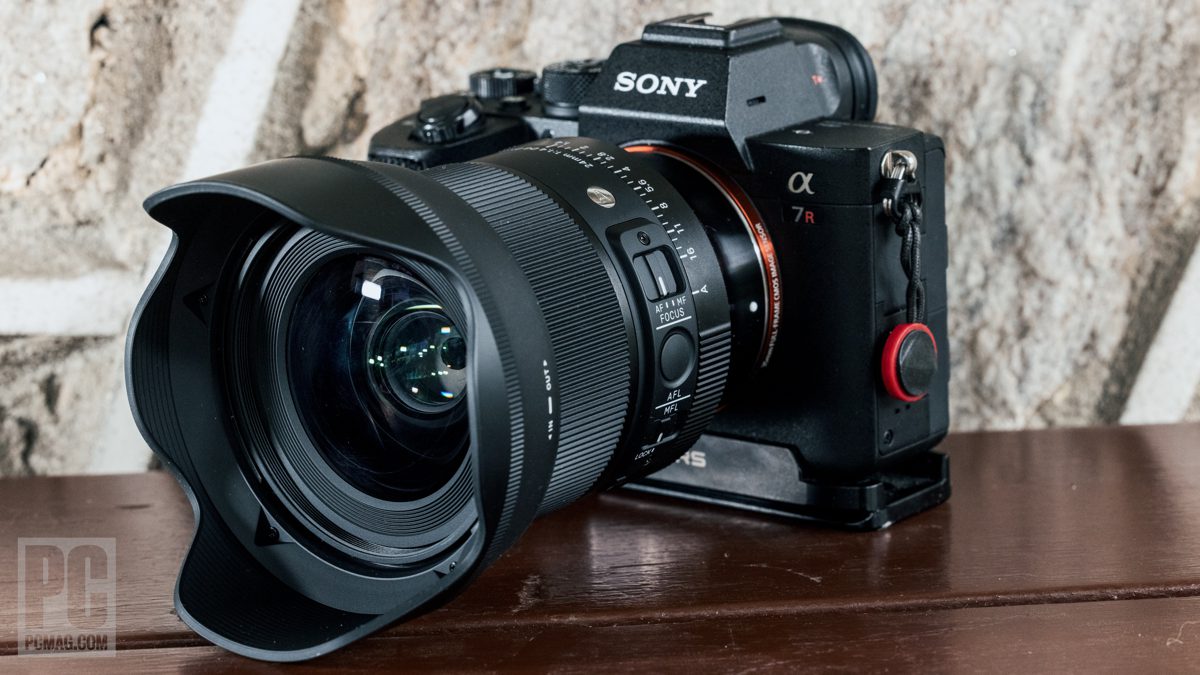
The Sigma 24mm F1.4 DG DN Art ($799) is the mirrorless successor to the company’s well-regarded 24mm F1.4 DG HSM Art for SLR systems. Available for both L-Mount Alliance and Sony cameras, the lens has a relatively carry-friendly design, weather protection for the outdoors, a wide aperture for blurred backgrounds and low-light photography, and robust on-barrel controls. Best of all, it significantly undercuts Sony’s top-end FE 24mm F1.4 GM ($1,399) on price. Simply put, if you’re chasing the F1.4 look, this recent Art entry might be the ideal wide standard prime for your bag. It earns our Editors’ Choice award, though it isn’t a clear favorite over the slimmer Sigma 24mm F2 DG DN Contemporary ($639), which remains a solid option for packing light.
A Standard Lens for Wide-Angle Photogs
In the manual focus days, most starter cameras bundled a 50mm lens, which many considered the standard angle at the time. Tastes have changed, though, and, today, almost every ILC kit lens is a zoom. For full-frame systems, a 24-70mm or 24-105mm is the standard. And many creators now appreciate the wide end of those zooms because the main camera on most smartphones tends to dance around the 24mm focal length.
The number of 24mm primes on the market is no surprise then. But the Sigma 24mm F1.4 DG DN Art sets itself apart from other sub-$1,000 options because of its complex optical formula and fully weather-sealed build. It gathers more light and is a better fit for use outdoors in rough weather compared with the Sigma 24mm F3.5 Contemporary ($549.99) or 24mm F2 Contemporary, for example.
As mentioned, the 24mm F1.4 Art is available fo L-Mount Alliance cameras from Leica, Panasonic, and Sigma, as well as for Sony’s E-mount mirrorless system. We received the latter version for review. It measures 3.8 by 3.0 inches (HD), weighs about 1.1 pounds, and supports 72mm front filters. It’s an easier lens to carry than the older 24mm HSM Art for SLRs (3.6 by 3.3 inches, 1.5 pounds), and only a bit bigger than Sony’s FE 24mm F1.4 GM (3.6 by 3.0 inches, 15.7 ounces).
Sony a7R IV, f/16, 1/2-second, ISO 100
Dust, splash, and anti-smudge fluorine protections are all here, so you can freely use the 24mm F1.4 Art in inclement weather along with a protected camera. The weather protection is on par with Sony FE lenses, including the 24mm F1.4 GM and budget-friendly FE 24mm F2.8 G. The weather protection is also a step above that of Sigma’s two 24mm Contemporary primes. The box includes a reversible lens hood; front and rear caps; and a soft zippered carrying case.
L-mount photographers only have a few autofocusing 24mm prime options. The Sigma 24mm F1.4 Art joins the aforementioned Sigma 24mm F2 and 24mm F3.5 Contemporary primes, as well as Panasonic’s Lumix S 24mm F1.8 ($899). Leica does not make a 24mm but does offer the APO-Summicron 28mm F2 ASPH, which costs a very Leica-like $5,195.
Sony system owners can use any of the aforementioned Sigma and Sony lenses, as well as true value options like the Tamron 24mm F2.8 1:2M ($249) and Rokinon 24mm F2.8 AF ($399). Both often sell for less than their official price; for instance, at press time, you can find them each for around $200.
Handling and Autofocus
We paired the 24mm Art with the full-frame Sony a7R IV for testing. The lens balances well—it’s not overly large or front-heavy like more exotic options such as the Sigma 20mm F1.4 DG DN Art. We definitely prefer the 24mm Art’s form for everyday photography, handheld use, and photo walks; the bigger 20mm Art is a more specialized tool for architecture and night sky photos.
Sigma puts a slew of controls right on the barrel, supplementing those on the camera body. Discrete rings set manual focus and adjust the f-stop. You also get a customizable function button that defaults to AF-ON on most cameras. Toggles include a Lock switch that disables the function button and focus ring when you engage it; this switch is a useful tool for astrophotographers who want to lock in focus on the stars. Another toggle switch swaps between manual focus and autofocus modes.
On-lens aperture control is handy for photos and video alike. The f-stop ring turns from f/1.4 to f/16 and clicks in at third-stop settings for photos. A toggle switch is all it takes to de-click the ring for silent, video-friendly operation. Photos who prefer to set aperture via the camera body have that option, too; the lens ring has a position to move aperture control to the camera body, along with a lock that prevents inadvertent swaps between camera-body and on-lens aperture control.
An STM focus motor drives the lens; it does so quietly and with aggressive speed. The lens drives across its entire focus range, locks, and makes an exposure in just 0.1-second. The manual focus response is nonlinear with Sony cameras, a mark against the lens for cinematographers who want to repeat focus racks from take to take. That said, you can pick between linear and nonlinear response on L-mount system bodies.
Some focus breathing is visible: The lens shows a slightly wider angle of view when you focus at closer distances than at farther ones. Photographers need not worry about this effect but it is a concern for video clips in which focus shifts from one subject to another—viewers tend to notice the change in angle. We haven’t tested a comparable 24mm prime that eschews the effect, however. A handful of Sony cameras offer an in-camera option to compensate for breathing with select lenses including the 24mm F1.4 GM, but not for third-party lenses.
Sony a7R IV, f/2.8, 1/200-second, ISO 200
Close-up focus is available to 9.9 inches, which is good enough for 1:7.1 life-size reproductions. If you’re looking for a wide prime for macro shots though, these results might disappoint. But that’s also the case with other wide aperture 24mm lenses. The Sony FE 24mm F1.4 GM gets a little closer (9.9 inches for 1:5.9 macros) and the Sigma 24mm F2 Contemporary is in the same ballpark (9.7 inches for 1:6.7 reproductions). Photographers who love leaning in are better off with the Sigma 24mm F3.5 or Tamron 24mm F2.8, both of which focus close for 1:2 magnification.
Sigma 24mm F1.4 DG DN Art: In the Lab
We paired the 24mm F1.4 DG DN Art with the 60MP Sony a7R IV and used Imatest software to evaluate its resolution in the lab. It’s an excellent performer (4,450 lines) wide-open and manages outstanding results (5,000 lines) by f/2.8 in the center of the frame. The lens shows some field curvature, so it doesn’t score well in the lab at the edges, but real-world images show sharp performance across the frame.
Sony a7R IV, f/1.4, 8-seconds, ISO 400
Sigma bills the 24mm F1.4 Art as a lens for astrophotography and, although I’m by no means a good night sky photographer, I tried the lens for that purpose. The lens is sharp across the frame at f/1.4, a benefit for disciplines that call for wide-open use. Unfortunately, it doesn’t live up to the promise of suppressing sagittal coma flare—brighter stars toward the edges of the frame show as crosses with some false purple color, not perfect pinpoints.
This crop from the image above shows the sagittal coma flare the exhibited toward edges of the frame
If you’re an astrophotography specialist, we recommend the Sigma 20mm F1.4 DG DN Art more strongly. It captures a broader view, suppresses coma across the frame, and also includes the focus lock feature for night sky work. Sony system owners may also want to look at the FE 14mm F1.8 GM, another astro-tuned lens with an even wider angle of view.
Sony a7R IV, f/2.8, 1/2,000-second, ISO 100
Optics are well-corrected for distortion. There’s just a hint of the barrel effect on Raw files, though dim corners in photos at f/1.4 are more of a nuisance. In-camera corrections do away with both for JPGs and photographers who prefer Raw images can take advantage of a lens correction profile. Sigma provided a Lightroom profile for us to try during testing, which proved effective.
Sony a7R IV, f/1.4, 1/800-second, ISO 100
At wider f-stops, the 24mm Art lives up to its moniker and blurs backgrounds for a soft, defocused look. The bokeh quality is pleasing; the optics draw highlights with smooth, soft edges, for generally soft backgrounds. We did note a bit of longitudinal chromatic aberration (LoCa) in some focus transitions, however. It pops up as false purple and green color just off the plane of focus. LoCa is not an issue in every photo, but it can be tricky to remove when it does appear. Lateral chromatic aberration is completely absent.
Sony a7R IV, f/11, 1/640-second, ISO 100
Landscape photographers may chase the sunstar look. The 24mm F1.4 Art produces its best starbursts at f/16. The stars have an impressive amount of lines, a result of the 11-blade aperture, but are not sharply defined. Flare control was not an issue with into-the-sun shots, however.
Premium Optics at a Reasonable Price
Sony a7R IV, f/16, 0.8-second, ISO 100
Sigma’s Art series lenses combine quality optics with premium build materials and often cost far less than first-party options. The 24mm F1.4 DG DN Art carries on the tradition—for around $800, the lens keeps up with expensive alternatives like the $1,400 Sony FE 24mm F1.4 GM in most respects. That said, pros and well-heeled enthusiasts may prefer the FE 24mm for its video-tuned linear focus response, compatibility with Sony’s breathing compensation function, and lighter weight.
For general use, we don’t have any major complaints about the 24mm F1.4 DG DN Art. Focus locks quickly, photos look sharp, and blurred backgrounds are easy to achieve. Add dust, splash, and anti-smudge fluorine protection, and you get a lens suitable for any condition, indoors or out.
Sony a7R IV, f/1.4, 1/320-second, ISO 100
We’re disappointed the lens doesn’t quite live up to its promise as an astrophotography specialist, however. Although stars were pinpoint through much of the frame, we did see the sagittal coma flare effect toward the edges. If you’re buying a lens strictly for astrophotography, the Sigma 20mm F1.4 DG DN Art is a better choice.
Of course, the 24mm F1.4 Art is just one of several excellent value options from Sigma. The company’s 24mm F3.5 DG DN Contemporary won us over because of its compact size and 1:2 macro focusing. And then, a few months later, the 24mm F2 DG DN Contemporary earned our Editors’ Choice award as a value option with a big f-stop.
As a reviewer, I don’t like to give every participant a trophy, but Sigma’s 24mm F1.4 DG DN Art also deserves our Editors’ Choice award. If you can’t quite justify the cost of the FE 24mm F1.4 GM and frequently work in inclement weather, this is the Sigma 24mm to get. We continue to recommend the 24mm F3.5 and 24mm F2 Contemporary as well. They’re still excellent lenses, but just now have upmarket competition.
Married At First Sight‘s Daniel Holmes has announced to fans his breakup with girlfriend Carolina Santos.
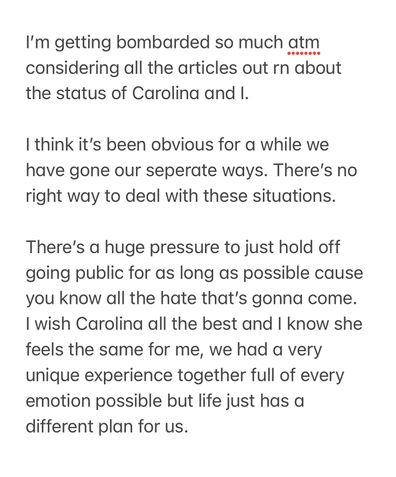
The reality star revealed the news through a post to his Instagram story, where he said it had been “obvious for a while” that they had split.
Stream every episode ofMarried At First Sightfor free on 9Now.
“I’m getting bombarded so much at the moment considering all the articles out right now about the status of Carolina and I,” the 31-year-old wrote.
Daniel Holmes shared an image revealing his split to his Instagram story. (Instagram/@_danielholmes_)
“I think it’s been obvious for a while we have gone our separate ways. There’s no right way to deal with these situations.
“There’s a huge pressure to just hold off going public for as long as possible cause you know all the hate that’s gonna come.
“I wish Carolina all the best and I know she feels the same for me, we had a very unique experience together full of every emotion possible but life just has a different plan for us.”
Daniel Holmes and Carolina Santos together. (Instagram/@_danielholmes_)
The last post of the pair together was on Daniel’s Instagram, and was posted on July 24. It showed the pair working on their boxing moves together, likely in preparation for Daniel’s upcoming boxing fight with co-star Brent Vitiello.
READMORE:Daniel Holmes gets candid as he opens up about his secret steroid addiction
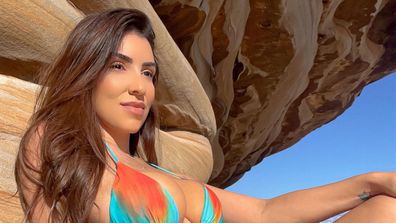
Carolina alluded to a potential break up in an Instagram post shared on July 30. Here she posed in a bikini while smiling, with her caption revealing her inner struggles.
“Smile and no one will see how broken you are inside,” she wrote.
Daniel and Carolina formed a connection during the MAFS experiment despite not being matched together by the experts.
When Daniel’s relationship with Jessica Seracino went south he found a spark with Carolina. She in turn was struggling to find a connection with Dion Giannarelli, who she was matched with.
(Nine)
The pair struck up a secret romance and eventually tried to re-enter the experiment together. A request which was denied.
Despite this, prior to their breakup the pair had formed a strong relationship, and had moved in together in Sydney.
The post came hours after Olivia Frazer and Jackson Lonie announced that they too had broken up.
The couple shared the news in a joint Instagram post earlier on Monday, stating they plan to stay friends and have nothing but “respect for one another.”
“After a wonderful 10 months together we have decided to go our separate ways,” the post began.
“There has always been a lot of love in our relationship and there will continue to be as we transition into a friendship.
“We have nothing but love and respect for one another, and no one is to blame for the end of this relationship. Simply a case of ‘almost perfect’.
“We hope you all can please show compassion as we navigate this privately. Love, Liv & Jack xx.”
In Pictures
The MAFS 2022 brides’ and grooms’ hottest Instagram snaps
Carolina sizzles in cryptic post.
ViewGallery
Stream every episode ofMarried At First Sightfor free on 9Now.
The director of an Indigenous clothing label has criticized Melbourne’s “Naarmcore” fashion movement, arguing it reduces their culture to a social media trend.
Key points:
Naarmcore is a mix between Naarm, an Aboriginal name for Melbourne, and normcore, a minimalist style of dressing
Naarm can be spelled many ways (Nairm or Narrm) and is used by the Woiwurrung and Boonwurrung language groups of the Central Kulin Nation
Indigenous Australians say the trend reduces Aboriginal culture to a trending aesthetic
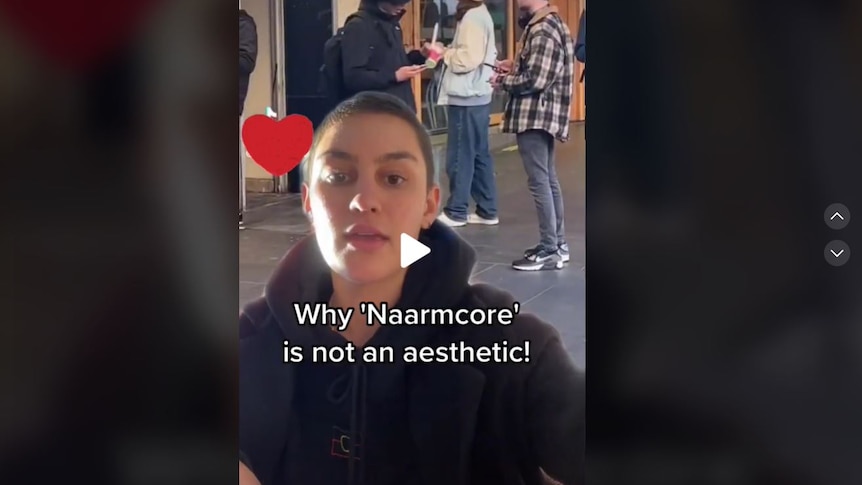
The term, which has become a popular hashtag on video-based app TikTok, is a mix between the unpretentious fashion style referred to as “normcore” and an Aboriginal placename for Melbourne.
But Narungga woman Sianna Catullo, who is brand director for Indigenous clothing label, Clothing the Gaps, said it reduced Aboriginal culture to a fashion fad.
“They’ve taken an Aboriginal word … Aboriginal languages from two mobs and made it fit a trending aesthetic,” she said.
“[TikTok] was the first time ever hearing the term Naarmcore [and] when I first watched it, I was like, ‘Is this positive? Is this negative? Do they like us?’
“It honestly took us a while to wrap our heads around it.”
loading
Ms Catullo said the brand chose to speak out against the popular videos to try to turn the trend into a learning opportunity.
“[Naarmcore] does not give any context of the history of the word,” she said.
Indigenous culture dates back more than 65,000 years and Ms Catullo said that it was something that could never be encapsulated by a hashtag.
“I think Aboriginal culture and language is not a trend,” she said.
“It’s been here for thousands of years. It’s going to continue to be celebrated and respected.”
more than a name
Ms Catullo said that while traditional place names were increasingly being used, people should understand their connotations.
“It takes more than just using a word. You have to understand it too,” she said.
She said Clothing the Gaps made the decision to use Naarm on its clothing.
“Being a Victorian Aboriginal brand, we thought it was really important to incorporate local Aboriginal language in some of our products,” Ms Catullo said.
“After we did that we spent a lot of time talking to both Boonwurrung and Wurundjeri people just to make sure we knew exactly what it meant, because it means different things to both mobs.
“We don’t often switch out the word Melbourne for Naarm, because it’s got a lot more meaning, and it’s a lot more complex than that.”
‘Sidelining’ First Nations people
La Trobe University Indigenous research director Professor Julie Andrews, a Woiwurrung and Yorta Yorta woman, said the word Naarm had been increasingly used over the last decade.
Professor Andrews says the term sidelined Aboriginal people.(Supplied: La Trobe University)
She said while young people using the hashtag may not have meant to appropriate Indigenous culture, it had detracted from the progress First Nations people had made.
“There is a danger that people can erase some of the cultural knowledge that we’ve worked towards,” Professor Andrews said.
But Professor Andrews said she believed part of Melbourne’s identify was its street-style and trend-setting nature.
“What’s happened here is like typical fashion. It’s gone like wildfire and the [movement’s] grown without any framework or boundaries,” she said.
“But you’d be hard-pressed to find an Aboriginal person going around calling themselves a ‘Naarmie’.
She said the cultural representation of the world Naarm had been “sidelined”.
“Aboriginal people are sitting on the sideline and watching this evolve.”
Professor Andrews said there were other ways to recognize Melbourne’s traditional owners on social media.
“Maybe put down the traditional owner name … or [acknowledge] you want to pay your respect to Wurundjeri and Boonwurrung people,” she said.
“You could say the definition of Naarm, what it means and the language it comes from.
“It’s not that hard to pay your respects to Aboriginal people.”
Betty Taylor has been fighting the scourge of domestic violence in Queensland for more than three decades and even she was shocked by the explosive testimonies she heard at an inquiry into police culture.
Key points:
Leading advocate Betty Taylor is calling for a domestic violence and sexual assault commissioner
Current officers told the inquiry unconscious bias was a major issue and misogyny “ran wild” in the force
Tuesday marks the final day of public hearings, with a report to be handed down in October
WARNING: This story contains strong language that some readers may find offensive.
The chief executive of the Red Rose Foundation has been closely following the inquiry into the Queensland Police Service’s (QPS) response to domestic and family violence, which has spanned five weeks and heard from dozens of witnesses, including current and retired police officers.
With Tuesday marking its final day of public hearings, the inquiry has painted a damning picture of police culture and problematic attitudes in the ranks towards domestic violence survivors.
Misogynistic attitudes towards women, policy and procedural failures as well as serious allegations of police inaction to protect domestic violence survivors have all been laid bare.
Ms Taylor said officers’ response to domestic and family violence in Queensland was the worst she’s ever witnessed in her 34 years of advocacy.
“This inquiry is incredibly important. I’ve worked across the domestic violence field for 34 years and … the response by police is the worst it’s ever been,” Ms Taylor said.
“Not even just by police — I think women are getting a rough deal in the community and through the courts.
“Victims have to have confidence in the police. They’ve got to know they can call and… be taken seriously.”
‘Time for really significant reforms’
Ms Taylor said she hoped the inquiry would provide momentum for meaningful change and reform.
“We’ve got women potentially being murdered and police aren’t taking the time to do thorough investigations. It really concerns me,” she said.
“My hope is [that] we really step up and look at what domestic violence really is: one of the worst crimes in our community.
“It’s time to step back and reflect and put in place some really significant reforms.”
There are calls for ongoing face-to-face domestic violence training for police.(ABC News: Patrick Williams)
Headed by Judge Deborah Richards, the landmark inquiry’s goal is to determine whether cultural issues are negatively impacting how police handle domestic violence cases, as well as the experience of Indigenous domestic violence victims and the way corrupt conduct and complaints against police are dealt with.
A key recommendation of the Women’s Safety and Justice taskforce, the inquiry follows urgent calls for action after several high-profile domestic violence murders, including the deaths of Doreen Langham, Hannah Clarke and her three children.
Among the explosive evidence, one service officer — who cannot be identified for legal reasons — told the inquiry that misogyny “ran wild” within the force as he detailed hearing male colleagues frequently making derogatory remarks about female survivors and avoiding domestic violence incidents altogether.
“Domestic violence is just foreplay”, “she’s too ugly to be raped”, “rape is just surprise sex” and “I can see why he does it to her — if I was in his position, I’d do that,” the officer told the inquiry, recounting comments he had heard made by seasoned male officers.
The officer became emotional as he told the inquiry “the core business in his station was misogyny, dehumanization and negligence.”
‘She’s just blowing hot air’
Retired officer Audra Pollard — who was a coordinator officer in police call centers — told the inquiry she witnessed police deliberately driving away from a suburb to avoid responding to a domestic violence incident.
Ms Pollard said her colleagues would often make derogatory comments about “repeat” domestic violence complainants, saying things like: “Oh — that f**kwit has called again” “That spoon is on the line again”, “Don’t bother sending a crew to that job, she’s just blowing hot air, that sort of thing.”
Officers told the inquiry that misogyny and unconscious bias are major issues throughout the force.(ABC News: Luke Bowden)
The inquiry also heard from Sergeant Paul Trinder, a shift supervisor, who recalled a time where two officers, including a senior constable, downplayed a serious domestic violence incident, despite “clear photographic evidence” of assault and threats made against the victim.
“There was a statement from the aggrieved person that the respondent had threatened to decapitate the family dog in front of her and her children,” Sergeant Trinder told the inquiry.
“That victim had been failed by that officer. There was clear photographic evidence that she had been assaulted, like a punch-sized bruise around her rib cage and so on.
“That information was not provided to me at the time.”
The inquiry was told of another instance where a police officer did not investigate the suspicious death of a domestic violence victim because she and her husband were a “pair of scumbags who lived in a sh*t area in a sh*t house”.
Sergeant Trinder said “unconscious bias” was a major problem.
The inquiry was also told Indigenous domestic violence victims were turned away from police stations or misidentified as perpetrators.
‘DV fatigue’ blamed for police inaction
Several witnesses told the inquiry that officers were “DV fatigued” and fearful of scrutiny over their response to a large volume of cases, with police spending more than 40 per cent of their time responding to domestic violence matters.
As part of the inquiry, consultant and former detective Mark Ainsworth interviewed more than 50 police officers and found there was a culture of “taking shortcuts” to avoid doing DV orders because of their “convoluted nature”.
The inquiry heard there was a culture of doing the “bare minimum” when investigating DV complaints as a way of coping with burnout.(AAP: Dan Peled)
Mr Ainsworth was told the “culture of doing the bare minimum might be a coping mechanism to deal with being overworked and DV-fatigued”.
The inquiry also heard from the state’s most senior officer in charge of DV investigations, Assistant Commissioner Brian Codd, who said officers were overwhelmed, fatigued and reporting high levels of burnout and psychological distress.
He did concede that there were “significant issues of police culture at play.”
“We may have some members, albeit I hope very few, who do have some deeply misogynistic attitudes,” Assistant Commissioner Codd told the inquiry, although he did not say the issue was systemic.
Police unsurprised by officers perpetrating domestic violence
The inquiry also revealed 38 Queensland police officers were currently subject to domestic and family violence orders as of June 30.
Queensland Assistant Police Commissioner Cheryl Scanlon says police perpetrating domestic violence is concerning but expected given the size of the force.(Supplied: Queensland Police Service)
One officer, the inquiry was told, who was served wiith a Police Protection Notice (PPN), allegedly breached it just 33 minutes after being served a copy of it, while another allegedly used the QPS database to try to locate the crisis shelter of his ex-wife, who had lodged a DV complaint against him.
Assistant Police Commissioner Cheryl Scanlon — who heads the internal affairs division within the ethical standards command — said police-perpetrated DV was not surprising, given the size of the force.
“We’re a large organization of 17,000 people … it is not something that you can expect we won’t see in our organization given the size of it,” Assistant Commissioner Scanlon told the inquiry.
“There will be officers who will find themselves in a relationship that breaks down or where there are allegations of domestic violence unfortunately.
“Could we pick up some of these things earlier? I dare say we should have and could have.”
Will the inquiry lead to meaningful change?
There have been some notable absences from the public hearings, including QPS Commissioner Katarina Carroll, Queensland Police Union chief executive Ian Leavers and Police Minister Mark Ryan, yet none was asked by the inquiry to give evidence in person.
A common theme throughout the public hearings was the need for thorough and ongoing face-to-face DV training for police.
Almost 100 per cent of interviewees told Mr Ainsworth the “whole system” needs to be reviewed and streamlined to address cultural issues across the force.
Ms Taylor said her organization was calling for a domestic violence and sexual assault commissioner to ensure survivors were protected.
“I really would like to see a domestic violence and sexual assault commissioner that has an external role in not just overseeing complaints, but [also] policy advice to government, overseeing … how support is given to victims by both police and external agencies,” she said.
“The recommendations [to be handed down at the end of the inquiry] need to reflect the seriousness of what’s been heard.”
The inquiry will hand its final report to the state government in October.
In a statement, the QPS said it was committed to working with the inquiry to ensure “organizational values, standards of practice and responsibilities are being maintained and, where the opportunity arises, enhanced”.
“We are committed to strengthening and improving our response to DFV matters to ensure the service is supporting all victims and holding perpetrators to account,” a spokesperson said.
LOS ANGELES (KABC) — A nurse who was allegedly driving 90 mph when she ran a red light and slammed into traffic in Windsor Hills, killing six people, will be charged with murder and could face a 90-year sentence, Los Angeles District Attorney George Gascón said Monday.
Nicole Linton, 37, will be charged with six counts of murder and five counts of gross vehicular manslaughter, Gascón said.
If convicted of all charges, she faces a potential sentence of 90 years to life in prison.
Linton was hospitalized after the crash, but was booked into jail over the weekend. She was initially being held on $2 million bail but records indicated that amount was increased to $9 million.
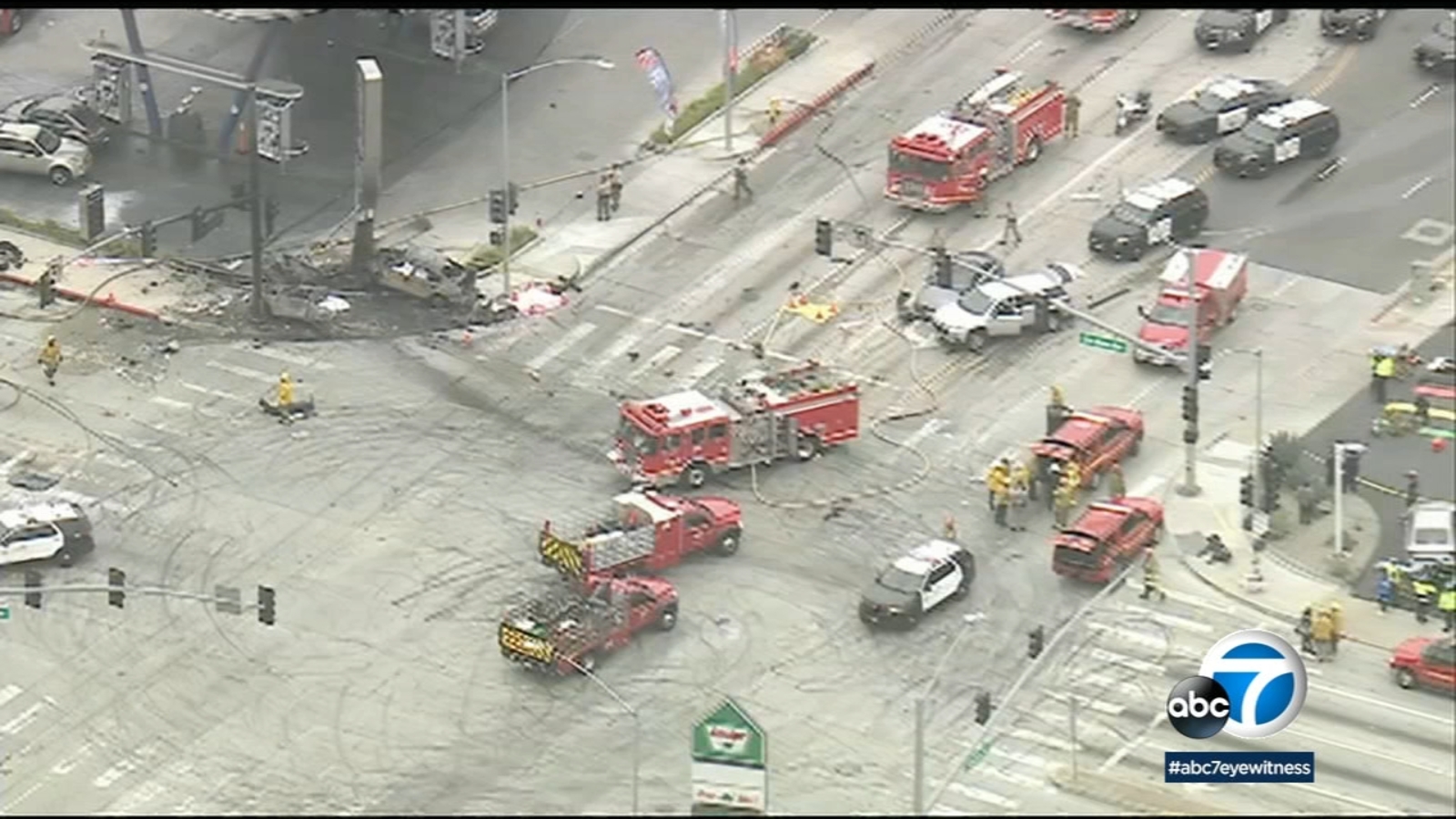
Authorities say Linton was speeding in a Mercedes when she ran a red light at the intersection of La Brea and Slauson avenues on Thursday. She slammed into multiple vehicles, and three of them were engulfed by flames.
Linton is a traveling nurse from Houston who was working in the Los Angeles area. Police are looking into whether drugs or alcohol played a role in the crash.
On Monday, Gascón said so far police have not developed evidence of alcohol use but they are continuing to investigate.
RELATED: Woman was heading to prenatal checkup with infant son, boyfriend before deadly Windsor Hills crash
Among the dead were Asherey Ryan, who was more than eight months pregnant, along with her boyfriend Reynold Lester and their unborn baby, named Armani Lester. Asherey’s 11-month old son Alonzo Quintero was also killed. They were heading to a prenatal doctor’s appointment at the time of the crash.
“A young family was destroyed in the blink of an eye,” Gascón said.
Gascón said the six murder charges include Asherey’s unborn child, but the charge of manslaughter cannot legally apply.
After hitting their car, Linton’s Mercedes then collided with a Nissan Altima and killed two women inside, who have not been publicly identified.
She also careened into an SUV carrying a family of seven. They all incurred minor injuries. Several other vehicles were also struck.
Family members and community members gathered at the intersection Sunday to remember the lives lost.
“She was such a beautiful lady,” said Jean Martin of Windsor Hills, who attended the vigil. “You know she was a good mom. To her family de ella, be sure to take the life and time you had and cherish that.”
A growing memorial of flowers, photos and candles was placed at the intersection in memory of the victims.
“His body was damn near cremated on the corner,” said Lester’s aunt, Shanita Guy. “For what? For what?”
Family members and community activists also called for safety improvements at the intersection, which they say has seen other serious crashes.
They also called for Linton to face the maximum penalty allowed by law if convicted.
A GoFundMe has been set up to help Asherey’s family with funeral expenses.