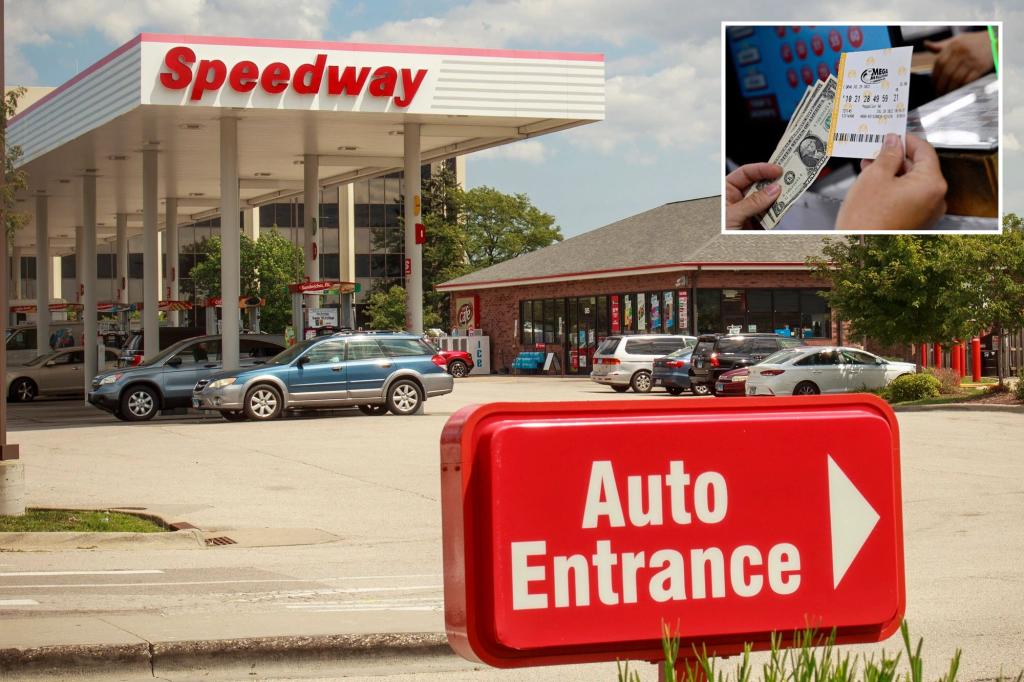
There’s a chance the identity of the winner of the $1.337 billion Mega Millions jackpot will never be known — thanks to an Illinois law allowing people who score more than $250,000 to keep their names secret.
The winning ticket to the mind-boggling fortune was sold at the Speedy Cafe Speedway gas station in Des Plaines, lottery officials have said.
No one has come forward yet to claim the massive prize — with lotto officials saying it’s not even clear whether the winner was an individual or pool.
Illinois is one of a few states that allow lotto winners the option of anonymity.
Some other states offer some form of lotto anonymity, including New Jersey, Delaware, Maryland, Virginia, Arizona, Florida, Georgia, Kansas, Minnesota, Mississippi, Missouri, Montana, North Dakota, Ohio, South Carolina, Texas and Wyoming, according to a list compiled by Fox News.
But in New York, winners should expect to be required to attend a public announcement or press event, according to the state lottery’s website.
While Illinois winners have the option of staying anonymous, New York lotto winners don’t have that luxury.OLIVIER DOULIERY/AFP via Getty Images
“The New York Lottery is a government agency and Lottery prizes are public funds, so we owe it to all our players to disclose the names of winners,” the site says.
Still, lotto anonymity has gained momentum in recent years, including in New York, where a proposal was passed the state legislature in 2019 before being vetoed by then-Gov. Andrew Cuomo.
Cuomo’s 2019 veto message advised winners who wish to try to keep their identity hidden to create an LLC to collect the winnings on their behalf.
The winner of the all-time high ticket — for $1.537 billion, purchased in South Carolina in 2018 — has yet to be revealed.
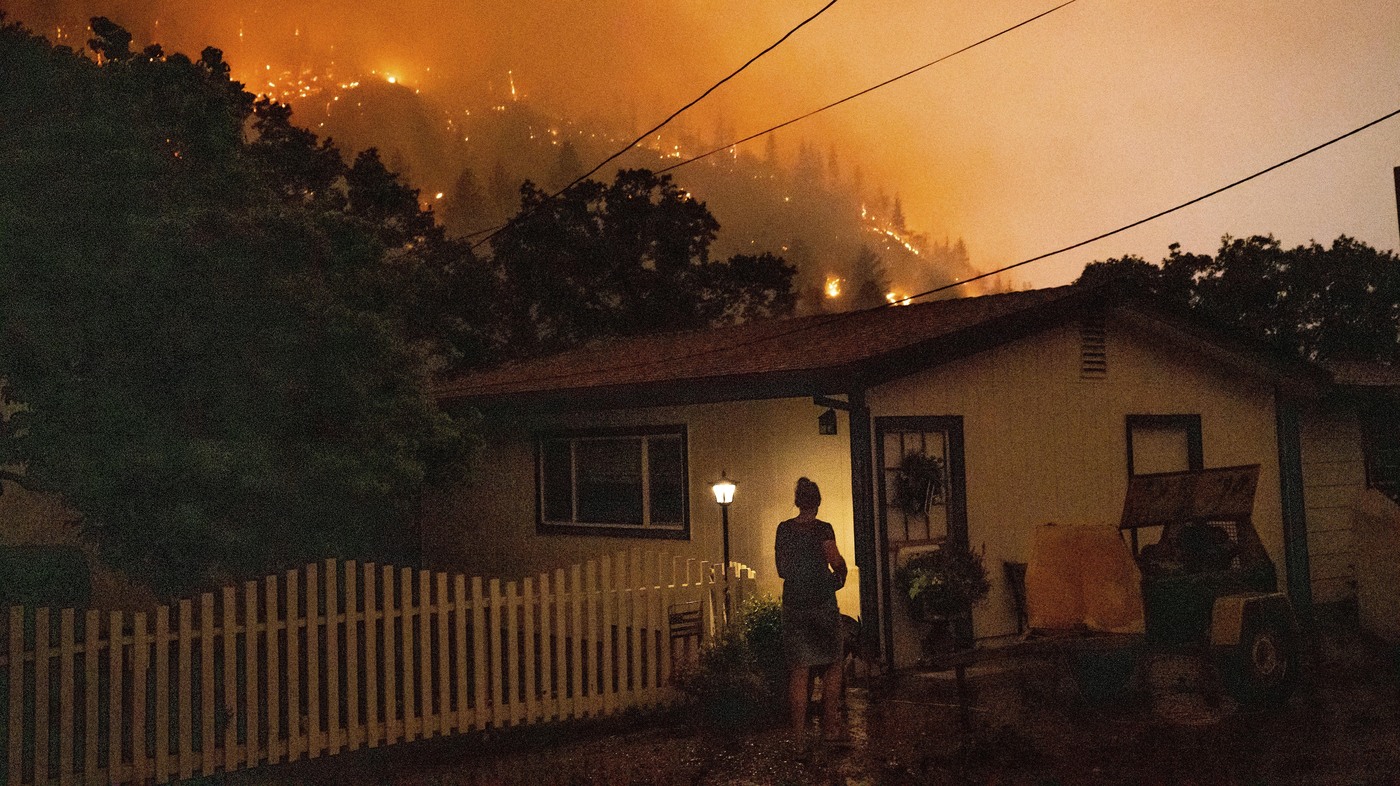
Angela Crawford walks past her home as the McKinney fire burns above it in Klamath National Forest, Calif., on Saturday.
Noah Berger/AP
hide caption
toggle caption
Noah Berger/AP
Angela Crawford walks past her home as the McKinney fire burns above it in Klamath National Forest, Calif., on Saturday.
Noah Berger/AP
YREKA, Calif. — Major wildfires in California and Montana grew substantially as firefighters protected remote communities on Sunday as hot, windy weather across the tinder-dry US West created the potential for even more spread.
The McKinney Fire was burning out of control in Northern California’s Klamath National Forest as erratic lightning storms swept through the region just south of the Oregon state line, said US Forest Service spokesperson Adrienne Freeman.
“The fuel beds are so dry and they can just erupt from that lightning,” she said. “These thunder cells come with gusty erratic winds that can blow fire in every direction.
The blaze exploded in size to more than 80 square miles (207 square km) just two days after erupting in a largely unpopulated area of Siskiyou County, according to a Sunday incident report. The cause was under investigation.
A second, smaller fire just to the west that was sparked by dry lightning Saturday threatened the tiny town of Seiad, Freeman said. About 400 homes were under threat from the two California fires.
A deer swims across the Klamath River as flames burn the opposite bank in Klamath National Forest, Calif., on Saturday.
Noah Berger/AP
hide caption
toggle caption
Noah Berger/AP
A deer swims across the Klamath River as flames burn the opposite bank in Klamath National Forest, Calif., on Saturday.
Noah Berger/AP
In Montana, a blaze sparked in grasslands near the town of Elmo grew to more than 11 square miles (28 square km) after advancing into forest. Temperatures in western Montana could spike to 96 degrees (36 Celsius) by Sunday afternoon with strong winds, the National Weather Service said.
Roughly 200 miles (320 km) to the south, Idaho residents were under evacuation orders Saturday as the Moose Fire in the Salmon-Challis National Forest charred more than 67.5 square miles (174.8 square km) in timbered land near the town of Salmon. It was 17% contained Saturday.
California Gov. Gavin Newsom declared a state of emergency Saturday as the McKinney Fire intensified. The proclamation allows Newsom more flexibility to make emergency response and recovery effort decisions and access federal aid.
California law enforcement knocked on doors in the town of Yreka Fort Jones to urge residents to get out and safely evacuate their livestock onto trailers. Automated calls were being sent to land phone lines as well because there were areas without cell phone service.
A firetruck drives along California Highway 96 as the McKinney Fire burns on Saturday.
Noah Berger/AP
hide caption
toggle caption
Noah Berger/AP
A firetruck drives along California Highway 96 as the McKinney Fire burns on Saturday.
Noah Berger/AP
The Pacific Coast Trail Association urged hikers to get to the nearest town while the US Forest Service closed a 110-mile (177-km) section of the trail from the Etna Summit to the Mt. Ashland Campground in southern Oregon.
In western Montana, the wind-driven Elmo Fire forced evacuations of homes and livestock as it raced across grass and timber. The National Interagency Fire Center estimated it could take nearly a month to contain the blaze.
A portion of Highway 28 between Hot Springs and Elmo was shut down because of the thick smoke, according to the Montana Department of Transportation.
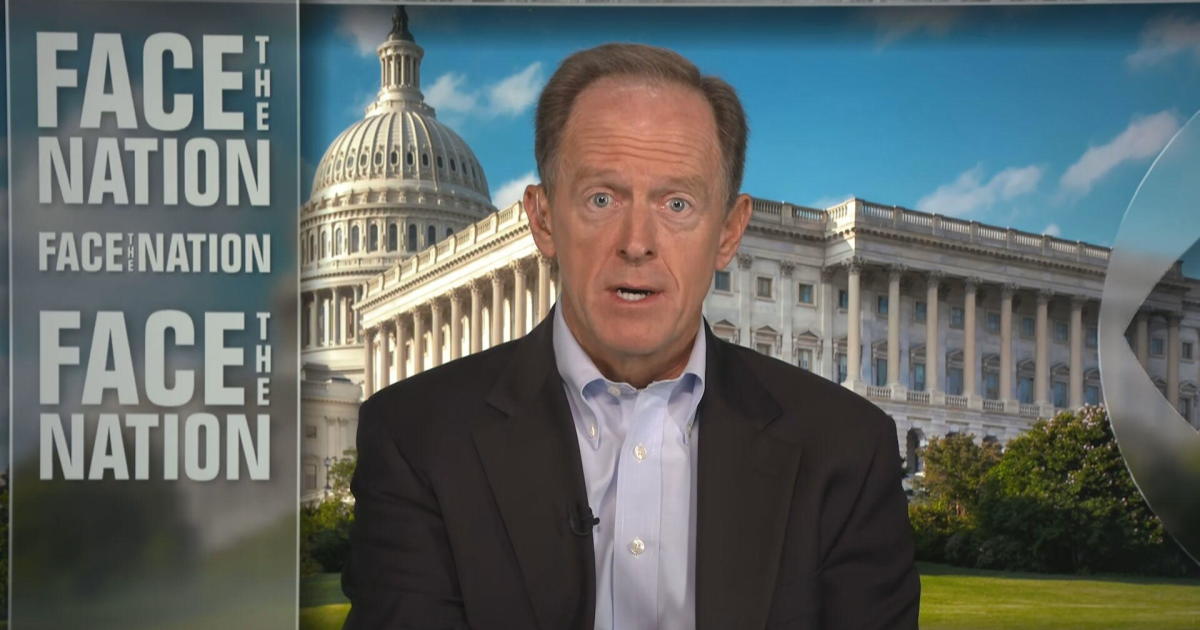
The following is a transcript of an interview with Republican Sen. Pat Toomey of Pennsylvania that aired Sunday, July 31, 2022, on “Face the Nation.”
JOHN DICKERSON: We go now to Republican Senator Pat Toomey of Pennsylvania. He’s in Zionsville this morning. Good morning, Senator.
SENATOR PAT TOOMEY: Good morning, John.
JOHN DICKERSON: Let’s start with what the Democrats are calling the Inflation Reduction Act. You and other Republicans are not a fan. What is your main criticism?
SEN. TOOMEY: Well, it’s gonna make inflation worse, actually. So, they’ve got a big corporate tax increase that’s going to probably make this recession that we’re in worse. All of this spending is unnecessary. It’s going to exacerbate inflation. It is not going to reduce the deficit. And what did Senator Manchin get for us? Look, I’m a big fan of Joe Manchin. We are friends as he said, and I like Joe very much, but I think he got taken to the cleaners. He’s agreeing to all this bad policy in return for which he’s been promised that there’s going to be some kind of pro-energy infrastructure bills sometime in the future. But first of all, I thought we did that in the infrastructure bill. Secondly, what is the text? But most importantly, why isn’t that in this bill? And the answer is because Democrats don’t support it. And so, this is going to do a lot of harm and there’s not going to be a corresponding benefit.
JOHN DICKERSON: There’s a lot-line in there. Let me focus on inflation, which everyone else is- is focused on. The Committee for a Responsible Budget which has been a fan of yours in the past and even in the present said- said this: ‘Although reconciliation was designed for deficit reduction, this will be the first time in many years it was actually used for that purpose. With inflation at a 40-year high and debt approaching record levels. This would be a welcomed improvement to the status quo.’ They and others who’ve looked at this say it will affect the- the, it will affect the deficit, lower the deficit in this legislation.
SEN. TOOMEY: Yeah, so it- here’s why we won’t, because they use the same gimmick that Senator Manchin said he was opposed to in the past. They claim the revenue over a 10-year window from their big tax increase, and their price controls. And then the expenditure that they acknowledge, they pretend is only going to be for three years. That’s the Obamacare subsidies for wealthy Americans. That’s an obvious political payoff. The last time they had to do this, they said it would only be for two years. It’s about to expire. And they can’t- they can’t have it expire before an election. So, they’re extending it, but only for three- they have no intention of ever ending the Obamacare subsidies over a 10-year window that wipes out the purported deficit reduction.
JOHN DICKERSON: But-so you’re assuming bad faith in the future. But in this case, they extended it and they found pay-fors so that it would be deficit- so that it would decrease the deficit at this moment. So, it’s plausible, given what’s right in front of us today, that that could happen, again, in the future. I get what you’re saying. Politically, it might not. But based on what’s before us, which is an extension of the ACA and deficit reduction, it is possible to happen.
SEN. TOOMEY: They’re- they’re also counting huge amounts of additional tax revenue from giving more taxes, money to the IRS, which the CBO does not agree with. They’re also not taking into account how much our economy will slow down from this big corporate tax increase that will mostly hurt manufacturing and domestic investment. These numbers are very, very dubious.
JOHN DICKERSON: Quickly on that question of production. I mentioned to Senator Manchin, the idea of supply goes down when you tax these companies. He said it’s a matter of fairness, that these breaks that they have-represented from a previous tax cut, and that this is a matter of fairness in America.
SEN. TOOMEY: So, look at, what is the source of this tax increase? It’s very simple. When we made our tax reform in 2017, what we did is we said if a business takes its profit, and invests it back in its business in the form of capital investment, new equipment, new plant, expanding their capacity. Then we said, you’d be able to deduct the cost of that in the year in which you incur the cost. The Democrats are saying we got to bring that to an end, despite the huge surge in capital expenditure that it brought us. And instead, they’re gonna say, you only get to recognize a small fraction of that. We’re gonna- they’re gonna raise the cost of investing in a business.
JOHN DICKERSON: Let me ask you about the legislation this week, the PACT Act, which I know you want to talk about. It’s providing health care to millions of veterans who were exposed to toxins. 123 Republicans in the House voted for this. 34 Senate Republicans have voted for it. Same bill. This week, the bill didn’t change but the Republican votes did. why?
SEN. TOOMEY: No, the Republican votes didn’t change on the substance of the bill. Republicans have said we want an amendment to change a provision that has nothing to do with veterans’ health care. The Republicans support this. The Democrats added a provision that has nothing to do with veterans’ health care, and it’s designed to change government accounting rules so that they can have a $400 billion spending spree–
JOHN DICKERSON: –But–
SEN. TOOMEY: –My amendment if we’re- if I’m allowed to offer it, will take out that provision and will not reduce veteran spending by a dime.
JOHN DICKERSON: You mentioned this is- the Democrats inserted this, but they did get 134 Republican votes, and you have plenty of Republicans still voting for it. It seems like making this seem like a Democratic gimmick obscures what is your real point and your lifelong interest, which is this is about budgeting and whether the rules should be tight now, or whether as those who defend this bill, say, allow Congress to work in the future to be fiscally responsible. Isn’t that a more accurate way to think about what you’re offering?
SEN. TOOMEY: Well-well, let’s be careful here because, JOHN, you mischaracterized this when you were speaking with Senator Manchin. We are fully accepting that the new expenditures under the PACT Act for veterans exposed to toxic chemicals will increase the deficit. And we accept that as a price we have to pay for people who serve the country. What I’m objecting to is a budgetary gimmick, a sleight of hand in accounting rules, that will allow totally unrelated spending of $400 billion over the next 10 years. That’s what we think shouldn’t be in this bill. Never should have been.
JOHN DICKERSON: Well, there’s a debate about that. And as you know, some Republicans don’t think it’s a- it’s a gimmick. They are still supporting this, and they think it can be fixed later. But let me ask you this. I read your amendment language, which your language doesn’t just deal with this other thing. It actually caps annual expenditures for the toxic fund. And after 10 years, it goes away–
SEN. TOOMEY: –No, so that, John, that’s totally wrong. What it caps is how the government accounts for these transfers, but there is no cap on the amount of money that goes over, there is no cap on the total program. Look, if an honest Democrat evaluating this will tell you, if my amendment passes, not a dime changed in spending on veterans’ programs. What changes is how the government accounts for it.
JOHN DICKERSON: I understand. But the accounting change, as you know, is a result- the reason they put it in that other bucket is that it doesn’t subject it to the normal triage of budgeting. And the argument is that the values at stake here are more important than leaving it to the normal cut and thrust of budgeting. And so, I would ask you this–
SEN. TOOMEY: – Yeah, but that’s –
JOHN DICKERSON: –but it’s worth protecting is their argument. Let me- it’s about priorities. As you know, budgets are a way people talk about priorities in a government. This week, many of the Republicans who switched their vote, voted for semiconductors. In 2017, Republicans lifted the caps on discretionary spending. We also have had a situation where lots of spending gets done in defense. You have been consistent with deficit reduction. But lots of other Republicans when they think it’s in their interest, say let’s lift the caps, let’s not be so fastidious about the budget. So why is it important to be fastidious when it comes to veterans but less so when it comes to say, supporting chip manufacturers?
SEN. TOOMEY: Because John, once again, you’re completely mischaracterizing this. We are all accepting that there are no changes to the projected spending path for all the veterans’ programs, the existing veterans’ programs and the new ones under the PACT Act. What we’re objecting to is an accounting gimmick that will allow totally unrelated spending $400 billion over the next 10 years. And most Republicans think we shouldn’t loosen up the budget rules so that Democrats can go on a spending spree on things that have nothing to do with veterans’ health care.
JOHN DICKERSON: Of course, Democrats have to be in charge in the future when that spending happens, and they may very well not be, but thank you, Senator, for being with us. We appreciate your time.
SEN. TOOMEY: I would impose- I would impose the restriction on Republicans as well.
JOHN DICKERSON: And you have the last word, Senator Toomey, thank you. We’ll be right back with more Face the Nation stay with us.
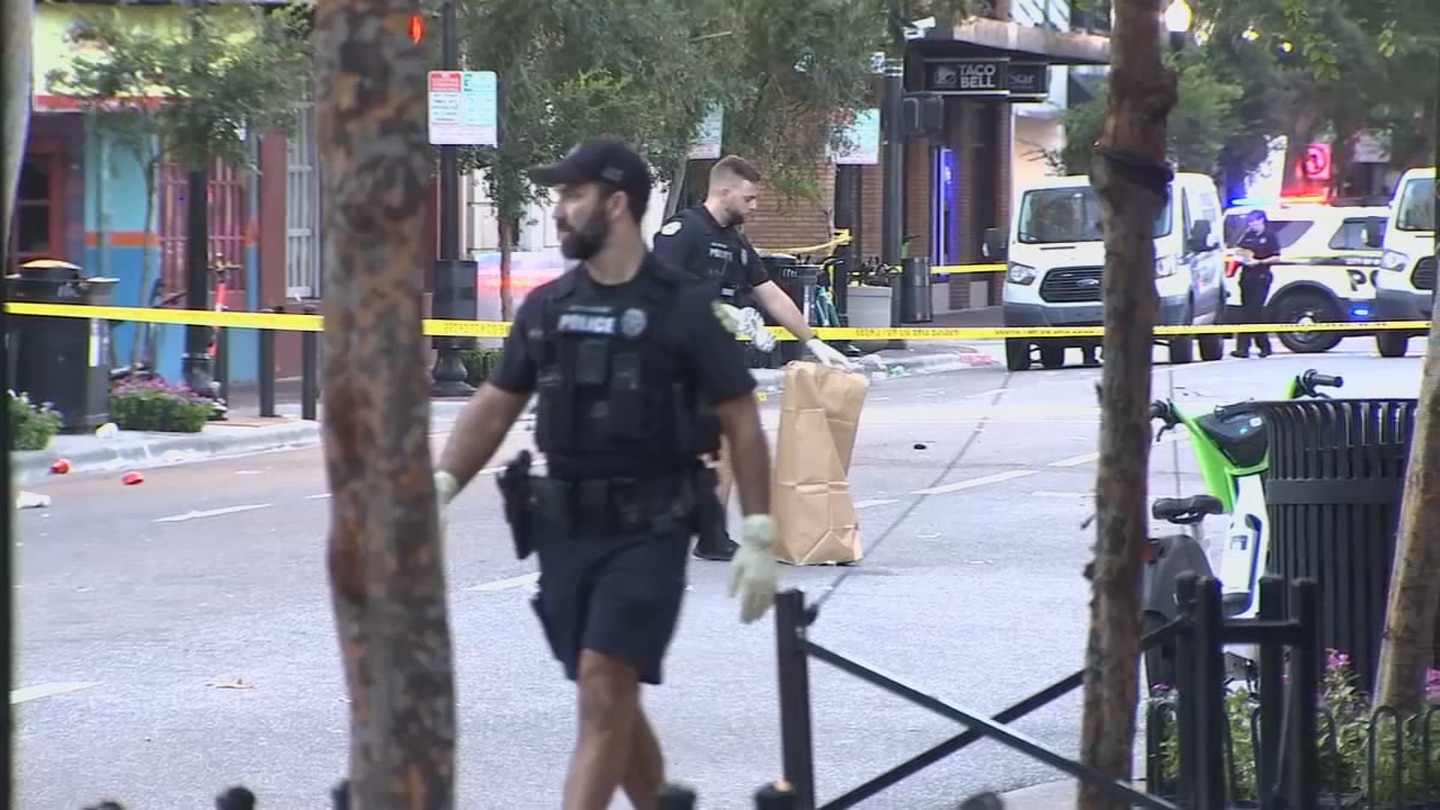
Video: Gunman at large after 7 hurt in downtown Orlando shooting Multiple people were shot overnight in downtown Orlando. (Sabrina Maggiore, WFTV.com/WFTV)
ORLANDO, Fla. — Police are investigating an overnight shooting in downtown Orlando.
The shooting happened around 2 am near the area of Wall Street Plaza and South Orange Avenue.
>>> STREAM CHANNEL 9 EYEWITNESS NEWS LIVE <<<
Police said that as the bars and restaurants were closing, a large fight took place and a shooting followed.
Photos: Gunman at large after 7 hurt in downtown Orlando shooting
picture 1 of 11
Gunman at large after 7 hurt in downtown Orlando shooting
Orlando Police Chief Eric Smith said there were seven victims. One person drove themselves to the hospital and six others were transported by EMS.
Read: Coronavirus: President Biden tests positive again for COVID-19
All victims remain in stable condition, according to police.
There is no suspect information at this time.
Read: Renters and landlords talk about growing housing crisis in Orange County
Police ask anyone with information to call Orlando Police Department or contact Crimeline by texting or dialing **8477(TIPS).
Read: DeLand police search for 4th suspect after deadly carjacking near technical college
Click here to download the free WFTV news and weather apps, click here to download the WFTV Now app for your smart TV and click here to stream Channel 9 Eyewitness News live.
BUCKHORN, Ky. – Devastated communities across eastern Kentucky began digging out in earnest Sunday as the state’s death toll rose and another round of storms threatened to expand the historic flooding.
Dozens of people remained unaccounted for, and some areas remained inaccessible to search and rescue teams. Spotty cellphone service added to the chaos.
“In more tough news for the commonwealth this morning, our death toll has risen to 26 lost – and that number will increase,” Gov. Andy Beshear said Sunday on social media. “There is widespread damage with many displaced families and more rain expected.”
Excessive runoff from showers and thunderstorms Sunday and Monday could result in additional flooding of rivers, creeks and streams across much of central and eastern Kentucky, the National Weather Service warned. Rainfall rates of up to 2 inches an hour could spark flash flooding, especially in areas that see repeated rounds of thunderstorms.
Hard-hit counties including Floyd, Knott and Perry are among the areas under alert. Power, water, shelter and cell service are major issues in some communities, Beshear said. The flooding overwhelmed some neighborhoods where people didn’t have much to begin with, he said, and a heat wave forecast this week will further deepen the suffering.
The flooding has caused hundreds of millions of dollars of damage and displaced hundreds of people, he said.
“We want to make sure that we wrap our arms around our Eastern Kentucky brothers and sisters and make sure that they are ok,” Beshear said. “We will be there for you today, tomorrow, next week, next year. We are not going anywhere. We are going to help you rebuild.”
Beshear asked that people donate cleaning supplies or water or donate directly to the state flood relief fund, where 100% of donations go to Kentuckians affected.
►Bigger pictures: Climate change exposes growing gap between weather we’ve planned for – and what’s coming
►In Eastern Kentucky: Flooding brings up memories of previous disasters
►Where is the flooding? See photos, drone videos of the devastation
Almost a foot of rain; more is coming
The hardest hit areas of eastern Kentucky received almost a foot of rain late last week. The North Fork of the Kentucky River reached 20.9 feet in Whitesburg, more than 6 feet over the previous record, and crested at a record 43.5 feet in Jackson, National Weather Service meteorologist Brandon Bonds said.
The rains of Sunday and Monday won’t be the end of it, the weather service warned. Thunderstorms are also possible on Tuesday, as well as Thursday through Saturday.
The dozen shelters opened for flood victims across the state drew 388 occupants Sunday, FEMA said. About 70 trailers – purchased by the state for use during deadly tornadoes that ripped through Western Kentucky in December – are being deployed as temporary shelters.
“Yesterday our first travel trailers arrived and we are working fast to establish additional shelter options,” Beshear said.
The state also plans to work with area hotels to pay room costs for displaced residents – and to cover funeral expenses for people killed in the floods.
Searchers go door to door
More than 1,200 rescues have taken place. Still, multiple state police posts have been getting calls from people unable to contact family and friends. The National Guard has been called out and is helping first responders going door to door to find as many people as possible, he said. But the heavy rains are making it difficult, and some people cannot be reached, he said.
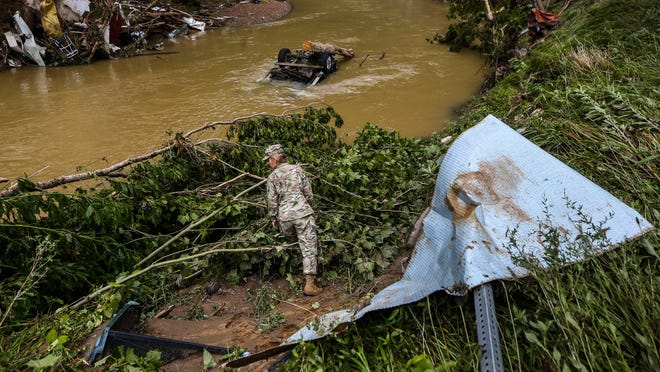
Damage to critical infrastructure is also providing challenges to rescuers. Scores of bridges are out and roads washed away, making it hard to access some communities to deliver desperately needed water and other necessities he said.
“The next couple days are going to be hard,” Beshear said. “We’ve got rain, and maybe even a lot of rain that is going to hit the same areas.”
Dig-out begins in small towns
In southeastern Kentucky, some small mountain towns that were initially difficult to reach because of roads blocked by fallen trees or high water were beginning to dig out Sunday. In Buckhorn, a Perry County hamlet of about 130 people, a branch of the Middle Fork of the Kentucky River carried away cars and destroyed some homes during Wednesday and Thursday’s historic floods.
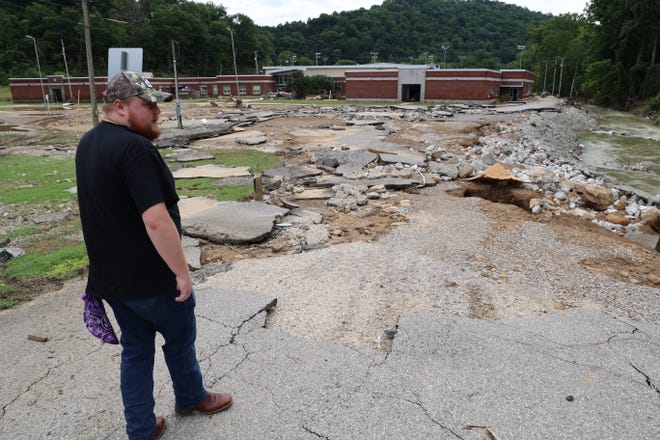
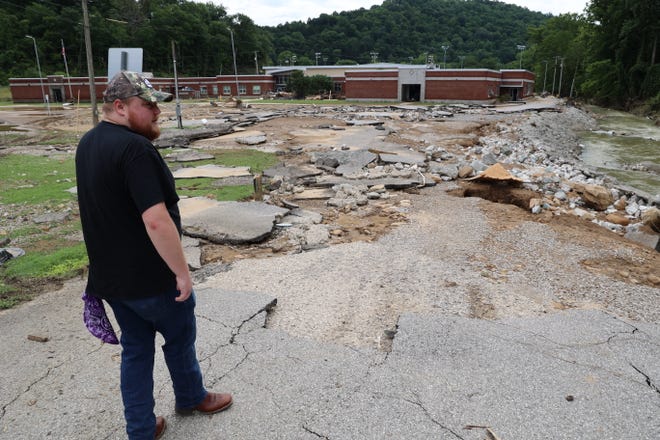
One of its critical community gathering points was also decimated: the Buckhorn School, which dates to the early 1900s and whose more than 300 students are drawn from across the mountainous region.
Torrents of water and debris that rose from Squabble Creek, which runs alongside the school, smashed walls, broke windows and tore the parking lot asphalt into pieces just two weeks before the school year was to begin.
Damaged schools provided more than education
Like other schools in the region, the county K-12 public school serves as an important hub of resources for students whose families live on low incomes, said special education teacher Kristie Combs, 46.
“It’s more than just a school, it’s a community,” said Combs, who surveyed the damage for the first time Saturday after water receded from a road leading to her home in a town 20 miles away.
In a nearby neighborhood along the creek, where generators hummed on Saturday, Teresa Engle, 33, said her two kids, Haley, 8, and EJ, 6, would likely attend in another school or county.
For now, Engle said she was just happy to be alive. In the early hours of Thursday, she said her family de ella was trapped by the roaring waters that reached the door but left it intact. Others were less fortunate.
“We could just see cars and houses going by,” she said. “I’ve never been so terrified.”
On Saturday, her daughter gave away a stuffed animal and a pair of boots to a neighbor’s child whose home had been destroyed.
Teachers try to help flooded communities
Buckhorn School teachers and students were handing food, water and supplies to families in need.
“Some kids had homes washed away,” said high school teacher Jalen Cooper, 27, explaining that some were staying in hotels and others packing in relatives who have generators.
“It’s going to take a long time, a lot of effort and a lot of grit,” he said. “But we know how to push through.”
“It never got like this before,” Bert Combs, 58, said as he stood shirtless, peering at the creek and what was left of Rainbow Lane. The rain, he said, “just kept coming.”
Rebuild must consider climate change
The state must “build back stronger” to compensate for the more intense storms driven by the changing climate, Beshear said. Roads, bridges, culverts, water and wastewater systems and flood walls must be designed to withstand greater intensity, he said.
An infrastructure bill drawing bipartisan support is a good start, Beshear said.
“The infrastructure is so expensive,” he told NBC’s “Meet the Press.” “If we truly want to be more resilient, it is going to take a major federal investment, as well as here in the state. We’re ready to do our part.”
White House rushing aid to Kentucky
The Biden administration has added individual assistance to his Major Disaster Declaration to help the people of eastern Kentucky who “have lost everything,” noting recovery will be long-term.
“I’m taking more action to help the families being displaced and lives lost,” President Joe Biden said in a statement.
FEMA said the individual assistance can include grants for temporary housing and home repairs, low-cost loans to cover uninsured property losses, and other programs to help individuals and business owners recover from the effects of the disaster.
Contributing: Lucas Aulbach, Louisville Courier Journal;Associated Press
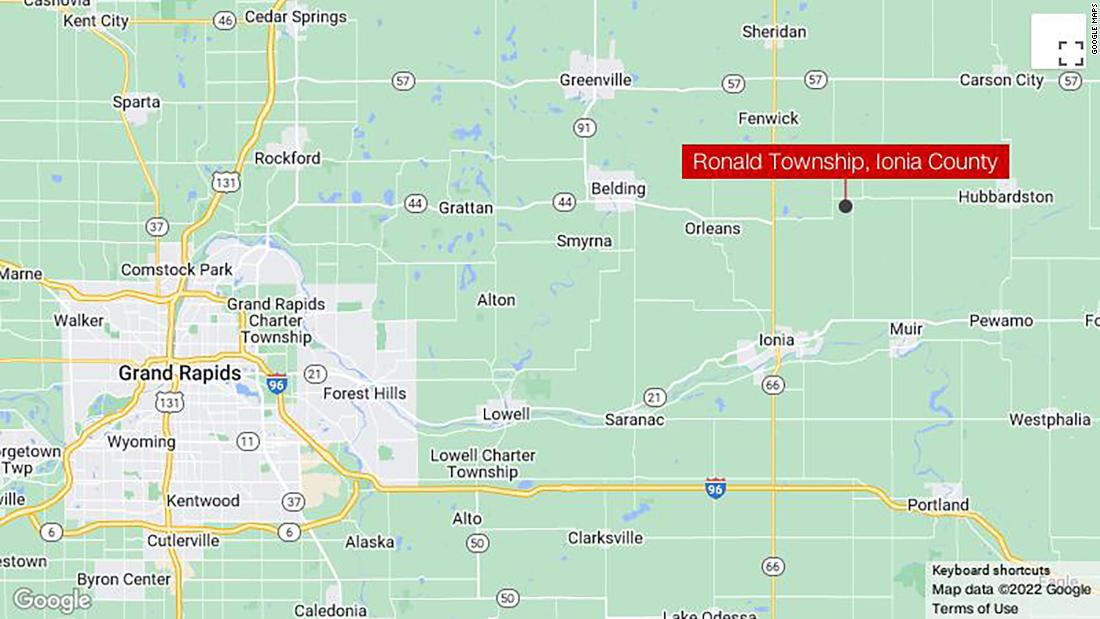
The five cyclists were all participating in the Make-A-Wish bicycle tour, a three-day fundraising event and endurance ride that spans most of the state, according to the Ionia County Sheriff’s Office.
The cyclists were traveling southbound when the SUV, which was traveling northbound, crossed the center line, the sheriff’s office said in a Facebook post.
Ionia County is roughly 40 miles east of Grand Rapids.
One cyclist was pronounced dead at the scene while another died from injuries at a nearby hospital, the sheriff’s office said. The three surviving cyclists were transported to hospitals with severe injuries, officials added.
The driver of the SUV was arrested on two counts of Operating while Intoxicated Causing Death and taken to the Ionia County Jail, the sheriff’s office added. Authorities did not release the driver’s name pending charges and an arraignment.
The names of the cyclists were also not released. An investigation is ongoing, the sheriff’s office added.
The Make-a-Wish Foundation expressed its condolences towards the cyclists and their loved ones in a statement shared with CNN.
“Our staff and the entire Make-A-Wish family are heartbroken and offer our deepest sympathy for the riders involved, their loved ones, and all members of the WAM community during this difficult time,” the organization said. “We are thankful to the first responders who arrived immediately to save lives. We are supporting our riders, staff, and volunteers with grief counseling and assisting with the law enforcement investigation.”
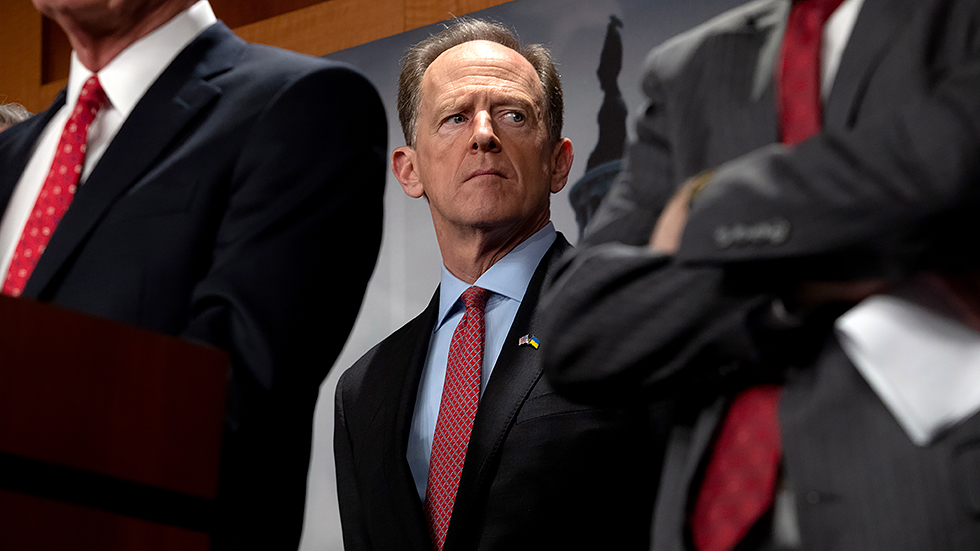
Sen. Pat Toomey (R-Pa.) on Sunday defended his “no” vote on a bill to aid military veterans exposed to toxic burn pits against what he called “false accusations” from comedian Jon Stewart.
Toomey, during an appearance on CNN’s “State of the Union” with host Jake Tapper, called the former “Daily Show” host a “pseudo-celebrity” and accused the bill’s Democratic backers of “the oldest trick in Washington.”
“People take a sympathetic group of Americans — and it could be children with an illness, it could be victims of crime, it could be veterans who’ve been exposed to toxic chemicals — craft a bill to address their problems, and then sneak in something completely unrelated that they know could never pass on their own, and dare Republicans to do anything about it,” Toomey said.
The legislation’s supporters, Toomey said, will then “unleash their allies in the media and maybe a pseudo-celebrity to make up false accusations to try to get us to just swallow what shouldn’t be there.”
Toomey insisted that he and his fellow Republicans don’t oppose the bill itself, but are worried instead about Democrats using it to acquire funds for unrelated matters and switch discretionary funding to mandatory.
Stewart has knocked the GOP for holding up the bill’s progress and for misinterpreting the proposal.
“Their constituents are dying,” Stewart said in DC last week.
On Sunday, Stewart blasted Sen. Ted Cruz (R-Texas) for voting “no” and called claims about the spending language in the bill and the potential to misuse included funds “factually incorrect.”
All Democrats and eight Republicans voted for the bill when it was first introduced last week, but the tally fell five votes short of the amount needed to bypass the filibuster.
Toomey on Sunday emphasized the Republican push for an amendment vote on the bill.
“This is why they do this sort of thing, Jake, because it gets very deep in the weeds and very confusing for people very quickly … We are spending way too much money to use — to hide behind a veterans bill the opportunity to go on an unrelated $400 billion spending spree is wrong. And we shouldn’t allow it,” the Pennsylvania senator said.
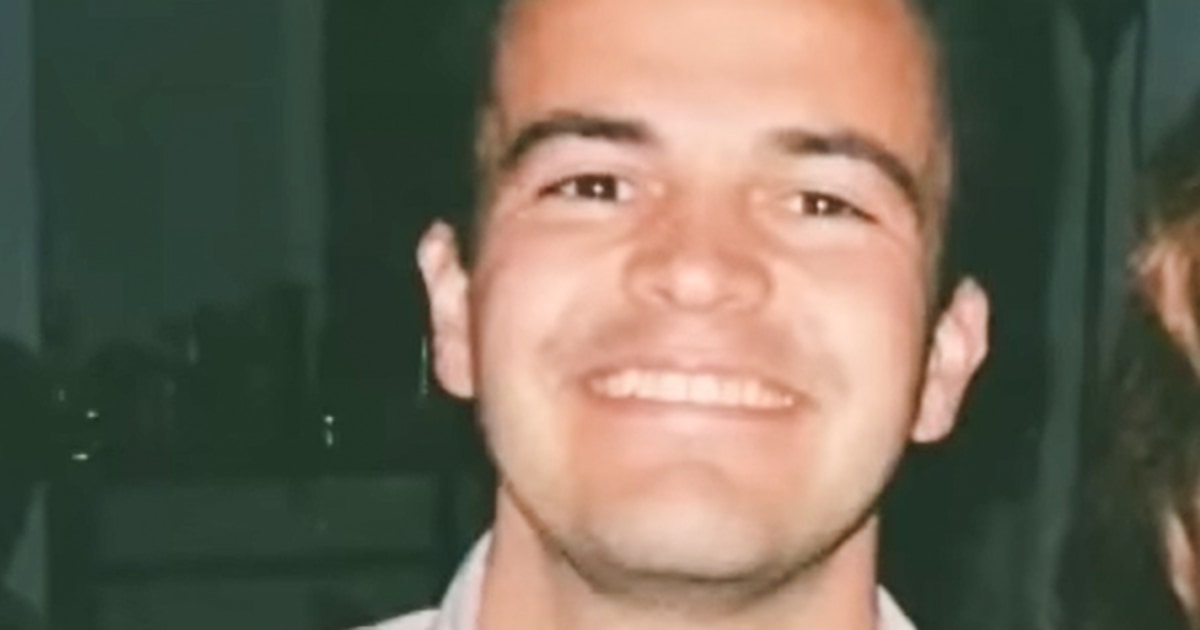
The father of a North Carolina pilot, who died after exiting a plane during a mid-flight emergency, said his family is still trying to reckon with what led to the 23-year-old’s death.
Charles Hew Crooks had spent years working toward his dream of becoming a pilot, his father Hew Crooks told NBC affiliate WRAL of Raleigh.
Now, Crooks said his family is left wondering what led to his son’s death.
Charles Hew Crooks.WRAL
“We can’t process it right now,” Crooks told WRAL. “I don’t know.”
The body of Charles Hew Crooks, who was co-piloting the flight, was found in a Fuquay-Varina, North Carolina, backyard on Saturday — one day after the incident.
An unidentified family told WRAL that they were home and heard a loud thud in their backyard on Friday. Although they didn’t see anything at the time, police showed up and later found the pilot’s body in the trees of their backyard.
Charles Hew Crooks was not wearing a parachute and it’s unclear why he exited the plane, said Wake County emergency management spokesperson Darshan Patel on Friday. Officials said they believe he either fell or jumped out of the plane.
Charles Hew Crooks was onboard a twin-engine CASA CN-212 Aviocar with another pilot when it took off on Friday. The pilot onboard with Charles Hew Crooks asked to make an emergency landing at Raleigh-Durham International Airport after having an issue with landing gear, the Federal Aviation Administration said. The plane touched down around 2:40 pm and the pilot sustained minor injuries,
“I can’t imagine what happened,” Crooks told WRAL. “We’ll figure it out, I suppose.”
As authorities tried to piece together what happened, Crooks remembered his son as an avid aviator.
“He pursued his private pilot license while he was in college. I think he got that when he was a sophomore,” Hew Crooks said. “He said a couple weeks ago, he wouldn’t trade places with anybody in the world. He loved where he was.”
Crooks said his son was certified to fly in any condition and had previously been a flight instructor. He said the loss of his son from him has left an irreparable void in the family.
“We’re a strong family and we’re a very loving family. But this, it leaves a hole,” he said.
Kalhan Rosenblatt is a reporter covering youth and internet culture for NBC News, based in New York.
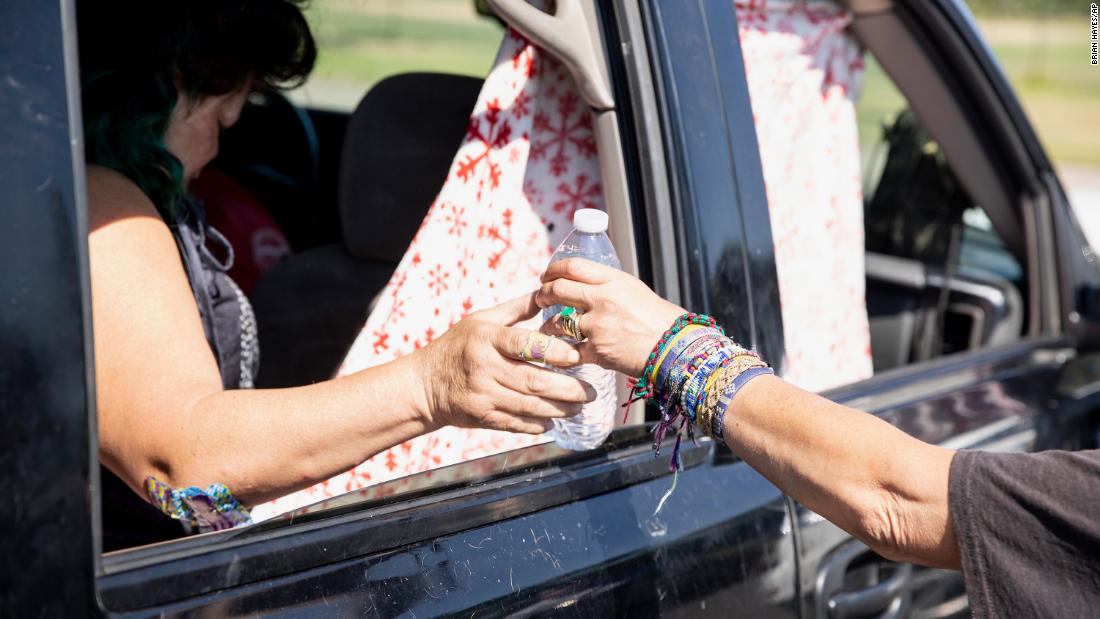
More than 13 million people across the Northwest are under heat alerts Sunday, CNN meteorologist Haley Brink said. Major cities impacted include Portland; Seattle; Billings, Montana; and Boise, Idaho.
In Oregon, officials believe at least six deaths over the past week were heat-related.
The most recent death was reported Saturday in Clackamas County.
“The elderly male who died was in his home that had a non-functioning air conditioner,” the county said in a news release. The medical examiner’s office is investigating the official cause of death.
Five other suspected heat-related deaths happened in Multnomah, Clackamas, Umatilla and Marion counties, Oregon State Police spokesperson Mindy McCartt said Friday.
The official causes of those deaths are also under investigation, McCartt said.
The temperature at Portland International Airport reached or exceeded 95 degrees for “6 straight days, with 3 of those at or just above 100,” the National Weather Service said Saturday.
Portland remains under an excessive heat warning Sunday, the weather service said.
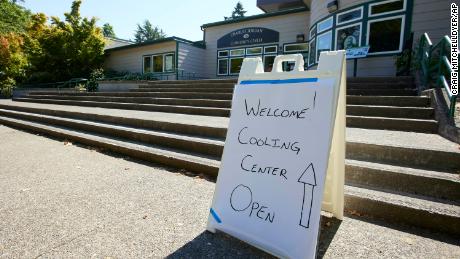
The Oregon Department of Emergency Management tweeted resources to get help, including a map showing cooling centers in the state and details on how to get transportation.
But the heat wave scorching the Northwest will ease up this week.
The most extreme temperatures have shifted away from the coast and into interior portions of the Northwest, Brink said Sunday.
“This dome of heat will shift into the northern Plains by Tuesday and into the Midwest by Wednesday,” she said. “And even the Northeast will get into above average temperatures by Thursday and Friday.”
The White House doctor said President Biden “continues to feel well” but tested positive for coronavirus again on Sunday – a day after he came down with a “rebound” case of COVID-19.
Dr. Kevin O’Connor said the president, 79, will continue to remain in isolation at the White House.
“He will continue to conduct the business of the American people from the Executive Residence,” O’Connor wrote in a letter released by the White House.
“As I have stated previously, the president continues to be very specifically aware to protect any of the Executive Residence, White House, Secret Service and other staff whose duties require (albeit socially distanced) proximity to him,” the physician wrote.
The president announced that he again tested positive for the coronavirus in a Twitter posting on Saturday.
President Biden FaceTimed families that were at the Capitol fighting for burn pits legislation and sent them pizza.Twitter/ @POTUSBiden announced July 30, 2022 that he has tested positive for COVID-19 again.Twitter/ @POTUS
He first tested positive on July 21 when he began quarantining and starting on a regiment of the antiviral drug Paxlovid.
Biden tested negative last Tuesday and summarized his public duties.
O’Connor said in a letter Saturday that the president was among a “small percentage” of Paxlovid recipients who had their symptoms “rebound.”



:quality(70)/cloudfront-us-east-1.images.arcpublishing.com/cmg/NFTNISRKOZCCBCIY6PCNKMX52Y.png)
:quality(70)/cloudfront-us-east-1.images.arcpublishing.com/cmg/W4SCPUD4HZESTDWB4MYHU3XSSI.png)
:quality(70)/cloudfront-us-east-1.images.arcpublishing.com/cmg/KXYN565YSREWTMTYALR3ZFO4OE.png)
:quality(70)/cloudfront-us-east-1.images.arcpublishing.com/cmg/63Y2ZZQO25DRRHWOUB6HGHQVVY.png)
:quality(70)/cloudfront-us-east-1.images.arcpublishing.com/cmg/VECJX2EDPBADJFPT7INNGGI3WE.png)
:quality(70)/cloudfront-us-east-1.images.arcpublishing.com/cmg/WFH5DIWB2FHPXOD6LHBMVBQYUA.png)
:quality(70)/cloudfront-us-east-1.images.arcpublishing.com/cmg/Q5BND4OWS5GINC5TGBQ67PB3Z4.png)
:quality(70)/cloudfront-us-east-1.images.arcpublishing.com/cmg/R362D4NKRFF5XJ3UTMAGLBB4XM.png)
:quality(70)/cloudfront-us-east-1.images.arcpublishing.com/cmg/JIN23KXODVCK7DQSTM337CF6RE.png)
:quality(70)/cloudfront-us-east-1.images.arcpublishing.com/cmg/PAGLPZAPRJFLVIRCASD6GN4I2I.png)
:quality(70)/cloudfront-us-east-1.images.arcpublishing.com/cmg/DVSYFSFVE5AHBKSXKRRN5KHOPQ.png)