Categories
US

LA cracks down on homeless encampments near schools

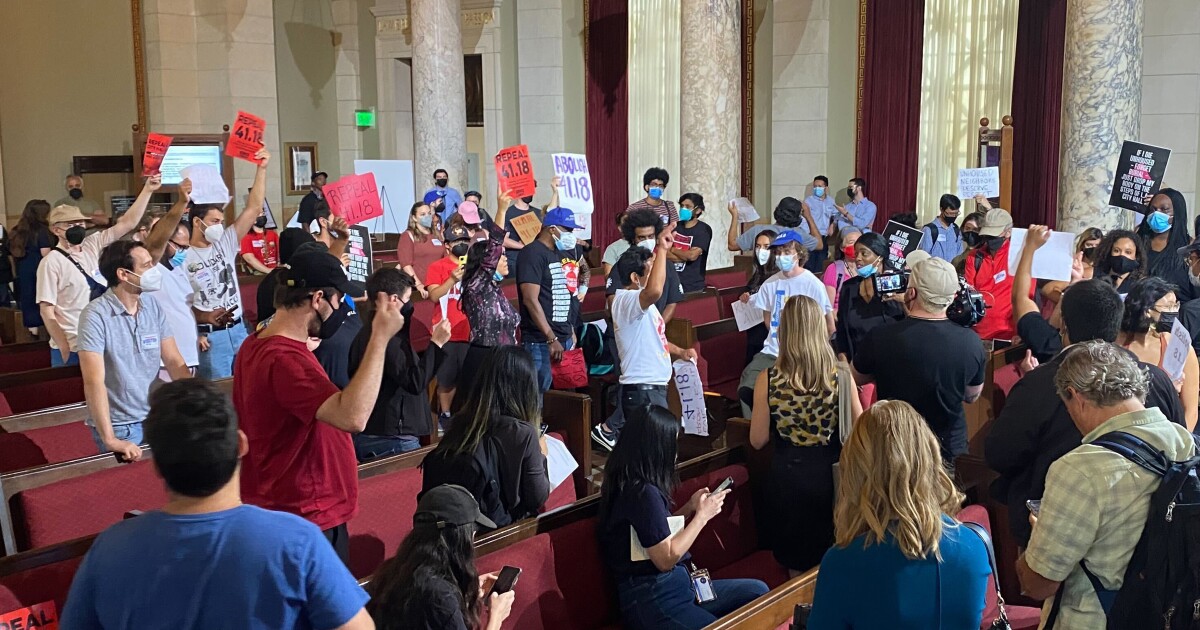
The Los Angeles City Council voted Tuesday to prohibit homeless people from setting up tents within 500 feet of schools and day-care centers, during a raucous meeting where protesters shouted down council members and, at one point, brought the meeting to a halt.

The new restrictions, approved on an 11-3 vote, dramatically expand the number of locations where sleeping and camping are off-limits. And they come amid a furious debate about how the city should respond to encampments that have taken hold in many parts of the city.

Audience members repeatedly chanted “shut it down” as Councilmember Joe Buscaino, a longtime proponent of increased enforcement, attempted to speak in favor of the restrictions. Council President Nury Martinez then stopped the meeting for more than an hour so police could clear the room.

After audience members had exited, council members reconvened, discussed the measure and voted.

“I think people were trying this morning to shut this place down and keep us from doing the very job that we were all elected to do,” Martinez said before the vote. “And that, I think, is incredibly disturbing.”

Under the new restrictions, people would be prohibited from sitting, sleeping, lying or storing property within 500 feet of every public and private school, not just the few dozen selected by the council over the last year.

Councilmember Marqueece Harris-Dawson, who represents South Los Angeles, voted against the restrictions, telling reporters they would move the city toward an “inhumanity that is beneath the citizens of the city.”

Councilmember Mike Bonin, another opponent of the restrictions, said city leaders should devote their energy instead toward improving programs that aid homeless Angelenos, such as those that help people with housing vouchers secure an apartment.

“We need to have a relentless, exclusive focus on getting people indoors,” said Bonin, who represents coastal neighborhoods from Los Angeles International Airport north to Pacific Palisades.

Councilwoman Nithya Raman, whose district includes the Hollywood Hills, also voted against the proposal. A second and final vote will be required next week.

Bonin predicted the changes would result in a roughly tenfold increase in the number of sites subject to enforcement, taking it from more than 200 to about 2,000. The city’s supporting documents on the proposal did not give a clear figure showing how many sites would be covered.

Los Angeles Unified School District officials told The Times that about 750 school sites are within the city limits, a figure that does not include private or parochial schools. Nearly 1,000 commercial day-care businesses are registered with the city’s Office of Finance, although it’s not clear whether all of those locations would be covered by the city’s new law.

Tuesday’s vote came more than two months after Alberto M. Carvalho, superintendent of the Los Angeles Unified School District, made a surprise in-person appearance before council members to ask for the new restrictions. Parents and school staff have also spoken out in favor of the changes, saying they have observed erratic or even violent behavior on or near school campuses.

Martha Alvarez, who oversees government relations for the school district, told the council that LA Unified had found 120 campuses with encampments over the last year.

“These conditions are a public health hazard,” she said. “They are unsafe and traumatic for students, families and staff as they enter school campuses.”

Buscaino also spoke in favor, saying he has already been working to open more beds for homeless people across the city.

“I’ve supported Bridge Home shelters. I’ve supported tiny homes, Project Roomkey, Project Homekey, permanent supportive housing,” Buscaino said. “But what I don’t support are drug dens near our schools, parks or anywhere children congregate.”
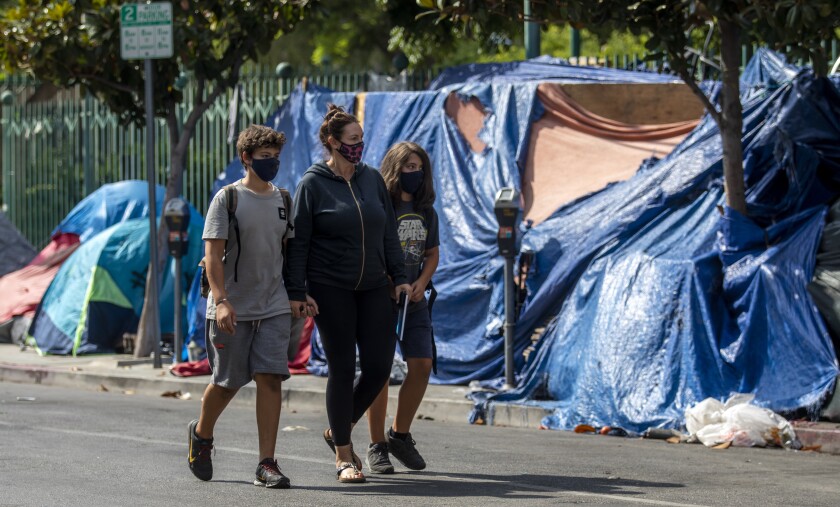
A woman walks with two school-age youths past a homeless encampment in Hollywood

A woman and schoolchildren walk past a homeless encampment near Larchmont Charter School in August 2021.

(Francine Orr/Los Angeles Times)

The new school year starts Aug. 15.

Foes of the proposal have repeatedly argued the council’s restrictions would effectively outlaw poverty, leading to the deaths of homeless Angelenos. Prohibiting encampments around schools, they said, would simply push people and their belongings a block or two away.

“There are a lot of people who are struggling right now, and we should be helping them,” said Andrew Graebner, appearing before the council.

The council’s actions also drew opposition from PATH, or People Assisting the Homeless, which builds low-income housing with supportive services. Tyler Renner, a spokesman for the organization, said the restrictions would waste time and city resources.

Enforcement of anti-camping ordinances… only displaces people and makes it harder for trained outreach staff to establish trust again,” he said in a statement.

The new restrictions come as city officials are gradually closing one of the signature programs set up to help the homeless during the COVID-19 pandemic: Project Roomkey, which turned multi-story hotels into makeshift shelters.

Those facilities allowed the city to bring far more people indoors than it had before, at a time when the congregate shelter system, where many people sleep in a single room, had to operate well below capacity under social distancing guidelines.

The Mayfair Hotel, which provided 252 rooms under the program, recently ended its participation. The LA Grand Hotel downtown and the Highland Gardens Hotel in Hollywood, which provided a combined 553 rooms, are scheduled to cease operation as Project Roomkey sites at the end of the month, according to Brian Buchner, the city’s homelessness coordinator.

The Airtel Plaza Hotel, which has provided 237 rooms, is set to end its participation in the program on Sept. 30.

Buchner said there are “active discussions” at City Hall and the Los Angeles Homeless Services Authority about extending the deadline at one or more of those facilities.

Tuesday’s vote represents a shift in the city’s approach on enforcement of its anti-camping law, reducing the amount of discretion wielded by individual council members and establishing a more sweeping policy. That’s a major contrast from last summer, when backers of the law pitched it as a narrow and targeted measure, with enforcement accompanied by offers of services from outreach workers.

Over the last year, permanent metal signs setting deadlines for homeless people to leave have been posted at more than 200 locations, 33 of them schools or day-care centers. At some locations, tents and makeshift shelters have remained weeks or months past the deadline, as outreach workers struggled to persuade people to move voluntarily.

Although some sites are now clear of tents and encampments, others later had more people living on the sidewalk than they did when outreach workers initially assessed the spots.

City and county officials, along with homeless services providers, previously told The Times that an insufficient number of outreach workers and a lack of interim housing options have hindered the implementation of the law.

Foes of the council’s homelessness strategy have repeatedly called for the restrictions on sidewalk camping to be rescinded. Some of those critics are now leading candidates in the Nov. 8 election.

Accountant Kenneth Mejia, front-runner in the race to replace City Controller Ron Galperin, said the new rules would render about one-fifth of the city’s sidewalks off-limits to homeless people. On social media, he has repeatedly criticized the city’s anti-encampment law, which focuses not just on schools and day-care centers, but also requires that sidewalks offer 36 inches of passage for wheelchair users.

Councilmember Paul Koretz, who trailed Mejia by nearly 20 percentage points last month, voted in favor of the new law.

The new anti-encampment law is also an issue in other contests. Civil rights lawyer Faisal Gill, now running to succeed City Atty. Mike Feuer, has previously promised not to enforce the ordinance, saying it is unconstitutional and will be struck down by the US 9th Circuit Court of Appeals.

Gill’s opponent, attorney Hydee Feldstein Soto, declined to take a position on the measure when contacted by The Times.

“The validity, interpretation and enforceability of the [anti-encampment] ordinance will certainly come before the next LA city attorney,” she said in a statement. “And if I am the city attorney, I would want the opportunity to consult with my clients — LA City Council — before taking a fixed position.”

One citywide contest where there is some agreement on the council’s approach is the race for mayor. US Rep. Karen Bass and real estate developer Rick Caruso, both running for mayor, have come out in favor of the restrictions on encampments near schools and day-care centers.

Categories
US

Senate passes veterans health bill after Republicans cave to pressure

WASHINGTON — The Senate on Tuesday passed legislation expanding lifesaving health care benefits for Iraq and Afghanistan war veterans exposed to toxic burn pits.

The 86-11 vote came after Republicans agreed to lift their blockade of the popular bill, caving to pressure from more than 60 veterans groups — and comedian Jon Stewart — who had railed against Republicans for days outside the Capitol.

Many of the veterans who had camped on the Senate steps, braving heat, humidity and thunderstorms, watched the vote from the gallery in the Senate chamber. The bill has already cleared the House and now heads to President Joe Biden’s desk for his signature.

Image: Comedian and activist Jon Stewart embraces Susan Zeier, mother-in-law of the late Sgt. First Class Heath Robinson, before the Senate vote on the PACT Act outside the Capitol on Aug. 2, 2022.
Comedian and activist Jon Stewart embraces Susan Zeier, mother-in-law of the late Sgt. First Class Heath Robinson, before the Senate vote on the PACT Act outside the Capitol on Aug. 2, 2022.Drew Angerer/Getty Images

“This critical legislation will start helping our veterans and their families that are currently fighting their own health battles due to toxic exposure from their military service on Day One of it being signed into law,” said Jen Burch, 35, a retired Air Force staff sergeant who suffers from numerous ailments she believes was caused by exposure to burn pits and open sewage ponds in Afghanistan.

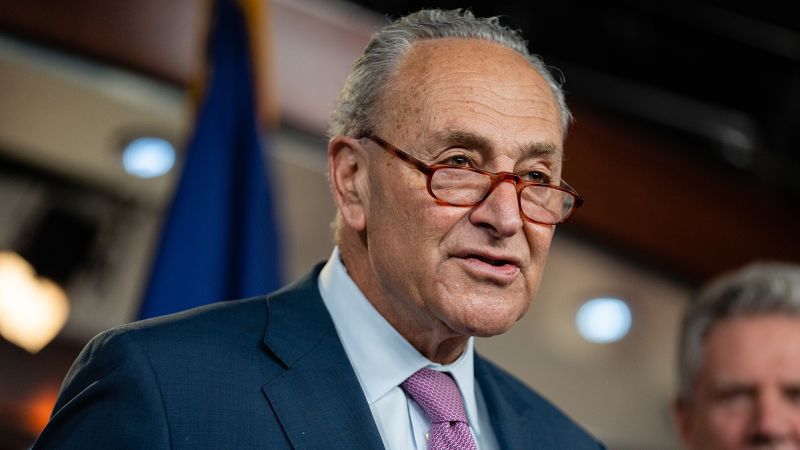
With the passage of the PACT Act, “veterans across America can breathe a sigh of relief,” Senate Majority Leader Chuck Schumer, DN.Y., said on the floor before walking outside the Capitol with Veterans Affairs Chairman Jon Tester, D-Mont ., to thank the vets for their advocacy. “The treatment that they have deserved and have needed but have been denied because of the VA, because of all sorts of legal barriers and presumptions, will now be gone.

“Veterans who were exposed to the toxic fumes of burn pits will be treated by the VA like they should have been from the very beginning,” Schumer added.

Sen. Pat Toomey, R-Pa, had been one of the Republicans holding up the bill as he demanded a vote on his amendment to put spending guardrails in place to ensure some of the massive $280 billion package over 10 years couldn’t be spent on ” completely unrelated programs.” Democrats disputed Toomey’s characterization, saying the money would only be spent on veterans.

“I’m supposed to trust this and future congresses not to go on a spending spree? Seriously? That’s unbelievable,” Toomey said before the vote. “Why did they design this feature so that they could go on a spending spree?”

Toomey had insisted that his amendment be brought to the floor with a 50-vote, simple-majority threshold. In the end, he and other Republicans gave into Schumer’s demands that three GOP amendments would receive votes with a higher 60-vote threshold, essentially ensuring their defeat. All fell well below that bar.

The Senate had already voted 84-14 to pass the burn pits bill in June, but 25 Republican yea votes reversed course when the legislation came up again last week, with many echoing Toomey’s spending concerns and arguing that Democrats did not give them a chance to amend the package. Democrats and veterans argued, however, that many Republicans were voting against the bill in retaliation for the massive deal on climate change, health care and taxes that Democrats had just crafted.

With some veterans literally sleeping on the steps on the Capitol over the weekend, the Republican blockade became increasingly untenable.

“I think they’re fraying in terms of their ability to withstand this,” Stewart, who has also fought for funding for 9/11 first responders and their, told NBC News before Tuesday’s deal was announced.

“I think this is cruel and unusual punishment that’s going on and they’ve got to end this.”

Ali Vitaly and Frank ThorpV contributed.

Categories
US

Al-Zawahiri was on his Kabul balcony. How Hellfire missiles took him out

Two Hellfire missiles ended al Qaeda leader Ayman al-Zawahiri’s life in a safehouse balcony in a wealthy neighborhood in Kabul, the capital of Afghanistan, at 6:18 am Sunday, a senior administration official said Monday.

The missiles were launched by an unmanned aerial vehicle, or drone, killing him instantly.

The nature of the strike as described by a senior administration official signals that the US may have used the R9X Hellfire variant, also known as the “Ninja” or “Flying Ginsu” missile, nicknamed for knives famously sold on TV in the 1980s. This variant has been used in the recent past to kill other extremist leaders.

The R9X Hellfire has six blades that rotate at high speed and deploy before impact — instead of conventional warhead explosives, according to Janes, a defense intelligence provider. The missile pierces and cuts its target, rather than blowing it up. The design makes it easier to take out an intended target, while lessening the likelihood of causing additional casualties.

Ayman Al-Zawahiri
Ayman Al-Zawahiri in an undated image from video

Maher Attar/Sygma via Getty Images


The White House has not shared details about the type of Hellfire missiles used. A reporter asked a senior administration official on a call Monday about the nature of the missile, but the official did not answer.

The senior administration official who briefed reporters said the strike only killed al-Zawahiri, avoiding civilian casualties and that the strike did not completely destroy the safehouse where al-Zawahiri was hiding with his family. It is unclear whether the missiles inflicted structural damage beyond the patio. Two intelligence sources familiar with the matter said the CIA carried out the strike.

Hellfire missiles are air-to-surface missiles initially designed for anti-armor strikes, but later versions have been used for precision drone strikes. The arms manufacturer Lockheed Martin developed the missiles with the name “Heliborne, Laser, Fire, and Forget Missile,” which evolved into the Hellfire missile, as it is now known.

The R9X variant was initially deployed in secret in 2017, according to a US Army equipment guide, and was used to kill Abu Khayr al-Masri, a member of al Qaeda’s leadership.

Photos of the aftermath on social media showed the car where al-Masri was purportedly killed as having damage to the passenger compartment of the beige Kia sedan but no damage to the engine block. The roof was blown open on the right side of the vehicle.

al-masri-al-qaeda-airstrike.jpg
An image from video posted online by Syrian activists in Idlib province shows people inspecting a sedan damaged heavily by a purported US airstrike on Feb. 26, 2017. There were unconfirmed reports that al Qaeda deputy leader Abdullah Muhammad Rajab Abdulrahman, aka Abu al-Khayr al-Masri, was killed in the strike.

The Hellfire variant became public knowledge after it was used in 2019 to take out Jamal Ahmad Mohammad Al Badawi, who was behind the 2000 USS Cole Bombing.

The Wall Street Journal reported in 2019 that a weapon similar to the R9X was considered as an alternative way to kill former al Qaeda leader Osama bin Laden in 2011, but officials ultimately decided to use special forces fighters.

Categories
US

Arizona, Kansas, Michigan, Missouri, Washington

Categories
US

Father of 6-year-old killed in Sandy Hook shooting testifies Alex Jones made his life a “living hell”

Fighting back tears and finally given the chance to confront conspiracy theorist Alex Jonesthe parents of a 6-year-old killed in the 2012 Sandy Hook Elementary school shooting described being put through a “living hell” of death threats, harassment and ongoing trauma over the last decade caused by Jones using his media platforms to push claims that it was all a hoax.

The parents led a day of charged testimony that included the judge scolding the bombastic Jones for not being truthful with some of what he said under oath.

Neil Heslin and Scarlett Lewis, whose son Jesse was killed at Sandy Hook, took the witness stand Tuesday on the final day of testimony in the two-week defamation damages trial against Jones and his media company Free Speech Systems. They are seeking at least $150 million in damages.

In a gripping exchange, Lewis spoke directly to Jones, who was sitting about 10 feet away. Earlier that day, Jones was on his broadcast program telling his audience that Heslin is “slow” and being manipulated by bad people.

“I am a mother first and foremost and I know you are a father. My son existed,” Lewis said to Jones. “I am not deep state… I know you know that… And yet you’re going to leave this courthouse and say it again on your show.”

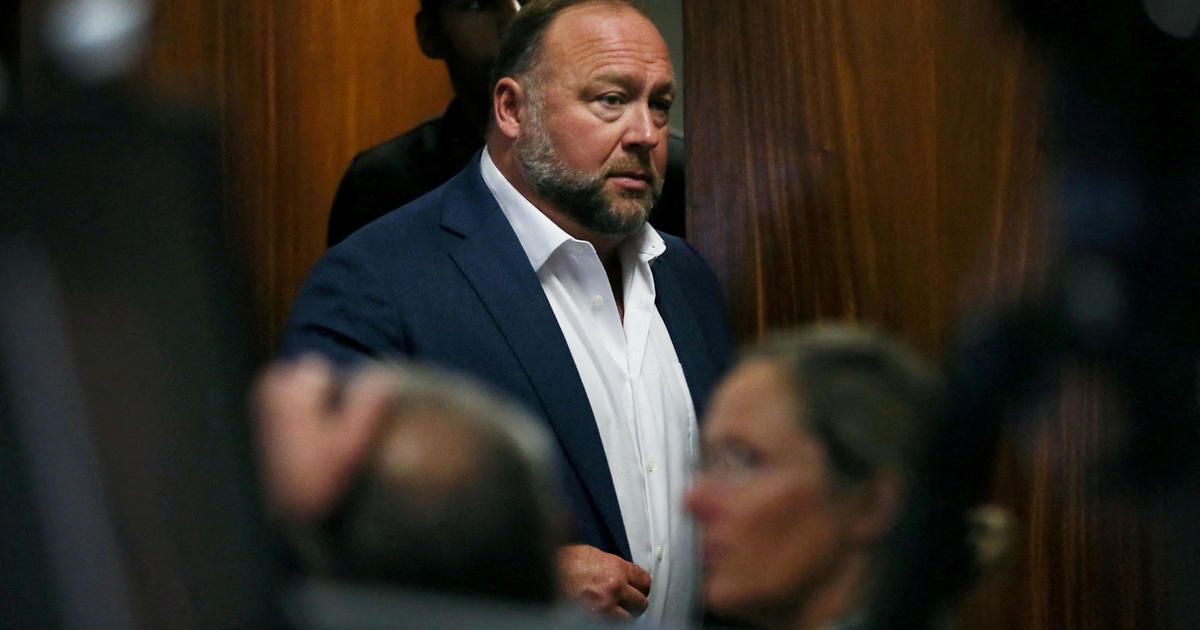
FILE PHOTO: Alex Jones walks into the courtroom in front of parents of 6-year-old Sand Hook shooting victim Jesse Lewis in Austin
Alex Jones walks into the courtroom in front of Scarlett Lewis and Neil Heslin, the parents of 6-year-old Sand Hook shooting victim Jesse Lewis, at the Travis County Courthouse in Austin, Texas, US July 28, 2022.

BRIANA SANCHEZ/POOL


At one point, Lewis asked Jones: “Do you think I’m an actor?”

“No, I don’t think you’re an actor,” Jones responded before the judge admonished him to be quiet until called to testify.

Lewis continued trying to impress on Jones that the Sandy Hook shooting and trauma affected in the decade since then was real.

“It seems so incredible to me that we have to do this — that we have to implore you, to punish you — to get you to stop lying,” Lewis said. “I am so glad this day is here. I’m actually relieved. And grateful… that I got to say all this to you.”

Jones visibly shook his head several times while Scarlett Lewis was addressing him.

Heslin and Lewis are among several Sandy Hook families who have filed several lawsuits alleging that Sandy Hook hoax claims pushed by Jones have led to years of abuse by Jones and his followers.

Heslin and Lewis both said they fear for their lives and have been confronted by strangers at home and on the street. Heslin said his home and car had been shot at. The jury heard a death threat sent via telephone message to another Sandy Hook family.

“I can’t even describe the last nine and a half years, the living hell that I and others have had to endure because of the recklessness and negligence of Alex Jones,” Heslin said.

Scarlett Lewis also described threatening emails that seemed to have uncovered deep details of her personal life.

“It’s fear for your life,” Scarlett Lewis said. “You don’t know what they were going to do.”

Heslin said he didn’t know if the Sandy Hook hoax conspiracy theory originated with Jones, but it was Jones who “lit the match and started the fire” with an online platform and broadcast that reached millions worldwide.

“What was said about me and Sandy Hook itself resonates around the world,” Heslin said. “As time went on, I truly realized how dangerous it was.”

Jones skipped Heslin’s morning testimony while he was on his show—a move Heslin dismissed as “cowardly”—but arrived in the courtroom for part of Scarlett Lewis’ testimony. He was accompanied by several private security guards.

“Today is very important to me and it’s been a long time coming… to face Alex Jones for what he said and did to me. To restore the honor and legacy of my son,” Heslin said when Jones wasn’t there.

Heslin told the jury about holding his son with a bullet hole through his head, even describing the extent of the damage to his son’s body. A key segment of the case is a 2017 Infowars broadcast that said Heslin did not hold his son.

The jury was shown a school picture of a smiling Jesse taken two weeks before he was killed. The parents didn’t receive the photo until after the shooting. They described how Jesse was known for telling classmates to “run!” which likely saved lives.

An apology from Jones wouldn’t be good enough, the parents said.

“Alex started this fight,” Heslin said, “and I’ll finish this fight.”

In 2017, Heslin went on television, he told CBS News, to directly address the Sandy Hook deniers. “I lost my son. I buried my son. I held my son with a bullet hole through his head,” he said.

After which, the harassment only got worse, Heslin said.

“I’ve had many death threats,” Heslin told CBS News in 2018. “People say, ‘You should be the ones with a bullet hole in your head.'”

Jones later took the stand himself, initially being combative with the judge who had asked him to answer his own attorney’s question. Jones testified he had long wanted to apologize to the plaintiffs.

“I never intentionally tried to hurt you. I never said your name until this came to court,” Jones said. “The internet had questions, I had questions.”

Later, the judge sent the jury out of the room and strongly scolded Jones for telling the jury he complied with pretrial evidence gathering even though he didn’t, and that he is bankrupt, which has not been determined. Plaintiff’s attorneys were furious about Jones mentioning he is bankrupt, which they worry will taint a jury decision about damages.

“This is not your show,” Judge Maya Guerra Gamble told Jones. “Your beliefs do not make something true. You are under oath.”

Last September, Guerra admonished Jones in her default judgment over his failure to turn over documents requested by the Sandy Hook families. A court in Connecticut issued a similar default judgment against Jones for the same reasons in a separate lawsuit brought by other Sandy Hook parents.

Heslin and Lewis suffer from a form of post-traumatic stress disorder that comes from constant trauma, similar to that endured by soldiers in war zones or child abuse victims, a forensic psychologist who studied their cases and met with them testified Monday.

Jones has portrayed the lawsuit against him as an attack on his First Amendment rights.

At stake in the trial is how much Jones will pay. The parents have asked the jury to award $150 million in compensation for defamation and intentional infliction of emotional distress. The jury will then consider whether Jones and his company will pay punitive damages.

The trial is just one of several Jones faces.

Courts in Texas and Connecticut have already found Jones liable for defamation for his portrayal of the Sandy Hook massacre as a hoax involving actors aimed at increasing gun control. In both states, judges issued default judgments against Jones without trials because he failed to respond to court orders and turn over documents.

Jones has already tried to protect Free Speech Systems financially. The company filed for federal bankruptcy protection last week. Sandy Hook families have separately sued Jones over his financial claims from him, arguing that the company is trying to protect millions owned by Jones and his family from him through shell entities.

.

Categories
US

Senate passes long-sought bill to help veterans affected by burn pits


CNN

The Senate voted Tuesday night to pass a long-sought bipartisan legislation to expand health care benefits for millions of veterans exposed to toxic burn pits during their military service, sending the bill to President Joe Biden to sign into law. The final vote was 86-11.

Passage of the bill marks the end of a lengthy fight to get the legislation through Congress, as veterans and their advocates had been demonstrating on Capitol Hill for days. Many veterans were allowed into the Senate gallery to watch the final vote on Tuesday evening.

Senate Majority Leader Chuck Schumer announced after reaching the deal with Republicans who had blocked the bill from advancing last week while they sought to add cost-controlling amendment votes to the package.

“I have some good news, the minority leader and I have come to an agreement to vote on the PACT Act this evening,” Schumer said on the Senate floor. “I’m very optimistic that this bill will pass so our veterans across America can breathe a sigh of relief.”

The bill, called the Honoring our PACT Act, was approved by the House of Representatives in July.

The bill widely expands health care resources and benefits to those exposed to burn pits and could provide coverage for up to 3.5 million toxic-exposed veterans. It adds conditions related to burn pit and toxic exposure, including hypertension, to the Department of Veterans Affair’s list of illnesses that have been incurred or exacerbated during military service.

The legislation had been held up in the chamber since last week when more than two dozen Republicans, who previously supported the measure, temporarily blocked it from advancing.

Sen. Pat Toomey, a Pennsylvania Republican, rallied fellow Republicans to hold up the legislation in exchange for amendment votes, specifically an amendment that would change an accounting provision. Toomey had previously said he wanted an amendment vote with a 50-vote threshold.

Toomey discusses why he voted against bill to help vets exposed to toxic burn pits

Tuesday’s final vote followed votes on three amendments with a 60-vote threshold. Toomey’s amendment, which would have made a change to a budget component of the legislation, failed as expected, in a vote of 47-48.

Last week’s surprise move by Republicans led to a swift backlash among veterans and veterans’ groups, including protests on the US Capitol steps over the weekend and early this week. Comedian and political activist Jon Stewart – a lead advocate for veterans on the issue – took individual GOP senators to task for holding up a bill that had garnered wide bipartisan support in earlier votes.

Senate Minority Leader Mitch McConnell defended his party’s handling of the legislation at a news conference on Tuesday.

“Look, these kind of back and forths happen all the time in the legislative process, you’ve observed that over the years,” he said. “I think in the end, the veterans service organizations will be pleased with the final result.”

This story and headline have been updated with additional developments Tuesday.

.

Categories
US

‘My life will never, ever be the same.’ Court hears first victim impact statements in Parkland shooter’s death penalty trial

“Soon she’d go on to be a professional soccer player. She’d get her law degree, and maybe become one of the most successful business negotiation lawyers the world would see,” Ilan Alhadeff told a Broward County courtroom Tuesday, testifying in the death penalty trial of his daughter’s killer.

“She was supposed to get married, and I was going to have my father-daughter dance,” he said, his voice breaking. “She would have had a beautiful family, four kids, live in a gorgeous house – a beach house on the side.

“All those plans came to an end with Alyssa’s murder,” he said.

Families of the 17 people killed in the Parkland school shooting continue to take the stand Tuesday, offering victim impact statements to illustrate the toll the murders have taken as a jury decides whether to sentence the shooter to death.

Nikolas Cruz, now 23, pleaded guilty in October to 17 counts of murder and 17 counts of attempted murder, and this phase of his criminal trial aims to determine his sentence: Prosecutors are seeking the death penalty, while Cruz’s defense attorneys are asking the jury for a sentence of life in prison without the possibility of parole.

To recommend a death sentence, jurors must be unanimous. If they do so, the judge could choose to follow the recommendation or sentence Cruz to life instead.

To make their decision, jurors will hear prosecutors and defense attorneys argue aggravating factors and mitigating circumstances — reasons Cruz should or should not be executed. Victim impact statements add another layer, giving the families and friends of the victims their own day in court, though the judge told the jury the statements are not meant to be weighed as aggravating factors.

“We were a family unit of five always trying to fit into a world set up for even numbers,” said Tom Hoyer, whose 15-year-old son Luke — the youngest of three — was killed. “Two-, four-, six-seat tables in a restaurant. Two-, four-, six-ticket packages to events. Things like that.”

But the Hoyers are no longer a family of five, and “never again will the world feel right, now that we’re a family of four,” Hoyer said.

“When Luke died something went missing in me,” he said. “And I’ll never, never get over that feeling.”

Patricia Oliver is comforted as a witness testifies to her son's fatal injuries during the penalty phase of the trial of Marjory Stoneman Douglas High School shooter Nikolas Cruz at the Broward County Courthouse in Fort Lauderdale, Florida, on August 1, 2022.

‘I will never get over it’

Testimony by the parents of the 14 students killed has focused not only on who their children were, but on who they will never get to become — a never-ending catalog of things left undone and unsaid.

Nicholas Dworet, captain of the high school’s swim team, had just received a scholarship to the University of Indianapolis at the time he was killed, his mother, Annika Dworet, testified Tuesday. He wanted to study finance and move to Boston with his girlfriend from him.

“Nick had big goals — bigger than most of us dare to dream of,” she said. Next to his bed, he’d taped a note which read, “I want to become a Swedish Olympian and go to Tokyo 2020 to compete for my country. I will give all I have in my body and my mind to achieve the goals I have set.”

“Now,” Annika Dworet said, “we will never know if he would have reached his goal to go to the Olympics.”

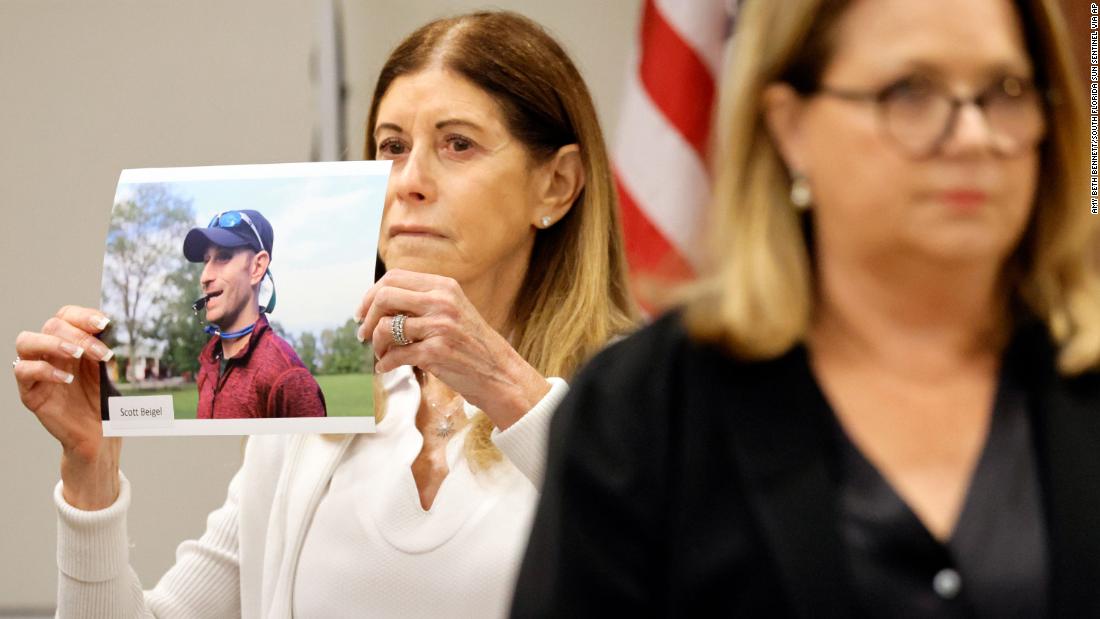
Linda Beigel Schulman holds a photo of her son, Scott Beigel, before giving her victim impact statement.

Jennifer Guttenberg, mother of 14-year-old Jaime, told the court watching her daughter’s friends and classmates grow up and achieve things Jaime never will is “excruciatingly difficult.”

Family get-togethers and holidays are hard, too, with one less seat at the table and no Jaime to keep “everyone upbeat and laughing.”

“There is togetherness, but there is no celebrating,” Guttenberg said. “There is a deadening silence amongst everyone, as they do n’t want to bring up Jaime’s name to her to cause pain, but do n’t want to forget her, either.”

The last four years have been no less painful for Linda Beigel Schulman, who told the court Monday it had been 1,630 days since she spoke to her son Scott Beigel, a geography teacher killed as he ushered students to safety in his classroom.

“I will never get over it. I will never get past it,” she said Monday. “My life will never, ever be the same.”

‘Our lives have been shattered’

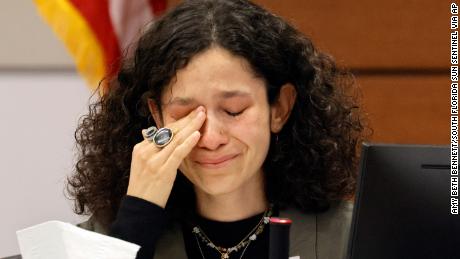
Cruz had no visible reaction Monday to any of the victim impact statements, though one of his defense attorneys was seen wiping away a tear, as were at least two members of the jury.

“It’s been four years and four months since he was taken from us, his friends and his family,” Patricia Oliver said of her son, who was 17 when he was killed. “We miss him more than words can say and love him dearly,” she said, adding, “Our lives have been shattered and changed forever.”

Joaquin’s sister, Andrea Ghersi, said her 6-foot-1 baby brother was “energetic, vibrant, loud, confident, strong, empathetic, understanding, smart, passionate, outgoing, playful, loving, competitive, rebellious, funny, loyal and constantly spoke up when he felt something was not just.”

Victoria Gonzalez, who has been called Joaquin Oliver's girlfriend but said they called themselves "soulmates,"  she wipes away tears as she gives her victim impact statement.

Victoria Gonzalez also took the stand Tuesday. The day of the shooting, she became Joaquin’s girlfriend, Gonzalez told the court, but they already referred to each other as “always soul mates,” and she described him as “magic personified, love personified.” His name, she said, is “etched into the depth of my soul.”

Kelly Petty, mother of victim Alaina Petty, described the late 14-year-old as a “very loving person.”

“She loved her friends, she loved her family and, most importantly, she loved God,” Kelly Petty said of her daughter. “I am heartbroken that I won’t be able to watch her become the amazing young woman she was turning into.”

Alain’s sister Meghan echoed the sentiment, telling the court, “I would have loved to see her grow up. She would have been a blessing to the world.”

Gena Hoyer, mother of Luke Hoyer, said her 15-year-old son’s room remains the same. His glasses and his charger are still on the nightstand and his clothes go untouched, she testified. She becomes physically ill when she moves anything in the room, she said.

Meadow Pollack’s mother, Shara Kaplan, told the jurors to articulate how her daughter’s death affected her she would have to rip out her heart and show them it’s been shattered in a million pieces.

“(Meadow’s death) has destroyed my life and my capability of ever living a productive existence,” she said.

CNN’s Carlos Suarez and Sara Weisfeldt contributed to this report.

.

Categories
US

Judge rejects bid to delay Oath Keepers Jan. 6 trial

“I can’t move this trial and I’m not going to move this trial,” Mehta said during a hybrid courtroom and videoconference hearing Tuesday that stretched to more than two hours. “It would quite literally wreak havoc for this court’s docket.”

Mehta said he was confident the court could find jurors untainted by publicity related to the House hearings.

“We are not going to avoid that publicity by moving this trial for a few months,” said the judge, an appointee of President Barack Obama. “I don’t know what they’re going to do and when they’re going to do it. This is a court of law. We cannot wait on the legislative process to move forward.”

Mehta did question a prosecutor about why the Justice Department agreed in June to a delay in another seditious conspiracy case against members and affiliates of the Proud Boys group, amid concerns that the House panel might soon release as many as 1,000 witness transcripts. Both sides in that case expressed concern that such a release just before, during or after the trial could cause significant problems.

However, Assistant US Attorney Kathryn Rakoczy said Tuesday that the release of those transcripts in August seemed more certain several weeks ago, and she suggested the government believed the potential timing was now too unpredictable to justify a delay in the Oath Keepers trial set to open at the end of next month.

“The government did not have perfect information at that time, but we were afraid that it would come to bear,” Rakoczy said of the potential document dump. “And that seemed much more certain at that point in time.”

Rakoczy said that at this point, the Justice Department wasn’t sure whether the panel would release any transcripts or when. POLITICO reported last week that the panel’s chair, Rep. Bennie Thompson (D-Miss.), said a framework for sharing the documents with prosecutors had been worked out. The panel later said through a spokesperson that 20 unspecified transcripts were likely to be shared soon, but gave no guidance about the remainder.

“We have no promises or assurances that these transcripts will be released,” she said Tuesday.

Mehta emphasized that if the witness transcripts did emerge shortly before the trial, he would consider again whether a delay is warranted.

“If there are transcripts dropped on the eve of the trial that pertain to these defendants and the allegations against them, I will revisit the issue. You have my word,” the judge said.

Nine defendants are currently expected to be part of the trial starting in September, including Oath Keepers founder Stewart Rhodes. Three Oath Keepers members have already pleaded guilty to seditious conspiracy charges and agreed to cooperate with prosecutors. A trial for other Oath Keepers members not facing that charge is set for February 2023.

Categories
US

Utah man trying to kill spider with lighter started Springville wildfire, police say

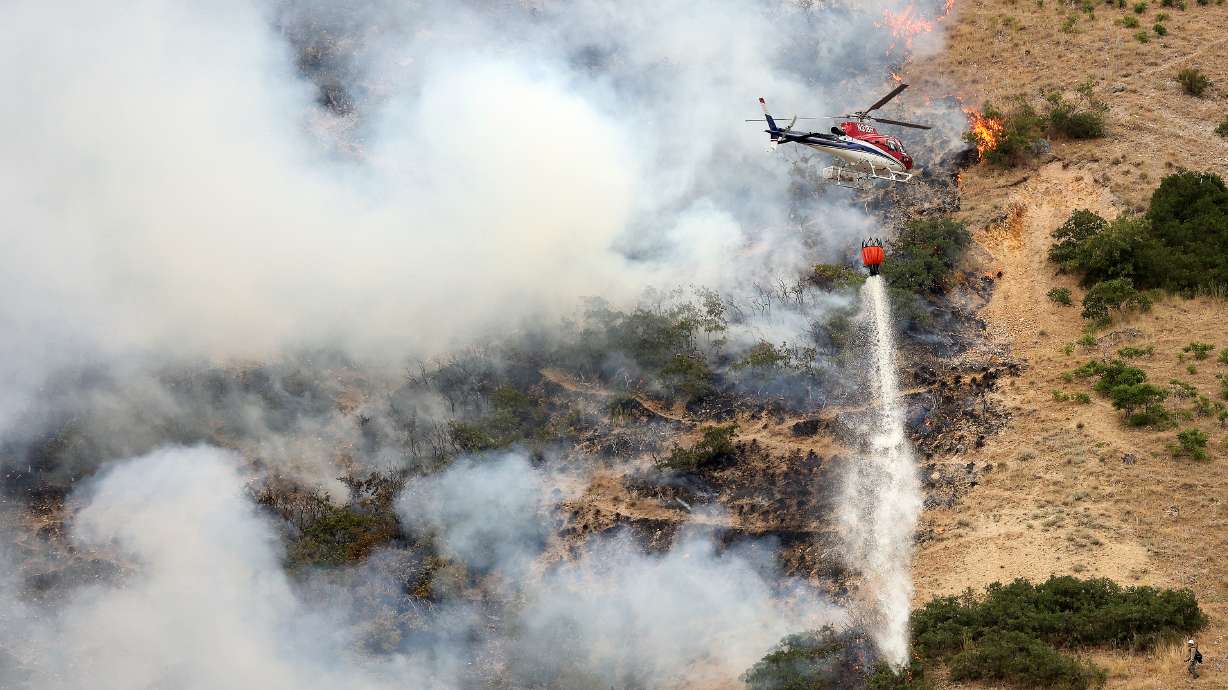
Firefighters battle a wildfire from the ground as a helicopter drops water above them in Springville on Monday. The fire started when a man tried to burn a spider with a lighter, police said. (Kristin Murphy, Deseret News)

Estimated read time: 2-3 minutes

SPRINGVILLE — A wildfire near Springville, which police say was started by a man who claimed he was trying to kill a spider Monday afternoon, is now 90% contained, according to firefighters.

Cory Allan Martin, 26, of Draper, was arrested Monday evening for investigation of reckless burning, as well as possession of a controlled substance and drug paraphernalia, according to Utah County Jail records.

Reports of a fire “north of town on the mountainside” came in just before 5 pm, Springville fire officials said. Utah County sheriff’s deputies also responded to a report of the fire, which was located by the Bonneville Shoreline Trail near 1400 N. Main in Springville.

When deputies arrived, firefighters at the scene said they had come across a man who said that he started the fire. The crews escorted him down the mountain to speak with authorities. The man identified himself as Martin and explained that he saw a spider on the mountain and tried to burn it with a lighter, according to a police booking affidavit.

“When he attempted to burn the spider, the surrounding brush ignited and the fire began spreading very rapidly,” the affidavit states.

Martin was arrested at the scene and placed in a squad car. Deputies later found a jar of marijuana and drug paraphernalia while searching his belongings, the arrest report adds.

The fire quickly grew to 40 fires in size Monday evening; it had burned about 60 acres of US Forest Service land within the Pleasant Grove Ranger District as of Tuesday morning, according to Utah Fire Info, an information center for state and federal firefighters.

Two crews, one squad and one engine, were assigned to the fire Tuesday. Firefighters said they expected “containment to drastically increase” by the end of Tuesday’s shift, and it improved from 10% to 90%.

Officials asked residents to avoid the area to “help open the roads for emergency vehicles.”

The Bonneville Shoreline Trail is also temporarily closed between the Buckley Draw and Little Rock Creek as crews continue to fight the fire.

Photos

Most recent Utah wildfires stories

Arianne Brown is a breaking news reporter for KSL.com. She also enjoys finding and sharing stories of everyday Utahns, a talent she developed over several years of freelance writing for various Utah news outlets.

Carter Williams is an award-winning reporter who covers general news, outdoors, history and sports for KSL.com. He previously worked for the Deseret News. He is a Utah transplant by the way of Rochester, New York.

More stories you may be interested in

.

Categories
US

No charges for officer who pepper-sprayed Army lieutenant

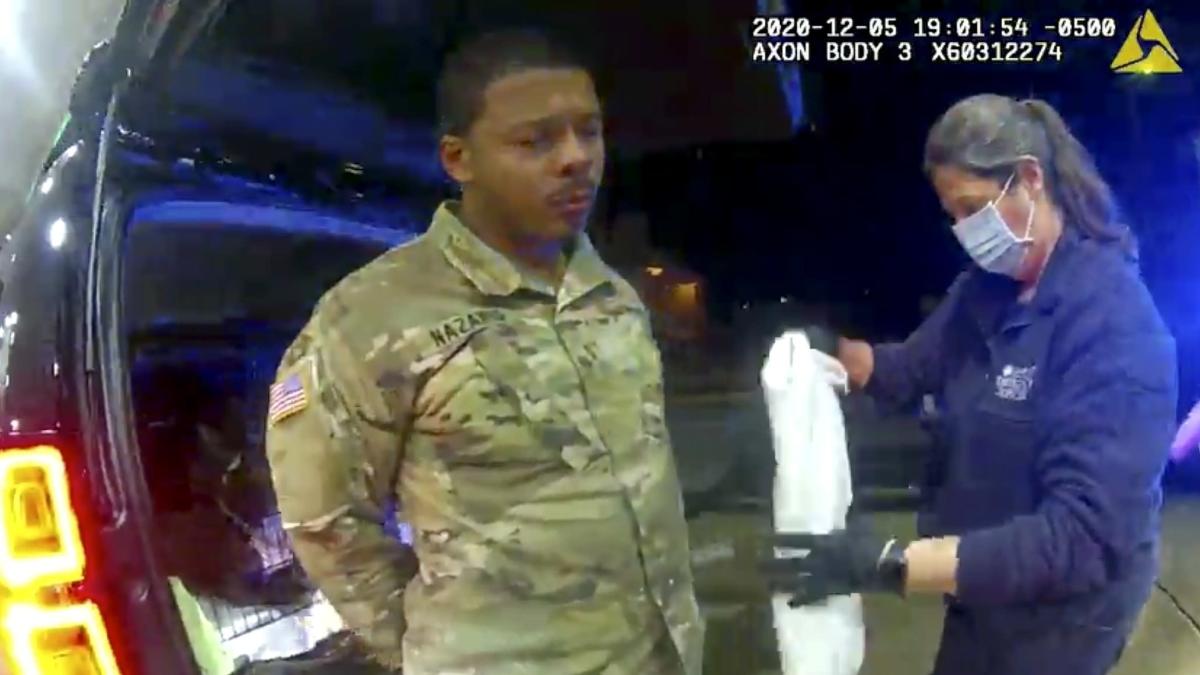
NORFOLK, Va. (AP) — A former police officer in Virginia should not be criminally charged but should be investigated for potential civil rights violations after he pepper-sprayed, struck and handcuffed a Black US Army lieutenant during a 2020 traffic stop, a special prosecutor has determined.

The prosecutor’s findings are the latest fallout from a confrontation involving two police officers and a uniformed military officer that drew outrage and national attention to the small town of Windsor, about 70 miles (113 kilometers) southeast of Richmond.

The man who was pulled over, Caron Nazario, was never charged. Video of the December 2020 traffic stop surfaced in April 2021 after Nazario sued in federal court, alleging that his constitutional rights were violated. The images sparked outrage and served as a grim reminder to many Black Americans that a military uniform doesn’t necessarily protect against mistreatment by police.

In December, then-Virginia Attorney General Mark Herring’s office sued the town, alleging that it operated in a way that discriminated against Black Americans.

One of the officers, Joe Gutierrez, was fired from the department. He was the target of the special prosecutor’s criminal probe.

“Although I find the video very disturbing and frankly unsettling, Gutierrez’s use of force to remove Nazario did not violate state law as he had given multiple commands for Nazario to exit the vehicle,” special prosecutor Anton Bell said in his report, dated July 29 and posted online by Nazario’s attorneys.

“The problematic issue, however, were Gutierrez’s statements throughout the entire order, which would lead a reasonable person to wonder whether underlying bias was at the root of how and why Nazario was treated in like manner,” Bell wrote.

Bell’s findings were first reported Monday by The Virginian-Pilot newspaper.

The incident began when Nazario was driving home from his duty station, according to his lawsuit. Officer Daniel Crocker radioed that he was attempting to stop a vehicle with no rear license plate and tinted windows.

Crocker said the driver was “eluding police” and he considered it a “high-risk traffic stop,” according to a report that’s included in the lawsuit. One of Nazario’s attorneys, Jonathan Arthur, later explained that Nazario was trying to stop in a well-lit area “for officer safety and out of respect for the officers.”

The other officer, Gutierrez, was driving by and decided to join the traffic stop, the lawsuit stated. By the time the two officers reached Nazario’s SUV, the license plate was visible in the rear.

When Nazario stopped at a well-lit gas station, the two officers immediately drew their guns and pointed them at Nazario, his lawsuit alleges. The officers then attempted to pull Nazario out of the vehicle while he continued to keep his hands in the air. Gutierrez pepper-sprayed Nazario multiple times as the officers yelled for him to get out.

At one point, Gutierrez told Nazario he was “fixin’ to ride the lightning,” a reference to the electric chair that was also a line from the movie “The Green Mile,” a film about a Black man facing execution, the lawsuit said .

Nazario got out and asked for a supervisor. Gutierrez responded with “knee-strikes” to his legs from him, knocking him to the ground, the lawsuit says. The two officers struck him multiple times, then handcuffed and interrogated him.

The traffic stop was captured on Nazario’s cellphone as well as the officer’s body-worn cameras.

Tom Roberts, another attorney representing Nazario, told The Associated Press on Tuesday that a judge or a jury, not a special prosecutor, should have determined whether Gutierrez violated the law.

“I think that there’s sufficient evidence to show that he was intentional in his actions,” Roberts said. “And I believe that he exceeded any authority to use force, and therefore he committed assault and battery.”

Roberts said that it would have been a misdemeanor offense, for which the statute of limitations is one year, well before the special prosecutor released his findings.

“All too often, when it comes to law enforcement violating the laws, we see our Commonwealth’s Attorneys fail to apply the same zeal at prosecuting law enforcement as they do with other offenders,” Roberts’ firm said in a statement.

John Becker Mumford Jr., an attorney listed for Gutierrez in Nazario’s lawsuit, did not respond to an email seeking comment.

Bell, the special prosecutor, wrote that he asked the local US Attorney’s Office to review the case for possible civil rights violations. Karoline Foote, a spokeswoman for the US Attorney’s Office for the Eastern District of Virginia, said Tuesday that the office had no comment.

In February, the town of Windsor asked a court to dismiss the state attorney general’s lawsuit, arguing that it only refers to one person — Nazario — “in a cursory and inconclusive manner.”

Jason Miyares, who defeated Herring in November’s election, took over as Virginia’s AG in January. Victoria LaCivita, a spokeswoman for Miyares’ office, said Tuesday that the lawsuit is still pending.