Categories
Technology

What Are You Playing This Weekend?

Folks, it’s the Good Day once again.

Friday has arrived, meaning it is once again time to ask the question: What are you playing this weekend?

I think a lot of us are going to be trying out Cult of the Lamb, aren’t we? I hope you guys enjoy it because Ruby certainly did. She tells me she’ll be spending a bit of her weekend chasing achievements and tidying up after her review playthrough. I hope you don’t expect to see games like Elden Ring cropping up on her Game of the Year list when we get to December. I’m telling you now, with gear like Cult of the Lamb dropping every week, it’s not even going to get a look-in for Ruby.

What am I hopping into this weekend? I really want to try Arcadian Paradise, which just launched today. Who among us hasn’t thought about opening a geek business of some sort? A comic shop, a board game place, or even an arcade? This is a game that seems like it leans into that fantasy, and I’m keen to see how it executes on that. I’m also hoping to put some more time into Two Point Campus, a game I truly love. Ruby tells me she is also going to be hopping into Two Point Campus this weekend after I gushed about it earlier in the week. It’s out on Game Pass, and if you loved ThemeHospital back in the day, please give it a go. I think you’ll really love it.

But that’s just what we’re hopping into. What about you? Are you dusting off the pile of shame, or picking up something new? Making a tasteful selection from the new stuff on Game Pass and PS Plus? Hitting Fortress to get in on some weekend D&D? FFXIV crew, let me know what your plans are!

Thank you as always for hanging out with us again this week. We really do appreciate you being here. Whatever you get up to, stay safe, be well, and we’ll see you back here on Monday.

Cheers.

Categories
Technology

Hacking company AimJunkies subpoenaed Google, PayPal, and Valve to prepare for legal battle with Bungie over Destiny 2

AimJunkies, a company that designs and sells ‘cheat software’, software that allows players to cheat in video games, is fighting back against destiny 2 developer Bungie. AimJunkies are fired off subpoenas towards Valve, Google and PayPal to gather information for their fight.

Last year, Bungie filed a lawsuit against AimJunkies, accusing the company of copyright and trademark infringement. AimJunkies countered, saying that “cheating isn’t against the law” and that the claims of copyright infringement lacked substance and proof.

In May, the courts agreed with AimJunkies on one count — Bungie failed to provide “sufficient evidence” for the copyright claim against the ‘destiny 2 Hacks’ sold by AimJunkies. Although the original case was dismissed, the courts did allow Bungie to file a new complaint to address the problems, which Bungie did almost immediately.

First spotted by TorrentFreak, the hackers are preparing for this new round of legal battles by subpoenaing Google, PayPal and Valve for information that will help them through the discovery process. From Valve, the hacker company aims to collect information about destiny 2 player counts dating back to 2017, as well as monthly sales numbers. The company plans to use this information to disprove the claim that AimJunkies is harming Bungie as a company.

“Bungie claims that we caused grievous harm to their game when in fact some of their most popular months of player counts and sales were during the time AimJunkies offered their software products. We believe and intend to gather actionable proof of that and disprove another one of their wild assertions,” Phoenix Digital, the original creators of the cheating software, stated.

Phoenix Digital went on to suggest that their programs are no different from officially-sanctioned programs, such as Valve’s Steam Overlay. Steam Overlay adds a toggleable window over the game to allow you to view your friends list and chat with other players.

Bungie is not taking legal threats lying down. A judge recently ordered a privacy app to release the names of racist Destiny 2 players, after the players allegedly sent in threats of harm and arson to private residences and phone numbers. After the rounds of harassment started pouring in — over a video game item, mind you — the destiny 2developer opened up about the harassment it faces even to this day.

Written by Junior Miyai on behalf of GLHF.

Read related topics:Google

.

Categories
Technology

iPhone fans are already redesigning Apple’s awful new battery icon

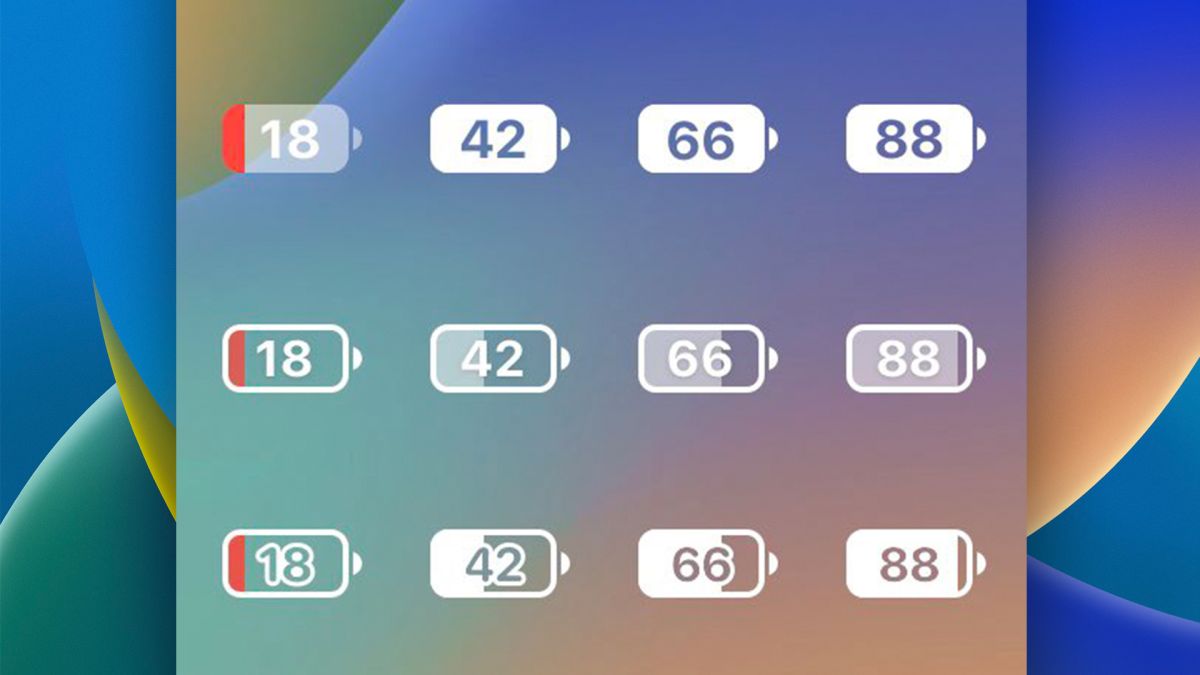
Of all the new features announced for iOS 16, we didn’t expect a new battery icon to be the one that made the most waves among the tech community. Apple’s new icon was quietly released with the most recent iOS beta – and while it’s great to see the remaining percentage on the home screen again, users aren’t thrilled with the execution.

The issue is that the battery icon no longer shows the juice depleting horizontally – instead, all users have to go on is the number plastered over the icon. For many, it’s proving confusing to see a combination of a full battery icon and a low number sitting on top of it. (Check out the best iPhone 13 deals if you’re in the market for new gear.)

iPhone battery percentage icon

Apple’s new battery icon (top right) (Image credit: Apple)

And design-savvy Apple fans have already taken it upon themselves to improve upon Apple’s offering. One particularly sound redesign comes from Brian Michel, engineering manager at The Browser Company (below). This envisions the color of the numbers changing from black to white with the movement of the battery status, making the whole thing much easier to read (and understand).

See more

Categories
Technology

Game dev creates custom Pokemon game to share his lunch order

If you’ve ever worked in an office or collaborative environment, chances are you’ve been involved in some pretty silly things to keep the day-to-day interesting for you and your co-workers. But you probably haven’t built a custom Game Boy Advance-era Pokemon game, recreating your office and the people in it, just so you can tell someone your takeaway lunch order for the day.

That’s exactly what Kirk Winner did for his peers at 5 Lives Studios in Brisbane, Queensland. As shared by 5 Lives graphics programmer Chris Webb on Twitter, Kirk’s actions appear to be the latest in a long-standing Friday lunchtime tradition of what he calls ‘everyone orders Thai (food) in a really weird way’.

Webb shared a series of screenshots in to Twitter threadwhich is just delightful.

If you ask us, this custom Pokemon romhack effort was 100% worth it for the single gag it was built for.

5 Lives Studios is the Queensland studio most recently known for creating the oceanic survival game Windbound. Previous to that, they were responsible for Satellite King, a spiritual successor to the beloved PC sci-fi real-time tactics series, Syndicate. The studio was formed by a number of industry veterans in the wake of the 2008 global financial crisis, which shuttered several major game developers in Australia.

The studio is currently working on an unannounced project.

in current Pokemon game news, The Pokemon Company recently revealed several new details about the upcoming games in the mainline series, Pokémon Scarlet and Violet. It’ll be an open-world adventure set in a region inspired by Spain, the Legendary Pokemon can be ridden like motorcycles for some reason, and a new mechanic sees the adorable little monsters turn into crystal, in a move I can only assume is part of a Swarovski partnership.

Pokemon Scarlet and Violet will launch on 18 November 2022.

Categories
Technology

Final Fantasy XIV Update 6.2 Gets Release Date & Epic New Trailer

News

Square Enix released the trailer and release date of the upcoming update for Final Fantasy XIV numbered 6.2 and titled “Buried Memory.”

Square Enix released the trailer and release date of the upcoming update for Final Fantasy XIV numbered 6.2 and titled “Buried Memory.”

The much-awaited update will be released on August 23.

The trailer showcases the story and features included in the update, and as usual, it could be considered a bit spoiler-y.

We start with a look at the “Island Sanctuary” feature that will be the centerpiece of the update, the new raid, and the continuation of the main story quest. You may also recognize some of the music if you’re a veteran fan of the Final Fantasy series.

We also see some known faces that will return as AI companions for the renewed Heavensward dungeons. It certainly appears that this update will be a strong one for Square Enix’s super-popular MMORPG.

If that does not bother you, you can enjoy it below both in English and Japanese depending on your voiceover language of choice.

Final Fantasy XIV is currently available for PlayStation 4, PS5, and PC. The Endwalker expansion has been released a few months ago and you can read our recent review.

You can also read more about the changes planned for the longer term, including a refresh of the graphics, and more information about the upcoming update 6.2 “Buried Memory,” which will introduce the “Island Sanctuary” feature and much more.

Incidentally, the traditional seasonal event Moonfire Faire is currently going on in the game to celebrate the summer.

Categories
Technology

Your Macs Aren’t as Secure as You Think

When the Macintosh computer was new, Apple touted the fact that Macs, unlike PCs, didn’t get viruses. We know better now; Macs do get hit with malware, even ransomware. But the fact remains that macOS is intrinsically more secure than Windows. That’s why security researcher Thijs Alkemade’s claim to break through all macOS security layers with one attack is such a gut punch. An excited audience of Black Hat conference attendees, both in-person and virtual, clamored to hear details about this surprising claim.


What Makes MacOS So Secure?

“I’ve been a Mac user all my life,” said Alkemade. “It’s a system I know well. The early Mac platform was based on Unix. In that platform, users are security boundaries but processes are not. For files, every file has an owner, and nine flags define permissions. The root user has full access to modify all files, memory, even the kernel. That was the old model.

“System Integrity Protection (SIP) was introduced in 2015 with El Capitan,” he continued. “It put a security layer between the root users and the kernel, protecting the system from modification even by the root user. Root access is no longer enough to compromise the system. One of the other names for this system is rootless. Some people think it means Apple is going to take root away, like on the iPhone. But actually it just means that root es less powerful. Dangerous operations require entitlements, and each macOS release adds more and more restrictions.

“But…macOS is old, large, and established,” said Alkemede. “A lot of system parts were written before the security model changed. It’s not possible to reconstruct the entire system.”

I have listed off several techniques that could be used to enable process injection, but concluded they’re just incidental. “It’s much nicer to have process injection that you can apply everywhere.”


Where’s the Security Hole?

Where’s the weakness? Alkemade didn’t keep listeners in suspense. “It’s in the saved state feature,” I explained. “When you shut down, you check a box if you want an app to reopen when you start again. It even restores unsaved documents. It largely works automatically. Developers don’t have to do anything to use it, but they can extend it.”

The process of saving an app’s state is called serializing, and the serialized data is meant to be encrypted. However, encryption is not required, which allows a clever programmer to abuse this feature. “I create a saved state using a malicious serialized object and write it to the directory of another application’s state. It automatically deserializes and executes within the other app, and can use the entitlements and permissions of that other app, achieving process injection.”

Alkemade walked the audience through the numerous barricades he encountered, and the techniques he evolved to circumvent them. He did admit, “I have to skip a few steps for time reasons and disclosure reasons.” I won’t attempt to explain the details here, as you need to be a programmer to totally grasp them. The key point is, it worked.


What Can You Do With Process Injection

Alkemade detailed three possible uses for the exploit: escape the sandbox, escalate privilege, and bypass System Integrity Protection.

These are extraordinary claims, given those outcomes are practically the Holy Grail of hacking. Bypassing SIP in particular gives your program supreme power. “We can read email or Safari history of all users, or grant ourselves permission to use the microphone or webcam,” Alkemade explained. “Our process is now protected by SIP, which gives it powerful persistence. We can load a kernel extension without the user’s knowledge or permission.”

Alkemade proceeded to demonstrate these three hacks for the appreciative audience. Only the best Black Hat demos get their own round of applause!


Should We Worry?

This security hole is already fixed in macOS Monterey, but app developers need to do their part. “Developers can and should make apps accept only secure serialized objects,” said Alkemade. “Apple has already done that with all their apps, but existing third-party apps need to do the same.”

As it turns out, this new protection isn’t just for Monterey. “I just learned that they back-ported it to Big Sur and Catalina,” said Alkemade. “The Catalina release notes are updated, but not those for Big Sur. I got a spontaneous email from Apple asking to share the contents of my talk in advance. Two hours ago I got confirmation that it’s fixed in Big Sur, though I haven’t had time to verify it.”

“Apple keeps adding layers to macOS,” concluded Alkemade. “Adding new layers to an established system is hard, so code written 10 or more years ago is today’s attack surface. More layers may not increase the effort for attackers, not if you can use the same bug to bypass all of them.”

.

Categories
Technology

MultiVersus Season 1 Release Date Confirmed For Next Week

Earlier this month, the developers of MultiVersus announced that the release of Season 1 would be delayed to a later date. This also meant that players would have to wait to get their hands on the upcoming character, Morty. Thankfully, the delay hasn’t lasted as long as many fans thought it would, as the release date for the game’s first season has now been confirmed.

The officer Twitter account of MultiVersus confirmed that the release date of Season 1 would now be on Monday, August 15th 2022. The new season will bring with it a brand new Battle Pass for players to earn various in-game rewards.

DUALSHOCKERS VIDEO OF THE DAY

Although there’s expected to be plenty of new content for players to jump into, the developers did follow up the release date announcement with the following statement, “everything we are bringing to you in Season 1 will not drop on the same day. New modes and content will be spread through the life of the Season. We’ll continue to share dates on all the fun things to come.”

One of the biggest additions to MultiVersus Season 1 will be the arrival of a new character, Morty, from the hit animated series, Rick & Morty. Unfortunately, the new character won’t be playable until August 23rd, which is the date the developers confirmed for when Morty will be joining the character roster.

It’s not clear exactly what content will arrive on day one, but a preview of the new content for Season 1 was recently shared by the developers. Throughout the span of Season 1, fans can expect to find a brand new Ranked Mode, a Classic Arcade Mode, new Icons, Banner, and various other cosmetic items.

Many believed the start of MultiVersus Season 1 was delayed due to the merger of Discovery and Warner Brothers. However, co-founder of Player First Games took to Twitter to confirm that this was not the case. An exact reason for the delay was never made clear, but fans will be able to jump into some brand new content when Season 1 begins on August 15th.

Categories
Technology

Motorola Razr 2022 Revealed First Pictures – channelnews

Motorola, who is set to unveil their Razr 2022 foldable alongside other phones today, has announced the price of the new foldable, considerably less than Samsung’s just announced Galaxy Z Flip 4.

The price for the phone has only been announced in China, sitting at 5,999 yuan (A$1,259.17), whilst the Flip 4 is priced at 8,499 yuan (A$1,789), marking a roughly 40% price difference.

This difference is to be taken with a grain of salt of course as pricing here is Australia is very different. The Motorola Razr 2022 is yet to be priced here whilst the Samsung Galaxy Z Flip 4 sits at A$1,499.

The foldable market in Australia is a two-horse race, one that Samsung is certainly leading. However, the Korean tech giant has reason to be worried. Both phones are expected to boast similar specs, both with the latest and greatest Qualcomm Snapdragon 8+ Gen 1 chip, 6.7-inch displays and similar battery sizes of 3,500mAh on the Motorola and 3,700mAh on the Samsung.

However, the Motorola is expected to boast a 50MP main camera, 13MP wide angle camera and a 32MP selfie camera, considerably higher than the Samsung’s dual 12MP rear cameras and 10MP selfie camera. The Motorola also promises a high 144Hz refresh rate.

If Motorola, who has seen 250% market growth in Australia, can deliver on a lower price tag and higher specs, Samsung is set to face fierce competition with the form factor it looks to dominate.


Categories
Technology

Welcome to the Weird Phone Future

Michael Calor: No, because I don’t have a folding phone. I only have a regular, old, nonfolding Pixel.

Lauren Goode: And you call yourself a tech editor.

Michael Calor: Yes, several people call me a tech editor.

Lauren Goode: I guess my question is, is anyone actually using folding phones?

Michael Calor: Sometimes, I see one in the wild and then it turns out that the person who’s holding it just works at Samsung.

Lauren Goode: Same. I think I’ve seen one three times in the wild and every time, they’re an employee at Samsung.

Michael Calor: Well, we should talk about the new Samsung devices.

Lauren Goode: Yeah. Speaking of Samsung, let’s get to it.

[Gadget Lab intro theme music plays]

Lauren Goode: Hi everyone. Welcome to Gadget Lab. I’m Lauren Goode. I’m a senior writer at WIRED.

Michael Calor: I’m Michael Calore. I’m a senior editor at WIRED.

Lauren Goode: We’re joined this week by WIRED reviews editor, Julian Chokkattu, who’s joining us from New York City. Hey Julian.

Julian Chokkattu: Hey, how are you?

Lauren Goode: Is Tobu the dog around as well?

Julian Chokkattu: No, I had to kick him out of the room because you never know when he’s going to start barking.

Lauren Goode: Well, he’s welcome anytime. Let’s just talk about cats and dogs this episode. What do we say?

Michael Calor: Sure.

Lauren Goode: Esta bien. Well, it’s been a while since we’ve talked about Samsung and Android, but this week, Samsung hosted its annual Unpacked event, which is a smartphone launch event. These are usually loud, hyped-up events that are supposed to get everyone excited about the latest new thing. Since Samsung is one of the world’s biggest smartphone makers, we tend to pay close attention to this because its design decisions are often a leading indicator of what we might see in upcoming phones.

But in recent years, Samsung has really been hyping up foldable phones, which is something that really hasn’t been embraced by the mass market yet. And then, some of the other stuff that Samsung showed off this week, like your smart watches and earbuds, don’t exactly feel new. So, we asked Julian to join us and break down what is actually new, and then in the second half of the show, we’re going to talk about Android. But first, Julian, bend our ears, please. See what I did there?

Michael Calor: And it is.

Lauren Goode: Bending. Folding.

Michael Calor: Yes, I got that.

Lauren Goode: Great. Start with the foldables. What do we need to know?

Julian Chokkattu: They’re not that different from last year’s phones. The biggest changes here are actually that Samsung has made the hinge smaller and they’ve overall reduced the footprint. Just generally, they are bit more compact devices, which is important, and these are the iterations that we’ve been seeing year over year since 2019, since they started coming out with these foldables. There’s the Flip 4, which is a traditional smartphone that you can fold in half like a compact mirror almost. Really nice if you hate large phones. And then there’s the Fold 4, which is like a normal smartphone that you can then open up into a larger book, so you get a larger screen on the inside and gives you a bit more of a tablet experience.

.

Categories
Technology

Intel Has Lost $3.5 Billion Through Its GPU Division Says Analyst

This is not investment advice. The author has no position in any of the stocks mentioned. Wccftech.com has a disclosure and ethics policy.

Chipmaker Intel Corporation might be looking to shut down its graphics processing unit (GPU) department due to heavy losses that have accumulated over the years according to a fresh market research report from John Peddie Research. The group is a relatively new one at Intel, which is one of the oldest chip companies in the world. It focuses its attention on developing and manufacturing GPU products, as opposed to the traditional computing CPUs that have come to be associated with Intel.

JPR estimates that shutting down the Accelerated Computing Systems and Graphics (AXG) group will result in a $3.5 billion write off by the company, as the division is yet to make a profit and Intel has invested $3.5 billion in it since it was set up, with the company starting to include the segment on its balance sheet from the first quarter of last year.

Intel Ready To Call It Quits With GPU Development After Investing $3.5 Billion

Today’s report, if it bears fruit, will result in another market being out of reach for Intel, which is one of the world’s largest and oldest chipmakers. The company is known for having refused to manufacture processors for smartphones in the early days of the industry and then lamenting later for having missed the train. Intel also sold its fifth generation (5G) mobile modem portfolio to Apple, and now, the company might do away with its GPU division as well.

JPR’s report does not cite any official sources, and it only uses rumors to guess if Intel’s chief Mr. Patrick Gelsinger will continue on his streak of shutting down unprofitable businesses by taking aim at its GPU division next.

In a blog post, JPR’s founder John Peddie outlines that:

So, the rumor mill has been hinting that the party is over and that AXG would be the next group to be jettisoned.

A Lenovo PC with an Intel GPU.

He goes on to argue that shutting down the GPU department will make sense for Intel as the segment is yet to make any profits. Peddie estimates that since its inception, the AXG group has cost Intel $3.5 billion in investments, and it has little to show for this in earrings. He also calls Intel results with its GPUs “an embarrassment, with little adoption in the market and average performance in benchmarks.

The analyst believes that competition from NVIDIA, AMD and startups implies that Intel should ax the AXG group next. He states that:

Should Intel dump its AXG group? Probably. The company started the project six years ago. Since then, AMD and Nvidia have brought out three generations of new and stunningly powerful dGPUs, and more are in the pipeline. Four new companies have started up in China, and two new ones announced in the US. Intel is now facing a much stronger AMD and Nvidia, plus six start-ups—the rules of engagement have changed dramatically while Intel sunk money into projects it can’t seem to get off the ground.

. . .The best thing Intel could do at this juncture is to find a partner and sell off the group. It could even be dressed up as a strategic move, just as they did going to TSMC to build the dGPU in the first place. The company can’t continue to carry an enormous payroll, pay a competitive fab for wafers, and then ask governments to subsidize its investments in new fabs that can’t even build the parts they are presumably designing. Not only is that a bewildering investment strategy, but it’s also an embarrassment.

However, he remains divided on whether Intel will actually shut down the department, believing that if it doesn’t do so, then it will continue to operate in a highly hostile market