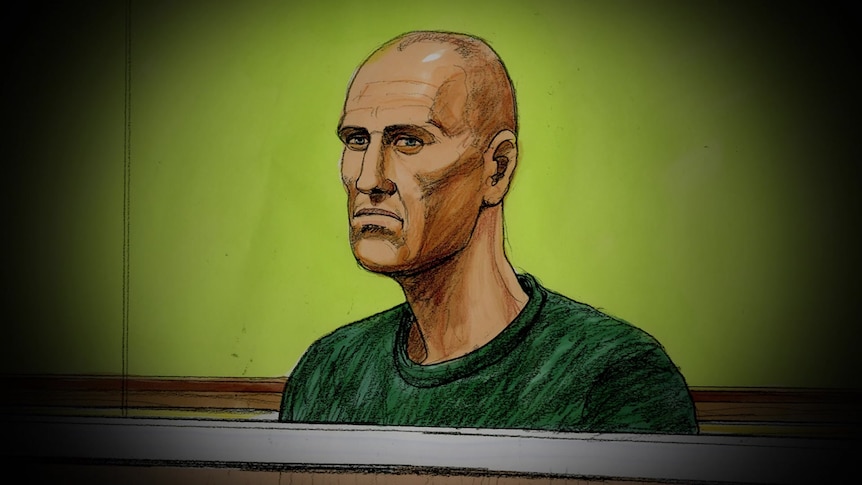
A 36-year-old man is facing multiple charges over a fatal head-on crash that killed a three-year-old boy on the Sunshine Coast earlier this year.
The Coolum man has been charged with two counts each of dangerous operation of a vehicle causing death or grievous bodily harm, drug driving and driver failing to restrain a child under four.
Police allege the man was driving a silver Mitsubishi Pajero on the Sunshine Motorway on May 30, when it and a Mazda CX-9 heading north collided.
Two three-year-old passengers — a boy and a girl — were in the back of the four-wheel-drive at the time.
The boy child suffered critical injuries and died in the Sunshine Coast University Hospital the next day.
The man and the female child sustained minor injuries.
The 38-year-old woman driving the second vehicle and her 12-year-old passenger suffered serious and significant injuries.
They were released from hospital yesterday.
A four-year-old boy in the Mazda also had minor injuries.
The man was granted police bail and will appear in Maroochydore Magistrates Court on August 26.
The union representing Victoria Police is calling on the state government to overhaul sentencing law for serious offenses to bring punishments in line with community expectations.
Key points:
Warrnambool man Steven John Cleary, 50, was sentenced last month for attacking two police officers with a baseball bat
The Victorian Police Association and Victoria Police Chief Commissioner Shane Patton say the sentence was “inadequate”
The Victorian Government says it will look at the outcome of the Warrnambool case as part of sentencing law reviews
The Office of Public Prosecutions yesterday announced it would not appeal against a sentence imposed last month for a man who viciously attacked two Warrnambool police officers.
Steven John Cleary, 50, was sentenced in the County Court to three years and two months in jail, with a non-parole period of one year and 10 months, for the brutal assault.
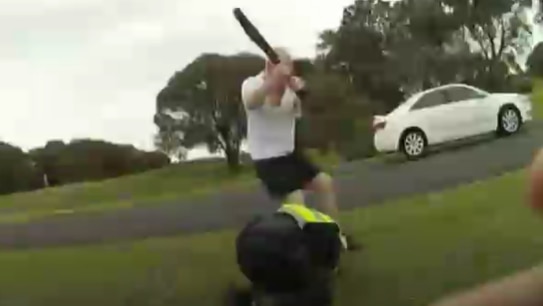
The Warrnambool man, who heard the court heard delusions including that he was the king of Australia and Norway, admitted to using a metal baseball bat to repeatedly strike an officer to the head while he was on the ground.
Victoria Police Chief Commissioner Shane Patton had requested a submission be prepared for the Director of Public Prosecutions requesting an appeal after the “inadequate” sentence.
‘Broken’ system
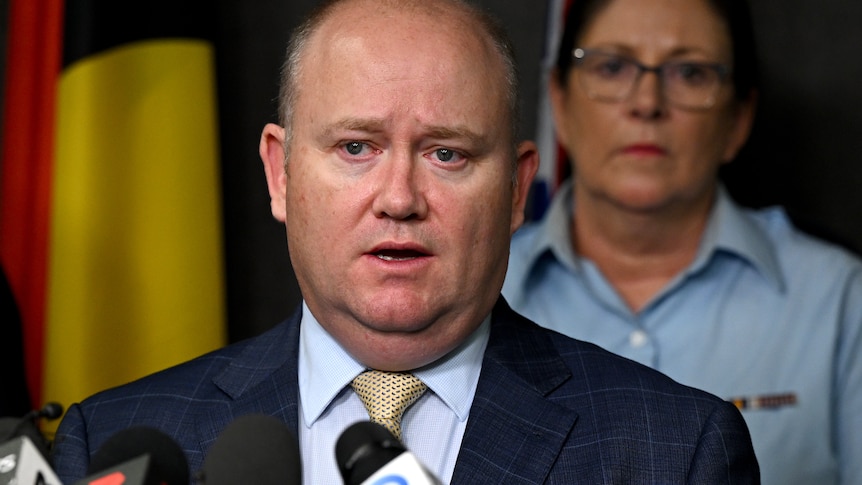
Police Association Victoria secretary Wayne Gatt said the case represented a “dire fault” within the legal system that needed to be addressed.
Wayne Gatt says the government must ensure sentencing is in line with community expectations. (abcnews)
“Governments hold the responsibility of making sure the outcomes from courts, that laws the courts must consider when sentencing, actually deliver the outcomes and deliver community expectations,” he said.
“If that’s not happening, it points to a system that is broken. It points to a system that requires reform.”
A Victorian Government spokesperson said in a statement work was under way to “review and modernize” Victoria’s sentencing laws.
The spokesperson said the Attorney-General had asked the Department of Justice and Community Safety to look at the outcome of the case as part of that work.
Police body-worn camera vision of the assault was shown to the court.(Supplied: County Court of Victoria)
“This work will occur in consultation with police and other emergency services in addition to victims’ groups and others,” the statement said.
Mr Gatt said it was not just an issue for police officers seriously assaulted at work, but for all victims of serious crime.
“That victim of crime could be you, it could be me, it could be anyone in our community,” he said.
“The system needs to change for all.”
Officers traumatized
Police body camera footage played to the court showed two police officers attempting to stop a 15-year-old on the street who was not wearing a mask, which was mandated at the time.
The boy contacted Cleary via walkie-talkie and he appeared moments later and rushed forward at the officers.
He continued the frenzied attack despite attempts to restrain him using a taser.
Clearly attacked the officers with a metal baseball bat covered in a nylon sheath.(Supplied: County Court of Victoria)
One of the victims, Senior Constable Rowan Baldam, told the court he thought he was going to die.
He said he and his colleague had considered leaving their dream job.
Defense lawyer Jonathan Barrera told the court Cleary had severe impaired mental functioning and experienced delusions, that were “active at the time of offending.”
Clearly you have served 300 days in custody since the attack, so you will be eligible for parole in a little more than a year.
No appeal lodged
The Office of Public Prosecutions (OPP) released a statement explaining its decision not to appeal the sentence.
“In light of all the relevant sentencing considerations, there is no reasonable prosect that the Court of Appeal would consider the sentence to be manifestly inadequate,” the statement said.
“Those sentencing considerations include the application of the Verdins principles, the utilitarian value of the plea of guilty and the absence of any prior convictions.”
Clearly had pleaded guilty to assaulting an emergency worker on duty and intentionally causing injury.
The court heard Clearly repeatedly refused to follow police instructions.(Supplied: County Court of Victoria )
sentencing law
Sentencing is dictated by various legal principles found in the 600-page Sentencing Act and case law.
Verdins case law states mental impairment can reduce the offender’s moral culpability for the offense and affect the weight given to just punishment, denunciation and deterrence as purposes of sentencing.
It also justifies a less severe sentence where there is a serious risk of imprisonment could have a significant adverse effect on the offender’s mental health.
Clearly he was sentenced in the County Court of Victoria. (ABC News: Patrick Rocca)
Judges are required to weigh up all factors including the gravity of the crime, the harm to the victims, the offender’s individual circumstances including their prior convictions and prospects of rehabilitation.
Mr Gatt said deterrence had become a “peripheral issue” when it should be a “fundamental principle” in sentencing for serious offences.
He said “any right-minded Victorian” could see Cleary’s sentence did not fit the crime, highlighting a need to change sentencing law.
“[The] advice from the OPP … represents a dire fault within our legal system, not within the OPP,” he said.
“This has to change, but it is beyond the role of the OPP to do that.
Moving “violent young offenders” out of Western Australia’s only youth detention center to a separate unit at an adult prison has “worked”, the WA government says.
Key points:
The government says Banksia Hill is running well following the transfer
Figures show there has been a dramatic rise in self-harm at the facility
A former children’s court president has spoken out about conditions at the center
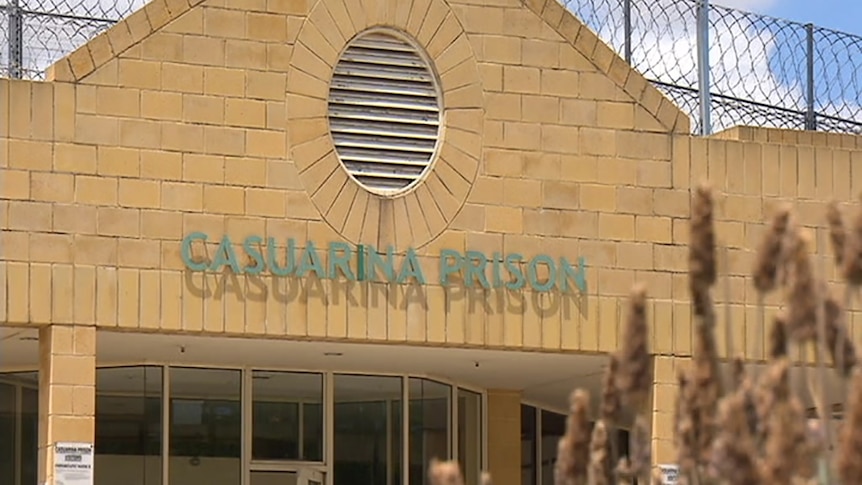
The comments follow widespread criticism of conditions for children being held in detention, in both the existing Banksia Hill Detention Center and an ad hoc facility set up in a section of Casuarina — one of the state’s maximum security male prisons.
Last month the Department of Justice moved 17 children, including one aged 14, to the unit at Casuarina, dubbed “Unit 18.”
Their hands and ankles were reportedly shackled during the move.
The young offenders were moved to Casuarina Prison after they damaged cells at Banksia Hill Detention Centre.(Supplied: Department of Justice)
The department said the move was prompted by widescale damage to cells at Banksia Hill, and detainees had to be relocated so the cells could be repaired.
Reports of self-ham emerge following transfer
There have been subsequent reports of four of those children being taken to hospital after attempted self-harm.
The West Australian has reported four children harmed themselves with shards of broken glass, something the ABC has been unable to immediately verify.
The Department of Justice declined to provide figures on the number of children at Unit 18 that had self-harmed or attempted suicide since they were moved there on June 20.
The department said there were now 16 children inside Unit 18.
Corrective Services Minister Bill Johnston said he would not comment on individual cases, but added the “good news” was that Banksia Hill was now running well.
“While we still have this difficult to manage cohort at Unit 18, for the overall majority of young offenders who are at Banksia Hill, they’re now in a much better environment,” he said.
“It was not functioning to have these young offenders causing violence at Banksia Hill, and so that the other kids who were not being violent, were not acting out, were not getting the services they need because the facility was constantly going into lockdown.”
Improvements in behavior following move
He said there had not been any significant disturbance at Banksia Hill since moving those children on July 20.
And the Minister said some of the young offenders at Unit 18 were starting to improve their behaviour.
“Now, it’s not sustained and I’m not going to comment on individual cases but as we are confident those young offenders can reintegrate into Banksia Hill, we’ll continue to bring them back,” he said.
But he granted the Intensive Supervision Unit (ISU) at Banksia Hill was not “fit for purpose”.
The head of the Perth Children’s Court described Banskia Hill as a “dehumanizing” environment. (Supplied)
“We know we need to improve the ISU so it has a more therapeutic environment,” he said.
“At the moment we have violent and disturbed offenders in ISU, that’s completely unacceptable.”
He said a new unit would be constructed at Banksia Hill to provide a more therapeutic environment.
According to figures provided to WA Parliament during budget estimates, the average hours children at Banksia Hill spent outside their cells each day was 9.37 in 2020-2021, falling to 7.6 hours in 2021-2022.
The exercise yard at Banksia Hill has been likened to a cage.(Supplied)
Self-harm on the rise at Banksia
There has been a dramatic rise in suicide attempts and self-harm incidents in the past three years.
There were two recorded suicide attempts, one of which was serious, and 105 minor self-harm incidents at Banksia Hill in 2020.
That compares with 31 suicide attempts – six of them serious – and 314 minor self-harm incidents in 2021.
In 2022, there had already been 20 suicide attempts and 285 self-harm incidents by June 20.
The longest-serving president of the Children’s Court of WA, retired Judge Denis Reynolds, has told the ABC the transfer of children to a unit at Casuarina represented a “broken” system.
He said the court had lost confidence in the state’s justice system.
Judge says likely figures tip of the iceberg
The former judge said the 20 suicide attempts so far this year likely only represented the type of the iceberg.
“We need to also look at those children who have also gone back into the community,” he told ABC Perth.
“Many of them turned 18 and subsequently committed suicide in the community, or perhaps in an adult prison facility.
He believes in excess of 100 young lives of former Banksia Hill detainees had been lost to suicide in the community in the past two decades.
The WA government has committed $7.5 million to building a crisis care unit at Banksia Hill and an additional $2.6 million will be spent on fencing and “hardening works” for Jasper Unit at Banksia.
Another $3.5 million will be spent on preventing children from being able to climb onto the roofs at the facility, and another $2.5 million on upgrading the CCTV system.
The department told Parliament it had recently developed a new operating philosophy for Banksia Hill that would have a greater emphasis on rehabilitation and therapeutic models.
Recidivism rates for young offenders have been on a downward trend since 2017-18, falling from 58.7 per cent of offenders to 49.2 per cent in 2021-2022.
The head of Resilience NSW says it would be “inappropriate” for him to comment on reports the disaster agency will be scrapped after its response to Lismore’s devastating floods earlier this year
Key points:
Shane Fitzsimmons was appointed to head up the new agency only two years ago
Resilience NSW’s role in the flood response has been examined as part of an independent inquiry
The inquiry’s findings were handed to the Premier five days ago
Resilience NSW was heavily criticized for its response to the floods in the Northern Rivers during February and March and was under review as part of a recent independent flood inquiry.
The inquiry’s recommendations, led by NSW Chief Scientist and Engineer Mary O’Kane and former police commissioner Mick Fuller, were handed to Premier Dominic Perrottet five days ago.
The inquiry was commissioned to investigate the preparation for, causes of and response to the catastrophic floods across NSW earlier this year.
The ABC understands a proposal to dismantle Resilience NSW will now be presented to cabinet.
The Lismore community is hoping the findings of the report will help with flood recovery.(ABC North Coast: Ruby Cornish)
Resilience NSW is headed up by Shane Fitzsimmons, who led the government’s response to the Black Summer bushfires as Commissioner of the NSW Rural Fire Service (NSWRFS).
Mr Fitzsimmons has so far refused to comment on the report or its outcome.
“It would be inappropriate for me to comment at this stage regarding the independent report,” he told the ABC this morning.
“It is a matter for the government to consider the details of the report and make their decisions.
“We have been asked to provide comment and feedback as part of their deliberations.”
Labor MP for Lismore Janelle Saffin said reports of the disaster agency’s dismantling were welcome but speculative.
Ms Saffin was one of those who recommended Resilience NSW be abolished in the wake of the floods.
She has called on Mr Perrottet to release the report as a matter of urgency so the Lismore community can get on with its recovery.
“I submitted a report to the Legislative Council inquiry and the independent inquiry — one of my recommendations was the abolition of Resilience NSW,” she told ABC RN’s Patricia Karvelas.
“[And] replace it with a NSW reconstruction authority akin to the Queensland reconstruction authority, that all people in the field say is the best model.
“It actually causes more trauma by not having it released [the report]I would consider a week is long enough.”
Opposition Leader Chris Minns said he would support the dismantling of the agency, which is within the Department of Premier and Cabinet.
However, the Deputy Mayor of Byron Shire Council, Sarah Ndiaye said Mr Fitzsimmons had shown commitment to helping north coast flood victims.
Ms Ndiaye said she personally worked with the agency during the February and March floods.
“They were there from six in the morning till 10 at night. [They were] incredibly dedicated and I was really saddened to hear that this is what’s come of the inquiry,” she said.
Mr Fitzsimmons has also been shown support by former Transport Minister Andrew Constance who posted a video on social media on Thursday night.
“For goodness sake. This is a bloke who saved lives, was there for my community and our state during Black Summer, and I think he deserves a little bit better than these guys.” Mr Constance said.
Trapped in a never-ending cycle of back pain and locked in a compensation battle with a government department that had placed her under surveillance, Jacqui Lambie lost hope completely.
She wrote her sons a farewell letter each and tried to take her own life.
Key points:
Senator Lambie joined the Army as an 18-year-old and was eventually medically discharged after a back injury
The discharge began a six-year battle with the Department of Veterans’ Affairs for compensation
Senator Lambie has been a vocal critic of the department during her political career and a key campaigner for the establishment of the royal commission
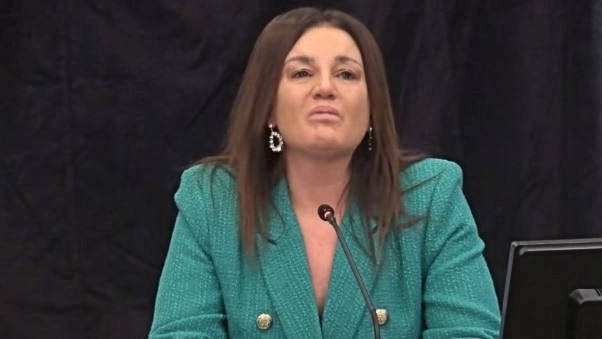
“There was no point. There was nothing left of me after that. I had no fight left in me,” the independent senator told a Hobart hearing of the Royal Commission into Defense and Veteran Suicide.
But instead of ending her life, she said the suicide attempt played a role in restarting it, with the Department of Veterans’ Affairs finally giving her the intense psychological care she needed.
It began a slow journey of rehabilitation, and a desire to do what she could to make the lives of veterans better, that eventually led to her being elected to Federal Parliament in 2014.
“I made a deal with God: if you’d just give me a second chance at life, I’d fight like hell for the veterans because I could understand what was going on and they weren’t getting a fair deal,” she said.
“From where I was to where I am today I’m very grateful that God has given me a second chance at life and that I have somehow been able to swing that around.”
Army ‘a life-saver’
Senator Lambie joined the Army as an 18-year-old in 1989.
Frequently in trouble, her family was supportive of her enlistment.
Jacqui Lambie was 18 when she joined the Army.(Facebook: Jacqui Lambie)
“I was seen to be around a bad group of people at that point of time who were bad influences, so for me, it was probably a life-saver that I had the opportunity to serve my country,” she said.
She told the commission she initially thrived in the environment, but it was not long before she was thrown into a curveball.
Without the knowledge of her or her superiors, she was pregnant, with the Army pushing to end her military career before it even really began.
“What they wanted me to do was discharge immediately and get going, but I did not want to discharge because I didn’t want to end up back in public housing with a child,” she said.
With the help of a lawyer, the Army relented, and Senator Lambie completed her basic training.
Her career almost ended again eight years later when she was charged following an incident.
“Quite frankly, after I got charged for basically assault, I should have been thrown out of the military and they did not do that for me,” she said.
“They gave me a second chance and I will always be very, very grateful for having that second chance.”
Space to play or pause, M to mute, left and right arrows to seek, up and down arrows for volume.
Jacqui Lambie in tears while thanking her sons, who ‘paid a heavy price’ while she deteriorated.
‘I just couldn’t take it anymore’
She was sent on a compassionate posting to Devonport, in Tasmania’s north-west.
It was while she was based there, but on an infantry training course in Puckapunyal, that she suffered the first of what was to become a debilitating back injury.
“When I went to get out of bed, I could not get out of bed, I could not move,” she said.
Jacqui Lambie (left) pictured during her military service.(Facebook: Jacqui Lambie)
It started a two-year cycle of physiotherapy, painkillers and hiding her pain.
Two days before she was set to fly out to East Timor on deployment, her back gave in.
“For me that was it, I just couldn’t take it anymore,” she said.
“I just ended up flat on the floor and then that was pretty much the end for me once that happened.”
She was medically downgraded and sent to specialists for a solution, but her back would not recover.
Eventually, she was medically discharged in 2000.
Senator Jacqui Lambie hoped the commission would lead to lasting change for veterans.(Supplied: Royal Commission into Defense and Veteran Suicide)
The discharge began a six-year battle with the Department of Veterans’ Affairs for compensation, as well as debilitating pain and depression.
“The pain itself was completely out of control and it set into a pattern that once that set in, I had just about given up,” she said.
She told the commission that the Department of Veterans’ Affairs initially deemed her not unfit enough to receive an allowance on top of her disability pension.
Government surveillance from bush behind her house
She engaged a lawyer after being defeated by the process and initially had a series of small victories before a visit to a shopping center changed her life.
Senator Lambie was spotted carrying two shopping bags walking out of a two-dollar shop.
She told the commission the Department of Veterans’ Affairs and Commonwealth Rehabilitation Services decided to put her under surveillance after suspicions she was faking her injuries.
Representatives from the rehabilitation service filmed from a bush near her back fence “with a camera lens coming over that fence”, watching her friends and children, she said.
They captured footage of Senator Lambie over several weeks, taking footage of her getting changed, and also interviewed people who knew her.
“There was an occasion where we were getting changed [inside her home] and I had my girlfriends there, we must have been trying on tops — they did film that,” she said.
“I found that terribly intrusive and quite frankly there was no reason to do that video surveillance.”
That resentment over the surveillance led to Senator Lambie failing to show up to a series of meetings with Commonwealth Rehabilitation Services and the Department of Veterans’ Affairs, and the cancellation of her benefits.
The fight for compensation eventually ended in 2006 after the department accepted Senator Lambie was entitled to compensation.
She accessed medical treatment and her back injury slowly improved, allowing her to work in the office of Tasmanian Labor Senator Nick Sherry.
Senator Lambie urged veterans to come forward and share their story.(ABC News: Luke Bowden )
Life ‘spiraled out of control’
But she told the commission a setback proved devastating.
“Life completely and utterly spiraled out of control because I went back to pre-days where there was just so much pain and by then I’d lost all hope,” she said.
Senator Lambie said her mental health deteriorated to the point where she tried to take her own life.
“I found it difficult to be able to give a reason… to have reason to continue to live, even for the sake of my sons because I believed I was doing them more damage than good,” she said.
Senator Lambie finally received the psychological help she needed and started to rebuild her life, but said her “10 years of hell” took a huge toll on her family, especially her youngest son.
“He has really struggled during his life and… the reason that is because of what he had to go through with me,” she said.
Senator Lambie has been a vocal critic of the Department of Veterans’ Affairs during her political career, and a key campaigner for the establishment of the royal commission.
She paid tribute to the “peacemakers and peacekeepers” who helped make the commission happen, and hoped it would lead to lasting change for veterans.
“If you do not come forward now and tell your stories, even if you do not want to do it for yourselves, do it for your mates because there is nothing else if we do not fix it this time,” she said.
“I’m asking you to find the courage, whether you are serving, or whether you are not, you need to come forward because this is it.”
A Victorian man has been jailed for 25 years over the stabbing murder of his partner in front of their children.
WARNING: Aboriginal and Torres Strait Islander readers are advised that the following article contains the name and images of a person who has died.
Key points:
Noeline Dalzell’s three children tried to shield their mother during the fatal attack
The court heard James Fairhall had breached an intervention order in the months before the murder
Fairhall will be eligible for parole in 16 years
Noeline Dalzell died on a Seaford driveway, in Melbourne’s south-east, in 2020.
James Leonard Fairhall, her partner and the children’s father, was today sentenced in the Supreme Court of Victoria to 25 years in prison for her murder.
The 47-year-old was found guilty by a jury in December last year after a trial lasting nearly a fortnight.
He had pleaded guilty to the lesser charge of manslaughter, which prosecutors rejected.
“You stabbed Noeline in front of your three children while they tried to deter you and protect their mother,” the Supreme Court’s Justice Jane Dixon told Fairhall in his sentencing hearing.
He was given a non-parole period of 18.6 years. With 913 days already served, he will be eligible for parole in 16 years.
On February 4, 2020, an argument broke out in the family home between Ms Dalzell and Fairhall after he learned she was seeing another man.
The couple were separated at the time, but Fairhall had been back sleeping on the couch at the Seaford home for two months.
That was despite an intervention order issued in 2018 banning him from being there or even contacting Ms Dalzell.
He had breached that intervention order previously, in what police described as incidents of family violence.
Son pushed father away in bid to protect his mother, judge says
On the day of her death, their children, aged 13, 15 and 16 at the time, arrived home from high school to find their parents arguing.
Their father seemed drunk and angry, they testified.
He became progressively more aggressive, following Ms Dalzell around the house carrying a pair of scissors.
Those scissors were eventually discarded and replaced by a big kitchen knife.
Her loved ones say Noeline Dalzell was an angel with a ‘cheeky smile’.(Supplied)
Ms Dalzell took refuge with her children in the bedroom of her only son as her kids screamed at their dad to stop.
“You threatened to kill Noeline and tried to get past your children to get at her,” Justice Dixon said to Fairhall during his sentencing.
“Your son pushed you to try and keep you away.
“Suddenly you reached over the top of your children and stabbed Noeline once to the left side of the neck with the knife you were wielding.”
Neighbor showed ‘considerable courage’ in bid to save Ms Dalzell’s life
In Ms Dalzell’s final moments she attempted to flag down help from neighbours, who tried unsuccessfully to save her life.
Despite initially using a second knife to threaten a neighbor who tried to help, Fairhall did eventually assist with first aid, which Justice Dixon considered in deciding the length of his sentence.
“[The neighbour] was about to call triple-0, when you approached him brandishing the second knife and told him not to call the cops,” Justice Dixon said.
“I have retreated into his house and locked the front door.
“Minutes later, displaying considerable courage, he went back outside to offer help in response to the unfolding commotion.”
But it was too late.
Noeline was 49.
Noeline Dalzell is remembered as a great person and mother.(Supplied)
Fairhall had a criminal history of violence and had floated family violence intervention orders in the past.
Justice Dixon said the attack was not spontaneous.
“You were following Noeline around the house before the incident and pursued her into the bedroom, before reaching past and over your children to stab her,” she said.
She noted to ongoing impact the murder had on those children.
“Three young lives forever changed by your despicable violence,” Justice Dixon told the convicted murderer.
“There is an enormous hole left in their lives by the loss of their mother.”
At her funeral in 2020, Ms Dalzell was remembered as a proud mother and a passionate Essendon supporter.
“She was a great person, she was a great mum to these kids,” her sister-in-law Jenny Dalzell told the ABC in 2020.
“What happened to her was just tragic, it shouldn’t have happened.”
Their parents did not approve of the match, so the young couple moved first to England, where Raffel and one of his two sisters were born, then to Canada, which was too cold for a family from the tropics. In 1972, they moved to Sydney. Six months after they arrived, his father died of a heart attack. Raffel’s mother was alone in a foreign land with three children.
They lived in Carlingford, in the city’s north-west, where Raffel attended the local high school. “After my sister left, I was the only non-white person in the whole school,” he remembers. On the school’s debating team, he argued against his future wife, Cailey. The children would say their Buddhist prayers at night, and when Wat Buddharangsee opened in the inner west in 1975, they would attend on special days, such as the anniversary of his father’s death.
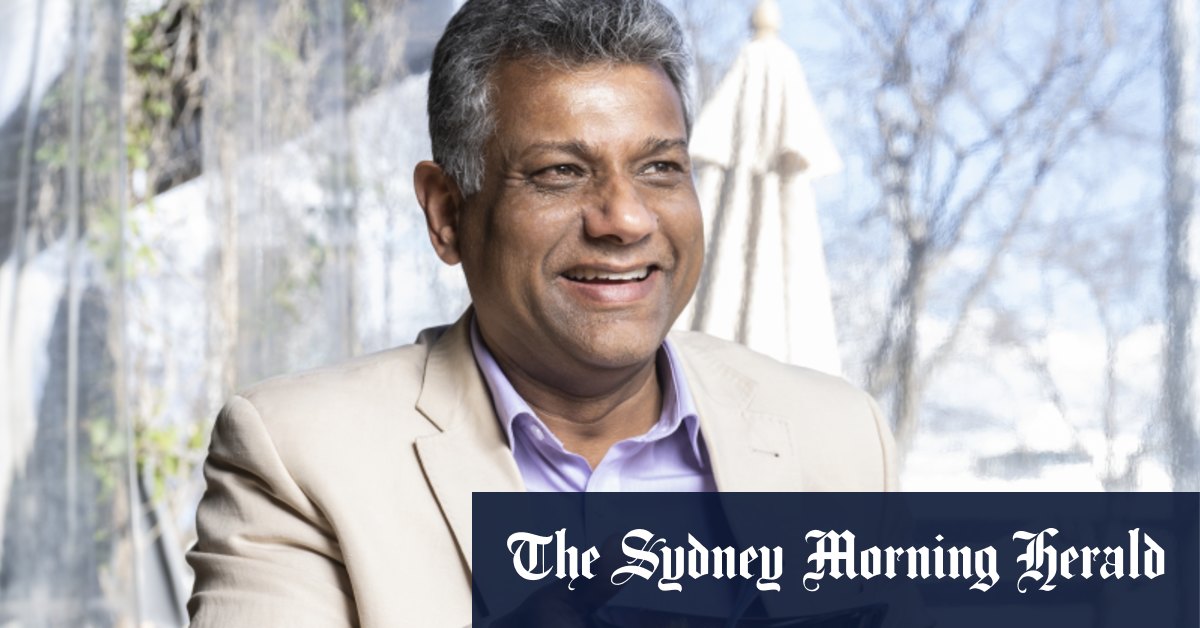
Raffel was elected as Sydney’s Anglican leader a little over a year ago,Credit:SMH
He remembers his mother as a woman of deep integrity, compassion and independence. “[She had] a Buddhist sense of caring for the poor,” he says. She would throw parties for children at what was then known as the Royal Institute for Deaf and Blind Children, an act of charity that would accrue merit for her late husband. “The Buddhist idea is that you can do good acts, and then commit the good karma to that person,” Raffel says. “That was her expression of her faith from her.”
When Raffel was in his third year of an arts-law degree at Sydney University he decided to deepen his understanding of his faith. He pored over books in the temple library. I have meditated. And he pondered the metaphysics of rebirth. “I was very committed to the program, as it were… the shape of the ethics around wisdom and compassion and the eightfold path.”
That summer, he went on holiday with friends. One, medical student Andrew Shead – now the head of Old Testament and Hebrew at Moore College – told him that as a Christian, he’d surrendered control of his life from him to Jesus. The idea “startled” Raffel. “I’d never heard anybody say anything like that. As a Buddhist, I was trying to cultivate a kind of control over my aspirations and ambitions and motivations, not to mention relationships.”
Shead gave him two gospels to read. Raffel read Mark the next day. It’s the shortest gospel, and the most action packed. Weeks passed. Then, one restless night when heat kept him awake, I decided to keep his promise from him to Shead and read the other.
Lunch at Spiced by Billu’s: (clockwise from top left) garlic naan, basmati rice, kadhai chicken, dal makhani, Delhi goat curry, spicy mango chutney, and eggplant masala (clockwise from top left) Credit:Louie Douvis
John’s is the most poetic gospel. It begins with a sentence – “In the beginning was the Word, and the Word was with God, and the Word was God” – that reminded Raffel of a fairytale. I have kept reading. “You get a very strong sense of [Jesus’] personality. You don’t get that when you read Buddhist scripture… [Jesus is] a very compelling character.” The message was that Jesus divides. It made Raffel think about what side of the divide he was on.
That hot, summer night, he became a Christian. Believers would say the Holy Spirit was at work. “I just thought, well, this is what I have to do. I’m going to follow Jesus.”
The arrival of goat and chicken curries, eggplant masala, dal makhani, garlic naan and mango chutney jolt us back to the present where, in Sydney, seven Manly players are making headlines by refusing to wear a rainbow pride jersey due to their religion and, on the other side of the world, Anglican bishops are attending their once-in-a-decade conference in Lambeth, England, to discuss challenges facing the church such as disagreement about same-sex marriage.
Put simply, the fault line is between progressive Anglicans – most of whom are in the Northern Hemisphere and parts of Australia – and socially and theologically conservative communities in the global south. Unlike Catholics, Anglicans have no central, papal authority. It’s more like a family. And like many families, they can disagree and become estranged, to the point where some no longer turn up at the reunion.
Kanishka Raffel (third from right) at an Easter Sunday service before he became archbishop.Credit:Kate Geraghty
Sydney did not attend Lambeth, and has not been since the late 1990s. On women and same-sex marriage, Sydney’s Anglicans align firmly with the south. “They are heroic, joyful churches,” says Raffel. The diocese is a member of GAFCON (the Global Anglican Future Conference), which is dominated by African countries and seeks to guard and proclaim “the unchanging truth in a changing world”. As the divisions between Anglicans over same-sex marriage and women grow, some believe the Australian church will become irrevocably divided and formally split.
Critics argue the Sydney crew takes the bible too literally. Raffel disagrees. He does not believe it’s magic, and that sticking a pin in a random verse will provide an answer to the day’s problem. But he does believe that, when the Old Testament, the gospels, and the epistles are consistent on an issue, such as marriage being between a man and woman, then that’s that.
“That teaching… has been affirmed,” he says. “Jesus is kind of a cultural counter, and he was in his own day. And I think it’s right to say the Christians who’ve made the biggest impact are probably the ones who are willing to stick with Jesus. Even when that was culturally awkward.” He knows many Christians find the position hurtful. He “regrets and laments” their pain.
The bill.Credit:SMH
Most of the time, people’s religious views have little impact – beyond offense – on those who do not share them. But where church and state collide, there is increasing tension. The issue has flared in parliament, and in sport. It is festering in Anglican schools, where – particularly in socially progressive parts of the city, such as the eastern suburbs – the views of parents are increasingly at odds with those of the diocese.
Raffel says Anglican schools welcome feedback from parents. But “they are not parent-controlled schools,” he says. “We do think the heads of Anglican schools should be able to affirm Anglican faith. That’s only natural, really.” The church sees its schools as a way to “share our story”, he says. “We don’t compel people to believe in it.”
At the most recent national Synod, bishops vetoed what would have otherwise been a successful motion by Sydney to affirm that marriage is between a man and a woman. It strengthened fears of a formal split. Raffel describes the tensions in the church as painful. “But we are talking about what it means to be faithful to Jesus,” he says. “And if it is the case that there is no agreement about what faithfulness looks like, then there will be a very sad kind of distancing. To some extent, there is already.”
We’ve finished eating. I ask Raffel if he enjoys being archbishop. I laugh. It’s a learning curve, a privilege, humbling. “There are all kinds of tensions and challenges. As you know, I’m but a man. I feel the weight and pressure.”
The Morning Edition newsletter is our guide to the day’s most important and interesting stories, analysis and insights. Sign up here.
Customers at Bakers Delight stores may soon face warnings about sexually harassing staff following a workplace discrimination investigation.
Social media or in-store communication about appropriate customer behavior is being weighed up by the franchise chain as part of an overhaul of practices.
The move comes after an investigation by the Victorian Equal Opportunity and Human Rights Commission into whether Bakers Delight was following the state’s laws that give employers a positive duty to stop sexual harassment in workplaces.
Bakers Delight is overhauling its workplace safety policies and is considering warnings against sexually harassing staff. (Supplied)
Bosses say while the inquiry related to only Victorian legislation, the company will look at improving anti-sexual harassment training for staff and potential franchisees across Australia.
The commission said its investigation was not triggered by a specific complaint against Bakers Delight.
It selected the company because the retail sector is a high-risk industry for sexual harassment.
The federal government has pledged a major overhaul of workplace safety laws across Australia. (9News)
The commission reported Bakers Delight lacked a central register to log complaints and did not have a sexual harassment prevention plan.
Staff had not been trained in how to stop sexual harassment.
Following the commission’s findings, Bakers Delight said it was considering a shake-up of its messaging in stores or on social media to meet our obligations under the Equal Opportunity Act.
“Our bakeries should be a happy and safe environment for everyone to work in, so partnering with the commission on this investigation has allowed us to identify a number proactive measures we can implement right now to ensure this continues to be the case well into the future ,” joint CEO Elise Gillespie said.
“We all have a responsibility for preventing sexual harassment in the workplace and we are confident the recommendations in this report will go a long way towards helping other Victorian retail and franchise businesses to comply with their positive duty to create safer, more respectful workplaces.”
The positive duty legislation is unique to Victoria but the federal government has pledged to adopt it as part of a national overhaul of workplace safety.
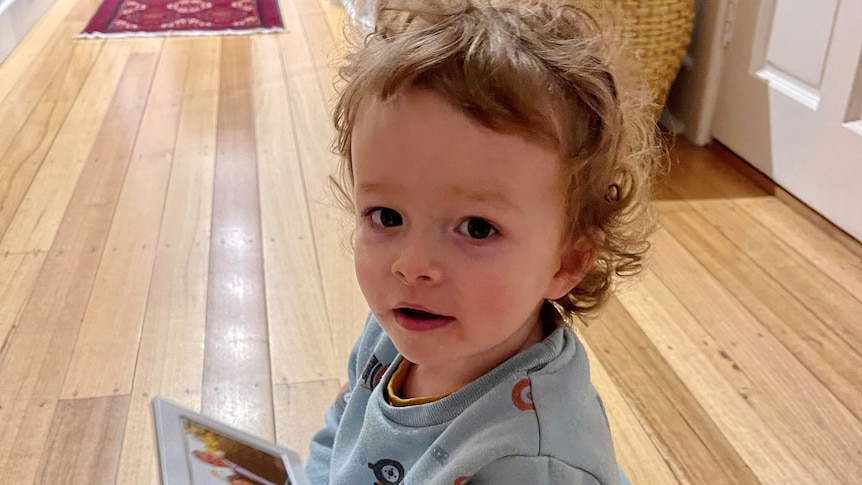
A Melbourne mother is seeking two “good Samaritans” who helped her 20-month-old son get urgent medical care after he had a seizure while she was driving.
Key points:
An unknown couple helped Madeleine Crawford get to the hospital after her son had a seizure while she was driving
Ms Crawford did not get the couple’s details and wants to find them to show her gratitude
She believes they were in their 50s and drove a small black sedan
Madeleine Crawford was driving her son Stirling to the Royal Children’s Hospital emergency department on Wednesday, August 3 about 1:50pm.
She told Virginia Trioli on ABC Radio Melbourne her son had been off food and drink for a day and a half, had a fever, chesty cough and was struggling to breathe.
“The GP had done a thorough examination and said sometimes even though you can’t treat the underlying virus, they need help with hydration and breathing,” Ms Crawford said.
“He recommended we get him checked by the pediatricians at the Royal Children’s Hospital.”
But while they were stopped at Churchill Ave waiting to turn right onto Ballarat Road in Maidstone, Ms Crawford noticed her son having a seizure in the rear-view mirror.
“I looked over my shoulder … eyes opening, closing, and rolling, legs jerking and convulsing — everything,” she said.
“It was very distressing. In that moment I thought I could lose him.”
‘Good Samaritans’ arrive to help
Ms Crawford jumped out of the car and got Stirling from the back seat.
Space to play or pause, M to mute, left and right arrows to seek, up and down arrows for volume.
Melbourne mum searches for ‘good Samaritans’ who came to her aid when her son had a seizure
She cleared out her airways while “gesturing madly” at the traffic behind her.
Stirling then vomited on her and went limp.
“I just stepped onto the median strip and was just holding him not knowing really what to do,” Ms Crawford said.
She asked a man in the car behind hers to call an ambulance, but then a woman approached her.
“I explained I was already on the way to the hospital, but my boy had a seizure, and I didn’t want to put him down,” she told ABC Radio Melbourne.
Ms Crawford wants to thank the couple who came to her aid.(Supplied: Madeleine Crawford)
The woman then suggested she could sit in the back seat holding Stirling while Ms Crawford drove to the hospital.
The woman’s partner escorted them in his own car, driving in front with his hazard lights on.
They made it to Footscray hospital where Ms Crawford ran inside, and Stirling was immediately triaged by the nurses.
“I could feel that moment slipping where I wouldn’t be able to get their details because my focus was obviously on my son,” she said.
“But I just looked at them and said, ‘Thank you so much, I’m forever in your debt’.
“And that’s where it was left.”
Wants to ‘thank them properly’
Ms Crawford said Stirling has returned home from hospital and is much better.
He was diagnosed with respiratory syncytial virus, or RSV, which is rising among children across Australia.
But she cannot help but think about the “good Samaritans” who came to her aid.
She is calling out to anyone who may know the couple, who she believes are in their 50s, of Asian descent and driving a small black sedan, to get in touch.
“Their quick, clear thinking and calm demeanour helped ensure that I was able to get my son the medical attention he needed as soon as possible,” Ms Crawford said
“My husband and I are forever in their debt and want to be able to thank them properly.”