Richard Marles isn’t the only Labor frontbencher doing the half rounds this morning.
Health Minister Mark Butler was on the ABC’s RN Breakfast earlier, explaining why it took a while for Australia to announce it had acquired monkeypox vaccines.
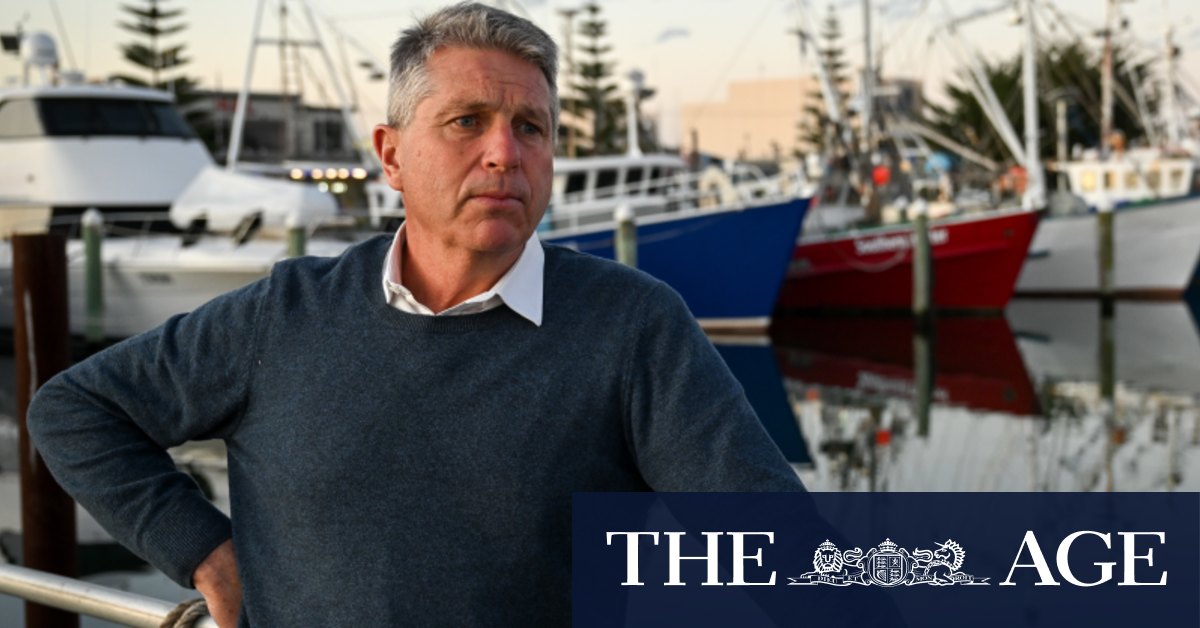
Minister for Health and Aged Care Mark Butler. Credit:alex ellinghausen
More than 20,000 monkeypox vaccines (from a total of 450,000 secured doses) will arrive in Australia in the next few days.
“These were highly difficult to get hold of, as you [can] imagine,” Butler said.
“Monkeypox has only ever really been endemic in countries in Africa. And in the last 13 weeks we’ve seen it spread to 76 other countries, particularly in North America, and the UK and Europe. But we have 58 cases here in Australia as well.
loading
“So there’s been a burst of activity by governments to get their hands on the newest third-generation vaccine, which is the one we’ve got hold of. We’re now only one of a very small list of countries that has supplies coming to us in 2022.
“We’ve been talking for weeks now with state governments about how they’d roll them out.”
The health minister added that another 100,000 doses would arrive in Australia in the “next couple of months”.
Reeves said even if the letters prompted just 30 people to rent their houses long-term, it would be worthwhile.
He said the council had no power to compel property owners, but he hoped the letters, to go out in the coming weeks, would appeal to their sense of community obligation.
The problem is particularly severe on the Bass Coast, which includes Phillip Island, with more than 10,000 properties vacant on census night, accounting for just over 39 per cent of the total.
Bass Coast Shire chief executive Ali Wastie said there was plenty of housing in the municipality, but many people either leased houses on short-stay sites or left them completely vacant.
She also hoped the letters would encourage non-resident property owners in the shire to act in the interests of the local community.
“They may not be aware that businesses can’t get staff because there’s no housing for them to live in,” she said.
Bass Coast ratepayers are expected to receive the letters next week. The letters will ask property owners to put their homes on the rental market for 12 to 24 months.
“There are many reasons houses remain unoccupied, including a switch from permanent rental to short-term rentals, but this potential under-utilisation presents a housing opportunity,” the letter says. “Our communities will not thrive unless they can sustain a permanent population.”
Gippsland Lakes Complete Health chief executive Anne-Maree Kaser moved to Lakes Entrance last year and struggled to find a rental property.
“Here I am a professional woman, good income, great history,” she says. “I couldn’t even get a look-in.”
After three months, she found a house to rent through a colleague, but that agreement ends in December and Kaser dreads having to find another place to live.
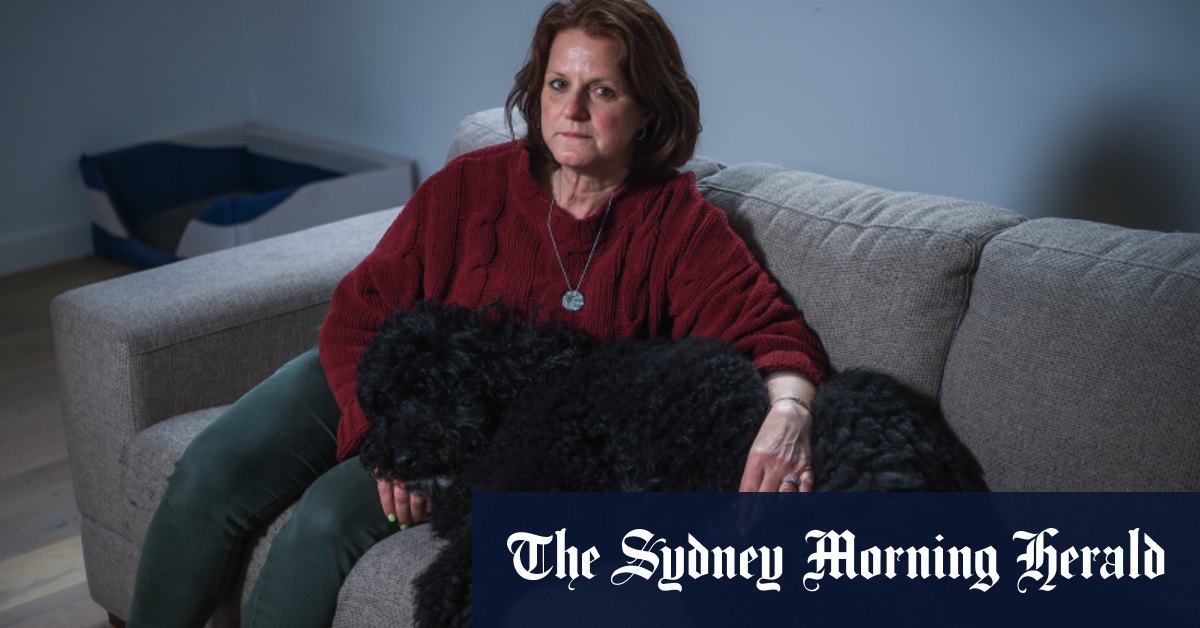
Anne-Maree Kaser struggled to find a rental property when she moved to Lakes Entrance despite earning a good income.Credit:Paul Jeffers
In Lakes Entrance and surrounding areas, almost 24 per cent of private dwellings were unoccupied on census night, equating to almost 1450 properties.
Kaser said her service desperately needed more allied health professionals and general practitioners. But several times, she said, great candidates were unable to take the jobs because they could not find anywhere to live.
She said other regional health services were reporting similar problems.
Many businesses along the main drag of Lakes Entrance are short-staffed and some have notices plastered in their windows seeking workers.
Matt O’Donnell, who owns the café, convention center and catering business Albert & Co, said he was about 15 workers short.
Matt O’Donnell has had to restrict operating hours because his hospitality business is short-staffed. Credit:eddie jim
O’Donnell has slashed operating hours due to staff shortages. He has advertised for staff in Melbourne and interstate – and even considered finding accommodation for workers himself.
“But there’s nowhere around here we could do that,” he said.
Local hairdressing salon manager Jacqui McInnes said she could easily hire another two hairdressers but could not find workers.
“I don’t know why,” she said.
McInnes said the town remained popular with tourists, but businesses could not meet the demand.
Lakes Entrance hair salon manager Jacqui McInnes said she could easily hire another two workers. Credit:eddie jim
“At Christmas when the town’s full, these businesses are closing at 7 o’clock at night.”
Tourism industry groups have asked the state government to follow the lead of other states and cap the number of days owners can lease their properties on short-stay sites, in an effort to encourage more long-term rentals.
The state government confirmed it would review short-stay accommodation laws and investigate whether the regulations needed further amendments.
Elders Lakes Main Entrance Rachael Newman said her real estate agency received at least two “walk-ins” every day, in addition to phone calls with people seeking rental properties.
Newman said houses that did become available were snapped up quickly and rent typically started at $380 a week.
The latest Domain data revealed rents have soared by up to 20 per cent in some regional towns over the past year.
And census figures showed that 36.2 per cent of renters in Lakes Entrance were making rental payments greater than 30 per cent of their household income, putting them in rental stress.
Newman has worked in local real estate for nine years and said the relatively affordable rental market had vanished as “desperate” buyers pounced on properties during the depths of lockdown.
Business operators and real estate agents say they have never seen the rental market so tight in Lakes Entrance. Credit:eddie jim
“Now we’re seeing people who purchased holiday homes less than 12 months later not using them,” she said. “A lot of them are sitting vacant.”
This week, Airbnb country manager for Australia and New Zealand Susan Wheeldon said the company wanted to grow the “tourism pie” for everyone by making travel more accessible, arguing additional tourists meant more money for businesses that would help them hire local workers.
“Short-term rentals also provide a way for everyday people to stay afloat and combat rising costs of living and growing mortgage repayments,” she said.
The Surf Coast Shire has asked the state government to introduce a statewide scheme to provide incentives for second property and holiday home owners to rent their houses to long-term tenants.
The Morning Edition newsletter is our guide to the day’s most important and interesting stories, analysis and insights. Sign up here.
Pottery, paintings and pandanus mats detailing stories from First Nations artists across the country have drawn large crowds at the Darwin Aboriginal Art Fair (DAAF).
A major event for art lovers around Australia, the fair is held every year at the Darwin Convention Center as a way for talented Indigenous artists to bring their unique pieces to one central location and share their stories with the public.
This year’s event is expected to bring in millions of dollars for the 78 art centers represented at the fair, delivering an economic boost to remote communities around the country.
Hand-dyed fabrics from Anindilyakwa Arts. (ABC News: Peter Garnish)
DAAF attracted crowds over the weekend. (ABC News: Peter Garnish)
DAAF chair Franchesca Cubillo said arts and culture in remote regions were the “lifeblood of any community”.
“They are the place where opportunities flourish, be it textile design and fashion, or artists sharing the rich history of bark painting or western desert painting,” she said.
Franchesca Cubillo is a Larrakia, Bardi, Wardaman and Yanuwa woman.(ABC News: Peter Garnish)
Ceramics by Hermannsburg Potters — a crowd favourite.(ABC News: Peter Garnish)
But the fair was not just a chance to “share our culture as a gift to the nation”, Ms Cubillo said.
It also allowed artists to earn a wage.
The Darwin Aboriginal Art Fair (DAAF) has seen $11 million in sales over the past five years.(ABC News: Peter Garnish)
Attendees admired the intricacy of desert styles.(ABC News: Peter Garnish)
“They’re able to secure an economic return, and that will allow that next generation of First Nations people to feel empowered — to actually start to think about, ‘What might a business look like, operating out of my community?'” she said.
“We’ve got remarkable artists working out of art centres, but what if we had a modeling agency operating out at Gapuwiyak, for those remarkable young men who were a part of our Country to Couture [fashion show]?”
A woven turtle sculpture from Erub Arts.(ABC News: Peter Garnish)
Art fairs provide much-needed economic opportunities in remote communities.(ABC News: Peter Garnish)
Knowledge shared between cultures and generations
For Karen Rogers, an artist from Ngukurr Arts Centre, the fair was also a chance to pass down skills to family.
“We’ve got my son at the moment, just teaching him how to do lino printing, printing on material,” she said.
“He’s been doing a good job, like framing canvas. I reckon art centers can offer a lot of things for young people, career pathways.”
Karen Rogers, an artist from Ngukurr Arts.(ABC News: Peter Garnish)
Pandanus mats from East Arnhem Land.(ABC News: Peter Garnish)
Ms Rogers said it was fascinating learning about other Indigenous cultures through art, and finding common links.
“This one from Torres Strait, I was really interested because I speak Kriol and they speak different Kriol,” she said.
“They’ve got a dictionary. It was amazing seeing it, because they speak a little bit different to our way of speaking. It was inspiring.”
The Abai Sagulau Buai Dance Team from Badu Island in the Torres Strait performing at the fair. (ABC News: Peter Garnish)
Pandanus jewelery is always popular with visitors.(ABC News: Peter Garnish)
Diversity on display
From the tropics to the desert, each art center brought its own languages, styles and practices to the floor of the convention centre.
Lex Namponan, from Wik and Kugu Arts Centre, said his father was a major source of inspiration.
“We [saw] our dad when we were 14, 15 doing sculptures and bark painting and everything,” he said.
Lex Namponan, a sculptor with Wik and Kugu Arts. (ABC News: Peter Garnish)
“As we were growing [up] … it gave us the idea for what we’re doing, and now we’re here, traveling around with all our colleagues.
“I’ve got a big show coming up from this moment, back to home, going out country collecting timbers – milky pine, clays, white clay, red clay – from the ground.”
The art fair runs until 4pm today.
Lex Namponan’s dingo sculptures.(ABC News: Peter Garnish)
Melbourne university student Grace has two gay dads and one mum.
Growing up in this “modern Australian family”, she spends one week with her dads, Anthony and Chris, and the next with her mum, Jane.
“Grace is the real benefit here,” Anthony tells 7Life.
For more Parenting related news and videos check out Parenting >>
“She gets each of us with 100 per cent of our batteries charged.”
While on paper it may seem like the parenting trio have nothing but differences, they are in fact the very best of friends.
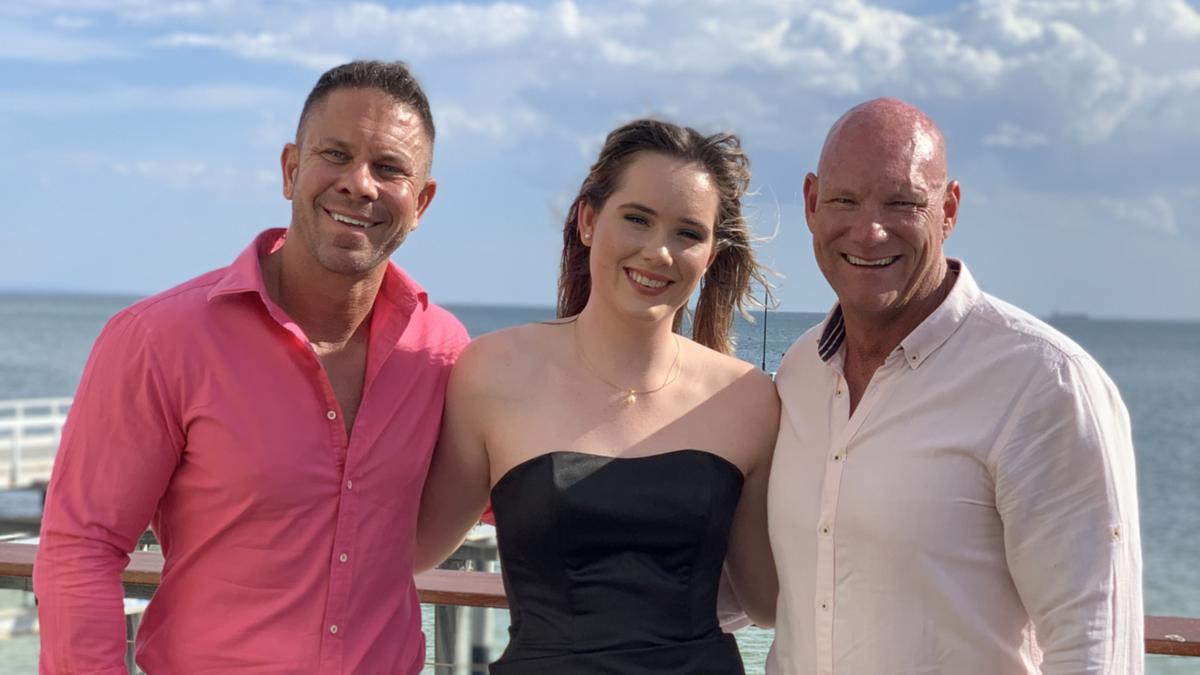
Grace (centre right) with her two dads Anthony (left) and Chris (right) and her mum Jane (centre left). Credit: Supplied
“Every birthday, every Christmas, every crisis – we are all here for Grace,” Chris smiles.
It takes a village
After 14 years of marriage, Anthony and Jane divorced amicably.
With their beloved Grace to consider, the pair vowed to put their marriage breakdown aside and make their daughter their top priority.
“Jane and I made the decision that, no matter what our feelings were, Grace would always come first,” Anthony says.
So, their daughter spent half her time with her mum and the other half with her dad – and all the while, Jane and Anthony remained close friends.
Grace counts both of her parents as “biological.” Credit: Supplied
But two years later, Anthony met Chris at the gym – the romantic spark catching both men off guard.
Neither Chris nor Anthony was openly gay.
“I was confused for 30 years,” Chris shares about his sexuality.
Anthony was also coming to terms with his new-found attraction to Chris.
The couple entered a romantic relationship and both slowly came out to their nearest and dearest.
Anthony recalls the moment he nervously introduced his new boyfriend to his ex-wife.
“Jane welcomed Chris with open arms. She instantly brought him into the fold,” he says.
Anthony and Chris have just launched a skincare line to help banish teen bullying. Credit: Supplied
Chris also remembers the angst of introducing his male partner to his large Greek family.
“I remember my first Christmas, my family were just coming to terms with me coming out just a few months before,” he explains.
“I was like, ‘This is my boyfriend Anthony, his daughter Grace, oh and his ex-wife, Jane’.”
Despite their apprehension, Chris and Anthony were warmly embraced – and Chris was instantly welcomed as a co-parent to Grace.
For her part, the youngster beamed with delight over her “two dads.”
“Grace and I would strut down the aisles of the supermarket like supermodels,” Chris smiles.
Anthony adds: “There was so much change for Grace. First mum and dad split up and now dad has a new boyfriend. It was a lot.”
Like any family, the blended unit had ups and downs – with Grace often trying to sway the parenting situation in her favour.
“There was a lot of, ‘Well, mum said I could do that’ sort of thing,” Anthony says.
“But because we are so close, I would just call up Jane and ask her.”
Before long, Grace understood the parenting dynamic – and was proud to claim Chris as her “other” father.
Two dads, one mum
For her early education, the parents opted to place her in a “progressive school” where other children also engendered diverse family units.
“It was great. She wasn’t the only one at school with two gay dads,” Anthony says.
But as Grace grew older, she began meeting people outside her “bubble” who had conflicting opinions on her home-life situation.
Anthony and Chris have been together for 13 years. Credit: Supplied
“We realized that this sort of support doesn’t exist all over Australia, and even all over the world,” Anthony says.
severe bullying
Seeing Grace come home with questions about the family unit deeply resonated with her two dads.
Having kept their sexuality secret for so long, for fear of ridicule and rejection, both men had experienced bullying growing up.
“Chris was teased because he was fat, I was teased because I was too skinny,” Anthony reveals, adding he endured three years of name calling because he wore a back brace for scoliosis.
But for Chris, the bullying went far deeper.
Every day at lunch, school bullies would consistently throw cruel jibes, including branding him fat and a nerd.
The constant taunting built ever up in Chris’ mind and, as a teenager, he became suicidal.
The unique family unit are hoping their skincare line can raise awareness for differences. Credit: Supplied
The trauma of his adolescence remained with him well into adulthood.
One day, he was triggered at work and the playground trauma resurfaced.
He was recently diagnosed with PTSD as a result.
“Bullying starts because of differences and labels,” Anthony says.
making a difference
Luckily for Grace, she didn’t share the same experience, although some of her friends did.
During COVID-19 lockdowns, feelings of isolation among her cohort grew.
“Grace was telling us how people were going,” Anthony says, adding that the parents were horrified to hear her speak of her peers’ experiences with anxiety and depression.
The men couldn’t bear the thought of any child suffering through feelings similar to their own at that age.
According to research by social analyst company McCrindle, three in five students have reported bullying – a statistic the fathers just can’t fathom.
All proceeds for Unlabelled go towards charity. Credit: Supplied
So they wanted to try to make a significant contribution towards youth suicide awareness and prevention programs.
They decided to launch a non-for-profit skincare company – and give 100 per cent of the profits to the cause.
“We want to celebrate everyone’s differences and embrace them,” Chris says.
“The more you expose people to differences, the less confronting it becomes.
“And we want kids to be proud of who they are, and their own differences.”
As the pair began early work for the project, they turned to Grace for inspiration.
The unique range of body wash, hand wash and soap inspire each user to embrace their true self. Credit: Supplied
“Grace said, ‘Dad if I want to kiss a girl I want to kiss a girl, if I want to kiss a boy I want to kiss a boy, and I don’t people to label me,’” Anthony says.
So the idea of naming the brand Unlabelled was born.
Everything for the products is sourced and made in Melbourne.
All profits from every purchase of Unlabelled go directly to one of Anthony and Chris’ four chosen charities: Headspace, Kids Helpline, the Black Dog Institute or Qlife.
Journey isn’t over
Chris and Anthony hope their not-for-profit work, and their personal story, will help others embrace ways of life that might be different from their own.
After all, they say, Grace, her mum and her two dads aren’t that different from every other Aussie family.
From their family group chats, to dinner once a fortnight, Jane, Anthony and Chris will always share one thing in common – their immense love for their daughter.
If you need help in a crisis, call Lifeline on 13 11 14. For further information about depression contact beyondblue on 1300224636 or talk to your GP, local health professional or someone you trust.
For more engaging Lifestyle content, visit7Life on Facebook
Annabelle is encouraging others to live life to the fullest.
Annabelle is encouraging others to live life to the fullest.
Two bushwalkers have been winched to safety and treated for mild hypothermia after spending the night trapped in the Blue Mountains in New South Wales.
At about 6pm on Saturday, a 25-year-old man and an 18-year-old woman set off an emergency beacon at Mount Tomah.
The pair had been abseiling and canyoning near Clausters Canyon when they got into trouble and called for help.
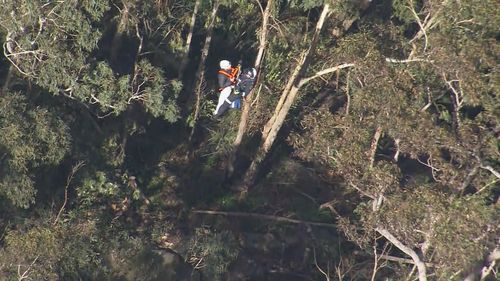
Emergency services suspended the rescue on Saturday night due to poor conditions. (9News)The pair spent the night in the Blue Mountains whilst waiting for rescue crews. (9News)
About four hours later, emergency services attempted to rescue the couple but were unable to reach them due to poor conditions and the mission was suspended.
The rescue operation continued at 7.30am this morning, where Police Air located and winched the hikers to safety.
Two Police Rescue officers were then also winched to safety.
Two hikers have been winched to safety in the Blue Mountains. (9News)
Greg Marshall from NSW Ambulance praised the hikers for bringing a distress beacon with them, noting it may have saved their lives.
“This couple were very cold when we got to them and temperatures close to zero degrees made it an uncomfortable night,” he said.
Cows swept 20km in Sydney floods
“They did the right thing in taking an EPIRB distress beacon with them, and activating it when they got into trouble.
“The coordinates we received helped our aeromedical team locate them and get assistance to them.
“It’s an important lesson for everybody who goes out into the bush – take an EPIRB with you. It can be a life-saving device.
“This was a tricky and prolonged rescue operation with all agencies involved working well together for a good outcome.”
A new photo has emerged of missing South Australian woman Colleen South at a petrol station on the day she was last seen.
Key points:
An image of Colleen South was captured on CCTV at a service station in Berriwillock, Victoria, around midday on July 3
Ms South’s car was found crashed in a ditch four hours later near Wycheproof
Family members say the bright colored jacket she was wearing in the CCTV image was not found with possessions left near her car
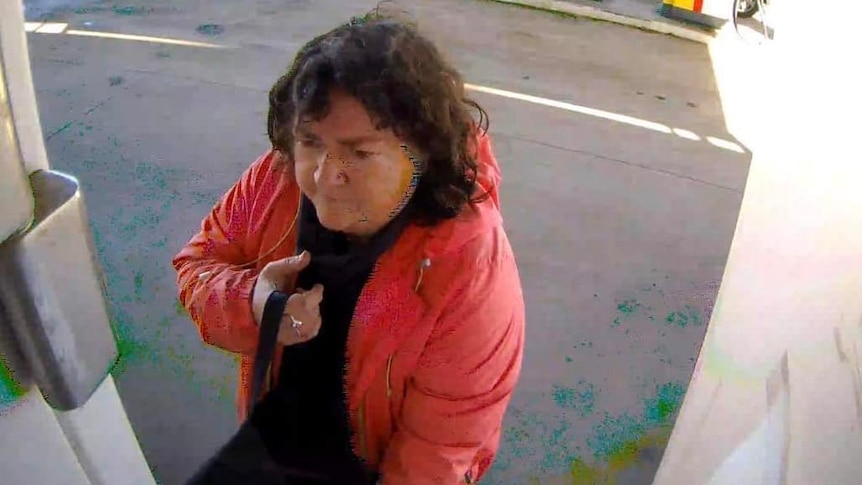
The 58-year-old was captured on CCTV at Sunraysia Petroleum at Berriwillock, in Victoria’s Mallee region, on Sunday, July 3, about midday.
Ms South tried to purchase fuel at the unattended petrol station on the Calder Highway but had trouble using the self-service machine.
According to a member of Ms South’s family who has seen the footage, another person who was also paying for petrol at that time noticed her struggling and kindly paid the $10 amount Ms South owed.
Victoria Police has confirmed the CCTV footage forms part of their investigation into the disappearance of Ms South, who had left her Adelaide home the day before, on July 2.
Witnesses have reported last seeing Ms South driving her 2006 Hyundai Getz towards Wycheproof, in Victoria’s Mallee.
The photo at the service station was taken four hours before Ms South’s car was spotted by a farmer, crashed into a ditch just outside of Bunguluke, 15 kilometers east of Wycheproof, and about 40 minutes away from the petrol station.
jacket mystery
Ms South’s possessions were found laid out 20 meters away from her car, which was locked. The items included bedding and other personal effects, as Ms South had been in the process of moving house between two Adelaide suburbs at the time of her disappearance from her.
Her Samsung phone, however, was found three weeks later in a playground in Port Noarlunga, south of Adelaide, with its SIM card missing.
Family members have said the bright colored jacket Ms South was wearing at the petrol station, was not uncovered in items found near her car.
The jacket is different from the description of a black and white jumper that a witness had previously reported seeing her in.
Colleen South’s belongings found near her locked car did not include the red jacket she was wearing in the CCTV footage.(Supplied: Veronica South)
In a statement, Victoria Police said the physical search for Ms South had been scaled back.
“However we continue to investigate the circumstances surrounding her disappearance including any reported sightings and or new information that comes to light,” the statement said.
Ms South’s family has not ruled out foul play and is planning to return to the Wycheproof area this week to continue searching for her.
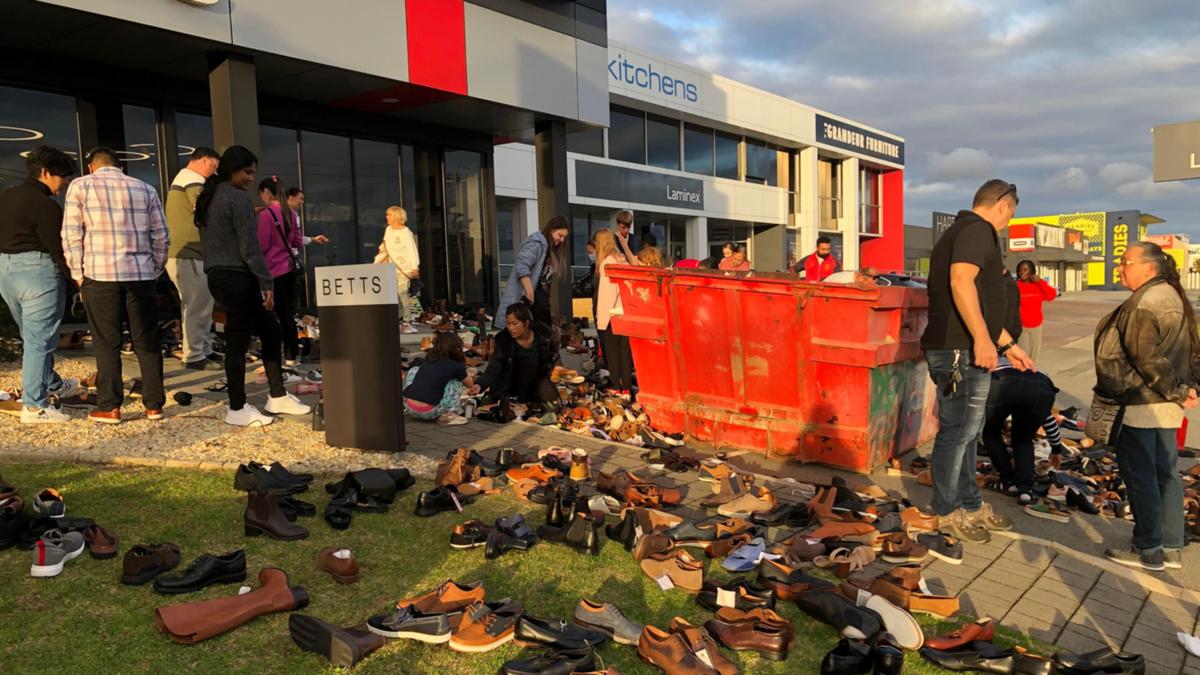
Forget dumpster diving for food — the lure of free shoes had these thrifty sandgropers raiding a skip bin outside the head office of a popular shoe retailer.
A crowd of people were spotted outside Betts’ headquarters in Osborne Park on Saturday afternoon after word spread of two big bins full of shoes.
“I’m sure it’s already been shared on the Perth feral community pages … but hurry on down to (Betts’) head office in Osborne Park and help raid the two giant skip bins full of shoes,” a social media user posted on Facebook.
“Or if that’s too much work check out any of the markets or some IGAs around Perth tomorrow.”
Betts Group chief executive Todd Wilner was on his way to the office with another senior executive to clean up the mess on Sunday when he told The West Australian the shoes were samples, some of them with holes drilled into them, and none were in pairs.
Mr Wilner said the company was very conscious about waste and had reached out to charities in the past but were told the shoes were not wanted unless they were in pairs.
Forget dumpster diving for food — the lure of free shoes had these thrifty sandgropers raiding a skip bin outside the head office of a popular shoe retailer. Credit: unknown/Supplied
He said if there was a charity who would be interested in using the samples he wanted to hear from them.
“If there is an organization out there who is prepared to work with us and take single shoes, we are absolutely happy to work with them to reduce our waste,” he said.
Dumpster diving — when people rummage through bins to find edible food, usually discarded at shopping centers — has made headlines recently after a City of Fremantle councilor was caught in the act last month.
Cr Rachel Pemberton admitted she had taken mince and a “few small tubs of yogurt” from a South Fremantle Woolworths bin, where she was spotted, filmed and photographed by a bemused resident.
“The amount of food waste in Australia is shameful — if I and others save some of it from landfill is that really an issue?” Cr Pemberton said.
“I know of many people who dumpster dive, not just hippies and backpackers but people on extremely low income who wait by the bins when the staff close the shop and throw out the day’s unsold stock — right through to well-dressed older people who drive Mercedes in the leafy western suburbs.”
While taking food out of bins can be grounds for trespass and even stealing in WA, Cr Pemberton said she believed the “extreme amount of food that goes into landfill” that should be illegal.
“Reinfection is common and increases your risk of bad outcomes,” Professor Raina MacIntyre, head of the Kirby Institute’s biosecurity program, wrote in the Saturday Paper.
“Being infected with Omicron BA.1 earlier in 2022 does not give you much protection against the newer variants.”
But others remain skeptical about the studies’ results.
Does infection with Omicron offer protection against future infection?
In June, a UK-based research team caused a stir with its surprise finding, published in the journal Sciencethat getting infected with Omicron seemed to provide little protection against reinfection with Omicron.
loading
This might be a case of “immune imprinting”, the researchers suggested: the immune system remembering the first version of the virus it saw and building antibodies to that older version each time it encountered a new variant.
But science is accumulative: many studies over time build an accurate picture of what’s going on.
the Science paper studied antibodies in a test tube; data from the real-world is more optimistic.
A paper from Qatar suggests Omicron infections are close to 80 per cent effective at preventing infection with Omicron subvariants BA.4 and BA.5. Studies from Denmark and Portugal come to similar conclusions.
Does each reinfection increase the risk of bad outcomes?
Also in June, a team led by Washington University’s Ziyad Al-Aly uploaded its paper based on a large healthcare database operated by the US Department of Veterans Affairs, which covers US military veterans. They extracted healthcare data for people who had been infected and reinfected, and compared that with veterans who had never been infected.
Compared with those who had been infected once, veterans who had been reinfected were three times more likely to be hospitalized and twice as likely to be dead. They were more than twice as likely to have heart or blood problems, fatigue or mental health issues. As people had more reinfections, their health problems increased.
Professor Rhonda Stuart at the vaccination hub at Monash Medical Centre.
Based on this paper, we should be doing all we can to avoid reinfection, said Professor Rhonda Stuart, director of epidemiology at Monash Health.
“If you have a chance of getting long COVID from your first infection, it would seem to make sense that you have the same chance the next time you get COVID,” she said.
loading
“In the end, the message is, if you’ve had COVID, you don’t want to get it again.”
If reinfection is worse than primary infection, this would be an unusual feature of the virus. In many other respiratory viruses, “reinfection typically results in a milder illness with a shorter duration”, said Dr Gemma Saravanos, a respiratory infection researcher at the University of Sydney.
The paper has not yet been peer reviewed or published in a scientific journal – meaning it needs to be interpreted with caution.
Other scientists identified possible biases in the paper that may cloud the results.
The study used healthcare records, meaning people had to be sick enough to use healthcare. That means it might have missed people who had asymptomatic reinfections, or cases so mild they did not get tested. By oversampling people who got very sick after reinfection, the study could make the effect of reinfection seem worse. “I think there are fair concerns about sampling bias,” said Assistant Professor Saskia Popescu from the US-based George Mason University’s biodefence program. “Especially in this case, as they used a population … which may be more likely to have existing health challenges and co-morbidities.”
The study also compared people infected with the original strain of the coronavirus and those reinfected with the Delta variant – which is known to be more severe.
Professor Tony Blakely.Credit: Supplied
Based on that, “I would confidently predict that the risk of serious symptoms on a reinfection – compared with first infection, and for hypothetically same virus – is less,” said University of Melbourne epidemiologist Professor Tony Blakely. “But time will tell.”
Other studies come to different conclusions than the June papers. A study published in the Journal of Infection in April, looking at 13,960 reinfections in Britain, found people were 61 per cent less likely to die from a reinfection compared with an initial infection. Rates of hospitalization were also dramatically lower. Similar data has been published from Serbia and Qatar.
For Efron, having experienced none of the effects of long COVID, it was the reassurance of knowing what lay ahead that made the second infection easier than the first.
“I just remember the first time feeling tightness of breathing and found that alarming and a bit uncomfortable. So I think the second time actually was a little bit better.”
Liam Mannix’s Examine newsletter explains and analyzes science with a rigorous focus on the evidence. Sign up to get it each week.
An alternative view of the concept design included in documents supporting a modification proposal for Central Barangaroo.Credit:Department of Planning portal
The government’s development partner Aqualand unveiled plans for the 5.2 hectare site in April, including a two-hectare waterfront park, campus-style offices and a new cultural venue, as well as mid-rise buildings and a 73-meter building above the metro station .
National Trust NSW conservation director David Burdon said the changes were so significant they should require a fresh proposal rather than a modification.
“If I was designing my own house, when you do a modification to your design it’s for a minor amendment, it’s for a small change. And this is much more than a small change,” he said.
Though the residential building is only a quarter of the height of Crown’s adjacent tower, Burdon said it was nearly as tall as the much-maligned Blues Point Tower across the harbor and would block views of Observatory Hill from Pyrmont and Balmain.
Developer Aqualand’s depiction of the view impact of proposed buildings at Central Barangaroo, included in documents submitted to the Planning Department.Credit:Department of Planning portal
He argued the building would not contribute to the community or amenity of the area because its apartments would likely be purchased by wealthy foreign buyers. “They’re people’s overseas pads, not regular people that will populate the street,” he told the herald.
In a long statement, project director Rod McCoy said Aqualand’s Central Barangaroo proposal responded to the government’s policy of increasing the intensity of land use around new public transport infrastructure, which was generally considered best practice.
He said Barangaroo’s scale and mixed use made it “one of the most vibrant public places and one of the most connected and successful urban renewal projects in the world”.
McCoy said Aqualand was “conscious of the sentiments of the residents of Millers Point around perceptions of view loss”, but the building heights originally approved for Central Barangaroo in 2007 would have obscured some views anyway.
Residents’ groups, the City of Sydney and other stakeholders have complained the building would block views from Millers Point and Observatory Hill.Credit:Department of Planning portal
“We recognize that there is some sensitivity to the height of the proposed building at the northern end of the site from some local residents, and we’re listening to their concerns,” he said.
“That said, we do see this building as an opportunity to deliver world-class design that responds to the unique and special setting, and we think that many of the concerns can be addressed once the concepts for the site are revealed.”
The modification plans were lodged by government body Infrastructure NSW, which is managing Barangaroo, and will therefore be determined by Roberts as planning minister, or his delegate.
Roberts referred questions to Infrastructure NSW. A spokesperson said the body had engaged with stakeholders such as the National Trust and welcomed their feedback.
“Infrastructure NSW respects the planning process and the role it plays in ensuring the community are given the opportunity to have their say before any final decisions are made,” they said.
The Langham, a luxury boutique hotel on Kent Street, wants Roberts to refer the decision to the Independent Planning Commission. Manager Shane Jolly said the hotel was concerned about the heritage values of Millers Point, the loss of views and “a loss of visitation to this iconic area”.
Similar objections are being lodged by Friends of Sydney Harbor and the Millers Point Community Residents Action Group. The group’s president, Bernard Kelly, said the fact the application would be decided by the minister was “a clear indication [the government] is determined to steamroll this enormous project through before the state election.”
The City of Sydney is finalizing a submission. Lord Mayor Clover Moore told a public meeting last weekend the council would object to the bulk and scale of the proposal as well as “the lack of any public benefit such as affordable housing”.
The Morning Edition newsletter is our guide to the day’s most important and interesting stories, analysis and insights. Sign up here.
Launceston mayor Albert Van Zetten is the latest in a string of Tasmanian mayors to announce they won’t run in upcoming local government elections, taking the total quitting to 10.
Key points:
Ten Tasmanian mayors won’t be standing for re-election this October
Greater Launceston Albert Van Zetten is the latest to call it quits
It comes as compulsory voting is set to be introduced and a government review of the sector continues
Most of those who are part of the exodus say they are retiring or stepping down for personal reasons.
Newcomers set to be elected in October face a changing local government landscape as compulsory voting is introduced, non-ratepayers are allowed to have their say for the first time and a state government review of the sector continues.
The majority of the mayors not re-contesting are based in the north and north-west of the state: Annette Rockliff in Devonport, King Island’s Julie Arnold, Flinders Island’s Annie Revie, Waratah-Wynyard’s Robby Walsh, Circular Head’s Daryl Quilliam, Tim Wilson from Kentish, and Central Coast major Jan Bonde.
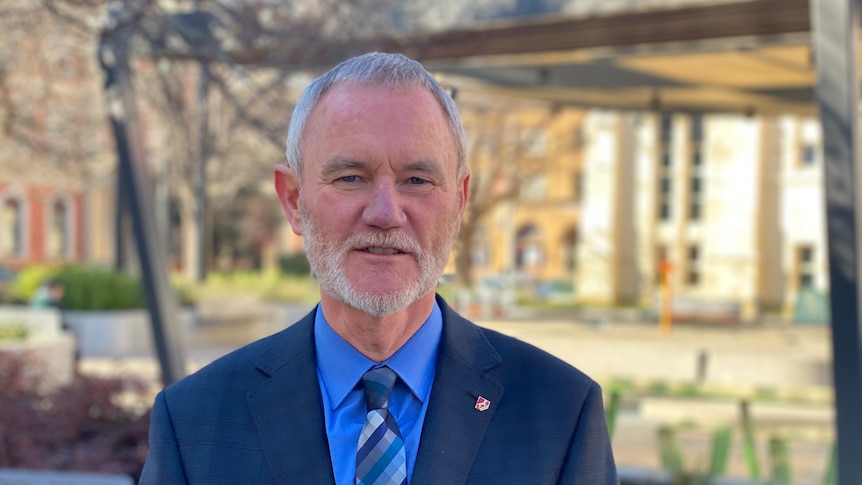
Albert Van Zetten announced the decision with his wife Lyndal on Sunday. (ABC News: Jessica Moran )
Albert Van Zetten was first elected as mayor to Tasmania’s second biggest city in 2005, and said he now wants to spend more time with his family.
“I’ve been very thankful for the opportunity I’ve had to serve this beautiful city, and it’s been an amazing time,” he said.
“My case is it’s my time to go. It’s not got anything to do with what the other mayors are doing. If their time is up, then it’s their time up.”
In the south of the state Doug Chipman is retiring as major of Clarence.
He has been in the top job for 11 years and has said “it’s time for a change”.
Bec Enders stepped down as Huon Valley Council Mayor earlier in the year amid the controversy over the hiring of general manager Jason Browne.
Huon Valley Mayor Bec Enders quit the role in March after months of community backlash over a controversial recruitment process for general manager.(ABC News: Luke Bowden)
President of the Local Government Association of Tasmania Christina Holmdahl said it was not abnormal to have a large number of mayors leaving.
“It’s something that happens about every second or third council election.”
“The majority have been mayors for quite some time, and almost all of them are standing down for personal reasons. They believe they’ve made a contribution,” she said.
“They also believe that maybe it’s time for new energy, new ideas in their municipality.”
King Island Major Julie Arnold has chosen not to recontest the position after just one term in the top job.(ABC News: Sarah Abbott)
Major voting changes on the way
With the introduction of compulsory voting for the October elections, Minister for Local Government Nic Street said he hoped it would bring more quality candidates to council.
“I hope that compulsory voting leads to more people putting their hand up to run if they think that they’re going to be held accountable by the whole community and not just the people who would normally vote at local government elections.”
“We’re committed to strengthening local government as best we can, and the best way to strengthen it is by having multiple candidates in every municipality so that people have got a legitimate choice to make come October.”
Mr Van Zetten said he welcomes compulsory voting.
“I’m sad I’m not running in a way because of the compulsory voting. I think it’s better for incumbents.”
“The time that I’ve had my closest vote, which was three votes (between him and the next candidate), many people said to me ‘I didn’t vote for you because I thought you were a shoe-in.”
Christina Holmdahl, president of the Local Government Association of Tasmania, March 2022.(ABC News: Jessica Moran)
Christina Holmdahl from Tasmania’s Local Government Association said she thought there were still some issues to work through when it came to voting in local government elections.
“It’s still going to be a postal vote, so there are still those issues of letters not being delivered, people have changed addresses and haven’t updated their electoral roll.”
It will also be the first time local government elections are open to everyone over 18, not just ratepayers.
“I think it’s going to be quite interesting as a result of that.”
She was hopeful the changes wouldn’t stop new people from running for older.
“We hope all the new incoming councilors have the commitment and the vision that the retiring mayors have had, and they’ll enjoy what they get out of local government.”
Code of conduct questions
A 12-month local government review is underway, which includes an examination of its code of conduct.
The code has been in the spotlight this year after a number of controversies including when a Kingborough council meeting descended into unrest in June, the fact a council had no power to sack a councilor convicted of sexual offences. and the code of conduct investigation into the Huon Valley general manager’s appointment.
Kingborough Council deputy Major Jo Westwood attempting to eject Councilor David Grace from a council meeting on June 6. (Supplied: Kingborough Council)
Nic Street says the review is about strengthening local government even further.
“It’s looking at the service, delivery, and functions of local government. What they do well, and perhaps what services should be delivered by a different tier of government.”
“At the end of that, we’ll look at the reforms that have been suggested by the local board of review.”
Ms Holmdahl says the next stage of the review, set to finish at the end of the year, should be extended to allow more people to have their say on local government.
“The community has had an opportunity to express their concerns or their suggestions about how local government could be better, and they have been noted.”
“I guess what’s disappointing is the very low level of input from the community. It was 0.34% of the voting population that actually took part.”
She said she was hoping to come to an arrangement with Mr Street to extend the next stage of the review until March.
“That will also cover the fact that after October this year, there may be new councilors that are not familiar even with the process, so we believe that there’s a period of time needed for the new councilors to familiarize themselves with the process as well. “
Mr Street said there was potential to extend the review.
“That’s a conversation that we’re continuing to have with the local government sector at the moment.”