Queensland has passed the peak of the third COVID wave with it expected to end in the coming weeks, Premier Annastacia Palaszczuk says.
Ms Palaszczuk made the announcement at the Ekka today with hospitalization numbers falling steadily since last month.
“We actually peaked around July 25… that’s excellent news,” she said.
Chief Health Officer John Gerrard said the news came much earlier than national modeling had predicted.
“We believe this fantastic result is because Queenslanders have responded to national advice. Namely to get heir boosters, stay at home when sick, take anti-viral medicines and wear a mask in indoor crowded environments,” he said.
Queenslanders are still being urged to get their booster shots and wear a mask when they are indoors.
He said main indicator numbers – including hospitalizations and active cases – had fallen by 45 per cent or more since July 26.
COVID wave ‘every three months’
Dr Gerrard said the wave was expected to end in the coming weeks but another wave was expected in December.
“The virus is not going to go away. We are going to continue to have ongoing transmission,” he said.
“The current pattern we have seen in Queensland and worldwide is a wave every three months.
“We still believe it is likely there will be a further wave this year, but it is likely as time goes by, these waves will become milder in severity.
“Everyone now knows what they need to do.”
Currently 667 people are in hospital with the virus; compared with 1,123 at the peak of the wave.
“There are still 26 patients in the intensive care unit,” Dr Gerrard said.
There were just 2,504 new cases today and there are 35,482 active cases.
That’s a 47 per cent decrease from the peak of 66,569 on July 26.
Monkeypox vaccine available soon
The initial supplies of monkeypox vaccine will arrive in Queensland this week.
The vaccine will be targeted to very close contacts and high-risk cases.
“Initially the numbers of doses will be small and that will escalate in coming weeks and months,” Dr Gerrard said.
Space to play or pause, M to mute, left and right arrows to seek, up and down arrows for volume.
An elderly Bribie Island couple is fighting for compensation after a removalist sold off their belongings during their interstate move to Bega in NSW.
The removal company, Kent Removals & Storage, apologized and described the incident as the result of human error, but lawyers say the retirees would have to take $50,000 from their pension to help recover just some of the items.
Watch the video above for more on this story
Watch the latest News on Channel 7 or stream for free on 7plus >>
Retirees Gary and Lorraine Taylor, aged in their late 70s, moved from Queensland to Bega in southeast NSW one year ago, making the tree change after more than 60 years of marriage.
They packed all of their possessions, including furniture and sentimental belongings, into two removal trucks – one of which contained $120,000 worth of furniture they would never see again.
When Wridgways, the removalist company they had originally planned to use, went into liquidation in July 2021, Kent Removals & Storage took 160 of its clients – including the Taylors.
Kent Removals & Storage was also assisting court-appointed liquidator Hall Chadwick to sell off Wridgways’ assets, such as office furniture, and say there was confusion over one of the containers full of the Taylors’ belongings.
That container was accidentally sent to online auction company Grays Online where everything was auctioned off at a fraction of its value.
Retirees Gary and Lorraine Taylor are distracted over the nightmare move during which interstate removalists sold off their belongings. Credit: 7NEWSTwo containers left the Taylors’ Bribie Island home last year, holding a lifetime of belongings that they would never see again. Credit: 7NEWS
Gary told 7NEWS his $28,000 rug was sold off for around $200.
It has left the couple in limbo. Some of their furniture had multiple pieces which were split between the two moving containers, so much of what did arrive could not be assembled.
Couch cushions with no frame and a dressing table without its mirror are stacked up within the bare-walled Bega house that is still piled with boxes.
“We’ve been married for 60 years, and 60 years of our bloody furniture has just gone down the tube and nobody cares,” Gary told 7NEWS.
Lorraine spoke through tears as she told 7NEWS the incident was “very hard to describe.”
“It’s not believable what we’ve been through,” she said.
“Its been terrible for both of us, and for our family.”
The Taylors were told by their lawyer that they could take legal action to recover some of their losses but it would cost the retirees $50,000.
That is money the couple would need to take from their retirement fund and something they cannot afford to do.
A year after their move the Taylors’ home in Bega is still largely empty. Credit: 7NEWSPieces of furniture were split between the two containers, which means some of what did arrive remains unassembled in their home. Credit: 7NEWS
Kent Removals & Storage CEO Steve Alves told 7NEWS: “Due to human error, one of the containers containing the effects belonging to Mr and Mrs Taylor was incorrectly sent to Grays Online for sale of the goods.”
Alves said the matter was only reported to him last Thursday and he has since apologized for the handling of the matter.
He said the matter had been referred to Kent’s insurers but that, “the matter was incorrectly internalized between Kent, Grays Online and Hall Chadwick with a view to establishing liability for this error”.
“As Kent Relocation Group contracted with Mr and Mrs Taylor and, irrespective of where the liability resides, Kent Relocation Group could and should have taken a lead role in this process and did not.”
Alves said the company “apologies for the way in which this matter has been handled.”
“Our team will focus on ensuring we support Mr and Mrs Taylor in any way we can to bring closure to this matter for them.
“In terms of the missing items, given the quantum of the potential claim, the matter has been referred to Kent’s insurers along with an instruction to ensure that the matter is expedited in a prompt, efficient and reasonable manner for Mr and Mrs Taylor”.
So far only 40 per cent of the moving charges have been refunded, but since the matter was escalated Alves said Kent Removals & Storage would work to refund 100 per cent of the moving charges.
As to whether they will see a refund of their $120,000 worth of lost furniture, they must wait for the companies’ insurance process to run its course to find out.
Perth scientists have breathed life into a decades-old German mystery of an unknown man’s body found floating in the North Sea, using the adage “you are what you eat” to discover he may be from Australia.
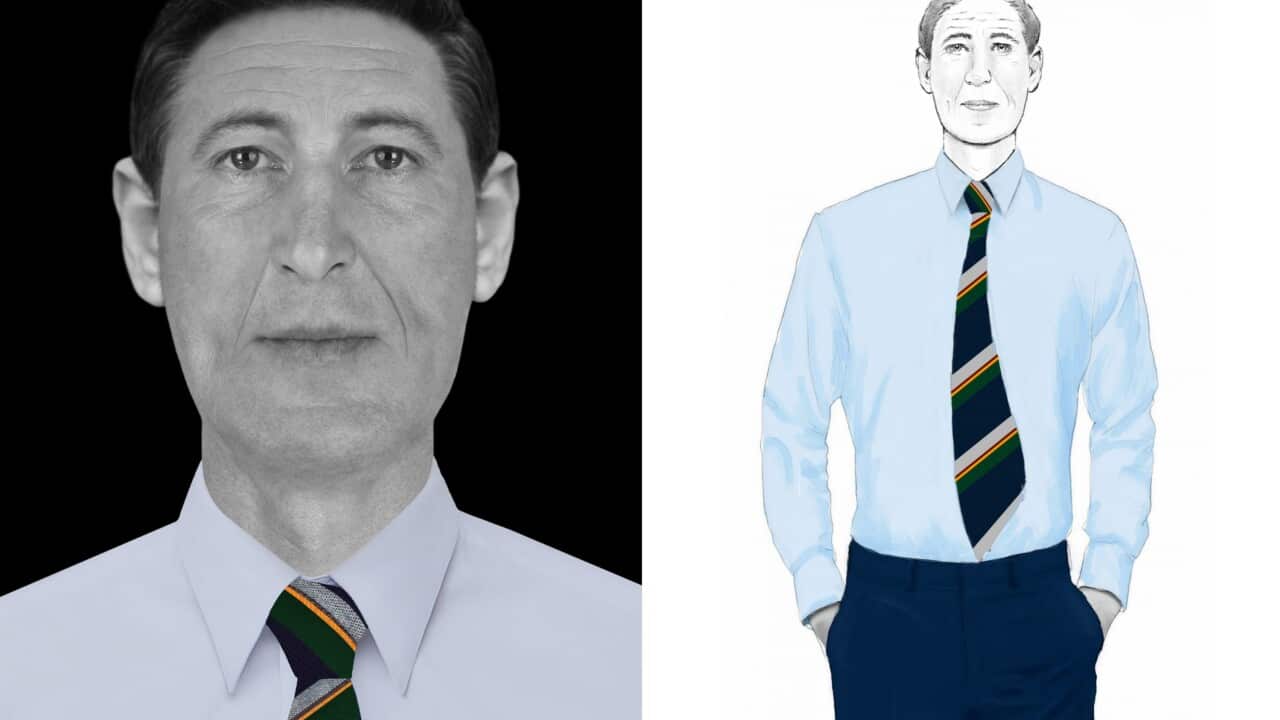
The man, dubbed “The Gentleman” by investigators in 1994 after his body was found by police off the coast of the Helgoland, a German archipelago, was weighed down by cast iron cobbler’s feet.
He earned the nickname due to his smart clothing; a wool tie, British-made shoes, French-made trousers and a long-sleeve blue dress shirt.
The case has baffled German police for 28 years, but criminologists and forensic scientists from Murdoch University may have helped to unravel the mystery after they ran new tests.
They found the man spent most of his life in Australia. Investigators in the 1990s determined he was 45 to 50 years old.
The discovery marks the last day of Australia’s National Missing Person’s Week on Saturday.
Scientists made the discovery by following the principle of “you are what you eat”, performing an isotope ratio analysis of The Gentleman’s bones.
Differences in climate, soil and human activity across the globe change the isotopic compositions of food, water and even dust – reflected in the isotopic compositions of human tissue.
Analysis showed the man likely spent most of his life in Australia. Researchers from overseas universities were recently also able to obtain a DNA profile of the man.
There’s hope it could match with DNA being collected as part of Missing Person’s Week, where authorities have been calling on Australians to come forward for testing to help solve some of the nation’s cold cases.
Brendan Chapman, one of the directors of Murdoch University’s Cold Case Review team, said it was an unbelievable discovery.
“What are the chances that from this small collection of universities working on this case, one would be from the country where the man originated?” he said.
Investigators have been slowly piecing together The Gentleman’s past for years.
The iron tools he was weighed down with were only recently disclosed by police, his shoes are expensive, and his distinctive green, yellow and blue striped tie may signal he belonged to a specific organization.
If endorsed by the council, the updated controls will apply to designated areas that have an existing night-time activity or potential to grow as night-time areas – including parts of the Parramatta CBD, Harris Park, Epping, Westmead, Granville and Wentworth Point .
Davis said services such as hairdressers could be made more accessible under the proposed rules.
“The times people are available to go and get a haircut aren’t in the standard nine-to-five hours,” Davis said. “[Extending trading hours] allows people to access services at other times of the day.”
While broadly supportive of the proposed changes, The Sun-Herald spoke with several hairdressers in Parramatta who indicated they wouldn’t stay open later until they saw more late-night customers.
Davis said the proposal would future-proof Parramatta and give businesses the option to expand trade in a way that suits their customers.
“It’s that point of difference which will give them a distinct economic advantage,” she said.
Parramatta Chamber of Commerce president Luke Magee agreed that extending trading hours for businesses such as hairdressers and nail salons would make it easier for parents to access these services.
The new rules are hoped to breathe new life into Parramatta’s CBD. Credit:Dean Sewell
“People can put their kids to bed, have dinner and just go out and get the beauty treatment done after the family is sleeping,” he said.
But Magee said it was important to have a sensitive approach to regulation that accounted for both the need to foster nightlife and limit noise, particularly in residential areas.
“If buildings aren’t built to a high specification with double glazing and all that, and you’ve got nightclubs across the road, that’s certainly an issue,” he said. “It’s about finding a balance.”
With its robust student population, Davis said encouraging a night-time economy in Parramatta would also give young people more to do.
“People want that ability to jump in the lift, go downstairs and have a great experience.”
“We need to provide those night-time experiences that are affordable, diverse, vibrant, safe and which interest people under 35,” she said. “[Young people] want to go out, go shopping and eating and have good entertainment facilities all in one place.”
University of New England director Robert Field said extended trading hours would also provide additional job opportunities for students.
“When the economy changes and works longer hours, it allows more job opportunities for people as well,” he said. “Extending the night-time economy allows for more flexibility in work.”
While an extension to trading hours wouldn’t directly impact the university, which already opens until 9pm on weekdays to cater for a predominantly adult student population, Field said the update would have indirect benefits such as helping people to avoid peak hours on public transport.
“If you can avoid those super busy times by staying back a bit later, accessing the benefits of extra hours [such as] shopping, dining or studying, you’re not going to have to be on a jam-packed train.”
With a population that has grown 10 per cent in five years, and many living in high-density housing, Davis said there’s demand for convenient access to a range of services in Parramatta.
“People want that ability to jump in the lift, go downstairs and have a great experience whether that’s going to their public library, meeting with their friends to play pool or grabbing a coffee,” she said.
Davis said it was important to cater to the diverse needs of Parramatta’s communities but also to attract visitors from other suburbs with its unique offering.
“People in Parramatta really want their diversity reflected in the offerings available to them, from the food they eat to the clothes they’re buying and access to great public art and cultural events,” she said.
“People can go to North Sydney and Chatswood if they just want shiny towns but Parramatta has a wonderful mix of multicultural communities, great parklands and employment opportunities,” Davis said.
While she acknowledged that changes to the control plan wouldn’t immediately translate to a 24-hour economy, Davis said there was a clear appetite for reform.
“This isn’t going to be something that happens overnight, but it will provide certainty for development applications,” she said.
“Our growing community has got a taste for change. They want to see those possibilities and those opportunities for a diverse and vibrant night-time economy, not just across the CBD but across the local government area.
loading
Jreij said for Parramatta to remain the second-biggest CBD in NSW, the city needed to look to places such as New York and London, which have a thriving nightlife. “We really have to look and think big for Parramatta’s future,” he said.
If the plan is approved, the updated controls will take effect within 28 days of endorsement.
The Morning Edition newsletter is our guide to the day’s most important and interesting stories, analysis and insights. Sign up here.
Lockdowns are over, vaccines are widely available, but COVID-19 simply isn’t going anywhere.
In fact, new data predicts the virus will be the third-biggest killer in Australia for the financial year that ended in July 2022.
The Actuaries Institute said deaths from COVID-19 – as distinct from people dying “with” the virus – reached 7100 for the first seven months of the year.
COVID-19 continues to take a deadly toll on Australia. (Bianca DeMarchi)
Only heart disease and dementia are expected to have taken a bigger toll on the Australian population.
COVID-19 will even outstrip deaths from cardiovascular diseases, such as strokes, and lung cancer.
The Institute tallied up the daily reports from state and territory health departments to find 9,550 deaths of people with COVID-19 from January to July.
This included a grim record of 1934 deaths in July alone.
The Institute estimated that of these, COVID-19 could be considered a cause of death in about 7,100 cases.
COVID-19 is also affecting “excess deaths” from other conditions, according to the Institute’s modelling, based on mortality data from the Australian Bureau of Statistics.
“Excess deaths” are deaths above what would be expected in a non-pandemic year, though COVID-19 is not expected to have directly contributed.
The most triple vaccinated countries on Earth
Over the course of the pandemic, excess deaths from all causes have been two per cent higher than expected according to the Institute model – the figure reflecting the lower deaths from respiratory disease during the first two years.
“This is valuable data for our public health policy-makers and should be informing our flexible, safe and pragmatic public health response,” chief executive Elayne Grace said.
The federal government has announced $13 million in funding for a new large-scale composting facility in Canberra.
Key points:
The facility will divert 50,000 tonnes of food and garden waste from landfill annually
A new materials recovery center will also be built to improve the quality of recycled products
A recycling advocate says education is key to composting success
The facility will be built in Hume and will process food and garden waste collected from household green bins across the city.
City Services Minister Chris Steel said the new facility was an essential part of the food organics and garden organics (FOGO) rollout in the ACT.
“It will turn around 50,000 tonnes of food and organic waste into valuable compost for use in the agriculture and viticulture of our region, and gardens,” he said.
“This is incredibly important for climate change, this is our third largest source of emissions.”
‘True circular process’
FOGO collection and processing is expected to cut the ACT’s waste emissions by 30 per cent. (ABC News: Harry Frost)
About 5,000 households in Belconnen, Bruce, Cook and Macquarie are currently trialling a FOGO collection system.
Mr Steel said that service would be expanded to include all ACT households once the new facility was up and running.
“This is going to be a fantastic story,” he said.
“This is Canberrans’ food waste that will be turned into compost, so that we can return those nutrients—which are otherwise going to landfill—to the soil to improve our soil and then grow our food again.
“So, it will be a true circular process.”
It’s not yet known what items will and won’t be allowed in the new FOGO processing stream. (ABC News: Harry Frost)
Mr Steel said a new $23 million recycling facility would also be built in Hume.
“We were partnering with [the federal government] to upgrade the existing facility to process our plastic, aluminium, paper and cardboard products, as well as glass,” he said.
“But as we’ve progressed through the design process, we’ve now come to the conclusion that it would be better for us to build a new state-of-the-art materials recovery facility adjacent to the existing site.”
He said the government would now go through a procurement process and he hoped both facilities would be operational within 18 months, though he noted the unpredictably of the current construction market.
Education key to FOGO success
Space to play or pause, M to mute, left and right arrows to seek, up and down arrows for volume.
Zero Waste Evolution chair Mia Swainson discusses the new Canberra composting facility.
Zero Waste Evolution chair Mia Swainson welcomed the funding injection and said a simple, targeted education program would be essential ahead of the FOGO facility coming online.
“The key is bringing Canberrans on the journey, making sure that people know what can go into the processing and what can’t,” she said.
“Depending on the technology, there’ll be different food and garden waste from around the house that can go in and some that can’t.
“So, keeping that contamination level down low will be really key to success.”
Ms Swainson said success would require a new way of thinking about waste for many Canberrans.
“Globally the trend is for… all of the organic waste to be recycled and reprocessed,” she said.
“Yes, it’s a bit of a change and a cultural shift, but, overtime people get used to it and it’s just how we build our lives.”
Face masks will be strongly encouraged but not mandated during assessments. Hand sanitiser, alcohol wipes and masks will be made available to students.
About 76,000 students are working to complete their HSC program this year, and languages are the first of 126 courses to be examined.
“Learning a second language is an invaluable experience and an important skill in a globalized world,” Mitchell said.
“In NSW, we are surrounded by rich and diverse languages –and the NSW curriculum provides students from all backgrounds the opportunity to engage with and value those cultures.”
He began studying Japanese in year 8 but was eager to learn more in year 11, so he took on French and Korean.
“The more languages I learn the more people I’m able to connect with,” he said. “I don’t know if I have a knack [for languages] but I definitely have a love for it and that’s able to push me along.”
Joseph wants to share his love of languages with other young people and plans to become a teacher when he finishes high school.
He said the key to success in languages was daily revision and practice, so they became ingrained in his mind.
loading
“I’m really looking forward to [the oral exams] so much and don’t really feel stressed about them,” Joseph said. “I think it’s really important not to think about the exams as the end point of your language learning.
“It’s really just the practice stage where you can gauge your abilities … before you go out to practice with actual native speakers.”
With four languages already on his plate, Joseph still wants to learn more. Spanish and Chinese are next on his to-do list of him.
HSC written exams will start on October 12 and run until November 4.
When Vitaly Bazarov and his wife Anna Shmatko moved to Melbourne in June, they knew they could have a better life for their daughter than they would have in Ukraine.
Speaking through an interpreter, Ms Shmatko said, “I’m a Ukrainian patriot, but I fell in love with Australia the moment I got here.”
After being displaced by the war in Ms Shmatko’s home country, the pair came to Australia with their daughter Mariia, and used Facebook to make friends and find support.
But despite being an experienced boilermaker and diver, Mr Bazarov has been unable to find employment.
Vitaly Bazarov is an experienced diver and underwater videographer.(Supplied: Anna Shmatko)
“This is a great country, but the services are expensive, I am really hoping one of my past careers can help me find a profession here so I can better support us,” he said.
Ms Shmatko believes employers discount her husband’s qualifications because English is not his first language.
“Finding the right people who will appreciate his skills and what he can do has been so hard,” she said.
Since arriving, the couple have been improving their English and actively seeking employment.
One of the ways they have been looking for work is through online groups on social media that aim to help refugees and immigrants settle into Australia.
The couple and their daughter have started new lives in Australia.(Supplied: Anna Shmatko)
It was through one of these groups the pair met Svetlana Khaykina, who volunteers her time to help people who have recently arrived find work and understand the Australian job market.
Writing CVs for refugees
Ms Khaykina, an engineer living in Port Hedland in WA, grew up in Belarus and can communicate proficiently with people from other Slavic language groups.
She has written over a dozen resumes for people, including Mr Bhazarov.
Svetlana Khaykina uses her industry expertise and Russian to help new arrivals find work.(Supplied: Svetlana Khaykina)
“Writing a CV is a very new thing for a lot of people when they first arrive; most people have no idea to start, it’s not a practice in Ukraine,” she said.
“I can see that Vitaly is extremely marketable especially in places like Port Hedland, he just needs to be given a chance.”
When Ms Khaykina sees job opportunities posted online, she tries to connect employers with immigrants and act as a translator if needed.
In her view, one of the biggest hurdles besides the language barrier is Australia not recognizing overseas certifications.
“People like Vitaly have decades of relevant experience, but even if he finds work he’ll probably have to work at a lower position like a trade assistant which doesn’t require certification,” she said.
Australia needs workers
Australian Resources and Energy Employer Association (AREEA) data suggests the country will need at least 20,000 more workers to join the resources and energy sectors by the end of 2027.
Western Australia will require at least 11,250 of these employees.
AREEA chief executive Steve Knott said the industry was battling the worst skills crisis in a generation.
“Simply, unless industry and government can find some creative solutions, the skills crisis facing not only the resources and energy industry, but all sectors of the Australian economy, will persist for years to come,” he said.
Ms Khaykina said the wide range of highly skilled refugees arriving in Australia was mind boggling, but what was more surprising was the lack of job offers.
“Living in Port Hedland I know there’s a huge labor shortage and as an engineer I’m coming across welders, fitters, engineers, construction workers and all sorts of people.
“But they’re not being given a chance,” she said.
“Especially in Hedland, we need divers like Vitaly to do pile repairs and maintenance, we are always looking for more people with those skills.”
What support is available?
Ms Khaykina said with no end to the war in Ukraine in sight, she would love to see more effort from the Australian government to help resettle people.
“In my understanding there’s about 10,000 Ukrainians in Australia, while 9 million have fled the war; it’s such a great tragedy,” she said.
“When they do get here, they have limited humanitarian visas.”
The Department of Home Affairs said it had granted more than 8,600, mostly temporary, visas to Ukrainians in Ukraine and hundreds elsewhere.
A spokesman said Ukrainian nationals in Australia who were unable to accept the offer of a Temporary Humanitarian Stay could access other visa options.
The government had provided $450,000 to the Australian Federation of Ukrainian Organizations to assist their work to support those arriving in Australia, the spokesman said.
And more than 1,300 Ukrainians had registered with the government’s Adult Migrant English Program, aimed at assisting new migrants and humanitarian entrants to learn English language skills.
Ms Khaykina believed if the government supported qualified refugees and immigrants to secure skilled work it would help solve the skills shortage and provide Ukrainians with a better life in Australia.
While assistance in finding skilled work could be limited, Ms Khaykina said support was available through community legal services.
Victoria Malyk, a migrant support worker in the Pilbara, said there was assistance for those who had recently arrived.
“I can respond to their needs such as help with employment and English lessons through the Settlement Engagement and Transition Support program or SETS.”
The young family say the community support has been phenomenal.(Supplied: Anna Shmatko)
The program is available to eligible clients, such as refugees and skilled regional workers in their first five years of living in Australia.
From Ms Malyk’s perspective, one of the biggest barriers facing these people are restrictions for some visa holders in accessing subsidized TAFE courses.
She said they usually could not afford high commercial fees.
“Further training is often needed for recognition of prior learning and overseas qualifications,” Mr Malyk said.
For now, Mr Bazarov will keep looking for work where he can use his decades of experience.
“We just need a chance,” he said.
“Once we find somebody who knows the industry and recognizes my skills, I’m sure they would want to take me, I’d be a great asset to any company.”
Mount Isa man Trevor Caulton has been arrested and charged with murder after he allegedly drove a vehicle into a crowd of people, hitting and killing a 13-year-old girl.
Key points:
Mount Isa man Trevor Caulton has been arrested and charged with murder
He allegedly drove a car into a group of people and killed a young girl
After a brief hearing on Monday, the case will next be heard on September 26
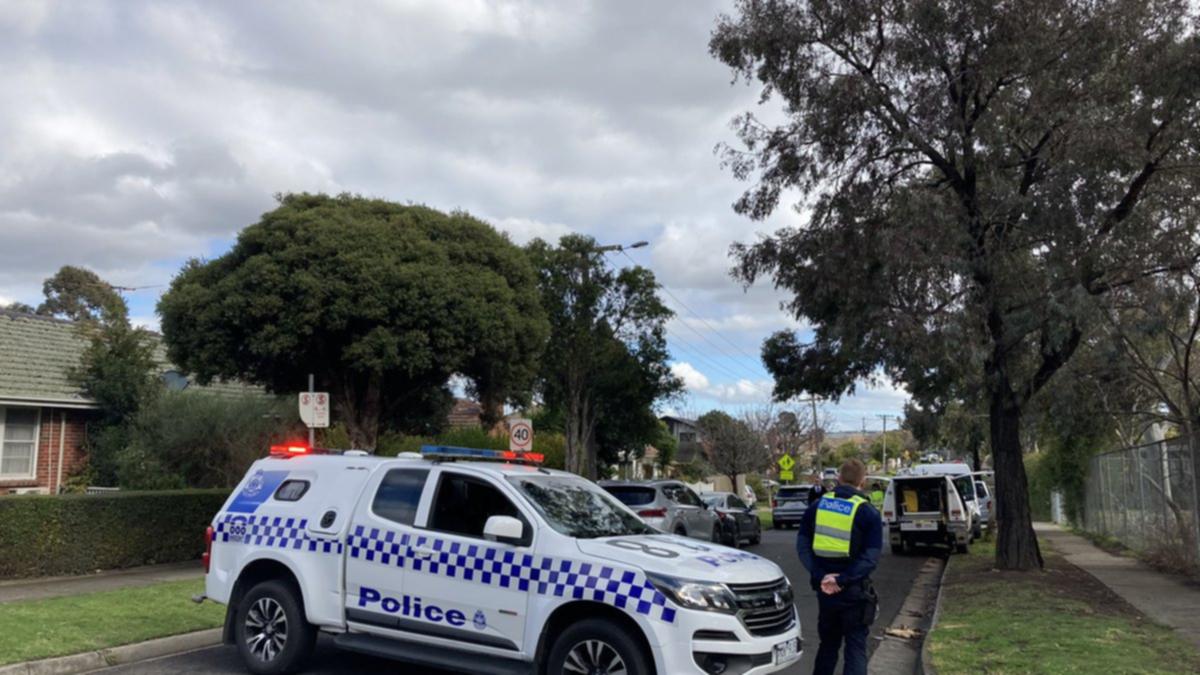
Emergency services were called to the corner of Delacour Drive and Dent Street in the Mount Isa suburb of Pioneer after midnight on August 6 and treated the girl for critical head injuries.
Police confirmed she succumbed to her injuries and died at the scene.
Mr Caulton’s lawyer appeared on his behalf via phone at the Mount Isa Magistrate’s Court on Monday.
A full brief of evidence was being prepared and the case would appear for mention at Mount Isa Magistrate’s Court on September 26.
The victim was identified and her family had been contacted, police said.
Paramedics treated the victims at the site of the incident near Dent Street in Pioneer.(ABC North West Queensland: Emily Dobson)
Fears of retribution prompt police warning
Police have called for calm in the community after the tragedy.
Mount Isa Police Acting Superintendent Smith asked the community to assist investigators.(ABC Far North: Brendan Mounter)
“I do have concerns about unrest in the community — this is a distressing case and this poor girl’s life has been taken,” said Mount Isa Police Acting Superintendent Jason Smith.
“We acknowledge the grief in the community and we implore everyone to remain calm around this incident and to assist police with the investigation.
“Sometimes in our community there can be an urge from some to seek retribution. Please know the law has been executed, the alleged offender is in jail and police have done as much as they can.”