Categories
Australia

Lotto winners WA: Perth friends plan epic holiday after $2.1 million win from Rossmoyne Newsagency ticket

A group of Perth friends are set for the group holiday of a lifetime after winning millions of dollars in Lotto.

The two couples have been playing together for more than two decades but finally hit the jackpot on July 30, winning $2.1 million.

The ticket they bought from Rossmoyne Newsagency was one of 14 winning tickets from around Australia.

Your local paper, whenever you want it.

“We’ve been playing Lotto together basically since we met, and we love it,” one winner said.

“We love knowing that our money stays in WA and supports so many great projects.

“And now we’ve won! It’s all pretty surreal.”

.

Categories
Australia

‘It’s not my problem you’re a single parent’ is a line you don’t have to accept

Professor Cooper said that as a permanent worker you have every right to use your leave and should tell your boss you intend – and need – to use it. There are legal protections for workers with caring responsibilities in the Fair Work Act, as well as in the Sex Discrimination Act.

If you don’t have paid leave entitlements, Cooper said you have access to two days of unpaid carers’ leave under the Fair Work Act. This is important to keep in mind if appeals to what she describes as “common sense and common decency” prove futile.

If, as she put it, “dispassionately pointing out that this is a family emergency and that [you] would like the support of [your] employer” gets you nowhere, make sure you know your rights. And if you’re unsure or feel those rights are unclear, there are lots of organizations that can help

“[You] could seek advice from a union, a working women’s center or government body like the Workplace Ombudsman. All have good resources on their websites as well as advice lines,” Cooper says.

“If the employer does not allow the employee to take leave, they could be in breach of several laws in both the industrial and discrimination jurisdictions.”

To me, this is as much a question about modern expectations of businesses and employers as it is about the law. As Cooper put it, “good employers recognize that employees have lives and non-work responsibilities, and support them in meeting these.”

loading

I’m not sure that’s a particularly radical idea or that too many readers of this column would bristle at the sentiment. And yet, I wonder what would happen if the tables were turned and an employee said to a boss “it’s not my fault your business is so inflexible that my brief absence is considered intolerable”.

I think it would be considered impertinent, and for some even profane. Until we get away from the idea that an organization – a corporation – deserves a kind of dignity and respect that an individual doesn’t, these sorts of situations will continue to arise.

Of course, this doesn’t free the manager who made the comment of responsibility.

“Overall this person sounds like a bad boss,” Cooper concluded. “I’m glad to hear that the employee has left this business.”

So am I, and I hope your relative has found satisfaction in her new place of work, as well as a more reasonable person to work under.

Work Therapy welcomes questions from anyone on any work-related topic. Send yours to [email protected]

Categories
Australia

From 300,000 rabbits to none: a Southern Ocean island is reborn | Environment

On a world map, Macquarie Island is a speck in the Southern Ocean, but for ecologists it is a beacon, illuminating a future for large-scale environmental recovery projects.

Melissa Houghton first set foot on the 34km-long green streak as a dog handler in late 2011. Rabbits, cats, rats and mice had been introduced by sealers in the 1800s and were wreaking havoc on the world heritage site. At their peak, there were approximately 300,000 European rabbits and an unknown number of black rats and house mice.

During their trip, Houghton and a labrador named Wags found what would prove to be the last vertebrate pests left on the island: an adult rabbit and her young. In 2014, Macquarie was declared pest free, the largest island to successfully eliminate rabbits to date.

Ten years after Wags sniffed out the last rabbit, the island has sprung back to life, and Houghton has stuck around to witness the change. She gave up dog handling, became a scientist and completed her PhD as part of the research team monitoring the island’s resurgence.

“Seeing it rebound, knowing it’s got a long way to go, and that we don’t know what else is going to happen, it’s so exciting,” Houghton says.

An all-you-can-eat buffet

Houghton remembers being “blown away” by her first views of Macquarie Island after a three-day voyage south from Tasmania in 2011. Its beaches were crowded with hulking elephant seals and raucous colonies of endemic royal penguins. But Keith Springer, who was leading the Macquarie Island Pest Eradication Project, warned her that beyond the beaches the once biodiverse and unique island was so damaged that it was “nothing but a pretty paddock”.

Melissa Houghton and her Labrador Wags among the island's penguins.
Melissa Houghton and her Labrador Wags among the island’s penguins. Photographer: Melissa Houghton

Attempts to rid the island of pests had already been under way for some years. The last feral cat was shot in 2000, poison drops were used in 2010 to kill the rats and mice, with rabbits also being targeted. But after the accidental poisoning of native birds, calicivirus (a rabbit haemorrhagic disease) was released in February 2011 to further reduce rabbit numbers.

Houghton and Wags were one of several teams sent to scour the island for surviving pests. “There are massive steep coast cliffs all the way round the island. There might be a few hundred rabbits, but it just seemed impossible [to find them],” she says.

Trudging through the landscape, Houghton saw the damage the pests had wreaked. Before the sealers, the largest creatures eating the island’s vegetation were insects. So for rabbits it was an all-you-can-eat buffet.

Melissa and Wags with the last adult rabbit on Macquarie Island in November 2011.
Melissa and Wags with the last adult rabbit on Macquarie Island in November 2011. Photograph: Courtesy of Melissa Houghton

The island had been dominated by giant tussock grass and swaying forests of megaherbs, such as Macquarie Island cabbage, which can grow taller than a human. This, says Houghton, is “like celery, very delicious, so the rabbits just absolutely loved it and smashed it”, stripping the landscape and destabilizing slopes where grey-headed albatross nested. “You’d have slime and lichen and landslips where albatrosses were trying to raise chicks and survive.”

Houghton was only able to see some plants in small fenced-off areas. These included two endemic orchids and a tiny herb called australian huperzia. “I couldn’t even envision what the island was meant to look like,” she says.

Birds such as blue and gray petrels, which had been hunted off the island by cats, were returning by 2011, says Dr Justine Shaw of the Queensland University of Technology and Houghton’s PHD supervisor. Shaw recently coordinated a 10-year project to assess the island’s response to pest eradication.

But life was still dangerous for the returning petrels. They nest in burrows, and rabbits had eaten the vegetation that hid and protected them, making the birds vulnerable to attack from skuas, a native predatory bird.

‘The tussock is over your head’

Gradually, life for the island’s birds is improving. Antarctic prions and white-headed petrels, which also nest in burrows, had managed to cling on in some sites while pests were on the island. Their numbers are now increasing. “It’s fantastic and so exciting,” Shaw says.

As birds return to breed, they also poo. This adds nutrients to the soil, which in turn helps the plants to grow back stronger. Tall plants then help burrowing birds hide from predatory skuas. “It’s this wonderful feedback loop,” Shaw says.

Today, the “pretty paddock” that Houghton first experienced has been transformed. “The tussock is over your head, and you’re dodging all these penguin tunnels,” she says. The orchids and tiny herb that had been protected by fencing have started turning up all over the place.

Houghton’s PhD research has also tracked the response of invertebrates such as spiders, flightless flies and springtails. “It’s amazing that somewhere so isolated can have so much diversity of insects – there’s a lot of endemic species,” she says. Removing mice, rats and rabbits might not seem like a way to improve life for invertebrates, but many of them rely on the plants the rabbits were gobbling up. Also, “when mice are on an island they target juicy larvae, caterpillars, moths and spiders and beetles,” says Houghton. The change is palpable. “You go into a hut now and there’s cobwebs everywhere.”

Skua at Cape Star, Macquarie Island
One of Macquarie Island’s native predatory birds, a skua, at Cape Star. Photographer: Melissa Houghton

Typically after an eradication scientists tend to assess how one charismatic species has responded to the pests’ removal. But Shaw is interested in how the island is responding as a whole ecosystem. “It’s not like someone turns the lights on and it’s back to normal. It’s actually quite a staggered response,” she says.

When Shaw talks about the legacy of the eradication she looks to the future. Understanding the intricacies of how Macquarie Island is recovering has reported island pest eradications on New Zealand’s sub-Antarctic Antipodes Islands, South Georgia and more. In July 2022 a project was announced to eradicate predators including possums, rats, feral cats and hedgehogs from New Zealand’s Rakiura/Stewart Island, an inhabited island.

Island eradication is not cheap – the Macquarie project cost Aus$24.5m (£14m) and would have been more if not for in-kind support from research facilities already on the island. But isolated islands are hubs for biodiversity, with each one often having its own unique array of flora and fauna.

“This one management action, the eradication, has saved entire communities and species, many of which are found nowhere else in the world,” Shaw says.

Houghton is grateful to have witnessed the island’s resurgence. “It’s one of the few instances where humans can permanently reverse some damage we’ve caused,” she says.

Find more age of extinction coverage here, and follow biodiversity reporters Phoebe Weston and Patrick Greenfield on Twitter for all the latest news and features

Categories
Australia

Aboriginal man dies in custody at Melbourne’s Port Phillip Prison

An Aboriginal man has died in custody at a Melbourne prison.

The man, aged in his 30s, died at Port Phillip Prison on Wednesday, hours after returning to the maximum security facility from St Vincent’s Hospital, where he was treated after an incident in his cell.

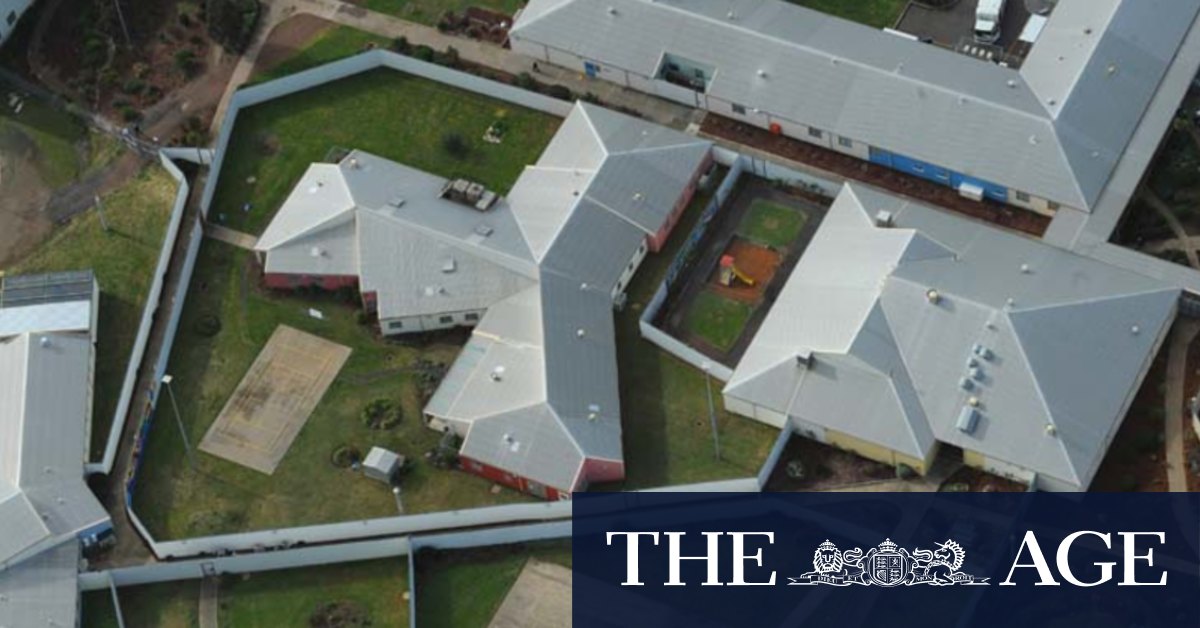
Victoria's Port Phillip Prison

Victoria’s Port Phillip PrisonCredit:Craig Abraham

Concerns have since been raised about possible delays in reaching the man to provide medical assistance before he died at the prison at Truganina.

Those with knowledge of death said the man was due to be released from custody in coming weeks.

A spokesperson from the Department of Justice and Community Safety confirmed the inmate’s death.

“It is with great sorrow that Corrections Victoria acknowledges the passing of a prisoner at Port Phillip Prison. As with all deaths in custody, the matter has been referred to the coroner, who will formally determine the cause of death,” the spokesperson said.

News of the man’s death comes less than three months after an inquest was held into the death of Aboriginal woman Veronica Nelson at the women’s prison in nearby Ravenhall.

During the inquest, the coroner was told more than 500 First Nations people had died in custody since the findings from the Royal Commission into Aboriginal Deaths in Custody were handed down in 1991.

A friend of the dead man described him as a strong warrior. “We will catch up in the dreamtime brother,” he wrote.

Categories
Australia

China labeled Australia’s biggest national security threat on Q+A as tough talk on Taiwan draws passionate response

The Chinese Communist Party (CCP) has been labeled the biggest threat to Australia’s national security on Q+A, with panellists from both the government and opposition sharing their concerns about China’s actions in the Taiwan Strait and subsequent comments by the Chinese ambassador to Australia.

In the past week, China has conducted military drills in the Taiwan Strait, repeatedly crossing its median line by air and sea and launching missiles that went over Taiwan and landed in Japan’s exclusive economic zone (EEZ).

Those actions came after the Speaker of the US House of Representatives, Nancy Pelosi, visited Taiwan, which China claims to be a state within its territory.

On Thursday night, Q+A audience member Li Shee Shu suggested to the panel that China should not be seen as Australia’s greatest threat.

Liberal Senator James Paterson pounced.

“The reason why the Chinese Communist Party is labeled as the biggest national security threat to Australia is because they are,” Senator Paterson said.

“Right now, today, we are under a near-constant attack in the cyber realm from the Chinese Communist Party, whether it is the government or our critical infrastructure.

“Over the past five years, we have suffered record levels of foreign interference and espionage and the Chinese government is the primary culprit of that.

“Right now, the Chinese government is acquiring military capability at the fastest pace of any nation in the world since World War II and, I think, the evidence shows they’re not just doing that for the fun of it.

“They have reclaimed islands in the South China Sea, illegally, although Xi Jinping promised that he wouldn’t.

“They have just fired ballistic missiles over Taiwan into Japan’s EEZ. If we are not going to take this threat very seriously, we are going to regret it.”

loading

His comments were echoed by Minister for International Development and the Pacific Pat Conroy, who took a softer stance but said China’s actions in recent times were a cause for concern.

“The Australian government’s position is that we support no unilateral change to the status quo,” Mr Conroy said.

“As a middle power, it’s in Australia’s interest to pursue a rules-based order where every nation observes and follows international laws and normals,” he said.

“And to James’s point, illegal island-building in the East and South China Seas challenges that rules-based order.”

CCP has repeatedly shown us who they are, Paterson says

Mr Conroy, who earlier called for a de-escalation of tensions in the Asia-Pacific region, said he was concerned by the Chinese ambassador’s comments about Taiwan on Wednesday.

The ambassador, Xiao Qian, stressed at the National Press Club that there was “no room for compromise” on Taiwan and China would use “all necessary means” for reunification with the island.

“In the interests of everyone in the region, de-escalation needs to occur now,” Mr Conroy said.

“We need restraint and we need to focus on a peaceful and prosperous region.

“I was concerned, like many people, by some of the language used by the ambassador [on Wednesday]but we just have to move past it.”

However, for Senator Paterson, those comments seemed to be folly.

He indicated he did not believe China’s actions in the past week were simply muscle flexing ahead of the CCP’s 20th annual party congress, but rather part of a long-established pattern.

loading

“The late American poet Maya Angelou had a wonderful phrase that when people show you who they are, believe them the first time,” he said.

“The Chinese Communist Party has not just shown us once who they are, they’ve shown us who they are in Tibet, they’ve shown us who they are in Xinjiang, they’ve shown us who they are with Hong Kong and they are showing us again who they are with Taiwan.

“And the ambassador at the Press Club yesterday showed us who they are and we should believe him.

“They are very serious when they say all options are on the table and that we should use our imagination to think about what they might do.

“And we should believe them when they say that re-education of the 23 million free people of Taiwan is something that they have planned for, after taking Taiwan, and we should treat that very seriously.”

Chinese Australian population stigmatized

Q+A audience member, teenager Jun Gao, said raised concerns about how Beijing’s actions were affecting the treatment of Chinese Australians.

He said he and others had faced discrimination during the pandemic and it was happening again now due to rising tensions with China.

loading

“I’ve felt the effects of the tumultuous COVID-19 pandemic and now rising tensions within the South China Sea,” he said.

“What can be done to destigmatize the Chinese Australian population?”

“In general, I feel there is about negative perception, both in the schoolyard and [the] media, and I fear that Chinese recent political actions will only compound this,” Gao added.

Panel member and Lowy Institute research fellow Jennifer Hsu said studies had seen a rise in that sentiment.

“We found in this year’s survey that generally Chinese Australians feel a sense of belonging, although that has decreased since 2020,” Ms Hsu said.

“[There is] a general sense of belonging, pride in Australian life and culture — and I think these are all positive indicators of, you know, Chinese-Australians’ contribution and integration into Australian society … but, yes, I would agree with you that, over the last two years… the sense of fragmentation has happened, in part due to discrimination and racism.

“But I would say there [are] potential positive points to look forward to, with a new government in power. there [are] signs of thawing [relations] between Australia and China.”

Senator Paterson condemned the discrimination Gao’s had faced and called for Australians to understand the difference between a political stoush with the CCP and anything to do with Australians of Chinese heritage.

“Thank you for raising this issue, you are absolutely right to,” he told Gao.

“It is both morally wrong and counterproductive for Chinese Australians to be held guilty for the actions of the Chinese government.

“It is also wrong to hold the Chinese people guilty for the actions of the Chinese government because they had no say in picking that government, there was no vote that brought the Chinese Communist Party to power.

“It is morally wrong because it is not your fault and it is counterproductive because we want Chinese Australians to feel just as much a part of the Australian community as everyone else and to be able to fully participate in that community.”

Watch the full episode of Q+A on ABC iview

.

Categories
Australia

Flood-ravaged communities split amid backlash to temporary pod housing plan

A North Coast flood victim says it is “demoralizing” to hear communities are protesting against the installation of temporary housing pods.

Lismore City Council has rejected a state government request to put the pods on sporting fields at Hepburn Park and plans to use a site in the hinterland village of Tregeagle have sparked a community backlash.

In the Byron Shire, residents voiced their opposition as work began to prepare a pod site in Station Street at Mullumbimby.

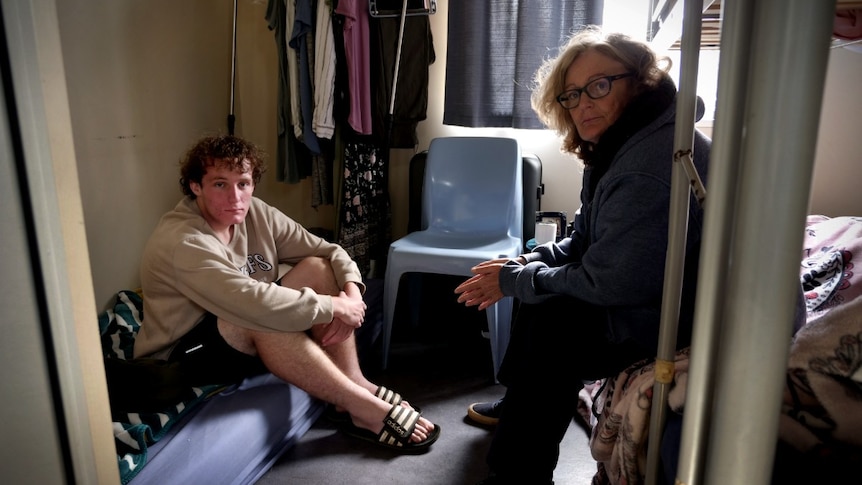
Denise Lowe has been living in a 3×3-meter room at a youth camp in Evans Head for the past four months after the home she shared with her son in Coraki was flooded.

She has repeatedly applied for a bigger temporary pod but says an administrative error meant they were only assigned a one-bedroom pod.

Ms Lowe said she was still waiting for a two-bedroom structure.

“Where I am at the moment, there are still 70 of us, from all over, that have nowhere to go,” she said.

“You can’t rebuild your life from here.

“I’m hardly seeing my son because understandably he doesn’t want to share a room with his mum anymore, so he’s spending most of his time at his dad’s.”

Ms Lowe said it was depressing to hear about people opposing potential pod sites.

“It made me feel like me, and everyone else who doesn’t have a home, like we’d been forgotten about or we don’t matter,” she said.

“Like we’re less essential than people being able to walk their dog in the most convenient location for them.

“Remember the community spirit of the flood, and remember the people that they felt so sorry for then are still in a bad place.”

A cream-coloured shipping container with a door opening onto a covered concrete patio.  A water tank is attached to one end.
This pod at Wollongbar could provide a home for up to two years for flood victims.(ABC North Coast: Emma Rennie)

‘Just not the option’

The NSW government has twice asked the Lismore City Council to allow pods to be installed on Hepburn Park at Goonellabah.

That request was rejected at this week’s council meeting after opposition from local sporting groups.

Far North Coast Hockey secretary Clint Mallett said the proposed site was a poor choice.

“We empathize with the situation that some people are in — it’s a sad thing for some people, but this has got to be looked at for all the community,” he said.

“To take away this space that’s used by hockey, soccer, cricket, Oz Tag, touch football, it’s just not the option.”

Three helicopters at rest on an oval.
Helicopters at Goonellabah’s Hepburn Park during a 2015 emergency.(ABC North Coast: Bruce MacKenzie)

Mr Mallett said the sporting fields were also important during emergencies.

“That’s where the helicopters land, that’s where the fuel trucks come, it’s a point where you can actually set up a base for emergency support,” he said.

“Fill it full of houses—well, that’s all gone.

“You can’t land a helicopter on the roof of a house.”

Not suitable land

Lismore City Council general manager John Walker said it was difficult to find suitable land.

“We have worked tirelessly since the floods to identify all potential sites in Lismore that may be used,” he said.

“There were four sites identified and this is the only one that satisfied the requirements.”

A handmade sign protesting against a proposed temporary housing development on an oval.
The Tregeagle community says the pod site is unsuitable because it is home to koalas and too far away from services.(ABC North Coast: Hannah Ross)

At nearby Tregeagle residents protested against plans to use the local oval during the pod rollout.

Resident Christine Gibson said driving trucks onto the oval to drop off pods would destroy the only public green space in the village.

“They are going to bulldoze Tregeagle Oval, they are going to actually take all the surface off it, fill it with gravel and tar it,” she said.

“They’re going to [drive] semitrailers onto it, between koala native habitat trees, and they’re going to bring pods here to store them temporarily.

“They’ve made provision for it to be a village after they’ve finished with it as a storage facility.”

Two blonde, bespectacled women standing outside a brick house.  One holds a document.
Tregeagle sisters Christine Gibson and Kerry Green say Resilience NSW never contacted them directly about the pod site next door.(ABC North Coast: Hannah Ross)

‘Time is running out’

Resilience NSW said it was up to the Lismore City Council to find a suitable sites for a pod village.

The disaster recovery agency said about 1,300 people were still in emergency accommodation after the floods, more than 400 of whom were from the Lismore area.

Spokesman Dominic Lane said existing pod villages at the Southern Cross University and Wollongbar were being filled as soon as each new pod was connected to utilities.

He said another site was desperately needed.

“We’re happy to explore all options with council but time is running out,” Mr Lane said.

“We need to make a decision soon, because people are getting impatient and obviously we will start to look at other areas to move to.

“We are trying to keep people as close as we can to where they were before they were so affected by the floods.”

A sign reading "I am love I am" wrapped around a construction site.
The proposed pod site on Station St In Mullumbimby.(Supplied: Byron Shire Council)

Meanwhile in Byron…

Preliminary work has begun on a site at Station Street in Mullumbimby despite concerns from nearby residents.

Steve Bellerby from the Mullumbimby Residents Association said the area was inundated during the recent floods.

He said there were fears that the situation could be exacerbated during future flood events after a significant amount of fill was trucked onto the site.

Mr Bellerby said he recently met with Northern Rivers Reconstruction Corporation head David Witherdin to discuss the situation.

“[Mr Witherdin] said that it’s not an ideal site, but they’ve worked hard to ensure that it’s not going to adversely affect other houses in the area,” Mr Bellerby said.

“We haven’t seen that flood study as yet, but we take his word for it.

“He’s quite confident that it’s going to be quite a successful site in the long term.”

A teenager puts his hand on his mum's shoulder.  They are sitting in a cramped, dark room.
Ms Lowe and Josh are still in emergency accommodation in Evans Head after their Coraki rental property was flooded.(ABC North Coast: Leah White)

Ms Lowe said it was important to acknowledge that many people were still displaced in the wake of the record-breaking floods.

“Especially now that Lismore is coming back and the supermarket is open again, everyone seems to think that it’s all pretty much done and dusted,” she said.

“There are still so many of us still living scattered all around the Northern Rivers, and some of us even in Queensland.”

.

Categories
Australia

John Barilaro inquiry reveals blurred lines between ministers, public servants

For the senior public servants who would have their emails, decisions and text messages pored over in full public view, the parliamentary probe into John Barilaro’s appointment to a plum New York trade role was not ideal. But it was, to use the words of the state’s top bureaucrat, utterly predictable.

They were right to be concerned. Over six weeks of evidence, the inquiry has prized open the internal machinations of the public service to lay bare the muddied line separating the state’s most highly paid public servants and the government ministers who can hire or fire them on a whim.

Witnesses in their evidence have proclaimed the lofty ideals of a government sector that operates without fear or favour. But lines of questioning have more often revealed political pressure and nervous bureaucrats.

Premier Dominic Perrottet was quick to distance himself from the hiring process.

Premier Dominic Perrottet was quick to distance himself from the hiring process.Credit:Kate Geraghty

“The relationship between politicians and the public service is a perennial challenge,” says Andrew Podger, a former senior bureaucrat and public service commissioner.

“Problems of excessive political pressure are occurring across jurisdictions and are not confined to one side of politics or the other… Clearly the head of Investment NSW felt constrained in exercising her authority, and pressure was known also to the head of the NSW Premier’s department. ”

But Investment NSW chief executive Amy Brown’s opening statement to the inquiry in June gave nothing away. “I am committed to the public sector core values ​​of integrity, trust, service and accountability. That includes the Westminster principle of an apolitical and impartial public service,” she said.

The process that appointed Barilaro was consistent with the government sector employment act, Brown insisted, and the independent Public Service Commissioner, who was on the hiring panel, would back her in on that fact.

Amy Brown giving evidence to the upper house inquiry in June.

Amy Brown giving evidence to the upper house inquiry in June.Credit:Janie Barrett

Brown appeared protective of Stuart Ayres, who was the relevant minister when she was promoted to secretary of the NSW Department of Enterprise, Investment and Trade without a recruitment process earlier this year.

“Minister Ayres … is very respectful of the public service and our processes and so he was very cautious about not having those sorts of conversations [about the appointment],” she said under questioning.

The early days of the saga exposed Brown and set her up to take the fall if required.

Premier Dominic Perrottet was quick to distance himself from the process. In question time in June, he emphasized Brown was the “final decision-maker” and the appropriate person to explain what went on. “It would not have been lawful for me as premier to intervene in any step of the process,” he told parliament.

Later that day he said: “If there were no good reasons behind the decision, I’ll take action.”

Stuart Ayres resigned as trade minister over his role in the recruitment process.

Stuart Ayres resigned as trade minister over his role in the recruitment process.Credit:Dominic Lorrimer

By the time of Brown’s second appearance, the department secretary was taking a different tone. It was six weeks later, but just hours after Ayres had resigned amid concerns about his involvement in the recruitment process that had emerged in a separate review Perrottet had commissioned.

She admitted the process that appointed Barilaro was not conducted at “arm’s length” from Ayres, who had told her within days of Barilaro’s application that the former deputy premier would make a good candidate.

While she maintained she was responsible for the decision, Brown confessed she “had some nervousness” about the ramifications.

That was when she sought advice from the department of premier and cabinet secretary, Michael Coutts-Trotter. Brown said she asked him in April whether there was “anything that you wish to tell me that would dissuade me from making that decision.” “I think he shrugged and said ‘no’,” she said.

Department of Premier and Cabinet Secretary Michael Coutts-Trotter.

Department of Premier and Cabinet Secretary Michael Coutts-Trotter.Credit:Dominic Lorrimer

In another exchange from May, when Brown told Coutts-Trotter by text that Barilaro would take on a plum New York trade role with the blessings of the premier and deputy premier, he responded with: “Righto”.

Brown said his replies did not imply that there was nothing to worry about. Rather, “it was more ‘I’m not going to tell you anything to stop it going ahead.’ Like, a bit as though he was resigned to it,” she told the inquiry.

Coutts-Trotter, an experienced bureaucrat, was Perrottet’s choice to lead the public service when he became premier. Information in the public domain has suggested he took a neutral role in Barilaro’s appointment of him; it is unclear whether he escalated Brown’s concerns to the premier.

Coutts-Trotter’s text to Brown – that the Labor probe was an “utterly predictable” outcome – was released this week as part of the inquiry, which has entered its seventh week and is ongoing.

Ministers who have worked with Brown regard her as intelligent, but there is a view that she was promoted too quickly, without the requisite experience for such a senior role.

Asked if Ayres’ interventions had put her or her agency in a difficult position, Brown said: “That’s fair.”

“It’s tough being a public servant at the best of times.”

loading

Much of Brown’s angst related to the back-and-forth surrounding the government’s desire to convert the trade roles from public service decisions to ministerial appointments.

The political uncertainty had a clear impact on Brown. She described it as both disheartening and disillusioning, and said it led her team to feel ministers did not have faith in their decision-making.

“I felt the need that I had to keep checking [with the minister] – partly because of this gray area that we were in around public service or ministerial. But, broadly speaking, I wanted to make sure he was comfortable,” she said.

Then, last week, the state’s public service commissioner Kathrina Lo weighed in. She was adamant that fear of controversy should never stymie an independent, merit-based selection.

Public Service Commissioner Kathrina Lo at the inquiry last week.

Public Service Commissioner Kathrina Lo at the inquiry last week.Credit:Kate Geraghty

But she, too, had lost faith in the process and even feared she was being used – by Brown or the hiring firm – as political cover.

Lo said she would not have signed off on Barilaro’s appointment if she knew “the degree of ministerial involvement, including input into shortlisting and provision of an informal reference” that had gone on behind the scenes.


Podger, now a professor of public policy, said the political arm of government had put pressure on what was ostensibly a public service decision.

“The public service must be responsive to the elected government. That’s part of the democratic principle: serve and be loyal,” he said. “But at the same time, it has to have a degree of independence, make appointments on merit, exercise law in an impartial way, be professional and expert.”

loading

He said striking the right balance was always an issue, but it has been made worse over the last 20 years with what he describes as “an army of political advisers controlling the way the public service operates”.

The inquiry has opened a window into that too: it heard Ayres’ office would meet weekly with Investment NSW and that the change in policy for the trade role appointment process – for which Investment staff provided advice – was managed by former Barilaro adviser Joseph Brayford.

Part of the picture also involves the fact department secretaries – whose pay packets at the top end are above $600,000 – are on term contracts and can be hired and fired by ministers at their discretion.

Podger said it meant top bureaucrats would often “pick and choose” when they stand up to a minister.

Colleen Lewis, a professor at the Australian Studies Institute at ANU, said it created a tension between political advisers – who have grown in number – and increasingly dispensable senior bureaucrats.

“There’s not a lot [the bureaucrat] can do – the ministry is their boss. What’s happening in terms of the relationships is that frank and fearless advice takes second priority to the advice from the ministerial adviser,” she said.

“We don’t want to go back to the days of the mandarins, who ran a particular government for 35 years and thought of it as their fiefdom, but we have to find a compromise.”

Top silk Geoffrey Watson, SC, a former counsel assisting the Independent Commission Against Corruption, who has represented former bureaucrat Jenny West in the inquiry, also said it was a “genuine problem” that department heads had no job security.

“It means you’re less capable of providing that kind of independent advice that is required in these dramatic circumstances, this being a very good example,” he said.

loading

“If you’re getting any political input in the process, you are compromised. High-paid public servants owe their jobs to political appointments. Their appointments can come and go … You can never divorce yourself from the influence.”

If there were concerns about the hiring process or political influence, Watson said it was the role of a public servant to report it.

There are codes of conduct for both public servants and ministers that apply in NSW, although much relies on individuals being proactive about their responsibilities.

The NSW Ombudsman is the main option for reporting wrongdoing and maladministration in government agencies, but a review described existing laws as “overly technical and complex” and full of “trip hazards” for public officials to navigate. New laws – due to come into effect in October next year – are intended to encourage public interest disclosures.

There is also the NSW Public Service Commission, but it does not have complaint-handling powers and Podger said it needs to be strengthened.

At the Commonwealth level, secretary appointments are made by the prime minister, but only after a report by the prime minister and cabinet secretary and the public service commissioner. The commissioner is also responsible for certifying senior executive appointments are made strictly according to merit, and these appointments are usually ongoing, not term contracts. The NSW equivalent does not have these statutory responsibilities.

loading

Chair of the Center for Public Integrity and former NSW judge, Anthony Whealy, QC, said further reforms should be considered to mitigate future controversies.

“What emerges from this case is the real political danger with the perception that integrity issues have not been followed where a minister is appointed so soon after his retirement,” he said.

“We ought to have a prohibition on a former minister being appointed for at least 12 months after resignation, to avoid that inevitable perception that someone’s getting a job for the boys.”

He also vouched for ministerial appointments made at the recommendation of a “truly independent panel”. “If they don’t agree, there need to be transparent reasons,” he said.

Whealy said intersections between government departments and ministers were inevitable and would always be fraught, but the Barilaro saga had exposed faults on both sides.

“It’s not truly an independent process, and neither is it ministerial – it’s a hybrid of the two. Unfortunately here, you can’t work out which one’s which.”

Lewis said it was necessary “to look quite broadly at what’s happening.”

“The forensic examination that is going on now – from the opposition’s point of view – is a gift,” she said.

“But it is certainly not peculiar to NSW or the Liberals. There are structural and cultural problems that need fixing in NSW and beyond.”

The Morning Edition newsletter is our guide to the day’s most important and interesting stories, analysis and insights. Sign up here.

Categories
Australia

Education ministers face ‘massive’ teacher shortage in first meeting since federal election

Federal Education Minister Jason Clare says he and his state counterparts face “a massive challenge” to fix teacher shortages, as he meets with them for the first time today.

The first meeting of education ministers since Anthony Albanese’s election win will be attended not just by politicians but also teachers, principals and representatives from the unions and independent and Catholic school groups.

Mr Clare told ABC Radio National that classrooms were growing, but fewer teachers were available to run them.

“You have more and more kids going to school … at the same time we have seen a drop of 16 per cent of young students going into teacher training,” he said.

“There aren’t many more jobs more important than being a teacher and we just don’t have enough of them.”

The graduation rate for teachers is also far lower than for other university students, sitting at just 50 per cent compared to an average of 70 per cent for other degrees.

Mr Clare said the government had already committed to offering $40,000 bursaries to some students, but state and territory ministers will today also consider whether students and people seeking to retrain as teachers should be offered paid internships or other upfront incentives to study.

He said the government could also consider reintroducing shorter one-year education diplomas.

Labor campaign spokesman Jason Clare
Jason Clare says ministers will consider paid internships, shorter courses and pay incentives for teachers.(ABC)

The NSW government has already backed the Commonwealth government to consider university incentives to attract and improve retention of students studying education.

It is arguing against a national push on teacher pay, saying that it should be left to the states — and it’s considering an overhaul on pay agreements, proposing to offer $73,737 for new graduates and a salary up to $117,060 for teachers who gain accreditation as a highly accomplished or lead teacher.

NSW has also proposed employing dedicated workers to help ease administrative burdens for teachers, something Mr Clare supported.

.

Categories
Australia

Byron Bay housing crisis the worst in the state

According to the Regional Australia Institute, the number of people moving to Byron Shire from the capital cities jumped 33 per cent in the 12 months to June 2021.

Institute chief executive Liz Ritchie said the pandemic triggered an exodus from capital cities to the countryside, but it also stopped people leaving the regions, squeezing an already tight rental market.

“Rental homes make up just 20 per cent of regional NSW housing stock, while in Sydney they make up 40 per cent,” Ritchie said, pointing out that for two decades, housing had not kept up with regional population growth.

Kirkwood said that during the pandemic, “everyone in the world seemed to be moving to Byron Bay for a sea change”, and that it had exacerbated an already existing crisis.

He has since bought a second property that can house 10 of his chefs, waiters, bartenders and managers, and he rents it to his employees at a below-market rate that covers his repayments.

“We’re not alone. There are many other businesses that have done the same thing,” he said. “One has a bus they’ve bought. They’re renting a house in an outlying village, and they get their staff with the bus and bring them back to town [for work] … people are doing all sorts of things to solve the problem.”

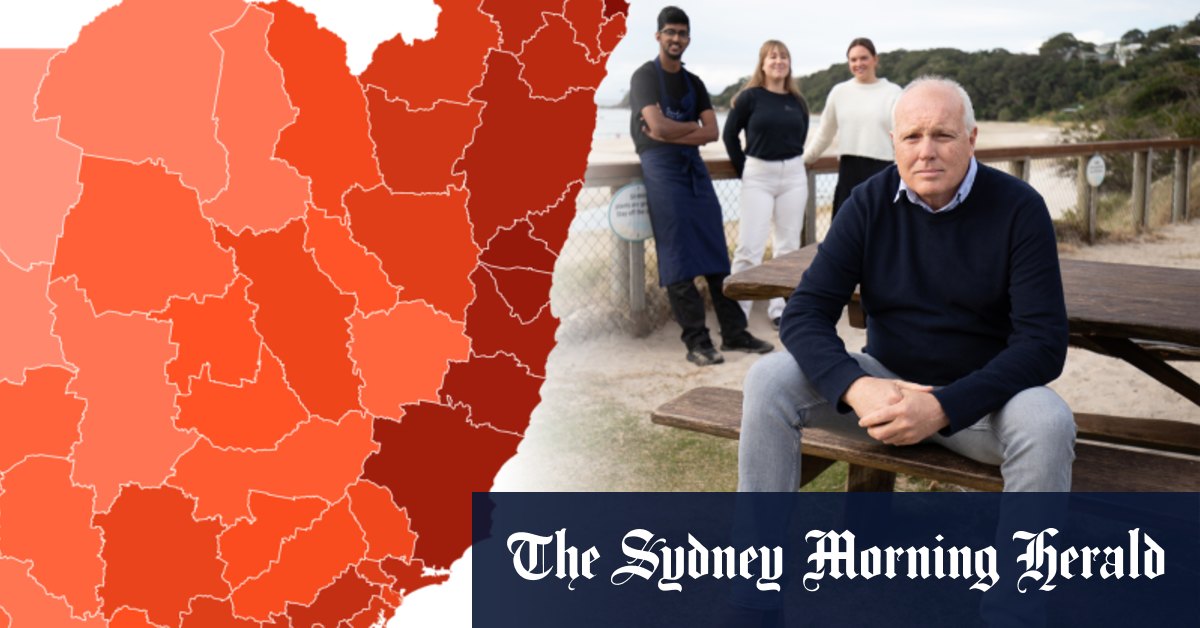
Chef Sanket Acharya arrived in Byron Bay from Sydney.

Chef Sanket Acharya arrived in Byron Bay from Sydney.
Credit:Danielle Smith

One of Kirkwood’s tenant employees, Sanket Acharya, said he was relieved to have accommodation provided when he moved to Byron Bay from Sydney to take up a chef position at Kirkwood’s restaurant.

“I’ve seen my friends and colleagues struggling for accommodation in Byron. It’s very expensive. I’ve been very lucky,” he said. “Finding accommodation in Byron is much more difficult than finding it in Sydney.”

Byron Community Center general manager Louise O’Connell said the housing crisis had been building in the shire for a while, “then COVID hit, then the flood hit, and what was a housing emergency is now a catastrophe”.

loading

O’Connell’s organization opened a drop-in center called Fletcher Street Cottage in April, which is run on donations from people including Chris Hemsworth and Bernard Fanning, and offers breakfast and shower and laundry services to people who need them, as well as access to social workers.

“You’re seeing a whole different demographic of people coming to us asking for help – people who have never accessed services before,” O’Connell said. “There are kids in their school uniforms coming with their parents to have breakfast. It is so bad.”

She said the short-term holiday rentals market had cut the supply of long-term homes in the area, making it harder for even professionals to find a place to live.

More than 15 per cent of dwellings in the Byron local government area were empty on census night, six percentage points higher than the state average.

The council secured approval from the state government last month to limit short-term holiday rentals to 90 nights a year in some parts of the shire and has now put the proposal out to the public for comment.

Our Breaking News Alert will notify you of significant breaking news when it happens. Get it here.

Categories
Australia

Southeast rain band causes flood warnings in Victoria and NSW

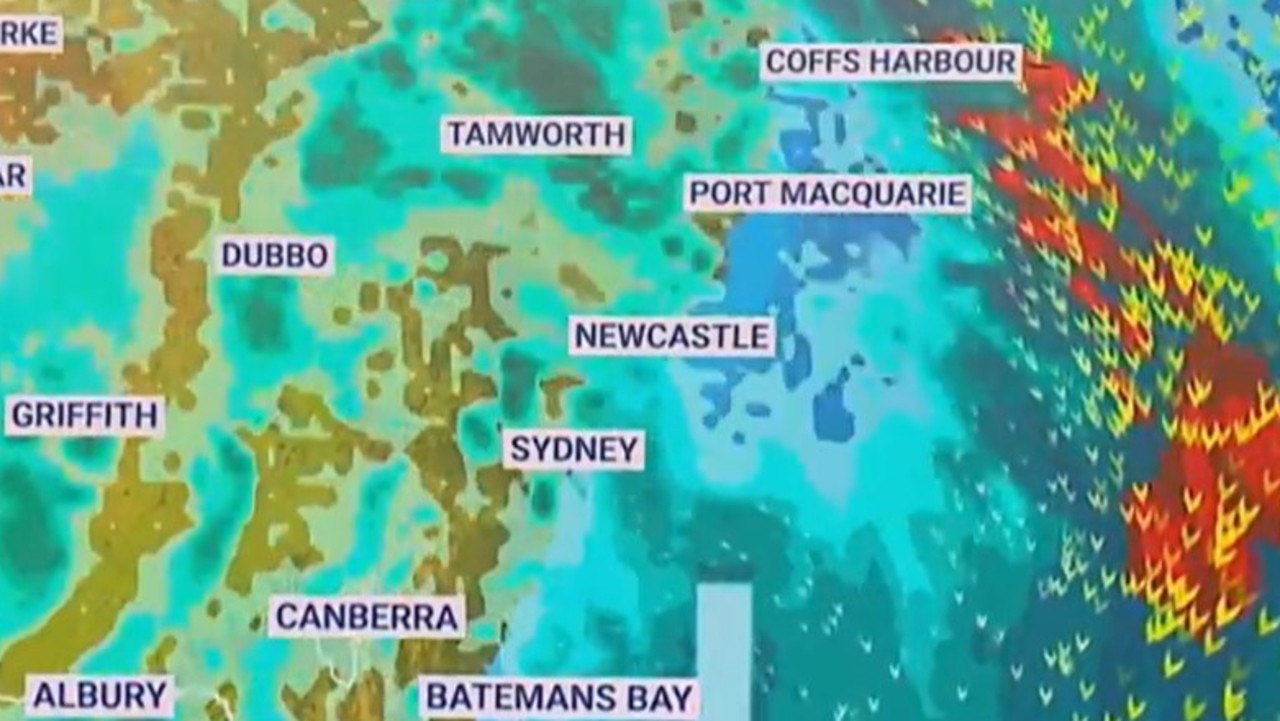
Parts of NSW are preparing for the worst day of a rain band that is moving through the state, leading to renewed fears of flooding at inland rivers.

A cold front, associated with a low pressure system that moved through Western Australia, brought showers to western NSW from late Thursday and extended into eastern parts of the state on Friday.

The Bureau of Meteorology said Friday was forecasted to be the wettest day of the rain event for most NSW regions, with inland rivers at an increased risk of flooding due to recent deluges in the area.

“This rainfall may cause widespread minor to moderate and possibly major flooding along inland NSW rivers, many of which experienced flooding due to the rainfall last week,” it wrote.

The bureau expects renewed flooding at multiple river catchments littered across the state on Friday, including a minor to major flooding for the Macquarie River downstream of Burrendong Dam.

The other 13 warnings were either minor or moderate in nature for parts of inland NSW, with up to 25-55mm of rain possible around the northwest and central west plains.

Widespread rain and possible storms are predicted until Saturday across the coast, with Sydney and Newcastle expected to experience a deluge on Friday, while it could last until Sunday for inland regions.

Last month was the wettest July on record for much of the NSW east coast, including Sydney, with rainfall around four to eight times higher than average.

Parts of Victoria are also being impacted by the east-coast deluge, with rain bucketing down since 9am on Thursday.

Mount Buffalo copped 51.6mm of rain in the last 24 hours, while Archerton experienced a 34.6mm soaking.

Rainfall totals have generally been 5-10mm across the state, but increased to around 15-25mm over the central ranges and 20-30mm in the northeast ranges.

Minor flood warnings are in place for parts of the Murray and Kiewa rivers.

The bureau’s climate outlook forecast is that rain will likely be above median for much of Australia over the coming fortnight but below median for parts of the tropics.

.