Categories
Australia

Respite program aims to end ‘revolving door’ for Perth’s unwell homeless people

Losing her leg to cancer was a traumatic enough experience for Anthea Corbett — but having no home to recover in made things much worse from a psychological and emotional perspective.

“It was hard because, you know, the same time, when you’re homeless, you just want to stay alive,” she said.

“Basically, you’ve got to protect yourself and you got to be careful, because some people are rough, especially guys, when it comes to a woman being homeless.”

A new Perth program is offering respite for homeless people who have just come out of hospital, addressing the “revolving door” issue that sees them struggle to recover on the streets.

The exterior of a beautiful, old house in Northbridge, surrounded by trees.
The respite center caters for homeless people leaving hospital.(ABC News: David Weber )

Inspired by how the US city of Boston, Massachusetts tackles health care for the homeless, an old backpacker accommodation in Northbridge has been transformed into a short-stay facility for homeless people who have been discharged from hospital.

The Medical Respite Center is funded by the Department of Health with philanthropic support and offers 20 medical and 10 non-medical beds, providing a safe place to sleep and recover and helping connect people with health care services and support to get housing and accommodation.

homeless people die younger

Homeless Healthcare chief executive Andrew Davies, who initiated the set up of the StayWitch’s service, said the interaction between health and homelessness was “huge.”

“We’re finding that the average age of death is about 48 years old, which is incredibly poor when you compare it to the mainstream community,” he said.

.

Categories
Australia

Managers of St Basil’s Aged Care Home compelled to give evidence at coronial inquest

The managers of a Melbourne aged care home where 50 people died in a COVID-19 outbreak will be compelled to give evidence at a coronial inquiry.

Kon Kontis and Vicky Kos were in charge of the St Basil’s Aged Care Home in Fawkner when the virus swept through the facility in July and August 2020.

They were initially called to give evidence at a coronial inquest last year but refused on the grounds they might incriminate themselves.

State Coroner John Cain then made a ruling compelling them to appear, but Mr Kontis and Ms Kos took the matter to the Supreme Court.

Today Justice Stephen O’Meara ruled against the pair, finding the coroner had acted lawfully.

A blue and white sign that reads 'St Basils Victoria' in front of a building
A COVID outbreak claimed the lives of 50 residents of the St Basil’s aged care facility.(ABC News: Danielle Bonica )

Klery Loutas, who lost her 77-year-old mother Filia Xynidakis in the disaster, has welcomed the decision.

“They [Mr Kontis and Ms Kos] have got vital pieces of the puzzle that they need to share with us so we know exactly what happened, how it happened, so governments and legislators can take action so that it doesn’t happen again,” Ms Loutas said.

Ms Loutas said the delay caused by the Supreme Court action had been difficult for families.

“We’ve all been very anxious, we all want to get through this and survive the stress and the torment and the anguish and the trauma we have faced having gone through this and the process being delayed, it just adds stress to our lives, she said.

“We’ve buried our loved ones, but we haven’t laid them to rest and until we find out exactly what happened to them and why it happened none of us will be at peace, none of us will ever be at ease or start to properly mourn and grieve.”

The inquest last year heard care for residents dropped off dramatically when the virus took hold in mid-July 2020.

After Victoria’s Chief Health Officer ruled that all staff had to be considered close contacts, the federal government struggled to find a replacement workforce.

The inquest heard residents were left malnourished and dehydrated and within six weeks, 50 had died.

The inquest was added while Mr Kontis and Ms Kos’ battle to stay silent continued.

It is unclear when the hearing will resume.

St Basil’s operators facing charges

Today’s Supreme Court decision comes as the operators of the nursing home also appeared in the Melbourne Magistrates’ Court where they are accused of breaching the Occupational Health and Safety Act.

A sign on the fence outside St Basil's Homes for the Aged has olive branches and blue and white ribbons tied to its sides.
WorkSafe alleges the nursing home operator did not make sure workers wore protective equipment.(ABC News: Joseph Dunstan)

St Basil’s is facing nine charges which include failing to provide and maintain a safe working environment, failing to provide information and supervision, and failing to make sure that people other than staff members were not exposed to health and safety risks.

WorkSafe investigators allege the nursing home operator did not make sure workers wore protective equipment and did not train workers in how to use it.

They also allege St Basil’s failed to tell workers when protective equipment should be used, failed to supervise them using the equipment or verify that they were able to competently don and doff the gear.

If convicted, the nursing home provider is facing ends of just under $1.49 million.

St Basil’s will return to court in December for an administrative hearing.

.

Categories
Australia

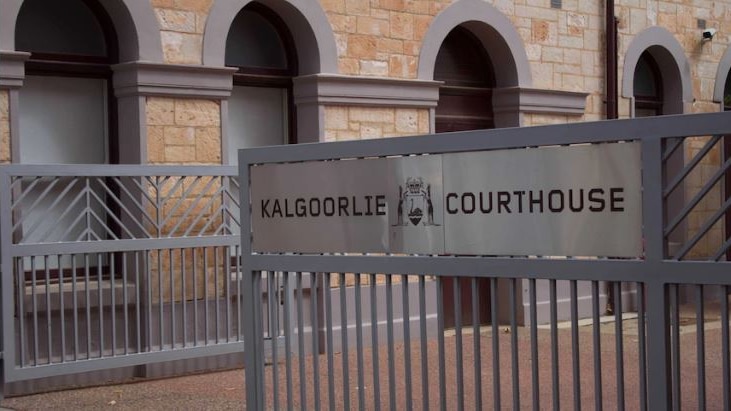
Warburton man fronts Kalgoorlie court over sexual assault and aggravated burglary charges

A man charged with rape and multiple aggravated home burglary offenses has been denied bail by the Kalgoorlie Magistrates Court in Western Australia.

Andrew Travis Giles is accused of breaking into three homes across Kalgoorlie and South Kalgoorlie in the early hours of Monday morning and sexually assaulting or indecently assaulting a woman at each of the properties.

Police prosecutor Darren Woods said the 30-year-old man from Warburton was arrested within four hours of the last alleged offence.

He told the court Mr Giles was wearing inside out blood-stained jeans when he was arrested, and a latex glove containing blood was also found at the tent where he was located by police.

Mr Woods said there would be further testing, but the blood was believed to be from the victims.

He said the clothing appeared to match what the alleged offender was seen wearing in CCTV footage from one of the victim’s homes.

Victims traumatized

Mr Woods said the alleged victims had been traumatized by what had happened and were giving evidence to help with identification of the offender.

“We anticipate further charges will be laid,” he said.

Mr Giles has already been charged with six offences, including committing an aggravated indecent assault in the course of an aggravated home burglary.

The defense counsel for Mr Giles told the court he was applying for bail on instruction from his client — despite advising against it — because Mr Giles wanted to attend a funeral in Warburton.

Magistrate refuses bail

Mr Woods strongly opposed dance.

“While there will be a long period in custody before it goes before the District Court, any period in custody would be far outweighed by the minimum 15-year sentence for the offence,” he said.

Magistrate Matthew Holgate refused bail.

He said there were no conditions that could be imposed on bail that could determine Mr Giles from further offending or from absconding.

“It is not possible to overstate the seriousness of the alleged offences,” he said.

Dressed in a blue hoodie and gray trackpants, Mr Giles only spoke to confirm his name.

He will next appear in court via video link on September 1.

.

Categories
Australia

Greens in heated debate over position on climate change bill

“The targets set a floor on Australia’s emissions reduction ambition, not a ceiling,” said the explanatory memorandum for the bill introduced into the lower house last week.

“There is nothing in this bill that would prevent these targets being surpassed or achieved early.”

The bill also requires the federal government’s Climate Change Authority to advise on the targets and publish its findings.

“Finally, there will be periodic independent reviews of how this bill is operating, with the first
such review to take place within five years, and thereafter every 10 years,” the memorandum said.

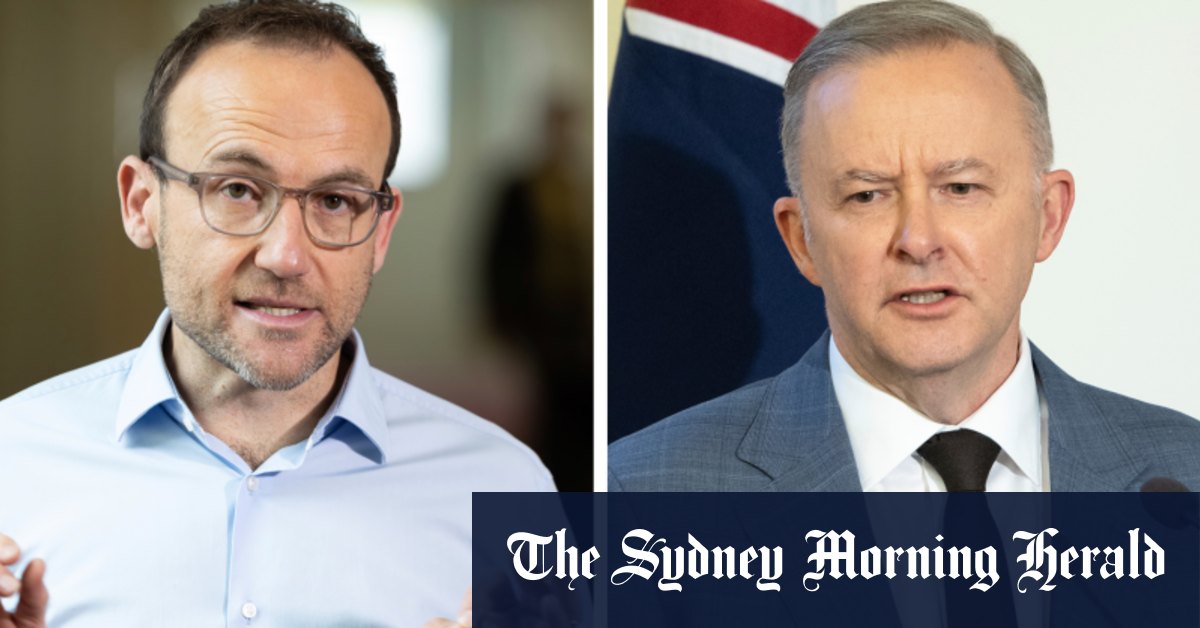
Bandt said last week the Australian people wanted the Greens and Labor to work together and the Greens were “up for that” in the talks on the climate bill.

“We will continue these negotiations in good faith to see if we can reach a position where we can pass legislation that allows us to start taking climate action because that’s what people want,” he said.

Greens NSW senator Mehreen Faruqi criticized the Labor target ahead of the party room meeting to decide the Greens’ position.

“We know that 43 per cent, obviously, is not enough to deal with the crisis we are facing,” Faruqi told the ABC on Tuesday afternoon.

“We have been able to get the Labor government to move and to rewrite parts of that bill.”

loading

Faruqi said the negotiations were “ongoing” and Labor had already agreed the target could be increased over time but flagged the Greens would also put amendments to phase out coal and gas, a call Labor has rejected.

A key point of contention is the demand from the Greens for changes to environmental approvals to insert a “climate trigger” into federal law so authorities including the federal environment minister would have to consider the impact of a project on carbon emissions before deciding whether to mine or major infrastructure should proceed.

“The government has not said no to a climate trigger,” she said.

“It is really important that we enshrine this in law so that it forces corporations and big mine developers to be honest about the pollution they are causing, and it forces the minister to consider the assessment of climate emissions in terms of assessing developments.

loading

“I mean, it does not make sense to not do that in such a climate-constrained world.”

Dutton gained support in the Coalition party room on Tuesday to vote against the government bill and launch a process to decide on a new climate policy to update the 2030 target of a 26 to 28 per cent emissions cut, set when Tony Abbott was prime minister.

Liberals including Bridget Archer, Andrew Bragg and Warren Entsch have signaled support for deeper cuts but did not tell the party room meeting they reserved their right to cross the floor.

Several Liberals said it was more important to focus on a more ambitious Coalition policy rather than the government bill, given Bowen had said he could go ahead with his policies even if the bill were defeated.

“Chris Bowen made it clear Labor don’t need the legislation to implement their emission reduction policies,” said Liberal MP James Stevens, the member for Sturt in South Australia, after the meeting.

“I’m focused on working with the Coalition team on the emission reduction targets we take to the next election for 2030 and 2035.”

Cut through the noise of federal politics with news, views and expert analysis from Jacqueline Maley. Subscribers can sign up to our weekly Inside Politics newsletter here.

Categories
Australia

‘The most expensive Maccas meal’: Traveler from Indonesia fined $2664 for undeclared sausage and egg McMuffins at Darwin Airport

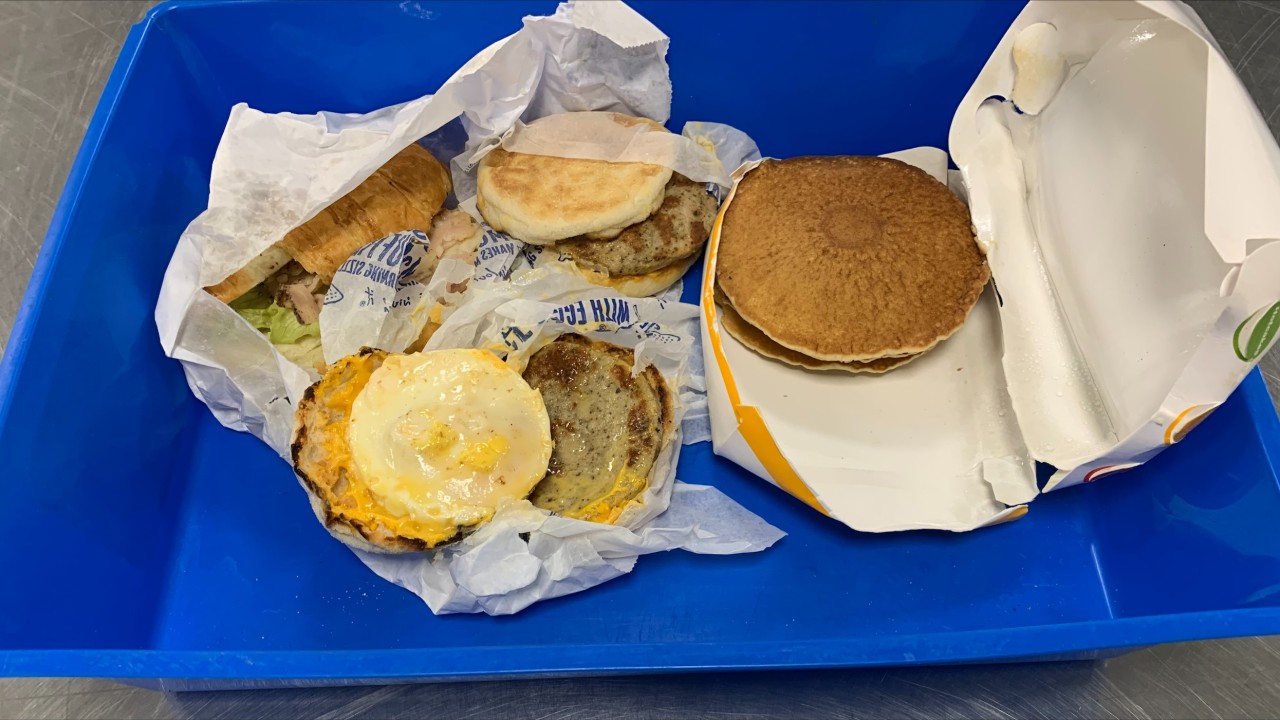
A passenger who arrived in Australia from Indonesia has been fined $2,664 for failing to declare McMuffins in their luggage amid an outbreak of foot and mouth disease overseas.

The Labor government has rolled out biosecurity dogs at Darwin and Cairns airports as part of a $14 million package to bolster Australia’s protection from FMD.

Detector dog Zinta inspected the passenger’s backpack at Darwin Airport and found two egg and beef sausage McMuffins from McDonalds in Bali and a ham croissant.

Minister for Agriculture, Fisheries and Forestry Murray Watt said the seized meals would be tested for FMD before being destroyed as Australia remains “FMD-free”.

“This will be the most expensive Maccas meal this passenger ever has, this fine is twice the cost of an airfare to Bali,” he said in a statement on Monday.

Stream more national news live & on demand with Flash. 25+ news channels in 1 place. New to Flash? Try 1 month free. Offer ends October 31, 2022

“But I have no sympathy for people who choose to disobey Australia’s strict biosecurity measures, and recent detections show you will be caught.

“Zinta was placed at Darwin Airport as part of the Albanese Government’s tough new biosecurity defences, and it’s excellent to see she is already contributing to keeping the country safe.”

FMD is a highly contagious disease of livestock causing fever followed by the development of vesicles (blisters) in the mouth and on the feet.

Indonesia is currently battling an FMD outbreak, which has sparked fears it could spread to Australia and cripple the $80 billion livestock industry.

The viral disease has also been reported in countries in Africa, the Middle East, Asia and South America.

Mr Watt reinforced that biosecurity is “no joke” as goods must be declared to enter Australia.

“Biosecurity is no joke—it helps protect jobs, our farms, food and supports the economy,” he said.

“Passengers who choose to travel need to make sure they are fulfilling the conditions to enter Australia, by following all biosecurity measures.”

FMD affects all cloven-hoofed animals including cattle, sheep, goats, camelids, deer and pigs.

The virus is carried by live animals and in meat and dairy products, as well as in soil, bones, untreated hides, vehicles and equipment used with these animals.

The government has rolled out sanitation foot mats at all international airports, along with support on the ground for Indonesia and neighboring countries.

Prime Minister Anthony Albanese is adamant Australia’s strong biosecurity will stop the incursion of foot and mouth disease.

The package contains $9 million for frontline biosecurity and industry preparedness measures.

A further $5 million is used to provide technical expertise and support to Indonesia, Timor-Leste and Papua New Guinea to assist their work in combatting livestock diseases.

“The Federal Government is taking this seriously, and we need every traveler to do their bit too,” Mr Watt said.

.

Categories
Australia

ICAC report says pork-barrelling may be corrupt conduct

The ICAC did not make findings about individual grant schemes or politicians, and there is no suggestion that Berejiklian or Morrison were sanctioning corrupt conduct by making those comments. But the watchdog clarified that “pork-barrelling can indeed amount to a breach of the law, including the criminal law.”

loading

Pressuring a public servant to skew a grant assessment, dishonestly favoring political and private advantage over merit and deliberately breaching the guidelines of a grant program could amount to corrupt conduct, the ICAC said. It acknowledged that a politician may obtain a political benefit from exercising their public powers, but said this must be in the nature of a “side wind” and not their “dominating motivation”.

Griffith University Professor AJ Brown, leader of the Center for Governance and Public Policy’s public integrity and anti-corruption research program, participated in an expert forum as part of the ICAC’s investigation into pork-barrelling. He welcomed the report and said he hoped the NSW government adopted all 21 recommendations.

The report served a “dual function”, Brown said, in helping to change the political culture, but also “strengthening the hand of the public service, and recognizing and enforcing and upholding the expectation that the independent public service will play this crucial role in making decisions based on merit”. Both functions were equally important, he said.

Brown said governments had been allowed to function on the basis that an election commitment was itself a formal decision to allocate money, and that it had the authority of law and satisfied all criteria for a funding allocation to be made.

“That’s not a decision,” he said. “That’s an indication of the policy intent of the government. You can’t outsource the decision-making of government to a political candidate who hasn’t even been elected yet.”

The ICAC’s centrepiece recommendation was for guidelines about grants funding to be set out in statutory regulations, not policy documents, so that a contravention would amount to a breach of the law.

The watchdog also recommended NSW follow the lead of the Commonwealth and enshrine in law a requirement that a minister “must not approve expenditure of money unless that the expenditure would be an efficient, effective, economical and ethical use of the money and that the expenditure represents value for money”.

Anthony Whealy, QC, chair of the Center for Public Integrity and a former Court of Appeal judge and ICAC assistant commissioner, said the report “draws the demarcation line between merely promising money with an eye to political gain” and making a grant “primarily or solely for political gain, or where the public interest is ignored”.

He said the former “may be distasteful [but] is not corrupt conduct or criminal behaviour”. The latter “could amount to misconduct in public office, a criminal offence, or, at a lesser level, it could be a substantial breach of the ministerial code of conduct if a minister is involved”.

loading

But Whealy was less optimistic that the report would be heeded. “Putting it bluntly, we probably need to see a successful prosecution before this bites effectively. It’s easy for politicians to fool themselves into thinking that they’re acting in the public interest,” he said.

He said the law needed to be changed to ensure that grants guidelines “are published by parliament and that the selection process is reported on to parliament … and we need a parliamentary oversight body to whom a report is made”.

“All those things are cumbersome, but until we get that we’re not going to improve the system,” Whealy said.

The Morning Edition newsletter is our guide to the day’s most important and interesting stories, analysis and insights. Sign up here.

Categories
Australia

Federal government to block billions in superannuation payments claimed by public servants

The federal government is trying to block a superannuation claim from public servants that threatens to cost the Commonwealth as much as $8 billion.

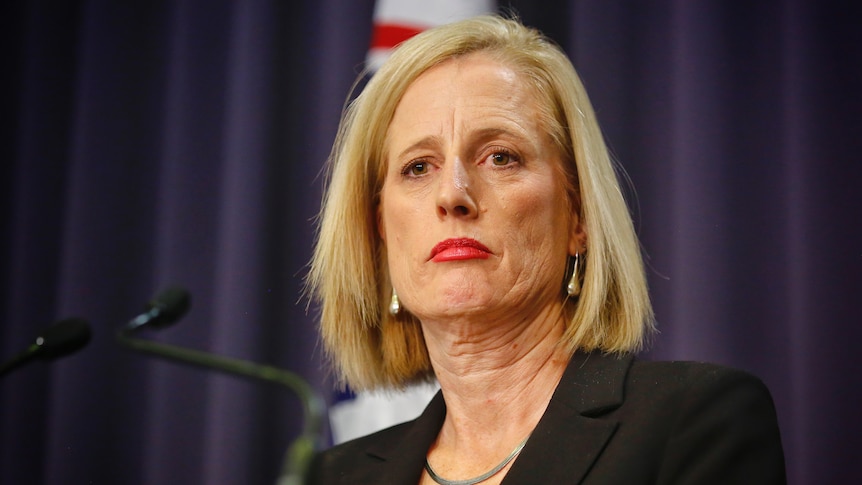
Finance Minister Katy Gallagher this morning briefed Labor MPs on a bill that will be introduced into parliament on Wednesday in an attempt to squash a claim currently being considered in court.

The unusual move was sparked by an ongoing case in the Federal Court brought by three employees at the Department of Foreign Affairs and Trade (DFAT).

Through their lawyers, Brendan Peace, Peter Fennell and Timothy Vistarini have argued that DFAT did not correctly include their rent-free accommodation and some allowances as part of their salary, while they were posted overseas.

The government’s bill would retrospectively refer to a paragraph of existing legislation that includes the value of rent-free housing in the default superannuation salary of Commonwealth employees in certain circumstances, which the men are using to bring the case.

If the DFAT employees were successful, the government said, additional superannuation could be paid into their schemes, and could also posted affect around 10,000 public servants overseas between 1986 and 2022, costing the Commonwealth between $3 billion and $8 billion.

A spokesman added it could lead to “windfall gains” in some cases, potentially worth several millions of dollars, which the government considered “well beyond community standards”.

The implications of the case were flagged in this year’s federal budget and a number of agencies are likely to be caught up in the matter, including the Foreign Affairs Department and the Australian Federal Police.

A media release issued by Senator Gallagher on Tuesday argued the government had decided to act now to ensure “the entitlements of Commonwealth employees remain fair and reasonable and, importantly, that they continue to represent a responsible use of taxpayers’ money.”

It added the case could have unintended ramifications and mean that some Commonwealth employees could end up with unexpected debts for unpaid superannuation contributions.

Lawyers for the three men confirmed the civil case was ongoing but declined to comment to the ABC.

The Federal Opposition is likely to back the legislation and help move it swiftly through parliament.

.

Categories
Australia

ACT Independent senator David Pocock delivers maiden speech in Senate, welcomes deaf community in Auslan

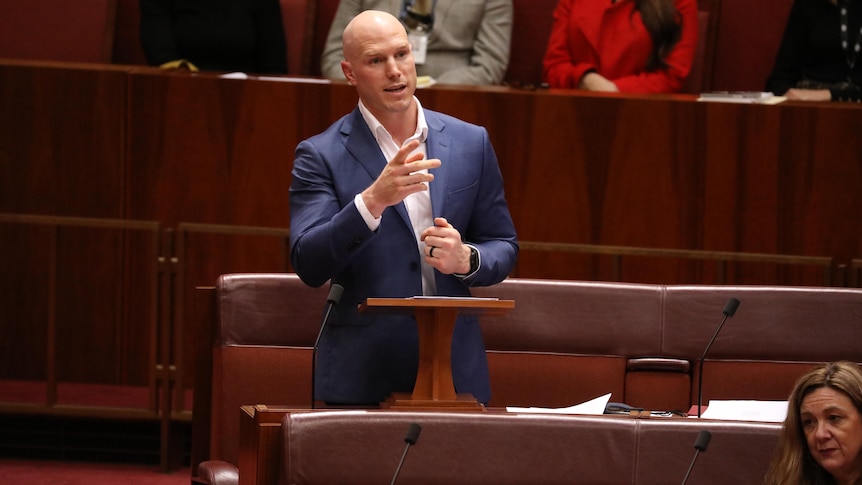
ACT Independent senator David Pocock has delivered his maiden speech to federal parliament, during which he welcomed the deaf community using Auslan.

In preparing to make his first speech, Senator Pocock asked last week if he could have an Auslan interpreter alongside him on the floor of the Senate.

But Senator Pocock said both major parties denied his request – a decision he labeled “disappointing.”

Instead, as Senator Pocock delivered his first speech to the chamber, Auslan interpreter Mandy Dolejsi appeared on a large TV behind him and was also broadcast translating his words for people who are deaf or hard of hearing.

“When I was asked by people in our community to have this first speech live-translated into Auslan I didn’t hesitate to say yes,” Senator Pocock said.

“So, thank you, Mandy, for being here today and translating my words.”

But Senator Pocock said the compromise that had been struck to have Ms Dolejsi in a studio and not on the chamber floor was “the difference between accessibility and inclusion”.

“Today we have achieved the former but not the latter. In future, I hope we can achieve both,” he said.

In a message to further demonstrate what he said was his intention to make Australia’s parliament more inclusive, Senator Pocock himself signed a short welcome to the deaf community, though the Senate cameras were too far away to effectively capture it.

New senator doubles down on action on climate change, restoring territory rights

David Pocock speaking in the Senate chamber.
Senator Pocock says he hopes the latest attempt to restore territory rights will be successful.(ABC News: Ian Cutmore)

Senator Pocock made history on the night of the federal election when he became the first territory senator who was not from a major party.

One of the so-called “teal independents”, he had campaigned on a range of issues, including action on climate change and territory rights.

In addressing the chamber, Senator Pocock solidified his support for the issues, saying he wanted “to be a peace broker in the 47th parliament.”

“There is no challenge greater than facing up to the climate and biodiversity crises we face,” he said.

“Today, the systems that sustain life on earth are at the brink of collapse. The climate as we know it is breaking down and the impacts are now being felt with distressing regularity.

“The challenges facing us are so important. I want to be part of making sure we don’t just end the climate wars, we win them.”

Senator Pocock on Monday threw his support behind a bill introduced to parliament by Canberra MP Alicia Payne and her Northern Territory colleague Luke Gosling.

If successful, the bill would repeat the 1996 ban on the territories debating voluntary assisted dying laws.

“It is time for us to restore the right of the territories to make decisions for themselves. To ensure that our Legislative Assembly here in the ACT gets to make decisions about the future of Canberrans, not MPs from around the country whose own constituents already enjoy these same rights,” Senator Pocock said.

“This is not the first time the parliament has tried to repeal the Andrews Bill. But I hope it will be the last.”

ACT ‘no longer a safe seat’, senator says

Telstra Tower in the foreground overlooking Lake Burley Griffin with the sun setting over mountains.
Senator Pocock says “for too long we have been neglected, ridiculed, looked down on or flat out ignored.”(ABC My Photo: @outdooraus)

In concluding his speech, Senator Pocock vowed to use his power as an independent senator and crossbencher “in the best interests of the people of the ACT.”

“For too long we have been neglected, ridiculed, looked down on or flat out ignored,” he said.

“We’re the nation’s capital. I want this to once again be a source of great pride.

“No longer are we a safe seat … The days of the ACT getting less than a quarter of our share of infrastructure funding by head of population are over.

“And so finally, I would like to say thank you to the people of the ACT. Whether you voted for me or not, I will work on your behalf for the next three years.

“I’m committed to being accessible and transparent and I certainly know that you will hold me to account.”

.

Categories
Australia

Carl ‘Charles’ Webb’s prisoner-of-war brother bars resemblance to Somerton Man

As researchers try to piece together Carl Webb’s life, it has been revealed his older brother — who bore a striking resemblance to the Somerton Man — died a prisoner of war.

Last week, University of Adelaide researcher Derek Abbott made a breakthrough in the case that has baffled detectives for decades, identifying the mysterious Somerton Man as Melbourne electrical engineer Carl “Charles” Webb.

Carl Webb’s birth certificate shows he was born on November 16, 1905, in Footscray and had five older siblings named Russell, Freda, Gladys, Doris and Roy.

According to his service record, held by the National Archives of Australia, Roy Webb enlisted in the Australian military in July 1940 and served in the 2/29th Battalion.

Somerton Man
The man dubbed the “Somerton Man” was found dead on an Adelaide beach in 1948.

He became one of the many causalities of World War II in 1943.

When he joined the army, he was 35 years old, living in Carnegie with his wife Ruby and working as a “car driver”.

His record states he disembarked in Singapore on August 23, 1941, and was reported missing in February 1942 before being confirmed as a prisoner of war in Malaya in September 1943.

Roy Webb’s will, which is included in the archives, was witnessed by his sister Freda Keane and her husband Gerald Keane, of East Brunswick, Victoria, in 1940.

Some of the contents of the suitcase believed to belong to the Somerton Man.
“T Keane” was found printed on some of the Somerton Man’s personal belongings. (Supplied: Derek Abbott)

Gerald Keane’s full name was Thomas Gerald Keane and the Somerton Man was found with “T Keane” printed on his tie.

Keane was also found printed on other personal items in a suitcase that was uncovered in the cloakroom of the Adelaide Railway Station in January 1949.

It had been checked in the day before an unidentified man’s body was discovered on Somerton Beach in January 1948, and police suspected it belonged to him.

Professor Abbott believes Carl Webb’s clothes were hand-me-downs from his brother-in-law, who lived just 20 minutes’ drive from his home in Melbourne.

The body of the unknown man found on the beach at Somerton.
Mystery has surrounded the identity of the Somerton Man for decades. (Supplied: Derek Abbott)

Professor Abbott said the photo of Roy Webb in his service record revealed a resemblance between the two brothers.

“It appears to be a reasonable resemblance,” he said.

“The general shape of the face is the same, the hair line is the same.”

Roy Webb’s eye color is listed as hazel, the same as The Somerton Man’s.

Wednesday is your chance to ask the experts how they cracked the Somerton Man case — and why it has attracted so much attention. Join our live Q&A blog from 12pm AEST.

Loading form…

.

Categories
Australia

Darwin campers wake to find large crocodile at their door

A group of campers have been left shocked after waking to find a giant crocodile outside their caravan in a popular Darwin camping spot.

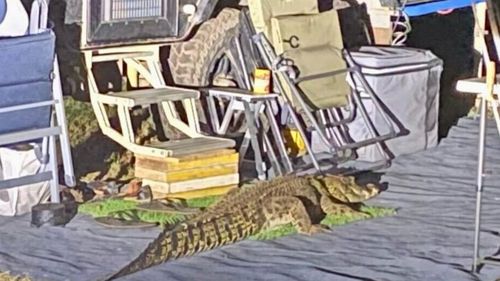
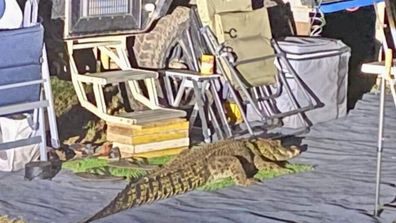
Campers at the aptly named Dundee Beach Holiday Park were woken up by yelling after a 2.5 meter crocodile sauntered to the bottom of one family’s caravan steps.

“They didn’t know what was going on at first because they were asleep, they thought what was all this commotion outside and people talking right outside their van and they went to come outside and we yelled don’t come out there’s a croc, “Witness Nyomi Hogan said.

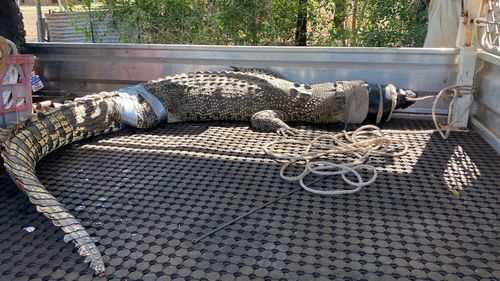
Crocodile removed from Dundee Beach Holiday Park
The crocodile was found near a carvan at Dundee Beach Holiday Park (9News)

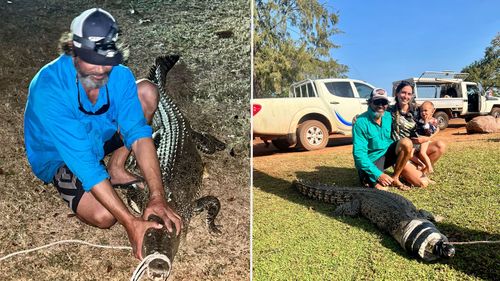
Fishing guide Kurt Williamson managed to trap the beast before rangers were able to remove it.

It’s the first time a crocodile has been spotted at the campsite.

“First time for me and for the other guys on the croc team finding one in the middle of a caravan park,” ranger Jaylan Marshall said.

Crocodile removed from Dundee Beach Holiday Park
Some brave campers managed to trap the reptile. (9News)

“In the middle of the Dundee it’s pretty uncommon it’s never happened before that we know of.

“With the dogs and the food from the barbeques and everything like that, the smells would sort of entice him to come in as well.”

Crocodile removed from Dundee Beach Holiday Park
The crocodile measured up to 2.5 meters. (9News)

As dry season comes to an end, the rangers have warned tourists to stay “crocwise” and vigilant when visiting the Territory.

“Even if the water does look very tempting especially at this time of year you still have to be very vigilant with these guys hanging around,” Marshall said.

Darwin campers wake to find large crocodile at their door

Crocodile sneaks into popular Darwin campsite