Conaghan was unimpressed, insisting that the Greens MP had violated the dress code.
“This is not a barbecue. This is question time in the Australian parliament. What next, board shorts and thongs? Maybe a onesie in winter,” he said in a statement following the controversy.
“Some may say that it’s a minor matter to not comply with the dress standard but what it says to many, including me, is that there is little respect for the tradition and history of our parliament.”
According to the official rule book—the House of Representatives Practice (7th edition) — the standard of dress in the chamber is a matter for the individual judgment of the member, but “the ultimate discretion rests with the Speaker”.
Indeed, the 1000-page document documents the evolution of that discretion over the decades. In 1977, the Speaker ruled tailored safari suits without a tie were acceptable, laying the foundation for Ruddock’s camel-coloured number decades later. Earlier rulings dating back to the 1920s permitted members to wear hats, but not when entering or leaving the chamber or while speaking.
loading
In 1999, Speaker Neil Andrew told the chamber that the widely accepted standard of professional dress involved good trousers, a jacket, collar and tie for men and a similar standard of formality for women but he would not rigidly enforce this.
This was endorsed by Speaker David Hawker in 2005, who permitted tieless forays into the chamber in some circumstances, but drew a firm line at “casual wear”.
“However, while I accept that members hurrying to attend a division or quorum will sometimes arrive without a jacket or tie, it is not in keeping with the dignity of the House for members to arrive in casual or sports wear,” he said.
There is now a recurring motif in Australian politics where you see a headline declaring a senator has done something idiotic, unspeakable or downright insane and then get mildly disappointed to discover it’s just Lidia Thorpe again.
This is of course the existential peril of the attention seeker – sooner or later people stop paying attention.
Whatever the latest outrageous thing Thorpe has said, it no longer merits any outrage simply because it is her saying it. She is the Pauline Hanson of the left.
And so when she did her silly swearing in stunt this week it carried all the weight of a crazed doomsayer on a sandwich board with scrawled inscriptions about the End of Days.
What Thorpe is useful as, however, is a totem pole – no, a shining beacon if you will – that serves to remind us all just how utterly crazy the Greens really are and why they should never be trusted with policymaking in this country.
And while it is obviously a national tragedy that they now have 12 senators in the upper house, it is also why Labor’s negotiation with the minor party over its climate change bill has all the hallmarks of a chainsaw negotiating with a porkchop.
As The Australian reported on its front page on Wednesday, the bill is now set to pass after the Greens supposedly secured concessions — although what those concessions were tellingly elusive.
More telling was the report’s shrewd observation that the government would only accept amendments “if they did not fundamentally change the intent, mandate or principles of the legislation”.
In other words as long as they didn’t effectively amend anything much at all.
Indeed the only thing that really matters is Labor sticking to its 43 per cent reductions target and the Greens do not have a hope in hell of changing that.
And the Greens will of course ultimately have no choice but to pass the legislation because otherwise they will again be seen as climate pariahs — victims of their wilful idiocy a decade ago.
And so despite holding the numbers, the Greens don’t actually hold the cards.
And even if they did the unthinkable and blocked it again it would be even better for Labor because it could force a double-dissolution and — based on this week’s Newspoll — get an even more thumping majority.
why?
Because far from caving in to the la-la left, Anthony Albanese has been the model of a strong, pragmatic and rationalist Labor Prime Minister.
He has been tough on China, tough on border protection, tough on the Teals and tough on the Greens.
His Treasurer Jim Chalmers is already reining in spending to drive down inflation and debt, his Defense Minister Richard Marles is strengthening the ADF, and his Government Services Minister Bill Shorten just delivered the woke brigade the sweetest smackdown in years by simply asserting that mothers give birth to children.
To invoke another piece of reproductive vernacular, Labor has finally got its balls back.
This is what good government looks like, and its color sure ain’t green.
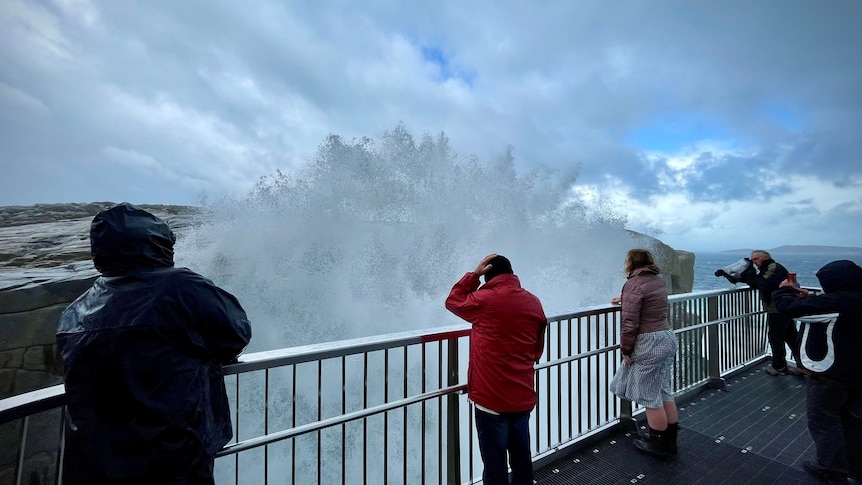
A swell of more than seven meters has hit Western Australia’s south coast as the third cold front in as many days swept across the region.
Key points:
A series of cold fronts generated strong winds, thunderstorms and rain across the state’s south
Daredevils visited the popular Albany tourist location, The Gap, to get a glimpse of large surf
A severe weather warning remains for damaging surf from Dongara to Albany
The seven to 10 meter swell had previously been forecast to hit the south and west coasts of WA, with authorities issuing a warning for gale force winds and dangerous surf.
The wet and wild weather did not deter people from catching a glimpse of the swell, which surpassed seven meters at 2pm.
Sightseers flocked to The Gap near Albany, a popular tourist spot with a 40-meter high platform suspended above the cliff.
A severe weather warning remains current for damaging surf from Dongara to Albany.
loading
A wind like more than 80 kilometers per hour was recorded at Albany airport as thunderstorms and rain moved east.
It followed a stormy few days in southern WA with winds causing damage from Geraldton to Albany.
The Bureau of Meteorology said conditions should ease late Wednesday into Thursday.
“Damaging winds are covering a larger area than we would normally see with these winter systems, [and] extending across a large part of the southern half of the state,” a spokesperson said.
The large swell draws a crowd to The Gap near Albany.(ABC Great Southern: John Dobson)
“Gusts in excess of 90kph are possible over the warning area with gusts in excess of 100kph about the west coast, south of Perth, until late Wednesday afternoon.
“Rainfall totals expected until the end of Wednesday are expected to be around 15-25 millimetres near the coast between Lancelin and Albany, with isolated higher totals to 40mm.”
A series of cold fronts brings wet and wild conditions to WA’s south coast.(ABC Great Southern: John Dobson)
A principal says better pay and a free ride to the bush would encourage teachers to follow their profession in regional South Australian schools.
Key points:
Regional schools have faced long-term issues finding teaching staff
A Riverland principal says more incentives are needed to attract teachers
The education sector wants to ensure a new push to recruit teachers nationwide will mean more regional staff
Federal Education Minister Jason Clare yesterday called on his state and territory counterparts to meet to create a national strategy to stop educators leaving the field and to attract more people to the profession.
He said the shortage wasn’t about flu and COVID-19 infections keeping teachers out of the classroom, but a drop in people entering the profession and an increase in educators leaving.
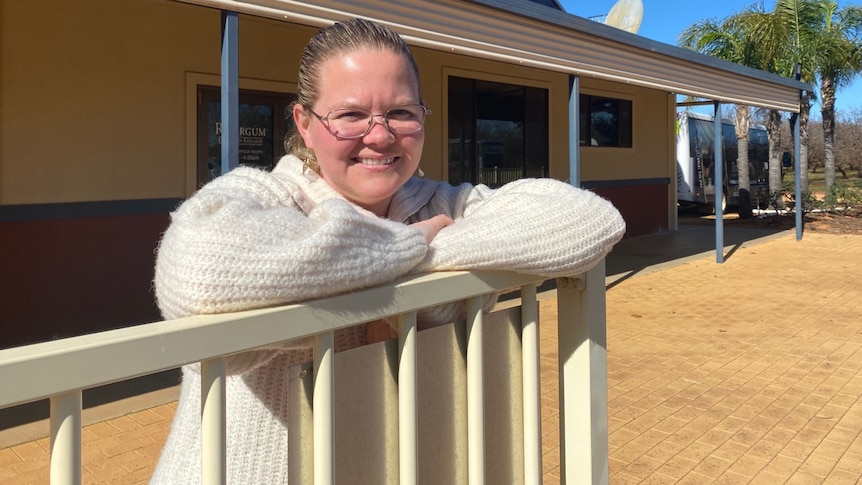
Rivergum Christian College principal Jessica Richards said it was a familiar trend in regional education.
Jason Clare has called on states and territories to address Australia’s teaching shortage. (ABC Riverland: Catherine Heuzenroeder)
“Something like 50 per cent of teachers quit in their first five years of teaching,” Ms Richards said.
She said teachers were an aging population because younger teachers were not coming in to meet demand.
“The pressure on teachers means they aren’t sticking it out for the long haul because there’s just so much that’s demanded of teachers these days,” Mr Richards said.
“Why would you stay in education when there’s other options available to you, even though education is such a vital part of our society?”
Regional stint should be ‘encouraged’
SA Department of Education chief executive Martin Westwell said the department was looking at incentive options for regional teachers.
Extra pay could encourage teachers to move to regional areas.(AAP: Dan Peled)
He said the department was looking at ways to create placements for education students to experience living in the country.
“We want the right people moving to country areas that are going to make the most out of living there and be quality teachers for our students,” Mr Westwell said.
Catholic Education South Australia Port Pirie Diocese education director Nicchi Mardon said the education sector needed to “strongly encourage” teachers to work in regional areas.
Nichii Mardon wants steps taken to strongly encourage teachers to regional areas. (Supplied: Catholic Education SA)
“We know that when people come into our communities they not only come into a school, but a town and regional community and find it so rewarding,” she said.
“There can be incentives as a part of that, but the heart of it that attracts people to come and for them to stay, is actually to experience an amazing community.”
Investing in the next generation
Ms Richards said covering moving costs and better pay for regional teachers were the first incentives that needed to be considered.
Ms Richards hopes more people can realize teaching is a rewarding profession. (ABC Riverland: Sam Bradbrook)
She said while regional education came with its own set of challenges, it was a rewarding job which offered unique experiences.
“There’s nothing quite like seeing an ‘a-ha’ moment where something clicks for a student where they go to a whole other level of their understanding of a task,” Ms Richards said.
“I’m a huge believer in the next generation and we really need to invest in these young people and what better way to do that through education.”
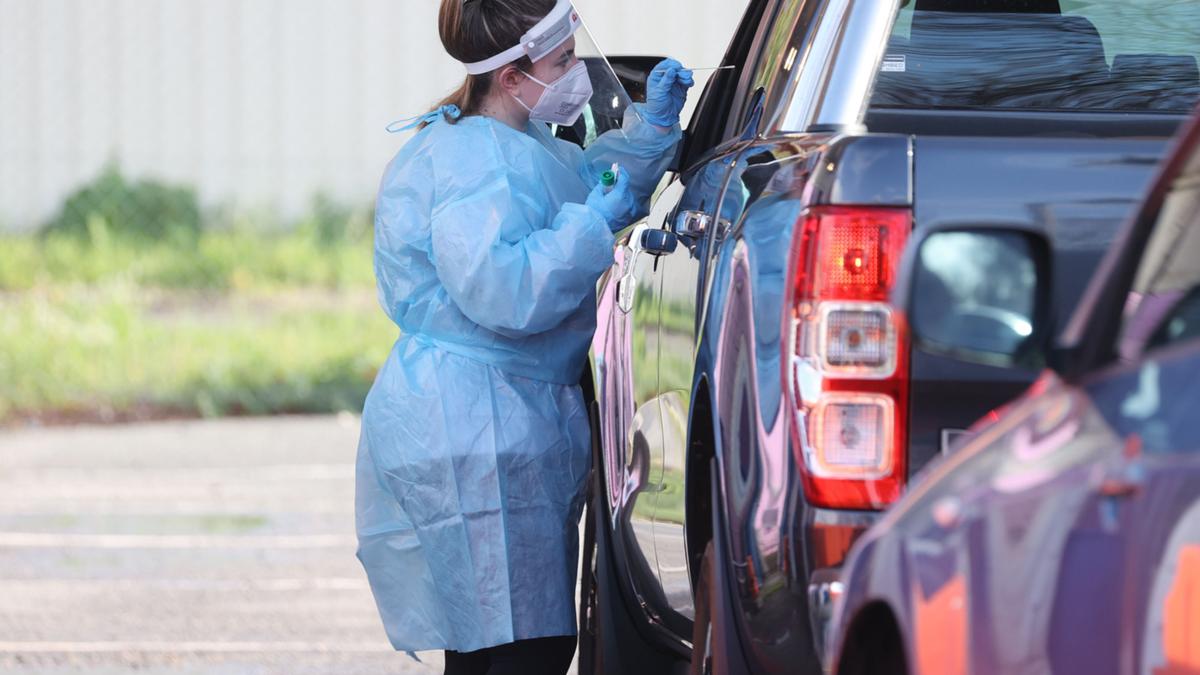
WA has recorded a rise in daily COVID cases to 4,062 new cases and four new virus-related deaths.
It comes as the Federal Government accepted an Australian Technical Advisory Group recommendation to make COVID-19 vaccination available for children aged six months to under five years.
Modern COVID-19 vaccine will be accessible for about 70,000 children in certain at-risk population groups from September 5.
The COVID-related deaths in WA report date back to July 28 and include a man in his 100s, a woman in her 80s and a man and woman in their 60s.
Hospitalizations remained stable to 6pm last night with 404 people still admitted, while patients requiring intensive care dropped to 12.
Of the 4062 cases, 1479 were confirmed via PCR test, the remaining 2583 were self-reported positive rapid antigen tests.
The daily figures are an increase on yesterday’s 3821 recorded infections and 2816 the previous day.
There were 4034 cases reported on Saturday.
The infections bring the State’s current active cases to 22,290.
At this stage, the COVID-19 vaccination is only recommended for children aged six months to under five years with severe immunocompromise, disability and those who have complex and multiple health conditions which increase the risk of severe COVID-19.
A bill to restore territory rights has passed in the House of Representatives this morning, edging the ACT and Northern Territory closer to being able to set their own laws on voluntary assisted dying.
Key points:
The House of Representatives has passed legislation repealing a ban on the territories introducing euthanasia laws
If passed in the Senate, the bill will give the territories the right to vote on the issue themselves
The ban has been in place for 25 years and makes the ACT and NT the only Australian jurisdictions to not allow voluntary assisted dying
The private member’s bill was introduced by Labor MPs Alicia Payne and Luke Gosling on Monday and aims to overturn a 25-year-old ban on territories legislating on euthanasia.
This bill does not legalize voluntary assisted dying, but rather gives the territories the right to vote on it.
It will still have to undergo a vote in the Senate, where leading opponents of assisted dying blocked previous attempts to repeal the ban. Two of those opponents – former Liberal senators Eric Abetz and Zed Seselja – no longer hold Senate seats.
If passed, the bill would give the opportunity for the territories to follow every state in Australia and allow voluntary assisted dying, after NSW became the last of the states to pass its legislation on the issue in May.
The bill was passed 99 to 37 in the House of Representatives.(ABC News: Nick Haggarty)
Advocates have been campaigning for change for decades
Advocates for voluntary assisted dying laws have been campaigning for the territories to be able to set their own laws on the issue for decades.
Between 2006 and 2016, multiple bills were introduced to federal parliament seeking to restore territory rights, but each failed.
Among those in support of the legislation is Darwin resident Judy Dent, whose husband Bob was the first to make use of the NT’s voluntary euthanasia law before it was repealed when the ban on territories legalizing assisted dying was introduced.
Bob Dent was the first of four people to use the NT’s short-lived assisted suicide laws.(Supplied)
Mr Dent died on September 22, 1996, but the law’s reversal has been a source of pain for his widow ever since.
“Surely it is unconstitutional to treat people differently because of where they choose to live,” Ms Dent said last year.
“That’s what they’re doing — they’re making the people of the territories second-class citizens.”
In March last year, both the ACT and NT wrote to senior Commonwealth ministers asking for the ban to be appealed, but in October, the request was denied by then attorney-general Michaelia Cash.
But the issue was revived ahead of the federal election, when now Independent Senator David Pocock made it one of the major issues of his campaign.
“Tragically, for some in our community, this is not a debate that can wait,” Senator Pocock said at the time.
Yesterday, in his maiden speech to the Senate, he said whether the ACT allowed for voluntary assisted dying should be a decision by the Legislative Assembly.
“It is time for us to restore the right of the territories to make decisions for themselves. To ensure that our Legislative Assembly here in the ACT gets to make decisions about the future of Canberrans, not MPs from around the country whose own constituents already enjoy these same rights,” Senator Pocock said.
‘Incredibly special moment’
Ms Payne said it was an “incredibly special moment” when the bill passed in the lower house.
loading
“I’m very, very grateful to each of our parliamentary colleagues across political lines who support the rights of the territories to have the same democratic rights as other Australians,” she said.
“We’re only halfway there, the conversation needs to continue now in the Senate and those discussions with our colleagues are continuing.
“I put that plea now to our Senate colleagues to please do this for our constituents, to have their say.
“I am grateful to those colleagues who don’t personally support voluntary assisted dying but do support our equal democratic rights.”
Mr Gosling said he and Ms Payne were “very proud” to see the bill go through, with an overwhelming majority of 99 MPs voting in the affirmative.
“We’re grateful for that support,” he said.
“The bill will now go to the Senate and we’re hoping that it receives support there as well, and that’ll mean, for Territorians, that we will regain the ability to make laws on issues that affect us.”
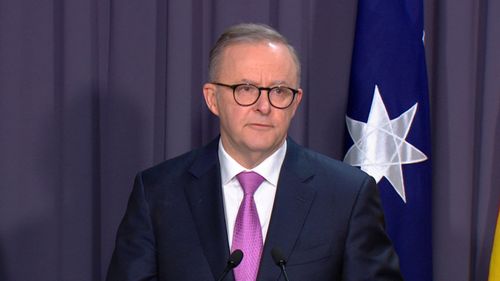
Prime Minister Anthony Albanese has announced a comprehensive strategic review of the Australian Defense Force amid concerns about a “capability gap” in the country’s armed forces.
He said the review was aimed at ensuring the ADF was well positioned to meet Australia’s security challenges over the next decade and beyond.
“This review will prepare Australia to effectively respond to the changing regional and global strategic environment and ensure that defense’s capability and force structure is fit for purpose, affordable, and delivers the greatest return on investment,” Albanese said.
Prime Minister Anthony Albanese has announced a major defense review. (Nine)
Albanese said the review will be headed by retired defense chief Sir Angus Houston and former Labor defense minister Stephen Smith.
“Professor Smith and Sir Angus bring a unique blend of knowledge and experience to their role as independent leads,” he said.
“Their depth of expertise will be invaluable in informing this review.”
Albanese said the review was being held amid growing tensions in the Asia Pacific region, with China showing greater assertiveness.
“We live in an era where there’s strategic competition and increased tension in our region,” he said.
“And where China has taken a more aggressive posture in the region.”
The defense review will examine the ADF’s capability and force structure. (APA)
Albanese also defended the selection of Smith after some commentators criticized his record as defense minister in the former Gillard government when he oversaw cuts.
Defense Minister Richard Marles said the review would be the most exhaustive for decades.
“This will look at questions of force structure, look at questions of capability, it will ask and answer foundational questions about given our strategic circumstances: what is it that we want our defense force to do on behalf of our nation at this moment?” he said.
He said it would run concurrently with Australia’s involvement in the AUKUS defense pact with the US and Britain, under which Australia will acquire nuclear-powered submarines.
“Given the significance of that platform, it’s really important that both bodies of work happen concurrently and are able to cross pollinate each other,” Marles said.
The defense review will be held in conjunction with Australia’s involvement in the AUKUS defense pact, under which Australia will acquire nuclear-powered submarines. (U.S. Navy)
Albanese said the review would also identity gaps in military resources planned for the ADF and what has been delivered.
“There is a gap there between capability and what has actually been promised in the past,” the prime minister said.
“There are significant delays in delivery of what has been promised.”
Similarly, Marles also said the review would examine major defense projects over the coming decade.
“We’re going to look at the integrated investment plan over the course of the next 10 years to make sure what we have as a schedule of procurements does meet the challenges that our strategic circumstances present.”
Marles said the federal government has asked the reviewers to report their findings by the first half of 2023.
The Greens will offer critical support to a climate bill that will legislate the government’s 2030 emissions reduction target, giving it the numbers it needs to pass in the Senate.
Key points:
Labor’s 2030 climate target is set to become law, legislating a national 43 per cent target
The Greens have agreed to give the climate target support, despite holding reservations
Adam Bandt says his party will push to ban new coal and gas projects through other legislation
Labor has introduced a bill to enshrine its 43 per cent emissions reduction target into law and tighten up reporting schemes to track progress towards the target.
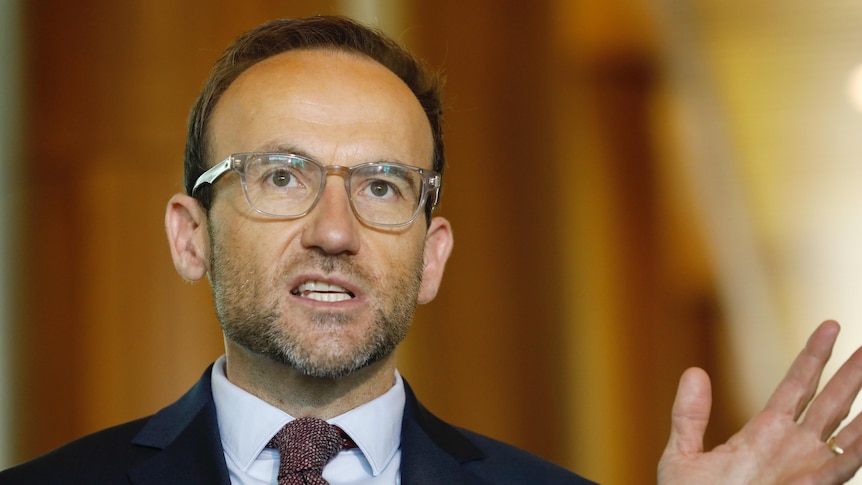
Greens leader Adam Bandt has told the National Press Club that his party will back the bill, giving it the votes needed to pass.
Mr Bandt said he remained “bitterly disappointed” the government would not ban new coal and gas projects, and that the party would vote to send the bill for inquiry, where they hope to prove Labor’s climate policies would fail to meet a legislated 43 per cent target.
“Labor might be holding out now, but their position is ultimately untenable, and they can’t go to upcoming climate summits, vowing to open new coal and gas projects and expect to be taken seriously,” he said.
Mr Bandt said the party will now push to shut down future projects by amending the safeguard mechanism, which penalizes big polluting companies that go over a set carbon emissions ceiling.
Climate Change Minister Chris Bowen shut down any prospect of a coal and gas moratorium being introduced through the safeguard mechanism, saying the government would implement its election plan “without alteration”.
Mr Bowen said it will begin consulting on the emissions lever later this month.
The government did not have the numbers in the Senate to pass its climate target bill without support from either the Coalition or the crossbench.
The Coalition determined it would oppose the bill yesterday, although some of its MPs and at least one senator are considering crossing the floor to support it.
Without the Coalition’s support, the government needed the Greens’ backing to have any chance of legislating its target.
The government will also need the support of at least one other senator — independent senator David Pocock has already indicated he will give it his support.
Australian Chamber of Commerce and Industry boss Andrew McKellar said passing the bill would send a clear and welcome signal to the market in its transition to clean energy.
“This is a missed opportunity for the Opposition. The announcement today demonstrates that the climate wars are over. This must act as a moment for unity of purpose,” Mr McKellar said.
Prime Minister Anthony Albanese challenged the Coalition to “end the climate wars” and give its support to the bill.
“The parliament is about to, after a decade of inaction and denial and delay, to move forward,” Mr Albanese said.
“This is an opportunity for the whole of the parliament to be on the right side of history.”
Adam Bandt said Labor would be rewarded by voters if it adopted more ambitious climate policies.(ABC News: Nick Haggarty)
Greens say Labor will have to shift on coal and gas moratorium
Mr Bandt said his party would continue to fight new coal and gas projects, despite agreeing to give Labor’s bill passage.
“This is round one, there is three years of this parliament,” Mr Bandt said.
“Labor’s position is ultimately untenable… this is increasingly becoming a deal breaker around the world.”
For a decade, Labor and the Greens have held bitter memories over the Greens decision not to back Labor’s Carbon Pollution Reduction Scheme in 2009, which was ultimately defeated in parliament.
Labor has argued that the Greens share some of the blame for a so-called decade of climate inaction that followed because of their decision to oppose the CPRS.
The Greens had long held that the policy wasn’t going to work, and would have locked the government into insufficient emissions targets that would not have seen any improvement for 25 years.
The climate target bill, while largely symbolic because the government does not require the laws to achieve its 43 per cent target, was seen as a litmus test for how the two parties would likely interact on climate change in the term to come.
A last-minute proposal from the state government to improve working conditions for Tasmania’s nurses has failed to stop a strike from going ahead at the Launceston General Hospital.
Key points:
The government has announced a number of incentives to stop nurses and midwives from striking and to prevent the healthcare system from buckling
Incentives include a “return-to-work” bonus, a plan to put clinical coaches in all wards with a high proportion (30 per cent) of novice practitioners and improved anti-viral access
The Australian Nursing and Midwifery Federation said the offer had some “real positives” but came too late to delay industrial action
Nurses have been quitting in droves as they grapple with the pressures of the pandemic, rising workloads, long hours and tight resources.
But the Tasmanian government hopes a $2,000 “return to work” bonus will persuade those who recently resigned to give the job a second chance.
It is one of a suite of incentives the government has put on the table to stop nurses and midwives from striking and to prevent Tasmania’s troubled healthcare system from buckling.
Following a short but serious strike at the Royal Hobart Hospital last week, unionized workers at the Launceston General Hospital walked off the job for 15 minutes on Wednesday.
Australian Nursing and Midwifery Federation state secretary Emily Shepherd said the government’s latest offer had some “real positives” but came too late to delay the industrial action.
“Of course, we’ll take our members’ feedback on this and go back to the Premier but there certainly isn’t a quick fix to this,” she said.
“We all need to work together and it’s pleasing the government have come with a suggestion around a collaborative way forward.”
‘We have clearly been listening’
The union received the government’s latest offer on Tuesday night, which included the “return-to-work” bonus, a plan to put clinical coaches in all wards with a high proportion (30 per cent) of novice practitioners and improved anti-viral access .
The government is also promising to increase private hospital support for public hospitals, review workplace vacancies and trial a state-wide “transition to practice model”, with an immediate appointment to permanency alongside a six-month probation period.
As with many industrial disputes, pay is a key concern, however, the government has so far only promised to commence negotiations to address the wages of nurses and midwives.
Nurses have been quitting in droves as they grapple with a variety of pressures.(ABC News: Damian McIntyre)
Premier Jeremy Rockliff said he has recognized the demands being placed on health staff.
“We have clearly been listening and today we are acting,” he said.
The government said there were also other measures in place to help health staff, such as a COVID-19 allowance.
A daily allowance of up to $60 a day for a frontline nurse would be paid on top of salary at a hospital that has spent at least 30 consecutive days at COVID escalation level 3 and remained there.
It would work out to an average of an extra $300 a week for full-time staff.
The government’s offer came too late to delay the industrial action, nurses said.(ABC News: Damian McIntyre)
To further address workload pressures and in an effort to keep people out of the hospital the government is also increasing antiviral access for Tasmanians over the age of 70, and providing grants for participating community pharmacies in rural and regional areas to purchase antiviral medications.
Extra community paramedics will also be deployed across the state from today to attend low-level triple-0 calls that are aimed at reducing ramping at public hospitals and purchasing additional beds from private hospitals to transfer suitable patients out of the public system.
Mr Rockliff said the measures would bring more staff back to public hospitals and bolster the workforce to meet demand.
“There is no one simple fix,” he said.
“There are a multitude of areas of which we need to address when it comes to alleviating the pressure on our health system.”
A Kimberley man whose family have disappeared while on a trip to Alice Springs says it’s completely out of character for them not to answer phone calls and texts.
Key points:
The trio hasn’t been seen since Sunday, when they attended a function in Alice Springs
Police believe they might be on their way to Western Australia
They’re traveling in a red Toyota Hilux and anyone with information is urged to contact police
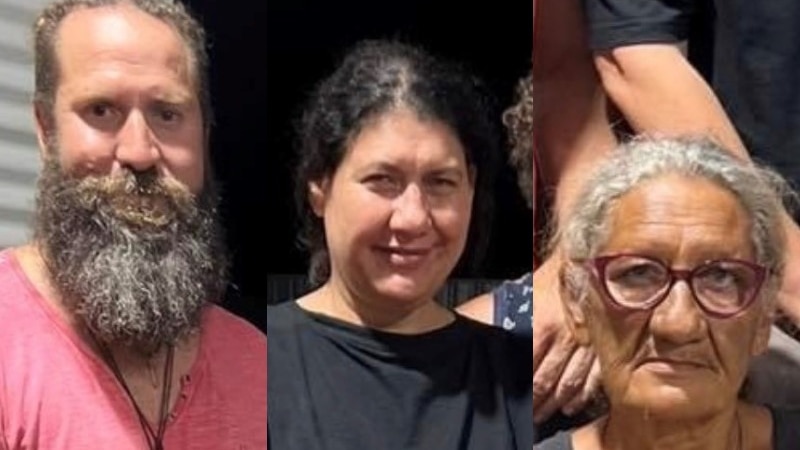
Bonnie Edwards, 70, and her son and daughter Eldride Edwards, 41, and Virginia O’Neil, 49, were expected to arrive back in their hometown of Halls Creek on either late Sunday or Monday, but have so far not returned and were reported overdue yesterday.
According to a statement issued by Northern Territory Police this afternoon, they were last seen on Sunday.
Malcolm Edwards, who is Bonnie’s husband and Eldride and Virginia’s father, told the ABC on Wednesday afternoon that the trio had traveled to Alice Springs to attend a meeting involving Indigenous people in an outlying community.
The Halls Creek Shire president said the last time he had spoken to his wife had been on Saturday morning after the meeting had wrapped up, but she had not said where they planned to stay that night.
“My wife said they’re back in Alice Springs and they’ll tell me all about it [the trip] when we come home,” he said.
Malcolm Edwards hasn’t heard from the trio since the weekend, despite numerous calls and texts. (ABC Kimberley: Andrew Seabourne)
He said Virginia had spoken to her son briefly on Sunday morning, and that was the last known contact with the three missing people.
“My daughter said they’d met this really nice guy and they were going to stay at his place. We don’t know who that is. No idea who that person was,” he said.
Police say the trio have not made contact with anyone and there have been no signs of financial activity from them since Sunday.
Cr Edwards said he had raised the alarm on Tuesday after repeated calls and texts to his wife, son and daughter went unanswered.
“They normally ring and tell us. This is out of character,” he said.
“They’d normally ring up and say, ‘we’re leaving Alice Springs now we’ve decided to go via Katherine’, they would tell us.”
The group were expected to return to Halls Creek several days ago.(ABC Kimberley: Ted O’Connor)
Now he is worried someone else is using his daughter’s phone.
“The police picked up a ping that the phone was turned on at 2am on Monday morning and the ping was located somewhere near a caravan park in Alice Springs,” he said.
“We’re starting to think it was not Virginia who turned the phone on because if it was her she would have seen all those messages.
“As far as we know none of the bank accounts have been used, but there have been a few bank accounts that we haven’t got access to, but the police will check all those out.”
The missing trio were supposed to be traveling from Alice Springs to Halls Creek on the Tanami Road, but Cr Edwards said police had checked CCTV at roadhouses along the way and found no evidence they had embarked on their journey home.
As the Halls Creek community awaits news from police, Cr Edwards said his wife’s relatives in Alice Springs were helping to raise awareness in the community.
The group is traveling in this red Toyota Hilux.(Supplied: Northern Territory Police)
“We feel like we can’t do much,” he said.
“Some people who are related to us in Alice Springs are driving around town, [asking] ‘have you seen this car, have you seen these people?'”
Along with Cr Edwards, Bonnie and Virginia are also councilors with the Shire of Halls Creek.
The group is traveling in a red Toyota Hilux with the WA registration plate, PH27156.
Police are calling for anyone who knows where the trio may be or have seen their vehicle to contact police.