Some trackers will still be allowed through to measure ad conversions
DuckDuckGo is making good on a promise to correct a major faux pas on its mission to further privacy on the web. Back in May, researchers caught the company allowing Microsoft’s ad and analytics trackers through its mobile browsers and desktop browser extensions while blocking others. It was an act of hypocrisy, but also one of necessity: DuckDuckGo signed on Microsoft as its primary supplier of results for its search engine and one of the stipulations in their contract required the passthrough of trackers from Bing and LinkedIn in DuckDuckGo products. It appears now, though, that the contract has changed. A lot more has, too.
ANDROID POLICE VIDEO OF THE DAY
The company says on its corporate blog (via BleepingComputer) that its Tracker Radar is no longer prohibited from blocking Microsoft’s tracking scripts. While they will be blocked in most cases, users who click on Microsoft-served ads through a DuckDuckGo product will see some trackers originating from bat.bing.com. Microsoft says it uses the data to tally conversions from clicks to product purchases and that it doesn’t build user profiles, dumping the data in 7 days. DuckDuckGo also continues to say that it does not include Microsoft tracking scripts in its products, a condition that has always been in place.
There’s no reasonable expectation of complete privacy when someone browses the web, so the company is also taking the opportunity to announce that it has updated the Privacy Dashboard feature on its browsers and extensions to include logs for which third-party tracker requests were approved and denied and for what reasons, if any apply. The company is also making a list of its blocked trackers (including the latest ones from the 21 URLs that originate with Microsoft) public through a GitHub repository and that it will shortly open up the code to generate a blocklist for Tracker Radar.
Furthermore, it has opened up a new section in its Help pages that lists which trackers are getting blocked for which product — split between the browser apps for Android, iOS/iPadOS, and Mac, and the extensions for Chrome, Edge, Firefox, Opera , and Safari. Different products get different blocking support due to differences in their operating system’s framework.
In the future, DuckDuckGo hopes to implement an ad conversion tracking protocol that will keep data sharing to an absolute minimum while still giving marketers the core information they need.
WASHINGTON — After months of painstaking negotiations, Democrats are set to push through a climate, tax and health care package that would salvage key elements of President Biden’s domestic agenda.
The legislation, while falling far short of the ambitious $2.2 trillion Build Back Better Act that the House passed in November, fulfills multiple longstanding Democratic goals, including countering the toll of climate change on a rapidly warming planet, taking steps to lower the cost of prescription drugs and to revamp portions of the tax code in a bid to make it more equitable.
Here’s what’s in the final package:
It is the largest single American investment to slow global warming.
The bill includes the largest expenditures ever made by the federal government to slow global warming and to reduce demand for the fossil fuels that are primarily responsible for causing climate change.
It would invest nearly $400 billion over 10 years in tax credits aimed at steering consumers to electric vehicles and prodding electric utilities toward renewable energy sources like wind or solar power.
Energy experts said the measure would help the United States to cut greenhouse gas emissions about 40 percent below 2005 levels by the end of this decade. That puts the Biden administration in striking distance of meeting its goal of cutting emissions roughly in half by 2030. Far more will be needed to help keep the planet from warming to dangerously high global temperatures, scientists said, but Democrats considered it a momentous first step after decades of inaction.
At the same time, Democrats agreed to a number of fossil fuel and drilling provisions as concessions to Senator Joe Manchin III of West Virginia, a holdout from a conservative state that is heavily dependent on coal and gas.
The measure would assure new oil drilling leases in the Gulf of Mexico and Alaska’s Cook Inlet. It would expand tax credits for carbon capture technology that could allow coal or gas-burning power plants to keep operating with lower emissions. And it would mandate that the Interior Department continue to hold auctions for fossil fuel leases if it plans to approve new wind or solar projects on federal lands.
The tax credits include $30 billion to speed the production of solar panels, wind turbines, batteries and critical minerals processing; $10 billion to build facilities to manufacture things like electric vehicles and solar panels; and $500 million through the Defense Production Act for heat pumps and critical minerals processing.
There is $60 billion to help disadvantaged areas that are disproportionately affected by climate change, including $27 billion for the creation of what would be the first national “green bank” to help drive investments in clean energy projects — particularly in poor communities. The bill would also force oil and gas companies to pay fees as high as $1,500 a ton to address excess leaks of methane, a powerful greenhouse gas, and it would join a 10-year moratorium on offshore wind leasing established by President Donald J. Trump .
Medicare could directly negotiate the price of prescription drugs, pushing down costs.
For the first time, Medicare would be allowed to negotiate with drugmakers on the price of prescription medicines, a proposal projected to save the federal government billions of dollars. That would apply to 10 drugs initially, beginning in 2026, and then expand to include more drugs in the following years.
Opponents argue that the plan would stifle innovation and the development of new treatments by cutting into the profits that drug companies can plow into their business, while some liberals expressed frustration that the policy would be too slow to take hold. Should the package become law, as expected, it would be the largest expansion of federal health policy since passage of the Affordable Care Act.
The package would cap the out-of-pocket costs that seniors pay annually for prescription drugs at $2,000, and would ensure that seniors have access to free vaccines. Lawmakers also included a rebate should price increases outpace the rate of inflation. (Top Senate rules officials, however, said that penalty could apply only to Medicare, not private insurers.)
Republicans successfully challenged the inclusion of a $35 price cap on insulin for patients on private insurance during a rapid-fire series of amendment votes early Sunday morning, forcing its removal. But a separate proposal that caps the price of insulin at $35 per month for Medicare patients remained intact.
Expanded health care subsidies would be extended.
As part of the $1.9 trillion pandemic aid law that Democrats muscled through last year, lawmakers agreed to broaden subsidies available under the Affordable Care Act. That proposal lowered premiums for almost every American who relies on the program’s marketplace, either making some plans free for lower -income people or extending some support to higher-income people who previously did not receive any aid.
The package, which could pass the Senate as early as Sunday, would extend those subsidies, now set to expire at the end of the year, for an additional three years. Democrats fear a backlash in the November midterm elections if they allow the subsidies to lapse.
Wealthy corporations will see a tax hike, while the IRS will get a funding boost.
The tax proposals were shaped by Senator Kyrsten Sinema, Democrat of Arizona, who resisted her party’s push to increase tax rates on the country’s wealthiest corporations and individuals.
To avoid the rate increase Ms. Sinema opposed, Democrats instead settled on a far more complex change to the tax code: a new 15 percent corporate minimum tax on the profits companies report to shareholders. It would apply to companies that report more than $1 billion in annual income on their financial statements but that are also able to use credits, deductions and other tax treatments to lower their effective tax rates.
Ms. Sinema did protect a deduction that would benefit manufacturers, a change she successfully demanded before committing on Thursday to moving forward with the legislation.
She also forced the removal of a proposal supported by Democrats and Republicans that would have narrowed a tax break used by both hedge fund and private equity industries to secure lower tax rates than their entry-level employees. And she committed to pursuing separate legislation outside of the budget package, but that would require at least 10 Republicans to support it.
The legislation would also bolster the IRS with an investment of about $80 billion, hoping to recover additional tax revenue by cracking down on wealthy corporations and wealthy tax evaders.
Republicans, who have historically opposed shoring up funds for the agency, have argued that this will increase audits and scrutiny on lower-income households. The IRS, in turn, has dismissed the concern, telling Congress that “these resources are absolutely not about increasing audit scrutiny on small businesses or middle-income Americans.”
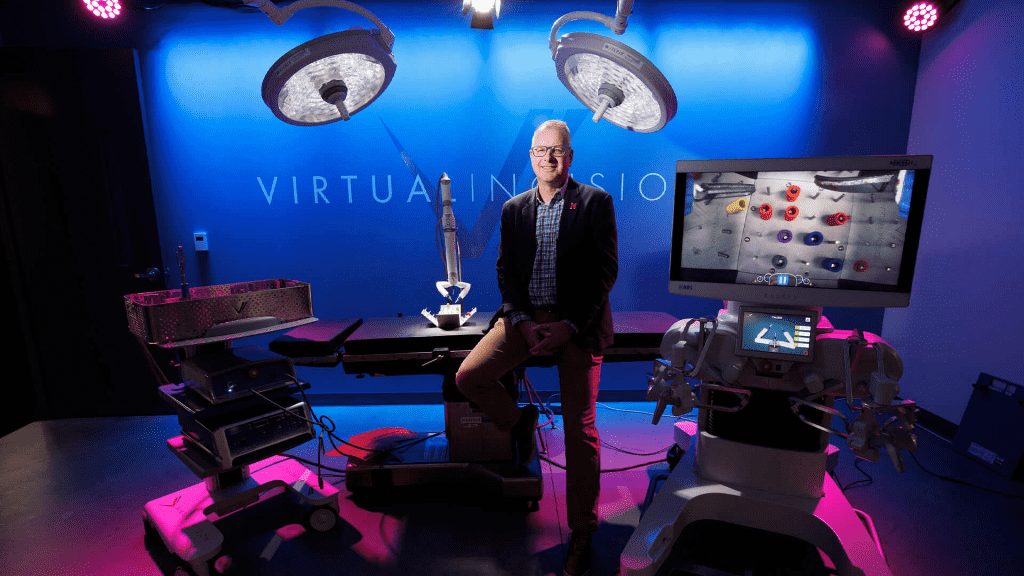
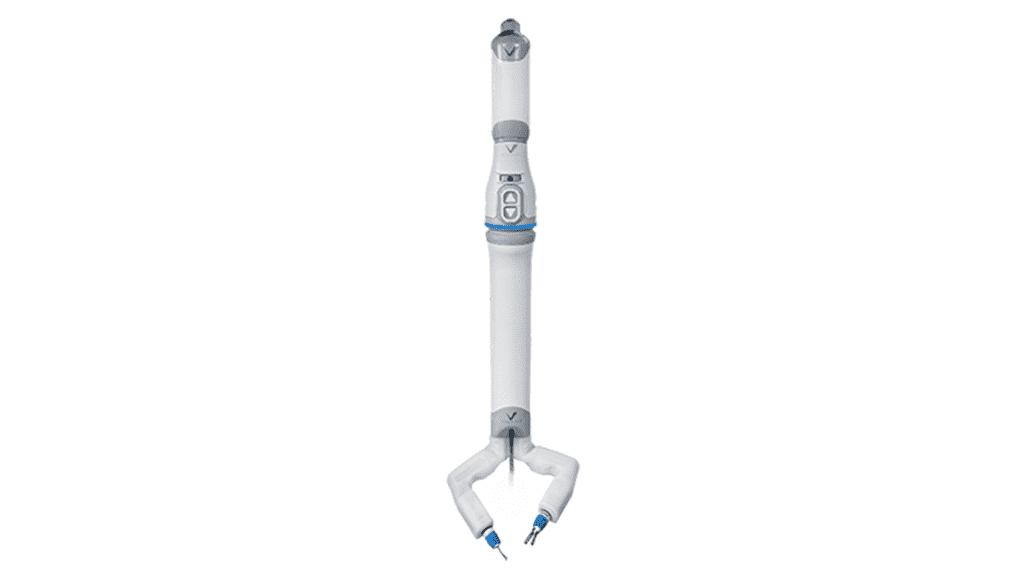
Engineers at Nebraska Engineering have stepped up to develop an incredible marvel of technology that is going to shock and rock the world. You would be amazed to know that in the coming decades, we are going to witness a surgical robot that will autonomously perform the surgeries of astronauts in space and be remotely controlled by the doctors sitting on Earth. The robot named MIRA, which stands for “Miniaturized in Vivo Robotic Assistant,” has currently been in the production phase to be carried by 2024 for the test mission to the International Space Station (ISS).
One of the most interesting details of the bunch is that, to boost the determination of engineers at Nebraska in the development of this program, NASA has recently awarded Nebraska-Lincoln with $100,000 via the “Established Program to Stimulate Competitive Research (EPSCoR)”. As stated by Professor Shane Farritor from the Nebraska Institute of Engineering, “NASA has been a long-term supporter of this research and, as a culmination of that effort, our robot will have a chance to fly on the International Space Station.”
Engineers are making efforts to establish the surgical robot as a well-established player in the market. Speaking of the past phases of struggles for this robot, it is important to note that Farritor and his colleagues have been designing it for nearly 20 years, and its development would be a huge accomplishment for the technological world. All in all, Nebraska Innovation Campus incorporates a startup company known as “Virtual Incision,” which has been awarded funding of more than $100 million as an investment since 2006, which is the foundation year of this institute.
To put that into perspective, a recent experiment conducted on this ongoing surgical robot has been performed by the retired NASA astronaut “Clayton Anderson,” who controlled the robot while he was at the Johnson Space Center located in Houston. Meanwhile, the robot was stationed about 900 miles away from Anderson’s locality and was positioned at the University of Nebraska Medical Center in Omaha. During the experiment, he directed the robot to perform complex surgical tasks, and the results were optimistic.
Not only this, but the programming software which will be deployed into MIRA is going to be written by Farritor and Rachael Wagner, who will then test the robot against its simulations. They will also make sure by integrating the robot into the space station locker whether the system is good enough to sustain the compulsions and constraints of launch and will look for any loopholes as well. According to Wagner, “These simulations are very important because of all the data we will collect during the tests.”
Moreover, Farritor estimates that the robot will be able to conduct its operations autonomously in about 50–100 years and is currently in a programming phase. He further said, “The astronaut flips a switch, the process starts, and the robot does its work by itself. Two hours later, the astronaut switches it off, and it’s done. As people go further and deeper into space, they might need to do surgery someday. We’re working toward that goal.”
CORRECTION: Seven Democrats voted for the GOP amendment that would extend a cap on the SALT tax deduction. A previous version of this story included incorrect information.
Maverick Sen. Kyrsten Sinema (D-Ariz.) on Sunday backed a Republican amendment to shield businesses that rely on capital investment from private equity groups from the 15 percent corporate minimum tax that Senate Majority Leader Schumer (DN.Y.) included in the Inflation Reduction Act .
Sens. Catherine Cortez Masto (D-Nev.), Maggie Hassan (DN.H.), Mark Kelly (D-Ariz.), Jon Ossoff (D-Ga.), Jacky Rosen (D-Nev.) and Raphael Warnock (D-Ga.) also voted for the amendment.
The amendment was sponsored by Senate Republican Whip John Thune (RS.D.) who says the 15 percent corporate minimum tax would raise taxes on businesses with less than $1 billion in profits because it would apply to private equity groups that have partnership interests in those businesses.
The amendment would be paid for by a one-year extension of the cap on state and local tax deductions (SALT) that was a key feature of the 2017 Trump tax cut and which Schumer pledged to repeal as majority leader.
The amendment could have imperiled final passage of the bill as it would hit residents of high-tax blue states such as New York, New Jersey, Connecticut and California.
However, Democrats quickly offered an amendment from Sen. Mark Warner (D-Va.) after passage of the other amendment to make changes to the bill that would make it more palatable.
The Warner amendment replaced the SALT cap extension with a different tax provision raising revenue.
Warner’s amendment was approved, with Vice President Harris casting a tie-breaking vote.
Some Democratic senators privately expressed frustration on Sunday morning that Sinema was backing away from the deal she announced with Schumer last week to narrow the 15 percent corporate minimum tax by allowing companies to continue to fully expense major capital investments.
They said the amendment could scuttle the deal after Democrats stuck together throughout more than 14 hours of vote-a-rama to defeat amendments on both sides of the aisle, including an amendment from Sen. Bernie Sanders (I-Vt.) to provide a $300-a-month expanded child tax credit for the next five years.
“If any Democratic senator signed on to any of the amendments, it could be problematic,” warned one Democratic senator who was dismayed to find out that Sinema is pushing for a change to the underlying bill.
Proponents of the Thune amendment, however, argue that the minimum tax included in the Inflation Reduction Act will wind up netting potentially thousands of businesses that accepted investment partnerships with private equity firms during the pandemic when credit from regular banks was tight.
Sinema is concerned that small businesses such as plant nurseries and car detailing shops in Arizona could be caught up in the corporate minimum tax if they have a partnership relationship with a private equity firm that together with all its subsidiaries exceeds $1 billion in profits, according to sources familiar with the discussions.
A source familiar with the tense behind-the-scenes negotiations say Schumer added language to the underlying Saturday bill that expanded the scope of the $15 percent corporate minimum tax.
Technically, the revenue-raising provision is called a book minimum tax because it would require companies to declare income based on generally accepted accounting practices, which are stricter than what is required under current law, which includes various tax breaks and shelters that makes it easier for businesses to shield income from the IRS.
One person familiar with the timeline of changes to the Inflation Reduction Act said when senators first saw the new text of the bill on Saturday it included for the first time language on “common control” that would apply the minimum tax on partnerships made up of many companies that by themselves don’t earn $1 billion in annual profits.
The added language would raise an additional $35 billion in revenue over 10 years.
Thune had proposed to strip that language out and pay for it by extending the SALT deduction cap for one year — but that could imperil passage of the bill in the Senate by making it unacceptable to Schumer or another Democrat from a high-tax state such as Sen. Bob Menendez (DN.J.).
Zack “Asmongold”, the highly popular MMO streamer on Twitch, criticized Blizzard for nerfing dragon riding speed in the upcoming World of Warcraft update titled “Dragonflight.” The 30% speed decrease in ability has been a point of contention for much of the playerbase. Some feel that it is a justifiable change while others refuse to believe it is desirable in any way.
The streamer took a clear stand on the issue by calling out the developers over what he thought was an unnecessary nerf, which impedes the enjoyability factor of the new ability. While reacting to a side-by-side comparison video by a professional World of Warcraft player, he ended up calling the developers stupid:
“Look how stupid Blizzard is.”
Asmongold gives his opinion on the dragon WoW dragon rider nerf
Dragonflight is the much awaited update to the massively popular MMO by Blizzard. With many referring to the new features as one of the best additions to World of Warcraft in a long time, tensions run high as Blizzard continues to update the alpha with new patches.
Blizzard is notorious for making anti-player decisions and has faced massive backlash for many choices in the past. The most recent nerf to Dracthyr’s Soar ability, which used to let players fly at speeds of up to 930%, has reduced the speed to boost by 30%, angering a lot of fans.
This’s about as clear as I can get to help people fully understand the nerf
This’s about as clear as I can get to help people fully understand the nerf https://t.co/ytKL4AvSTV
Asmongold seemed to be one of them as he reacted to a comparison video by Maximus from the Liquid Guild, which showcased the extent of the nerf. The streamer described the pre-nerf ability as fun and enjoyable, saying:
“This is how fast it used to be. Look at this. Look how cool that is man.”
I have used a few choice words while describing the current way Soar works, calling it lame:
“It’s worse, yeah i know. It’s lame. How cringe.”
Clearly disappointed with the nerf, Asmongold revealed that changes like this have made him question the new update:
“As I said, that change made me lose more, uh, hope for Blizzard with Dragonflight than anything else. Like, if they don’t change that I’m going to expect Dragonflight to be dog a** sh*t.”
Blizzard’s reasoning for the change was that the ability was overpowered because it was exclusive to the Dracthyr race. The developers revealed that their playtest showed no change in fun factor, noting:
“Soar is also a Racial ability, and was never intended to be a massive efficiency or performance improvement over other races… What we’ve found while playing these changes internally is that the speed change didn’t diminish the fun of the locomotion mechanics.”
Maximus, like many other World of Warcaft fans, did not find the reasoning substantial for the nerf, and he made his feelings clear by expressing:
First thing I’ve seen in dragonflight where the reasons given made no sense. I hope it will be reversed as it’s universally disliked.
First thing I’ve seen in dragonflight where the reasons given made no sense. I hope it will be reversed as it’s universally disliked.
Reactions to the clip
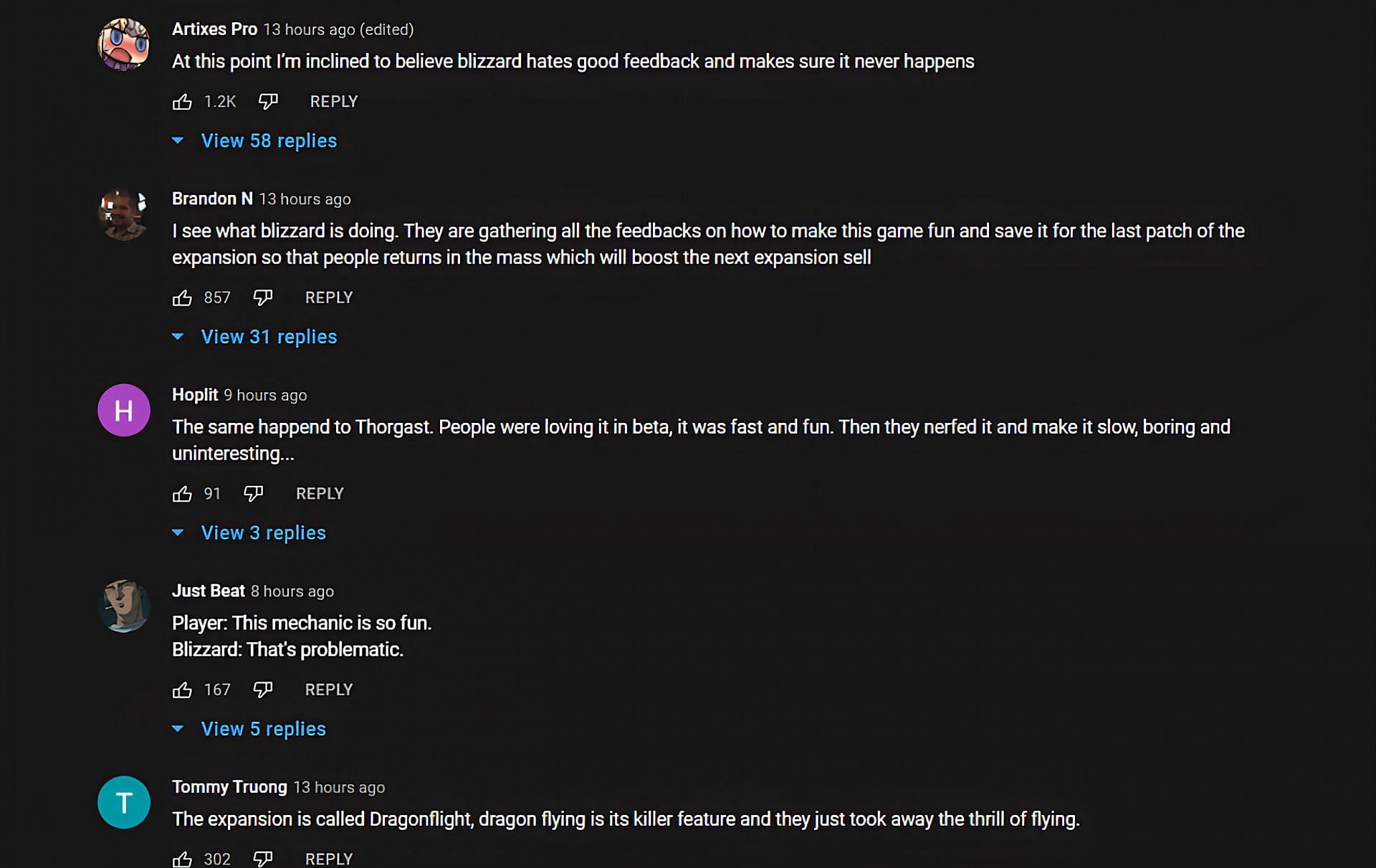
Fans of Asmongold mostly agreed with the streamer and let out their frustration against Blizzard. One fan, by the name Artixes Pro, commented:
“At this point I’m inclined to believe Blizzard hates good feedback and makes sure it never happens.”
Other YouTube comments showed a similar sentiment, with many remembering previous features that were nerfed by Blizzard. A few even had theories of why the developers were purposefully nerfing things.
YouTube comments about Blizzard’s nerf policy (Image via Asmongold Clips/YouTube)
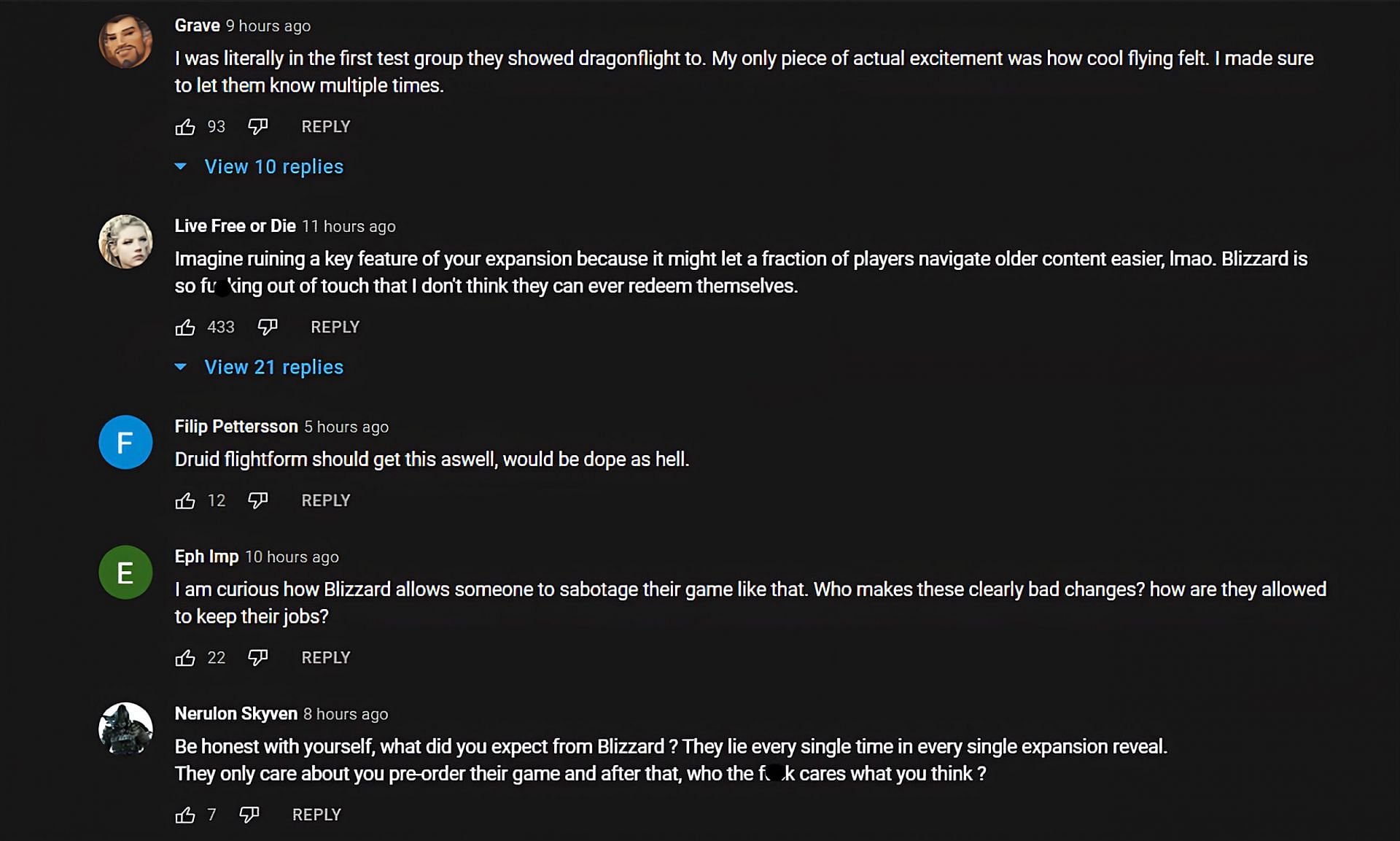
A viewer wondered how Blizzard always gets away with cutting content.
Also Read Story Continues below
Fans react to Soar nerf (Image via Asmongold Clips/YouTube)
As a veteran World of Warcraft player and content creator, Asmongold has quite a reputation in the MMO community. He has been a vocal critic of Blizzard in the past and has been quite outspoken against changes he does not like.
LAS VEGAS — More human remains have been found at drought-stricken Lake Mead National Recreation Area east of Las Vegas, authorities said Sunday.
It’s the fourth time since May that remains have been uncovered as Western drought forces the shoreline to retreat at the shrinking Colorado River reservoir behind the Hoover Dam.
National Park Service officials said rangers were called to the reservoir between Nevada and Arizona around 11 am Saturday after skeletal remains were discovered at Swim Beach.
Rangers and a Las Vegas Metropolitan Police dive team went to retrieve the remains.
Park Service officials said the Clark County Medical Examiner’s Office will try to determine when and how the person died as investigators review records of missing people.
On May 1, a barrel containing human remains was found near Hemenway Harbor. Police believe the remains were that of a man who died from a gunshot wound and the body was likely dumped in the mid-1970s to early 1980s.
Less than a week later, authorities say human skeletal remains were found at Calville Bay.
More recently, partial human remains were found in the Boulder Beach area on July 25.
Police have speculated that more remains may be discovered as the water level at Lake Mead continues to recede.
The discoveries have prompted about long-unsolved missing person and murder cases dating back decades speculation — to organized crime and the early days of Las Vegas, which is just a 30-minute drive from the lake.
The lake surface has dropped more than 170 feet (52 meters) since the reservoir was full in 1983.
The drop in the lake level comes while a vast majority of peer-reviewed science says the world is warming, mainly because of rising levels of carbon dioxide and other greenhouse gases in the atmosphere.
Scientists say the US West, including the Colorado River basin, has become warmer and drier in the past 30 years.
Blizzard has revealed the start and end dates for Overwatch Anniversary Remix: Vol. 3, the final limited-time event before the Overwatch 2 release date. It starts on August 9 and it will run until August 30.
MORE FROM FORBES‘Overwatch 2’ Won’t Have Another Beta Before LaunchBy Chris Holt
Overwatch Anniversary Remix: Vol. 3 replaces Summer Games this year. Along with allowing players to snap up all previous event cosmetics — including skins, emotes, voice lines and player icons — it will offer up remixed versions of fan-favorite skins from previous events. Judging by previous remix events, you may have another chance to unlock skins from previous weekly challenges too.
Remember: all of your cosmetics from Overwatch will transfer to Overwatch 2. There will be a way to merge accounts as well, so you can access all the cosmetics you’ve unlocked on PC and console from different devices.
With only two days to go before the event starts, we’ll soon find out which new skins it will have on offer.
In other news, the Overwatch League returns this week! Keep your eyes peeled on my blog for some insight from OWL officials on how Overwatch 2 you have impacted the league this year.
A proposal to declare San Clemente an abortion-free city has died after an emotional meeting where dozens of residents spoke on both sides of the issue.
The City Council voted 3 to 1 Saturday to withdraw the proposal from the agenda of an upcoming meeting.
Despite San Clemente’s reputation as a conservative bastion, the proposal has mostly fallen flat.
In heavily Democratic California, where the right to an abortion will continue to be protected by state officials after the US Supreme Court’s decision to overturn Roe vs. Wade, the proposal’s effect would have been largely symbolic.
Many residents, including some opposed to abortion, have argued that the issue is outside the city’s purview and that officials should focus on local concerns like homelessness.
The coastal Orange County city has no hospitals or clinics that perform abortions, and it has no power to stop residents from seeking the procedure elsewhere.
City Councilman Steve Knoblock wrote the proposal, which declared San Clemente a “sanctuary for life,” stated that life begins at conception and opposed the establishment of clinics that provide abortions.
On Saturday, he was the only vote in favor of keeping it on the agenda.
Hundreds of people filled seats inside the San Clemente Community Center, including an overflow room with a live feed. Abortion rights advocates chanted outside.
Inside, too, the dominant sentiment was anger, with some residents ending the proposal “overreach,” “idiotic” or“extremist.”
“Can the city tell pharmacies what medication they can sell?” said Barbara Helton, who has lived in San Clemente for 25 years.
During the nearly three-hour meeting, she blamed officials for further dividing “this community along religious and political beliefs.”
“Not your review! Not your review!” some in the audience shouted at one point.
To loud applause, Mayor Pro Tem Chris Duncan called the proposal an attempt to “subjugate women and girls like my daughters into second-class citizens.”
Knoblock countered that abortion is “a public policy issue that is now at the forefront of society.”
He said a “can of worms” had been opened by the governor and state Legislature’s attempts to strengthen abortion rights.
“The city weighs in on issues that affect our communities,” he said. “The life and death of babies affect our communities.”
Councilwoman Kathy Ward, who had earlier called Knoblock’s proposal “ludicrous,” pressed her colleagues to “get back to the business of San Clemente.”
Councilwoman Laura Ferguson, who was absent, has said that officials need to focus on urgent matters such as homelessness and pension liabilities.
Responding to complaints about the short notice for Saturday’s meeting, Mayor Gene James said many residents had urged that the issue be “rushed.”
Council members have received threats related to the proposal, which they have referred to law enforcement, James said.
James, who is opposed to abortion, has said he was initially in favor of a council resolution expressing support for overturning Roe v. Wade. But he was “appalled” and “embarrassed,” he said, after reading the specifics that Knoblock drafted.
Duncan is a Democrat, and the other council members are Republican.
Some residents praised Knoblock for his courage in taking a stand against abortion.
“This issue protects the voice of unborn babies,” said Ann-Marie Hines, who has lived in San Clemente for 22 years.
As they left the meeting after the vote to table the proposal, some called Knoblock a hero who stood up to “business as usual.”
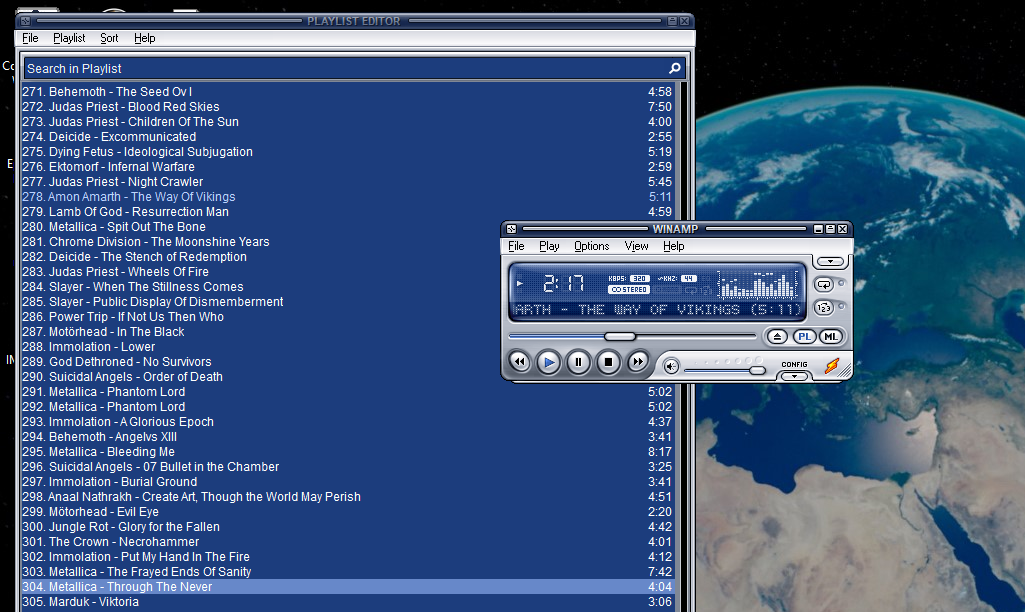
Listening to music on Spotify or Apple Music is cool, but doing it via the good ol’ Winamp is still even better for many people out there. As for now, there’s a new reason to get that ‘ancient’ music player running once again – Winamp has received its first major update in four years.
The update is known as 5.9 RC1 Build 9999, as announced on Winamp’s forums. The first thing that catches our attention is that the famous software has become more compatible with Windows 11, the latest OS from Microsoft. This move was crucial if the developers still wanted to keep Winamp alive.
Among the change log, we can also see other important lines such as improvements for playback of https:// streams, [in_mkv] vp8 support, [out_ds] Display device information correctly in Unicode format, and more. There are also some interesting fixes, such as the ones for memory leaks.
There are no visual overhauls for Winamp that the new 5.9 RC1 Build 9999 update brings, as far as we can tell, which is indeed great news for anybody who loves the iconic looks of the app.
The first version of Winamp was released back in 1997, and the software became popular relatively quickly, exceeding 3 million downloads. The app is capable of playing numerous music formats, which is one of the reasons for its huge notoriety.
Almost ten years ago, it seemed like the guys from AOL would put an end to Winamp for good. But gladly, the company known as Radionomy bought the app a year later to continue its legacy.
Surely it’s a lot more comfortable to use music streaming apps nowadays instead of Winamp, but it’s glad to see that an old legend is back in business!
Winamp can be accessed via Windows, Android, MS-DOS (DOSamp), and Mac OS.
UPDATE, 12:25pm: The nine people wounded in a mass shooting in Over-the-Rhine early Sunday morning range in age from 23 to 47, according to Cincinnati police.
Cincinnati police Lt. Col. Mike John said during a noon press conference that eight men and one woman were shot after at least two people involved in a fight brandished firearms and shot toward each other at 13th and Woodward streets.
VIDEO: Cincinnati shooting: Security camera footage shows people running, sound of gunshots
All the victims were treated at the University of Cincinnati Medical Center and released, a hospital spokesperson said.
Police said approximately 15 shots were fired during the shooting.
Two officers saw a person shooting people on Main Street, south of Woodward Street. One officer fired a weapon at the shooter, who fled eastbound toward Sycamore Street. It is still not known if the person was struck, police said.
“We need personal accountability,” said councilman Scotty Johnson.
John said officers were already on the scene when the shooting broke out. Cincinnati police have beefed up patrols over the last month in the area due to increased crowds.
“This has no place in our city, period,” Cincinnati Mayor Aftab Pureval said. “We will continue to work hard to prevent gun violence in the future.”
There was also a shooting in the Central Business District and police said at least two people were injured. John said it’s not believed the two shootings are related.
UPDATE, 10:10 a.m.: All the nine people who were treated at the University of Cincinnati Medical Center have been released after Sunday morning’s mass shooting in Over-the-Rhine, hospital spokeswoman Heather Chura Smith told The Enquirer.
Police have said they know of nine people injured in the shooting on Main Street in Over-the-Rhine early Friday. They had said most people suffered injuries to the lower extremeties.
Police are still seeking a suspect and said the shooting happened after an altercation between two groups of people.
The shooting is Cincinnati’s fourth mass shooting of 2022.
Shootings in Over-the-Rhine since January
UPDATE, 9:54am: The shooting that left nine people injured early Sunday morning started as a physical altercation between two groups, according to the latest information released by the Cincinnati Police Department.
Officers assigned to the Civil Disturbance Response Team responded at 1:39 am to disperse a large crowd. While there, they saw at least two people involved in the fight brandish firearms and shoot toward each other at 13th and Woodward streets, police said.
Two officers saw a person shooting people on Main Street, south of Woodward Street. One officer fired a weapon at the shooter, who fled eastbound toward Sycamore Street. It is not known if the person was struck, police said.
“Today’s events are completely and totally unacceptable,” Cincinnati Mayor Aftab Pureval said in a news release.
“The use of guns to solve disputes cannot become a normal part of our culture,” Pureval said.
Pureval said the Cincinnati police officers’ quick actions likely prevented the loss of lives and saved many more from injury.
UPDATE, 8:49am: Nine people were injured in an Over-the-Rhine shooting early Sunday morning.
Police said the victims, all injured on Main Street, are expected to survive but the shooter is still at-large.
Cincinnati police union president Dan Hils said the shooter was “part of a large, unruly crowd” on the street.
“Thankfully, everyone shot is expected to survive. Members of a civil disturbance response team, including the officer who fired at the shooter, did a tremendous job controlling the chaotic and dangerous scene this morning,” Hils said.
Cincinnati mass shooting:OTR shooting marks region’s fourth mass shooting this year
Hils and Lt. Col. Mike John have both said an officer fired at the suspected shooter but the person fled and it is not known if the person was struck.
Police only have a vague clothing description of the shooter, John said after the shooting. The shooter was wearing a white T-shirt and dark pants.
“It is a little unusual when we do not know for certainty whether the individual the officer fired on was struck or not,” John said.
UPDATE, 8:15am: Police have taken down crime scene tape and reopened Main Street, which was closed between 13th and Liberty streets, just after 8 am Sunday.
The section of Over-the-Rhine was closed off as police investigated a shooting that left nine people injured.
PREVIOUS REPORT: At least nine people were injured in a shooting in Over-the-Rhine early Sunday, according to Cincinnati police.
The mass shooting happened around 1:40 am outside Mr. Pitiful’s bar at 13th and Main streets.
None of the victims are in critical condition, Lt. Colonel Mike John said. He said most of the victims were struck in the lower extremities.
John said police officers witnessed the shooting and one Cincinnati police officer fired one shot at a fleeing suspect but it is not known if the person was struck.
There was also a shooting in the Central Business District and police said at least two people were injured. It is not known if the two shootings are related, John said.
John said several officers from the Cincinnati Police Department are involved in the investigation and it is not yet known how many rounds were fired or how many shooters were involved. Police are canvassing witnesses and looking for any video taken at the scene.
John said officers applied tourniquets to victims before emergency medical crews arrived.
He said there was a large crowd present that was encroaching on officers and police had to deploy two bang balls, which make a loud noise, to disperse the crowd and allow medical crews to get to the gunshot victims.
He said the “percussion instrument” was not aimed at anyone but was rolled into the street.
Officers were in Over-the-Rhine due to the crowds that have been on Main Street for the last month or so, John said.
Police are asking witnesses and anyone with video of the shooting to contact them as they continue their investigation.
This report will be updated.
Previous reporting: Cincinnati police are investigating what they call a mass shooting in Over-the-Rhine early Sunday morning.
The shooting happened around 1:40 am outside Mr. Pitiful’s bar at 13th and Main Streets.
Lt. Colonel Mike John says there was an active shooter in the area and multiple shots were fired, wounding nine people.
None of the victims are in critical condition, but Lt. Colonel John did not have any further information to provide about their injuries.
He said an officer fired one shot at the suspect as they fled the scene, but it’s unknown whether the shooter was wounded.
There was another shooting in the Central Business District and police say at least two people were injured.
Lt. Colonel John says they do not know if the shootings in OTR and the CBD are connected.
There was a large police presence in OTR due to the crowds that have been on Main Street for the last month or so, Lt. Colonel John said.
Police are asking witnesses and anyone with video of the shooting to please contact them as they continue their investigation.
Enquirer media partner Fox 19 contributed to this report.