Do any of you remember the Dragon Ball Z Abridged series on YouTube? How about the Yu-Gi-Oh Abridged series? Now imagine this: what if people did that for video games? Enter Wind Waker Rewritten.
The Legend of Zelda: Wind Waker is easily my favorite Zelda game. Perhaps it comes from nostalgia, considering it was the first Zelda game I ever finished, but there’s very little I don’t love about that darn game. It’s hard to think about what could be added to improve the overall experience. My thoughts and feelings about Wind Waker align perfectly with Patrick Marlborough’s stellar piece about it.
And yet, a hero comes along. Not Link. An artist and modder known as approx.
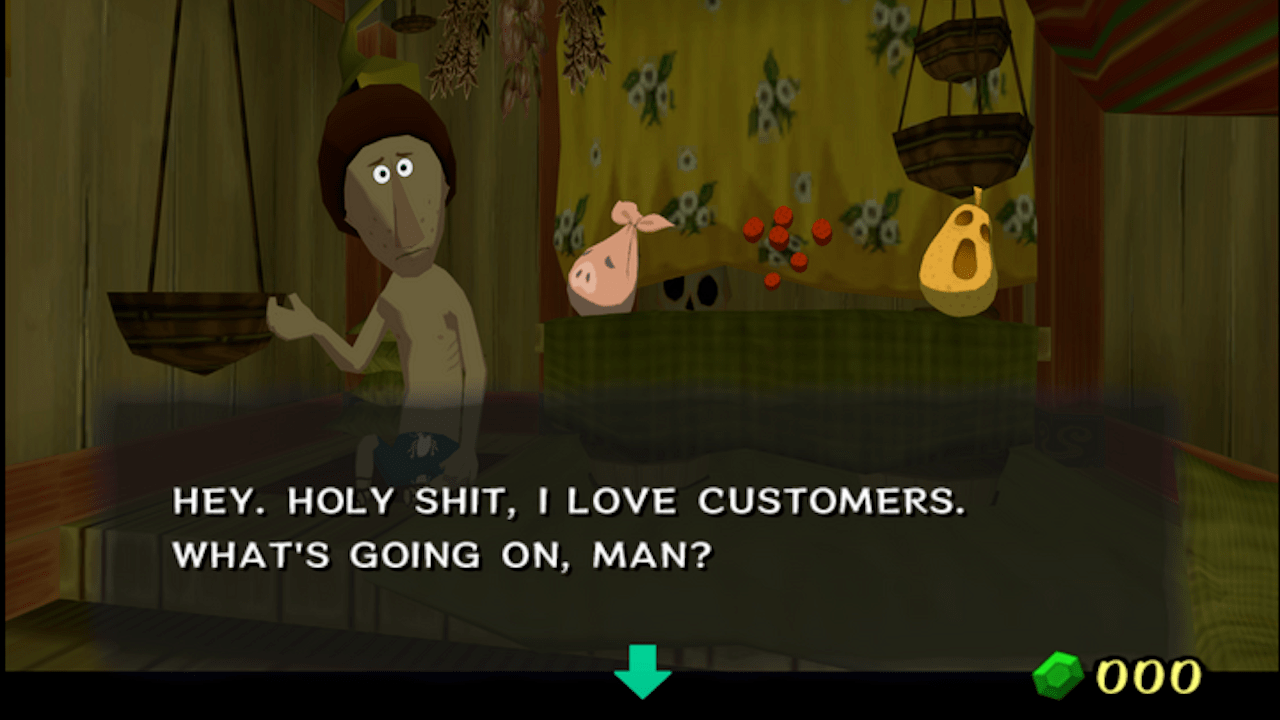
Aproxm has created a romhack for Wind Waker that keeps the vast majority of the game intact. However, what it adds gives the game a whole new tone in the best way. Approxm’s Wind Waker Rewritten romhack adds over 10,000 new lines of dialogue, reimagined cutscenes and characterizations of many, many NPCs, new video files, and a handful of texture edits. Check out the trailer below.
Wind Waker already had its own special kind of humor, but this romhack adds a jam-packed level of personality to everybody you meet, from main NPCs to the odd extra. It’s hilarious and a whole lot of fun.
What if the King of Red Lions was a rootin’, tooting’ cowboy? What if your grandma berated you instead of being soft and kind? What if Beedle was desperate for human connection after spending his life on a shop boat?
As described by Approx, Wind Waker Rewritten is ‘the perfect way’ for veterans and newcomers to play Wind Waker, and I’d have to agree. As someone who has played and loved the original, this take was a breath of fresh and funny air.
On top of that, the thought of someone playing Wind Waker for the first time and coming face to face with NPCs that happily disrespect them and a talking boat that greats them with a ‘Howdy’ is a beautiful thought.
If you’d like to try Wind Waker Rewritten out for yourself, you can check it out here.
If I haven’t convinced you, maybe this set of screenshots will:
Meghan Markle has reportedly been advised not to pursue legal action over a damning new book, as its author provides more insight into what he calls the “unraveling” of the so-called Harry and Meghan show.
Royal biographer Tom Bower made a series of claims in his book – Revenge: Meghan, Harry and the War Between the Windsors – and he appeared on Channel 7’s Sunrise on Tuesday to spill new secrets.
WATCH THE VIDEO ABOVE: Royal biographer slams Meghan Markle in new biography
For more Royal Family related news and videos check out Royal Family >>
Bower doesn’t hold back in the unauthorized biography, for which he says he interviewed more than 80 sources.
The author claims it was difficult to speak with people who viewed the Duchess of Sussex in a positive light.
Bower spoke with Sunrise hosts David “Kochie” Koch and Natalie Barr on Tuesday, and was asked a question he does not usually encounter.
David Koch and Natalie Barr speak to author Tom Bower. Credit: Sunrise
Does he have anything nice to say about Meghan Markle?
“I think she’s an ambitious, successful woman in her own right, I think that she can be nice if she wants to be,” the author said from the UK.
“She’s intelligent, she’s sassy, I think she’s one of those people you take with a pinch of salt.
“Sometimes she can be nice … depending on how she wants to behave.”
Bower said that, while researching the book, he had spoken to people who worked on Meghan’s show Suits, her school friends and London friends.
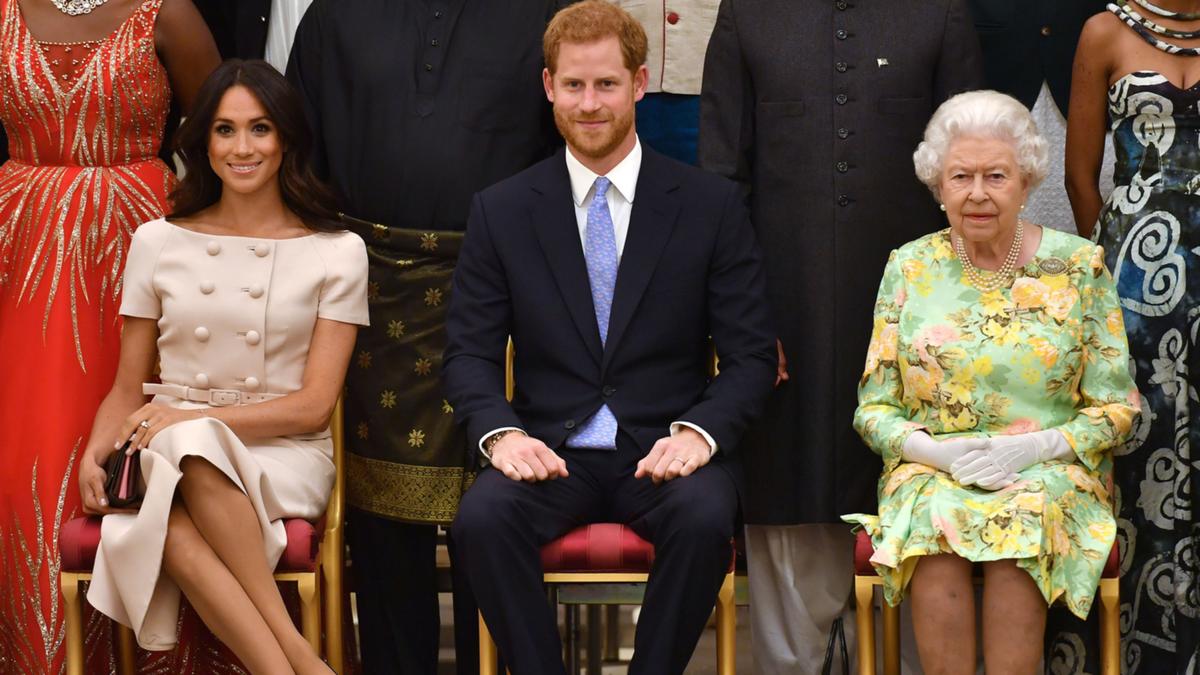
Meghan Markle, Prince Harry and Queen Elizabeth II in 2018. Credit: WPA Pool/Getty Images
While friends of the duchess painted her in a positive light, the author said her “victims” told a “different story about her than the one she wanted published”.
Barr asked the author why attitudes towards Meghan were now different from when she married Prince Harry in 2018.
“She voluntarily came to England and married into the Royal Family and she must have known what that required,” the author told Sunrise.
“She had to be part of the team and support the Queen and play her part.
Tom Bower, author of Revenge: Meghan, Harry, and the war between the Windsors. Credit: Sunrise
“And all she really did was complain because she wanted the spotlight, she wanted to be number one.
“She wanted to turn the royal family into a Hollywood celebrity game.”
Bower said he believes Meghan never wanted to stay in Britain.
“I think she wanted the title, she wanted the fame, and then go back to California,” said Sunrise.
Prince Harry marries Meghan Markle. Credit: PA Images via Getty Images
“It was really because of that, and because she allegedly bullied a lot of her staff, she made them very unhappy,” he claimed.”
Bower also alleges Meghan “turned Harry against his family and Harry was the most popular of all the royals, besides the Queen”.
“On the whole (she) did what Meghan wanted, and not what the royal family expected… and it all quickly unraveled,” he said.
“And it didn’t unravel because she wasn’t being helped, it didn’t unravel because of racism, it unraveled because Meghan didn’t get what she wanted, which was the spotlight on her.”
Meghan Markle, Prince Harry, Prince William and Catherine, Duchess of Cambridge. Credit: Max Mumby/Indigo/Getty Images
Bower also makes other intriguing allegations in his book, including that Meghan made Kate Middleton cry before Meghan’s wedding in 2018 – contrary to what Meghan said in her Oprah interview.
He claimed the Queen was relieved when Meghan did not attend Prince Phillip’s funeral in April 2021.
Another claim he makes is that Meghan suspected Victoria Beckham was leaking stories to the media.
‘f***ing nuts’
Meanwhile, UK publication Express has reported that Bower claims in the book that Prince Harry’s pals from Eton had thought he was “f***ing nuts” for dating Meghan.
During a “shooting” weekend, the couple had joined 16 of Harry’s friends for dinner on Friday.
Bower claimed in the book that, like other such weekends, “Harry was looking forward to endless banter, jokes — and a lot of drinking.”
The jokes involved “sexism, feminism and transgender people”, and “Meghan challenged every guest whose conversation contravened her values”, Bower wrote.
“’She lacked any sense of humour,” he wrote.
”Driving home after Sunday lunch, the texts pinged between the cars: ‘OMG, what about HER?’ said one. ‘Harry must be f***ing nuts’.”
For more engaging royal content, visit 7Life on Facebook.
That’s how everyone was left feeling after one of the best advertisements you could see for 3×3 basketball.
It was the type of finish that keeps your heart racing long after the full-time siren has gone.
England’s men rode an incredible wave of home crowd support to beat Australia in overtime, 17-16.
Australia’s men claim wheelchair basketball gold
The four gold medal matches played out in fast and furious fashion at Smithfield, and Australia’s 3×3 men’s wheelchair basketball team started off with a tense match against Canada.
Lachlin Dalton (left) was again on form to help Australia to an 11-9 win.(Getty Images: Justin Setterfield)
A day after shooting a two-pointer in overtime to beat England in the semis, youngster Lachlin Dalton was again on form to help the Australians to an 11-9 win.
“It’s been a bit surreal coming out playing well for the country and just to help be part of a gold medal, the first of its kind, there’s just something special,” Dalton said.
“To come out and play like we did, have the camaraderie that we did all week, it’s definitely been my favorite week away.”
‘I am Birmingham’: Local hero leads physical fight
In the men’s decider, it was a street ball shootout of the highest quality.
After an intense, physical showdown, where both sides racked up the fouls, it went to overtime where the first team to score two points would win.
loading
After Australia scored first, Birmingham’s own Myles Hesson got himself in two-point range, and swoosh, the capacity crowd exploded.
“I have played basketball in every corner of Birmingham,” Hesson said.
“This is where I used to catch the bus, just here. This is where I went to the markets with my gran. I am from Birmingham. I am Birmingham.”
“I don’t know how they all got tickets, but there are a lot of people in this stadium rooting for me. I could hear every last one of them.”
Australia’s Greg Hire, meanwhile, said he was proud of the way the Australian team had fought out the match.
“To go down in a game winning shot to a super talented side in front of the home crowd, I’m immensely proud,” Hire said.
“But [it’s a] pretty tough feeling right now.”
“It’s just a privilege to play in front of a crowd like that,” Jesse Wagstaff added.
“Birmingham’s done a great job of putting on a fantastic show.”
Hire played the match with a torn groin and was the ultimate street-fighter, scrapping and jostling, and attracting plenty of attention from the referees — Australia ended up with 11 team fouls and England nine.
Greg Hire says he will retire from international competition, and wants to see more investment in 3×3 basketball. (AAP Photos: Darren England)
“That’s the reason why we love it right? It’s not traditional five and five, and it’s tough,” Hire said.
“Obviously the refs swallowed their whistle towards the end of the game, which is a shame, but that’s the style, that’s 3×3 basketball. I think that’s why it’s a sport that as you can see, everyone loves.”
After making its debut at last year’s Tokyo Olympics, Hire, one of Australia’s most experienced players in the short format, says he’s retiring from international competition, and wants to see more investment in it.
“We don’t get paid to play 3×3, we don’t get per diem like the Boomers. You’re doing for the love of the game and for the love of the country,” he said.
“What we’re seeing is the first step. In the past, and don’t disrespect the players that played before us, but it’s guys that specialize in 3×3.
“We need to put some respect, raise the profile. Hopefully those NBL guys that aren’t in the Boomers will play for us.”
Women’s teams win minor medals
The women’s wheelchair team couldn’t bring its best against Canada, going down 14-5.
Australia’s women beat New Zealand 15-13 to win the wheelchair bronze.(Getty Images: Justin Setterfield)
“A silver medal is a bit bittersweet, but I’m so proud of our girls,” Australia’s Ella Sabljak said.
“We’ve come from literally nothing, we’ve had no expectations, and that was probably our worst game we played the entire tournament, so I know we’re better than that.”
Australia’s women beat New Zealand 15-13 to win the bronze medal, and Canada’s women downed England 14-13 to claim gold.
A safety concern during Brisbane Metro tunneling works has prompted an emergency shutdown of a key CBD street, causing hour-long delays for commuters, forcing some people to get off buses and walk the rest of their way to work.
Brisbane councillor Ryan Murphy, chair of the council’s transport committee, released a statement before 10.30am, in which he was thankful “no one was injured”.
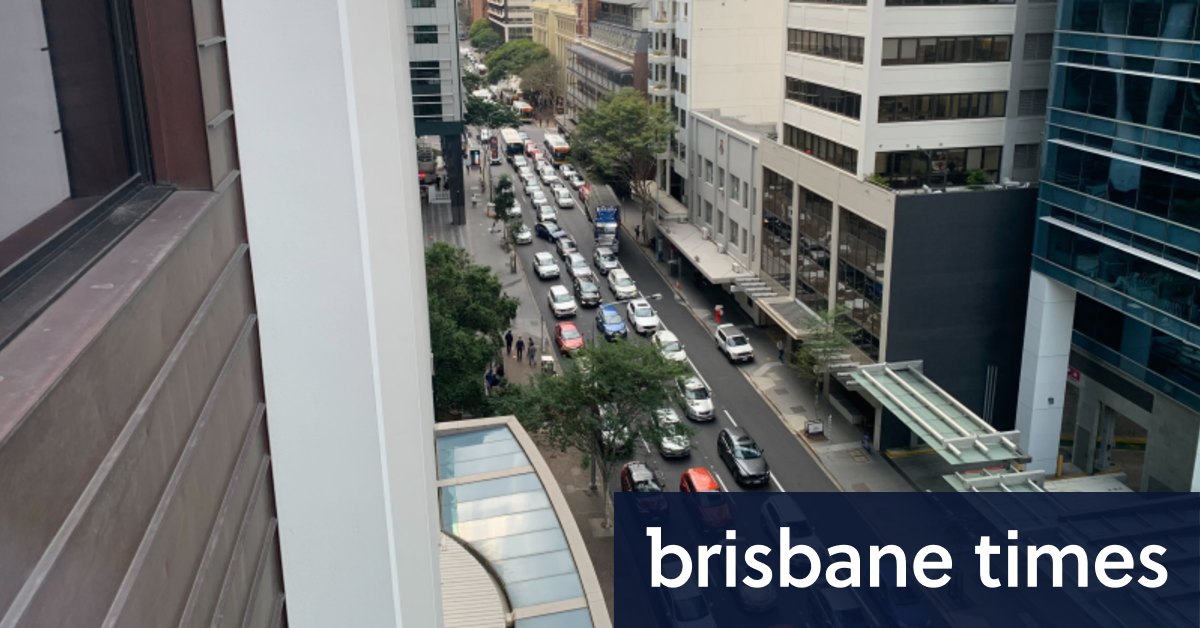
Traffic was backed up on Ann Street on Wednesday morning.Credit:Cameron Atfield
All lanes were blocked from all directions on Adelaide Street between George Street and North Quay on Adelaide Street on Wednesday morning, with the Queensland Traffic website urging people to seek an alternative route from about 8am.
The cause of the emergency works was believed to be road subsidence, or deterioration.
“Unfortunately, this morning we’ve had to close a small section of Adelaide Street between North Quay and George streets which has impacted morning commuters,” Murphy said.
“This decision was made for safety reasons after a contractor reported an issue with tunneling works beneath Adelaide Street for the Brisbane Metro project.”
The emergency roadworks on Adelaide Street.Credit:Sean Parnell, Brisbane Times
Earlier, a Translink spokesman confirmed emergency works were behind the delays.
“It looks like the works are causing delays all the way back to Brisbane and West End,” he said.
Kansas voters rejected an amendment that would weaken the right to abortion in the state.
See results for Kansas congressional and state primaries here.
The amendment and the stakes:
Kansas voters were the first in the country to directly weigh on abortion rights since the Supreme Court in late June overturned the abortion protections in Roe v. Wade.
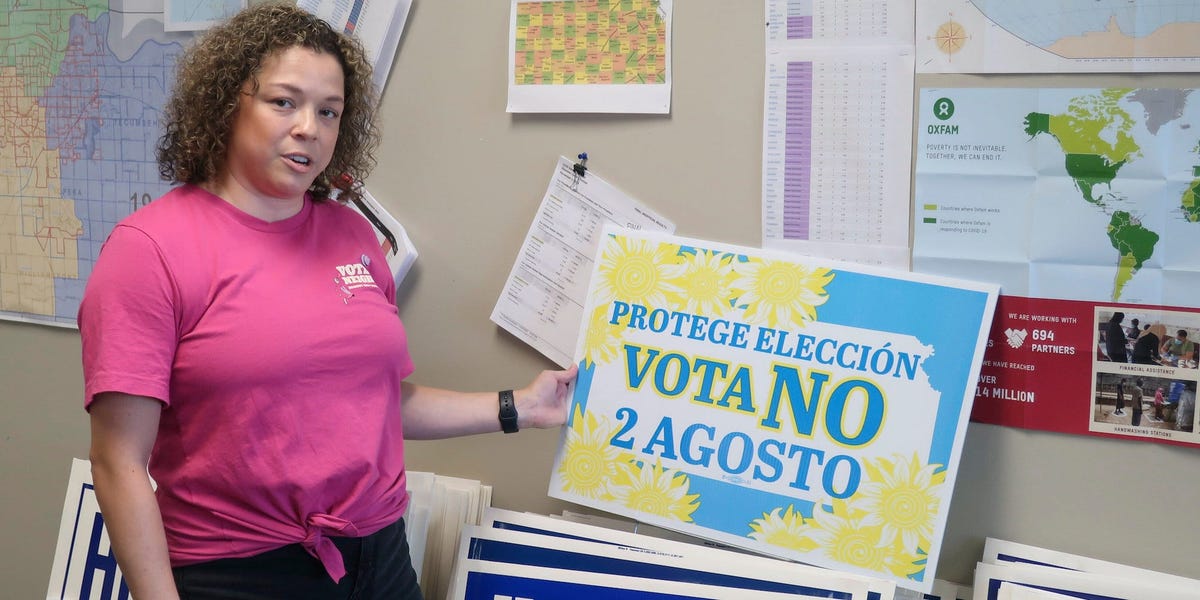
On Tuesday’s primary ballot, voters rejected a measure, Amendment 2, which, if passed, would establish no right to abortion and no right to public funding for abortion under the state constitution.
A “yes” vote on the measure would have eliminated the right to abortion under the state Constitution, while the “no” vote would leave the constitutional protections to abortion in Kansas unchanged.
The rejection of the ballot measures leaves intact a 2019 decision by the state Supreme Court establishing a right to abortion in the Kansas Bill of Rights.
The specific language of the amendment stated: “Because Kansans value both women and children, the constitution of the state of Kansas does not require government funding of abortion and does not create or secure a right to abortion.”
The amendment was on the ballot as a yes-no question, and required a simple majority of the vote to pass.
Four other states — Alabama, Louisiana, Tennessee, and West Virginia — have passed constitutional amendments establishing no right to abortion under their constitutions over the past decade. Those amendments have proven key to curtailing abortion access and allowing bans to go into effect in the post-Roe era.
Kansas is one of five US states where voters will directly decide the state of abortion access via ballot measures in 2022. In November, Kentucky will vote on a similar measure establishing no right to abortion, Montana will vote on a measure guaranteeing medical care to infants “born alive,” and two blue states, California and Vermont, will vote on amendments to enshrine the right to abortion in their state constitutions.
The times they are a-changin’ at Woolworths stores across the nation, and if you’re a fan of the fresh service counters, then you’ll probably want to double-check the new hours before you run in to grab a salmon fillet or sliced cacciatore salami.
The grocery giant has made a change to the trading hours of its fresh service counters across Australia, “due to a shift in customer shopping behaviour”.
The initiative was trialled in a handful of NSW stores in May 2022 and kicked off across stores in WA yesterday, August 1.
As a result, Woolies shoppers will now have a little less time to purchase fresh items from the meat, seafood, and deli counters.
From now on, the fresh service deli will trade from 8am to 8pm, seven days a week and the seafood and meat counters will be staffed from 9.30am to 7pm on weekdays and 9am to 7pm on weekends.
A handful of stores will operate longer fresh service counter hours, if there’s still high customer demand in those stores.
However, a Woolworths spokesperson told Perth Now that customers can still purchase similar products, such as chicken breast fillets and salmon, within the packed fresh convenience range in-stores.
“We’ve also moved to standardize our overall operating hours so we can offer a consistent customer experience across our store network,” they said, but this change doesn’t affect West Aussies all too much.
“Select stores across the country will open one hour later or close one hour earlier to align with other stores and better match customer shopping patterns.”
The only store in WA to be impacted by changing opening times will be Eaton Fair, as the majority of WA’s Woolies already open at 8am.
The spokesperson said the changes will be monitored over the coming months, and customer and team member feedback would be taken on board.
In-store signage has been placed at the fresh service counters and at the front of stores to inform customers of the altered trading hours.
If you want to know a little more about the deli meats on offer, a Woolworths worker caused quite a fuss last month when she gave a scathing review of the supermarket’s most popular meats.
Customers are encouraged to check the opening and closing hours of their local Woolworths.
The previously announced Batgirl film starring In the Heights actor Leslie Grace, Michael Keaton and Brendan Fraser will not be released at all, Warner Bros Discovery has unexpectedly announced, despite shooting already being completed and the film being in post-production.
Directed by Ms Marvel directors Adil El Arbi and Bilall Fallah, the film was initially greenlit in 2021 as part of a wider move at Warner Bros to create feature films specifically for the streaming service HBO Max. But the studio confirmed on Tuesday that the film would never get any release, either theatrically or on HBO Max.
It declined to provide further comment.
Batgirl was to have Keaton reprise his role as Batman, alongside Grace as the titular hero Barbara Gordon, JK Simmons as Barbara’s father, Commissioner Gordon, and Fraser as the villain Firefly.
The Hollywood Reporter said Batgirl’s budget was a factor in the decision, having risen to nearly $90m (£74.1m, A$130m) due to costs relating to it being shot during the Covid-19 pandemic. While the budget is lower than the average DC superhero film, it was reportedly decided that it did not have the “spectacle that audiences have come to expect from DC fare” and would not recover its losses from being released.
However, the New York Post, which broke the story on Tuesday, cited an unnamed source who said the budget had actually exceeded $100m and that the film had performed so poorly during early test screenings that Warner Bros decided to cut its losses.
“They think an unspeakable Batgirl is going to be irredeemable,” the source told the New York Post.
A minute after this story posted got a call from a rival studio exec who was floored by move. “Worked in this town for three decades and this is some unprecedented shit right here.” https://t.co/A3aBLPulWz
The decision means the film ranks among the most expensive canceled cinematic projects ever.
The move comes amid a change in leadership since Warner Bros merged with Discovery in May 2021. Warner Bros Discovery CEO David Zaslav, who recently oversaw swingeing cuts at CNN including shutting down its $300m streaming service CNN+ one month after it launched, is reportedly prioritizing cost-cutting and refocusing the studio on theatrical films over streaming projects.
Writing in Variety, Adam B Vary and Brent Lang noted that the decision to cancel Batgirl entirely would allow the studio to “take a tax write-down”, citing sources who said it was “seen internally as the most financially sound way to recoup the costs (at least, on an accountant’s ledger).
Several shows including Full Frontal With Samantha Bee, The Last OG and Chad have been canceled since the Warner Bros Discovery merger, while a DC Comics film of The Wonder Twins that was in development has also been canned.
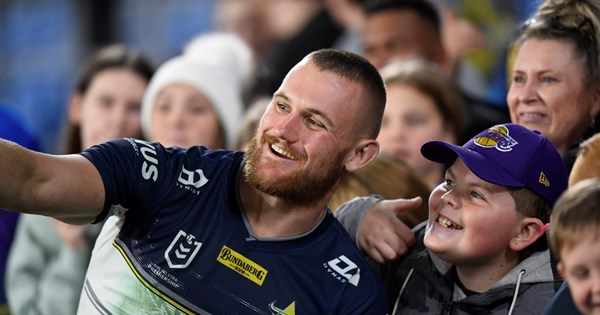
While most Cowboys will be in unfamiliar territory during Sunday’s clash at Bundaberg’s Salter Oval, forward Coen Hess will be right at home.
The Bulldogs and Cowboys will both travel more than 1000km this week to bring the first ever NRL game to the Queensland coastal city, but Hess will be playing in front of a ‘home crowd’.
Born in Bundaberg, the Townsville second rower will be expecting just “a few proud Hess”” among the crowd on Sunday with his younger brother set to feature in the local derby curtain-raiser.
“Funnily enough my little brother is playing a semi-final before us so it’ll be a good occasion for the family,” Hess told NRL.com after Sunday’s win over the Dragons.
Coen Hess during the Maroons fan day at Bundaberg last year.
“I played my first year of rugby league for The Waves Junior Rugby League Club before we moved to Mt Isa when I was eight.
“Salter Oval is where my dad played all of his football career and why I play rugby league is following in my dad’s footsteps so I’m sure there will be a few proud Hess’ there on Sunday.”
With a carnival atmosphere guaranteed to bring the country oval alive on Sunday, the Queensland Origin representative is expecting to hear a familiar voice among the Cowboys supporters.
“My nan has been a diehard Cowboys supporter even before I started playing for the club so she has been excited for this weekend for a long time,” he said.
“My little brother actually lives with my nan in Bundaberg and I know she’s pretty proud of us.
“She comes up occasionally to Townsville and has been there for a few Origin games as well. Ella she’s a wonderful lady and she’ll probably be the loudest supporter there which is usually the case.
With the likes of Josh Addo-Carr and Matt Burton also set to descend on country soil, Hess is prepared for a tough match against the in–form Bulldogs who will be looking to cause a few more upsets in the final rounds of the Telstra Premiership. regular season.
“I’m expecting a really big game, they’re obviously playing a really good brand of footy at the moment,” he said.
“They’ve got some big boys through the middle who are really destructive and they can offload to some pretty impressive young outside backs as well.
“We’re under no illusion that they’re on the bottom of the ladder but the way they’re playing at the moment suggests that they’re a really good side.”
With the Cowboys currently sitting second on the ladder with five weeks until finals, the 25-year-old forward said he hopes the Round 21 clash will help promote the game where his own rugby league journey began.
“It’s not only huge for the town to host these games but it’s really good for the game as well, taking it to these smaller communities,” he said.
“I love it, I think building the game in those regional communities is a great idea and you can see it means the world to them as well so I think it’s just great for everyone involved.
“I get back there every second Christmas, nan and my uncle usually fly up to us and then we return the favor every other Christmas and it’s always a great trip to Bundaberg.”
It was a typical Saturday night for best friends Kerry Bartley and Michelle Lewis, spent watching movies and making plans for the next day.
Not wanting to worry her foster mum, Michelle said good night to her friend and hopped on her most prized possession, her mountain bike, about 10pm.
The ride home was less than a kilometer and should have only taken a few minutes but Michelle never made it home.
“That was the last time I’ve seen or heard from her,” Kerry said.
Best friend Kerry Bartley is urging anyone with information about Michelle Lewis’s disappearance to come forward.(abcnews)
Kerry was the last person to see Michelle Coral Lewis alive before she vanished in central Queensland on Saturday, January 14, 1989.
“It’s been 33 long years,” she said.
“Every year that passes becomes harder, not easier, because there are no answers.
“How does someone, and their bike, just disappear?”
It is a $500,000 question police are determined to answer, with help from the public.
Who was Michelle Lewis?
Kerry and Michelle’s bond began when they became neighbors in Rockhampton at 13 years old.
“Michelle was a creature of habit and over the weekends mostly spent the whole day at my place,” Kerry said.
A former Glenmore High School student, the “tomboy” was “very independent”, with only a handful of “close female friends”.
Michelle Coral Lewis disappeared in Rockhampton, central Queensland, in January 1989.(Supplied: Queensland Police Service)
Like many 21-year-olds in Rockhampton, Michelle found joy in socializing at Flamingo’s Nightclub.
“Michelle had a rough upbringing, but she had a heart of gold and was loyal to her friends,” Kerry said.
She tried a range of jobs, including one at a local piggery and another at a panel beater shop, but struggled to land permanency.
“Michelle never had much to call her own,” Kerry said.
“She had nothing. But she would save everything to give to somebody else.”
Michelle’s traumatic childhood
Michelle was “abandoned by her mum” at just “a few weeks old”, then raised by her grandma.
Adaline Salhus, known better as Dell, stepped in to foster Michelle when her grandmother died.
She spent about four years living with Dell and her family in North Rockhampton.
But when Dell woke up at 7am on January 15, 1989, she found no trace of Michelle, or her beloved bike, and reported her missing.
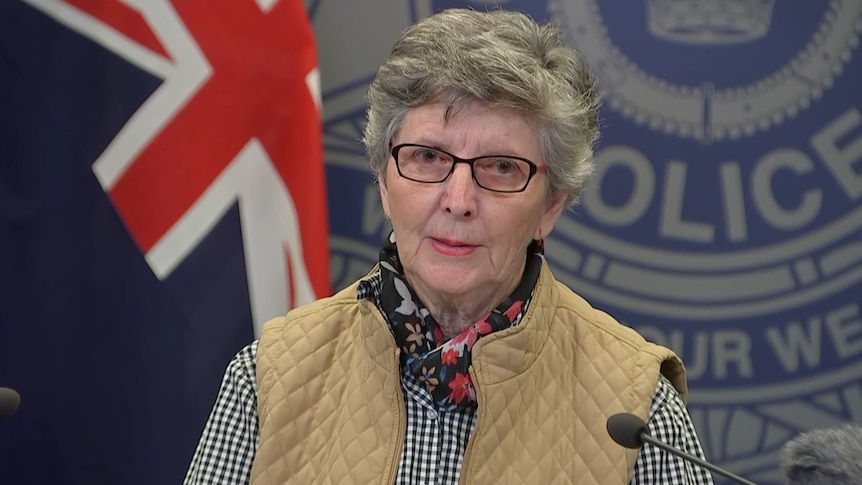
The former lead investigator, retired detective Ann Gumley, said it was a case that has haunted her well beyond her 34 years of service.
“Because of the kindness shown to her by her [foster] mother Dell Salhus, Michelle would not have done anything that would have made Dell concerned,” Ms Gumley said.
Former lead investigator, retired detective Ann Gumley, says the case still haunts her.(abcnews)
Dell, who has since died, told police at the time that Michelle was very responsible and always phoned if she was going to be home late.
“She had such a sad life, and then to just disappear just seemed so unfair,” Ms Gumley said.
“It’s very hard to comprehend that someone can just disappear off the face of the earth and no-one knows anything about it.”
How the original investigation unfolded
Michelle was last seen on her bike leaving Kerry’s house on Stenlake Avenue, North Rockhampton, around 10:45pm, intending to ride a short distance to her home on Alexandra Street.
Ms Gumley said police launched a major investigation and completed 150 tasks, initially taking 42 statements.
“A large number of persons were located, interviewed and statements obtained.
“However, there was nothing to indicate to us as to how Michelle disappeared.”
Ms Gumley said she had done everything she could to try to find Michelle.
“We had to try and keep the ball rolling as much as we could to try to get as much information as we could,” she said
“But once that information dries up, that leaves us with nowhere to go.”
Ms Lewis’s case was reviewed in 1999 as part of the investigation into crimes committed by notorious serial killer Leonard John Fraser, who died in 2007.
But police said there was no information to suggest he was involved in Michelle’s disappearance.
Michelle Lewis was last seen alive riding this maroon and white mountain bike on Saturday, January 14 1989.(Supplied: Queensland Police Service)
Can you help?
Detectives are urging a man, who called police around midday on February 18, 1989, but hung up before speaking to detectives, to come forward.
Michelle is described as 155 centimetres tall, with black shoulder-length hair and brown eyes and had two tattoos on the inside of her ankles, one a cross, the other her initials, ML.
She was last seen wearing a hot pink tie-dye singlet top with the word surf across the front, a pair of multi-coloured board shorts and white Dunlop sneakers.
Michelle Lewis was last seen alive wearing this pink tie dye singlet top that says “surf”.(Supplied: Queensland Police Service)
Even after 33 years, the former lead investigator said she remained committed to seeking justice for Michelle.
“Miracles do happen,” Ms Bartley said.
“If there is anyone out there who may have some information, regardless of if they feel it is insignificant, please let the investigating officers know.
“If they find Michelle’s bike, they’ll find Michelle. If they find her, they’ll find her bike.
“That’s the way I look at it because she never went anywhere without that bike.”
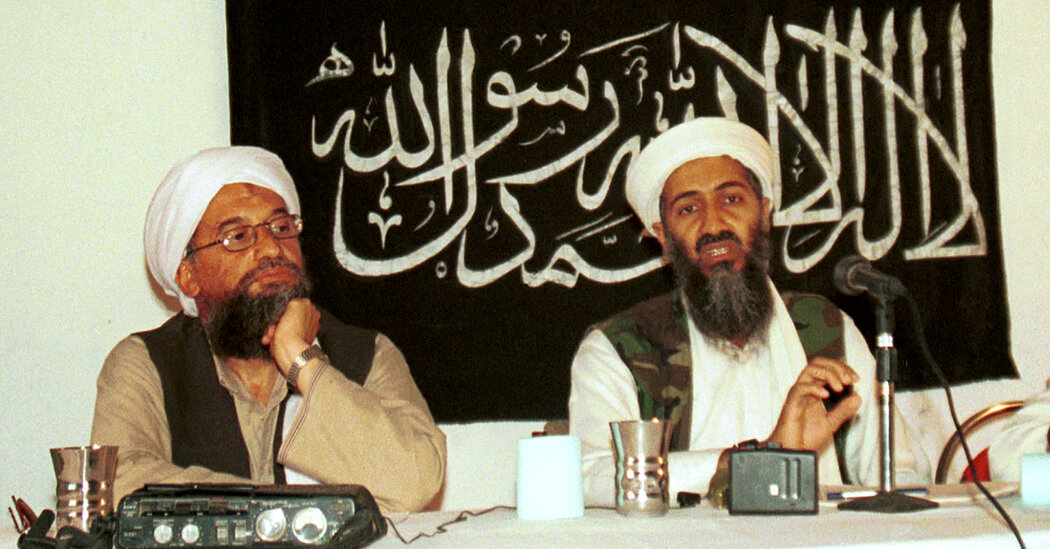
WASHINGTON — Intelligence officers made a crucial discovery this spring after tracking Ayman al-Zawahri, the leader of Al Qaeda, to Kabul, Afghanistan: He liked to read alone on the balcony of his safe house early in the morning.
Analysts search for that kind of pattern-of-life intelligence, any habit the CIA can exploit. In al-Zawahri’s case, his long balcony visits gave the agency an opportunity for a clear missile shot that could avoid collateral damage.
The hunt for al-Zawahri, one of the world’s most wanted terrorists, stretches back to before the Sept. 11 attacks. The CIA continued to search for him as he rose to the top of Al Qaeda after the death of Osama bin Laden and after the Taliban takeover of Afghanistan last year. And a misstep during the chase, the recruitment of a double agent, led to one of the bloodiest days in the agency’s history.
Soon after the United States left Kabul, the CIA sharpened its efforts to find al-Zawahri, convinced he would try to return to Afghanistan. Senior officials had told the White House they would be able to maintain and build informant networks inside the country from Afar, and that the United States would not be blind to terrorism threats there. For the agency, finding al-Zawahri would be a key test of that assertion.
This article is based on interviews with current and former American and other officials, independent analysts who have studied the decades-long hunt and others briefed on the events leading up to the weekend strike. Most spoke on the condition of anonymity because of the sensitive intelligence used to find al-Zawahri.
For years al-Zawahri was thought to be hiding in the border area of Pakistan, where many Qaeda and Taliban leaders took refuge after the US invasion of Afghanistan in late 2001. He was wanted in connection with the 1998 embassy bombings in Tanzania and Kenya, and the CIA had tracked a network of people whose intelligence officials thought supported him.
The examination of that network intensified with the US exit from Afghanistan last year and a belief among some intelligence officials that senior leaders of Al Qaeda would be tempted to return.
The hunch proved right. The agency found out that al-Zawahri’s family had returned to a safe house in Kabul. Though the family tried to ensure they were not being watched and to keep al-Zawahri’s location secret, intelligence agencies soon learned he too had returned to Afghanistan.
“There was a renewed effort to figure out where he was,” said Mick Mulroy, a former CIA officer. “The one good thing that might have come out of withdrawing from Afghanistan is that certain high-level terrorist figures would then think it is safe for them to be there.”
The safe house was owned by an aid to senior officials in the Haqqani network, a battle-hardened and violent wing of the Taliban government, and it was in an area controlled by the group. Senior Taliban leaders occasionally met at the house, but American officials do not know how many knew that the Haqqanis were hiding al-Zawahri.
If some senior Taliban officials did not know that the Haqqanis had allowed al-Zawahri to return, his killing could drive a wedge between the groups, independent analysts and others reported on the events said.
It is not clear why Al-Zawahri moved back to Afghanistan. He had long made recruiting and promotional videos, and it may have been easier to produce them in Kabul. He also may have had better access to medical treatment.
No matter what the reason, his ties to leaders of the Haqqani network led US intelligence officials to the safe house.
“The Haqqanis have a very long relationship with Al Qaeda going back to the mujahedeen days,” said Dan Hoffman, a former CIA officer. “They provide Al Qaeda with a lot of tactical support that they need.”
Once the safe house was located, the CIA followed the playbook it wrote during the hunt for Bin Laden. The agency built a model of the site and sought to learn everything about it.
Analysts eventually identified a figure who lingered on the balcony reading, but never left the house, as al-Zawahri.
US officials quickly decided to target him, but the location of the house posed problems. It was in the Sherpur neighborhood of Kabul, an urban area of closely spaced houses. A missile armed with a large explosive could damage nearby homes. And any sort of incursion by Special Operation forces would be prohibitively dangerous, limiting the options for the US government to conduct a strike.
The search for al-Zawahri carried enormous importance for the agency. After the US invasion of Afghanistan, the CIA base in Khost Province became home to a targeting group dedicated to tracking both Bin Laden and al-Zawahri. It was one of the leads developed by the CIA to track al-Zawahri that proved disastrous for the agency’s officers at that base, Camp Chapman.
CIA officers hoped Humam Khalil Abu Mulal al-Balawi, a Jordanian doctor and propagandist for Al Qaeda, would lead them to al-Zawahri. He provided American officials with information about al-Zawahri’s health, convincing them his intelligence was real. But he was in fact a double agent, and on Dec. 30, 2009, he showed up at Camp Chapman with a suicide vest. When it exploded, seven CIA officers were killed.
For many, the Khost attack intensified efforts to find al-Zawahri. “To honor their legacy, you carry on with the mission,” Mr. Hoffman said.
In 2012 and 2013, the CIA focused the hunt on Pakistan’s North Waziristan region. CIA analysts were confident they had found the small village where al-Zawahri was hiding. But intelligence agencies could not find his house in the town of about a dozen compounds, making a raid or drone strike impossible.
Still, the US hunt forced al-Zawahri to remain in the tribal areas of Pakistan, possibly limiting the effectiveness of his leadership within Al Qaeda.
“Anytime anything related to Bin Laden or Zawahri hit the intel channels, everyone stopped to pitch in and help,” said Lisa Maddox, a former CIA analyst. “It was the CIA’s promise to the public: to bring them to justice.”
On April 1, top intelligence officials briefed national security officials at the White House about the safe house and how they had tracked al-Zawahri. After the meeting, the CIA and other intelligence agencies worked to learn more about what they called al-Zawahri’s pattern of life.
One key insight was that he was never seen leaving the house and only seemed to get fresh air by standing on a balcony on an upper floor. He remained on the balcony for extended periods, which gave the CIA a good chance to target him.
Al-Zawahri continued to work at the safe house, producing videos to be distributed to the Qaeda network.
A senior administration official, who spoke on the condition of anonymity to discuss the sensitive decisions leading to the strike, said the intelligence presented to the White House had been repeatedly vetoed, including by a team of independent analysts tasked with identifying everyone who was staying at the safe house.
As options for a strike were developed, intelligence officials examined what kind of missile could be fired at al-Zawahri without causing major damage to the safe house or the neighborhood around it. They ultimately decided on a form of Hellfire missile designed to kill a single person.
William J. Burns, the CIA director, and other intelligence officials briefed President Biden on July 1, this time with the model of the safe house, the senior official said.
At that meeting, Mr. Biden asked about the possibility of collateral damage, prodding Mr. Burns to take him through the steps of how officers had found al-Zawahri and confirmed his information, and their plans to kill him.
Mr. Biden ordered a series of analyses. The White House asked the National Counterterrorism Center to provide an independent assessment on the impact of al-Zawahri’s removal, both in Afghanistan and to the network worldwide, said a senior intelligence official. The president also asked about the possible risks to Mark R. Frerichs, an American hostage held by the Haqqanis.
In June and July, officials met several times in the Situation Room to discuss the intelligence and examine the potential ramifications.
The CIA plans called for it to use its own drones. Because it was using its own assets, few Pentagon officials were brought into the planning for the strike, and many senior military officials learned about it only shortly before the White House announcement, an official said.
On July 25, Mr. Biden, satisfied with the plan, authorized the CIA to conduct the airstrike when the opportunity presented itself. Sunday morning in Kabul, it did. A drone flown by the CIA found al-Zawahri on his balcony. The agency operatives fired two missiles, ending a more than two-decade-long hunt.
Thomas Gibbons-Neff, Adam Goldman and Michael Crowley contributed reporting.