Categories
Sports

Nathan Buckley’s five takeaways from Round 21

The Buck Stops Here.

Nathan Buckley has gone through his five biggest takeaways from the weekend of footy.

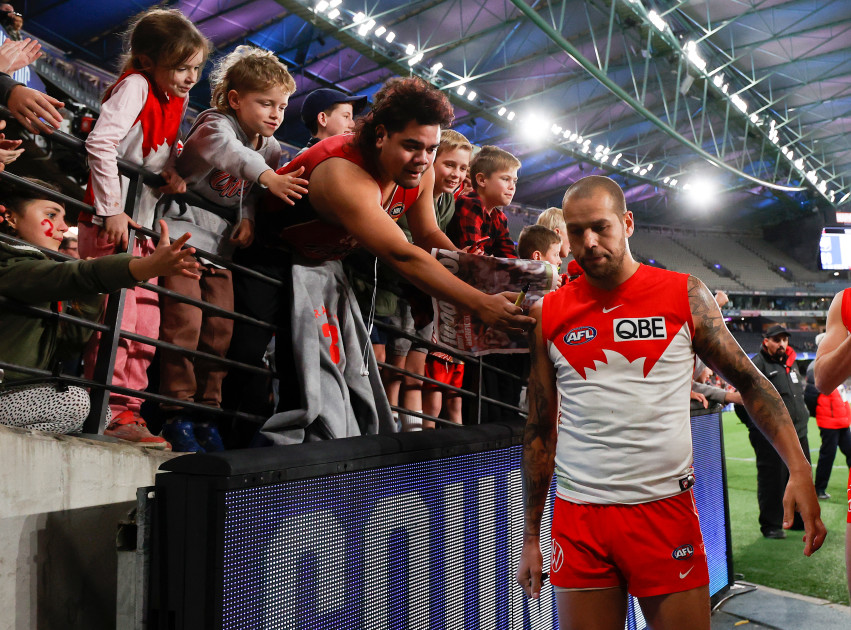
Buckley has touched on Patrick Cripps, Lance Franklin, Zac Bailey and Brayden Maynard.

Winning form is the best form

“Clearly, winning form is the best form.

“We’ve got two teams in Geelong and Collingwood that have been 11-0 in their last 11 games and are clearly out in front when it comes to sides with winning form at the moment.

“We’re talking about winning form and what context we’re putting it. We’re putting it in teams that over the next six or seven weeks are going to have the capacity to challenge and ultimately win the comp.

Geelong and Collingwood are right up there.

“The next team in the last 10 weeks that are really in the green is Sydney who have won eight of their last 10. They’re slowly building their form and some of their numbers are stacking up.

“Melbourne, on the flip side, despite Melbourne and Collingwood being so close on the weekend, they’ve only won four of their last 10 games as has Carlton.”

Cripps made a stand after Blues’ poor start

“Vossy’s (Michael Voss) attitude is that this is a competitive, physical game and we need to be competitive, physical players.

“You get the captain of a side who needs to win, who has been dominated in the early stages of that game, and Vossy would’ve been in this situation himself a lot, you need to make a stand, you need to change the flow of a contest.

“You can do it with an act of brilliance and skill, but the main way is to go harder and lower often than your opponent and win a hard ball.

“He was a captain trying to make a stand and for 10 minutes after that the Carlton side popped up and we saw some real fight, but we didn’t see it for long enough in that game against a good opposition until the last quarter.

“I reckon Patty Cripps’ actions were around leadership and trying to drive his group with a solid contest at the footy.”

Swans’ mature handling of Franklin contract

“I reckon this has been handled in a really mature manner.

“This player has contributed so much to this team that he’s earned the right to play it out and to have the decision in his own grasp to what he wants to do at the end of the year.

“I loved the way that John Longmire handled that. I love the way that Buddy played.”

Garry Lyon: “Damian Barrett called it a provocative statement. Kane Cornes said it was, ‘me, me, me’, it was a selfish and really strange decision to release that statement.”

Buckley: “That frustrates the hell out of me.

“Are we mature enough as an organization to get to the point where players say, ‘I’m actually going to be heading over here’?

“Say (Daniel) McStay is definitely going to Collingwood and Daniel McStay says, ‘Look, I’ve had a great time here at Brisbane and I’m going to Collingwood at the end of this season’ and Chris Fagan goes, ‘We ‘re aware of that, but Daniel McStay is in our best side now and he gives us the best chance of playing in a premiership this year’ and then we just move on.

“The people who are least mature to handle that situation is actually us in the media.

“The timing of the statement is in answer to the questions that have been posed through scuttlebutt over the last two or three weeks.”

Bailey’s importance to Lions’ flag hopes

“I just think its importance to the Lions cannot be understated.

“In amongst some great players, he had a fantastic game with four goals, 20 touches on the weekend.

“This kid could be, and he’s still a kid, their most important player.

“We talk about ground level top-end speed and pace, work rate, he’s got class to finish off.

“When he went off against Richmond the game totally turned.”

Magpies defend Maynard built for September

“I needed to address this.

“Brayden Maynard’s tackling and physical presence is something that every team needs going into September and the big games in finals.

“I definitely produced on Friday night against Melbourne.

“The first tackle on (Ed) Langdon off the ‘all duck, no dinner’ comments. Brayden Maynard is a physical player, he loves making a stand, he plays the game hard and tough.

“The tackle against Langdon set it up and the tackle on (Alex) Neal-Bullen late was the bookend.

“Wear his heart on his sleeve, great kid and built for September action.”


.

Categories
US

Trump complained his generals were not ‘totally loyal’ like Hitler’s, book reveals

Donald Trump complained to his most senior aide, then-chief of staff John Kelly, that he wanted the US’s top generals including retired military figures to show him absolute, unquestioning loyalty while specifically pointing to Nazi Germany as an example.

In a bizarre exchange described by reporters for The New Yorker and New York Times in an upcoming book Mr Trump is said to have asked his top aid, who himself was a four-star general in charge of US Southern Command, “[W]hy can’t you be like the German generals?”

A bewildered Mr Kelly reportedly responded, “Which generals?” to which Mr Trump supposedly shot back, “The German generals in World War II.”

His chief of staff then allegedly told the president, “You do know that they tried to kill Hitler three times and almost pulled it off?”

But the president in response substituted his own version of history.

“No, no, no, they were totally loyal to him,” Mr Trump reportedly insisted to his aid.

The excerpts were published on Monday in The New Yorker. The Divider: Trump in the White House, by Peter Baker and Susan Glasser, is due to be released in September.

Mr Kelly served as chief of staff through the first half of Mr Trump’s tumultuous four years in office, joining after the exit of Reince Priebus. He has imposed some order on the rowdy group of Trump loyalists in the West Wing, including clashing with Steve Bannon, the ex-Breitbart News chief, and eventually ousting him.

He left the office in early January 2019. Surprisingly, the remarks reported on Monday are not the first approving words the ex-president has been accused of making about Nazi Germany and its leadership in conversations with Mr Kelly in particular. He is said to have told Mr Kelly, “Well, [Adolf] Hitler did a lot of good things” during a 2018 trip to France alongside his top advisers, a statement first reported by Michael Bender of The Wall Street Journal for his own book about the Trump presidency. Mr Trump denied making those remarks through a spokesperson after the book’s publication.

The former president had a troubled relationship with top American military brass while in office. He at first appeared to be seeking to align his administration with the views of the US military establishment by staffing a number of top positions in his White House, including his chief of staff position, with retired generals like Mr Kelly and James Mattis.

But by the end of his presidency he had clearly fallen out of favor with those same retired brass (and they with him as well) and was re-embracing the politicians and loyalists who made up much of his inner circle. In June of 2020 he received some of his most withering criticism made by a former member of his administration when Mr Mattis responded to the use of law enforcement officers to clear peaceful protesters from a park outside of the White House so that the president could take part in a photo op.

“Donald Trump is the first president in my lifetime who does not try to unite the American people — does not even pretend to try,” Mr Mattis wrote at the time. “Instead he tries to divide us.”

Categories
Technology

What Is Bluetooth Multipoint?

Earbuds next to a phone and a computer
Kris Wouk / How-To Geek

Multipoint Bluetooth aims to let your earbuds, headphones, or portable speaker pull double duty, switching between taking calls on your phone and watching a movie on your laptop. But how does that work, and how can it work for you?

The History of Multipoint Bluetooth

While Bluetooth makes life easier in a few ways, it’s incredibly frustrating in others. Pairing a Bluetooth device isn’t a fun process when it works seamlessly, and it’s just plain painful when your devices aren’t cooperating. Bluetooth multipoint was created to help alleviate this issue by letting you connect to multiple devices with one headset or speaker.

While multipoint has been around for longer than you may think, Bluetooth itself predates multipoint by 10 years. The first Bluetooth devices launched in 1999, and Bluetooth really began to take off in 2000.

The Bluetooth Special Interest Group, or SIG, introduced Bluetooth multipoint in 2010, but you probably didn’t hear of it until long after. Initially, multipoint Bluetooth was aimed at professionals making calls, and it’s only relatively recently multipoint has made it into consumer devices.

What is Multipoint Bluetooth Good For?

As mentioned above, Bluetooth’s pairing process isn’t one most people are keen to repeat. Multipoint Bluetooth lets you connect one headset or speaker to two playback devices. The Bluetooth device then switches between devices depending on a variety of contexts.

For example, imagine you’re wearing a set of earbuds connected to your phone. With multipoint, you can pair with your computer as well and use your earbuds to watch YouTube videos. When your phone rings, you can answer it and your earbuds will automatically switch over to take the call.

The above example is how most people tend to use multipoint Bluetooth, but as mentioned above, it was originally meant for people who spent most of their time making calls. Multipoint lets you easily switch between a work phone and a personal phone, for example.

How Does Multipoint Bluetooth Work?

All Bluetooth devices work by an ad-hoc mini network. This lets you use multiple wireless mice, game controllers, or other devices without needing to have any sort of hub, as you would with a Wi-Fi network. The downside is that Bluetooth is limited to a relatively short range, around 30 to 100 feet depending on the technology used, but that’s plenty of range for most cases.

When it comes to Bluetooth audio devices in a typical connection, there would only be two devices on the network: your Bluetooth audio device, and your playback device. The audio device would be your headset or speaker, while the playback device is your phone or computer.

Bluetooth multipoint slightly adjusts the above by allowing multiple source devices connected to the playback device. The playback device controls both source devices, choosing which one to play audio from.

WIth the above example of earbuds connected to a phone or a computer, tapping the pause / resume button would pause and resume your video. Once your phone rings, however, tapping the same button would pause the video, switch audio to your phone, and answer the call. At least, that’s how it should ideally work.

RELATED: How to Connect Your Bluetooth Headphones to More Than One Device at a Time

Limitations of Multipoint Bluetooth

In every scenario we’ve looked at, there is a single audio device like a speaker or headphones, then multiple playback devices. This is the only way that multipoint Bluetooth works.

Multipoint Bluetooth doesn’t let you connect a speaker and a headset to a computer, then switch back and forth based on which one you press play on. While this may be possible, it’s not part of the multipoint Bluetooth specification.

Multipoint is also typically limited to a pair of source devices, though with a version of multipoint known as Triple Connectivity, that number goes up to three. That is the upper limit, and so far, there is no version of multipoint that lets you connect four or more source devices.

Another limitation of multipoint Bluetooth is that it won’t play sound from each source device at the same time. This isn’t something most people would use very often anyway, but keep in mind that this may mean your earbuds will stop playing audio from a YouTube video to play a notification chime from your phone, for example.

Finally, multipoint Bluetooth doesn’t come free. Manufacturers need to build it into their headphones or other audio products, and this raises the overall cost of the product.

For this reason, you didn’t find multipoint in many consumer devices for years. Even now, while multipoint is available in more products than ever, it’s still far from ubiquitous.

If you’re wondering if you already have multipoint built into a device you already own, it can be tricky to find out. There isn’t just one way to pair with multiple devices using multipoint, so you can’t always just try and see if it works. The easiest way to find out if a product you own supports multipoint is to check via the manufacturer’s website.

RELATED: How to Connect Your Bluetooth Headphones to More Than One Device at a Time

Different Types of Multipoint

The most basic form of multipoint Bluetooth is known as simple multipoint. This lets you connect to multiple devices, including multiple phones, but answering a call on one while connected on the other will hang up the other call when it switches. Simple multipoint is the type you find most often in consumer devices.

Advanced Multipoint Headphones

Bose Quiet Comfort 45

Bose QuietComfort 45 wireless headphones feature advanced multipoint, making them perfect for busy professionals who want to make the most of their downtime.

Advanced multipoint is meant more for business users. It’s mostly similar to simple multipoint, but when switching calls, this type of multipoint puts the first call on hold instead of simply hanging up. Triple connectivity, as the name implies, allows three source devices instead of two.

Finally, you have proprietary solutions that do what multipoint Bluetooth does, only in a different way. Both Apple and Samsung, for example, have an alternative that uses your account details to intelligently switch audio to whichever device you may be using at a given moment.

Triple ConnectivityBluetooth Headset

Jabra MotionOffice

If you don’t need music or entertainment, but you’re just looking for a headset to get serious work done, the Jabra Motion Office’s lets you communicate from three different devices.

As mentioned above, multipoint doesn’t allow audio from one source to play on multiple devices. That said, Bluetooth 5.0 introduced a feature that allows just this. This feature may have different names from manufacturer to manufacturer, but it’s part of the core Bluetooth 5.0 specification.

Categories
US

Here’s what’s in the Inflation Reduction Act, the sweeping health and climate bill passed Sunday

The Senate passed Democrats’ Inflation Reduction Act on a party-line vote Sunday afternoon, delivering the long-awaited centerpiece to President Biden’s agenda.

Democrats rallied behind the $430 billion climate, health care and tax overhaul after Senate Majority Leader Charles Schumer (DN.Y.) reached a last-minute deal with Sen. Joe Manchin (DW.Va.), who had held up previous proposals.

The House is expected to approve the legislation on Friday and send it to Biden’s desk.

Here’s a summary of what’s in the Inflation Reduction Act:

ENVIRONMENT, ENERGY AND CLIMATE

Businesses would get incentives for deployment of lower-carbon and carbon-free energy sources.

  • Tax credits are extended for energy production and investment in technologies including wind, solar and geothermal energies. The investment tax credit also now applies to battery storage and biogas.
  • Tax credits would be created or extended for additional technologies and energy sources including nuclear energy, hydrogen energy coming from clean sources, biofuels and technology that captures carbon from fossil fuel power plants.
  • Many of the incentives also contain bonuses for companies based on how much they pay their workers and offer credits for manufacturing their steel, iron and other components in the US

Consumers and businesses get incentives to make cleaner energy choices.

  • Tax credits are extended for residential clean energy expenses including rooftop solar, heat pumps and small wind energy systems. Consumers can get credits for 30 percent of expenditures through 2032, and the credit phases down after that.
  • Tax credits of up to $7,500 are offered to consumers who buy electric vehicles — but this credit comes with stipulations that may make it difficult for vehicles to actually qualify.
  • A tax credit would be expanded for energy efficiency in commercial buildings.

Some fossil fuel production on public lands would be bolstered.

  • The future of solar and wind on public lands and wind in public waters would be tied to requirements to hold lease sales that open up new oil and gas production.
  • The bill reinstates the results of a recent offshore oil and gas lease sale that was struck down on environmental grounds. The Interior Department would be required to hold at least three more offshore oil and gas lease sales by next October.

New programs boost investment in climate.

  • A new program aims to reduce emissions of the planet-warming gas methane from oil and gas by both providing grants and loans to help companies reign in their emissions and levying fees on producers with excess methane emissions.
  • $27 billion would go to a green bank that would provide more incentives for clean energy technology.

Costs increase for fossil fuel production on public lands.

  • Minimum royalties increase for companies to pay the government for oil and gas they extract on public lands and waters. A royalty is added to the extraction of gas that is later burned off or released as waste instead of sold as fuel.

Communities that face high pollution burdens get relief.

  • $3 billion would go to environmental justice block grants — community-led programs addressing harms from climate change and pollutants, including $20 million for technical assistance at the community level, through fiscal 2026.
  • More than $3 billion is allocated to funds for air pollution monitoring in low-income communities. Nearly half of the funds — $117 million — would specifically go to communities in close proximity to industrial pollutants.
  • An excise tax on imported petroleum and crude oil products to fund the cleanup of industrial disaster sites increases from 9.7 cents to 16.4 cents per barrel. The reinstatement of the tax is projected to raise $11 billion.
  • The bill permanently extends and increases the Black Lung Disability Trust Fund, a tax on coal production to finance claims from workers with the condition. Black lung, caused by long-term exposure to and inhalation of coal dust, is believed to affect at least 10 percent of coal miners with at least 25 years’ experience, according to a 2018 study by the National Institute for Occupational Safety and Health.

— Rachel Frazin and Zack Budryk

HEALTH CARE

Medicare can negotiate lower prices.

The bill would allow Medicare to negotiate prices for some drugs for the first time, a policy Democrats have been trying to enact for years over the fierce objections of the pharmaceutical industry. The provisions save more than $200 billion over 10 years.

  • It would allow Medicare to negotiate lower prices for 10 high-cost drugs beginning in 2026, ramping up to 20 drugs by 2029. There is a steep penalty if a drug company doesn’t come to the table: a tax of up to 95 percent of the sales of the drug. There is also a ceiling that the negotiated price cannot rise above.
  • In a deal with moderates including Sen. Kyrsten Sinema (D-Ariz.), only older drugs are subject to negotiation after a period of nine years for most drugs and 13 years for more complex “biologic” drugs. That means the negotiations are more limited than many Democrats wanted.

Drug costs can be capped but largely only for Medicare.

The bill includes other measures to cap drug costs. The provisions still largely apply only to seniors on Medicare, not the millions of people who get health insurance through their jobs, in part because complex Senate rules limited how expansive the provisions would be.

  • If drug companies raise prices in Medicare faster than the rate of inflation, they must pay rebates back to the government for the difference.
  • Democrats tried to apply this provision to the private market, but the parliamentarian ruled it violated the Senate rules used to bypass a GOP filibuster.
  • In one of the most tangible provisions for patients, the bill caps out-of-pocket drug costs at $2,000 a year for seniors on Medicare, starting in 2025.
  • The bill also caps patients’ insulin costs at $35 a month, but only for seniors on Medicare. Republicans voted against overruling the Senate parliamentarian to extend that protection to patients with private insurance.

People enrolled in ACA plans get an extension on premium assistance.

The measure also builds on the Affordable Care Act (ACA) by extending enhanced financial assistance to help people enrolled in ACA plans afford premiums for three years. The extra help would otherwise have expired at the end of this year, setting up a cliff. The provision expands eligibility to allow more middle-class people to receive premium help and increases the amount of help overall.

—Peter Sullivan

TAXES

Large corporations will pay for climate and health measures within the bill.

The bill introduces new taxes on corporations to pay for its climate and health care measures.

The centerpiece of its tax plan is a 15 percent minimum tax on the income that big corporations report to their shareholders, a tax known as the minimum book tax. Initial proposals put the amount of revenue raised by the book tax at $313 billion — more than 40 percent of the $740 billion raised by the legislation as a whole.

The tax applies to companies reporting $1 billion in annual earnings. It would impact only around 150 large firms, according to the Joint Committee on Taxation.

Sinema demanded some last-minute exclusions to the minimum tax that were favorable to the US manufacturing sector and private equity firms.

  • The tax will exempt companies taking advantage of accelerated depreciation, a popular deduction that helps pay for capital investments such as new equipment.
  • Small businesses that are subsidiaries of highly profitable private equity firms will also be exempted from the minimum tax.

The IRS gets a funding boost.

Another key measure allocates $80 billion to increase enforcement at the IRS. Democrats hope that, with more employees and better technology, the IRS can more closely examine wealthy individuals and ensure they aren’t dodging taxes. That extra revenue is expected to lower the deficit by $203 billion over the next decade.

Stock buybacks will get an additional tax.

The bill enacts a 1 percent excise tax on stock buybacks to replace the revenues lost by appeasing Sinema. Democrats expect the provision to raise $74 million over a decade.

Share repurchases by S&P 500 companies have soared in recent years and are on track to surpass $1 trillion this year. Companies buy back their stock to reward shareholders and increase their stock price by artificially limiting supply.

  • The tax will impact the nation’s largest companies that rely on multibillion-dollar buybacks to raise their stock price, including Apple, Nike and Exxon Mobil.
  • Democrats have criticized the practice, arguing that companies should invest in workers and innovation instead of repurchasing stock.

To further recover revenue lost to the private equity sector, the bill also extends a set of limitations on losses that businesses can deduct from their taxes. The limits prevent wealthy individuals from significantly bringing down or even wiping out their income tax liability. Sen. Mark Warner (D-Va.) said that extending the caps would raise $52 billion.

— Tobias Burns and Karl Evers-Hillstrom

.

Categories
Technology

Spectralink DECT devices now integrated with Microsoft Teams SIP Gateway

Spectralink DECT devices are now integrated with Microsoft Teams SIP Gateway to help create better results for business-critical frontline workers.

The DECT devices integration with Microsoft Teams SIP Gateway is now available in Australia and New Zealand through local distributor Wavelink.

The integration comes at a time when sectors such as healthcare, manufacturing, retail, and logistics, are relying more heavily on business-critical deskless workers (workers who have to go to a business location to carry out their roles).

It is clear that enterprise businesses globally have also embraced the significant business benefits of cloud-based collaboration tools, leading to more demand for better technology.

In today’s climate, deskless workers must be able to communicate and collaborate easily with their colleagues who work across locations, shifts, and time zones from anywhere. This is often enabled by cloud-based communication and collaboration tools like Microsoft Teams.

The new integration will further enable enterprise customers to migrate to Microsoft Teams while keeping those business-critical deskless workers connected through and after the process.

“Open integration is part of Spectralink’s DNA and this latest integration proves our commitment to the objective of providing customers with choice over their preferred systems,” says Spectralink Corporation managing director EMEA Julien Bertheuil.

“As more and more businesses were coming to us asking for support migrating to the cloud to improve worker collaboration and safety, our experience in enterprise-grade DECT, combined with our knowledge of the Unified Communications as a Service (UCaaS) market, meant we We were ideally placed to develop this much-needed integration with Microsoft Teams. We hope more and more businesses will now be able to complete their digital transformation journey seamlessly.”

Microsoft vice president teams engineering Mahendra Sekaran says the new integration will help many frontline workers with communication on the job, helping them better serve their communities.

“Spectralink DECT integration with Microsoft Teams SIP Gateway enables Teams users to use their DECT devices as another Teams endpoint, while getting access to all of Teams collaboration capabilities. Frontline workers rely on these devices to get their work done, and this new integration allows them to stay connected with their colleagues while on the go.”

Spectralink says it has been developing solutions ranging from on-premises digital private branch exchanges (PBXs) to private and public cloud-delivered collaboration tools for 30 years. They say that this integration, as with the company’s other implementations, helps to bridge the gap between enterprise communications platforms and infrastructure of all sizes.

.

Categories
US

Here’s what’s in the Inflation Reduction Act, the sweeping health and climate bill passed Sunday

The Senate passed Democrats’ Inflation Reduction Act on a party-line vote Sunday afternoon, delivering the long-awaited centerpiece to President Biden’s agenda.

Democrats rallied behind the $430 billion climate, health care and tax overhaul after Senate Majority Leader Charles Schumer (DN.Y.) reached a last-minute deal with Sen. Joe Manchin (DW.Va.), who had held up previous proposals.

The House is expected to approve the legislation on Friday and send it to Biden’s desk.

Here’s a summary of what’s in the Inflation Reduction Act:

ENVIRONMENT, ENERGY AND CLIMATE

Businesses would get incentives for deployment of lower-carbon and carbon-free energy sources.

  • Tax credits are extended for energy production and investment in technologies including wind, solar and geothermal energies. The investment tax credit also now applies to battery storage and biogas.
  • Tax credits would be created or extended for additional technologies and energy sources including nuclear energy, hydrogen energy coming from clean sources, biofuels and technology that captures carbon from fossil fuel power plants.
  • Many of the incentives also contain bonuses for companies based on how much they pay their workers and offer credits for manufacturing their steel, iron and other components in the US

Consumers and businesses get incentives to make cleaner energy choices.

  • Tax credits are extended for residential clean energy expenses including rooftop solar, heat pumps and small wind energy systems. Consumers can get credits for 30 percent of expenditures through 2032, and the credit phases down after that.
  • Tax credits of up to $7,500 are offered to consumers who buy electric vehicles — but this credit comes with stipulations that may make it difficult for vehicles to actually qualify.
  • A tax credit would be expanded for energy efficiency in commercial buildings.

Some fossil fuel production on public lands would be bolstered.

  • The future of solar and wind on public lands and wind in public waters would be tied to requirements to hold lease sales that open up new oil and gas production.
  • The bill reinstates the results of a recent offshore oil and gas lease sale that was struck down on environmental grounds. The Interior Department would be required to hold at least three more offshore oil and gas lease sales by next October.

New programs boost investment in climate.

  • A new program aims to reduce emissions of the planet-warming gas methane from oil and gas by both providing grants and loans to help companies reign in their emissions and levying fees on producers with excess methane emissions.
  • $27 billion would go to a green bank that would provide more incentives for clean energy technology.

Costs increase for fossil fuel production on public lands.

  • Minimum royalties increase for companies to pay the government for oil and gas they extract on public lands and waters. A royalty is added to the extraction of gas that is later burned off or released as waste instead of sold as fuel.

Communities that face high pollution burdens get relief.

  • $3 billion would go to environmental justice block grants — community-led programs addressing harms from climate change and pollutants, including $20 million for technical assistance at the community level, through fiscal 2026.
  • More than $3 billion is allocated to funds for air pollution monitoring in low-income communities. Nearly half of the funds — $117 million — would specifically go to communities in close proximity to industrial pollutants.
  • An excise tax on imported petroleum and crude oil products to fund the cleanup of industrial disaster sites increases from 9.7 cents to 16.4 cents per barrel. The reinstatement of the tax is projected to raise $11 billion.
  • The bill permanently extends and increases the Black Lung Disability Trust Fund, a tax on coal production to finance claims from workers with the condition. Black lung, caused by long-term exposure to and inhalation of coal dust, is believed to affect at least 10 percent of coal miners with at least 25 years’ experience, according to a 2018 study by the National Institute for Occupational Safety and Health.

— Rachel Frazin and Zack Budryk

HEALTH CARE

Medicare can negotiate lower prices.

The bill would allow Medicare to negotiate prices for some drugs for the first time, a policy Democrats have been trying to enact for years over the fierce objections of the pharmaceutical industry. The provisions save more than $200 billion over 10 years.

  • It would allow Medicare to negotiate lower prices for 10 high-cost drugs beginning in 2026, ramping up to 20 drugs by 2029. There is a steep penalty if a drug company doesn’t come to the table: a tax of up to 95 percent of the sales of the drug. There is also a ceiling that the negotiated price cannot rise above.
  • In a deal with moderates including Sen. Kyrsten Sinema (D-Ariz.), only older drugs are subject to negotiation after a period of nine years for most drugs and 13 years for more complex “biologic” drugs. That means the negotiations are more limited than many Democrats wanted.

Drug costs can be capped but largely only for Medicare.

The bill includes other measures to cap drug costs. The provisions still largely apply only to seniors on Medicare, not the millions of people who get health insurance through their jobs, in part because complex Senate rules limited how expansive the provisions would be.

  • If drug companies raise prices in Medicare faster than the rate of inflation, they must pay rebates back to the government for the difference.
  • Democrats tried to apply this provision to the private market, but the parliamentarian ruled it violated the Senate rules used to bypass a GOP filibuster.
  • In one of the most tangible provisions for patients, the bill caps out-of-pocket drug costs at $2,000 a year for seniors on Medicare, starting in 2025.
  • The bill also caps patients’ insulin costs at $35 a month, but only for seniors on Medicare. Republicans voted against overruling the Senate parliamentarian to extend that protection to patients with private insurance.

People enrolled in ACA plans get an extension on premium assistance.

The measure also builds on the Affordable Care Act (ACA) by extending enhanced financial assistance to help people enrolled in ACA plans afford premiums for three years. The extra help would otherwise have expired at the end of this year, setting up a cliff. The provision expands eligibility to allow more middle-class people to receive premium help and increases the amount of help overall.

—Peter Sullivan

TAXES

Large corporations will pay for climate and health measures within the bill.

The bill introduces new taxes on corporations to pay for its climate and health care measures.

The centerpiece of its tax plan is a 15 percent minimum tax on the income that big corporations report to their shareholders, a tax known as the minimum book tax. Initial proposals put the amount of revenue raised by the book tax at $313 billion — more than 40 percent of the $740 billion raised by the legislation as a whole.

The tax applies to companies reporting $1 billion in annual earnings. It would impact only around 150 large firms, according to the Joint Committee on Taxation.

Sinema demanded some last-minute exclusions to the minimum tax that were favorable to the US manufacturing sector and private equity firms.

  • The tax will exempt companies taking advantage of accelerated depreciation, a popular deduction that helps pay for capital investments such as new equipment.
  • Small businesses that are subsidiaries of highly profitable private equity firms will also be exempted from the minimum tax.

The IRS gets a funding boost.

Another key measure allocates $80 billion to increase enforcement at the IRS. Democrats hope that, with more employees and better technology, the IRS can more closely examine wealthy individuals and ensure they aren’t dodging taxes. That extra revenue is expected to lower the deficit by $203 billion over the next decade.

Stock buybacks will get an additional tax.

The bill enacts a 1 percent excise tax on stock buybacks to replace the revenues lost by appeasing Sinema. Democrats expect the provision to raise $74 million over a decade.

Share repurchases by S&P 500 companies have soared in recent years and are on track to surpass $1 trillion this year. Companies buy back their stock to reward shareholders and increase their stock price by artificially limiting supply.

  • The tax will impact the nation’s largest companies that rely on multibillion-dollar buybacks to raise their stock price, including Apple, Nike and Exxon Mobil.
  • Democrats have criticized the practice, arguing that companies should invest in workers and innovation instead of repurchasing stock.

To further recover revenue lost to the private equity sector, the bill also extends a set of limitations on losses that businesses can deduct from their taxes. The limits prevent wealthy individuals from significantly bringing down or even wiping out their income tax liability. Sen. Mark Warner (D-Va.) said that extending the caps would raise $52 billion.

— Tobias Burns and Karl Evers-Hillstrom

.

Categories
US

Michigan AG alleges conspiracy by Trump backers to break into voting equipment

Aug 8 (Reuters) – Michigan Attorney General Dana Nessel is alleging that her Republican political opponent in the November elections orchestrated a conspiracy with a state lawmaker and a lawyer to break into voting equipment in a hunt for evidence to prove former president Donald Trump’s false voter -fraud claims.

The charge that Nessel’s Republican challenger, Matt DePerno, was involved in a potential felony is outlined in a petition filed by Nessel, a Democrat, seeking the appointment of a special prosecutor to continue the investigation. The petition notes that DePerno has emerged as “one of the prime instigators of the conspiracy,” creating a conflict of interest for her office de ella to take the case further.

Reuters exclusively reported on Sunday that DePerno led a team that gained unauthorized access to voting equipment in Richfield Township. The news organization linked the Trump-backed Republican candidate to the incident by matching the serial number on the compromised machine to a photograph in a report submitted by DePerno in a failed lawsuit alleging voter fraud.

Register now for FREE unlimited access to Reuters.com

The Richfield tabulator is among five such machines that the attorney general said were accessed without authorization, including a separate incident in Roscommon County and other breaches in Missaukee County’s Lake Township and Barry County’s Irving Township. The incidents occurred between early March and late June of 2021, the attorney general said.

DePerno did not respond to requests for comment, but said on Twitter that Nessel’s investigation was politically motivated. His tweet from him included a fundraising plea for donations to help him “fight back.”

“My opponent called for me to be arrested for the ‘crime’ of investigating voter fraud in 2020,” DePerno said in a tweet. His campaign called Nessel’s actions “unethical” in a statement.

Nessel declined a request for an interview and her communications director, Amber McCann, did not answer questions about when DePerno became a suspect in his investigation and why the office did not request a special prosecutor earlier. McCann said in a statement that the office “reviews facts and follows evidence” during investigations.

It remains unclear when the conflict of interest emerged. DePerno announced his candidacy against Nessel in July 2021 and received the Republican Party’s endorsement in April. Nessel announced her investigation into voting breaches in February.

The investigation into a Republican attorney general candidate in a voting-system breach comes amid a national effort by backers of Trump’s stolen-election falsehoods to win state offices that could prove critical in deciding any future contested elections.

Nessel’s petition says DePerno plotted to illegally access voting equipment with Republican State Rep. Daire Rendon and Stefanie Lambert, a lawyer who helped high-profile Trump allies file an ultimately unsuccessful lawsuit seeking to overturn Michigan’s election results. The trio “orchestrated a coordinated plan to gain access to voting tabulators” in three township offices and a county office, the petition said. In one case, Rendon allegedly told the Roscommon County clerk, falsely, that the state House of Representatives was conducting an investigation into election fraud.

The machines were taken to “hotels and/or AIRBNB’s” in Oakland County, in metropolitan Detroit. There, technical experts “broke into the tabulators and performed ‘tests’ on the equipment,” the petition says. In at least one instance, the petition notes, DePerno “was present at a hotel room during such ‘testing.’”

Rendon and Lambert did not respond to requests for comment.

The attorney general’s petition listed a series of crimes for potential prosecution, including malicious destruction of property, fraudulent access to a computer, and conspiracy. A conspiracy charge could be punished with up to five years in prison under Michigan state law.

The attorney general’s petition said her office had sought approval for criminal charges from the state Criminal Trials and Appeals Division. The office asked that a special prosecutor take over the handling of that request and any subsequent prosecutions. The Prosecuting Attorneys Coordinating Council, an autonomous entity within the attorney general’s office, will decide if a special prosecutor is warranted.

Nessel’s petition also names Dar Leaf, the sheriff in rural Barry County, as a participant in the scheme, alleging that he asked the Irving Township clerk to cooperate with “investigators” involved in the conspiracy. In a story last month, Reuters detailed the alleged involvement of Leaf, a far-right backer of Trump’s stolen-election falsehoods and a prominent figure in the extremist “constitutional sheriffs” movement. He said in an interview that no one in his department was involved in taking the tabulator and that he did not authorize anyone to do so.

Leaf did not respond to a request for comment on Nessel’s allegations.

The technical team that examined the voting equipment removed from government offices included James Penrose, a former analyst for the National Security Agency who has assisted prominent Trump allies in their efforts to overturn the 2020 election results, the attorney general’s petition said. It also included Doug Logan, head of Cyber ​​Ninjas, the now-defunct company hired to do a widely criticized partisan audit of the 2020 voting results in Maricopa County, Arizona. Others involved in examining the machines were Jeff Lenberg, a computer security consultant, and Ben Cotton, founder of the digital forensics firm CyFIR LLC.

Penrose, Lenbert and Cotton all worked with DePerno on his lawsuit alleging election fraud in Michigan’s Antrim County. None responded to requests for comments. Logan also did not respond to a request for comment.

Nessel’s petition names all four members of the technical team as targets for possible charges, along with DePerno, Rendon, Lambert and Leaf, the Barry County sheriff. Another person named as a target is Ann Howard, a Michigan lawyer who allegedly coordinated the printing of fake ballots to be run through the tabulators during their examination of her.

Howard declined to comment.

Nessel’s allegations mark a dramatic turn in an investigation that the attorney general launched in February at the request of Secretary of State Jocelyn Benson, a Democrat, who had received information on at least two of the breaches. Benson, a Democrat, said in a statement to Reuters: “There must be consequences for those who broke the law to undermine our elections in order to advance their own political agendas.”

Register now for FREE unlimited access to Reuters.com

Reporting by Peter Eisler and Nathan Layne; edited by Brian Thevenot

Our Standards: The Thomson Reuters Trust Principles.

.

Categories
Technology

Galaxy ZFlip4? Watch5? What to Expect at Samsung’s Aug. 10 Unpacked Event

Samsung is holding a big fall event on Wednesday, Aug. 10, where we expect to see two folding phones—the Samsung Galaxy Z Flip4 and Samsung Galaxy Z Fold4—along with two Galaxy Watch 5 watches and new Galaxy Buds earbuds.

Super-leaker Evan Blass recently published a massive gallery of all the new devices(Opens in a new window) on the Indian website he works with, 91Mobiles. He shows every device in an array of different colors. I encourage you to go to Evan’s story to see the full array.

The event will be virtual, held at 9 am ET on Aug. 10, and you can watch it on Samsung’s website(Opens in a new window) or on YouTube(Opens in a new window). But folks in New York City get a special surprise: A massive, mysterious Samsung pop-up space has appeared on 10th Avenue near the High Line in Manhattan (photo above), and the hours on the currently closed door say it will be open from Aug.11-31.

If you aren’t on ET, here are some other time zones for the Unpacked event:

  • 6 a.m. PT

  • 2pm BST

  • 3 p.m. CET

  • 7 p.m. in Mumbai

  • 9 p.m. in Taipei

  • 10 pm in Seoul

  • 11 p.m. in Sydney

When Will These Products Be Available?

You can currently “reserve” the new Samsung products to get a special coupon, with no commitment necessary. They are anticipated to go on pre-sale shortly after the event ends, with a sale date of Aug. 26.

They will be available at all the major US carriers as well as Samsung, Best Buy, and Amazon. Samsung will almost certainly have aggressive trade-in deals for your old phones and watches.

pop up space

The new pop-up space takes up most of a block along Tenth Avenue. (Sasha Segan)

How Much Will They Cost?

One of the big questions around the Samsung Galaxy Z Flip4 and Z Fold4 is how much they will cost in the US.

Samsung’s mobile head TM Roh says he’s aiming to make foldables “mainstream” this year, which may signal more affordable prices. The Galaxy Z Flip3 cost $999.99 and comprised 70% of last year’s Samsung foldable sales; the Galaxy Z Fold3, at $1799.99, was the other 30%.

A recent leak of a Dutch Amazon page(Opens in a new window) for the Z Fold4 claims that the phone will cost $10,374. I can say with 100% confidence that the Galaxy Z Fold4 will not cost more than $5,000.

Samsung Galaxy Z Flip4

The Samsung Galaxy Z Flip4 looks a lot like the Z Flip3, according to renders and leaks. The biggest immediate change is what looks like a less protruding hinge, which will make the whole device feel slightly smaller in your pocket.

A writer for 91Mobiles claims to have specifications for the phone. The most important is a bigger battery: 3,700mAh versus 3,300mAh in the Z Flip3. I cited the Z Flip3’s battery life as its biggest minus in my review. He also says the front screen is a touch bigger, going from 1.9 to 2.1 inches.

Samsung Galaxy Z Fold4

Reliable leaker Ice Universe showed a Fold4 (right) next to a Fold3 (left) and calls it “a further optimized version of Fold3.” You can see in his comparison that the Fold4 is slightly shorter and wider, giving the front display a more natural aspect ratio; the bezel also appears to be slimmer.

Ice also tweeted some other specs earlier this year, including a new camera system with 50MP, 12MP ultra-wide, and 10MP 3x zoom cameras. Maybe I just like Ice right now because it’s 90 degrees in my home office.

One Twitter leaker who I don’t know, has been endorsed by Ice Universe, a leaker I trust. He gives good news about some performance improvements with the new Qualcomm Snapdragon 8+ Gen 1 processor, but points out that charging is still limited to 25 watts.

Samsung Galaxy Watch5

A French website, Dealabs, appears to give many of the details(Opens in a new window) on the new watches, which go on sale on Aug. 26. The main Watch5, which replaces the basic Watch4 model, will come in 40mm and 44mm sizes in Bluetooth and 4G models. The Galaxy Watch5 Pro, a more rugged device, will come in only a 45mm size.

The watches run Google’s Wear OS on Samsung Exynos W920 processors, according to the site, and are IP68 rated for waterproofing.

hours

The new pop-up space will be open for two weeks after the product launch. (Credit: Sascha Segan)

Samsung Galaxy Buds 2 Pro

German website WinFuture claims to have full information(Opens in a new window) on Samsung’s Galaxy Buds 2 Pro earbuds. According to the site, the buds will have eight hours of battery life per charge, with a total of 29 hours in their charging case.

The Buds will have 10mm main drivers and a 5.3mm high-frequency tweeter. They’ll offer a 33dB reduction in ambient sound with their active noise cancellation. They’ll be expensive, though: at $233 in Europe, they’re competing with Apple’s AirPods Pro.

We hope to have hands on with these new devices right after the launch event.

Like What You’re Reading?

Sign up for Fully Mobilized newsletter to get our top mobile tech stories delivered right to your inbox.

This newsletter may contain advertising, deals, or affiliate links. Subscribing to a newsletter indicates your consent to our Terms of Use and Privacy Policy. You may unsubscribe from the newsletters at any time.

Categories
Entertainment

Gordon Ramsay mocks Jamie Oliver in cheeky clip as he shoves chef’s cookbook down his pants

Gordon Ramsay has made a cheeky jab at rival chef Jamie Olivercontinuing their historic (and playful) feud.

Posting to Instagram, Ramsay, 55, revealed exactly where he keeps Oliver’s cooking secrets – which, if you were wondering, is nice and close. You can watch the clip above.

In the video, Ramsay responds to a follower’s comment that reads: “I bet you are one of those chefs that just steals other people’s recipes.”

READMORE: Socialite ‘outrage’ over Fergie’s ‘dirty’ $12M purchase

Gordon Ramsay's restaurant kicks off cultural appropriation dispute
A dancing Ramsay revealed exactly where he keeps Oliver’s cooking secrets. (CNN)

READMORE: Anne Heche ‘joked’ about drinking in podcast before horror crash

But instead of taking the comment to heart, Ramsay took a different line of action.

In the video, Ramsay does a little dance, wearing his classic all-black attire. When he wiggles all the way around, so his back is facing the camera, Oliver’s cookbook Jamie’s Dinners is spotted shoved down his pants.

As an explanation, Ramsay wrote in the caption: “When you let @tillyramsay do your social media 😂😂😂 Kid….my secrets out !!”

Tilly is Ramsay’s 20-year-old daughter. The youngster is known to love cooking, having appeared on Celebrity Masterchef Australia in 2021.

He also has four other children: 24-year-old Megan, 22-year-old twins Holly and Jack, and four-year-old Oscar. He shares his kids with his wife of 26 years, Tana Ramsay.

Tana is also a celebrated cook, with several published books that document her favorite recipes in home cooking.

Meantime, Oliver, 47, was quick to respond.

“Copy of my new cookbook ONE heading your way when it’s out in September then,” his official Instagram account @jamieoliver replied in the comments.

Oliver didn’t take his rival’s words to heart, and even gave his own cheeky reply. (Supplied)

For a daily dose of 9Honey, subscribe to our newsletter here

About the Gordon Ramsay and Jamie Oliver ‘feud’

The video is just the newest installation in the celebrity chefs’ historic and long-running “feud”, which in the early stages, was actually rumored to be more than just some playful jabs.

In a 2019 interview on The Jonathan Ross Show (watch above), Ramsay even commented on speculation that he had at one point been true rivals with Jamie Oliver.

“There was animosity a few years ago wasn’t there?” Ross asked.

“Yeah, I think it was a bit of an exaggeration, a bit of he-said-she-said. The same old sh-t,” Ramsay replied.

“But listen, at the heart of it, he’s a super talented guy.”

Over the last few years, the pair have enjoyed poking fun at each other on various occasions, but maintain a friendly and respectful relationship.

In the interview with Ross, Ramsay even revealed that he was one of the first to call Oliver and offer support when his UK and Australian restaurants went into administration in 2019.

READMORE: Neighbor’s passive-aggressive parking note praised for its creativity

Spice Girl Mel C

Former Spice Girl Mel C splits from long-time partner

Categories
US

US readies largest security package for Ukraine, bringing commitment to $9.8 billion

Ukraine was already stocking up on US-made Javelins before Russia invaded. Here a group of Ukrainian servicemen take a shipment of Javelins in early February, as Russia positioned troops on Ukraine’s border.

Sergey Supinsky | AFP | Getty Images

WASHINGTON – The Biden administration announced a $1 billion security assistance package for Ukraine on Monday, the largest weapons installation yet since Russia’s full-scale invasion began in late February.

The military aid package, the 18th such tranche, upcoming brings US commitment to about $9.8 billion and includes munitions for long-range weapons and armored medical transport vehicles.

The package consists of additional ammunition for High Mobility Artillery Rocket Systems or HIMARS, 75,000 rounds of 155 mm artillery ammunition, 20 120 mm mortar systems and 20,000 rounds of 120 mm mortar ammunition as well as munitions for National Advanced Surface-to-Air Missile Systems or NASAMS.

The HIMARS, manufactured by defense giant Lockheed Martin, are designed to shoot a variety of missiles from a mobile 5-ton truck and have sat high on Ukrainian wish lists. Under Secretary of Defense for Policy Colin Kahl said that the US was not sending HIMARS in this latest package, only ammunition for the system. Kahl declined to say how many rounds of ammunition would be in the next delivery.

The US has thus far provided 16 HIMARS to Ukraine.

The Pentagon will also send 1,000 Javelins, hundreds of AT4 anti-armor systems, 50 armored medical treatment vehicles, anti-personnel munitions, explosives, demolition munitions and demolition equipment.

Until now, the largest Ukraine assistance package was announced on June 15 but that installation was a mixture of presidential drawdown authority and the Ukraine Security Assistance Initiative. Monday’s package, solely a presidential drawdown authority, means the weapons come directly from US stockpiles.

“We will continue to consult closely with Ukraine and emerge additional available systems and capabilities carefully calibrated to make a difference on the battlefield and strengthen Ukraine’s eventual position at the negotiating table,” Secretary of State Antony Blinken said in a statement.

.