A juvenile has been arrested and charged with murder in the deaths of a Northfield woman and her two sons. The juvenile has been charged in the juvenile system with three counts of first-degree murder and one count of falsifying physical evidence in connection with the Aug 3 shooting deaths of Kassandra Sweeney, 25, and her sons Benjamin Sweeney, 4, and Mason Sweeney, 1, in Northfield.The suspect’s identity has not been released because the suspect is a juvenile.Investigators said the bodies of Kassandra, Benjamin and Mason Sweeney was found in their home at 56 Wethersfield Drive on Aug. 3 by police responding to a 911 call. Autopsies determined that each died of a single gunshot wound. There was no word of a possible motive. Officials said that because the suspect is a juvenile, the law prevents them from releasing any other details.
NORTHFIELD, NH—
A juvenile has been arrested and charged with murder in the deaths of a Northfield woman and her two sons.
The juvenile has been charged in the juvenile system with three counts of first-degree murder and one count of falsifying physical evidence in connection with the Aug. 3 shooting deaths of Kassandra Sweeney, 25, and her sons Benjamin Sweeney, 4, and Mason Sweeney , 1, in Northfield.
The suspect’s identity has not been released because the suspect is a juvenile.
Investigators said the bodies of Kassandra, Benjamin and Mason Sweeney were found in their home at 56 Wethersfield Drive on Aug. 3 by police responding to a 911 call. Autopsies determined that each died of a single gunshot wound.
There was no word of a possible reason. Officials said that because the suspect is a juvenile, the law prevents them from releasing any other details.
Interested in learning what’s next for the gaming industry? Join gaming executives to discuss emerging parts of the industry this October at GamesBeat Summit Next. Register today.
TerraGenesis developer Alexander Winn has just launched the sequel to the popular mobile title. Called Operation Landfall, the new game takes the terraforming concept of its predecessor and puts players a lot closer to it. GamesBeat spoke with Winn about working on his sequel and how player requests led to its creation.
The original TerraGenesis: Space Settlers launched in 2016 with Winn’s company, Edgeworks Entertainment. Winn began working with Tilting Point in 2017 to launch the title on Android, and Tilting Point acquired the game in 2020. TerraGenesis has over 22 million downloads at last report.
Winn announced the successor, called TerraGenesis Landfall, earlier this year. While the original game allowed players to terraform entire planets, it did so from a gods-eye perspective. Landfall, on the other hand, brings players right down to the planet’s surface and immerses them in the nitty-gritty of setting up a settlement on the planet. It’s inspired by and rooted in real science from NASA.
GamesBeat spoke with Winn about his new project and what he brought it about. We also discussed how different the development process was between the two sims. Here’s an edited transcript of our interview:
GamesBeat: So I understand you’re working on a new project?
alexander winn: Yes, indeed! TerraGenesis: Operation Landfall — which, by the way, you may hear me refer to as TerraGenesis Landfall because that was the title until quite recently. Operation Landfall is a new game on iOS and Android, coming out soon. It’s a survival city builder that allows you to build outposts on Mars, the Moon, Venus and more worlds to come.
TerraGenesis is the brainchild of developer Alexander Winn.
GB: What happened after TerraGenesis’ launch that led you to this point?
win: TerraGenesis was a wild ride. I made it by myself in my spare time, and it was actually the 25th app that I ever made. Then I released it, and I moved on to the 26th. And then all of a sudden, that blew up. We got over a million downloads in our first year. At this point, it’s been six years, and we’ve passed 28 million, I think. It’s been absolutely insane. The first few years were bug fixes and adding features and trying to ride the wave of, ‘Whoa, we actually have a hit on our hands.’ But eventually, it became, ‘What’s next?’ We kicked around a bunch of different ideas.
Ultimately, what we settled on was really driven by player requests. TerraGenesis is a game where you control an entire planet over the course of thousands of years. And you can build cities, but you can’t see them. They’re just city lights on the surface of your planet.
For six years, players have been saying, “When are you going to let us see our cities? We want to see our cities.” I didn’t know how to do that. I made it by myself. I’m not a 3D modeler or anything like that. That was so far out of my experience. But I’ve learned a lot these last six years. So when we were trying to decide what the next game should be, sort of the obvious answer was one of we made a TerraGenesis game where you could see your cities. That became Landfall, the game we have now. I often refer to it as the prequel to TerraGenesis, because TerraGenesis, again, takes place over the course of thousands of years. This game takes place over the course of weeks or months. More accurately, it’s like you took the first 30 seconds of a game of TerraGenesis and made a whole game about that first act of building your first city. That’s the game.
GB: Other than the perspective shift, what’s different about Landfall?
win: One of the ways I described the two games is like we made Civilization, and then we followed it up with SimCity. They’re both strategy games, they’re both about building community and civilization, but the new game is much more intimate in scope. You’re not dealing with the fate of the planet. You’re dealing with running out of oxygen. It’s much more on the ground level dealing with individual people on your planet. You’re bringing them in on rockets five or ten at a time.
Each person is a very valuable resource. We have different types of settlers. You can bring in scientists and engineers and workers, and you’re balancing the makeup of your city. Where do you put your resources? Your people need more food, that’s definitely a priority. But what is the priority between more entertainment and more industrial output? Things like that.
TerraGenesis: Operation Landfall lets users get up-close with their extraterrestrial civilizations.
The other thing that this more intimate scope allows us to do is it allows us to really make you confront how hard space is. TerraGenesis was about transforming an entire planet. If you landed on a planet like Venus, which is way too hot and the atmosphere is way too think, that’s something to be fixed in TerraGenesis. In Landfall, you don’t have that ability. You have to deal with this hellish landscape and live in it. That allows us to bring out the flavor of each of these worlds.
Something that was very important to me with both TerraGenesis and Landfall is that they’re both very grounded in realistic science. When you land on Kasei Valles in Landfall and you start building your city, the map that surrounds your city is an actual map of Kasei Valles on Mars. You’re sending rovers out to explore actual craters and actual mountains as they exist on Mars on the Moon or on Venus. We get to bring out the character of these worlds. These are just a generic red rock that so many sci-fi games use. This is March. And Mars has very specific conditions that you have to deal with.
Then you go to Venus, which is hot enough to melt lead, and the air is thicker than seawater. That is a whole different set of problems you have to face. Then you go to Mercury, where it’s over 600 degrees F degrees in the day and -300 degrees F at night. These things are real, and now you live there. So that’s the challenge.
GB: What’s it like working with that kind of data? Does that change anything? You’re not working with a fantasy setting. This is an actual place where we could go.
win: I’m a huge advocate for working with real science and real history in games and entertainment. It’s what we’ve built our company, Edgeworks Entertainment, around. It has a dual effect. The first is that it makes things a lot easier. When I was making TerraGenesis and the region maps in Landfall I didn’t have to hire a map designer. I just went to nasa.gov and downloaded a map of Mars. Donate. Level design becomes incredibly easy, because you just use what’s there. A lot of the assets and challenges are presented to you almost on a silver platter. You just have to integrate the fact. That makes the game design process really easy.
But at the same time it makes it hard because these are not the kind of places where a sane person would want to live. You as the game designer have to put on your NASA hat and say, “Okay, so how would we live on Venus? Would it take to live on Venus? You have to design fictionalized-but-grounded and realistic takes on how we would solve that problem. It’s been a lot of fun to have that scientific focus, because it offers a guiding direction.
Games fundamentally are about restriction. That is what an interactive experience. We could just let you kill the bad guy, but we’re not going to. We’re gonna put little bad guys in front of him. And we’re gonna make the map really hard. And we’re gonna add puzzles and all this stuff. The whole process of game design is about challenge, and space is so full of challenges. It’s like you’re being handed a lot of the game design. Now you just have to make it fun. That is a really fun challenge on our side as well as on the player side.
TerraGenesis: Operation Landfall uses real maps of other planets in the solar system.
GamesBeat: What has the reception to TerraGenesis been like, overall? Both the original and Landfall?
win: It’s been amazing. We’ve soft-launched [Landfall] in a couple of countries to test for bugs and all that, and the response has been really great. We’ve announced the game and shown off some screenshots and a trailers to the TerraGenesis audience and they are going nuts. I’m super-excited with how they’ve been responding. As for the response to the original TerraGenesis, it was like being struck by lighting. I did not expect that game to blow up the way it did. I was so excited and also terrified. It really felt like five or six years of laying the tracks down in front of the train. This huge audience were so excited for what we had done and they wanted more, so it was adding more playable worlds and more scenarios and more mechanics. It was an incredible ride. And I’m really excited to reconnect with that audience with Landfall.
GamesBeat: Out of everything that’s in Landfall, what are you most excited to give the fans? What feature are you most excited to see them get hold of?
win: The obvious answer is the game itself. They’ve been clamoring for six years that they want a TerraGenesis game where they can see their cities and place their buildings, and that’s this game. The number one thing that I’m excited about is the fulfillment of this dream that the players have been having for so many years. But in terms of specific mechanics within Landfall, I think it’s going to be the environments. The team has done such a good job of coming up with random events that can happen on other planets and resources that you can find on other planets. Space is incredibly exciting on the one hand, but on the other hand… it’s a dead rock. You land on the moon, and it’s like, “Okay, cool, but there’s not actually that much to do other than what you came to do.” On Earth, there’s weather, there’s life, there’s all sorts of stuff. That just doesn’t exist in space. There was a period where we were struggling to figure out what exactly you’re going to find on the surface of Venus (other than just more rock samples). The team has done a great job of coming up with cool ideas.
One of my favorites is from the surface of Venus. Venus is a very Earth-like planet, but it’s incredibly hot. It’s hot enough to melt lead on the surface. The clouds are made of sulfuric acid. Lighting strikes constantly. It’s a nightmare. We were kicking around ideas, and I think the original idea was from my wife and co-founder, Lacey Hannan. She came up with this idea that, when lightning strikes sand, even here on Earth, it can form glass, and that lightning glass can be a prized commodity. She said, “Wouldn’t it be interesting if Venusian glass became a resource that people wanted? This golden sand from Venus created by the constant lightning strikes that you can actually go out and gather on the surface, and it will become a luxury item throughout the solar system?” I said, “Yes, that’s amazing!” So now we have a Venusian glass mechanic on Venus. Things like that bring to life not only the world as it exists right now, but the world as it exists right now, but the world as it could exist when people get there. That is the most exciting part of space exploration for me: What is it going to be like when we get there? I think this game does a really good job of bringing that flavor out.
GamesBeat’s creed when covering the game industry is “where passion meets business.” What does this mean? We want to tell you how the news matters to you — not just as a decision-maker at a game studio, but also as a fan of games. Whether you read our articles, listen to our podcasts, or watch our videos, GamesBeat will help you learn about the industry and enjoy engaging with it. Learn more about membership.
Leaders of Ballarat’s Chinese community say they will continue to fight to protect a house significant to Chinese and Ballarat history after a council vote opened the path for its demolition.
Key points:
Landowners have applied to demolish the home and outbuildings
The family of a Chinese mine manager lived in the house for more than 100 years
City of Ballarat’s heritage consultant Robyn Ballinger has determined the house to be of local significance
Chinese Australian Cultural Society Ballarat president Charles Zhang says he will seek an interim protection order from Heritage Victoria for the site known as Victory House in the suburb of Canadian.
“We won’t let this go. This is very important to us,” he said.
“We will find a solution to save this house.”
Victory House, named after the 1902 Melbourne Cup winner The Victory, was built in 1906 near goldmines and was home to a family of Chinese goldmine manager James Wong Chung.
The Chung family lived in the Geelong Road home until 2008, when it was sold.
The Chung family. (Supplied)
The home was widely known as a welcoming place that hosted large gatherings of Chinese people to celebrate culture and heritage.
It is recognized for its strong links to Ballarat’s goldrush history and Chinese history in Ballarat.
But four Ballarat councilors believe it is not significant enough to warrant protection in a city where countless old homes could be argued to have historical and social significance.
James Wong Chung was the manager of Chinese mine You Sing. (Supplied)
Their vote, four against three, at a planning meeting on Wednesday night, defeated a council officer’s recommendation to seek interim and permanent heritage protection for the site.
Landowners want to demolish Victory House and other outbuildings sites to construct four new dwellings.
Not worth protecting
Councilor Mark Harris led the vote against protection, and told the ABC council must draw a line on interference with privately owned property and this house did not make the cut to be saved.
Four Ballarat councilors have voted against protecting the house.(ABC News: Lexie Jeuniewic)
“It is not a good example of that turn of the century federation house. And, in and of itself, I didn’t think it had the merit to preserve it,” he said.
“At some stage, you ask the question, how much do the owners have rights on it?
“Can any house fall victim to the fact council may decide it to be preserved for historical values they might not have known about?”
The City of Ballarat received a request to demolish the home and outbuildings on July 7 this year.
The land is currently not subject to precinct or heritage controls under the planning scheme.
Heritage consultant Robyn Ballinger prepared a report on the history of the site upon council request.
Dr Ballinger determined it was of local significance.
‘Very bad decision for Ballarat’
Ballarat historian Anne Beggs-Sunter said it was a “bad look” and “very concerning” for councilors to vote against the advice of heritage and planning experts.
“If the council is not seeking heritage protection, there is nothing to stop the demolition of the buildings on the site,” she said.
“It is a very bad decision for Ballarat, particularly with this heritage push to get world listing for the Goldfields.
“Here is a site that is so rich in its association with the very early goldrush in the Canadian area, and the association with the Chinese is so important.”
Victory House in Ballarat is considered a significant part of Chinese history in Ballarat. (Supplied)
City of Ballarat’s heritage advisor told the statutory planning department they would not support the demolition of the home.
The council’s Development and Growth director Natalie Robertson has already written to the Planning Minister Lizzie Blandthorn advising of plans to seek interim heritage protection.
Heritage Victoria can put an interim protection order on a place that is under threat if it is likely to be of state heritage significance and there is an immediate threat to it.
Beto O’Rourke is defending the F-bomb he dropped Wednesday night while confronting a heckler who he said was laughing during his remarks about the Uvalde mass shooting that killed 19 elementary school students and two teachers.
The incident occurred during a rally in Mineral Wells as O’Rourke began talking about the need to curb mass shootings like the one that happened May 24 at Robb Elementary School. A man in the crowd could be seen and heard laughing as O’Rourke talked about Uvalde, prompting the Democratic nominee for governor to respond with an expletive.
“It may be funny to you, motherf—er, but it’s not funny to me,” O’Rourke said to the heckler.
The moment caused a stir on social media, and the Democrat’s campaign addressed it.
“There’s nothing funny about 19 kids being shot to death in their classrooms, and there’s nothing okay about refusing to act so it doesn’t happen again,” said Chris Evans, O’Rourke’s chief spokesman.
“Nothing more serious to me than getting justice for the families in Uvalde and stopping this from ever happening again,” he tweeted.
Though O’Rourke was criticized for using expletives on the campaign trail during his race against Sen. Ted Cruz in 2018, the Mineral Wells crowd applauded wildly after the moment Wednesday night.
It wasn’t the first time he had an exchange with a heckler over Uvalde, either. He addressed someone laughing at an event in Snyder last month when Uvalde came up.
FWIW, yesterday wasn’t first time @BetoORourke addressed someone laughing in the crowd while he talked about gun violence. “Might be funny to you. It isn’t to me,” he said last month in Snyder (16:31): https://t.co/mpUTGZamA9
O’Rourke, a former El Paso congressman, is running for governor against incumbent Republican Gov. Greg Abbott. The Uvalde massacre has been a flashpoint in the campaign, with high emotions over mass shootings in El Paso and elsewhere in Texas. During a news conference after the shooting, O’Rourke confronted Abbott and was escorted out of the room.
The full video of the town hall in this tweet includes the explicit language that may offend some.
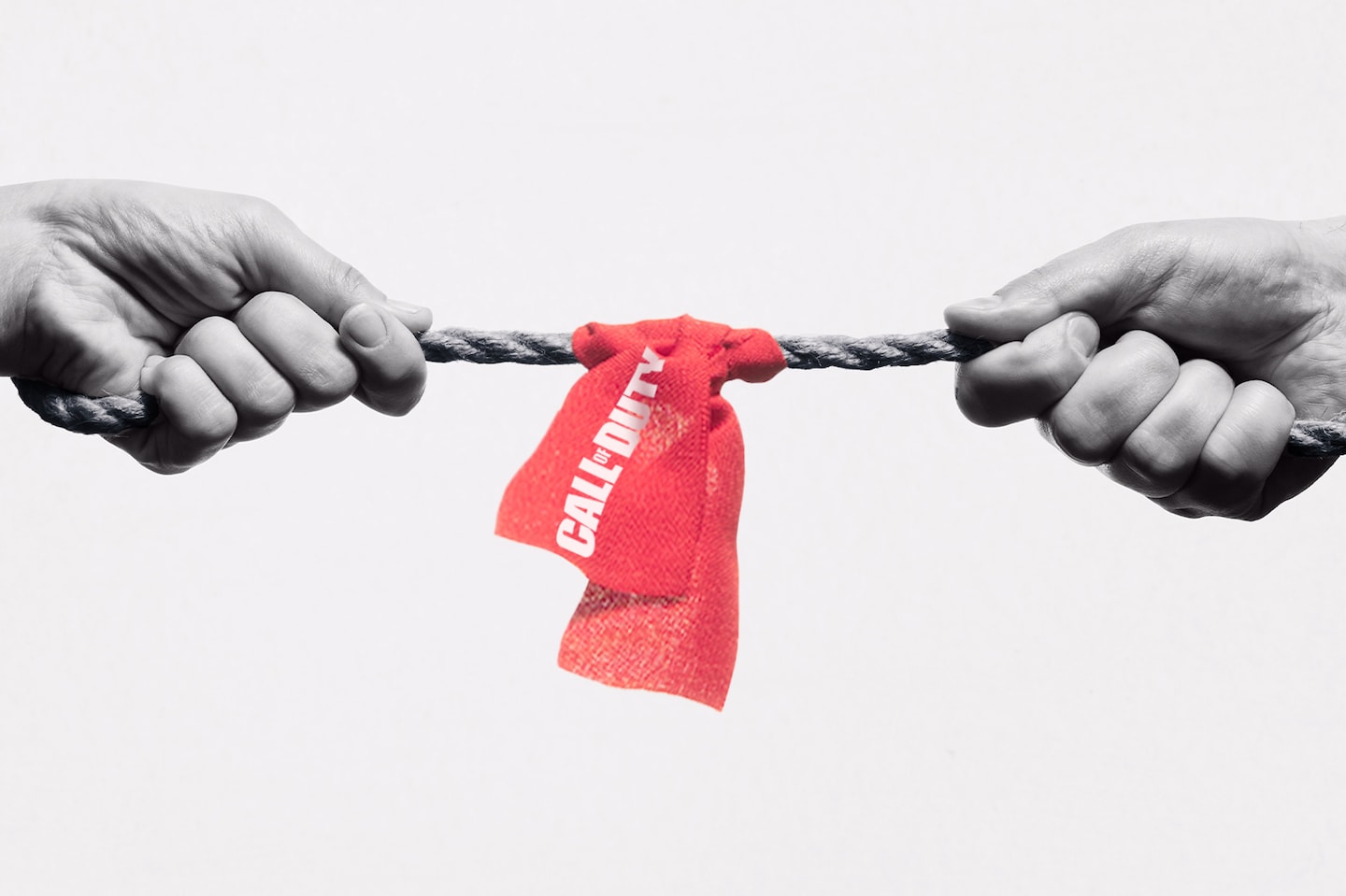
Call of Duty is a massive, sprawling video game franchise that has sent players through dozens of battlefields ranging from the beaches of Normandy to the abandoned city of Pripyat to the frozen moon Europe. Now, it has become the staging ground for a new conflict brewing between Sony and Microsoft.
In January, Microsoft announced its intention to buy Call of Duty publisher Activision Blizzard for $68.7 billion. While the Federal Trade Commission has been scrutinizing the deal in the United States, Brazil also placed Microsoft under review by the Administrative Council for Economic Defense (or CADE), the country’s national antitrust regulator, and asked various gaming companies such as Ubisoft, Riot Games , Warner Bros. Interactive Entertainment and Sony for comments on the potential merger. Out of the 11 companies CADE reached out to, Sony was the sole objector.
At the heart of Sony’s concern was Microsoft potentially owning Call of Duty, which Sony claimed would position Microsoft at the critical mass of a gaming monopoly. Microsoft had already gained some of gaming’s most revered franchises such as Fallout, The Elder Scrolls and Doom after purchasing ZeniMax Media in 2020. These high profile acquisitions have been integral to Microsoft’s plan to solidify the power of Xbox Game Pass, a subscription service where users gain access to a rotating catalog of downloadable games for a monthly fee.
“One of the reasons Microsoft’s Game Pass has grown so quickly is because, since 2017, Microsoft has acquired several third-party studios,” wrote Sony in its response to CADE, as translated by The Washington Post. Sony noted those studios included Double Fine, Obsidian Entertainment, Ninja Theory and Bethesda, adding content from each to Game Pass. “Such acquisitions have given Microsoft a greater mass of content — even without Activision’s games. Adding Activision’s games to that content would represent a turning point.”
Blizzard reportedly cans World of Warcraft mobile game over financial dispute
Sony described Call of Duty as an exceptional property in the gaming world, one to which Activision devotes a staggering amount of resources with impressive returns. To date, the series has generated $30 billion in revenue for Activision Blizzard.
Each annual Call of Duty title is the collective effort of multiple studios working together for years. In a 2021 investor report, Activision stated there are over 3,000 workers assigned to the franchise. With production values that high, Sony maintained that no other publisher could possibly challenge Activision’s position in the market, citing Electronic Arts’ Battlefield (another blockbuster military action series) as a competitor that has still failed woefully short of threatening the world’s most lucrative first- person shooter. Call of Duty has sold 425 million copies in its lifetime. Comparatively, Battlefield has sold roughly 88 million copies as of 2018. EA has not yet revealed the sales numbers for its latest Battlefield game, 2021′s “Battlefield 2042.” “Battlefield 2042′s” sales were described as “disappointing” by then-EA Chief Financial Officer Blake Jorgensen during the publisher’s February investor call.
“No other developer can devote the same level of resources and expertise to game development,” wrote Sony. “Even if they could, Call of Duty is overly entrenched so that no rival — no matter how relevant — can catch up.”
From 2019: The making of Modern Warfare
Moreover, Call of Duty is a wildly popular series among PlayStation owners, a devotion which Activision Blizzard has promoted and rewarded. PlayStation players have long enjoyed exclusive Call of Duty perks unavailable to gamers on other platforms such as earlier access to in-game gear, experience bonuses, Battle Pass tier skips, player skins and more. The Call of Duty League, Activision’s premier esports league for the series, competed exclusively on the PlayStation in its inaugural season. Fans on PlayStation who preorder “Call of Duty: Modern Warfare II,” the highly anticipated sequel to 2019′s “Call of Duty: Modern Warfare,” also get first dibs to the game’s open beta on Sept. 16 — a full week ahead of Xbox and PC gamers, who must wait until Sept. 22.
Microsoft has assured audiences that Call of Duty will remain multiplatform if the merger goes through. However, someone paying $10 a month for Xbox Game Pass could have access to every Call of Duty ever made and the latest releases upon launch, along with access to hundreds of other games. Microsoft previously utilized a similar tactic with its own popular first-person shooter franchise, Halo. Comparatively, a PlayStation player would have to buy each Call of Duty title separately. The upcoming title, “Call of Duty: Modern Warfare II,” alone is priced at $70 before players consider purchasing any other games or purchasing Sony’s own game subscription service, PlayStation Plus.
But is that encouraging enough for PlayStation owners to jump ship for Xbox? Sony believes it is, describing Call of Duty players as die-hard fans who would readily swap to Xbox if it offered more comprehensive access to their beloved series. As Christopher Dring at GamesIndustry.biz points out, Microsoft owning the most popular video game series on PlayStation puts Sony in a very awkward spot, giving its leading competitor a direct line to its fan base on its own system with each new Call of Duty game. .
Video game giants see hundred million dollar dip in revenue amid recession fears
Sony, however, has been building its own powerful stable of exclusive titles for years, also by purchasing talented studios. Bungie, the studio that created the Microsoft-exclusive Halo series, was the latest developer to be bought by Sony. The Last of Us series as well as Uncharted, Marvel’s Spider-Man, Horizon and “Ghost of Tsushima” are all critically acclaimed Sony exclusives made by previously independent studios now owned by Sony.
Microsoft pointed this out to CADE in its rebuttal to Sony’s comments, saying Sony had fortified its own subscription service by partnering with Ubisoft, maker of the Assassin’s Creed and Tom Clancy Rainbow Six franchises, among others.
“The launch of the new PlayStation Plus, perceived by the industry as ‘a rival to Xbox Game Pass,’ reflects the intense rivalry in the game distribution industry,” Microsoft wrote. “The offering of Ubisoft’s catalog of ‘popular’ and ‘best-selling’ games on PlayStation Plus reinforces such rivalry and also emphasizes the diversity of high-quality third-party games available to subscription service providers.”
In a recent CADE filing, Microsoft claimed that Sony has paid for “blocking rights” to stonewall developers from adding content to Xbox Game Pass, as reported by the Verge. Microsoft also said that it invested heavily in Xbox Game Pass as a counterattack to Sony’s superior buy-to-play strategy in the previous console generation, according to a translator in the gaming forum ResetEra.
Project Magma: The origins of “Call of Duty: Warzone”
Third-party companies Ubisoft, Riot Games, Bandai Namco and Google all agreed that Call of Duty does indeed have competitors such as “Apex Legends,” “Counter-Strike: Global Offensive” and “Valorant.” Sony disagreed, arguing that no major developer has ever managed to create a franchise that could top Call of Duty.
Recently, Respawn Entertainment’s “Apex Legends,” published by Electronic Arts, has been enjoying a resurgence in popularity thanks to swift updates, new gameplay modes, frequent competitions, detailed worldbuilding and a steady stream of overall content. Respawn is also led by Vince Zampella, who is one of the co-founders of Infinity Ward and oversaw the production “Call of Duty,” “Call of Duty 2,” the original “Call of Duty: Modern Warfare″ in 2007 and 2009 ′s “Modern Warfare 2” (not the upcoming reboot).
Nonetheless, Sony insists that Call of Duty is just too big to contend against, referring to the franchise as “a category of games in itself.” And the company is fighting to prove it.
Gabriela Sa Pessoa in São Paulo contributed to this report.
A Queensland mother has described the “soul-destroying” ordeal of her teenage daughter being sexually abused by paedophiles and becoming addicted to ice while she was under the care of the Department of Child Safety, saying every day was “just waiting for her to die “.
Key points:
Helena made the heartbreaking decision to relinquish care of her 13-year-old daughter after she became violent
She said her daughter had made a number of disclosures to her and her carers about what has transpired during her time in out-of-home care, including drug use and sexual abuse
Helena said at eight separate meetings, she begged the Department of Child Safety to transfer her daughter to another location, but was “shut out”
Warning: This story contains details some readers may find distressing.
Three years ago, Helena* was in fear of her life and felt she had no choice but to contact the department.
Her 13-year-old daughter Xanthe* was becoming increasingly violent, hitting her, smashing holes in walls, and ripping doors off their hinges.
“She threw something at me and it split my leg open,” Helena said.
“I realized one of us was going to die.
“I was scared she was going to kill me. Not on purpose, she’s not vindictive or anything like that, it was more that she was so out of control that I was scared she was going to kill me by accident and that she was going to have to live with that.
“That was my biggest fear.”
Helena desperately sought counseling and mental health support for her daughter, but with a limited number of professionals in the regional part of Queensland where she lives, it was around five months before she could get an appointment.
Her daughter was later diagnosed with conduct disorder with traits of borderline personality disorder.
But by this time, Helena had already made the heartbreaking decision to relinquish care.
But worse was to come.
Helena relinquished care after facing increasing violence from her daughter.(ABC News: Paul Yeomans)
Men ‘injected her with meth’
Helena said Xanthe has made a number of disclosures to her and her carers about what has transpired during her time in out-of-home care.
She said she learned that a youth worker dropped her daughter at a 16-year-old boy’s house for a “sleepover” four days after she went into care.
She said her daughter was allowed to do whatever she wanted, including being driven by youth workers to buy marijuana every Friday, “then they would come back to resi (residential care) and smoke that until it was gone.”
Helena said her daughter was later moved to another care placement against her wishes and preyed upon for sex by some older men in the area with a criminal history.
Helena said Xanthe would constantly go missing and that “she was with the paedophiles.”(ABC News: Paul Yeomans)
“They injected her with meth (methamphetamines) in the neck and she has been addicted to it since,” she said.
“There were people taking videos of her… while she was flipping out.”
Helena made numerous complaints to the department and asked for her daughter to be moved.
“When her drug addiction started, the department refused to accept that it was happening,” she said.
“They believed [she] was making it up.”
She said her daughter would constantly go missing — “she was with the paedophiles.”
But she said the police could not charge anyone unless her daughter was prepared to make a statement.
“Xanthe constantly stated she didn’t feel safe to press charges until she was moved away from the area.”
Mother constantly feared the worst
Helena said at the age of 14, her daughter was used for sex by a man in his 40s who also had a criminal history.
“That’s when she started getting really sick,” she said.
At one point, she said, her daughter turned up at her home covered in bruises after going missing for days.
“I heard my baby out the front yard just crying, ‘Mum, Mum, Mum, Mum’.
“She flipped out here. I watched her be held down by two policemen in the front yard.”
Xanthe stayed with her mother for several weeks but eventually had to be transferred to a different residential care home to comply with her care order.
“We could have been starting to reunify and bringing her back home, but because of the legislation, we had to send her back to resi.”
Helena said after that “everything got really, really bad.”
“We all knew that she was with the paedophile but we didn’t know exactly where because he was moving her from one place to another.”
She said she constantly feared the worst.
“She was missing all the time, she was basically going on the missing persons (list) every second day.”
‘Shut out’ by department
Helena said at eight separate meetings, she begged the department to transfer her daughter to another location.
“I discovered [later] the department hadn’t even put her on the list for a transfer.”
She said a safety plan was put in place for her daughter but she later discovered that a case worker “was contacting the paedophile to check if [my daughter] was ok … and transporting Xanthe to the paedophile’s address.”
Helena said she was “shut out” by the department.
“I made too many complaints about the neglect and poor conduct of care providers and youth workers.
“The callous disregard for my daughter’s well-being has been frightening to witness.”
She said it was only after the paedophile went to prison and her daughter was moved to a bigger city that life started to improve.
“She’s doing really well,” she said.
“She’s been engaging with normal friendships with children of her own age … and preparing to look for work.
“She says she feels free… [she says] ‘Now I can heal, mum’.”
‘I want my daughter to know this is not OK’
Helena said while her daughter was still in care, she had spent time at a drug rehabilitation center and is hoping they may be able to reunite in the future.
For now, she has decided to speak out.
“I want my daughter to know that this is not OK,” Helena said.
“I want her to know what happened to her is not right.
Helena is hoping she and her daughter may be able to reunite in the future.(ABC News: Paul Yeomans)
“She thinks because it’s happening to her that this is what she deserves. She doesn’t. No child deserves this.
“My daughter’s story reveals the sad reality of the current state of the system.”
Helena has shared her story as part of an ABC investigation into child protection.
Seven hundred people came forward with stories of rape, abuse, neglect and racism within child protection.
“I want the department to realize that they are hurting these kids, they’re not helping them, and if they don’t start collaborating with the parents, the kids and the future generations are just going to go through much of the same, said Helen.
She said while some youth workers were “really good people”, she felt the department failed her.
“They’re more focused on their annual reports than their current outcomes,” she said.
She believes if she had been able to access timely mental health support for her daughter, things might have turned out differently.
“It shouldn’t have happened, she needed help, she needed help to regulate her behaviour.”
Staff work to make sure ‘our most vulnerable children are safe’
Helena said because her child was in care, as a mother she was “perceived as the bad person straight away”.
“I am not the only mum like it, there are hundreds of us,” she said.
“At least my daughter had me there advocating for her rights. Imagine what’s happening to the children in care that have no-one.”
A spokesperson for the Department of Children in Queensland said the Child Protection Act prevented the department from disclosing whether an individual or family was known or not known to the department.
“However, whenever any criminal activity is disclosed to the department, staff work with the child and family to report this to the police and support the child,” the spokesperson said.
“Sexual offending against children is an abhorrent crime.
“No-one wants to see children harmed or suffering, and child safety staff work every single day to ensure our most vulnerable children are safe.
“Many children who are placed in residential care have very complex needs and have often experienced deep trauma.
“Staff work hard to ensure they are connected to the right services to get them the help they need, including specialist services for substance misuse.”
As part of the department’s policies and procedures for residential care providers, “no illegal substances are to be used within homes.”
“Staff also work with parents if they wish to make a complaint through the department’s complaints processes,” the spokesperson said.
System ‘broken’: Children’s Commissioner
Ms Hollands is the National Children’s Commissioner.(ABCNews)
Attorney-General Mark Dreyfus held a meeting with National Children’s Commissioner Anne Hollands following the “horrific” cases the ABC investigation uncovered.
Ms Hollands described the system as “broken”.
Principal Commissioner for Queensland Family and Child Commission Luke Twyford said he could not comment on individual cases, but called for a greater national focus on early intervention.
“Child protection workers respond to a crisis, an emergency much like an ambulance or a police officer responds to a report,” he said.
“Really, what we want to focus on is how do we prevent the urgency or the crisis from ever occurring? That means we need services focusing on the underlying causes that are making children unsafe.
“Improving access to education and employment, improving housing, improving the cost of living for families living in poverty… looking at our domestic violence responses and other forms of harm that are out there in families.”
Mr Twyford said he would welcome a further meeting with the federal Attorney-General involving children’s commissioners from across the country to discuss the issue.
NEW YORK (AP) — The nation’s top public health agency relaxed its COVID-19 guidelines Thursday, dropping the recommendation that Americans quarantine themselves if they come into close contact with an infected person.
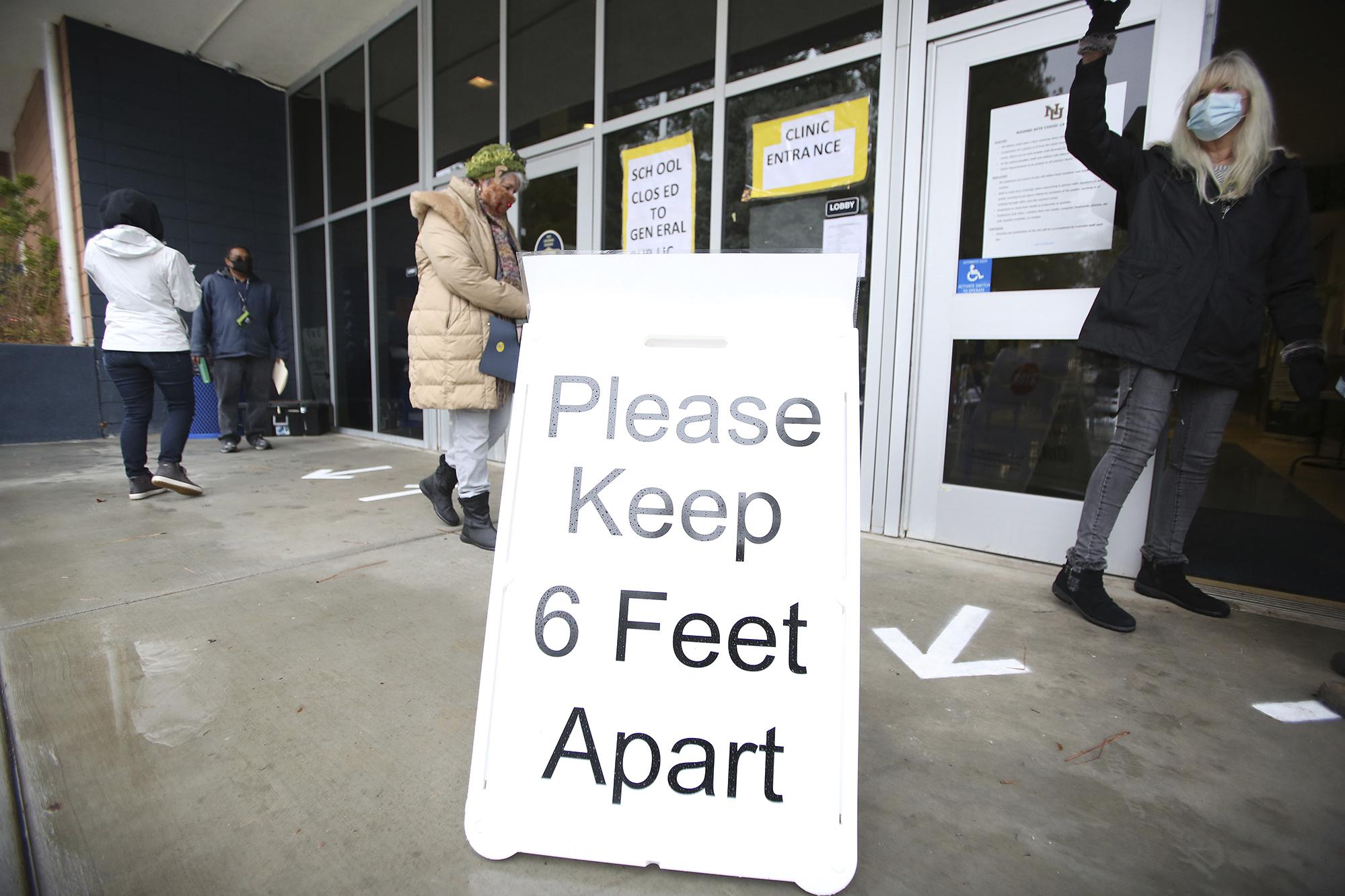
The Centers for Disease Control and Prevention also said people no longer need to stay at least 6 feet away from others.
The changes, which come more than 2 1/2 years after the start of the pandemic, are driven by a recognition that an estimated 95% of Americans 16 and older have acquired some level of immunity, either from being vaccinated or infected, agency officials said.
“The current conditions of this pandemic are very different from those of the last two years,” said the CDC’s Greta Massetti, an author of the guidelines.
The CDC recommendations apply to everyone in the US, but the changes could be particularly important for schools, which summarize classes this month in many parts of the country.
Perhaps the biggest education-related change is the end of the recommendation that schools do routine daily testing, although that practice can be reinstated in certain situations during a surge in infections, officials said.
The CDC also dropped a “test-to-stay” recommendation, which said students exposed to COVID-19 could regularly test — instead of quarantining at home — to keep attending school. With no quarantine recommendation anymore, the testing option disappeared too.
Masks continue to be recommended only in areas where community transmission is considered high, or if a person is considered at high risk of severe illness.
School districts across the US have scaled back their COVID-19 precautions in recent weeks even before the latest guidance was issued. Some have promised to return to pre-pandemic schooling.
Masks will be optional in most districts when classes resume this fall, and some of the nation’s largest districts have dialed back or eliminated COVID-19 testing requirements.
Public schools in Los Angeles are ending weekly COVID-19 tests, instead making at-home tests available to families, the district announced last week. Schools in North Carolina’s Wake County also dropped weekly testing.
Some others have moved away from test-to-stay programs that became unmanageable during surges of the omicron variant last school year.
The American Federation of Teachers, one of the nation’s largest teachers unions, said it welcomes the guidance.
“Every educator and every parent starts every school year with great hope, and this year even more so,” President Randi Weingarten said. “After two years of uncertainty and disruption, we need as normal a year as possible so we can focus like a laser on what kids need.”
The new recommendations prioritize keeping children in school as much as possible, said Joseph Allen, director of Harvard University’s healthy building program. Previous isolation policies forced millions of students to stay home from school, he said, even though the virus poses a relatively low risk to young people.
“Entire classrooms of kids had to miss school if they were deemed a close contact,” he said. “The closed schools and learning disruption have been devastating.”
Others say the CDC is going too far in relaxing its guidelines.
Allowing students to return to school five days after infection, without proof of a negative COVID-19 test, could lead to outbreaks in schools, said Anne Sosin, a public health researcher at Dartmouth College. That could force entire schools to close temporarily if teachers get sick in large numbers, a dilemma that some schools faced last year.
“All of us want a stable school year, but wishful thinking is not the strategy for getting there,” she said. “If we want a return to normal in our schools, we have to invest in the conditions for that, not just drop everything haphazardly like we’re seeing across the country.”
The average numbers of reported COVID-19 cases and deaths have been relatively flat this summer, at around 100,000 cases a day and 300 to 400 deaths.
The CDC previously said that if people who are not up to date on their COVID-19 vaccinations come into close contact with a person who tests positive, they should stay home for at least five days. Now the agency says quarantining at home is not necessary, but it urges those people to wear a high-quality mask for 10 days and get tested after five.
The agency continues to say that people who test positive should isolate themselves from others for at least five days, regardless of whether they were vaccinated. CDC officials advise that people can end isolation if they are fever-free for 24 hours without the use of medication and they are without symptoms or the symptoms are improving.
___
Binkley reported from Washington.
___
The Associated Press Health & Science Department receives support from the Howard Hughes Medical Institute’s Department of Science Education. The AP is solely responsible for all content.
On August 1, she emailed the university’s People and Culture department saying she was having issues with her supervisor and her contracts. She received a contract for the winter intensive period on August 3, but was told the university was cutting 450 jobs and her second semester contract was “in the pipeline”.
Fair Work alleges Tsongas’ supervisor said words to the effect of, “if you claim outside your contracted hours, don’t expect work next year”.
The Fair Work Ombudsman alleges the staff were threatened because they complained about needing to work more than the anticipated hours in their contracts. It also claims their supervisor prevented them from claiming extra hours.
In January 2021, Tsongas again submitted a time card that included extra hours worked. But she was allegedly told she’d only be paid for hours agreed in her contract de ella, with an initial reference to “anticipated hours” deleted. She was allegedly told to resubmit her time card.
In an email exchange to a professor outlined in court documents, a supervisor allegedly called Tsongas a “self-entitled Y-genner”.
loading
Fair Work Ombudsman Sandra Parker said the university’s conduct undermined fundamental employee rights.
“We treat allegations of employers taking action to stop or prevent employees from claiming their lawful entitlements very seriously. Adverse action and coercion directly undermine workplace laws and the ability of employees to exercise their lawful rights,” Parker said.
A University of Melbourne spokesperson said the university was committed to complying with all of its obligations to staff under the enterprise agreement and “highly values” all its employees, including casual staff and “the significant contribution they make”.
The university is looking over the allegations and will respond through relevant court processes.
The spokesperson said the university was working to identify any practices that were inconsistent with their obligations and doing “everything we can” to remediate and “fully comply”.
The legal action comes while a separate ombudsman’s investigation is underway into alleged underpayments of casual academics by the University of Melbourne.
National Tertiary Education Union branch president Annette Herrera said it was shocking and that investigations were continuing “school by school, faculty by faculty”.
“How many more inquiries do we have to do to make this change?”
The Morning Edition newsletter is our guide to the day’s most important and interesting stories, analysis and insights. Sign up here.
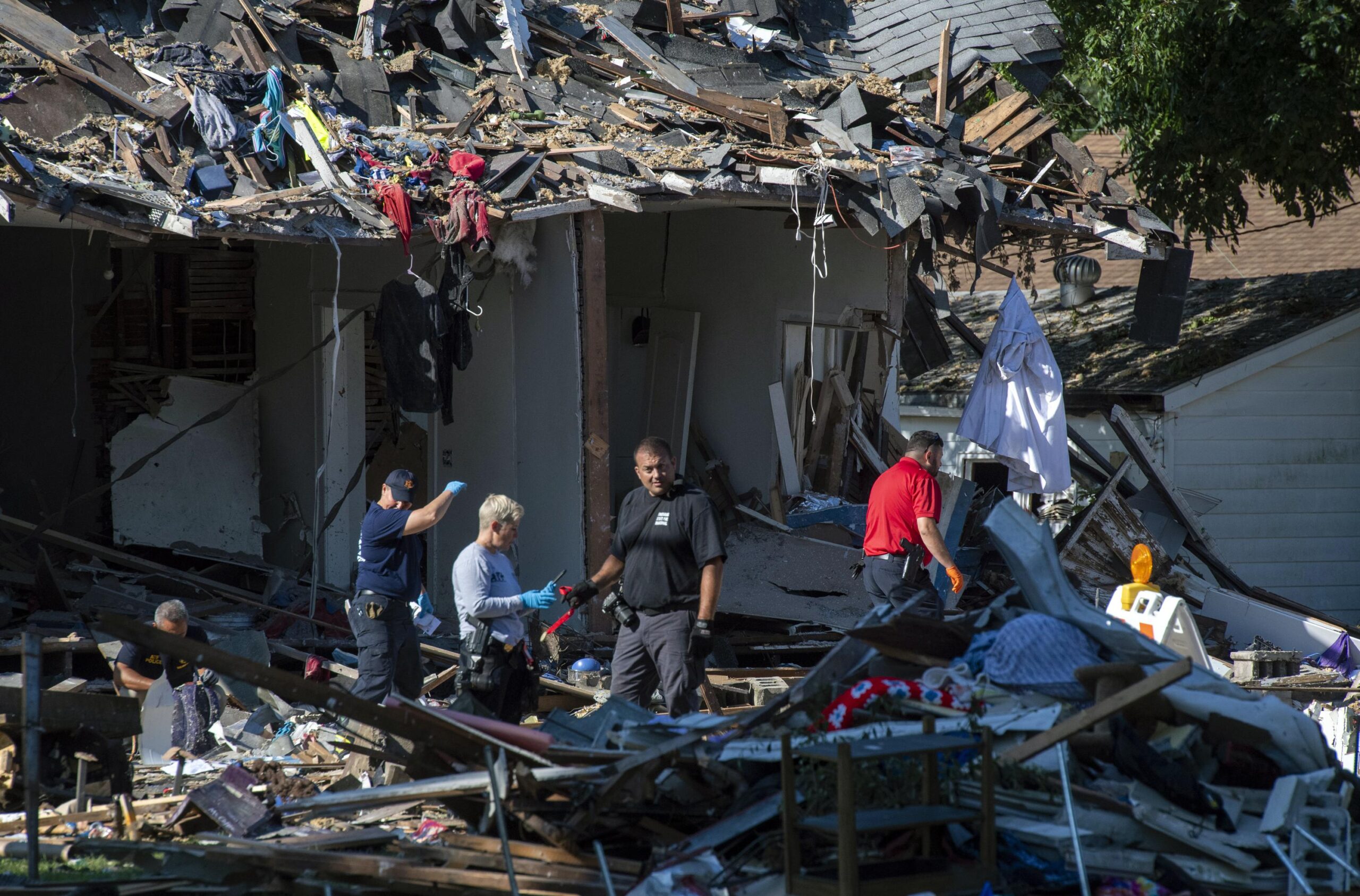
EVANSVILLE, Ind. (AP) — Authorities worked Thursday to determine the cause of a house explosion in a southern Indiana neighborhood that killed three people and left another person hospitalized.
The explosion Wednesday afternoon in Evansville damaged 39 homes and crews on Thursday morning completed a secondary search of buildings that had been left unstable by the explosion and no more victims were found, Fire Chief Mike Connelly told reporters.
“It’s a huge relief, for everybody,” the chief said of the results of the secondary search.
Eleven of the damaged homes were uninhabitable and will have to be demolished, Connelly said, and finding a cause is expected to be a “very tedious process — and lengthy.”
The Vanderburgh County Coroner’s Office identified the victims Thursday as a married couple, 43-year-old Charles Hite and 37-year-old Martina Hite, and 29-year-old neighbor Jessica Teague.
The cause and manner of their deaths are pending autopsies, the office said.
Suzanne Dabkowski, a Bureau of Alcohol, Tobacco, Firearms and Explosives, spokeswoman, said Thursday the agency can’t speak to any possible causes of the explosion. Dabkowski said the ATF has certified explosive specialists and certified firearms investigators on-site in Evansville, and currently they were assisting in the investigation.
Evansville is located along Indiana’s border with Kentucky. The blast left debris strewn over a 100-foot (30-meter) radius. Debris included construction materials like wooden boards, window glass and insulation.
CenterPoint Energy, the local gas utility, was last called to the home in January 2018, Connelly said Wednesday.
“CenterPoint Energy is working closely with the Evansville Fire Department, State Fire Marshal and other agencies as the investigation of this incident continues,” the utility said.
It was the second house explosion in the area in just over five years. A house explosion on June 27, 2017killed two people and injured three others.
Wednesday’s explosion also brought to mind a massive blast in 2012 that destroyed or damaged more than 80 homes on Indianapolis’ south side and killed two people. A man was convicted of tampering with a natural gas line at his then-girlfriend’s home in an attempt to commit insurance fraud.
Infectious disease experts have warned that, while Australia might have passed the peak of its winter COVID-19 wave, there could still be future surges and strains of the deadly virus in the future.
Key points:
Health authorities say Australia may have hit its winter COVID-19 peak earlier than predicted
But they warn the virus has repeatedly mutated and different strains still pose a real risk
On August 10, there were 133 deaths and 27,263 new cases recorded nationwide
James Cook University’s Professor Emma McBryde told the ABC that, while she was “cautiously optimistic” about the latest Omicron wave being over, there was still a risk of new COVID-19 variants.
“We’re still seeing a lot of deaths, [more than] 100 a day across Australia, which is an alarming number,” she said.
“We should be concerned about it rather than just dismissing it, but we should be cautiously optimistic that, bit by bit, we’re going to see a decline in cases in the medium term.
“I’m much-less optimistic about it being all over, as in the whole COVID pandemic being over,” she said.
loading
“Because we’ve seen this virus mutate again and again, and some of those mutations make it milder and more infectious, and other mutations make it more severe and more infectious.
“So we don’t know what’s coming next.
“I wouldn’t be bold enough to make any statements on [the end of the pandemic].”
On Wednesday, Australia recorded 27,263 new cases of COVID-19 and 133 deaths. There were 4,415 cases being treated in hospital.
Federal Health Minister Mark Butler also said last week he was cautiously optimistic the most-recent wave had peaked.
“The data we’re seeing right now indicates we might have reached the peak earlier than we expected to,” he said on August 4.
Health Minister Mark Butler has warned of the “school holiday effect” on case numbers. (ABC News: Matt Roberts)
“We’re being a bit cautious about that because what we’ve seen through the pandemic is the ‘school holiday effect’, which shows numbers and transmission takes a slightly different course because of different activity in the school holidays.”
Professor Robert Booy — an infectious diseases pediatrician at the University of Sydney — said there was a “lot of good news.”
“The possibility of a new variant remains there, but we don’t see one on the horizon,” he said.
“[The Indian sub variant BA2.75] has fizzled out and we’ve had BA5 now for six months without a new variant taking over.
“So our immunity to BA5 is getting better and better.
Professor Robert Booy warns against complacency towards COVID-19. (ABC: 7.30)
“There isn’t a variant yet that looks likely to replace it, so there is hope on the horizon.”
However, I added, it was “no time for complacency.”
“We’re still seeing rampant deaths,” he said.
“It’s in front of our eyes and we’re looking at it with rose-tinted glasses. We’re seeing the positive and forgetting so many people are still dying and being damaged.”
He said the elderly and disabled were, “first of all”, precious people.
University of South Australia epidemiologist and biostatistician Professor Adrian Esterman said three key things needed to be done to improve case numbers:
1.Higher percentage of the population getting their booster shot
two.Encouraging correct usage of face masks in the correct places
3.Better ventilation of indoor areas.
“If those three things are done, we have a much better chance of getting these case numbers lower,” he said.
“This is all assuming if this trend continues with new sub-variants of Omicron.
“That might not be the case. Tomorrow there might be a new variant, which would be called Pi, and that will be more transmissible than BA5 because that’s how these viruses take over.
“It could potentially be far more deadly. We simply don’t know.
“Are we getting towards the end game of this? Yes.
“We are for two reasons, we have vaccines that work reasonably well to stop people from dying [and] we have reasonably good antivirals.
“So we’re in a much better place than the start of the pandemic but it’s not over yet.”