After the blistering social commentary of Jordan Peele’s first two movies, Get Out and Us, there’s an expectation that his latest, Nope, would have the same level of thematic richness.
nope toys with those expectations. The visceral and entertaining movie definitely has a lot to say about a lot of things, but there’s also a suspicion that Peele is having his own cheeky meta moment, a playful ribbing to audiences.
Because nope is nothing if not a spectacle. Peele wants you to look and he wants you to think about the exercise of him looking and consuming – and he has all the tricks to hypnotise and bewitch his audiences so they never look away.
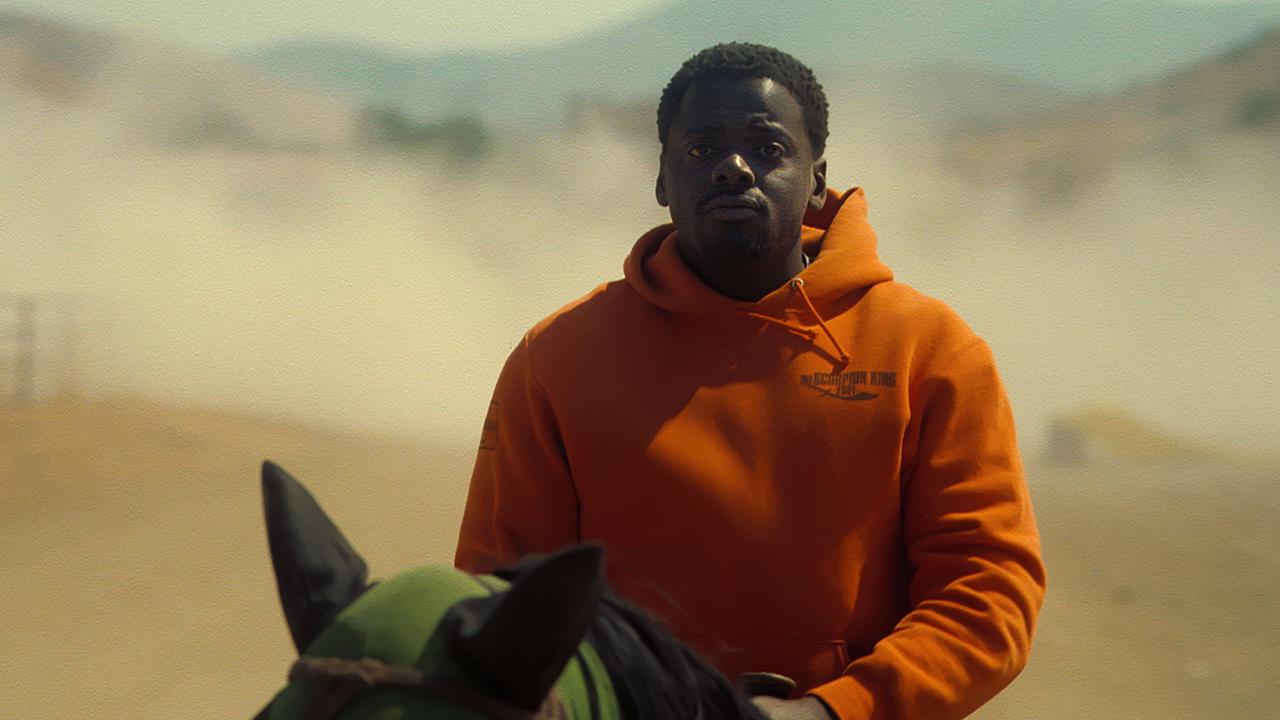
OJ (Daniel Kaluuya) is outside on his family’s horse ranch when small objects mysteriously start falling at great velocity from the sky. His father of him is struck and killed by a coin and the ranch passes to OJ and his sister of him Em (an electric Keke Palmer).
Six months on, the ranch is struggling and OJ has had to sell horses to the neighboring theme park run by a former child actor, Jupe (Steven Yeun).
There’s a mysterious force in the skies above them, a UFO that hides inside a stationary cloud and OJ and Em and Jupe all want to exploit its presence for their own profit agendas.
But they’re going to find out they can’t bend a primal force to the will of men and a lot of blood will be spilled before the credits roll.
Utterly captivating, you can approach nope in multiple ways. If you want to have a leanback popcorn experience, Peele delivers. The film is a sensory smorgasbord – the set-pieces are variously tense, booming, draw-your-breath and exhilarating. And it’s also just really funny with Peele deploying his extensive experience in comedy.
You can go along for the ride on a pure spectacle level and inhale what it offers in visual and auditory thrills. Cinematographer Hoyte van Hoytema (dunkirk, Ad Astra, Her) does a tremendous job in shooting these expansive frames that make the story feel big.
There are visual questions to the likes of poltergeist and even The Godfatherwhile the tone, especially in that final act, evokes the Amblin movies of the 1980s.
Or you could engage with nope on a more cerebral level because Peele is working with several intersecting ideas.
There’s the man versus beast motif, which, without spoiling things, shows up in more ways than one, connecting a traumatic event in Jupe’s past to his present ambitions involving the visitor in the sky.
The main thrust of it though is these ideas around spectacle, this voracious appetite we have to be entertained, to be enticed into an experience away from the everyday, and the need to record it because if it doesn’t exist for posterity, did it even really happen?
nope can be heavy handed in how it deals with spectacle – the repetition of mirrors and reflections, including that which is captured by cameras, different aspects of performativity and a reference to chimp attack victim Charla Nash.
Of course, spectacle is almost always heavy handed, it’s about the fireworks and not grace. nope explores the cost of our obsession with spectacle and it reflects back to the audience our own complicity.
The ideas are sometimes a little undercooked and lose cohesion but Peele carefully works the balance between commentary and entertainment, which mostly succeeds.
above all, nope commands attention because it’s so conscious about itself being a spectacle and it’s asking us to decide whether it works as more than just a fun time.
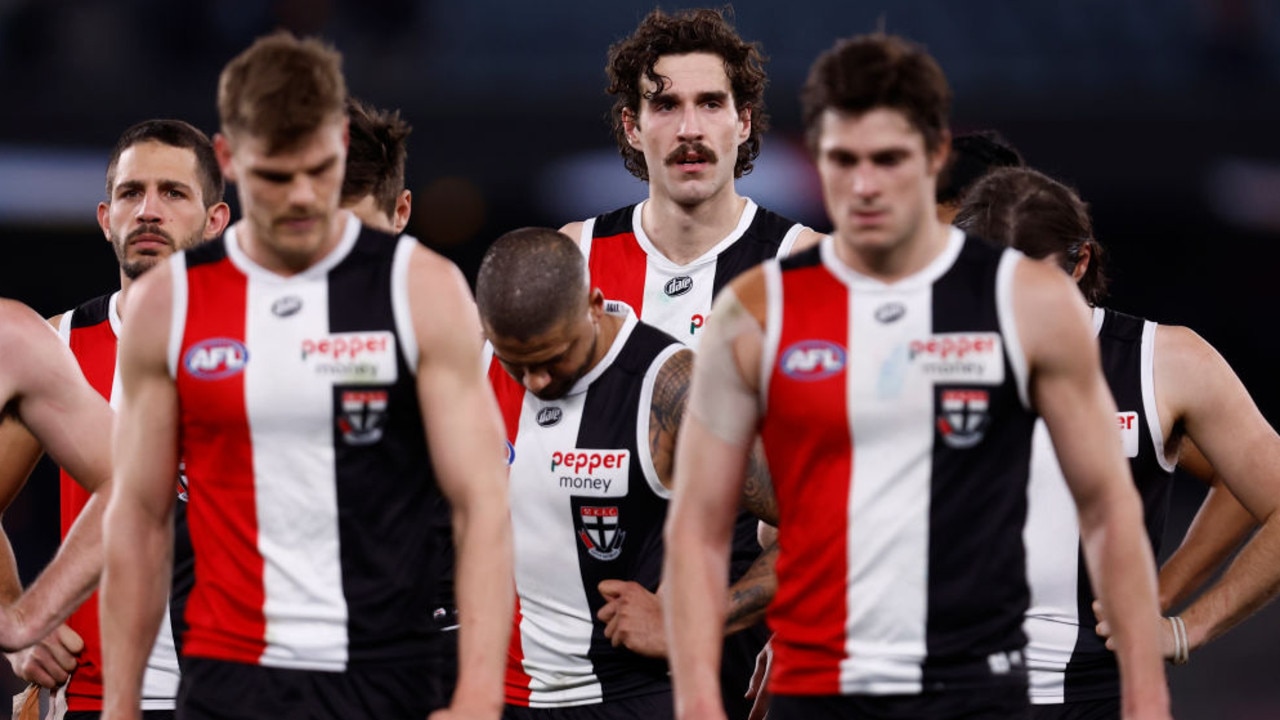
St Kilda has blown a golden opportunity at the wrong time, falling to Brisbane by 15 points in game there to be won late with the Saints’ season on all the line to all but end their final hopes.
Brett Ratten’s side recovered from a slow start to come charging back into the game in the second half, but wasn’t able to convert its opportunities including a wasteful 0.5 kicking display from Max King.
Saints legend Nick Riewoldt said he hoped the club wouldn’t put all the onus on its goalkicking inaccuracy in the second half, lamenting its lackluster start to the contest.
Watch every blockbuster AFL match this weekend Live & Ad-Break Free In-Play on Kayo. New to Kayo? Start your free trial now >
“They had the game where they wanted it… but I hope it doesn’t turn into a ‘we just didn’t take our opportunities’, conversation. Because early in the contest when the game was there to be won, they weren’t necessarily up for it,” he said on Fox Footy post-match.
The Saints’ final hopes were dealt a massive blow (Photo by Darrian Traynor/Getty Images)Source: FOX SPORTS
“Then when it gets desperate you take it on. I hope it’s a really learning experience this game for St Kilda. When they played with a bit of desperation, especially with the footy, then they put the Lions under pressure and looked like a finals team.
“If you’re looking at it with a narrow lens, you would say they didn’t take their opportunities. Max King was bit of a liability in front of goal, he didn’t look he wanted the ball in the end, so he’ll be really disappointed that he couldn’t convert.”
St Kilda ended up winning the disposal count (327-310) and inside 50s (50-49), but converted 9.12 of its shots at goal (43 per cent) compared to Brisbane’s 12.9 (57 per cent), with Cam Rayner the match winner for the Lions with three of his four goals in the last term.
Demons legend Garry Lyon was much more encouraged by St Kilda’s style when it had more urgency and played faster and direct.
“The competitive, go slow style they’ve been playing has been left behind largely … that’s the learnings I would hope they get from it, because when they went with some stuff that looked unscripted, that’s when they looked most dangerous,” he said.
It’ll likely go down as another wasted season for the 11-10 Saints despite such a promising 5-1 start to 2022 to emerge as a premiership dark horse as Ratten was rewarded with a contract extension.
Saint in hot water over bump? | 00:41
But they’ve now won just three of their last 10 matches and would need nearly everything to go right by the way of other results for them to make finals from here including beating an in-form Swans outfit next weekend at Marvel Stadium.
Former Hawthorn sharpshooter Ben Dixon was however still giving St Kilda hope to finish in the top eight and was left unconvinced by Brisbane’s performance, calling it the “sweep escape”.
“I think Brisbane was given that game, they didn’t win it… if Richmond and Carlton lose they’ve (the Saints) still got a heartbeat. I’m giving them hope,” he said on Fox Footy Live.
But St Kilda champion Nick Dal Santo doesn’t believe his former side is currently playing a good enough brand to hold up in September.
“You want your finals series to be teams that are currently in form or capable of causing an upset from the bottom of the top eight,” he said.
“The form that the Saints have played of recent, no, I don’t think their in the best eight teams in the comp right now.”
Others responded on social media to the Saints’ blown opportunity.
When someone passes you care about – it’s a sad time. Did you know if you’re a relative or executor, then you can close their social media accounts?
Here’s how we closed a friend’s Facebook page:
Facebook has a dedicated space for Managing a deceased person’s account.
You can fill in an online form for a Special request for a medically incapacitated or deceased person’s account https://www.facebook.com/help/contact/228813257197480
You’ll need to add your contact details, and the person you would like to remove or memorialize. Add in the URL link to the person’s profile and the account’s email address.
Then you have a couple of options:
Please memorialize this account
Please remove this account because the account owner is deceased
Please remove this account because the account owner is medically incapacitated
I have a special request.
I submitted my friend’s details and Facebook account. It took around an hour or two for my application to be processed.
I received a confirmation email from Facebook titled ‘Memorialise Request’.
I’m very sorry for your loss. As you requested, we’ve memorialized your loved one’s account. You can learn more about memorialization by visiting the Help Center: https://www.facebook.com/help/103897939701143?ref=cr
My thoughts are with you and your loved ones. Please let me know if there are any questions I can help answer.
You can still find this person on Facebook. There is a message that says:
Remembering Person Name
We hope that people who love FirstName will find comfort in visiting her profile to remember and celebrate her life.
You can your own Tributes: Share stories, commemorate a special day or let friends and family know that you’re thinking about her.
Here I uploaded two of my favorite photos of my friend. Her mother de ella uploaded a copy of the funeral order of service de ella. I hope over time, it becomes a place where all of her relatives and friends of her can go and remember her fondly.
You might like to leave instructions in your will on how you’d like your social media accounts handled.
How to Memorialize Someone on Facebook Who’s Passed Away
For more information:
Hard Questions: What Should Happen to People’s Online Identity When They Die? https://about.fb.com/news/2017/08/what-should-happen-to-online-identity/
Adding a Legacy Contact https://about.fb.com/news/2015/02/adding-a-legacy-contact/
A splash of color and a dollop of joy has brought winter sunshine into the country’s youngest regional art gallery, with a joint exhibition of new works from two unlikely collaborators.
Last November, acclaimed artist Ben Quilty realized his ambition of establishing a public gallery in his neighbourhood, in the southern highlands of New South Wales: Ngununggula opened its doors with an exhibition called High Jinks in the Hydrangeas, a collection of photographs and installations by Sydney artist Tamara Dean.
Last weekend the gallery – a repurposed heritage-listed dairy in Retford Park on the outskirts of Bowral – unveiled its latest show, Spring Collection: an exhibition of new works by veteran painter/designer/entrepreneur Ken Done, and craft-based installation artist Rosie Deacon.
Rosie Deacon at Spring Collection. Photographer: Ashley Mackevicius
The two artists share a compulsive fascination with intense colour, and an affectionate attachment to one of Australia’s most iconic motifs, the koala.
Young Japanese tourists flocked to Done’s Sydney harborside gallery in the 1980s to buy his koalas, the artist says.
“I could draw koalas that were so cute, nine-year-old Japanese girls fainted from their very cuteness, which is what I set out to do,” Done tells the Guardian.
“Now Rosie has taken the koala into a whole different level, very exciting, very graphic.”
The lighthearted focus of the exhibition fills the brief of accessibility, Ngununggula’s director, Megan Monte, says.
“People can’t help but crack a smile.
“It’s important for a regional gallery to offer diversity, and it’s incredible for kids to see the work as well as adults … [so] that they can stop and think about what art can be. And that art is something we should all be enjoying.”
Rosie Deacon’s riotous coral reef installation was originally created for the 2022 Australian fashion week show by Romance Was Born. Photographer: Ashley Mackevicius
While there are a number of commercial art galleries dotted throughout the southern highlands, locals and Wingecarribee council had spent some previous 30 years discussing the lack of a regional public gallery in the shire – but it had amounted to little more than talk.
The instant Sydney art adviser Justin Miller showed Quilty the former Fairfax family-owned 19th century dairy property in Retford Park, the artist was sold.
Sign up to receive Guardian Australia’s weekend culture and lifestyle email
The gallery’s name, Ngununggula (pronounced “Nuhn-uhn-goola”), means “belonging” in the local Gundungurra language. Quilty admits there was initially some opposition, on the grounds some people would not be able to pronounce it; and the venue itself took more than five years to come into being.
“It was a shed filled with rolled up barbed wire and corrugated iron,” Quilty tells the Guardian.
“But it was once in a lifetime opportunity to get a proper regional gallery. To build something similar from scratch, built out of the ground, would have been around $30m. And we’ve got this for $8m, with a beautiful, nuanced heritage that binds it.”
Ben Quilty says Ngununggula was never intended as ‘a vanity project’.
Sydney architects Tonkin Zulaikha Greer were tasked to redesign the National Trust-listed property, and builder/developer Richard Crookes became so involved in the project he decided to deliver it at cost. Crookes now sits on the Ngununggula board.
Quilty has no plans to exhibit his own work in the gallery anytime soon. The multi-award winning artist, who in little more than a decade has won the Prudential Eye award (2014), the Archibald prize (2011), and the Doug Moran national portrait prize (2009), said Ngununggula was never intended as “a vanity project”.
“The sooner my name is disassociated with the gallery the more everyone else’s names become involved,” he says.
Ngununggula, Ben Quilty’s gallery in the southern highlands of NSW. Photographer: Tamara Dean
“I don’t think it’s right that I should show in there for quite some time.”
In Spring Season, a dozen new works by Done flood the gallery’s first space, most on a large scale taking coral reefs as his inspiration. Several additional Done works adorn the walls of the gallery’s second space, in which Deacon’s riotous coral reef installation – originally created for the 2022 Australian fashion week show by Romance Was Born – sprouts forth from the floor.
The third space in Ngununggula has been colonized by Deacon’s mammoth multi-coloured mutation of a necklace, the fruits of a 1.5-tonne donation of polystyrene foam, gifted to Deacon by a Sydney toy manufacturer.
Both artists discussed their work at a briefing on site earlier this month.
“I tried to contain the colors … but it didn’t work,” said Deacon, who expanded a little on the joys and challenges of working collaboratively. To make the coral reef installation, she corralled her mother’s knitting circle in Deacon’s small home town of Nyngan, in central NSW; and for the necklace installation, she worked with what sounded like the entire gallery staff, including cafe employees.
The 37-year-old artist, who established her reputation in the art world comparatively early in her career, admits she was intimidated by art galleries and art school as a young person. Since graduating from the UNSW College of Fine Arts in 2009, she has shown in more than 50 exhibitions in Australia.
Deacon is self-effacing, almost dismissive, of her achievements to date. Done, less so.
“I was 40 when I had my first exhibition at Holdsworth Gallery, and three months later I opened my own,” said the 82-year-old artist, who has collected a wide assortment of accolades over the years, including the NSW Tourism award (1986), Father of the Year (1989) and an Order of Australia (1992).
Ken Done’s work for Spring Collection. Photographer: Ashley Mackevicius
As Done moved from painting to painting in Spring Collection, he self-interrogated out loud as small details within each work caught his eye.
“What are these things? I have no idea, you couldn’t look it up in a David Attenborough book,” he said, pointing to one.
‘Pretty is a very nice word’: Sweetpea Reef (2021) by Ken Done.
“What is this? I have no idea,” he continued, about another. “It’s a lot about composition, balance, a big piece here, a little piece there. It’s like a piece of music, you have to get the notes right, you have to get the rhythm right – oh, here’s a little trill thing.”
Done’s inspiration for this collection stretches far back to his boyhood, when a Saturday job at his local Coles supermarket earned him his first diving mask. He has been captivated by the underwater world ever since.
Many of the works appear to merge garden and underwater themes; and most are on show for the first time. There is a wisteria reef painting, and one called Sweetpea Reef – “because it is pretty”.
“I like that word, it’s not a very fashionable word in contemporary art society, well bugger that,” he said.
“Pretty is a very nice word, beautiful is a very nice word, decorative is a very nice word.
“All these words seem to be a bit out of fashion in certain areas – but I don’t make the rules.”
Spring Collection, new works by Ken Done and Rosie Deacon, is showing at Ngununggula in the southern highlands until 9 October
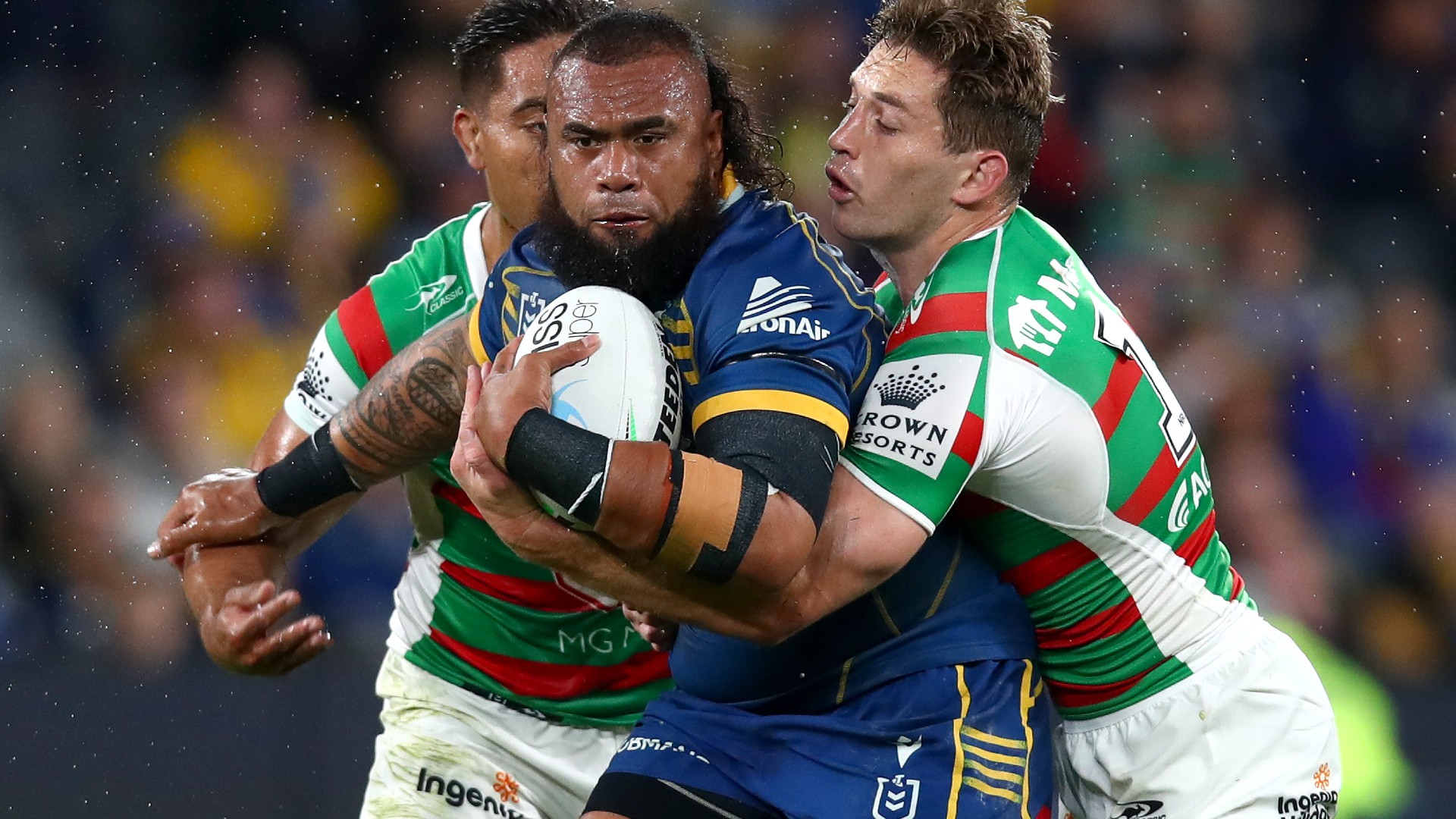
Parramatta prop Junior Paulo has been elected to play for Samoa in the World Cup, becoming the latest player to knock back the Kangaroos.
The burly front-rower has never represented Australia, but was considered a near certainty for selection for the tournament at the end of the year.
“It’s been a tough one, I’ve been torn between [the teams],” he said on 9News.
READMORE:Latrell’s big warning to the rest of the NRL
READMORE:Payten’s emotional tribute to Paul Green
READMORE:‘Ridiculous’ Kyrgios demolishes fellow Aussie ahead of US Open
It comes just a week after fellow Origin prop Josh Papalii also elected for the blue jersey rather than the green and gold.
Just like Papalii, and others including Brian To’o, Paulo said the feelings that stirred inside him when he thought about playing for Samoa were simply different.
“Gus Gould really hit the nail on the head when he said, ‘What nation do you cry for when you sing the anthem?’
Junior Paulo in action against Souths on Friday night. (Getty)
“That plays a big part for me, and for me that’s being proud of my home, and that’s Samoa,” he said.
According to the 28-year-old, he wants to repay the sacrifices made by the generations before him that enabled him to succeed.
“I’ve got my two grandmothers, who are both overseas and while they’re still alive I want to be able to make them proud.”
Stream the NRL premiership 2022 live and free on9Now
And much like his elders set him up, he wants to motivate the next generation to follow in his footsteps.
Blues big bopper has try taken off him
“I want to be able to inspire the next kid who is coming through the ranks and will be at home, or whether they’re in the islands watching that World Cup thinking they want to be able to represent their country,” he said.
But one thing is for sure – his decision won’t change his desire to continue to play for New South Wales.
“I’m just as passionate about both jerseys,” he said.
“One’s just a darker shade of blue, and the other one’s lighter.”
For a daily dose of the best of the breaking news and exclusive content from Wide World of Sports, subscribe to our newsletter byclicking here!
Paul Green’s life in pictures: From Sharks prodigy to premiership-winning coach
Demand for PCs has cooled to the point that x86 CPU shipments saw a historic plunge in Q2, according to Mercury Research, which tracks component sales.
Mercury Research says desktop CPU shipments during the May to June period fell to their “lowest level in nearly three decades,” decreasing by more than 15% year over year.
The research firm didn’t provide exact shipment numbers, but Mercury Research President Dean McCarron said in an email: “I had to go back to the mid-1990s to find desktop CPU shipments in any given quarter lower than the number of units that shipped in Q2.”
In Q1, desktop CPU shipments also saw a historic quarter-on-quarter decline at 30%. “There has been a very long-term decline in desktop PC use in favor of notebooks that is the primary driver over the past decade or more. This was combined with the short-term inventory correction that has resulted in the OEMs (original equipment manufacturers ) slowing purchases of new CPUs,” McCarron added. “The combined result of both of these is the historic low.”
The research firm IDC also saw similar trends with desktop PC shipments in Q2. During this period, the desktop shipments reached just over 19 million, according to IDC analyst Ryan Reith. “While this isn’t the lowest quarter ever, it is close in terms of the last 12 years (since 2010),” he said in an email. “Early 2020 saw a quarter of 17M. The two main drivers for the slow 2Q22 are an overall sharp slowdown in PCs (the total market), as well as the continued shift towards notebook PCs.”
Mercury Research added that CPU shipments for laptops also dropped by over 30% year over year in Q2. When looking at total CPU shipments for x86 processors in the quarter, the numbers plunged 19% for the largest year-over-year decline in the 28-year history of Mercury Research’s tracking.
“While data is absent prior to 1994, the on-year decline in CPU shipments is probably the largest since 1984, when the nascent PC market experienced its first major downturn,” McCarron said.
The falling shipments are due to the current economic slowdown, which is causing PC makers to halt orders of new chips, McCarron said. Intel itself posted a rare financial loss in Q2 at $500 million, and blamed part of the problem on PC vendors slashing their product inventory levels. The plunging shipment numbers also occur a year after the COVID-19 pandemic caused PC demand to soar to levels not seen in close to a decade. Since then, demand has sagged amid high inflation and worries about an economic recession.
However, the economic downturn has been hitting Intel much harder than AMD. According to Mercury Research, Team Red experienced “positive unit growth” across all segments, including chips for laptops, desktops, and servers. This led AMD to achieve a 31.4% share across the x86 CPU market against Intel, a new high for the company.
During Q2, the only area of growth was in chips focused on IoT devices and semi-custom products, which include AMD processors for Microsoft’s Xbox Series X and Sony’s PlayStation 5. Mercury Research adds: “Intel appeared to be impacted by continued inventory corrections lowering shipments in the quarter; AMD’s business showed no significant inventory impacts and share was gained.”
However, AMD itself has made a more conservative projection about future PC demand. In an earnings call last week, CEO Lisa Su said her company expects PC shipments to decline year over year by the “mid-teens,” down to around 300 million shipments for 2022.
However, AMD and Intel are preparing to launch new CPUs and graphics cards in the coming months, which could spur some demand, despite the economic troubles facing consumers.
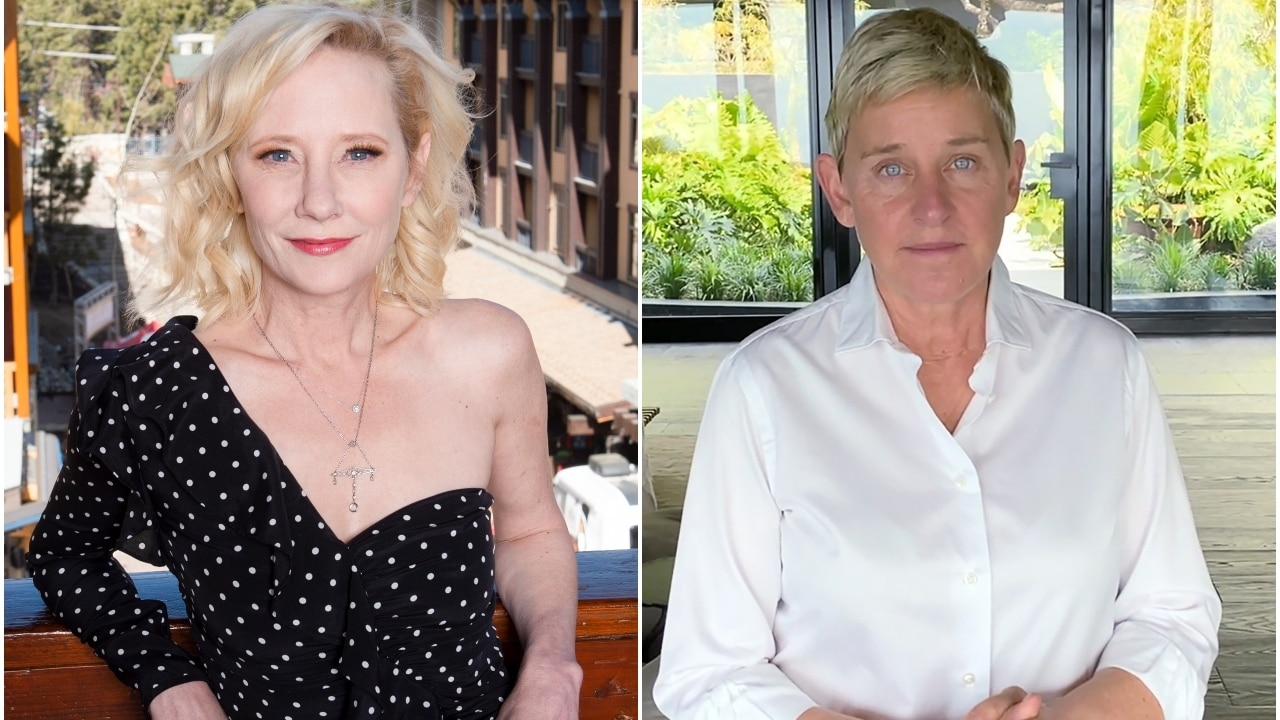
US comedian and talk show host Ellen DeGeneres has led a chorus of tributes following the death of her former girlfriend Anne Heche.
The 53-year-old actress was declared brain dead on Friday (local time) after she slipped into a coma following a severe car crash on August 5.
The pair dated for three years from 1997 to 2000 – shortly after DeGeneres came out as lesbian.
Stream more celebrity and entertainment news with Flash. 25+ news channels in 1 place. New to Flash? Try 1 month free. Offer ends October 31, 2022
“This is a sad day,” DeGeneres wrote on Twitter.
“I’m sending Anne’s children, family and friends all of my love.”
Shortly after the incident on Friday, DeGeneres was approached on the street and asked if she had spoken to Heche.
“No, have not. We’re not in touch with each other, so I wouldn’t know,” she said, as reported by Fox News.
Asked if she wanted to send her former girlfriend any well-wishes, DeGeneres simply responded: “Sure. I don’t want anyone to be hurt.”
The former Six Days, Seven Nights actress was in critical condition and hospitalized after crashing her car into a home in West Los Angeles.
A representative for her family told PEOPLE on Friday she is being kept on life support until she is determined as a match for organ donation.
“Today we lost a bright light, a kind and most joyful soul, a loving mother and a loyal friend,” a representative for her family said in a statement.
“Anne will be deeply missed but she lives on through her beautiful sons, her iconic body of work, and her passionate advocacy. Her bravery for always standing in her truth, spreading her message of love and acceptance, will continue to have a lasting impact .”
Heche’s eldest son Homer, 20, said he has been left with a “deep, wordless sadness.”
“My brother Atlas and I lost our mum,” he told PEOPLE in an exclusive statement.
“After six days of almost unbelievable emotional swings, I am left with a deep, wordless sadness.
“Hopefully my mum is free from pain and beginning to explore what I like to imagine as her eternal freedom.”
The 20-year-old went on to acknowledge the outpouring of love from friends, families and fans of Heche.
“Over those six days, thousands of friends, family and fans made their hearts known to me,” he said.
“I am grateful for their love, as I am for the support of my dad, Coley, and my step mum Alexi who continue to be my rock during this time. Rest in Peace Mom, I love you.”
The 53-year-old’s ex James Tupper also posted an emotional tribute to the actress on Instagram.
The Canadian actor and father of Heche’s youngest son Atlas posted a sweet photo of Heche with the caption: “Love you forever” alongside a broken heart emoji.
Veteran rugby league referee Ben Cummins has opened up about his infamous mistake during the 2019 NRL grand final, confessing he felt “ashamed” and “worthless” after the incident.
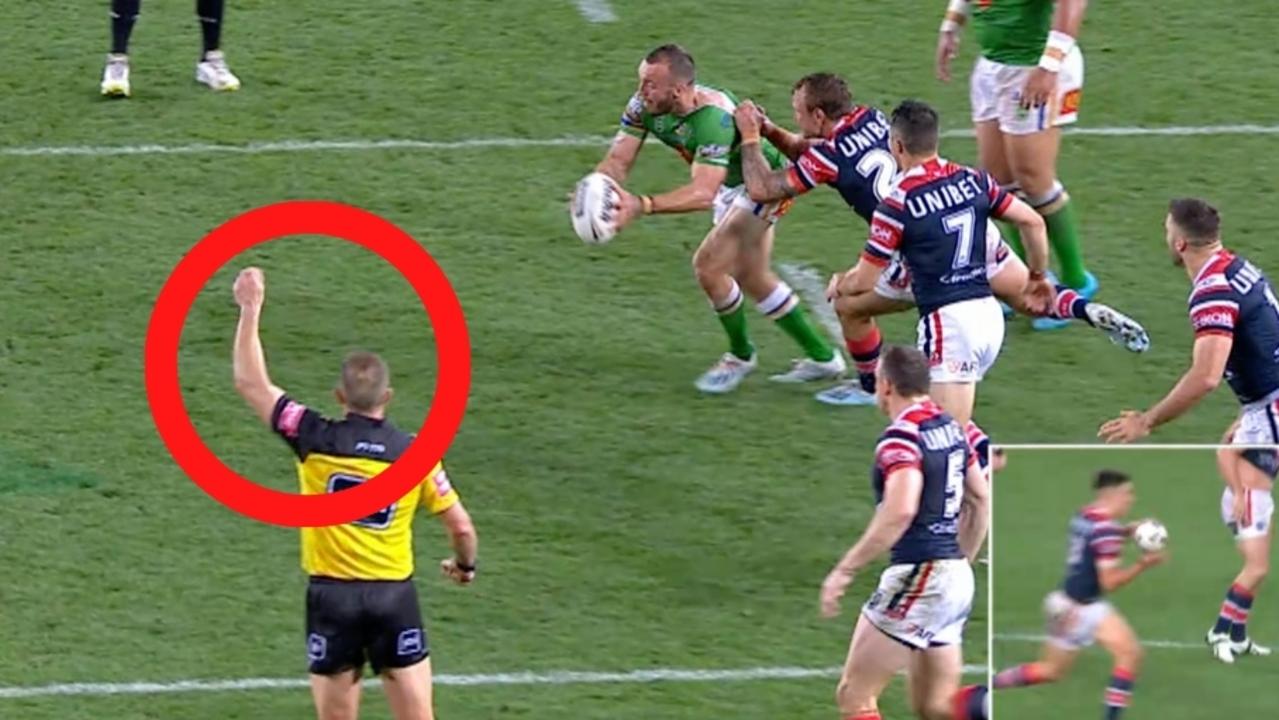
Scores were tied at 8-8 late in the second half of the decider between the Sydney Roosters and Canberra Raiders when Cummins called “six again” after a Raiders attacking kick came off one of their players.
Canberra five-eighth Jack Wighton grabbed the ball and charged into the defensive line believing it was the first tackle of the set, but Cummins reversed his call as the tackle was being made, meaning Canberra had to hand over the Steeden.
Stream every game of every round of the 2022 NRL Telstra Premiership Season Live & Ad-Break Free During Play on Kayo. New to Kayo? Start your free trial now >
Moments later, Sydney fullback James Tedesco dived over to give the Roosters a 14-8 lead at Sydney Olympic Park.
It was undeniably a major turning point in the contest.
“I realized I stuffed up big time and I tried to correct the call – which would have been the right call,” Cummins said.
“But Jack Wighton didn’t see that and he got tackled and the Roosters get the ball and go down the length of the field in the next set and score.
“I realized then that this was big at eight-all in a grand finale.
“It doesn’t get much bigger than this.
“I walked into the tunnel and cameras were all on me… my heart sunk.”
Referee Ben Cummins. Photo by Matt King/Getty ImagesSource: Getty Images
Referee mistakes are not uncommon, and Cummins inevitably copped a tsunami of abuse from disgruntled rugby league fans for the error; even Hollywood superstar Russell Crowe joined the pile-on.
But the veteran referee, who has officiated more than 400 NRL games, has also revealed his teenage daughters were targeted after the ordeal.
“When you sign up to referee at the top level, you know that it comes with fans who are passionate, and people can say things about your performance,” he explained.
“But when it brings in your family and your home, it’s sort of to a different level. I found that really hard.
“I can’t say it was easy for them. My son was copping a lot of abuse at school and my daughters (were) online – because they are on social media. That was really tough.
“I basically locked myself in my house for a week.
“It was pretty dark times. I didn’t want to talk to anyone about it. I had some thoughts about what I wanted to do with my life and they were pretty negative.
“You feel ashamed and worthless, embarrassed. I wasn’t sleeping. I just wanted everything to go away.”
Radio presenter Gus Worland, founder of mental health charity Gotcha4Life, spoke to Channel 9 about the importance of mental strength among Australian men after former Queensland coach Paul Green was found dead in his Brisbane home on Thursday morning, the day after his son’s ninth birthday.
“It was so sad to hear this morning about Green,” he said on Thursday evening.
“This is a line in the sand moment for us as sport and us as a nation to say, ‘Enough is enough’.
“Let’s stop talking about awareness, let’s put some action into place.
“It’s all about manning up and speaking up now, Not manning up and shutting up, which is what we’ve been told all our lives to do.
“This is an opportunity to build some emotional muscle, put you hand up if you need some help and support. That’s the bravest thing you can do.
“Why are we so good in this country at helping people, but not good at asking for help?
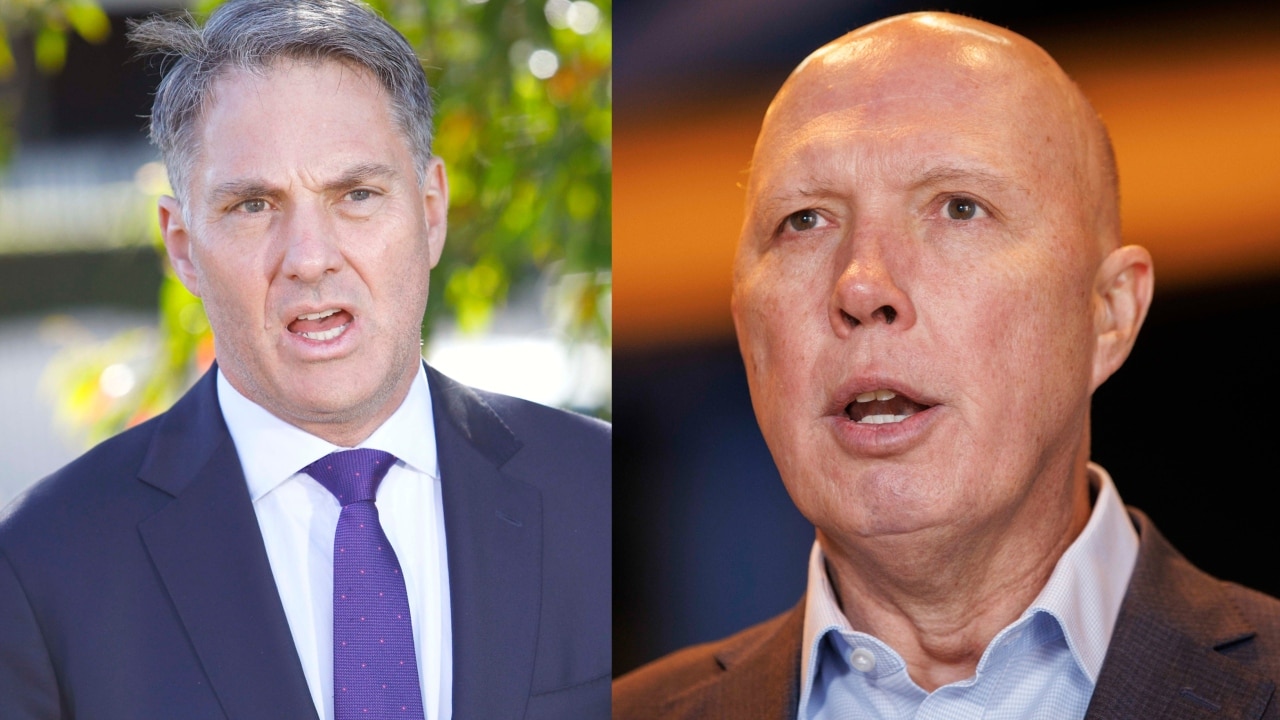
Opposition Leader Peter Dutton has stressed the importance of acquiring nuclear-powered submarines as soon as possible after the Chinese Ambassador to Australia delivered his first National Press Club speech this week.
Xiao Qian – who became Beijing’s top diplomat in Canberra this year – had defended China’s actions when it responded with live military drills in Taiwan following the historic visit from United States House Speaker Nancy Pelosi last week.
He warned Australia to handle the messaging around Taiwan “with caution” and added there was “no room for compromise” as China sees the island as its own territory.
Mr Xiao also threatened Beijing would take Taipei with force and would be “ready to use all necessary measures” to restore the liberal democracy “to the motherland”.
Stream more Australian news with Flash. 25+ news channels in 1 place. New to Flash? Try 1 month free. Offer ends October 31, 2022
Mr Dutton said he was not “shocked” by the remarks from the ambassador as the messaging was similar to what was delivered by Chinese President Xi Jinping.
But he agreed it was alarming to hear the comments being made on Australian shores before he flagged it would be no “surprise” if China invaded the island.
“I don’t think anyone would be surprised if there was an incursion into Taiwan,” he told ABC’s 7:30 on Thursday.
The Opposition Leader then stressed the importance of having a “deterrence in place”, in the form of nuclear submarines, to ward off a potential future attack.
“China is clear that their center of humiliation doesn’t come to an end until there is a re-unification, in their words, so it is important for us to have deterrence in place because any adversary should know that a strike on Australia would ‘t be accepted,” he said.
“And there would be retaliation and also weed need to be close and fight with our allies, not just America, but India and Japan.”
While Australia’s national security would be secure under the AUKUS alliance with the US and United Kingdom for the next five to six decades, he warned the nation needed nuclear-powered submarines to plug the capability gap.
He also came to the support of Defense Minister Richard Marles who insisted this week it is the government’s “top priority” to fill the gap left by the Collins fleet of boats.
“Yes, I very strongly support Richard Marles,” he said.
“He is adopting similar language that I used not too long ago to say if we can get those submarines off the production line, then we should certainly strongly believe that that is possible and that’s the course of action that the government should be pursuing. “
Mr Dutton also welcomed the response from Mr Marles, Foreign Minister Penny Wong and Prime Minister Anthony Albanese who have all called for a de-escalation of tensions in the Taiwan region but believes the messaging can be stronger.
“I believe very strongly that we are better to speak frankly about China’s intent – they’re clear about it themselves, as we have discussed, and it is important for Australians to hear that message,” he said.
Mr Marles is set to make a decision by March 2023 on whether Australia will go with acquiring eight US Virginia-class or British Astute-class built submarines.
The government is expected to decide then whether Australia will need interim, conventionally powered submarines before the AUKUS vessels are ready to hit the water, which may not be for another 20 years around the 2040s.
Mr Marles said this week he would like to see the new boats constructed in Australia as part of a beefing up of its domestic defense manufacturing ability.
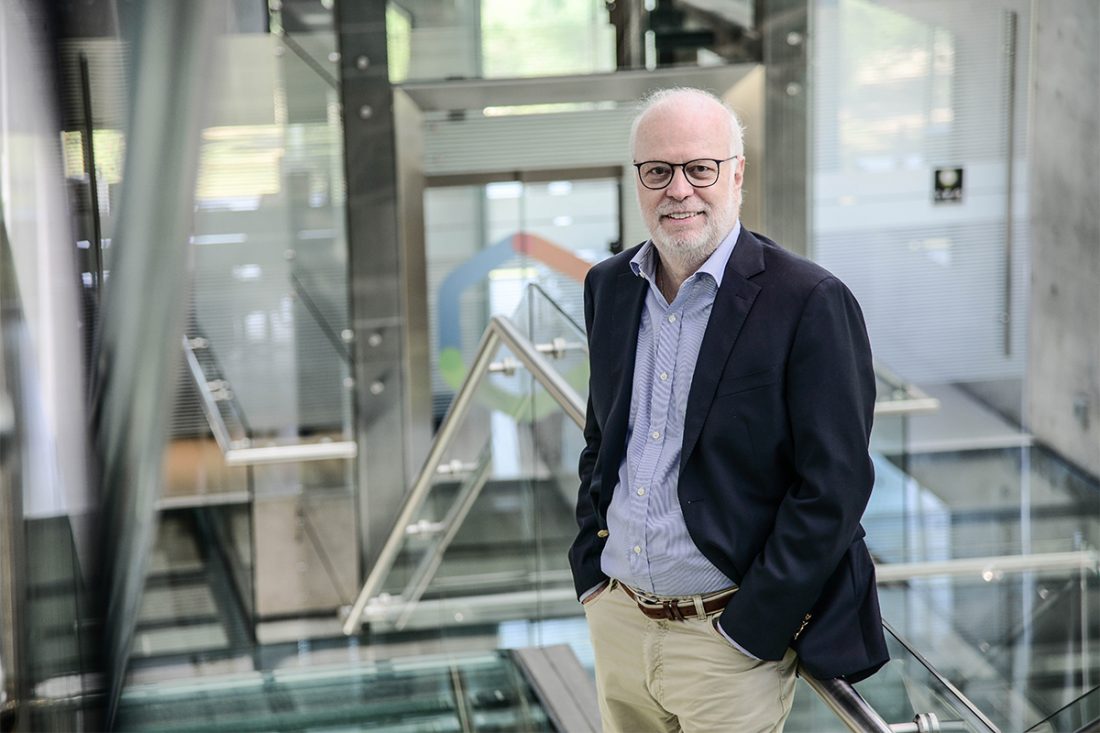
When John took over as CEO in 1992, the Chilean company had recently achieved the milestone of processing 13 per cent of all molybdenum in the Western world. Today, its global market share is 37 per cent for molybdenum and 70 per cent for rhenium – both byproducts from copper mining.
In the 90s, the molybdenum market was starting to take off with a big demand from steel, metallurgical, aerospace and chemical industries. And so, over time, Molymet set up operations in Mexico, Germany and Belgium, and established commercial offices in England, Brazil, China and the United States.
“As a young leader, I was attracted by the pioneering spirit of our company and the challenge of driving international expansion. Chile is at the southernmost tip of the world and we needed to be closer to our customers. But I really could not have done it without a huge level of commitment from our employees. We have been able to attract top professionals, which is so essential to our processes, and they really understand our reason for being,” John says.
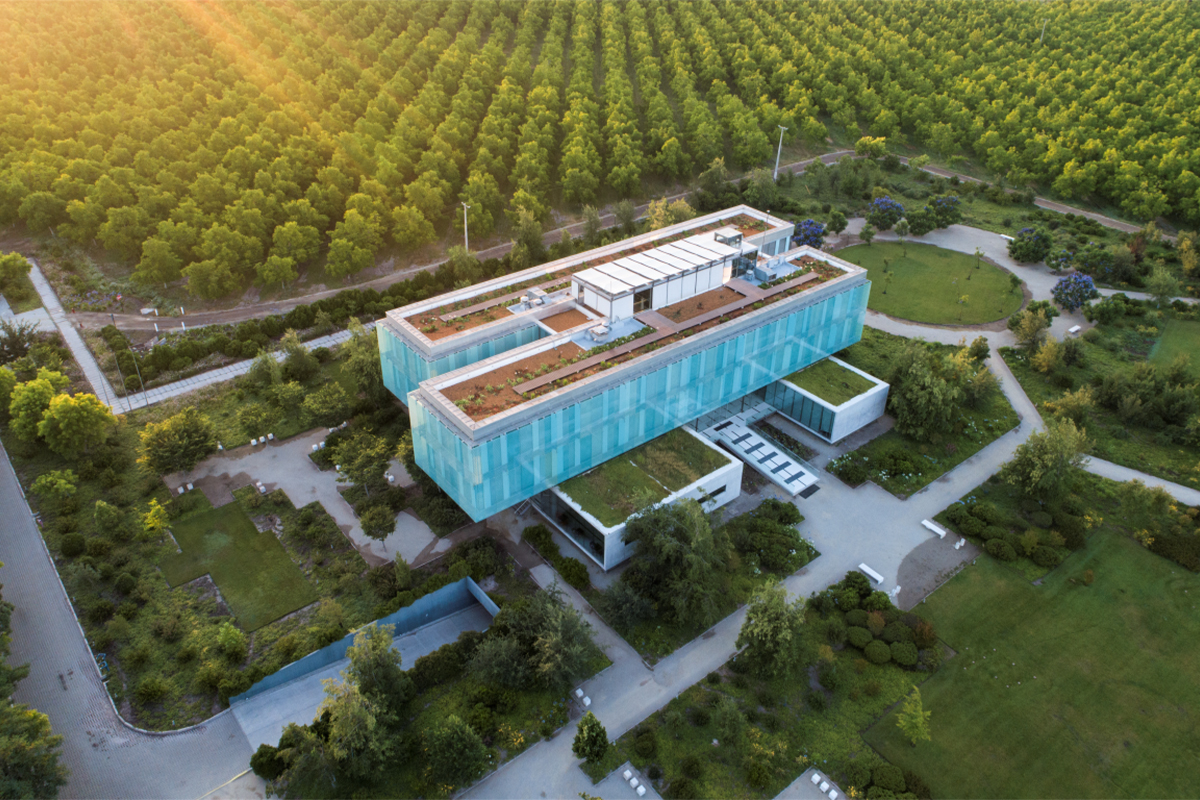
This is how this company is driven by a purpose that today guides its strategic agenda, where the innovation and development behind its laboratories, with an open management approach, has allowed it to generate value in the search for solutions. “And this second half, full of cultural transformations, has also allowed us to redouble the commitment of all our employees. This is reflected in the low internal turnover rates, the high organizational commitment, together with solid and long-term relationships with our different stakeholders,” he says.
What differentiates Molymet from its global competitors
Molymet transforms raw materials into valuable products for other industries. Therefore, their main business is not mining but the value they add to products.
“Two things set us apart: first, everything we do is based on our objectives so we don’t get side-tracked; and second, we have an incredible team of people who have helped us to develop very specific know-how and skills.”
While his early years were focused on growth, the second half of John’s career has been about consolidation – strengthening Molymet’s industry leadership through innovation and an ongoing search for new business opportunities in strategic metals.
Equally important has been the journey of rethinking the company’s purpose. A quietly-spoken man, John feels that purpose is not something that leaders can impose on people. It has to come from within.
“Everyone who is linked to Molymet around the world knows that we are who we say we are – that we act consistently.” – John Grael
“In defining our purpose, we gathered our teams together to look back at where we had started. Then we looked at the difference we want to make in the world today and the legacy we want to leave for future generations.”
As one of Molymet’s executives, Carolina Lopez, says: “Our purpose was already there, it is not something we suddenly invented, but we had to delve into our history, look at the impact of what we do so that we could put it into words.”
John wanted the purpose written in plain language so that each employee and stakeholder around the world can translate it into their daily decisions and interactions – and this is how it is expressed:
We generate value for the evolution of humanity, through products developed by people who believe in the wellbeing of our planet.
He says it expresses a lived belief of wanting to be a company that makes a lasting difference over time. Its impact is reflected in lower staff turnover and solid relationships with multiple stakeholders. Having a clear purpose has taken Molymet to the next level of maturity and enhanced the integration of sustainability into the business. Its sustainability strategy has already reached 77 per cent compliance and its board has set commitments at an even higher level with their 2030 Sustainability Agenda.
What are the company’s growth plans in the medium to long-term?
Molymet has a substantial market share today, with one-third of the global market and 50 per cent in Western markets, excluding China. But John points out that when you reach a mature market share, growth rates are less important than a focus on constant improvement. He says they are looking at how to replicate their molybdenum business in other metal markets and leverage their expertise more efficiently.
What would be your key business message to face the current times?
Managing a company is about meeting stakeholder needs and expectations. John believes that, more than ever, companies must tangibly demonstrate that people, the communities around plants, suppliers, customers, authorities and the environment are indeed at the center of decision-making.
“Everyone who is linked to Molymet around the world knows that we are who we say we are – that we act consistently. This, of course, goes hand-in-hand with understanding the environmental, social and governance impacts of our business, and we are taking clearly defined steps to address these with sustainability as our guiding goal.”