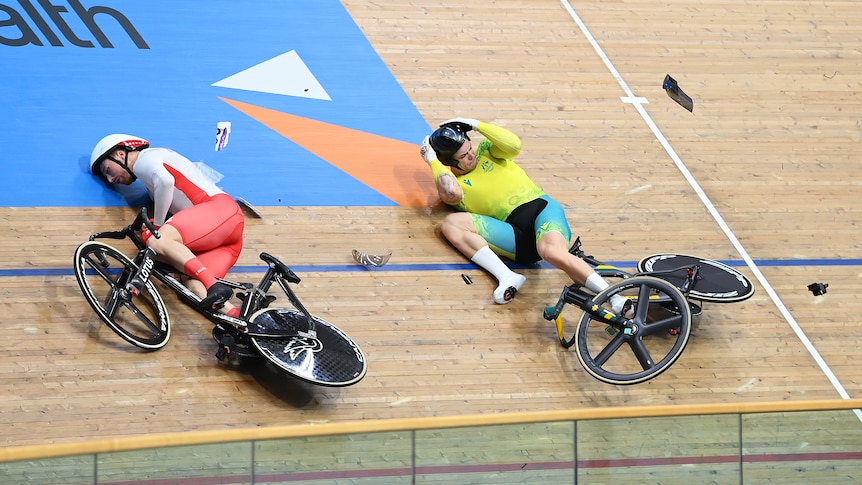
Olympic gold medalist Stuart O’Grady believes a varying ability of cyclists at the Commonwealth Games has contributed to spectacular crashes during the Birmingham event.
O’Grady made the claim on Monday after a spectacular crash saw three cyclists taken to hospital and spectators injured after a bike left the velodrome track and tumbled over the barriers.
“We have got a varying ability of athlete at the Commonwealth Games, more so than Olympics and World Championships,” O’Grady told Channel 7’s Sunrise.
“We may not be at the level as the big international superstars, so when you are racing on a few millimetres of tire on bikes with no breaks and high-pressure incidents, things can go wrong really quickly.”
England’s Matt Walls heads for the barrier trying to avoid riders who had fallen in a crash lower down the banking.(AP: Ian Walton)
The 24-year-old Englishmen heads into the crowd as his Canadian opponent approaches from behind. (AP: Ian Walton)
The crowd desperately try to steer clear of Walls.(AP: Ian Walton)
England’s Matt Walls and Isle of Man’s Matt Bostock were involved in the crash, along with several other riders.
Walls was catapulted over the barriers and into the crowd at the Lee Valley VeloPark. The 24-year-old received treatment for more than 40 minutes before leaving the velodrome in an ambulance.
“[Some riders are] just not used to the pressures of the Commonwealth Games, these guys don’t race together often,” O’Grady said.
“You get a mixed bag of riders and ability. That is all the ingredients you need to cause these crashes, which look spectacular, but people can get really badly hurt. And if you’re good, that would be annoying to get taken out by some bloke.”
Join ABC Sport each morning from 4am as we live blog all the early action from the Birmingham Commonwealth Games
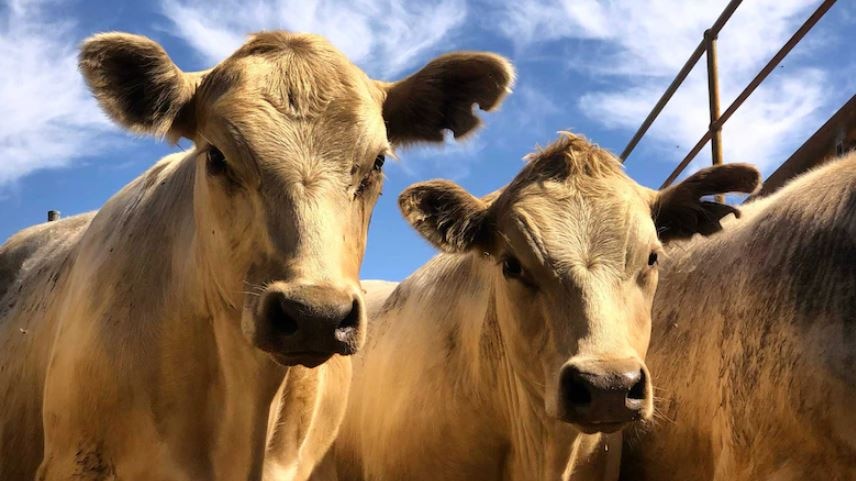
The Victorian government will establish an Emergency Animal Disease (EAD) task force to prepare for an incursion of foot-and-mouth disease (FMD), which is currently circulating through parts of Indonesia.
Key points:
The Victorian government has developed a task force to prepare for a foot and mouth disease outbreak
Foot and mouth disease affects livestock such as sheep, cattle, goats and pigs
Three hundred biosecurity staff are being trained in disease mitigation
The task force would be co-chaired by Agriculture Victoria chief executive officer Matt Lowe and the Emergency Management Commissioner Andrew Crisp, taking advice from Victoria’s Chief Veterinarian Graeme Cooke.
The Australian government has ramped up biosecurity measures to prevent foot-and-mouth and lumpy skin disease entering the country, since it was discovered in Bali, Indonesia a month ago.
Experts fear the exotic livestock diseases could cost the economy billions if it made it into Australia.
“We want to get a focus and targeted government response to a whole range of things we need to put in place in terms of being prepared and to prevent an outbreak,” Victorian Agriculture Minister Gayle Tierney said.
“[The task force] will be looking at things like developing an EAD response plan and will also be looking at access to sufficient personal protective equipment and the supply chain issues that we have in respect to testing, tracing, destruction, disposal and vaccination.”
‘No delay’ in task force formation
Ms Tierney said there had been a “lot of work already underway” that would help mitigate any EAD threats, including coordinating with the national process for service and infrastructure continuity.
The symptoms of foot-and-mouth disease on the tongue of an Indonesian cow.(Supplied: Dok. Kementan)
“It’s clear that there is anxiety within the farming community, people are wanting to know more and we’ve been able to give very practical advice through webinars,” she said.
“This is a good time [to] have those conversations at a grassroots level that give farmers the opportunity to turn that anxiety into very positive practical measures.
“We have a very clear understanding of what the risks are and what we need to do to ramp things up to ensure our preparedness is the best it could possibly be.”
Three hundred biosecurity staff were being trained through Agriculture Victoria to prepare for an FMD outbreak in the state, learning about scenario planning and emergency exercises.
Ms Tierney said despite Indonesia having FMD present in the country for months, the taskforce was a “rapid response”.
“This is a whole of government response, not just Agriculture Victoria, and that’s a fairly quick landing in terms of getting this task force off the ground,” she said.
“Of course there has been lots of work that has been done all the way through, Victoria’s biosecurity measures lead the pack in terms of other jurisdictions.
“It’s been business as usual but then with this extra change that is required because of FMD being on the island of Bali.”
Agriculture Victoria was experienced and well equipped to handle biosecurity threats, Ms Tierney said.
“They did it recently in terms of the avian flu and Japanese encephalitis — there are so many biosecurity threats with us all the time,” she said.
“I think they have a proven track record of doing a pretty good job and the way they have ramped up preparedness for FMD — they should be congratulated for it.”
Arizona Republicans are on the verge of nominating two of America’s most prominent election deniers for governor and secretary of state, the latest in a series of primary contests with serious consequences for America’s democracy.
Kari Lake, a former news anchor, and Mark Finchem, a state lawmaker, are running for governor and secretary of state, respectively. Both have built their campaigns around the lie that the 2020 election was stolen. Both are frontrunners in their races and if elected, they would take over roles with considerable power over how elections are run and certified in a key battleground state.
The Arizona primary on Tuesday is the latest in a series of contests where candidates who have questioned the election results stand a strong chance of winning the GOP nomination for statewide office. It’s a trend that is deeply alarming, experts say, and could pave the way for Republicans to reject the result of a future election.
“It’s a dangerous time for elections because you have a couple of people who are relying on people to vote for them but then will turn around and say the election system is rigged despite the lack of any evidence as such. There’s no talk of policy or anything. It’s all looking backward to 2020,” said Barrett Marson, a Republican consultant in the state. “This issue has staying power, much to my chagrin and a lot of other people.”
Even in an era when denying election results has become Republican orthodoxy, Lake and Finchem stand out.
Lake has said she would not have certified the 2020 presidential race in Arizona, falsely claimed Joe Biden lost the state (he carried it by more than 10,000 votes), and called the election “corrupt” and “rotten”. During a rally earlier this year, she claimed nearly a dozen times in the span of an hour that the election was stolen. She has called for the imprisonment of Arizona’s top election official for her handling of the 2020 race and jailing journalists. Lake wants to end mail-in voting, widely used in Arizona, and she and Finchem have both joined a lawsuit, supported by MyPillow chief executive Mike Lindell to end the use of electronic voting equipment in Arizona.
Both Mike Pence and Arizona Governor Doug Ducey have endorsed Karrin Taylor Robson, a wealthy real-estate developer, who is Lake’s most significant challenger in the polls for the nomination. In recent days, Lake has begun suggesting there is fraud underfoot to steal the election from her, but has offered no evidence to support her claim.
“We’re already detecting some fraud. I know none of you are shocked,” she said, according to the Washington Post. “We’re already detecting fraud, and believe me, we’ve got cyber folks working with us, we’ve got lots of attorneys. And I’m hoping that we have the sheriffs that will do something about it. We’ll keep you posted.” She has, however, recently encouraged her supporters to cast their votes by mail.
Taylor Robson has said the 2020 election wasn’t fair, but has stopped short of saying it was stolen. Lorna Romero, a Republican operative in the state who has worked for former Governor Jan Brewer and for John McCain, predicted that the winning candidate in the primary would be whoever could spread their message the most. About a third of voters in Arizona are not affiliated with a party and can choose to vote in either the Democratic or Republican nominating contests.
“This is populism. This is just pure populism for populism’s sake, and her desire to be popular,” said Chuck Coughlin, a Republican consultant in the state. “You have a referendum, if you will, in the governor’s race, on which part of the party are you supporting. The pragmatic, want-to-govern conservative – or Trump. You have a significant war going on there.”
Finchem is the frontrunner for the secretary of state nomination, a position from which he would oversee elections in Arizona.
Finchem was a close ally of Trump in the former president’s bid to overturn the 2020 race. Ali Alexander, a leader of the Stop the Steal movement, has credited Finchem with bringing the push to Arizona. “Arizona started with one man: State Representative Mark Finchem,” Alexander said last year.
Mark Finchem in October last year. Photograph: Rachel Mummey/Reuters
Earlier this year, Finchem introduced a resolution to decertify the election, which is not legally possible. I have signed a joint resolution of the Arizona legislature asking Congress to accept a fake slate of electors from Arizona (a plan currently under investigation by the Justice Department). He hosted Rudy Giuliani at a Phoenix hotel after the election for an event at which the president’s lawyer lied and said Biden won the election because he received votes from undocumented people.
Finchem is also a member of the Oath Keepers, a far-right militia group, and was at the capitol on January 6. He has been subpoenaed by the committee investigating the capitol attack. He is a member of a network of candidates who don’t believe the results of the 2020 election seeking to be the chief election official in their state.
“Am I’m surprised that somebody who questions the 2020 election would want to run for secretary of state? No, not really,” Romero said. “His whole standpoint from him is he wants to eliminate the fraud from the system, and it’s a good talking point for him for those who believe the 2020 election was stolen.”
Secretary of state primaries are usually “sleeper” contests that few people pay attention to, Romero said. That means Trump’s endorsement is likely to be a major boost for Finchem in the race. Still, Romero said she was “disappointed” by the emphasis on a stolen election, because Republicans have a significant opportunity to appeal to voters on issues like the economy this year.
The secretary of state in Arizona is responsible for canvassing official statewide election results. Coughlin said he had little doubt Finchem would hold up certification of a race.
“He would not fall in line. He would follow the Donald Trump script of doing everything possible to be a disrupter if the election outcome is anything but what he wanted. I don’t see any go-along-to-get-along in Mark Finchem,” he said.
Until 2020, Finchem did not have much of an interest in Arizona’s election laws, and was known mostly for representing the issues of his rural district in southern Arizona. “His reputation of him was n’t great. People didn’t much like working with him,” Marson said. “He was a back-bencher is probably the best way to describe it.”
The political potency of election denialism was on display earlier this month at a rally in Arizona’s rural Prescott Valley, where Donald Trump came to stump for Lake.
Shawn Callaway, 34, a Republican party committee worker in Surprise, a small city near Phoenix, is supporting both Lake and Finchem. He supports Lake, he said, because of her efforts to halt the use of electronic voting equipment.
“It means a lot to me that she’s willing to fight against election fraud, because if our elections aren’t safe we don’t have anything,” said Callaway, who bagged front row seats with his wife and parents to see Trump.
Callaway, who plans to cast his vote in person, also said he was unfazed by Finchem’s connection to the extremist Oath Keepers. “The Founding Fathers wanted us to have militia groups – it’s what keeps us free. As long as they are law-abiding, I’m fine with that,” he said.
Kelly Ciccone, 58, who moved to Maricopa county from Florida a decade ago, also said she plans to support Finchem and Lake. “It’s a plus that he’s an Oath Keeper – self-defense is everything. Guns aren’t bad: crazy people with guns are the problem,” said Ciccone, who also attended the Trump rally. “Kari Lake is pure fire. She’s a dragon, just like Trump.”
The race underscores how Arizona continues to be a hotbed of conspiracy theories about the 2020 race.
Last year, the state legislature authorized an unprecedented partisan review of the 2020 race, championed by Finchem, of the 2020 race in Maricopa county, the largest county in the state. Even though the audit affirmed Biden’s win, Lake, Finchem, and other conspiracy theorists continue to insist that something was amiss. The state Republican party recently censured Rusty Bowers, the Republican House speaker Rusty Bowers after he testified to the January 6 committee about Trump’s efforts to pressure him to overturn the election.
The Guardian also observed a focus group with five Arizona Republicans who voted for Trump in 2020, conducted as part of a series by the prominent anti-Trump Republican strategist, Sarah Longwell. The hour-long session offered a glimpse into how views of the candidates varied widely.
One woman who considers herself a moderate said she was inclined to support Lake because she grew up watching her deliver the news on TV. But for the other self-identified moderate in the group, Lake’s public persona gave her pause. Noting that Trump was also a media figure before turning to politics, she said: “I’m not certain I want to see Arizona go down that road.”
All were aware that Trump had endorsed Lake, but that wasn’t enough for some.
“I love Trump’s policies but not his rhetoric, and think Kari Lake would also be divisive when we need to come together,” said 81-year-old Arlene Bright, who attended the Trump rally in the Prescott Valley.
Two Woolworths customers have created controversy over their treatment of a toilet paper display at one store.
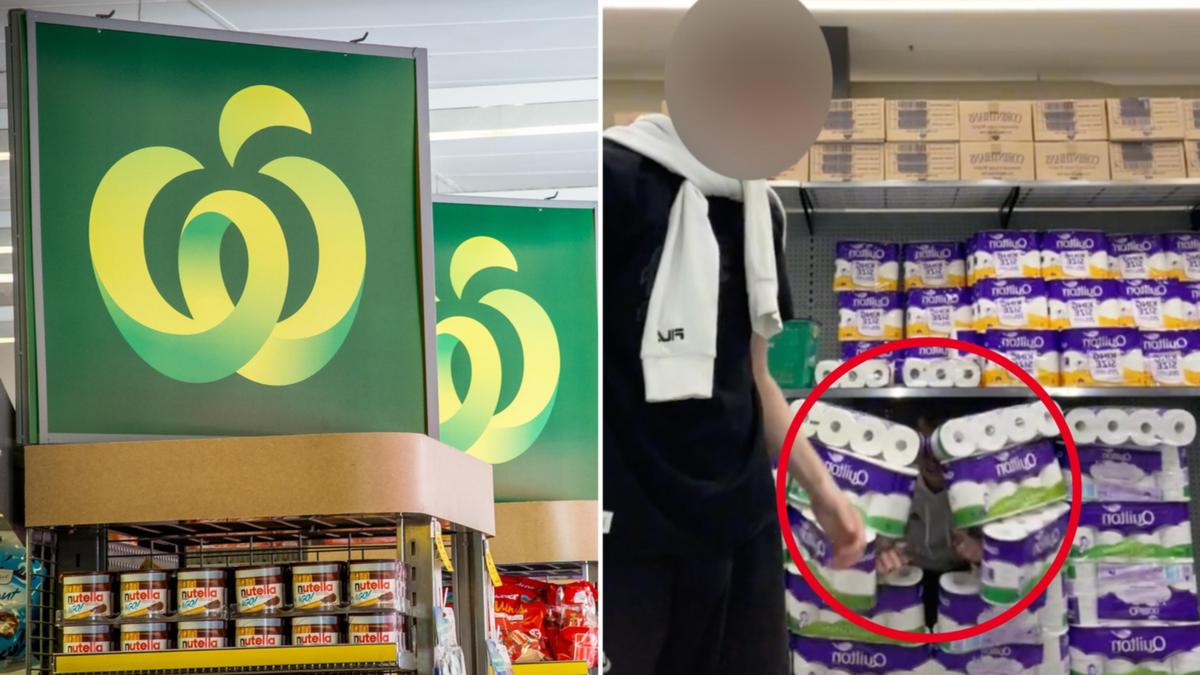
Posting on TikTok, the two shoppers shared footage that showed one of them crashing through a neatly stacked pile of Quilton Toilet Paper.
Watch the controversial Woolworth toilet paper video above
For more Food related news and videos check out Food >>
The video shows one of the customers setting up his phone – which was recording the incident – inside a Woolworths freezer, situated opposite the toilet paper section.
While he held the freezer door open, the camera shows his friend emerging from behind the row of toilet paper packs.
The video starts with the camera pointed at the toilet paper display at one Woolworths store. Credit: TikTok
Crashing through the display, the shopper’s actions sent the stack of toilet paper falling to the ground.
The shoppers can then be seen smiling and dancing for the camera, as the packs of Quilton lie in disarray.
With toilet paper still in limited supply for some supermarket shoppers around Australia, a video showing packs being mistreated is sure to infuriate many.
Customers have taken to social media in recent weeks to complain of ongoing shortages.
“Can someone please explain why there is no toilet paper yet again?” said one Woolworths customer on Facebook.
One prankster can then be seen emerging from behind the rows of toilet paper packs. Credit: TikTok
“I have been trying for four weeks now to get toilet paper, going into the store twice a week. This is getting ridiculous!”
The incident is reminiscent of a similar incident in June 2021 which saw a female Woolworths shopper jump onto a pallet of toilet paper packs.
“She needs to be thrown out of the store,” said one TikTok user at the time.
“Pathetic,” added another.
Write a third: “Do you feel cool now?”
The shoppers then smile and dance for the camera, as the toilet paper packs lie in disarray. Credit: TikTok
One of the many confounding pleasures of The Rehearsal, the comedian Nathan Fielder’s elaborate social experiment/docu-reality series for HBO, is how often the show exposes its own illusions.
The central concept of the series is straightforward enough, if typically absurd: what if you could rehearse fraught conversations or situations in advance? How much could you control if you had every resource available to prepare? The show depicts both the tedious constructions of facsimile – building a replica bar, hiring actors, stress-testing potential conversations – and the unnerving, at times sublime suspension of disbelief.
With The Rehearsal and his prior show, Comedy Central’s cult hit Nathan For You, Fielder drew laughs (or secondhand embarrassment, or horror) as the ultimate committer to a bit – harebrained ideas carried far past the point of sense, with such deadpan absurdity that you couldn’t distinguish between silly and serious. Over four seasons, Nathan For You, in which Fielder coached real small business owners into audaciously inane plans (staging a massive celebrity tip at a diner for free press, rebranding a realtor as “100% ghost-free”, “Dumb Starbucks”) offered a decent litmus test for one’s tolerance for cringe. The typical Nathan For You viewing experience was some mix of awe at the grandiose stupidity of the scheme, amusement at the lengths to which Fielder would go, and genuine concern for the businesses.
The Rehearsal takes Fielder’s commitment and viewer trepidation to new heights. It takes a knowingly false notion – that one can control emotions, or life – and doubles down again and again until that notion looks like unhinged genius. There are the building blocks of reality-ish TV – participants both exposed and kept at a remove, the assumption that everything is quasi-real and quasi-scripted, crisp editing. (Fielder is an executive producer of the superlatively edited HBO’s How To With John Wilson, which transforms mundane city life into glorious fantasia.) Watching The Rehearsal feels like reaching the outer fringes of reality television – you’re not quite sure what to make of it, skeptical of going further, and can’t stop looking.
In the first episode, Fielder helps a trivia enthusiast practice revealing a low-grade, years-long fib to a friend with photorealistic accuracy, including a full-scale working replica of Brooklyn’s Alligator Lounge. As all Fielder plots do, the second episode, which aired last Friday, escalates the stakes: Fielder unveils a two-month long simulation for Angela, a 40-something born-again Christian who put off having children, to test-run motherhood. We see the Truman Show-esque intricacy of Fielder’s set design – per Angela’s wishes, she lives at a farmhouse in Oregon with a garden, and rehearses the adoption of her son “Adam” from a real agency, handed over by his real mother de she. (Fielder also has the replica Alligator Lounge transported to a warehouse in Oregon – a good portion of the show’s entertainment is simply marveling at the amount of money he got out of HBO.)
We also see, sometimes simultaneously, the arcane scaffolding required to sustain this disbelief. Fielder, blurring the line between the TV producer persona and Nathan For You’s socially awkward, stone-faced disposition, edits the adoption scene in real time, asking the real mother to elaborate on why she’d be “unfit” to be a parent. Big Brother-style cameras film Angela and a cast of child actors – all playing the role of Adam – in the house, beamed to a control board in the production’s nearby headquarters. A giant timer on the living room wall counts down the four-hour shifts for the underage actors, as required by law. Staff members stealthily switch out carseats when Angela’s not looking, or crawl through a window to slip a motorized crying doll into the crib for the night shift. (It is uncomfortable, borderline disturbing, to see toddlers participate in a production they cannot understand, pretending Angela is their mother; it’s also indistinguishable from the work of a child actor on any other show, nor arguably as fraught as, say, a child’s Instagram account created by adults.)
For viewers, there is little distinction between on- and offstage, yet it’s disconcerting, and never less than fascinating, how quickly you take The Rehearsal’s bizarre terms as a given. That’s true even as the terms shift before us according to Fielder’s exacting vision and spiraling ego, itself extracted and fitted for TV. If, as Megan Garber argued in the Atlantic, the paranoid style of American reality television post-Survivor taught us to assume the awesome, all-knowing power of off-screen producers, The Rehearsal just levels up the visibility of the machinations. The producer’s contortions are plotted. When Fielder, who joins Angela’s simulation as platonic co-parent, feels trapped by the rules he has set for his own project, he changes them.
Photograph: Allyson Riggs/HBO
The Rehearsal’s second episode, in which Fielder outlines his plan for Angela, has renewed a critique of Fielder’s work as manipulative or mean. It is fair to say that Angela’s devout faith in her comes off as kooky, her participation in this delusional project; a potential simulation partner for her has since said he takes issue with his portrayal of her on the show, in which he smokes weed, drives, and fixates on spiritual numbers. But to dismiss the episode as manipulation feels like a misread of The Rehearsal, which consistently pokes at its own pretensions and sets up Fielder’s unfettered social anxiety as the butt of the joke. Of course it’s manipulation – the discomfort with a person’s portrayal, its perceived fairness or unfairness, is a core tenet and landmine of making television about real people appearing more or less as themselves.
All reality shows contain some dance between choreography and watchable chaos, between controlled variables and the power of editing, for a product that assumes the position of accurate summary, or at least best curation. No one, not even the camp creations of Selling Sunset, or the contestants on Survivor, or the staff on Below Deck, or the castaways on Love Island, have control over their edit. We are all performing all the time, with no final say on one’s perception; reality participants do so at a heightened degree, with a semi-public record.
The ultimate TV victim, to the extent that there is one, of this concept is Fielder himself. Over the course of the season, he grows trapped by the confines and gaps of his own experiment, which keeps dodging his grasp of him, especially as he becomes faux co-parent juggling work and life – in other words, childcare in the show and making-the-show Angela understandably has her own visions for the project and acts accordingly. A separate participant ghosts the production without explanation, though you can infer it’s related to emotions over a deception that does, in my opinion, bump up against an ethical line. (The Rehearsal includes his prior footage of him.) In the later episodes, Fielder’s attempts to control variables of perception spiral into an addictively meta, solipsistic Russian doll of impersonations.
The heart of another is a dark forest, but Fielder seems determined to try to map it anyway. At its core, The Rehearsal is deeply curious about why that is – why we act the ways we do, how we behave irrationally, the lengths we’ll go to avoid vulnerability, the amount we’ll watch other people try. To truly see people, their neuroses and inconsistencies and vanities, is messy. To know it’s being filmed for public consumption is discouraging. To have that meticulously edited, and shot through with an HBO budget carte blanche? That’s good television, a reality show in which extreme contrivances get to something real.
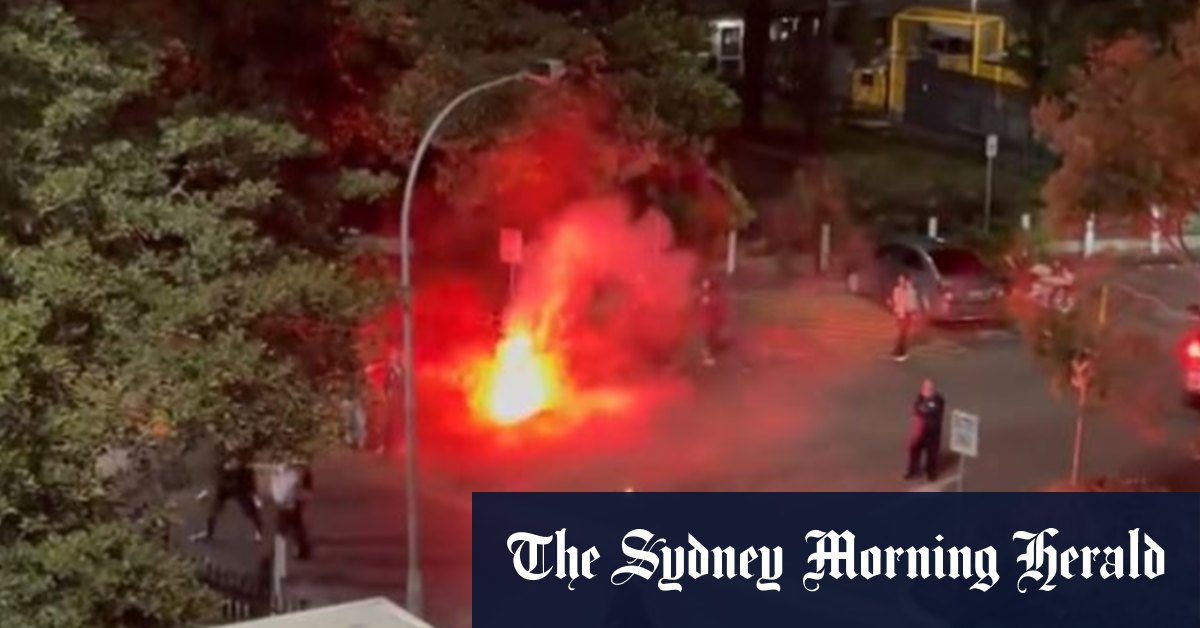
Police have launched an investigation after multiple flares were lit and a brawl broke out at the end of an Australia Cup soccer match in Sydney’s inner-west on Sunday night.
Police were called to the game at Leichhardt Oval in Lilyfield after Sydney FC’s penalty shootout win against the Central Coast Mariners following reports a fight had broken out outside the stadium.
Officers from Leichhardt Police Area Command arrived about 7.30pm alongside the NSW Police riot squad and the crowd dispersed.
Stefan, 40, from The Entrance, said he was walking to the car park with his wife and daughter about 15 minutes after the game ended when a flare flew towards them.
“We heard all this commotion outside as we were walking out to the car park… saw a barrier getting thrown and sliding on the road while I was holding my daughter and then saw a flare flying over and landing [two metres] away from us,” he said.
“There was a lot of screaming and shouting, there were objects flying around us, I saw some rocks going past us and then basically saw the security guards running away, it was just the families that were in the stadium on their own.”
He said no formal procedures were being followed after the brawl broke out and it took about 15 minutes for police to arrive.
“We were speaking to Sydney supporters so no idea who that group was, but there was no lockdown procedure, no cops, no security.
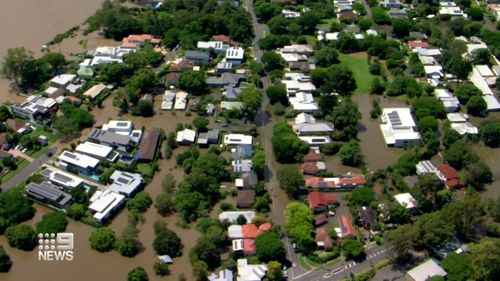
More than 400 Brisbane homeowners devastated by the February floods disaster have expressed interest in having their homes bought back with valuations to begin in the next few weeks.
A further 1,300 homeowners are prepared to have their homes raised, and 1,500 want their homes rebuilt to be flood-proof.
Queensland Reconstruction Authority Chair Brendan Moon today said there remained 2000 uninhabitable properties across South East Queensland, and hundreds of people still at a loss as to how to move forward after the disaster.
Hundreds of Queensland homeowners want to have their flood-affected homes bought back by the government. (9News)
“There is still 600 people who are unsure of their next steps,” Moon said.
“Our approach now is very much supporting them, getting them to the right decision, one to get them back into their home as soon as possible, but also to support their decision to reduce flood-risk into the future.”
He said the QRA had identified the most damaged and highest flood risk properties but the buy-back process was voluntary and relied on the homeowner agreeing to an independent valuation of their property.
“This is a big decision for people so we are not going to rush this,” he said.
The government has set a two-year deadline for the work to be done but it’s unclear at this stage what impact the rising cost and falling supply of building materials might have.
On Saturday, Brisbane Lord Mayor Adrian Schrinner released the Council’s Rebuild & Recover: Flood Recovery Action Plan with 51 tasks designed to ensure the city is stronger in the face of future severe weather events.
The plan lays out how and when Council will deliver on the 37 recommendations from the 2022 Flood Review report of the disaster by Paul de Jersey AC, including that riverine and waterway infrastructure be better designed, land-use in flood-prone commercial and industrial areas be reassessed, and communities be better informed.
The extraordinary rain event, which hit South East Queensland, the Northern Rivers and other parts of NSW in February and March 2022, was the second costliest in Australia’s history – worse than Cyclone Tracy in 1974 and falling only behind Sydney’s 1999 hailstorm.
Losses from the disaster totaled a record-breaking $5.134 billion, according to data released Friday by the Insurance Council of Australia.
Watch: Scale of flood crisis demonstrated by remarkable video
A recent CSIRO megatrends report has warned the cost of natural disasters will triple over the next 30 years as a result of climate change.
“The scale and impact of the increasing likelihood of further events, as detailed in the CSIRO report, make it imperative that the rebuild and reconstruction from this flood significantly improves the resilience of these communities to future extreme weather events,” ICA CEO Andrew Hall said .
Arizona Republicans are on the verge of nominating two of America’s most prominent election deniers for governor and secretary of state, the latest in a series of primary contests with serious consequences for America’s democracy.
Kari Lake, a former news anchor, and Mark Finchem, a state lawmaker, are running for governor and secretary of state, respectively. Both have built their campaigns around the lie that the 2020 election was stolen. Both are frontrunners in their races and if elected, they would take over roles with considerable power over how elections are run and certified in a key battleground state.
The Arizona primary on Tuesday is the latest in a series of contests where candidates who have questioned the election results stand a strong chance of winning the GOP nomination for statewide office. It’s a trend that is deeply alarming, experts say, and could pave the way for Republicans to reject the result of a future election.
“It’s a dangerous time for elections because you have a couple of people who are relying on people to vote for them but then will turn around and say the election system is rigged despite the lack of any evidence as such. There’s no talk of policy or anything. It’s all looking backward to 2020,” said Barrett Marson, a Republican consultant in the state. “This issue has staying power, much to my chagrin and a lot of other people.”
Even in an era when denying election results has become Republican orthodoxy, Lake and Finchem stand out.
Lake has said she would not have certified the 2020 presidential race in Arizona, falsely claimed Joe Biden lost the state (he carried it by more than 10,000 votes), and called the election “corrupt” and “rotten”. During a rally earlier this year, she claimed nearly a dozen times in the span of an hour that the election was stolen. She has called for the imprisonment of Arizona’s top election official for her handling of the 2020 race and jailing journalists. Lake wants to end mail-in voting, widely used in Arizona, and she and Finchem have both joined a lawsuit, supported by MyPillow chief executive Mike Lindell to end the use of electronic voting equipment in Arizona.
Both Mike Pence and Arizona Governor Doug Ducey have endorsed Karrin Taylor Robson, a wealthy real-estate developer, who is Lake’s most significant challenger in the polls for the nomination. In recent days, Lake has begun suggesting there is fraud underfoot to steal the election from her, but has offered no evidence to support her claim.
“We’re already detecting some fraud. I know none of you are shocked,” she said, according to the Washington Post. “We’re already detecting fraud, and believe me, we’ve got cyber folks working with us, we’ve got lots of attorneys. And I’m hoping that we have the sheriffs that will do something about it. We’ll keep you posted.” She has, however, recently encouraged her supporters to cast their votes by mail.
Taylor Robson has said the 2020 election wasn’t fair, but has stopped short of saying it was stolen. Lorna Romero, a Republican operative in the state who has worked for former Governor Jan Brewer and for John McCain, predicted that the winning candidate in the primary would be whoever could spread their message the most. About a third of voters in Arizona are not affiliated with a party and can choose to vote in either the Democratic or Republican nominating contests.
“This is populism. This is just pure populism for populism’s sake, and her desire to be popular,” said Chuck Coughlin, a Republican consultant in the state. “You have a referendum, if you will, in the governor’s race, on which part of the party are you supporting. The pragmatic, want-to-govern conservative – or Trump. You have a significant war going on there.”
Finchem is the frontrunner for the secretary of state nomination, a position from which he would oversee elections in Arizona.
Finchem was a close ally of Trump in the former president’s bid to overturn the 2020 race. Ali Alexander, a leader of the Stop the Steal movement, has credited Finchem with bringing the push to Arizona. “Arizona started with one man: State Representative Mark Finchem,” Alexander said last year.
Mark Finchem in October last year. Photograph: Rachel Mummey/Reuters
Earlier this year, Finchem introduced a resolution to decertify the election, which is not legally possible. I have signed a joint resolution of the Arizona legislature asking Congress to accept a fake slate of electors from Arizona (a plan currently under investigation by the Justice Department). He hosted Rudy Giuliani at a Phoenix hotel after the election for an event at which the president’s lawyer lied and said Biden won the election because he received votes from undocumented people.
Finchem is also a member of the Oath Keepers, a far-right militia group, and was at the capitol on January 6. He has been subpoenaed by the committee investigating the capitol attack. He is a member of a network of candidates who don’t believe the results of the 2020 election seeking to be the chief election official in their state.
“Am I’m surprised that somebody who questions the 2020 election would want to run for secretary of state? No, not really,” Romero said. “His whole standpoint from him is he wants to eliminate the fraud from the system, and it’s a good talking point for him for those who believe the 2020 election was stolen.”
Secretary of state primaries are usually “sleeper” contests that few people pay attention to, Romero said. That means Trump’s endorsement is likely to be a major boost for Finchem in the race. Still, Romero said she was “disappointed” by the emphasis on a stolen election, because Republicans have a significant opportunity to appeal to voters on issues like the economy this year.
The secretary of state in Arizona is responsible for canvassing official statewide election results. Coughlin said he had little doubt Finchem would hold up certification of a race.
“He would not fall in line. He would follow the Donald Trump script of doing everything possible to be a disrupter if the election outcome is anything but what he wanted. I don’t see any go-along-to-get-along in Mark Finchem,” he said.
Until 2020, Finchem did not have much of an interest in Arizona’s election laws, and was known mostly for representing the issues of his rural district in southern Arizona. “His reputation of him was n’t great. People didn’t much like working with him,” Marson said. “He was a back-bencher is probably the best way to describe it.”
The political potency of election denialism was on display earlier this month at a rally in Arizona’s rural Prescott Valley, where Donald Trump came to stump for Lake.
Shawn Callaway, 34, a Republican party committee worker in Surprise, a small city near Phoenix, is supporting both Lake and Finchem. He supports Lake, he said, because of her efforts to halt the use of electronic voting equipment.
“It means a lot to me that she’s willing to fight against election fraud, because if our elections aren’t safe we don’t have anything,” said Callaway, who bagged front row seats with his wife and parents to see Trump.
Callaway, who plans to cast his vote in person, also said he was unfazed by Finchem’s connection to the extremist Oath Keepers. “The Founding Fathers wanted us to have militia groups – it’s what keeps us free. As long as they are law-abiding, I’m fine with that,” he said.
Kelly Ciccone, 58, who moved to Maricopa county from Florida a decade ago, also said she plans to support Finchem and Lake. “It’s a plus that he’s an Oath Keeper – self-defense is everything. Guns aren’t bad: crazy people with guns are the problem,” said Ciccone, who also attended the Trump rally. “Kari Lake is pure fire. She’s a dragon, just like Trump.”
The race underscores how Arizona continues to be a hotbed of conspiracy theories about the 2020 race.
Last year, the state legislature authorized an unprecedented partisan review of the 2020 race, championed by Finchem, of the 2020 race in Maricopa county, the largest county in the state. Even though the audit affirmed Biden’s win, Lake, Finchem, and other conspiracy theorists continue to insist that something was amiss. The state Republican party recently censured Rusty Bowers, the Republican House speaker Rusty Bowers after he testified to the January 6 committee about Trump’s efforts to pressure him to overturn the election.
The Guardian also observed a focus group with five Arizona Republicans who voted for Trump in 2020, conducted as part of a series by the prominent anti-Trump Republican strategist, Sarah Longwell. The hour-long session offered a glimpse into how views of the candidates varied widely.
One woman who considers herself a moderate said she was inclined to support Lake because she grew up watching her deliver the news on TV. But for the other self-identified moderate in the group, Lake’s public persona gave her pause. Noting that Trump was also a media figure before turning to politics, she said: “I’m not certain I want to see Arizona go down that road.”
All were aware that Trump had endorsed Lake, but that wasn’t enough for some.
“I love Trump’s policies but not his rhetoric, and think Kari Lake would also be divisive when we need to come together,” said 81-year-old Arlene Bright, who attended the Trump rally in the Prescott Valley.
Metigy was founded in 2015 by David Fairfull and Johnson Lin, and was named by combining the name of the Greek goddess of wisdom and thought Metis with the word strategy.
It was set up to provide small business clients with an artificial intelligence-fueled platform that could provide insights on their potential customers for marketing purposes.
A recent presentation from one of its investors said Metigy had grown revenue at more than 300 per cent in both the 2020 and 2021 financial years, and had more than 25,000 clients across 92 countries.
Investors used Metigy to show the strength of their pre-IPO investment portfolios.
Metigy has more than 30 shareholders, according to documents lodged with the corporate regulator, with the biggest investors including its founders and their associates.
However, the company picked up capital from a raft of institutional investment firms in recent years including Adrian MacKenzie and Srdjan Dangubic’s Five V Capital and Thorney Group.
$1b valuation
Five V, for example, invested $2.5 million in 2020 and another $5.3 million last year. The manager talked up Metigy’s prospects as an Australian technology sector unicorn with a valuation at $1 billion, according to a presentation given to its investors in May.
Such a valuation implied a 10-times money gain for Five V and a 508 per cent return on an IRR basis (all unrealised). That’s all looking uncertain, given Metigy’s administration. Other investors were much more cautious, carrying Metigy on their books at $500 million or less at June 30.
Investors including Five V and Thorney landed on Metigy’s share register as its backers spoke openly about targeting a float on the ASX, saying it could happen from 2022.
It is not known what prompted last week’s call to the administrators on Friday night, however investors were scrambling for answers come Monday. Staff were also dumbfounded.
The situation comes amid a stark change in fundraising conditions for private and public technology companies, both in Australia and offshore.
An inability to raise capital has sent others to the wall, including fintech Volt Bank which returned more than $100 million deposits to customers in late June and is now seeking a buyer for its assets.
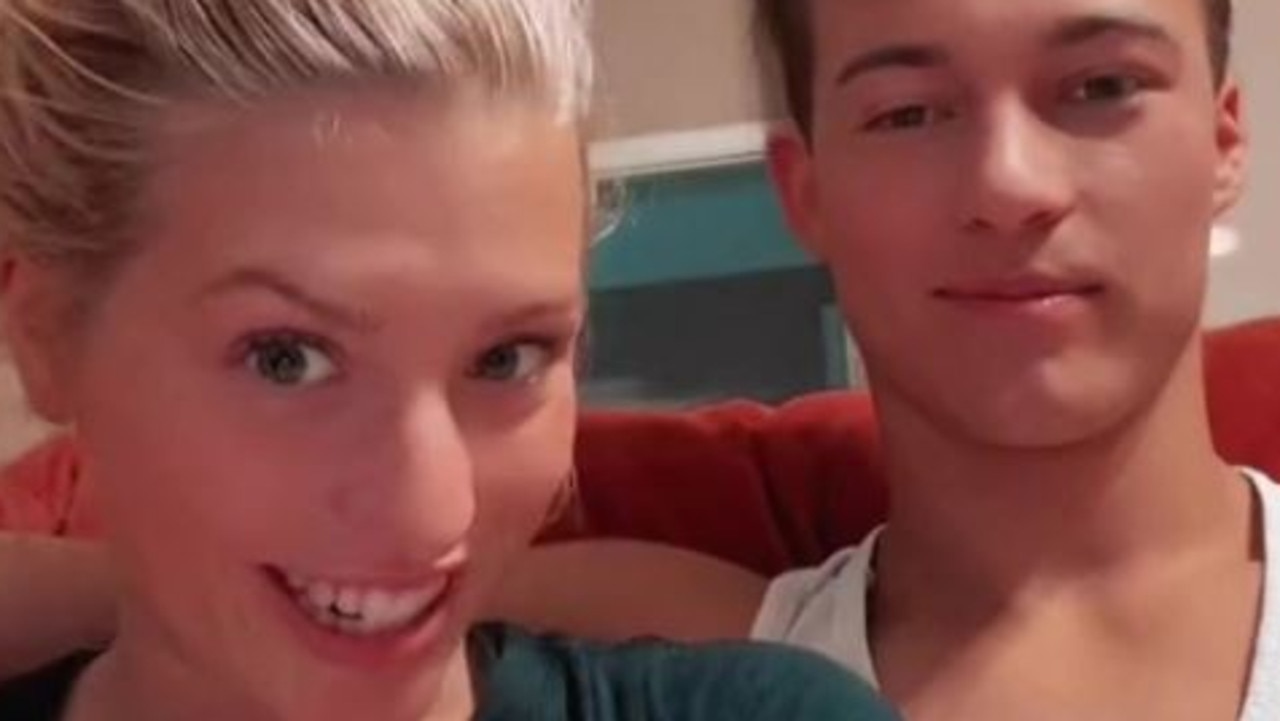
A young woman has revealed that despite being with her partner for two years, the pair have never kissed.
Kaytlin O’Neall says that she and her boyfriend Drew have not kissed once during their relationship, adding that people can be very judgmental about it.
Posting to TikTok under @kaytlin.oneall, she says people often question her about it and tell her that kissing isn’t really that big a deal and she should just do it, The Sun reported.
She’s also received lots of comments from people suggesting that her boyfriend is gay, or that they’re actually just friends, or “friends without benefits” as one commenter referred to them.
Explaining her decision, Kaytlin says she decided a year before she started dating her current boyfriend that she wanted to wait until marriage to kiss a partner.
Prior to this she had already decided to wait until marriage to have sex, due to religious reasons, but she was unsure on other aspects of romantic relationships.
After praying on it, she says she decided: “I ultimately landed on I don’t want to kiss because I wanted to save that for my future husband.
“I looked at kissing, and I have always viewed it as a very intimate thing, and for me personally I felt it wasn’t something I have to save (for marriage) – but I wanted to.”
Before the couple decided to start dating they had a conversation about their beliefs and convictions about romantic relationships. They both said they wanted to wait until marriage to kiss.
Responding to the people saying they’re just friends, Kaytlin’s boyfriend Drew says: “We were best friends and then we fell in love.
“Everything that we do is to protect and to look forward to more in the future.”
The pair then clarify that this was a mutual decision, not one that one of them is imposing on the other.
Kaytlin says she shared her story to show other people that you can do things differently if you want, adding: “You do not need to have a relationship to the standards of what the world says your relationship has to look like, and it can still be happy and balanced and prosperous.”
This story originally appeared on The Sun and has been reproduced with permission.