Categories
US

She Traveled 200 Miles for an Abortion She Never Wanted

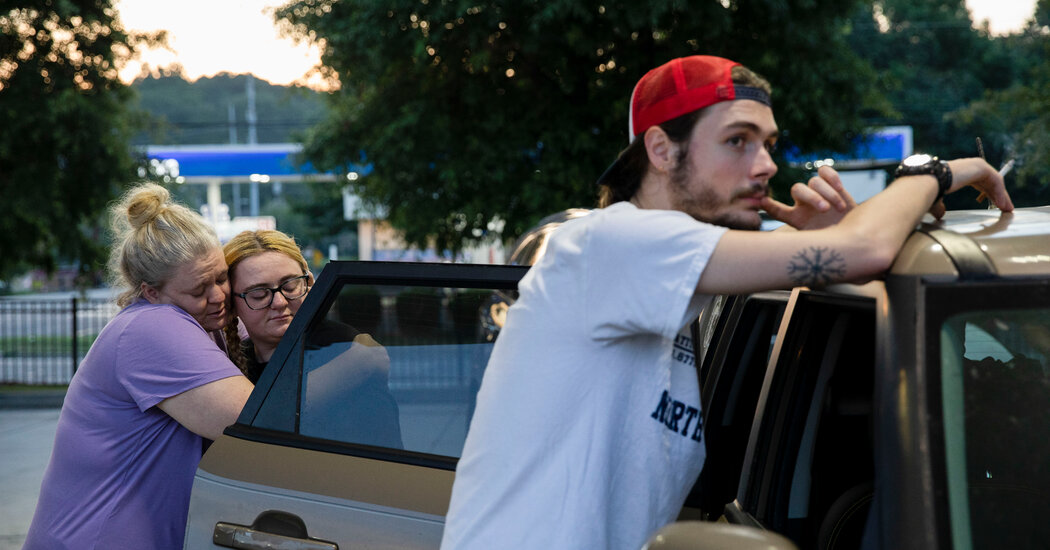
CHATTANOOGA, Tenn. — Madison Underwood was lying on the ultrasound table, nearly 19 weeks pregnant, when the doctor came in to say her abortion had been canceled.

Nurses followed and started wiping away lukewarm sonogram gel from her exposed belly as the doctor leaned over her shoulder to speak to her fiancé, Adam Queen.

She recalled that she went quiet, her body went still. What did they mean, they couldn’t do the abortion? Just two weeks earlier, she and her fiancé had learned her fetus had a condition that would not allow it to survive outside the womb. If she tried to carry to term, she could become critically ill, or even die, her doctor had said. Now, she was being told she could n’t have an abortion she did n’t even want, but she needed it.

“They’re just going to let me die?” she remembers wondering.

In the blur around her, she heard the doctor and nurses talking about a clinic in Georgia that could do the procedure now that the legal risks of performing it in Tennessee were too high.

She heard her fiancé curse, and with frustration in his voice, tell the doctor this was stupid. She heard the doctor agree.

Just three days earlier, the US Supreme Court had overturned the constitutional right to abortion. A Tennessee law passed in 2020 that banned abortions at around six weeks of pregnancy had been blocked by a court order but could go into effect.

Ms. Underwood never thought any of this would affect her. She was 22 and excited to start a family with Mr. Queen, who was 24.

She and Mr. Queen had gone back and forth for days before deciding to terminate the pregnancy. She was dreading the abortion. She had cried in the car pulling up to the clinic. She had heard about the Supreme Court undoing Roe v. Wade but she thought that since she had scheduled her abortion before the decision, and before any state ban took effect, the procedure would be allowed.

Tennessee allows abortion if a woman’s life is in danger, but doctors feared making those decisions too soon and facing prosecution. Across the country, the legal landscape was shifting so quickly, some abortion clinics turned patients away before the laws officially took effect or while legal battles played out in state courts.

Century-old bans hanging around on the books were activated, but then just as quickly were under dispute. In states where abortion was still legal, wait times at clinics spiked as women from states with bans searched for alternatives.

It was into this chaos that Ms. Underwood was sent home, still pregnant, and reeling. What would happen now? The doctor said she should go to Georgia, where abortions were still legal up to 22 weeks, though that state had a ban that would soon take effect.

How would her fiancé get the time off work to make the trip? How would they come up with hotel and gas money? How long did she have her until she became herself ill? A new, more terrifying question hit her: What if she felt a kick?

Mr. Queen said he realized his fiancée was pregnant before she did.

She had thrown up almost every morning for an entire week and had started asking for Chinese takeout, which she normally hated. One night in May, after her shift as manager at a Dollar General store, he brought home a pregnancy test for her. I have hoped and prayed it would come back positive.

“I was ready to start our little family together and get the ball rolling,” he said.

To save money, they lived with his mother, Theresa Davis, and his stepfather, Christopher Davis, in a family farmhouse in Pikeville, a town tucked into a green valley about an hour outside Chattanooga.

Ms. Underwood crept into the upstairs bathroom. It was her first ever pregnancy test for her, and she did not want to mess it up. She spent 15 long minutes staring at her bedroom television, waiting.

Her phone alarm went off and she glanced at the test, picking it up and shaking it. A line shot across it in the positive column. For a couple of seconds, she stopped breathing.

“I hope it’s a boy,” her fiancé said.

Her heartbeat sped up. She was smiling.

“I know you want a boy! You already have a girl,” she said, laughing. “But you know I want a girl.”

Mr. Queen had a child with a previous girlfriend, and some of his income went to child support. He and Ms. Underwood had dated for the last four years; he proposed on a trip to Virginia Beach early this year.

On Mother’s Day, the couple revealed the pregnancy to both sets of their parents through cleverly wrapped “Best Nana Ever” gift baskets. At first, they dealt with some blowback for getting pregnant before being married, but with their wedding date set for late June, and the thrill of a new baby, everyone got over it.

At her first checkup at a free local clinic, they learned she was 13 weeks pregnant and due Nov. 23. The couple left the appointment happy.

Mr. Queen worked full time, but his fiancée had no health insurance. They waited to be approved for Medicaid so she could schedule an appointment with a licensed obstetrician. Ms. Underwood went about her routines, taking care of her three cats, fish and other pets, and feeding the neighbor’s goats.

Mr. Queen’s mother, Ms. Davis, hung up the ultrasound photos in her bedroom. She was staring at them when she noticed something.

“I called Madison and said, ‘Is your baby a cat?’” she said. “Because her head looked like it had ears.”

At Ms. Underwood’s next appointment, a nurse promised more ultrasound pictures for the family to take home. The nurse asked questions, took measurements and confirmed her due date. But then she got “real quiet,” Ms. Underwood said.

“She said it’ll be a few minutes, and the nurse practitioner is going to be in and she’s going to talk to you and ‘see what we’re going to do from here,’” she said.

For Ms. Davis, who accompanied Ms. Underwood to the appointment, and had experienced seven miscarriages, the words “set off alarm bells” in her head. “It doesn’t sound good,” she told her future daughter-in-law.

At first, the nurse practitioner said there was a mild case of encephalocele, or a growth along the back of the fetus’s neck because of neural tubes failing to close during the first month of pregnancy. Encephalocele occurs in about 1 in every 10,500 babies born in the United States, according to the Centers for Disease Control and Prevention.

The nurse practitioner told the family it would be able to be fixed through surgery, and that there might be an intellectual disability or developmental delay, possibly seizures. Ms. Underwood and her fiancé were “OK with that,” she said. But she was concerned the baby would have to have surgery just after birth. “I was just so scared,” she said.

They also learned they were having a girl. They decided to name her Olivia, after Ms. Underwood’s grandfather, Oliver.

The doctors referred the family to Regional Obstetrical Consultants, a chain of clinics that specializes in high-risk pregnancy treatments. The practice declined to comment for this article.

There, the family said they learned more devastating news: The fetus had not formed a skull. Even with surgery, doctors said, there would be nothing to protect the brain, so she would survive at most a few hours, if not minutes, after birth.

Even then, Ms. Underwood hoped to carry the pregnancy to term so at the very least, she could meet her baby and donate the organs if possible.

“It just felt like the only option,” she said. “Everything happens for a reason.”

But doctors told her that the fetus’s brain matter was leaking into the umbilical sac, which could cause sepsis and lead to critical illness or even death. Doctors recommended she terminate the pregnancy for her own safety from her.

“We were debating on it because I thought, maybe I can beat the odds,” she said. “But then I got scared.” She added that, “I wanted to make sure that I wasn’t going to regret it. Because me and Adam, we’re going to have to be the ones dealing with it our whole life.”

They postponed their wedding and scheduled the abortion at the Chattanooga location of Regional Obstetrical Consultants for Monday, June 27.

Before June 24, the day of the Supreme Court ruling, Tennessee allowed abortion up until 24 weeks into pregnancy, but clinics rarely performed any after the 20-week mark, said a spokeswoman for the Knoxville Center for Reproductive Health, one of the largest abortion clinics in Tennessee.

Outside of abortion-specific clinics, only a few medical centers in the state provided the procedure. The Knoxville Center said it stopped providing abortions the Friday that Roe was overturned in anticipation of Tennessee law changing.

That day, Herbert Slatry III, the state attorney general, filed a motion for the US Court of Appeals for the Sixth Circuit to lift a nearly two-year-old injunction that had blocked an attempt to ban abortions after about the sixth week of pregnancy . The injunction was lifted one day after Ms. Underwood’s abortion was canceled.

Her parents and grandparents, who opposed abortion, took it as a sign to reconsider. They had prayed for God to stop the abortion if it wasn’t supposed to happen, and when it didn’t, they were convinced she should try to carry the pregnancy to term.

“We were just hoping for a miracle,” said her mother, Jennifer Underwood.

They said she should give birth so she could see Olivia, say goodbye and bury her.

She told them no. “I’m doing what I think I can handle,” Ms. Underwood would say later, sobbing in between words.

Mr. Queen’s mother said she supported the couple’s decision from the start. At age 12, she was raped and ended up giving birth to a stillborn baby.

“Religion has nothing to do with it. Sometimes your body just does things to you, and if you have to have an abortion, don’t feel guilty about it,” she said.

As stress on the couple mounted, Mr. Queen quit his job to take care of Ms. Underwood. His mother raised $5,250 to help with travel costs from the crowd funding website GoFundMe. The cash would also help pay for the fetus’s cremation.

Two cars left Pikeville at 2 am in early July for a four-hour drive across state lines and time zones to make the 8 am appointment at an abortion clinic in Georgia. Ms. Underwood, Mr. Queen and his mother were in one car; Ms. Underwood’s parents of her and one of her brothers of her followed.

When they stopped at the third Circle K of the night, she squeezed her own mother tight and cried. Her parents de ella had made a last-minute decision to accompany her, even if they did not fully agree.

At sunrise, the couple sat in a corner booth at a Waffle House, his hand massaging her back.

She would have a two step-procedure known as a D&E, a dilation and evacuation, over two days. First, she would be given medication to induce dilation, and sent to her hotel room to wait. The next day, she would return to the clinic to finish the procedure. The Georgia clinic’s staff warned the family about protesters outside. As they pulled into the parking lot, they drove by a man with signs showing dead fetuses.

“Are all of you OK with killing babies?” I have shouted into a megaphone.

He approached Ms. Underwood’s parents’ car, and her mother rolled down the window.

“We’re on the same side of this as you,” her mother said. “We don’t support abortion, but the doctors said our baby is going to die.”

“Do you trust doctors more than God?” I replied.

The couple walked side-by-side up a steep hill to the clinic entrance. She wore headphones to drown out the protesters.

Six hours later, they came back out. The parking lot was quiet.
Categories
Business

Travel chaos: Airline experts warn delays and cancellations will continue for months

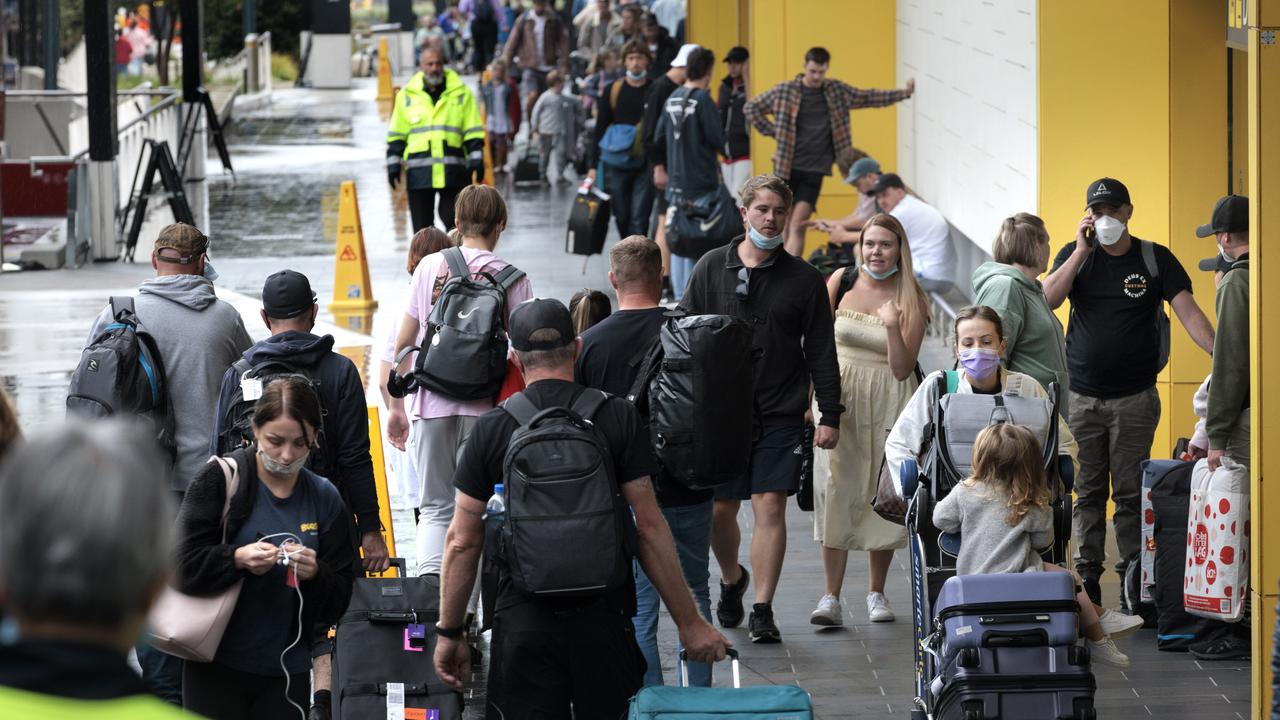
An aviation expert has warned travel chaos “pain” could continue into next year as the industry struggles to meet soaring demand after stripping services during the pandemic.

Flight Center managing director Graham Turner cautioned travelers to be wary of delays and cancellations until at least the end of the year as airlines contend with inexperienced and ill staff.

“Bear in mind the aviation industry, and you know travel industry generally, has two-and-a-half years when we had to absolutely cut to the bone everything and now building that back up is quite difficult,” he said on Channel 9’s Today show.

Mr Turner admitted the aviation industry was experiencing a “tough period” and asked travelers to exercise “a bit of patience”.

The travel boss noted the chaos was more manageable for domestic travelers despite the mass cancellations and delays.

On Monday, 40 flights between Sydney and Melbourne were canceled and hundreds of people were left sitting on plans after a computer outage grounded Qantas plans.

“Domestically, our experience is although there are delays, a lot of changes, quite a few cancellations, generally most people are getting away and getting to their destination,” he said.

“It is a bit harder internationally because if you get international cancellations it can be quite hard to get seats.”

Mr Turner said there would continue to be “pain” for travelers for at least the next couple of months as the industry grapples with staffing issues and the effects of the ongoing pandemic.

Happily, he predicts, traveling around Australia will be much easier by the end of the year when “all of this really settles down”.

“Domestically, it will improve and we certainly predict by October/November, assuming the Omicron does settle down, it will be much better off,” he said.

While the news will surely be welcomed by local travellers, those looking to travel internationally have no reassuring timeline for when the dust will settle.

The bleak news comes as Australia’s airports gain international attention for all the wrong reasons.

Sydney’s Kingsford Smith International Airport was recently ranked one of the 10 worst airports in the world for flight delays.

Meanwhile, social media has been flooded with angry travelers reporting lost baggage, delayed or canceled flights and staggering queues.

.

Categories
Technology

Spotify will make play and shuffle button update exclusive to Premium subscribers

Spotify Premium users will get more control in the coming weeks, as the music streaming service will push out an update that will separate the play and shuffle buttons. Currently, the play and shuffle buttons are combined for Spotify Premium and Spotify Free account holders.

While it doesn’t seem like a huge deal, separating the play and shuffle buttons will give users a more streamlined experience. This will apply to users listening to albums or playlists. Although this might not seem like such a big deal, it was for one artist, Adele, who called out Spotify’s shuffle experience for an album release last year. The artist was able to have the service turn shuffle off by default, allowing users to listen to albums as intended. To make things more transparent for users, Spotify will double down on this concept, allowing its paid subscribers to get an improved user interface.

The music streaming service recently announced that it had grown its total subscriber count to 433 million, with 188 million premium subscribers. Despite its dominance, it has regularly brought improvements to its platform. For example, it recently introduced Friends Mix, Blend, Supergrouper, and more. However, while the company has succeeded with its service, it has not done so well regarding hardware, as it recently announced that it would discontinue its Car Thing accessory.

The update will roll out to Android and iOS users in the coming weeks. This will be a global release and should hit all regions. The update is for Premium users, so if you’re on a free Spotify account, you can expect nothing to change. However, if you want to try out Spotify, click the link below. The app can also be found on the App Store for iOS devices. Now, if we could only get Spotify Hi-Fi sometime this year.


Source: Spotify

Categories
Sports

Obed McCoy takes six wickets as hosts win easily

West Indies evened its Twenty20 series with India after Obed McCoy skittled the visitors for a record 6-17 in the second match of the series.

McCoy, a left-arm seamer, produced the best West Indies bowling figures in a T20 to help bowl out India for 138 in 19.4 overs.

West Indies made hard work of the chase in the end at 141-5 in the last over, three days after losing the first match by 68 runs.

READMORE: Video bluff of Storm giant’s non-penalty stuns

READMORE: F1 icon’s switch opens door for Aussie prodigy

READMORE: McLaughlin keen to see SVG try IndyCar

The five-match series is at 1-1 with the third game on Tuesday staying in Basseterre.

The change in venue from Trinidad to Saint Kitts invigorated the West Indies, but also caused a three-hour delayed start because of the late arrival in the country of the teams’ kit and gear.

Brandon King, in for Shamarh Brooks, crushed the first ball of the chase to the deep point boundary off Bhuvneshwar Kumar.

King’s partner, Kyle Mayers, went for 8 in an opening stand of 46, and captain Nicholas Pooran for 14, but after 10 overs West Indies was 73-2 and cruising.

King kept going until the 16th over when he was bowled by Avesh Khan, India’s extra seamer for the match. King scored a career-best 68 from 52 balls, eight fours and straight after his second six.

When he left at 107-4, West Indies needed 32 more runs from 27 balls. What should have been a comfortable win turned into a nervous end with 10 needed off the last over.

The finish came quickly when Devon Thomas, West Indies’ other change from the first T20, hit a six and four to give them a five-wicket win. Thomas was 31 not out from 19 balls.

India captain Rohit Sharma defended giving main striker bowler Kumar only two overs, both in the powerplay.

Romanian cricket cult hero taking world by storm

“We know Bhuvneshwar, what he brings to the table, but if you don’t give opportunity to Avesh or Arshdeep (Singh) you will never find out what it means to bowl at the death for India,” Sharma said. “They have done it in the IPL. (This is) just one game, those guys don’t need to panic. They need backing and opportunity.”

After West Indies chose to bowl, McCoy’s bounce took out Sharma with the first ball. He also bagged Suryakumar Yadav with the first ball of his second over.

Shreyas Iyer slashed at Alzarri Joseph and edged behind, and Rishabh Pant was caught on the boundary after 24 from 12 balls. India was 61-4 in the seventh over but began to crawl.

Joseph, who conceded 17 runs in his first over, rebounded to finish with 1-29.

India went almost six overs without hitting a boundary, and McCoy returned to mop up.

In the 19th over, he got Dinesh Karthik to mistime, Ravichandran Ashwin to hole out in the deep, and Kumar to edge behind. India was 129-9 and McCoy’s 6-17 including a maiden over was West Indies’ best figures, and the seventh best all-time in T20s.

“Great feeling to do it against a top side like India,” McCoy said. “Went in with a clear mind. Was overthinking in the previous game.”

Jason Holder yorkered Khan for 2-23 and ended India’s innings with two balls to spare.

For a daily dose of the best of the breaking news and exclusive content from Wide World of Sports, subscribe to our newsletter by clicking here!

Categories
Australia

YouTube sensation TrainGuy 659 turns childhood passion into unique career on the tracks and online

Joe Dietz has loved trains ever since riding the railways of Europe on family holidays as a child.

As a young man now living in Cairns, he has turned his boyhood passion into a unique career on and off the tracks.

His day job is driving locos during the far north Queensland sugarcane crushing season, which stretches from May to November.

man leans on cane train with load of sugar cane in background
Joe Dietz has been driving cane trains, or locos, in far north Queensland since finishing high school.(Supplied: Joe Dietz)

Mr Dietz, aka TrainGuy 659, says winding his way through the neighborhoods and farmlands on the cane train tracks of far north Queensland is a dream job.

“I’ve just always had a thing for trains,” he says.

“I’ve always wanted to work on the railways.”

Mr Dietz’s family moved to the region when he was in high school.

“I was just lucky that, after graduating, I ended up getting a gig on the cane locos,” he says.

“You get the best of the city life, but you also have the countryside too and making connections with the farmers and the community in those areas is something unique.

“I’m living the best of two worlds.”

Mr Dietz is also living in two worlds when it comes to train driving — the real world and the online world.

Young man in high vis at controls of train
Joe Dietz says driving trains is his dream job.(Supplied: Joe Dietz)

During the other half of the year, he drives miniature Lego trains on intricate tracks around his family home, and millions upon millions of people watch him do it.

Seven years ago, I started the YouTube channel TrainGuy 659.

His unique work-life balance has allowed him to build a massive audience and become a professional YouTuber.

“When I first started, I wasn’t getting paid or anything from YouTube, so every season, I go back [to the cane trains],” Mr Dietz says.

“The YouTube audience grows every year because I have that time off, so I’m just lucky to work six months on, six months off.

“The YouTube thing pays the bills but isn’t something I can live off independently… but there is more potential.”

Massive miniature feats of engineering

Mr Dietz became an internet sensation when he began producing his annual Christmas Lego train videos, all of which have attracted audiences in the tens of millions.

loading

These involve constructing about 120 meters of Lego train track around his parents’ home, across obstacles including the backyard swimming pool, and even through the neighbours’ yard.

Lego train runs across bridge built in pool
Joe Dietz’s train videos involve constructing around 120 meters of Lego train track through various obstacles.(Supplied: Joe Dietz)

Mr Dietz says it is a painstaking process that can be up to a month of work.

“It’s like building an actual railroad but in miniature,” he says.

“It takes three to four weeks to set up. It takes about a week or two to film, and it’s packed up within three days.

“There’s a lot of trial and error, and you do a lot of testing too. There’s a lot of time that goes into it.”

Mr Dietz says there is no shortage of derailments during the shoots, which have resulted in some highly entertaining blooper reels, usually featuring cameo appearances from the family pets.

Blue Healer cattle dog sitting next to Lego rail track and bridge.
The Dietz family’s dog, Matilda, has been responsible for numerous Lego train derailments, which appear in the TrainGuy 659 blooper videos.(Supplied: Joe Dietz)

“We’ve got a blue heeler, and you know what cattle dogs are like… they go after the train… [in one video] she’s nipping at it, she’s knocking it over,” he says.

“They actually end up doing better than the main video — everyone loves bloopers.

“There’s one time the train accidentally fell in a pool, which was like, ‘Oh no!'”

loading

He says the odd, stray Lego piece also poses hazards for his supportive but long-suffering family.

“The amount of sore toes around the house during Christmas and New Year’s, it’s not funny,” Mr Dietz says.

The secret building blocks of internet stardom

Mr Dietz’s YouTube channel has amassed 660,000 subscribers, while his combined views are in the tens of millions.

Young man in pool with Lego set
Joe Dietz is a professional YouTuber having attracted an audience in the tens of millions who watch his Lego train videos online.(Supplied: Joe Dietz)

He’s often asked what the secret is to becoming internet famous. His answer to it is relatively simple.

“Find something that’s unique that hasn’t been done before,” he says.

“And if you’re doing something that’s already out there, find what makes you stand out to make it different to the others.”

In addition to his annual Christmas specials, Mr Dietz began producing a series of Lego train road trip videos.

“I started doing these tunnels with some PVC pipe, the Lego train goes through this, and it’d transition to a different scene,” he says.

“I did this one around Australia, and that really took off.”

loading

The initial concept film in 2019 was well-received, attracting 10 million views, but his grand plans were ultimately derailed by COVID-19.

Now that national and international borders have re-opened, Mr Dietz says he is hoping to get his Lego train road trip dream back on track with plans to take his train set through Europe when the crushing is over next season.

.

Categories
US

Jim’s Steaks fire: Devastating blaze at South Street business caused by electrical wiring

“It smelled electrical, you know you can smell that,” said Christina Lawlor, who was in the building Friday.

PHILADELPHIA (WPVI) — The fire that destroyed Jim’s Steaks on South Street was caused by an issue with the electrical wiring, fire officials said Monday.

The fire was first reported around 9:15 am Friday at the popular Philadelphia cheesesteak shop on the 400 block of South Street.

The fire reached two alarms before it was brought under control. Officials say it was a difficult battle because the flames were moving through the heating and air conditioning system.

Christina Lawlor was in the building Friday morning, opening Jim’s Steaks for the day.

“I knew it when I walked in (Friday) morning something wasn’t right because it was too hot,” she said.

“I started smelling something. It smelled electrical, you know you can smell that,” she continued. “So I’m like, ‘something’s not right.’ We looked up and saw smoke coming down from where the walk-in is and it was smoke pouring down.”

In all, the fire department says more than 125 personnel responded to the scene, along with nearly 60 vehicles.

“With us not being here it’s hard on everybody,” said Kenneth Silver, owner of Jim’s Steaks.

Silver vows to rebuild.

“We won’t know exactly what started the fire until the actual electrical investigators get in here,” said Silver. “Structurally, we know the building is sound so at least we know we can rebuild.”

Jim’s Steaks South St. just celebrated its 46th year at the beginning of July, opening its doors for the first time in 1976.

Copyright © 2022 WPVI-TV. All Rights Reserved.

.

Categories
Technology

Twitter tests a ‘tweets per month’ counter – TechCrunch

Twitter is testing a feature that lets you see how many times a user tweets per month. Reverse Engineers spotted this in development about a month ago, but as of this morning, some Twitter users have shared that they have gained access to this feature.

For those of us who already know that we spend way too much time on the app, this feature feels a bit … intimidating. But it could probably be useful as a metric when determining whether to follow someone. If someone tweets thousands of times a month, maybe you don’t want them on your timeline — or if they barely tweet at all, maybe you don’t think it’s worth throwing them a follow.

This is part of an ongoing experiment in which we want to learn how providing more context about the frequency of an account’s Tweets can help people make more informed decisions about the accounts they choose to engage with,” a Twitter spokesperson said.

Based on past studies, it’s not surprising that the general reaction to this feature among dedicated users is horror at how much we tweet. In 2019, the Pew Research Center found that 10% of Twitter users create 80% of the tweets on the platform. The study also showed that the median user on Twitter only posts twice per month. As of last quarter, Twitter has 237.8 million monetizable daily active users.

So, if you feel personally attacked by Twitter’s “tweets per month” test, you may be entitled to compensation. For legal reasons, that was a joke, although we assume Twitter’s lawyers are a bit preoccupied at the moment.

Update, 8/1/22, 6:55 PM ET with comment from Twitter.

Categories
Entertainment

Hit the Road review – all of Iranian life on four wheels | drama movies

ANDEarlier this month, the irrepressible Iranian film-maker Jafar Panahi found himself detained in Tehran and facing six years in jail. It’s the latest move in a long and largely fruitless campaign by the Iranian authorities to silence an artist who continues to be an international beacon of inspiration – not least to his son, Panah Panahi, who worked on his father’s most recent films, and who here makes his own triumphant feature debut as writer and director.

We meet the stars of Hit the Road in the borrowed car in which they will spend much of the film. Hassan Madjooni is the outwardly grouchy Dad, wrestling toothache and a broken leg, the authenticity of which is slyly doubted by Pantea Panahiha’s quietly exasperated but endlessly loving Mum. In the driver’s seat is their elder son (Amin Simiar), who is apparently on his way to get married, but whose real purpose will be only gradually revealed. And then there’s the younger brother, a six-year-old whirling dervish played by Rayan Sarlak who leaps around the car like an untrained puppy (the family’s actual dog, Jessy, is quietly ailing in the rear), and whose babbling observations on life , the universe and everything drive his family to distraction, but also remind us of Psalm 8:2: “Out of the mouths of babes and sucklings hast thou ordained strength.”

Pantea Panahiha and Amin Simiar.
Pantea Panahiha and Amin Simiar in the ‘deceptively light-touch’ Hit the Road. Alamy

“We’re being followed,” Mum observes early on, establishing an underlying air of tension and paranoia about this family pilgrimage, a clandestine venture that we learn has already cost them much (“we lost our house and sold our car”). Later on they will meet a motorcyclist whose face is hidden by a sack, a potentially terrifying encounter that is utterly punctured by the six-year-old’s observation that he looks like Batman’s arch enemy, Scarecrow. The Dark Knight will, in fact, feature prominently in the en route conversation, not least during a gorgeously fanciful exchange between father and son on the depreciating value of a scratched Batmobile, provoking hilarity as they imagine Bruce Wayne weeping because his beloved car is now worth only $500m!

It’s one of many superbly judged moments in which Panahi’s deceptively light-touch film hits that sweet spot between laughter and tears (the two elements are literally juxtaposed on screen). We understand that much is being hidden from the youngster – the dog’s illness; his brother of him ‘s true course of him – as we travel toward the border. Yet somehow we come to share his childish wonder at the mysteries of the world, causing him to kiss the ground and offer praise to the almighty at sublimely inappropriate moments.

Cinematographer Amin Jafari, whose extensive CV includes Jafar Panahi’s 3 Faces, lends a Kiarostami-esque sense of grandeur to the landscape, which changes from arid sands to verdant hills. In one superb twilight long shot, the players are tiny figures dwarfed by the vastness of the sky. Elsewhere, a thermal garment becomes a spacesuit as our down-to-earth characters slip into an intergalactic void, recalling an earlier conversation about Kubrick’s 2001: A Space Odyssey. “It’s mesmerizing,” says the older brother, sharing a moment of truthful intimacy with his mother. “Like Zen. It calms you down. Takes you deep into the galaxies.” (“Galaxies are full of wars,” retorts his mother. “How can it calm you down? I don’t get you men.”) And then there are the interludes of musical fantasia, as car-bound karaoke mutates into fourth- wall-breaking lip-syncing of popular tunes by artists who have long since fled Iran.

At times I saw echoes of the comic pathos of Laurel and Hardy, both in a slapstick brush with a cyclist and in a beautifully deadpan riverside scene in which Dad struggles to impart all the fatherly knowledge he will soon be unable to deliver. “Whenever you kill a cockroach,” he tells his son, “do n’t throw him back in the toilet. Remember his parents of him sent him out in the world with lots of hope. ” To which he then adds: “And stop whining in front of your mum. You break her heart from her.” It’s that blend of heartbreak and joy, depth and absurdity that is the key to this enchanting movie’s magical spell.

Categories
Sports

ARLC chairman Peter V’landys, suburban stadium upgrades NRL, Penrith Stadium, Shark Park, NSW Government, Dominic Perrottet, news, Queensland grand final

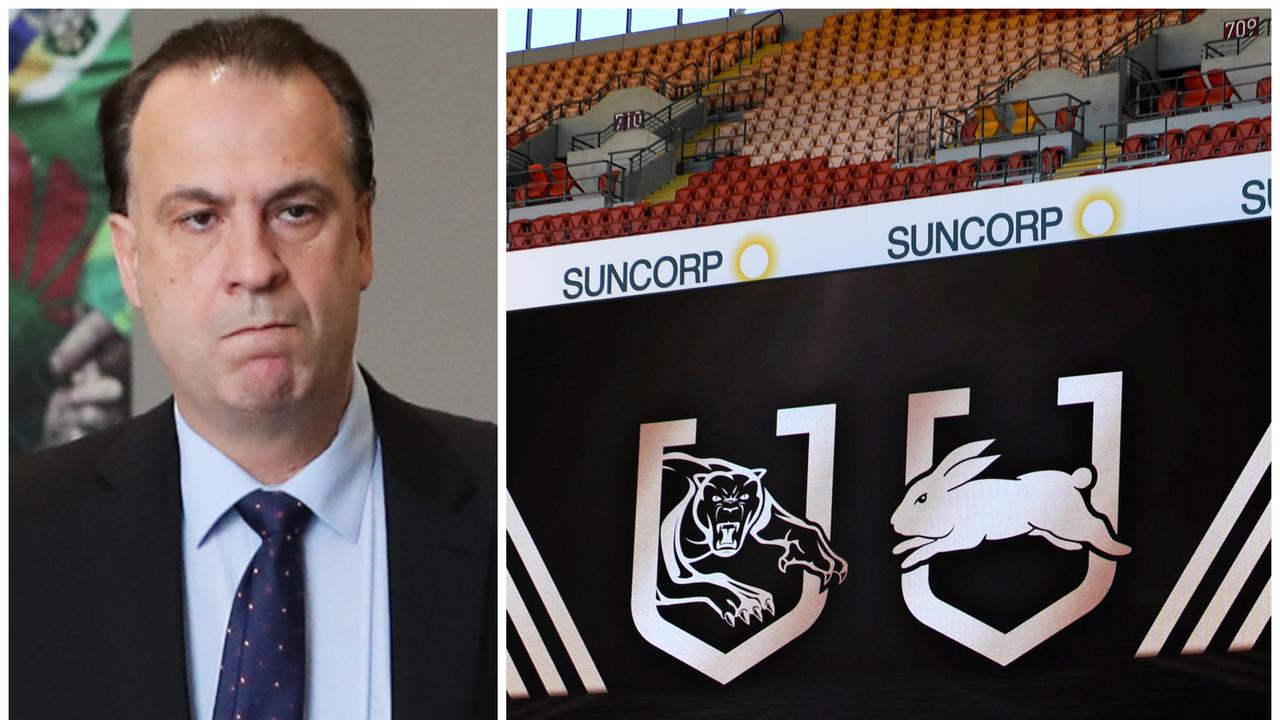
Sydney is at risk of losing the NRL grand final to its northern rivals unless the NSW Government delivers on its promise to upgrade suburban stadiums.

ARLC chairman Peter V’landys had a meeting with Premier Dominic Perrottet on Monday night, hoping to guarantee the deal to revamp four stadiums would be honored.

The agreement would see Brookvale Oval, Leichhardt Oval, Penrith Stadium and Shark Park receive significant upgrades — and if delivered, the grand finale would remain in Sydney for the next 20 years until 2042.

Stream every game of every round of the 2022 NRL Telstra Premiership Season Live & Ad-Break Free During Play on Kayo. New to Kayo? Start your free trial now >

But, according to The Daily Telegraph, V’landys is fuming as the initial deal struck in May to spend $800 million on stadium improvements is now in doubt.

“We are in delicate negotiations with the NSW government,” V’landys said.

“All options will be on the table if these negotiations fail.”

Last year, the Queensland government allowed the competition to continue, relocating all teams into the ‘Sunshine State’ due to Covid-19.

As a result, the end-of-year spectacle was played at Suncorp Stadium and now V’landys has left the door open for Queensland to host the grand final again if no deal is confirmed with the NSW government.

How long will Carrigan get for hip drop? | 03:22

Meanwhile, the only stadium given confirmation of a $300 million upgrade has been Penrith’s — in the electorate of sports minister Stuart Ayres.

Mr Ayres told 2GB on Tuesday that the Premier’s negotiations are “ongoing” with the NRL, but explained there were “limitations” to the budget.

“We have been really clear with the NRL about the limitations that exist on our budget,” he said.

“We have invested well in excess of $1.5 billion. Part of that is to say that we would like to have a long-term commitment from the NRL for the grand finale.

“I think there comes a point where you have got to say we have invested enough in that sporting infrastructure and when we have got the capacity to invest in more sporting infrastructure in the future there is no reason why we won’t do that.”

During the Covid pandemic, the $800 million upgrade of Accor Stadium was scrapped and the NRL moved to shift those funds to suburban grounds — and as a result the grand finale would remain in Sydney.

But now, that money which was said to be allocated towards Brookvale, Leichhardt and Sharks Park is unlikely to be put towards upgrades.

MORE NRL NEWS

DEADLINE DAY: Grading your club’s mid-season moves as frenzy shakes up title race

RESERVES WRAP: Tigers star’s big switch as beast stuns; answer to Storm’s woes

‘CAN’T REPAIR A SPLIT THIS BIG’: Manly player divide could ‘derail their season’

WHISPERS: Broncos gun set to sign with the Warriors as Walsh replacement

DEADLINE CHANGES: V’landys set to scrap the August 1 signing deadline

V’landys moves transfer deadline | 03:02

The Queensland government is now readying a bid to claim to NRL grand final for years to come.

2GB’S Ben Fordham questioned Mr Ayres surrounding the Panthers upgrade being approved, while other grounds are looking unlikely to receive any funding.

“You’re the Sports Minister, your home ground is Penrith, you’re a Panthers fan and for all I know you’re probably the number one ticket holder,” Fordham said.

“So they got the $300 million, so what about Brookvale, Shark Park, Leichhardt Oval… I would be seriously surprised if you don’t know the answer I am posing to you.

“Why did your home ground get the money at your home ground and the others didn’t?

“Why don’t we just tell the listeners now, those other grounds aren’t getting their redevelopments?”

“Ben, there’s a long-term strategy,” Ayres said.

Inside Klemmer’s failed move to the Eels | 02:08

Get all the latest NRL news, highlights and analysis delivered straight to your inbox with Fox Sports Sportmail. Sign up now!!

“We made decisions in what was the best interests of the public.

“We’ve had a long-term stadia strategy that we’ve been delivering since 2015. We’ve rebuilt Parramatta Stadium, we’re just about to open the new Sydney Football stadium.

“We’re committed to a stadium in Penrith, it reflects our three city strategy.

“We’ve invested well in excess of $1.5b dollars, part of that is, we’d like to have a long-term commitment from the NRL for the grand finale.

“We’ve just had Covid, we’ve had substantial flood impacts that have put more pressure on the budget.”

.

Categories
Australia

Indigenous Voice to parliament: Ken Wyatt backs referendum

Asked what his message was to Coalition opponents of the Voice, Wyatt said “no government in Australia has provided continuity of advisory structures to Indigenous Australians”.

“They change with every government and we have seen organization after organization come and go and the advice they give to make a difference to quality of life never changes. We have to have something that is more permanent so that a minister or government can’t abolish it,” he said.

Liberal MP James Stevens said he was supportive of constitutionally enshrining the Voice, but disagreed with the government’s view that the Australian people be asked to vote in a referendum on the principle without the detail of how it would operate.

“We can’t risk holding a referendum that proceeds to be unsuccessful. That would be a disaster for reconciliation in this country,” Stevens said.

“It’s my view that it’s much more likely to pass if we’re very clear with the people of Australia on what the Voice will be that they are voting to create.

“Whether people like or not, Indigenous Australians have lived on this continent for 60,000 years and they need certainty, they need to be part of the co-designing process at the community and regional level. That includes having an impact on federal thinking for solutions to address the 17 targets for closing the gap.”

Prime Minister Anthony Albanese during the Garma Festival.

Prime Minister Anthony Albanese during the Garma Festival.Credit:Getty

Wyatt said he did not support direct election of representatives to the proposed 24-member Voice and backed the 2021 report prepared by professors Marcia Langton and Tom Calma, which recommends selecting them from regional and local Voice bodies around the country.

However, in an appearance on the ABC’s Q&A program on Monday evening, Indigenous Australians Minister Linda Burney flagged that a directly elected model would be on the table.

“What the Leeser-Dodson [2018 parliamentary] report [on constitutional recognition] said is that the Voice will be representative. The point I was attempting to make was, in fact, that there is obviously – as the prime minister has pointed out – consultations, particularly with First Nations people, that need to be had about the way in which a Voice would be constituted,” Burney told the ABC on Monday.

Prime Minister Anthony Albanese insisted that the detail on how the Voice would work was readily available.

“Hundreds of pages of detail have been worked through by Marcia Langton and Tom Calma – they’re all out there for people to see,” Prime Minister Anthony Albanese told The Project on the Ten Network on Monday night.

Noel Pearson threw his support behind Albanese’s weekend speech on Monday, telling ABC TV’s 7.30 the proposed three-sentence addition to the constitution was “the detail we have been waiting on”.

Pearson, an Indigenous lawyer, academic and land rights activist, said Australia needed to come together behind the proposal.

“In order to succeed we have got to rise above the culture wars, we’ve got to rise above our tribal divides and see that this is the one question that requires Australians to make common cause. Because if we make common cause on this, we will make our country better,” he said.

“I think that this is a modest proposition, modest but profound, capable of being consistent with liberal and conservative thinking.”

Professors Megan Davis and Pat Anderson, who co-chaired the Uluru Dialogue, which produced the Uluru Statement from the Heart that proposed a Voice model, both said more detail on the proposed model would need to be released before the referendum was held. But it would not be necessary for the model to be finalized or the draft legislation prepared.

Anderson said “we won’t have every ‘i’ dotted and ‘t’ crossed before we go to the referendum” but “governments have held referendums in the past without all of the background information”.

loading

“This national conversation is going to require a level of sophistication and maturity. This is an opportunity for Australia to decide what kind of country we are, what our principles and values ​​are. This can change the country, this is nation building, let’s suspend the knocking attitude and lift this debate,” she said.

Davis said there did not need to be a “fully fledged structure” to the proposed Voice before the referendum was put but enough detail so people could make an informed decision.

Both women dismissed claims from opponents of the Voice that there was insufficient detail about the proposed model, pointing to the Uluru statement, the 2019 parliamentary inquiry and the 2021 Langton-Calma report.