Tough prop David Klemmer is expected to survive calls to sack him from the Knights for disciplinary breaches this week – but don’t expect him to be at the club in 2023.
Klemmer – arguably the best player in a disappointing Knights team this season – was handed a breach notice by the club for failing to come off the field when directed to leave by trainer Hayden Knowles in Sunday’s loss to Canterbury.
There have been murmurs that Klemmer could have his contract torn up over the issue – but I’m hearing he will just be slapped with a fine and a reprimand.
READMORE:Piastri rejects F1 promotion in stunning move
READMORE:Carrigan banned over hip-drop tackle
READMORE:Bizarre reason for shock Knights axing
The incident comes in a week of turmoil for Klemmer in which he almost jumped ship to Parramatta on Monday – the deadline day for player transfers.
David Klemmer looks like leaving the Knights. (Getty)
There is clearly a rift between Klemmer and coach Adam O’Brien and that is likely to see him part ways with the club at season’s end despite having another 12 months to run on his lucrative contract.
Given his strong form in a badly out-of-form team, several rival clubs are certain to show interest in Klemmer.
The uneasy situation between Klemmer and the club will be an early test for veteran administrator Peter Parr, who is joining the Knights from the Cowboys.
Klemmer is a popular member of the playing group whereas several top-line players aren’t happy with O’Brien, further complicating a messy situation.
For a daily dose of the best of the breaking news and exclusive content from Wide World of Sports, subscribe to our newsletter byclicking here!
Uniform controversies that have rocked sport around the world
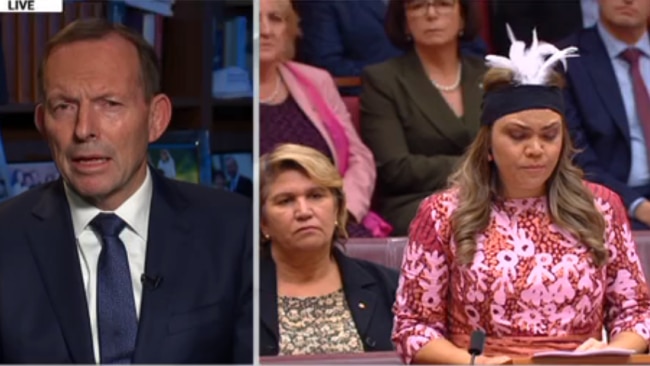
Former prime minister Tony Abbott said Jacinta Nampijinpa Price “knows what she’s talking about” as the debate continues about the Indigenous Voice to Parliament.
Senator Price has spoken out against the Indigenous Voice to Parliament, saying the body would create a division between indigenous and non-indigenous Australians and wouldn’t address the issues facing First Nations communities.
While appearing on Credlin on Tuesday night, Mr Abbott told Sky News Australia host Peta Credlin he has ‘enormous respect’ for Ms Price’s opinion on the matter.
Stream the news you want, when you want with Flash. 25+ news channels in 1 place. New to Flash? Try 1 month free. Offer ends October 31, 2022 >
“I have enormous respect for Jacinta Price and unlike so many of the people who talk a lot about this area- Jacinta Price has lived a life in remote Australia.
“So she knows what she’s talking about. That’s why her focus is so relentlessly practical.”
Mr Abbott said what we need to focus on instead is “what are we actually gong to do to get the kids to school, to get the adults to work and to keep communities safe.”
“Because all too often we apply these different standards and we say well it’s OK for indigenous kids not to go to school, it’s ok for indigenous adults not to go to work because of culture.
“We tolerate things that we wouldn’t tolerate for a second in suburban Australia because we say well that’s just the sort of thing that happens in remote places.”
The Voice to Parliament was a key element of the 2017 Uluru Statement from the Heart and called for an elected Indigenous advisory body to the Federal Parliament.
The proposed body would advise the government on issues affecting First Nations people.
The Labor Government pushed the issue to the center of its agenda when Prime Minister Anthony Albanese declared on election night that there would be a referendum in his first term.
The former prime minister weighed in on the issue and said there was no need for “constitutional change”.
“I think this proposed constitutionally voice to the parliament is wrong in principle and it will work out badly in practice.
“I don’t believe that we need a constitutional change if we are to have a voice and certainly I don’t think that there is any lack of consultation already,” Mr Abbott said.
Kansans secured a huge win for abortion rights in the US on Tuesday night when they voted to continue to protect abortion in the state constitution.
The race was called by a host of US groups like NBC News, the New York Times and Decision Desk HQ.
The move will be seen as a huge loss for the anti-abortion movement and a major win for abortion rights advocates across America, who will see the result as a bellwether for popular opinion.
Kansas – a deeply conservative and usually reliably Republican state – is the first US state to put abortion rights to a vote since the US supreme court ruled to overturn constitutional protections for abortion in late June.
The state will remain a safe haven for abortion in the midwest, as one of the few states in the region where it remains legal to perform the procedure. Many other states have undertaken moves to make abortion largely illegal since June.
The Kansas state senator Dinah Sikes, a Democrat, cried as the vote came in, and turned to her friends and colleagues, showing them goosebumps on her arm.
“It’s just amazing. It’s breathtaking that women’s voices were heard and we care about women’s health,” she told the Guardian, after admitting she had thought the vote would be close. “But we were close in a lot of rural areas and that really made the difference – I’m just so grateful,” she said.
The “No” campaign – which was protecting abortion rights – was strongly ahead in the referendum with 62% of the vote with the majorityof ballots counted. That means millions of dollars lost for the Catholic church who contributed more than $3m trying to eradicate abortion rights in Kansas, according to campaign finance records.
Kansans turned out to vote in heavy numbers on Tuesday, in a referendum brought by the Kansas Republican legislature that was criticized for being misleading, fraught with misinformation and voter suppression tactics.
After failing to get a more directly named referendum, “Kansas No State Constitutional Right to Abortion”, on the ballot in 2020, Republicans switched tactics, naming this amendment “Value Them Both”.
The vote was scheduled for August, when voter turnout is historically low, particularly among independents and Democrats, and the wording on the ballot paper was criticized for being unclear.
“The ballot mentions a state constitutional right to abortion funding in Kansas, but that funding has never really been on the table,” Mary Ziegler, a US abortion law expert from the University of California, Davis told the Guardian on Monday.
Kansans for Life, one of the main backers for a “yes” vote, told church congregants on 27 July that removing protections for abortion in Kansas would prevent late-term abortions, lack of parental consent and tax payer funding for abortion, despite none of these being the law in Kansas. Abortions in Kansas are limited to 22 weeks in cases of life threatening or severely compromised physical complications.
It was a tense and bitterly fought campaign that saw churches vandalized and yard signs stolen, in a state where abortion doctor George Tiller was murdered by anti-abortion activists in 2009.
But on Tuesday night scenes of retirement broke out at a watch party for the victorious No campaign in Kansas City. “We’re free!” shouted Mafutari Oneal, 56, who was manning the bar after the vote was called and a rush of drinks orders came in.
“I don’t want no government telling me what to do. I’m so happy,” she said.
In a speech just after victory was sealed, Rachel Sweet, the campaign manager for Kansans for Constitutional Freedom, said the win had come against all the odds.
“We knew it was stacked against us from the moment we started but we did not despair – we did it, and these numbers speak for themselves,” Sweet said.
“We knocked tens of thousands of doors and had hundreds of thousands of phone calls … We countered millions of dollars in misinformation,” she said. “We will not tolerate extreme bans on abortion in our state.”
Ashley All, the spokesperson for KCF, who led the ‘No’ campaign alongside Planned Parenthood and the ACLU told the Guardian that the key to driving voter turnout was not seeing abortion as a partisan issue in Kansas.
“We demonstrated Kansas’ free state roots,” she said. “It will be interesting for other states to watch this and see this is not a partisan issue. Everyone from Republicans, to unaffiliated voters to hardcore libertarians came out to say: ‘No, we don’t want the government involved in what we do with our bodies’,” she said.
Mortgage repayments just got tougher for borrowers at Macquarie, the first bank to announce it will hike interest rates following yesterday’s Reserve Bank decision.
All eyes are now on the nation’s big four banksANZ, CBA, NAB and Westpac, to see if they will lift rates on their home loans, as is widely expected.
Following the RBA’s decision to raise rates for a fourth consecutive month, Macquarie took just three hours to confirm it was increasing its variable loan rates by 0.5 per cent, starting August 12.
Macquarie Bank is the first major lender to announce it will pass on the full double RBA hike to borrowers, while the big four banks are yet to reveal their hands. (Supplied)
Sally Tindall of RateCity said Macquarie Bank “is the first cab off the rank”, and it seemed just a matter of time before others “follow suit” and pass on the hike in full to variable rate customers.
Tindall commended Macquarie’s decision to increase interest rates to its customers’ regular transaction and savings accounts.
“Let’s hope the big four follow suit and offer up decent rate rises to their millions of savers.”
Macquarie also declared it was decreasing its fixed home loan interest rates by up to 0.75 per cent, a move Tindall described as a “big cut”.
“The tide may be turning for fixed rates, which have been sharply rising since late last year,” she added.
The cost of fixed-rate funding is now starting to come down, she said.
“We could see more banks follow Macquarie’s lead and lower fixed rates in the weeks ahead.”
Yesterday’s RBA decision marked the first time since the introduction of inflation targets in 1990 that the central bank has increased the cash rate four months in a row.
For the average borrower with a $500,000 loan and 25 years remaining, the increase will result in a $140 a month increase – or $472 since the RBA began lifting rates in May 2022.
For those with bigger loans, the repayment jumps are equally stark.
A person with a $750,000 loan is now facing a monthly increase of $211 (up $708 a month since May) while those with a $1 million loan are facing a monthly increase of $281 (or an eye-watering $944 a month increase since May).
The latest creation from Paul Stephens Autoart takes the 993-series Porsche 911 and turns it into the 993R. Paul Stephens started with a customer brief that asked for the 993 with every area improved by 25 percent. The build took five years to complete, during which time the coronavirus pandemic increased life, and it includes genuine Porsche Motorsport components and parts of Paul Stephens’ own design.
The 993R is lighter and more capable than the original. The modified Porsche 911 packs an enlarged 3.8-liter flat-six engine, up from 3.6 liters. Peak power reaches 330 horsepower (246 kilowatts), which is a big jump over the original 272-hp (202-kW) engine. Paul Stephens offers a more potent power upgrade, taking the Porsche to 360 hp (268 kW) and increasing the redline from 7,400 to 8,500 rpm.
24Photos
The engine combines with a six-speed gearbox, which features a lightweight clutch and flywheel. Upgrades to the engine include a 997 GT3 crankshaft and bearings, 993 RSR pistons and barrels, and a 997 GT3 oil pump. The camshafts come from Paul Stephens, which feature solid lifters and adjustable rockers from Porsche Motorsport. Paul Stephens also adapted the throttle bodies.
Inside, Paul Stephen installs an integrated roll cage, carbon-fiber Recaro seats, and a strict diet. Autoart removed all the non-essential electronics to “reduce weight and improve engagement,” including the electric windows, radio, and air conditioning. The glove compartment, door grab handles, and center console were also tossed.
The 993R also features composite materials to help further reduce the car’s weight. The 993R weighs 2,645 pounds (1,200 kilograms) wet, less than the base 993 Carrera 2 that tipped the scales at 3,040 lbs. (1,379kg).
According to Paul Stephens, the 993R expresses the company’s “less is more” ethos. The tuner is taking inquiries for the 993R and other Autoart commissions. “The 993R isn’t a swansong, but I wanted it to be the ‘best of’ Autoart, all meeting or bettering the customer’s brief,” said Stephens.
Yof you’ve turned on a TV any time in the past 20 years, odds are you’ve seen Peter Helliar. The comedian cut his teeth on Rove in the noughties and is now one of the hosts of Network Ten’s The Project, a chair he’s sat in for the past eight years. But for his latest venture he Helliar is trading the small screen for the sound studio. He recently began hosting Family Feud: The Podcast, an audio version of the gameshow of the same name. On every episode, two prominent Australians go head-to-head, with names such as Waleed Aly, Tony Armstrong and Osher Günsberg all battling it out for glory.
Crucial to Helliar’s many jobs are the notebooks in which he writes his ideas. In fact, notebooks of all kinds are cherished items to the media personality – he’s held on to the books he “self-published” as a kid and still aches for a notebook he once lost overseas. Here, he tells us why these journals become more valuable the more you use them.
What I’d save from my house in a fire
I would save the books I wrote when I was in primary school. I started my very own publishing company called Better Books. They were stapled pages with badly drawn pictures complete with grammatical errors and huge narrative potholes. I feel a connection with my school-age self through these books, which my mum kept in our garage all these years. All my influences are in there: Star Wars, Back to The Future, Indiana Jones, friends and sport – one story has me winning the 1986 Davis Cup by serving a hand grenade to Stefan Edberg.
Buried Alive by Peter Helliar: one of the comedian’s childhood literary excursions under his primary school imprint.
These books were not only my gateway to writing but also performing, as I would read them to the class and feed off their laughter. There is also a weirdly grim book called Buried Alive, which only as an adult I’ve come to understand was a reaction to losing my cousin, Matthew, to leukemia.
My most useful object
My most useful items are pens and notebooks. Yes, I use my laptop and will often rely on my notes app to jot ideas down, but I have always loved the endless possibilities that a blank page presents. I genuinely find a piece of white paper exciting. I make sure I write with a pen quite often as my brain seems to work a little differently when I do.
Whenever I begin working on a new standup show, I always buy a new distinctive notebook and I carry that around with me wherever I go, which is dangerous (see below). My wife, Brij, is always on me for the amount of notebooks I have and my refusal to throw any of them out. I’m not sure if I’m being silly for not tossing some of them, but there have been enough times when I look into an old notebook and rediscover a seed of an idea that I can now grow into something more substantial. That’s my excuse anyway and I’m sticking with it.
The item I most regret losing
I traveled overseas by myself when I was 18. I spent time in Scandinavia, the UK and (briefly) Germany for Oktoberfest. When I was in the UK, I decided that I would try to stand up. I bought a notebook and began writing ideas for routines and jokes. Notebooks are funny in that the more you write in them, the more valuable they become to you. I ended up coming home earlier than I thought I would, so I never tried standup in London – but I continued to write ideas and more jokes.
A couple of years later I met up with a mate for lunch and a couple of drinks. I took my notebook because I thought if he left me waiting I could people-watch and write down my observations. By now you have probably guessed what happened: I left the notebook in the back of a taxi. I was devastated. That notebook represented my future. All those amazing thoughts, genius ideas and killer punchlines.
Of course, I eventually got over it and began a standup career, which has gone pretty well. I also got to the stage where the gags and routines in there were probably amateurish and not as groundbreaking as they were in my head at the time. With that said, it would be nice to flick through and see what my first foray into writing comedy was like.
Emma McKeon extended her lead as the all-time individual gold medal record holder in another monster day of gold medal brilliance from Australia at the Birmingham Commonwealth Games.
Australia is now 11 medals clear at the top of the overall standings with 11 more gold, plus 12 silver and 12 bronze.
England still sits second after its athletes also had a huge day, bringing home 10 gold.
McKeon’s 13th Games gold when she finished off the last leg of the 400m mixed medley relay to win in style alongside Kaylee McKeown, Matthew Temple and Zac Stubblety-Cook.
But the superstar was upstaged in a massive 100m freestyle upset when teenager and fellow Aussie Molly O’Callaghan stormed home to win gold. Shayna Jack took the silver medal, with McKeon relegated to third, completing an all-Aussie clean sweep of the podium.
Elsewhere in the pool, Ariarne Titmus fought off a strong challenge from Australian teammate Kiah Melverton to win the 800m freestyle final, and Lani Pallister rounded out the top three to make it a second clean sweep of medals for Australia in the pool.
Col Pearce was also dominant in the pool, taking gold in the men’s 100m S10 butterfly.
Athletics got underway for the Games, and Nina Kennedy backed up her World Championships gold medal with Commonwealth gold.
Australia also claimed two gold medals in judo and one in gymnastics, weightlifting, and wheelchair basketball.
Australia is still in control of the medal tally. Credit: 7Sport
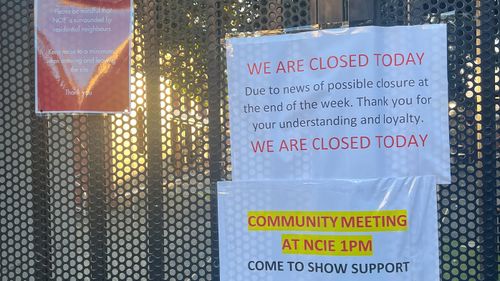
sydney locals have been “devastated” by the sudden closure of a well-loved community centre, with hundreds protesting today after staff were notified they’d be losing their jobs when handed a non-disclosure statement.
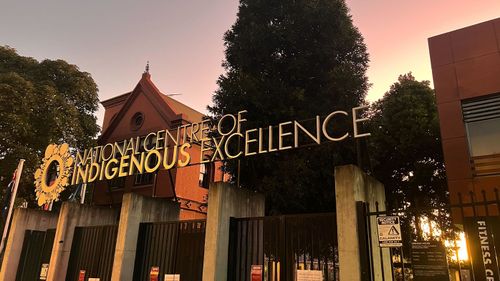
Staff at the National Center for Indigenous Excellence (NCIE) in Redfern were told the non-profit organization will close on Monday after it’s government owners were unable to reach an agreement on the hub’s future.
“I don’t think we can measure the impact,” executive director of Redfern Youth Connect Aunty Margaret Haumono told 9News.com.au.
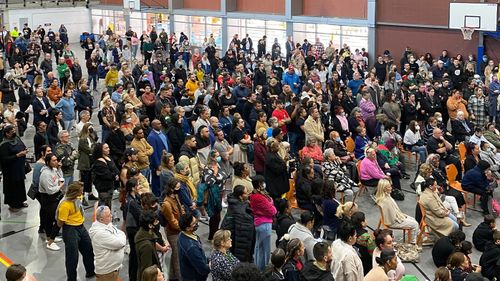
Elders say they will fight fiercely to keep the NCIE up and running. (Supplied)The National Center of Indigenous Excellent opened in 2006 and offers sport, fitness, conferences and community classes including tutoring and educational support. (Supplied)
“I’ve got kids asking me ‘Aunty Marg, where are we gonna go? What are we going to do?'”
The centre, which opened in 2006, offers community classes, educational support and tutoring along with social sport and fitness classes.
But Aunty Marg said the hub was much more than that, and has questioned why there was no consultation with the community before its closure.
“This place is just not a gym and a swimming pool for us, this place is a meeting point, it’s a meeting place,” she said.
“We have elders who come here and sit and have a cup of tea.
“We have mums and bubs swimming sessions, we have our elders that sit here.”
The center employs mostly Aboriginal staff and was created to support the health and wellbeing of thousands of Indigenous and non-Indigenous community members.
Aunty Haumono said members of the independent subsidiary of the Indigenous Land & Sea Corporation (ILSC) turned up to the NCIE and broke the news yesterday by handing out non-disclosure statements to staff, informing them they’d lost their jobs.
“We had no idea this was coming,” she said.
“The majority of staff did not accept the non-disclosure agreements, and now we’re here starting the fight to keep this place open.”
The NCIE is set to close in seven days. (Supplied)
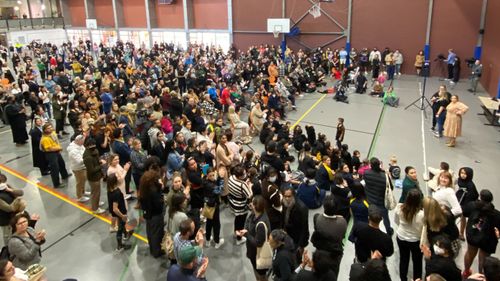
The youth worker was one of 400 people who descended on the community hub today demanding an independent inquiry into the closure.
“It’s been disgusting, and we are as a community calling on an independent inquiry into the divestment process,” Aunty Haumono said.
“They (the ILSC) said ‘call the police’ as a response as opposed to showing up and providing dialogue and community.”
Federal Minister for Indigenous Affairs Linda Burney described the center as “the beating heart of the Aboriginal community in Redfern”.
“I have spoken with the CEO and Chair of the Indigenous Land and Sea Corporation and the Member for Sydney today,” she said.
“I strongly encourage the Indigenous Land and Sea Corporation and the NSW Aboriginal Land Council to work together to find a solution so the centre’s programs and services continue to benefit the local community.
The decision to shut down was announced one month after the George Street property was divested from ILSC on June 30th, and transferred to the NSW Aboriginal Land Council (NSWALC).
The ILSC purchased the land where the old Redfern Public School once was, with community support in 2006.
The heritage buildings were transformed into conference, accommodation and office spaces and recreational facilities including a gym and aquatics center were built.
The social enterprise is still managed by the ILSC, which runs and acquires millions of dollars in land and sea assets to benefit Indigenous people.
‘Running at a deficit’: Government bodies unable to reach agreement
More than 400 people gathered at the NCIE in Redfern today to stand in solidarity with the community. (Supplied)
Chairperson of the NSWALC Danny Chapman said the land council was “not in a financial position to pick up the enormous amount of money that it would take to run the business” and so negotiations with ILSC failed.
“We told the community that the New South Wales ALC was not in a position to run the pool and the gym, which was the main contributors towards the NCIE running at a deficit,” Chapman told 9News.com.au.
“We made that very clear.”
Chapman said negotiations would be reopened today.
9News understands a meeting between NSW ALC and the ILSC was scheduled but the NCIE Aboriginal community were not invited.
LEBURN, Ky. — As the floodwaters receded, tales of survival emerged Tuesday from victims who were roused from sleep by alerts and quickly found themselves trapped in their homes by floating furniture blocking the doors.
They described the experience as surreal, recalling how they had to ford through waist-deep water to reach loved ones only to be turned back by the swift current or watch as trucks and uprooted trailers were swept away.
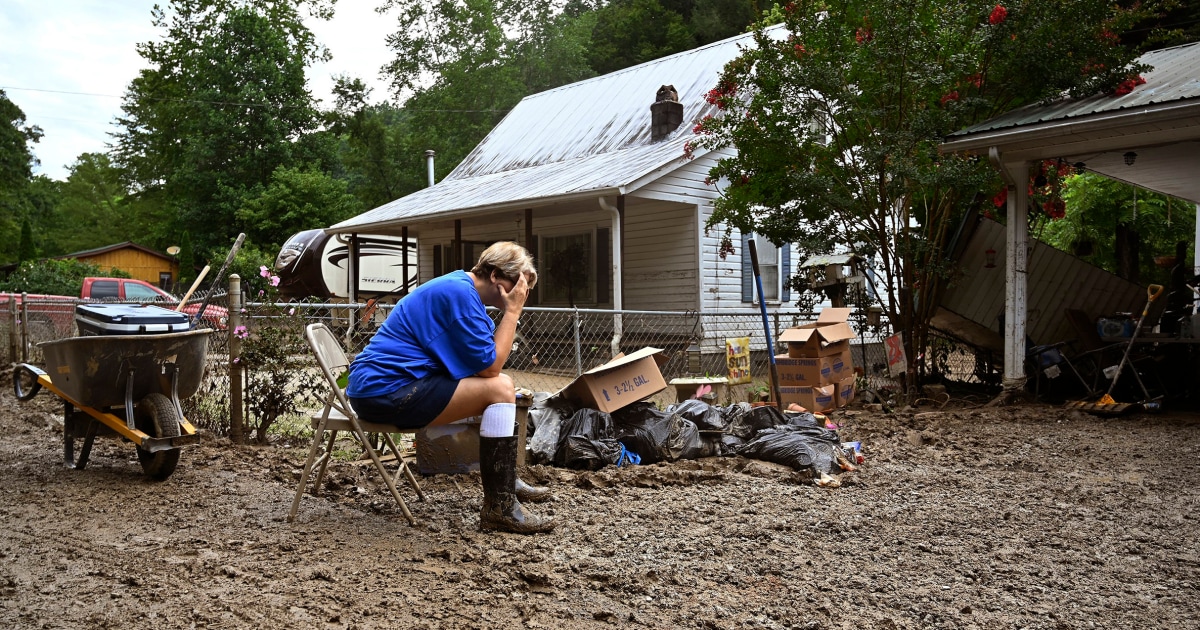
Many said everything they owned was either taken or destroyed by the deluge.
Teresa Reynolds sits exhausted as members of her community clean the debris Saturday from their flood ravaged homes at Ogden Hollar in Hindman, Ky. Timothy D. Easley/APA Knott County emergency vehicle gathers debris Tuesday in the flooded Troublesome Creek in downtown Hindman, Ky. Michael Swensen for NBC News
“All we have are clothes we are wearing,” said John Whitaker, a retiree who lived with his wife, Susie, in their now-ruined home in Hindman for less than a year. “Everything else was in the house. Everything is covered in mud.”
Larry Miller, 62, who has lived in Hindman his entire life, said he left his house reluctantly when the floodwaters were lapping at his door.
“My mom left me this home,” said Miller. “I just remodeled it from one end to the other. It destroyed my home and everything in it.”
Miller and the Whitakers were among the hundreds of Knott County residents who took shelter this week in the Sportsplex in Leburn, a sports facility that has been transformed into a shelter for storm survivors.
Ronnie and Sue Combs who survived the flooding, pray with a member of the Billy Graham Rapid Response Team in the Knott County Sportsplex on Tuesday. Michael Swensen for NBC NewsA man organizes coats Tuesday on a donation table at the Knott County Sportsplex in Leburn, Ky.Michael Swensen for NBC news
Extraordinary rain, historic floods
The worst flooding happened Wednesday night into Thursday morning, the result of a historic storm in eastern Kentucky that occurred while most people were sleeping and that inundated the hollers so quickly it cut off most escape routes.
Dustin Jordan, the National Weather Service’s science and operations officer in Kentucky, said that before the storm his agency “issued numerous flash flood warnings and also upgraded them all the way up to catastrophic, which is pretty much the highest level you can go, which is basically like a flash flood emergency.”
Some areas saw 14 to 16 inches of rain over a five-day period last week, he said.
“You’re talking about unprecedented rainfall totals,” Jordan said. “The biggest thing that you can take from this is that flash flooding from nighttime rainfall is very dangerous. It’s very difficult for people to get to safety at night. So that’s part of it. A lot of people are sleeping, and then having to get out very, very fast.”
William Haneberg, director of the Kentucky Geological Survey, said the rains came so fast there really was no time to escape, even if they heard the Weather Service alerts.
“It’s mountainous terrain and the valleys are very narrow,” he said. “A lot of the affected areas are very remote. It may take you an hour to go through the curving mountain roads. In a lot of the remote areas, there may only be one way out. So if you wait too long, the bridges may be washed out.”
People also have a tendency to tune out storm warnings, and generational ties to the land in Appalachia make some reluctant to leave, even if they know they live in a flood-prone area, Haneberg said.
“People are tied with that land because maybe their great-grandparents built the house or something,” he said. “So it’s a huge cultural issue to say OK, just move.”
A picture of Uncle Solomon Everidge, who donated the land for the Hindman Settlement School in 1902, shows traces of mud on Tuesday. Michael Swensen for NBC News
Kentucky Gov. Andy Beshear said Tuesday that there were 37 confirmed deaths as a result of the flooding and hundreds more still unaccounted for, spread out over five counties. Seventeen of those fatalities were reported in Knott County, and four of the dead are children from the same family, he said.
A scramble to escape to higher ground
Whitaker said he and his wife thought they were goners, too, when their house suddenly started filling up with water.
“There was enough water to float everything in the room,” he said. “Everything was floating around until the water receded. The refrigerator was upside down. Two of the beds were floating so hard against the ceiling that they were tearing the ceiling up.”
Mary Arlin Gibson, who lives in Pine Top with her husband, said she was awakened by a “gurgling” sound coming from the bathroom and went to investigate.
“All of a sudden the water started coming through the vents, then the water was up to our waists,” she said. “We got trapped in the bedroom because the furniture started floating. We couldn’t open up no doors or nothing.”
Gibson said they escaped through a bedroom window and scrambled up a hill to where their neighbor was riding out the storm in his truck. She said the three of them stayed there for six hours until it was safe to come down.
The home of Mary and Arlin Gibson in Pine Top, Ky.Michael Swensen for NBC News
Cathy Jones, who lives in Stanford Branch with her wife, Jennifer Stamper, said she was on the phone with her brother-in-law, who lives nearby, around 2 am Thursday as the rain came down in sheets.
Jones said they began to panic when her brother-in-law told her he saw a truck “float by his mommy’s house and there was a trailer who just hit a tree in their yard.” Then they lost power and the phone went dead.
When dawn broke, she said their house was surrounded by swirling water but Stamper grabbed a stick and ventured out to reach her mother.
“The water was up to her waist,” said Jones, who watched her wife get to higher ground despite the swift current. “Miraculously, she got through and yelled, ‘Are you coming, too!’ I said, ‘No, I don’t want to die!'”
Jones said she could hear the sounds of trees crashing.
“About a half hour later, I could see her coming back,” Jones said of her wife. “She said, ‘I couldn’t get through.'”
Thankfully, the family was later reunited at the shelter, she said.
Cathy Jones at the Knott County Sportsplex on Tuesday. Michael Swensen for NBC News
Swift water felt like the ocean
In Carrie, a community west of Pine Top, Karen Mosley, 54, and her daughter both lost their mobile homes in the flood. They escaped with a bag packed with clothes. But the trailers crashed into each other and were swept away.
“I just heard that metal crunch like you would crunch a soda can,” Mosley said. “… I found a few pieces of my daughter’s mobile home wrapped around a tree.”
The two held on to each other as they made their way to a car parked on higher ground. The water was up to Mosley’s chest from him. They dared not lift their feet.
“You could feel the water rushing underneath. If you’ve been in the ocean when the undercurrent hits, that’s what it felt like,” Mosley said.
“Because it was dark and because it was mud, you could feel it, but you couldn’t see where you were stepping — and you couldn’t pick your feet up, because if you pick your feet up, you were gone,” she said. “So, we were just kind of scooting our feet hoping we didn’t fall.”
‘We’re standing together’
For three nights, the Knott County coroner, Corey Watson, watched over the dead in the funeral home he operated in Hindman, cut off from much of the world by the sudden flooding that swamped his county.
Without power or running water, Watson relied on generators donated by friends to keep the lights on at the Nelson-Frazier funeral home.
“It’s troubling to see so many people pass away in such a traumatic way,” Watson said. “Our county has been beaten down pretty hard by the water, but we’re recovering. We’re standing together.”
An aerial view of eastern Kentucky on Saturday.Kentucky National Guard / via AFP – Getty ImagesVolunteers from the local Mennonite community clean flood-damaged property on Saturday from a house at Ogden Hollar in Hindman, Ky.Timothy D. Easley/AP
Watson said people in the area are not strangers to flash flooding, but this was nothing like he had experienced.
“We usually have a few, one or two floods a year, maybe,” he said. “Minimum damage, nothing bad. I’m 33, and this is the most amount of rain and damage I’ve ever seen from a natural disaster.”
Watson said he wound up bunking at the funeral home after he had to be rescued from his home, which sits in a remote corner of the county. He said he lost his power and cellphone service and “had no idea” how much danger he was in from him until he got to the funeral home.
“I didn’t until it was over with,” he said. “People were running here to the funeral home.”
Minyvonne Burke reported from Kentucky, Melissa Chan from New York, and Corky Siemaszko from New Jersey.
Demand for food bearing labels such as ‘organic’ or ‘sustainable’ is soaring, but some farmers are questioning if the name is really worth the pain.
While some industry groups say labels help consumers make a choice, and getting the right credentials can offer a valuable point of difference for producers, others fear they present a barrier for those wanting to adopt some of the practices associated with them.
Consumers are driving the push, but when they are buying organic, natural, regenerative or conventionally farmed produce, do they really know what it means?
Staying out of the label box
Labels like “certified organic” require farmers to meet certain production standards, which can restrict the use of chemicals and govern the management of farms.
Graziers Peter and Nikki Thompson use mostly natural practices such as multi-species planting and decreased use of inputs on their 4,000-hectare property Echo Hills, 80 kilometers north-east of Roma in Queensland.
But they have not found a label that reflects their production style while still giving them flexibility.
“We’ve talked about the labeling of things and so often that forces you to box yourself into just organic or just conventional,” Mr Thompson says.
“We haven’t used any herbicide for three years but if we’ve got cattle coming in here that has come from tick [infested] country we will do the treatment up front.”
Farmer Ian Beard chooses not to label his farm and operates with a “no rules” mindset.(Rural ABC: Lucy Cooper)
Being able to respond to problems with the most effective solution has led farmer Ian Beard to run his property at Wyreema in the Toowoomba region with what he calls “no rules”.
“By labeling your farm you put yourself into a box and really it is closing the toolbox,” he says.
“If I need them, I will use chemicals, plows, or choose to till. I need whatever tool that can make me sustainable and profitable.”
But are farmers like Mr Beard and the Thompsons missing out on a profit opportunity?
Labels can bring better price tags
Niki Ford, chief executive of Australian Organic Limited, the leading peak industry body representing producers, says without the farm and food labels the entire industry would not exist.
“It is a really important part of being an organic farmer because you’ve got your credentials,” she says.
“From a consumer perspective, it’s important to know when you’re buying something, especially if you’re paying a premium for it, if it has been audited, and if it has the rigor that sits around the claim.”
Farmers are noticing that a label can attract a premium price — and not only in organics — according to agronomist Ian Moss.
“I think farmers have adopted the regenerative term because it has come from the consumer side,” he says.
“Consumers are seeking out people doing the right thing by their farm, their animals, and their soil.
“I think there’ll be a certain percentage of consumers who are willing to pay more for the type of food that they want.”
CEO of Australian Organic Limited Niki Ford.(Supplied: Australian Organic Limited)
Ms Ford says consumers want transparency and assurances that what they buy meets their expectations for how it is produced.
“Nearly one-third of Australian consumers are picking up [what they think are] organic products and they are not what they say they are, which is a big issue,” she says.
“That’s why food labeling couldn’t be more important.”
divisive for the industry
While it may offer clarification for consumers, some in the agricultural industry fear labels can be more divisive than inclusive and act as a barrier to new practices being adopted.
The Mulloon Institute is a not-for-profit research and education organization that advocates for sustainable and regenerative agriculture practices.
Its chief executive, Carolyn Hall, agreed that labels often create division.
“I think labeling can be incredibly divisive and it’s not necessarily of value to anyone,” she says.
“I think labeling has the potential to ostracise some people, particularly in small communities.”
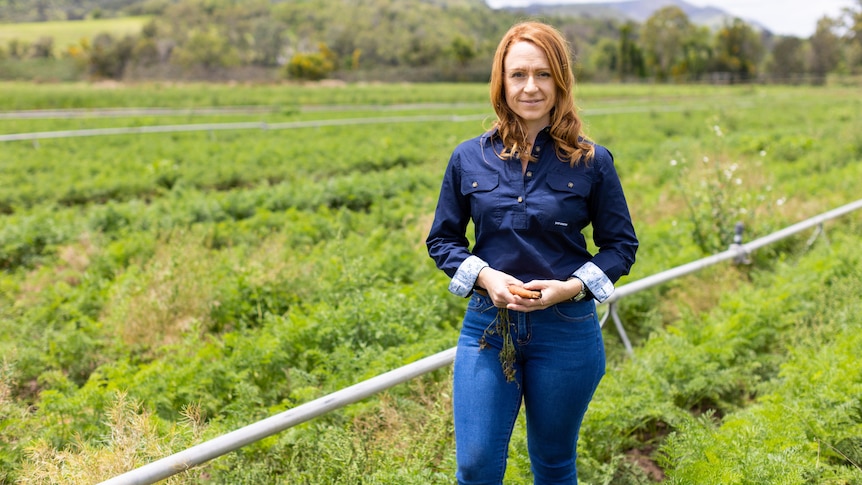
Mulloon Institute CEO Carolyn Hall.(Rural ABC: Lucy Cooper)
Mr Moss agrees there could also be a stigma attached to either having or not having some labels, which some producers resent.
“I haven’t met a farmer yet who doesn’t want to leave their country in better condition than it is now, and I think everyone does the best they can,” he says.
“I think people miss great learning opportunities from other industries or other certifications because we turn off when we see something that is labeled.”
Fellow agronomist Jess Bailey sees a diverse range of farmers in her day-to-day life.
She says the feeling of being left out is a common theme for producers.
“If a farmer feels like they aren’t quite doing everything right to fit in to a certain label then they feel like they’re excluded,” she says.
But this is not an opinion shared by all.
Greg Youngberry is the national sales manager for his family-owned operation Inglewood Organic.
Selling certified organic chicken poultry products to the market, he says a label is integral to business transparency.
“It is important to have labeling but also certification associated with a product so that the claims are not without basis,” he says.
Rather than being a point of division among the industry, Mr Youngberry believes labeling simply provides a point of difference.
“There’s a lot of different processes within the organic system that are very different to conventional farming,” he says.
“I really think it is important that the consumer is aware that we follow very strict farming practices, which organic requires.”
‘Normal’ farming is changing
Instead of looking for a way to define their practices under a one-size-fits-all label, Ms Hall says farmers should instead think of themselves as stewards responding to the needs of their land.
“When we think about land stewardship, it’s all about looking after the land, it’s caring for the land, which is naturally what farmers do,” she says.
Agronomists Ian Moss and Jess Bailey.(Rural ABC: Lucy Cooper)
By taking that approach, Ian Moss says farmers can create a “new normal” by bringing organic or regenerative practices into the mainstream, without the need for a label.
“Normal is what we would see as standard practices or industry recommended practices … what the majority of people are doing,” he says.
Mr Moss says an increasing amount of money required for traditional or conventional agriculture because of rising input costs is seeing many farmers look to alternate farming paths.
“A lot of the newer farmers who are kind of taking this regenerative path, a more environmentally conscious path, are just trying to get away from having to spend so much money,” he says.
“They are not going to care about the label at all.”