Categories
Technology

Researchers discover major roadblock in alleviating network congestion | MITNews

When users want to send data over the internet faster than the network can handle, congestion can occur — the same way traffic congestion snarls the morning commute into a big city.

Computers and devices that transmit data over the internet break the data down into smaller packets and use a special algorithm to decide how fast to send those packets. These congestion control algorithms seek to fully discover and utilize available network capacity while sharing it fairly with other users who may be sharing the same network. These algorithms try to minimize delay caused by data waiting in queues in the network.

Over the past decade, researchers in industry and academia have developed several algorithms that attempt to achieve high rates while controlling delays. Some of these, such as the BBR algorithm developed by Google, are now widely used by many websites and applications.

But a team of MIT researchers has discovered that these algorithms can be deeply unfair. In a new study, they show there will always be a network scenario where at least one sender receives almost no bandwidth compared to other senders; that is, a problem known as starvation cannot be avoided.

“What is really surprising about this paper and the results is that when you take into account the real-world complexity of network paths and all the things they can do to data packets, it is basically impossible for delay-controlling congestion control algorithms to avoid starvation using current methods,” says Mohammad Alizadeh, associate professor of electrical engineering and computer science (EECS).

While Alizadeh and his co-authors weren’t able to find a traditional congestion control algorithm that could avoid starvation, there may be algorithms in a different class that could prevent this problem. Their analysis also suggests that changing how these algorithms work, so that they allow for larger variations in delay, could help prevent starvation in some network situations.

Alizadeh wrote the paper with first author and EECS graduate student Venkat Arun and senior author Hari Balakrishnan, the Fujitsu Professor of Computer Science and Artificial Intelligence. The research will be presented at the ACM Special Interest Group on Data Communications (SIGCOMM) conference.

congestion control

Congestion control is a fundamental problem in networking that researchers have been trying to tackle since the 1980s.

A user’s computer does not know how fast to send data packets over the network because it lacks information, such as the quality of the network connection or how many other senders are using the network. Sending packets too slowly makes poor use of the available bandwidth. But sending them too quickly can overwhelm the network, and in doing so, packets will start to get dropped. These packets must be resent, which leads to longer delays. Delays can also be caused by packets waiting in queues for a long time.

Congestion control algorithms use packet losses and delays as signals to infer congestion and decide how fast to send data. But the internet is complicated, and packets can be delayed and lost for reasons unrelated to network congestion. For instance, data could be held up in a queue along the way and then released with a burst of other packets, or the receiver’s acknowledgment might be delayed. The authors call delays that are not caused by congestion “jitter.”

Even if a congestion control algorithm measures delay perfectly, it can’t tell the difference between delay caused by congestion and delay caused by jitter. Delay caused by jitter is unpredictable and confuses the sender. Because of this ambiguity, users start estimating delay differently, which causes them to send packets at unequal rates. Eventually, this leads to a situation where starvation occurs and someone gets shut out completely, Arun explains.

“We started the project because we lacked a theoretical understanding of congestion control behavior in the presence of jitter. To place it on a firm theoretical footing, we built a mathematical model that was simple enough to think about, yet able to capture some of the complexities of the internet. It has been very rewarding to have math tell us things we didn’t know and that have practical relevance,” he says.

Studying starvation

The researchers fed their mathematical model to a computer, gave it a series of commonly used congestion control algorithms, and asked the computer to find an algorithm that could avoid starvation, using their model.

“We couldn’t do it. We tried every algorithm that we are aware of, and some new ones we made up. Nothing worked. The computer always found a situation where some people get all the bandwidth and at least one person gets basically nothing,” Arun says.

The researchers were surprised by this result, especially since these algorithms are widely believed to be reasonably fair. They started suspecting that it may not be possible to avoid starvation, an extreme form of unfairness. This motivated them to define a class of algorithms they call “delay-convergent algorithms” that they proved will always suffer from starvation under their network model. All existing congestion control algorithms that control delay (that the researchers are aware of) are delay-convergent.

The fact that such simple failure modes of these widely used algorithms remained unknown for so long illustrates how difficult it is to understand algorithms through empirical testing alone, Arun adds. It underscores the importance of a solid theoretical foundation.

But all hope is not lost. While all the algorithms they tested failed, there may be other algorithms which are not delay-convergent that might be able to avoid starvation This suggests that one way to fix the problem might be to design congestion control algorithms that vary the delay range more widely, so the range is larger than any delay that might occur due to jitter in the network.

“To control delays, algorithms have tried to also bound the variations in delay about a desired equilibrium, but there is nothing wrong in potentially creating greater delay variation to get better measurements of congestive delays. It is just a new design philosophy you would have to adopt,” Balakrishnan adds.

Now, the researchers want to keep pushing to see if they can find or build an algorithm that will eliminate starvation. They also want to apply this approach of mathematical modeling and computational proofs to other thorny, unsolved problems in networked systems.

“We are increasingly reliant on computer systems for very critical things, and we need to put their reliability on a firmer conceptual footing. We’ve shown the surprising things you can discover when you put in the time to come up with these formal specifications of what the problem actually is,” says Alizadeh.

.
Categories
Sports

Manchester United boss Erik ten Hag labels Cristiano Ronaldo’s actions ‘unacceptable’

Newly appointed Manchester United boss Erik ten Hag was left fuming after a handful of first team players left a preseason match early, including wantaway star forward Cristiano Ronaldo.

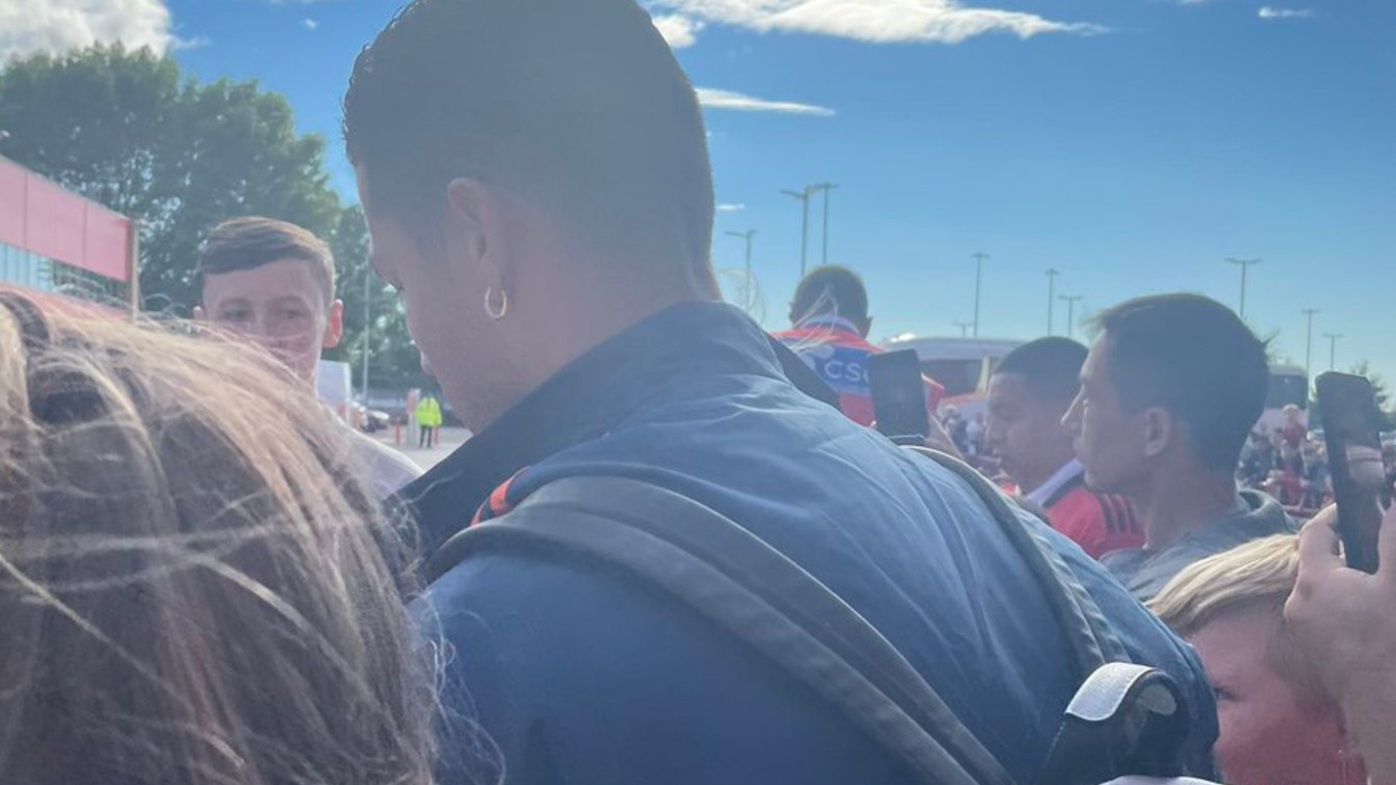
The Portuguese superstar was filmed by fans leaving the ground along with a group of fellow teammates prior to the final whistle of the Red Devils’ pre-season game against Rayo Vallecano, leaving Ten Hag unimpressed.

Ten Hag described the act as “unacceptable,” in an interview with Viaplay. “We are a team and that means you stay until the end,” he said.

READMORE: Australian boxing legend dead at 77

READMORE: Eddie Betts demands AFL apology over Crows camp

READMORE: Alpine boss’ telling Ricciardo admission

The incident came as rumors emerged suggesting Ronaldo and agent Jorge Mendes made it clear the six-time Ballon D’or winner wanted a summer move away from Old Trafford, in search of Champions League football ahead of the new season.

Despite the talk over a potential move elsewhere, Ten Hag remains certain the 37-year-old will stick around for the upcoming campaign, saying the former Real Madrid and Juventus striker was “in our plans” for the new season and “not for sale.” .”

Amongst all the current drama surrounding the highly decorated English club, Ten Hag has remained upbeat and positive with his new squad, ahead of Sunday’s season-opener against Brighton.

“Overall I am happy.” Ten Hag said, looking back on his first pre-season at the club. “We make good progress and we’re ready for the season.”

However, the former Ajax manager has made it clear “there is a lot of room for improvement” for his side, especially considering the Reds had dropped to their lowest ever finishing points in the Premier League era just last season.

For a daily dose of the best of the breaking news and exclusive content from Wide World of Sports, subscribe to our newsletter by clicking here!

Categories
Australia

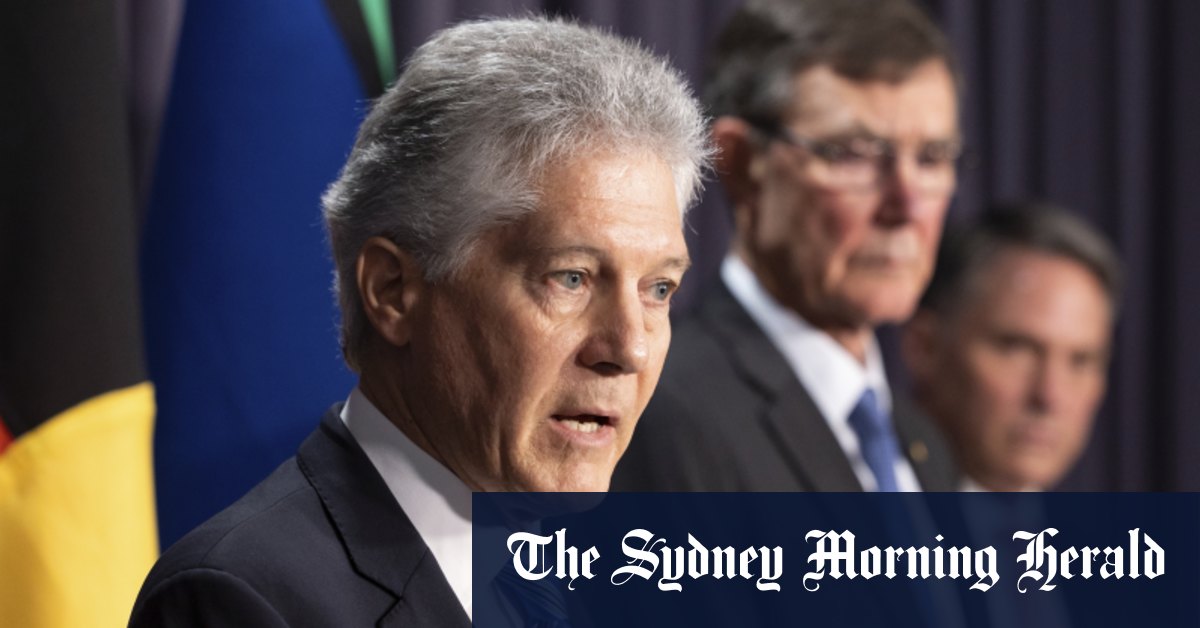
Defense review warranted but suitability of Stephen Smith questioned as former minister

That report’s author, Paul Dibb, said on Wednesday the task before Houston and Smith was a big challenge, particularly given the short timeframe.

loading

There was an urgency both to finalize the review and to set the ADF up for the new strategic environment, he said.

“Time is not on our side, there’s some urgency about this. And in my experience … it is very difficult to get Defense to recognize that some things are urgent,” Dibb said.

“What we need is a long-range strike… capability – and it’s got to be something that’s quicker than ordering large amounts of new fighter aircraft, warships and submarines.”

Australian Strategic Policy Institute defense and strategy director Michael Shoebridge said the review had to consider the “disturbing” new direct security challenge through China pushing into our region, as well as the lessons from Russia’s invasion of Ukraine about the importance of self-reliance.

“Like the Ukrainians, we need to be able to look after ourselves to bring the support of partners, allies and friends,” he said.

“And the fracturing world means relying on global systems to supply what you need in times of crisis is a bad plan.”

Neil James, executive director of the Australian Defense Association, agreed the review was sensitive.

“If the situation is as bad as they fear, they need to increase the defense budget substantially. And they’ve got to actually sell that to the Australian people,” he said.

However, he said it was not ideal to have a former defense minister leading the review, saying there was a “legacy protection risk” since some delays plaguing defense projects now were a result of decisions made during Smith’s time in the portfolio.

loading

The opposition echoed these concerns.

“When Mr Smith was last in government, he cut and canceled defense projects, delayed decisions, and dismissed warnings about the strategic environment Australia was heading into a decade ago,” opposition defense spokesman Andrew Hastie said.

Albanese said the government had found the best people to conduct the review, and he and Marles recommitted to at least maintaining defense spending.

Shoebridge said Smith and Houston brought a detailed understanding of how defense operated as an organization but warned they would have to revisit assumptions they may have held while in office about how the world works.

“This review isn’t about either of them defending their legacies. It’s about looking with clear eyes at the world we have today, Australia’s security challenges in it, and the kind of military that we need to deal with that,” he said.

“And I think they’re both smart enough.”

Cut through the noise of federal politics with news, views and expert analysis from Jacqueline Maley. Subscribers can sign up to our weekly Inside Politics newsletter here.

Categories
US

After a deadly 2009 attack, the CIA’s hunt for Zawahiri became personal

Comment

It was one of the darkest days in CIA history: Seven operatives killed after being lured by a rogue informant into a deadly trap. In the years since, memories of the 2009 disaster in eastern Afghanistan helped to animate the intelligence agency’s global search for an elusive terrorist believed to have played a key role in the officers’ deaths.

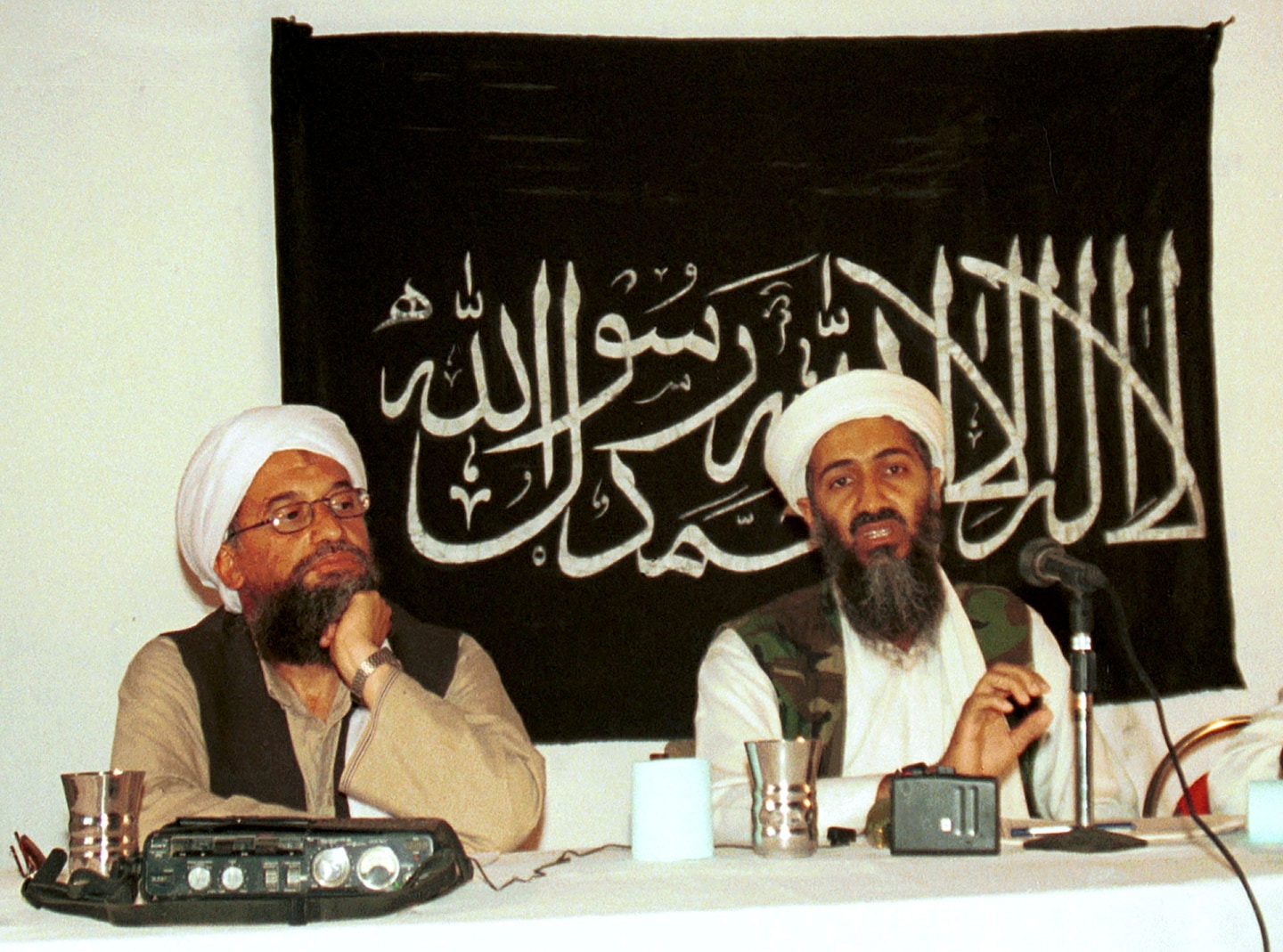
That terrorist was Ayman al-Zawahiri, the al-Qaeda leader killed on Saturday, in a strike carried out by the CIA. Nothing in official US statements describes Zawahiri’s death as payback for the American losses in Khost, Afghanistan, some 12 years earlier. But many former and current intelligence officers say that’s exactly how it felt.

The CIA, per usual practice, has not publicly acknowledged any part in firing the missile that struck Zawahiri as he stood on his balcony in an apartment building in Kabul, the Afghan capital. But since Monday, confirmation of the 71-year-old Egyptian’s death has triggered an emotional response within the agency’s Langley, Va., headquarters, and also with former colleagues, friends and family members of those who were killed or wounded in 2009.

“This is an incredibly personal moment,” said Marc Polymeropoulos, a former officer with the CIA’s operations division who served with several of the five men and two women from the agency killed at Camp Chapman, a CIA base on the outskirts of Khost from which the agency ran clandestine missions against al-Qaeda and Taliban fighters. In addition to the seven CIA operatives, a senior Jordanian intelligence officer and an Afghan driver were also killed.

Polymeropoulos described the deaths at Camp Chapman as “the most stark example of the tragic costs of the fight against terrorism.”

Numerous current and former CIA officials marked the news of Zawahiri’s death with social media posts paying tribute to the CIA officers and security team officials who died in the Khost attack, the deadliest against the CIA since eight employees were killed in a bombing at the US Embassy in Beirut in 1983.

“Just remember. They are heroes,” former CIA director and retired Gen. Michael N. Hayden wrote in a Twitter post. In an interview, Hayden recalled working with two of the slain officers, Khost base chief Jennifer Matthews and Elizabeth Hanson, and learning about their deaths while at CIA headquarters on the day of the attack.

“I went outside to my car and cried,” Hayden said.

CIA Director William J. Burns, in response to a query from The Washington Post, did not comment on details of the operation against Zawahiri but said the events were “deeply personal for CIA.”

Zawahiri appeared on his balcony. The CIA was ready to kill him.

“In the hunt for Ayman al-Zawahiri, a brutal attack took the lives of seven CIA officers in Khost in 2009,” Burns said. “While terrorism remains a very real challenge, Zawahiri’s removal diminishes that threat and offers a measure of justice.”

Zawahiri’s role in al-Qaeda’s astonishingly complex operation against the CIA base was chronicled in a 2011 book and also described in articles and essays about the attack. The key figure was a Jordanian national, Humam al-Balawi, a physician who got into trouble in his home country for posting pro-al-Qaeda messages on social media. After being interrogated by Jordan’s intelligence service, he was persuaded to become a counterterrorism informant. Ultimately, Balawi agreed to travel to Pakistan to gather information that might aid the CIA’s search for Osama bin Laden and other top al-Qaeda and Taliban leaders.

After disappearing for months, Balawi surfaced in late 2009 with a startling claim: He had established high-level contacts within the community of al-Qaeda militants hiding out in the lawless tribal region along the Afghanistan-Pakistan border.

As proof, Balawi began supplying evidence of his interactions — including cellphone videos of senior al-Qaeda leaders — to his Jordanian handlers, who passed the information to the CIA. Jordan’s General Intelligence Directorate regularly works with US counterparts in tracking and foiling terrorist operations around the world, and the two countries conferred closely on the Balawi case.

By late December 2009, the CIA was anxious to meet with the Jordanian spy, sensing a potential breakthrough in the agency’s long-dormant search for bin Laden and other terrorist leaders behind the Sept. 11, 2001, attacks. With seeming reluctance, Balawi agreed to a meeting at the CIA base in Khost. Then, in a move that ensured an enthusiastic reception from the Americans, he dangled a particularly tantalizing new detail: the physician was providing medical care for Zawahiri, then al-Qaeda’s No. 2.

Balawi shared obscure details about Zawahiri’s physical condition, including his various chronic maladies and his scars from years of torture in Egyptian prisons. The details matched what the CIA already knew about Zawahiri, and seemed to confirm that Balawi was indeed in close contact with the al-Qaeda deputy.

The meeting was set for Dec. 30, 2009, with numerous CIA counterterrorism experts planning to attend. Balawi arrived by car and, because of the extreme sensitivity surrounding the meeting, the CIA deferred any physical searches of the informant until he was well inside the agency’s compound.

Balawi had indeed been on a mission, but his allegiance was to al-Qaeda, not to Jordan or the CIA. Under his cloak he hid a bomb made of powerful C4 explosives. After coming within feet of the CIA team, I detonated the device.

The attack led to an extensive investigation and prompted numerous operational changes, including a strengthening of counterintelligence safeguards. Agency officials were unable to determine the full extent of Zawahiri’s involvement in planning the 2009 attack, but at the very least he allowed himself to be bait for a sophisticated operation that enabled a suicide bomber to penetrate an ultra-secure and highly secretive CIA facility, current and former officials said.

Zawahiri’s path to a global terrorist leader

It’s why many in the CIA saw Zawahiri’s death as justice delivered, after years of waiting. On Tuesday, a printed copy of a Washington Post article was placed on the grave of Matthews, the Khost base chief killed in 2009. “US kills al-Qaeda leader Ayman al-Zawahiri in drone strike in Kabul,” the headline read.

The photo was featured in a Twitter post on Tuesday by Kristin Wooda former CIA officer who worked with Matthews.

“Be at peace, sister,” the tweet reads.

Categories
Sports

Tennis 2022: Nick Kyrgios wins over American with classy act for fan in win over Tommy Paul at Washington Open

Nick Kyrgios has continued his preparation for the last grand slam of the year with a strong win over Tommy Paul at the Washington Open on Thursday (AEST).

The Australian was challenged in just his second singles match since Wimbledon and had to play his best tennis to defeat Paul 6-3 6-4.

Watch Tennis Live with beIN SPORTS on Kayo. Live Coverage of ATP + WTA Tour Tournaments including Every Finals Match. New to Kayo? Start your free trial now >

Kyrgios was locked in, firing off 15 aces including one rocket at 218km/h.

He was superb in the clutch moments — saving all four break points he faced and converting three out of four of his own break point opportunities.

Kyrgios was up to his usual antics when he got stuck into the umpire after he was given a code violation for ball abuse.

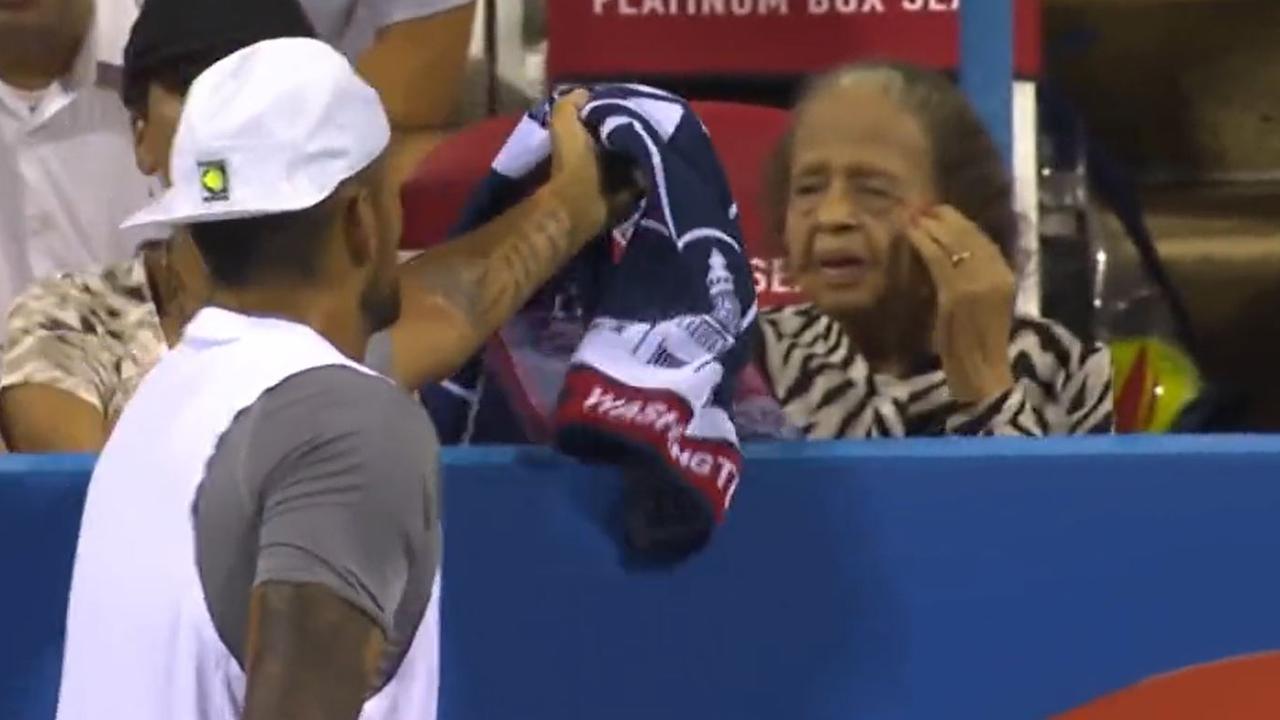
But the Washington crowd was in his corner and he showed his soft side in the first set, when an elderly fan was hit in the face by a ball that took a wayward bounce into the stands.

Kyrgios went over and handed the spectator one of his towels.

He is chasing his second title in Washington and will next face fourth seed Reilly Opelka in the round of 16 on Friday.

After pulling out of the singles draw at the Atlanta Open last week with a knee injury, Kyrgios has shown impressive form in his two matches in Washington against Marcos Giron and Paul.

He needed just 59 minutes to beat Giron in straight sets and was his usual entertaining self, engaging with the crowd.

He won the doubles title in Atlanta playing alongside fellow Aussie Thanasi Kokkinakis and is a favorite to win the title in Washington ahead of the US Open, which begins later this month.

It wasn’t such good news elsewhere among the Australian contingent in Washington, with Alexei Popyrin and Alex de Minaur losing to Taylor Fritz and Yoshihito Nishioka, respectively.

Read related topics:Nick Kyrgios

.

Categories
Australia

Perth weather: Rain forecast as WA counts the cost of wild storms

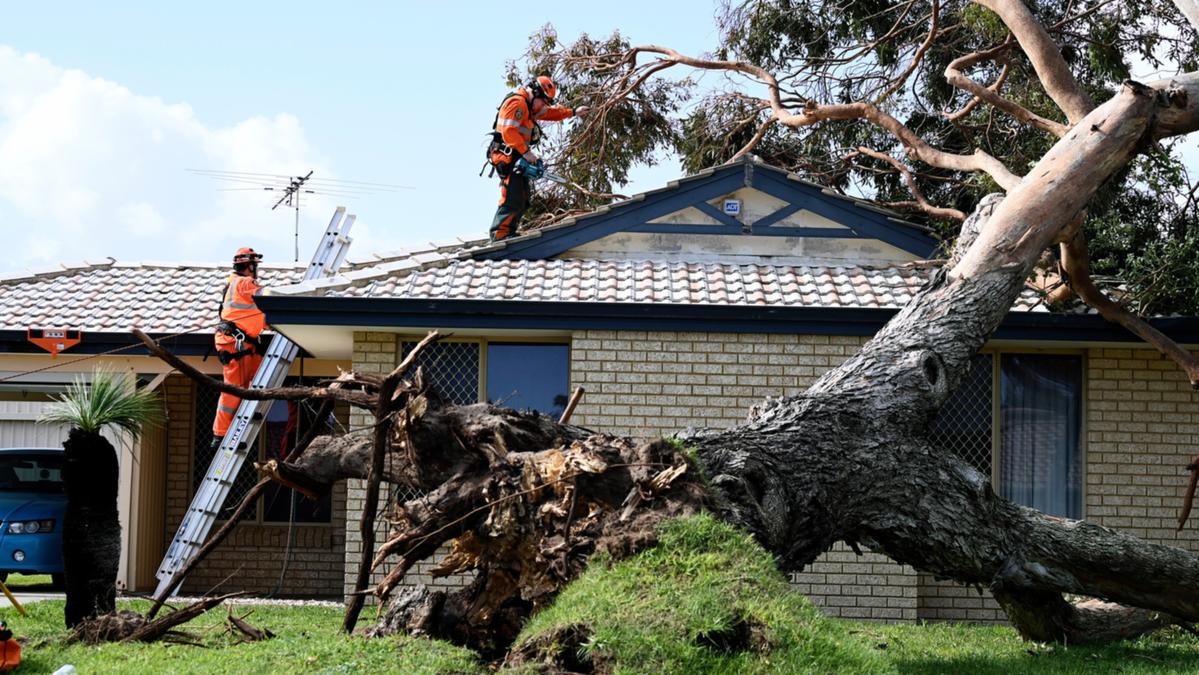
Perth is mopping up and counting the cost after days of wild storms left homes damaged.

While conditions eased overnight, emergency services answered more than 102 calls for help since 5am yesterday.

Millions of dollars of insurance claims have already been lodged after the storms wreaked havoc from Butler to Mandurah and down into the South West from Monday to Wednesday. Insurer RAC says it has received around $5 million worth of damages claims.

The super storms which lashed WA for days were accompanied by destructive gale force winds, with the worst of it recorded early Tuesday. Cape Leeuwin recorded a 135km/h wind gust at 12.47am, Bickley 117km/h at 2.47am, Cape Naturaliste 115km/h at 6.47 pm, Mandurah 109km/h at 2.59am, Gingin Airport 109 km/h at 2.11 am.

Storm conditions in North Beach today.
Camera IconStorm conditions in North Beach. Credit: michael wilson/The West Australian

In good news, most power has been restored to homes and businesses left in the dark after trees topped multiple power lines. At the height of the chaos 35,000 homes were without power but Western Power crews have worked through the night to get the lights back on.

.

Categories
US

Alex Jones trial verdict update: Infowars host says Sandy Hook shooting was 100% real

Alex Jones lawyers accidentally sent his text messages to the prosecution

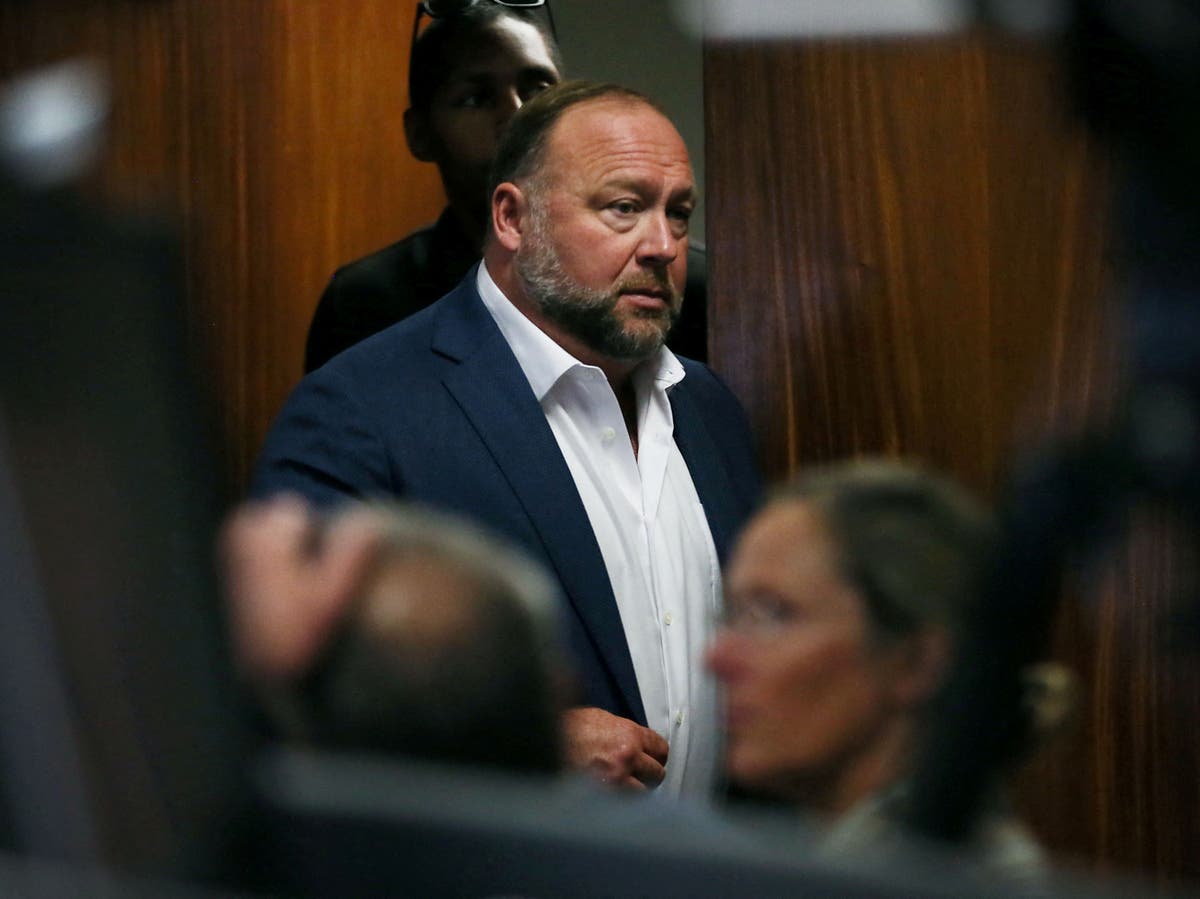
InfoWars founder and conspiracy theorist Alex Jones has finished testifying in the defamation damages trial against him over his claims that the 2012 Sandy Hook school shooting massacre, which saw 20 children and six adults killed, was a hoax.

He was taken to court in Austin, Texas, by Neil Heslin and Scarlett Lewis, the parents of Jesse Lewis, who was six years old when he was killed in the tragedy in Newtown, Connecticut. Both gave impassioned testimony when in the witness box, with Ms Lewis able to confront Jones and look him straight in the eye when speaking about her son de ella.

Jones is facing potential damages of up to $150m. The radio host underwent an uncomfortable cross-examination on Wednesday morning when much of what he testified was refuted by the plaintiff’s attorney and he was asked if he was aware of what perjury was.

During questioning Jones was confronted not just with what he had said about Sandy Hook, but also about the judge and jury in the case. It also transpired that his own lawyer had mistakenly shared the entire contents of Jones’ phone with the opposition legal team — this is now reportedly being sought by the House select committee looking into the events surrounding 6 January 2021 in Washington, DC, when Jones was in the city.

The jury is now deliberating.

1659582005

Report: Jan 6 probe to subpoena Alex Jones’ texts and emails obtained in Sandy Hook trial

The January 6 committee is preparing to subpoena Alex Jones’ texts and emails that were accidentally sent to an attorney for the Sandy Hook victims, according to a report.

Attorney Mark Bankston revealed he had mistakenly received a trove of thousands of Jones’ private communications during the Infowars founder’s defamation trial on Wednesday.

Within minutes of the stunning revelation, the House committee investigating the attack on the US Capitol began preparing to subpoena the messages, a source told rolling stone.

1659578405

Jones’ attorney mistakenly sent two years of his text messages to opposing lawyer

Alex Jones’ attorney accidentally sent two years of his text messages to the lawyer representing the parents of a child killed in the Sandy Hook school shooting, a court has been told.

Mark Bankston, who represents Neil Heslin and Scarlett Lewis in their ongoing defamation trial against Jones, made the stunning claim during cross-examination of the Infowars founder on Wednesday.

1659574805

Watch: Sandy Hook victim’s mother confronts Alex Jones in court

Sandy Hook victim’s mother confronts Alex Jones in court

1659571205

Jones shakes his head as his Sandy Hook shooting lies read out in court

Right-wing agitator Alex Jones shook his head repeatedly as his lies about the Sandy Hook school shooting massacre were read out to a Texas jury on the first day of his defamation trial.

1659567605

ICYMI: Jones berates reporter as ‘pirate’ outside Sandy Hook trial

Conspiracy theorist Alex Jones berated a reporter outside of his defamation trial for spreading false claims that the 2012 Sandy Hook school shooting was staged.

“You pretend to be a journalist, and you want to look at people like me so you can say you’re the good guy,” the Infowars host told Huffington Post journalist Sebastian Murdock.

1659564905

Watch: Father of Sandy Hook victim testifies at Alex Jones trial

Father of Sandy Hook victim testifies at Alex Jones trial

1659563164

Judge Gamble tells the opposing teams that she requires one member of counsel from each side to be in the building at all times while the jury is deliberating.

The parties do not have to be present.

1659562767

Jury begins deliberations

The jury has been excused to begin their deliberations and can carry on until 5pm CT (6pm ET).

They will then break for the night until 9am CT tomorrow.

1659562376

The plaintiffs’ attorney Kyle Farrar is giving a final closing rebuttal.

“We’re still living Alex Jones’s conspiracy world,” he says, in which the plaintiffs are being weaponized, the jury was handpicked, and the judge is part of the Deep State.

“That’s the spin Jones wants to put on this verdict.”

“They called them [the plaintiffs] liars for 10 years to make money, and they’re calling them liars here to save money,” Mr Farrar says of the Jones defense argument to avoid a large financial compensation bill.

Mr Farrar adds that Jones’ apology is worth nothing because his attorney just said his client did nothing wrong.

1659561870

The use of that poem by Martin Niemöller has understandably generated quite a reaction online.

First they came for the socialists, and I did not speak out—because I was not a socialist.

Then they came for the trade unionists, and I did not speak out—because I was not a trade unionist.

Then they came for the Jews, and I did not speak out—because I was not a Jew.

Then they came for me—and there was no one left to speak for me.

Categories
Sports

Ariarne Titmus says media scrutiny around Kyle Chalmers had potential to impact the whole team

As the curtain closed on another stellar Commonwealth Games swimming campaign from the Australian Dolphins, one of the stars of the team has revealed how Kyle Chalmers’s unwanted media attention and mental health struggles had rippled through the squad she describes as “a family.”

“I think we all kind of feel part of it,” said Ariarne Titmus, moments after winning her fourth gold medal of the week, for the 400m Freestyle.

“Because we are all so close, we are such a close team, and I think that’s why we perform so well, because we have each others’ backs.

“I think it potentially can affect us emotionally because they’re our friends, they’re teammates. We’re like a family and we don’t like seeing people upset and put through durations.

“And we’ve come out here and done our best and done our country proud and I think the swimming does the talking. We’ve killed it this week and I hope that Australia is proud of our performance and we’ve done our absolute best for the country and we’re going to go home with some extra luggage.”

.

Categories
Australia

Hancock Prospecting, Main Roads WA proposal sparks fear for Aboriginal heritage, workers on Wittenoom route

In the heart of Western Australia’s Pilbara region lies sacred country, littered with lucrative iron ore mines that provide billions for Australia’s economy.

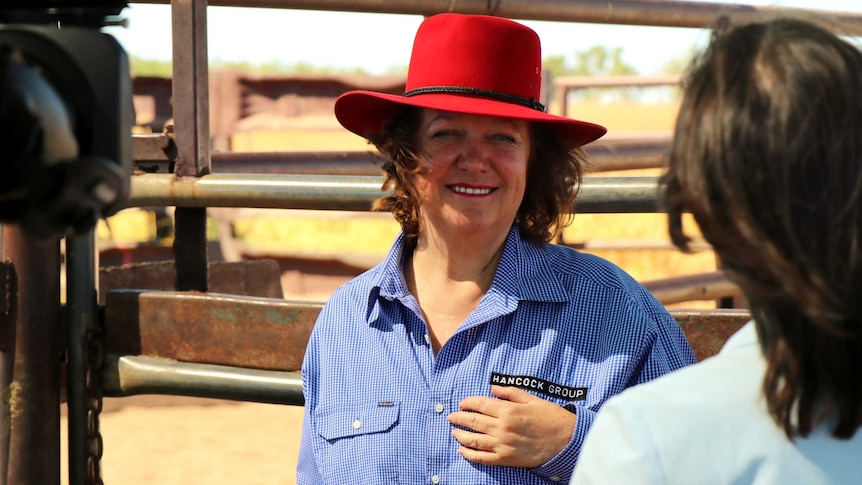
Now, the WA government wants to invest in roads near Karijini National Park and Wittenoom so Gina Rinehart’s Hancock Prospecting can transport iron ore through the region.

Fears for Aboriginal heritage have been sparked by the proposal, and also questioned due to its proximity to the deadly asbestos at Wittenoom — the largest contamination site in the Southern Hemisphere.

Gina Rinehart smiles while standing in front of cattle pens
Hancock Prospecting executive chairwoman Gina Rinehart is Australia’s richest person.(Supplied: Hancock Prospecting/James Radford)

Documents seen by the ABC reveal the proposal has not been costed but includes more than 300 kilometers of upgrades and multiple new bridges on Nanuturra Munjina Road, Hamersley Mount Bruce Road, and Karijini Drive.

Aaron Rayner manages cultural heritage for Wintawari Guruma Aboriginal Corporation (WGAC), which holds native title for the area.

He said more than 40 significant sites would be damaged by the road project in the Hamersley Range, especially in an area called Rio Tinto Gorge.

The project would require land clearing and camps for up to 200 workers.

Rocks sit in a cave
Sites in the area have been dated for human habitation back tens of thousands of years.(Supplied: Damien Katich)

“The proposal is to essentially develop a haul road that runs across and right through Eastern Guruma country and will interfere with very important Aboriginal heritage,” Mr Rayner said.

“There are about 45 Aboriginal sites that would be impacted, but there are many unknown and unrecorded Aboriginal heritage sites that will be impacted.”

An iron ore train.
A train lugs iron ore through the Hamersley Range.(ABC News: Rachel Fountain)

The upgrades would allow trucks carrying iron ore from Hancock’s Hardey operation to access the Great Northern Highway on the eastern edge of Karijini.

The mining company launched a feasibility study this year on the Hardey project in partnership with its owners Australian Premium Iron, with Hancock to lead any future development.

Government approached after Hancock rejected

Mr Rayner said Hancock approached WGAC for heritage consultation earlier this year, but they rejected it.

He said traditional owners then received a proposal from Main Roads WA, which backed Hancock’s plan.

Traditional owners have since written to Transport Minister Rita Saffioti and Hancock to voice their concerns.

“Eastern Guruma elders advised Hancock Prospecting that they were opposed to the construction of the road,” Mr Rayner said.

“We hope that both Hancock Prospecting and the Minister for Transport have listened to the Eastern Guruma elders and decided not to build the road.”

A Hancock spokesperson said the company consulted with all stakeholders about its operations and had engaged with traditional owners.

“Any option under consideration by Hancock is done so in consultation with Main Roads WA, in addition to traditional owners, to ensure heritage and cultural social values ​​are understood and respected,” the spokesperson said.

An iron ore mine site in WA's Pilbara
Iron ore mines in the Pilbara generate hundreds of billions of dollars for the economy.(Supplied: Roy Hill)

The documents seen by the ABC show Main Roads WA, which owns the roads in question, contacted traditional owners about the proposal after Hancock pitched the idea.

“Main Roads now has the opportunity after being approached by Hancock Prospecting,” the documents state.

The project would start in 2023 and take about three years to complete, according to the documents.

A spokesperson for Ms Saffioti claimed no direct contact had been made with the minister but said Main Roads WA would engage with stakeholders including traditional owner groups.

Deadly asbestos risk for road workers

The proposal also includes a realignment of Nanuturra Munjina Road around Wittenoom, the site of disastrous asbestos mining historically led by Gina Rinehart’s father, Lang Hancock.

Mountains of deadly blue asbestos tailings litter the area around the town known as the Wittenoom Asbestos Management Area.

Long-distance view of dark-blue soil-like material sitting in large piles among a mountain range.
Massive piles of asbestos tailings still litter the area around Wittenoom.(Supplied)

The WA government officially closed Wittenoom in March as it considered the asbestos to be a public health risk with plans to demolish the town’s few remaining properties.

Curtin University respiratory health professor Fraser Brims said workers on the project in and around Wittenoom would be risking lung cancer and other deadly asbestos-related diseases.

“We don’t know with asbestos if there is a safe exposure level, so really if exposure can be avoided then it must be avoided to keep workers and indeed anybody safe,” Professor Brims said.

.

Categories
US

DeSantis claims concern over monkeypox is overblown

The World Health Organization has declared monkeypox a global health emergency, with more than 25,000 cases reported in 83 countries. Seventy-six countries seeing monkeypox cases don’t typically have infections, according to the CDC. Monkeypox can be spread through skin-to-skin contact and the current infections are overwhelmingly among men who have sex with men.

New York City, which has declared a local state of emergency, has emerged as the epicenter of the disease, with over 1,600 cases of monkeypox. California, which has more than 800 cases, and Illinois, with about 500 cases, have also declared states of emergency over the monkeypox outbreak.

DeSantis also blasted New York Gov. Kathy Hochul, a Democrat, for declaring a state of emergency over the outbreak, saying he was convinced it was a move to restrict people from freedom.

“They’re going to abuse those emergency powers to restrict your freedom,” Desantis said. “I guarantee you that’s what will happen.”

DeSantis’ surgeon general, Joseph A. Ladapo, said on Wednesday during the same press conference that Florida has an adequate number of monkeypox vaccines, though he questioned the safety of two vaccines recommended for monkeypox by the US Centers for Disease Control and Prevention. I have claimed very little data exists on their effectiveness.

The CDC has recommended two vaccines to treat monkeypox — Jynneos, also known as Imvamune or Imvanex, from Denmark, and another known as ACAM2000, which was developed after the World Health Organization declared smallpox as eliminated in 1980.

Ladapo has a long history of questioning the efficacy of the Covid-19 vaccines despite the vast majority of medical professionals, including the US Food and Drug administration and Mayo Clinic, have emphasized the safety and effectiveness of the Covid-19 vaccine.

A US Department of Health and Human Services database also shows the state was allocated 36,383 doses of the Jynneos vaccine last week.

Rep. Charlie Crist (D-Fla.), who is challenging DeSantis for governor, criticized the governor over his response to the virus.

“While Governor DeSantis dismisses Monkeypox, at-risk Floridians still need better information, better testing, and access to vaccines for prevention,” he said on Twitter.

During the press conference, DeSantis also railed against gender affirming surgeries for children, saying that doctors who perform such procedures should be sued. His comments from him follow a request by the Florida Department of Health to the state medical board to ban transition-related medical care for children. The Florida Board of Medicine is expected to vote on whether to begin the rule-making process for the ban on Friday.

The American Academy of Pediatrics and the American Medical Association support gender-affirming care for adults and adolescents. Medical guidelines, however, do not recommend gender-affirming surgeries for children under 18.