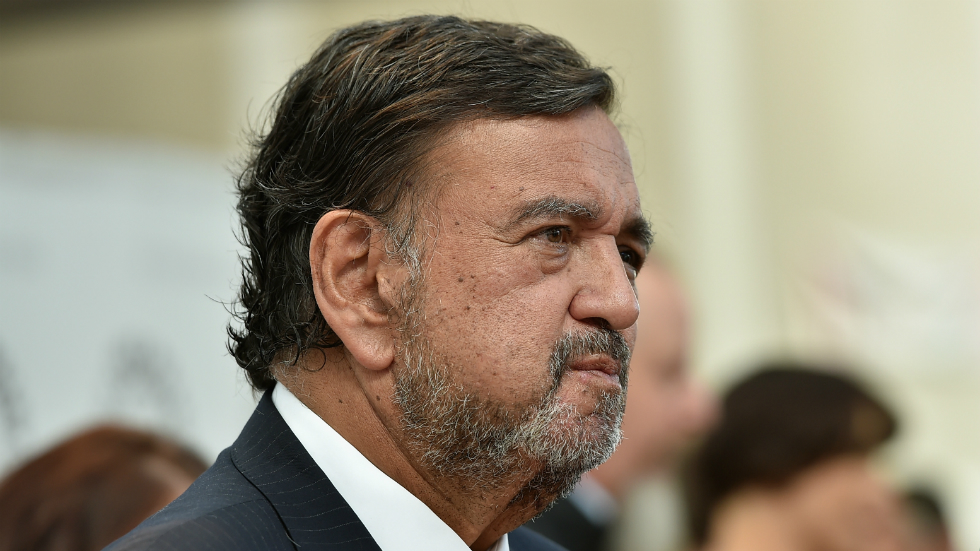
Former US Ambassador to the UN Bill Richardson predicted Sunday that US citizens Paul Whelan and Brittney Griner, who are imprisoned in Russia, will be freed in a “two-for-two” prisoner swap with Moscow.
“I’m optimistic. I think she’s going to be free,” Richardson said of WNBA star Griner on ABC’s “This Week.”
“There’s gonna be a prisoner swap, though, and I think it’ll be two-for-two, involving Paul Whelan. We can’t forget him.”
Griner was sentenced last week to nine years in a penal colony for drug possession and smuggling, after pleading guilty to drug possession charges. Whelan, a former US Marine, is three years into a 16-year sentence on spying charges, which he and the US deny.
Richardson dodged questions about whether educator Marc Fogel, who is facing 14 years for drug possession and smuggling, would also be included in swap talks.
“All of these that are wrongfully detained need to come home,” Richardson said.
He added that his foundation, The Richardson Center, is involved in talks about the release of three other Americans held by Russia, but that he was a “catalyst” for what would ultimately be a government-to-government agreement.
The Biden administration reportedly floated a potential prisoner swap last month in which Griner and Whelan would be released in exchange for convicted Russian arms trafficker Viktor Bout. Officials have publicly confirmed that they offered an exchange but have not explicitly said if it involved Bout.
President Biden on Friday said he’s “hopeful” about Griner’s situation, though White House officials declined to say if there were specific developments that led him to feel that way.
Richardson on Sunday commended Biden for considering the exchange with Bout, though he said “I would have done it quietly.”
“Our objective should be, despite prisoner exchanges that are not popular, to bring American hostages home. Some of these prisoner exchanges are not good. The optics are not good. But we have to do it sometimes,” he said.
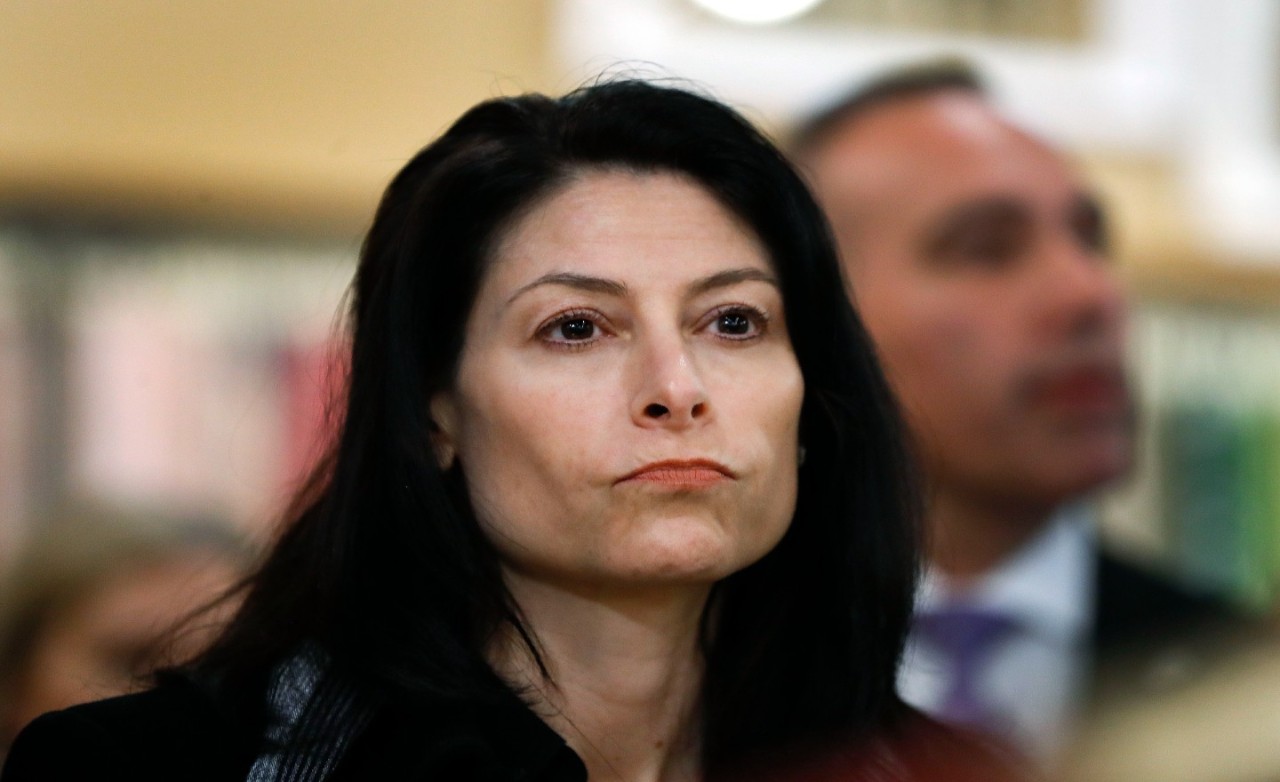
Michigan Attorney General Dana Nessel (D) on Friday requested a special prosecutor investigate her opponent’s alleged involvement in a group that gained unauthorized access to voting machines.
Politico published a petition from Nessel’s office calling for the special prosecutor after her investigation into the alleged scheme found ties to Matthew DePerno, the presumptive Republican nominee for Michigan attorney general, who is endorsed by former President Trump.
“When this investigation began there was not a conflict of interest,” the petition states. “However, during the course of the investigation, facts were developed that DePerno was one of the prime instigators of the conspiracy.”
The Hill has reached out to Nessel’s office and the Michigan Prosecuting Attorneys Coordinating Council, the group that received the petition, for comment.
Nessel’s investigation began after a request in February from Michigan Secretary of State Jocelyn Benson, who said she received reports that at least one unnamed third party was able to “gain inappropriate access” to voting machines in Richfield Township and Roscommon County.
Reuters on Sunday first publicly revealed DePerno’s alleged ties in Nessel’s investigation, and Politico moments later reported on her office’s request for a special prosecutor.
Reuters cited court documents alleging DePerno led a team that gained unauthorized access to voting machines in Richfield Township.
In its petition, Nessel’s office said the special prosecutor should review charges like willfully damaging a voting machine and fraudulent access to a computer system.
Trump in September endorsed DePerno, who is a vocal supporter of the former president’s unfounded claims of election fraud.
Tyson Shepard, DePerno’s campaign manager, in a statement called Nessel’s actions “unethical.”
“Dana Nessel has a history of targeting and persecuting her political enemies,” Shepard said.
“At the same time she has refused to prosecute any crime involving Democrats including the deaths resulting from the nursing home COVID scandal,” he added.
Republican state lawmakers have grilled Michigan Gov. Gretchen Whitmer’s (D) administration for her executive order early in the pandemic that placed seniors recovering from COVID in dedicated isolation wings in nursing homes, arguing the policy led to more deaths.
One week after kicking disgraced UK Prime Minister Boris Johnson on his way out the door, John Oliver returned to the Last Week Tonight desk on Sunday to weigh in on the defamation trial of unhinged conspiracy theorist Alex Jones, who was found liable for falsely claiming the Sandy Hook massacre was a “hoax” filled “with actors.”
The jury awarded Neil Heslin and Scarlett Lewis, the parents of slain 6-year-old Jesse Lewis, $45.2 million in punitive damages and $4.1 million in compensatory damages. Jones, 48, is facing additional defamation suits in Connecticut and Texas.
After describing Jones as “a man who boldly answers the question: What if Grimace were a Proud Boy?” Oliver exclaimed, “Guess what, Alex? You fucked with info and this time info fucking won.” He added: “And the way he’s handled this trial is almost a master class in what not to do in court.”
For starters, as Oliver pointed out, the judge became so “exasperated” with Jones’ lying in court that she at one point stopped the proceedings to address it, telling him, “It seems absurd to instruct you again that you must tell the truth while you testify, but here I am: You must tell the truth while you testify… this is not your show.”
That didn’t stop Jones, who continued to appear during the trial on his truth-averse Infowars show, where he, according to Oliver, “baselessly linked [the judge] to pedophilia” and suggested that his political enemies stacked the jury with “blue-collar” people who were not capable of deciding the damages he should pay. This is typical of Jones, who once claimed that the government had been poisoning the water and made frogs turn gay, that Parkland shooting survivor David Hogg was a crisis actor, that the car attack in Charlottesville was a false flag operation, that Michelle Obama is transgender, and that 9/11 was “a government-orchestrated controlled bombing.”
“There was one twist that he may not have seen coming,” Oliver said of Jones’ trial.
A lawyer representing the parents of the slain Sandy Hook child presented a text message in court that proved Jones had lied on the stand when he claimed that there were no texts on his phone of him discussing Sandy Hook. When Jones expressed surprise at where the lawyer might have gotten it, he explained to Jones: “Did you know [that] 12 days ago your attorneys messed up and sent me an entire digital copy of your entire cellphone, with every text message you’ve sent for the past two years? And when informed, [they] did not take any steps to identify it as privileged or protected in any way? And as of two days ago, it fell free and clear into my possession, and that is how I know you lied to me when you said you didn’t have text messages about Sandy Hook.”
“This is your Perry Mason moment,” a stunned Jones replied.
“Oh shit!” exclaimed Oliver. “First, credit to that lawyer for having the superhuman patience to sit on those text messages for 12 whole days… but the content of Jones’ phone could become a problem for him. Not only has the Jan. 6 committee already requested those phone records, but they also show that Jones, who’s tried to plead poverty in this case, was earning revenue of as much as $800,000 per day in recent years from sales.”
Oliver concluded: “Look, clearly, none of this is going to stop him. There are two more trials coming up, and he’s probably going to find ways to turn those into a clown show as well and fundraise off them too. But at the very least, this phone thing could make his life much more difficult—and for a while. And that is something that we should all be allowed to enjoy, because to wake up one morning and find out that Alex Jones’ lawyers mistakenly shared his cellphone records of him is a true blessing. We don’t deserve this, but one thing’s for sure: He definitely does.”
The Minnesota Bureau of Criminal Apprehension is investigating an incident where deputies fatally shot a man early Sunday morning in Otsego, the Wright County Sheriff’s Office says.
The sheriff’s office says deputies went to the 12000 block of 72na Court Northeast for a report that a man had threatened to hurt his family and himself while having mental health challenges.
The report indicates the man agreed to go with responders to the hospital for an evaluation, but while waiting for the ambulance, the man grabbed a knife and fled.
Squads surrounded the neighborhood and called the Minnesota State Patrol helicopter to the area.
Shortly after, the man confronted deputies in a nearby backyard.
The sheriff’s office says the deputies tried to assess the man but were not successful.
When the man was near the deputies, he threatened them with a knife, so they shot him, the report says.
Despite life-saving efforts, the man later died at North Memorial Hospital.
No details about the man or the deputies have been provided at this time.
While the BCA investigates, the deputies have been placed on administrative leave, which the sheriff says is standard procedure.
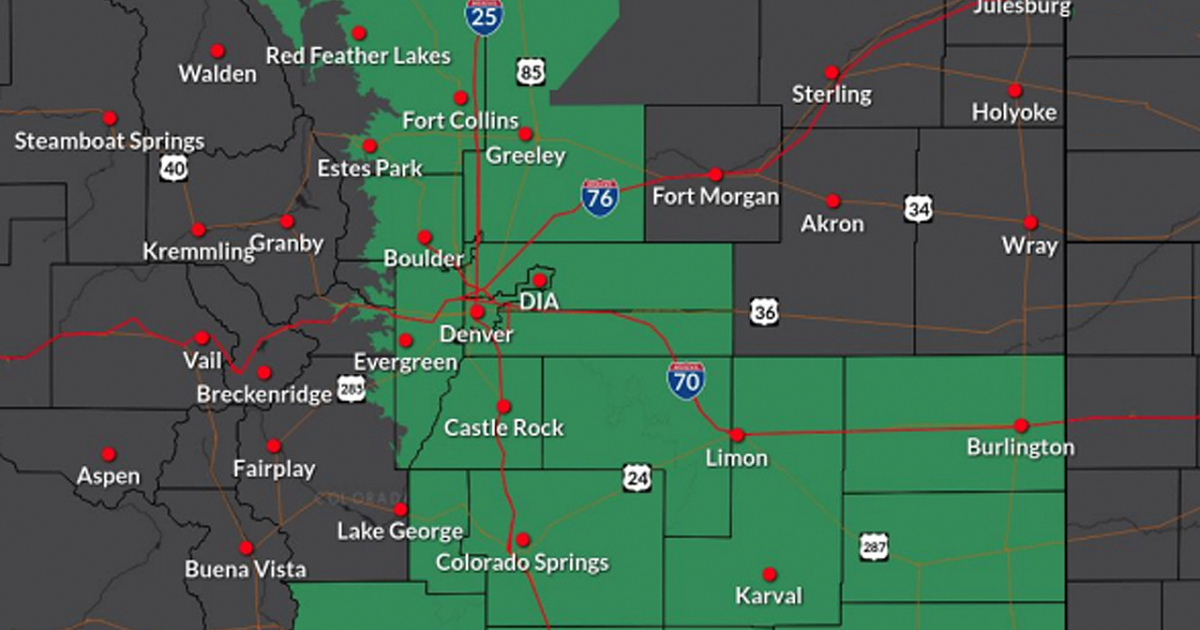
DENVER — A flood advisory has been issued for Denver and Adams counties until 8:15 pm Sunday. Multiple warnings have been issued Sunday evening as a flood watch remains in effect for Denver and the Front Range as storms move through.
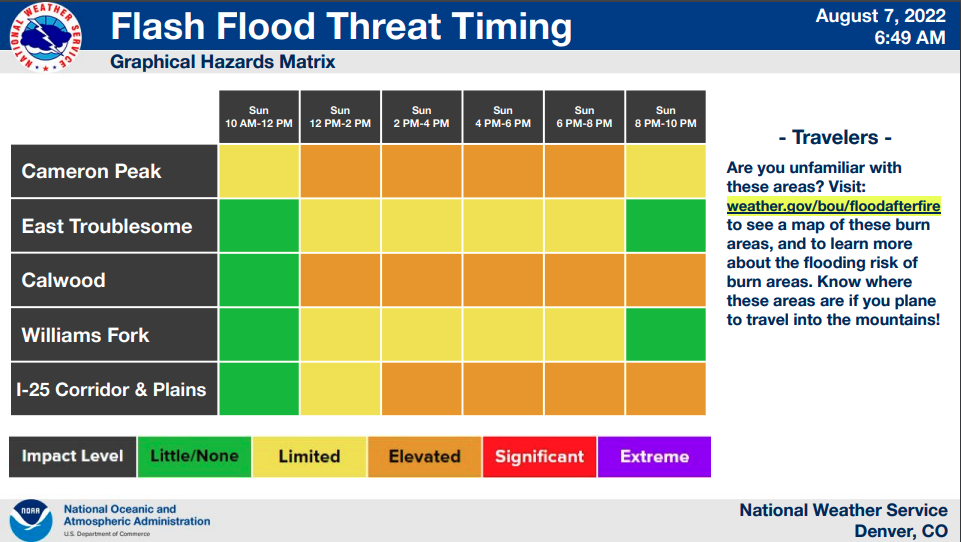
A heavy rain threat may produce rainfall of 1 to 2 inches in as little as 45 minutes, with locally higher storm totals possible, according to the National Weather Service.
N.W.S.
Multiple rounds of thunderstorms from mid-afternoon through Sunday evening are expected. The heavy rain is expected to end late Sunday, with the flood watch set to expire at midnight.
Recent burn areas are especially vulnerable, leading to possible flash flooding and debris flows in areas previously ravaged by flash floods earlier this year.
The Cameron Peak and Calwood burn scar areas are included in the flood watch which goes into effect Sunday afternoon.
N.W.S.
“The focus for storms today is expected in and near the foothills. The weak front that pushes south this morning, stalls as it pushes up the east slopes of the Front Range foothills and mountains,” the NWS forecast discussion said.
Next week will be drier and warmer, with highs in the mid-80s on Monday and only a slight chance for a scattered late-day storm.
(KTNV) — Officials say that Death Valley saw almost a year’s worth of rainfall within three hours last weekend.
They say that the rain caused widespread damage, and closure of all park roads.
“The heavy rain that caused the devastating flooding at Death Valley was an extremely rare, 1000-year event,” says Daniel Berc, a meteorologist with the National Weather Service Las Vegas. “A 1000-year event doesn’t mean it happens once per 1000 years, rather that there is a 0.1% chance of occurring in any given year.”
Additionally, many thousands of roadways are known to have moderate to severe asphalt damage with hundreds of thousands of roadways impacted by debris. Road conditions are still being assessed, as damage makes access to some areas impossible by vehicle.
To date, there is said to be no reported injuries from visitors or park residents, and people who were previously sheltering in place have been able to carefully travel out through the damaged roadways. No park roads are currently open because of ongoing safety concerns and active road work.
“Death Valley is an incredible place of extremes,” said park superintendent Mike Reynolds. “It is the hottest place in the world, and the driest place in North America. This week’s 1,000 year flood is another example of this extreme environment. With climate change models predicting more frequent and more intense storms, this is a place where you can see climate change in action!”
Democrats in the United States have passed a sweeping $430bn bill intended to fight climate change, lower drug prices and raise some corporate taxes, in a major victory for President Joe Biden.
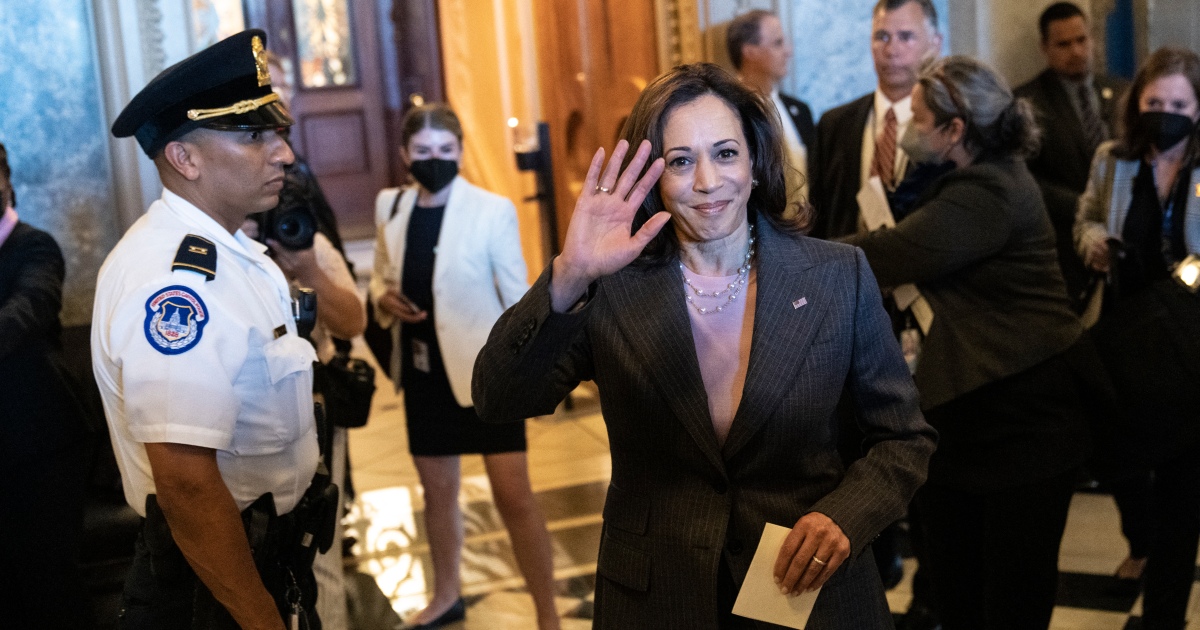
The package, known as the Inflation Reduction Act, passed the Senate on Sunday by a 51-50 party line vote with Vice President Kamala Harris casting the tie-breaking ballot.
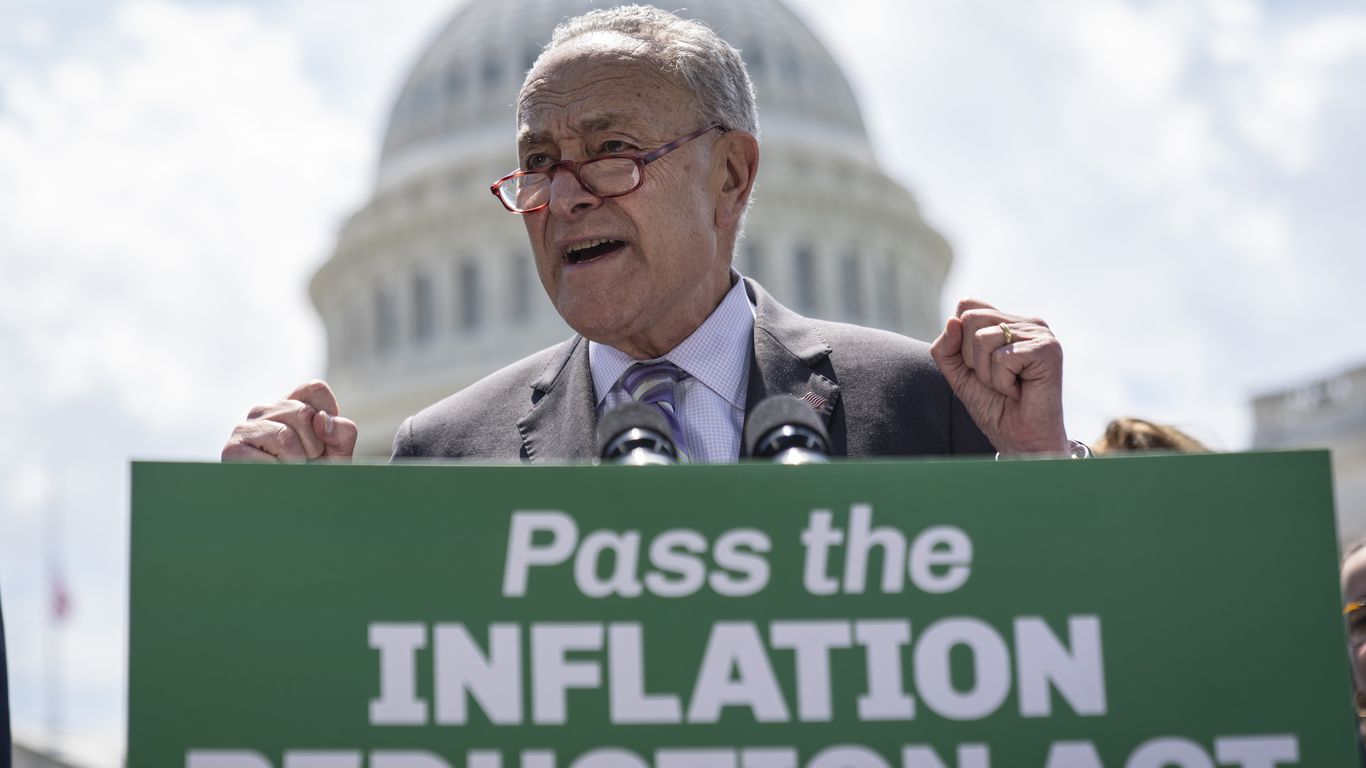
“The Senate is making history,” an elated Senate Majority Leader Chuck Schumer said, after pumping his fists in the air as cheered Democrats and their staff members responded to the vote with a standing ovation.
“To Americans who’ve lost faith that Congress can do big things, this bill is for you,” he said. “This bill is going to change America for decades.”
Schumer said the legislation contains “the boldest clean energy package in American history” to fight climate change while reducing consumer costs for energy and some medicines.
The action sends the measure to the House of Representatives for a vote, likely Friday when representatives plan to reconvene briefly during a summer recess. They are expected to pass it, which would then send the bill to the White House for Biden’s signature. In a statement, Biden said he looked forward to signing the bill into law.
Democrats hope the bill’s passage will help the party’s House and Senate candidates in the November 8 midterm elections at a time when Biden is suffering from anemic public approval ratings amid high inflation.
Senators engaged in a round-the-clock marathon of voting that began Saturday and stretched late into Sunday. Democrats swatted down some three dozen Republican amendments designed to torpedo the legislation.
Conservative lawmakers have criticized the bill as wasteful spending, with top Republican Senator Mitch McConnell accusing Democrats of voting to “double down on their economic disaster”.
‘Biggest climate investment in US history’
The legislation is aimed at reducing carbon emissions and shifting consumers to green energy, while cutting prescription drug costs for the elderly and tightening enforcement on taxes for corporations and the wealthy.
The bill would invest nearly $375bn over the decade in climate change-fighting strategies including investments in renewable energy production and tax rebates for consumers to buy new or used electric vehicles.
It’s broken down to include $60bn for a clean energy manufacturing tax credit and $30bn for a production tax credit for wind and solar, seen as ways to boost and support the industries that can help curb the country’s dependence on fossil fuels. The bill also gives tax credits for nuclear power and carbon capture technology that oil companies such as Exxon Mobil have invested millions of dollars to advance.
For consumers, there are tax breaks as incentives to go green. One is a 10-year consumer tax credit for renewable energy investments in wind and solar. There are tax breaks for buying electric vehicles, including a $4,000 tax credit for purchase of used electric vehicles and $7,500 for new ones.
In all, Democrats believe the strategy could put the country on a path to cut greenhouse gas emissions 40 percent by 2030, and “would represent the single biggest climate investment in US history, by far”.
“This is a historic achievement,” said Gregory Wetsone, president of the American Council on Renewable Energy.
“This represents the first time in the United States that we have seen Congress take a serious effort to deal with the climate problem. And this bill, the programs it includes, are ones we have been advocating for many years and I think will have a huge impact allowing the clean energy transition that we know we are going to need to deal with climate change,” he told Al Jazeera .
Lower prescription drug costs
On the healthcare front, the bill would allow the Medicare program to negotiate prescription drug prices with pharmaceutical companies for the first time, saving the federal government some $288bn over the 10-year budget window.
Those new revenues would be put back into lower costs for seniors on medications, including a $2,000 out-of-pocket cap for older adults buying prescriptions from pharmacies. It also extends expiring subsidies that help 13 million people afford health insurance.
The bill’s final costs were being recalculated, but overall it would raise more than $700bn over a decade. The money would come from a 15 percent minimum tax on a handful of corporations with annual profits above $1bn, a 1 percent tax on companies that repurchase their own stock, bolstered IRS tax collections, and government savings from lower drug costs.
With some $740bn in new revenue and around $440bn in new investments, the bill promises to put the difference of about $300bn toward deficit reduction.
The latest package is barely more than one-tenth the size of Biden’s initial 10-year, $3.5 trillion rainbow of progressive aspirations in his Build Back Better initiative. It abandoned earlier proposals for universal preschool, paid family leave, and expanded child care aid. That plan collapsed after conservative Senator Joe Manchin, a Democrat, opposed it saying it was too costly and would drive inflation.
Nonpartisan analysts have said the Inflation Reduction Act would have a minor effect on surging consumer prices.
Republicans said the bill would undermine an economy that policymakers are struggling to keep from plummeting into recession. They said the bill’s business taxes would hurt job creation and force prices skyward, making it harder for people to cope with the nation’s worst inflation since the 1980s.
“Democrats have already robbed American families once through inflation, and now their solution is to rob American families a second time,” McConnell, the Senate Minority leader, argued.
He said spending and tax increases in the legislation would eliminate jobs while having an insignificant effect on inflation and climate change.
Aug 7 (Reuters) – Police in New Mexico on Sunday asked for the public’s help in locating a “vehicle of interest” in their probe of four fatal shootings of Muslim men whose slayings in Albuquerque over the past nine months are believed by investigators to be related.
Mayor Tim Keller said state authorities were working to provide an “extra police presence at mosques during times of prayer” as the investigation proceeds in New Mexico’s largest city, home to as many as 5,000 Muslims out of some 565,000 total residents.
The latest victim, police said, was gunned down on Friday night, in a killing that local Islamic leaders said occurred shortly after he had attended funeral services for two others slain during the past couple of weeks.
Register now for FREE unlimited access to Reuters.com
Register
All three of those men, as well as the very first victim who was shot dead in November, were Muslim men of Pakistani or Afghan descent who resided in Albuquerque.
Police have given few details of the latest murder but described the first three killings as ambush shootings. Governor Michelle Lujan Grisham has characterized them as “targeted killings of Muslim residents.”
US President Joe Biden posted a message on Twitter on Sunday expressing solidarity with the Muslim community, adding, “These hateful attack have no place in America.”
Albuquerque police officials told a news conference hours later that they were following a number of leads and issued a bulletin with photos of a four-door, dark gray Volkswagen sedan with tinted windows that they described as a “vehicle of interest” in the investigation.
It was left unclear how the car was tied to the case, and police said they had yet to determine whether they were seeking one or more suspects in the investigation.
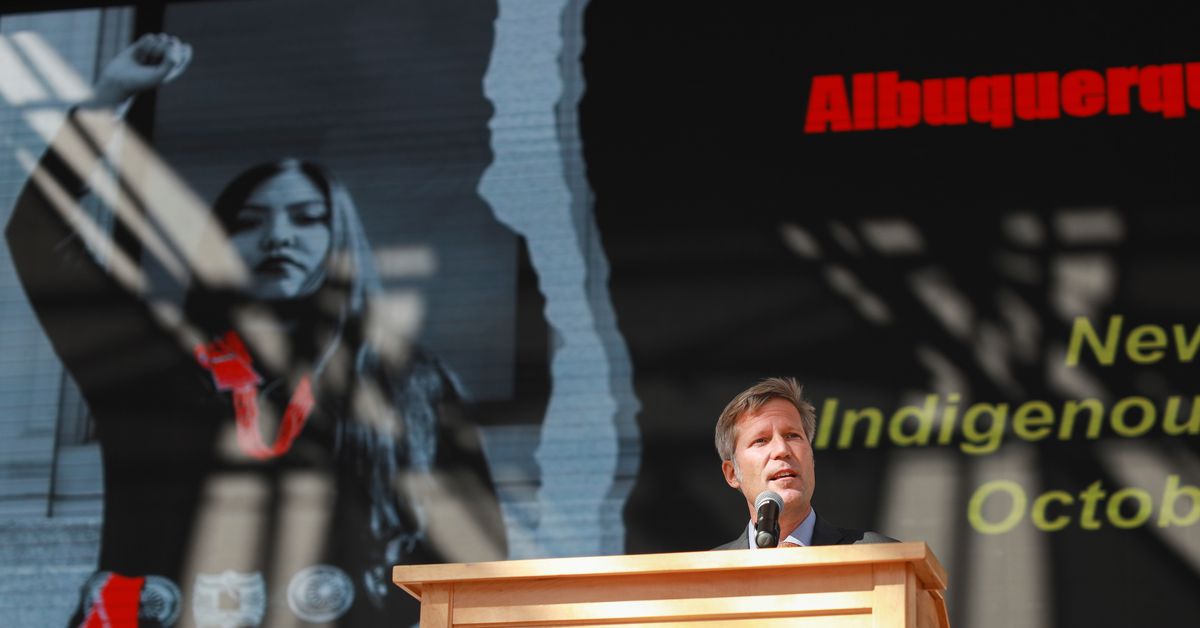
Mayor of Albuquerque Tim Keller speaks to the public during an event to mark Indigenous Peoples’ Day in Albuquerque, New Mexico, US, October 11, 2021. REUTERS/Mostafa Bassim
Read More
The three latest victims belonged to the same mosque, according to Tahir Gauba, a spokesperson for the Islamic Center of New Mexico. Officials were withholding the identity of the man killed on Friday pending notification of next of kin.
But Gauba said he was killed shortly after attending the funeral for the two previous victims.
Muhammed Afzaal Hussain, 27, a planning director for the city of Espanola who immigrated from Pakistan, was shot dead on Aug. 1 outside his apartment complex, less than a week after Aftab Hussein, 41, from Albuquerque’s large Afghan community, was found slain on July 26 near the city’s international district, police said. Hussain also worked on the campaign team for US Representative Melanie Stansbury of New Mexico.
Police said they were treating those two slayings, along with Friday’s killing, as linked to the Nov. 7 murder of 62-year-old Mohammad Ahmadi, also a Muslim from Afghanistan, who was shot to death in a parking lot outside a halal supermarket and coffee.
“There are several things in common with all four of the homicides,” city police spokesman Gilbert Gallegos told reporters on Sunday.
Asked whether investigators consider the killings to be hate crimes, Gallegos said, “Hate is determined by motive, and we don’t know that motive at this point.”
Gauba estimated there are 3,000 to 5,000 Muslims living in and around Albuquerque, accounting for about 85% of the entire state’s Islamic population.
New Mexico State Police, the FBI and the US Marshals Service are among the agencies assisting in the investigation.
Register now for FREE unlimited access to Reuters.com
Register
Reporting by Steve Gorman in Los Angeles; Additional reporting by Doina Chiacu in Washington; Editing by Lisa Shumaker and Edwina Gibbs
Our Standards: The Thomson Reuters Trust Principles.
Senate Democrats on Sunday passed their sweeping, $740 billion tax, climate and health care reconciliation package after an all-night session, with Vice President Kamala Harris casting the tie-breaking vote.
Why it matters: The 51-50passage of the bill, just three months before the midterm elections, is a massive victory for Democrats who have spent 18 months working toward delivering on their longstanding dreams of helping address climate change, lower the cost of prescription drugs and hike taxes on large corporations.
The “Inflation Reduction Act of 2022” is far less ambitious than most Democrats wanted — the initial bill was roughly $3.5 trillion and also addressed paid family leave, funding for universal preschool and expanding the child tax credit.
But the narrower version of the bill succeeded in getting the support of the Senate’s two centrist members who had previously stood in the party’s way — Sens. Joe Manchin (DW.Va.) and Kyrsten Sinema (D-Ariz.).
The package now moves to the House, where members will vote as early as Friday on advancing the bill to President Biden’s desk.
Details: The Senate returned to the Capitol on Saturday afternoon, and began voting late Saturday night and into Sunday on a series of amendments — part of the process known as “vote-a-rama.”
Senate Republicans offered dozens of amendments aimed at minimizing the bill, including stripping out funding for the Internal Revenue Service and eliminating COVID-19-related school mandates.
Democrats held firm in their unity, with the help of Harris, of preserving the core elements of the package and voting down each GOP amendment.
One major setback, however, it was a ruling by the Senate Parliamentarian that determined Democrats’ proposal to place a $35 cap on commercial insulin violated the “Byrd Rule,” which governs the provisions for what can be accepted in budget reconciliation legislation.
Democrats tried, and failed, to attach an amendment including the insulin provision to the bill, but Republicans voted it down, eliminating it from the package.
Seven GOP senators — Bill Cassidy (R-La.), Susan Collins (R-Maine), Josh Hawley (R-Mo.), Cindy Hyde-Smith (R-Miss.), John Kennedy (R-La.), Lisa Murkowski (R-Alaska) and Dan Sullivan (R-Alaska) — voted with Democrats.
The bill includes:
$370 billionfor climate change.
Allows the federal health secretary to negotiate the prices of certain expensive drugs for Medicare.
Three-year extension on health care subsidies in the Affordable Care Act.
15% minimum tax on corporations making $1 billion or more in income. The provision offers more than $300 billion in revenue.
IRS tax enforcement.
1% excise tax on stock buybacks.
The significance of the climate portion: The bill is the largest investment in clean energy and emissions cuts the Senate has ever passed, with the climate portion totaling about $370 billion, Axios’ Andrew Freedman writes.
This includes tax incentives to manufacture and purchase electric vehicles, generate more wind and solar electricity and support fledgling technology such as direct air capture and hydrogen production.
Independent analyzes show the bill, combined with other ongoing emissions reductions, would cut as much as 40% of US greenhouse gas emissions by 2030, short of the White House’s 50% reduction target. However, if enacted into law, it would reestablish US credibility in international climate talks, which had been flagging due in part to congressional gridlock.
As part of Democrats’ concessions to Manchin, the bill also contains provisions calling for offshore oil lease sales in the Gulf of Mexico and off the coast of Alaska, and a commitment to take up a separate measure to ease the permitting of new energy projects.
What they’re saying: “Today, after more than a year of hard work, the Senate is making history. I am confident the Inflation Reduction Act will endure as one of the defining legislative feats of the 21st century,” Senate Majority Leader Chuck Schumer (DN.Y.) said.
“Our bill reduces inflation, lowers costs, creates millions of good-paying jobs and is the boldest climate package in US history. This bill will kick start the era of affordable clean energy in America. It’s a game changer, a turning point. And it’s been a long time coming.”
“Democrats have already robbed American families once through inflation, and now their solution is to rob American families a second time,” said Senate Minority Leader Mitch McConnell (R-Ky.).
President Biden praised the passage of the bill in a statement Sunday, saying, “Today, Senate Democrats sided with American families over special interests, voting to lower the cost of prescription drugs, health insurance, and everyday energy costs and reduce the deficit, while making the wealthiest corporations finally pay their fair share. I ran for President promising to make government work for working families again, and that is what this bill does — period.”
Maine State Police announced Sunday an arrest in connection with a fatal shooting in Mexico. The agency said around 1 pm Saturday, police were called to a home on Intervale Avenue for a reported shooting. State police say responding officers from Mexico and Rumford found Nicholas Trynor, 27, dead. “Maine State Police Major Crime Unit Detectives were called in to assist in the investigation and worked throughout the night and throughout the day Sunday gathering statements and evidence,” the agency stated in a press release. Thomas Tellier, 52, was arrested Sunday in connection with the death of his stepson. State police say Tellier was taken to the Oxford County Jail on a murder charge. He is expected to be arraigned later this week in Oxford County Superior Court. According to Trynor’s father Paul, Nicholas leaves behind a young son. The family set up a fundraiser to offset the cost of funeral expenses.
MEXICO, Maine—
Maine State Police announced Sunday an arrest in connection with a fatal shooting in Mexico.
The agency said around 1 pm Saturday, police were called to a home on Intervale Avenue for a reported shooting.
State police say responding officers from Mexico and Rumford found Nicholas Trynor, 27, dead.
“Maine State Police Major Crime Unit Detectives were called in to assist in the investigation and worked throughout the night and throughout the day Sunday gathering statements and evidence,” the agency stated in a press release.
Thomas Tellier, 52, was arrested Sunday in connection with the death of his stepson.
State police say Tellier was taken to the Oxford County Jail on a murder charge.
He is expected to be arraigned later this week in Oxford County Superior Court.
According to Trynor’s father Paul, Nicholas leaves behind a young son.
The family set up a fundraiser to offset the cost of funeral expenses.