The Senate on Tuesday night overwhelmingly approved the PACT Act, a bill to expand health care benefits for veterans who developed illnesses due to their exposure to burn pits during military service. The 86-to-11 vote was received with cheers from the Senate gallery.
The bill now heads to President Biden’s desk, and the White House says he looks forward to signing it. The vote came after Senate Majority Leader Chuck Schumer announced Tuesday afternoon that he and Minority Leader Mitch McConnell had come to an agreement.
“This is a wonderful moment, especially for all the people who have made this happen who are observing it,” Schumer said after the vote. “Thank you, thank you, thank you, thank you.”
Watching the final vote from the Senate gallery Tuesday night, comedian Jon Stewart, a vocal advocate for the bill and veterans, could be seen with tears in his eyes. Stewart has been on Capitol Hill rallying support for the bill and pressing senators to pass it.
“I’m not sure I’ve ever seen a situation where people who have already given so much had to fight so hard to get so little,” he said after the vote. “I hope we learn a lesson.”
Democratic Sen. Richard Blumenthal had a message for the Department of Veterans Affairs Tuesday night: “I have a message to the VA: You better get it right. You better deliver. These veterans have waited already too long.”
Mr. Biden said after the vote that he looks forward to signing the bill “so that veterans and their families and caregivers impacted by toxic exposures finally get the benefits and comprehensive health care they earned and deserve.”
We’ll never be able to repay the debt we owe to those who have worn the uniform, but today, Congress delivered on a promise to our veterans and their families.
The PACT Act will be the biggest expansion of VA health care in decades. We should all take pride at this moment. pic.twitter.com/l72HcsNJLw
the law will expand benefits for an estimated 3.5 million veterans exposed to toxic burn pits during the US wars in Afghanistan and Iraq. The bill will remove the burden of proof from veterans seeking care for conditions related to exposure from burn pits by presuming a number of conditions, including several cancers, are related to exposure.
Burn pits are holes in the ground the US military dug near bases in countries that had limited infrastructure where troops would dump trash and burn it to dispose of it.
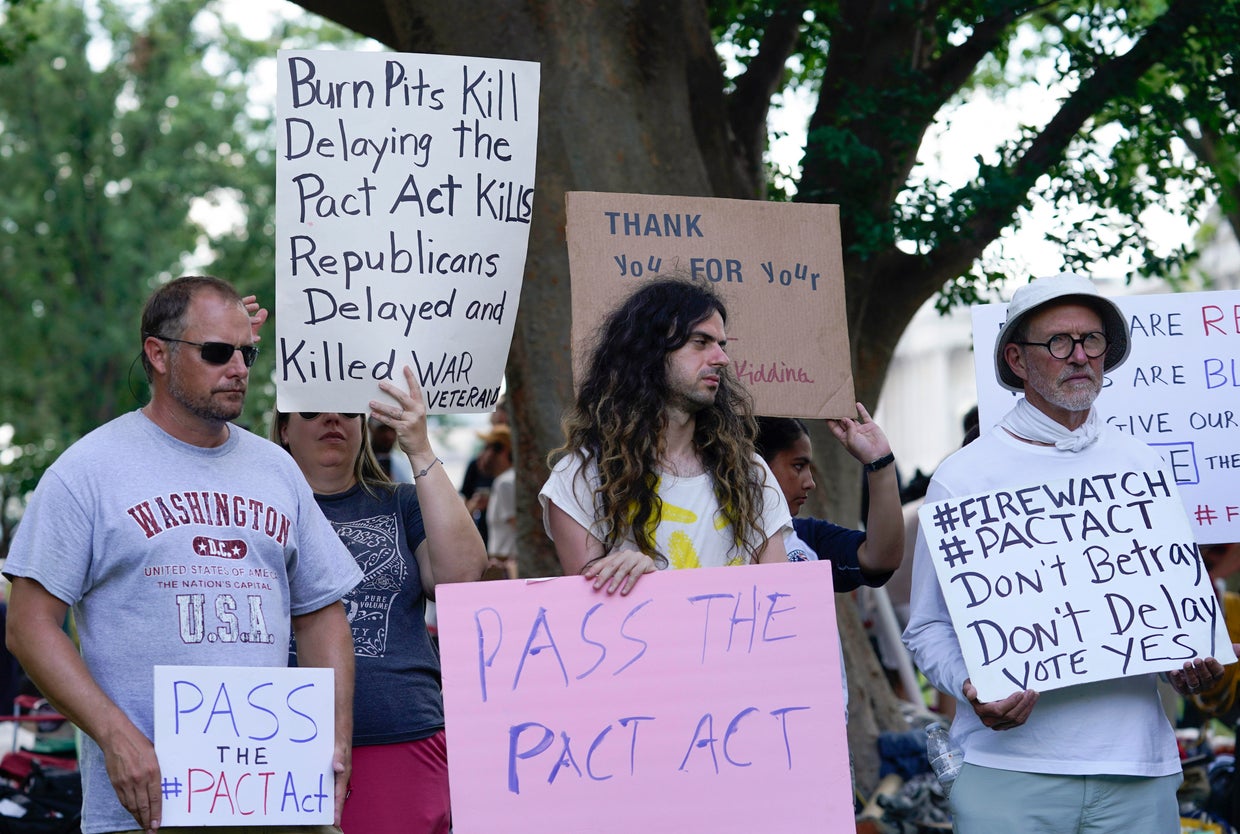
Veterans, military family members and advocates rally outside the Capitol in Washington, Tuesday, Aug. 2, 2022, in support of a bill that enhances health care and disability benefits for millions of veterans exposed to the toxic burn pits.
Mariam Zuhaib/AP
The bill initially passed the House and Senate in June, but due to a snag in the language, it had to go back to the House and Senate before it could be sent to President Biden’s desk. The legislation again passed the House but failed to advance beyond a procedural vote in the Senate last week.Twenty-five Republican senators who had voted for the bill in June voted against advancing the bill last week, citing an objection to how the legislation is paid for.
Republican Sen. Pat Toomey of Pennsylvania has objected since June to a provision in the legislation language that would move $400 billion in preexisting discretionary veterans spending to make it mandatory spending. A measure that is paid for with mandatory spending generally does not have to be approved each year, as discretionary spending does. Toomey argues that this changed designation frees up funds that could be used on items unrelated to veterans.
Mr. Biden has blamed burn pits for the health problems of his late son, Beau Biden, who died of a brain tumor in 2015. In a 2019 speech to the Service Employees International Union, then-candidate Biden said because of his son’s “exposure to burn pits, in my view , I can’t prove it yet, he came back with stage four glioblastoma.”
— Melissa Quinn contributed to this report.
kathryn watson
Kathryn Watson is a politics reporter for CBS News Digital based in Washington, DC
A new round of US sanctions targeting Russian elites includes a woman named in news reports as Vladimir Putin’s longtime romantic partner.
The Treasury Department said Tuesday that the government has frozen the visa of Alina Kabayeva, an Olympic gymnast in her youth and former member of the state Duma, and imposed other property restrictions. The department said she is also head of a Russian national media company that promotes Russia’s invasion of Ukraine.
In this November 4, 2004 file photo, Russian President Vladimir Putin speaks with gymnast Alina Kabaeva at a Kremlin banquet in Moscow, Russia.
ITAR-TASS/AP
Critics of the Kremlin and imprisoned Russian rights campaigner Alexey Navalny have been calling for sanctions against Kabaeva, saying her news outlet took the lead in portraying Western commentary on the invasion as a disinformation campaign.
The UK sanctioned Kabaeva in May and the EU imposed travel and asset restrictions on her in June.
Rumors have circulated for years about Kabaeva’s personal relationship with the Russian leader. Russian tabloids have dubbed her “Russia’s First Mistress” and even the “Secret First Lady.”
In 2008, Russian newspaper Moskovsky Korrespondent reported that Putin had plans to divorce his longtime wife, Lyudmila, to be with Kabaeva. The paper was shut down two days later. But five years later, Putin announced that he and Lyudmila had separated.
Russian retired rhythmic gymnast and politician Alina Kabaeva attends a reception at on February 8, 2014 in Sochi, Russia.
Sasha Mordovets/Getty Images
Also named in the Treasury’s latest sanctions package is Andrey Grigoryevich Guryev, an oligarch who owns the Witanhurst estate, a 25-bedroom mansion that is the second-largest estate in London after Buckingham Palace.
His $120 million yacht, the Alfa Nero, was also identified as blocked property. Also sanctioned was his son Andrey Andreevich Guryev and his son’s Russian investment firm Dzhi AI Invest OOO.
Viktor Filippovich Rashnikov, one of Russia’s largest taxpayers, and two subsidiaries of his MMK, which is among the world’s largest steel producers, also were slapped with sanctions, AFP reported.
“As innocent people suffer from Russia’s illegal war of aggression, Putin’s allies have enriched themselves and funded opulent lifestyles,” Treasury Secretary Janet Yellen said in a statement.
“Together with our allies, the United States will also continue to choke off revenue and equipment underpinning Russia’s unprovoked war in Ukraine.”
The State Department also imposed additional visa restrictions and other sanctions.
In April, the US imposed sanctions on Putin’s adult daughters Katerina Vladimirovna Tikhonova and Maria Vladimirovna Vorontsova.
A 911 call released Tuesday revealed that the co-pilot who mysteriously vanished mid-air in North Carolina had “jumped” out of the aircraft.
Two Federal Aviation Administration employees could be heard saying that Charles Hew Crooks’ co-pilot reported that he leaped out of the damaged plane before it made an emergency landing at Raleigh Durham International Airport on Friday, WRAL reported.
“This is from Raleigh Airport,” an FAA air traffic controller said on the recording. “We have a pilot who was inbound to the field. His co-pilot jumped out of the aircraft. He made impact to the ground and here are the coordinates.”
The 23-year-old’s body was later discovered in the backyard of a home in Fuquay-Varina, North Carolina, about 30 miles south of the airport.
The body of Charles Hew Crooks, 23, was discovered on July 29 in the backyard of a home in Fuquay-Varina, North Carolina, about 30 miles south of Raleigh Durham International Airport, where the plane made an emergency landing after losing its right wheel .
In the 13-minute call, an FAA employee said Crooks’ co-pilot had reported he “jumped out without the parachute, so he might have impact to the ground.”
“I am sure the pilot is going to be shaken up,” one FAA employee said. “I have no idea. He literally just said, ‘My pilot just jumped out.’”
The recording captured the FAA employees frantically trying to figure out what happened to Crooks.
“I guess at this point in time, all we can do is recovery,” an FAA controller told a dispatcher. “I don’t know. I don’t know. This is the craziest thing ever.”
Wake County Emergency Management officials told WRAL the initial 911 call was received at 2:30 pm Friday. The aircraft, a CASA 212-200, made an emergency landing about 18 minutes later, WRAL reported.
The National Transportation Safety Board has taken over the ongoing investigation. Preliminary information indicates the aircraft sustained substantial damage to its landing gear and fuselage, prompting the pilot to ask to make an emergency landing.WRAL
“Once the aircraft had landed, it was reconfirmed based on a report the pilot said the person in the aircraft had exited the aircraft prior to landing,” Wake County Emergency Management Chief of Operations Darshan Patel told the station.
Crooks’ co-pilot, whose identity hasn’t been released, was taken to a hospital for minor injuries during the landing. He was discharged later that day.
Crooks’ father, Hew Crooks, previously told WRAL he had no idea what happened during his son’s final moments.
“We can’t process it right now,” he said. “I don’t know.”
Devin Lynch, a friend of Crooks, said the incident doesn’t match what he knew about the late pilot.
“I’ve known Charles for three years,” Lynch told WRAL. “He was a pilot from the day I met him. I’ve flown with him a few times, and I can tell you firsthand what kind of pilot he was. He followed every rule to the letter.”
Lynch said he’d like to hear what the cockpit voice recorders picked up at the time.
“I would be interested in hearing the CVR recording because I’d like to hear what was going on in the cockpit that wasn’t being communicated to air traffic control,” Lynch said.
The National Transportation Safety Board has taken over the ongoing investigation. Preliminary information indicates the aircraft sustained substantial damage to its landing gear and fuselage, prompting the pilot to ask to make an emergency landing.
The pilots were flying at the time for Rampart Aviation, which has not responded to inquiries on the nature of the flight, WRAL reported.
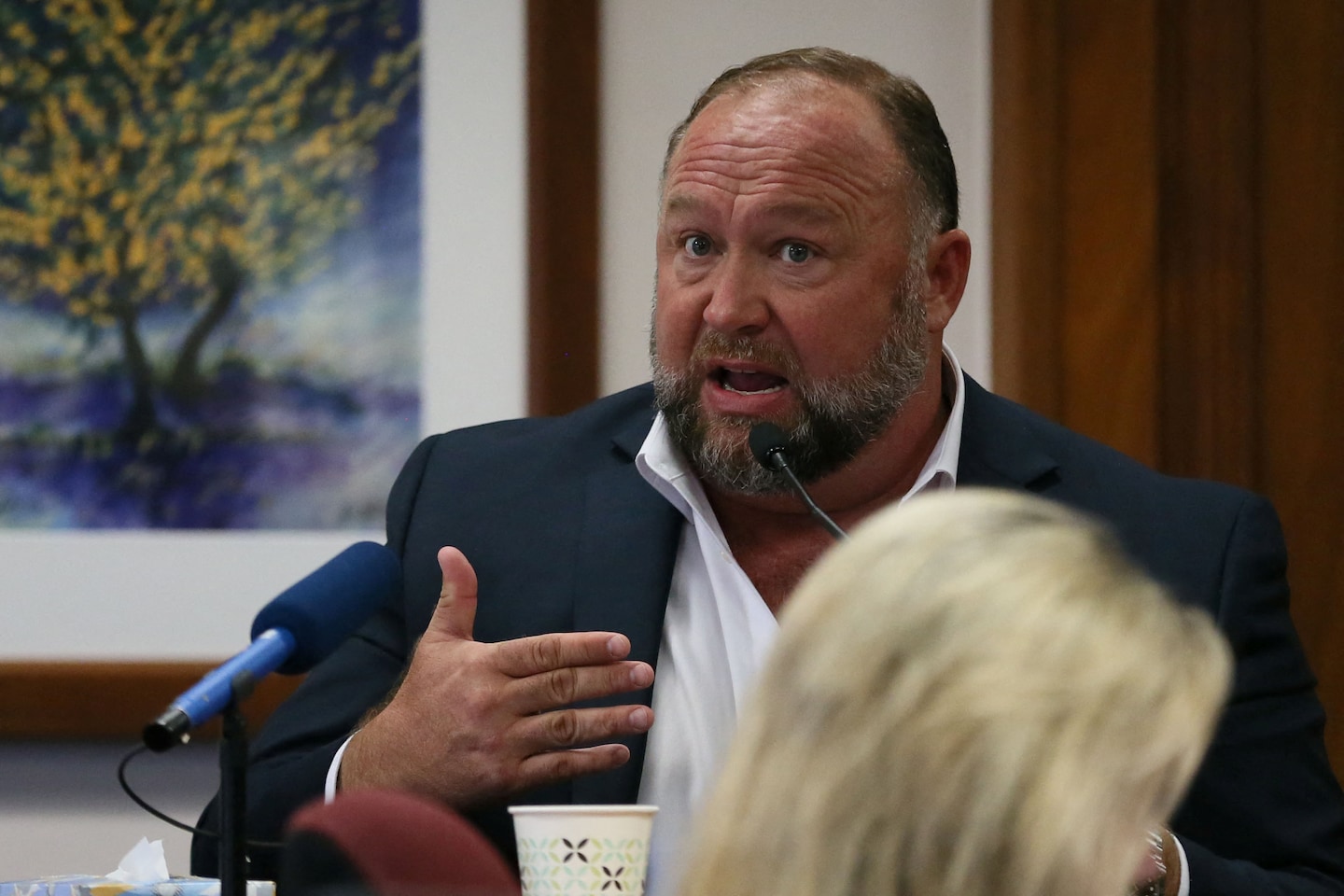
Parents who lost their 6-year-old son in the Sandy Hook massacre confronted right-wing conspiracy theorist Alex Jones in a courthouse Tuesday, saying his claims that the deadliest elementary school shooting in US history was a “giant hoax” created a “living hell” for them.
Scarlett Lewis and Neil Heslin, parents of Jesse Lewis, who was killed in the 2012 shooting in Newtown, Conn., are seeking $150 million in damages from the Infowars radio show and webcast host and his media company in a defamation trial.
Heslin, who took the stand before Jones arrived at the Travis County Courthouse in Austin on Tuesday, spoke of his grief — compounded with death threats and abuse from strangers that led the parents to fear for their own lives. “I can’t even describe the last nine and a half years, the living hell that I and others have had to endure because of the recklessness and negligence of Alex Jones,” Heslin told the jury.
Twenty-six people were killed in the shooting, 20 of them young children. Jones had told his audiences that it was a “false flag” operation carried out by “crisis actors.”
“My son existed,” Jesse’s tearful mother said, directing her testimony toward Jones. “There’s records of Jesse’s birth.”
Jurors in Austin, where Infowars is headquartered, will not hear evidence about the defamation claimsBecause Judge Maya Guerra Gamble entered a rare default judgment against Jones after he refused to turn over documents to the parents’ lawyers. Instead, the jury will determine how much in compensatory and punitive damages Jones must pay.
Infowars’ parent company, Free Speech Systems, filed for bankruptcy last week, according to Jones’s attorney, who said the firm would not interfere with the defamation lawsuit.
Alex Jones’s media company files for bankruptcy during Sandy Hook trial
Lewis stressed that she was not part of any “deep state” conspiracy theory. “I know you know that. That’s the problem … and you keep saying it, why? For money?” she asked. Jones shook his head.
“It seems so incredible to me that we have to do this — that we have to implore you… to get you to stop lying,” Lewis said. “I am so glad this day is here. I’m actually relieved… that I got to say all this to you.”
Heslin testified that it was unclear whether the conspiracy theory had started with Jones but said it was Jones who “lit the match and started the fire,” reaching millions with his Infowars platform.
A forensic psychologist who testified said Heslin and Lewis suffered from post-traumatic stress disorder.
Jones has previously acknowledged that the shooting took place and blamed his false claims on “a form of psychosis.” He testified Tuesday that he had been waiting to apologize and that his comments about him had been taken out of context.
“I never intentionally tried to hurt you. I never even said your name until this came to court — I didn’t know who you were until this came up,” Jones said. “The internet had questions. I had questions.”
Lewis asked Jones bluntly during her testimony: “Do you think I’m an actor?”
He replied: “No, I don’t think you’re an actor.”
Jones, 48, has been banned from major social media platforms such as Facebook, YouTube and Spotify for violating their hate-speech policies. Judges in Connecticut and Texas have also found Jones liable for damages in lawsuits stemming from his false claims of him.
Jones described the legal proceedings as a “witch hunt” and a “show trial” in a tirade to reporters last month.
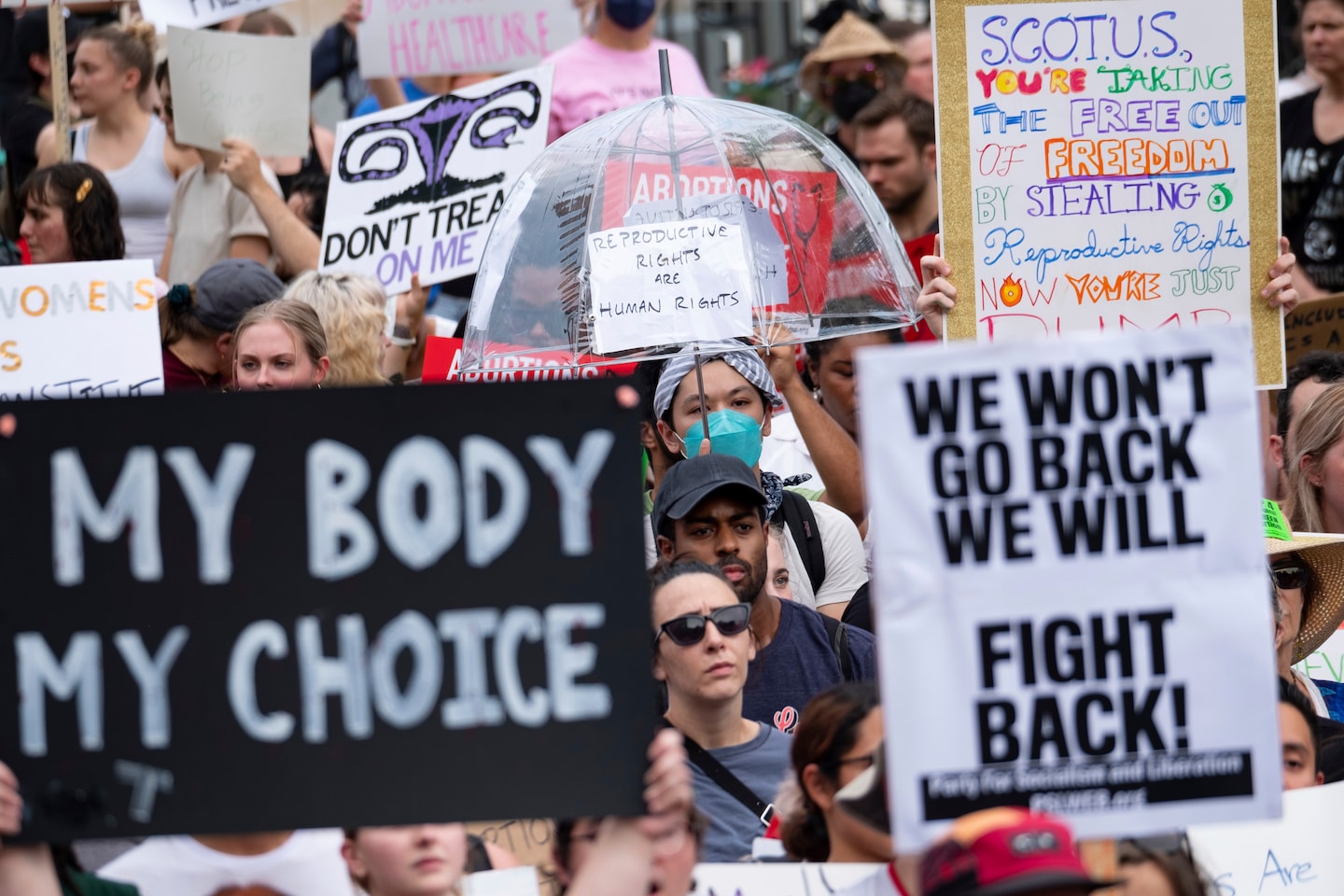
President Biden intends to sign an executive order on Wednesday aimed at helping Americans cross state lines for abortions, the White House said. It would be his second order from him intended to preserve abortion access after the Supreme Court struck down Roe v. Wade in June.
Both orders, however, are short on specifics, instead directing the Department of Health and Human Services to sort out how the policies would work. Last month, the president signed an order intended to ensure access to abortion medication and emergency contraception.
Wednesday’s order asks the department’s secretary, Xavier Becerra, to “consider action to advance access” to abortion, including through Medicaid, for those who travel out of state, the White House said in a news release. It also calls for Mr. Becerra to “consider all appropriate actions” to ensure health care providers comply with federal nondiscrimination laws, and promote research on maternal health.
The order comes after voters in Kansas on Tuesday overwhelmingly rejected an amendment that would have erased abortion rights from its state constitution. Also on Tuesday, the Biden administration sued Idaho over its strict new law that the Justice Department said would inhibit emergency room doctors from performing abortions that are necessary for women facing medical emergencies.
For months, Republicans have been telling anybody who would listen that this is the year they will end their power outage in Albany. They cite violent crime and inflation, an apparent lack of enthusiasm for Gov. Hochul and a national fury over the failures of the Biden administration.
Despite those advantages, there’s been little evidence so far that the GOP could free New York from the Dem stranglehold. A Tuesday poll begins to change that.
Hochul leads Republican Lee Zeldin by just 14 points, 53-39, in the Siena College survey. While 14 points is hardly a cliffhanger, it compares very favorably to 2014. At this stage of that race, incumbent Andrew Cuomo led GOP nominee Rob Astorino by 32 points in a race Cuomo won by 14.
Moreover, Zeldin, who has represented a Long Island district in Congress since 2015, effectively begins with the 40% high-water mark of any GOP gubernatorial candidate in the last four elections. (George Pataki was the last Republican governor, winning his third term in 2002).
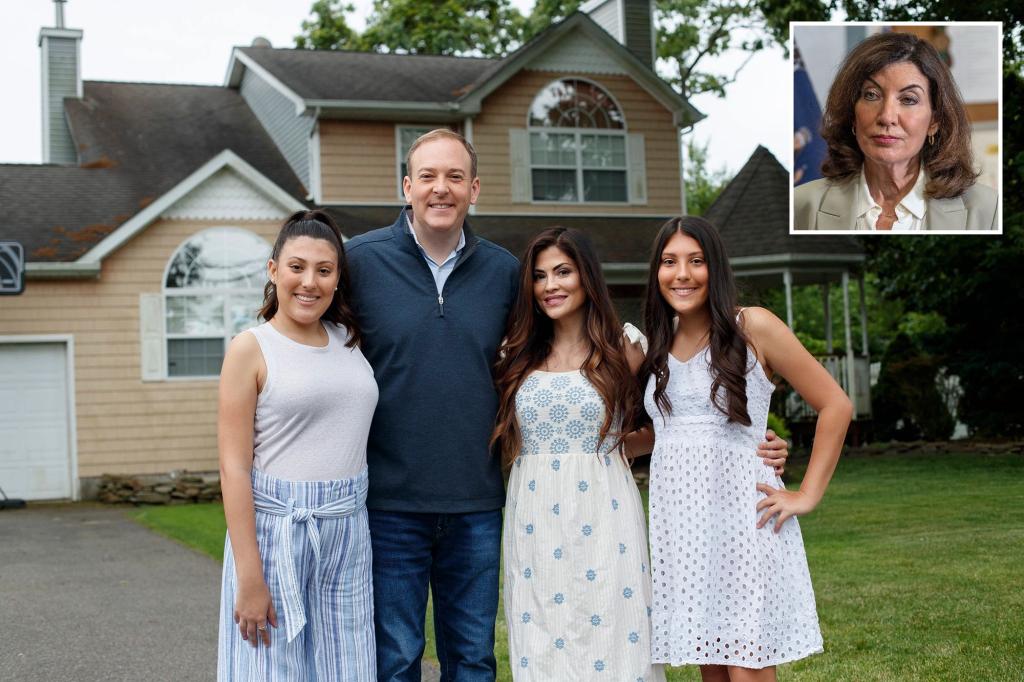
Republican candidate for Governor Lee Zeldin smiles with his family at home in Shirley, New York. Tamara Beckwith
So closing a 14-point gap with more than three months until Election Day is certainly doable, especially given the political environment and Hochul’s uneven performance.
Zeldin, in a phone interview, sees many greenshoots in the new survey and says his internal poll has him even closer.
“This is important for our team,” he says. “The next poll should show us gaining even more momentum.”
A new poll shows Zeldin’s race is much closer with Gov. Kathy Hochul than other recent GOP gubernatorial candidates have been.Lev Radin/Pacific Press/Shutterstock
The Siena survey is the most important since the primaries ended and is based on likely voters, as opposed to registered. It shows both candidates having a firm grasp on their party, with Zeldin holding a narrow lead among independents.
A missing piece is that, other than gun control and abortion, the poll does not ask about specific issues. Nor does it ask voters to rank the issues most important to them.
Zeldin has no doubts about what the answers would be to a ranking question.
“When we ask, a large majority answer either crime or the economy as the top issue,” he says. “And we believe that the election will be dominated by voters most concerned about those two things.”
His campaign has zeroed in on those targets and his pledge to fire Manhattan District Attorney Alvin Bragg on Day One has become a signature promise. He accuses Hochul of “giving cover” to Bragg and other soft-on-crime prosecutors.
“She tries way too hard to avoid talking about the key issues,” he insists. He cites Mayor Adams’ request for a special legislative session to deal with crime and the bail-law mess that has seen repeat offenders let go before cops finish the paperwork.
Zeldin pledged to come for Manhattan District Attorney Alvin Bragg if he were elected. Steve Hirsch
Hochul, while voicing support for fellow-Dem Adams, has done almost nothing to help him stem the bloodshed and mayhem in Gotham.
Zeldin was attacked during a recent speech by a troubled former veteran, an incident that probably helped him gain some name recognition and even sympathy.
He knows his pro-life stance puts him at a disadvantage with many voters after the Supreme Court overturned Roe v. Wade. But he notes that a law offering even more abortion protections than Roe already exists in New York and believes that social issues as a whole will take a back seat to the crime wave engulfing much of the state, along with the soaring cost of living. He is also pushing for tax cuts and more school choice.
In addition to his own efforts, the redistricting process that ended up in the courts and led to nonpartisan maps gives GOP candidates a chance to improve upon the seven congressional seats they now hold, which should help increase turnout for the ticket.
Meanwhile, Hochul’s tenure has been mystifying in a fundamental way. Even though she was Cuomo’s running mate and lieutenant governor Lieut. Gov. for eight years, she was able to escape any blame in the sexual-harassment scandal that led to Cuomo’s resignation by claiming she wasn’t close to him.
She was right about that, and her distance led to hopes she would bring ethics and new openness to Albany, where everything important happens in back rooms.
Those hopes were quickly dashed as Hochul inexplicably copied some of Cuomo’s worst habits. No sooner had she taken the oath than she began speed-dialing her donors for big-bucks contributions.
An attacker grabs Zeldin as he delivered a speech in Perinton, New York on July 21. WHEC-TV/AP
And her penchant for secrecy in negotiating big government deals with donors is so Cuomo-like that it seems as if he’s still calling the shots.
Perhaps most shocking, her first pick to replace her, state Sen. Brian Benjamin, was already taught in a federal corruption probe. Much of Albany apparently knew something was up—but not Hochul. Benjamin has since been indicted and resigned.
Keep up with today’s most important news
Stay up on the very latest with Evening Update.
In some ways, statewide elections in New York are a jigsaw puzzle of competing dominance. Republicans win most of the 62 counties and do especially well upstate, but Dems run up the score by capturing the cities and the most populated suburbs.
Zeldin has a plan for that. He sees getting 29% as the bare necessity in the five boroughs and believes he will top that margin easily, in part by attracting large numbers of Asian and Latino voters concerned about crime.
“If a Republican gets less than 29% in the city, it’s hard to win,” he tells me. “But if you get to 35% or 36%, it’s hard to lose.”
He also says he needs 60% of Suffolk County, his base, 55% of Nassau County and just 43% of Westchester. In fact, he has a target for each county and, in his mind, is assembling a campaign that will put him over the top across the board.
Zeldin speaks to delegates and assembled party officials at the 2022 NYGOP on March 1. John Minchillo/AP
As usual, there is another hurdle for the underdog—money. Zeldin raised $13 million for the contested primary and spent nearly all of it. He has a full schedule of fundraisers, but he does not pretend to believe he’ll have Hochul’s big bucks.
Incumbency has its advantages.
Party’s For’word’ folly
Reader Joe Alloy asks “What’s in a name” and answers his own question. He writes: “Andrew Yang and Christine Todd Whitman have started a 3rd party called The Forward Party.
“Has anyone told them that ‘Forward’ was a Marxist slogan which reflected the march of history beyond capitalism and into socialism and communism? Or are they just showing us who they really are?”
AP Headline: Biden Covid sequel: back on balcony, dog for company
Alternative headline: Biden finally has a friend!
It’s ‘bench’ press time
Reader Christian Browne has a question and an idea, writing: “Mayor Adams has a Criminal Justice Coordinator. Where is this person? This office should have the stats on the judges, on the bail/no-bail releases and on these ridiculous diversion programs.
“Adams could use the facts to highlight the rate of recidivist offenders. I bet he would find these programs — the ‘alternatives to incarceration’ — are largely to blame for the revolving door.”
The 80-year-old California liquor store owner caught on video opening fire at a would-be robber with a shotgun is now speaking out, saying “I did a lot of hunting when I was a little kid.”
The incident early Sunday at Norco Market & Liquor in Norco, just east of Los Angeles, prompted the armed suspect to run out of his business screaming “he shot my arm off!”
“I would always protect my employees, my customers, myself. This instance, fortunately, I was here by myself, so I only had to worry about that. I took care of it and that was that,” the store’s owner, identified by CBS LA as Craig Cope, told the station.
“I did a lot of hunting when I was a little kid,” he added. “I’d put food on the table. So, I still remember things from a long time ago.”
ELDERLY CALIFORNIA STORE OWNER FIRES AT ARMED ROBBERY SUSPECT WHO SHOUTS, ‘HE SHOT MY ARM OFF!’
Two of the armed suspects police say they have taken into custody following the attempted robbery at a liquor store in Norco, Calif., on Sunday, July 31. (Riverside County Sheriff’s Office)
Cope also told CBS LA that he thinks “more people should vote and vote the right way, and I think the politicians… this isn’t going to get me on the right side of a lot of people, but there’s a whole lotta people out there, they got no clue what it’s like to try to run a small business.
EMERGING CRIME CAPITALS OF AMERICA: THESE CITIES HAVE THE HIGHEST MURDERS PER CAPITA
“And when they’re letting people out… and we’ve got bad people, let’s face it. There’s bad people, bad people we don’t need. We need to get them locked up because this is a scary situation when that happens,” he also said. “Everybody works hard. They got bills to pay. These guys are going to come in and take it away from you. Not here.”
The liquor store in Southern California where the attempted robbery unfolded (Google Maps)
The 23-year-old gunman seen in surveillance footage wielding a rifle – who has not been publicly identified – was later tracked down at a local hospital “suffering from a gunshot wound consistent with a shotgun blast,” according to the Riverside County Sheriff’s Office .
He remains in critical but stable condition and will be booked into jail upon his release.
CLICK HERE TO GET THE FOX NEWS APP
Three other police men say were inside a getaway vehicle at the time of the attempted robbery are in custody and are facing charges of robbery and conspiracy.
Cope, meanwhile, returned to work Tuesday after suffering a heart attack following the shooting, according to media reports.
Under Georgia law, fetuses now have “full legal recognition” as living people. That means their parents can claim them as dependents on their tax returns — even before delivery.
The state’s department of revenue said Monday that it would begin recognizing “any unborn child with a detectable human heartbeat … as eligible for the Georgia individual income tax dependent exemption” — amounting to $3,000. Taxpayers must be prepared to provide relevant medical records and documents if requested by the department.
The tax benefit is a byproduct of a lawthat went into effect July 20 banning abortions after about six weeks of pregnancy. Georgia House Bill 481 was initially approved in 2019 but was deemed unconstitutional, given the protections granted by Roe v. Wade. Once that long-standing precedent was overturned in June, a federal appeals court cleared the way for Georgia’s abortion ban to become law. The court also agreed that “personhood” could be redefined to include fetuses.
The concept of enshrining personhood into anti-abortion policy isn’t new. Among the states that consider embryos as distinct people are Alabama, Arizona, Georgia, Kansas and Missouri, the Associated Press reported. Other states — including Colorado, Mississippi and North Dakota —have tried to follow suit, but the proposed pieces of legislation have so far failed, according to the AP.
EXPLAINER: What’s the role of personhood in the abortion debate?
Georgia’s personhood provision is, for now, the most expansive. Not only does it grant tax breaks for fetuses, but it alsorequires that they be included in some population counts. It also imposes child support “on the father of an unborn child” — amounting to the “direct medical and pregnancy related expenses of the mother.”
But considering the prevalence of miscarriages and stillbirths, some wondered what the implications of thenew tax policy could mean for those who experience pregnancy loss. Georgia State University law professor Anthony Michael Kreis speculated on Twitter that the state’s treasury could end up “handing out a lot of cash for pregnancies that would never come to term.”
Lauren Groh-Wargo, campaign manager for Georgia Democratic gubernatorial candidate Stacey Abrams, questioned whether pregnancy loss could trigger an investigation. “So what happens when you claim your fetus as a dependent and then miscarry later in the pregnancy, you get investigated both for tax fraud and an illegal abortion?” she tweeted.
Neither the bill nor the guidance issued by the Georgia Department of Revenue addresses what would happen in the event of a miscarriage.
The law also creates other gray areas. For instance, what are the implications for couples using a surrogate? And when it comes to sperm donors or instances of uncertain paternity, who would be responsible for providing child support?
The Washington Post has contacted the Georgia Department of Revenue seeking clarification. The department’s guidance delineates that additional information — “including return instructions to claim the personal exemption for an unborn child with a detectable heartbeat” — will be issued later this year.
Stacey Abrams, a Democrat running for governor, said July 20 that she was “enraged” by the law that bans abortion after detecting a fetal heartbeat. (Video: Washington Post)
Georgia’s ban prohibits most abortions after about six weeks of pregnancy, typically around the time when doctors can begin to detect cardiac activity. Exceptions include pregnancies caused by rape and incest, if a police report is filed, and pregnancies that would result in a woman’s death or serious harm, though not harm based “on a diagnosis or claim of a mental or emotional condition.” Additionally, the law doesn’t ban terminations for nonviable pregnancies, ectopic pregnancies or spontaneous abortions, commonly known as miscarriages.
Georgia’s law underscores stark differences among states and a dizzying lack of consensus when it comes to personhood.
Abortion is now banned in these states. See where laws have changed.
In Missouri, abortion is prohibited — except in cases of life endangerment — based on the “right to life of the unborn child.” At the same time, a divorce there can’t be finalized if one spouse is pregnant. The reason: The state’s divorce law doesn’t consider fetuses to be people, so there can’t be a “court order that dictates visitation and child support for a child that doesn’t exist,” the Riverfront Times reported.
Last month, a case in Texas made headlines after a pregnant woman was pulled over for driving alone in a high-occupancy lane. When the officers asked where the other passenger was, Brandy Bottone replied that her baby de ella counted as a passenger, given the overturning of gnaws and the state’s abortion policy.
“The laws don’t speak the same language, and it’s all been kind of confusing, honestly,” she told The Post.
Rural school districts in Texas are switching to four-day weeks this fall due to lack of staff. Florida is asking veterans with no teaching background to enter classrooms. Arizona is allowing college students to step in and instruct children.
The teacher shortage in America has hit crisis levels — and school officials everywhere are scrambling to ensure that, as students return to classrooms, someone will be there to educate them.
“I have never seen it this bad,” Dan Domenech, executive director of the School Superintendents Association, said of the teacher shortage. “Right now it’s number one on the list of issues that are concerning school districts … necessity is the mother of invention, and hard-pressed districts are going to have to come up with some solutions.”
Students this year need summer school. Some districts can’t staff it.
It is hard to know exactly how many US classrooms are short of teachers for the 2022-2023 school year; no national database precisely tracks the issue. But state- and district-level reports have emerged across the country detailing staffing gaps that stretch from the hundreds to the thousands — and remain wide open as summer winds rapidly to a close.
The Nevada State Education Association estimated that roughly 3,000 teaching jobs remained unfilled across the state’s 17 school districts as of early August. In a January report, the Illinois Association of Regional School Superintendents found that 88 percent of school districts statewide were having “problems with teacher shortages” — while 2,040 teacher openings were either empty or filled with a “less than qualified” hire. And in the Houston area, the largest five school districts are all reporting that between 200 and 1,000 teaching positions remain open.
Carlton Jenkins, superintendent of the Madison Metropolitan School District in Wisconsin, said teachers are so scarce that superintendents across the country have developed a whisper network to alert each other when educators move between states.
“We’re at a point right now, where if I have people who want to move to California, I call up and give a reference very quickly,” he said. “And if someone is coming from another place — say, Minnesota — I have superintendent colleagues in Minnesota, they call and say, ‘Hey, I have teachers coming your way.’ ”
Why are America’s schools so short-staffed? Experts point to a confluence of factors including pandemic-induced teacher exhaustion, low pay and some educators’ sense that politicians and parents — and sometimes their own school board members — have little respect for their profession amid an escalating educational culture war that has been seen many districts and states pass policies and laws restricting what teachers can say about US history, race, racism, gender and sexual orientation, as well as LGBTQ issues.
“The political situation in the United States, combined with legitimate aftereffects of covid, has created this shortage,” said Randi Weingarten, president of the American Federation of Teachers. “This shortage is contributed.”
The stopgap solutions for lack of staff run the gamut, from offering teachers better pay to increasing the pool of people who qualify as educators to bump up class sizes. But many of these temporary fixes are likely to harm students by diminishing their ability to learn, predicted Dawn Etcheverry, president of the Nevada State Education Association.
“When you start to double classes, teachers don’t have that one-on-one with the students, that personal ability to understand what the student needs” — both academically and socially, Etcheverry said.
Danika Mills, a former school-based therapist and state director of Unite Us, a technology company that connects health and social services providers, said this diminishment in the quality of education is coming at the worst possible moment. America’s schoolchildren are still struggling to recover from the coronavirus pandemic, she said, and the havoc months of online learning wreaked on students’ academic progress, social skills and mental health.
“We know students of all ages suffered steep declines in academic achievement during the pandemic and now is the time to course-correct those changes,” Mills said. “Instead, I think and fear we may be facing an even bigger decline.”
Behavioral issues, absenteeism at schools increase, federal data shows
Nevada’s Clark County School District, which serves 320,000 students, is one of many school systems taking a scattershot approach to staff shortages by trying several solutions at once. In hopes of shrinking its roughly 1,300 teaching vacancies, the district has raised the starting teacher salary by $7,000 and is offering a $4,000 “relocation bonus” to new teachers who move from out of state or more than 100 miles. In an interview, Superintendent Jesus F. Jara said the district is also granting employees a “retention bonus” of up to $5,000 for staying in their jobs.
But, with school slated to start in a week, the district is still only 92 percent staffed, Jara said. And — despite “around-the-clock” efforts from his human resources team — he does not believe the district will close the gap in time.
“I’m still worried, I am still losing sleep at night, and I’m not going to fill the rest of the 8 percent of our classrooms by Monday,” Jara said.
Come Aug. 8, the district will be forced to deploy patching measures, Jara said — including pulling administrators from the central office to work as substitutes and combining multiple classes together in large spaces such as auditoriums or gymnasiums.
“Band-aid-wise, I think they’re doing whatever they can,” said Jeff Horn, executive director of the Clark County Association of School Administrators. “It’s a mess.”
Other districts and states are attempting more unorthodox fixes. A new state law in Arizona, signed by Gov. Doug Ducey (R) last month, allows college students to take teaching jobs. A similar law, which took effect in Florida on July 1, offers K-12 teaching jobs to military veterans who served for at least four years. Veterans do not need bachelor’s degrees but must have earned at least 60 college credits while maintaining a grade-point average of at least 2.5.
Andrew Spar, president of the Florida Education Association, said the need for teachers in his state is dire: His association estimates there are at least 8,000 teacher vacancies this year, up from 5,000 the year before. But Spar does not believe the veterans program is “really a solution,” as it may lead to unqualified individuals entering classrooms.
“I think we all appreciate what our military veterans have done for our country in terms of protecting our freedoms both here and abroad,” he said. “But just because you were in the military does not mean you will be a great teacher.”
Meanwhile, the school board and superintendent in Arizona’s Tucson Independent School District are considering making up for a dearth of math teachers — the system is missing 24 of them, along with 102 other teachers — by sending a small number of students into online learning for part of the day. The district may hire virtual math teachers from a Chicago-based online education company, the Tucson Sentinel reported. The superintendent did not respond to a request for comment.
And in Texas’s Mineral Wells Independent School District and Chico Independent School District, officials have switched to a four-day school week for the upcoming academic year. In both districts, which are small and rural, school leaders said the change is meant to attract and retain teachers amid significant staff shortages, the Texas Tribune reported. Neither district responded to a request for comment.
In Wisconsin’s Madison school district, superintendent Jenkins said that, a month away from the start of school on Sept. 1, officials are still working to fill 199 teacher vacancies and 124 non-teaching positions.
But no children will lack an adult in the classroom come fall, he said, because the district has managed to recruit 269 qualified substitute teachers—primarily by raising substitute pay rates this spring. Jenkins said he hopes that, over the course of the year, the district can convince at least some of these substitutes to convert to full-time teachers.
“We’re just going to go after them,” Jenkins said. Initial enticements will include “some immediate supplies. Every teacher likes their calendar, right? So we’re providing calendars, little things for them — and we have some other things planned that I don’t want to reveal, because I don’t want to ruin the surprise.”
Schools are struggling to meet rising mental health needs, data shows
In Fairfax County Public Schools, Virginia’s largest district, Superintendent Michelle Reid said 97 percent of teaching positions are filled about three weeks before the semester begins.
Reid said the district of nearly 179,000 students is now making an “all-hands-on-deck” effort to fill those jobs.
“We are recruiting and processing applications and hiring educators around-the-clock, really,” she said. “It’s our intent to continue to recruit and hire teachers daily as we approach the start of the school year.”
Nonetheless, the district has begun developing backup plans, Reid said. Although the details vary campus to campus, one possible strategy is to send administrators with teaching licenses back into classrooms — but “we hope we will not have to utilize that.”
Leslie Houston, president of the Fairfax Education Association, said she has never seen so many teachers leaving the job in her career because they feel disrespected, primarily by politicians and some parents.
“When people were beating up on teachers and just being real nasty about what we’re doing and what we’re not doing,” Houston said, “I don’t think they were really thinking, ‘Who will teach my children?’ ”
The number of Americans with health insurance continues to rise, as the number of those without health insurance coverage hits an all-time low.
The US Department of Health and Human Services announced Tuesday that the numbers of uninsured Americans hit 8% this year.
The decline in uninsured Americans began last year, when Congress and President Biden signed off on a $1.9 trillion coronavirus relief bill that lowered premiums and out-of-pocket costs for new or returning customers purchasing plans through the Affordable Care Act’s private health insurance markets.
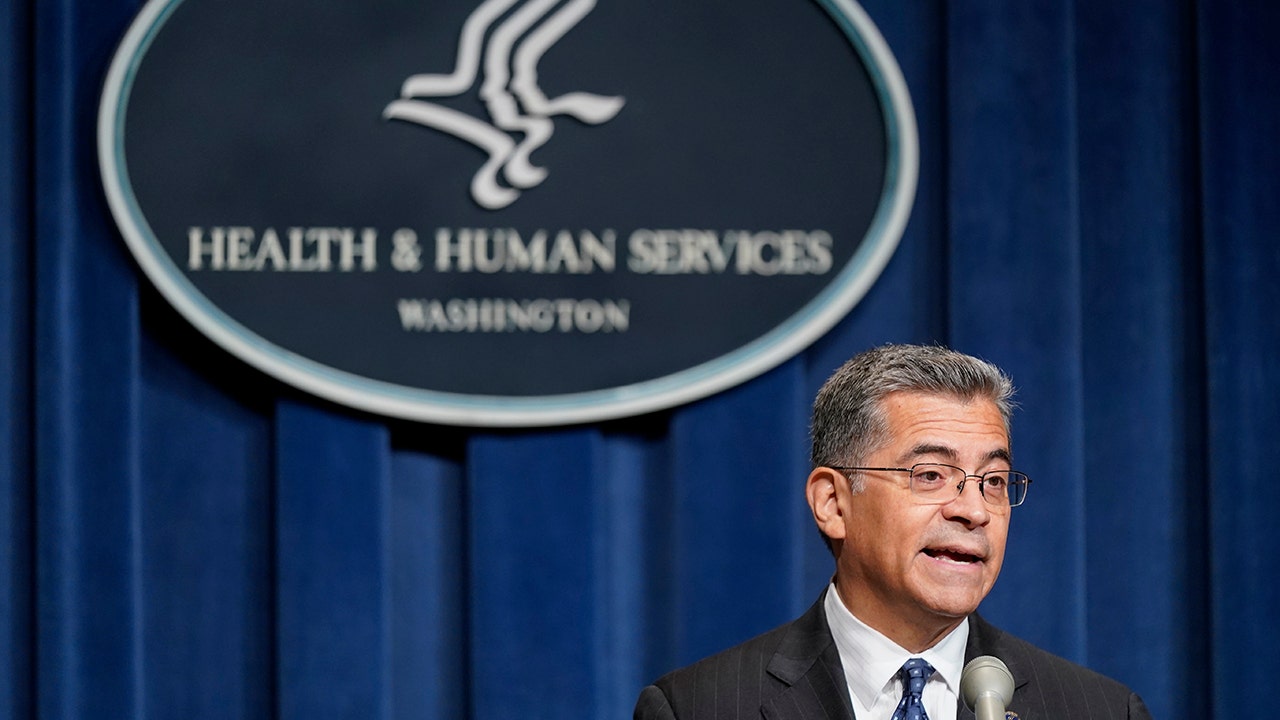
FILE – Health and Human Services Secretary Xavier Becerra speaks during a news conference June 28, 2022, in Washington. The number of people living in America without health insurance coverage hit an all-time low of 8 percent this year. ((AP Photo/Patrick Semansky, File)/AP Newsroom)
The uninsured rate fell to just under nine percent last year with the improved subsidies.
THE BEST, WORST STATES FOR HEALTH CARE IN 2022: REPORT
The improvement was helped by an increase in advertising and more counselors who helped sign up people for plans during the open enrollment season last year.
President Joe Biden talks about a new plan to expand mental health and drug abuse treatment during his State of the Union address. (AP Newsroom / AP Newsroom)
“Every American has the right to the peace of mind that comes with access to affordable, quality health care,” President Biden said in a statement Tuesday about the record-low rate of uninsured Americans.
Prior to last year, the uninsured rate had consistently remained in the double digits for decades.
The number of uninsured Americans began dropping after the ACA, which expanded Medicaid and offers health insurance to people who lack job-based coverage through a mix of subsidized private plans, was enacted in 2010.
MANCHIN-SCHUMER SPENDING BILL TARGETS TAX LOOPHOLE FAVORED BY INVESTORS
Democrats recently completed a 725-page climate, health care and tax deal that would extend federal subsidies for people who buy private health insurance that are credited with driving down the uninsured rates.
A woman In consultation with a doctor during an examination. (iStock / iStock)
Democrats have proposed spending $64 billion to extend those price breaks for three more years.
“We know that access to quality, affordable health care is key to healthier lives, economic security, and peace of mind,” HHS Secretary Xavier Becerra said in a statement Tuesday.
CLICK HERE TO READ MORE ON FOX BUSINESS
Roughly 26 million people remain without health insurance in the US Just under 2 percent of children are now uninsured.