Categories
Technology

Insta360’s New 4K Webcam Follows You Around Your Room and Looks Down to Share What’s on Your Desk

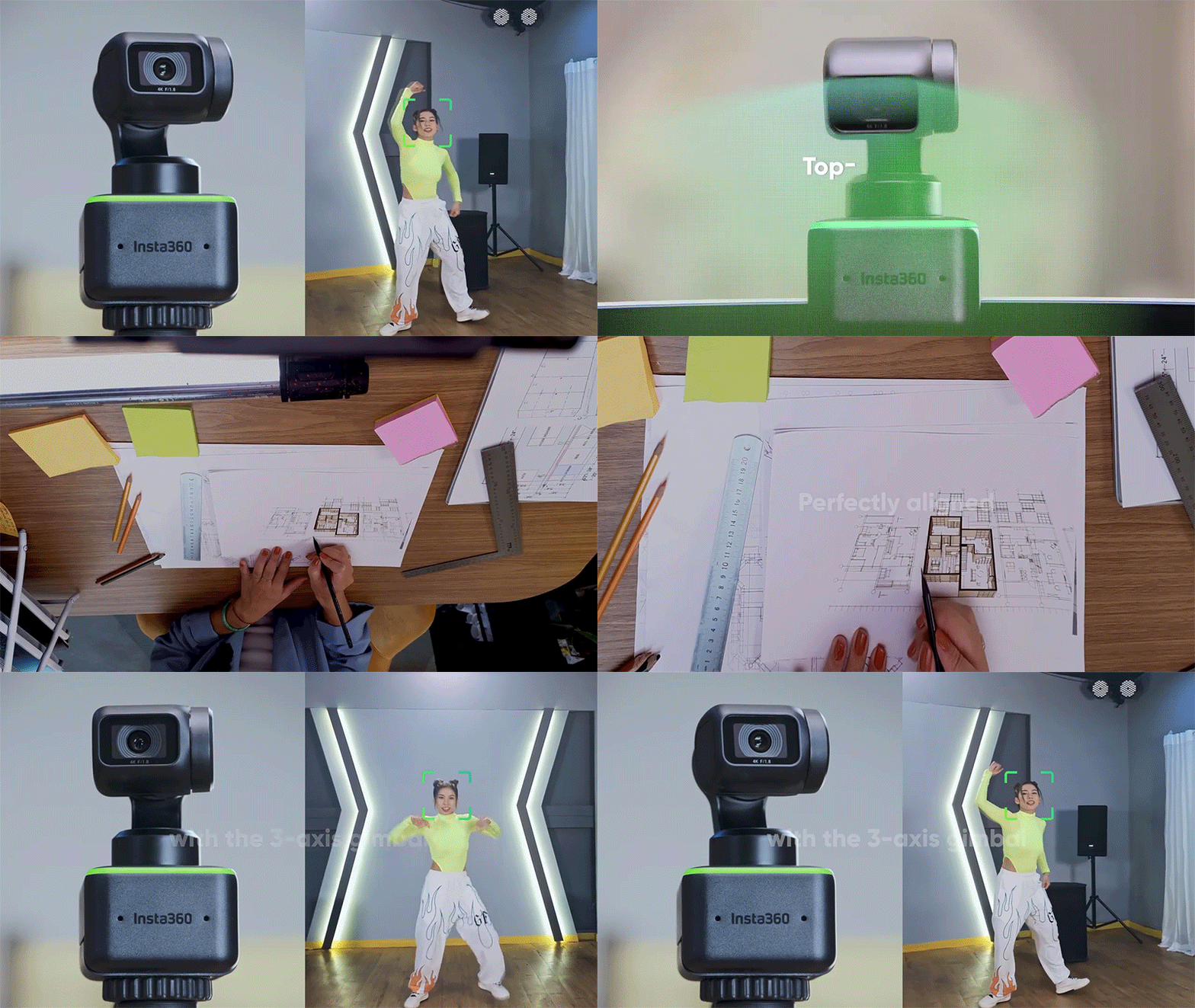
For those lucky enough to have transitioned to working from home full-time during the ongoing pandemic, a good webcam — better than what’s built into most laptop’s screens — is a must-have accessory, and Insta360 just raised the ‘good webcam’ bar even further with the 4K Link, which uses a three-axis gimbal to always keep users perfectly framed, plus some other fun tricks.

The company isn’t yet a household name, but for quite a few years, Insta360 has been giving companies like DJI and GoPro some much needed competition when it comes to action cams and 360-degree cameras. Today, Insta360 announced its first dedicated webcam, which borrows some of the tech from the company’s other imaging products.

Image: Insta360Image: Insta360

Reminiscent of the tiny DJI Pocket 2 handheld stabilized video camera, the Insta360 Link is instead designed to be perched atop a computer monitor or laptop screen, where it stars at the user with its most compelling feature: a surprisingly large half-inch 4K sensor. The company promises the sensor will provide more detail, better dynamic range including an HDR mode to account for bright objects in frame like an outside window, and improved low-light performance, which is especially important as the Link doesn’t include LED lighting of its own. The camera operates at 30fps, but a free accompanying app lets users adjust its frame rate, resolution, white balance, and exposure to account for even the wonkiest of lighting situations.

There’s also a pair of built-in microphones with noise-cancelling capabilities, but the camera’s most unique innovation is a three-axis gimbal, which is used here to track the position of the person in front of the camera and keep them perfectly framed at all times, instead of just keeping the camera stabilized. When users are on a call but out of reach of their computer, the Insta360 Link can also recognize and respond to hand gestures to activate features like its AI-powered tracking, or simply zooming in and out.

The moving camera facilitates other unique shooting modes as well. For easily referencing a document on a desk, the Insta360 Link can point straight down and even make perspective adjustments using its software, so what users on the other end of a video call see doesn’t look distorted. That software also powers a whiteboard mode where the camera can recognize and zoom in on a whiteboard so it’s easier for others on a call to see what’s being written. For those streaming to social media, the Insta360 Link can even rotate itself 90-degrees and capture video in portrait mode better suited to smartphone consumption. Instead of a lens cap, the webcam will automatically point itself down to block the lens for increased privacy after 10 seconds of inactivity.

The Insta360 Link is available for pre-order now from the company’s website, but given all of its extra functionality, it comes with a hefty $US300 ($416) price tag.

Categories
Technology

Marshmello Joins Growing Call of Duty Fanbase in Voicing for a Major Warzone Comeback

There’s no doubt about the fact that ever since Verdansk bid farewell to Warzone, Call of Duty fans have been mostly in shambles. The map was an iconic part of the battle royale from the time when it was released in early 2020.

Now that Caldera and Fortune’s Keep are trying to attain a similar level of popularity as Verdansk, it seems to be not working at all. Simply due to the reason, that the majority of Call of Duty players are still missing their beloved map. They just want it back, no matter what. And now, famous musician Marshmello has made this point very clear. To be precise, he’s joined the campaign along with the fans.

ADVERTISEMENT

Article continues below this ad

‘Alone’ and ‘Friends’ maker Marshmello urges Activision to bring back Verdansk in Call of Duty Warzone

American music producer and DJ Marshmello is also known for his love for video games. Apart from being a Fortnite enthusiast, he’s also played Call of Duty, especially the Warzone battle royale since it was first launched. In case you have missed it, in May 2020 he also did a charity Tournament Livestream while playing several matches.

Now everyone is aware of the fact that Verdansk is currently missing from Call of Duty’s highly popular online multiplayer. Ever since it was removed by Activision, most of the fans have been upset as they have no other option than to choose Caldera. While Fortune’s Keep is gaining positive reactions, Verdansk seems to be on a different level altogether due to its connection with the players.

DIVE DEEPER

Top 5 Locations Call of Duty Warzone Fans Should Drop Into in the New Fortune’s Keep Map

28 days ago

It looks like even Marshmello feels this pain as he recently posted to tweet on this exact situation. While surprising his followers on social media, he wrote that the map should return as soon as possible. “honestly bring back verdansk please,” the musician wrote.

Meanwhile, Call of Duty fans were awestruck by his tweet as some of them thought he only plays Fortnite. On the other hand, the majority of the followers agreed with the DJ as they, too, want Verdansk back in Warzone. They registered their voices in unison, along with Marshmello. Have a look at the reactions below:

ADVERTISEMENT

Article continues below this ad

Call of Duty Warzone is now available on multiple platforms. Players can have it on Xbox, PlayStation, and PC via Battle.net. What are your thoughts on the ongoing situation of the battle royale?

ADVERTISEMENT

Article continues below this ad

Do you think Activision will consider bringing the iconic map again, now that a celebrity like Marshmello has urged for the same? Let us know in the comments.

WATCH THIS STORY: Top 5 Call of Duty Games of All Time

Categories
Technology

MIT Claims New Artificial Neuron 1 Million Times Faster Than the Real Thing

“This is not a faster car, this is a spacecraft.”

Mind Numbing

Think and you’ll miss it: researchers at MIT claim to have successfully created analog synapses that are one million times faster than those in our human brains.

Just as digital processors need transistors, analog ones need programmable resistors. Once put into the right configuration, these resistors can be used to create a network of analog synapses and neurons, according to a press release.

These analog synapses aren’t just ultra-fast, they’re remarkably efficient, too. And that’s pretty important, because as digital neural networks grow more advanced and powerful, they require more and more energy, increasing their carbon footprint considerably.

As detailed in a new paper, the researchers hope their findings will advance the field of analog deep learning, a burgeoning field of artificial intelligence.

Glassy-Eyed

By ditching the normally used organic mediums and opting for high tech glass, known as inorganic phosphosilicate glass (PSG), instead, the researchers were able to reach nanosecond speeds, which were faster than the synapses in the human brain.

“The action potential in biological cells rises and falls with a timescale of milliseconds, since the voltage difference of about 0.1 volt is constrained by the stability of water,” said senior author and professor of nuclear science Ju Li, in the statement. “Here we apply up to ten volts across a special solid glass film of nanoscale thickness that conducts protons, without permanently damaging it.”

“And the stronger the field, the faster the ionic devices,” I added.

Because PSG can withstand high voltages without breaking, it allows the protons to travel at ludicrous speeds while also being incredibly energy-efficient.

The material is both common and easy to fabricate, making it not only the fastest option, but also a practical one.

“Once you have an analog processor, you will no longer be training networks everyone else is working on,” said lead author Murat Onen in the statement. “You will be training networks with unprecedented complexities that no one else can afford to, and therefore vastly outperform them all.”

“In other words, this is not a faster car, this is a spacecraft,” he added.

More on AI: Authors Are Starting to Use AI to Quickly Churn Out Novels

Categories
Technology

Top 10 Nutrition Myths That Just Won’t Die

Carnivore-Diet

Once the exclusive review of epileptics (to control seizures) and madmen bodybuilders, the keto diet is now the “it” diet of the masses, having completely trounced Weight Watchers.

It’s easy to see how it happened. The keto diet lets people eat all the fat they want, and they can practically see themselves shrinking day by day. But the keto diet isn’t all sunshine and deep-fried daisies. It has some drawbacks, some of which are serious, and it’s not the best diet for lifters.

Here are some of the problems with the keto diet that make me get a little itchy:

Bad Nutrition

Keto dieters jettison entire food groups, often making them deficient in vitamin D, calcium, magnesium, phosphorus, and essential fatty acids. Keto dieters can take care of a lot of those problems by taking multivitamins, but that’s a poor and uncertain replacement for the nutrients in real food. Beyond that, missing out on dozens or even hundreds of the polyphenols found in grains, fruits, wine, and even beer is like playing Super Mario Bros. and not bothering to pick up all the super mushroom power-ups.

Bad for Strength Athletes

There’s some evidence that keto diets might work well for endurance runners and Alaskan sled dogs, but if you’re a weightlifter who relies on short bursts of power, forget it.

Bad for Bowels

Ditching carbs means ditching fiber. Any long-term reductions in actual body weight may be offset by the weight of the steadily accruing reservoir of impacted feces in your intestines.

Bad Crotch

Despite the alliterative name, keto crotch is not the newest member of the Marvel Universe (Peter Parker, Matt Murdoch, Jessica Jones, etc., etc.). If it were, I doubt her superpower would be of any use in fighting crime, except maybe in some highly unusual and specific circumstances.

Apparently, all the meat-eatin’ changes vaginal pH, and the lower acidity creates a welcoming environment to undesirable bacteria, leading to possible infections, an unpleasant odor, and probably infestation by raccoons.

bad-blood

The dangers of high cholesterol are inconclusive, but that doesn’t mean they don’t matter at all, and high cholesterol is what you get when you eat saturated fat for breakfast, lunch, and dinner.

But the worst part of the keto diet, at least for people who want to pack on muscle, is that going into ketosis steals amino acids from muscle to fuel other stuff. Oh, and low carbs lead to high cortisol, which also affects how well you put on muscle.

Categories
Technology

‘Halo Infinite’ Was Scaled Back Significantly From Original Ambitions, Says Joe Staten

One of the weirdest aspects of the Halo Infinite campaign for me was the final section, where there’s one giant portion of the map still hovering around, and yet when you finally arrive there, you’re just given a liner mission or two and that’s it . No exploration in what looked like a third major island on the map, and no hope that Halo Infinite would expand beyond its singular biome.

Turns out that once upon a time, Halo Infinite did have a much larger scale in mind, but it was slowly slimmed down and down over time. The open world shrunk, many campaign segments were kept linear and the biome remained uniform.

This is not some insider talking about rough development, this is 343’s Joe Staten, being up front about how much the game had to be scaled back over time, both before he joined the project, and after. Speaking on the Game Maker’s Notebook podcast (via TechRadar), he had a lot to say about what the game cut over time.

“The team went through a lot of iterations on scope and biome variety before I joined. Even after I joined the team, we had to make choices about where to scale back.”

“We didn’t end up cutting that much ultimately from the open world, but I know from the original designs there was a pretty significant scaling back of what the team had hoped at one point that they could deliver on. We knew that we needed to truly deliver a quality experience [and] scope our ambitions to make sure that the stuff that we did ship met expectations.”

In other words, they had to scale things down in order to make sure what was there was really polished, no doubt mandated after the disastrous initial showing which caused the final year delay of Infinite. But it was more than that too, as Staten said they even talked about inserting crafting systems to use more mechanics from other open world games:

“We talked a lot about crafting, for example, and my infamous line to the team was something like ‘Master Chief doesn’t need to kill animals to make leather shirts for himself. He’s a massive armored super soldier. If he wants something, he goes and kills it, grabs its gun, and then keeps on going.’”

I am…vaguely unnerved that crafting was ever seriously considered for a Halo game, open world or not, but at least Staten was very much right in his pushback on that point. Still, this is yet another tick in the “does 343 really even get Halo?” column, as of course Staten himself got his start with the series back in the OG Bungie days.

One confusing aspect of Microsoft’s plans for Halo is where things go from here on the single player front. Yes, we know Halo Infinite will continue to produce multiplayer seasons, and it’s releasing features like campaign co-op and Forge mode. But we have gotten zero indication of how and when Zeta Halo itself is going to expand. The idea appeared to be that Halo wouldn’t need to go 5-6 years between major games anymore with Infinite used as a “platform,” so…when do we see Chief again? When do we get those missing biomes? When do we meet the Endless? All open questions in search of answers since launch.

follow me on Twitter, Youtube, Facebook and Instagram. Subscribe to my free weekly content round-up newsletter, God Rolls.

Pick up my sci-fi novels the hero killer series and The Earthborn Trilogy.

.

Categories
Technology

Microsoft puts its RiskIQ acquisition to work

Microsoft today added two new features to its Microsoft Defender security platform: Microsoft Defender Threat Intelligence and Microsoft Defender External Attack Surface Management. These features are based on the company’s acquisition of RiskIQ and with this launch, Microsoft is now bringing some of RiskIQ’s core features to its own security platform (all while RiskIQ continues to operate its own services, too).

“Our mission is to build a safer world for all — and threat intelligence is [at] the heart of it,” Microsoft’s Vasu Jakkal told me. “If you don’t know what’s happening in the world around you, it’s very hard to understand what to do about it and how to act on it. Microsoft has the largest breadth and depth of threat signals today — we are tracking, as we just announced in our earnings, 43 trillion signals [each day] which we see from identities, from devices, from platforms, from email, collab tools.”

With Defender Threat Intelligence, Microsoft is using RiskIQ’s technology to scan the internet and provide additional data to the existing Defender real-time service to help security teams proactively secure their infrastructure. Microsoft, of course, already had a large signal map to power its Defender platform, but Jakkal noted that RiskIQ’s data not only helps enrich this existing data set but also enables an additional layer on top of Defender that gives security teams a view of the entire attack chain.

“They can see the entire attack chain, they can act on it and then — combined with their own human intelligence —– they can see where the attack is going and how to proactively prevent it,” Jakkal explained.

Image Credits: microsoft

The service also provides users with a library of raw threat intelligence and analysis from Microsoft’s security experts, which in turn should help security teams find, remove and block adversary tools that may be hidden within their organization.

Meanwhile, the new external attack surface management service helps these security teams understand how a potential attacker sees their network. Like similar services, it provides security teams with a way to discover all of their resources and find those that are unknown and/or unmanaged. Most businesses that start using a service like this end up being surprised by how many internet-facing unmanaged assets they find.

Image Credits: microsoft

“All organizations are asking the question: how secure am I? It’s such a simple question but it’s so hard to answer that question. Because the first point is, well, first we need to understand what’s happening in the world of threats. And we we need to understand what that looks like. The second thing we need to understand is where our resources are,” Jakkal noted. With these new tools, Microsoft is giving security teams more data to work with to protect their networks and other assets.

Categories
Technology

CS:GO matchmaking ranks recalibrated in latest patch

Valve has finally zeroed in on CS:GO’s matchmaking system and made some much-needed changes.

In the latest patch, which hit the live servers last night, the developers pushed out a competitive skills group “recalibration.”

When the devs usually make changes to the matchmaking system, they don’t tend to include them in the official patch notes. But this change warranted an explanation because the update “affects all CS:GO players,” according to Valve.

In short, the ranking of every player has now been hidden. To make the rank reappear, players will have to secure at least one win in matchmaking to be assigned to a skill group. Following the recalibration, these groups (or ranks) may differ from before. “Most of you will notice a change to your Skill Group, but some of you may find that you were already in the right place,” Valve explained.

Although it remains to be seen what exactly Valve has changed here, the community seems to be pleased with the update. Players have been asking Valve to fix the matchmaking system for a long time, complaining about being frequently matched up with players of a higher or lower rank.

Along with the matchmaking update, the developers have also released a list of patch notes. You can find them here.

Categories
Technology

Google Pixel 6a vs. Pixel 6 Pro: Camera Quality Shoot-Out

The midrange Google Pixel 6a ($449) earned our Editor’s Choice award in no small part because of its imaging prowess. Simply put, it’s one of the best midrange camera phones on the market.

At $899, the Pixel 6 Pro costs twice as much as the Pixel 6a, and fittingly includes higher-end camera components as part of the upgrade. But if image quality is your main concern, is the Pixel 6 Pro really worth double the price of the Pixel 6a?

To help you decide, we pit their cameras against each other in several common photography situations so you can see the difference and determine which model is the best buy for your needs.


How Do the Pixel 6a and Pixel 6 Pro Cameras Differ?

Before you look at our real-world photo samples from the Pixel 6a and Pixel 6 Pro, here’s a quick rundown of the camera specs and features you get with each phone.

To start, the high-end Pixel 6 Pro’s main camera uses a 50MP Octa PD Quad Bayer sensor, whereas the Pixel 6a mainly relies on a 12.2MP dual-pixel sensor. The Pro offers four times the resolution of the 6a, but the image output sizes are pretty similar because the former oversamples images; both phones save photos at around 12MP (4,080-by-3,027-pixel) resolution. If you’re interested in how oversampling works and why it makes a difference for detail capture, check out our article on CMOS, BSI CMOS, and Stacked CMOS sensors and pay attention to the section on Quad Bayer tech.

Outside of resolution, the Pixel 6 Pro’s 26mm lens has an f/1.85 aperture. The Pixel 6a’s lens offers an f/1.7 aperture and captures photos at a 27mm focal length. The difference between 26mm and 27mm isn’t massive, but the 6 Pro’s wider field of view lets in slightly more of a scene.

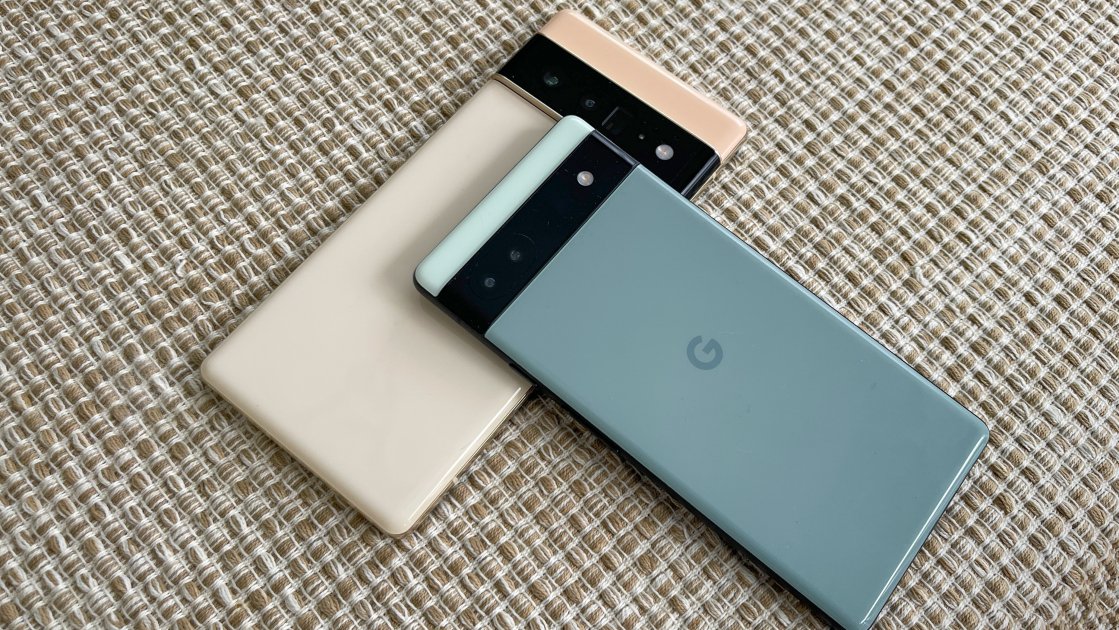
Google Pixel 6a


Review image

Both phones use the same wide-angle hardware: a 12 MP, f/2.2 camera with a 17mm focal length. Images from these lenses look almost identical, and the only difference stems from how the two devices process photos.

The Pixel 6 Pro has an extra lens that the Pixel 6a doesn’t—a 48MP telephoto camera with a 104mm focal length (4x optical zoom ratio compared with the standard lens). If you want to capture tight frames without compromising quality, the Pixel 6 Pro is the clear winner on paper. We explore how the two handle zooming in on subjects in the tests below.

In terms of software, Google includes just about everything in the more expensive Pixel 6 and 6 Pro in the 6a. That means you get Real Tone, Magic Eraser, Night Shot, Top Shot, and all the other software-based goodies.


Pixel 6a vs. Pixel 6 Pro: Main Rear Cameras

We took several pairs of photos in various lighting environments with each phone’s primary camera. In theory, the Pixel 6 Pro’s images should look sharper based on its higher-resolution sensor, but it’s more important to examine real-world results than to just look at the numbers.


Outdoors in Sunlight

A play area

Pixel 6a (Credit: Dave LeClair)

A play area

Pixel 6 Pro (Credit: Dave LeClair)

It’s tough to spot the difference between the Google Pixel 6a and 6 Pro in environments with good sunlight. Even though the 6 Pro captures more detail at the onset, its final output doesn’t look very different (especially on the web). The pricier Pixel Pro still has an edge in detail—it’s just not as dramatic an advantage as the raw numbers indicate.

Winner: Pixel 6 Pro (barely)


Indoors in Low Light

A dog on its bed

Pixel 6a (Credit: Dave LeClair)

A dog on its bed

Pixel 6 Pro (Credit: Dave LeClair)

The Pixel 6a and Pixel 6 Pro both offer Google’s fantastic Night Sight feature on the main lens, which works well in dim-light settings. In the above photos of my dog, the image from the Pixel 6a seems a bit brighter, but I prefer the slightly wider field of view on the 6 Pro. That makes for a tie.

Winner: tie


Indoors in Very Low Light

to closet

Pixel 6a (Credit: Dave LeClair)

to closet

Pixel 6 Pro (Credit: Dave LeClair)

I took the above photos inside my closet in almost total darkness. Here, the Pixel 6 Pro captures a bit more detail than the Pixel 6a, though neither photo is very usable. Still, it’s a good way to stress-test the Night Sight feature. We’re impressed that the shirts are even visible in these photos.

Winner: Pixel 6 Pro


portrait mode

A selfie of Dave LeClair

Pixel 6a (Credit: Dave LeClair)

A selfie of Dave LeClair

Pixel 6 Pro (Credit: Dave LeClair)

When you use Portrait Mode in sunlight, you should get similar results from both cameras. They even seem to apply roughly the same amount of bokeh to the background in the tests above. That said, the slightly wider view of the Pro gives it an edge.

Winner: Pixel 6 Pro


Close-Up Outdoors in Sunlight

The words garbage only on a sign

Pixel 6a (Credit: Dave LeClair)

The words garbage only on a sign

Pixel 6 Pro (Credit: Dave LeClair)

It’s difficult to distinguish the macro performance between the two phones; both show the same amount of detail just at slightly different angles of view. If you want to get close to your subject, you should be able to capture great photos with either camera.

Winner: tie


Pixel 6a vs. Pixel 6 Pro: Wide Angle Cameras

Although both phones use the same wide lens, it’s still important to see if there are any differences in how they process images.


Outdoors in Sunlight

An apartment complex

Pixel 6a (Credit: Dave LeClair)

An apartment complex

Pixel 6 Pro (Credit: Dave LeClair)

It’s not surprising that these photos look similar given the identical hardware. We can’t pick a winner here.

Winner: tie


Indoors in Low Light

A photo of a hallway

Pixel 6a (Credit: Dave LeClair)

A photo of a hallway

Pixel 6 Pro (Credit: Dave LeClair)

We also tested the wide-angle lens in a low-light setting to see if the devices process images differently. Even here, the photos look essentially the same.

Winner: tie


Pixel 6a vs. Pixel 6 Pro—Zoom

The Pixel 6 Pro has a dedicated zoom lens with 4x optical zoom. The Pixel 6a doesn’t. We zoomed into images we took in sunlight to see if we can ascertain how much of a benefit that extra lens offers.


2x Zoom

A bridge with graffiti

Pixel 6a (Credit: Dave LeClair)

A bridge with graffiti

Pixel 6 Pro (Credit: Dave LeClair)

When you zoom in, you can see some extra detail in the Pixel 6 Pro’s shot. Both images look great, though.

Recommended by Our Editors

Winner: Pixel 6 Pro (barely)


4x Zoom

A bridge with graffiti

Pixel 6a (Credit: Dave LeClair)

A bridge with graffiti

Pixel 6 Pro (Credit: Dave LeClair)

The telephoto lens on the Pixel 6 Pro shines at 4x zoom, whereas the Pixel 6a starts to struggle. You can clearly see an improvement in detail on the 6 Pro; the 6a’s image looks comparatively washed out.

Winner: Pixel 6 Pro


Pixel 6a vs. Pixel 6 Pro: Selfie Cameras

The Pixel 6 Pro comes with an 11.1MP front-facing camera with an f/2.2 aperture. The Pixel 6a features an 8MP lens with an f/2.0 aperture. Clearly, the former’s hardware is better, but the practical difference isn’t that substantial.


Outdoors in Sunlight

A selfie of Dave LeClair

Pixel 6a (Credit: Dave LeClair)

A selfie of Dave LeClair

Pixel 6 Pro (Credit: Dave LeClair)

As mentioned, the Pixel 6 Pro’s front-facing camera offers a slightly higher resolution. But, in practice, both cameras produce very similar images in this scenario. I prefer the image from the Pixel 6 Pro because the colors in the Pixel 6a’s image look a little too bright. Still, the differences are pretty slight.

Winner: tie


Indoors in Good Light

A selfie of Dave LeClair

Pixel 6a (Credit: Dave LeClair)

A selfie of Dave LeClair

Pixel 6 Pro (Credit: Dave LeClair)

In a slightly dimmer indoor space, the images look even more similar. You really have to study them to see any differences.

Winner: tie


Indoors in Very Low Light

A dark selife of Dave LeClair

Pixel 6a (Credit: Dave LeClair)

A dark selfie of Dave LeClair

Pixel 6 Pro (Credit: Dave LeClair)

I took the above selfies in almost complete darkness, with just a small amount of light coming through the curtain. Neither image looks great (despite Google Night Sight’s best efforts), but neither is dramatically worse than the other either.

Winner: tie


And the Winner Is…You

The Pixel 6 Pro’s camera stack is better than the one in the Pixel 6a, but that isn’t surprising given the difference in price between the two handsets. Most notably, the pricier Pixel 6 Pro shows more fine detail in complex scenes, along with more accurate colors. If you’re simply looking for the best Pixel camera quality no matter the cost, the Pixel 6 Pro is the phone to get. These differences alone aren’t enough to justify the Pixel 6 Pro’s $450 premium, however. Of course, the Pixel 6 Pro also brings a host of other improvements over the Pixel 6a that justify its higher price, including a larger, sharper display and class-leading battery life.

But, in terms of camera performance, the Pixel 6a offers truly impressive performance for the price, nearly on par with the Pixel 6 Pro. That means the winner is you, the buyer, as both of these phones earned our Editors’ Choice award. They represent some of the finest midrange and high-end phones currently available.

For more on mobile photography, check out our 10 easy tips and tricks for better smartphone photos.

Like What You’re Reading?

Sign up for Fully Mobilized newsletter to get our top mobile tech stories delivered right to your inbox.

This newsletter may contain advertising, deals, or affiliate links. Subscribing to a newsletter indicates your consent to our Terms of Use and Privacy Policy. You may unsubscribe from the newsletters at any time.
Categories
Technology

Sennheiser slash prices across their range of headphones in their Back To School sale

Sennheiser have just launched their Back To School summer sale, and are offering up to $50 off a range of their most popular headphones. So if you’ve been waiting for prices to drop, now is a great time to pick up something sweet for you ears, such as the hugely popular Sennheiser Momentum 3 wireless headphones, which are down from $399.95 to $249.95 (opens in new tab).

If in-ear headphones are more to your liking, then there’s also a neat $50 saving to be made on the Sennheiser CX Plus True Wireless earbuds which have been reduced from $179.95 to $129.95 (opens in new tab).

Categories
Technology

Apple Drops Mask Mandate at ‘Most’ Corporate Locations

Apple is abandoning its mask mandate for corporate employees at “most locations,” according to an internal email obtained by The Verge(Opens in a new window).

Citing “current circumstances,” Apple’s COVID-19 response team announced that “wearing a face mask will no longer be required in most locations,” and urged folks to check “regularly” before visiting any company site.

“We recognize that everyone’s personal circumstances are different,” the message said. “Don’t hesitate to continue wearing a face mask if you feel more comfortable doing so. Also, please respect every individual’s decision to wear a mask or not.”

The move comes amid a surge in the highly transmissible BA.5(Opens in a new window) subvariant omicron; New York Times counted 2,576 new cases in California’s Santa Clara County—home to Apple HQ—as of the week ending July 29(Opens in a new window).

Apple announced earlier this year that retail and corporate staff would be required to get the COVID vaccination or provide negative rapid antigen tests before entering the workplace.

Recommended by Our Editors

In April, as new cases began to rise, the firm reinstated mask wearing(Opens in a new window) in corporate common spaces and for retail employees in some 100 US stores. It also paused plans for a hybrid return-to-office, opting instead to allow folks participating in a two-day-per-week, in-office pilot to once again work fully remote.

Apple is not alone in winding down COVID-19 restrictions: Uber and Lyft recently dropped their mask requirement for riders and drivers after a federal judge in Florida voided a mandate from the US Centers for Disease Control and Prevention requiring face coverings on public transportation, ruling that it exceeded the CDC’s authority.

Apple fan?

Sign up for our Weekly Apple Brief for the latest news, reviews, tips, and more delivered right to your inbox.

This newsletter may contain advertising, deals, or affiliate links. Subscribing to a newsletter indicates your consent to our Terms of Use and Privacy Policy. You may unsubscribe from the newsletters at any time.