Yoshi Commits Tax Fraud 64 final trailer and release date.
Published on Chuy Forest
Home ” News » Yoshi Commits Tax Fraud 64 Is an Insanely Detailed Mario 64 Mod
We’ve all heard the rumors of Yoshi’s criminal nature. Well, the truth has finally surfaced with the upcoming mod turned full game, titled Yoshi Commits Tax Fraud 64.
As you can see below, the final trailer from game designer and modder, Cheezepin, shows off the latest iteration of their Super Mario 64 mod featuring Yoshi and tax evasion, showing off a whole lot of unique platforming, new worlds, and gambling.
The trailer highlights the gameplay for Yoshi Commits Tax Fraud 64. You’ll work a minimum wage job, spend your hard-earned money any way you please, and go to court after avoiding your tax payments. As a modded version of Super Mario 64, it will feature similar movement and mechanics with a healthy amount of unique twists and new levels.
Cheezepin has a history of creating mods for Super Mario 64 and has even won SimpleFlips ROM Hacking competitions, proving that there seems to be no limit to what the ROM hacking community is capable of, especially when it comes to this classic title. In the past, modders have allowed you to play as that nightmare-fueled killer piano in Big Boo’s Haunt, as well as adding Thwomp’s Fortress to Breath of the Wild.
What started out as a silly joke on the Internet has become a point of research for some. Via Twitter, Supper Mario Broth found a single piece of evidence that Yoshi does not pay his taxes, as it turns out that Yoshi asks to be exempt from paying taxes in the Wii game, Fortune Street. This joke has been the inspiration for Yoshi Commits Tax Fraud 64.
There exists one piece of in-game evidence in favor of the widespread Internet joke that Yoshi does not pay his taxes: in Fortune Street, Yoshi is the only one out of 26 characters that requests to be exempt from paying taxes when the player builds a new tax office. pic.twitter.com/VmaPeNlQhf
Cheezepin has confirmed that the project has not been canceled and that the game is nearly ready. After a few years in development, Yoshi Commits Tax Fraud 64 has finally been set to release on Dec. 31, 2022. Be on the lookout for more news regarding Super Mario 64 mods.
Samsung has taken its first, tentative baby steps in the path toward giving users the option to self-repair their devices. These new repair kits are only available for a few select models, and new parts could still cost a pretty penny.
On Tuesday, the company shared its new repair kits carrying genuine parts in partnership with iFixit. The new kits come with guides and tools as well, but so far parts are limited to screens, charging ports, and back glass. Charging ports cost $US67 ($93) across the board, while screens run up around $US230 ($319), but likely more depending on the phone model. Back glass for each phone hovers between $US70 ($97) and $US90 ($125).
The full list of supported phones includes:
Galaxy S21
Galaxy S21+
Galaxy S21 Ultra
Galaxy S20
Galaxy S20+
Galaxy S20 Ultra
Tab S7+
Of course, this is still a fraction of the cost of a new phone (a new S21 goes for $US530 ($736) with trade-in, or $US850 ($1,180) normally), so considering the detailed instructions provided by the folks at iFixIt, it’s definitely a consideration. The repair kits include a return label to ship back broken parts to the company, which says they’ll get recycled.
Samsung announced back in March that it was finally jumping on the self-repair bandwagon, apparently seeing the light only when Apple announced last year it was going to let users repair some of their iPhones. Samsung has long been reprimanded by the folks at iFixit for its rather slapdash standards on devices like the early Galaxy Folds, so it’s encouraging to see the two teaming up. The new program is currently limited to the US, and of course, this new set of repair kits doesn’t include the most updated models like the Galaxy S22, Tab8, Galaxy Note, or the Galaxy Z Flip/Fold series.
Apple released its iPhone repair kits in April for the iPhone 12, iPhone 13, and third gen iPhone SE devices. The company decided for some reason to provide tool rental kits at nearly $US50 ($69) bucks for a week’s use. At the same time, it offers significantly more parts and tools for its select product lines, including cameras and sim trays. Its service has similar pricing to Samsung’s, though the iPhone maker’s repair kits might cost slightly less in the end thanks to return credits. Other than the free shipping slip, Samsung does not offer any credits for its return-recycle services.
At the same time, iFixit has criticized Apple’s self-repair program for making stocking up on backup parts difficult, which doesn’t impact individual users but hurts mum and pop repair shops.
Though Samsung’s repair options are relatively straightforward compared to Apple’s offerings, that they’re so limited on which parts you can replace is a big sticking point, even with promises of more coming in the future. This is a good first step, but with how long users and government agencies have been demanding the right to self-repair, Samsung’s efforts seem lackluster.
Other major tech companies are also anticipating the release of their own self-repair services. Google said back in April that it would have parts available for the Pixel 2 through Pixel 6 Pro available later this year, and the company promises to have repair options for the UK, Canada, and Europe as well as the US Around the same time, Microsoft released a study showing the benefits of self-repair, and promised it would be working toward that end. However, it has not made any public statements about the timing for the release of its own self-repair service.
Newswise — Wearable electronics, from health and fitness trackers to virtual reality headsets, are part of our everyday lives. But finding ways to continuously power these devices is a challenge.
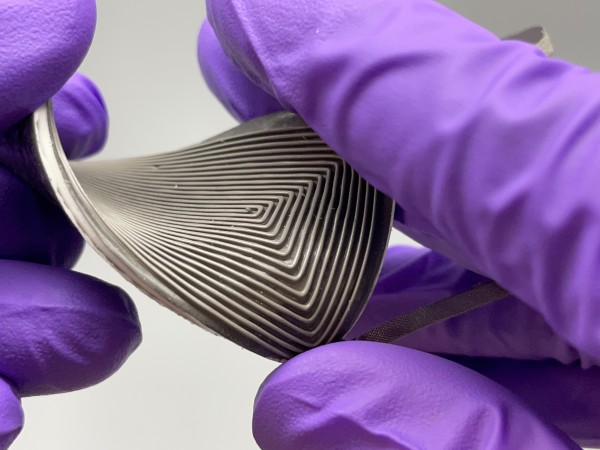
University of Washington researchers have developed an innovative solution: the first-of-its kind flexible, wearable thermoelectric device that converts body heat to electricity. This device is soft and stretchable, yet sturdy and efficient — properties that can be challenging to combine.
The team published these findings July 24 in Advanced Energy Materials.
“It’s a 100% gain if we harvest thermal energy that would otherwise be wasted to the surroundings. Because we want to use that energy for self-powered electronics, a higher power density is needed,” said Mohammad Malakooti, a UW assistant professor of mechanical engineering. “We leverage additive manufacturing to manufacture stretchable electronics, increase their efficiency and enable their seamless integration into wearables while answering fundamental research questions.”
Even after more than 15,000 stretching cycles at 30% strain, the researchers’ prototype device remains fully functional, a highly desirable feature for wearable electronics and soft robotics. The device also shows a 6.5 times increase in power density compared to previous stretchable thermoelectric generators.
To create these flexible devices, the researchers 3D printed composites with engineered functional and structural properties at each layer. The filler material contained liquid metal alloys, which provide high electrical and thermal conductivity. These alloys address limitations in previous devices, including an inability to stretch, inefficient heat transfer and a complex fabrication process.
The team also embedded hollow microspheres to direct the heat to the semiconductors at the core layer and reduce the weight of the device.
The researchers showed that they could print these devices on stretchable textile fabrics and curved surfaces, which suggests that future devices could be applied to clothing and other objects. The team is excited about the future possibilities and real-life applications of wearable electronics.
“One unique aspect of our research is that it covers the whole spectrum, all the way from material synthesis to device fabrication and characterization,” said Malakooti, who is also a researcher in the UW’s Institute for Nano-Engineered Systems. “This gives us the freedom to design new materials, engineer every step in the process and be creative.”
Youngshang Han, UW master’s student in mechanical engineering, was lead author on the paper. Leif-Erik Simonsen is an additional co-author.
short videos have become a success among users, and an example is the spectacular impact that TikTok has had. For this reason, other companies have included the possibility of creating them, such as Instagram or YouTube. We tell you how to easily create them on this latest platform. This type of content is called Short in the streaming video service that Google has, and initially there were not many creations of the aforementioned type. The reason is that creating them within the platform itself was somewhat complicated. Fortunately, this has changed a lot and now simplicity is the predominant note. Even now there is the possibility of generating short videos with new recordings or using those that already exist in the library. And, the latter, is an excellent idea because it makes it possible to take advantage of the work that many creators have done for years. Steps to create short videos on YouTube We leave you what you have to do to create a short video (or Short) on YouTube. You will see that it is not complicated at all and it takes little time as long as you already have the recording available to use it in the editor. This, by the way, is within the platform itself, so you do not have to resort to using third-party options. These are the steps you have to take to take advantage of this new option within the content that can be published on YouTube: You have to use the YouTube Studio tool that you can get as an application for your smartphone or by accessing this website. Select any video you have in the library or upload one directly using the Upload video button in the user interface. This can take a while, depending on the duration of the recording and its quality. Now, among the possibilities that exist in the editor, you must select the one that indicates that the duration that the creation will have is less than 60 seconds (so it is assume it is a Short). Then, you can include all the options you think are convenient, from music to effects. Now you just have to click on the button called Create Short. Wait for the process to finish and, then, you are done and you can decide to publish everything directly or schedule it. As you can see, the creation of short videos on YouTube has been greatly simplified, and now it is really easy to achieve it both using the web client and the existing application itself -both for iOS and Android-. The fact is that you can join the trend of the Shorts and, thus, exploit a new way of getting followers and, thus, monetize your channel in the best possible way. >
(RED) has announced the second iteration of its Creator Cup tournament, where big names in the Minecraft community battle it out to raise money for charity.
The second (RED) Creator Cup will be livestreamed on Twitch, YouTube, Facebook, and Twitter on Aug. 4 beginning at 1pm CT. The player lineup includes AntVenom, Papaplatte, Loony, Legundo, SpideyArmy, and the ItsFunneh Krew, who will be playing on a custom (RED) Minecraft server that incorporates real-time events from viewers. The tournament will be hosted by Erin Ashley Simon and Friskk.
To trigger in-game events on the stream, players can make donations, all of which will go toward (RED)’s goal of fighting AIDS and COVID-19 around the world. The Bill & Melinda Gates Foundation, which was created by Microsoft co-founder Bill Gates and his wife Melinda, will match all donations and other revenue raised by the tournament. Fans who are interested in doing more to support (RED)’s mission can start their own charity streams through the organization’s Tiltify fundraising tools.
(RED) partner Fandom will also be assisting with the tournament proceedings. Viewers watching through the Fandom Twitch channel can support both the creators and (RED), learn new facts about Minecraft and its community, and connect with other players. Fandom is also making a donation of custom content to the Creator Cup.
Last year’s Creator Cup was a rousing success, with over $120,000 raised for COVID-19 relief. This summer, (RED) is aiming to fight both COVID-19 and AIDS, two global pandemics that affect people around the world. While last year’s tournament set a lofty bar, the origination and the Creator Cup’s participants are looking to surpass it this time around.
a new pokemon presents broadcast will air on Wednesday night for Australian audiences (or Thursday morning if you live in New Zealand). The news that they’ll need to stay up late won’t come as a surprise to long-time fans. Pokemon presents broadcasts are usually quite short and sweet, clocking in at around the 15-minute mark. This means that, if you do decide to stay up for it, you won’t have to stick around long. Alternatively, you can catch it in the morning when you wake up. We’ll also have a round up everything announced during the show for you here on Kotaku Australia to get you up to speed.
What to expect:
Though the bulk of the show will center on pokemon scarlet and violetNintendo says fans can expect news and updates on other Pokemon games as well. For those keen to stay up, here’s when and where you’ll be able to catch the latest Pokemon Direct in Australian times.
Pokemon Presents in Australia timezones:
ACT, NSW, QLD, TAS, VIC
August 3, 2022 at 11:00 pm AEST
NT, SA
August 3, 2022 at 10:30 pm ACST
WA
August 3, 2022 at 9:00 pm AWST
NZ
August 4, 2022 at 1:00 am NZST
Where:
You can catch the upcoming Pokemon Direct on The Official Pokemon YouTube Channel. Here’s a handy embed:
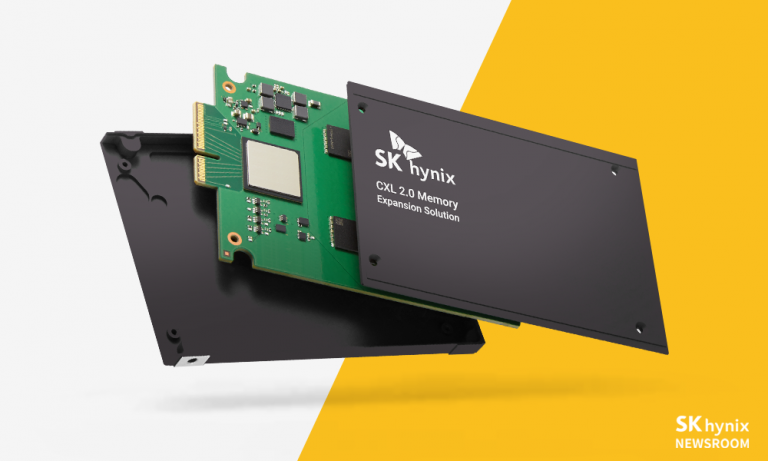
SK hynix Develops DDR5 DRAM CXLTM Memory to Expand the CXL Memory Ecosystem
SK hynix develops its first DDR5 DRAM-based CXL sample
Expandable CXL memory to secure the technology accessibility by development of dedicated HMSDK
SK hynix to expand the CXL memory ecosystem while strengthening its presence in the next-gen memory solutions market
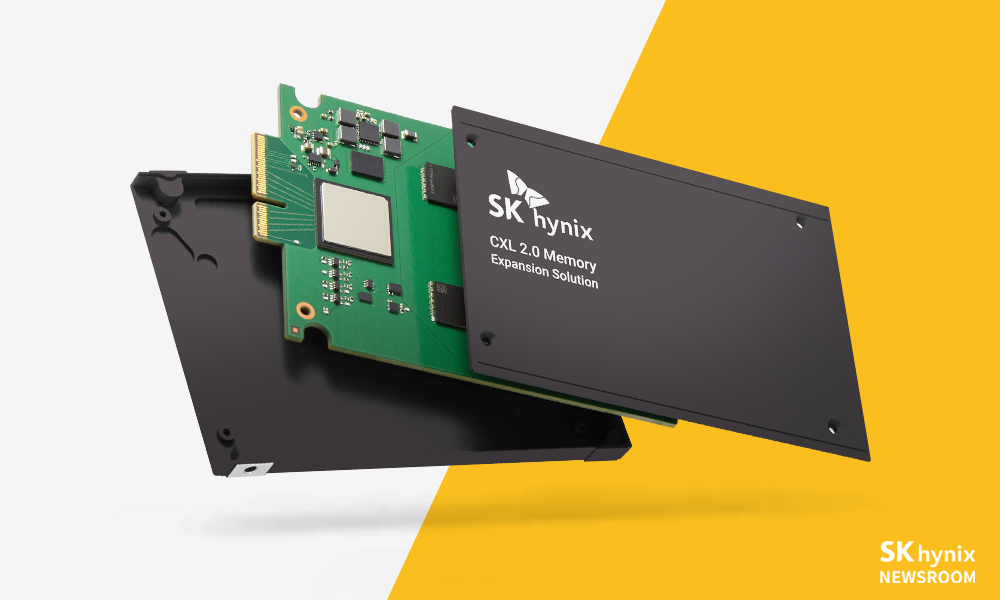
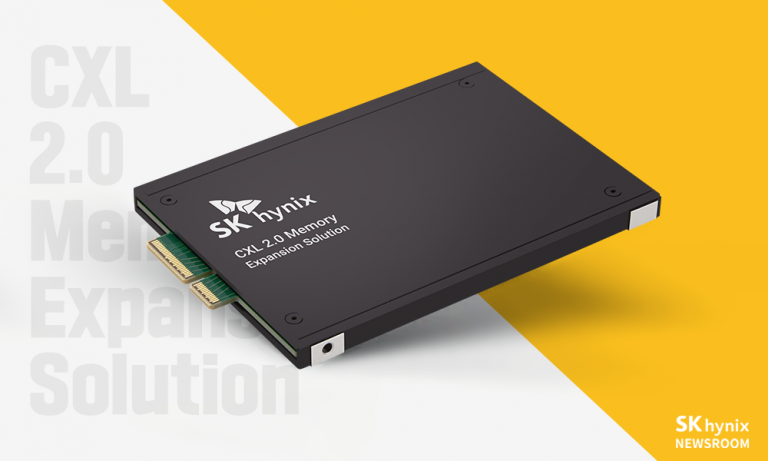
SK hynix Inc. has developed its first DDR5 DRAM-based CXL (Compute Express Link) memory samples and strengthened its presence in next-generation memory solutions market. The form factor of the sample is EDSFF (Enterprise & Data Center Standard Form Factor) E3.S and it supports PCIe 5.0 x8 Lane, uses DDR5 standard DRAM and is equipped with CXL controllers.
CXL1), which is based on PCIe (Peripheral Component Interconnect Express)two), is a new standardized interface that helps increase the efficiency of utilizing CPUs, GPUs, accelerators, and memory. SK hynix has participated in the CXL consortium from an early stage, and is looking to secure CXL memory market leadership.
Expandable CXL Memory to Begin Mass Production in 2023
The essential point of the CXL memory market is expandability. The CXL memory allows for flexible memory expansion compared to current server market, where the memory capacity and performance are fixed once the server platform is adopted. CXL also has high growth potential as it is an interface spotlighted for high performance computing systems such as AI and big data related applications.
The first CXL memory device developed by SK hynix is a 96GB product composed of 24Gb DDR5 DRAMs based on 1anm, which is the latest tech node. The company expects high customer satisfaction of this product with flexible configuration of bandwidth and capacity expanded cost-efficiently.
“I see CXL as a new opportunity to expand memory and create a new market. We aim to mass-produce CXL memory products by 2023, and will continue to develop cutting-edge DRAM technologies and advanced packaging technologies to launch various CXL-based bandwidth/capacity expandable memory solution products.”
— said Uksong Kang, Head of DRAM Product Planning explaining SK hynix’s CXL memory deployment strategy.
Various Collaboration Plans to Expand the CXL Memory Ecosystem
“Dell has been at the forefront of developing the CXL and EDSFF ecosystems, driving technology standards through the CXL and SNIA consortiums, and working closely with our partners on CXL product requirements to meet future workload demands. The SK hynix EDSFF E3.S form factor CXL memory module is an example of the innovative products that customers will be able to deploy to meet their growing memory needs,”
— said Stuart Berke, Vice President and Fellow at Dell’s Infrastructure Solutions Group.
Dr. Debendra Das Sharma, Intel Senior Fellow and co-GM of Memory and I/O Technologies at Intel added,
“CXL plays an essential role in extending memory for data center systems to evolve. We look forward to building and expanding the CXL memory ecosystem, as well as quickly developing technology standards through the CXL consortium, by collaborating with partners like SK hynix.”
“AMD is excited about the possibilities of workload performance acceleration with memory expansion using CXL technology. We look forward to collaborating with SK hynix on the development and validation of CXL as the industry shifts to a more dynamic and flexible memory infrastructure,”
— said Raghu Nambiar, Corporate Vice President of Data Center Ecosystems and Solutions at AMD.
“CXL is a key technology that will be critical in optimizing memory systems in the future, and we are actively working with SK hynix in CXL memory design and verification to promote the rapid development of the CXL memory ecosystem,”
— said Christopher Cox, Vice President of Technology at Montage Technologies.
Securing Technology Accessibility by Developing HMSDK dedicated to CXL Memory
SK hynix also developed the Heterogeneous Memory Software Development Kit (HMSDK)3) exclusively for CXL memory devices. The kit will include features to improve system performance and monitor the systems while running various workloads. The company plans to distribute it as an open source in the fourth quarter of 2022. It is expected that end users such as software developers will be able to utilize SK hynix’s CXL memory more effectively.
The company prepared a separate sample for evaluation to help customers evaluate it with ease. As there is currently no server which supports EDSFF E3.S x8 Lane, SK hynix replaced the dedicated samples’ EDSFF pins with PCIe to support customers install the samples to existing PCIe slots.
SK hynix is planning to exhibit the product in upcoming events, beginning with Flash Memory Summit in early August, Intel Innovation at the end of September and Open Compute Project (OCP) Global Summit in October, while scheduling to demonstrate a demo with HMSDK as well . The company will actively deploy CXL memory related business to provide customers with the memory products they need in a timely manner.
Amidst a weak yen in Japan, electronics are currently facing some serious price hikes, including the likes of Apple’s iPhone, but also encompassing a wide range of pretty essential goods including TVs, fridges, dishwashers, and printers.
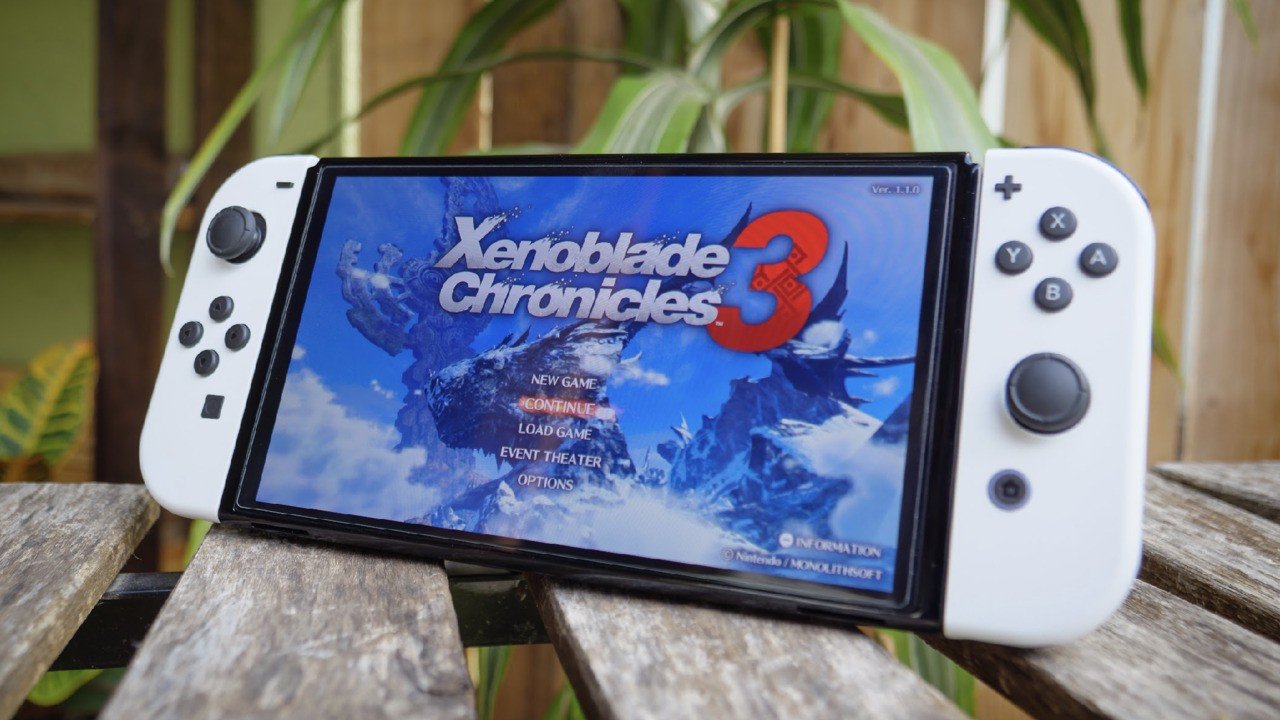
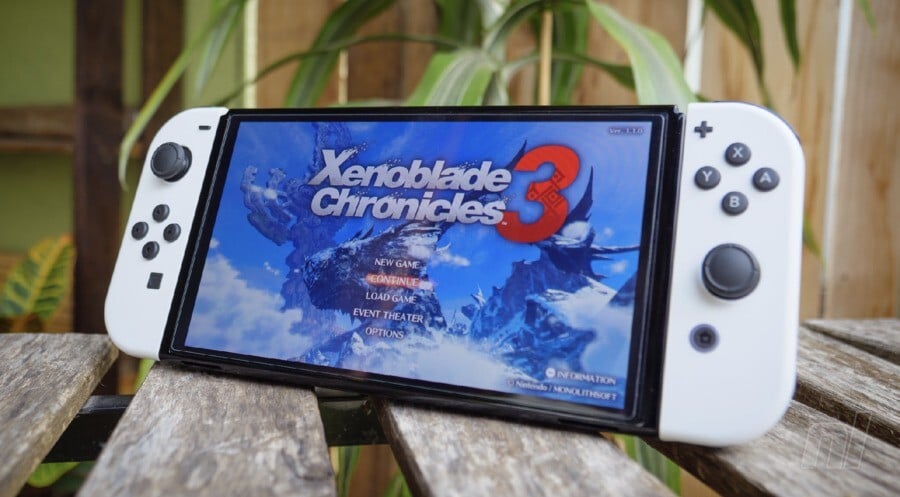
One area that seems to be immune (for now) is the video game console market. According to Bloomberg (thanks, VGC), the three major console manufacturers – Nintendo, Sony, and Microsoft – were asked whether a price increase is on the cards in Japan in the near future. While Sony and Microsoft conspiciously declined to comment, Nintendo stated quite plainly that it has “no plans” to raise Switch prices.
Of course, plans can change at the drop of a hat, but it’s nonetheless reasonably welcome news for customers. As cited by Bloomberg, none of the console manufacturers want to be the first to raise the price of their products, but what this currently means is that consoles in Japan are effectively $100 cheaper than anywhere else.
On the flipside, as a result of companies not opting to raise their prices, this has also led to scalpers in Japan buying consoles and selling them on again at a profit at the most opportunistic time, further increasing demand in the country and driving profits away from shareholders. As such, an eventual price increase may seem almost inevitable.
One likely reason that Nintendo is declining to raise the price of the Switch is that all models are still selling like hotcakes in Japan. Just last week, Nintendo managed to sell almost 70,000 Switch units, whereas the PlayStation 5 managed just over 11,000. It’s clear that Nintendo sees no reason to raise its prices when its products are still performing so well. Nevertheless, as the yen weakens, Nintendo is expected to report a profit loss as part of its next financial results.
Do you think console prices will rise in Japan? Who will be the first to cave? Let us know in the comments!
In a recent filing, Microsoft told New Zealand’s Commerce Commission that Activision Blizzard produces no “must-have” games. Weird thing to say when the company plans to spend $68.7 billion to buy the gaming giant behind Call of Duty, Overwatch, Diablo, World of Warcraftand plenty more.
In the document, Microsoft said: “There is nothing unique about the video games developed and published by Activision Blizzard that is a ‘must have’ for rival PC and console video game distributors that give rise to a foreclosure concern.”
Attempting to downplay the importance of Call of Duty is just one of the ways Microsoft has tried to placate regulators. In February, the company pledged it would continue to make the franchise available on PlayStation consoles beyond any existing agreements between Sony and Activision.
— Matt Smith
The biggest stories you might have missed
It left its equipment in the streets in some cities.
An e-bike- and scooter-sharing startup co-founded by Olympian Usain Bolt appears to have stopped operations. Bolt Mobility offered bikes in five cities, including Portland, Burlington, Vermont and Richmond in California, and others. “We learned a couple of weeks ago (from them) that Bolt is ceasing operations,” a transportation planner in Chittenden County, Vermont, told TechCrunch. “They’ve vanished, leaving equipment behind and emails and calls unanswered.”
Continue reading.
You’ll also see them on individual app pages.
Apple famously bragged it’ll never invade your privacy to serve ads, but it does have an ad business on its App Store and elsewhere. The company is now expanding that business by adding a new ad slot to its Today homepage tab and on individual app pages. The company says these new ad slots will adhere to Apple’s policies on privacy and transparency, by not offering personalized ads to users under 18, never using sensitive data and avoiding hyper-targeting.
Continue reading.
Whether you have Series X, Series S, One X or One S, there’s something here for you.
TMA
Microsoft’s console strategy is unique. Someone with a nine-year-old Xbox One has access to an almost-identical library of games as the owner of a brand-new Xbox Series X. That makes it difficult to maintain meaningfully different lists for its various consoles — at least for now . But while next-gen exclusives may be few and far between, there are a lot of gamers who simply haven’t experienced much of what Microsoft has had to offer since the mid-’10s.
It’s in that frame of mind that we approach this list, now updated: What games would we recommend to someone picking up an Xbox today? Expect more updated guides to the best games throughout the week.
Continue reading.
The proposed class action suit accuses Musk of breaching his fiduciary duty to Twitter shareholders.
TMA
It’s not only Twitter trying to force Elon Musk to buy the company for $44 billion. An investor filed a proposed class action lawsuit to try to stop Musk from backing out of the deal. Luigi Crispo’s suit accuses Musk of breach of contract and breach of fiduciary duty to Twitter’s shareholders. Musk last month claimed the company made “false and misleading representations,” and that it misrepresented the number of bots and fake accounts on its platform. Crispo concurred with Twitter’s claims that Musk is using false claims about bots and spam to wriggle out of the deal without a valid legal standing.
Continue reading.
Premium features.
It’s 2022 and Spotify is adding the most basic of functions to its iOS and Android apps: dedicated play and shuffle buttons on playlists and album pages. Until now, tapping the button on most playlists started playback, shuffled. This vanilla playback ‘feature,’ however, will only be available to Spotify Premium subscribers.
Continue reading.
There’s already a “TikTok Music” trademark application filed.
TikTok’s parent company, ByteDance, has filed a trademark application with the US Patent and Trademark Office for “TikTok Music.” The service would let users “purchase, play, share, download music, songs, albums, lyrics… live stream audio and video… edit and upload photographs as the cover of playlists… [and] comment on music, songs and albums.”
Apple AirTags have become lifesavers of late, with many people reporting using them to locate their lost luggage at airports while traveling. The trackers, which use ultra-wideband versus Bluetooth like most others, are a great way to keep tabs on valuable items, from luggage to a purse, wallet, gym bag, headphones, car keys, and more.
With that said, Apple is a relatively new company to the business, and while the AirTags are great, and pretty affordable (though users will also need to buy an accessory of some kind for attaching it to something), there are other options worth considering. as well. These are particularly fitting for those who don’t own an iPhone, though they all work with an iPhone app, too.
SCREENRANT VIDEO OF THE DAY
Tile Pro
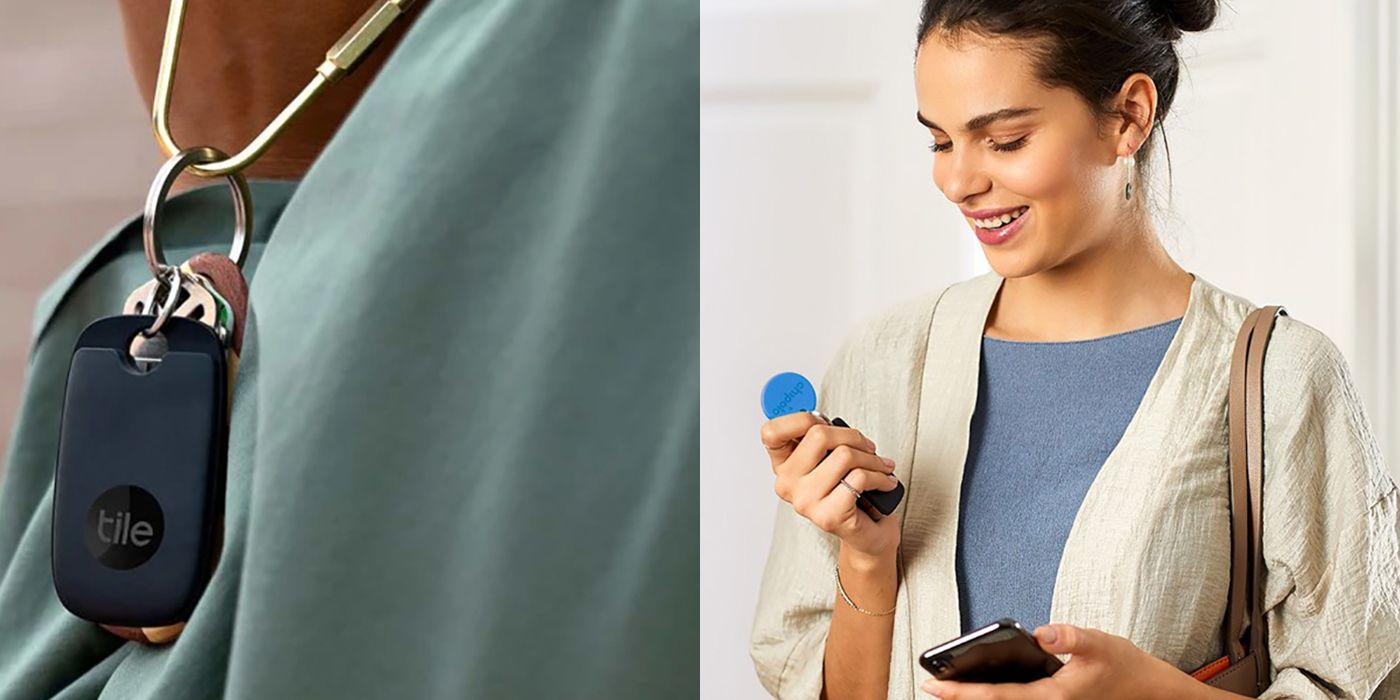
One of the first and most popular brands of Bluetooth trackers is Tile, and its top-line model is the Tile Pro. In comparing the Tile Pro to the AirTag, the Tile Pro comes in a number of colors and employs a rectangular shape with keyring to nicely hang on keys. It works with the Tile app for locating whatever item it’s attached to, both within range using Bluetooth and out of range using the crowdsourced Tile community.
The Tile Pro has the longest range of all Tile devices at up to 400 feet, though this is still only half that of the AirTag. It is also the loudest when using the phone to ring it when it’s in range. The tracker comes with a replaceable battery that lasts for up to a year. It’s water-resistant, works with both Android and Apple devices, and even supports voice-assisted finding using Alexa, Google, or Siri.
Tile Slim
Perfect for placing in a wallet or side pocket of a bag or luggage, the Tile Slim is, as the name implies, slim in design. Resembling a credit card, it isn’t quite as powerful as the Pro with just a 250-foot range, but its battery will last for up to three years. However, the battery is non-replaceable, which means users would have to opt for Tile’s battery replacement program.
RELATED: iPhone Models That Work Best With Apple’s AirTag
Water-resistant and with the same phone compatibility and voice assistance options, it’s the best choice for slotting into a wallet. This one is perfect for the person who often forgets their wallet on the table or in the pocket of the jeans they threw in the hamper.
Samsung Galaxy Smart Tag
Samsung has its own Bluetooth trackers to compete with the Apple AirTag, and one of the most affordable options is the Samsung Galaxy SmartTag. The only issue here, however, is that it is only compatible with Samsung Galaxy phones. For those who own one, however, this alternative might be the best one.
RELATED: Apple AirTag Vs. Galaxy SmartTab+ Bluetooth Trackers Compared
Like the others, it is powered by Bluetooth and can easily attach to keys, backpacks, purses, and more using the keyhole. It works with the app to ring to find a lost item or connects to the Galaxy Find Network for finding it offline. The SmartTag can even be used to control compatible smart devices in the home, turning lights on and off, which is a nice added benefit.
Tile Stickers
Another option from Tile, the Tile Sticker is unique in that it is the one that most closely resembles the AirTag but it has a cool feature: an adhesive back to stick to the underside of a skateboard or bicycle seat for an unobtrusive way to keep track of larger items. And there are certainly many items worth keeping tabs on with a Bluetooth tracker.
With an up to 250-foot range, water-resistant design, and voice assistance, it also has a three-year non-replaceable battery. But in ensuring it’s always powered up, one of these could be the difference between saying goodbye to that stolen bike and actually tracking down where it went.
Tile Mate
Yes, Tile warrants yet another shoutout with the Tile Mate, the super-affordable option among the pack that has an up to 250-foot range, up to three-year non-replaceable battery, water-resistant design, and voice-assisted finding .
Like the Tile Pro, it has a built-in hole for securing it directly to a set of keys, but it’s square in shape versus rectangular. It’s smaller than the Pro but a bit larger than the AirTag, making it a nice middle-of-the-road option for someone looking for something other than the AirTag.
Chipolo One
The Chipolo One looks almost identical to the Apple AirTag with its small, round shape, except it has a tiny hole for securing it to a key ring. Like the others, it uses an app where users can keep track of the item’s location, and it offers a 200-foot range.
RELATED: The Different Types & Styles Of AirTag Accessories Explained
Like with AirTags, set it to receive an alert if the item goes out of range. If it does, the device leverages the Chipolo community to help locate it. The Chipolo One has an easily replaceable battery that lasts up to two years and is water-resistant. As a bonus, it can even be used a remote shutter to trigger a phone’s camera and has different ringtones from which to choose. It also works with voice control via Google Assistant, Alexa, and Siri. Devices like the Chipolo One could be among the best electronics users can buy.
Orbitkey X Chipolo Tracker
Leveraging Chipolo technology and the company’s community of users, the Orbitkey x Chipolo Tracker is another option that’s a bit more expensive than the others, but that’s because it’s designed to work with other unique Orbitkey products.
Namely, this includes the Orbitkey Key Organiser, which is designed to house keys in a Swiss Army knife fashion. Pop the Orbitkey tracker in there as well and it will keep track of the location of the pocket knife-looking contraption. Like the Chipolo One, the button on the device can trigger a phone’s camera. For tracking purposes, it has a shorter range of up to 150 feet and a replaceable battery that only lasts up to six months, but it’s simple and cheap to replace by grabbing one from any hardware store. In terms of design, for those who opt for the Orbitkey Key Organizer as well, it’s a seamless fit that’s worth the extra bucks to keep things neat and tidy without having bulky, jangling keys on a ring.
Huawei Tags
In looking at how the Huawei Tag and Apple AirTag differ, the price is the first big difference: the Huawei Tag is much, much cheaper. It’s most inexpensive option on the list, in fact. It has a pop-up that will advise if an item is left behind and is supported by Huawei’s own “find” network.
It’s rated for water resistance and has a battery that lasts for a year. Like the AirTag, the Huawei Tag is a tiny little device that requires the purchase of a separate keychain or another accessory if users want to affix it to anything, like a set of keys or bag zipper. With that said, the Huawei tag is only available in China for now.
NEXT: Best Travel Cameras
NVIDIA GeForce RTX 4070 Ti Could Be As Powerful As The RTX 3090 Ti
About The Author
Christine Persaud (1227 Articles Published)
A professional writer and editor with 20 years of experience, Christine, who shifted to working freelance in 2014, is a self-professed TV fanatic with tastes that vary considerably from comedies to dramas, sci-fi, and more. She can usually be found binging a new show at night, a glass of red in hand. With a long history writing in the field of consumer tech, she now also writes on topics from entertainment to parenting, lifestyle, marketing, and business. She resides in Toronto, Ontario in Canada with her husband and son.