Categories
Technology

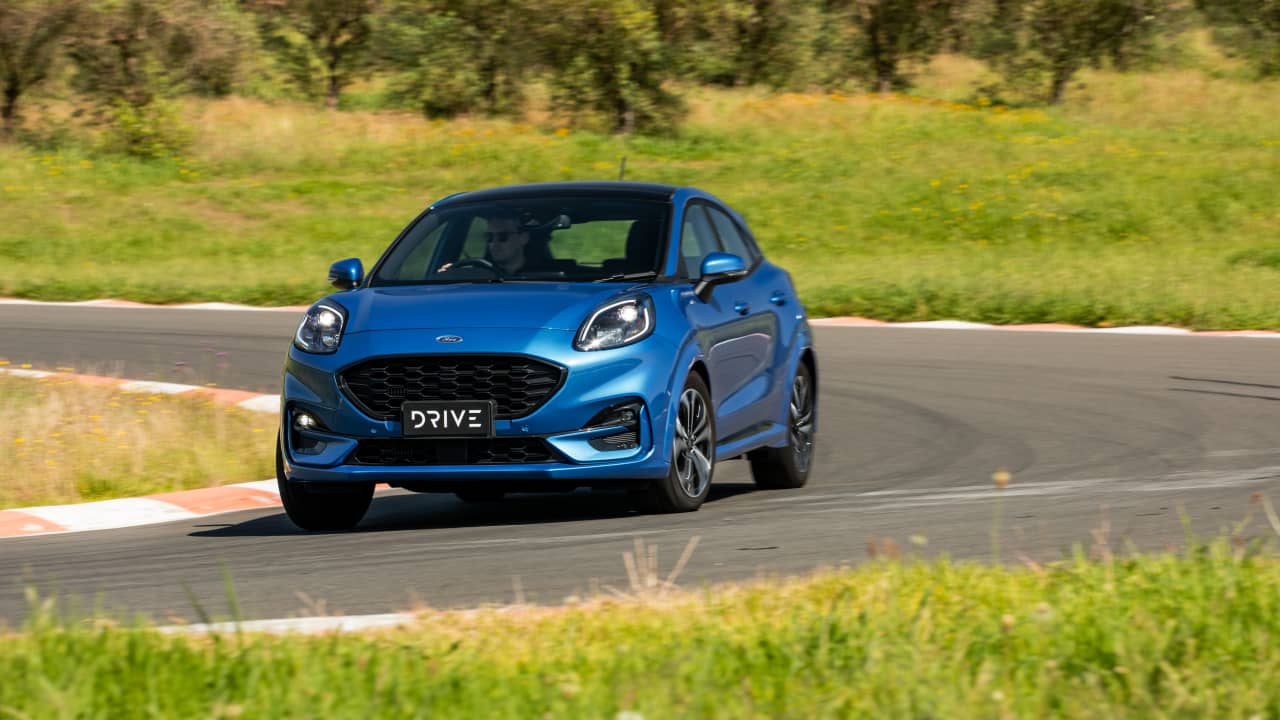
2022 Ford Puma price and specs

Prices for the 2022 Drive Of The Year Light SUV winner, the compact Ford Puma, are both up and down.


  • 2022 Ford Puma pricing and specifications
  • ‘Park Pack’ option reduced from $1500 to $990
  • Contrasting black roof and opening sunroof option now exclusive to flagship ST-Line V
  • Priced from $30,340 before on-road costs

the Drive Car Of The Year Light SUV-winning 2022 Ford Puma range costs more in 2022 – depending on your configuration.

While prices are up across Ford’s whole three-variant Puma range by $350, cost-extra additions across the range have gotten cheaper.

It means the self-titled and entry-level Puma now costs $30,440 (+$350) before on-road costs.


Standard exterior features on the eponymous base model include full LED headlights, LED fog lights, 17-inch wheels with a space-saving spare wheel, a rear spoiler and matte black styling elements.

Inside, equipment remains unchanged from the car’s 2020 launch, with an 8.0-inch Sync 3 display, Apple CarPlay and Android Auto, digital radio plus native satellite navigation. Standard safety features include lane departure warning, rear parking sensors and traffic sign recognition.

In terms of optional extras, the cost-extra ‘Park Pack’ has been reduced from $1500 to $990 across the whole 2022 Puma range. The package introduces front parking sensors, adaptive cruise control and active lane-keeping assist.


The two other options available on the entry-level Puma include a hands-free power tailgate coupled with keyless entry ($750), and prestige paint ($650). Two other options – prestige paint with a contrasting black roof, and an opening sunroof – discontinued on the base model for 2022.

Next up in the three-car range is the Ford Puma ST-Line. Priced from $32,390 (+$350) before on-road costs, this sports-themed model introduces an ST-Line body kit with larger rear spoiler, machined-finish 17-inch wheels, and a larger diameter exhaust.

Mechanical changes are limited to a sports suspension tune, but you also receive a 12-inch digital instrument cluster and a flat-bottomed steering wheel inside for the extra spend.


Options available on the 2022 Puma ST-Line mirror that of the entry-level Puma: the Park Pack ($990), hands-free power tailgate coupled with keyless entry ($750), and prestige paint ($650). The previously-available contrasting black roof and opening sunroof have been discontinued.

Headlining the range is the Ford Puma ST-Line V. It wears a price tag of $35,890 (+$350) before on-road costs and is the most expensive model in the range.

Equipment additions to account for the extra $3500 include a 10-speaker B&O Play audio system, privacy glass (tinted rear windows), better LED headlights, and 18-inch wheels.


Options on the 2022 Ford Puma ST-Line V include prestige paint ($650) and the Park Pack ($990), however it’s the only variant on which you’ll find prestige paint with a contrasting black roof ($1150), and an opening sunroof ($2000) as options.

All 2022 Ford Pumas are powered by the same 1.0-liter turbocharged three-cylinder petrol engine with 92kW/170Nmseven-speed dual-clutch automatic transmissions, and front-wheel drive.

the 2022 Ford Puma range was awarded the 2022 Drive Car of the Year Best Light SUV. Click here to find out more.


2022 Ford Puma Australian pricing

  • Cougar – $30,440 (up $350)
  • Puma ST-Line – $32,390 (up $350)
  • Puma ST-Line V – $35,890 (up $350)

Note: All prices exclude on-road costs.

Above: 2023 Hyundai Palisade Elite.

2022 Ford Puma standard features:

  • LED headlights, tail lights, and fog lights
  • 17-inch alloy wheels (with space-saving alloy spare)
  • Power-folding and heated exterior mirrors
  • 8.0-inch Sync 3 infotainment touchscreen
  • Apple CarPlay, Android Auto, satellite navigation and reversing camera
  • voice recognition
  • Six-speaker sound system
  • Automatic single-zone climate control
  • Auto-dimming rear-view mirror
  • push-button start
  • Cloth seats
  • Wireless smartphone charger
  • Selectable driving modes
  • Front cup holders
  • Two USB ports
  • Ambient LED interior lighting
  • Rear parking sensor
  • Six airbags
  • autonomous emergency braking
  • Lane-keep assist
  • Lane departure warning
  • Rear-view camera with 180-degree split view
  • Traffic sign recognition
  • Automatic high beam
  • Tire pressure monitoring
  • Hill hold assist

2022 Ford Puma ST-Line adds (over Puma):

  • Sports suspension
  • Larger outer rear spoiler
  • Flat-bottom steering wheel with paddle shifters
  • 17-inch black and machine-finish alloy wheels
  • 12.3-inch digital instrument cluster
  • Red interior stitching (dashboard, door trims, gear shifter, steering wheel)
  • ST-Line badging

2023 Ford Puma ST-Line V adds (over Puma ST-Line):

  • 18-inch ‘multi-spoke’ alloy wheels
  • 10-speaker B&O Play sound system
  • Upgraded ‘drum shutter’ LED headlights
  • Keyless (proximity) entry
  • Hands-free power tailgate
  • privacy glass
  • Chrome grille inserts
  • Internal scuff plates with ST-Line logo

Available exterior colors include:

  • Frozen White ($0)
  • Fantastic Red ($650)
  • Magnetic Gray ($650)
  • Gray Matter ($650)
  • Blue Blazer ($650)
  • Desert Island Blue ($650)
  • Black Agate ($650)
  • Solar Silver ($650)

After more than a decade working in the product planning and marketing departments of brands like Kia, Subaru and Peugeot, Justin Narayan returned to being a motoring writer – the very first job he held in the industry.

Read more about Justin Narayan LinkIcon
Categories
Technology

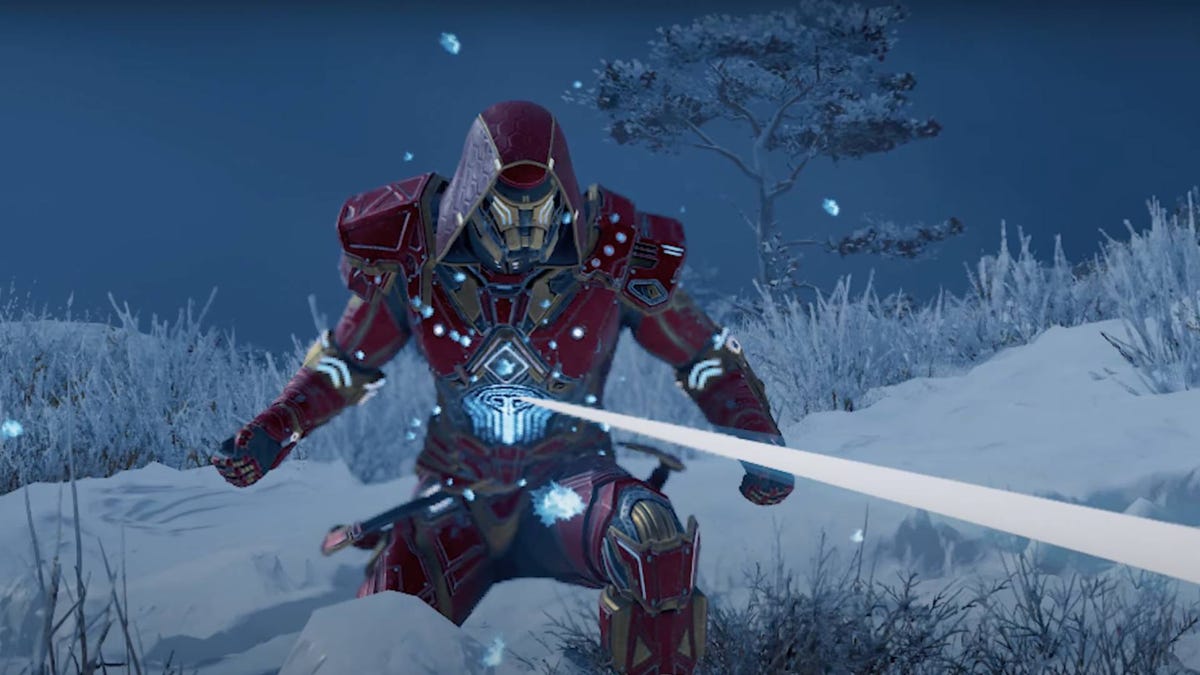
Assassin’s Creed Valhalla YouTube Leaks Tease Iron Man Suit

Eivor in an Iron Man suit shoots a laser beam.

screenshot: Ubisoft / Andy Reloads

Assassin’s Creed Valhalla dataminers recently discovered files of an Iron Man skin that shoots a Unibeam from the chest. The skin is currently not available in Ubisoft’s digital store, but fans are hoping that it gets released sometime in the future.

The armor was found by an Assassin’s Creed dataminer named Pedder, who previously mined DLC information from the game files that later proved to be accurate. the Youtube videos show a red-and-yellow armor set that shoots a laser beam from the chest and a similar looking white variant. The Unibeam can be activated with the “Battlecry” ability in Valhalla. The pack also includes a mechanical raven, a mount, and two swords.

Assassin’s Creed Valhalla Update – NEW ‘Star Wars’ Advanced Mechanical Armor Set Found!

This isn’t the first time that Marvel-related Assassin’s Creed cosmetics have surfaced. Previously, Andy showed off a video of a Thanos skin called “Master of Elements.” This unreleased skin includes colorful gem-studded gloves that activate a different ability every few seconds. Some fans are a little disappointed Ubisoft hasn’t actually released any of these skins—or even confirmed their existence. Kotaku reached out to Ubisoft about whether or not these skins will be released, but was not able to obtain a comment at the time of publication.

A Marvel collab wouldn’t even be the most unusual crossover to appear in the Assassin’s Creed series. back when Origins was still getting updates, players could stumble upon a final-fantasy Easter egg in ancient Egypt. Iron Man’s robot mount may be a little out there for medieval England, but I’d say that the Chocobo mount was far more jarring to ride into the desert sands. Assassin’s Creed‘s Fortnite-ification continues.

Despite Ubisoft’s troubles with delays and cancellations, Valhalla has enjoyed a relatively robust release schedule. This spring, the publisher launched the major dawn of ragnarok expansion, which added a ton of Norse mythology quests to the already-massive open world RPG. Ubisoft has released a Valhalla expansion every year since the game’s initial release, and it doesn’t show any signs of slowing down. So I’m not too bothered if the developers spend a little more time tweaking the skins that absolutely no one was even expecting from a viking game.

.

Categories
Technology

What to know about the merger

As some of the best tech companies evolve, the features they offer through products and services tend to overlap. Google is all too familiar with this and the requisite countermeasures. After building out its consumer and business products as separate projects, some duplication was not to be avoided. But the company is backtracking on this big divide. In a long-anticipated change, Google Duo is on the way to become Google Meet, merging all useful features from both platforms into one. Here is what you need to know, and what timeline you can expect.

ANDROID POLICE VIDEO OF THE DAY

The tech titan announced the Duo-Meet merger in June. In July, the signs of the impending change began showing up in Duo. Then, things started moving fast, with every user now seeing indications in the form of a banner in Duo. Following this banner, Google has confirmed that starting August 3, an app update for Duo users on Android and iOS is changing the app’s icon and label to Meet.

Forseeing the need for help and clarifications during this change, Google’s support documentation for the transition is up already.

Duo on Android and iOS will show you a banner on its home screen explaining the changes, so you don’t go on a wild goose chase for Duo in your app drawer. To further reduce the confusion, Google has prepared distinguished app icons seen below — if you see the old blue one for Duo, the merger hasn’t updated your app. If it has, you’ll see the multicolored Meet logo instead. In the rare instance where you are a Duo user who also installed the original Meet app, Google says the next update for the latter will give it a green icon.


If you still see the Duo icon, but the app has all of Meet’s features, you just need to go to the home screen prompt and accept the changes. If you don’t see the Meet features, but you’re sure you updated the app, you may need to sign in with a different Google account — those who set up Duo with a phone number only cannot access Meet features. Meanwhile, if you have been using the original Meet app for online interactions, you won’t get Duo calling features right away, but Google says they’ll arrive eventually, and you can use the app normally until then.

For web users, Duo will be upgraded to Meet, but will retain its current capabilities. In the next few months, the company says the Duo website will redirect users to the one for Meet.

The rollout is phased, so the new app icon and rebranding may not be visible to everyone right away. Come September, the transition should be complete, so anyone looking up Google Meet on the Play Store and Apple App Store, will be redirected to the updated Meet app instead.


In an effort to make Google Workspace apps and those for individual users less separate, Google also recently killed off Hangouts and integrated Google Chat with Gmail. It is clear that the company wants to move to a more unified look and feel across its different services.

Categories
Technology

VMware: Patch this critical vulnerability immediately! (CVE-2022-31656)

VMware has released fixes for ten vulnerabilities, including CVE-2022-31656, an authentication bypass vulnerability affecting VMware Workspace ONE Access, Identity Manager and vRealize Automation, which the company considers critical and advises to patch or mitigate immediately.

While there is no indication that any of these flaws is currently being leveraged by attackers in the wild, the security researcher who reported CVE-2022-31656 is planning to release a technical writeup and a POC “soon”.

About CVE-2022-31656

CVE-2022-31656 is an authentication bypass vulnerability affecting local domain users on VMware Workspace ONE Access, Identity Manager and vRealize Automation, that may allow an attacker with network access to the UI to obtain administrative access without the need to authenticate first.

“Given the prevalence of attacks targeting VMware vulnerabilities and a forthcoming proof-of-concept, organizations need to make patching CVE-2022-31656 a priority,” says Claire Tills, senior research engineer at Tenable.

“As an authentication bypass, exploitation of this flaw opens up the possibility that attackers could create very troubling exploit chains.”

She also noted that “early reports indicate that CVE-2022-31656 is actually a variant or patch bypass of CVE-2022-22972 which was patched in [May 2022].”

Petrus Viet, the researcher who discovered CVE-2022-31656, has also reported CVE-2022-31659, a SQL injection flaw that can be exploited to trigger a remote code execution. These two vulnerabilities could, for example, be concatenated in a very effective exploit chain.

Other vulnerabilities fixed in this batch of security updates include:

  • Two other CERs (CVE-2022-31658, CVE-2022-31665)
  • Three local privilege escalation flaws (CVE-2022-31660, CVE-2022-31661, CVE-2022-31664)
  • An URL injection vulnerability (CVE-2022-31657)
  • A path traversal vulnerability (CVE-2022-31662)
  • A cross-site scripting (XSS) vulnerability (CVE-2022-31663)

Affected solutions include:

  • VMware Workspace ONE Access (Access)
  • VMware Workspace ONE Access Connector (Access Connector)
  • VMware Identity Manager (vIDM)
  • VMware Identity Manager Connector (vIDM Connector)
  • VMware vRealize Automation (vRA)
  • VMware Cloud Foundation
  • vRealize Suite Lifecycle Manager

Along with the security advisory, VMware has also published a FAQ document that enterprise admins should consult to make sure they apply patches or workarounds correctly.

Categories
Technology

Using hand gestures can improve your experience of video calls

Signals, such as putting your hand over your heart to signify empathy or thumbs up to show you agree, seem to improve people’s experience of video calls more than typing words or using emojis

Technology


August 3, 2022

Back view of a woman making video call and showing thumbs up

Giving signs like a thumbs up can make video calls feel better

Josep Suria/Shutterstock

Using simple hand gestures during video calls seems to improve people’s experience of such interactions.

Paul Hills at University College London (UCL) came up with a set of gestures after many video calls during covid-19 lockdowns. “It was born out of my frustration with [online] meetings,” says Hills – who also works as a management consultant – during a video call with New Scientist in which he uses the hand actions.

In online meetings, he began informally testing a range of gestures, including ones borrowed from his work as a volunteer lifeguard and as a mentor to an addiction support group.

Initial positive feedback prompted him to team up with Daniel Richardson at UCL and other colleagues to more formally test the signals.

The researchers arranged a randomized trial involving about 120 undergraduate psychology students at UCL and their seminar leaders who were introduced to nine gestures, which they called Video Meeting Signals.

These include putting your hand over your heart to signify empathy, thumbs up or down to show agreement or disagreement and putting your hand on your head to suggest you want to ask a question. The last of these signals, says Hills, was borrowed from the movies of Laurel and Hardy.

Half of the students were asked to use those signals in seminars done by video call, and a control group had meetings, but didn’t use the signs. Participants reported in surveys afterwards that their group affiliation felt stronger because of their use of gestures. The data suggests a 98 per cent probability that this was because of the gestures, and a 93 per cent probability that they contributed to a better personal experience.

“It seemed to be helping,” says Richardson, speaking in the same video call interview as Hills and also using some of the gestures. “It did make these conversations more efficient, people said. They felt like they were achieving their goals sooner.”

The researchers did a second experiment, in which non-students were paid for their time, which also included a third group using emojis instead of gestures. Gestures showed a similar advantage over the control group again, and also over the emoji group.

Hills and Richardson feel that gestures are better than using emojis or typed words in a text chat because of their speed – although they acknowledge that using gestures requires participants to devote their full focus to video call screens, rather than multitasking on video calls, as many people do.

Hills now runs video meeting workshops for businesses on how to use the gesture technique, for a fee.

“It is interesting to see an empirical study examining the efficacy of gesture in this space,” says Matt Wood at the University of the West of England in Bristol, UK. He points out that the commercialization of the work means its results should be treated with caution. “The structure of conversation in videoconferencing appears to be important and to these ends, this paper introduces a potentially interesting framework,” he says. “But the use of gesture is not in any one researcher’s – or marketing company’s – hands.”

Journal reference: PLoS OneDOI: 10.1371/journal.pone.0270399

More on these topics:

.

Categories
Technology

Halo 2’s ‘Impossible’ $20,000 Challenge Finally Conquered

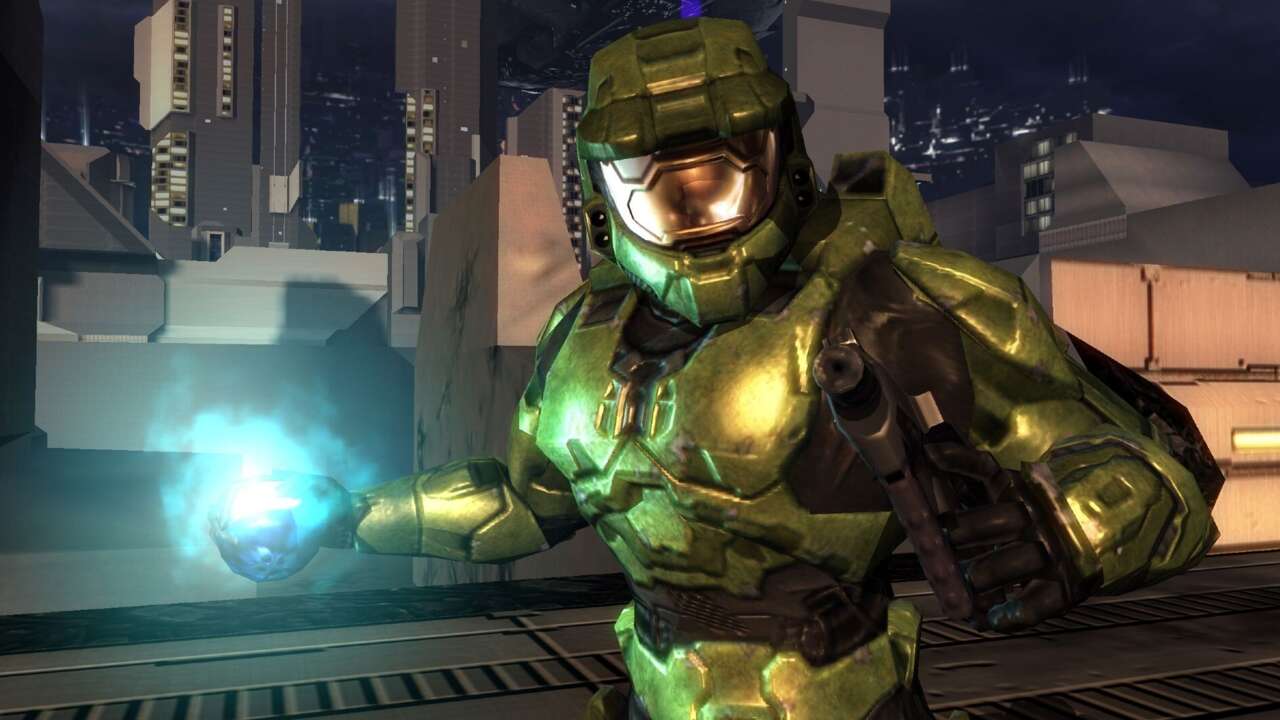
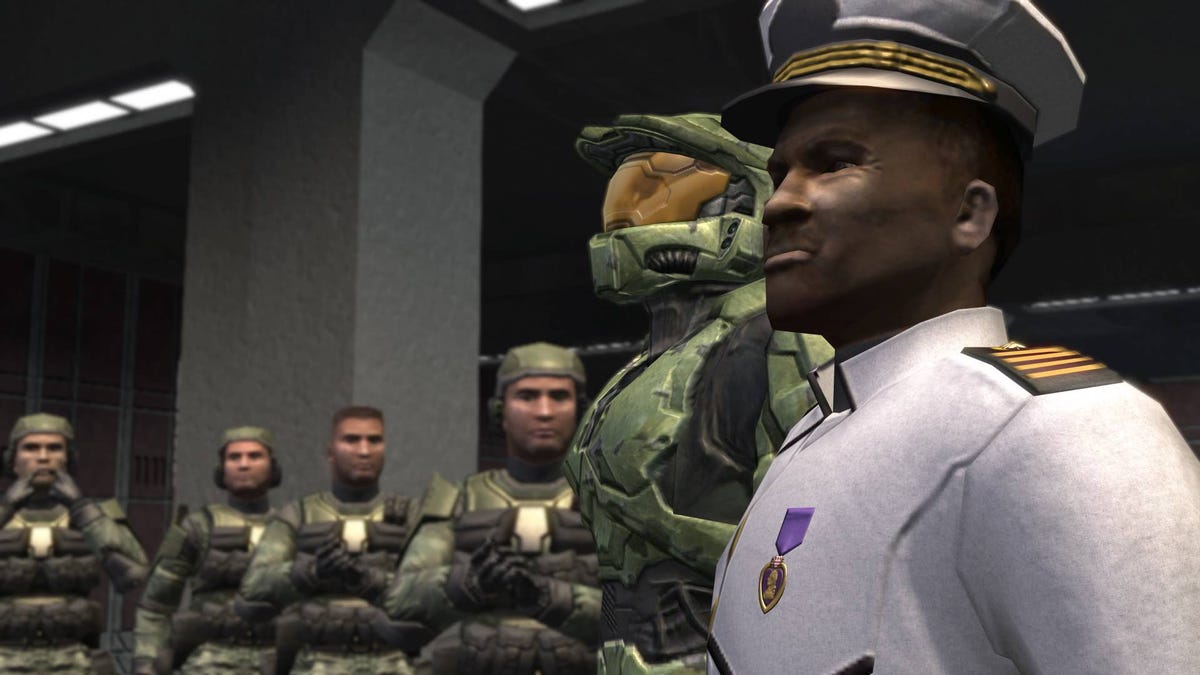
Master Chief stands next to Sergeant Johnson in Halo 2.

screenshot: Bungie/IGDB

They said it was impossible and, for nearly two decades, that seemed to be the case. But last night, a streamer named Jervalin beat Halo 2‘s “LASO deathless” challenge, earning a cool $20,000 in the process. Talk about finishing the fight.

Let’s rewind. Earlier this summer, the YouTuber Charles “Cr1tikal” White Jr.. posted a $5,000 bounty to beat Halo 2 on the highest difficulty setting, with every bonus challenge modifier turned on, without dying. In the 18 years since Halo 2‘s 2004 release on Xbox, no one had ever published evidence of completing the challenge. White’s challenge stipulates that the whole run is streamed, either on YouTube or Twitch. By July, no one had successfully stepped up to the plate, so last month, White tacked an extra $15,000 onto the bounty.

Most observers keeping tabs on the challenge had their money on Jervalin—a relatively private streamer who’s picked up a modest following for setting world records on a variety of Halo challenges—being the first person to complete it. Sure enough, late last night, I’ve crossed the finish line. (Here’s the archived stream.)

Bungie/Jervalin

Neither White nor Jervalin could be reached for comment in time for publication.

Jervalin was remarkably chill for finishing what some people, including White Jr., have called the “hardest challenge in all of gaming,” addressing viewers in the even-handed tone you’d use while moving on to the next addendum in a mostly empty community board meeting.

“All right, chat,” he said. “I think we did it. I think we fucking did it. Imagine that. Two years ago, I said, ‘I think this is impossible.’ Imagine fucking that.”

Whether or not Halo 2‘s “LASO deathless” challenge really is the “hardest… in gaming” is, of course, a subjective measure. But it’s definitely up there. You have to activate all of the game’s skulls, or gameplay modifiers that typically ramp up the difficulty. The Catch skull, for instance, makes enemies toss grenades more frequently. Famine, meanwhile, means enemies drop half the ammo they usually would. Mythic doubles the health of all enemies, while Angry increases the enemy’s fire rate. Blind removes your HUD. Assassins turns enemies invisible. (It’s not technically there skulls, however. For the challenge, Envy is left off, because that one grants you invisibility too, which does not make Halo 2 more difficult, for obvious reasons.) All together, when you turn every skull on and play on Legendary, the game’s highest difficulty setting, you more or less create a set of conditions that ensures you die instantly if you take any damage.

Jervalin had to rely on a few exploits to finish the challenge. To wit: He brought a banshee, a violet-colored aerial vehicle with a powerful cannon, into the final boss fight against Tartarus on the “Great Journey” level. That final fight takes place on a series of circumferential platforms hovering over an abyss. With pinpoint precision, he used the banshee’s cannon to send waves of foes careening off the edge as they spawn—before they get a chance to really even fight.

I’ve been covering the Halo community for a while now, and can’t recall a time where I’ve seen players pretty unanimous in an opinion, let alone a positive one. Sure, halo-infinitethe latest game in the series, has its issues, which players are not shy about criticizing. But there remains a reverence among even the biggest names for Bungie’s original games since the mid-2000s, and the mind-bogglingly impressive feats players are able to pull off.

The run garnered praising desde Halo streamers like Remy “Mint Blitz” and Luc “HiddenXperia.” Emanuel Lovejoy, the coach for Cloud 9, arguably the best professional Halo team on the planet right now, called Jervalin to “legend.” so did Spacestation Gaming’s UberNick. the Halo pro Kyle Elam noted how yesterday’s scrims—basically, matches between pro players that don’t count toward the official seasonal record—were put on pause so players could collectively watch Jervalin get it done. “Gonna need Jervalin to make a Twitter so we can actually @ this legend [clapping hands emoji],” Halo esports analyst and caster Alexander “Shyway” Hope said. It has been a genuine delight to witness such universal acclaim from all corners of the community.

But the most heartwarming moment—the sort of moment that proves Este, not the toxicity that inhales so much oxygen out of the room, is what video games are all about—happened in the final seconds of the stream: Jervalin’s family runs into the stream, embracing him in an almost suffocatingly tight bear hug. $20,000 is nice. That’s nicer.

.

Categories
Technology

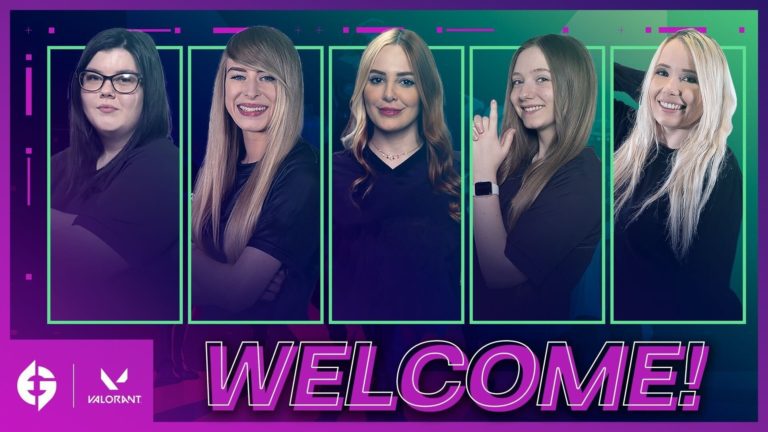
Game changed: Evil Geniuses signs former Dignitas women’s VALORANT roster

Evil Geniuses is continuing to bolster its growing presence in the developing VALORANT scene following the acquisition of the former Dignitas women’s roster.

The female roster, going by the name EG VALORANT or EG Game Changers VALORANT, consists of captain Emmalee “EMUHLEET” Garrido, Amanda “rain” Smith, Juliana “Showliana” Maransaldi, Melisa “theia” Mundorff, and Stefanie Jones. David “Xp3” Garrido will also come over as coach, according to EG’s announcement tweet. But an exclusive interview with Washington Post says that main roster coach Christine “potter” Chi will “oversee both teams.”

in that Washington Post interview with EG CEO Nicole LaPointe Jameson, Jameson said that the EG Game Changers roster will relocate to the organization’s Los Angeles facility, where they will have access to “subsidized housing, physical fitness conditioning, nutrition and data-driven training.” The team’s debut is set for the Astral Clash event beginning on Aug. 6, an event that the players qualified for while still under the Dignitas Female banner.

The acquisition of the Game Changers roster is the latest step forward for a growing VALORANT division at EG. The organization entered the scene with the first mixed roster at the beginning of 2021 but eventually parted ways with all of those players except for Potter, who eventually took over as head coach. After a dismal 0-5 showing in Stage One of NA VCT this year, the team re-tooled and finished top six in Stage Two, qualifying for the LCQ. Famed NA CS:GO pro Stewie2K recently stepped back from the active EG CS:GO roster to focus on primarily streaming VALORANT.

EG is seeking to improve its stake in VALORANT with a partnered spot in VCT 2023. On July 23, Jameson tweeted out that EG is “still in the running” for a slot.

Categories
Technology

Improving RED algorithm congestion control by using the Markov decision process

The AQM algorithm

The default of AQM algorithm work is represent in RED algorithm. The RED Inception of the congestion depends on the average queue size (avg), two thresholds ((min_{th}) and (max_{th})) and maximum drop probability ((max_p)). Each packet arrives at the router queue; the algorithm calculates the avg by using exponential weight moving average (EWMA) as a low pass filter, which is shown in Eq. (1) as follows:

$$begin{aligned} avg = left( 1-w_qright) avg+w_qq end{aligned}$$

(1)

where (w_q) is the queue weight and q is the current queue size. If the avg value is (min_{th}, the algorithm starts marking the arrival packets to the router’s queue using the Explicit Congestion Notification (ECN) available in TCP/IP. Therefore, to reduce the sending rate, the drop probability P can be calculated based on Eq. (2) as follows:

$$begin{aligned} P= max_p(avg-min_{th})/(max_{th}+min_{th}) end{aligned}$$

(two)

The RED algorithm starts dropping all incoming packets when avg exceeds (max_th) to manage the congestion in the queue. The drawbacks of RED have a slow response to congestion and a difficulty tuning the parameter. Thus, these drawbacks make the algorithm work incorrectly when different applications and services use different data rates. The GRED has three values ​​of thresholds ((min_th),(max_th) and double (max_th)) to reduce drop probability slop curve. The proposed algorithm used three thresholds as in GRED and the dynamic value of (w_q) selected based on the Markov process.

Markov Process

The MDP depends on the combination of ((s_t), (a_t), (r_t)t)17 with transitional probability to determine which action needs to be taken for a given state, which can be seen in Eq. (3) as follows:

$$begin{aligned} P(s_{t+1}vert s_t,a)=P(s_{t+1}=jvert s_t=i,a=k) end{aligned}$$

(3)

where (s_t) and (s_{t+1}) indicate the present state and the next state, respectively, while a indicates that an action needs to be taken. Yo and j can be 1,2,3, … that represent states, where j is the next state and Yo is the current state; and k can be 1,2,3, … to indicate which action is taken.

(r_t) is the reward (return) from the environment to the agent after an action is applied to the current state, as shown in Eq. (4), and this reward can be the maximum or minimum. In this work, the reward represents a minimum number of packets dropped as follows:

$$begin{aligned} R_t=sum​​i=t}^{infty } r_{i}=r_t+r_{t+1}+r_{t+2}+… end{aligned }$$

(4)

The MDP includes the discount factor (gamma ), which has a value between 0 and 1 to give a weight for future rewards. In this study, the value of (gamma )=0 includes only the immediate reward without involving future rewards, which is shown in Eq. (5) as follows:

$$begin{aligned} R_t=r_t+sum i=t+1}^{infty } gamma ^i r_i end{aligned}$$

(5)

To map MDP on the RED algorithm, there is a need to consider the average queue length, avg, as a state and the type of drop packets as an action. We assume four sets of states S=(s_1, s_2, s_3, s_4). Then we have the (4times 4) transition probability matrix shown in Eq. (6). (s_1) means the avg state TCP for a slow start below a minimum threshold ((0< avg < min_{th})), (s_2) indicates the avg state between (min_{th}) thresholds and halfway of the two thresholds ((min_{th}< avg < (min_{th} +max_{th})/2), s_3) indicates the state when the avg is between halfway of the two thresholds and below the (max_{th} ((min_{th} + max_{th})/2< avg < max_{th}))and (s_4) indicates the state when the avg is greater than (max_{th}) and less than double (max_{th}) ((max_th. We assume that there are three sets of action A=(a_1,a_2,a_3)where (a_1) represents the no-drop packet, while (a_2) and (a_3) indicate the unforced drop and the forced drop, respectively, as follows:

$$begin{aligned} P_{ij} = begin{bmatrix} P_{00} &{} P_{01} &{} P_{02} &{} P_{03} \ P_{10} &{ } P_{11} &{} P_{12} &{} P_{13} \ P_{20} &{} P_{21} &{} P_{22} &{} P_{23} \ P_{ 30} &{} P_{31} &{} P_{32} &{} P_{33} \ end{bmatrix} end{aligned}$$

(6)

Design and methodology

The Point-To-Point Dumbbell network topology built by NS3 with ON-OFF application was used in this study, as shown in Fig. 1. In the current study, the network has five nodes on each left and right side at beginning then increasing by 5 nodes in each simulation round up to 200 nodes, the source and the destination, respectively, and the two nodes in the middle that reflect the router in the core network create a bottleneck. Figure 1 shows that the sending nodes have not sent any packet, while in Fig. 2, the bottleneck link has been congested, and the drop packets procedure started.

Figure 1
figure 1

NS3 Point-To-Point Dumbbell topology before starting simulation.

Figure 2
figure 2

NS3 Point-To-Point Dumbbell topology after 10 sec of run time.

TCP slow start

The TCP protocol has a default congestion control with four phases: slow start, congestion avoidance, fast retransmit, and fast recovery18. The slow start phase allows the TCP to inform the capacity of links in the transition path; this occurs by duplicating the window size per RTT of each acknowledgment received. If no acknowledgment is received, the TCP indicates that congestion occurs, and the congestion avoidance phase starts; then, the window size increases by one for all successful acknowledgments. Therefore, the TCP slow starts increasing exponentially in each RTT, which means that congestion can occur within a short time.

Tuning algorithm parameters

The default values ​​in the RED algorithm parameters are (w_q)=0.002, (min_{th})=5, (max_{th})=15, (max_p)=1/50two. In the present study, the probability transition matrix (P_{ij}) in Eq. (6) is calculated based on queue weight (w_q). Equation (7) shows the relation between the load rate and (w_q)as well as their effect on the avg valuetwo as follows:

$$begin{aligned} avg=L+1+frac{(1-w_q)^{(L+1)}-1}{w_q} end{aligned}$$

(7)

where L represents the load rate of the sending packets. (w_q) works as a time constant in a low pass filter on the average queue value, which reflects the response time and queue weight of incoming packets, as shown in Fig. 3. Therefore, if (w_q) is too large, then the algorithm does not filter out the congestion that appeared in a short time, especially in the slow start of the TCP protocol, as mentioned in the previous subsection. If (w_q) is too small, then the algorithm response to congestion is too slow to reflect the change in queue size, and the small value of the queue weight is suitable for the slow start phase in the TCP. In this study the initial value of (w_q) set to zero and increment by 0.002 when the state of avg change to other state, these values ​​selected to manage the exponential increase of TCP Slow Startup flow. Table 1 shows the range of the (w_q) used in the suggested algorithm.

Figure 3
figure 3

The effect of the avg as a function of (w_q) and the load rate.

Table 1 The value of avg based on the queue length state.

By using the values ​​of the (w_q), the MDP probability transition matrix is ​​obtained, shown in Eq. (6) as follows:

$$begin{aligned} P_{ij} = begin{bmatrix} 0 &{} 0.002 &{} 0.002 &{} 0.002 \ 0.004 &{} 0 &{} 0.004 &{} 0.004 \ 0.006 &{ } 0.006 &{} 0 &{} 0.006 \ 0.008 &{} 0.008 &{} 0.008 &{} 0 \ end{bmatrix} end{aligned}$$

(8)

The diagonal matrix assigns a zero value, which means there is no change in the queue weight value if the state is the same. The parameters of the implemented network are shown in Table 2:

Table 2 The parameter values ​​of the implemented algorithm.
figure out
Categories
Technology

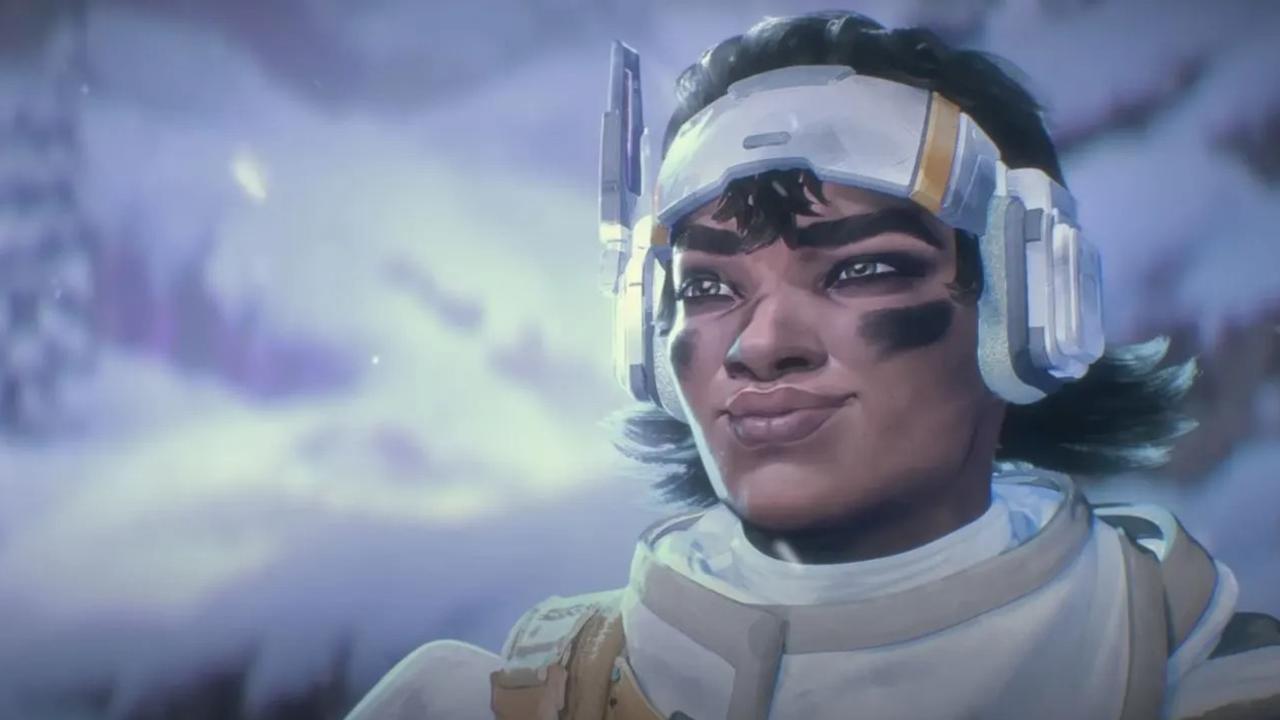
Previewing Vantage, Apex Legends’ first sniper character

With Vantage, Apex Legends’ newest character, the development team at Respawn wanted to really push the unique feel of a sniper-focused Legend — someone who can down another player at an unbelievable range. To accomplish this, Respawn decided on giving her an ultra powerful rifle, not unlike the Kraber special weapon.

Bit of a problem with that though — Krabers are supposed to be ultra-rare in addition to being ultra-powerful. Krabers are so rare, it’s unlikely you’ll see more than one per match. If every Vantage had a Kraber, and every team had a Vantage, you’d see 20 Krabers floating around the map. The game would be unplayable unless you also played Vantage.

“One of the things the Kraber also has is potentially no warning,” Vantage lead designer Chris Winder said. “You could just be sitting somewhere, looking in a direction, and then be down. Or, if it’s a body shot, that’s quite a lot of damage. So we knew we had to do something about that.”

To facilitate some sense of fairness, the team experimented with a lot of different options. One attempt gave enemy players a voice line letting them know they were in a Vantage’s crosshairs. Another forced Vantage to require a lock-on before being able to fire.

“We tried a bunch of different mechanics around trying to communicate that ahead of time and give players a way to avoid that, or potentially mitigate that after the fact,” Winder explained. “Maybe it still does a lot of damage, but there’s a way to stop some of it after you’re hit in some way.”

Despite these attempts, nothing felt fair enough to non-Vantage players. So they decided to switch things up — what if Vantage’s sniper rifles could only debuff enemies with slows, stuns or snares?

“You could imagine the debuffs we have, like slows and silences, and things like that, that we could try,” Winder says. “It could just debuff those targets and do some minimal amount of damage, but really just be about the debuff, and that’s the purpose of the Ultimate. I think some of those things worked from a gameplay standpoint – there was a loop around using it, and you understood why and your team understood what to do when those shots happened. But the thing we weren’t hitting at that point was the sniper fantasy. It didn’t really feel like you were holding a sniper rifle – it felt like you were holding a debuff gun.”

Heading back to the drawing board, the team struck what they feel is gold. Vantage’s current kit features the Ultimate ability ‘Sniper’s Mark’, which allows her to pull out a custom-built Sentinel rifle, fitted with a 3x/5x scope. Instead of waiting for full charges while scoped in, Sniper’s Mark has an ammo counter that counts up from one to five, letting the player choose when to fire. There is also a visual indicator on the scope that accounts for bullet drop, helping players aim this ultra-powerful weapon.

Sniper’s Mark deals 50 damage for a body shot, but any follow-ups that connect deal 100 damage, regardless of where you hit. The weapon also can benefit from headshot multipliers and Rampart shields.

“The idea is that the first shot does some lower amount of damage – and we played around a lot with that number or what that initial damage should be – and that second shot is where you get that larger amount of damage,” Winder explains. “And again, we played around with that number.”

Practiced players will be able to capitalize on the first shot, but the way the damage works out allows players on the receiving end to respond, either via counter-attack or sliding out of danger. That may seem frustrating to people wanting to pick up Vantage, but don’t worry — Sniper’s Mark has a few tricks to it than just solid damage.

Anyone tagged by a shot from Sniper’s Mark will be, well, ‘marked.’ It’s not a visually obvious ping like Bloodhound’s scan, but it is apparent enough to let your teammates know who to focus fire. Any shots landed from your teammates on the tagged enemy will deal 15% more damage — encouraging pushing as a team.

Vantage as a whole seems designed for pushing and aggressive play when you examine the rest of her kit. Her de ella Tactical ability, ‘Echo Relocation’, allows her to position her bat friend anywhere on the battlefield. So long as she maintains line-of-sight to Echo, she can soar to their location of her. Vantage can also cancel the relocation or double jump off the end of it. This opens up lots of new possibilities for aggressive and guerilla tactics—hit and runs, flanks, and straight-up dogpiling onto opponents.

Her passive, Spotter’s Lens, allows her to view detailed data on enemy shields — rarity, team size and range. Vantage can then share that info with her teammates, allowing calculations on when exactly to push to be run a little more effectively.

“The original goal was really around encouraging long-range engagements,” Winder says. “Can we make a character who’s based purely around long-range? So the first versions of the kit didn’t have any movement, there was no Echo, there was no movement tactical. You can end up too far from your team, or getting to high ground to make those shots can be a chore.

“Catching up or closing on a team when you have done those first few shots of damage is really difficult if you don’t have a character on your team that can help you do that. So that created that need to solve this problem, and Echo was it.”

Season 14 is titled ‘Hunted’, and with Vantage and Ash, we can see why. With a built-in enemy scan passive alongside Ash’s passive letting them know where death boxes are, we predict that this is going to be a very aggressive season in Apex Legends. Combined with the whole host of changes to King’s Canyon making areas more tight fit and close-quarters, as well as laser sight attachments announced for several close to mid range weapons.

So who does the development team see working well with Vantage? They have some thoughts on team composition: “A Rampart setting up some shields for her to shoot through to amp that damage even further,” Winder says. “Ash is a good one, as you mentioned, or any other movement Legend – Octane with the jump pad or Pathfinder with his grapple and the zip line itself. As she is now, she doesn’t really need the mobility from other legends to get there. But the fact that those legends have the mobility to pounce on a team, those are going to be good combinations.”

With such aggressive kits, however, there will be a need to compensate. Shield-based and mobility-based Legends can also isolate and take out a Vantage easily, and we’ll definitely see a rise of shield Legends this season. In internal playtesting, the dev team already spotted some fantastic Vantage plays — taking out Octane while he’s soaring through the air, or popping enemies off of ziplines from a distance.

“I think that most impressive are the ones where they’re very deliberate in the flanking,” design director Evan Nikolich explains. “Like, you get suppressed, then you lose track of Echo, and then all of a sudden you’re getting shot. It’s like, ‘Oh no, I have to reposition.’ So it’s like learning that new skill of knowing where Vantage is on the field. Now I have to respect her, but also where Echo is – where she could possibly be coming from. So yeah, some high-skill plays there.”

Apex Legends Season 14 hits the field August 9 — check out our hub article for every detail.

Written by Junior Miyai on behalf of GLHF.

.

Categories
Technology

“Impossible” Halo 2 No-Deaths LASO Challenge Finally Has Its Winner

A $20,000 Halo 2 challenge issued by streamer and YouTuber MoistCr1tikal has finally been completed, with streamer Jervalin claiming the bounty.

Earlier this summer, MoistCr1tikal offered $5,000 to anyone who could conquer what he called “the hardest challenge in all of gaming.” That challenge? Complete Halo 2 alone, on legendary difficulty, with all of the game’s difficulty-adding skulls turned on, without dying a single time. Though the feat surely has been accomplished by someone, somewhere, since the game’s 2004 launch, there is no video record of it having ever been done, which is why MoistCr1tikal’s challenge also stipulated the entire ordeal needed to be streamed live on YouTube or Twitch to qualify. When nobody stepped up to the plate for three weeks, MoistCr1tikal raised the bounty up to $20,000 for the first person to accomplish the deed.

Though it’s certainly up for debate whether or not a deathless Halo 2 “LASO” (legendary, all skulls on) run is the “hardest challenge in all of gaming,” it’s certainly up there. Halo 2 on legendary difficulty is already infamously difficult. There are more, high-rank enemies (and just more enemies in general), for starters. Enemies deal greatly increased damage, have better weapons, throw more grenades, and are far smarter. Melee attacks from Elites and certain Flood forms will kill in one hit. And that’s all without even mentioning the game’s notorious Jackal Snipers, which appear more often and are far more accurate and deadly on legendary difficulty.

All that’s before turning on the game’s difficulty modifying skulls. With various skulls turned on, Halo 2 on legendary becomes a whole different ballgame. The Assassins skull, for example, gives enemies permanent invisibility. Mythic gives enemies even more health and shields. Black Eye makes it so players’ shields don’t recharge automatically and can only be refilled by killing enemies with melee attacks. Famine makes it so all weapons dropped by enemies or allies have half ammo. Any mistake, no matter how small, almost certainly results in instant death. The only skull Jervalin didn’t have on was Envy, which gives the Master Chief the Arbiter’s active camo ability and actually makes the game easier, not harder.

It is, to put it lightly, absolutely brutal. Completing the challenge would have been hard enough even without the no-deaths stipulation. But Jervalin, who completed the run using an original Halo 2 disc and has made a name for himself accomplishing various Halo-related challenges over the years, took home the gold in style, completing his run in a little under six and a half hours. He wasn’t above using a few tricks to emerge victorious, either. For the game’s final boss fight against the Brute Chieftain Tartarus, Jervalin snuck a flying Banshee vehicle into the boss arena in order to make short work of the encounter. After his victory, his family ran in to give him a hug.

“You couldn’t script a more wholesome finale here,” MoistCr1tikal says in a video congratulating Jervalin. According to MoistCr1tikal, about 2,000 people actively tried to complete the challenge over the course of the last 40 days. Only 25 people ever made it past the first level, MoistCr1tikal says.

Jervalin himself said on stream that he once thought a deathless, Halo 2 LASO run was “impossible.” Now, he’s $20,000 richer, and his feat will go down in history.

GameSpot may get a commission from retail offers.

The products discussed here were independently chosen by our editors. GameSpot may get a share of the revenue if you buy anything featured on our site.