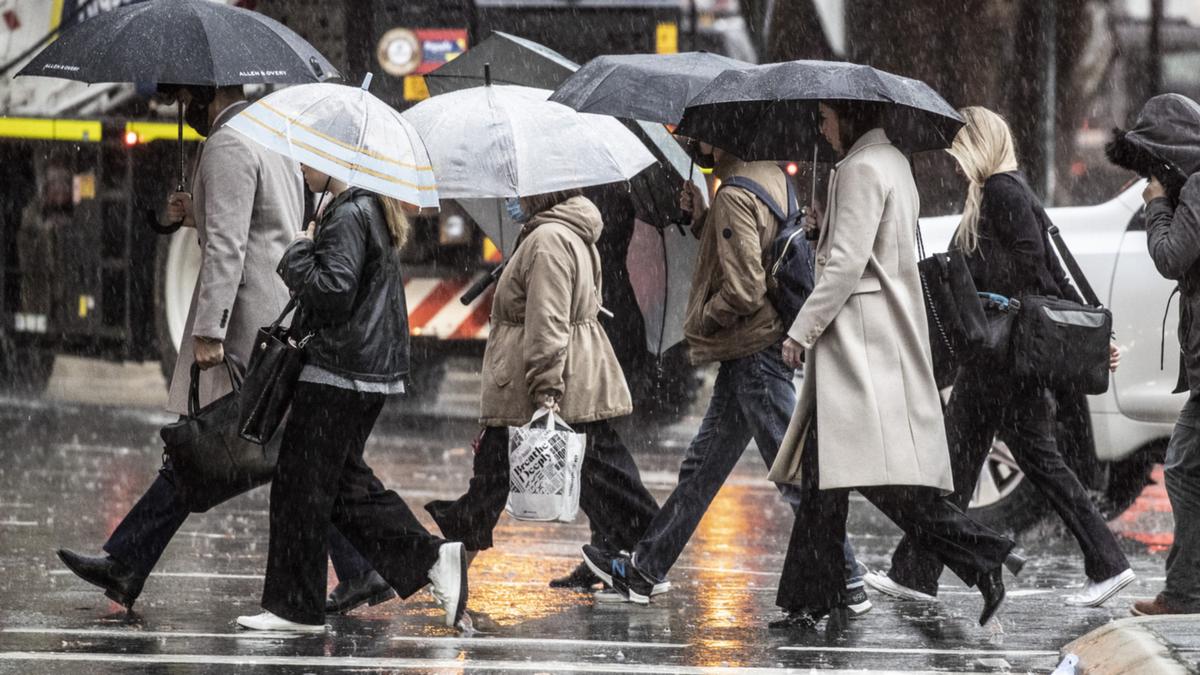
With the worst of the storms over, the rain certainly isn’t and Perth has been warned to brace for showers until the end of the week.
The severe weather warning has now been canceled for the metro area but wild winds and showers are still to come.
Emergency services spent another day on Wednesday fighting the brunt of Perth’s severe storm as calls continued to rise, with several regions across the State breaking wind gust records.
The living room ceiling of a Joondalup home collapsed on 13-year-old Dominic Vaughan who was watching TV with his father.
“We heard it crack…I thought it would collapse then but then we heard a crack again and after that the roof just fell,” he told Nine News.
“It was so scary.”
The teen and his dad were forced to crawl to safety out from underneath the rubble.
Meanwhile a bedroom window in Butler was smashed by a neighboring fence covering a sleeping teenager in glass.
“My son was in bed, luckily he had the covers on him because massive shards of glass (came through),” the home owner said.
According to meteorologists, severe weather is not expected to ease for the Perth area until late Wednesday night.
It will still be pleasant and showery on Thursday but no severe weather is expected.
The Department of Fire and Emergency Services warned of damaging surf and winds along the State’s coast would continue into Thursday morning.
Significant wave heights exceeding 7m are occurring in exposed locations.
With unsecured debris on and around roads, motorists are urged to drive with caution.
At the height of the chaos 35,000 homes were without power with 10,000 still blacked out in Perth and the South West as of 8pm on Wednesday.
On Tuesday, DFES activated a volunteer call center split into two teams to help manage the influx of calls for help.
Volunteers have been working between six and 10 hour shifts to ensure the public’s safety during what has been named as WA’s once-in-a-year storm.
Updates on rainfall can be found here and all BOM’s latest warnings can be found via this link.
Surging workloads and pay are the major flashpoints in the industrial relations dispute between teachers and the NSW government, with thousands of public and Catholic school teachers walking off the job twice this year.
The latest NSW Department of Education data shows that instances of merged or uncovered classes are worse in regional and rural areas: at Canobolas Rural Technology High School in Orange there have been more than 1500 merged or uncovered classes in the past six months. At Merriwa Central School in the Hunter region there has been almost 4000 instances of minimal and merged classes since the start of 2021.
Lauren McKnight, vice president of the Science Teachers Association of NSW, said a survey of more than 300 NSW science teachers conducted in June found eight in 10 science classes were taught by teachers without expertise in the subject.
“We are going backwards. We are jeopardizing the future of the STEM workforce and it’s a vicious cycle. We can adjust policy to train mid-career professionals, but this is not an immediate solution,” McKnight said.
Their survey found 48 per cent of respondents said there was at least one permanent vacancy for science teachers in their school, and 84 per cent of respondents said that science classes had been taught by a non-science teacher in the week they were surveyed.
“Evidence shows the teacher shortage crisis has been building for years. The pipeline of new teachers entering the profession is inadequate, and attrition rates are high,” the Science Teachers Association’s submission said. “Out of field teaching is common, and particularly problematic in science and STEM subjects, which require significant subject matter expertise.”
McKnight said major reforms were needed, including reducing administration and workloads of teachers, combined with additional funding for schools to access lab tech and administration staff.
loading
In another submission, a head teacher at a northern beaches public high school said: “I have been teaching for nearly 15 years and have never seen a teacher shortage like the one we are currently experiencing. On a regular basis we have senior classes uncovered and at times have junior classes collapsed as we cannot find enough casual teachers,” they said.
Minister for Education and Early Learning Sarah Mitchell said the median tenure for teachers is 11.4 years, which is the second highest in the public service in NSW.
An audit has revealed Charles Sturt University (CSU) owes almost $4.7 million in back payments to thousands of current and former casual staff.
Key points:
CSU commissioned the audit which covered the period from July 2015 to June this year
It found $4.7 million in payments were owed to 2,526 current and former casual employees
The union welcomed the announcement but said the university was too reliant on casual and contract staffing
A statement from vice-chancellor Renee Leon said CSU commissioned the external review in response to widespread wage compliance issues in the higher education industry.
More than 2,500 employees have been identified as missing out on pay and superannuation since July 2015.
CSU said 75 per cent of the back payments owed were for $1,000 or less.
The National Tertiary Education Union’s Bathurst branch secretary Greg Auhl said it was pleasing that the “enormous” problem had been acknowledged.
“We’re very happy that our members will get what they have actually earned and what they should have been paid for in the first place,” Mr Auhl said.
It comes after the university cut hundreds of jobs and subjects in response to a $50 million deficit in 2020.
Universities reliant on ‘good graces’
CSU’s statement said the underpayments were the result of unintentional errors, due to “mistakes” in interpreting the Enterprise Agreements.
But Mr Auhl argued that explanation was not good enough.
“As academic and professional staff we understand what our work entails, so why can’t our management understand that?”
He said there was an industry-wide over reliance on casuals.
“For far too long, the higher education sector has relied on the good graces of casual and contract staff to work above and beyond what they’re actually paid for,” Mr Auhl said.
“What we’re starting to see here now is that being exposed.”
CSU said the review had also identified instances of overpayments, but would not seek that money back.
It said it had identified “procedural enhancements which are being implemented to ensure ongoing wage compliance”.
A Queensland boy has died after he was hit by a four-wheel-drive, which was reportedly being driven by his grandmother.
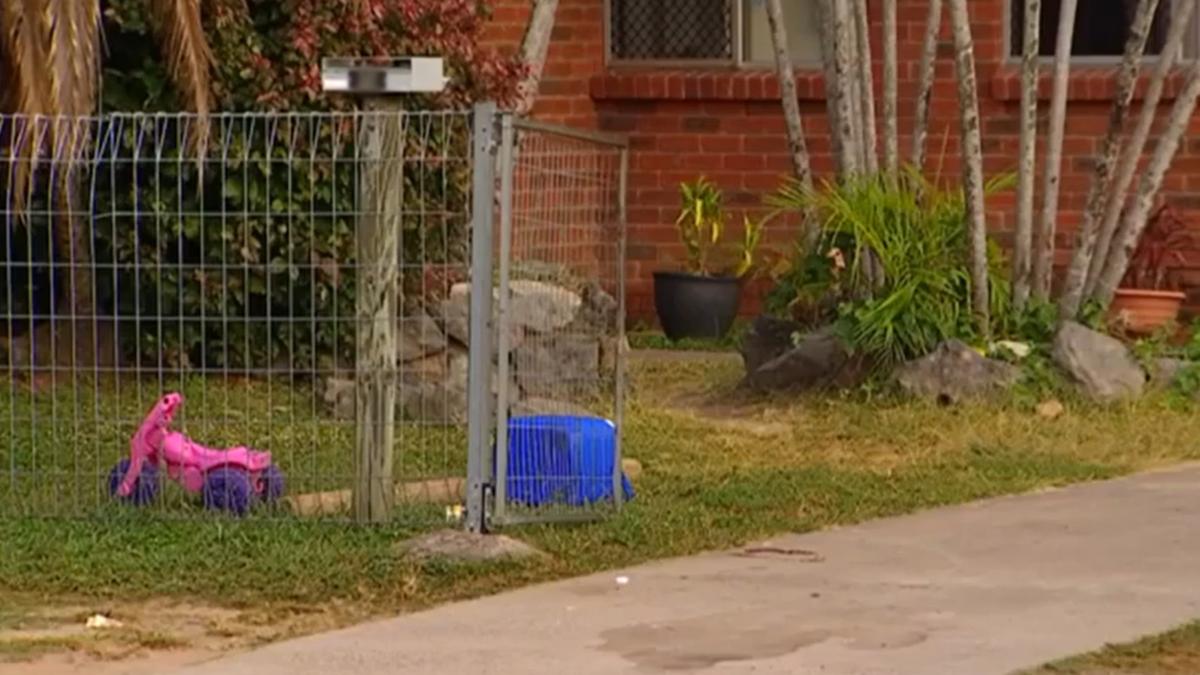
Police say the one-year-old was on a footpath outside a home in Heatley in central Townsville about 5.30pm Tuesday when the tragedy took place.
“He was immediately taken to Townsville University Hospital where, sadly, the boy later died,” a spokesperson said.
Watch the latest News on Channel 7 or stream for free on 7plus >>
It is understood the boy was hit by the vehicle when he ran out of the home as the grandmother was leaving. She had been unaware the child was near her vehicle, The Townsville Bulletin reports.
The grandmother reportedly rushed the boy inside, before placing him in her car and taking him to hospital.
The one-year-old was on a footpath outside the central Townsville home when the tragedy took place. Credit: 7NEWS
A close neighbor recalled the shocking moment her husband saw the little boy injured on the ground.
She said he heard a commotion and saw a passing car stop in the middle of the road as the driver tried desperately to get the attention of the grandmother in a Toyota Prado, who had just hit the child.
“He saw him lying there … We would never have expected this to happen,” she told The Bulletin.
Forensic Crash Unit police are investigating the incident.
When Lismore was hit with its biggest flood in recorded history, the national Indigenous newspaper the Koori Mail responded quickly to the needs of the community.
Key points:
The Lismore-based Koori Mail newspaper says it’s been “doing the government’s job” for months by providing crucial flood support
The NSW state government says its recovery centers were up and running five days after the February 28 disaster
Indigenous leaders have told an independent flood inquiry they would like to see support for First Nations first responders
The newspaper’s general manager Naomi Moran said she was able to salvage laptops and hard drives, but the building and most of its contents were destroyed.
In the wake of the mud and wreckage, Ms Moran said they were forced to face the reality that for the first time in the organisation’s 30-year history, they would not be able to print the next edition, and possibly several after that.
“We lost our building, we lost our first floor, we lost everything that the Koori Mail was for the past 30 years,” she said.
Floodwater reached just below the top storey of the Koori Mail building (the white building pictured).(ABC: Matt Coble)
Far from calling it a day, the organization pivoted and became a flood hub responding to the community’s needs for food, supplies, clothing and support.
“We came up with a strategy and some ideas around how we, as an Aboriginal organization – an independent organization and business in this region – could utilize all of our resources, our contacts in our networks, to support the local community,” she said .
The Koori Mail newspaper has been at the forefront of the flood response in Lismore.(ABC North Coast: Leah White)
Government response an ‘absolute embarrassment’
In the days, weeks and months that followed, the Koori Mail team helped coordinate food, clothes, counseling and essential items for thousands of flood-affected residents relying on financial support from donations.
It was more than three months before the Koori Mail and the adjoining Koori Kitchen received any financial support from the government.
The Koori Kitchen has been providing free hot meals to flood-affected residents since the February flood.(ABC News: Nakari Thorpe)
Ms Moran said while the financial assistance since June was appreciated, the newspaper had effectively been “doing the government’s job” for months.
“I think it’s an absolute embarrassment to the government,” she said.
“I think they have a lot to answer for, coming in the 11th hour, some months later, to support a community after we’ve all done the work.
“It’s actually been the community and the community groups that have carried this region through their time of crisis.”
Naomi Moran says there is a strong case for First Nations first responders.(ABC: Matt Coble)
In a statement, Resilience NSW said:
“The first Recovery Centers were established by the New South Wales Government on 5 March 2022, providing food, access to accommodation and a range of other support services to any flood-affected community member.
“Recovery Centers and Recovery Assistance Points continue to operate across the Northern Rivers.
“Funding is currently available to non-government organizations (NGOs) across the Northern Rivers through a $13.3 million NGO funding package.”
Calls for First Nations first responders
When the NSW government’s independent flood inquiry held an Indigenous roundtable in Lismore in June, First Nations leaders called for government support to train and resource Indigenous communities to respond to natural disasters.
“We’ve been talking about things like a First Nations first responders unit,” Ms Moran said.
Naomi Moran (centre) at an Indigenous roundtable hearing in Lismore with independent flood inquiry co-chairs Professor Mary O’Kane (left) and Michael Fuller (right).(ABC North Coast: Leah White)
“That’s probably the biggest seed that we can plant here today, is to take a look at what it means to support a group of Aboriginal communities, service providers and organizations to map out what it looks like to respond to our people immediately and safely in times of crises.”
The inquiry’s co-chair Michael Fuller told the Indigenous roundtable that training and resourcing communities to respond to natural disasters would be part of the report.
“The reality is communities will always do it better than government – we see that in most disasters,” he said.
“But this point about training and resourcing communities – it’s not lost on us and it will be part of the report.”
That report was delivered to the state government on July 31 but has not yet been made publicly available.
Deputy Premier Paul Toole said the report would most likely be released “some time in the month of August”.
Doors closing for op shop and food bank
Aunty Rose Walker has been managing the mountains of donations through the free Koori Mail op shop, in the Koori Mail building, for almost five months.
“I wouldn’t be able to tell you how many people have come through here, but it would have been a lot,” she said.
The Bundjalung woman said without access to the free items, many flood affected residents – both Indigenous and non-Indigenous – would have been in dire straits.
Aunty Rose Walker has been volunteering in the Koori Mail op shop since early March.(ABC North Coast: Leah White)
“You’ll see a bit of tears because it’s still affecting them inside… losing everything,” she said.
“Just to let them know that whatever they need, whatever we can provide for you, it’s here. Please, we are willing to give.”
Aunty Rose Walker has been a friendly face and a fixture in the op shop since early March, but after months of volunteering she’s preparing to take a step back.
Aunty Rose Walker estimates thousands have been through the Koori Mail op shop since the February flood.(ABC North Coast: Leah White)
Ms Moran said there was additional funding to keep the Koori Kitchen running but they would look to wind up the op shop and adjoining supply bank at the end of August.
“Our volunteers are so exhausted,” she said.
“They’ve been with us side-by-side every single day. The expectation for us to have them continue on for, you know, another few months, we can’t ask that of them.”
Koori Kitchen future uncertain
What started as a box of produce in a tent beside the Koori Mail building quickly grew into a free food kitchen, supplying close to 2,000 meals per day to flood victims.
The Koori Kitchen is still providing hundreds of meals to flood-affected residents on the Northern Rivers.(ABC: Matt Coble)
The Koori Kitchen has been run by Chelsea Claydon and chef Izzy Walton who say that even five months on demand for the service is still high.
“We’re still doing 600 to 800 meals a day,” Ms Claydon said.
Next to the Koori Kitchen is the “Koori Coles”, where flood victims can stock up on free essential items.
Both have been made possible by donations, and more recently state government funding, but it’s unclear how long that will last.
Chelsea Claydon (left) and Izzy Walton (right) have been running the Koori Kitchen in Lismore.(ABC: Matt Coble)
“I think we need to raise more money basically in order to keep feeding these numbers,” Ms Claydon said.
Ms Walton said the free meals were still an essential service in a town where few shops were open and people were struggling financially.
“A lot of them still don’t have cooking facilities at home, heating facilities at home, so I think it would be really difficult if we had to shut up shop,” she said.
Rekindling response above and beyond
Across town, Aboriginal health service Rekindling the Spirit has been on the ground since day one providing essential care to flood victims at a time when many of the region’s medical services were down.
Georgina Cohen (right) is the CEO of Aboriginal health service Rekindling the Spirit.(ABC: Matt Coble)
CEO Georgina Cohen said of the three Lismore-based offices, one went under, the other was high and dry and the third, opposite the squareLismore Square, had water lapping at the street gutters.
“There was what seemed like hundreds of boats coming in… and staff were helping whoever was in need,” she said.
“On the Tuesday our power was restored and we were able to reopen the medical service.
Floodwater reached the gutters around Rekindling the Spirit’s office on the corner of Uralba and Diadem St in Lismore.(Supplied: Georgina Cohen)
“The staff that were not flooded, and not affected with people staying with them after the floods, were able to come in and support any and every client, with appointments, with GPs via telehealth.”
The Koori Mail team and volunteers received the national NAIDOC award for innovation, recognizing their “coordination and leadership” post flood.
Ms Moran said she hopes lessons are learned from the Koori Mail’s flood response.
“What you see here is a community that can absolutely self-determine what it looks like to look after our people,” Ms Moran said.
A passing observer might think the cattle and dairy farmers of far north Queensland have been having very strangely by digging through their paddocks — elbows deep in cattle dung.
Key points:
The natural activity of dung beetles improves soil quality and reduces effluent pollution
Far north Queensland farmers are researching which species are best suited for the region
Farmers plan to import another species after identifying 13 species on the Atherton Tablelands
They are on the hunt for an insect that has one of the most unappealing and yet important jobs in the world: eating animal droppings.
Their search comes as soaring fertilizer prices and workforce shortages across Australia accelerate a movement towards natural, non-labor intensive alternatives.
The humble dung beetle offers a real solution.
It recycles effluent waste into organic fertilizer, eradicates flies, aerates the soil and increases water penetration — all while cheerfully munching on dung and asking nothing in return.
Onitis vanderkellen dung beetles are abundant at cattle and dairy properties in the region.(Rural ABC: Tanya Murphy)
Beetles that specialize in eating cattle dung have been studied and bred extensively in both southern Queensland and southern states since they were introduced by the CSIRO in the 1970s.
But until now, there have not been any comprehensive long-term studies on how to breed and propagate species suited to northern Australia.
Some 15 farmers in far north Queensland have rolled up their sleeves to find out just what is living in the cow pats on their fields.
Cattle dung ‘attracts flies’
Among the participants is Gail Abernethy, who runs a small herd of cattle at a 36-hectare property at Wondecla on the Atherton Tablelands with her husband Victor.
Gail Abernethy participates in dung beetle collection at her cattle farm in Wondecla.(Rural ABC: Tanya Murphy)
She said she wanted to increase the population of dung beetles in the region, not only to reduce pasture fouling and fly outbreaks, but also to benefit productivity and the environment.
“There are native dung beetles, but they eat marsupial dung, so before the CSIRO back in the 70s and 80s introduced dung beetles from overseas, there was a lot of dung on the ground because it wasn’t being processed,” Ms Abernethy said .
“Cattle dung attracts flies, and that’s why the Australians had the fly salute, and had corks on their hats because there were so many flies.”
Ms Abernethy said dung beetles took the manure and buried it, which improved soil quality and created aeration of the soil, “so you’ve got less run-off from rainwater.”
“But there’s so little research and development being done in northern Australia, where all the cattle live,” she said.
A dung beetle for every season
Ms Abernethy began ordering dung beetles from southern breeders in 2014, but soon realized there was very little information about what species survived well in northern Australia at different times of year.
She and 14 other farmers obtained a Landcare grant to undertake their own research — and they have not been afraid to get their hands dirty.
“You take your shovel and you find a cow pat that’s at least 24 hours old, and put it in your bucket with some soil, and then empty some water into it, and they will float to the top in a graceful style,” Ms Abernethy said.
“We have collected beetles once a month for 12 months, and we now know we have nine separate species of introduced dung beetles and four predatory species.
“They’re the smaller ones who eat the fly larvae … and some of our beetles don’t live down south. They’re just up here in the tropics.”
Creating plant nutrients
South Australia’s Dr Bernard Doube is among the world’s leading dung beetle ecologists and is helping the group with beetle identification.
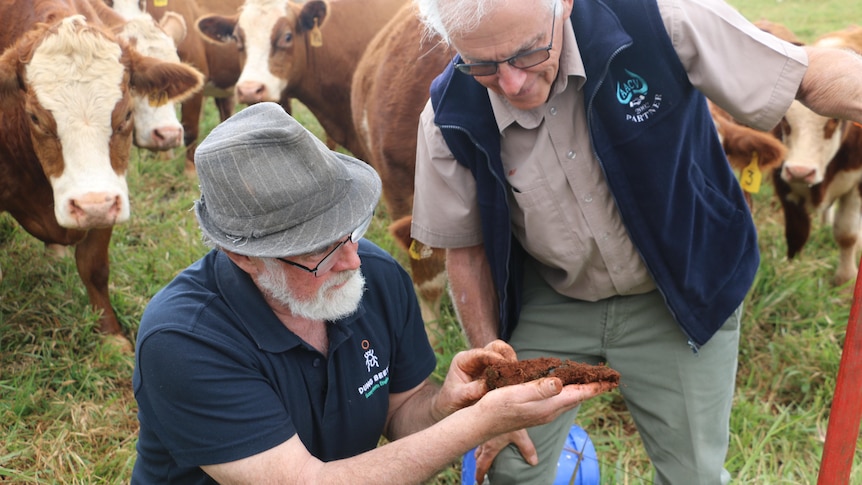
Dr Bernard Doube is helping Far North Queensland farmers with dung beetle identification.(Rural ABC: Tanya Murphy)
He said the study had revealed a particularly abundant population of one species of dung beetle, Onitis vanderkelleniwhich was thriving in the Atherton Tablelands.
“It’s got a very restricted distribution up here and hardly anywhere else in Australia, but up here, it’s doing a great job,” Dr Doube said.
“It digs a tunnel to about 20 centimetres and lines the tunnel with dung … and down below, the beetle puts perhaps half a liter of dung, a huge amount really, and lays a whole [lot] of eggs in it.
“The eggs hatch into larvae, and the larvae eat all of the dung, and then [produce] all this processed stuff, which is rather like compost.”
Dr Doube said it created a “great big pile of plant nutrients”.
“The roots grow down there, and you get increased production and increased carbon storage because it’s a relatively permanent change in the structure of the soil,” he said.
“And our experiences from southern Australia indicate that we get about a 30 per cent increase in productivity due to the dung burial activity of the beetles.”
Onitis vanderkelleni larvae nest in dung at a property on the Atherton Tablelands.(Supplied: Louise Gavin)
Importantly, Dr Doube said the study had also revealed a gap in the winter population of dung beetles.
“What this project has shown is that we have quite a diversity of beetles here, and they are active during the summer,” he said.
“But at this time of the year in autumn and winter, although there are some beetles present and they’re burying dung, they’re not very common.”
Dr Doube said the group would now seek further funding to import and breed a species of beetle called Onitis caffer,which was more active during autumn and spring.
“We hope that we can get some financial support to establish a dung beetle importation program again, bringing in this particular beetle, which is going to be most beneficial, in my view,” he said.
A Canberra drug dealer who was shot in the face during a home invasion last year says he was targeted by people who thought he was a paedophile.
Key points:
Sugimatatihuna Bernard Gabriel Mena has been charged with attempted murder while Bradley Joe Roberts and Rebecca Dulcie Parlov are charged with aggravated burglary
All three have pleaded not guilty
The victim claims Mr Mena shot him three times, injuring his face, arm and stomach
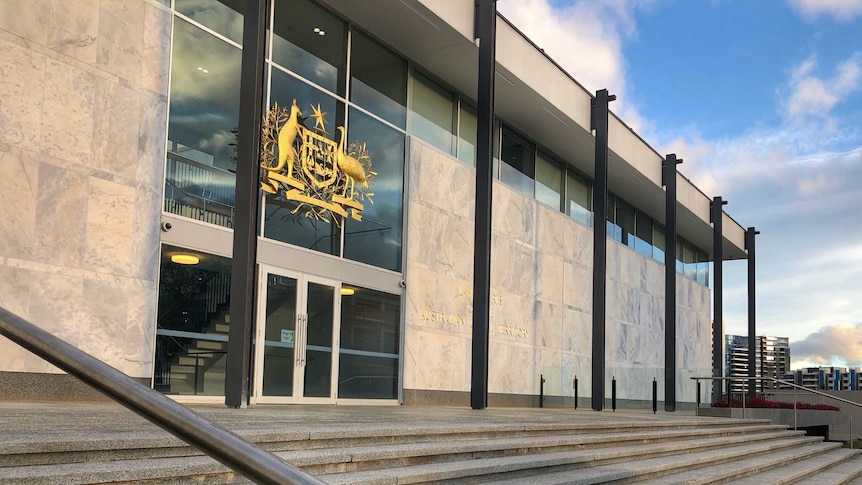
The ACT Supreme Court has heard the man had been accused of being a “kiddie fiddler” before being shot three times at a home in Spence in Canberra’s north on March 11, 2021.
The man said he had been at a friend’s house in the early hours of the morning after “catching up with people for drug deals.”
He said Sugimatatihuna Bernard Gabriel Mena, 24, Bradley Joe Roberts, 24, and Rebecca Dulcie Parlov, 25, had then all stormed his friend’s home to “whack” him.
Mr Mena has been charged with attempted murder while Mr Roberts and Ms Parlov were each charged with aggravated burglary.
They have all pleaded not guilty.
The man told the court he had armed himself with a knife for protection and had been prepared to “knuckle on” with the trio when they appeared at the home.
“I was going to stab them,” he said, before adding that he at no point used or attempted to use the knife on any of the three.
He alleged it was Mr Mena who had pulled the trigger, shooting him three times and injuring his face, stomach and arm.
He also told the court Mr Mena, Mr Roberts, and Ms Parlov were all known to him through his drug deals.
Once wounded, the man said he had retreated to the bathroom to call a friend to drive him to Calvary Hospital’s emergency department.
The friend he had called was Ms Parlov’s brother.
Defense says finger was wrongly pointed
During cross examination, defense barristers showed the court text message conversations between the victim and his partner at the time.
The messages showed the man had asked the woman for $750, telling her he had to pay off bikes otherwise they would harm him.
The defense put to the man that the reason he presented to the hospital instead of calling police when he was shot was that he was “frightened of the bikies.”
“No, I don’t like police,” the man replied.
He then confessed that the messages he had sent to his ex-partner had been lies.
“I made up whatever I wanted to get the money out of her because I’m a fiend,” he said.
“I was a druggo… I lied to her.”
The defense also put to the victim that he had falsely accused Mr Mena of being the gunman as it was easier than having to point the finger elsewhere.
But the man said: “No, I saw him do it … I saw him come through the door”, referring to Mr Mena.
New South Wales Police believe the two Saudi sisters found rotting in their south-western Sydney apartment had died in a suspected suicide pact.
The bodies of Asra Abdallah Alsehli, 24, and her sister Amaal, 23, were found in separate bedrooms inside a Canterbury unit on June 7 after a concern for welfare report.
The grim discovery was made by officers from the Sheriff’s Department after the women failed to pay their rent and owed more than $5,000 to their landlord, NSW Civil and Administrative Tribunal records showed.
Police had been baffled for several weeks about how the women died, who were found fully clothed, badly decomposed and no signs of forced entry into the unit.
Stream Sky News live & on demand with Flash. 25+ news channels in 1 place. New to Flash? Try 1 month free. Offer ends October 31, 2022
But the mystery appears to have been solved with interim toxicology reports showing traces of substances, which were found next to their bodies, detected in their systems, The Daily Telegraph reports.
“There’s no indication of anyone else being in the unit … no forced entry. It really does appear to be a tragic suicide,” a senior police source told the publication.
Further testing is being conducted by specialist pathology labs before an exact cause of death for the sisters can be determined.
It’s believed the bodies were laying in the Canterbury Rd unit for at least six weeks before the remains were discovered.
It was also reported a bottle of bleach, non-perishable foot items and clothing were some of the items found in the bedrooms.
The sisters, who arrived to Australia from Saudi Arabia as teenagers in 2017, largely kept to themselves and were “afraid of something” one friend claimed.
NSW Police released the images of the two women in a press conference last week as they launched a community appeal for anyone who had any information.
But despite the media coverage on the case, officers still know little about the sisters.
The outstanding rent is expected to be paid to the landlord through a black BMW, believed to be owned by the sisters, which was seized when the bodies were found.
Their family in Saudi Arabia have made no plans to fly the bodies home and have not arranged a burial in Australia.
The NSW Coroner can organize a state-funded burial if there were no substantial funds in the deceased person’s bank accounts.
The Canterbury apartment was listed for rent for $520 this week with a disturbing claimer included at the bottom of the advertisement.
“Disclaimer: This property has found two deceased persons on 06/07/2022, crime scene has been established and it is still under police investigation,” the description wrote.
“According to the police, this is not a random crime and will not be a potential risk for the community.”
The cost of a short-term locum doctor contract has increased 50 per cent in a year, according to rural doctors.
Key points:
Only around 15 per cent of medicine graduates choose to be GPs, compared to around 50 per cent years ago
The rural doctors’ president says the Medicare rebate has not kept up with inflation
Assistant Minister for Regional Health Emma McBride has blamed the former Coalition government for cuts to Medicare
Locum contracts are being offered at $3,500 a day in Launceston, $3,000 a day in Bathurst and Mount Gambier, and $280 an hour in Broken Hill.
Karyn Matterson works locum contracts around the country and so far this year has worked from Clermont in Queensland to Collarenebri and Corowa in New South Wales, and from Tasmania to Palm Island off Townsville.
“Locum doctors, both in the city and in the bush are in high demand,” Dr Matterson said.
“It’s increased exponentially as the general practitioner shortage has become more visible across Australia.”
Dr Matterson saw a connection between the decreasing Medicare rebates for GP appointments in real terms and the increase in the need for locums, as GP clinics around the country struggled to find staff.
“That is putting pressure on emergency departments across Australia because we’re seeing a lot more GP-type presentations in hospitals,” she said.
“The people who are presenting are actually sicker than what we’ve seen in primary health care in the past because they can’t get into doctors.”
‘Problem will get worse’ without reform, says doctor
The Royal Australian College of GPs said the cost of Medicare rebates for most GP appointments had risen by 1.6 per cent.
That’s well short of the most recent inflation figure of 6.1 per cent.
Dr Matt Masel predicts the rural doctor shortage will only get worse.(Supplied: Dr Matt Masel)
Matt Masel, president of the Rural Doctors Association of Queensland, said it reflected a lack of longer-term planning over time.
Dr Masel is a partner in a GP practice in Goondiwindi, almost 300 kilometers south-west of Brisbane. He said the increasing cost of locums was a sign the health system was not working.
“We’re seeing doctors coming out of medical schools where 50 per cent used to choose general practice and only about 15 per cent do now,” he said.
“That means this problem is only going to be worse in a few years’ time unless we really make those choices to go into general practice and rural practice more attractive.”
Dr Masel said the increasing cost of locums would put it out of reach for many GP clinics in the bush.
“Without them, I couldn’t plan to attend my child’s graduation or other family events or just have a break when I really need a break,” he said.
“So locums are really important.”
Most locum contracts are being offered by state-run health services, but Dr Masel said the increased cost would mean less money could be spent elsewhere.
In a statement, Assistant Minister for Regional Health Emma McBride attacked the previous government saying the Coalition cut Medicare in its nine years in power.
Ms McBride said the Albanese government will spend $135 million to create 50 bulk-billing clinics across Australia, which, she argued, would take pressure off hospital emergency departments and help Australians access care when they needed it.
“This will mean practices can recruit GPs from a wider pool of doctors, it will take the pressure off hospital emergency departments, and it will help Australians access the care they need when they need it,” she said.
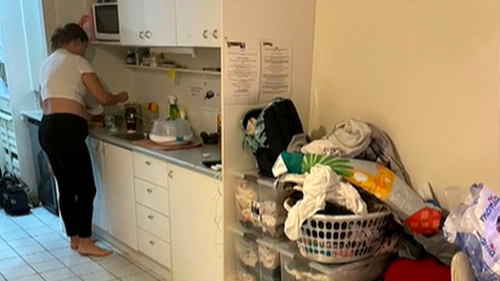
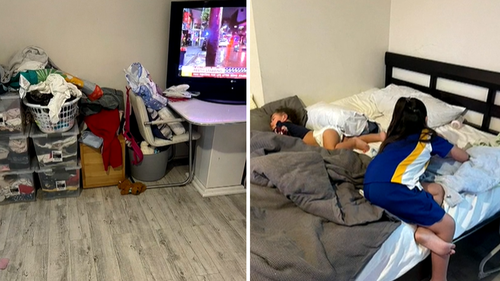
Alexi Bennett and her children have been rejected from rentals more than 200 times after their previous landlord didn’t resign their lease.
It’s been three months since the family have lived comfortably and Bennett said she struggles daily with guilt.
The family of five were forced to seek alternative accommodation after their landlord refused to resign their lease. (Supplied)It’s been three months since the family have lived comfortably, with Alexi Bennett admitting there’s not a lot of options left for them. (Supplied)
It’s costing the family $850 a week to share the single room amid a lack of available rental properties.
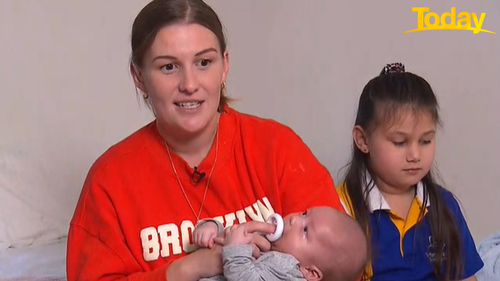
“You’re supposed to be providing for your children and, when you can’t, the guilt – it really hits, it really hits hard to be honest,” she told Todayholding her six-week-old baby.
“It’s meant to be the happiest time of your life and, you know, at this point in time it’s one of the hardest and yeah, pretty sad, to be honest.”
Bennett said there’s “not many options” left for her family.
Alexi Bennett said she hasn’t been provided with reasons as to why her rental applications are being rejected. (Today)
“The competition is crazy at the moment,” she said.
“I’ve got to do what’s best for my kids and, yeah, this is it at the moment.
“You just got to stay positive and hope for the best and just keep trying, every day is a new day.
“That’s all I can keep telling myself and just stay positive.”
This week, major real estate agency Ray White broke down renting costs, and showed there’s a mismatch between inflationary rental price rises compared to advertised ones, which were much more “aggressive”.
Renters are facing two pressures: advertised rents are ‘aggressive’ and there’s a lack of properties on the market. (Domain: Peter Rae)
The inflation rental price has increased 1.6 per cent, Ray White chief economist Nerida Conisbee said in the report.
But advertised rents are reflecting a 13.6 per cent price increase.
The report also showed a substantial decrease in listings for both metro and regional addresses between 2018 and 2022.