Categories
Australia

Yeppoon dad Dan Rutledge in coma in Brisbane hospital after stroke following brain surgery

Choking back tears, Leisa Rutledge struggles as she details the past month with her husband Dan in intensive care in Brisbane.

Ms Rutledge, who usually lives in Yeppoon in central Queensland, pushed for her husband to see a doctor after what seemed like a harmless sinus issue made his snoring worse.

But a scan and a follow-up phone call from a Brisbane neurosurgeon changed everything.

“[The doctor] he said it was quite big… the [brain] tumor was connected to a major blood vessel,” Ms Rutledge said.

“He said I think it’s really important that you have the surgery because if you don’t, you probably won’t be around for Christmas.”

Mr Rutledge suffered a stroke in his brain stem after the surgery in early July and has been in a coma since.

Ms Rutledge said the experience of nearly losing her high school sweetheart had been heartbreaking.

“That was a really hard day,” she said.

Accommodation struggle

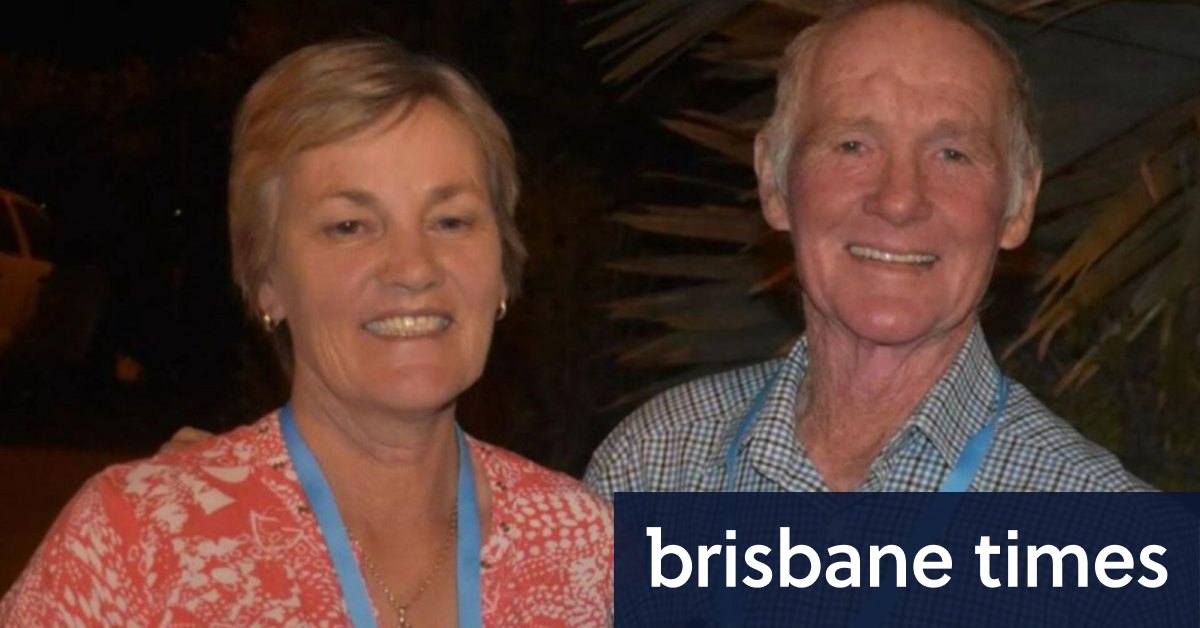
A woman and men stand together smiling, they are dressed up
Mr and Mrs Rutledge have been together since high school.(Supplied: Leisa Rutledge)

Ms Rutledge said she had not previously thought about what living in Yeppoon would mean for her family if someone needed care that was not available locally.

“I don’t know how people can afford to be in our situation,” she said.

Ms Rutledge said a doctor told her to think long term about her family’s future, as her husband could be in a coma for months and any rehabilitation would be intense, take considerable time, and would need to happen in Brisbane.

It’s put the mother-of-three in a difficult position.

“That kind of shocked me because I don’t want to give up our home in Yeppoon, because if Dan does get to a point where he gets home, I want him to remember what we had,” she said.

Queensland Health offers a patient subsidy scheme to help people from rural and regional areas to access healthcare more than 50 kilometers away.

While Ms Rutledge has access to the subsidy scheme, she said the money it provided for rent did not cover the cost of renting for the family in Brisbane near the hospital.

They are currently living with her sister, about a 50-minute drive from the hospital, while an online fundraiser has been set up to help pay the family’s costs.

A woman, man, teenage boy and two girls dressed up
The Rutledges have three teenage children who are completing school work online.(Supplied: Leisa Rutledge)

Queensland Health said in a statement that distance, geographical implications, and isolation were important considerations when managing healthcare services in hospitals.

“We acknowledge additional costs Queenslanders living in rural and remote locations incur when accessing specialty health services,” it said.

The department added that $97.20 million was allocated to the subsidy scheme in the 2021-22 financial year.

Ms Rutledge said she was looking for an apartment, but with the tight rental market, her situation felt “really dire”.

While Mr Rutledge’s hospital does have social workers to help place families in homes, she said the only option available was a studio apartment and her family needed more space long term.

She said she was on a waiting list for a bigger, family-sized hospital unit but had been told the hospital did not see her getting off the waitlist “anytime soon.”

“It’s really difficult for a lot of rural families to be able to come down and try to find long-term accommodation,” Ms Rutledge said.

Not the only ones

A headshot of a woman with strawberry blonde hair wearing a white jacket
Gabrielle O’Kane says the distance can be traumatic for some people.(Supplied: National Rural Health Alliance)

National Rural Health Alliance chief executive Gabrielle O’Kane said some people missed out on caring for their loved ones in capital cities because of the high expenses associated with travel, accommodation, and missing out on paid work.

“I’ve actually had the experience myself where I had six to seven months’ worth of treatment in Sydney when I lived in Wagga Wagga with non-Hodgkin’s lymphoma,” Dr O’Kane said.

“I know how difficult it is being separated from family, and while there’s some assistance in terms of accommodation and travel assistance … when you’re away from your family for a long period of time there is emotional support and those sorts of things you don ‘t have.”

Dr O’Kane said travel schemes needed to incorporate the “vast majority of expenses” that people incurred living away from home to make it easier on patients.

A man grinning wearing a Santa hat
Ms Rutledge says her husband is a much-loved “typical Aussie dad.”(Supplied: Leisa Rutledge)

The Rutledges’ three teenage children are now doing online-only lessons from their central Queensland high school, which they complete at the school onsite at their dad’s hospital.

When asked whether she would consider going back to Yeppoon and traveling back and forth to Brisbane, Ms Rutledge was resolute.

“I would never do that,” she said.

“I just miss him.”

.
Categories
Australia

NSW driver found after car swept into flooded causeway, number of flood warnings across multiple states

Police have found woman “safe and well” after a car was swept off a flooded causeway near Mudgee, in NSW’s Central West last night.

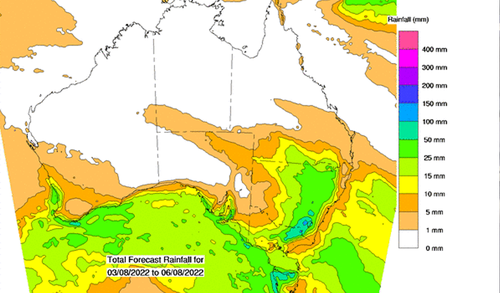
More than a dozen flood warnings are in place across multiple states after a complex low pressure system swept east, battering the country with heavy rain and extreme winds.

Police said they were called to Macdonalds Creek, near Lower Piambong Road in Erudgere, last night after receiving reports a vehicle had been swept into the causeway.

When the car was found without a driver, a desperate search was launched.

It summarized this morning, with police soon “notified a 59-year-old woman sought assistance at a nearby property in Piambong.”

She has been taken to Mudgee Hospital for assessment.

A recovery mission is under way to recover her vehicle.

The Bureau of Meteorology (BoM) said between 50mm and 99mm of rain has fallen over parts of NSW since 9am yesterday.

A dozen flood warnings are in effect for NSW, with drivers urged to take extreme care.

“People are encouraged to continue to monitor warnings,” BoM said.

“Damaging winds remain possible in parts of the southeast.”

A series of destructive low pressure systems have been sweeping east since Monday, causing havoc across southern Australia.

Multiple states have recorded significant rainfall after a series of destructive cold fronts.
Multiple states have recorded significant rainfall after a series of destructive cold fronts. (BoM)

It was NSW’s turn to batten down the hatches yesterday as the intense rain band swept east.

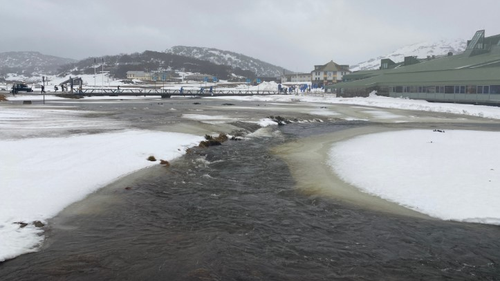
Heavy rain pounded the state’s snowfields, turning powdered snow into sludge and transforming once tranquil creeks into raging rivers.

Perisher Creek, near Australia’s largest and second-highest and most popular ski area, spilled it’s banks.

Perisher Creek burst its banks as heavy rain lashed the NSW alps.
Perisher Creek burst its banks as heavy rain lashed the NSW alps. (Steve Smith/Weatherzone)

Thredbo received 63.8 mm of rain to 9am yesterday and a further 47.6 mm between 9am to 4pm.

The popular ski resort was forced to close its lifts amid safety concerns.

High totals were also seen at Perisher.

Up to 64mm fell to 9am and a further 53.8mm was recorded between 9am to 4pm.

Senior Bureau Meteorologist Jonathan How said conditions will start to “ease off” today, but showers will continue across much of the south-east into the weekend.

“We do see that cold front push into the Tasman Sea,” he said.

“But showers and rain will push north east NSW and southern Queensland.

“Across the south east a number of troughs will maintain those cold, blustery and showery conditions.”

More snow is likely to fall over the alpine regions from today, repairing some of the rain damage.

a travel warning has been issued as thick fog covers Brisbane this morning.

‘River City’ wakes to white-out as fog swallows city

Categories
Australia

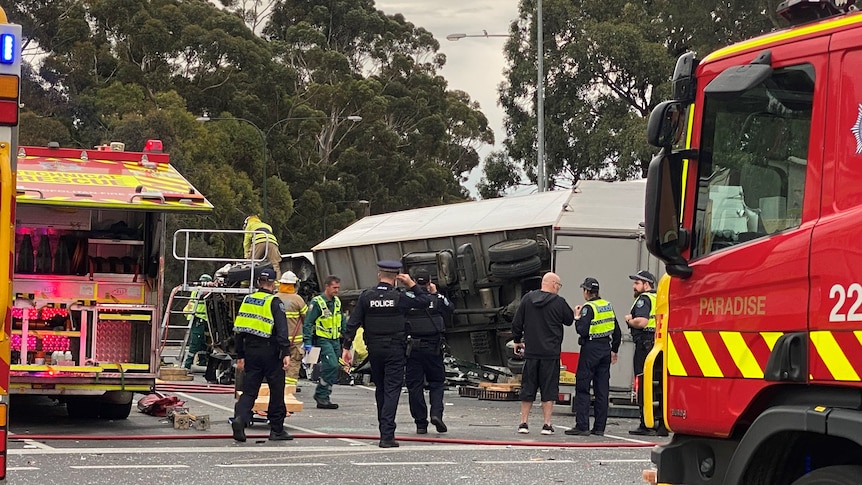
Nets being considered to stop runaway trucks on the South Eastern Freeway after latest crash

South Australia’s Transport Minister says the state government is looking at deploying nets to catch runaway trucks traveling down the South Eastern Freeway.

After a crash at the bottom of the freeway that nine injured people last month, safety concerns will be on the agenda when transport ministers from around the country meet today.

Transport Minister Tom Koutsantonis said the Department for Infrastructure and Transport (DIT) was working around the clock to come up with a way to make the road through the Adelaide Hills safer.

“The idea of ​​nets has been considered, but of course when you deploy a net it’s out of action for a while afterward and you could have another event,” he said.

“There is infrastructure available like that but it is extensive and damaging.

“The department is working overtime trying to work out how we can actually make sure that if we have a runaway truck what can we actually do.”

A man in a suit standing behind microphones with a road overpass behind him
Transport Tom Koutsantonis met with freight industry representatives earlier this week.(ABC News: Shari Hams)

Other options also being considered

The South Eastern Freeway descends from the Adelaide Hills suburb of Crafers to where it ends at the intersection of Cross, Glen Osmond and Portrush roads.

Several crashes have occurred at the intersection, including some that have involved fatalities.

An allegedly unlicensed Queensland truck driver was charged with multiple offenses over the latest crash on July 24.

Other options that Mr Koutsantonis said were being considered included taking over CB radios to warn drivers about the steep descent, more signs, point-to-point cameras, forcing trucks into arrester beds, real-time brake monitoring and forcing heavy vehicles into a slow lane.

A freeway lane with a net over it
A Dragnet truck net on an arrester bed in the US state of Connecticut.(Impact Absorption)

But he said better training for truck drivers was probably the best solution.

However, he said it would not stop the 1 in 100,000 irresponsible drivers, who could be targeted with more prosecutions.

“We are working towards fixing the one who does break the law, but of course the consequences of the one person who doesn’t follow the law is catastrophic,” he said.

“We’re talking about trucks that are over 10 tonnes heading down at 110kph towards parked cars at the intersection of Cross Road and the South Eastern Freeway and it was a miracle no-one died two weeks ago.”

Hard spot for arrester beds

Soon after the crash, DIT chief executive Jon Whelan told a parliamentary committee a third emergency truck arrester bed at the bottom of the South Eastern Freeway was being considered.

“It has to meet the standards and it has to meet the design protocols for that to occur as well,” he said.

An arrester bed at the same location was considered after the 2014 double-fatal crash but in 2015 the Labor government said it had looked at nine locations but none were feasible.

“None of those are practical and none of those achieve the sorts of safety benefits that we’ve got with the two existing safety ramps,” then-transport minister Stephen Mullighan said.

A truck on a gravel path near a freeway
A truck on an arrester bed on the South Eastern Freeway in 2014.(abcnews)

The Royal Automobile Association of South Australia suggested a “dragnet type arrester system” in a report from 2020, along with another arrester bed.

The former Liberal government scrapped its proposed GlobeLink project to divert road and rail freight around the eastern side of the Adelaide Hills in 2020.

A smaller $12 million freight route upgrade opened last month, while a bypass around Truro has received funding.

.

Categories
Australia

Defense to truck PFAS-contaminated soil from Katherine’s RAAF Base Tindal to Melbourne

In a couple of weeks scores of half-size shipping containers filled with tonnes of toxic soil will begin making the 3,500-kilometre journey from northern Australia to Victoria.

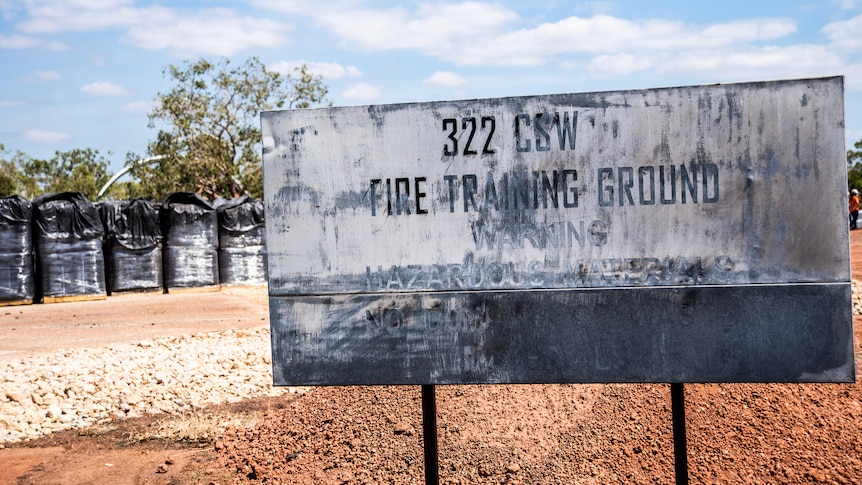
Defense has begun tackling the toxic legacy of the firefighting foam that was used for decades at the Tindal Royal Australian Air Force Base and other sites around Australia.

It has been more than six years since residents in Katherine were told that persistently high levels of toxic compounds, known collectively as perfluoroalkyl and polyfluoroalkyl substances, PFAS, had been found in their only drinking source.

Every year since, roughly 40 kilograms of the chemical has leaked into the groundwater from the RAAF base, where large areas of contaminated soil have been left to seep.

A woman and a man in high-vis walk side by side through a dusty plot of land.
Amanda Lee says there will be an instant reduction in the amount of PFAS leaching from the area.(ABC Katherine: Roxanne Fitzgerald)

Defense has conceded there is “no silver bullet” that would effectively destroy all traces of the “forever chemical” from the base, but it is committed to solving the problem.

“It’s a complex chemical and it’s a very complex remedial challenge,” Defense’s remediation advisor Amanda Lee said.

“What we’ve done here today is come up with the best solution available to us today with proven technology to try and address this problem.”

Despite explicit warnings dating back to 1987 that the product must not enter the environment, many thousands of liters of the firefighting foam were discarded onto bare earth or washed into stormwater systems and evaporation ponds.

A digger operates on top of a mound of smashed up concrete.
High concentrations of PFAS have been found in the old fire training area.(ABC Katherine: Roxanne Fitzgerald)

‘Big reduction in mass’

Now two large areas at Tindal, where RAAF firefighters would wash their equipment and where firefighting foams were used in practice scenarios, have been identified as high priority for remediation.

This week the massive effort to dig up the estimated 60,000 tonnes of contaminated soil and crushed concrete from the two areas began.

.

Categories
Australia

Neighbor in custody after alleged triple-fatal shooting in Bogie, Queensland

A person has been taken into custody following an alleged shooting at a Queensland property that left three people dead.

Queensland Police Acting Superintendent Tom Armitt told Sunrise on Friday the person “nominated for that offense is with us here in custody”.

“We haven’t pressed any charges at this point in time while our investigations are ongoing,” he said.

Watch Sunrise on Channel 7 and stream it for free on 7plus >>

Armitt said the parties involved in the alleged shooting were neighbors.

The alleged shooting took place at Bogie, between Mackay and Townsville, on Thursday morning.

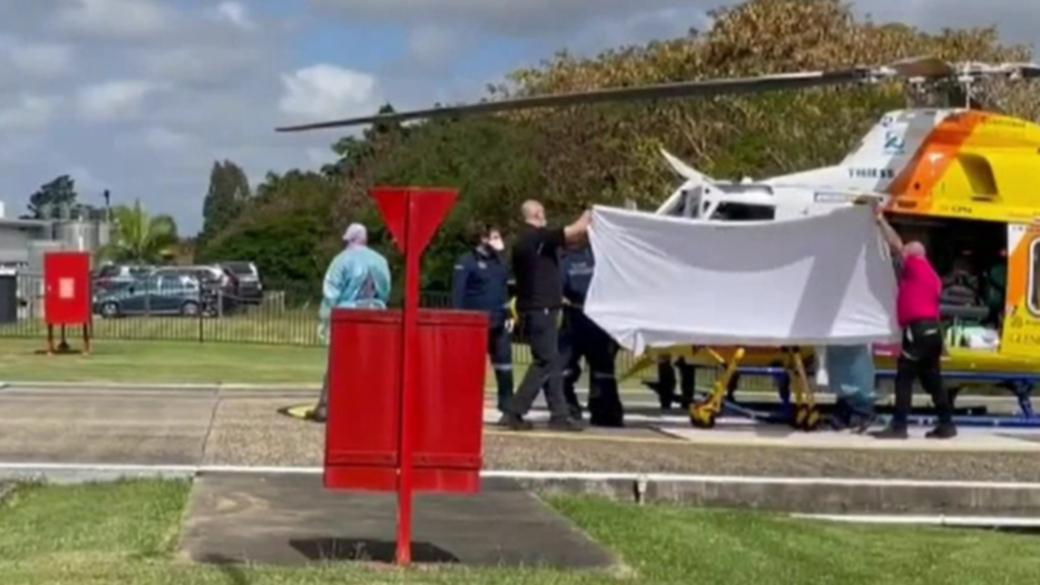
The surviving man was airlifted to hospital. Credit: 7NEWS

A family-of-four was allegedly shot, three fatally, with the survivor able to flee the scene.

He is believed to be a man in his 30s.

He was initially in a critical condition but has undergone multiple emergency surgeries and is now reported as being serious but stable.

“He was able to speak to us overnight and provide us details of what occurred at the incident yesterday morning,” Armitt said.

“And detectives will be speaking to him again this morning.”

The property and search area at Bogie was described by police as ‘extensive’. Credit: 7NEWS

Police are yet to confirm a motive for the alleged shooting.

Two men and a woman died at the scene, while the surviving man stumbled into remote bushland with a wound to his stomach.

He was airlifted to Mackay Base Hospital.

An emergency declaration was made to include Shannonvale Road, where the shooting took place, before it was revoked on Friday morning.

Watch: Scientists stunned by discovery of a ‘walking shark’.

Watch: Scientists stunned by discovery of a ‘walking shark’.

.

Categories
Australia

NDIS participant Mitchell Pearce’s family fear he will die in hospital waiting for a home

The family of a disabled man who has spent more than four months in a Western Australian hospital waiting for supported housing has described navigating the National Disability Insurance Scheme as “heartbreaking”.

Mitchell Pearce, 52, has been at the Busselton Health Campus since March 29.

His sister said he had lost the will to live — a decline she said was potentially hastened by months in hospital.

Disability advocates claim more than 1,000 NDIS patients are effectively stuck in hospital because of delays in finding funding or suitable accommodation, and due to difficulties in navigating the system.

NDIS Minister Bill Shorten said yesterday he had asked the National Disability Insurance Agency to find Mr Pearce suitable accommodation “as a matter of urgency”.

Judith Pearce said her much-loved son, who is disabled after battling brain tumors as a child, had been admitted to hospital after a series of falls that meant he could no longer live at home.

A fair-skinned woman who is aged 80, has fair hair, and a black jumper.  It's just her face de ella-she has a serious expression
Judith Pearce says dealing with the NDIS has been heartbreaking.(ABC South West: Georgia Loney)

While Mr Pearce was eligible for NDIS funding, the only suitable accommodation offered was in Perth or Bunbury — far away from his support network.

She said she couldn’t fault the care given in hospital, but said her son had become non-responsive and was refusing to eat or drink.

“He was quite buoyant and quite happy at the situation when he first went in,” she said.

“But I think being there for so long in this situation he has got really depressed and got down.

“Now it’s really just too late, I think for Mitchell.”

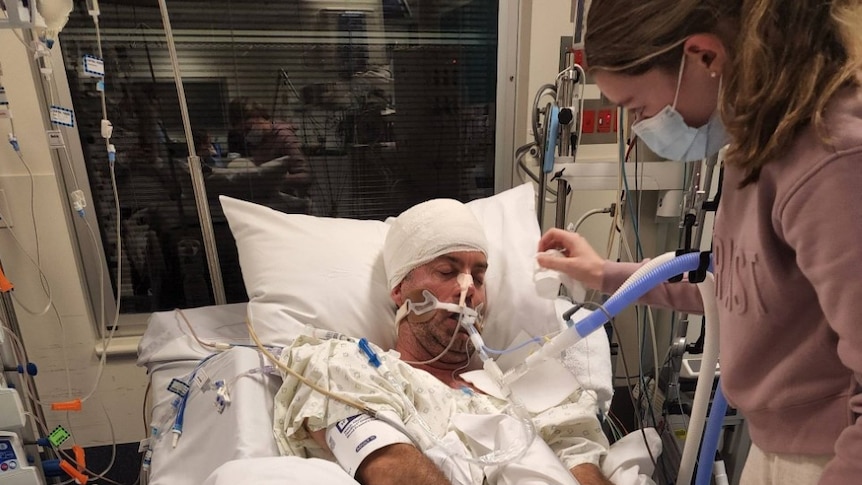
A composite photo of a man sitting in hospital
Mitchell Pearce’s family says he has deteriorated since being admitted to hospital four months ago.(Supplied)

Mrs Pearce described the situation with the NDIS as heartbreaking.

“I think they have just let us go for far too long,” she said.

“I thought if perhaps we’d been there at maybe a month that something would have been resolved.”

She said the length of the stay had been devastating.

“All through all Mitchell’s illnesses, we’ve always had something to fight for. But this time, we haven’t,” she said.

‘Inhumane, inflexible’ system

Mr Peace’s sister Justine Richmond said the NDIS system was so inflexible it was inhumane.

She said her brother could not be assessed for going into a local nursing home without being “released” from the NDIS, as he was too young.

A younger woman in her 50's with a gray poncho and her mother in a gray top, are sitting on a couch looking at a photo
Justine Richmond and Judith Pearce say navigating the NDIS has been stressful.(ABC South West: Georgia Loney)

“Right back in April, when we first started having meetings about trying to find residential care for Mitchell, they acknowledged that we could go through this lengthy process, and that aged care might be the only outcome,” she said.

“But we still had to go through the process, even though this was a person who was stuck in hospital for months and months now.”

She said the NDIS needed to be able to deal more quickly with individual circumstances.

“It’s a very regimented situation… so if something doesn’t exactly fit their criteria, it doesn’t happen,” she said.

Not a unique situation

Persons with Disabilities Australia president Sam Connor said it was unacceptable disabled people were facing such long delays to be discharged from hospital because of systemic issues with the National Disability Insurance Scheme.

.

Categories
Australia

Bogie shooting ‘gunman’ in custody; three dead

Graziers from neighboring properties in remote north Queensland had agreed to meet up at the boundary line where gunfire left three dead and one having to flee with bullet wounds to the stomach.

Police were examining several crime scenes on Friday. The only surviving victim had managed to provide his account of him and the man he accused of the shooting was one of three locals in custody.

The victims were Merv and Maree Schwartz and Maree's adult son Graham Tighe.

The victims were Merv and Maree Schwartz and Maree’s adult son Graham Tighe.Credit:Sourced by Nine

On Thursday morning, emergency services were called to Bogie, near Collinsville, where a man was found with a gunshot wound and reported an attack on his family.

The bodies of two men and a woman were later discovered while police scoured a vast exclusion zone, not knowing if the killer or killers were still active and armed.

Nine News reported that the victims were graziers Merv and Maree Schwartz, and Maree’s adult son, Graham Tighe.

Maree’s other son, Ross Tighe, was the survivor who fled the scene in a ute to get help.

Three people were in police custody, while two others had been assisting police with their inquiries.

Acting Police Superintendent Tom Armitt told Nine News that, acting on the information provided by the survivor, police believed they had the shooter in custody.

“We believe one of those people [in custody] is responsible for this matter,” he said, adding that no charges had been laid.

Categories
Australia

Prime Minister, CMO confident COVID wave has peaked

Australia may have seen the worst of the third Omicron wave but the nation’s top doctor has warned we’re not out of the woods just yet.

A downturn in Australia’s seven-day rolling average and hospitalizations suggests the country could be nearing peak Covid-19 infections sooner than expected.

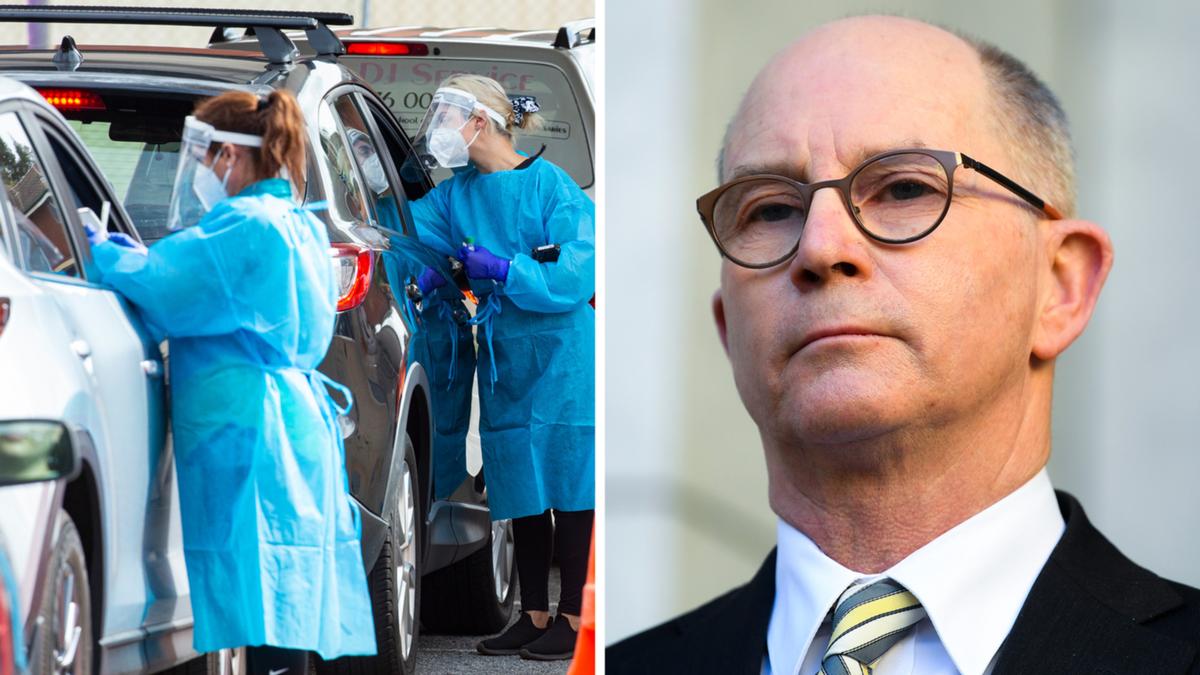
Speaking to reporters in Canberra, chief medical officer Paul Kelly said he was “increasingly confident” cases had peaked.

PM PRESSER
Camera IconChief medical officer Paul Kelly is cautiously optimistic about the current wave. NCA NewsWire / Gary Ramage Credit: News Corp Australia

“The actual data that we’re seeing, particularly from hospital admissions, are decreasing in all states over the last… week support that,” he said.

But he said the current wave would not be the last, stressing the need for governments to plan accordingly.

It follows a virtual meeting of state and territory leaders to discuss the national response to the virus.

Prime Minister Anthony Albanese told reporters he was “hopeful” the wave had reached its peak but warned against the threat of complacency.

“We know that last summer there was another spike and we shouldn’t be complacent about this issue,” he said.

In June, the Albanese government agreed to extend a 50-50 public hospital funding agreement for an additional three months amid concerns of the third Omicron wave.

But with cases peaking earlier than expected, Mr Albanese remained coy on if the states were pushing for another extension beyond September.

“The update that national cabinet received today, I’m pleased to say, is consistent with what was envisaged when we met… after I came back from PIF,” he said.

“Our funding arrangements and big decisions that were made by the national cabinet then in terms of those dates are consistent with the advice that we received.”

On Wednesday, the government fused to be tied down on a time frame on the release of modeling used to guide decision making.

“We don’t want to see an uncoordinated release of modeling that potentially contradicts modeling released by other jurisdictions,” Health Minister Mr Butler said.

The Health Department estimates there are more than 325,000 active cases nationally.

More than 4800 people are in hospital receiving treatment, with 162 in intensive care and 39 on ventilators.

.

Categories
Australia

The day the climate changed and the glee club went missing

The gloom settling over the vanquished Liberals and Nationals deepened as history tripped away from their grasp.

They could do nothing but demand a series of doomed divisions – the ringing of bells, the locking of doors, the counting of woes and noes, the inevitable defeat – intended to slow the inevitable.

These remnants of a once-dominant Coalition, having spent the better part of a decade turning themselves inside out to ensure climate action never led, like dancing, to anything too vigorous, were left without an embrace among them.

The Nationals were so bent on opposing everything that they even voted against an amendment by independent Helen Haines of Indi, and moved by fellow Independent Rebekha Sharkie of Mayo – both country electorates – designed to assist rural and regional districts.

The amendments require the Climate Change Authority to ensure any measures to respond to climate change should boost economic, employment and social benefits in rural and regional Australia.

Labor supported the Haines amendments, just as it supported other amendments by crossbenchers, even if the government didn’t need the numbers.

The climate wars.

The climate wars.Credit:David Rowe

Minister for Climate Change Chris Bowen, rubbing it in, described Haines’s ideas as “very sensitive”. Haines rubbed it in further by noting on Twitter (she is in COVID-19 isolation) the Coalition parties, having opposed everything, hadn’t bothered to come up with a single amendment among them.

Independent Zali Steggall grew so expansive she declared: “The climate wars are almost over.”

Given the history, this seemed optimistic.

loading

But it served, surely, an outbreak of celebrating on the floor of the House of Representatives that left the old Abbott government’s “death of the carbon tax” shindig looking lame.

In the end, however, everyone simply trooped away, trailing their wins and their losses.

Exhaustion, after all the years of those climate wars, had swept the day.

Cut through the noise of federal politics with news, views and expert analysis from Jacqueline Maley. Subscribers can sign up to our weekly Inside Politics newsletter here.

Categories
Australia

As Victoria’s incarceration rate rises, children of jailed parents are ‘invisible victims’, report says

As Holly Nicholls grew up, her mother struggled to support the family while her father was in jail.

She was often forced to skip dinner or have toast as a substitute, and her family’s lack of money did not go unnoticed at school.

“Never having nice shoes, nice clothes, never getting your hair cut … and other young people notice that and then you cop the bullying,” she said.

Ms Nicholls’ father was incarcerated when she was young, meaning her family lived on a single income.

She said the stigma directed towards people who had been incarcerated was particularly confronting for children.

“They ask you questions like ‘is your dad a murderer or a rapist?'” she said.

“That’s really a full on thing to hear … because you still have that connection and love for that person and here people are in society demonizing them.”

Ms Nicholls shared her story as a report focusing on the way parental incarceration affects children was tabled in the Victorian Parliament.

A woman with dark hair speaking in front of microphones.
Holly Nicholls (right) says her father’s imprisonment marked her early life.(abcnews)

The report found the traumatic nature of parental incarceration could interrupt childhood development, a lack of support could contribute to intergenerational patterns of incarceration and that for Aboriginal families, separating children from their parents could perpetuate historical trauma.

It also highlighted that the number of parents being incarcerated in Victoria was likely to be rising in line with an overall increase in the number of people being jailed.

Children with parents in jail ‘invisible victims’

The committee behind the report recommended the Victorian government set up a dedicated unit to support those young people.

Crossbench MP Fiona Patten, who chaired the committee, said children with parents in jail were the “invisible victims of crime”.

“They serve a sentence alongside their parent, an experience which may affect them negatively for their whole lives,” she said.

Reason Party MP Fiona Patten
Committee chair Fiona Patten says it was a privilege to hear personal stories, including some from prison inmates.(Supplied)

The committee looked at policies and services for children affected by parental incarceration across the state.

The report outlined 29 recommendations, including reducing the number of parents serving time in prison, developing arrest practices among police that are more child-aware and improving consideration of children’s interests when sentencing parents.

Data is scarce, but it is estimated that about 7,000 children in Victoria have a parent in jail at any time and 45,000 will have a parent imprisoned during their childhood.

Aboriginal children are disproportionately affected by parental incarceration in Victoria, with about 20 per cent likely to experience parental incarceration compared with 5 per cent of non-Aboriginal children.

Inmates’ experiences considered by committee

Rachael Hambleton, whose father spent time in prison while she was growing up, said dedicated support for young people going through a similar experience was needed.

“There are lots of not-for-profits that are trying to gap-fill services that don’t really exist,” she said.

Ms Hambleton also said it was important to consider the greater issues at play in the justice system.

“We all want to see a reduction in crime,” she said.

“Incarceration increases recidivism, while many evidence-based holistic approaches have been proven to reduce it.

“It’s time we looked to what works and dared to dream bigger.”

Razor wire at a Brisbane prison
The committee heard from both inmates and prison officers.(AAP: Dave Hunt)

The report recommended setting up a designated government unit within the Department of Families, Fairness and Housing to “design ways to help support children’s interests through their parent’s journey in the criminal justice system.”

In the report’s foreword, Ms Patten thanked those who shared their experiences as part of the committee’s work, which included inmates in Victorian prisons whose own parents had been incarcerated.

“We were told by individuals that they have been silenced from speaking about their experiences for so long because of stigma that they could only face and describe their experiences in late adulthood and did so, in some cases, for the first time to the committee, she said.

“We felt privileged to hear their stories.”

.