Categories
Australia

Weevils in caves, fish, and an ant that ‘babysits’ caterpillars among 139 new species classified by CSIRO

The CSIRO has released details of more than 136 new species of animals and three plants identified in the past year.

The new species include four fish, 117 insects, 11 jumping spiders, three plants, a frog, a millipede, an earthworm, and a marine trematode — a parasitic flatworm.

The trematode was found inside a fish.

Close up of sucker mouth.
The oral sucker of Enenterum petrae under microscope. Baby Petra doesn’t know how lucky she is.(Supplied: Daniel Huston/Zootaxa)

Now called Enenterum petraeit was named after the baby daughter of its identifier, Petra.

David Yeates, director of the CSIRO’s Australian National Insect Collection, said choosing a favorite out of the newly identified species was a bit like being asked to “choose a favorite child”.

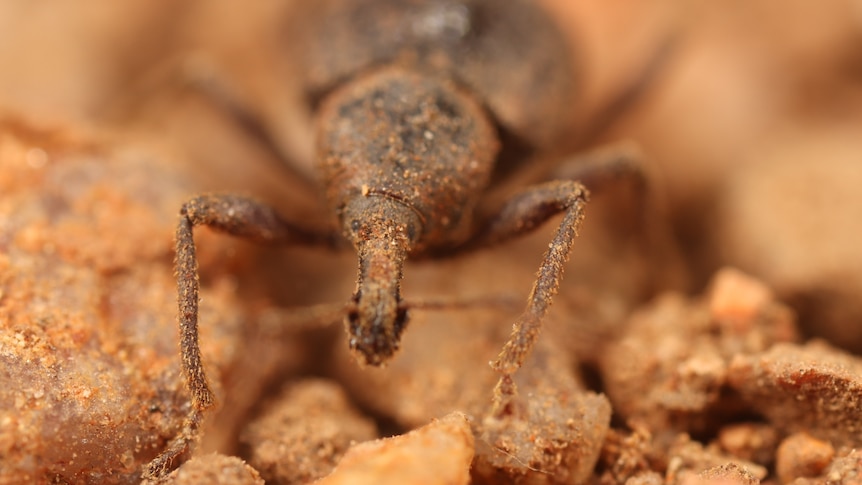
However, he said one of the most interesting is a species of ant — now known as Anonychomyrma inclinata — which “babysits” the caterpillars from one of Australia’s rarest butterflies, the bulloak jewel butterfly.

An before
The newly named ant Anonychomyrma inclinata is the ‘obligate attendant’ for the rare and beautiful bulloak jewel butterfly Hypochrysops piceatus.(Supplied: CSIRO/Jon Lewis)

“The ants carry the little caterpillars out from under the bark of the bulloak tree to feed on the soft tips of the leaves or needles at night; they carry them out and then back,” Dr Yeates said.

It’s a symbiotic relationship, where the ants protect the caterpillars from other ants, and get something in return, he said.

.

Categories
Australia

Agriculture Minister to release first National Biosecurity Strategy as disease threat looms

Australia’s ability to protect itself from pests and disease is at the center of a new national strategy agreed to by federal, state and territory ministers.

Addressing the National Rural Press Club in Canberra today, federal Agriculture Minister Murray Watt will release the first National Biosecurity Strategy.

“The biosecurity risks we’re facing as a nation are closer and they’re more threatening than we’ve ever seen before and that’s partly as a result of climate change, shifting trade and travel patterns, different land uses,” Senator Watt told the ABC.

“There’s a range of factors we’re dealing with now as a country that we haven’t seen before and that is increasing the risk of biosecurity [issues] for our farmers and their products.”

The risks include the threat of African swine fever, lumpy skin disease and foot and mouth disease, which are currently spreading through nearby Asian countries.

Senator Watt said the new strategy would ensure governments and industry worked together to protect Australia.

“By aligning all the key players, we can ensure that everyone [is] working together to counter the biosecurity threats we face,” he said.

“Australia’s biosecurity system is a critical national asset and shared responsibility, and this strategy is for all Australians.”

According to the strategy, Australia receives 115 million parcels through its mail centers each year, with 2.6 million shipping containers arriving at the country’s ports.

Call for sustainable funding model

The strategy sets out six priority areas for governments, including “shared biosecurity culture, stronger partnerships, highly skilled workforce, coordinated preparedness, integration supported by technology, research and data; and sustainable investment”.

“We will ensure funding and investment is sufficient, co-funded, transparent, targeted to our priorities and sustainable for the long term,” the strategy states.

.

Categories
Australia

Ovarian tissue freezing offering hope of a chance at motherhood to women battling cancer

When 38-year-old Melbourne woman Sarah looks at her one-year-old baby, Etta, she sees a precious gift that she and her husband might never have been granted.

“Sometimes I look at her and I think it’s just sort of incredible that it actually happened,” Sarah told ABC’s 7.30.

In 2009, Sarah was diagnosed with Hodgkin’s lymphoma and was told she had to start treatment straight away.

From that moment, her focus was solely on her own survival and not on bigger questions about how treatments such as chemotherapy might affect her body and her future chances of falling pregnant.

“At the time, the main things I was worried about were, ‘Am I going to die?’ And things like, ‘Is my hair going to fall out?'” she said.

“Secondary issues — [such as] ‘What’s the long-term impacts on my fertility and my other health?’—were sort of really in the back of my mind.”

Luckily, her mother thought to ask those questions before Sarah started chemotherapy and she was put in touch with Dr Kate Stern, who runs an innovative fertility program at the Royal Women’s Hospital in Melbourne that, a decade later, helped change the course of Sarah’s life .

“Without my mum making that phone call, and all these pieces falling together, [Etta] just might not have ever existed,” Sarah said.

Science behind innovative procedure

Woman with her baby sitting on the floor playing.
Sarah says it’s “incredible” she was able to have baby Etta.(ABC News: Nadia Daly)

When ABC’s 7.30 met Sarah, baby Etta was waddling around happily on the floor. She had taken her first steps that morning and turned one the day before.

Those are special milestones for any family, but even more so for Sarah and her husband, Gabriel, who had been through a long and difficult journey over a period of 10 years to get there.

As Sarah underwent treatment for cancer immediately after her diagnosis, there was no time for conventional procedures such as egg freezing. So she and Dr Stern decided to use another innovative method to give Sarah the chance to fall pregnant when she concluded her cancer treatment.

It’s known as ovarian tissue freezing, and Dr Stern was one of the doctors who helped pioneer the procedure at the Royal Women’s Hospital.

A woman wearing a mask stands next to a computer screen.
Dr Kate Stern describes the process as “absolutely miraculous”.(ABC News: Nadia Daly)

“Fertility preservation with ovarian tissue is innovative and it’s exciting but, because of the technical difficulties, it’s not widely available around the world,” Dr Stern said.

The procedure involves removing part of a woman’s ovary tissue via keyhole surgery, slicing it thinly and then freezing it in special containers in a lab.

When the woman completes her cancer treatment, the tissue can be defrosted and inserted back into her abdomen if she decides she wants to try to start a family.

“Over four or five months, that tissue gets a life of its own, it gets new blood vessels, the follicles and eggs start to develop. And it makes hormones — it is absolutely miraculous, we think,” Dr Stern said.

‘For these patients, it’s this versus nothing’

Two women in masks and gloves stand among tanks in a lab.
Dr Kate Stern says the treatment does not guarantee a patient will fall pregnant.(ABC News: Nadia Daly)

Dr Stern helped set up the program at the hospital and played a key role in developing the procedure 26 years ago.

While the treatment is no longer considered experimental, it is highly specialized and cannot be performed at all hospitals, and Dr Stern cautions that it does not guarantee a patient can fall pregnant.

“Getting good eggs is still hard work,” she said.

“But the treatment is quite successful. It depends what your benchmark is but, for these patients, it’s this versus nothing.”

Dr Stern said that, around the world, about 170 women have fallen pregnant after using their frozen ovarian tissue.

In Sarah’s case, her cancer treatment stretched out from a few months to a decade of on-and-off treatment that took a heavy toll on her body.

“Sarah’s extensive treatment for her cancer damaged her ovaries so that she was in a state of what we call premature menopause — her ovaries did not have any good eggs in them,” she said.

“So Sarah needed to have this ovarian tissue grafted to be able to have any opportunity [of having] to baby.”

When Sarah was two years in remission, she was advised it was safe to reinsert the ovarian tissue and to try to fall pregnant.

A few years later, in July 2021, Etta was born.

‘We had no idea about these options’

Young girl next to a tree smiling.
“I knew I dad to do it”: Zahli Habel underwent ovarian tissue freezing after being diagnosed with cancer.(ABC News: Carl Saville)

Over in the remote town of Streaky Bay in South Australia, 11-year-old Zahli Habel is at a very different stage in her life.

She finished her chemotherapy a year ago but, before she began, she had part of an ovary removed and flown to the Royal Women’s Hospital in Melbourne to be frozen and preserved if she decides to have children in the future.

“Zahli was diagnosed with a cancer that required intensive chemotherapy. This chemotherapy has a high chance of damaging future ovarian function,” Dr Stern explained.

The diagnosis was shocking enough for Zahli and her family, and fertility was not something they had considered.

“I guess when we got the diagnosis, we were dealing with that — that was the biggest issue,” Zahli’s mum, Steph, said.

Mother and teenage daughter sitting on a sofa smiling.
Steph Habel was grateful the issue of fertility was raised when daughter Zahli was diagnosed with cancer.(ABC News: Carl Saville)

“And then, suddenly for them to come out and talk about fertility… we had no idea about these options.

“And it was amazing that it was offered to us and that we could take it up.”

Zahli decided that it was a good option for her to give her choices in her future.

“I knew I had to do it,” she said.

“Because, if I wanted to have kids in the future and chemo killed off all my eggs, I knew that it was really my only thing to rely on.”

.

Categories
Australia

Future of income management unclear as the end of the cashless debit card draws near

Legislation to scrap the controversial cashless debit card program looks set to become one of the first bills debated by the new parliament, as the federal government pushes ahead with delivering its election commitments.

While it raises questions for thousands of people on the card, another form of income management in the Northern Territory — affecting more people — could also end shortly: the Basics Card.

So, what does all of this mean for people in communities, who have long had their welfare managed?

A cross stands on a hill above Santa Teresa as the sun rises.
Remote NT communities like Santa Teresa in Central Australia have been subjected to income management since 2007.(ABC News: Greg Nelson)

What’s happening with cashless welfare?

The cashless debit card trial quarantines up to 80 per cent of a person’s welfare payments, and cannot be used to buy alcohol, gamble or withdraw cash.

.

Categories
Australia

Canberra to get a full-time surgical service for gynecological cancers

Jane Harriss has been fighting for a permanent surgical service for gynecological cancers in Canberra for almost two decades — with good reason.

“My mother was diagnosed with ovarian cancer some years ago and she died with it, after having survived for seven years,” Ms Harriss said.

“She was one of those people, who had to go to Sydney for her surgery.”

The metastasising cancer saw Ms Hariss’s mum, Erica, make three trips to Sydney for separate surgeries, with follow-up appointments in Canberra, through a fortnightly clinic provided as a fly-in-fly-out service by Sydney’s Royal Hospital for Women.

Work is now under way to remove that travel requirement and deliver the capital’s first permanent gyneacological surgery service.

“Canberra Health Services has just been working through what the model of care will look like, what supports will be required to ensure that that can occur,” ACT Health Minister Rachel Stephen-Smith said.

The FIFO service has faced an uncertain future for months, since the surgeon announced he would be retiring at the end of the year and Canberra-based doctor, Leon Foster, put his hand up to run a permanent clinic if funding was found.

At a media conference on June 17, Ms Stephen-Smith suggested funding was not the issue.

“It’s more a question of assessing when the number of people that are having to travel interstate is actually sufficient that we can bring that service into the ACT,” she said at the time.

But on Monday, she confirmed Canberra Health Services had advertised for a full-time specialist surgeon and a “merit-based recruitment process” was required.

‘They had to travel when they were very ill’

A woman holds a teal ribbon, symbolizing support for those diagnosed with ovarian cancer, in her hands.
Most cases of ovarian cancer are diagnosed in the late stages of the disease.(Rare Ovarian Cancer Incorporated)

Ms Harriss said the progress was “better late than never” and every woman she’ had met through her ovarian cancer support group had been frustrated over the absence of a permanent Canberra clinic.

“They had to travel when they were, effectively, very ill — because it’s diagnosed late-stage,” she said.

“And then they’d have to return home, within about 10 days of having massive abdominal surgery. And they would have to do this a number of times, potentially.”

Ms Harriss said she was pleased the government had chosen “to go down this path”.

“It’s wonderful in terms of women who are currently dealing with the disease and for those who potentially might be diagnosed in the future,” she said.

“It will make life … not easier, but a little bit less stressful.”

.

Categories
Australia

Police confirm woman killed in Stretton home was Jifeng (Eileen) Liu, man charged with two murders

Police have confirmed Jifeng (Eileen) Liu as one of the people found dead in a home in Stretton, in Brisbane’s south, yesterday.

A 49-year-old man has been charged with two counts of murder over the deaths of Ms Liu as well as a man in his early 20s.

Police, who were called to the home at Coolidge Court at 9:40am on Monday, found the man and the bodies of Ms Liu and the man on the second storey of the home.

The 49-year-old man was treated for injuries and taken to hospital where he remains under police guard.

He was charged by detectives overnight.

Police in blue HAZMAT suits taking photos.
Forensic police attended the scene. (ABC News: Alfred Beales)

Police confirmed the person who rank triple-0 was the 49-year-old male and the use of a Cantonese interpreter was required at the scene.

The scene remained cordoned off overnight, with forensic investigators remaining at the home. Police said they recovered two “bladed weapons” from the scene.

A police officer in a HAZMAT suit lifting up police tape.
Police say a 49-year-old man is in custody. (ABC News: Alfred Beales)

The relationships of the three people are yet to be fully established, but the police believed they were “linked”.

Late on Monday afternoon, detectives were seen removing two mobile phones, sealed in plastic bags, from the home.

Police are seeking information from neighbors and have asked anyone with information to come forward.

.

Categories
Australia

Meet the women with a shared love of classic Chevy cars

For Bec Harding and Valda Moore, there’s nothing more enjoyable than telling people they’re the owners of classic cars.

“We get asked all the time: ‘Is this your husband’s car?'” Ms Moore said.

“We love it as I always strike back saying: ‘No mate, it’s mine. Why would it be my husband’s?'”

Both are proud owners of classic Chevies which they show as part of the Queensland Chevrolet Club.

Lady in black vest and jeans standing near a Chevrolet utility truck.
Bec Harding loves telling people the story behind the car.(ABC Radio Brisbane: Jessica Hinchliffe)

For Ms Harding, her 1983 C10 Silverado came with a slice of Hollywood.

“My Chevy was imported from Virginia by the producers of Aquaman and it was used in the film before being put on display at Movie World,” she said.

loading

“It was then road registered in Queensland and sold at auction with other props after the movie was shot.

“A lady at the Gold Coast bought it and had it for a year then I bought it off her.”

The car came equipped with re-upholstered seat covers proudly sporting tridents as a nod to the film, which Ms Harding said was a conversation starter.

The interior of a car that has trident-pattern seatcovers.
The car’s interior just screams Aquaman.(ABC Radio Brisbane: Jessica Hinchliffe)

“When I tell them it was in Aquaman, they say: ‘Oh my God, did Jason Momoa sit in it? Can I touch it?'”

But what she loved most about the car was its authenticity.

“It has its original 350 Chevy engine and paint job, and I’ve just had a few bits and pieces done to it like the sound system, but I really love the original factor and like to keep it stock-standard.”

Action figure Aquaman sits on the dash of a car.
Aquaman on the dash is a reminder of the car’s Hollywood ties.(ABC Radio Brisbane: Jessica Hinchliffe)

Why the Chevrolet?

Both women said the “cool factor” was a big part of being a Chevy owner.

“They’re cool classic cars and many are rare here in Australia,” Ms Harding said.

“Mine is a long bed and you just don’t see as many of them as most are short beds.”

Bonnet of a brown Chevrolet utility.
The 1983 Chevrolet has appeared in films and was once housed at Movie World.(ABC Radio Brisbane: Jessica Hinchliffe)

The car’s length does have its challenges when it comes to everyday use.

“It’s like driving a battleship and sometimes it’s got a turning ratio of one too,” Ms Harding said.

“It has a left-hand drive so you have to think about where you’re going as you can’t do drive-throughs — they don’t fit.

“You can’t get tickets in ticket windows and you can’t really go to shopping centers as they’re too big, but it’s worth it.”

.

Categories
Australia

Calls for ‘significant reforms’ around Queensland police’s handling of domestic violence as explosive inquiry wraps up

Betty Taylor has been fighting the scourge of domestic violence in Queensland for more than three decades and even she was shocked by the explosive testimonies she heard at an inquiry into police culture.

WARNING: This story contains strong language that some readers may find offensive.

The chief executive of the Red Rose Foundation has been closely following the inquiry into the Queensland Police Service’s (QPS) response to domestic and family violence, which has spanned five weeks and heard from dozens of witnesses, including current and retired police officers.

With Tuesday marking its final day of public hearings, the inquiry has painted a damning picture of police culture and problematic attitudes in the ranks towards domestic violence survivors.

Misogynistic attitudes towards women, policy and procedural failures as well as serious allegations of police inaction to protect domestic violence survivors have all been laid bare.

Ms Taylor said officers’ response to domestic and family violence in Queensland was the worst she’s ever witnessed in her 34 years of advocacy.

“This inquiry is incredibly important. I’ve worked across the domestic violence field for 34 years and … the response by police is the worst it’s ever been,” Ms Taylor said.

“Not even just by police — I think women are getting a rough deal in the community and through the courts.

“Victims have to have confidence in the police. They’ve got to know they can call and… be taken seriously.”

‘Time for really significant reforms’

Ms Taylor said she hoped the inquiry would provide momentum for meaningful change and reform.

“We’ve got women potentially being murdered and police aren’t taking the time to do thorough investigations. It really concerns me,” she said.

“My hope is [that] we really step up and look at what domestic violence really is: one of the worst crimes in our community.

“It’s time to step back and reflect and put in place some really significant reforms.”

Queensland Police Service officers in South Bank
There are calls for ongoing face-to-face domestic violence training for police.(ABC News: Patrick Williams)

Headed by Judge Deborah Richards, the landmark inquiry’s goal is to determine whether cultural issues are negatively impacting how police handle domestic violence cases, as well as the experience of Indigenous domestic violence victims and the way corrupt conduct and complaints against police are dealt with.

A key recommendation of the Women’s Safety and Justice taskforce, the inquiry follows urgent calls for action after several high-profile domestic violence murders, including the deaths of Doreen Langham, Hannah Clarke and her three children.

Among the explosive evidence, one service officer — who cannot be identified for legal reasons — told the inquiry that misogyny “ran wild” within the force as he detailed hearing male colleagues frequently making derogatory remarks about female survivors and avoiding domestic violence incidents altogether.

“Domestic violence is just foreplay”, “she’s too ugly to be raped”, “rape is just surprise sex” and “I can see why he does it to her — if I was in his position, I’d do that,” the officer told the inquiry, recounting comments he had heard made by seasoned male officers.

The officer became emotional as he told the inquiry “the core business in his station was misogyny, dehumanization and negligence.”

‘She’s just blowing hot air’

Retired officer Audra Pollard — who was a coordinator officer in police call centers — told the inquiry she witnessed police deliberately driving away from a suburb to avoid responding to a domestic violence incident.

Ms Pollard said her colleagues would often make derogatory comments about “repeat” domestic violence complainants, saying things like: “Oh — that f**kwit has called again” “That spoon is on the line again”, “Don’t bother sending a crew to that job, she’s just blowing hot air, that sort of thing.”

Two police officers take notes while talking to an unidentified woman.
Officers told the inquiry that misogyny and unconscious bias are major issues throughout the force.(ABC News: Luke Bowden)

The inquiry also heard from Sergeant Paul Trinder, a shift supervisor, who recalled a time where two officers, including a senior constable, downplayed a serious domestic violence incident, despite “clear photographic evidence” of assault and threats made against the victim.

“There was a statement from the aggrieved person that the respondent had threatened to decapitate the family dog ​​in front of her and her children,” Sergeant Trinder told the inquiry.

“That victim had been failed by that officer. There was clear photographic evidence that she had been assaulted, like a punch-sized bruise around her rib cage and so on.

.

Categories
Australia

Nationals MP Vince Catania hands in resignation for WA seat of North West Central

Long-serving Nationals MP Vince Catania has handed his resignation to the speaker of Western Australia’s Legislative Assembly, officially triggering the process of holding a by-election.

It is expected the poll to replace him in the seat of North West Central will be held around the middle of next month, possibly on September 17.

A date will be formally decided when the WA parliament sits on Tuesday for the first time after its winter recess.

Both the Liberal and National parties have announced their candidates, but it is unclear whether Labor will contest the seat.

The long-serving Nationals MP announced his retirement nearly two months ago, saying he did not “have anything left in the tank.”

However, he did not officially resign at the time, as most politicians do, in a move described as “most unusual” by political commentator Peter Kennedy.

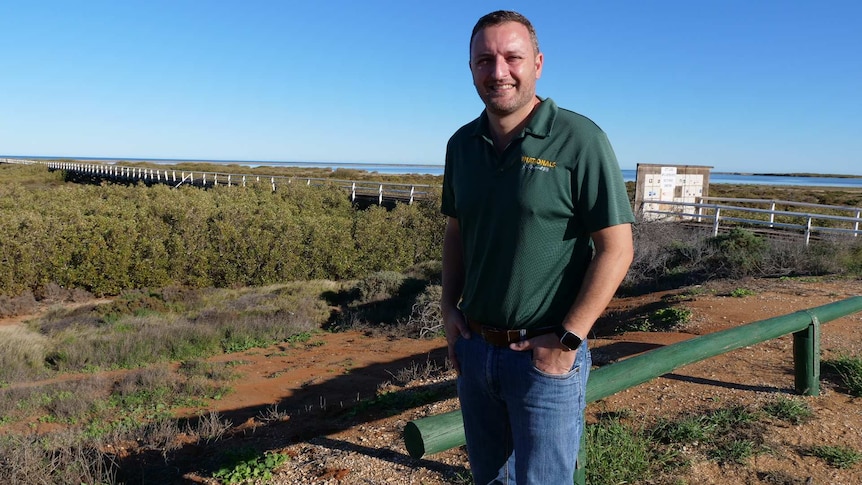
Man standing in front of Carnarvon's One Mile Jetty
Vince Catania has held the seat since 2008.(ABC Pilbara: Laura Birch)

When asked about the delay, a spokesperson for the WA Nationals said it had always been Mr Catania’s plan to retire in early August.

“[He] continues to be committed to his role as the member for North West Central until this time,” the spokesperson said.

North West Central is WA’s geographically largest electorate, taking in towns such as Carnarvon, Coral Bay and Exmouth.

Mr Catania has held the seat since 2008, after initially being elected to the upper house in 2005.

The Nationals were the first to announce their candidate for the by-election, selecting local publican Merome Beard.

Merome smiles pictured in a waterfront setting
Merome Beard is the Nationals candidate for the seat of North West Central in WA. (Facebook: Merome Beard)

A post on Ms Beard’s Facebook page shows she will officially launch her campaign on Friday, in an event that will also be used to farewell Mr Catania.

Other posts show Mr Catania will join Ms Beard, who used to work in his office, at a number of “mobile office” meetings across the region.

A qualified urban and regional planner, Will Baston will stand as the Liberal Party’s candidate.

A smiling man wearing a jacket with a shirt underneath stands in front of some trees.
Will Baston has thrown his hat into the ring for the Liberals.(ABC News: Kate Ferguson)

He has also worked as a consultant on “conservation and economic development outcomes for outback and regional Western Australia”, according to the Liberal Party.

It is understood the Greens will also field a candidate, to be announced on Wednesday.

Awkward contest for opposition alliance

The by-election creates an awkward situation for the Liberal-National Alliance, with both sides having to compete for votes.

However, Deputy Liberal Leader Libby Mettam said yesterday that her party’s interest was “not in competing and fighting against the National Party.”

Libby Mettam, Deputy Liberal leader
Libby Mettam says the Liberals are not trying to compete with the Nationals.(ABC NewsClaire Moodie)

“We will be leading and campaigning in support of Will Baston, our Liberal Party candidate, and we hope that either Will Baston or the Nationals candidate will be elected,” she said.

“Our position as the party representing all of Western Australia is to be giving people the option to vote for the Liberal Party and vote in a strong candidate, which is Will Baston.”

.

Categories
Australia

Olivia Newton-John died at 73; Commonwealth Games 2022 continues; John Barilaro inquiry fallout continues; Matthew Guy hires Nick McGowan as chief of staff; Labor climate bill faces Senate clash over carbon emissions

To one of the first major political interviews of the day, and NSW Opposition Leader Chris Minns has fronted ABC NewsBreakfast.

The Labor leader was asked about John Barilaro’s recent appearance at a parliamentary inquiry examining his appointment to a $500,000-a-year New York trade post.

NSW Opposition Leader Chris Minns wants to abolish several trade roles if he wins the next state election.

NSW Opposition Leader Chris Minns wants to abolish several trade roles if he wins the next state election.Credit:Kate Geraghty

As regular readers of this blog will know, the former NSW deputy premier has rejected any suggestion of wrongdoing. While giving evidence yesterday, he described himself as the trade saga’s victim and not the perpetrator.

Here’s what Minns had to say about that characterisation:

Look, I mean, it’s a bit ridiculous. At this point, this is taxpayer money. We need to know how it’s been spent. Circumstances around this appointment have been completely untransparent from the very beginning. The government has worked very hard at, I guess, obscuring from the public exactly what happened in relation to the Barilaro appointment.

And in the last two weeks we’ve had a situation where the deputy leader of the Liberal Party has resigned, we’ve got someone from the panel, the Public Service Commissioner, who believes that she was misled. And most of the information has reluctantly been released from the NSW government.

So there’s serious questions to be answered and the government seems reluctant to do so … anyone would see that [the appointment] wasn’t a wise use of taxpayers’ money.

It seems as though these positions are being offered around almost like lolly bags to senior members of the NSW government.