Categories
Australia

South-east Queensland infrastructure funding not keeping pace with development, majors say

The mayors of two booming south-east Queensland councils say funding for critical infrastructure to support hundreds of thousands of incoming residents is falling short of demand.

Ipswich, Logan and Moreton Bay councils on the west, south and north of Brisbane are all doing the “heavy lifting” of welcoming south-east Queensland’s booming population.

But Ipswich Mayor Teresa Harding and Logan Mayor Darren Power both say they need more funding to build trunk infrastructure — roads, stormwater, public transport and community facilities — to cope with the influx of new residents expected over the coming decade.

“To me there’s an inequitable distribution of how the money is being spent,” Ms Harding said.

“We’re the fastest growing area in Queensland yet we’re not getting that corresponding funding.”

A construction site with a ute parked out the front.
Masterplanned communities are seeing rapid growth as more residents flock to Queensland.(ABC News: Elizabeth Pickering)

Mr Power said Logan was “getting the rough end of the pineapple” without any major infrastructure commitments such as new sporting facilities.

“We’re [welcoming] 10,000 people a year, Ipswich is doing 6,000 a year, Moreton is probably doing more than us, and … we’re not even getting the infrastructure,” Mr Power said.

“They’re putting all the Olympic facilities in and around the city [but] forget Logan — you’re going to do the heavy lifting, but we’re not giving you anything.”

Population on the up and up

South-east Queensland’s population is expected to grow by 2 million people to 5.3 million by 2041.

Moreton Bay’s population will rise by 210,000 to 690,000 by 2041.

Ipswich is predicted to increase from 240,000 to 520,000 people by 2041.

Logan expects to grow from 345,000 in 2021 to 500,000 in 2036.

All three councils are now developing new planning schemes as they grapple with where to house so many new residents.

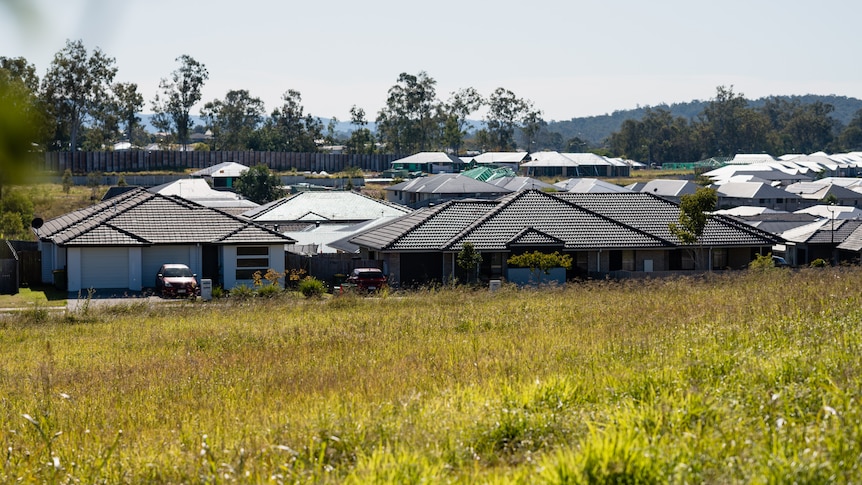
Street of houses being built in Ipswich City Council area
Priority Development Areas were designed by the state government to house thousands of new residents.(ABC NewsAlice Pavlovic)

Councils are also working with the state government on a new regional plan to replace 2017’s Shaping SEQ, expected to be finalized in the next two years.

Deputy Premier Steven Miles said almost 50,000 new residential lots had been unlocked since October 2020.

“We understand that it’s not just about unlocking new lots to help with housing availability, we also need to ensure that people, goods and services can efficiently move around and that there is access to affordable housing, green space, schools and health services,” Mr Miles said.

Priority development areas

State agency Economic Development Queensland manages three 12-year-old south-east Queensland priority development areas (PDAs): Ripley Valley in Ipswich, and Greater Flagstone and Yarrabilba in Logan.

Ripley Valley is set to house 131,000 people, Flagstone 138,000, and Yarrabilba 50,000.

The newest PDA is Caboolture West in Moreton Bay, set to house another 70,000 people, with negotiations now focused on the suburb’s critical infrastructure.

Aerial photo of Caboolture West community and land
The planned Caboolture West PDA could house up to 70,000 people in Moreton Bay.(Supplied)

The state charges property developers in PDAs a per-lot infrastructure contribution.

Flagstone’s is set at about $47,000 per residential lot, of which $5,000 is a “catalyst” charge for critical infrastructure, and $1,000 for public transport.

In Ripley, the developer charge is about $35,000 per lot.

distant communities

Caboolture West and Ripley Valley are within 15 minutes’ drive of their city centers, but both Yarrabilba and Greater Flagstone PDAs are 20 to 30 kilometers south-west of Logan Central, nearly 30 minutes’ drive.

“We would never, never develop Flagstone and Yarrabilba, because it’s too far away and it’s stretching our resources,” Mr Power said.

“[EDQ is] expecting us to fill in the gaps between where the developer [contribution] ends and where Flagstone and Yarrabilba starts.”

Man wearing a light purple business shirt standing outside.
Darren Power currently serves as the Mayor of the City of Logan.(ABC News: Chris Gillette)

Mr Miles said a $150 million Catalyst Infrastructure Fund provided money to developers to “accelerate” infrastructure within PDAs.

“To date, EDQ has provided $45 million to the Ripley Valley PDA and $106 million to the Greater Flagstone PDA in catalyst infrastructure funding to assist in providing significant trunk infrastructure to facilitate development,” Mr Miles said.

Three-scheme Ipswich

For Ipswich, planning problems are three-fold.

Ipswich has two masterplanned communities — Ripley Valley, and the city of Springfield, masterplanned by a private owner to become an entire city.

Only last week, the council sent off a fast-tracked new planning scheme to Mr Miles for review, to replace its current 16-year-old scheme.

Ipswich Mayor Teresa Harding.
Ipswich Mayor Teresa Harding says money is not being spent equitably.(ABC News: Rachel McGhee)

“That’s three planning schemes for us to work with, three different ways to interact with the state government, and developers as well,” Ms Harding said.

And while more new homes means more rates in council coffers, it will still take decades to recoup millions spent now on new roads, water and sewers.

regional funding

Ms Harding said she wanted a clear commitment that the regions facing the most growth would receive funding proportional to their needs.

“If there’s a regional plan where a council is being asked to commit to certain population growths, I would like some type of commitment for a corresponding amount of money or proportion of money spent on trunk infrastructure,” she said.

“Because it’s not happening at the moment.”

Mr Miles said the $50 million Growth Acceleration Fund would help fund critical trunk infrastructure outside of PDAs, including Caboolture West.

Steven Miles speaking.
Queensland Deputy Premier Steven Miles.(ABC News: Lucas Hill)

He also cited the $1.8 billion City Deal, which includes a $210 million “growth areas compact”, funding Caboolture West infrastructure, and business cases for Logan and Ipswich transport corridors to Flagstone, Yarrabilba and Springfield.

“I look forward to continuing to work with all Mayors to plan for and invest in South East Queensland’s growing future,” Mr Miles said.

Loading form…

.
Categories
Australia

Bail act, Crown Perth and Metronet top priority list as WA Parliament resumes after winter break

After a six-week winter recess, West Australian politicians will return to parliament today to start the last half of the sitting year.

Plenty has happened since they last agreed, including another COVID-19 wave and controversies involving the Agriculture Minister and Attorney-General.

Even still, the government insists a cabinet reshuffle is not on the cards, with its focus instead on five priorities for the 33 sitting days ahead.

At the top of their list for reforms are long-awaited changes to WA’s Bail Act, largely in response to the death of Annaliesse Ugle in 2020.

The 11-year-old took her own life after the man accused of sexual assaulting her was released on bail.

The reforms are currently sitting in the lower house and will change the act in a variety of ways, including when a person is charged with child sex offences.

A man wearing handcuffs
Labor will use its majority in parliament to pass long-awaited changes to WA’s Bail Act.(AAP Image/David Gray)

Once the new legislation is passed, anyone deciding bail in that situation will have to specifically consider a number of factors, including the “physical and emotional wellbeing” of the child victim.

Another provision will mean that where a child victim raises concerns about their safety and welfare if the accused is not kept in custody, the person deciding bail must be presented with that information by the prosecutor and take it into consideration.

When he introduced the bill into parliament, Attorney-General John Quigley said it struck the right balance “between elevating the voices and concerns of child victims of sexual abuse and maintaining the precepts of our justice system”.

Crown Perth reforms also high priority

It has been around five months since the WA government was handed the Crown Casino Royal Commission’s final report, containing 59 recommendations on how to clean up money laundering, criminal infiltration and problem gambling.

The first swathe of laws designed to start chipping away at those recommendations are yet to pass parliament but are on the priority list.

A sign showing the Crown Resorts logo in front of shrubs beside a road.
The reforms are aimed at tackling money laundering and problem gambling at Perth’s casino.(ABC News: Hugh Sando)

The bill is also still in the lower house, having been introduced just before parliament broke for the winter break.

Once passed, it will establish an independent monitor who will oversee the casino for a two-year remediation period, as recommended in the report.

Questions have been raised about the utility of that monitor though, with one gambling researcher raising concerns the casino would return to “business as usual” at the end of that two-year period.

The bill will also increase maximum penalties under the Casino Control Act from $100,000 to $100 million, and allow the minister to appoint an independent chair of the Gaming and Wagering Commission.

While there are more than a dozen other bills currently on the books for MPs to consider, the government is particularly keen to see three of them pass soon.

One will implement recommendations from the Royal Commission into Institutional Responses to Child Sexual Abuse by requiring about 4,000 organizations to report allegations or convictions of child abuse.

The silhouette of a child sitting on a bed with an adult sitting alongside them.
The WA government is keen to push through a bill to provide greater protection to child abuse victims.(abcnews)

That is on the list to be debated in the upper house this fortnight, and once passed will also give the state’s ombudsman oversight of how those organizations handle child abuse complaints and allow for independent investigations.

Another bill will provide greater protection for owner-drivers and other small businesses in the road freight sector, including minimum periods for contract termination.

Finally, there’s a bill to allow for the construction of a number of Metronet projects along the Armadale Line, including removing level crossings and raising tracks, and extending the line to Byford.

An artist's impression of the exterior of a train.
Metronet projects along the Armadale line will benefit from the proposed legislation.(Supplied: WA Government)

Opposition piles pressure on ministers

While that is what the government wants to focus on, the state opposition is keen to keep the pressure on a number of ministers who have been in the headlines for the wrong reasons over the winter break.

Among them is Alannah MacTiernan, who apologized after what she described as “clumsy” comments about foot and mouth disease, including that if it landed in WA it could make domestic milk and meat cheaper.

Then there is Mr Quigley, who had to correct evidence he gave in the defamation case between Mr McGowan and Queensland mining magnate Clive Palmer earlier this year.

It led to Justice Michael Lee describing Mr Quigley’s evidence as “all over the shop”, although he did make the point that “being a confused witness is a quite different thing from being a dishonest one”.

A tight head shot of WA Attorney-General John Quigley during a media conference.
Justice Michael Lee described John Quigley’s evidence as “confused and confusing.”(ABC News: Eliza Laschon)

Even still, it prompted Deputy Liberal Leader Libby Mettam to yesterday label Mr Quigley a “lame duck.”

“But fair questions could be asked of other members and ministers in the McGowan government cabinet,” she said.

Opposition Leader Mia Davies also piled on the pressure.

Head and shoulder shot of Mia Davies speaking outside WA Parliament.
Mia Davies says several WA ministers have fallen short of the public’s expectations in recent weeks.(ABC News: Keane Bourke)

“The Premier has an Attorney-General that is confused and confusing, an Agriculture Minister who has lost the confidence of the industry, a Health Minister that has overseen the highest ever ambulance ramping in the state, and a Housing Minister with no housing,” she said.

“It just doesn’t add up when you consider the strength of numbers Labor have in the parliament and the wealth the Premier has at his fingertips as Treasurer.”

Metronet ‘behind schedule and over budget’

Ms Davies said the opposition would also “maintain its focus on a Labor Government that is failing to deliver on promises made to the people of Western Australia”.

.

Categories
Australia

80th anniversary service of Kokoda campaign honors Queensland’s only surviving veteran of the 39th battalion

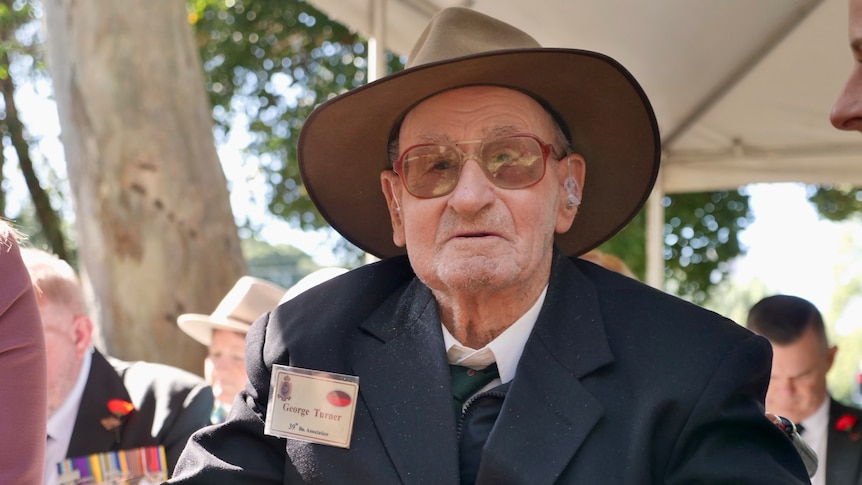
At 101, George Turner is one of the only surviving veterans of the 39th battalion so all eyes were on him at a ceremony marking 80 years since the Kokoda campaign in Papua New Guinea.

“I got to 101—lucky wasn’t I?” Mr Turner said.

“I was only about 20 when I was up there.

“I was a truck driver… one of two truck drivers… the other one was sergeant by rank. He got killed [in] the first bombing raid. He was sleeping beside me about six feet away.”

On Monday, Mr Turner attended a commemoration service at the Gold Coast, that marked the second engagement of the campaign 80 years ago.

During that battle, the 39th battalion advanced to retake Kokoda, but retreated two days later.

an elderly man in a wheelchair sits beside a smiling younger woman in a marquee.
39th battalion veteran George Turner with Moncrieff MP Angie Bell. (ABC Gold Coast: Kimberley Bernard)

Mr Turner attended the service with his sons and grandsons who have also had careers in the military.

“Many of the family have been in the military. We have five generations, four of them here,” said Ian Turner, Mr Turner’s son.

“There has always been a tradition of serving and to understand what that meant for the nation.

“It’s the whole battalion that Australia is recognizing more today than they ever did.”

Colorful wreaths lay on the green grass next to the foot of a guest at the 80th commemorations
Floral wreaths were laid during the 80th anniversary commemorations. (ABC Gold Coast: Kimberley Bernard.)

military importance

Governor-General David Hurley emphasized the importance of Kokoda to Australia’s military history.

“That battalion stood between Australia and the Japanese during the Second World War,” he said.

About 600 Australian soldiers were killed and 1600 wounded.

“It’s good to remember history … we shouldn’t forget what we’ve been through and the cost that was paid to allow us to be as we are today,” he said.

“We’re reflecting on that sacrifice, that service and what it’s allowed us to do as a nation.”

Two teenage boys sit and stare at the camera, dressed in army fatigues in front of a small wall of sandbags
Students participated in the anniversary service.(ABC Gold Coast: Kimberley Bernard)

Both flags flying

For Merv Wilkinson, the service was about remembering his father, warrant office John Dobell Wilkinson, who was a medic in the 39th battalion.

“Very brave and courageous soldier,” he said.

“He was a great man of great courage, integrity and service.”

Mr Wilkinson noted the Papua New Guinean flag flying at the ceremony.

“It’s absolutely crucial … that there’s a blend of not just the 39th but the Papua New Guinean soldiers as well,” he said.

“Being of mixed Australian-Papuan descent, I’m so pleased that both country’s flags are flying.”

a large stone sculpture with wreaths in front of it.
The commemorative service was held at the Kokoda Memorial at Cascade Gardens on the Gold Coast. (ABC Gold Coast: Heidi Sheehan)

Acting Consul-General of Papua New Guinea Jimmy Ovia said he was honored to be part of the 80th anniversary commemorations.

He spoke about the shared challenges of the Australian and Papua New Guinean soldiers.

“The carriers of Papua New Guinea played a very, very key role,” he said.

Mr Ovia said the treacherous mountain terrain was new for the Australian soldiers “so the carriers and those who knew the bush tracks helped guide the Australians” during the campaign.

.

Categories
Australia

Why this woman feels a sense of responsibility for the Saudi sisters found dead in Sydney

Saffaa is like a mother to Sydney’s small community of mostly young asylum seeker women from Saudi Arabia.
The 45-year-old activist, artist, and disability support worker says she has been an unofficial source of help for many such women who have fled their homelands, seeking protection in Australia, in recent years.
The Saudi and Australian citizen (whose artist name is Ms Saffaa) lives in Camperdown, only a 12-minute drive from the Canterbury apartment where in what local police have called “unusual” circumstances.
Asra Abdullah Alsehli, 24, and her 23-year-old sister Amaal are believed to have been dead for some time before being discovered.

That haunts Saffaa, who said she feels a sense of responsibility towards the two women.

Saffaa I am my own guardian.jpeg

Saffaa, whose artist name is Ms Saffaa, with one of her works, titled ‘I am my own guardian’. Source: Supplied / saffa

“I really wondered a few nights ago, if these women were on my radar, how maybe I could have connected them to an organization or someone who could have helped in any way, shape or form.”

The assumption “that they had no one they could trust is really distressing for me, because you don’t live in a country or in a city for five years not having one person, one person you can trust,” she said.

“Five years is a long time and enough time to have a community behind you, to have a support system, to have friends, to have people who would worry about you if you disappeared for two days. These women disappeared for a month and probably longer.”

If these women were on my radar… maybe I could have connected them to an organization or someone who could have helped.

– Saffaa, Activist and Artist

Police have previously said the sisters arrived in Australia in 2017. SBS News has confirmed the sisters were seeking asylum in Australia but the reasons for their asylum claim remain unknown. The Department of Home Affairs previously told SBS News it does not comment on individual cases.
Saffaa said she started connecting with “a few Saudi women, asylum seekers and refugees,” a few years ago.

“Most of them are in their 20s and I feel a sense of responsibility towards them. I try to reach out to as many of them as I can with my very limited resources, to connect them to organizations and individuals who can help.”

Saffaa said she had seen unsubstantiated claims on Saudi social media alleging the women were part of a network that helped women escape Saudi Arabia.
She said she had tried to contact Burwood Police Station to ask for a community briefing but police were dismissive.

“When the community reached out to the police, they didn’t give us the time of day,” she said.

“When news came out, people in the community asked me to contact the police and [police] weren’t helpful. They were dismissive. I called for days trying to offer the community’s help, but there was no call back. It wasn’t a good experience.”
A spokesperson for NSW Police told SBS News the force “always welcomes the community’s assistance as it continues to investigate the death of the two women, which is why we have appealed for information”.
“All information is thoroughly investigated no matter how small, and the NSW Police Force will provide updates as they become available.”

‘They don’t feel safe’

Saffaa, said she had spoken with a few members of Sydney’s Saudi community since the sisters’ deaths and there is a notable fear among them.
“There is a sense of fear and unsafety, they don’t feel safe.”

“The fear is based on the very mysterious and suspicious circumstances the sisters have died.

A modern apartment building

The apartment block in Canterbury, Sydney, where the sisters were found. Source: SBSNews / Essam Al-Ghalib

“It is not very clear from police and from what we have been hearing and reading in news reports, what had happened. And I understand investigations take time, but we’re all just sitting here waiting for a conclusive toxicology report, meanwhile, we are worried, feeling unsafe, trying to make sense of this whole thing. It doesn’t make sense to any of us.”

Saffaa said no one in the community she had spoken with believes the sisters died by suicide.
“I don’t think it was suicide. You don’t die of suicide in separate rooms with your sister … Wouldn’t you want to be, in your final hours and minutes, with your sister in the same room?”

“No one in my community believes it was suicide. It’s quite distressing for all of us.”

A worker at the BP petrol station across the street from the sisters’ apartment confirmed previous media reports that the sisters have previously visited and generally avoided conversation.
Saffaa said that may have been due to their Saudi upbringing. In traditional Saudi culture, women are raised to not overly interact with men who are not their father, brother, or husband.
Australian media has previously reported the sisters seemed “timid” and “scared” when police conducted a welfare check in March at the request of the building managers.

“One thing I’m surprised about is when they do these welfare checks, when you come from a refugee or asylum seeker background, especially from Saudi Arabia, you have a huge mistrust of authority,” Saffaa said.

A BP oil station

The petrol station near the sisters’ apartment. Source: SBSNews / Essam Al-Ghalib

Saffaa said cultural differences need to be recognised.

“Welfare checks should not be conducted by police or anyone in a uniform.”
“If you have a mistrust of authority, if you’re scared, if there is no one you can trust, and a policeman shows up at your door, you’re not going to open the door.

“Welfare checks should be done by mental health professionals, people who are trauma-informed, someone in the community, someone who knows them.”

Detective Inspector Claudia Allcroft, Crime Manager of Burwood Local Area Command, said last month police had only spoken with two people who knew the women and any piece of information provided by the public could hold the key to solving the investigation.
“The Burwood community is a small and close community, and we hope that someone may be able to assist our investigators,” she said.
NSW Police said in a statement last month: “Despite extensive inquiries, detectives have been unable to ascertain how the women died”.
Would you like to share your story with SBS News? Email [email protected]
Anyone who may have information that could assist detectives is urged to contact Burwood Police Station on (02) 9745 8499 or Crime Stoppers on 1800 333 000.

Readers seeking support with mental health can contact Beyond Blue on 1300 22 4636. More information is available at beyondblue.org.au. embracementalhealth.org.au supports people from culturally and linguistically diverse backgrounds.

Categories
Australia

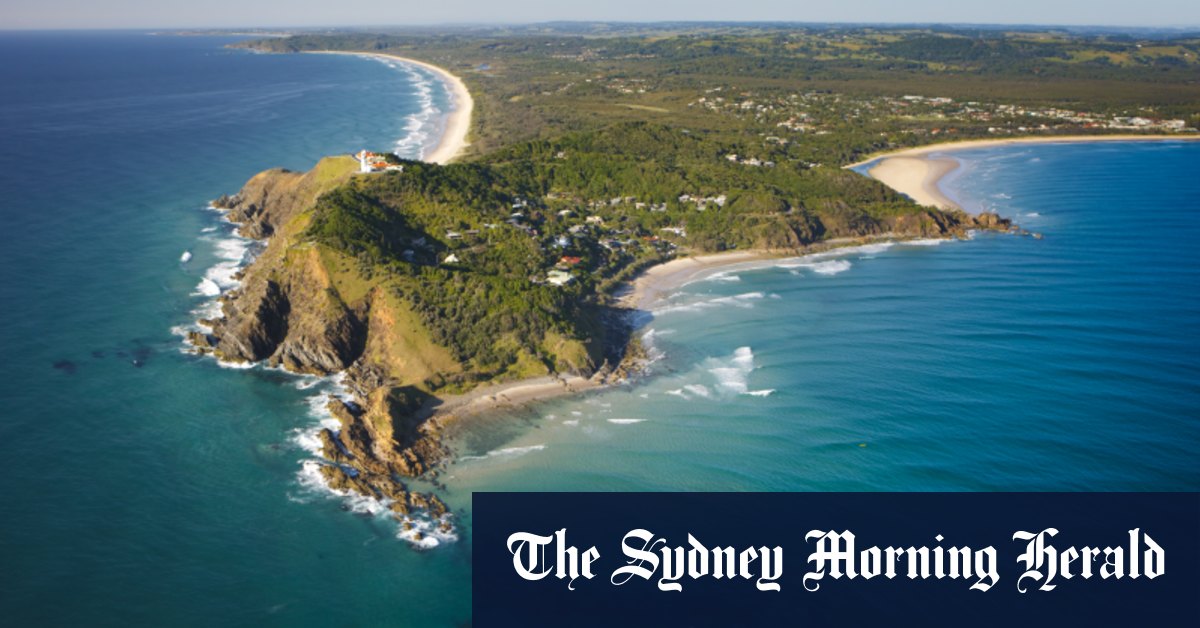
Is Byron Bay’s house price boom over?

“What it illustrates is one, that the boom has eased, that has gone and passed, and two, people who have investment properties, or locals, have decided to sell out because it has been such a lucrative time during the pandemic,” Powell said.

loading

“Byron Bay property is certainly on the slowdown. When you look at those regional markets, Byron experienced phenomenal growth. It was extreme price growth.

“We saw this boom of demand as a result of the pandemic and the outward exodus of cities.”

This unprecedented price growth also meant Byron’s housing market was more vulnerable to price declines, Powell said.

“It’s one of those that is a bit more vulnerable to a bit of a correction because we saw such a significant rate of growth,” she said.

“We could see a pullback in price as a result of not only the rapid incline in prices but also the damage to borrowing capacity due to increase in interest rates and inflation.”

This four-bedroom house at 43 Kinsley Street, Byron Bay has a price guide of $6.38 million.

This four-bedroom house at 43 Kinsley Street, Byron Bay has a price guide of $6.38 million.

Bryon Bay Real Estate Agency’s Liam Annesley said the region experienced a slowdown earlier than other areas due to the two floods at the start of the year.

“We experienced the slowdown earlier than most and that’s because of the floods that happened in the area,” Annesley said.

The March quarter peak would have captured settlements from sales in January and February, Annesley said, while the flood-induced slowdown showed up in the June quarter figure.

Annesley said buyers were also factoring the rising cost of living and mortgage repayments into their offers and expected the market to plateau for at least six months as they adjust.

“They are getting used to the words interest rate rises and are factoring it in,” he said.

“There will be a period of lull as they adjust their income and expenses. It’ll get to a point where it will plateau out for a time but beyond six months you need a crystal ball.”

Amir Mian, of Amir Mian Prestige – originally based on the Gold Coast – said the market had peaked, but it had not stopped him from opening a Byron office and fielding strong buyer demand.

“We’re newcomers to the area… I’m actually amazed by the level of inquiry. The peak for sure has happened, but the constant demand is there, but there is not much for sale,” he said.

This Byron Bay house sold for $22 million.

This Byron Bay house sold for $22 million.Credit:

loading

Mian said buyers were mainly from Sydney, Melbourne and the Gold Coast and the market was transitioning from holiday homes to more owner-occupier held housing.

“We’re selling to end users now. It was a holiday destination. The end-user market twist is a benefit to the region,” Mian said, adding that many sellers were from overseas, offloading holiday homes. “Holidaymakers have been replaced by end users.”

Categories
Australia

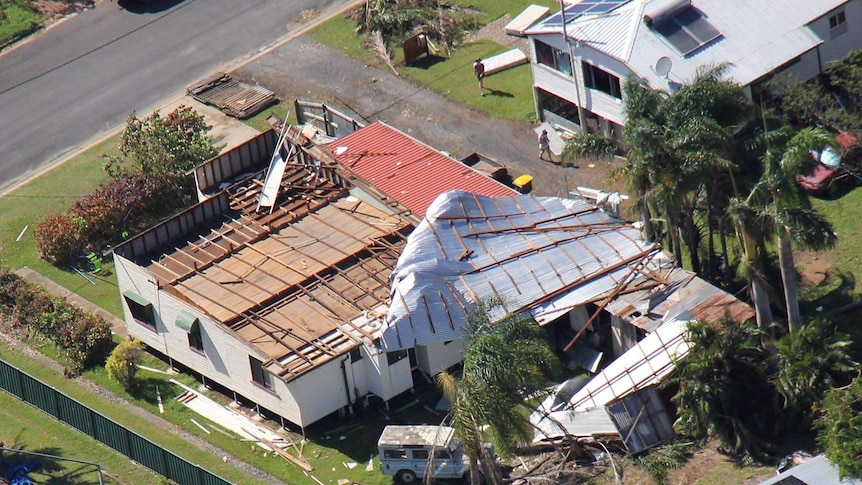
Household Resilience Program to help Queenslanders protect homes from wild weather

Could your home withstand a wild weather event? If you are feeling nervous about the next wet season, a $20 million state government scheme could help allay those fears.

Here is how you could get your hands on cash to help fund home improvements and bring down your insurance premiums.

The Household Resilience Program was first introduced in 2018 to help homes in flood and cyclone risk areas north of Bundaberg.

The initiative is targeted at low-income households to replace roofs and doors, reinforce windows and tie down external structures.

The government will provide up to $11,250, with owners required to stump up 25 per cent of the total cost.

Who is eligible?

To be eligible, your home must have been built before 1984 and located 50 kilometers off the coast in locations north of Bundaberg.

Your weekly combined household income must be less than $1,801 for a couple with a child or $1,050 for an individual.

A house, completely destroyed, with debris lying everywhere in Tully after Cyclone Yasi hit on February 3, 2011.
Roof replacement has been one of the most popular improvements made as part of the scheme.(AAP: Dave Hunt)

Will the building industry cope?

While the construction industry has been plagued by delays due to unprecedented demand in recent years, the pipeline of work is now beginning to show signs of slowing down.

Master Builders Queensland regional manager Emma Peters said the timing was right.

“Those HomeBuilder residential builds are now very much a work in progress, if not coming towards the end of having those properties finished now,” Ms Peters said.

“So this is very welcome.”

A builder repairing a roof with a drill
The program is expected to provide a significant economic injection for the building industry.(ABC Midwest and Wheatbelt: Samille Mitchell)

The last phase of the Household Resilience Program injected $8 million into the Townsville economy alone.

“Last time, north Queenslanders wholly embraced the program; about 45 per cent of the entire program was actually spent here in the Townsville region,” she said.

John Wilkinson runs a roofing company in north Queensland.

He said the program generated significant interest in his business during the last round.

“Yes, well definitely it’s been good for business,” Mr Wilkinson said.

“The nature of quoting for the job is the same as any other; it’s just that the funding comes from the government.”

With the wet season fast approaching it is hoped works can be undertaken to provide added protection to home owners, while also bringing down insurance premiums that continue to cause pain to many household budgets in the state’s north.

State government data has shown those who have participated in the past schemes have seen a drop of 8.5 per cent in their premiums.

Loading form…

.

Categories
Australia

Foot-and-mouth disease led to 6 million slaughtered animals in England 21 years ago. Could it happen in Australia?

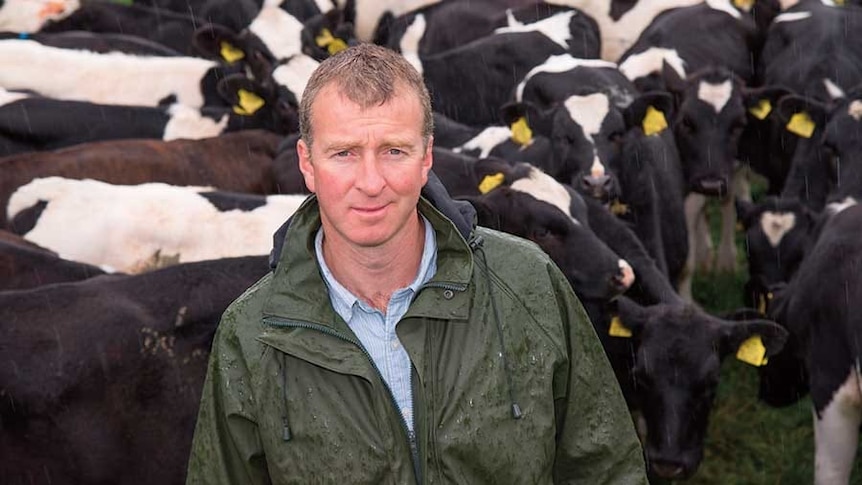
Robert Craig’s memories of foot-and-mouth disease tearing through the north of England are more than 20 years old, but they’re as painful as ever.

“It still makes my hair stand on end now,” the dairy farmer said.

“You don’t realize at the time that things do affect you longer term.”

There has not been an outbreak of the disease in Australia for over a century, but cases detected in Indonesia in May have put authorities on high alert, and farmers fear what could happen if the disease lands in Australia.

Foot-and-mouth spreads rapidly between cloven-hoofed animals including cattle, sheep, pigs and goats. It’s serious and highly contagious.

Warning: This story contains images some readers may find distressing

In February 2001, Robert Craig was raising a young family in Cumbria, which became one of the worst-affected areas during a devastating outbreak of the disease.

It led to the mass slaughter of cows, pigs and sheep.

“I remember being out in the fields, I think spreading fertilizer, and they were rounding up these sheep and lambs and there’s this truck in the gateway,” he told the ABC News Daily podcast.

“Seeing them rounding up newborn lambs and you knew where they were going, that was just hideous. Absolutely hideous.”

Men checking cow carcasses as they are lined up with excavators in the background.
Slaughtered cows in Yorkshire were lined up before they were loaded onto trucks and transported to a burial pit.(Supplied: Bill Sykes)

Mr Craig said he remembers tracking the spread of the disease on a map and watching as it got closer and closer to his own farm.

“There was a real sense of despair. It was hard for people to see at that time how anything could get back to normality because such a huge number of livestock had been taken,” he said.

Over the course of 11 months, more than 6 million cows, sheep and pigs were slaughtered in an effort to contain the spread of the disease, although only a relatively small portion of that number had the infection.

In total 2,000 cases were ultimately confirmed across the UK.

“I don’t know whether it did any good either. There was a fair bit of panic at the time,” Mr Craig said.

“It was just like, removing as much livestock as possible to try and slow [it] down, to get in front of it because it had gotten so badly out of control.

“I don’t know if they even tested these sheep that were taken away.”

Mr Craig was one of the lucky ones whose animals were spared, but his community suffered badly.

“Pretty much all of our neighbors sort of succumbed to it at some point,” he said.

“The whole of our area was pretty much just dead, like no livestock at all.”

Dead cows being sprayed with disinfectant on a farm.
In 2001, destroyed cattle with foot-and-mouth disease were sprayed with disinfectant to stop the spread.(Supplied: Bill Sykes)

Australians sent to help

Australian vet Bill Sykes has similar “life-changing” memories of the time.

The Victorian, who had a background in national disease control and animal slaughtering, was sent to Yorkshire, in northern England, as part of an Australian contingent deployed to help.

“It’s 20 years on, there’s a lot of things I don’t remember since five minutes ago, but these things come back, and they haunt,” he told the ABC News Daily podcast.

Mr Sykes recalls how the abattoir workers would try to calmly gain the trust of bobby calves, or calves less than a month old, before the slaughter.

“The strategy was to put his finger in the calf’s mouth so that it would happily suck and while it was sucking, he’d shoot the animal with a captive bolt pistol, and it would drop and then he’d go to the next one .”

But for him, the destruction of newborn lambs via lethal injection was particularly devastating.

“They went limp in your arms, you put them down and you picked up the next one,” he said.

“And I happened to love little lambs. I found that real, real tough.”

Mr Sykes said the immediate impact of the disease in the countryside was stark.

“At the bottom of the valley, everything is normal, sheep and cattle grazing in the paddocks,” he said.

“By the time we get to the top of the valley there’s nothing there, it’s just an eerie silence. It’s a sea of ​​nothing.”

Two men walk towards green hill, lined with empty paddocks.
The “sea of ​​nothing” remained after neighboring Yorkshire farms had been “slaughtered out”.(Supplied: Bill Sykes)

Australia assesses its preparedness for an outbreak

Bill Sykes, who is also a former regional vet officer in the Victorian Agriculture Department and former Nationals MP, is enraged by reports of Australia’s biosecurity laws being breached.

Foot-and-mouth disease can be carried on meat and animal goods, and in one recent case, a backpacker returned from Indonesia with prohibited meat.

The passenger was fined $2,664 after being detected with undeclared sausage meat and a ham croissant at Darwin airport.

“Just unbelievably dumb. Stupid, thoughtless, call it what you like, but that’s the sort of situation that can occur,” Mr Sykes said.

Foot-and-mouth disease can also spread in air particles between animals situated closely together, through contaminated water and on clothing and footwear.

The risk of a foot-and-mouth disease outbreak in Australia has increased to approximately 12 per cent after the recent spread in Indonesia and its popular tourist island, Bali.

Mr Sykes said vigilance is paramount.

a number of officials in white coats inspecting sick cattle.
Officials from the Indonesian Ministry of Agriculture visit a farm in East Java where cattle have foot-and-mouth disease.(Supplied: Indonesian Ministry of Agriculture)

The Australian government has introduced a range of measures to lower the risk of foot-and-mouth disease entering the country.

Biosecurity measures have been ramped up at airports, including installing acidic disinfectant foot mats and increased surveillance on meat products entering the country.

Agriculture Minister Murray Watt announced a new task force will also be established to focus on how to best prepare for a potential outbreak.

.

Categories
Australia

What Australia must do next on Taiwan

Defense Minister Richard Marles pointed to China’s violation of the UN-sanctioned law of the sea and to Australia’s long-standing commitment to upholding freedom of navigation and commerce in the region.

Neither Wong nor Marles questioned China’s claim to the territories of Taiwan – the core claim underpinning Beijing’s determination to take the island by force.

This is because Australia recognized the Beijing government as the sole legitimate government of China in 1972, and as a condition of recognition declined to recognize Taiwan as a sovereign state.

Like all serious players, we keep our word. In mounting limited objections to China’s behaviour, Wong and Marles echoed the positions of the EU, US, and all members of the G7 that there has been no change in respective One China policies or basic positions on Taiwan, despite Beijing’s claims to the contrary. We are sticking to our side of the deal.

In the 1970s, those agreements focused on territory and said little about people. What do people in Taiwan want?

Surveys show a pragmatic preference for retaining the status quo over seeking formal independence, because under the status quo people enjoy civil liberties, rule of law, political rights, economic autonomy, and a way of life won through decades of strife and struggle on Taiwan.

Seeking formal independence would place those rights and liberties at risk, in face of Beijing’s threats of violent retaliation. But so would voluntary unification with the People’s Republic.

Beijing’s treatment of Hong Kong in 2020 shattered any remaining illusions about the fate of Taiwan under Beijing’s One Country Two Systems model of inclusion. On Xi’s new model, the people of Taiwan would be “re-educated” – China’s ambassador to France revealed this week – in the style of Mao Zedong’s gulags or Xi’s mass internment camps.

In acknowledging the One China position, Australia never conceded Beijing’s right to coerce, corral and ‘re-educate’ the people of Taiwan.

Here’s the rub. The CCP says it is prepared to pay any price to fulfill its historical mission of unification with Taiwan, but the one price it won’t consider is the one it would cost to incorporate the territory peacefully: allow people in China to enjoy the same rights and liberties that people have in Taiwan.

The upshot is that in place of reforming his own country, Xi is preparing to take the island by force against the wishes of the people of Taiwan.

The message conveyed by his ballistic missiles is that Beijing could fly right over the heads of people on Taiwan and lay claim to their lands without giving them a passing thought.

In effect, China now seeks “vacant possession” of the island, in the memorable phrase of journalist Rowan Callick, and Australia never signed on to that.

Australia did not sign on to a lot of things that China does as a matter of course in the new era of Xi.

We did not promise to remain silent on Tibet, where the Communist Party is working energetically to erase the languages, cultures, religion, and identities of local communities to retain a stranglehold on their ancestral territories.

Australia never agreed to Beijing perpetrating cultural genocide against Uyghurs and other minorities to maintain its grip on their historical territories in Xinjiang.

We did not sign on to the crackdown in Hong Kong that put an end to rule of law, civil society and freedom of speech and assembly once Beijing decided to extend direct control over that territory as well.

In acknowledging Beijing’s One China position, Australia never conceded Beijing’s right to coerce, corral and “re-educate” the people of Taiwan. In Beijing’s eyes, territory comes before people, and that was never part of the deal.

There is much that can be done to help the people of Taiwan without breaking our word.

Canberra can accelerate negotiations on bilateral economic agreements with Taipei and support its inclusion in multilateral economic agreements. We can actively support its participation in international organisations, including key agencies of the World Health Organisation.

Federal and state governments should give added encouragement to cultural and educational exchanges with Taiwan.

Groups of Australians can reach out to people in Taiwan through their church groups, and by way of community and business associations, trade unions and local governments, to reassure their counterparts in Taiwan that they are not alone in confronting intimidation and interference from China’s Communist Party .

Through travel and everyday communications, we can let the people of Taiwan know we have their backs.

Australians have as much reason to be wary of China’s communist government as people in Taiwan, because China’s communists have shown they do not care about people anywhere – not in China, not in Taiwan, not in Australia.

That much we knew before Pelosi visited Taiwan.

John Fitzgerald is emeritus professor at Swinburne University of Technology.

Categories
Australia

NRL considering extending 2023 season to 27 rounds and starting a week earlier

But Origin’s return to three Wednesday night matches from next year means the representative round will be scrapped and NRL games will be played every weekend.

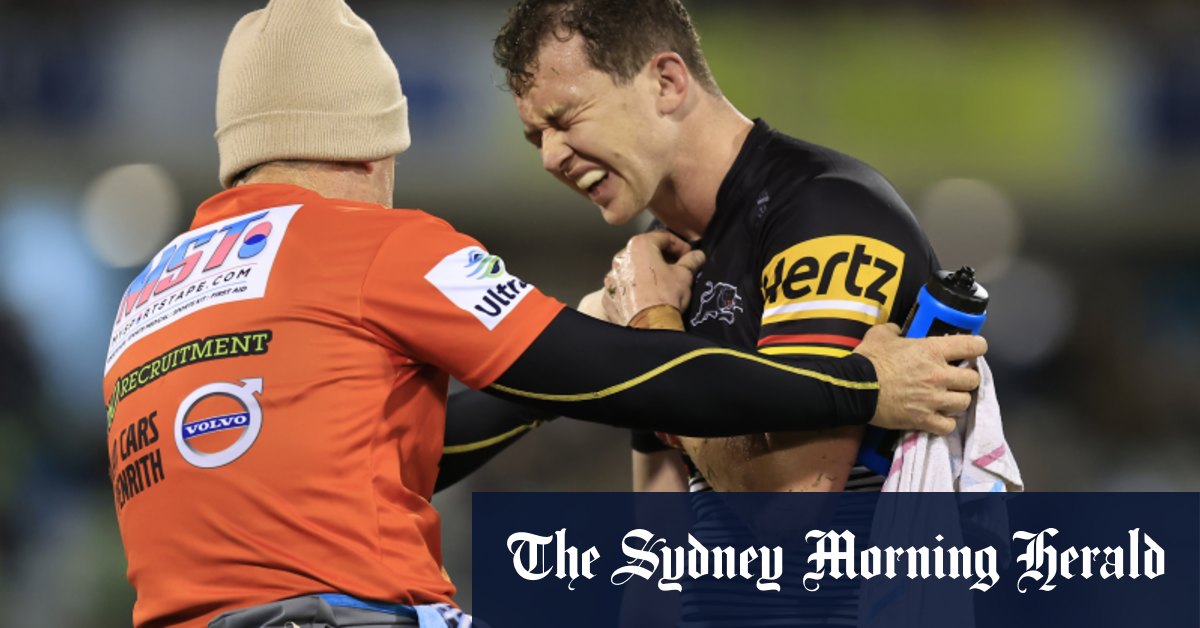
The Rugby League Players Association is already lobbying for NSW and Queensland players to be automatically stood down from club duties after Origin matches following one of the fastest – and most brutal – Origin matches ever played in the recent series decider.

The Panthers remained all seven of their Origin contingent the following weekend, but other stars such as James Tedesco and Daniel Tupou opted to back up less than 72 hours later with their team scrapping for a finals spot.

The NRL’s plan for three byes per team is designed to ease the workload on players, in particular Origin stars, but will have the regular season nudging closer to the hottest part of the year. The NRL will schedule a greater concentration of byes around the Origin period to alleviate the toll on clubs.

The proposal has been discussed about by several clubs, which are already contending with a crowded pre-season and the late return of players from the World Cup.

loading

The annual All-Stars fixture is usually played in the second week of February, and the NRL has considered shifting that a week earlier too. But the idea is expected to be met with resistance given the shortened summer training bloc for clubs to have all players available.

The World Cup final will be played in the United Kingdom on November 19 meaning players from both teams will not return to their clubs for pre-season training until mid to late January.

Stream the NRL Premiership 2022 live and free on 9Now.

Sports news, results and expert commentary. Sign up for our Sport newsletter.

Categories
Australia

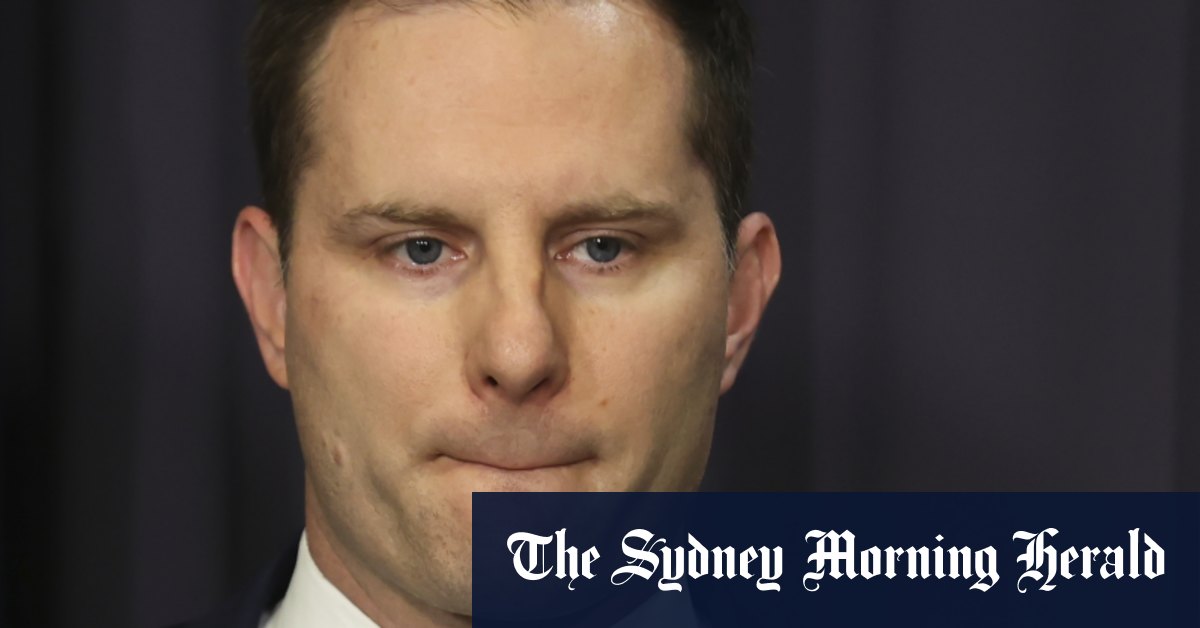
NSW Young Liberals roast former minister Alex Hawke in federal election review

SUPER EXPENSES BLITZ

The peak body for the $1.6 trillion superannuation sector launched a media blitz this week to “set the record straight”.

Stephen Jones has his eye on the super through.

Stephen Jones has his eye on the super through.Credit:shakespeare

Senior media manager for the Australian Institute of Superannuation Trustees Gary West on Monday emailed letters to the editors of the Australian Financial Review, The Australian, Herald Sun and TheAge.

It was in response to a backlash following Assistant Treasurer Stephen Jones‘draft regulations to overhaul super laws that force disclosure of payments. Under the plan, super fund expenses will no longer be itemized, but displayed in aggregate.

Predictably, the move infuriated the super warriors, with Liberal senator Andrew Bragg quick to label the policy an attempt to hide money and union payments.

Pointy penned columnists were justifiably sent into a spin, with the super sector among the most impenetrable players in big finance.

But in the letter, AIST chief executive eve scheerlinck says there has been a misunderstanding. The current regime is actually onerous and avoiding “hundreds of individual line items” is better for accountability and member engagement.

This is a little hard to swallow, following the expenses scandal at EISS Super last year, where this masthead revealed outrageous sums had been spent on lavish parties, overseas junkets, questionable charity donations, luxury cars and non-disclosure agreements.

If there truly is a misunderstanding, West and Scheerlinck are going to have to do a better job of explaining it. Because super funds moaning about admin burdens and confused members to justify less transparency doesn’t quite cut it.

BEN MIGHTIER THAN THE FORD

Sydney’s favorite shock jock 2GB’s ben fordham filled the airwaves on Monday with the downside of ditching the cashless debit card and chocolate giant Mars’ apology to China after accidentally listing Taiwan as a country.

But he certainly did not write a 15-paragraph news story for Australian detailing Foreign Minister Penny Wong‘s response to China’s aggression.

For about 20 minutes, the website editors over at Holt Street got their Bens confused, when they listed Fordham as the journalist for the news story written by defense correspondent Ben Packham.

Eagle-eyed readers began emailing the paper to inquire about the mix-up. Is Fordham two-timing News and Nine, which owns 2GB and this masthead? The radio star said he was n’t aware of the byline bungle but is happy to take credit for Packham’s work from him, which he reads regularly.

“Can I invoice the OZ?” I have texted CBD.

For the salary Fordham’s on, you’d hope the Oz editors are more careful next time. It might just be their most expensive four-letter slip up.

Grollo’s day in court

You would think a property tycoon would know a thing or two about the importance of paying your loans on time.

Alas, Grocon Chief Executive Daniel Grollo must have skipped this class at business school and is now being sued by the Bank of Queensland for defaulting on his home loan.

The property identity stopped paying debts on his $12 million mortgage in February, a few months before Grocon went under, according to court documents filed last month.

Grollo’s company Grocon was behind Melbourne’s most iconic skyscrapers – the Crown, Eureka and Rialto Towers – and now the developer is focused on build-to-rents through a new company.

But he’ll have to find time in his busy schedule, fighting creditors and launching new projects, to prepare for his court hearing scheduled for August 26.

He’s being represented by Johnson Winter and Slattery partner Joseph Scarcella, who doubled up as a strategic advisor through Grocon’s administration.

It’s not the only court Grollo is preparing to face after launching a legal stoush with Infrastructure NSW over the handling of his waterfront projects in Barangaroo.

loading

Hopefully his court diary is better managed than his mortgage repayments, if the bank’s claims are to be believed.

Cut through the noise of federal politics with news, views and expert analysis from Jacqueline Maley. Subscribers can sign up to our weekly Inside Politics newsletter here.