One of Perth‘s top doctors have lost a bid to keep his identity secret, amid shock domestic violence claims leveled by his high-profile wife.
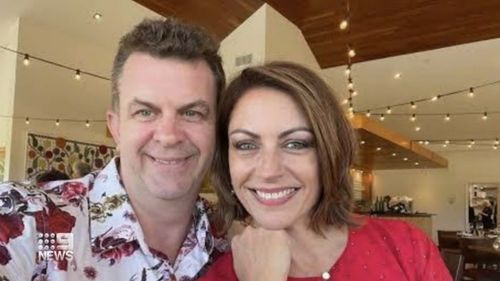
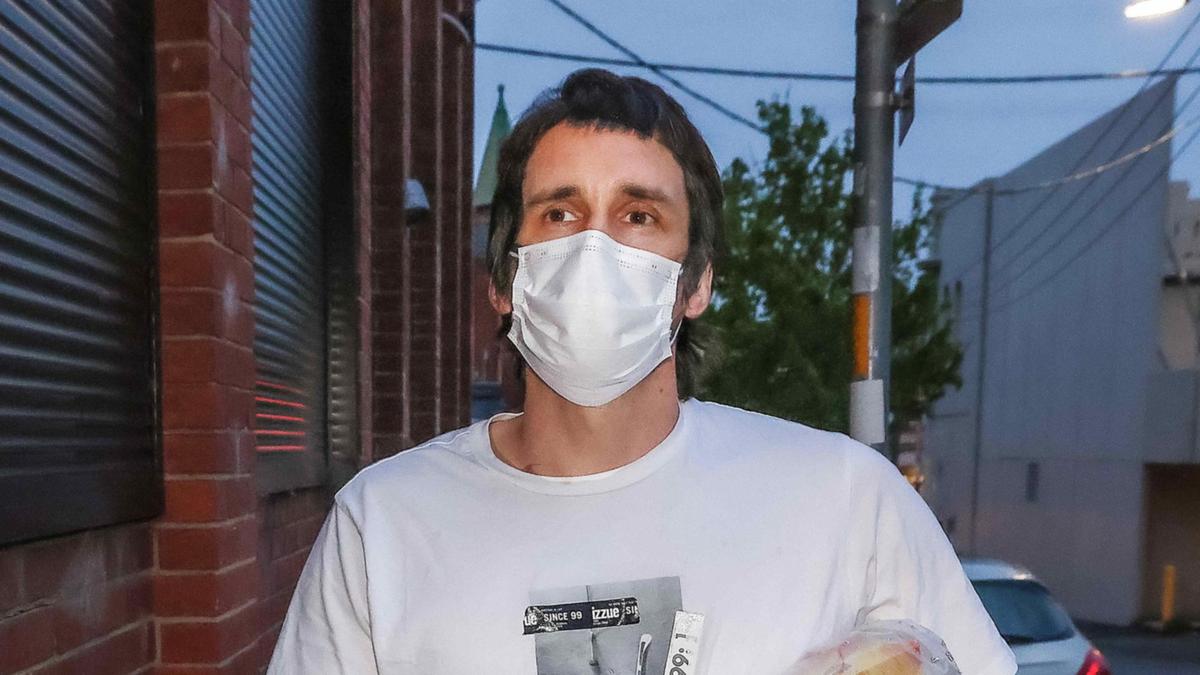
Dr Anthony Bell, the medical director of St John of God Hospital in Midland, is charged with one count of aggravated assault occasioning bodily harm over an alleged violent incident in April.
His estranged wife, human rights lawyer Rabia Siddique, was in court today as a magistrate lifted an order preventing reporting of the case.
Dr Anthony Bell, the Medical Director of St John of God Hospital in Midland, is charged with one count of aggravated assault occasioning bodily harm over an alleged violent incident in April. (9News)
Siddique rose to prominence when she successfully sued the British Army for discrimination after it failed to acknowledge her role in rescuing two SAS soldiers from war-torn Iraq.
In court documents, Bell called the assault allegations “baseless”, claiming Siddique had “shown a desire to ruin his life” since their separation.
The veteran emergency physician also claimed his employer wouldn’t allow him to keep treating patients if the case went public, putting extra strain on WA’s struggling health system.
St John of God Hospital has since confirmed Bell has taken a leave of absence until the matter is finalized.
The opposition has queried the meetings between Petinos and Coronation Property, given a stop-work order had been placed on its Merrylands projects.
Issues relating to Petinos are believed to be referred to in the letter.
On April 8, three days after receiving the draft stop-work proposal, Andy Nahas from MN Builders, the builder attached to his brother Joe’s Coronation site, was emailed the building commissioner’s finalized stop-work notice.
The notice raised problems with the proposed construction’s lack of detail regarding “structural engineering and drainage for the four basement levels” of the Merrylands site which, when completed, would have 790 residential apartments.
The stop-work notice also recorded MN Builders’ claim that it was not aware it was required to provide certain details for the fire safety systems.
On June 2, Petinos met with Coronation representatives. Barilaro was not present at that meeting.
The Merrylands development on Wednesday.Credit:Dean Sewell
On June 21, Petinos’ diary shows she met with Barilaro to celebrate his new job as a trade commissioner to the US. Until recently, Barilaro’s daughter, Domenica, was working in Petinos’ office.
Barilaro said at the time he met up with Petinos to celebrate his new job, he had resigned from his role at Coronation.
“I attended a social engagement with the former minister to celebrate my appointment to the [senior trade and investment commissioner] Americas job,” Barilaro said in a statement. “I was no longer an employee of Coronation.
loading
“I did not meet with the minister during my time with Coronation.”
The stop-work order was lifted on July 4, 2022.
The political fallout over Barilaro’s US posting led him to give up the position. But before he took up the trade role, the former leader of the NSW Nationals had been asking building industry figures about his new employers. He had been hired by Coronation in February, less than two months after he quit parliament on December 31.
In 2016, Andy Nahas was convicted of assaulting the manager of the Tilbury hotel in Woolloomooloo. A character reference for the court was written for him by prominent lawyer and property investor John Landerer.
Property developer Joe Nahas.
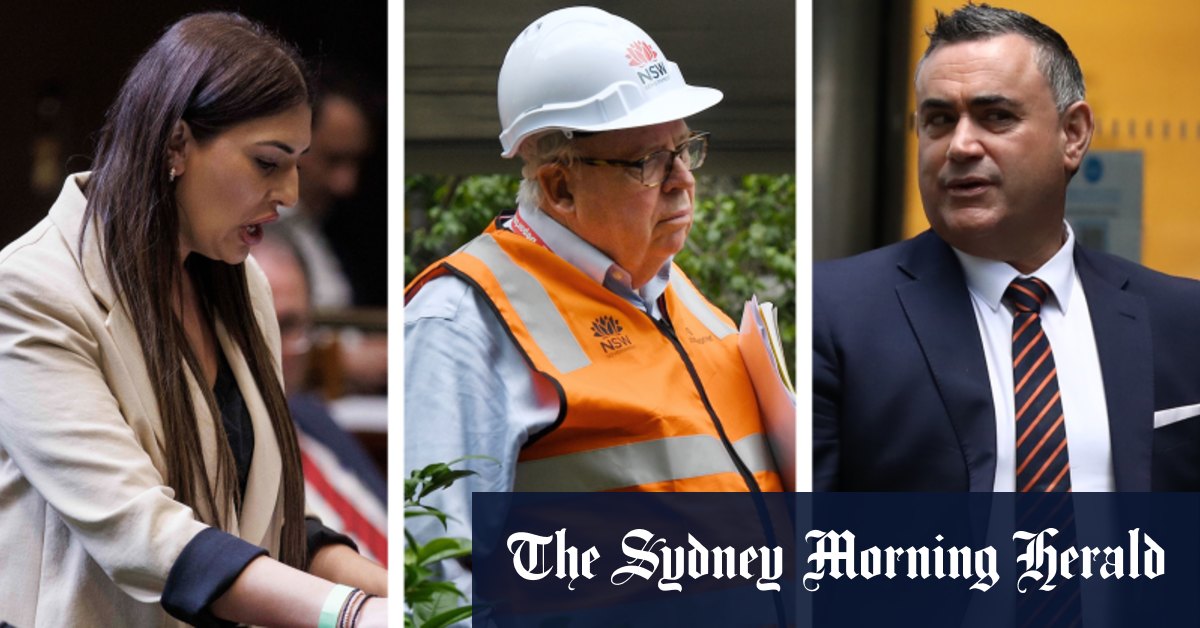
Coronation Property has two directors – Landerer, 74, who made headlines in February after selling his Vaucluse mansion for $62 million, and property developer Joe Nahas.
Landerer has previously told the herald“I have never met or spoken to Mr Barilaro in my life”.
the herald has previously revealed that in October 2012, Joe Nahas, 40, who is also known as Youssef Nahas, listed himself as “unemployed” on his personal insolvency agreement. This allows a debtor to come to an agreement with creditors to settle debts without becoming bankrupt.
In December 2012, three construction companies of which Joe Nahas had been a director went into administration, owing millions of dollars to subcontractors.
loading
In March 2014, he became a director of Coronation, and two months later, Joe Nahas finalized his obligations to creditors, according to corporate records.
Eight years later, Joe Nahas’ fortunes have changed; his company’s Coronation’s website claims it has “over $5.3 billion in mixed-use projects in the pipeline”.
In 2009, younger brother Andy Nahas, 34, was charged over a kidnapping. Police alleged that between April 15-16, 2009, Andy Nahas and his co-accused of him detained a tradesman without consent with the intention of obtaining a financial advantage.
His co-accused were major bike figures. They can’t be named because they were recently charged with an unrelated murder.
loading
Andy Nahas’ co-accused (not Nahas) are alleged to have repeatedly bashed the victim with a plank of wood, stomped on his head and told him that bolt cutters would be used “to cut your toes off and send them to your mum” . The alleged kidnap victim suffered significant injuries, including fractured eye sockets, and was hospitalized.
However, the charges were dropped when the court was told that “despite further inquiries being made by police since the last court date, [the alleged victim] has not yet been located. ”
The police were ordered to pay costs, including $33,000, that Andy Nahas had incurred in legal fees.
The Morning Edition newsletter is our guide to the day’s most important and interesting stories, analysis and insights. Sign up here.
As large parts of Europe and North America swelter and then ignite, a future of endless climate destruction seems inevitable.
In Australia, we’ve already felt the flames and know we will again.
And many other places now find themselves stuck in an ecocidal tennis match, bouncing from one extreme to another, from devastating fires to heartbreaking floods.
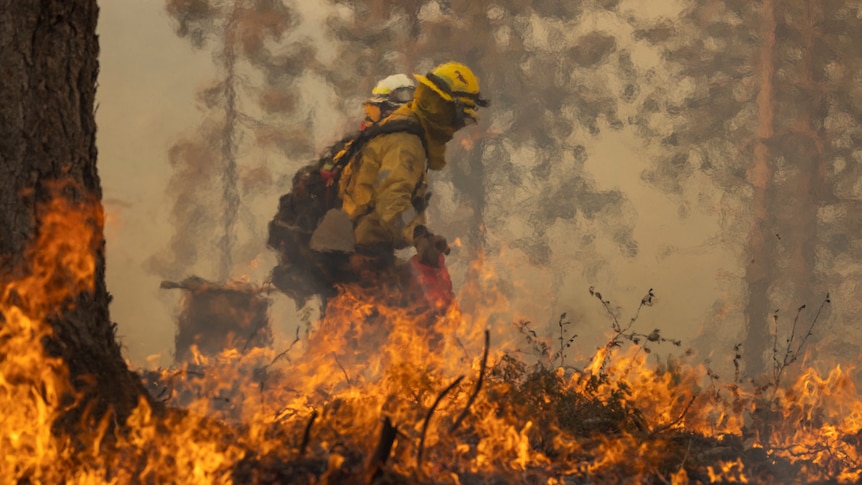
The Black Summer bushfires sent tons of ash and smoke into the atmosphere.(Supplied: CSIRO/Richard Matear)
There’s a growing consensus on the urgent need to bring down carbon emissions, and the global rallying cry is net zero. This isn’t just a climate target, it’s become a badge of commitment.
There’s also a realization that it won’t be easy.
“Transitioning to a net zero world is one of the greatest challenges humankind has faced,” the United Nations declares on its Climate Action website, urging a “complete transformation of how we produce, consume and move about.”
But a schism has emerged among the faithful, with major environmental groups and several leading climate experts now washing their hands of the net zero concept.
Their warning is blunt: the methods and technologies we’ve adopted to reverse global warming simply won’t work.
Worse still, they could do more harm than good.
hijacked for profit
One way that countries have sought to achieve their net zero ambitions is by setting up a carbon market to allow heavy-polluting industries to offset their emissions by buying carbon credits.
The money generated is then channeled into activities that help the environment, like growing more trees, for instance.
Carbon markets are still in their infancy, but the former Governor of the Bank of England, Mark Carney – who’s now a UN Climate Envoy – believes they have a significant future role to play.
He estimates they could facilitate transactions of around US $1 trillion by 2050.
But Gilles Dufrasne, a policy officer at Carbon Market Watch, warns that if carbon markets are allowed to grow unchecked, they could compromise and ultimately distort net zero goals.
“The main concern is to ensure that the money is actually flowing to climate action and not to financial players or intermediaries,” he told ABC RN’s Future Tense.
He says some carbon credits get traded up to 100 times, with no added benefit to the environment.
“It’s absurd to have so little transparency around where the money is going since it’s the actual primary objective of the entire system.”
Former chief scientist, Ian Chubb, has been tasked by the new federal government with investigating Australia’s widely criticized carbon credit scheme.
Mr Dufrasne says the integrity of other schemes is also in question, including one operated by the European Union.
“The whole concept is being exploited by companies who don’t want to take any meaningful action and who see a cheap way out of their responsibility by just purchasing these carbon credits,” he says.
‘Burn now, pay later’
Last year, a former chair of the UN’s Intergovernmental Panel on Climate Change, Robert Watson, broke ranks to denounce net zero as a fraud – a “dangerous trap”.
Experts say our goals should be zero emissions, rather than emissions balanced by carbon credits. (Getty: James Jordan Photography)
Writing in The Conversation, he and two other leading climate scientists declared they had abandoned the concept.
“Sometimes realization comes in a blinding flash,” they wrote.
“The premise of net zero is deceptively simple – and we admit that it deceived us.
“We have arrived at the painful realization that the idea of net zero has licensed a recklessly cavalier ‘burn now, pay later’ approach which has seen carbon emissions continue to soar.”
Earth Systems scientist James Dyke says that net zero was originally designed as a last-resort measure to allow a very small number of essential industries, like aviation and steelmaking, to offset their emissions and decarbonise over time.
But he says the term lost credibility when it began to be indiscriminately used as an excuse to delay taking action, pushing the problem onto future generations.
“So, when you hear ‘net zero by 2050’ what is being proposed is not that we just offset these hard-to-address sectors, but that we actually will be overshooting 1.5 degrees Celsius, maybe even 2 degrees Celsius,” says Dr Dyke.
Overshooting, that is, with the vague promise that by the middle of the century scientists will have invented effective ways to remove large quantities of carbon from the atmosphere.
But the flaw in that argument, Dr Dyke says, is that all attempts to build large-scale carbon reduction systems have so far failed – including the much-hyped carbon capture and storage (CCS).
“Many people are very surprised to learn that carbon removal technologies don’t really exist.
“I mean, there are ideas about how we might be able to remove large amounts of carbon dioxide from the Earth’s atmosphere, and when I say large, we are talking billions of tonnes. But whatever the proposed technology is, these are just placeholders, “he says.
“They are saying to future generations, by the time that we need these kinds of technologies, they will emerge.
“And as long as we can supply some kind of plausible idea for how we might be able to remove carbon dioxide, the net zero train keeps on running.”
Nature won’t do the work for us
Global warming has been linked to an increase in the calving of glaciers. (Unsplash: NOAA)
Another net zero skeptic is Jannes Stoppel, from Greenpeace Germany.
Like Dr Dyke, he’s skeptical of any technological fix. And while he supports efforts to plant more trees and strengthen forests, he cautions against overestimating nature’s capacity to solve what is a human-generated problem.
Our natural ecosystems are already stressed, he warns.
And their ability to absorb more carbon in future is far from guaranteed
While planting trees has benefits, experts say this is not enough.(Unsplash: @eyoel_kahssay_photographer)
“What we are doing by further talking about this net zero lingo, by further thinking that we can increase the ability (of forests and oceans) to draw down massive amounts of carbon in the future, it’s a very, very dangerous game we are playing. “
Net zero is a distraction, he says, our real emissions reduction goal should be zero. And getting there as quickly as possible.
That means, biting the bullet and phasing out all fossil fuel-using technologies now, rather than relying on elaborate trading systems and vague political promises of future cuts to save the day.
Claire Tyson of Climate Analytics, a non-profit institute that monitors the commitments of 40 governments to net zero, including the richest nations, admits the concept is struggling, but she still has faith it can work.
“I think we are facing a challenge because the world suddenly became very aware of this need for net zero and everyone sort of piled on to the concept. That does mean that there will be free riders in that, but that doesn’t mean we should give up.”
But Dr Dyke doubts the industrialized world is really serious about decarbonisation.
“At the moment there is this sort of phoney war on climate action where we continue to say that 1.5 [degrees Celsius] is still alive and that, with one great leap in ambition, we can still do it, whilst knowing that that’s just not going to happen.”
Humankind needs to stop gambling on the future, he argues, and start asking ourselves the difficult questions.
“I think in many instances this notion of future removals, and the framing around net zero, is being used to stop those questions,” he says.
“It’s really important for us to have these discussions now because warming is going to exceed 1.5 degrees Celsius. I don’t think there’s any doubt about that whatsoever.
“We are currently still on course for around 3 degrees Celsius by the end of this century.
“So, when that does happen, we need to have an idea of what we are going to do to respond to the increase in vulnerability, the increase in damage and destruction and death that it’s going to produce — and make sure that we don’ t respond in ways that are going to make the situation much, much worse.”
RN in your inbox
Get more stories that go beyond the news cycle with our weekly newsletter.
When Brett Clements got his first job at 15, he dreamed that, if he worked hard, he would be able to enjoy the fruits of his labor and retire at 40, but it wasn’t to be.
Key points:
The Superannuation Association of Australia estimates a single person needs $545,000 to retire comfortably
One million people who withdrew some of their super early during the pandemic have been left with less than $1,000 in their account
Share market volatility has also had an impact on super balances
A modest superannuation balance and the rising cost of living mean the 60-year-old Perth-based cleaner expects to be working for at least another 10 years.
“I have about $150,000 in superannuation, and I’ll end up with $10,000 left out of my superannuation after the house is paid for, which isn’t a lot to live on after 45 years of working,” he told ABC’s 7.30.
“[I’m] definitely behind the eight ball … because the wages aren’t good. So, therefore, your [amount] is not that great going into super.”
Another decade of labor will be painfully hard for Mr Clements, who still suffers physically and financially from breaking his back when he owned his own cleaning business 20 years ago.
“We tried to keep that business going. In the end, we just had to fold it,” he said.
“I’ve suffered with this ever since.”
Mr Clements’ 75-year-old wife works alongside him as a cleaner and can’t afford to retire either.
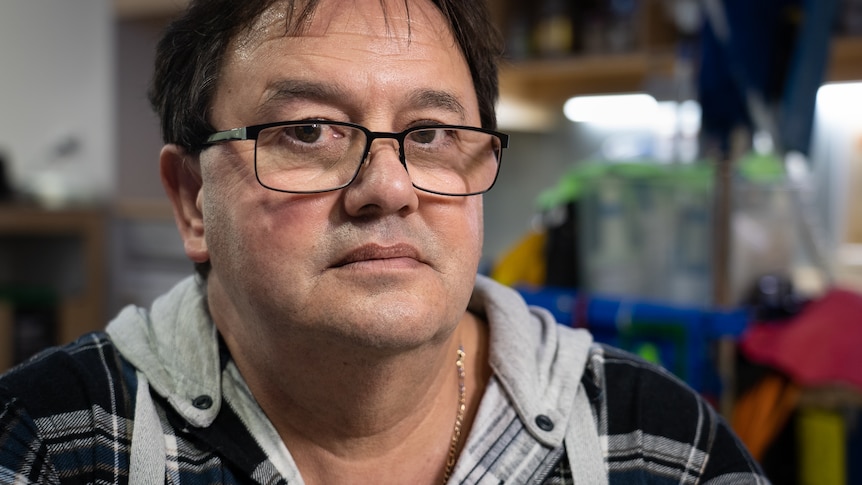
Brett Clements expects he will be working for at least another 10 years.(ABC News: Phil Hemingway)
“She’ll tell you that I’ve become more and more depressed,” he said.
“We buy mainly home-branded stuff but … an $80 shop is now $130.”
What’s making Mr Clements even more uneasy is that his superannuation balance is fluctuating daily because of the global economic uncertainty.
“I have a balanced superannuation, so I’m not a big risk-taker,” Mr Clements said.
“COVID hit, the war in Ukraine has hit. Now, suddenly, everything’s volatile.”
According to consultancy firm SuperRatings, only three superannuation funds have reported that they made money for their members with balanced investments during the past financial year.
SuperRatings’ top 10 balanced super options over 12 months:
Rank
Option name
1-year returns (%)
1
Hostplus – Balanced
1.6
two
Qantas Super Gateway—Growth
0.6
3
Christian Super — MyEthicalSuper
0.5
4
Legalsuper — MySuper Balanced
-1.0
5
Australian Retirement Trust — Super Savings – Balanced
-1.0
6
Energy Super—Balanced
-1.2
7
Aust Catholic Super and Ret—Balanced
-1.2
8
CareSuper—Balanced
-1.7
9
HESTA—Balanced Growth
-1.8
10
Telstra Super Corp Plus — Balanced
-1.9
Glenn McCrea says Australians shouldn’t be focused on short-term share market volatility when it comes to their super.(Supplied)
However, the Association of Superannuation Funds Australia’s deputy chief executive, Glenn McCrea, is urging older Australians not to panic about share market volatility.
“The reality is [the previous] financial year, we saw returns of 20 per cent. Este [past] year, it has fallen slightly, on average about 3 per cent,” he said.
“Call your fund. Understand where your fund invests. Understand your balance and how your balance has changed over time.
“I do encourage people to look at returns over 10 years, rather than follow what happens day to day.”
The downturn in superannuation amounts comes as the government and opposition clash over the level of detail that superannuation funds provide to their members about political donations, marketing and sponsorship expenses.
super balances at retirement
Estimates vary on how many Australians need to retire.
Mr McCrea said that, on the association’s calculations, a single person would need $545,000 and a couple $640,000 in retirement to live comfortably.
“[It] basically means you can afford to go to a dentist, you can catch up with friends and have that cup of coffee, you can fix the washing machine or car,” he said.
“We estimate that, by 2050, 50 per cent of Australians will get to that dignity in retirement.”
Despite wanting to be self-sufficient, Mr Clements knows his superannuation won’t be enough to sustain his retirement.
“I’ll have to go, cap in hand, to the government and try [to] draw on a pension,” he said.
“Pride gets in the way sometimes.”
Young Australians also worried
It’s not just those hoping to retire soon who are feeling nervous about their superannuation and their future.
Hairdresser Michaela Marshall-Lawrence, 27, was forced to withdraw $5,000 from her superannuation at the start of the pandemic to keep her salon afloat.
She’d just opened the business, and faced the brunt of lockdowns amid a drop in bookings.
Michaela Marshall-Lawrence had only just opened her business when COVID-19 hit.(ABC News: Edward Gill)
“I wasn’t eligible for any government support, in any way, shape or form,” she said.
“I had already exhausted 95 per cent of my savings on purchasing the salon.
“[The $5,000 super withdrawal] it was enough that it paid for another month’s worth of rent, and I could pay my staff and I could afford to live.”
Under the former Coalition government’s scheme, up to $20,000 could be withdrawn from a person’s super during the pandemic if they were experiencing hardship.
However, withdrawing the money early meant missing out on potentially tens of thousands of dollars of compound earnings across future years, something that concerns Ms Marshall-Lawrence.
Michaela Marshall-Lawrence is making extra super contributions to try to grow her balance faster.(ABC News: Edward Gill)
“I’m now paying myself 22 per cent super,” she said.
“I know so many people, they’re like, ‘Oh, it’s just super. I can’t access it for another 50-60 years anyway, so what’s the point?’
“And it’s like, ‘Well, there is a big point, you know’.”
Data exclusively provided to ABC’s 7.30 by the Association of Superannuation Funds Australia shows that, out of the 3 million people who accessed their super early, 1 million were left with less than $1,000 in their super account, while 163,000 people were left with no super at there.
Mr McCrea said those who took out money early were mostly single parents, women and those on low incomes, and 44 per cent of applicants were aged under 35.
“There’s no doubt younger people were the main people to take money out through early release,” he said.
“What we do know is a younger person who took the full $20,000 out, will be $43,000 worse off in retirement, so that’s for a 30-year-old,” he said.
Council on the Aging chief executive Ian Yates said those who had withdrawn early would find it tougher to fund their own retirement.
Council on the Aging Australia’s Ian Yates predicts early withdrawals may see higher pension costs in future.(ABC News: Marco Catalano)
“The impact of that withdrawal is that there’ll be higher pension costs into future years,” he said.
Shadow Minister for Financial Services Stuart Robert maintains the former Coalition government policy was a necessary one at a time of crisis.
“This was a one-in-100-year pandemic. This is a not normal state of affairs,” he said.
“Australians are pretty canny and Australians are able to make decisions themselves.
“The requirement, and the responsibility, was with individual Australians because, remember, it’s their money.”
Fund spending in the spotlight
How superannuation funds spend their members’ money is currently under scrutiny before Federal Parliament.
Mr Robert said the Labor Government was trying to wind back the Coalition’s policy to force funds to itemise disclosure of political donations, marketing, and sponsorship expenses.
Shadow Minister for Financial Services Stuart Robert says members should be able to see how super funds are spending their money.(ABC News: Matt Roberts)
“We believe them [super funds] should be transparent. All members should be able to see how every dollar of their money has been spent,” he said.
“The transparency and integrity of superannuation of members’ money is being watered down so the Labor government can try and hide what super funds are spending their money on when it comes to political donations, when it comes to football sponsorships.”
Mr Robert has written to crossbenchers urging them to support itemized disclosure and disallow Labor’s proposal for less detail, which has been drawn up as a draft regulation.
The government said there would still be a requirement for super funds to disclose payments to industrial bodies, including unions and employer associations, but it would be an aggregate figure and not itemised.
Watch this story on 7:30 tonight on ABC TV and ABC iview.
Months before reports of bullying and sexual harassment in Federal Parliament, South Australia’s Parliament was dealing with its own cultural crisis.
Key points:
An MP says recommendations from a report into state parliament’s workplace culture hasn’t been implemented
The Equal Opportunity Commissioner’s office found sexual harassment was prevalent in parliament
The commissioner says she isn’t convinced enough has been done
Now, 18 months after a damning report into its “toxic” workplace, the state’s Equal Opportunity Commissioner has said she is not satisfied enough has been done to protect MPs and staff from harassment.
“All of us are entitled to a workplace free of discrimination and harassment including sexual harassment,” SA’s current Equal Opportunity Commissioner Jodeen Carney said.
“There’s a big difference, isn’t there, between talk, and actually getting a job done.
“I’m not satisfied as to the latter.”
The review was ordered by both the Upper and Lower House in 2020, following allegations of inappropriate behavior by former Liberal MP Sam Duluk at a parliamentary Christmas function.
Mr Duluk was found not guilty of assaulting SA Best MLC Connie Bonaros in the Adelaide Magistrates Court last year.
The report detailed a ‘toxic’ culture. (Gary Rivett: ABC News)
Earlier, Mr Duluk had apologized for his behavior at the event, saying he was “deeply sorry for any actions that have caused offence”.
The Equal Opportunity Commissioner’s workplace review found sexual harassment was prevalent in state parliament.
Eight people reported being victims of sexual harassment by MPs or their staff in the five years prior, with the allegations including sexually suggestive comments, indecent exposure, and physical assault.
The report detailed a culture of victim-blaming, a lack of support for complainants, power imbalances, and a lack of training and accountability around workplace behaviour.
Concerns raised about response
Greens MLC Tammy Franks said she was concerned by the parliament’s “slow” response to the report’s 16 recommendations.
“That EO report revealed the toxic workplace here in South Australia,” she said.
“A year-and-a-half on, so many of those recommendations haven’t even begun, let alone be in a position where we can examine whether we’ve addressed the toxic culture.
“The old government was moving, but at a glacial pace.
“The new government needs to step this up.
“We should be seeing far more…on-the-ground evidence.”
The report recommended training for all MPs and parliamentary staff, to raise awareness of sexual and discriminatory harassment, as well as the establishment of new HR structures.
South Australia elected a new government in March, with a swag of first-term MPs sworn in soon after.
Tammy Franks says the government is moving too slow on the report’s recommendations.(ABCNews)
Ms Franks said she had received “one email” from the parliament’s recently appointed People and Culture Officer, while her staff had not received any correspondence.
“It’s concerning that the old crop of MPs didn’t get any training, it’s just as concerning that the new crop hasn’t been offered any training,” she said.
“Parliament is an old institution… [and] the culture of this institution needs concerted, dedicated, and resourced effort to get this job done.”
Liberal frontbencher Michelle Lensink said she believed all MPs wanted to see the recommendations brought in.
“We haven’t had proper HR channels in a range of things for people when they’re experiencing these difficulties,” she said.
“My understanding is there’s some progress that has been made under the Marshall Liberal Government… [but] the primary responsibility lies with the Department of Treasury and Finance.”
Code of conduct commences
Since the review, a code of conduct has been adopted by the parliament – a recommendation put forward by both the Equal Opportunity Commissioner, and by the state’s Independent Commissioner Against Corruption.
In a statement, the Clerks of the House of Assembly and the Legislative Council said work was underway to implement the recommendations.
“Importantly, a people and culture coordinator has been appointed to lead a people and culture unit within Parliament House and there has been considerable progress towards implementing the report’s other relevant recommendations,” they said.
“The Speaker and the President have made it clear how important this work is and it is being taken extremely seriously.
“Both presiding officers will update parliament after the winter recess.”
Changes have also been made to allow breast and bottle feeding in the chamber.
Government responds
Premier Peter Malinauskas said he wanted to see changes made “in a timely way.”
“The Speaker has advised us that the recruitment of a HR specialist has now taken place, which to most people in the private sector would seem like a standard operating procedure, but as it turns out in the archaic processes of parliament is something that’s rather revolutionary ,” he said.
Premier Peter Malinauskas says his government will be making changes. (ABC News: Che Chorley)
“I do hope this represents a change and that we actually do get some HR skills in the parliament, to not just train staff, but to make sure basic standards are being adhered to.
“We know that there has been progress … but naturally we want to see progress in a timely way, especially because we’re at the point where most new MPs have got their feet under the desk.
“Now is the time to make sure they’re being trained up on all those appropriate standards.”
“My government will be providing the parliament with all the resources it needs to make sure that can occur.”
After famously filming the horrific Eastern Freeway collision which killed four police officers, infamous Porsche driver Richard Pusey tried to use the photos to make an insurance claim for $2.2 million, a court has heard.
Police allege Pusey, 44, distributed graphic pictures of the April 2020 crash – some of which showed the severely injured officers – online in a Google review of a car dealership and for a complaint to the Australian Financial Complaints Authority.
The former mortgage broker, who identifies as non-binary, will be self-represented throughout the hearing to fight the charges.
Pusey faced Sunshine Magistrate’s Court in prison greens on Tuesday after pleading not guilty to two charges of using a carriage service in an offensive manner and two charges of breaching their bail by allegedly reoffending.
Pusey was sentenced to 10 months’ imprisonment on April 28, 2021 after they were found guilty of outraging public decency by filming the deaths of four police officers. Pusey had been pulled over by police for speeding when a truck veered into the emergency lane and fatally hit the four officers.
The court heard Pusey allegedly published graphic images of the officers online during two separate complaints in relation to the damage to their Porsche sustained during the tragic Eastern Freeway collision.
In the submission to the AFCA, Pusey said they have been unable to secure an insurance payout for the damage done to their car because “no one wants to own the claim”.
“A truck mowed down four hero road safety officers … It broke a black Porsche and now these c***s won’t pay up,” they complained to the authority.
The court heard they asked for $2.2 million in damages for the trauma of seeing the police officers violently killed in the crash.
However, the senior AFCA manager in charge of the claim, Harry Ganavas, told the court the images attached to the claim were irrelevant and Pusey’s description of events left him “full of revulsion”.
“I felt repulsed and physically ill, actually, when I viewed the photographs,” he said.
Police prosecutor Anthony Albore told the court one of the images submitted didn’t even show the damage done to the Porsche.
The “inappropriate and disrespectful” claim was denied.
The court heard Pusey also uploaded a one-star Google review about Porsche Center Melbourne, in which they criticized the company’s insurance policy and level of customer service.
An investigating police officer told the court the 44-year-old used a graphic photo of one of the bleeding police officers on the roof of the Porsche for their Google profile picture.
The officer said she felt “angry and outraged” when she saw the horrific image from the fatal tragedy.
A member of the public police alerted to the Google review, in which they allegedly used a horrific profile picture. Credit: Supplied
Mr Albore claimed an Instagram account called “The Richard Pusey Show” contained a non-confronting photo showing the damage to the Porsche, which they could have used for their complaints.
The prosecutor alleged there were a number of personal details on the Instagram account which proved it was run by Pusey.
The Porsche driver told the court the prosecution were “telling a story.”
The hearing continues before Magistrate Michelle Mykytowycz on Wednesday.
Staying with the Chinese ambassador’s first-ever address to the National Press Club, and Xiao Qian says US House Speaker Nancy Pelosi’s recent visit to Taiwan represents a “serious violation” of his country’s One China principle.
As many of you will know, Beijing has fired 11 ballistic missiles towards Taiwan and has carried out simulated attacks following the American’s visit to the self-governed island last week.
Xiao Qian speaking at Canberra’s National Press Club. Credit:alex ellinghausen
Taiwan broke away from China in 1949 – at the end of China’s civil war when the communists consolidated power – and is now a democracy.
loading
China insists that Taiwan is a breakaway state and not its own country. Chinese President Xi Jinping has said that Taiwan’s “reunification” with China is inevitable.
Australia does not recognize Taiwan as a country. However, the federal government maintains unofficial contacts with Taiwan to promote economic, trade and cultural interests.
“[Pelosi’s visit] seriously undermines peace and stability across the Taiwan Strait and sends seriously a wrong signal to the separatist forces for the so-called Taiwan independence,” the ambassador said.
David Crowe then asked whether firing missiles into the Taiwan Strait was the action of a “stabilizing nation”.
Here’s Xiao Qian’s response:
The Chinese side is taking action in reaction to what has been done by the US side. And our purpose is to send a message.
The reaction is legitimate, it’s justified and there’s no reason for a reproach. As for how long the military exercise and drills are going to last… I think, in proper time, there’s going to be an announcement.
There’s no room for compromise.
As for the Solomon Islands security deal, the Chinese ambassador says his country respects Australia’s cooperation with other countries and the Albanese government should do the same.
“China respects Australia’s normal exchanges and cooperation with other countries,” he said.
“China has no intention to interfere in or undermine Australia’s relations with a third party. At the same time, it is our belief that China and Australia should make independent judgments and decisions to develop our own bilateral relations based on interests of the people of China.”
Animal rights activists have lost a landmark high court case against New South Wales laws criminalizing the use of secretly recorded vision from farms and abattoirs, which they said prevented their attempts to blow the whistle on animal cruelty and abuse.
The state, through its Surveillance Devices Act, makes it a criminal offense to use or possess footage or audio that was obtained using a listening device or hidden camera, and gives no public interest exemptions for doing so.
The Farm Transparency Project, an Australian animal advocacy group, launched a case last year arguing the laws were an unfair burden on freedom of political communication. The laws have previously been used to pursue activists on criminal charges and have prevented media outlets From using footage depicting alleged cruelty or abuse in abattoirs and knackeries across the state.
In the months leading up to filing of the high court case, the laws stymied attempts by the Guardian to show secretly recorded footage of ex-racehorses being sent for slaughter at NSW pet food factories, a clear breach of industry rules.
The laws, through sections 11 and 12 of the act, prohibit the communication or publication of a “record or report” of activities that were obtained as a “direct or indirect result” of the use of an unlawful optical surveillance device. They also prohibit the possession of records obtained using such devices.
The high court on Wednesday morning ruled that the laws do not pose too great a burden on speech. The laws were upheld and the Farm Transparency Project ordered to pay costs.
“The high court, by majority, held that [sections 11 and 12 of the Surveillance Devices] Act did not impermissibly burden the implied freedom in their application to, respectively, the communication or publication by a person of a record or report, or the possession by a person of a record, of the carrying on of a lawful activity, at least where the person was complicit in the record or report being obtained exclusively by breach of [section eight of the surveillance devices act],” the court said in a summary of its judgment.
It ruled the laws had a legitimate purpose to protect privacy.
The court also said the schemes of other states and territories were “not obvious and compelling alternatives”, because they did not “pursue the same purpose and were broader in application”.
“Sections 11 and 12 achieved an adequate balance between the benefit they sought to achieve and the adverse effect on the implied freedom,” the court’s summary said.
The case split the court. Three high court justices dissented from the ruling majority.
Justice James Edelman, one four judges who found against Farm Transparency Australia, noted that still images from some recordings presented to the court as examples involved the “considerable suffering of non-human animals”.
“They reveal shocking cruelty to non-human animals,” he wrote.
“They may very well have been unlawful as well as immoral. But even apart from the lack of submissions about the basis for any illegality, the special case does not assert that any of the recorded activities had been found to be unlawful.”
He said that the “special case was presented on the basis that the activities, albeit undeniably cruel, were not established to be unlawful”. That meant the court was left to consider whether freedom of political communication could be contravened where someone was committing trespass in order to record and publish something that was not illegal.
During the hearing of the case in February, the activists also pointed to the greyhound live baiting scandal as an example of a public interest served by the publication of such footage. The vision of that practice, published by ABC’s Four Corners, helped to spark a huge backlash and reforms to the sector after a public inquiry.
Sign up to receive the top stories from Guardian Australia every morning
Chris Delforce, a Farm Transparency Project activist, said the ruling would not stop his organization from conducting its important work.
“Regrettably, the case avoids deciding whether the [secret recording] law itself is invalid, and decides only that a person who has unlawfully trespassed to obtain footage of animal cruelty can be forbidden from publishing that footage,” he said in a statement after the decision. “We were found to have been such persons.
He said the strong implication from the ruling was that a media outlet would have won if it had challenged the case.
“We call on a media outlet to challenge this [secret recording] law in the high court.”
In its written submissions to the high court, the Farm Transparency Project urged the court to consider the consequences of the law for publishers, and not the way that activists were perceived publicly.
“It is about the law that is challenged,” it said.
“Whether the plaintiffs are viewed as admirable activists, or vulgar vigilantes, or something in between, is irrelevant. If anything, the case is about the publishers whose freedom to publish is curtailed.”
The court was told that other states had similar laws, including Victoria, South Australia, Western Australia, and the Northern Territory. Those laws, however, used carve-outs to allow the use of such footage in a way accommodates the implied right to freedom of political communication.
Rail commuters from the Illawarra are urging the government and unions to reach a final agreement so trains can return to normal after weeks of disruption.
Key points:
Unions will down tools from 10am till 4pm today, but Transport for NSW says the impact on services will last until 8pm
Unions want a commitment in writing on agreed changes to train safety, but NSW TrainLink says written guarantees from two ministers have been provided
Wollongong MP Paul Scully says Transport for NSW is to blame for escalating the conflict
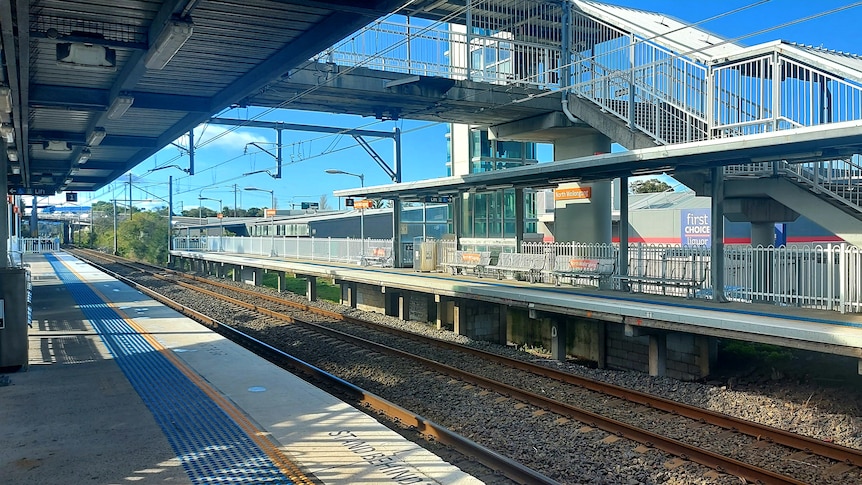
Extensive delays will occur throughout today, with no trains running at all between 10am and 4pm on the Illawarra, South Coast and Eastern Suburbs lines due to industrial action over train safety.
Buses will replace some but not all trains and customers are being encouraged to use other forms of transport if possible.
Tony Horneman of the Illawarra Rail Fail says the unions and the government have let the dispute drag on for far too long.
“Because of this ongoing industrial action, the consequences of it is people like me who just want to get to work and earn a buck are inconvenienced,” he said.
“That’s the consequence and it’s adding more stress.”
Paul Scully (left), pictured here with Ryan Park, blames Transport for NSW for escalating the conflict.(ABCNews)
Wollongong MP Paul Scully says the union bargained with the government in good faith for the inner-city fleet improvements.
He said promises were made and that the unions wanted those promises in writing.
Mr Scully said the decision by Transport for NSW to escalate the dispute from limited action to shutting down the line was an extreme response.
“The union has been asking for some pretty simple responses, which includes signing the deed of agreement to fix the new inner-city fleet,” he said.
“If the government can’t do that then the union has every right to be cynical about whether the government is actually committed to doing it.”
Promises delivered: TrainLink
NSW TrainLink chief operating officer Dale Merrick said he had been directly involved in the negotiations and that written guarantees had now been provided.
“The government has absolutely committed – and committed in writing – to making the changes to the trains to address the concerns that the unions have,” he said.
“There is a signed document that gives that commitment from two ministers and the unions have that document.”
“That is a written commitment to make the changes that they have sought for them to feel comfortable about the trains.”
Wollongong rail commuters asked about the industrial action have provided mixed responses.
“We definitely need the strikes, and we need the strikes to win,” said one commuter.
“It’s how I get back to Kiama from school so it will probably just increase the length of the trip by probably having to catch a bus,” a local school student at Wollongong station said.
Warning: This post contains graphic details which may be distressing for some readers.
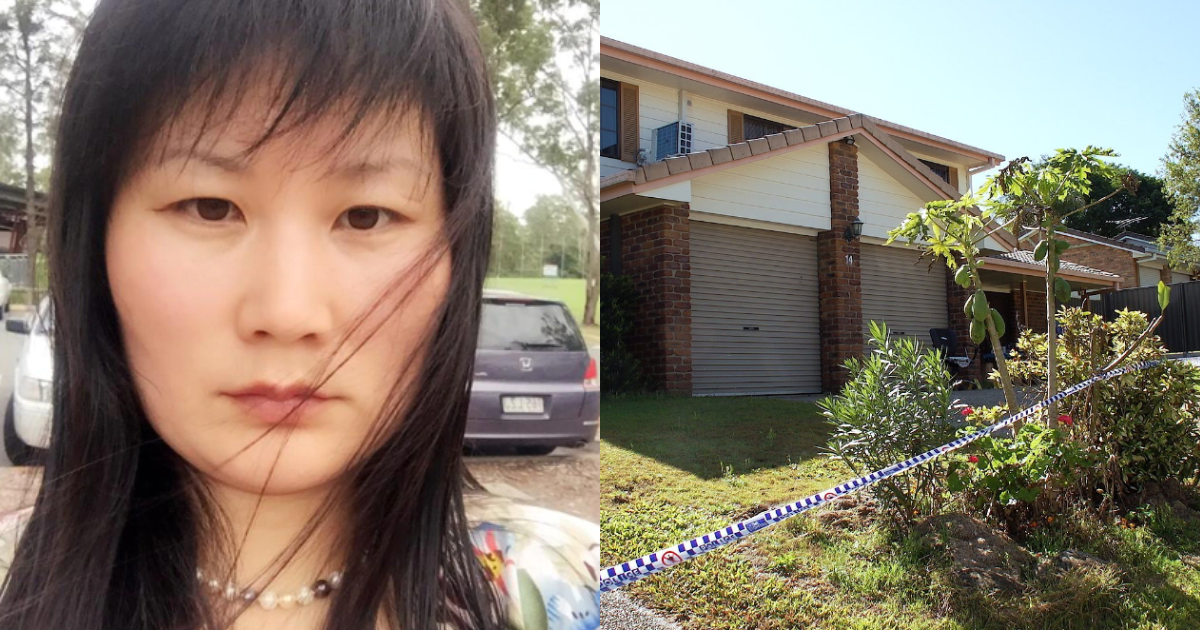
Jifeng ‘Eileen’ Liu was believed to be in a relationship with her partner “for some months” before police were called to her Brisbane home this week.
The 47-year-old and her 20-year-old son Wenhao Du were found dead on the second floor of their Stretton home, after police were called to the property around 9:40am on Monday.
Eileen’s 49-year-old partner, Weifeng Huang, is also believed to live at the property. I have raised the alarm by calling triple zero.
After arriving at the home, Huang unlocked the front door for police officers who were confronted by “large amounts of blood” on the staircase of the property.
“The scene was confronting, it has been described as a frenzied attack on the two deceased persons,” said Brisbane Region Detective Superintendent Andrew Massingham.
He confirmed the mother and son were found at the top of the stairs “in a bedroom on the right-hand side” and were dressed in “night attire”.
Watch: Brisbane Region Detective Superintendent Andrew Massingham addresses media. Post continues below.
Police also located two “bladed” weapons at the scene.
“I can also confirm that the [alleged] weapons that were located yesterday that were described as two bladed weapons are in fact a long-handled kitchen knife and a meat cleaver,” Massingham told reporters.
Huang was treated for injuries and taken to a hospital in Brisbane where he underwent surgery.
He has since been charged with two counts of murder and remains under police guard.
On Tuesday, he attended a court hearing from his hospital bed via telephone, where he was unable to apply for bail and his matter was adjourned until September.