Categories
Australia

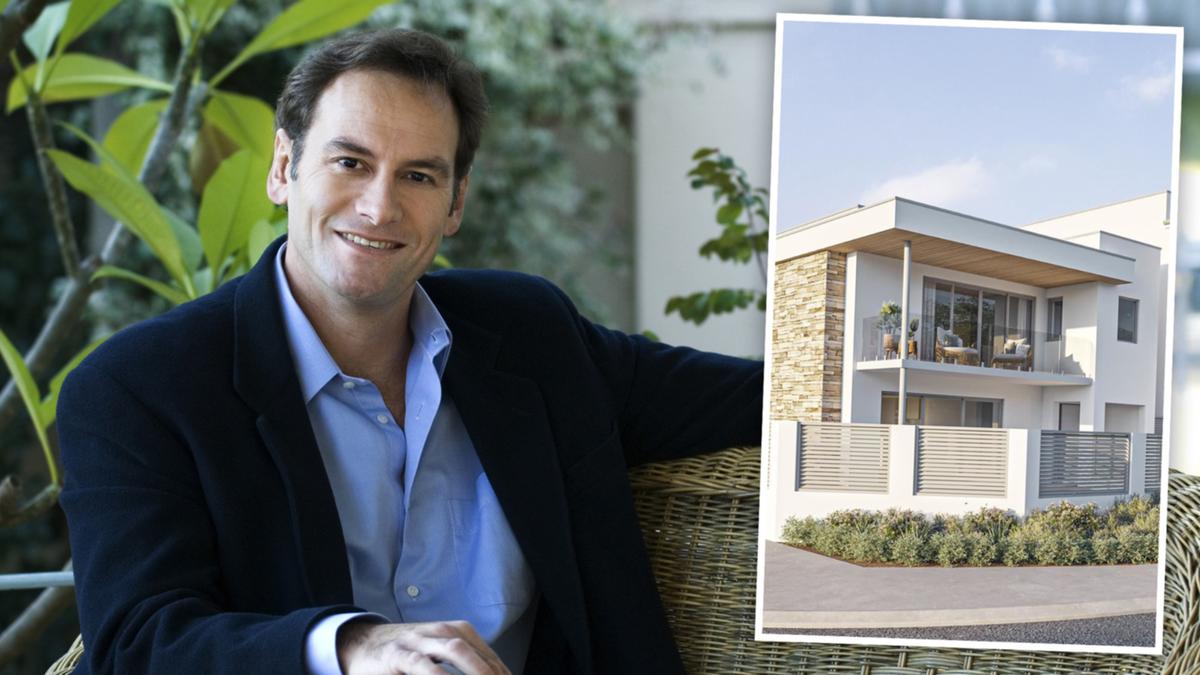
Medi-hotels were sold by Labor as a way to fix WA’s health system, but only one has been built

So-called medi-hotels formed a key part of Mark McGowan’s pitch to voters at the 2017 election, but five years on there is little sign of them.

Sold as a way to solve what was then labeled a “crisis” in the health system, three facilities were promised to free up hospital beds and ease strain on the system.

It was imagined they would mostly be used by regional patients who no longer needed the care of a full hospital bed but were not yet ready to go home.

Three were promised, but so far, the only one to open is a four-bed facility at Royal Perth Hospital.

Work on another, being built by a private provider in Murdoch, is under way with hopes it will be open in the next year.

Medi hotel plan
The site of the planned Murdoch medi-hotel near Fiona Stanley Hospital in 2017.(ABC News: Jacob Kagi)

But the third, promised by Joondalup, appears to be no more, with the Health Minister yesterday telling parliament for the second time that plans had changed.

“We’ve actually made a bigger investment in Joondalup Health Campus, an even bigger investment than a medi-hotel, by expanding the bed base and [adding] 102 mental health beds,” Amber-Jade Sanderson said.

“In discussion with the local community, and with the local provider, that’s what they wanted.”

Joondalup plan disintegrates

Cracks started to show when what was planned to be the first facility, near Fiona Stanley Hospital, was already a year behind schedule before the pandemic.

But plans for others remained alive, including when then-health minister Roger Cook told parliament in September 2021 that development approval had been received for a 110-bed mental health unit at Joondalup, with 90 inpatient beds also on the agenda.

Joondalup Health Campus emergency entrance with red and yellow signage.
The government says it has come up with bigger and better plans for Joondalup Health Campus.(Supplied: John Holland)

Mr Cook said while the focus was on completing the first phase of the expansion, “ambitions” remained for a medi-hotel in the future.

But just eight months later his replacement, Ms Sanderson, told budget estimates the now 102-bed mental health facility would be a “far greater contribution” than a medi-hotel – a sentiment she echoed yesterday.

.

Categories
Australia

Former defense chief warns of continued ‘complacency’ in disaster recovery after Labor speech | Natural disasters

A former defense chief has warned the new government against complacency in natural disaster recovery planning, saying army troops cannot keep being deployed to fire or flood zones and raising concerns about a “huge gap” in the resources needed to combat increasingly extreme weather events.

Admiral Chris Barrie made the comments after the federal emergency management minister, Murray Watt, acknowledged in a National Press Club address that ADF troops were being stretched by constant domestic deployments, but downplayed previous suggestions about setting up a civilian disaster response agency.

“The time for action is now,” Barrie said. “There is a huge gap between what we have and what we need to do.”

In March, Labor’s then defense spokesperson, Brendan O’Connor, said in government Labor “would consider as a matter of urgency” proposals to set up a civilian disaster response agency, citing increased incidence of natural disasters that required ADF assistance.

The proposal had previously been floated by Barrie, who was chief of the Australian Defense Force from 1998 to 2002; his successor, Sir Peter Cosgrove, who held the position from 2002 to 2005; and other defense analysts.

On Tuesday, Watt praised the work of the ADFin disaster recovery, but said Labor was considering alternative disaster response arrangements.

“We think that there will always be a role for the Defense Force, but we do have concerns about how far they are being stretched… their core job is the defense of the nation,” he said.

Watt added that he “[doesn’t] really envisage us setting up” a separate federal agency akin to the State Emergency Service.

Barrie, an executive on the Australian Security Leaders Climate Group, has long-suggested a volunteer scheme for young Australians, where people who filled areas of national need could get tax breaks or have their university fees refunded. He said this could fill the non-military gaps the ADF is currently used to plug.

“We need to put our thinking caps on to make it attractive and prepare ourselves for a future that’s different from the one we’ve left,” Barrie said.

“We don’t have the workers to resource the lifestyles we have. We must find a better way to use the people we have.”

Sign up to receive the top stories from Guardian Australia every morning.

He said deploying military was “the most expensive way to put people on the ground” in situations like disaster recovery or aged care, and called on the government to better engage local communities in disaster planning.

“Defence should focus on what defense is there for, defending the nation… they’re not the right people for this kind of work,” he said.

Watt’s comments, Barrie said, “appear to reflect that same kind of complacency we saw in the previous government”.

“I hope I am wrong and that the present government does not shy away from the demands of leadership to get our community involved in participation in the urgent climate-security risk assessment,” he said.

Cosgrove, who is also a former governor general, has suggested a national disaster force that would work with state agencies.

“While it is not one of the primarily role of any element of the defense force to participate in disaster relief, it will of course always remain available in an emergency if not deployed on important defense tasks at that time,” he said.

Greg Mullins, a former Fire & Rescue NSW commissioner and chair of Emergency Leaders for Climate Action, said setting up a separate national disaster agency would result in duplication and waste. Instead, he called on the federal government to fund existing agencies to meet the current need, and intraining up local volunteers like the “tinnie army” in the Lismore floods.

“Those structures are funded for the threat environment of the 1990s, not the 2020s,” he said. “If you’re going to invest money, build up the SES so it has enough flood boats in Lismore, enough people trained up to use them.”

Categories
Australia

6PR host Liam Bartlett opposes change to frosted glass on balconies of Nedlands homes across from his property

Radio 6PR host Liam Bartlett is opposed to group homes opposite his house having clear glass on their balconies because he doesn’t want to look at their washing.

Owners of five terrace homes being built in Nedlands want a condition to have frosted glass on their balcony balustrades — to stop people looking into their houses — removed. The side of Bartlett’s house is opposite the houses, which are being built.

Mr Bartlett — who lives opposite the homes — has objected to the move saying he didn’t want to see the residents’ “bikes” or “washing” on the balconies.

Your local paper, whenever you want it.

Mr Bartlett told the council when the development was approved last year, they had negotiated the preservation of an “important tree” and the frosted glass.

6pr presenter Liam Bartlett has objected to removing a condition for frosted glass.
Camera Icon6pr presenter Liam Bartlett has objected to removing a condition for frosted glass. Credit: 6pr.com.au/6pr.com.au

“We were more than happy to see height to see density. To have four separate apartments opposite our house. To lose parking. To see more bins and less amenities,” he said.

Mr Bartlett said his house was elevated behind his wall and had four windows that looked out onto the property.

“I don’t know about you, but I’m not fond of looking out onto people’s balconies and their bikes and their washing or whatever else they want to stick up on their balcony or what they’re doing behind their balconies,” he said.

“That’s the reason we had this compromised position.”

Bartlett said the staff recommendation to allow clear glass was “beyond the pale”.

“I can’t understand why we paid rates for 29 years at that property. The first I hear about this is an email saying administration has recommended it,” he said.

Grouped homes under construction in Nedlands
Camera IconGrouped homes under construction in Nedlands Credit: Jake Dietsch/Perth Now

The City of Nedlands approved the construction of five grouped homes, with one on the corner of a Nedlands street and the other four on the adjoining avenue, in May 2021.

Each was sold for $690,000 last year and are all currently under construction.

City staff have recommended the condition to use “either opaque material or frosted glass” be removed.

They said the “cone of vision” for the home on the corner block was confined to the street and it did not overlook any other residential property behind the street setback area.

“Passive surveillance from the balcony on to (the streetscape) is a positive outcome, as it is generally a good planning principle to promote safety through providing opportunities for ‘eyes on the street’,” staff said.

Grouped homes under construction in Nedlands
Camera IconGrouped homes under construction in Nedlands Credit: Jake Dietsch/Perth Now

Staff said the application for the other four homes “satisfies all the relevant deemed-to-comply provisions” for visual privacy and reiterated “street surveillance is seen as a positive outcome.”

One of the homeowners, Geoffrey Nathan, spoke on behalf of himself and the owners of three other homes being built.

Mr Nathan said the condition for frosted glass was placed after they had bought their homes individually and all the sales material showed clear glass.

“The builders weren’t aware that this motion (to impose frosted glass) was coming through,” he said.

Mr Nathan said it was a “matter of aesthetics” but frosted glass would cut off their natural light and view of the street.

Staff estimated it would cost the city between $30,000 to $50,000 if the council refused to remove the condition and an owner took the matter to the State Administrative Tribunal.

The council is scheduled to vote on whether or not to remove the condition at its August 23 meeting.

.

Categories
Australia

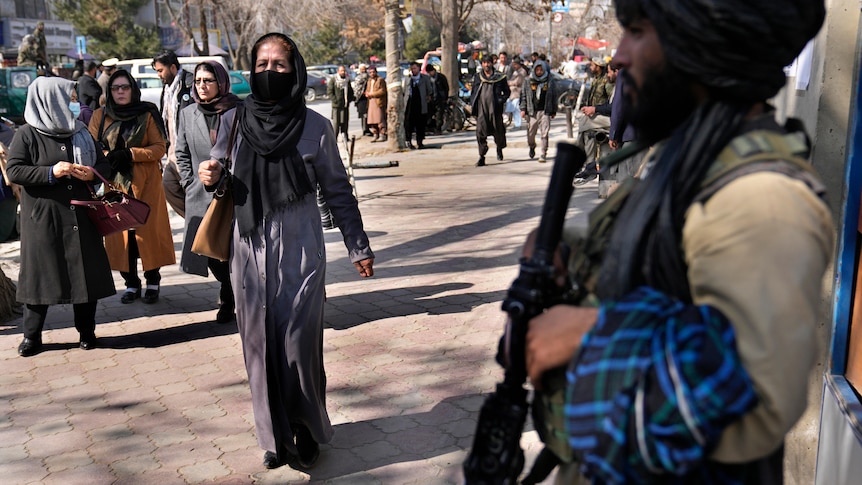
Afghan interpreters, who worked with the Australian Defense Force, waiting on protection visas one year after Taliban seized control

Former Afghan interpreters who worked with the Australian military say their family members are still stuck in the region and at risk, almost one year after the Taliban seized control of the country.

More than 200,000 Afghans have sought humanitarian protection in Australia since August last year, with almost half of those still waiting for their applications to be considered.

The lengthy delay has led one Afghan interpreter, who spent two years working alongside Australian Defense Force (ADF) troops based at Tarin Kot, to express regret at working with the ADF.

“We now regret why we have even worked for the Australian government because the impact of that is [inflicted] on our family members,” said the former interpreter, who the ABC has not named to protect his family.

“They have been asked ‘why have your family members worked with the Australian Army and the previous government’ and they’ve been questioned about where we are – they are looking for us.

“I feel hopeless as no help has been given to my extended family and they have not been evacuated to get to a safer place like Australia.”

More than 6,000 Afghans have been granted humanitarian visas since the Taliban retouched control, with priority given to locally engaged staff, women and ethnic minorities.

But many of this group are still in Afghanistan or neighboring countries on temporary visas.

Fears for life of former embassy guard

Glenn Kolomeitz, a former Australian Army officer and lawyer helping Afghans with visa applications, says some have already been harmed.

“In the last 48 hours, we had one of our former embassy guards abducted and we expect that he will be killed,” Mr Kolomeitz told the ABC.

“We expect to find his remains dumped outside his house in coming days. That’s the cold hard facts.”

A portrait of a middle-aged man wearing a suit.
Former Australian Army officer and lawyer Glenn Kolomeitz says some family members of interpreters are at high risk from the Taliban.(Four Corners)

Mr Kolomeitz said the Taliban is still targeting people who assisted foreign forces in Afghanistan.

“The wife of one of our people died recently after moving from safe house to safe house and being hunted,” Mr Kolomeitz said

Mr Kolomeitz said the family of one interpreter who died while serving with Australian troops are still languishing in a Texas refugee camp, 12 months after being evacuated.

“One of their brothers was an interpreter for the Australian Army who was killed by a rogue Afghan Army soldier, alongside three Australian soldiers,” Mr Kolomeitz said.

“If anyone is owed protection by Australia, it is this interpreter’s family.

Enormous backlog of applications causing delay

The ABC contacted Immigration Minister Andrew Giles to discuss these reports, but did not receive a response.

Earlier this week, Mr Giles told SBS News that a taskforce has been established to focus on the resettlement of Afghan nationals.

“We are applying an enormous number of resources to this problem because it is an enormous priority for the government,” he said.

Settlement Council of Australia chief executive, Sandra Elhelw Wright, said visa delays were due to an enormous backlog of applications.

“This is what happens with conflict as demand for resettlement balloons and there are not enough places available for everyone who needs safety,” she told the ABC.

Ms Elhelw Wright said the 6,000 people who have been resettled in the last six months are already contributing to society.

“They are talking about how optimistic they are about their lives in Australia, but the key challenge for them is the concern they have about their family overseas.”

.

Categories
Australia

The most revealing moments of Xiao Qian’s Press Club address make clear why Australia’s relationship with China is so strained

It’s 18 years since a Chinese ambassador last took up an invitation to appear at the National Press Club in Canberra. That was five ambassadors ago.

Two years ago, the deputy head of mission, Wang Xining, turned up to spar with Australian journalists. He was combative but could also make his point from him by quoting Shakespeare, and rarely went beyond the official party line. After all, he wasn’t Beijing’s top diplomat in town.

It’s a long time since China’s most authoritative voice in Canberra had agreed to front the press. Until yesterday.

Ambassador Xiao Qian didn’t come with poetic quotes or clever lines that could be interpreted one way or another. This was raw and revealing.

In his prepared remarks, Xiao made a token effort to encourage further progress in repairing ties.

loading

There were references to how “friendly” relations had been over the past 50 years. There were reminders of how much trade has grown (and how relevant Australia has become on China economically).

Once the questions began, however, it became very clear just how uncompromising China would be on the core issues causing such difficulty in the relationship, particularly the big one — Taiwan.

Hope for change… and a reality check

The change of government in Australia raised some hope of a relationship reset. The two countries’ defense ministers met, followed by the foreign ministers. This was more dialogue than had occurred in years.

Then came Nancy Pelosi’s visit to Taiwan and a reality check.

China’s extraordinary military reaction, involving ballistic missiles, fighter jets and warships, prompted condemnation from the United States, Japan, Australia and others. This, in turn, prompted condemnation from Beijing, urging everyone to butt out of its “internal” affairs.

Taiwanese Pelosi
US House Speaker Nancy Pelosi met with Taiwanese President Tsai Ing-wen during a trip to the island last week.(Taiwan Presidential Office)

At the Press Club podium in Canberra, Xiao defended the show of military might, saying Pelosi’s visit had “compelled” China to respond.

He suggested the people of Taiwan wanted reunification with China, ignoring numerous opinion polls which he said were “misleading”. Fake news, as Donald Trump might say.

China would use “all necessary means” to bring Taiwan back to the fold and “you can use your imagination” as to what that might involve. Of course, no-one really needs to use their imagination, after the military display of the past week.

.

Categories
Australia

Criminal Bar Association and Law Institute of Victoria criticize planned legislation

Sydney man Luke Lazarus was found not guilty of sexual assault on appeal despite a jury and two judges finding that then-18-year-old Mullins had not consented to sex with him in an alleyway behind a Kings Cross nightclub in 2013.

The appeals judge overturned a guilty conviction, finding while Mullins had not consented to having sex, Lazarus had no reasonable basis for believing she had not.

Saxon Mullins is advocating for an affirmative consent model.

Saxon Mullins is advocating for an affirmative consent model.Credit:

Mullins – who now works at Rape and Sexual Assault Research and Advocacy – told The Age Victoria’s current sexual offense laws fell short of the standard set by NSW after the Perrottet government overhauled that state’s legislation last year.

“Lawyers can work in the hypothetical; as a survivor, I work in reality,” she said. “The laws are not clear, and we need to be clear on what refuses consent. It leaves it up to too much interpretation.”

Mullins said amending the laws was only part of wider reforms needed to change attitudes to sexual offending. She said governments must follow legislation up with a years-long strategy that included education to end sexual violence.

Victorian Attorney-General Jaclyn Symes said last week an affirmative consent model was an important part of changing attitudes and would help end “outdated stereotypes”.

It was also a key recommendation from the Victorian Law Reform Commission, which found sexual violence was widespread and under-reported, and victim-survivors needed better protection from trauma when seeking justice.

“The legislation deliberately allows for the courts to consider nuanced situations in addition to the minimum requirement of taking steps to obtain consent,” Symes said. “It’s the younger generation who’ve made it clear they won’t stand for these archaic ways of victim-blaming any longer – we’ve listened and are driving those reforms for them.”

Law Institute of Victoria president Tania Wolff said Victoria already had an affirmative consent model and the government’s proposed changes would achieve little in shifting the status quo.

loading

The Crimes Act defines consent as “free agreement” and sets out a range of scenarios that do not constitute consent. It also states a person’s belief in consent must be reasonable, which includes steps they have taken to find out whether their sexual partner has consented.

“The amendments are not changing very much and what they add doesn’t really clarify things … or make it easier to understand a complicated area,” Wolff said.

“In terms of consent, we need a focus on education rather than more words in a statute. And regarding the new image-based pornography offences, we would be better advised as a society teaching our young … than upping an imprisonment penalty.”

But Rape and Sexual Research Advocacy chief executive Dr Rachael Burgin said even the proposed legislation fell short of fully achieving an affirmative consent model.

Currently, jurors deliberating on a sexual offense case are directed to look at the circumstances and establish whether they believed the accused took reasonable steps. Burgin said under the new law, the accused must demonstrate what steps they took.

She said while the bill was good, an element of the defense that required the accused to demonstrate they had taken steps at a reasonable time before or during the sexual act could be problematic.

“A five-minute time frame may be determined by a jury to be reasonable, but in our view a lot can happen in that time,” Burgin said.

“These won’t fix the system and they’re not a silver bullet, but it does show the Victorian government is taking positive steps forward. Affirmative consent is not the be all and end all. It’s just the beginning of a road to reform.”

Kathleen Maltzahn, the chief executive of Sexual Assault Services Victoria, said last week the legislation would remove uncertainty.

loading

“For years, some have insisted that many sexual assaults are in fact misunderstandings, that many alleged perpetrators are led astray by victims’ mixed messages,” she said. “If you’re uncertain if the other person wants to go ahead, don’t. This clarity should be welcomed by anyone who is not a rape apologist or a rapist.”

The Victorian opposition said it was still consulting stakeholders and would determine its position on the government’s proposed law before it returned to parliament next month.

“The essential nature of positive consent to intimate relationships is not in question,” shadow attorney-general Michael O’Brien said.

“Drafting a workable bill to recognize this in law is more challenging.”

The bill would also criminalize “stealthing” (removing a condom or other protection during sex without consent) and deepfake porn (where a person’s image is altered to falsely make it appear they are doing something sexual).

The Morning Edition newsletter is our guide to the day’s most important and interesting stories, analysis and insights. Sign up here.

Categories
Australia

China halts wargames off Taiwan after ambassador warns Australia

China has announced it is winding down military exercises off Taiwan after its ambassador to Australia pledged China “ready to use all necessary means” to reunify Taiwan with the mainland.

China’s People’s Liberation Army (PLA) on Wednesday (Thursday AEST) said it was ending almost a week of live-fire drills off Taiwan that were triggered by the visit of US House Speaker Nancy Pelosi to Taiwan.

In a major escalation of tensions, Beijing sent military ships and warplanes across the median line separating Taiwan and China.

In this photo released by China’s Xinhua News Agency, a missile is launched from an unspecified location in China during long-range live fire drills off Taiwan. (AP)

The PLA said the naval and air operations were successful and had achieved their targets of sending a warning to those favoring Taiwan’s formal independence and their foreign backers.

The actions disrupted flights and shipping in a region crucial to global supply chains, prompting strong condemnation from Australia, US, Japan and others.

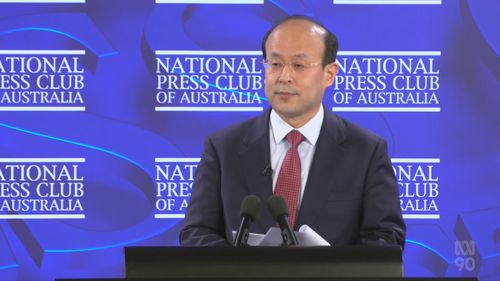
Yesterday China’s ambassador to Australia said China is “ready to use all necessary means” to reunify Taiwan with “the motherland”, while addressing Australia’s “difficult” relationship with the superpower.

During an address at the National Press Club, ambassador Xiao Qian said the US was to blame for rising tensions around the self-governing island, which Beijing claims is part of the mainland.

China was “absolutely determined” to protect its sovereignty and territorial integrity, he said, insisting that Beijing “will never allow Taiwan to be separated from China.”

Chinese ambassador to Australia Xiao Qian refused to rule out Beijing using force to reunify Taiwan with the mainland. (Nine)

He said China has been very patient waiting for a “peaceful unification”.

“But … we can never rule out the option to use other means, so when necessary, when compelled, we are ready to use all necessary means,” he said.

Asked to clarify how “all necessary means” should be interpreted, Xiao said: “You can use your imagination.”

Taiwan split with the mainland amid civil war in 1949, and its 23 million people overwhelmingly oppose political unification with China while preferring to maintain close economic links and de facto independence.

The PLA said it will continue to carry out military training in the Taiwan Strait and is organizing “normalized combat readiness security patrols”.

China accuses the US of ‘navigation bullying’

Categories
Australia

Victoria University study suggests children experience high rates of violence in community sport

Eighty-two per cent of people sampled in a study conducted by Victoria University have reported experiencing at least one form of interpersonal violence when participating in community sport as a child.

The survey, which is the most comprehensive of its kind in Australia, asked 886 adults whether they had experienced physical, sexual or psychological violence, as well as neglect, from either coaches, peers or parents during childhood.

Seventy-six per cent said they had experienced psychological violence or neglect, 66 per cent reported physical violence and 38 per cent reported sexual violence.

One in three respondents, meanwhile, said they had experienced all four forms of violence.

The respondents had participated in a large variety of sports, with nearly 70 represented.

A graph showing key statistics including that 82% of respondents experienced at least one type of violence
Seventy per cent of respondents experienced physical and psychological violence from a peer. (Designed by The Infologist for Victoria University)

While such large numbers may come as a surprise to some, study co-author Mary Woessner said she was not shocked.

“From the literature, and knowing what’s happening internationally, I would say that’s right about what we were expecting,” Dr Woessner told the ABC.

“One of the first things you need to create change, positive change, is generate understanding that there’s a problem.

“We just want people to know it exists, so we can make evidence-based decisions to change it.”

Dr Woessner’s co-author, Aurélie Pankowiak, explained that the survey asked participants about explicit examples of violence they may have experienced in a sporting context.

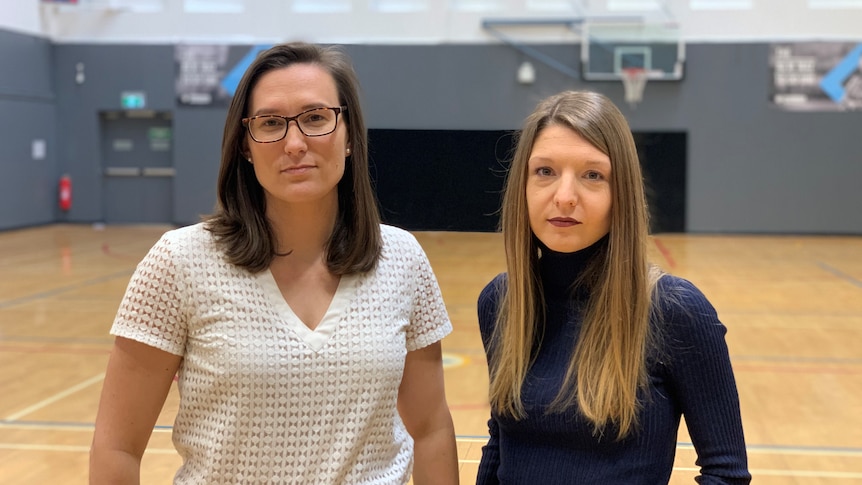
Dr Aurélie Pankowiak poses for a photo on one of the basketball courts at Victoria University
Aurélie Pankowiak co-authored the study with Mary Woessner.(ABC News: Andie Noonan)

For neglect, for example, participants were asked if they had experienced being refused time off for medical injuries.

For psychological, participants were asked whether they had been insulted, threatened or humiliated (for example by being bullied, given an unwanted nickname violence or otherwise ostracised).

“We had very concrete examples of different types of violence, so we did not leave it up to the person’s interpretation of whether or not what they experienced was violent,” Dr Pankowiak said.

.

Categories
Australia

More women driving tractors and trains for the sugarcane harvest in far north Queensland

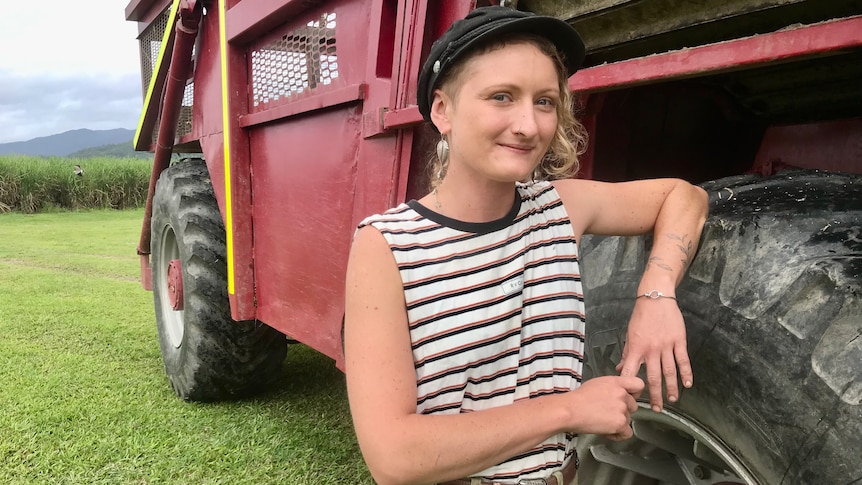
Maneuvering a 10-tonne tractor over rough terrain and tipping sugar cane into a train carriage may require skill and concentration, but Jasmine Cartwright and Elsa Tickler have taken it like ducks to water.

It therefore came as a bit of a surprise when the pair discovered they were the first women to apply for the job on Matt Watson’s Mossman farm in far north Queensland.

“Definitely, women can do the job just as well as men,” 28-year-old Ms Cartwright said.

“I’ve never driven heavy vehicles before starting this job and, prior to this year, never really imagined that I would go down this path for work, but I’m really happy I did.

“It takes a bit of time to practice and get used to the trucks because they’re just unique in the way that they run, but women should absolutely give it a go.”

Ms Tickler, 27, is from south-east Queensland and previously worked as a cook on a prawn trawler.

“I think learning to drive heavy machinery is a great skill set … and it’s something that will be so valuable in my life and future,” she said.

“I think I’ll be back for the next season.”

A young woman with short blond hair, a singlet and a black hat sits in the cab of a power-haul vehicle.
Elsa Tickler was surprised to learn she was one of the first female Powerhaul drivers in Mossman.(Rural ABC: Tanya Murphy)

With no regrets

Labor shortages have been a growing challenge for the agriculture industry, with young women among those most likely to leave rural areas.

Ms Cartwright, who is also from the state’s south-east, says she has no regrets about moving to Mossman this year to work.

“The environment we’re working in, the scenery, it’s so beautiful driving around different farms in Mossman and the Daintree,” she said.

“Sometimes it’s like a wildlife documentary happening in front of you: we see snakes and wild pigs and so many bandicoots and dingoes and kangaroos—crocodiles even.

“It’s really challenging because the roads are obviously a bit off-road and you’re driving a really heavy vehicle, so it’s just a new challenge, but it’s really fun.”

Driving the locomotive

After the cane is successfully tipped into train carriages, another young woman has the job of delivering it safely to the Mossman sugar mill.

Sophie Wright, 22, gave up her job as a makeup artist in Adelaide and moved to Mossman four years ago after falling in love with the region.

A young woman with a blonde ponytail, high-vis work top and boots, leans on a cane train engine.
Sophie Wright is completing her locomotive driver’s license.(Rural ABC: Tanya Murphy)

She has been working as a train driver’s assistant for Far Northern Milling and is currently training to be a locomotive driver.

Ms Wright said it had been a big career change but one she was glad she made.

“I think it’s something I love doing a whole lot more. You know, I feel like it’s meaningful,” she said.

“I honestly think the scenery is amazing. You see really nice parts of Mossman. We have to cross a few bridges on the way and there are stunning creeks.”

Ms Wright drives the cane train under supervision and helps with maintenance while logging the 200 hours required to get her ticket, which she hopes to achieve by next year.

“When we do have maintenance days, or when there’s days that the mill needs to stop for whatever reason, we help out John, who is our mechanic here, greasing the locos,” she said.

“We have to change the grease bombs. We have to make sure all the oils and the final drives and everything’s topped up and working well.

“We also have maintenance days where we have to adjust the brakes and put new ones in.”

A green and yellow loco pulling full bins of cut sugar cane.
A locomotive engine driver’s job is to collect filled carriages and take them to the mill.(Rural ABC: Melanie Groves)

On the right track

Ms Wright says another benefit to driving cane trains is that the job is seasonal, which means she has six or seven months off each year that allow her to travel.

Last year, she even worked on a snorkel tour boat on the Great Barrier Reef.

Ms Wright said it was no surprise that the job was attracting a growing number of women.

“When I started, I was one of the only females working on the trains,” she said.

“Now as the years have gone past, there are more and more women who are actually coming in and learning to drive, and learning to be driver assistants as well, which is really good to see.

“I’ve actually heard a few people say women are a little bit more careful with the trains. They pay attention and they’re very careful.”

A young woman with a blonde ponytail and high-vis workwear sits in the cab of a cane train.
Sophie Wright gave up her job as a makeup artist in Adelaide to work on cane trains in Mossman.(Rural ABC: Tanya Murphy)

Ms Wright said young women should not limit their imaginations when it came to career choices.

“You can train to be anything that you want to be, if you put your mind to it,” she said.

“[The cane industry] is a really open industry.

“I think if you want to do it, then just go for it. I’ve learned so much this year and anyone can do it really.”

.

Categories
Australia

Olivia Newton-John tributes continue; Sydney train industrial action continues; Matt Kean becomes NSW Deputy Leader; China asserts right to take Taiwan by force; Trump’s Mar-a-Lago home raided by FBI; ACTU economic plan revealed; COVID winter wave continues

Staying with Kevin Rudd’s Radio National interview for a moment, and the former Labor PM says the Albanese government is striking the right balance when it comes to handling China-Australia relations.

As mentioned yesterday, Opposition Leader Peter Dutton says it’s time to call out bullying behavior from Beijing.

Kevin Rudd has lashed Opposition Leader Peter Dutton.

Kevin Rudd has lashed Opposition Leader Peter Dutton. Credit:Bloomberg

“Mr Dutton is the architect of what I would describe as Australia’s megaphone diplomacy towards Beijing,” Rudd said.

“Has it solved any problems in terms of Australia’s long-term relationship with China? Not really. It was simply aimed, primarily, as a piece of domestic political posturing on the part of Mr Dutton and the Liberal Party.

“For God’s sake, this is the party which leased the Port of Darwin to China on a 99-year lease. This is the government which failed to put down a single rivet on a single boat on a submarine order which was agreed to under my government.

loading

“Mr Dutton has multiple cases to answer rather than just wallowing around in the continued rhetoric of hairy-chestedness. It doesn’t advance Australia’s core national security interests one bit.”

Here’s what Dutton told Sydney-based radio station 2GB: “If you don’t call out somebody like President Putin or President Xi, if we don’t shine a light on the bad behaviour, we will see in Taiwan what we’re seeing in Ukraine at the moment.”