Categories
Australia

Victorian government reverses decision to close Parentline support for parents and carers

Victoria’s only dedicated parenting and care support line has been given an 11th-hour reprieve from being shut down.

Parentline counselors were told in an online meeting three weeks ago the service would close next month after the Victorian government with drawn funding, despite no consultation with staff or the union.

The service has been operating for 22 years.

The ABC understands some counselors had already taken redundancy packages and started looking for new jobs.

But following inquiries from the ABC, counselors were called into an emergency meeting at 7pm yesterday and told the government funding would continue for another 12 months.

The future of the service remains uncertain, with the state government saying it would undertake a review of the service to see if it was continuing to meet the needs of the community.

If the funding cut had gone ahead, Victoria would have been the only state in Australia without Parentline, which provides parents with confidential counseling and support seven days a week.

Parentline was regularly recommended alongside Lifeline and BeyondBlue for parents needing mental health support during the pandemic.

Service ‘a lifesaver’

Counselors were furious with the initial decision to shut down Parentline, and had accused the state government of abandoning vulnerable families who use the service and the children behind the calls.

Former minister for child protection Anthony Carbines, who currently holds the police, crime prevention and racing portfolios, made the decision to close the Parentline service in June without consulting with counsellors, the ABC has been told.

Recently appointed Minister for Child Protection Colin Brooks has since been in discussions with the Community and Public Sector Union and was involved in the last-minute decision to reinstate the funding.

An iphone screen lights up as someone touches it
Parentline has been operating in Victoria for 22 years.(Supplied: Pexels)

Jack* has used Parentline for close to three years after his marriage broke down and was anxious after he heard the service would be closing.

“I was seeing a traditional counselor who suggested this would be a good service and I have since run twice a month in all forms of distress,” he said.

“The counselors are very helpful in providing advice, there are a lot of uncertainties and anxieties being a sole parent and they have helped me engage with my child and communicate with my partner.”

“They are absolutely a lifesaver for some people.”

The state government said its 12-month review of Parentline would examine what alternative platforms may be available.

“Our priority continues to be keeping children safe and families strong,” a government spokesperson said.

“The Parentline Program is continuing to operate and we thank its dedicated staff for their tireless effort and support of Victorian families, parents and carers.”

‘Grave error’ to close service amid mental health system crisis

One counselor at the service, who spoke on the condition of anonymity, said the attempt to shut Parentline, which receives more than 1,000 calls a month, was a “serious error”.

.

Categories
Australia

More than 1,200 people are detained indefinitely in Australia with no criminal conviction | mental health

More than 1,200 people with a mental impairment are being indefinitely detained in Australia, some for decades, without having been convicted of a criminal offence.

A Guardian Australia analysis has found every state and territory is detaining people using a variety of court orders that, in some instances, can result in a person being detained or subject to strict conditions for life.

People detained indefinitely without conviction are most commonly those who are found unfit to plead after being charged with a criminal offence, or who are found not guilty because of a mental impairment.

Information about the number and circumstances of detainees is difficult to establish because no national records are kept, and Australia has failed to meet its obligations under an international torture convention to provide for unannounced visits to places of detention.

Ben Buckland, a senior adviser at the Association for the Prevention of Torture, says that leaves the public in the dark.

“The scariest thing is imagining what we don’t know,” Buckland says.

“Because already the things we do know are…pretty concerning.”

The Victorian ombudsman, Deborah Glass, who described a 2018 case involving the imprisonment of a woman with a significant developmental disorder as the saddest investigation she had ever done, told Guardian Australia that while there was no doubt that some with developmental disorders could be a danger to themselves and others, “to put somebody who was maybe a danger to others into a prison environment, that is… fundamentally not therapeutic, will be counterproductive.

“They will come out of that worse than they were before. And that is counterproductive to us as a society, because we’re going to be paying for yet more supports, we’re going to be paying to fix yet more damage.”

‘Inherently unfair’

Guardian Australia put questions about indefinite detention to each state and territory government. The ACT is the only jurisdiction that does not allow for indefinite detention.

Some declined to answer, referring instead to annual reports which contained data that was several months old.

Orders that allow indefinite detention in some jurisdictions can be removed or challenged at any time, making it hard to be precise about numbers at any given point.

But combining annual report data with the current data given by each jurisdiction this year shows that 1,215 people were detained or controlled under a court order.

For the purpose of the analysis, every individual subject to an order that allowed for detention was included, although some may be living in the community under strict conditions.

New South Wales detained 635 people in the 2021-22 financial year, compared with 324 in Queensland and 130 in Victoria.

Sign up to receive the top stories from Guardian Australia every morning.

One individual in Queensland had been subject to a forensic order for 42 years. Queensland Health and Queensland Corrective Services declined to comment on the case, but the majority of those in the state subject to forensic orders are not in detention.

The Northern Territory has 13 people with mental impairments indefinitely detained using custodial supervision orders, most of whom are in the Darwin Correctional Centre. One person has been on an order for more than 30 years.

“The criminal offenses for which these supervised persons were originally charged include homicide and related offenses, aggravated assault, arson and indecent dealings with a child,” a spokesperson for the NT’s justice department says.

In Western Australia, the law allows anyone considered to be “mentally impaired” to be held in custody indefinitely, at the discretion of the attorney general.

There were 53 mentally impaired prisoners in the state as of 8 April, including 10 in prison, 26 detained in an authorized hospital, and 14 in the community subject to a conditional release order.

Before winning office, the premier, Mark McGowan, promised to end the indefinite detention of those considered mentally impaired. But more than six years later, no legislation has materialized. Individuals can spend longer in detention than they would have if found guilty of the crime they were charged with, rather than not guilty or being unfit to plead.

Taryn Harvey, the chief executive of the Western Australian Association of Mental Health, says the government needed to give “clear direction” on what its new laws would do and when legislation would be introduced.

“It’s so inherently unfair and it’s so at odds with how our justice system works.”

Federal support required

Australia’s detention regime is set to come under international scrutiny in coming months, with the UN subcommittee on the prevention of torture due to visit in October.

Under an international protocol ratified more than four years ago, an independent monitor is supposed to have oversight of all people in detention.

But Australia has repeatedly delayed implementing the changes to its detention regime required under the Optional Protocol to the Convention Against Torture, known as Opcat.

Signatories to Opcat must establish regular preventive visits to places of detention by independent bodies known as National Preventive Mechanisms (NPM).

The Victorian and NSW attorneys general wrote jointly to the former Morrison government last year saying they would be unable to meet the requirements of the Opcat without federal support. Queensland is understood to have made similar representations.

A Victorian government spokesperson said that while it had “robust oversight regimes in place to ensure that people in detention are protected against torture and other cruel, inhumane, or degrading treatment or punishment”, Opcat imposed “additional obligations” that the former Coalition government had “refused” to fund adequately.

The federal attorney general, Mark Dreyfus, confirmed that Australia had received an extension for full compliance with Opcat until January.

His office said the commonwealth’s NPM was “fully functioning and is conducting Opcat compliant inspections”. But a spokesperson said only one state had delivered a fully operational NPM as of July.

They did not comment on whether the federal government would provide more funding to meet the obligations by January, saying only it would “work with states and territories”.

Buckland says the protocol has had a strong deterrent effect in other countries where it has been implemented.

“The government needs to get over this hurdle of deciding how it will work and who is going to fund it,” he says. “The federal government signed up to this, so they may also have to pony up and help the states to pay for it.”

Categories
Australia

more councils to ditch in-home help

Yarra councillor Stephen Jolly said council officers were going to recommend axing in-home aged care services, with elected members to consider the issue in two weeks.

loading

“It is clear from what they are saying that they are of the view that the economy of scale is such that we shouldn’t keep it in house,” he said. “But for all other councils, [outsourcing] has been a disaster for people who access the services and we have to take that into account.”

Jolly said Boroondara and Mornington Peninsula exiting aged care showed that elderly residents risked being left without care if private providers took over.

“If there is one council to stand against the trend and stand for high-quality services kept in house, it should be Yarra,” he said. “I am hopeful that we don’t go down that path, I don’t think it would be good for everyone.”

A council spokeswoman said a decision had not been made on the provision of aged care, which has a forecast budget of $6 million in the next financial year.

loading

“Like many other councils across the local government sector, [Yarra] is currently considering the impacts of national aged care reforms on its services,” she said.

Gay Ochiltree, 86, gets help with cleaning for an hour every fortnight through the council. She is concerned about private providers taking over.

“The stories are horrifying,” she said. “I would live and I would manage but I wouldn’t like it. I know people can get left high and dry and if you don’t have family – some people don’t – it is really, really difficult.”

An aged care worker at the City of Port Phillip said the council was getting ready to exit in-home aged care.

loading

“They are going to stop the aged care services within one to two years,” said the worker, who wanted to remain anonymous. “It’s so sad for the residents, the council is just neglecting them. It’s started happening slowly, services get shortened, standards go down.”

Port Phillip Mayor Marcus Pearl denied the council was going to end its home aged care services.

“No discussion has occurred at this time as to an exit from these services,” he said. “Our council provides a range of services for older people in our municipality.”

Stonnington, in Melbourne’s south-east, has 664 elderly residents receiving in-home aged care and gets more than $3 million a year from the federal government to administer care through about 50 staff.

A spokesman for the council said it was considering its options.

“As the new Australian government continues to assess aged services provision, the City of Stonnington is monitoring changes and discussing with federal government departments that provide funding,” the spokesman said.

“Ensuring that ongoing quality service provision of in-home care and support is available to older people in Stonnington will be central to any future decisions.”

A federal government spokesman said the decision to relinquish CHSP funding was an individual council decision.

“The Australian government cannot direct Victorian councils to continue delivery of CHSP services,” he said. “However, it is important to note that the Australian government has not encouraged Victorian councils to cease delivering CHSP services.”

The Morning Edition newsletter is our guide to the day’s most important and interesting stories, analysis and insights. Sign up here.

Categories
Australia

Kangaroo Island wildlife sanctuary rebounds from bushfires to create citizen science ocean tours

Is adventure tourism, with a science bent, the new way to attract travellers?

From tracking echidna poo, trapping mosquitoes, or counting face masks on beaches, citizen science is helping boost scientific records and data.

But it is not just for locals. A new style of tourism encourages people to involve themselves in landscapes and wildlife while visiting locations, rather than just taking in the sights.

In South Australia, Kangaroo Island is known for its unique and abundant wildlife.

But 25,000 koalas and 50,000 farm animals perished in the fatal Black Summer bushfires of 2019-2020.

Two people also lost their lives.

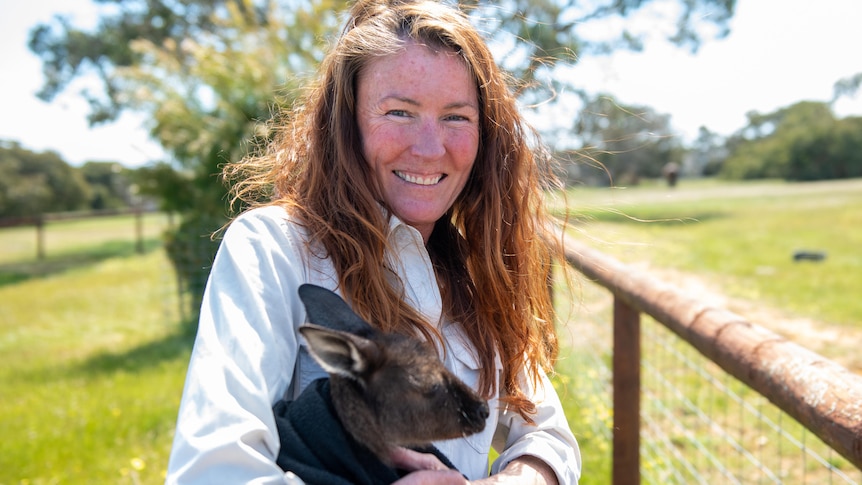
Roanna Horbelt has been rescuing native orphaned animals at her Wildlife Land Trust Sanctuary for the past decade. She said the fires tested her mettle of her.

Woman smiling holding a kangaroo in a blanket, standing in a meadow.
Roanna Horbelt and rescued kangaroo Choco on Kangaroo Island, SA.(ABC Movin’ To The Country: Tony Hill)

“We were out in the fire grounds the whole time and you see horrible things, but we didn’t focus on that at all,” she said.

“I don’t have one picture. We focused on the positive things.

“We focused on the live animals, and we had about …150 to 200 kangaroos in the sanctuary at that stage, where it really was a sanctuary.”

Tourism that helps wildlife

Ms Horbelt and her partner, Phil Smith, saw an opportunity to give back to the animals not just through rehabilitation but through research and conservation.

They started an ocean tourism operation taking small group boat trips to the remote north-western coastline of Kangaroo Island to introduce people to the astounding diversity of animals, landscape, and geology.

Man with arm around woman, both smiling wearing matching t-shirts.
Roanna Horbelt and Phil Smith are partners in business and in life.(ABC Movin’ To The Country: Tony Hill)

The tourists, along with active citizen scientists, contribute to data monitoring and collection programs by taking photos, noting locations and animals, and making new discoveries.

Kangaroo Island Dolphin Watch coordinator Tony Bartram said, surprisingly, not much was known about dolphins.

“People think we know a lot, because dolphins are on T-shirts, in movies, on TV, all the rest, but they’re actually listed as data deficient,” he said.

“Getting baseline data about all species of dolphins is incredibly important.”

Mr Bartram said this area of ​​Kangaroo Island was the perfect place to conduct these tours.

Two women standing outdoors in a rural setting, leaning on a fence and smiling.
Halina Baczkowski meets Roanna Horbelt on Movin’ To The Country.(ABC Movin’ To The Country: Tony Hill)

“It’s not like being in Queensland. In South Australia, the marine environment is largely unexplored,” he said.

Mr Bartram had high hopes for the project.

“It’s important to us because it gives us a greater data flow, but also it means that we’re getting to places we haven’t been able to get to before,” he said.

“The limits on the research we’ve done so far are the limits on us and how far we travel, not on the dolphins.”

It’s not just dolphins tourists get to see. They have also spotted whales and ospreys previously not thought to inhabit the area.

Whale tale on display out of the ocean.
One of many stunning whale flukes captured off the coast of Kangaroo Island on Roanna’s tours.(ABC Movin’ To The Country: John Natoli)

Seeing a whale’s tail, known as a fluke, is the money shot. The unique markings help to identify the whale.

The more cameras the better, according to Ms Horbelt.

“The data they collect is vital. It’s not easy to get a fluke of a whale or a fin because the animals move very quickly,” she said.

‘Bloody hard work’ pays off

Another citizen scientist, Sue Holman, has documented ocean life around the island for eight years and was amazed at the data coming back from the tours.

“There are only seven recorded [osprey] nests around the island and they didn’t believe there were any up that end of the north coast at all, no nests,” she said.

“This is new data. This is cutting-edge stuff that we really want to show… there are nests up there that no-one knows about.”

.

Categories
Australia

Work on national approach to coercive control to begin at attorneys-general meeting in Melbourne

State and territory attorneys-general are to meet with federal Attorney-General Mark Dreyfus on Friday to debate whether to criminalize coercive control across the nation.

Coercive control — a form of domestic and family violence — refers to patterns of abusive behaviors used by one person to dominate and control another in a relationship, which can leave victims feeling powerless, isolated and a hostage in their own home.

Families of those victims and case workers have welcomed the federal government’s push for a national understanding of the term.

States and territories are at different stages of considering whether to criminalize coercive control in their own jurisdictions.

Mr Dreyfus said Friday’s meeting of the nation’s first law officers in Melbourne would see the first steps towards a nationally consistent approach.

“We know from early research that coercive control is an extremely common feature of abusive relationships, but it is not always well understood across the community,” Mr Dreyfus told the ABC.

“There are some differences [between jurisdictions]which is why reaching agreement — at least at a draft level — on what are national principles to address coercive control, is a really good step forward.”

Queensland and New South Wales have already moved to criminalize coercive control, while Victoria and Tasmania say existing laws cover the offences.

Other states have expressed in-principle support for new laws or a nationally consistent approach.

Mr Dreyfus said having a national consensus would lead to a higher level of understanding and the possibility of remaining jurisdictions criminalizing the behaviours.

Attorney-General Mark Dreyfus speaks to the media.
Attorney-General Mark Dreyfus wants a national consistency approach. (AAP: Lukas Coch/File)

“We are hoping that, at [Friday’s] meeting, we are going to be able to approve for release national principles to address coercive control and we think that will help get to a coordinated national approach,” he said.

“It won’t necessarily be that every state will get to criminalizing this behaviour, but if we can get to a much wider understanding in the community of what this is, that will help our ultimate aim of keeping women and children safe.”

National push welcomed by father of domestic violence victim

The move towards a national framework has been welcomed by the father of Hannah Clarke, who was murdered, along with her three children, by her estranged husband.

Lloyd Clarke said he always knew something was wrong, but wasn’t familiar with the term coercive control at the time.

“There were no physical marks but we knew there were mental marks,” Mr Clarke said.

Hannah Clarke with Aaliyah and Laianah at the beach
Hannah Clarke and her children were murdered by her estranged husband in 2020. (Supplied: Lloyd Clarke)

“He was trying to control her mentally. Wanting to know where she was, even asking the children.”

When he was subsequently told this amounted to coercive control, Mr Clarke and his wife, Sue, launched a campaign for Queensland to criminalize the behaviour.

“We thought, ‘Well, we didn’t know about it so there must be a lot of people out there who don’t know about coercive control and we need to educate people on that’,” Mr Clarke told the ABC.

After the Clarke family’s campaign, Queensland committed to criminalizing coercive behavior with a pledge to have laws in place by 2023.

Mr Clarke said he was “ecstatic” to hear that state and territory attorneys-general were willing to work together on the issue.

“It’s another step ahead of our [state-based] campaign and that’s great,” Mr Clarke said.

Coercive control often hard to provide to authorities, counselor says

Kirrilly Salvestro — a domestic violence counselor working in western New South Wales — said a national approach would improve clarity between states.

However, she said, providing evidence of coercive behavior was notoriously difficult, particularly in states that are looking to criminalize and punish the behaviour.

“For example, isolation from friends and family: How do you prove that to authorities?” Ms Salvestro said.

“How do you prove that your partner may have been monitoring your activity unless you have a way to prove that they have been bugging your phone or putting trackers on your vehicles?”

Ms Salvestro — who is deputy chief executive officer of the Linking Communities Network — said it was important for any national definition to reflect the scale of the damage caused.

loading

“In any discussion, we need to make sure that we get it right the first time,” Ms Salvestro said.

“[We need] to include everything that needs to be encompassed and the recognition that children are involved in coercive control as well, all that needs to be included.”

.

Categories
Australia

Baby Pacific oysters offer long-term solution for QX-disease-affected farmers

Millions of baby oysters have been shipped from Tasmania to offer hope to New South Wales growers whose harvests have been decimated by QX disease.

The parasite, which essentially blocks an oyster’s gut and “starves it to death”, was first detected in Sydney rock oysters at Port Stephens last year.

It has crippled local businesses and had a wider impact on the state’s $50 million oyster industry.

“Farmers in Tilligerry Creek have seen some pretty significant losses there,” Port Stephens oyster grower Matt Burgoyne said.

“Mortalities of up to 90 per cent of their stock, from their baby stock right through to stock that they’re ready to sell. It’s really devastating.

“As of February this year the parasite seems to have spread rapidly throughout the whole of Port Stephens and there are really not any areas, harvest areas or growing areas, that are free from it.”

Port Stephens is renowned for producing Sydney rock oysters, but the Tasmanian deliveries will offer growers a chance to grow a different species — the Pacific oyster.

A man on a boat looks out to sea.
Matt Burgoyne’s farm has been operating in Port Stephens for more than 60 years.(Supplied: XL Oysters)

The Tasmanian Pacific oysters will also go to producers in the Hawkesbury region.

“[They are] disease resistant, they’re not susceptible to the QX parasite and so we see it at the moment as really our only way forward to keeping farms viable and being able to trade into the future,” Mr Burgoyne said.

Pacific oyster farmer Ellen Duke is the third generation of growers from southern Tasmania.

After hearing of the Port Stephens QX outbreak, she said it really hit home.

“These growers were going through such a hard time… the floods and now QX,” she said.

“We really feel their pain because we went through something really similar with [Pacific Oyster Mortality Syndrome] down in Tasmania.”

Spat welcome but no quick fix

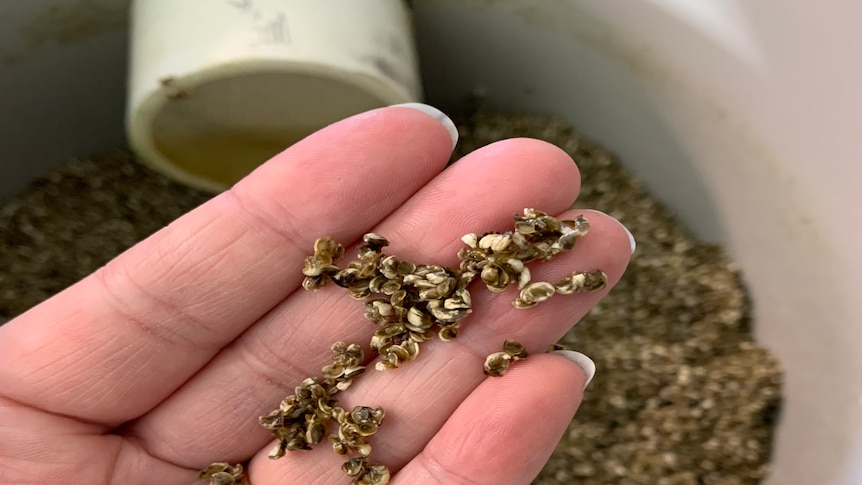
Millions of baby oysters, or spat, have been sent in what Ms Duke said was only the first batch.

But they would take about 12 months to grow to a sellable size.

Tiny, baby oysters in a lady's hand.  There are more in a bucket below.
It will take 12 to 18 months for these baby oysters, or spat, to grow to a saleable size.(Supplied: Yumbah Aquaculture)

“Farmers are still up against a year without income,” Mr Burgoyne said.

“The mood in Port Stephens is very sombre.

“We’ve got generational oyster farms, farms that have farmers who are ready to retire and reap the rewards of many years of hard work, and a lot of that at the moment has lost value and seems to have come to nothing.”

The Pacific oysters mature twice as fast as Sydney rock oysters and Ms Duke said many farmers produced both.

“What the Pacifics can do, hopefully, is give them a bit of risk diversification,” she said.

Research is underway in a bid to breed QX-resistant Sydney rock oysters but little progress has been made to date.

Mr Burgoyne held on to hope that the region would get back to producing its high-quality oysters in the coming years.

“We pride ourselves in NSW on being able to grow Sydney rock oysters and it’s obviously an oyster that is a point of difference and traditionally has always been sought after,” he said.

.

Categories
Australia

Koala sighting near Lithgow raises hopes of unmapped colony after Blue Mountains bushfire destruction

Unexpected sightings of koalas near the Blue Mountains have given hope a disease-free colony is recovering after the Black Summer bushfires.

A koala seen this week at Hassans Walls, near Lithgow, is the first time the native species has been reported in the area for five years.

It follows sightings in the past 12 months in the Newnes Plateau, Wollemi National Park, and Kanangra-Boyd National Park.

More than 80 per cent of the World Heritage-listed Greater Blue Mountains Area was burned during the 2019/20 bushfires, sparking fears and unmapped koala populations had been destroyed.

Local Margot McGinnes said she was “extremely surprised” to see a koala while walking in an area “generally not known to have koalas”.

“It was just a magnificent sighting. It really was very, very exciting,” she said.

A women in a pink jacket and another women in a black jacket looking up at some trees
Margot McGinnes (pink jacket) and Kate Smith spotted the koala while walking along Hassans Walls.(Supplied: Margot McGinnes)

Research group Science for Wildlife has been studying koala populations in the Blue Mountains and Lithgow area.

CEO Kellie Lee said it was a promising development for the recovery of the species in the region “because that area was really badly hit” and indicated a possible koala colony near Lithgow.

“We weren’t sure there would be any koalas left,” Dr Lee said.

A satellite map of Lithgow and Blue mountains indicating koala sightings.
The cartoon koala indicates the recent sighting, the first near Lithgow for five years.(Supplied: Science for Wildlife)

“It is suggesting that there could be another colony or perhaps that the Newnes Plateau colony might be connected up with koalas close to Lithgow.

“The fact they are popping up in these areas where they are just not common is a good sign they are out there and expanding.”

Disease-free koalas

Earlier this year, the New South Wales government listed koalas as an endangered species amid fears the animal could become extinct by 2050.

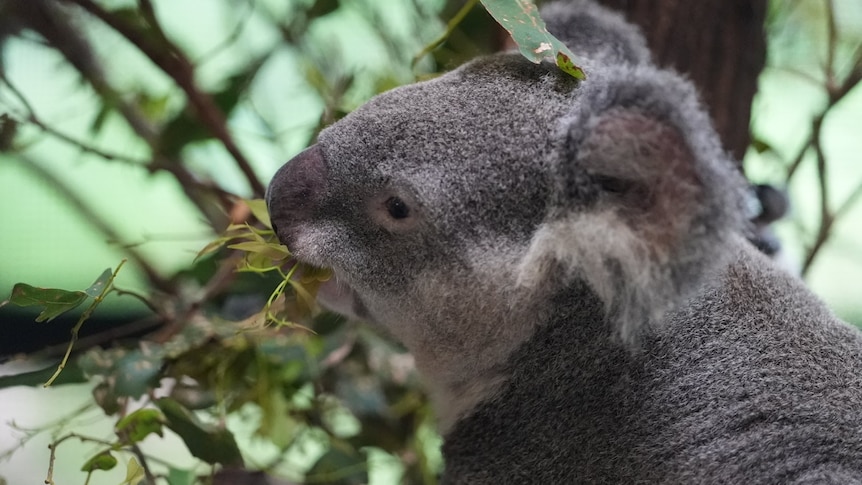
A close up of a koala eating leaves.
Early testing indicates the koala population near Lithgow is free of diseases.(ABC News: Curtis Rodda)

Habitat destruction, bushfires, road accidents, and chlamydia are all reasons behind the decline.

Chlamydia causes blindness, and cysts in koalas’ reproductive tracts lead to infertility or, in some cases, death.

The antibiotics used to treat the disease can destroy the koalas gut, leading some to starve to death even after being cured.

Dr Lee said the koalas they had found were disease-free, making them crucial for the native species survival.

“All of our testing so far has come back negative so we haven’t seen any signs of chlamydia in these populations,” Dr Lee said.

“That is obviously very good news and one less threat that they are facing.”

.

Categories
Australia

Bandicoot numbers boom in Dunbogan and Camden Haven after 2019 bushfires

Residents in the township of Dunbogan on the NSW Mid North Coast have been noticing an increasing number of small, conical holes appearing in their gardens and lawns.

They are created each night, under the cover of darkness, and those in the know are quick to point out what’s been digging around.

Bandicoots are experiencing a boom in the town and surrounding Camden Haven region, south of Port Macquarie.

Andrew Marshall, with the National Parks and Wildlife Service (NPWS), lives on a rural property near Dunbogan and sees the small nocturnal marsupials outside his home most evenings.

He said it was the highest number of bandicoots he had seen in decades and the increase came after the region’s severe 2019 bushfires.

“In the past couple of years, it’s been very evident there has been a massive increase in the number of bandicoots … probably three to five-fold on the numbers we were seeing before the fires,” he said.

Mr Marshall said conditions after the fires had allowed bandicoots to thrive.

A small mammal with long nose and little arms standing upright spotlighted by flash in dark
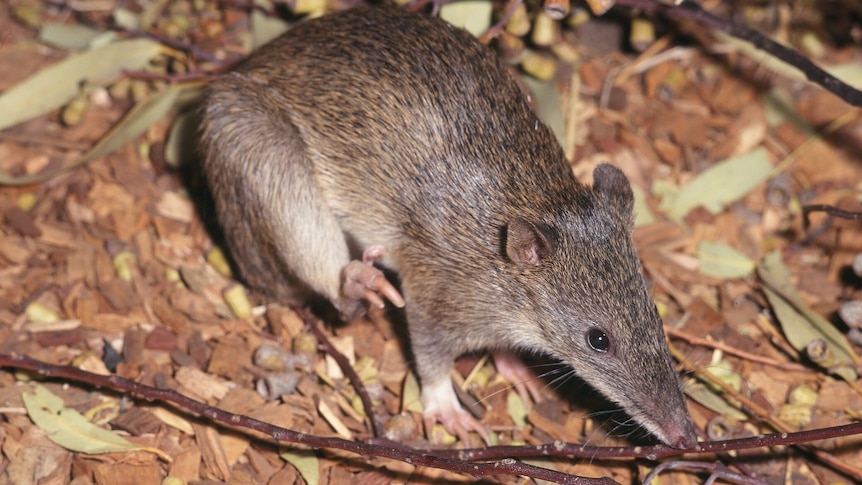
A long-nosed bandicoot, which is among those being spotted in larger numbers in the Camden Haven region.(Supplied: Barbara Wilson)

“The bush has come back after the fires; the undergrowth is really dense and I think the bushfires probably also removed a large number of the local predatory animals,” he said.

“Things like foxes and feral cats, and the fires have potentially also displaced things like dingoes or wild dogs.

“In the coastal strip, where I am, the species that are doing really well include the northern brown bandicoot and we occasionally also see the long-nosed bandicoot.”

New green shoots emerge on a blackened eucalypt tree.
New growth is already emerging in the Lake Innes Nature Reserve.(ABC Mid North Coast: Emma Siossian)

Species adapts after hardship

Professor in Ecology at the University of Sydney Chris Dickman said certain bandicoot species typically did well after bushfires.

“It has been observed before, there have been some studies in the Top End and also the Myall Lakes area and in Victoria,” he said.

A small brown marsupial among barks on the ground.
A southern brown bandicoot.(Supplied: Ken Stepnell, Department of Planning and Environment)

Professor Dickman said the northern brown bandicoot in particular readily adapted to different environments.

“It does well after fires … it occurs from north of the Hawkesbury all up the east coast and across the top end to the Kimberley,” he said.

“They are quite mobile and very opportunistic.

“After a fire has gone through it opens up the habitat and provides new food sources that animals like bandicoots can access.

“The heavy rains [on the Mid North Coast] after the fires have probably also led to an increase in the complexity and density of the undergrowth and an increase in food sources.

“The bandicoots can move in and do quite well, that is if there aren’t many foxes and cats in the area.”

Professor Dickman said monitoring elsewhere in NSW had shown predators were not bouncing back as quickly after the 2019-20 fires.

“In some areas, like the Blue Mountains, there’s been a lot of monitoring happening after the big fires. Fox and cat activity hasn’t seemed to be as extensive after the fires as we might have expected,” he said.

Prolific breeders

Two eastern barred bandicoots being held in humans hands
The eastern barred bandicoot remains on the endangered species list but new populations are thriving after successful breeding and release programs.(Supplied: Zoos Victoria)

Professor Dickman said when conditions were right, bandicoots were also prolific breeders.

“They can produce three, four, even five litters a year and have a gestation period of just 12 or 13 days — incredibly short,” he said.

“They give birth to these baked-bean-sized youngsters that attach in the pouch and within a couple of months they are weaned, and the female is free to breed again.”

Learning to live with bandicoots

Professor Dickman said it was encouraging to see some east coast bandicoot species thriving, as other species had not fared so well.

“The east coast bandicoots are doing pretty well in general, including the northern brown bandicoot and common long-nosed bandicoot, and the southern brown bandicoot, which is not doing quite so well, but is still about in reasonable numbers from Sydney and south into Victoria and South Australia,” he said.

A small round hole in a sandy dirt.
A bandicoot hole at a Dunbogan nature reserve.(Supplied: Suzanne Siossian)

“Those species are exceptional because bandicoots, as a group, have done exceptionally poorly over the past couple of hundred years, with many species pushed to extinction.”

While not everyone enjoys having bandicoots in their backyard, Mr Marshall said they did a great job removing pests and turning the soil, helping plants regenerate.

“The bandicoots are digging up other grubs and insects, which would otherwise be damaging my garden,” he said.

“They leave the little conical holes and piles of dirt as a reminder they are there but, at the same time, the ground is pretty healthy.

“I’m happy to have bandicoots in my garden.”

dunbogan nature reserve
Bandicoots are often spotted at this Dunbogan nature reserve and experts say they help keep the vegetation healthy.(Supplied: Suzanne Siossian)

.

Categories
Australia

WA charity shops run low on stock as local governments and others remove donation bins

If you’ve been driving around with bags of clothes in your boot ready to off-load at the nearest charity bin but can’t find one, you’re not alone.

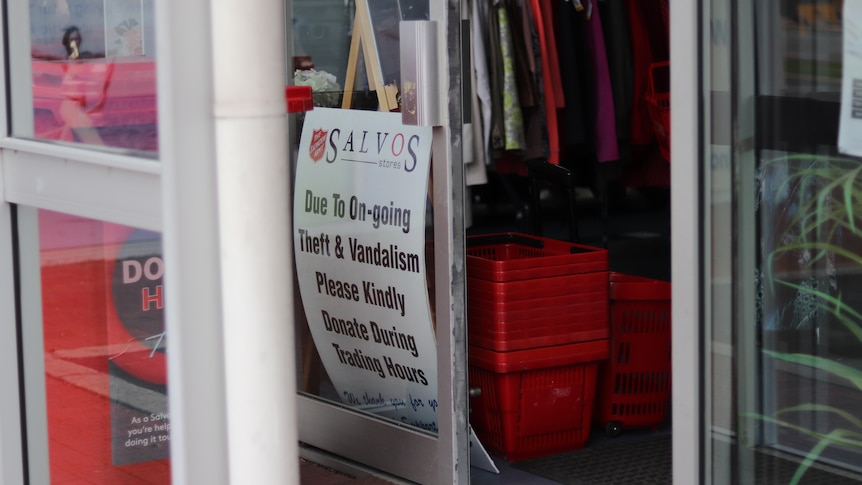
For years now, local governments, private landowners — and sometimes charity shops themselves — have been removing the bins which are all too often left in an unsightly state due to illegal dumping and vandalism.

Despite the mess often scattered around them, the bins generate much-needed funding for not-for-profit organizations and provide equal opportunity employment to West Australians.

Good Sammy employs 300 people in WA with disabilities.

CEO Kane Blackman said the organization had gone from having 500 charity bins in the WA community, to just 200.

A smiling man talks to some women at a clothing collection centre.
Good Sammy CEO Kane Blackman wants to see more accessible community collection points. (ABC News: Ashleigh Davis)

“We have 40 per cent of our workforce with a disability, and we need donations through these charity collection points so people can have a job and sell to our customers,” he said.

“Each community collection point collects about 10,000 kilograms of textiles each year, so having [charity bins] is critical for Good Sammy’s supply of recycled goods to sell in stores.

“[About] 30,000 West Australians enter one of our 27 shops every week and our core mission is disability employment.”

Drop-in donations

Mr Blackman said the quantity of donations had been significantly affected by some local governments banning charity bins.

And while people could still drop off donations in store, this option was not as popular, leaving charities with a big shortfall.

“We certainly notice in tougher times that there are a lot of people that do come into our stores because of the low price point,” Mr Blackman said.

A woman wearing a gray jumper sorts through clothes at a second-hand shop.
Monica sorts through recent donations at a Sammy’s shop.(ABC News: Ashleigh Davis)

“And we like to be able to keep servicing them as best we can.”

Mr Blackman said dropping off pre-loved items was one of the most effective ways to reduce waste and contribute to the circular economy.

“The best way to do that is to promote recycling, to work with charities, and to have accessible community collection points,” he said.

Australians are some of the biggest consumers of textiles in the world — buying an average of 14.8kg or 48 new items of clothing every year.

A woman dressed in black organizations donated clothes.
Jo working at a Good Sammy’s store. (ABC News: Ashleigh Davis)

The Australian Fashion Council estimates charities sort through 720 million items of clothing per year, some 190,000 tonnes of pre-loved fashion.

The shortfall felt at Good Sammy has also been noticed at Alinea, formerly known as the Spine and Limb Foundation, which has lost around 100 charity bins over the past nine years.

Joseph Tuscon, the manager of Alinea’s commercial services ParaQuad Industries, said it was disappointing some local governments banned the bins regardless of where they were placed or how well they were kept.

“I think they take the easy way out sometimes,” he said.

“I’d like local governments and the community in general to just see the vendors for what they are — a convenient means for people to redistribute and help society by donating used and unwanted goods.”

Alinea and Good Sammy have implemented measures to reduce dumping, including putting up CCTV cameras, placing the bins in well-lit, well-trafficked areas, and having people regularly tend to the bins and remove donations and rubbish.

Councils seek alternatives to bins

In 2015, the City of Joondalup became the first local government in WA to ban the bins on council-owned land.

They now hold days where residents can drop off goods to the council, which then works with charities to distribute the donations.

But due to the pandemic, the last clothing donation day was held in January 2021.

City of Joondalup Deputy Mayor Christine Hamilton-Prime called the last donation day an overwhelming success.

“Many people were using charity bins as convenient places to dump unwanted goods and bulk rubbish, which is a littering offence,” she said.

“The ban only applied to city-owned land and not privately-owned land, such as shopping centres, where charity bins were still permitted.”

Three clothing donation bins.
Charity clothing bins like these have been disappearing off Perth streets over the past few years. (ABC News: Ashleigh Davis)

Mr Tuscon said when it came to local governments, it was a mixed bag.

“The Town of Cambridge and City of Subiaco are just as severe as the City of Joondalup who have blanket banned charity bins on any city land,” he said.

“City of Melville, City of Stirling are good and they support us. The City of Canning aren’t too bad, but a lot of the others just won’t have bins at all.”

St Vincent de Paul manager of social enterprise Carl Prowse said with the rising cost of living, more people than ever were accessing the charity’s crisis services.

A man wearing a high-vis vest stands in front of a pile of donated clothing.
Carl Prowse says about five to 10 per cent of donated items end up in landfill. (ABC News: Ashleigh Davis)

“From mental health to homeless and youth services, a lot more people are requesting support from us in what is a true sad state of affairs,” he said.

Mr Prowse said Vinnies kept its charity bins on private property like churches and school grounds, so donation numbers remained high and local governments could not have them removed.

“We have less dumping than what some of the other charities have, because we’re not in shopping center car parks and so on. We have less people rifling through the donations and breaking into the bins,” he said.

“But it’s still a regular thing. Too often, to be honest, it happens.”

“And sadly, when people start splitting bags open, if it then does rain, if everything’s wet, there’s not much we can do with it, it really has to go to the tip.”

But Vinnies has another problem.

Mr Prowse said his organization was struggling to deal with the quantity of donations, as volunteer numbers were so low they often had to intermittently refuse donations at some stores.

A warehouse full of clothes and other donations.
Vinnies’ Canning Vale center sorts through about 12 million items a year.(ABC News: Ashleigh Davis)

“We were 2,500-3,000 volunteers. We’re sitting at about half that at the moment at a time where there’s more people needing our support and stock being donated at our shops but not enough volunteers to sort through it,” he said.

Good Sammy’s Kane Blackman is calling for thoughtful, warm donations this winter, and local governments to come to the table.

“We’re calling for quality donations, around the winter period, thick winter coats. You know, in terms of thick pants in terms of beanies, we’re always after those quality donations,” he said.

“We would like to see more local governments say yes to charity collection points. We believe that’s important to help divert items from landfill and achieve the recycling and sustainability goals that are set for our state.”

Loading form…

.

Categories
Australia

CBD commercial occupancy rates have fallen across the country — so what will it take to get workers back into city offices?

The early days of the COVID-19 pandemic triggered a mass exodus of workers from central business district (CBD) offices — but, from this, came a new, hybrid work model that accommodated for employees’ unique needs.

While remote work remains the preference for many, some offices have struggled to convince their staff to make the trek back into central business districts and, experts say, it has come at a cost to newcomers.

In almost every major Australian city, during the month of June, new data from the Property Council of Australia shows commercial occupancy rates fell.

That rate is the measure of the area of ​​rented space compared to area of ​​total space available.

Melbourne’s commercial occupancy rate dropped from 49 per cent to 38 per cent, while Sydney’s fell from 55 per cent to 52 per cent.

Brisbane’s fell from 64 per cent to 53 per cent, while Adelaide’s dropped from 71 per cent to 64 per cent.

The only markets to record an increase in commercial occupancy were Canberra and Perth, where the rate rose from 53 per cent to 61 per cent and 65 per cent to 71 per cent, respectively.

Is working from home to blame?

The main culprit, according to the Property Council’s chief executive, Ken Morrison, is illness.

Mr Morrison said the results were disappointing, but not surprising.

“Office occupancy numbers have gone backwards for the first time in six months as a wave of [COVID-19’s] Omicron and flu cases kept workers away from the office,” he said.

A man addresses an event in a ballroom at night standing at a glass podium
Ken Morrison says illness likely triggered the fall in occupancy rates.(Supplied: Property Council of Australia)

“We have been seeing a steady increase in the number of workers returning to offices, but this stalled in June and has now declined in most capitals.

With winter nearly over, he said, it was encouraging that the latest COVID-19 wave had nearly run its course and that “recovery momentum can resume.”

Remote work not a ‘zero-cost exercise’

When occupancy rates drop off, small businesses, such as cafes, can miss out on a vital revenue stream.

Mr Morrison said governments needed to be mindful that encouraging people to work from home was not a “zero-cost exercise”.

“The costs are real and we see them in the vibrancy of our CBDs,” he said.

“We know office occupancy has been slow to recover, unlike other indicators, which snap back quickly.”

Are falling occupancy rates here to stay?

Tom Broderick — who heads up CBRE’s capital markets research — doesn’t think so.

“I think this appears to be a bit of a blip, with these most recent figures,” he said.

A man with short gray hair wearing a black and white suit and tie smiling
Tom Broderick says having fewer people in offices makes it harder to collaborate. (Supplied: Tom Broderick )

The July survey found the preference for greater flexibility, including working from home, was a better driver of occupancy levels, but this decreased from 63 per cent to 48 per cent.

.