Categories
Australia

A problem Labor can and must solve

During the pandemic, many of these families suddenly received an extra $250 a week. Of that, perhaps $150 went to the gap in their rent that the government’s rent assistance didn’t cover. That left $100, which suddenly meant, says Wren, “you could buy your kids warm pajamas, stock up on birthday presents so your kids could go to birthday parties.” Then the $250 was cut back drastically, leaving those families pretty much back where they were: “mothers pretending to their kids that they already ate while they were cooking”.

Minister for Social Services Amanda Rishworth during Question Time.

Minister for Social Services Amanda Rishworth during Question Time. Credit:

Wren’s reference to “mothers” is not an accident. This is where the anti-poverty agenda meets the government’s concerns about gender and domestic violence. Women are more likely to suffer poverty. And if we zoom in on children, then, again, we see that while 80 per cent of single-parent families are headed by women, that rises to 95 per cent for the poorest single-parent families.

Then you have the fact that a significant number have left violent partners, and need income support, which is inadequate. The knowledge that the social safety net is – rather than catching you – “going to plunge you into poverty”, says Wren, means that mothers are often faced with a choice: violence or poverty.

In other words, an increase in payments like JobSeeker and rent assistance fits squarely within Labor’s existing aims: on gender, on childhood development, on domestic violence. Or, in the broadest sense, within what Anthony Albanese told his caucus last week: Labor’s responsibility as the party “that seeks to change existing power relationships in society in favor of more equality and in favor of fairness”.

Ministers do get asked about JobSeeker from time to time. So far, the signs are not great. The Minister for Social Services, Amanda Rishworth, gets asked most often, and tends to refer to budgetary pressures, as well as what the government is already doing (social housing, bringing medicine prices down). The Treasurer, Jim Chalmers, emphasizes budget constraints.

Frustratingly, the most urgent argument for increasing these payments – inflation, which is leaving poor people even poorer – can also become an argument against the increase. Won’t put extra money into the economy add to inflation? The economist and former Labor adviser Angela Jackson acknowledges there is a balancing act. Adding to inflation is a factor, but that is precisely why, rather than providing broad support, you have to target it to those who need it most. The most vulnerable need to be protected because they are not in any position to absorb the price hikes.

In the past few days, Albanese have begun to earnest their campaign for the Indigenous Voice to Parliament. It would have been easy enough to delay, given the various crises his government confronts. Instead, some of the Prime Minister’s better qualities have been on display: an understanding that pressure for change often has to be built by government; his belief that more than one thing can be done at a time; and the mixed blessing of his rhetorical style of him, unlikely to make something sound inspiring but more than likely to make it sound like common sense.

These qualities could be used to justify an immediate increase in payments for those living in poverty. Or, at a minimum, they could be used to begin an honest national conversation about the child poverty in our midst. At least then we could say that Labor had taken a good first step. But so far, on this topic, we can’t even say that much.

The Morning Edition newsletter is our guide to the day’s most important and interesting stories, analysis and insights. Sign up here.
Categories
Australia

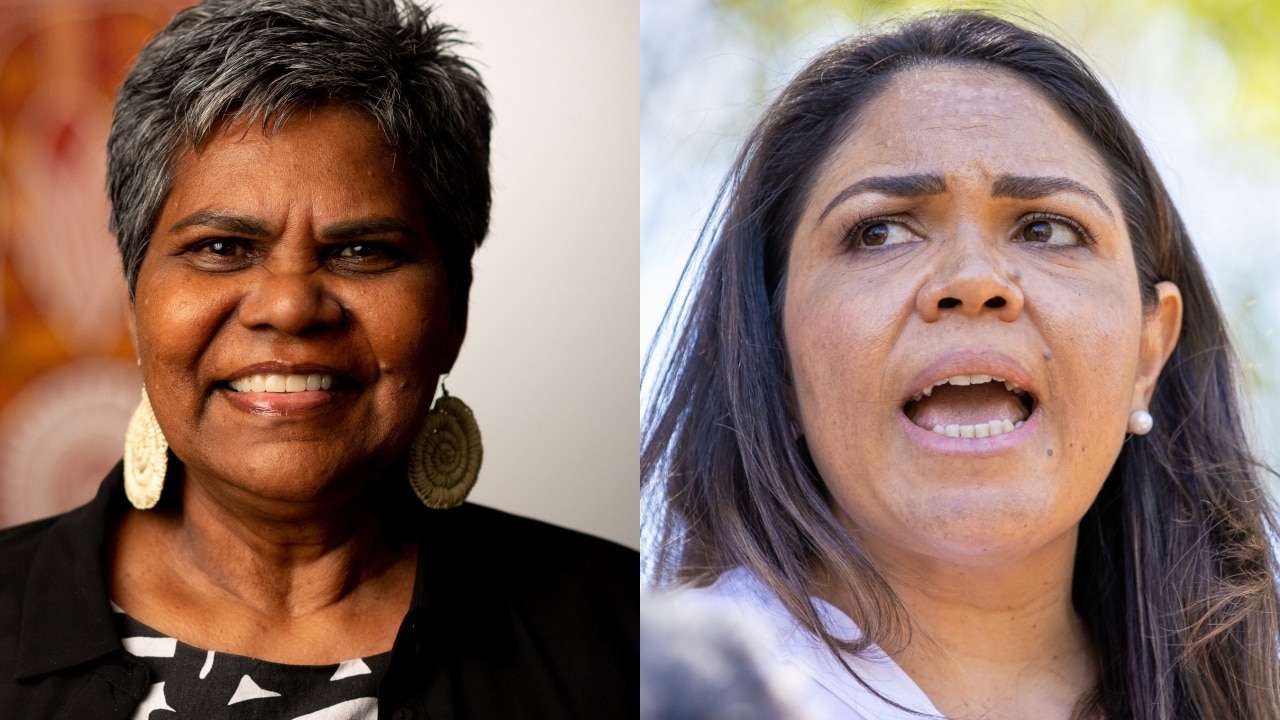
‘Offensive’: Labor MP Marion Scrymgour slams Senator Jacinta Price’s comments about Indigenous Voice to Parliament

Labor MP Marion Scrymgour has hit back at Northern Territory Senator Jacinta Price over comments she made about the proposed Indigenous Voice to Parliament.

The Voice to Parliament was a key element of the 2017 Uluru Statement from the Heart and called for an elected Indigenous advisory body to the Federal Parliament.

The proposed body would advise the government on issues affecting First Nations people.

Speaking to Sky News Australia on Sunday evening Ms Price said the proposal was being driven by elites.

Stream more on politics with Flash. 25+ news channels in 1 place. New to Flash? Try 1 month free. Offer ends October 31, 2022.

“Having just come back from Garma myself, there are people in remote communities who do not have a clue,” she told Chris Smith.

“Make no mistake, this is being driven by elites who have largely been part of the gravy train.

“An industry that has been built on the backs of the misery of marginalized Indigenous Australians, and enshrining a voice is enshrining their voices into parliament to ensure that they can never be removed or dismantled.”

Ms Scrymgour, who represents the Federal Northern Territory seat of Lingiari, was asked about the “offensive” comments just one day later.

“I find that a bit offensive,” Ms Scrymgour told Sky News Australia on Monday.

“Because a lot of the people who have been leading these discussions for many years – including myself – I don’t see myself as an elitist.”

Ms Scrymgour cited her experience being in the remote Indigenous communities as she rejected the gravy train claim.

“I’ve spent nearly 40 years on the ground in communities watching our people struggle and taking it up to governments,” she said.

“I know a lot of the people who work in that industry would find her comments not only offensive but also sad.

“I don’t think there’s been a gravy train of Indigenous members who have worked on this for a long time.

“We have absolute commitment to our people and we will continue to have that commitment.”

Prime Minister Anthony Albanese unveiled his government’s preferred Voice to Parliament referendum question and three provisions to be included in the constitution during his address at the Garma Festival gathering of indigenous leaders in north-east Arnhem Land.

During the speech to the Festival on Saturday, he said the question needed to be “simple and clear”.

The draft question will be posed as: “Do you support an alteration to the constitution that establishes an Aboriginal and Torres Strait Islander Voice?”

The three sentences that would be added into the constitution are:

  1. There shall be a body, to be called the Aboriginal and Torres Strait Islander Voice.
  2. The Aboriginal and Torres Strait Islander Voice may make representations to parliament and the executive government on matters relating to Aboriginal and Torres Strait Islander peoples.
  3. The parliament shall, subject to this constitution, have power to make laws with respect to the composition, functions, powers and procedures of the Aboriginal and Torres Strait Islander Voice.

For the Indigenous Voice referendum to be successful, the “Yes” vote needs a national majority and must be carried by at least four of the six states.

There have been only eight successful referendums out of 44, with the last constitutional amendment to be carried taking place in 1977

.

Categories
Australia

Aged Care Minister Anike Wells reflects on ‘huge’ responsibility to fix the sector she once worked in

Wells said the experience had been “a very good and necessary exposure to different people that I hadn’t come across before” in her suburban, middle-class upbringing.

For Deb, even 20 years ago, the biggest challenge for an aged care administrator was finding staff.

“In the office, the first and most pressing problem at all times, always, was trying to fill the roster,” she said.

“We spent probably 80 per cent of our day trying to do that.”

loading

Wells said her discussions with constituents reflected that understaffing had worsened as a problem during the coronavirus pandemic.

A worker she spoke to one Saturday morning told the minister she was due to start her shift at 2pm and 16 people had already called in sick.

The current staffing crisis will put a brake on Prime Minister Anthony Albanese’s election pledge to “put the nurses back into nursing homes”.

The government’s Aged Care Amendment (Implementing Care Reform) Bill 2022 has been referred to a Senate inquiry and is due to report by August 31. If passed, it will mandate a registered nurse being on shift in every aged care home around the clock from July 2023.

But the bill provides for an exemption to be granted under yet-to-be-determined criteria to providers unable to find staff.

Wells also introduced legislation almost identical to a bill the former government failed to pass before the election, which will set up a new funding model for the sector to start on October 1 and the first stage of minimum staffing levels.

The Aged Care and Other Legislation Amendment (Royal Commission Response) Bill 2022 is expected to pass in the Senate on Monday, although the Greens are seeking an amendment to remove a provision making providers exempt from prosecution for using physical and chemical restraints. This is unlikely to succeed.

When the ABC Four Corners program that sparked the royal commission aired in 2018, exposing shocking abuse and neglect in aged care, Deb said while she had not witnessed that behavior at the home she worked in, “it doesn’t surprise me that it happens”.

“It’s such a challenging industry,” she said.

Wells said while she was employed as a kitchen hand, she did relief work as a diver- sional therapist, facilitating recreational programs for the residents.

“It demonstrates that clearly there were staff shortages, even then,” she said.

The biggest change the minister saw when visiting aged care homes in her current role, she said, was the dramatic increase in care needs of an aging population and as more Australians delayed going into residential care.

loading

“I’ve noticed more frail people, more bed-bound people now,” she said. “That also speaks to the complexity of … what we need to better address by way of food, for example.”

The government has promised to improve the food being given to residents after the royal commission highlighted disturbingly high rates of malnutrition, with the average home spending just $6 a day per resident on meals.

“You actually need to have the waft and the aroma of food coming from the kitchen to stimulate people’s enzymes and make people hungry and give people a sense of nostalgia,” Wells said.

Asked if her personal connection to the industry gave her a big sense of responsibility for aged care, the minister said: “Huge, and I’m heartened by the PM entrusting me with such a task.”

“I think that people in the aged care sector have been neglected for a long time. And I hope that they understand that, having me being the minister, I actually have some experience of life in the industry.”

Categories
Australia

Premier Mark McGowan defends regional police resourcing after man shot by officer at Pingelly

Premier Mark McGowan has defended police resourcing in regional WA saying an officer responding alone to a triple-zero call which left man shot was an “exceptional circumstance”.

The man was shot in the torso when police said he ran towards the officer who responded in Pingelly, in the early hours of Sunday morning.

The man is in a stable condition in Royal Perth Hospital and an investigation into the incident is underway.

Police walk on a street.
Police officers at the scene of the shooting in Pingelly on Sunday.(abcnews)

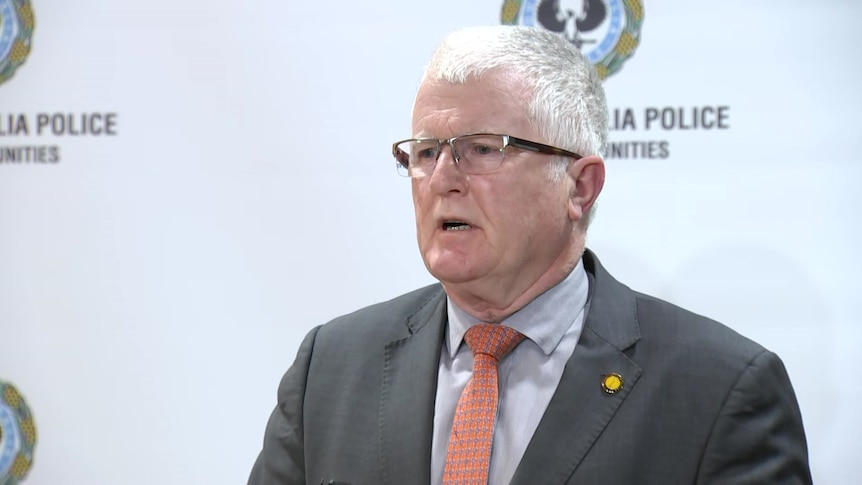
Yesterday, Deputy Commissioner Allan Adams said resourcing issues meant only one officer could respond immediately and backed the constable’s decision to attend.

Resourcing not a problem: Premier

In a press conference today, Mr McGowan defended the officer’s decision to attend the call alone.

“A police officer called in sick on the day in question … [it was an] exceptional circumstance, and so a police officer went out on their own,” he said.

“That is an unusual event … it doesn’t happen often but on this occasion, because of the illness, that was what was required.”

WA Premier Mark McGowan speaks at a media conference wearing a suit and tie.
Premier Mark McGowan says regional police stations in the state are well resourced.(ABC News: Keane Bourke)

When questioned whether regional police stations were adequately staffed, the Premier said WA has “the best resourcing of police in history”, and that 1,100 more officers were being recruited to the WA Police Force.

“1,100 additional police officers is about a 15 to 20 per cent increase in the police numbers across the state.

“We’re obviously in a very difficult environment for recruiting across the board, but we’re getting more police through the academy… and putting more police out there into police stations and regional communities around the state.”

WA Police Union declined to comment on the matter.

Acting Superintendent for the Great Southern region Glenn Spencer also defended the actions taken by the officer.

“The officer concerned made a critical decision … he put the community’s safety first and he went out by himself, and I don’t think he can be criticized for that,” he said.

Police to meet with community leaders

Inspector Glen Spencer stands with hands held in front.  In the background are two police vehicles.
Great Southern Police Acting Superintendent Glenn Spencer will meet with community leaders in Pingelly on Monday.(Supplied)

Acting Superintendent Spencer said Great Southern Police would be meeting with Aboriginal elders from the community today in order to “understand what actually happened.”

“The biggest fear is that someone tries to distil this down to just being police shooting another Aboriginal man, and it’s far more complicated than that.”

Deputy Commissioner Adams said it was not “normal practice” to have one officer respond to a serious incident, but praised the constable’s response.

“Whilst it’s not desirable a single officer attend an event like this… I don’t sit here in any way saying that the police officer shouldn’t have gone,” he said.

“The officer made an assessment at that time that it was in the best interest of the community to attend straight away. He could not have foreseen what was to eventuate and I’m sure if he did, he would’ve waited a bit longer .”

.

Categories
Australia

Canberra man denied bail after ACT police charge him with drugging, raping and robbing his Grindr date

A Canberra man has been refused bail after he allegedly drugged, raped and robbed another man he met via the dating app Grindr.

Shae Elliott, 22, was arrested after he handed himself in to police.

The ACT Magistrates Court denied him bail today after hearing how the alleged victim was afraid because Mr Elliott knew where he lived.

Police said the pair made contact on Grindr and met late last month, when they had sex and took drugs, including methamphetamine.

The alleged victim told police he allowed Mr Elliott to put on some of his clothes. He also posted photos of himself with Mr Elliott on Facebook.

Unidentified male hands holding smartphone with dating app Grindr logo on screen.
The pair met via the gay dating app Grindr.(Pixabay/ABCNews)

But court documents say the situation turned when Mr Elliott brought drugs, including GHB, to the alleged victim’s home.

The alleged victim said he agreed to take some GHB with Mr Elliott but was given a higher dose than he expected and passed out.

He contacted police when he woke up, discovered he had been allegedly raped and found his belongings had been stolen.

Police allege Mr Elliott took $400 in cash, a jacket, two pairs of shoes, a watch and perfume, and also wiped the alleged victim’s phone.

Prosecutors urged the court to deny bail, saying there was a risk Mr Elliott would not turn up to face his charges.

They noted the alleged crimes displayed escalation in his behaviour.

Magistrate Glenn Theakston refused bail, saying he was concerned about Mr Elliott’s history of violence and re-offending.

The case will return to court later this month.

.

Categories
Australia

Explorers uncover Australia’s deepest known cave in southern Tasmania, breaking previous record by four meters

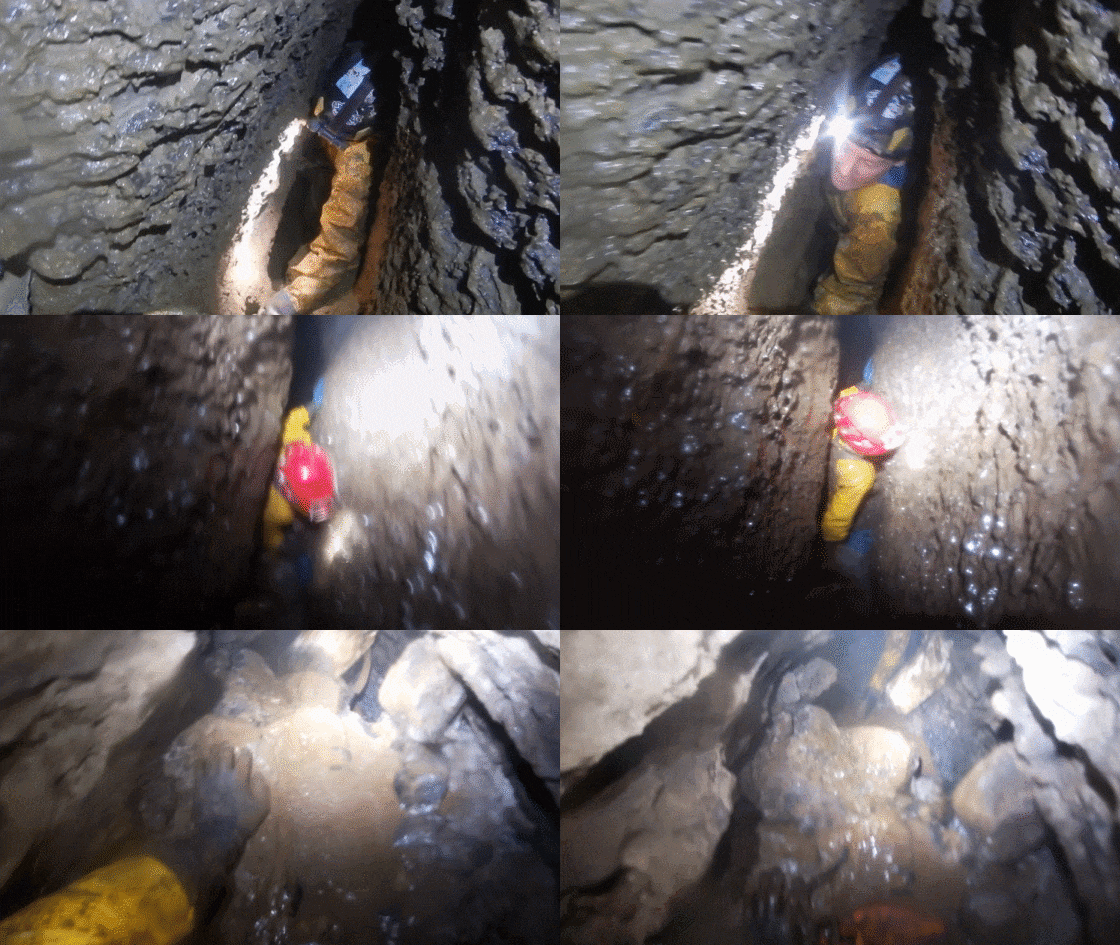
After more than six months of preparation and 14 hours underground, a group of cavers has uncovered Australia’s deepest known cave, at a depth of 401 meters.

The newly discovered cave, named “Delta Variant”, is connected to the Niggly/Growling Swallet cave system north-west of Hobart.

Niggly Cave, at 397 meters, held the previous record for Australia’s deepest known cave.

The group from the Southern Tasmanian Caverneers, a speleological organization based in Hobart, began their descent at the mouth of the cave at Mount Field National Park around 11am on Saturday morning.

The cavers emerged victorious just after 1am on Sunday morning.

“It’s been a lot of work to get to the point where we are now,” said team member Ciara Smart.

“Yesterday, we made the breakthrough — and there was always the possibility that we weren’t going to make the connection, but we did.

“And excitingly, we’ve added to a bit of Australia’s caving history.”

A group of people smiling underground, wearing muddy overalls and helmets.
The team celebrated the achievement deep underground.(Supplied: Stephen Fordyce)

The experienced team faced challenging conditions during their seven-hour descent due to high water levels from recent snowfall in the area.

“Saturday’s trip involved an hour and a half bushwalk up a hill, then over 14 hours of abseiling, crawling, squeezing, and rope-climbing, then a long walk back down the hill,” said project organizer Stephen Fordyce.

“About 300m vertical meters was descended on ropes, then painstakingly climbed back up again, with heavy packs full of wet, muddy ropes.

“That 400m depth represents almost six Wrest Point Casinos stacked on top of each other, or three Sydney Harbor Bridges,” said Ms Smart.

loading

The history behind the cave’s name

The team said they wanted to give a nod to the time the cave was discovered, during the era of the COVID-19 Delta variant.

A woman in red overall, white hard hat and a head torch, smiles
Muddy but smiling: Lauren Hayes is part of the successful team.(Supplied: Stephen Fordyce )

“The first section of the cave is called the ‘Test Station Queue’, which is a really annoying, long, windy, and tight 300m meander that is just so frustrating,” said Ms Smart.

“We’ve got a passage called ‘Super Spreader’, that’s because it’s a big, big passage and it’s got lots of different routes going off it, so that seemed appropriate,” said fellow caver Karina Anders.

“And then we called the giant 163m pitch ‘Daily Cases’, because at the time it seemed like the daily cases were just going up and up, and up,” added Ms Smart.

“The last pitch that we rigged yesterday is called ‘Freedom Day’, and I guess that’s more of a tribute to the Melbournians on the trip,” said Ms Anders.

Space to play or pause, M to mute, left and right arrows to seek, up and down arrows for volume.

Play Video.  Duration: 2 minutes 5 seconds

The journey down into the cave involves some very tight squeezes (Vision: Ciara Smart)

The team spent the past six months preparing for the record attempt by fixing ropes down the cave and exploring side passages.

“We’ve kind of always hypothesised that this cave existed because Niggly is this big cave system and it has this waterfall coming in, and for years cavers have been running looking at this waterfall and wondering, ‘Where has this water been running from? ‘ Ms Anders said.

.

Categories
Australia

South Australian police investigate seven-year-old Craigmore boy’s death from suspected criminal neglect

South Australian detectives have launched a second investigation into the death of a child by suspected criminal neglect.

WARNING: This story contains content that some readers may find upsetting

The new case involves a seven-year-old boy, who died soon after he was taken to the Lyell McEwin Hospital by his father in February.

The boy’s five siblings, aged between seven and 16, were later removed from their home at Craigmore in Adelaide’s northern suburbs.

Police say they have examined volumes of evidence from child protection authorities, alongside a post-mortem report and advice from a pediatrician at the hospital.

“There is an enormous amount of records and we’ve only had a cursory look at those since we’ve got them, but it seems sufficient to launch a criminal investigation,” Detective Superintendent Des Bray said.

“Several serious health issues were identified but in themselves [were] not necessarily cause for immediate concern.”

He urged neighbours, friends and workers in government and private agencies to come forward and contact Crime Stoppers to assist the investigation.

“Essentially a case of criminal neglect occurs when a person who has a duty of care to a child fails to take all reasonable steps to protect the child from harm and the child dies or is harmed as a result of that neglect and the neglect is so serious that it warrants a criminal sanction,” Superintendent Bray said.

Police have now referred the boy’s death to Taskforce Prime, which was set up a fortnight ago to investigate the death of another child, a six year-old girl named Charlie.

A young girl smiling with her eyes closed while clasping her hands together
Charlie, aged six, died soon after arriving at the Lyell McEwin Hospital last month.(Facebook)

Charlie died soon after arriving unresponsive at the Lyell McEwin Hospital last month.

While there are no links between the two cases, police say there are some similarities.

.

Categories
Australia

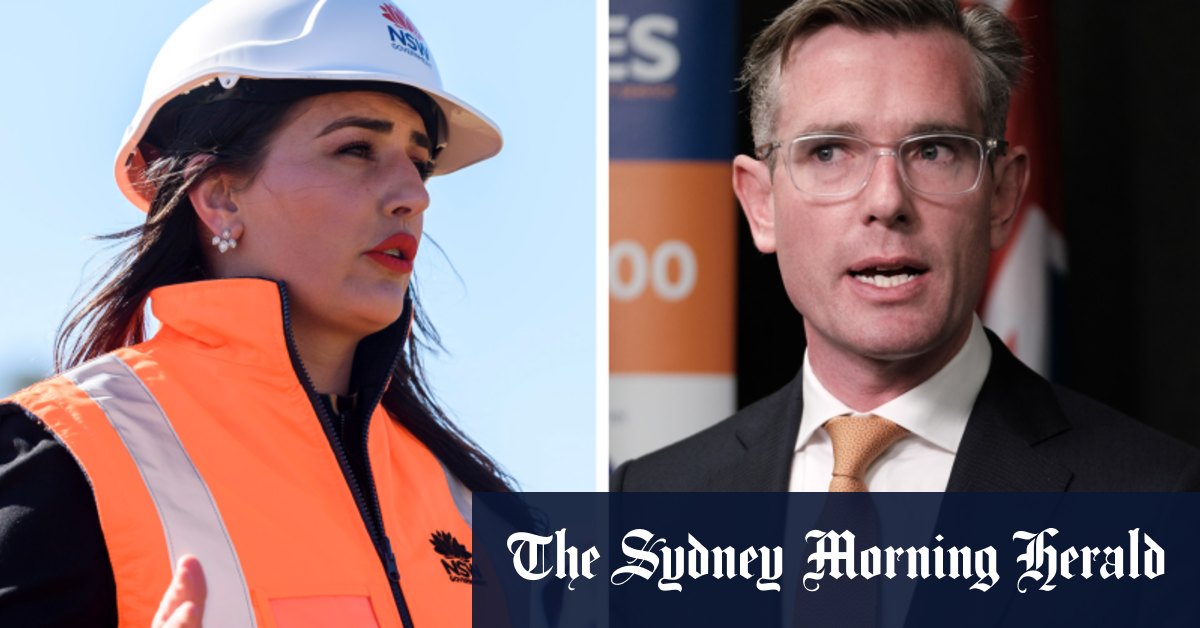
No choice but to sack minister Eleni Petinos: Premier

In May, the Perrottet government developed its Respectful Workplace Policy, which states “zero tolerance for bullying, harassment, discrimination, and sexual misconduct”.

The policy applies to any activity associated with the ministerial office workplace, following a confronting review by former sex discrimination commissioner and former NSW minister Pru ​​Goward.

Goward’s review last year found political ambition, loyalty to ministers and tenuous employment left ministerial staff reluctant to report bullying, harassment and sexual misconduct.

A separate inquiry by former sex discrimination commissioner Elizabeth Broderick is due to be released next week, following a review of the NSW Parliament and its management of bullying, harassment and sexual misconduct.

Perrottet said ministerial offices had already implemented a number of training programs and established improved processes for complaints in response to the Goward review, which was described by then-premier Gladys Berejiklian as “brutal.”

“When it comes to the handling of complaints in the workplace, it is incredibly important that we allow for anonymous complaints to be made,” he said.

loading

“And whilst it’s difficult … I could not, after the discussions I had yesterday and the information that I received yesterday, feel comfortable that the office environment and actions taken by [Petinos] were appropriate in keeping with a safe environment.”

In a statement on Sunday, Petinos said she was proud of her work as a minister and would continue advocating for small business.

“I would never intentionally offend anyone or make them feel uncomfortable, and if I did I am truly sorry. I pursue politics to make a positive difference and will continue to do so proudly as the member for Miranda,” she said.

Labor on Monday called for the premier to explain the circumstances that led to Petinos’ dismissal.

“At the end of the day, the sacking of a minister of a Crown is a big deal in the life of the political history of this state. It deserves an explanation from the NSW premier,” Opposition Leader Chris Minns said.

“Frankly, issuing a two or three line statement last night without explaining to the taxpayers of this state what happened is not good enough.”

Labor’s better regulation spokeswoman Courtney Houssos said there had been multiple allegations reported across several news outlets that needed to be clarified.

“On Friday the premier backed his minister, and yet two days later, he sacked her. The public needs to know what changed,” she said.

The Morning Edition newsletter is our guide to the day’s most important and interesting stories, analysis and insights. Sign up here.

Categories
Australia

Concern the Queensland floods could have spread fire ants, but minister says it’s not likely

There are fears of the invasive fire ant, which can form a raft to move along waterways, may have spread during record floods in southern Queensland.

The state government said floodwaters moved too fast for the insects, but the opposition has called for evidence the risk had been assessed.

Landholders, meanwhile, said they were worried eradication programs were not moving fast enough.

The tiny pest has the potential for disastrous impact should it move unchecked and experts have warned it could cause billions of dollars of social, economic and environmental damage.

Unseasonal rain earlier this year wreaked havoc in the Lockyer Valley, west of Brisbane, including two major floods only 10 weeks apart.

The movement of such floodwater has LNP’s opposition spokesman for agriculture and Gympie MP Tony Perrett worried.

“We just don’t need them to be spread any further but more importantly, go undetected,” he said.

Often referred to as a super pest, red imported fire ants are renowned for their ability to not only move across the ground and fly, but also to float.

A raft of fire ants in flood waters in Texas, USA 2020.
A raft of fire ants after flooding in Texas, United States in 2020.(Supplied: Bill O’Zimmermann)

The National Fire Ant Eradication Program identified the insects could raft on water by linking their claws and trapping air under their bodies, allowing them to float in groups and travel long distances on waterways.

Mr Perrett asked the government via a question on notice if it was investigating the risk, and if the ants had spread.

“It’s quite clear that they say they have a remarkable ability to be able to survive floods and can float for weeks until they come to dry land or a place where they can rest again,” he said.

“So, I am seriously concerned that they have spread and if that’s the case, then we need to know that.”

Tony Perrett standing in front of the muster stage.
Mr Perrett wants the government to be sure the destructive fire ant has not spread.(Supplied: Tony Perrett)

Floods ‘too fast’ for fire ants

In response, Agriculture Minister Mark Furner said he had been advised the floods were too swift to allow the fire ants to raft.

“The information we have at hand is that the 2022 flooding event was a rapid event in terms of rises and the high flow rates, which actually reduced the likelihood of any spread,” he said.

.

Categories
Australia

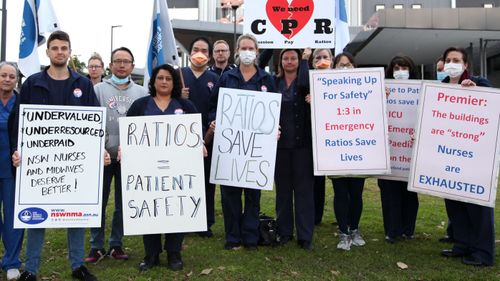
Hornsby Ku-ring-gai Hospital nurses walk out over ‘dangerous’ work conditions

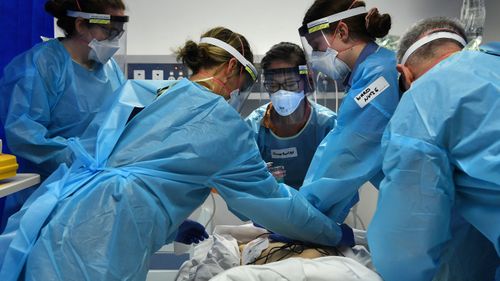
Nurses have walked out of a major sydney hospital this morning over “horrendous” working conditions and “unsafe” staffing plans in the facility’s intensive care unit.
Dozens of nurses and staff who had just finished a busy night shift assembled outside Hornsby Ku-ring-gai Hospital, calling on Health Minister Brad Hazzard to fix a “broken” system buckling under the twin pressures of COVID-19 and influenza.

The nurses claim the hospital’s plans to substitute critical care trained nurses with less experienced assistants in the ICU will put patients and staff at risk, while insisting current workload and patient-staff ratios in the hospital were unbearable.

NSW hospitals are enduring a brutal winter as COVID-19 hospitalizations and influenza cases rise.
NSW hospitals are enduring a brutal winter as COVID-19 hospitalizations and influenza cases rise. (SMH/Kate Geraghty)

“The system at the moment is completely broken,” Laura McKone, from the NSW Nurses and Midwives’ Association, told 9news.com.au.

“Staffing is absolutely horrendous (and) nurses are leaving the profession in droves.”

McKone said nurses were under incredible pressure, mentally and emotionally, because of the workload.

“They are expected to look after so many patients, it’s dangerous,” she said.

McKone said assistants in nursing were not adequately trained to care for seriously unwell and ventilated patients in Hornsby’s intensive care.

the Perrottet government should focus on bringing in more nurses and creating a “safe work environment” instead of opening up more hospitals, she said.
Nurses from Hornsby Ku-ring-gai Hospital are angry at low staffing levels which they say has created difficult and dangerous workloads.
Nurses from Hornsby Ku-ring-gai Hospital are angry at low staffing levels which they say has created difficult and dangerous workloads. (9News)

In a statement, the Hornsby hospital said it is “working closely with our clinicians and the nurses union to explore new models of care and staffing contingencies” as it responds to the COVID-19 pandemic and busy winter season.

“At this stage no changes have been made and discussions are ongoing with the union,” a spokesperson said.

Rising influenza and COVID-19 cases are putting increased demand on hospitals, particularly in New South Wales, Victoria and Queensland.

The subvariants and mutations of COVID-19

They say they’ve been left with little choice other than to walk off the job to demonstrate their frustration, anger and desperation.