Categories
Australia

Canterbury unit deaths: Tragic twist in case of Saudi sisters as ‘suicide pact’ likely cause

A suicide pact is believed to be behind the death of two Saudi sisters inside a Sydney apartment, as their tragic end continues to be clouded by unknowns.

Police now believe Asra Abdallah Alsehli, 24, and her sister Amaal planned their deaths after bottles of chemicals and other substances were discovered beside their siblings’ bodies.

Watch more in the video above

Watch the latest News on Channel 7 or stream for free on 7plus >>

Interim toxicology results showed traces of those substances in their bodies, The Daily Telegraph reports.

The sisters were found dead in separate beds at their Canterbury Road unit on June 7 in “unusual circumstances”, with no signs or injury or forced entry.

However, police believe the pair could have been dead for up to a month before their bodies were found.

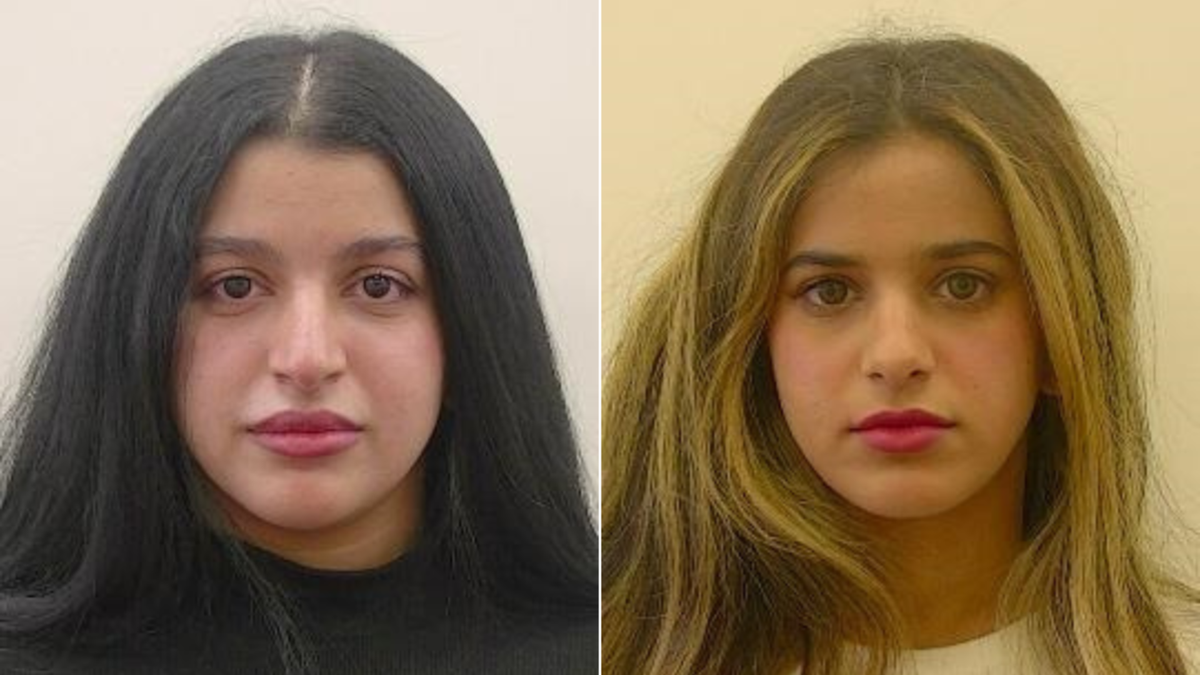
Little remains known about Asra Abdullah Alsehli, 24, and her sister Amaal, 23. Credit: NSW Police

Their exact cause of death is yet to be determined as police wait for toxicology reports, but at this stage, suicide is believed to be a likely cause of death.

“There’s no indication of anyone else being in the unit … no forced entry. It really does appear to be a tragic suicide,” a senior police source told The Telegraph.

A bottle of bleach, non-perishable food items and clothing were reportedly among the items found in the bedrooms.

Despite several tragic twists coming to light, little remains known about the sisters.

Police have not revealed what the pair did for work, however, both women had registered ABNs, which could mean they were operating as sole traders.

Bank records showed funds were drying up, police told The Telegraph.

It has since been revealed the pair were behind in their rent payments for more than $5100, which equates to more than 10 weeks of missed rent for their $480 unit.

The sisters lived in this apartment building in Canterbury. Credit: domain.com.au

The outstanding amount owed to the landlord was revealed in NSW Civil and Administrative Tribunal records.

Their landlord took the matter to NCAT, where it was ordered the tenancy agreement be terminated and possession given to the landlord, The Daily Mail reports.

However, the sisters never appeared at the May 13 hearing, which was held less than a month before their bodies were found.

A sheriff called at the behest of their landlord made the grisly discovery.

But it was not the first time authorities visited the unit, with police paying the sisters a visit in mid-March after the building manager raised concerns for their welfare as food had been left out in common areas.

This visit would have taken place not long after the pair stopped paying rent.

The sisters “appeared fine” when speaking to police, Detective Inspector Claudia Allcroft said earlier.

“At that stage, there were no issues raised,” she said.

“There was no further action required from police at that stage.”

The Canterbury unit is available to move in as of Wednesday, with the new listing including an eerie notice.

“This property has found two deceased person on 06/07/2022, crime scene has been established and it is still under police investigation,” the listing said.

“According to the police, this is not a random crime and will not be a potential risk for the community.”

Forensic finger print dust is seen on an external door frame at the alleged apartment where two women were found dead in Canterbury, Sydney, Wednesday, June 8, 2022. (AAP Image/Bianca De Marchi) NO ARCHIVING Credit: BIANCA DE MARCHI/AAPIMAGE

Those who knew the sisters say they seemed to live in fear and were “very afraid of something”.

The women had claimed a suspicious man had been lurking outside their unit in the months before their deaths and had voiced concerns someone was tampering with their food deliveries.

NSW Police said the investigation is ongoing.

“Police continue to appeal for information in relation to the death of the two women,” a spokesperson said.

Anyone with information is urged to contact Crime Stoppers on 1800 333 000.

Awkward moment sheriffs serve eviction notice to wrong house.

Awkward moment sheriffs serve eviction notice to wrong house.

.
Categories
Australia

Jobs scandal goes beyond Barilaro as inquiry probes second appointment

Elliott has told colleagues he will nominate against Kean, but will not run if there are more than two candidates.

Late on Wednesday, the premier announced three ministers will have their portfolios expanded following Ayres resignation.

Elliott, Henskens and Arts Minister Ben Franklin will take on Ayres’ portfolios from Friday.

Perrottet said a further investigation of Ayres’ conduct would be undertaken by the Department of Premier and Cabinet. Asked whether a breach of the minister’s code needed to be referred to the anti-corruption commission, Perrottet said he was the “custodian” of the code so it was appropriate that he launch an investigation.

The premier said he did what he believed to be fair and did not bow to media or political pressure.

“I said from the outset in relation to these matters that I would conduct an inquiry, and that is exactly what I have done. I have [said] at every step of the way through the process that I will not do what is politically expedient, I will do what I believe is proper and right,” he said.

Ayres acknowledged the review had raised questions about whether he breached the ministerial code of conduct.

“In my view, no such breach has occurred. However, I agree it is important that this matter is investigated appropriately and support the premier’s decision to do so,” Ayres said in a statement.

“To maintain the integrity of the cabinet, I have decided to resign as a minister to allow the investigation to be completed… I will continue to serve my community as the passionate Member for Penrith.”

Penrith is the Liberals’ second most at-risk seat, on a margin of just 1.3 per cent.

While the inquiry has focused on Barilaro’s appointment to the New York role, on Wednesday Labor probed whether any other trade commissioners were given special treatment and questioned the process that appointed Stephen Cartwright, the former chief executive of the Business NSW lobby group, to the London -based trade role last year.

Brown said the process was led by NSW Treasury, but she knew Cartwright had been added to the process “late” and after another front-running candidate was deemed unsuitable.

“I got the impression that I [Cartwright] felt he had some sort of an elevated status,” Brown said. “When negotiations got particularly difficult he said ‘I’ll just escalate this to the deputy premier or the premier’.”

In an outcome of the contract negotiations, Cartwright was awarded a cost of living allowance of $112,000, significantly more than the next highest-paid commissioner. Comparatively, Barilaro was awarded $18,000 for living expenses in the US.

Brown told the parliamentary inquiry that she felt Ayres involved himself in the Barilaro recruitment.

loading

“In my view, he was not arm’s length from the process. There were multiple intersection points throughout,” she said on Wednesday.

Ayres is the second minister to be forced from cabinet in a horror week for the Perrottet government after fair trading minister Eleni Petinos was sacked over bullying allegations. She has rejected the allegations.

NSW Labor leader Chris Minns said the resignation of Ayres as a minister and deputy leader of the Liberal Party was the right decision in the public interest.

Minns said there was now “clear evidence” that Ayres misled the NSW parliament and was involved in the appointment of Barilaro.

He said the saga, which has now dragged on seven weeks, was proving “the cover-up here is probably worse than the crime.”

An Investment NSW spokesman declined to comment on behalf of the agent-general and said it was continuing to assist both inquiries into the Barilaro recruitment.

The Morning Edition newsletter is our guide to the day’s most important and interesting stories, analysis and insights. Sign up here.

Categories
Australia

South Australian man jailed for ordering and paying for sexual abuse of children in the Philippines

The crimes of Ian Ralph Schapel also led to the rescue of 15 young victims and the arrest of five people in the Philippines following an international investigation.

The 68-year-old former public servant was first detained in February 2020 after Australian Border Force officers examined his bags when he arrived in Melbourne on an overseas flight and allegedly found child abuse material on his mobile phone.

Ian Ralph Schapel
Ian Ralph Schapel has been jailed for 16 years. (Supplied)

He was charged over the content which eventually led to the discovery of more than 50,000 images and videos of child abuse material on a range of electronic devices at his Adelaide home.

Further investigations by SA police found he had communicated with people in the Philippines to procure several children, the youngest aged three, who were forced to perform sexually explicit acts on camera that he watched live from his Adelaide home.

In February last year, Schapel admitted to 50 offences, including viewing, remotely instructing and recording the sexual abuse of children on 55 occasions between March 2018 and January 2020.

Ian Ralph Schapel
Schapel, now 68, pleaded guilty to 50 child sexual offenses including paying for children to be abused while he watched over the internet. (Supplied)

As part of the international investigation, Philippine authorities executed search warrants at multiple locations in Bislig, a remote area in the country’s east, in August 2020.

Thirteen children and two young adults were removed from harm and five women were arrested, accused of facilitating the abuse for profit.

The women were aged between 18 and 29 at the time, and some were mothers of the victims. They remain before the courts in the Philippines.

Australian Federal Police Commander Erica Merrin said the case highlighted the force’s commitment to work with partners to protect children around the world.

Australian Federal Police said Ian Schapel's arrest led to the rescue of 15 victims.
Australian Federal Police said Schapel’s arrest led to the rescue of 15 victims. (Australian Federal Police)

“Children are being forced into the most appalling violence and torment on camera by the people who are meant to love and to protect them,” she said.

“This Adelaide man did not just watch children being hurt, he ordered specific abuse to happen and preyed on the economic vulnerability of the people involved.”

Philippine Police Brigadier General Edgar De Mayo Cacayan said close collaboration with the AFP and other international partners should send a strong message to would-be child sex offenders.

“You will not buy and sell the sexual abuse of children in the Philippines,” he said.

“We will not allow it and we will be their guardians. We will find you and you will have to answer for your actions in a court of law.”

In the South Australian District Court on Wednesday, Schapel was jailed for just over 16 years with a non-parole period of 10 years.

Categories
Australia

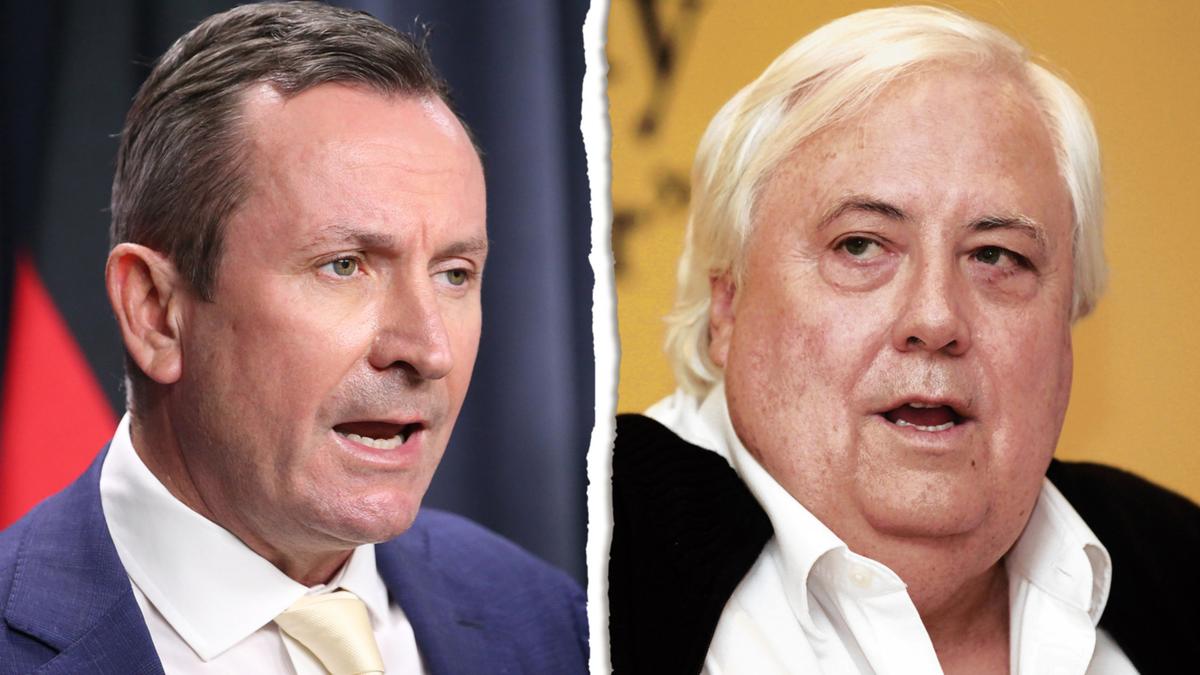
Mark McGowan v Clive Palmer trial judgment finds both guilty of defamation

Premier Mark McGowan and billionaire Clive Palmer have been found to have defamed each other during their vicious war of words in 2020 — but the harm done was minor, according to the Federal Court — as they were the damages awarded.

Delivering his judgment today, Justice Michael Lee said the defenses of both sides to allegations of defamation had failed — and the back-and-forth barbs had been defamatory.

But because the Federal Court judge found that both were involved in political argument — as nasty as it was — finding “real or material” damage was almost impossible.

He declined to award claimed aggravated damages to Mr Palmer, and said he could not find he suffered any real damage from Mr McGowan’s comments.

He assessed the damage to Mr Palmer’s reputation warranted an award of $5,000.

And Justice Lee then pointed to Mr McGowan’s landslide election victory as to the fact his reputation was not damaged by Mr Palmer — and might actually have been enhanced.

However, he said Mr Palmer’s comments warranted an award of $20,000 to the Premier.

In summing up the case, Justice Lee said arguments that neither side was involved in political posturing was “unpersuasive and superficial”.

He said amid the feud, the pair had both taken the opportunities to advance their political stance — particularly Mr McGowan, who he said “had a bully pulpit”.

And he concluded the “game had not been worth the candle” — taking up valuable resources from the court and the WA taxpayer.

The defamation case between the Premier and the billionaire stemmed from public barbs traded more than two years ago, as the pandemic was still spreading — and with Mr Palmer’s $30 billion claim against WA not yet public.

In press conferences of varying ferocity, Mr McGowan labeled the mining magnate the “enemy of the state” and “the enemy of Australia.”

In response, Mr Palmer allegedly implied Mr McGowan lied to West Australians about the pandemic — and was willing to accept bribes from Chinese interests.

That prompted both Mr Palmer to sue, and Mr McGowan to sue right back – with both men called to personally give evidence, which at times bordered on the bizarre.

During the sometimes florid and emotional testimony, both Mr McGowan and his Queensland adversary made striking claims about how the other’s words had impacted.

The Premier linked the verbal Mr Palmer’s attacks on him to the threats of physical attack from others, which he said left him fearing for the safety of his wife and children.

He promotes these ideas. He encourages all these people to weaponise themselves physically against my family.

“He is the sort of person who gets a band of people out there who believe this stuff. A band of followers he acquires who get wound up and outraged,” Mr McGowan said.

“He promotes these ideas. He encourages all these people to weaponise themselves physically against my family.”

And Mr Palmer went as far as claiming he believed Mr McGowan had granted himself a James Bond-style “license to kill” – and might use it to murder the mining magnate and get away with it.

That clause, he claimed, was his reading of the so-called ‘Palmer Act’ – the extraordinary piece of legislation drafted and passed in haste to kill off Mr Palmer’s mega-bucks royalties claim from the Balmoral South iron ore project in the Pilbara region .

“I then thought about James Bond movies… how would you license someone to kill? I didn’t know what the limits might be,” Mr Palmer told the court.

PALMER MCGOWAN CASE
Camera IconWA Premier Mark McGowan. Credit: News Corp Australia

“I reached a view that that’s what I thought it enabled them to do if they wanted to at an extreme level… that was a level of concern.

“To my mind, that meant that they could make offenses under the criminal code and not be held liable for them.”

Embedded within the case — and teased out by the lawyers — were communications between Mr McGowan and state attorney general John Quigley, which revealed the level of enmity within the WA government towards Palmer.

In them, Mr Palmer was referred to as fat, as a liar, as a turd and as “the worst Australian who is not in jail.”

Mr Quigley texted that he was working on a “poison pill for the fat man”.

And the 73-year old attorney general even referenced his own love life, asking Mr McGowan: “Are you glad me single again?.”

“Not making love in sweet hours before dawn – instead worrying how to defeat Clive,” Mr Quigley admitted.

That opened him up to being called as a witness — which opened another can of worms. Because Mr Quigley’s performance on the witness stand prompted accusations that he lied on oath, and he had to admit making glaring errors in his evidence of him.

“I gave inaccurate evidence to the court,” Mr Quigley said. “I am embarrassed about them (the answers). What I said was wrong.

Justice Lee summed up his thoughts on Mr Quigley’s courtroom performance abruptly: “Not dishonest — but all over the shop”.

Western Australia's Attorney General John Quigley leaves the Federal Court of Australia in Sydney, Friday, April 8, 2022. Businessman Clive Palmer is suing West Australian Premier Mark McGowan claiming public comments, including labeling him the "enemy of West Australia", made in July 2020 had damaged the Queensland businessman's reputation.  (AAP Image/Dean Lewins) NO ARCHIVING
Camera IconJohn Quigley. Credit: DEAN LEWINS/AAPIMAGE

In his summary to the case on Tuesday, Justice Lee cited a quote from British politician Enoch Powell, saying politicians complaining about the press was like a “ship’s captain complaining about the sea”.

And he said the war of words between Mr McGowan and Mr Palmer was the “hurly burly” of two politicians arguing about political issues — predominantly the WA response to the Covid 19 pandemic, and the state response to Mr Palmer’s claim of $30 billion in damages.

Justice Lee also commented that the legislation which blocked that claim proceeded with the “speed of summer lightning”.

He described Mr Palmer’s evidence that he feared for his life at the hands of the WA government was “fantastic” — and “so unbelievable” that it undermined his other evidence.

“Not safe to place any particular reliance on it,” Justice Lee said.

And on Mr McGowan, Justice Lee said he was largely an “impressive witness” — but sometimes fell into the “muscle memory” of non-responsive answers.

And of Mr Quigley, Justice Lee said his evidence was both “confused and confusing”.

“Being a confused witness is quite different from being a dishonest one,” Justice Lee said. “Mr Quigley was not a reliable historian of events.”

Arguments about costs of the case, and who will pay them, will be made later this month.

.

Categories
Australia

How a Survivor outlasted Corrs on church legal work

He achieved greater fame as a contestant on Survivor: Panamathe second series of the reality TV franchise in the UK that screened in 2002. Dalzell finished third, just missing the final two after a key miscalculation from the eventual runner-up, teacher Susannah Moffatt.

Wikipedia explains: “Despite believing that Jonny Gibb was more popular than John Dalzell, she voted out the latter thinking that she was remaining true to a deal that she had with Jonny.”

Law was a safer occupation

She should have gone for Dalzell, who was listed as “former marine/law worker, 32” in his show profile. “John admits to being a bit of a show-off in front of a crowd. His hero of him is Muhammed Ali.”

dalzell awning The Australian Financial Review in 2014 that after five years with the royal marines – he joined at 16 and rose to the rank of Commando – he’d had enough. He could have worked as a mercenary in Somalia or the Middle East, but he decided the law was a safer occupation.

At Corrs, he did a lot of work on church compensation claims under the watch of partner Paul McCann and was made a senior associate. He also acted for British American Tobacco after the multinational moved its account from Clayton Utz to Corrs in the mid-2000s. (Hearsay wonders if Corrs is “transitioning out of personal injury work” for BAT.)

Richard Leder had carriage of that work down south for the Catholic Archdiocese of Melbourne (CAM) after helping devise the Melbourne Response in 1996. He was the reason Corrs started acting for Sydney when George Pell moved to the harbor city in 2001. (Leder is expected to continue acting for CAM, but obviously not at Corrs.)

Dalzell up and left in 2010 for Gadens and has been working under the Dentons letterhead since 2016, when the Sydney office of Gadens joined the global behemoth. (Gadens has since rebuilt its Sydney offering.)

His website profile at Dentons lists Ginia Rinehart, daughter of Gina, as a client, along with liquor giant Diageo.

And he’s happy to own his work for the church and big tobacco, even listing his role in the Ellis defence. In 2007, the Court of Appeal accepted the church’s argument that it could not be sued. Not only were the church trustees not responsible for the conduct of the clergy, but also it was an unincorporated association that didn’t legally exist (and which held its assets in a protected trust). This was overturned by legislation in 2018.

It’s a bit different over at Corrs, where the profile for Leder barely mentions the church, which is out of kilter given he has been its go-to-man for 25 years.

Dalzell declined to comment but assured us that he would be “reading carefully”. He is a litigator after all.

Categories
Australia

Anthony Albanese says parliament will debate Voice details before referendum

Federal parliament will hammer out key details of what an Indigenous Voice to parliament will look like and when a national vote is held, Prime Minister Anthony Albanese says, in a shift from his position that much of the detail would happen after a referendum.

He has indicated the model for the Voice outlined by Professors Marcia Langton and Tom Calma in a 2021 report to the former Morrison government will be central to the debate and design.

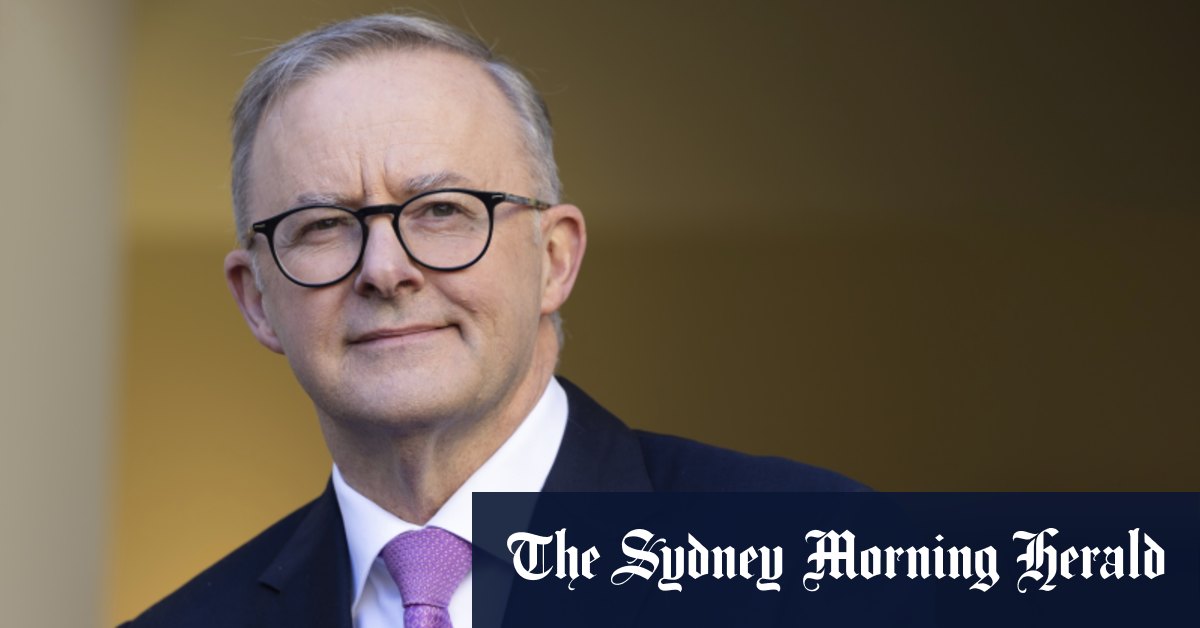
Prime Minister Anthony Albanese during a press conference at Parliament House in Canberra

Prime Minister Anthony Albanese during a press conference at Parliament House in CanberraCredit:alex ellinghausen

Last Saturday, Albanese announced Australians would be asked whether they supported or opposed enshrining an Indigenous Voice in the constitution, and the three sentences that would be added to what he dubbed Australia’s “birth certificate”.

On Sunday, the prime minister said much of the detail about the structure of the Voice would not be known until after the referendum was held as he wanted to avoid a repeat of the failed republic referendum in 1999 when opponents were looking at the detail of the proposal “and saying, ‘well, if you disagree with these 50 clauses, if you disagree with one out of the 50 but 49 are okay, vote no. We’re not doing that.”

But on Wednesday Albanese said he wanted to give Australians space to “walk on this journey” and discuss the proposed referendum – which the government has indicated it would like to hold before the 2025 election – and confirmed more detail would be available about the proposed model before a vote.

“I respect people having different views on this. I want a national conversation… what I did on Saturday was provide a framework for the conversation to enable it to move forward,” he said.

“We will need a referendum, legislation has to occur for that to advance, there will be a debate in the parliament as well. Inevitably, as part of that debate, there will be discussion about the extensive work of Marcia Langton and Tom Calma, extensive debate, about what a Voice to parliament might look like in terms of regional structures.”

“A particular model [has] been put forward by them that envisages a national model, but also with equal representation of male and female representatives. Particular quarantining of representation to ensure remote communities are represented and a regional structure as well… that will be advanced during the legislative debate. It will determine, when it is clearer, what an appropriate date for a referendum should be.”

Categories
Australia

opposition leader risks voter backlash over ‘abysmal’ judgment

She said that “the government’s integrity record is arguably worse than Guy’s” and that “many will be confused about where to place their vote”.

The government continued its attack on Guy on Wednesday, while the Coalition accused Labor of hypocrisy and attempting to deflect from its own integrity problems. Deputy Premier Jacinta Allan said Guy needed to “come clean … about his role in this extraordinary secret arrangement that would have sought to subvert the strict donation laws in our state.”

Jonathan Munz pictured at Inglis Easter yearling sale in 2008.

Jonathan Munz pictured at Inglis Easter yearling sale in 2008.Credit:Martin King

Several Liberal sources said Frost, an ally of former federal treasurer Josh Frydenberg, was the frontrunner to replace Catlin as Guy’s chief of staff.

Frost, who last year unsuccessfully contested a position in the Senate, previously ran the Victorian state division of the Liberal Party. Jackson Whiteley, a former staff member at federal Liberal MP Michael Sukkar’s office, was also in contention, but may join the office in another role.

Victorian Liberal president Robert Clark and state director Simon Frost (right) in 2019.

Victorian Liberal president Robert Clark and state director Simon Frost (right) in 2019.Credit:Chris Hopkins

Catlin unsuccessfully sought payments from Munz in addition to his publicly funded salary, according to a leaked email to Guy’s private Hotmail account and a proposed contract obtained by TheAge.

loading

“Hey MG. Attached is the proposed agreement between [the donor] and Catchy Media Marketing and Management,” Catlin wrote. “It’s as per the original email agreement between you and me. Can I leave you to forward onto him?”

Guy on Wednesday refused to provide further details about the proposal because it was being assessed by authorities including Victoria Police, the Victorian Electoral Commission (VEC), the Independent Broad-based Anti-corruption Commission (IBAC) and the Victorian Ombudsman.

When questioned on Wednesday about the chain of events, Guy said he was unaware of key details.

In the email reported by The Age, Catlin asked Guy to “forward” the contract to Munz. Guy said he did not do this and was unaware about how the contract was put to Munz. The businessman’s camp said Catlin forwarded the email “unsolicited”.

“I hadn’t responded to or forwarded any emails. That’s what it comes down to,” Guy said.

The Coalition leader said he could not explain why Munz rejected the arrangement because he did not have any conversations with the donor about the proposal. “I haven’t spoken to either of the two about that and I don’t intend to because nothing was signed,” he said.

On Tuesday, Guy admitted he had discussed with Catlin how to secure more money to employ him, but decided against doing so. He did not answer a question on Wednesday about whether the proposal would have breached donation laws. He has also not explained what was meant by Catlin when he wrote to Guy saying the contract was “as per the original email agreement between you and me”.

The MP claimed every employee in his office was “entirely” paid out of the regular fund with “not a single amount topped up”. Catlin’s salary increased from the initial level of $140,000 after some staff left the opposition leader’s office and were not replaced, or were replaced by lesser-paid staff, a senior Liberal source told The Age.

Guy said on Wednesday that he knew Munz, a plumbing supplies baron and horse racing figure. “I’ve met him a couple of times… but I certainly haven’t had this conversation with him,” he said.

In a written statement, Munz said on Tuesday: “I do not know how many people received this unsolicited and unwanted email, but when I got it, I rejected it out of hand.” Munz declined to comment further on Wednesday.

Jacinta Allan with Daniel Andrews.

Jacinta Allan with Daniel Andrews.Credit:Paul Jeffers

A spokeswoman for the VEC, who on Tuesday announced it was inquiring into whether the proposal was designed to circumvent donation laws, said she would “welcome anyone who wishes to come forward and provide us with information that they have regarding the matters raised.”

“It is difficult to provide a timeframe at this early stage of any investigation, as there are multiple lines of inquiry,” she said.

The Morning Edition newsletter is our guide to the day’s most important and interesting stories, analysis and insights. Sign up here.

Categories
Australia

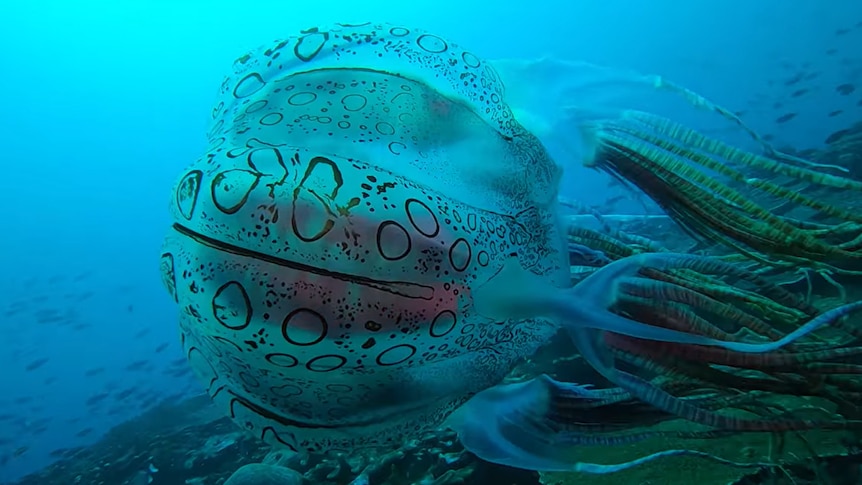
Jellyfish filmed by scuba diver off Papua New Guinea could be rare or new species

When scuba diver Dorian Borcherds turned on his video camera, he became transfixed by the giant translucent mass bobbing along beside him.

What he had captured on film in the watery depths off Papua New Guinea now has marine biologists excited.

The jellyfish was believed to be one officially sighted only once before off the coast of Far North Queensland — a quarter of a century ago — but it could also be a new species, a researcher believes.

The owner of a Kavieng-based scuba dive company, Mr Borcherds was diving with a customer in December when he spotted the strange creature and described it on social media.

“Saw a new type of jellyfish while diving today. It has cool markings and is a bit bigger than a soccer ball and they are quite fast swimming,” he wrote at the time.

Still stumped, Mr Borcherds enlisted his daughter in South Africa for help.

“I thought it was interesting as I had never seen one of these before, so I felt [the video] to my daughter who downloaded a jellyfish app,” he said.

“It couldn’t be identified, so she uploaded the footage to the app and within half an hour she had a very excited jellyfish expert on the phone from Tasmania.”

That expert was Lisa-ann Gershwin from the Australian Marine Stinger Advisory Service, who at first thought it was the same jellyfish caught on the Great Barrier Reef in May 1997.

A small spotted jellyfish in blueish water
Screenshots from a video shot in 1997 of the original specimen that was found on the Great Barrier Reef.(Supplied: Queensland Museum)

“I was completely gobsmacked when they sent me through the photos,” Dr Gershwin said.

“I thought, oh my God, what is this thing and where is it?

.

Categories
Australia

Explorers just uncovered Australia’s deepest cave

Cave explorers have traversed what’s now the deepest known cave in Australia.

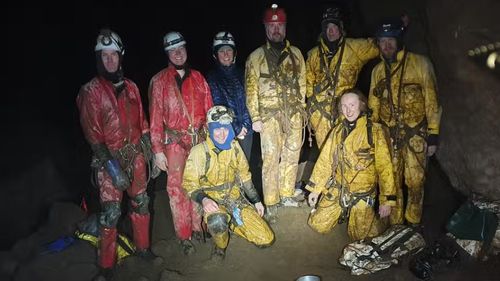
A group of explorers discovered a 401-metre-deep cave, which they named Delta Variant, on Saturday in Tasmania’s Niggly-Growling Swallet cave system within the Junee–Florentine karst area.

It’s depth just beat out its predecessor, the Niggly Cave, by about four meters.

With a descent that lasted 14 hours and took many months to prepare for, Delta Variant is causing a stir among explorer communities.

But it holds a different kind of fascination for researchers such as myself, who study the interaction between groundwater and rocks (including in the context of caves).

On Saturday a group of explorers discovered a 401-metre-deep cave, which they named Delta Variant, in Tasmania's Niggly-Growling Swallet cave system within the Junee–Florentine karst area.
On Saturday a group of explorers discovered a 401-metre-deep cave, which they named Delta Variant, in Tasmania’s Niggly-Growling Swallet cave system within the Junee–Florentine karst area. (Supplied)

This helps us learn about natural processes and how Earth’s climate has changed over millions of years.

A team of nine cavers from the Southern Tasmanian Caverneers discovered Australia’s deepest known cave on Saturday.

Exciting as Delta Variant is in an Australian context, it is arguably just an appetizer in the wider world of caves; the deepest known cave, located in Georgia, goes more than 2.2 kilometers into the earth.

So how exactly do these massive geological structures form, right under our feet?

Put simply, caves form when flowing water slowly dissolves rock over a long time. Specifically, they form within certain geological formations called “karst” – which includes structures made of limestone, marble and dolomite.

Karst is made of tiny fossilized microorganisms, shell fragments and other debris that accumulated over millions of years.

Long after they perish, small marine creatures leave behind their “calcareous” shells made of calcium carbonate.

Corals are also made of this material, as are other types of fauna with skeletons.

This calcareous sediment builds up into geological structures that are relatively soft.

As water trickles down through crevices in the rock, it continuously dissolves the rock to slowly form a cave system.

Unlike much harder igneous rocks (such as granite), calcareous rocks dissolve on contact with water that is naturally acidic.

When rain falls from the sky, it picks up carbon dioxide from the atmosphere and soils along the way, making it acidic.

The more acidic the water is, the faster it will erode karst material.

So, as you can imagine, cave formation can become quite complex: the specific composition of the karst, the acidity of the water, the level of drainage and the overall geological setting are all factors that determine what kind of cave will form.

In geology there’s a lot of spatial guesswork.

So being able to see how deep a cave formation goes is a bit like getting into the deepest layers of a cake, where you may not find the same thing in all directions.

Stalagmites and stalactites

From a research perspective, caves are incredibly valuable because they contain cave deposits (or “speleothems”) such as stalagmites and stalactites.

These are sometimes spiky things that point up from cave floors, droop from the ceilings, or form beautiful flowstones.

Cave deposits form as a result of water passing through. Like trees, they contain growth rings (or layers) that can be analyzed.

They can also include other chemical signatures the water contained, and reveal processes that occurred at the time of formation.

While they may not seem like much, we can use these deposits to unravel past secrets about Earth’s climate.

And since they’re a feature of the interaction between rock and water during cave formation, we basically expect to find them in most caves.

Natural formation of crystals by falling water droplets in Jenolan Caves, Blue Mountains in Australia.
Natural formation of crystals by falling water droplets in Jenolan Caves, Blue Mountains in Australia. (Getty Images/iStockphoto)

Descending deep into a cave system is no small feat. You can’t use your mobile (since there’s no reception), it’s incredibly dark and you’re usually relying on a guide line to find your way back out.

There could be many dead ends for explorers, so effectively mapping the space requires time and great spatial exploration skills.

While cave systems are usually stable (shallow caves can, in theory, collapse and form sinkholes, but this is very rare) – there’s always risk.

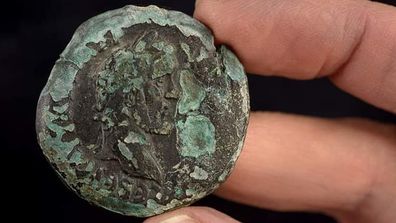
Rare ‘Zodiac’ coin featuring Roman emperor found in Israel

The unexpected geometry of caves means you could find yourself making tricky manoeuvres, twisting and swaying in all kinds of uncomfortable manner as you abseil into darkness.

Although the air pressure doesn’t change to a dangerous extent as you descend, other gases such as methane, ammonia and hydrogen sulfide can sometimes pool and lead to suffocation risk.

Despite all of the above, cave exploration is something people continue to do, and it brings great benefit for researchers in various sub-fields of geology.

And though we’ve come a long way, there are always nooks and crannies we can’t get inside – after all, humans aren’t tiny. I’m sure there are small spaces, too snug for us to explore, that open into much longer or bigger systems than we’ve ever discovered.

Categories
Australia

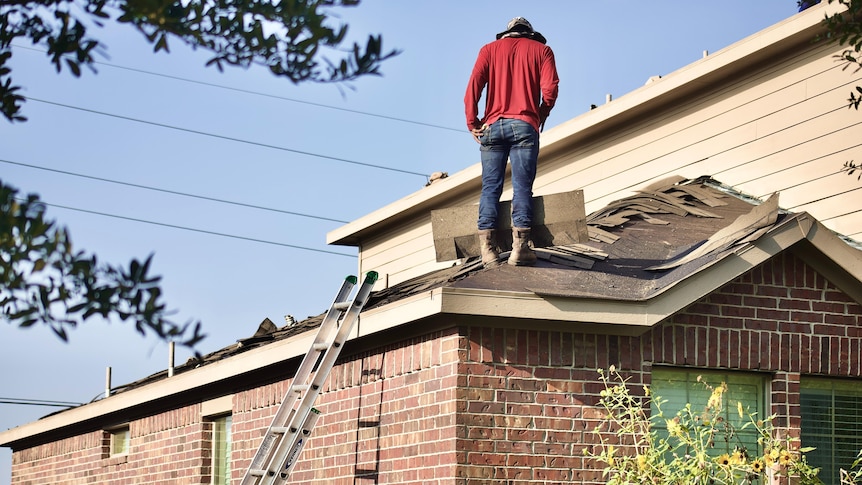
Four men charged in relation to roofing scam which collected more than $640,000 from Melbourne residents

Victoria Police have arrested and charged four people who are accused of scamming Melbourne residents, as they allegedly attempted to escape the country undetected after the fact.

Police allege the group scammed more than 20 Melbourne residents by posing as workers from a legitimate roofing company, collecting more than $640,000 after telling home owners their roofs needed urgent repairs.

A 21-year-old Irish national allegedly involved in the scam was detained at Tullamarine Airport on July 28 after allegedly trying to board a flight to Ireland with his brother’s passport.

Police say the accused man charged an 81-year-old Kew resident $99,000 for repair works on his roof between May and June 2022 and ultimately left it in worse condition, with the owner “forced to use pots and pans inside the house” to combat leaks.

Pair attempts to leave country days after first arrest

Police later arrested three males on July 31 in connection to a further $540,000 worth of alleged roofing scams this year.

Two of the men were also caught by Australian Border Force (ABF) officials attempting to board a flight out of the country at Tullamarine Airport, while a 20-year-old female traveling with the pair was released after questioning.

ABF Superintendent Nicholas Walker said the two British nationals and the Irish national had tried to make their escape when they were arrested.

“These were deliberate attempts to slip out of the country undetected and the decisive action of the ABF officers who stopped them should serve as a warning to anyone else looking to do the same,” Superintendent Walker said.

“The ABF targets traveling with men who seek to exploit vulnerable people. We are working with state police to identify and disrupt the criminal activities of traveling with men through Operation Suddenblaze.”

A 35-year-old male was also arrested in Oakleigh later that day and subsequently charged with deception offenses and dealing with the proceeds of crime.

Sandbags and plastic placed over a damaged roof
Police say homes were often left in states of disrepair or with unfinished work.(ABC News: Nicolas Perpitch)

Subsequent independent inspections of residents affected by the scam identified that works quoted for were never required, incomplete or were of poor workmanship, with amounts quoted deemed excessive.

It follows the jailing of a separate trio of men who targeted elderly Victorians with an elaborate roofing scam in 2020.

Senior Constable Lachlan Balazs from the Boroondara Crime Investigation Unit said crimes such as the roofing scam often affected vulnerable Victorians the most.

.