Categories
Sports

Patrick Cripps, appeals board, decision, result, bump, video, Carlton, Brisbane Lions, Callum Ah Chee

By Simon Brunsdon, Zachary Gates

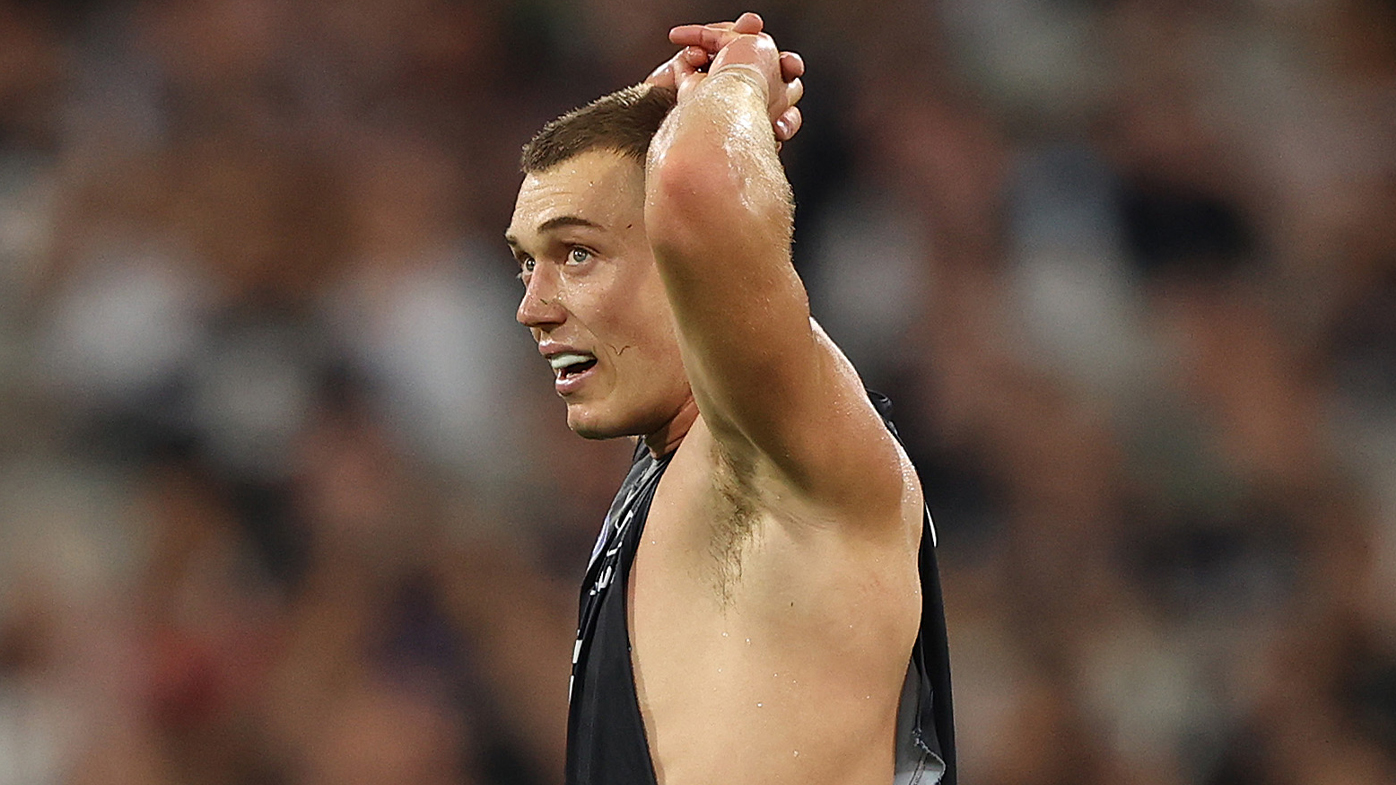
Carlton has succeeded in its bid to have Patrick Cripps’ two-match ban overturned at the AFL’s appeals board on Thursday night.

It took a marathon hearing that lasted more than four-and-a-half hours, with the deliberation alone taking two hours.

After Carlton failed to have Cripps’ two-game suspension for a high shot on Brisbane’s Callum Ah Chee scrapped at the tribunal on Tuesday night, the Blues attempted to free the gun midfielder for their games against Melbourne and Collingwood at the appeals board.

EXCLUSIVE: The Green feat that trumps epic 2015 grand final win

READMORE: ‘Devastated’ family pays tribute as Paul Green mourned

READMORE: Green’s last interview before shock death at 49

There were three grounds on which Carlton was able to fight the court result: error in law, the decision was unreasonable, or the classification of offense or the sanction was manifestly excessive.

The captain is now available to suit up for the remainder of the season.

Cripps’ hit at the Gabba on Sunday concussed Ah Chee and saw him substituted out of the game, with the 24-year-old missing five training days and expected to be sidelined for one to two matches.

The AFL’s match review officer graded the incident as careless conduct, high contact and high impact.

Carlton, which won eight of its first 10 games of the season before tumbling down the ladder, must win at least one of its last two matches to qualify for its first finals campaign since 2013.

For a daily dose of the best of the breaking news and exclusive content from Wide World of Sports, subscribe to our newsletter by clicking here!

Categories
US

a new twist in US-Russia prisoner swaps : NPR

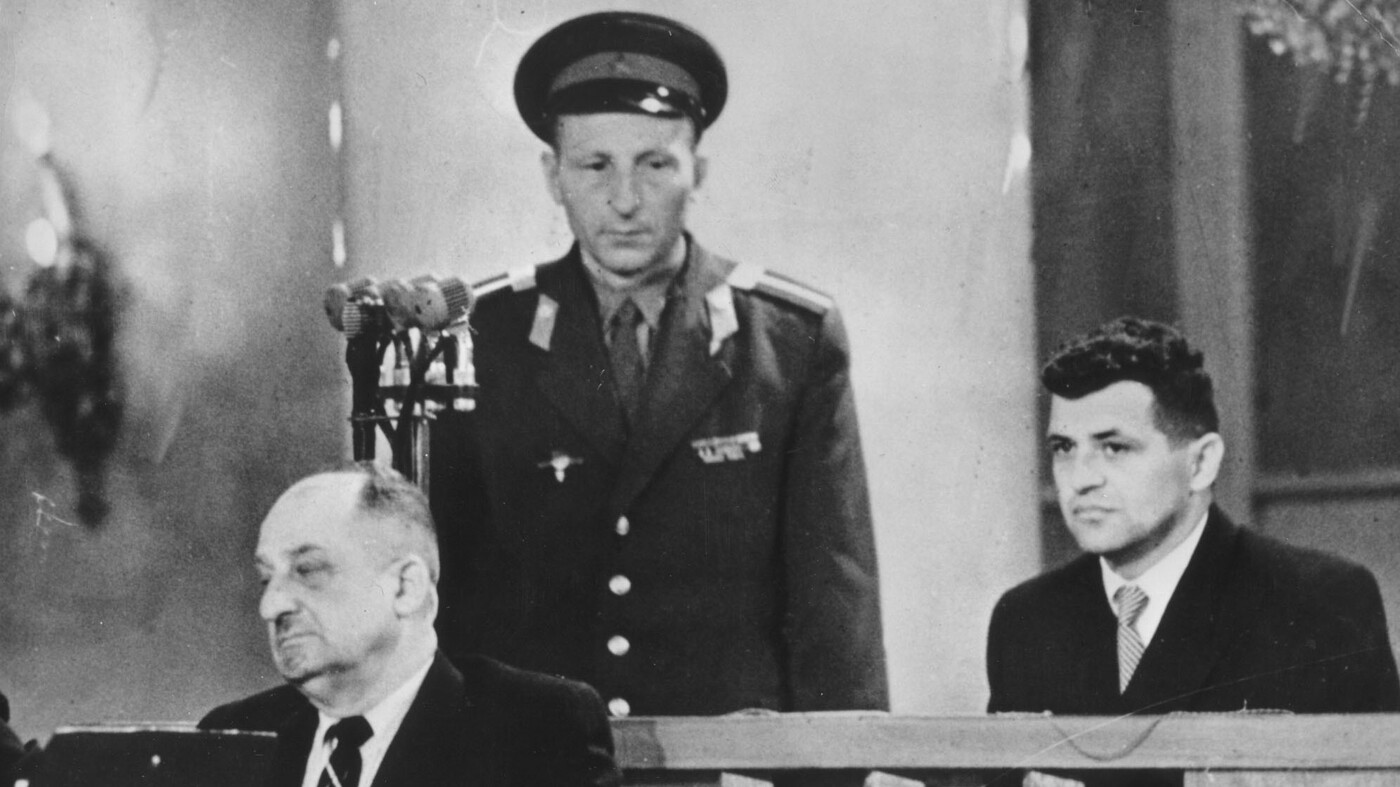
American pilot Francis Gary Powers (far right) during his 1960 trial in Moscow. Powers was shot down while flying a U-2 spy plane over the Soviet Union. He was jailed for nearly two years before he was freed in a swap for a Soviet spy imprisoned in the US

AP


hide caption

toggle caption

AP


American pilot Francis Gary Powers (far right) during his 1960 trial in Moscow. Powers was shot down while flying a U-2 spy plane over the Soviet Union. He was jailed for nearly two years before he was freed in a swap for a Soviet spy imprisoned in the US

AP

In a darkened exhibit hall at the International Spy Museum, Executive Director Chris Costa recounts the most dramatic prisoner swap between the US and the Soviet Union.

In 1960, the US had limited human intelligence on the ground inside the Soviet Union, and desperately wanted more information on its military capabilities.

“So we had spies in aircraft that could take pictures of the Soviet Union,” said Costa.

One of those pilots was Francis Gary Powers, who was working for the CIA and was flying a U-2 spy plane 70,000 feet above the Soviet Union when he was shot down.

The Americans didn’t think the Soviets could take down a plane at that altitude, and they didn’t expect a pilot would survive such an emergency.

They were wrong on both counts, and the result was high drama at the height of the Cold War.

A proposal to free two Americans

Today, the US and Russia are trying to work out a prisoner swap that involves American basketball star Brittney Griner and former Marine Paul Whelan, apparently in exchange for Russian Viktor Bout, a notorious weapons dealer who’s serving a 25-year sentence in Illinois.

While Washington and Moscow have done deals for decades, they usually involved trading spies for spies. The new twist is that an increasing number of private citizens are becoming entangled in foreign legal systems.

“During the Cold War, it was very much understood by both sides. This was a bit of a gentlemen’s game,” said Costa. Before running the Spy Museum, he worked at the White House, where he dealt with cases of Americans detained or held hostage abroad.

Brittney Griner holds a picture of her Russian basketball team as she stands inside a defendants’ cage before a court hearing in Khimki, outside Moscow, on Thursday.

Evgenia Novozhenina/AFP via Getty Images


hide caption

toggle caption

Evgenia Novozhenina/AFP via Getty Images


Brittney Griner holds a picture of her Russian basketball team as she stands inside a defendants’ cage before a court hearing in Khimki, outside Moscow, on Thursday.

Evgenia Novozhenina/AFP via Getty Images

“What we’re seeing play out now is really more hostage diplomacy,” said Costa. He describes Griner as a “pawn in an international game. She has pleaded guilty (to a drug charge) and yet she is being held for political reasons.”

The old rules

That doesn’t mean it was easy to broker a deal in the Cold War, but the dynamics were different.

“When my father was shot down, there were all sorts of misinformation, fake news being published as to how he was captured,” said Francis Gary Powers Jr., the son of the pilot.

He’s referring to the US government and media, which genuinely didn’t know how Powers’ plane was taken down initially, or how the case should be portrayed publicly.

“They thought sabotage. They thought pilot error or they thought flame out. They thought UFO encounter,” Powers said with a chuckle.

Three years before Powers was captured, the US had convicted a Soviet spy, Rudolph Abel. He had posed as a photographer in Brooklyn, but was secretly passing along coded messages stuffed inside hollow coins.

The US and Soviet governments each feared their own spy would spill secrets while being interrogated by the adversary.

“Our governments wanted to get them back, to be debriefed, to find out what happened. How did you get caught? Do the Soviets have the missile technology to shoot down the U-2?” said Powers, founder of The Cold War Museum outside Washington.

Meanwhile, the Soviets “wanted to debrief Rudolf Abel to find out how he got caught so that they could improve their intelligence systems in the future.”

Director Steven Spielberg turned the story into a movie in 2015, called “Bridge of Spies.”

Tom Hanks plays the American lawyer at the center of the negotiations. He makes the case that the convicted Soviet spy shouldn’t be put to death, because if an American is captured, “we might want to have someone to trade.”

That American turned out to be Francis Gary Powers. Still, Powers would be held for nearly two years.

Already difficult negotiations were further complicated by the US insistence that a second American detainee be released. He was Frederic Pryor, a graduate student held in communist East Germany on suspicion of spying.

A deal was eventually struck, freeing the two Americans and the Soviet spy.

Powers died in 1977 in a helicopter crash in California. In 2017, Powers Jr. traveled to central Russia to visit the site where his father touched down by parachute. There he met a number of residents who still remembered the day an American pilot fell from the sky more than a half-century earlier.

A series of swaps

In those intervening years, multiple US-Russia prisoner exchanges have been worked out, most involving actual or suspected spies.

The biggest such case was in 2010, when the US exchanged 10 Russian spies caught in the US for the freedom of four Russians who had been arrested in their homeland, accused of spying for the West.

Today the Biden administration describes the two jailed Americans as “wrongfully detained.” The US has stated publicly that it wants to make a deal, but the Russian leader Vladimir Putin seems certain to drive a tough bargain.

“He’s not easy to deal with,” said Oleg Kalugin, a former Russian spy who was Putin’s boss in the 1980s, when Putin was a young intelligence officer.

“Putin is sly, smart, and he manipulates people and circumstances if he can,” said Kalugin, who’s 88. After decades in the Soviet intelligence agency, the KGB, he became a critic of the Soviet Union in its final days and eventually moved to the US

He says he wasn’t much impressed by Putin when he was his boss. Now, they really don’t care for each other.

“He called me a traitor. I called him a war criminal,” said Kalugin.

US-Russia relations continue to spiral downward over the war in Ukraine and a host of other issues.

But there’s still a broad consensus on the need to keep lines of communication open to deal with issues like prisoner swaps or potential military confrontations.

“Throughout the Cold War, there was a communication mechanism,” said Costa. “There can be unintended consequences of putting US military forces close to Russian military forces. So it’s absolutely crucial that those channels of communication remain open.”

Categories
Technology

Tower of Fantasy: All currencies explained

If you’re playing a live-service game, odds are good that the game has multiple currencies, ranging from the free and farmable to the rare. In some cases, some currencies can only be obtained by spending money. Tower of Fantasy takes the idea of ​​multiple currencies to a whole new level, however. With over a dozen different currencies and resources, you might find yourself a little confused about what to spend where. We’ve got you covered — here’s our currency guide for Tower of Fantasy.

Gold – Tower of Fantasy

Gold is your most basic resource. It’s the game world’s lore currency, and lets you purchase items from NPCs, like cooking materials or weapon upgrade materials. Gold can be found just about anywhere and everywhere in Tower of Fantasy, but you’ll need a monumental amount of it to do what you want.

Nucleus (Red, Gold and Black Nucleus) – Tower of Fantasy

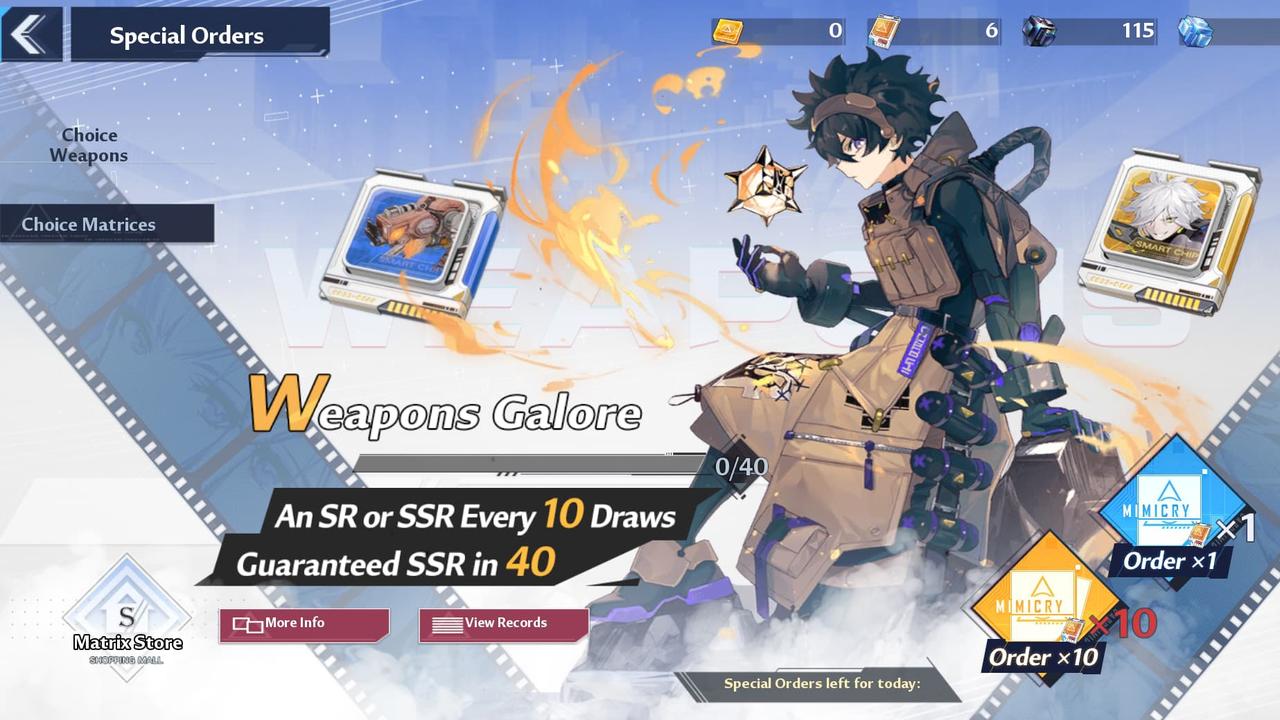
The three nucleus types are the most important currency in the game outside of Dark Crystals. These Nuclei are how you spin the gacha, otherwise known as the “Special Order” system. Gacha is a Japanese term referring to a game of chance where you insert money and get a random item.

Black Nuclei are used on the permanent banner, which contains up to SR rarity characters. You will most likely get upgrade materials instead, however. Gold Nuclei are used at the Gold permanent banner, and you can obtain SSR units from here (rarely.) Every 80 pulls will guarantee you an SSR unit, however.

Red Nuclei are the rarest kind, only obtainable from certain missions and via microtransaction purchases. You can spend these on limited-time banners, which have an increased chance to get you an SSR unit. Black and Gold Nuclei can be obtained via exploration in the game world.

We’ve got a map of all the Nucleus locations on the starting island, Astra for you to use.

Black Gold – Tower of Fantasy

When you spend Gold Nuclei on the Special Order gacha, you get Black Gold as a bonus. Black Gold is used to buy upgrade materials as well as copies of weapons you already own, which is necessary to fully unlock a weapons potential level.

Dark Crystal – Tower of Fantasy

As mentioned earlier, Dark Crystal is the most important currency in the game. Genshin Impact fans will be familiar with the concept — they’re basically equivalent to Primogems. You accumulate Dark Crystal by completing quests and achievements, and spend Dark Crystal by heading to the Store. You can buy Nuclei of any variety, but Red Nuclei is where you’ll get the most bang for your buck.

Proof of Purchase – Tower of Fantasy

Proof of Purchase is another gacha resource, used to pull the Matrix Gacha. Matrixes can be applied to weapons to imbue them with additional bonuses, and after 40 draws, you are guaranteed to get an SSR Matrix.

Base Chip – Tower of Fantasy

Base Chips are the Matrix counterpart to Black Gold. You gain Base Chips when you spend Proofs of Purchase. You can spend them in the Matrix Store.

Energy Crystal Dust – Tower of Fantasy

This currency is used in the Crystal Dust Store. Here, you will find gifts for your characters that earn you “awakening points.” These points unlock avatars, traits, and other bonuses with specific characters. You can also find additional equipment in the store to spend your Points on. You obtain Energy Crystal Dust by completing activities that cost Vitality.

Vitality – Tower of Fantasy

Vitality is similar to Resin from Genshin Impact. You have 180 Vitality per day to spend, and you can spend it by doing special solo dungeons or multiplayer activities. These missions provide you with special item rewards, including the Energy Crystal Dust mentioned above.

Activity – Tower of Fantasy

Weekly, players have a free “mini-battle pass” that rewards you with items for playing the game normally. You gain points for completing tasks, and when you accumulate enough points you gain rewards. Rewards include Merit XP, which is your Battle Pass, as well as Dark Crystals.

Merit – Tower of Fantasy

There are technically two Merit currencies — the exp you gain for your Battle Pass, and the Merit Points you gain for participating in guild missions. Merit Points from the Crew (that’s your guild) can be spent on the Crew Shop to buy items.

Support Points, Return Support Points – Tower of Fantasy

If you group with a new or returning player, you will earn Support and Return Support points, which can be spent to buy limited numbers of nuclei and collectable themes and titles.

Training Points – Tower of Fantasy

Training points are acquired when you complete training missions scattered throughout the world. This can be completing time attack races to win a shootout on the football pitch. You can spend Training Points in the Points Store, to by gifts and weapon materials.

Tanium – Tower of Fantasy

Tanium is the premium currency of Tower of Fantasy, and is only obtained by spending real money on the game. You can exchange Tanium for Daily Supplies, which include Dark Crystals, Nuclei and other daily resources.

Written by Junior Miyai on behalf of GLHF.

.

Categories
Australia

Four Queensland children abducted by man with ‘Joker’ tattoos may be at ‘significant risk’

Four young children may be at “significant risk” after a man abducted them from a Queensland property on Thursday morning.

Queensland Police said the children – aged 8, 7, 4 and 3 – were taken from a property at The Leap, north of Mackay, about 11.30am.

“All of the children are described as being Caucasian in appearance with a slim build and brown hair,” police said in a statement.

Watch the latest News on Channel 7 or stream for free on 7plus >>

An amber alert has been issued asking members of the public to help locate the youngsters.

The children – aged three, four, seven and eight years old – were taken by a man from a property at The Leap. Credit: QLD Police

A man, with identifiable Batman ‘joker’ themed facial tattoos, was seen taking the children from a Maraju Yakapari Road address in a white 2005 Nissan Patrol 4WD with the Queensland Registration 063BC9.

The car was last seen heading toward Bruce Highway.

Police said the alleged offender is described as Caucasian, solid build, approximately 175cm tall with a shaven head and full bushy beard.

Police said the man seen taking the children, pictured, has identifiable facial tattoos. Credit: QLD Police
The man was seen driving toward Bruce Highway in a white 2005 Nissan Patrol 4WD. Credit: QLD Police

Anyone with information about the abduction is asked to call 131 564.

Those with life-threatening information about the incident should contact triple-0.

CCTV captures father using pram and pants to steal from shop.

CCTV captures father using pram and pants to steal from shop.

.

Categories
US

Bolton ’embarrassed’ at ‘low price’ allegedly offered in assassination plot

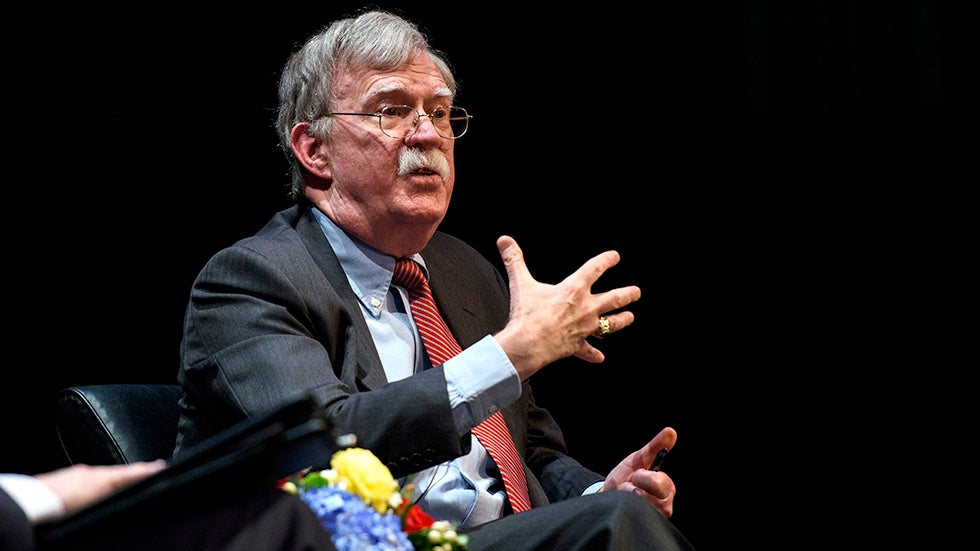
Former national security adviser John Bolton on Wednesday said that the price a member of Iran’s Islamic Revolutionary Guard Corps (IRGC) allegedly attempted to pay people to kill Bolton was lower than he expected.

“The suspect put a $300,000 price tag on your head,” said anchor Wolf Blitzer on CNN’s “Situation Room.” “What goes through your mind, ambassador, hearing the details of this plot, as explained today in great detail by the US Justice Department?”

“Well, I was embarrassed at the low price,” Bolton, a former US ambassador to the United Nations, responded. “I would have thought it would have been higher. But I guess maybe it was the exchange rate problem or something.”

The Department of Justice announced the plot publicly earlier on Wednesday, saying Shahram Poursafi started planning to murder Bolton in October in likely retaliation for his involvement in a drone strike that killed Qassem Soleimani, who led the IRGC’s elite Quds Force.

Poursafi also reportedly planned to target former Secretary of State Mike Pompeo, who served in the role at the time of the drone strike against Soleimani. Bolton said on CNN he had not spoken to Pompeo about the unsealed charging document and was only aware of the press reports about his alleged targeting of him.

Bolton added that the FBI warned him of foreign threats to his security, which “grew more severe” as time went on, noting that his Secret Service detail ended following his time in the White House but was recently reinstated.

“Eventually, by the late fall of 2021, I asked, ‘If it’s this serious, perhaps the Secret Service should be involved,’” Bolton said. “And ultimately President Biden made that decision. And I appreciate it, obviously.”

Bolton also slammed the Biden administration for negotiating with Iran on a new nuclear deal in the wake of the plot, saying attempts to “appease” Tehran encourage threats against US officials.

Talks led by the European Union in Vienna to negotiate the text of a potentially revived nuclear deal ended on Monday, and the EU’s foreign affairs chief said the capitals must now discuss the final text and there was no more room for negotiation.

“I think the deal was a mistake in 2015” when it was first created, Bolton said.

“It hasn’t gotten any better with age,” he continued. “The administration has been on its knees in Vienna begging to get back into the deal, which sends signals of weakness, not just to Tehran, but around the world.”

.

Categories
Technology

Facebook begins testing default end-to-end encryption on Messenger

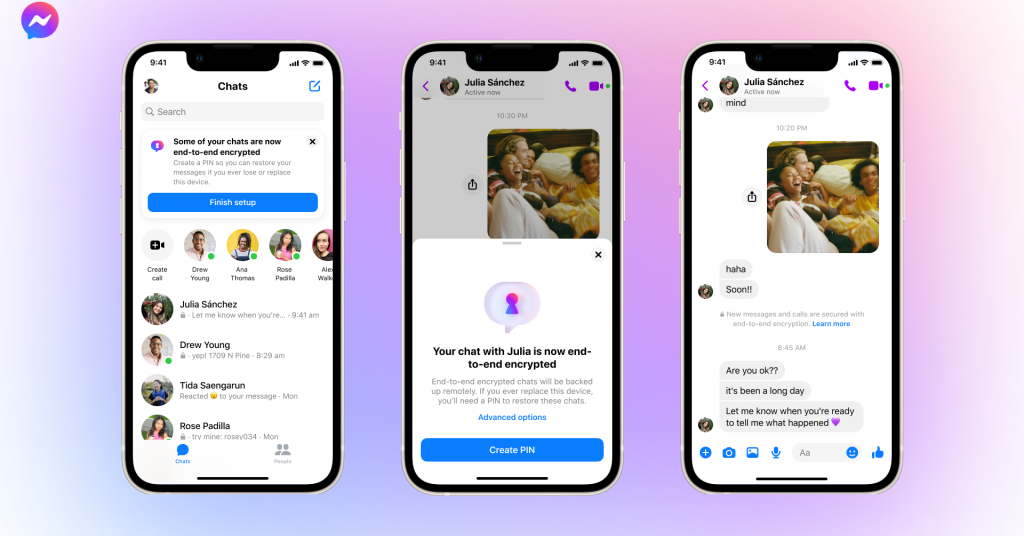
Facebook has shared an update on its long-awaited plans to turn on end-to-end encryption (E2EE) by default in its Messenger chat platform, saying it has begun testing the feature for chats “between some people” this week.

Facebook currently offers Messenger users the option to turn on E2EE on a per-chat basis, but such opt-in schemes are generally only embraced by a security-conscious minority. Making end-to-end encryption the default will be a big step: adding a substantial layer of security to a chat platform used by more than a billion people worldwide. It’s also likely to trigger arguments with governments who say E2EE hinders their ability to fight crime.

End-to-end encryption means that Facebook cannot view the content of its users’ messages — only participants can. This makes it much harder (though not impossible) for third parties like hackers or law enforcement to snoop on digital conversations.

In recent years, Facebook parent Meta has been slowly adding more layers of encryption to its various chat platforms, but these efforts have not yet been unified. Chats on WhatsApp are encrypted by default using the same protocol offered by industry standard secure messenger Signal; opt-in encryption for Instagram DMs is currently being tested; and Messenger offers E2EE via its “disappearing messages” feature. (The app previously also offered a similar “vanish mode,” but this is being removed, as per Facebook’s update today.)

Facebook has been criticized for not making E2EE default on Messenger, especially in the wake of the reversal of Roe v. Wade in the United States, where digital footprints like app chats will be used as evidence in prosecuting newly criminalized abortions. This was highlighted in a case this week, where Facebook complied with a police search warrant to hand over the Messenger chat history of a Nebraskan teen and her mother de ella, leading to the pair’s prosecution for charges related to the state’s preexisting abortion laws.

Facebook previously said it’s been slow to make E2EE default on all its chat platforms because of the difficulty of integrating such technology into apps used by billions and the need to balance user privacy with safety. In its update today, the company reiterated that it’s on track to make E2EE the default for all chats and calls on Messenger “in 2023.”

In addition to the new test of default E2EE, the company also announced a feature named “secure storage” that will encrypt cloud backups of users’ chat history on Messenger.

“[W]e’re testing secure storage to back up those messages in case you lose your phone or want to restore your message history on a new, supported device,” said the company. “As with end-to-end encrypted chats, secure storage means that we won’t have access to your messages, unless you choose to report them to us.”

Other new features being tested on Messenger include syncing deleted messages across devices; test the ability to send messages; and adding encryption to hands-free messages sent on Messenger using the company’s Ray-Ban Stories smart glasses.

Categories
Australia

Perth abortion rally: City protest marred by hecklers, ugly confrontation

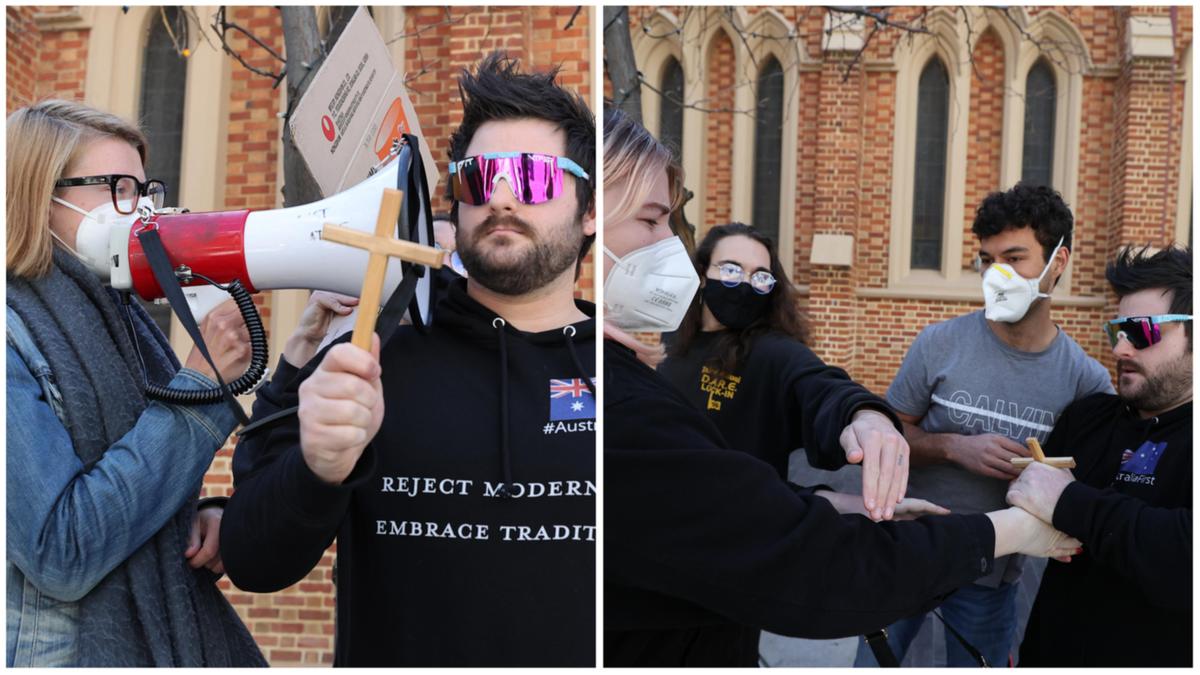
Activists at an abortion rights protest have clashed with men bearing crosses at a rally in Perth on Thursday.

Around two dozen pro-choice supporters gathered outside Wesley Church before marching through the city to call for better abortion access in WA.

It follows a recent decision in the United States Supreme Court to strip back the laws allowing safe abortions.

Several men holding up wooden crosses tried to disrupt the rally in Perth by heckling speakers.

.

Categories
US

Social media posts warn not to call 988. What you need to know : Shots

Only when the caller cannot or will not collaborate on a safety plan and the counselor feels the caller will harm themselves immediately should emergency services be called, according to the hotline’s policy.

d3sign/Getty Images


hide caption

toggle caption

d3sign/Getty Images


Only when the caller cannot or will not collaborate on a safety plan and the counselor feels the caller will harm themselves immediately should emergency services be called, according to the hotline’s policy.

d3sign/Getty Images

When the 988 Suicide & Crisis Lifeline launched last month, many mental health providers, researchers and advocates celebrated. Although a national suicide hotline had existed for years, finally there was an easy-to-remember three-digit number for people to call, they said. The shorter number would serve as an alternative to 911 for mental health emergencies.

But not everyone felt the same way. Some advocates and people who had experiences with the mental health system took to social media to voice concerns about 988 and warned people not to call it.

One Instagram post said, “988 is not friendly. Don’t call it, don’t post it, don’t share it, without knowing the risks.” The post, which had garnered nearly a quarter of a million likes as of early August, went on to list the risks as police involvement, involuntary treatment at emergency rooms or psychiatric hospitals, and the emotional and financial toll of those experiences.

Other posts on Instagram and Twitter conveyed similar concerns, saying that the hotline sends law enforcement officers to check on people at risk of suicide without their consent and that people, especially from LGBTQ+ communities and communities of color, may be forced into treatment.

So is 988 a critical mental health resource or a cause for concern? We decided to dig into these questions, figure out how 988 works, and explain what you need to know before dialing.

Why are some people saying not to call 988?

We reached out to the creators of some of the social media posts to ask them directly.

Liz Winston, who authored the Instagram post calling 988 “not friendly,” said she wanted people to understand all the potential outcomes of calling so they wouldn’t be blindsided by the “traumatizing system” that she experienced.

Last summer, Winston was having suicidal thoughts and visited a hospital in New York. She hoped to speak with a psychiatrist but instead she was involuntarily detained in the psychiatric wing of the emergency room. She said that she did not receive any counseling during the 24 hours she spent there and that the experience was “extremely traumatic.”

Winston hadn’t called the hotline, but she said those who can end up in a similar situation. It’s true that when police respond to calls about people in mental health crises, they often take them to an emergency room or psychiatric hospital.

khn logo

“I realize there is an urge to rescue people in crisis, but the reality is the services that exist make the problem much, much worse,” said Winston, who works in mental health peer support and has started an online support group for people recovering from involuntary treatment.

Research shows suicide rates increase drastically in the months after people are discharged from psychiatric hospitals. Those who were sent involuntarily are more likely to attempt suicide than those who chose to go, and involuntary commitments can make young people less likely to disclose their suicidal feelings in the future. Some people also get stuck with large bills for treatment they didn’t want.

Emily Krebs, a suicide researcher and assistant professor joining Fordham University this fall, said that involuntary treatment is viewed as a necessary part of suicide prevention in the US, but that other countries don’t see it that way. The United Nations has called forced mental health treatment a human rights abuse and asked countries to ban it.

Like Winston, Krebs wanted people to be fully informed before deciding to call 988. That’s why she wrote on Twitter that 988 can and will “send police if they deem it necessary.”

That can be dangerous, she said, given that 1 in 5 fatal police shootings in 2019 involved a person with mental illness. Some years, the share has been even higher.

What does 988 say about how it handles crisis situations?

Officials from 988 say they recognize the risks of having law enforcement officers involved in mental health emergencies. That’s why 988 was created as an alternative to 911, said John Draper, executive director of the hotline and a vice president at Vibrant Emotional Health, the company tasked with administering it.

“We know the best way for a person to remain safe from harm is for them to be empowered and to choose to be safe from harm,” Draper said. Dispatching police is a last resort, he said.

Counselors who answer the phones or respond to texts and online chats for 988 are supposed to be trained to actively listen, discuss the callers’ concerns and wishes, and collaborate with them to find solutions. Most calls about suicide are de-escalated without law enforcement, Draper said. Instead, counselors talk through people’s reasons for dying and reasons for living; have callers connect with supportive family, friends, religious leaders or others in their community; refer callers to outpatient treatment; or set up follow-up calls with 988.

Only when the caller cannot or will not collaborate on a safety plan and the counselor feels the caller will harm themselves immediately should emergency services be called, according to the hotline’s policy.

At that point, Draper said, “we have the choice of just letting [harm] happen or doing whatever we can to keep them safe.”

In previous years, before the 988 number launched, emergency services were dispatched in 2% of the hotline’s interactions, the service reported. With about 2.4 million calls a year, that means emergency services were initiated for roughly 48,000 calls. Those services can be mobile crisis teams, consisting of people trained in mental health and de-escalation, but in many rural and suburban communities, it is often police.

Contrary to some information circulating on social media, 988 cannot geolocate callers, Draper said. When emergency services are called, 988 call centers share with 911 operators information they have about the location of the person who contacted the hotline — typically a caller’s phone number, with area code, or a chat user’s IP address — to help first responders find the individual.

Starting this fall, Draper said, 988 will update its policies to require supervisors to review all calls that result in the use of emergency services. Counselors for 988 nationwide will also receive additional training on the alternatives to involving law enforcement and the consequences callers can face when police respond.

So should I use 988 or not?

We know it’s not satisfying, but the honest answer is: It depends.

The 988 hotline is the nation’s most comprehensive mental health crisis service and can provide crucial help to those in emotional distress. If you’re thinking about suicide but not taking steps to act on it, 988 is unlikely to call law enforcement without your consent. Instead, 988 counselors can provide resources, referrals and a kind ear. However, if you’re at imminent risk and could act on a plan to kill yourself, police may be called, and you could be taken to a hospital involuntarily.

Sonyia Richardson, a licensed clinical social worker who owns a counseling agency that serves mostly Black and brown clients in Charlotte, NC, said she didn’t immediately tell her clients about 988 when it launched. Even though she’s a member of her state’s 988 planning committee, she said she needed time to develop trust in the service herself. When she learned at a recent committee meeting that fewer than 5% of 988 calls in North Carolina led to a law enforcement response, she felt reassured.

“There are going to be issues perhaps with 988, but it might be one of the safer options for us,” Richardson said. With suicide rates increasing among Black Americans, the community needs more ways to save lives, she added.

If I don’t want to call 988, do I have other options?

Although the US doesn’t have a national, government-run mental health hotline that pledges not to call police without callers’ consent, several alternatives that are smaller than 988 aim to decrease law enforcement involvement.

“Warm” lines are one option. They’re typically staffed by “peers,” people who have experienced mental health challenges. They focus less on crisis intervention and more on emotional support to prevent crises. You can find a directory of warm lines by state here.

Below are other hotlines and resources. This is not a comprehensive list, and some resources may limit their services geographically.

KHN (Kaiser Health News) is a national newsroom that produces in-depth journalism about health issues. It is an editorially independent operating program of KFF (Kaiser Family Foundation).
Categories
Technology

Sennheiser Momentum 4 Wireless: Features, Reviews, and Price

A year after the launch of the Sennheiser Momentum 3, Sennheiser is back with the Momentum 4 Wireless. The new circumaural headphones have a design farther away from what we have seen in previous models and closer to proposals from other brands, such as the Sony WH-1000XM5, as well as comfort and, above all, autonomy.

And is that the new Sennheiser Momentum 4 Wireless offer up to 60 hours of battery life, a quite important promise and that puts them above their main competitors. We will know them better below, but not before noting that its price is $349.90, which can be booked now and will go on sale on August 23.

Sennheiser Momentum 4 Wireless technical datasheet

Sennheiser Momentum 4 Wireless
Dimensions and Weight
Diaphram Unit Dynamic 42mm
Noise Cancellation adaptive noise cancellation
ambient sound
microphones 2×2 MEMS
noise suppression
50Hz to 10kHz
Frequency Response 6Hz – 22kHz
sensitivity 106dB SPL (1kHz / 0dB FS)
Impedance Active: 470 ohms
Passive: 60 ohms
connectivity 3.5mm jack
USB Type-C
Wireless connectivity Bluetooth 5.2
Bluetooth profiles A2DP, AVRCP, HFP
Audio Formats SBC, AAC, aptX, aptX adaptive
Battery 700mAh
up to 60 hours
Price $349.90

The promise of comfort and autonomy

Sennheiser Momentum 4 Wireless

The Momentum 4 Wireless completely changes the design of the Momentum 3 Wireless to offer a sleeker, but also somewhat more generic design. The headphones are “lightweight” (although the firm has not disclosed the weight) and feature a “very padded” headband and ear pads. The low-friction hinge mechanism allows the position to be adjusted without having to use too much force and, of course, the headphones are foldable.

It is striking that the new headphones now lack buttons. Instead, Sennheiser has opted for a touch interface with gesture control. The only buttons available are for turning on the headphones and pairing them via Bluetooth. Everything else is done via touch and gestures.

In terms of sound, the headphones have a 42-millimeter transducer, connect via cable or Bluetooth 5.2 to the cell phone and support SBC, AAC, aptX, and aptX Adaptive codecs (279-420 kbps). They also have active noise cancellation, ambient mode, and noise cancellation in the microphones, arranged in a 2×2 matrix.

Finally, and regarding the battery, the headphones have a 700 mAh capacity and promise, according to the company, up to 60 hours of autonomy on a single charge. The fast charging system allows you to get, says Sennheiser, up to six hours of listening in just ten minutes. To save battery life, the headphones have automatic on/off.

Versions and price of the Sennheiser Momentum 4 Wireless

Sennheiser Momentum 4 Wireless

The Sennheiser Momentum 4 Wireless can be pre-ordered now and will go on sale on August 23. They are priced at $349.90 and are available in black and white.

This post may contain affiliate links, which means that I may receive a commission if you make a purchase using these links. As an Amazon Associate, I earn from qualifying purchases.

Categories
US

Clock is ticking for Biden to make key decisions on student loans

Borrower balances have effectively been frozen for more than two years, with no payments required on most federal student loans since March 2020 — when the coronavirus pandemic sent many Americans into lockdown. During this time, interest stopped accumulating and collections on defaulted debt have been on hold.

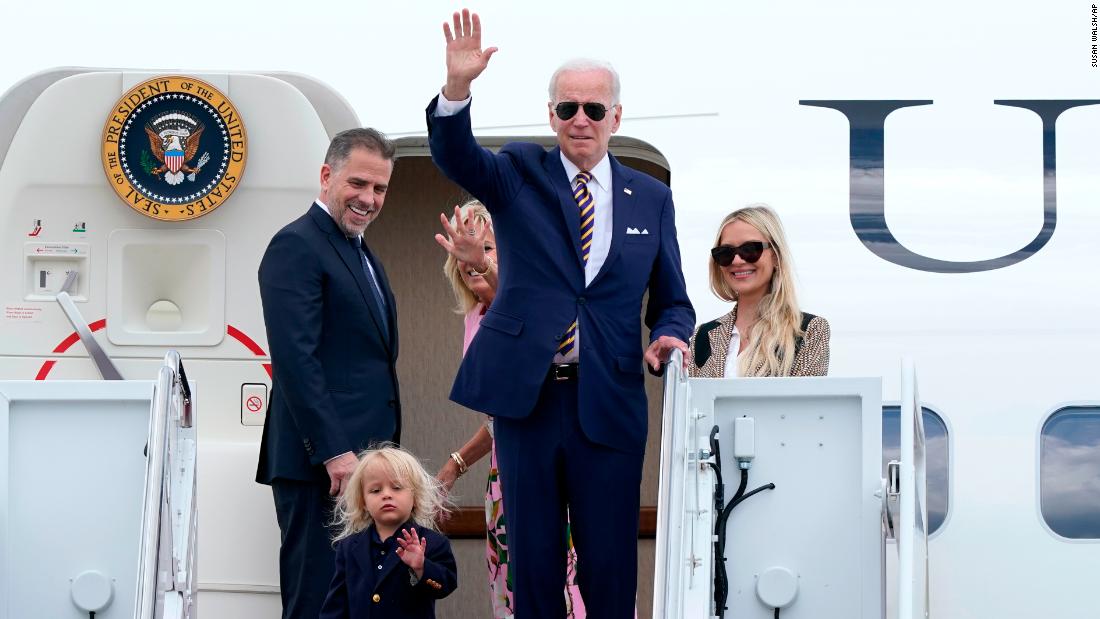
Now, as borrowers’ fates hang in the balance, the President is set to spend several days on a long-awaited vacation. And the Biden administration has not sent any signals to suggest they’ll announce a student loan decision while he’s away.

Biden has already extended the pause four times and has repeatedly argued that it was necessary to allow borrowers to get back on their feet. In April — when he last extended the repayment pause — he said that though the economy had gained strength, the country was “still recovering from the pandemic and the unprecedented economic disruption it caused.”

Along with potentially extending the pause, the White House has suggested Biden is considering canceling $10,000 per borrower, excluding those who earn more than $125,000 a year.

“We haven’t made a decision yet. … The Department of Education will communicate directly with borrowers about the end of the payment pause when a decision is made,” White House press secretary Karine Jean-Pierre told reporters on Tuesday. “When it comes to the cancellation… the President firsthand understands the burden that a student loan has on families… and so we’re just going to continue to assess our options for cancellation.”

Jean-Pierre emphasized that Biden will have something to announce “before August 31.”

With only three weeks until student loan servicers are scheduled to resume collecting federal student loan payments, Biden and his team are cutting it close. Normally, loan servicers send out billing statements at least 21 days before a payment is due, but those have n’t gone out yet since Biden is still making up his mind about him.

“For many weeks, there’s been no change in the guidance from the Department of Education. Servicers have been told to hold off on sending out any communication about the resumption of payments,” said Scott Buchanan, executive director of the Student Loan Servicing Alliance, a nonprofit trade group whose members are responsible for servicing over 95% of all federal student loans.

While Biden didn’t announce a decision on student loans announced before he ditched Washington for the beaches of South Carolina on Wednesday, he’s riding into his vacation on the headwinds of a few successful and chaotic weeks at the White House.

Over the course of the last three weeks, Biden has dealt with a case of Covid-19 and a subsequent rebound, he signed into law two major bipartisan pieces of legislation, he gave the green light on the targeted killing of the man who succeeded Osama bin Laden as leader of al Qaeda, and the Senate managed to pass a slimmed down version of his landmark climate and health care bill.
Meanwhile, despite concerns last month about the prospect of a recession, national unemployment numbers defied economists’ expectations, gas prices have continued to go down in the last several weeks and heightened inflation eased in July. However, Americans are still paying more for everyday items like food, gas and vehicles than they’re used to, leaving less room in their budgets.
The midterm elections are less than 100 days away, and CNN’s latest data shows Biden’s approval rating remains low.

Americans’ attitudes toward student debt relief are sharply divided along partisan and generational lines.

A majority of Democrats in a May CNN poll (56%) — and an even wider majority of self-described liberals (69%) — say the government is doing too little on student loan debt, according to the CNN poll, while only a third of Republicans and self-described conservatives alike say the same. Seventy percent of adults younger than 35 say the government is doing too little, a figure that drops to 50% among those in the 35-49 age bracket, and 35% among those age 50 or older.
Continuing the forbearance or canceling debt could deliver financial relief to borrowers. But broad student loan forgiveness would also shift the cost — likely hundreds of billions of dollars — to taxpayers, including those who chose not to go to college or already paid for their education. Loan cancellation could also add to inflation while doing nothing to address the root of the problem: college affordability.
And the President, so far, has failed to get most of his college affordability proposals approved by Congress. The latest iteration of his proposed social safety net bill, called the Inflation Reduction Act, was approved by the Senate this month and now heads to the Democrat-controlled House of Representatives for a vote. But the bill does not contain previously proposed provisions that would have lowered the cost of college.

Outside of the payment pause and an executive action to broadly cancel student loan debt, there are several other ways many of the 43 million federal student loan borrowers may qualify for some student loan forgiveness. Targeted debt forgiveness programs already exist that help public sector workers and borrowers who were defrauded by their for-profit college, for example.

And under Biden, some of these programs have been temporarily expanded, making it easier for some borrowers to qualify for forgiveness. The administration has approved more than $26 billion in targeted cancellation for over 1.3 million borrowers — more than under any other president.

CNN’s Ariel Edwards-Levy contributed to this report.

.