Categories
Australia

Two former NSW MPs interviewed at last minute for senior trade roles, leaked emails reveal

Two former NSW MPs were given “last-minute” interviews for overseas trade commissioner roles despite there already being preferred candidates, according to an email from inside Investment NSW.

On August 14, 2021, Investment NSW CEO Amy Brown said she had been “asked” to include the two candidates in interviews for the India and Singapore-based roles.

The email, sent to Ms Brown’s assistant and the recruiter, shows the candidates were included despite the recruitment process already being well underway.

“We’ve been asked to interview two last-minute candidates for the Senior Trade and Investment commissioner roles … Jodi McKay — India/Middle East (and) Pru Goward — India/Middle East or Singapore,” she wrote.

The release of the email is likely to place more pressure on NSW Premier Dominic Perrottet over whether there was political interference in the recruitment of trade commissioner roles, after sustained scrutiny over a similar job based in New York which was given to former deputy premier and Nationals leader John Barilaro.

The Premier has launched an independent inquiry into the New-York-based role, which is expected to be finished within days.

Mr Barilaro will appear on Monday before a parliamentary inquiry, where he is expected to be questioned about his involvement in the recruitment of trade commissioners, and his appointment to the New York position.

Former NSW deputy premier John Barilaro
John Barilaro successfully applied for the New York job after leaving politics last year.(AAP: Joel Carrett)

He has since withdrawn from the role, and much of the focus has turned to how involved he and another minister, Stuart Ayres, were in the hiring process.

Last week, Mr Ayres stood down as trade minister and deputy leader of the NSW Liberal party, after a draft review raised concerns about his involvement in the recruitment process for the Americas role and whether he might have breached the ministerial code of conduct.

Mr Ayres denies any wrongdoing.

“However, I agree it is important that this matter is investigated appropriately and support the Premier’s decision to do so,” he said in a statement.

Mr Barilaro has maintained he always followed the proper process.

.

Categories
US

US Senate approves bill to fight climate change, cut drug costs in win for Biden

WASHINGTON, Aug 7 (Reuters) – The US Senate on Sunday passed a sweeping $430 billion bill intended to fight climate change, lower drug prices and raise some corporate taxes, a major victory for President Joe Biden that Democrats hope will aid their chances of keeping control of Congress in this year’s elections.

After a marathon, 27-hour weekend session of debate and Republican efforts to derail the package, the Senate approved the legislation known as the Inflation Reduction Act by a 51-50 party line vote Vice President Kamala Harris cast the tie-breaking ballot.

The action sends the measure to the House of Representatives for a vote expected Friday that could forward it, in turn, to the White House for Biden’s signature. In a statement, Biden urged the House to act as soon as possible and said he looked forward to signing the bill into law.

Register now for FREE unlimited access to Reuters.com

“The Senate is making history,” an elated Senate Majority Leader Chuck Schumer said, after pumping his fists in the air as cheered Democrats and their staff members responded to the vote with a standing ovation.

“To Americans who’ve lost faith that Congress can do big things, this bill is for you,” he said. “This bill is going to change America for decades.”

Schumer said the legislation contains “the boldest clean energy package in American history” to fight climate change while reducing consumer costs for energy and some medicines.

Democrats have drawn harsh attacks from Republicans over the legislation’s $430 billion in new spending and roughly $740 billion in new revenue. read more

Nevertheless, Democrats hope its passage, ahead of an August recess, will help the party’s House and Senate candidates in the Nov. 8 midterm elections at a time when Biden is suffering from anemic public approval ratings amid high inflation.

The legislation is aimed at reducing carbon emissions and shifting consumers to green energy, while cutting prescription drug costs for the elderly and tightening enforcement on taxes for corporations and the wealthy.

Because the measure pays for itself and reduces the federal deficit over time, Democrats contend that it will help bring down inflation, an economic liability that has also weighed on their hopes of retaining legislative control in the run-up to the 2024 presidential election.

Republicans, arguing that the bill will not address inflation, have denounced the measure as a job-killing, left-wing spending wish list that could undermine growth when the economy is in danger of falling into recession.

Democrats approved the bill by using a parliamentary maneuver called reconciliation, which allows budget-related legislation to avoid the 100-seat chamber’s 60-vote threshold for most bills and pass on a simple majority.

After several hours of debate, the Senate began a rapid-fire “vote-a-rama” on Democratic and Republican amendments on Saturday evening that stretched into Sunday afternoon.

Democrats repelled more than 30 Republican amendments, points of order and motions, all intended to scupper the legislation. Any change in the bill’s contents wrought by an amendment could have unraveled the Democrats’ 50-senator coalition needed to keep the legislation on track.

NO CAP ON INSULIN COSTS

But they were unable to muster the votes necessary to retain a provision to cap soaring insulin costs at $35 a month on the private health insurance market, which fell outside the reconciliation rules. Democrats said the legislation would still limit insulin costs for those on Medicare.

In a foreshadowing of the coming fall election campaign, Republicans used their amendment defeats to attack vulnerable Democrats who are seeking reelection in November.

“Democrats vote again to allow chaos on the southern border to continue,” Senate Republican leader Mitch McConnell said in a statement that named Democratic Senators Mark Kelly of Arizona, Catherine Cortez Masto of Nevada, Maggie Hassan of New Hampshire and Raphael Warnock of Georgia. All four are facing tight contests for reelection.

The bill was more than 18 months in the making as Biden’s original sweeping Build Back Better plan was whittled down in the face of opposition from Republicans and key legislators from his own party.

“It required many compromises. Doing important things almost always does,” Biden said in a statement.

Register now for FREE unlimited access to Reuters.com

Reporting by Richard Cowan, Rose Horowitch, David Morgan and Makini Brice; Editing by Scott Malone, Mary Milliken, Lisa Shumaker and Cynthia Osterman

Our Standards: The Thomson Reuters Trust Principles.

.

Categories
Business

Australian car industry’s secret emissions plan would slow drive toward electric vehicles

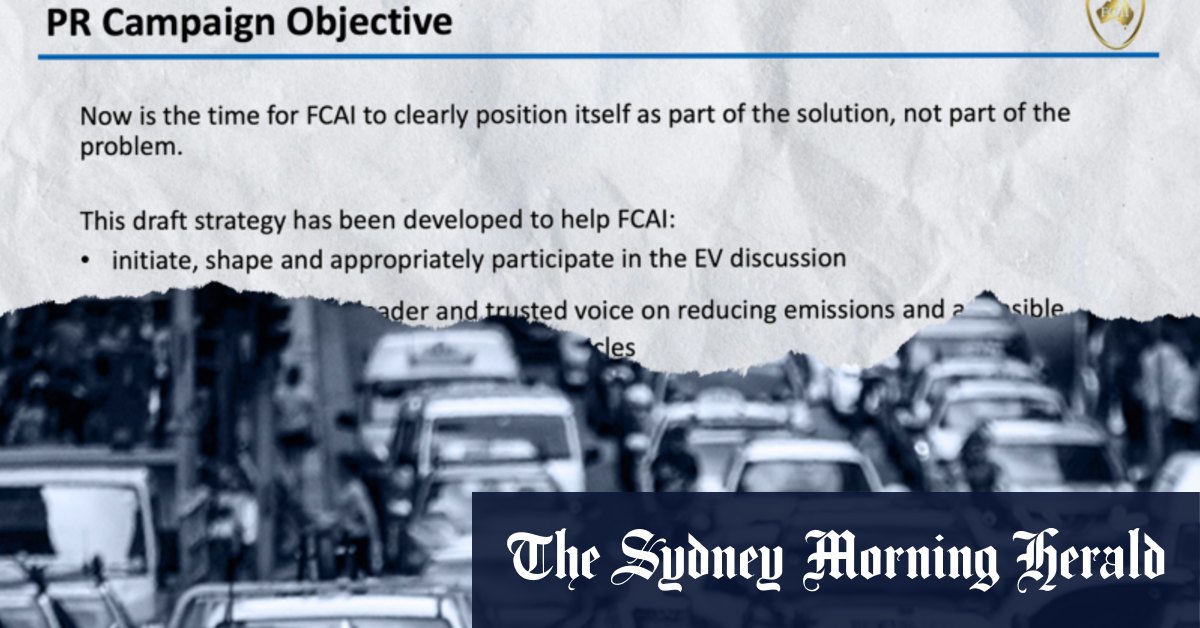
They outline a campaign that started last week to shape public discussion and position the auto industry as a “trusted voice” in the “moderate middle” of the climate debate. But behind the scenes, they are lobbying policymakers to adopt rules that would preserve petrol and hybrid cars that are the main business of the biggest manufacturers such as Toyota for decades to come.

Asked about the strategy, FCAI chief executive Tony Weber said the industry group wanted to see significant emissions cuts in the sector but there were constraints around the number and cost of low emissions cars available.

“We want a sensitive debate predicated on the availability of technology, price points and what Australian consumers want to buy, not some sort of debate created around ‘we need to do something by 2050’,” Weber said.

“We want to transition to low-emissions technology but you’ve got to put it in the context of the country you’re in. We’ve had the climate wars over a decade — we’re late to this party. We’ve also got to recognize the Australian context, what Australian consumers drive.”

The auto industry’s existing emissions scheme relies on a system of “super credits” in which lower emissions vehicles are awarded points that can be used to offset higher polluting vehicles.

Audrey Quicke, a climate and energy researcher at the Australia Institute think tank, said voluntary standards were lax, riddled with loopholes and opaque in the way they calculate emissions performance.

loading

Australia’s car industry could comfortably exceed its own voluntary standards for 2030 by operating in a business-as-usual manner as more electric and hybrid vehicles from overseas flow into the Australian market, the FCAI documents show.

“The current FCAI industry target achieves a reduction in CO2 emission from new car sales that exceeds both the Paris commitment of 26 to 28 per cent and the new government’s commitment of 43 per cent over 2005 levels,” the FCAI’s strategy says.

But analysts point out that the government’s 43 per cent by 2030 emissions cut target applies to the nation’s total emissions. Reaching a 43 per cent cut for new car sales in 2030 would still mean car emissions fell far short of a total 43 per cent target because the vast majority of cars on the road are over one year old.

“Anything that delays emissions standards is going to create problems for the longer term [because] almost every single petrol car sold in Australia in the next couple of years is still going to be on the road in the 2030s and 2040s, and that’s when Australia needs to be getting to net zero,” said Gareth Bryant, a senior lecturer at the University of Sydney who specializes in climate and energy finance.

“From the car companies’ perspective they’re operating globally so they’re pigeon-holing Australia as a place where they can keep selling these polluting, high-emissions vehicles,” Bryant said. “They can rejig production to balance it out. To some extent they can use Australia as an offset for places where there are standards.”

Transport is Australia’s third-largest source of greenhouse gas emissions and the sector is getting dirtier, with CO2 output rising by 48 per cent since 1990 and most of those emissions coming from the tailpipes of cars and trucks on the road.

The FCAI documents acknowledge that regulation and deeper emissions cuts are coming, and call for big boosts in electric car charging points and other infrastructure, while fighting for the core issue of keeping fuel efficiency standards favorable to the biggest manufacturers.

The objective is to “implement a mandatory new car CO2 regulation in line with the FCAI voluntary standard,” the documents say. The FCAI strategy concedes that “the government is unlikely to adopt the current FCAI standard without change”. Weber said the industry would continue to review its targets.

Confidential research prepared for the car industry group suggests Australia’s car market is about to radically change shape as more hybrid and electric vehicles displace internal combustion engine cars.

Currently, 88 per cent of new passenger vehicles sold are powered by internal combustion engines, with 10 per cent having versions of hybrid engines and just 2 per cent having battery-powered electric engines. Plug-in electric cars are less than 1 per cent of the market, the research shows.

But with new models flowing in from many global car companies, and prices for versions of electric cars expected to plummet, the market is expected to look vastly different by the end of this decade.

Even without further government action, hybrid vehicles will make up over half of all new passenger vehicles sold by 2030, the research shows, with internal combustion engine vehicles making up 24 per cent and battery-powered electric vehicles 18 per cent. Plug-in electric cars would make up 4 per cent of new sales.

“The price of an entry BEV (battery electric vehicle) midsize car will decrease by $17,400 between 2021 and 2030,” the research says.

The strategy mirrors aspects of the approach used overseas by car manufacturers such as Toyota, which combines public statements about environmental stewardship with behind-the-scenes pressure on policymakers to weaken regulation of car emissions.

Toyota formed “Team Japan” in that nation along with Subaru, Mazda, Kawasaki and Yamaha to defend the place of petrol and hybrid cars in the face of competition from electric vehicles.

Toyota last year refused to commit to a Glasgow Declaration pledge to phase out fossil fuel cars by 2040, saying “an environment suitable for promoting full zero emission transport has not yet been established” in many parts of the world.

Influence Map, an independent international think tank that records climate change-related lobbying by companies and industry groups, found Toyota to be the world’s third worst offender in attempting to quash emissions cuts after Chevron and Exxon Mobil in an analysis of 350 large-emitting global companies.

“Automotive industry associations are spearheading global opposition to climate regulation across major markets,” Influence Map concluded in a report released this year.

Green groups in Australia have also observed the parallels, describing the car industry’s public relations efforts as greenwashing.

“The car lobby’s engagement with fuel efficiency standards reflects the pattern we’ve seen elsewhere – conjuring roadblocks where there are none,” said Lindsay Soutar, a Greenpeace researcher who has tracked car company lobbying activities around the world.

Industry insiders said some in the auto industry were uncomfortable with the FCAI’s strategy, with division emerging between manufacturers who sold electric vehicles and those who had focused on petrol and hybrid vehicles.

The organization’s membership is based on market share, with the biggest manufacturers such as Toyota holding dominant roles. The FCAI’s chair is Toyota Australia’s chief executive Matthew Callachor.

The federal government has announced financial support for a network of electric vehicle charging stations, with a focus on rural Australia and cuts to fringe tax benefits which would lower the price of some electric vehicles.

A spokesperson said the transport department had “already been tasked with establishing a unit to drive our domestic transport sector towards net zero emissions” and was considering “further policy positions”.

Behyad Jafari, chief executive of peak body the Electric Vehicle Council, the members of which would stand to benefit from stronger fuel efficiency standards, said Australia was a global outlier for its lack of standards.

“The reality is that emissions standards are what car companies are used to facing all around the world,” Jafari said. “It’s business as usual for them and they have adjusted to produce cleaner cars in many places. But not here.”

The Morning Edition newsletter is our guide to the day’s most important and interesting stories, analysis and insights. Sign up here.

Categories
Entertainment

Hamlet review – Ian McKellen holds court in a dumb-ballet take on the Bard | edinburgh festival 2022

Might we be missing some of Hamlet’s advice to the players? Did Shakespeare’s words of wisdom get lost over the years? Perhaps, for example, there was a bit that went: “Whatever you do, don’t try this narrative ballet – even when you’ve got a knight of the realm in the cast.”

Such a tip would have spared us this eccentric staging by director and choreographer Peter Schaufuss, whose Edinburgh Festival Ballet has taken residence in a freshly kitted-out St Stephens. His big draw of him, of course, is Sir Ian McKellen, who first played Hamlet at the Edinburgh King’s in 1971.

Now at 83, he is a little on the old side for the student prince, despite his recent starring role in an age-blind production at the Theater Royal, Windsor. He would make an even less likely classical dancer. Instead, he gamely turns up to deliver a greatest-hits mix of Hamlet’s speeches, while dancer Johan Christensen, in matching costume, mimes his way through a 75-minute version of the tragedy.

Ian McKellen as Hamlet in patchwork top, orange trousers and blue beanie hit, sat on the floor of the Ashton Hall stage
Ian McKellen as Hamlet. Photograph: Devin de Vil

McKellen, as you would expect, gives the part the full orotund treatment, his echoing voice carrying the weight of morose old age, rather than impetuous youth, while a floppy-haired Christensen writhes about the big thrust stage. Good on him for continuing to treat the fringe as a place for experiment, but this is boil-in-the-bag Shakespeare with all the nutrients sucked out.

Aside from McKellen’s speeches, the rest, as we should have predicted, is silence. The large Schaufuss company does the whole thing in mime, every emotion signaled, every gesture underscored. You get the high-contrast plot points, but none of the textual subtlety and no sense of why such a pantomimic version should be told.

Entirely lacking in wit (and I include a bouncing Rosencrantz and Guildenstern in that), it has an aesthetic straight out of the 1950s – all doublet and hose, brooding poses and bombastic score. The chorus trots around with folderol enthusiasm while the solos, with their flowing arms, high kicks and billowing skirts, could have been lifted from a Kate Bush video. The closing fight is refreshingly dynamic, but it comes too late to offset the enterprise’s crassness.

Categories
Sports

Recent Match Report – AUS Women vs IND Women Final 2022

Australia 161 for 8 (Mooney 61, Lanning 36, Gardner 25, Renuka 2-25, Rana 2-38) beat India 152 (Harmanpreet 65, Rodrigues 33, Gardner 3-16, Schutt 2-27) by nine runs

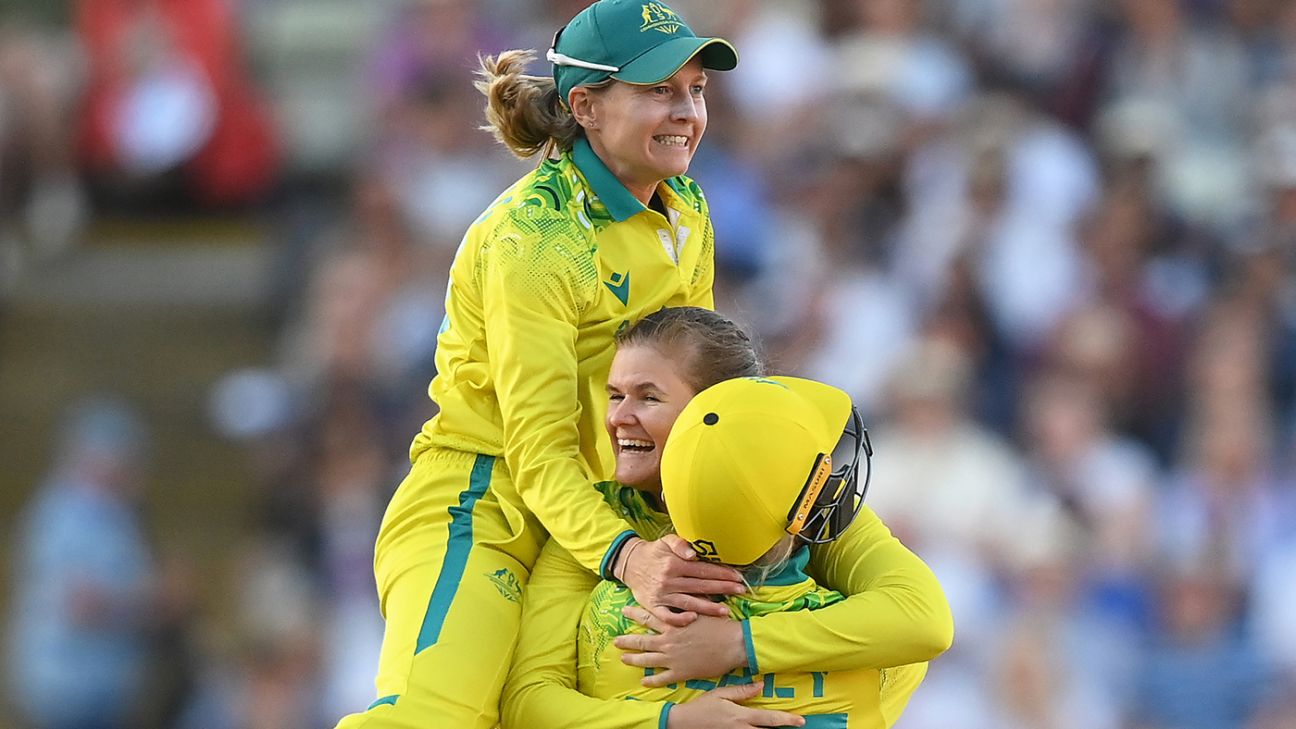
Australia gave yet another lesson in closing out games under pressure and crushed India’s dreams to clinch gold at the Commonwealth Games 2022. With India needing 44 off 30 with seven wickets in hand, Ashleigh Gardner produced an incredible plot twist by dismissing Pooja Vastrakar and the half -centurion Harmanpreet Kaur off successive deliveries.

With a foot in the door, Australia barged it open by choking the lower middle order to clinch victory by nine runs as India lost their last eight wickets for just 34 runs. A crestfallen Harmanpreet, whose 43-ball 65 had lifted India into a match-winning position, sat motionless in the dugout, as did the rest of the team, who had to settle for the silver medal.

Meanwhile, Australia, holders of the 50-overs and T20 World Cups, added the only accolade they lacked – a gold medal at a multi-sports event – to reaffirm their status as the best team in the world.

Renuka delivers key breakthrough

India gave Alyssa Healy an early let-off two years ago in the T20 World Cup final, and saw her pummel a match-winning 39-ball 75. They may have briefly wondered if Healy would make them pay here too, when a thick edge off Renuka Singh flew just wide of where a regulation slip would be in the first over of the match.

Fortunately for them, Renuka sent Healy back in her next over, aided by an excellent DRS call from Harmanpreet. Ball-tracking suggested that Renuka’s nip-backer, which Healy played all around, would have crashed into middle and leg stumps. It wasn’t until the final over of the powerplay that Australia began to shift gears as Meg Lanning muscled Renuka down the ground for six in a 13-run over that took Australia to 43 for 1.

Lanning and Mooney push on

Despite the early loss and a few quiet overs, Lanning and Beth Mooney exuded a sense of calm, knowing the kind of damage they could inflict once set. Both batters targeted the short straight boundary effectively off the spinners, and raised their half-century stand off just 37 balls. Australia picked off six boundaries in the ninth and tenth overs, including four in a single Harmanpreet over, to set themselves up superbly at 83 for 1 at the halfway stage.

Radha changes the mood

After a tight first over in which she conceded just three tuns, Radha Yadav left her mark on the game in the 11th over when she showed terrific game-smarts to run Lanning out at the non-striker’s end. Having stopped a straight hit from Mooney, she quickly reverse-flicked the ball between her legs and onto the stumps with Lanning’s bat in the air when the stumps were disturbed. In the next over, her prowling presence of her at point resulted in a stunning catch as she threw herself full-stretch to dismiss Tahlia McGrath, who played the game despite testing positive for Covid-19.

Australia’s lower order goes big
Gardner offset any pressure Australia may have felt with some typically aggressive hits to pocket a quick 25 before she was stumped off Sneh Rana. Despite wickets falling around her, Mooney carried on, raising a half-century off just 36 deliveries. Australia didn’t allow the succession of wickets to stall their momentum, even as India’s fielders kept pulling off stunners, including a one-handed back-pedaling catch from Deepti Sharma to dismiss Mooney, and Meghna Singh’s catch running back from mid-on to remove the dangerous Grace Harris. Rachael Haynes muscled an unbeaten 10-ball 18 to push Australia past 160.

India make nervous start

India lost both openers inside the first three overs. Smriti Mandhana was bowled behind her legs while looking to swing one into the leg side, ending an innings that had begun hopefully with scorching off-side strokes, while Shafali Verma slogged and holed out two balls after she was reprieved at cover by Megan Schutt.

Harmanpreet and Rodrigues keep India in the hunt
Five years after her knock for the ages in the 50-overs World Cup semi-final against Australia, Harmanpreet threatened to produce the T20 version of that epic 171* against the same opponents.

Coming in with India 23 for 2 in the fourth over, Harmanpreet revived their innings with her drives and lofted hits, including a foray down the pitch for a six over wide long-on off Jess Jonassen in the tenth over. She began employing the sweep frequently too, as Australia’s spinners tried a leg-stump line against her. At the other end, the bat-slapping and fist-pumping Jemimah Rodrigues overcame a slow start – she was 1 off 7 at one point – to take some pressure off Harmanpreet by picking up regular boundaries in a run-a-ball 33. Their 96-run partnership had brought the equation down to a gettable 44 off 34 when Rodrigues was bowled looking to heave Schutt across the line.

Gardner applies the choke
Australia’s relief turned into full-blown ecstasy when Gardner delivered a stunning second over, in which she removed the promoted Vastrakar and Harmanpreet off consecutive deliveries. While Vastrakar mistimed a hoick to deep midwicket, Harmanpreet fell attempting a paddle, the ball lobbing off her helmet to be caught behind by Healy. At that stage, Gardner’s figures were a magical 2-0-5-3.

As India lost wickets, the pressure caught up on them as batter after batter committed hara-kiri. Rana and Radha were run out, and Deepti, seemingly India’s last hope with them needing 13 off 10, was out lbw to Schutt.

It boiled down to India needing 11 off the final over, with Yastika Bhatia, who had come on as a concussion substitute for wicketkeeper Taniya Bhatia, on strike to Jonassen. After turning down a single first ball, she ran an improbable second run off the second, in order to keep the strike, resulting in Meghna’s run-out at the danger end. With India now needing 10 off four balls, Yastika was out lbw attempting a reverse sweep.

And just like that, just like 2017, India had fallen agonizingly short in a global final.

Shashank Kishore is a senior sub-editor at ESPNcricinfo

.

Categories
US

Senate Democrats pass climate, tax and health care bill after marathon voting session

The Senate on Sunday passed the Inflation Reduction Act (IRA) along party lines, 51-50, handing Democrats a crucial legislative win as the midterm cycle ramps up — despite GOP objections at the billions in spending and drug pricing reforms.

The sprawling climate, tax and health care legislation is now set up for quick passage in the Democratic-controlled House, with timing still to be announced, before President Joe Biden signs it into law.

Included in the bill, supporters are quick to highlight, are measures to foster job creation, raise taxes on large corporations and the wealthy, allow Medicare to negotiate down some prescription drug costs, expand the Affordable Care Act health care program and invest in combating climate change by implementing tax credits for clean energy initiatives, among other things.

Vice President Kamala Harris cast the tie-breaking vote in the Senate with all Democrats in support of the legislation and all Republicans opposed. The proposal was passed via the budget reconciliation process, which requires a simple majority rather than the 60 votes typically needed to overcome a filibuster.

The rules of reconciliation, however, limit what can and cannot be passed with 51 votes — strictures that narrowed the legislation’s scope even in the final days before the vote.

The legislation’s tax provisions, prescription drug-pricing reform, as well as boosted IRS tax enforcement measures, are anticipated to raise an estimated revenue of $739 billion — $300 billion of which Democrats say would go toward reducing the deficit.

The plan would reduce federal budget deficits by $102 billion over 10 years, according to the nonpartisan Congressional Budget Office. Despite the bill’s name, however, the CBO found that it would have a minimal affect on high inflation in the short-term — something Democrats have conceded when pressed.

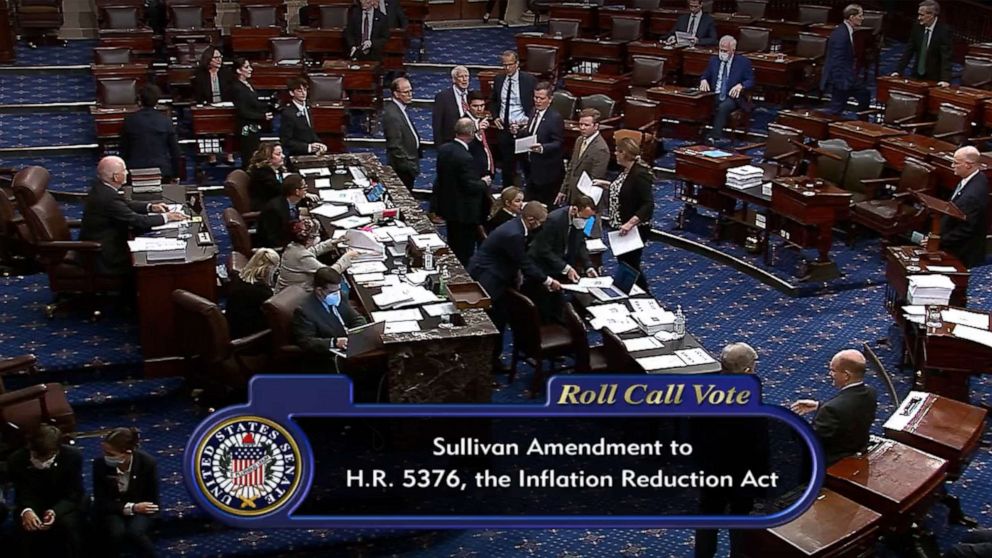
The bill passed the Senate after a punishing, approximately 16-hour “vote-a-rama,” in which any senator could introduce an amendment to the bill as part of the reconciliation process.

The amendment process fueled painful votes for each party.

Vulnerable Democratic incumbents up for reelection this year had to dance around a vote on the Biden administration’s decision to scrap Title 42, a Trump-era order using coronavirus concerns to prevent migrants from entering the country while seeking asylum. Republicans, meanwhile, mostly voted against a Democratic amendment that would have capped out-of-pocket insulin costs at $35 a month for people with private health insurance.

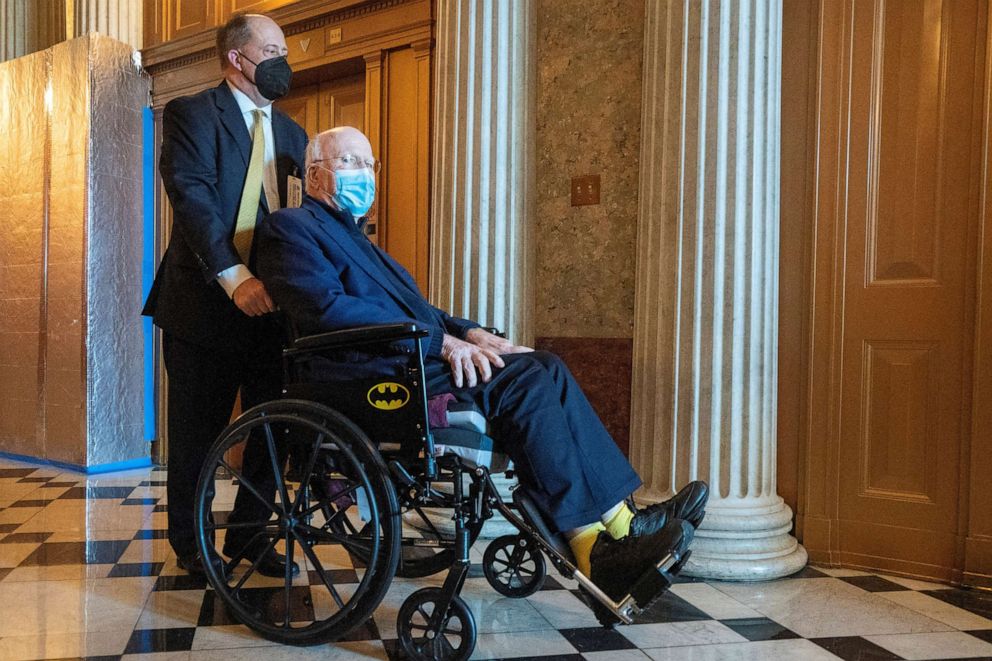
PHOTO: Senator Patrick Leahy is wheeled to an elevator from the Senate floor during amendment votes, also called the "vote-a-rama"on the Inflation Reduct Act 2022, at the US Capitol building in Washington, Aug. 7, 2022.

Senator Patrick Leahy is wheeled to an elevator from the Senate floor during amendment votes, also called the “vote-a-rama”, on the Inflation Reduct Act 2022, at the US Capitol building in Washington, Aug. 7, 2022.

Ken Cedeno/Reuters

The IRA passage marks the culmination of grueling negotiations between Senate Majority Leader Chuck Schumer, DN.Y., and Sen. Joe Manchin, DW.Va., who had been a consistent obstacle to cobbling together a Democrats-only social spending bill via reconciliation.

The pathway for a successful vote was cemented late last week when Sen. Kyrsten Sinema, D-Ariz., another key centrist, signed on after winning some tweaks to the bill.

Among the changes Sinema won were the eliminations of tax provisions targeting wealthy hedge-fund managers and private equity executives. The official Senate rules, the parliamentarian, also scrapped a provision intended to reprimand drug companies that raise the prices of some prescription drugs faster than inflation for patients with private insurance.

Still, the bill’s passage marks a major step toward President Biden’s campaign promises to tackle climate change, reform drug pricing and other issues; and it gives Democrats a new legislative win to run on heading into the November midterms, in an environment where many voters have soured on Biden’s handling of the economy and historic inflation.

“Today, Senate Democrats sided with American families over special interests, voting to lower the cost of prescription drugs, health insurance, and everyday energy costs and reduce the deficit, while making the wealthiest corporations finally pay their fair share. Iran for President promising to make government work for working families again, and that is what this bill does — period,” Biden said in a statement

The IRA also extends a streak of achievements for Biden and congressional Democrats, including passage of a bipartisan anti-gun violence bill and legislation to boost the domestic semiconductor industry.

“This bill is going to change America for decades,” Schumer crowed after final passage.

Republicans have already forecasted that they’ll paint Democrats as uncaring about Americans’ financial burdens at a time of rapid price hikes while passing billions of dollars in new spending.

“This idea that this massive tax increase will just somehow be absorbed by corporate America when they will pass those costs along to consumers, and it will make inflation worse,” Senate Minority Whip John Cornyn, R-Texas, said last week.

Sen. Mike Rounds, RS.D., said on ABC’s “This Week” on Sunday that the IRA would be not a boon to the country but a “boondoggle.”

“What they’re really trying to do is to take dollars in and then redistribute it back out to the places that they think it should be done… This is not the time to be experimenting in that area,” he said.

He also contended that Medicare’s drug negotiating power wouldn’t pay off: “This is not healthy, it’s not good and it will cause problems in the marketplace.”

Categories
Business

From French lessons to food delivery, record numbers of young people are finding side hustles to make ends meet

After getting stung with a sudden $90 a week rent increase, Hoshi in Bunbury, WA, set about selling what they owned.

First, the furniture, bicycles, and sports equipment. Then, clothes and jewellery.

Finally, they gathered up the little things that had sentimental value.

They would sell them last.

“I’m not just missing $90 a week,” they said.

“With the price of vegetables and transport costs going up, it feels like someone has really just taken a huge bite out of that financial flexibility.”

Faced with rent increases, price hikes and stagnant wages, Hoshi is one of many young people who have been hustling for income on the side, outside of their normal job, to make ends meet.

The rush to pick up extra work has been seen across most age groups, but has been greater with young people, who are generally less financially secure and more exposed to the effects of inflation.

Young people are the most likely age group to have more than one job, and this trend is on the increase, ABS data shows.

For many, the situation is dire, but some are finding creative ways to stay afloat.

Working 9-5, and then hustling

Rose with her dog
Rose earns $200-$400 per week from three separate side hustles.(Supplied: Rose)

Outside of her full-time 9-5 office gig, Rose tutors French and Italian over Zoom, delivers online food orders, and sells the pot plants she propagates in her crowded Sydney apartment.

The hustle began two months ago, after lockdowns had eased and, like many, Rose found that the extra socializing was expensive.

On top of this, she had recently moved from a sharehouse to escape the chaotic and cramped experience of COVID lockdowns.

Living alone had been affordable when she was bunkering down, but not anymore.

“Lockdown kind of changed things — it made me want to have a bit more stability in my life,” she said.

“I got used to a nicer way of living at home and now I’m going back to those old comforts of going out, and I have to readjust.”

At the same time, the prices of most things are going up.

Average weekly rental payments have increased almost 10 per cent over the past year, while inflation is rising at its fastest rate since 1990.

.

Categories
Entertainment

Prince Andrew’s pay-off to sex accuser Virginia Giuffre ‘was as little as $5.2 million’ despite reports of $21 million

Prince Andrew’s pay-off to sex abuse accuser Virginia Giuffre was as little as a quarter of the reported $21 million.

sources told The Sun his lawyers negotiated a cut-price deal of $5.2 million-to-$8.74 million.

That was as much money the disgraced Duke could scrape together quickly to halt her civil lawsuit.

It may explain why Ms Giuffre, 38, was not forced to sign a gagging order as part of the deal — and is now free to write a “tell-all” book, which she promises to do.

It comes after The Sun revealed last week that Andrew and his ex-wife Sarah Ferguson have bought an $8.74 million house in London’s swanky Mayfair — despite complaining about being strapped for cash.

A source said: “It was thought, and widely reported, that Virginia got a settlement of £12 million (A$21 million) from Andrew, but that’s not right.

“It was far less than that, as low as £3 million (A$5.2 million).

“No doubt this will have influenced the conditions of the agreement that she was prepared to sign.”

Ms Giuffre, a victim of sex trafficking at the hands of paedophile financier Jeffrey Epstein, claimed Andrew sexually abused her when she was 17.

Although the agreement, reached in February, contained no formal admission of liability or apology from Andrew, it said he accepted Ms Giuffre was a “victim of abuse” and regretted his association with Epstein.

A spokeswoman for Prince Andrew was approached for comment.

This article originally appeared in The Sun and was reproduced with permission.

Read related topics:Prince Andrew

.

Categories
Sports

AFL Round-Up: Collingwood’s wildest dreams are coming true, Carlton are on the brink and Richmond are coming

If you weren’t a Collingwood believer, you must be by now — but the situation at Carlton is far less rosy.

Welcome to the AFL Round-Up, where we digest the week that was.

The Collingwood situation

It’s not a drill anymore.

Collingwood’s feel-good renaissance — their hot streak of heart-stoppers — is no longer a thrilling sideshow to the 2022 season. It may well be the main event.

Melbourne were the latest — and probably the best team — to have run into the Magpie buzzsaw and come out on the wrong side throughout a run that has now resulted in 11 straight wins.

Jamie Elliott celebrates a goal for Collingwood
The MCG is Collingwood’s playground right now.(Getty Images: Darrian Traynor)

Collingwood are in second position with two games to play. Beat Sydney next week and a top-four finish at minimum is secured. No matter how they have done it, Craig McRae’s team have put themselves in a position from which premierships can be won.

And, in a season where consistency has eluded all but Geelong, Collingwood’s unique blend of speed, physicality and Disneyesque self-belief might just make the most sense.

There’s no point looking at the stats and pondering the collective unlikeliness of this Collingwood run, we’re well past that. All that’s left now is to admire the individuals that are making it happen.

Top of that list is Brayden Maynard, whose general absence from predicted All Australian teams is bemusing.

loading

Maynard has been Collingwood personified all season. Fearlessly committed, he is prepared to take risks, never believing he is beaten.

But he’s just one of many. From Jack Crisp and to Jamie Elliott to Beau McCreery and Ash Johnson, that same level is being reached across the 22 to various levels of fanfare.

We said here weeks ago that this Collingwood season would be one that fans will talk about for generations, but there’s more than that at play now.

One of the great premierships in the history of the national competition is what is being played for now, and it’s becoming a far less crazy proposition with every passing week.

Blues on the brink

Cast your mind back a few months and Carlton were the in-vogue team, playing a similar brand of tough and exciting footy and finding ways to win games.

That seems a long time ago now. The battle for the Blues is no longer a top-four spot and proving they are worthy of premiership conversations, but to simply make the finals and not throw the season away completely.

Zac Fisher is rolled onto his back and shoulders with his backside in the air
It’s all a bit that way at the moment for Carlton.(Getty Images: Russell Freeman)

Carlton have Melbourne and Collingwood to eat. Winning one of those would surely be enough. There’s even a world in which they could lose both and still sneak in, but the door would be opened at that point for St Kilda — or even the Western Bulldogs.

Should the worst come to pass and Carlton fail to finish in the top eight, this season might rank among the most disappointing for Blues’ fans in recent memory. And that’s a tough field.

Not because they aren’t clearly still improving, or because they haven’t played good football and claimed big wins. But should the opportunity for a return to finals be squandered — an opportunity they completely earned themselves with their excellent start to the campaign — it would be mighty tough to swallow.

loading

The good news is that it’s still in Carlton’s hands. The last quarter against Brisbane showed the fight is still there, and perhaps the challenge of having to win their way in will inspire a return to form.

It’s an unfinished story right now, but the stakes are high.

JK’s perfect goodbye

A quick word for Josh Kennedy, who called time on his tremendous career with one more performance for the ages.

Josh Kennedy holds his arms in the air as West Coast players surround and hug him
The greatest goalkicker in West Coast’s history — Josh J Kennedy.(Getty Images: Daniel Carson)

To be held in the same company as the likes of Lance Franklin, Jack Riewoldt and Tom Hawkins as era-defining key forwards is not something to be dismissed. Kennedy has been a fearsome prospect for more than a decade, has ridden the highs and lows at West Coast through that time and has ended with his bearded head held high.

That the Eagles were unable to rise to the occasion and find a way to win for Kennedy is a matter for another day (and a long and painful off-season to come).

It’s rare that a champion is able to go out in a manner befitting his career. Kennedy managed that—and then some.

around the grounds

We can now say with confidence that Richmond will play finals in 2022. From there, anything is possible. They will be unmissable in September.

Fremantle looked like their old selves again against the Bulldogs, and with the Eagles and Giants to come will fancy their chances of a return to the top four. Perhaps they are timing their run to perfection.

Tom Hawkins smiles and high-fives a teammate
All the Cats do is win.(Getty Images: Darrian Traynor)

Strictly speaking, Geelong probably didn’t need to win that game against St Kilda. Their hold on top spot would have been pretty secure either way. But they did, and that winning habit looks set to roll on deep into September.

Mark McVeigh took a bit of a gamble in calling out his Giants players last week. It would have put the interim coach in an awkward spot if they didn’t muster an immediate response. But they did, and his stocks of him have now never been higher.

hawthorn have now improved their wins total from last year. Gold Coast are one away from equaling their best wins total ever. A clear season of progress for both.

Lance Franklin puts his arm around Chad Warner
The Swans and Pies will meet at the SCG on Sunday.(Getty Images: Michael Willson)

We’re pumped for Sydney’s game against Collingwood next week already. The winner will find themselves deeper than ever in premiership reckoning. Sunday arvo can’t come quickly enough.

in the clubhouse

Here we take stock of who is leading the race for the season’s individual awards.

We’ve already called the Rising Star race over in Nick Daicos’s favour, but want to temper some of the All Australian chat that has been lingering around social media. For this year, anyway. Nextyear? All bets are off.

It was a good week for goals, and in a tough field we’re giving this round’s nod to Freo’s Nathan O’Driscoll.

loading

Josh Daicos remains the leader in the GOTY race.

And for the mark of the week, we’re going with connor rozee.

loading

His teammate Mitch Georgiades is in the box seat to claim MOTY with his screamer against Fremantle from a few weeks back.

.

Categories
US

Alabama town abolishes police department over cop’s slavery text

A small Alabama town disbanded its police department over a racist text message allegedly sent by an officer on the force, according to a report.

The Vincent city council voted to shutter the department and sack Police Chief James Srygley and Assistant Chief John L. Gross on Thursday during a heated meeting, AL.com reported.

“We passed a resolution with intent to pass an ordinance to disband the police department,” Maj. James Latimore said.

The move comes after city officials confirmed a racist text by an officer that surfaced on social media last week, the outlet reported.

Assistant Chief John L. Gross was fired after a Vincent city council meeting.
Lemuel Goss/Facebook

The unidentified cop allegedly texted, “What do y’all call a pregnant slave? … BOGO Buy one, get one free,” the report said.

The town – which has a population of less than 2,000 people – won’t be left without any law enforcement as its county Sheriff’s Office has said it will step up to help.

The Shelby County Sheriff’s Office said it condemns the officers and it “stands with the City of Vincent in providing emergency law enforcement related service to the citizens [of Vincent] at this time,” the outlet reported, citing a release from the office.

Screenshot of the text message
City officials reportedly confirmed a police officer sent the text message.
WBRC

During Thursday’s meeting City Councilman Corey Abrams said: “this has torn this community apart. It doesn’t matter what color we are as long as we do right by people.”

.