Three people have been charged with helping the person who fired shots at Mall of America last week.
Denesh Raghubir, 21; Selena Raghubir, 23; and Delyanie Kwen-Shawn Arnold, 23, are all charged with aiding an offender.
Officers responded to reports of multiple gunshots on the west side of Mall of America at around 4:17 pm Thursday. Officers were then directed to the Nike store, where three cartridge casings were found just inside the main entrance.
Surveillance video showed six people had been involved in a fight in front of the store’s checkout area, causing several customers to run away. Two people involved in the fight — identified in a criminal complaint as 21-year-old Shamar Alon Lark and 23-year-old Rashad Jamal May — left the store briefly and then returned. Upon returning, Lark allegedly fired a handgun several times toward others involved in the fight.
Shamar Alon Lark (left) and Rashad Jamal May, suspects in the shots fired incident at Mall of America on Aug. 4, 2022, are still at large. (Bloomington Police Department)
Security footage showed the two then ran out of the mall’s north doors, through the north lot and into the Ikea parking lot. Officers then determined they were picked up by a Best Western hotel shuttle and taken to the hotel just south of the mall.
According to the complaint, phone records showed that May called Arnold two minutes after the shots were fired in the mall. May then got five calls from Arnold between 4:20 pm and 4:23 pm
From left: Denesh Raghubir, Selena Raghubir and Delyanie Arnold (Bloomington Police Department)
Arnold’s girlfriend is Selena Raghubir, an assistant manager at the Best Western and the cousin of Denesh Raghubir, who was identified as the driver of the shuttle that picked up May and Lark.
The complaint states that hotel management confirmed Denesh Raghubir isn’t the regular shuttle driver and the regular driver was working at that time but he allegedly told officers he dropped Lark and May off at the hotel and knew them as friends of his cousin, Selena.
Denesh Raghubir also told officers that Selena Raghubir left the hotel immediately after he dropped Lark and May off and he didn’t see her for 45 minutes, the complaint states.
Officers searched Arnold’s and Selena Raghubir’s home and vehicle the next day and found the orange shirt apparently worn by May and the white tank top worn by Lark at the time of the shooting.
As of Monday afternoon, Denesh and Selena Raghubir and Arnold were all in custody. If convicted, they could face up to three years in prison and a $5,000 fine.
Lark and May remain at large. 5 EYEWITNESS NEWS has learned that both Lark and May are on probation for past gun-related crimes.
BWH Hotel Group provided the following statement to 5 EYEWITNESS NEWS:
“We are deeply saddened by the violence that took place at the Mall of America last week and our thoughts are with the Minneapolis community. Noting this hotel is independently owned and operated, we support the hotel’s decision to immediately terminate the employees who were allegedly involved in this terrible event. The actions of these employees stand in stark contrast to our brand’s values and the sense of community that is at the heart of our hotel family.”
Bloomington police provided an update on their investigation at 3 pm Monday. Click the video box below to watch that.
Over the years, I’ve cut my cloth (and, on occasion, my own hair) to suit my increased desire for more leisure.
But even armed with this somewhat extreme budgeting discipline, I am beginning to feel a little nervous about impending interest rate rises. Goodness knows how the rest of you are coping.
Borrowers who ‘fudged’ their declared expenses when applying for loans – will soon be feeling the pinch.
Fortunately, my home loan is fixed until the middle of next year at 1.84 per cent. The downside, however, is that when my fixed interest rate expires and I roll onto a variable interest rate, I – like many other mortgage holders – am in for a fairly significant cash-flow shock.
Switching to even the lowest variable rate available today would mean I’d need to find an extra $600 per month. By Christmas, that’s likely to have risen to $900 a month.
The size of my budget surplus last month? $843. That is, without changes to my spending patterns, I’ll be in the red soon.
This isn’t a sob story – I have plenty of fat to cut. I can ditch my extra contributions to more than about $800 a month (although I will miss those sweet, sweet tax savings). Next on the chopping block could be my premium gym membership of $380 a month. I can also rein in my “eating out” budget, which blew out to $490 last month.
I can easily make sacrifices to afford my loan. That’s largely because I didn’t borrow the maximum I was offered, and I was stress-tested at slightly higher interest rates than more recent borrowers.
Many others – particularly borrowers who ‘fudged’ their declared expenses when applying for loans – will soon be feeling the pinch.
It is something I hope our central bank policymakers are keeping front of mind as they adjust rates.
Aussie borrowers who shackle themselves to large mortgages also submit themselves – often unwittingly – to becoming part of the central bank’s “transmission mechanism of monetary policy”.
loading
Changes in interest rates (also known as “monetary policy”) work in several ways to cool the economy, including through their impact on asset prices and the currency. But the “cash flow” channel is one of the strongest and what many borrowers are about to find themselves at the pointy end of – if they haven’t already.
Compared with other countries, a higher proportion of Aussies home buyers tend to borrow via variable interest rates loans. This has always delivered our policymakers a unique advantage, because their manipulations of borrowing rates flow quickly through to household activity – either boosting or sapping spending power.
However, during the pandemic an unusually high proportion of Aussie borrowers took out loans on ultra-low fixed interest rate terms, which are set to expire over the coming one to four years.
For variable borrowers, rate rises are already packing a punch. But for many, the pain is being delayed and today’s rapid rate rises risk landing like a king hit to their budgets in years to come.
Many financially literate households are already trimming spending plans now, in advance of what has been dubbed a looming “fixed-rate cliff”.
Many less financially literate households, however, will only truly feel the shock when they actually roll off their fixed rate loans. There is a greater than usual risk of even sharper reductions in spending when they do.
loading
For policymakers, it’s an added risk to the current economic outlook which needs to be given more weight.
For borrowers, there is little that can be done, other than to seek ways to either increase your income or cut spending.
We must all be economists now.
The Opinion newsletter is a weekly wrap of views that will challenge, champion and inform your own. Sign up here.
I am just full of advice about social media, most of which can be boiled down to “put down your phone” and “stop engaging.” Which is funny, because I am incredibly bad at doing both of those things, despite my best efforts (downloading a little app that grows trees while you don’t use your phone, setting a goal to read more books, having the same conversation with my therapist over and over). But I’ve finally found a trick—a clever iPhone app—that seems to be working. For now.
Ironically, I made this discovery while mindlessly scrolling Twitter on my iPhone, which is what I do during any given moment of inactivity, from taking the dog out to pee, to waiting for the elevator, to putting the kettle on the boil. In these moments, I don’t actually want anything Twitter has to offer; it’s simply a mindless habit, and that lack of purpose never stops that quick swipe from turning into 10 useless minutes.
But this Shortcut Automation app—called “one second” by its innovator, Frederik Riedel (@FrederikRiedel)—seeks to inject some mindfulness into that mindless habit. To use it, you set up an automation that will trigger one sec to run when you attempt to open whatever social media, gaming, or other app is eating into your day. It’s a simple, soothing bit of animation that will interrupt the process, encouraging you to take a deep breath before you tap a second time to confirm that you truly do want to open that app—or not.
You can see how it works in this Tweet from Riedel:
screenshot: Joel Cunningham
I realize that there are many other tools that encourage you to limit social media use, from Apple’s own Focus Modes to screen time alerts, but one sec has worked best for me because it cuts me off at the right moment; it’s easier to force me to think with intention (“6 attempts to open Twitter within 24 hours”) than to scold me into stopping doing something that I’m already doing (any pop-up telling me my app usage for the day has elapsed is instantly ignored). You can block one app for free, and unlock additional features (use with multiple apps, more robust breathing exercises, time tracking, website blocking) with a premiumsubscription ($14.99/year).
Don’t get me wrong, I still have a fairly serious internet addiction. But I’ve also managed to stop myself from staring at my phone while waiting for the dog to poop for five days straight. That’s not nothing.
The Commonwealth Games closing ceremony gave us a bright, bold, and banging Brummie farewell, and an uplifting handover to Victoria 2026.
So with the Games now officially over, we’ve picked out some of our favorite moments from the 11 absorbing days of competition.
Oliver Hoare stuns hot field to win 1,500m
From an Australian perspective, when it comes to a pure sporting spectacle against a world-class field, Oliver Hoare’s win in the men’s 1,500 meters is at the top.
Oliver Hoare won in breathtaking fashion.(Getty Images: David Ramos)
Hoare was racing against the current world champion as well as the reigning Olympic bronze and silver medalists.
It was perhaps the strongest field of any athletics event at the Games.
And not only did Hoare win it, he did it in the most breathtaking fashion.
Coming fourth around the bend, he started gaining ground in that final stretch, with those watching thinking, ‘He’s going to get bronze, he’s going to get silver … OH MY GOSH, HE’S WON IT!’
He lunged to the line as Kenya’s Abel Kipsang stumbled, and cemented his place in Australia’s middle-distance running folklore.
Packed crowds create brilliant atmosphere, especially for local athletes
When the members of the ABC Sport team turned up to Birmingham a few days before the Games began, we were a little worried.
The people we spoke to seemed almost oblivious that the Games were about to start, and there was an air of indifference around the town.
But once the opening ceremony rolled around, it was like a flick was switched, and Brummies turned out in force and in full voice.
It didn’t matter what the venue was — whether it was the 30,000 seat Alexander Stadium, or one of the small halls at the National Exhibition Center — the energy generated by the staunchly pro-England/Home Nations fans was invigorating.
There are a few events that stood out.
The 3×3 basketball men’s Ashes gold medal contest between England and Australia was out of control.
When Birmingham’s own Myles Hesson sunk the Australians in overtime, there was a mind-blowing explosion of noise that shook the small venue to its core.
Similarly, the women’s 10,000m final was something special to watch.
Scotland’s Eilish McColgan and Kenya’s Irine Cheptai were engaged in a tight battle, but as they embarked on the final lap, the crowd seemed to transfer their strength to McColgan and you could see the power of their voices pushing her to the line first.
Eilish McColgan and Irine Cheptai gave it everything in a thrilling final lap of the women’s 10,000m final.(Getty Images: Al Bello)
The best part was she added to her own family’s legacy. Her mum de ella, and coach, Liz McColgan (nee Nuttall) won the same event twice.
And Emily Campbell came into these Games with the weight of England on her shoulders.
She was the co-flag-bearer and was under immense pressure as the first female British weightlifter to get a medal at an Olympics — her silver in Tokyo last year.
She dealt with the occasion beautifully and was repaid by the jubilant home fans.
Micky Yule’s full-circle moment creates high emotion
It was one of the most extraordinary stories to come out of the Games.
Scotland’s Micky Yule lost both his legs when he stepped on an IED in Afghanistan while serving in the Royal Engineers 12 years ago.
He came to Birmingham’s Queen Elizabeth Hospital in a coma and spent the early weeks of his recovery here.
Nothing was going to stop Micky Yule from winning a medal in the men’s heavyweight division.(Getty Images: Al Bello)
The para powerlifter returned to the city full of raw passion, power and emotion, and claimed a bronze medal that meant the absolute world to him.
His six-year-old daughter Tilly was there. She joined him on the podium after the medal ceremony, and there were tears all around (including from this reporter) as he exemplified the truly transformative power of sport.
The thrill of being there
Gold is great. And sure, as Australians we especially love it come the Commonwealth Games, but there is something particularly striking about those athletes that are ecstatic to receive minor medals, or even just be there at all.
Diver Sam Fricker and wrestler Jayden Lawrence were among the Australian athletes absolutely overjoyed with their bronze medals.
Australia’s Jayden Lawrence (right) defeated South Africa’s Edward Lessing to claim bronze in the men’s freestyle wrestling 86kg.(Getty Images: Tom Dulat)
And England’s Liam Murray was the happiest non-medallist we encountered at the Games.
The para powerlifter lapped up every second of his experience at his home Games, egging the crowd on, who obliged with booming chants of “LIAM, LIAM” throughout his lifts in the men’s heavyweight final.
“When I had my [spinal cord] injury five years ago, I thought my life was over and now I’ve just experienced the best day of my life,” he told us after his fifth placing.
“So for anyone out there who’s struggling and going through hard times, there’s better times ahead.”
Australian record-breakers
It’s only fair to finish on the Australian athletes who set new standards at the Commonwealth Games with astonishing achievements.
Swimmer Emma McKeon won six gold medals to take her overall tally to 14 — the most won by any Australian.
And she now has the most medals of any Commonwealth Games athlete with 20.
Georgia Godwin was a breakout star in the artistic gymnastics with golds in the individual all-round event and vault, and silvers in the team final, uneven bars, and beam.
Madi de Rozario became Australia’s most successful Commonwealth Games para-athlete with four gold medals.
While the marathon had a disappointingly small field due to a number of issues, she still had to overcome one of the toughest courses of her career to win that event. Then she backed it up on the track in a 1,500m race that did n’t go to plan to add to her growing legacy of her.
And the team sports provided some priceless moments, from Australia’s women winning the inaugural T20 cricket gold, to the Diamonds avenging their pool defeat to Jamaica in the decider, and the Kookaburras winning a phenomenal seventh-straight men’s hockey gold.
Birmingham has set the standard, giving Victoria plenty to live up to in four years’ time.
The peak body for the $1.6 trillion superannuation sector launched a media blitz this week to “set the record straight”.
Stephen Jones has his eye on the super through.Credit:shakespeare
Senior media manager for the Australian Institute of Superannuation Trustees Gary West on Monday emailed letters to the editors of theAustralian Financial Review, The Australian, Herald Sun and TheAge.
It was in response to a backlash following Assistant Treasurer Stephen Jones‘draft regulations to overhaul super laws that force disclosure of payments. Under the plan, super fund expenses will no longer be itemized, but displayed in aggregate.
Predictably, the move infuriated the super warriors, with Liberal senator Andrew Bragg quick to label the policy an attempt to hide money and union payments.
Pointy penned columnists were justifiably sent into a spin, with the super sector among the most impenetrable players in big finance.
But in the letter, AIST chief executive eve scheerlinck says there has been a misunderstanding. The current regime is actually onerous and avoiding “hundreds of individual line items” is better for accountability and member engagement.
This is a little hard to swallow, following the expenses scandal at EISS Super last year, where this masthead revealed outrageous sums had been spent on lavish parties, overseas junkets, questionable charity donations, luxury cars and non-disclosure agreements.
If there truly is a misunderstanding, West and Scheerlinck are going to have to do a better job of explaining it. Because super funds moaning about admin burdens and confused members to justify less transparency doesn’t quite cut it.
BEN MIGHTIER THAN THE FORD
Sydney’s favorite shock jock 2GB’s ben fordham filled the airwaves on Monday with the downside of ditching the cashless debit card and chocolate giant Mars’ apology to China after accidentally listing Taiwan as a country.
But he certainly did not write a 15-paragraph news story for Australian detailing Foreign Minister Penny Wong‘s response to China’s aggression.
For about 20 minutes, the website editors over at Holt Street got their Bens confused, when they listed Fordham as the journalist for the news story written by defense correspondent Ben Packham.
Eagle-eyed readers began emailing the paper to inquire about the mix-up. Is Fordham two-timing News and Nine, which owns 2GB and this masthead? The radio star said he was n’t aware of the byline bungle but is happy to take credit for Packham’s work from him, which he reads regularly.
“Can I invoice the OZ?” I have texted CBD.
For the salary Fordham’s on, you’d hope the Oz editors are more careful next time. It might just be their most expensive four-letter slip up.
Grollo’s day in court
You would think a property tycoon would know a thing or two about the importance of paying your loans on time.
Alas, Grocon Chief Executive Daniel Grollo must have skipped this class at business school and is now being sued by the Bank of Queensland for defaulting on his home loan.
The property identity stopped paying debts on his $12 million mortgage in February, a few months before Grocon went under, according to court documents filed last month.
Grollo’s company Grocon was behind Melbourne’s most iconic skyscrapers – the Crown, Eureka and Rialto Towers – and now the developer is focused on build-to-rents through a new company.
But he’ll have to find time in his busy schedule, fighting creditors and launching new projects, to prepare for his court hearing scheduled for August 26.
He’s being represented by Johnson Winter and Slattery partner Joseph Scarcella, who doubled up as a strategic advisor through Grocon’s administration.
It’s not the only court Grollo is preparing to face after launching a legal stoush with Infrastructure NSW over the handling of his waterfront projects in Barangaroo.
loading
Hopefully his court diary is better managed than his mortgage repayments, if the bank’s claims are to be believed.
Cut through the noise of federal politics with news, views and expert analysis from Jacqueline Maley. Subscribers can sign up to our weekly Inside Politics newsletter here.
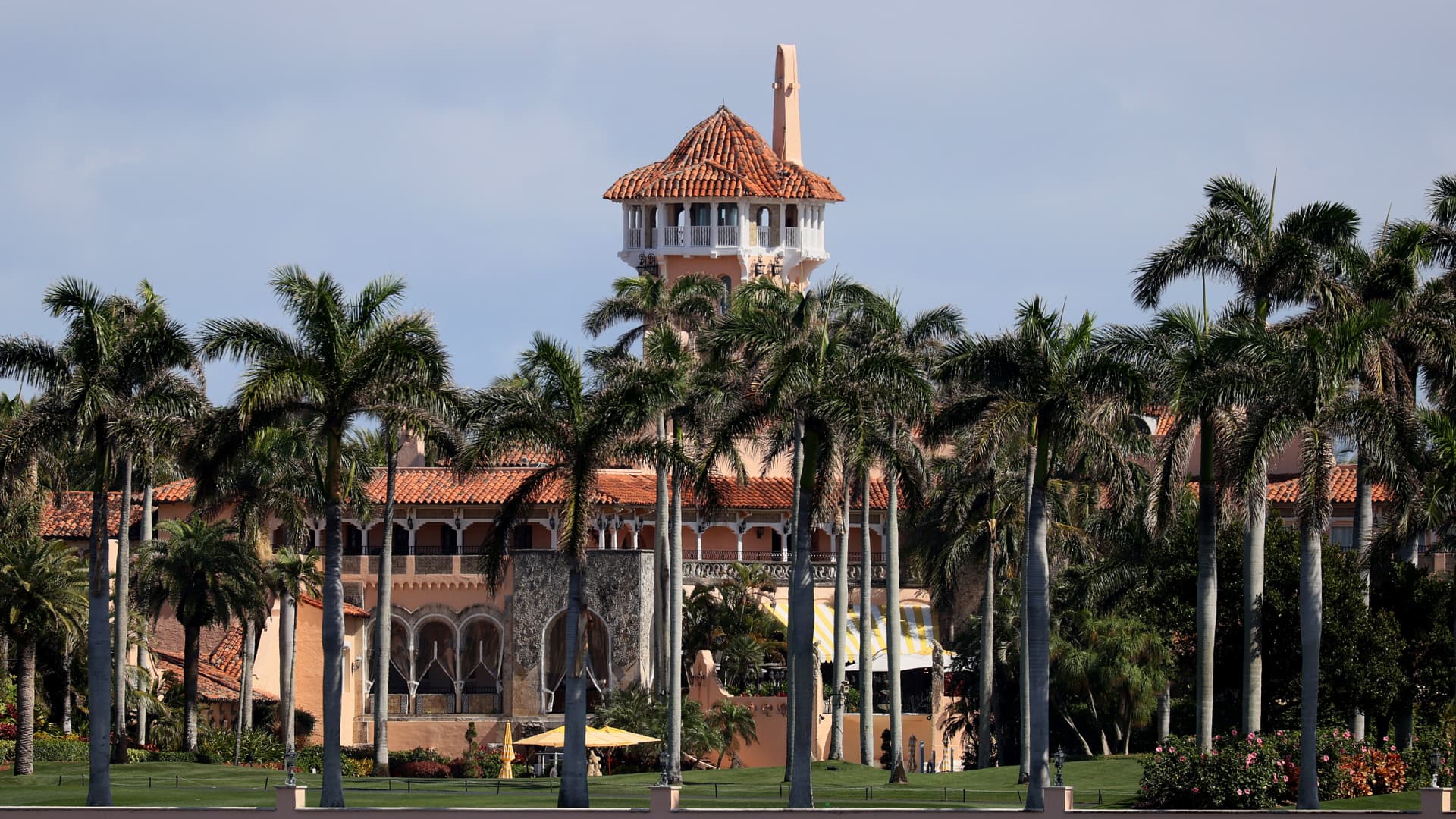
The FBI is raiding Mar-a-Lago, former President Donald Trump’s resort home in Palm Beach, Florida, Trump said Monday evening.
In a lengthy statement, Trump said his residence is “currently under siege, raided, and occupied by a large group of FBI agents.”
The raid was “unannounced,” Trump said.
The FBI did not immediately respond to CNBC’s request for comment on Trump’s statement.
These are dark times for our Nation, as my beautiful home, Mar-A-Lago in Palm Beach, Florida, is currently under siege, raided, and occupied by a large group of FBI agents. Nothing like this has ever happened to a President of the United States before. After working and cooperating with the relevant Government agencies, this unannounced raid on my home was not necessary or appropriate. It is prosecutorial misconduct, the weaponization of the Justice System, and an attack by Radical Left Democrats who desperately don’t want me to run for President in 2024, especially based on recent polls, and who will likewise do anything to stop Republicans and Conservatives in the upcoming Midterm Elections. Such an assault could only take place in broken, Third-World Countries. Sadly, America has now become one of those Countries, corrupt at a level not seen before. They even broke into my safe! What is the difference between this and Watergate, where operatives broke into the Democratic National Committee? Here, in reverse, Democrats broke into the home of the 45th President of the United States.
The political persecution of President Donald J. Trump has been going on for years, with the now fully debunked Russia, Russia, Russia Scam, Impeachment Hoax #1, Impeachment Hoax #2, and so much more, it just never ends. It is political targeting at the highest level!
Hillary Clinton was allowed to delete and acid wash 33,000 E-mails AFTER they were subpoenaed by Congress. Absolutely nothing has happened to hold her accountable. She even took antique furniture, and other items from the White House.
I stood up to America’s bureaucratic corruption, I restored power to the people, and truly delivered for our Country, like we have never seen before. The establishment hated it. Now, as they watch my endorsed candidates win big victories, and see my dominance in all polls, they are trying to stop me, and the Republican Party, once more. The lawlessness, political persecution, and Witch Hunt must be exposed and stopped.
I will continue to fight for the Great American People!
The raid came hours after Politico reported that attorney John Rowley, a former federal prosecutor, is now representing Trump in talks with the Department of Justice about executive privilege issues related to the department’s investigation of the Jan. 6 Capitol riot.
This is breaking news. Please check back for updates.
Panuccio said the company would continue to manage costs amid ongoing supply chain and inflationary pressures.
“We will take necessary action to address those pressures, including pricing adjustments, together with our ongoing focus on cost management,” Panuccio said. “Visibility on advertising remains limited across the businesses and we continue to expect foreign exchange headwinds, given the current spot rates for the Australian dollar and pound sterling compared to the prior year.”
News Corp CEO Robert Thomson revealed the company’s latest results.Credit:Reuters
Subscription video revenues fell $US46 million ($65.9 million) – or 2 per cent – due to a $US61 million impact from foreign currency fluctuations. Streaming revenues – predominantly from Kayo and Binge, more than offset revenue decline from Foxtel’s traditional broadcast product. The streaming subscription revenue makes up about 20 per cent of total subscription revenues in the fiscal year.
Foxtel’s traditional broadcast product has 1.5 million residential subscribers, a decrease from 1.7 million in 2021, and 242,000 commercial subscribers, a slight increase on the previous year.
Kayo has 1.3 million paid subscribers – just 188,000 less than the number of residential subscribers – while Binge has 1.2 million. Total paid Foxtel subscribers was 4.4 million for the full year, compared to 3.9 million. The company’s news-focused streaming service, Flash, has 11,000 paid subscribers.
earnings [before interest, tax, depreciation and amortisation] for subscription services were flat for the year due to an $US8 million impact from foreign currency fluctuations. Expenses were flat as higher sports and entertainment programming costs were offset by the absence of the $US57 million negative impact seen in the first half of fiscal year 2021 caused by deferred programming costs.
loading
ASX-listed REA Group was one of the key drivers of growth for News Corp, with full-year revenue for its digital real estate services segment increasing by 25 per cent to $US1.741 billion. REA Group’s revenue increased by 37 per cent to $US1 billion, driven by growth in financial service revenues and higher residential depth revenues.
The Business Briefing newsletter delivers major stories, exclusive coverage and expert opinion. Sign up to get it every weekday morning.
If you’re one of the many shoppers trying to track down the best Samsung Galaxy A53 deals, you’re in luck: we’ve got all the best offers of the month collected below. If you’re unfamiliar, the Samsung Galaxy A53 5G is the latest in Samsung’s A series, a lineup of affordable smartphones that masterfully balance value with reliable performance and premium features.
Since it hit store shelves last Spring, the A53 has reigned as one of the best mid-range devices that money can buy, and it’s not unusual to find deals that make the cheap Android phone even cheaper. That said, given its newness, don’t expect a ton of straight deals (although we’ll place them below if we find them). Instead, you’ll mostly see offers from retailers and wireless carriers that require some kind of action on your part, such as adding a new line or trading in an older device.
If none of these deals pique your interest today, check back in later: we’ll be updating this list of deals about once a week. Looking for something a little more premium? We also have a regularly updated list of Samsung Galaxy S22 deals.
Samsung Galaxy A53 deals of the month
While you’re in the neighborhood, don’t forget to protect your new device with a quality Samsung Galaxy A53 case.
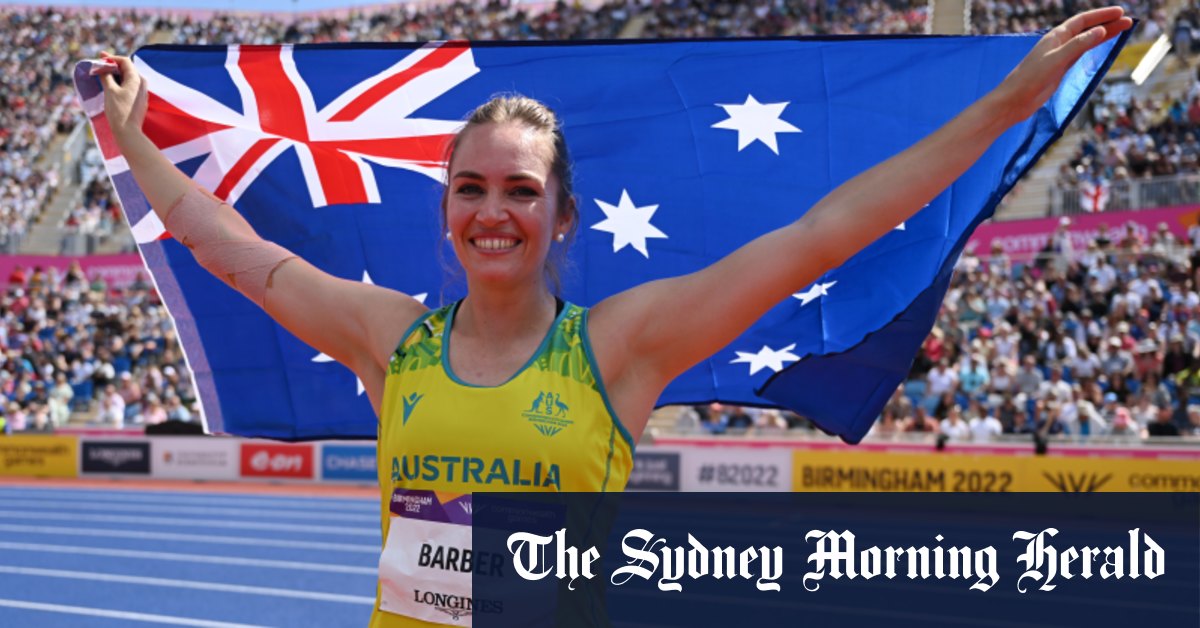
Barber’s stunning last throw of 64.43m overshadowed the fact that the woman she overtook for gold was a fellow Australian Mackenzie Little.
Barber with silver medalist and compatriot Mackenzie Little.Credit:David Ramos
Little was thrilled with silver but must wonder what more she needs to do. Twice she threw personal bests. The first came after Barber had set down the mark for the field with the first throw of 63.52m. Little had never thrown that far in her life.
“I threw two personal bests and I can’t get better than that. I’m absolutely thrilled,” she said. “We always know (Kelsey-Lee) is there. She’s not out until the last round so I knew I had to be there too. I asked for the crowd for the first time and that was so fun to have the crowd involved.“
When the moment demanded it, Little went big. She threw 64.03m with her first attempt and jumped into the gold medal place. She threw even bigger with her fifth of her at 64.27m, laying down the challenge to Barber.
Little has been here before. At the world championships a fortnight ago, she was sitting in the medal positions until she was squeezed out to fifth in the last round. Here, she threw bigger again and won silver.
Australia’s Declan Tingay won silver in the men’s 10,000 race walk.Credit:Getty
Meanwhile, on the track, Declan Tingay won silver in the men’s 10km race walk, unable to sustain his pace when the gold medalist, Evan Dunfee of Canada, broke in the last lap and pushed hard, opening up his gait and getting the judges twitchy with their yellow paddles.
Dunfee glanced at the judges with 100 meters to go and raised his arms in the air when he realized he wasn’t going to be penalized. I won in 38:36.37.
“Evan has built a career off that. It’s what he’s known for,” said Tingay, who finished in a personal best time of 38:42.33.
“I knew it was happening. In some ways, it’s unavoidable. When Evan wants a medal, he’s going to get it. I don’t think I’m at the stage in my career where I can hold off a walker like that.”
Asked if he had any concerns about Dunfee’s technique on the final lap, Tingay replied “absolutely not”.
“You are going to attract more attention from the judges when you kick away like that. In some ways, it’s a gamble you take. You pit your technique against the judges and, honestly, that’s half of the event,” he said.
At the final change of the women’s 4x100m relay Australia was in the frame for a medal. In third place they were meters ahead of Jamaica. The problem was Elaine Thompson-Herah was running last for England.
The five-time Olympic gold medalist ran down Australia’s Na Anang in the last five meters to win bronze by 0.08 seconds. Nigeria and England won gold and silver, respectively.
“That was insane,” Anang said. “I knew that we were in a good position, in a medal position, and I thought ‘legs, you’ve just got to take me as fast as you can’. Unfortunately her personal best of her is a whole second faster than mine. We were kind of hoping that Elaine might be tired after the 100 and the 200 but she didn’t run the heat and I guess that was to save her for the final.”
At any other Commonwealth Games, hurdler Michelle Jenneke would have won a medal – probably gold. These games, she was drawn next to the world record holder, who smashed the games’ record.
Michelle Jenneke competing in the 100m hurdle heats.Credit:Getty
Nigerian Tobi Amusan ran 12.3s over the 100 metres, eclipsing the previous record of 12.65s. When you consider Jenneke ran 12.68s, you might think she’d take a medal –but she ran fifth.
News, results and expert analysis from the weekend of sport sent every Monday. Sign up for our Sport newsletter.
The CSIRO has released details of more than 136 new species of animals and three plants identified in the past year.
The new species include four fish, 117 insects, 11 jumping spiders, three plants, a frog, a millipede, an earthworm, and a marine trematode — a parasitic flatworm.
The trematode was found inside a fish.
The oral sucker of Enenterum petrae under microscope. Baby Petra doesn’t know how lucky she is.(Supplied: Daniel Huston/Zootaxa)
Now called Enenterum petraeit was named after the baby daughter of its identifier, Petra.
David Yeates, director of the CSIRO’s Australian National Insect Collection, said choosing a favorite out of the newly identified species was a bit like being asked to “choose a favorite child”.
However, he said one of the most interesting is a species of ant — now known as Anonychomyrma inclinata — which “babysits” the caterpillars from one of Australia’s rarest butterflies, the bulloak jewel butterfly.
The newly named ant Anonychomyrma inclinata is the ‘obligate attendant’ for the rare and beautiful bulloak jewel butterfly Hypochrysops piceatus.(Supplied: CSIRO/Jon Lewis)
“The ants carry the little caterpillars out from under the bark of the bulloak tree to feed on the soft tips of the leaves or needles at night; they carry them out and then back,” Dr Yeates said.
It’s a symbiotic relationship, where the ants protect the caterpillars from other ants, and get something in return, he said.
“The ants feed on a sugary substance that the caterpillars produce from glands. The ants get this nice sugary secretion and the butterflies get protection.”
As well as it being a fascinating strategy, that knowledge helps to direct efforts to conserve the bulloak jewel butterfly.
“When we’re trying to manage that rare and beautiful butterfly, we know it only occurs where that ant occurs in that particular [species of] tree.”
The bulloak jewel butterfly has a symbiotic relationship with an ant that looks after its young.(Supplied: CSIRO/Michael Braby)
With only an estimated 25 per cent of Australian species having been formally identified, this work highlights the important role that the CSIRO’s National Research Collections perform, according to Dr Yeates.
Australian fauna — especially insects — is still poorly researched compared with fauna in most other developed countries.
“That’s an important point for Australians to understand. Australia is still the land of discovery.
“We have a first world economy, good infrastructure, but we drive past new species all the time.
“For a biologist to come here from Europe or China for example, they think it’s the land of milk and honey, because there are so many new species for them to work on.”
The purple-tip anthias is found in around 110 meters of water.(Supplied: CSIRO/Queensland Museum)
Other species in today’s haul include the purple-tip anthias, which have been found in waters between about 110 and 119 meters deep, off southeast Queensland.
Of the newly named fish species, three were types of anthias, and the fourth was a silverspot weedfish.
The silverspot weedfish is found off southwest Western Australia in 55-100m depth.(Supplied: CSIRO)
Most new fish species that are being classified are small, non-commercially viable species that tend to live in deep water where they are rarely encountered.
While that appears to be the trend, Dr Yeates said a few years ago a large, deepwater cod species was discovered at a fish market.
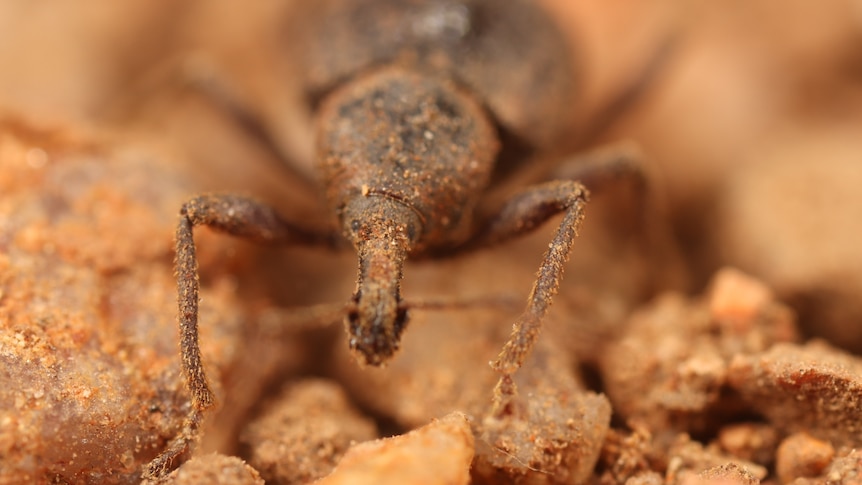
Specimens of Undarobius howarthi and U. irvini, the two new species of weevils in the new genus Undarobius found in lava caves at Undara Volcanic National Park in north-eastern Queensland.(Supplied: CSIRO)
Of the newly discovered insects, 34 were beetles, including two new weevils found in the lava tubes at Undara Volcanic national park in Far North Queensland.
A new species of weevil discovered in the Undara lava tubes in Far North Queensland.(Supplied: CSIRO)
The two weevil species are the first cave-dwelling weevils to be described in Australia, according to the CSIRO.
The weevils have long, arachnid-like legs, are blind, and appear to have adapted to life in the darkness.
It’s possible that the two species, called Undarobius howarthi and u irvini are relics from a period when the region was covered in rainforest.
Entomologists visiting the Bayliss Cave, a lava cave in Undara Volcanic National Park, to search for beetles.
(Supplied: CSIRO)
Not all the insects identified by CSIRO and their partners were from Australia; 39 were species of gall wasps from the Americas.
Gall wasps typically cause grotesque growths to form on plants, and can create problems if they become invasive pests, such as the native citrus gall wasp, which has spread across Australia.
How do scientists know if it is a new species?
One of the many challenges in identifying new species, is working out whether you in fact have a new animal, or just a funny looking, but known one.
Animals and plants can develop different physical properties, known as phenotypic expression, depending on pressures in their particular environment.
The Tasmanian blue gum for example, can reach 100 meters in height in Tasmania’s forests, but stunted versions of the same species just a few meters tall are found on the coast.
Other species may change markedly depending on gender, and what stage of life they are at.
Which is why it’s important to have large collections such as the Australian National Research Collection.
Having lots of species in one place allows scientists to compare features to properly distinguish between their characteristics.
Even then, very specific expertise is required to work out where the animal or plants sits in its phylogenetic tree.
“What happens is that specimens that belong to new species accumulate in collections, and it’s a fair bit of effort to figure out if they’re new or not,” Dr Yeates said.
“It can take quite a bit of time and effort, including looking at their genes and genomes to determine if they really are different.”
It’s likely that many species will become extinct in Australia, or have already become extinct, before we’ve had a chance to identify them.
Figuring out what’s what, means we can better understand where conservation efforts need to be targeted, according to Dr Yeates.
“We can start to get information on how to manage it, whether it’s declining, and what factors might impact its survival.”