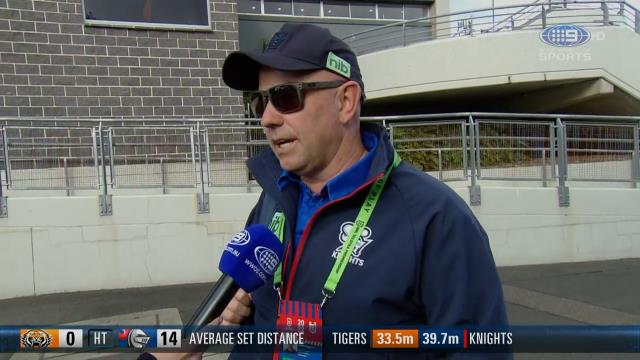
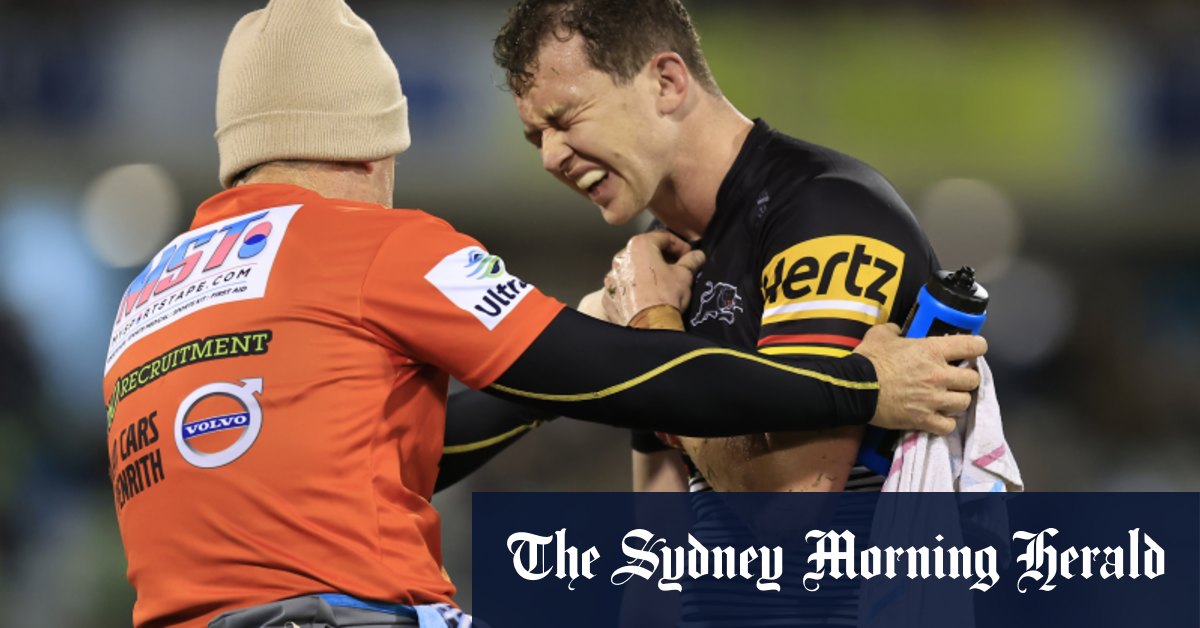
The Newcastle trainer at the center of the David Klemmer furore has spoken out about the week-long saga that threatened to divide the club.
Experienced NRL trainer Hayden Knowles and fiery prop Klemmer had an on-field run-in when the latter was asked to leave the field during last week’s loss to the Bulldogs.
A HR complaint was subsequently lodged and Klemmer had to be stood down by the club, and was made unavailable for selection for round 21.
READMORE:Ricky facing legal action for explosive ‘weak gutted dog’ outburst
READMORE:‘Extraordinary’ scenes as Aussie claims Games gold
Knights trainer Hayden Knowles speaks to Nine. (Nine)
That freezeout has since been lifted and Klemmer and Knowles have put any differences behind them.
Knowles spoke to the Sydney Morning Herald to further explain the situation.
“The swearing wasn’t the issue. That’s what everyone is losing sight of,” Knowles said.
“For me it’s not personal with Klem. It wouldn’t matter if it was Kalyn Ponga, Nathan Cleary, Junior Paulo or Payne Haas.
“It wouldn’t matter who it is. If someone puts themselves before the team, I would forever die for the fact that I won’t tolerate that behaviour. The behavior is what I was against, not the person.
“The swearing is not the issue. Swearing doesn’t bother me. I feel like my reputation has taken a hit. I’ve worked 23 years to build that.
“Nathan Hindmarsh rang me during the week. I’m mates for life with Nathan Hindmarsh, and we had a spray every other week at Parra.”
Speaking after the Knights’ round 21 victory over the Tigers, coach Adam O’Brien said Klemmer would return next week with the situation now “dealt with.”
“No doubt, he’s dealt with now, he’s back in the team,” he said.
“He’s back training now so I can pick him on Tuesday.”
For a daily dose of the best of the breaking news and exclusive content from Wide World of Sports, subscribe to our newsletter byclicking here!
The incredible stories behind State of Origin’s one-game wonders
Robert Craig’s memories of foot-and-mouth disease tearing through the north of England are more than 20 years old, but they’re as painful as ever.
Key points:
More than 6 million cows, sheep and pigs were slaughtered in an outbreak of foot-and-mouth disease in England in 2001
A local farmer and an Australian vet say lessons can be learned from the UK
The Australian government has ramped up biosecurity measures in efforts to prevent and prepare for an outbreak
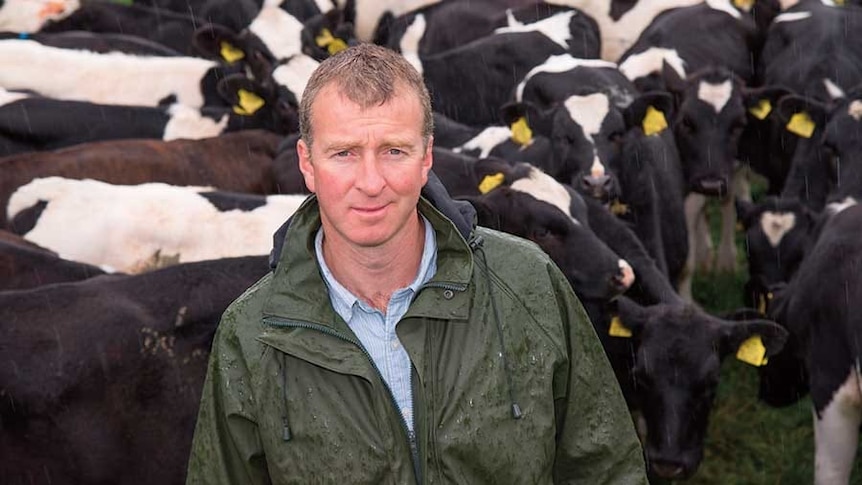
“It still makes my hair stand on end now,” the dairy farmer said.
“You don’t realize at the time that things do affect you longer term.”
There has not been an outbreak of the disease in Australia for over a century, but cases detected in Indonesia in May have put authorities on high alert, and farmers fear what could happen if the disease lands in Australia.
Foot-and-mouth spreads rapidly between cloven-hoofed animals including cattle, sheep, pigs and goats. It’s serious and highly contagious.
Warning: This story contains images some readers may find distressing
In February 2001, Robert Craig was raising a young family in Cumbria, which became one of the worst-affected areas during a devastating outbreak of the disease.
It led to the mass slaughter of cows, pigs and sheep.
“I remember being out in the fields, I think spreading fertilizer, and they were rounding up these sheep and lambs and there’s this truck in the gateway,” he told the ABC News Daily podcast.
“Seeing them rounding up newborn lambs and you knew where they were going, that was just hideous. Absolutely hideous.”
Slaughtered cows in Yorkshire were lined up before they were loaded onto trucks and transported to a burial pit.(Supplied: Bill Sykes)
Mr Craig said he remembers tracking the spread of the disease on a map and watching as it got closer and closer to his own farm.
“There was a real sense of despair. It was hard for people to see at that time how anything could get back to normality because such a huge number of livestock had been taken,” he said.
Over the course of 11 months, more than 6 million cows, sheep and pigs were slaughtered in an effort to contain the spread of the disease, although only a relatively small portion of that number had the infection.
In total 2,000 cases were ultimately confirmed across the UK.
“I don’t know whether it did any good either. There was a fair bit of panic at the time,” Mr Craig said.
“It was just like, removing as much livestock as possible to try and slow [it] down, to get in front of it because it had gotten so badly out of control.
“I don’t know if they even tested these sheep that were taken away.”
Mr Craig was one of the lucky ones whose animals were spared, but his community suffered badly.
“Pretty much all of our neighbors sort of succumbed to it at some point,” he said.
“The whole of our area was pretty much just dead, like no livestock at all.”
In 2001, destroyed cattle with foot-and-mouth disease were sprayed with disinfectant to stop the spread.(Supplied: Bill Sykes)
Australians sent to help
Australian vet Bill Sykes has similar “life-changing” memories of the time.
The Victorian, who had a background in national disease control and animal slaughtering, was sent to Yorkshire, in northern England, as part of an Australian contingent deployed to help.
“It’s 20 years on, there’s a lot of things I don’t remember since five minutes ago, but these things come back, and they haunt,” he told the ABC News Daily podcast.
Mr Sykes recalls how the abattoir workers would try to calmly gain the trust of bobby calves, or calves less than a month old, before the slaughter.
“The strategy was to put his finger in the calf’s mouth so that it would happily suck and while it was sucking, he’d shoot the animal with a captive bolt pistol, and it would drop and then he’d go to the next one .”
But for him, the destruction of newborn lambs via lethal injection was particularly devastating.
“They went limp in your arms, you put them down and you picked up the next one,” he said.
“And I happened to love little lambs. I found that real, real tough.”
Mr Sykes said the immediate impact of the disease in the countryside was stark.
“At the bottom of the valley, everything is normal, sheep and cattle grazing in the paddocks,” he said.
“By the time we get to the top of the valley there’s nothing there, it’s just an eerie silence. It’s a sea of nothing.”
The “sea of nothing” remained after neighboring Yorkshire farms had been “slaughtered out”.(Supplied: Bill Sykes)
Australia assesses its preparedness for an outbreak
Bill Sykes, who is also a former regional vet officer in the Victorian Agriculture Department and former Nationals MP, is enraged by reports of Australia’s biosecurity laws being breached.
Foot-and-mouth disease can be carried on meat and animal goods, and in one recent case, a backpacker returned from Indonesia with prohibited meat.
The passenger was fined $2,664 after being detected with undeclared sausage meat and a ham croissant at Darwin airport.
“Just unbelievably dumb. Stupid, thoughtless, call it what you like, but that’s the sort of situation that can occur,” Mr Sykes said.
Foot-and-mouth disease can also spread in air particles between animals situated closely together, through contaminated water and on clothing and footwear.
The risk of a foot-and-mouth disease outbreak in Australia has increased to approximately 12 per cent after the recent spread in Indonesia and its popular tourist island, Bali.
Mr Sykes said vigilance is paramount.
Officials from the Indonesian Ministry of Agriculture visit a farm in East Java where cattle have foot-and-mouth disease.(Supplied: Indonesian Ministry of Agriculture)
The Australian government has introduced a range of measures to lower the risk of foot-and-mouth disease entering the country.
Biosecurity measures have been ramped up at airports, including installing acidic disinfectant foot mats and increased surveillance on meat products entering the country.
Agriculture Minister Murray Watt announced a new task force will also be established to focus on how to best prepare for a potential outbreak.
The government is also considering advice that recommends people returning from Indonesia avoid Australian farms for five to seven days.
A positive case here would immediately shut down livestock exports and trigger a national veterinary emergency plan called AUSVETPLAN.
“Because we rely so heavily on our export markets, something like 60 to 70 per cent of our red meat goes overseas, those markets will be closed immediately, and it will take a long time to re-establish those markets. That’s going to have a massive economic impact,” Mr Sykes said.
Bill Sykes believes Australia can learn from the 2001 foot-and-mouth disease outbreak.(Supplied: Bill Sykes)
Mr Sykes said Australia was already in a better position to control an outbreak thanks to more capability to trace the movement of livestock, as well as having a warmer, drier climate which gives way to less wind-borne spread of the disease.
But there are still lessons we can learn to avoid destroying so much livestock.
“We will not have the social license to do … what the UK did by immediately slaughtering [animals]. We will adopt a surveillance approach,” he said.
“The lesson we’ve learned is that we will adopt a different strategy and hopefully rely on high-quality risk assessment and more targeted slaughtering.”
Robert Craig said the biggest lesson from the UK outbreak was realizing that farmers have a huge responsibility for protecting their own livestock.
“You have to be very much on top of your own biosecurity and restricting people from coming and going,” he said.
“Because once you’re behind, it’s very difficult to get in front of it again and get it back under control.”
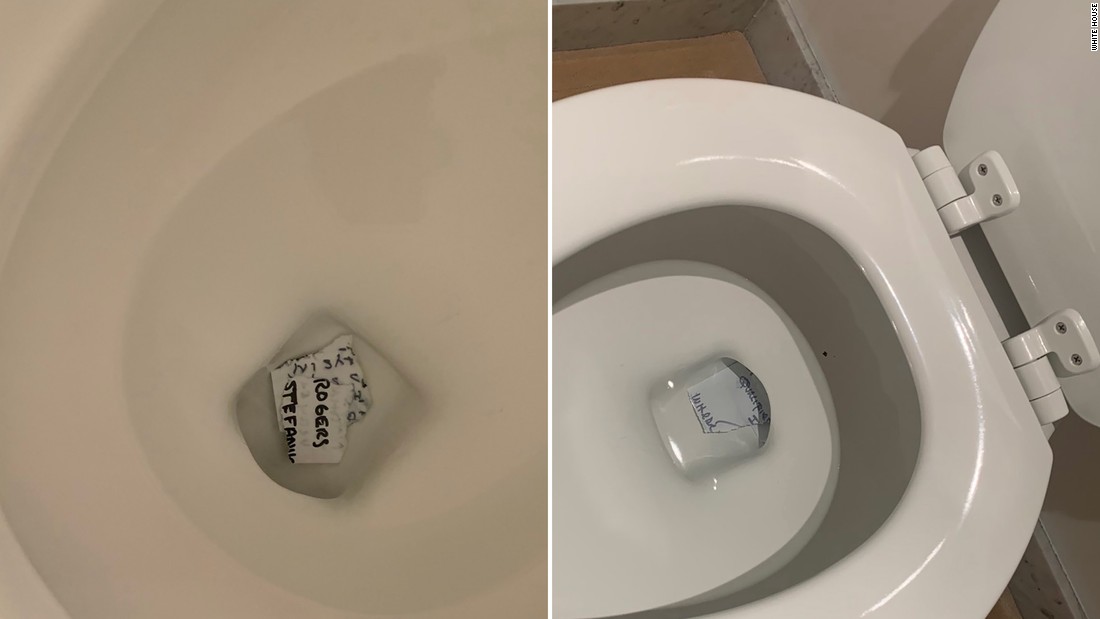
Maggie Haberman, a New York Times reporter and CNN contributor, is publishing the new images in her forthcoming book, “Confidence Man,” and the images were posted earlier by Axios. CNN has previously reported how Trump flouted presidential record-keeping laws and would often tear up documents, drafts and memos after reading them.
He periodically flushed papers down the toilet in the White House residence — only to be discovered later on when repairmen were summoned to fix the clogged toilets. Trump has denied the allegations, and in a statement given to Axios on Monday, a spokesman claimed that reporting about the practice was fabricated.
In the images revealed on Monday, it’s unclear what the documents are in reference to — and who authored them — but they appear to be written in Trump’s handwriting in black marker. Haberman said one image is from a White House toilet and the other one is from an overseas trip that was provided to her by a Trump White House source.
“Who knows what this paper was? Only he would know and presumably whoever was dealing with it, but the important point is about the records,” Haberman told CNN’s John Berman and Brianna Keilar on “New Day” Monday morning.
Trump had a pattern of disregarding normal record preservation procedures. On one occasion, Trump asked if anyone wanted to put a copy of a speech he just delivered up for auction on eBay, during a mid-flight visit to the press cabin Air Force One.
In other instances, Trump would task aides with carrying boxes of unread memos, articles and tweet drafts aboard the presidential aircraft for him to review and then tear to shreds.
A former senior Trump administration official said a deputy from the Office of Staff Secretary would usually come in to pull things out of the trash and take them off Trump’s desk after he left a room.
A former White House official recalled that while document preservation was a key responsibility of the staff secretary, the rest of Trump’s senior staffers lacked the sense of their obligation to maintain records of papers that moved through the West Wing.
Trump’s haphazard record-keeping was the subject of a drawn-out fight earlier this year between him and the National Archives, and the Justice Department has been investigating the matter.
A Sydney entrepreneur’s house has been caught up in the collapse of his start-up after two separate freezes were placed on his $10.5 million Mosman mansion.
Marketing technology company Metigy abruptly collapsed in July, leaving its 75 staff stunned. Some employees had been recruited only a month before the collapse and the company was still advertising jobs when it went into administration at the behest of investors. Metigy, which was co-founded by entrepreneur David Fairfull, raised $20 million in 2020 and was reportedly trying to raise capital earlier this year at a valuation of $1 billion.
Metgy founder David Fairfull. Credit:
The Australian Financial Review was first to report on the company’s collapse into administration, which it said was triggered by investors eager to see a full audit of Metigy’s finances.
Last week, some investors went further. On Monday, entities associated with investment funds Five V Capital and Regal Funds Management engaged lawyers at Allens to lodge a caveat over Fairfull’s Mosman property. On Tuesday, Metigy’s administrators had their lawyers, Addisons, lodge a similar caveat.
The six-bedroom, five-bathroom trophy home with expansive harbor views was sold in September last year to Fairfull, and a woman who appears to be his wife, legal records show.
At the time, Metigy was riding high with tens of millions banked from investors who believed in its plans to use artificial intelligence to improve digital marketing and its partnerships with web giant Google and telecommunications network Optus.
On its website and in media stories, Metigy spruiked a “reseller partnership” in which the telecommunications giant would offer Metigy’s marketing products to its more than 400,000 small business clients.
The harbor view from the $10m home that is subject to a caveat relating to Metigy, a failed AI marketing start-up.Credit:Domain
In response, an Optus spokesman issued a brief statement on Monday saying that it had facilitated networking opportunities for Australian start-ups and small businesses in 2018. “Metigy participated, but as of today there is no active contractual arrangements,” the spokesman said.
Carlton needed to use the Willie Rioli defense in a bid to free skipper Patrick Cripps to play in this weekend’s must-win clash with Melbourne, according to Jonathan Brown.
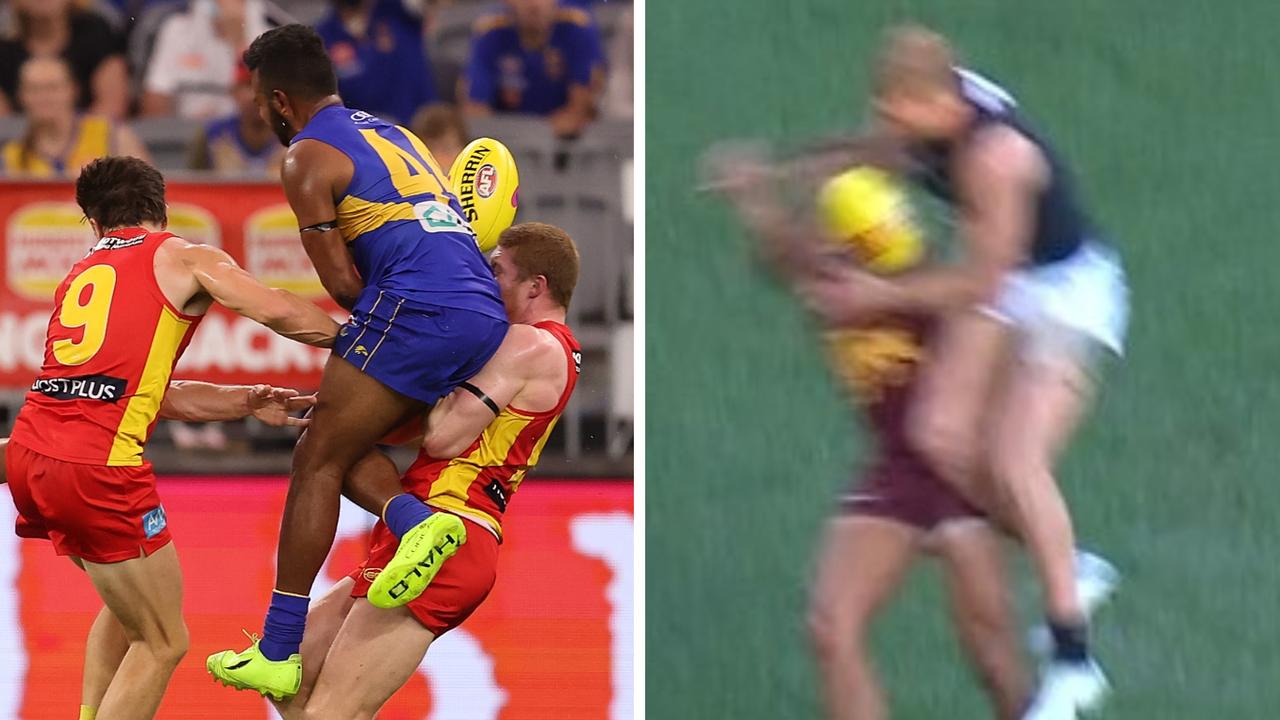
Like Cripps, Willie Rioli was banned for his mid-air collision with Sun Matt Rowell as the Eagle’s impact sent the midfielder crashing into the turf.
Rioli was given a one-match ban for the heavy bump, but was successful in overturning the suspension at the court by arguing his actions were not “unreasonable”.
Watch every blockbuster AFL match this weekend Live & Ad-Break Free In-Play on Kayo. New to Kayo? Try 14-Days Free Now >
Cripps has been hit with a two-match ban for his similar action that left Lion Callum Ah Chee concussed on the Gabba turf.
Brown believes a “precedence” was set in Round 1 – with the difference being Cripps’ has been graded as high impact and not medium like Rioli’s.
“The end of the day, the precedence has been set for my belief when Willie Rioli was let off with Matty Rowell in Round 1. I don’t think there’s been a rule change,” Brown said On the Couch.
“To me, it looked like Willie Rioli was later (in making contact).
“Yes, you can argue that it was a marking contest however it was an aerial contest. One was in play, one was a marking contest.
Longmuir confident yet coy on Freo | 03:48
“They were both scenarios where the player’s had to leave the ground. I don’t think Patty Cripps could do much. I actually think that (Rioli’s) looks worse and was let off.”
Fellow panelist Nick Riewoldt agreed that the Blues needed to use Rioli’s appeal as the basis for their challenge, should they decide to make one by 11am AEST on Tuesday.
“Whether you are jumping in the air in a marking contest or to intercept the ball from a handball is irrelevant,” he said as Brown added: “It should be irrelevant.”
“So they walk in (to the court), you press play on the Willie Rioli tape and you walk out five minutes later – that’s how it should go down,” Riewoldt said.
Brown felt Rioli’s argument that his conduct was “not unreasonable” should apply to Cripps as well.
“The argument for Willie Rioli (was) he couldn’t reasonably expect contact in that situation and obviously had to brace – but so did Patty Cripps.”
Fans were shocked back in Round 1 when Rioli escaped sanction for the hit on Rowell, with some calling on the Eagle to “buy a Lotto ticket”.
Koch statement awkward for Hinkley? | 01:36
Gerard Whateley said the Blues were in the process of preparing for an appeal on Monday night, but didn’t think the Rioli comparison was as “cookie cutter” as some believed.
“First they have to show it’s not a bump. The second part is there an alternative?” he said.
AFL360 co-host Mark Robinson agreed with coach Michael Voss that it was a “split second decision” for Cripps.
“My flinch reaction was: ‘You’re gone Patrick Cripps’ … but I said the same with Willie Rioli,” he said.
“We were gobsmacked at the time they appealed and got off. I don’t think the court can suspend him if they put up the Rioli (vision).
“But my gut feels is you can’t have that in our sport anymore.
Feet rebound from cap scandal | 02:10
“He didn’t mean to do it – but what’s more important? He didn’t mean to do it or the health and safety of Ah Chee?”
On the Couch host Garry Lyon believes Cripps’ actions are worthy of suspension, claiming it was “not a great surprise” the Match Review handed down a two-game ban on Monday.
“It’s a hold your breath moment,” he said.
“I don’t think in this state that we are in and the game we’ve got, if that goes unpunished, then we are kidding ourselves.”
Defense Minister Richard Marles pointed to China’s violation of the UN-sanctioned law of the sea and to Australia’s long-standing commitment to upholding freedom of navigation and commerce in the region.
Neither Wong nor Marles questioned China’s claim to the territories of Taiwan – the core claim underpinning Beijing’s determination to take the island by force.
This is because Australia recognized the Beijing government as the sole legitimate government of China in 1972, and as a condition of recognition declined to recognize Taiwan as a sovereign state.
Like all serious players, we keep our word. In mounting limited objections to China’s behaviour, Wong and Marles echoed the positions of the EU, US, and all members of the G7 that there has been no change in respective One China policies or basic positions on Taiwan, despite Beijing’s claims to the contrary. We are sticking to our side of the deal.
In the 1970s, those agreements focused on territory and said little about people. What do people in Taiwan want?
Surveys show a pragmatic preference for retaining the status quo over seeking formal independence, because under the status quo people enjoy civil liberties, rule of law, political rights, economic autonomy, and a way of life won through decades of strife and struggle on Taiwan.
Seeking formal independence would place those rights and liberties at risk, in face of Beijing’s threats of violent retaliation. But so would voluntary unification with the People’s Republic.
Beijing’s treatment of Hong Kong in 2020 shattered any remaining illusions about the fate of Taiwan under Beijing’s One Country Two Systems model of inclusion. On Xi’s new model, the people of Taiwan would be “re-educated” – China’s ambassador to France revealed this week – in the style of Mao Zedong’s gulags or Xi’s mass internment camps.
In acknowledging the One China position, Australia never conceded Beijing’s right to coerce, corral and ‘re-educate’ the people of Taiwan.
Here’s the rub. The CCP says it is prepared to pay any price to fulfill its historical mission of unification with Taiwan, but the one price it won’t consider is the one it would cost to incorporate the territory peacefully: allow people in China to enjoy the same rights and liberties that people have in Taiwan.
The upshot is that in place of reforming his own country, Xi is preparing to take the island by force against the wishes of the people of Taiwan.
The message conveyed by his ballistic missiles is that Beijing could fly right over the heads of people on Taiwan and lay claim to their lands without giving them a passing thought.
In effect, China now seeks “vacant possession” of the island, in the memorable phrase of journalist Rowan Callick, and Australia never signed on to that.
Australia did not sign on to a lot of things that China does as a matter of course in the new era of Xi.
We did not promise to remain silent on Tibet, where the Communist Party is working energetically to erase the languages, cultures, religion, and identities of local communities to retain a stranglehold on their ancestral territories.
Australia never agreed to Beijing perpetrating cultural genocide against Uyghurs and other minorities to maintain its grip on their historical territories in Xinjiang.
We did not sign on to the crackdown in Hong Kong that put an end to rule of law, civil society and freedom of speech and assembly once Beijing decided to extend direct control over that territory as well.
In acknowledging Beijing’s One China position, Australia never conceded Beijing’s right to coerce, corral and “re-educate” the people of Taiwan. In Beijing’s eyes, territory comes before people, and that was never part of the deal.
There is much that can be done to help the people of Taiwan without breaking our word.
Canberra can accelerate negotiations on bilateral economic agreements with Taipei and support its inclusion in multilateral economic agreements. We can actively support its participation in international organisations, including key agencies of the World Health Organisation.
Federal and state governments should give added encouragement to cultural and educational exchanges with Taiwan.
Groups of Australians can reach out to people in Taiwan through their church groups, and by way of community and business associations, trade unions and local governments, to reassure their counterparts in Taiwan that they are not alone in confronting intimidation and interference from China’s Communist Party .
Through travel and everyday communications, we can let the people of Taiwan know we have their backs.
Australians have as much reason to be wary of China’s communist government as people in Taiwan, because China’s communists have shown they do not care about people anywhere – not in China, not in Taiwan, not in Australia.
That much we knew before Pelosi visited Taiwan.
John Fitzgerald is emeritus professor at Swinburne University of Technology.
In the wake of then-President Donald Trump’s infamous photo-op at the height of the George Floyd protests, Chairman of the Joint Chiefs of Staff Gen. Mark Milley penned a lengthy and vociferous critique of Trump in a resignation letter he ultimately never sent, The New Yorker reported on Monday.
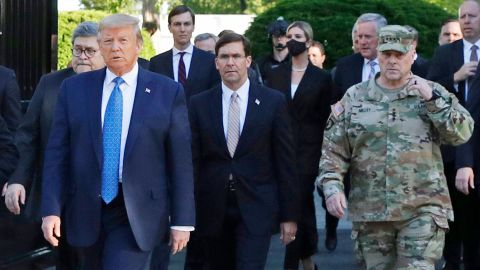
On June 1, 2020, Milley accompanied Trump on a walk from the White House to St. John’s Church, where he was photographed wearing his combat uniform and moving with the President’s entourage through Lafayette Square. Protesters had been forcibly cleared out of the area minutes before.
The images provoked a swift wave of criticism from lawmakers and several senior former military officials who said they risked dragging the traditionally apolitical military into a contentious domestic political situation.
Milley’s letter was dated June 8, a week after the incident, according to The New Yorker. The article was based on “The Divider: Trump in the White House 2017-2021,” a forthcoming book by Peter Baker and Susan Glasser.
“The events of the last couple weeks have caused me to do deep soul-searching, and I can no longer faithfully support and execute your orders as Chairman of the Joint Chiefs of Staff,” Milley wrote, according to The New Yorker. “It is my belief that you were doing great and irreparable harm to my country. I believe that you have made a concerted effort over time to politicize the United States military.”
The report said Milley sought advice regarding the resignation letter, including from former Chairman of the Joint Chiefs Gen. Joseph Dunford, retired Army Gen. James Dubik, an expert on military ethics, as well as members of Congress and former officials from the Bush and Obama administrations.
Milley ultimately decided not to quit.
“F*** that s***,” Milley told his staff, according to The New Yorker. “I’ll just fight him.”
“If they want to court-martial me, or put me in prison, have at it,” Milley added. “But I will fight from the inside.”
A spokesman for the Chairman of the Joint Chiefs declined to comment to CNN about the report.
Milley would later publicly apologize for his involvement in the incident in a pre-recorded speech at the National Defense University.
“I should not have been there. My presence in that moment and in that environment created a perception of the military involved in domestic politics. As a commissioned uniformed officer, it was a mistake that I have learned from, and I sincerely hope we all can learn from it,” Milley said during the address.
The Australian share market is set to fall and US stocks have ended a mixed session, with chipmaker Nvidia warning of a fall in quarterly revenue.
Key points:
The Dow Jones index rose 0.1pc to 32,833, the S&P 500 lost 0.12pc to 4,140, and the Nasdaq Composite fell 0.1pc to 12,644
The FTSE 100 in London rose 0.6pc to 7,482, the CAC 40 in Paris rose 0.8pc to 6,524, while the DAX in Germany gained 0.8pc to 13,688
The ASX SPI 200 index fell 0.2pc to 6,911, while the Australian dollar rose 1pc to 69.78 US cents at 7:10am
US stocks retreated from their highs after official employment figures last week showed strong job creation, raising fears of more aggressive interest rate increases by the US Federal Reserve.
Investors are awaiting official US consumer inflation figures on Wednesday.
The Dow Jones Industrial Average rose 0.1 per cent to 32,833, the S&P 500 lost 0.12 per cent to 4,140, and the Nasdaq Composite fell 0.1 per cent to 12,644.
Chipmaker Nvidia lost 6.3 per cent after saying that second-quarter revenue would decline 19 per cent from the previous quarter because of weakness in its gaming business.
Electric car maker Tesla rose after its signed contracts worth $US5 billion ($7.16b) to buy battery materials from nickel-processing companies in Indonesia.
Shares of US car makers jumped after the US Senate passed a $US430 million bill to fight climate change that created a $US4,000 tax credit for used electric vehicles and provides billions in funding for their production.
Insurer American International Group reported a 26 per cent fall in quarterly profit on lower investment income.
It blamed market volatility for a delay in the public float of its life and retirement unit.
The ASX SPI 200 index was down 0.2 per cent to 6,911 at 7:00am AEST, indicating a fall on the Australian share market today.
The Australian dollar jumped 1 per cent overnight to nearly 70 US cents.
At 7:10am AEST, it was buying about 69.78 US cents.
European stocks had a good session.
The FTSE 100 in London rose 0.6 per cent to 7,482, the CAC 40 in Paris rose 0.8 per cent to 6,524, while the DAX in Germany gained 0.8 per cent to 13,688.
Oil prices rose thanks to positive economic data from China and the US.
Brent crude gained 1.8 per cent to $US96.65 a barrel.
Spot gold also rose. It put on 0.8 per cent to $US1788.50 an ounce.
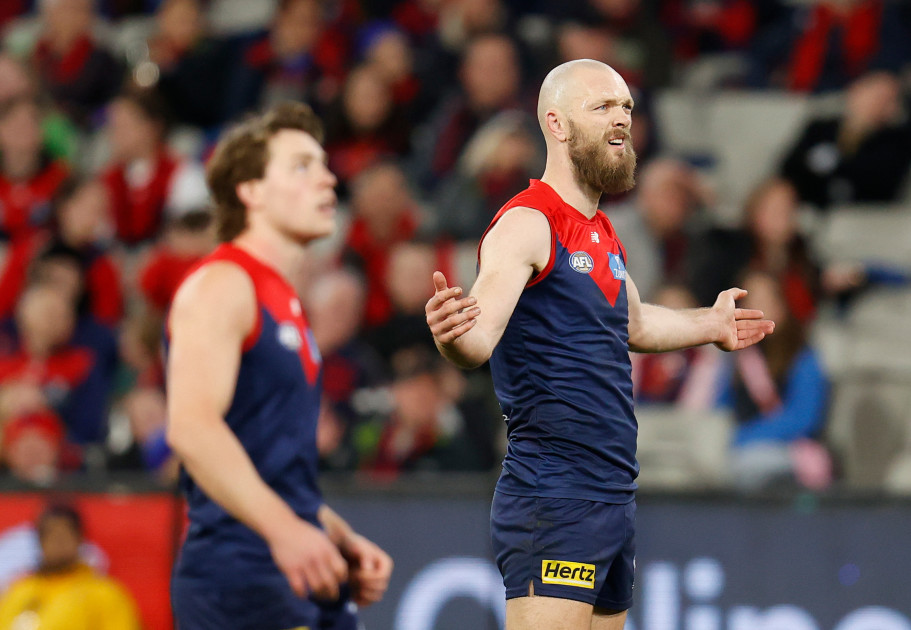
Nathan Jones admits there are some concerns for Melbourne on the back of the seven-point loss to Collingwood on the weekend.
The Demons dominated most of the key stat areas against the Magpies but were behind on the one that mattered most – the scoreboard.
It was their sixth defeat in their last 10 matches which has some onlookers questioning their form ahead of finals.
Former captain Jones agrees that things aren’t looking great, saying he is worried about some areas of their game, particularly that teams who move the ball courageously and quickly can score against them.
“It’s been bubbling away for the last 10 weeks because of the inconsistency that’s been highlighted,” Jones said on SEN’s Dwayne’s World.
“My concerns ultimately are around their ability to dominate a game like they did and not be able to convert into score.
“The way in which Collingwood exposed them, I think they’ve found some challenges against teams in particular that are willing to take them on and be courageous with their ball movement.
“Collingwood really got them on turnover and were able to transition the footy from end to end which is a concerning thing.
“They go inside 50 plus-20 more times but Collingwood were still able to kick a good enough score and were ultra efficient when they did go inside 50 themselves.”
While he acknowledges their shortcomings, Jones is confident that Simon Goodwin and his coaching staff have in place a game plan that should stack up in finals provided they iron out some other issues.
“There’s a bit of a worry there, but the foundations of their game are significant,” he added.
“You look at the stats and I still scratch my head at the fact they lost the game.
“That still provide hopes for me that they can resurrect some of those issues and really find themselves well in contention.
“They’ll be tinkering with some things here and there and also just trying to capitalize on their strengths.
“I’d be more concerned if their strengths around contest, stoppage and inside 50s were right down.
“There are still the building blocks and foundations there for them to play a really significant final brand of footy.
“Internally, they’d be all over the fact that they’ve still got areas they need to tidy up if they have every intention of playing in the Grand Final and wanting to go back-to-back.”
The Demons will look to bounce back from the loss to the Pies and cement themselves in the top four when they host Carlton at the MCG on Saturday night.
But Origin’s return to three Wednesday night matches from next year means the representative round will be scrapped and NRL games will be played every weekend.
The Rugby League Players Association is already lobbying for NSW and Queensland players to be automatically stood down from club duties after Origin matches following one of the fastest – and most brutal – Origin matches ever played in the recent series decider.
The Panthers remained all seven of their Origin contingent the following weekend, but other stars such as James Tedesco and Daniel Tupou opted to back up less than 72 hours later with their team scrapping for a finals spot.
The NRL’s plan for three byes per team is designed to ease the workload on players, in particular Origin stars, but will have the regular season nudging closer to the hottest part of the year. The NRL will schedule a greater concentration of byes around the Origin period to alleviate the toll on clubs.
The proposal has been discussed about by several clubs, which are already contending with a crowded pre-season and the late return of players from the World Cup.
loading
The annual All-Stars fixture is usually played in the second week of February, and the NRL has considered shifting that a week earlier too. But the idea is expected to be met with resistance given the shortened summer training bloc for clubs to have all players available.
The World Cup final will be played in the United Kingdom on November 19 meaning players from both teams will not return to their clubs for pre-season training until mid to late January.
Stream the NRL Premiership 2022 live and free on 9Now.
Sports news, results and expert commentary. Sign up for our Sport newsletter.