US authorities have obtained a warrant to seize a Russian oligarch’s private plane, valued at over $90 million, for violating US sanctions for Russia’s invasion of Ukraine.
The Airbus A319-100 aircraft, authorities say, is owned by Andrei Skoch, a member of Russia’s State Duma and a billionaire who made his fortune through a stake in a conglomerate in the metals and mining industry. Skoch has been on the US sanctions list since 2018 for Russia’s invasion of Crimea, the eastern region of Ukraine. The plane is believed to be in Kazakhstan, authorities said.
Skoch is the latest Russian oligarch to have one of his luxury assets in the sights of US authorities, who launched a campaign to seize valuable property of those close to the Kremlin in hope of pressing an end to the war.
In June, US authorities announced a judge approved a warrant for the seizure of two of Roman Abramovich’s private plans, valued at more than $400 million. In May, the US took possession of a $300 million super yacht called the Amadea, which is owned by Suleiman Kerimov. And in April, authorities seized at a port in Spain the $90 million yacht Tango belonging to Viktor Vekselberg, a billionaire with close ties to Russian President Vladimir Putin.
On Monday, a federal judge authorized a seizure warrant from a special agent with the US Department of Commerce, Bureau of Industry and Security, which traced the plane to Skoch through a series of shell companies allegedly intended to shield his ownership.
Authorities allege Skoch violated US sanctions by using US dollars to pay the plane’s registration fees to Aruban authorities and pay insurance premiums on the Airbus that passed through US financial institutions. The $113,180 in registration payments and $284,459 in insurance premiums passed through the US banking system without a license to allow payment on sanctioned entities.
The seizure warrant notes that, in addition to the plane, Skoch owns a yacht named the Madame Gu, a helicopter, and a villa at the Four Seasons Hotel in the Seychelles. Those assets are not authorized for seizure. Authorities need to demonstrate that sanctions were violated, such as by money transferring through the US banking system, to seize property.
Prosecutors have creatively used insurance premiums and registration payments to identify assets for seizure since most yachts and plans can’t operate unless they are insured. Since the US, UK and the European Union announced broad sanctions against Russian elites, several insurance companies stopped doing business with sanctioned individuals.
Macedon Ranges residents are considering Supreme Court action following a state planning tribunal decision to overturn a council vote to halt a two-part commercial development.
Key points:
The Victorian Civil and Administrative Tribunal overturned the Macedon Ranges Shire Council’s decision to not grant a planning permit
The council says it will not pursue legal action over VCAT’s decision
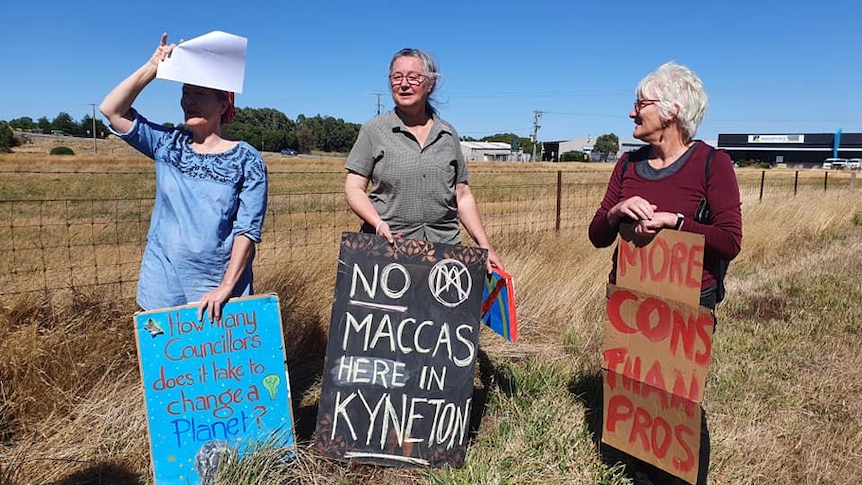
Residents are considering Supreme Court action over big brands’ development in Kyneton
A Kyneton development for a McDonald’s fast-food restaurant, another restaurant, Bunnings and a 24-hour service station was approved by the Victorian Civil and Administrative Tribunal (VCAT) last week after the applicant decided to challenge the council’s decision and the conditions imposed.
Susan McNab is one of the leaders of the fight against the development and said residents were disappointed by the court’s actions.
She said the group would look at viable options to counter the decision, but accepted that a loss in the Supreme Court would be costly.
The development will carry a McDonalds restaurant, another convenience restaurant, a Bunnings trade center, and a petrol station. (Supplied / VCAT)
“Naturally, we don’t feel the decision is to the benefit of Kyneton. That part of the town is the main access to nearby reserves and people often go out that way climbing and for classic car rallies and cycling,” she said.
“It’s difficult for many residents to not be considered at VCAT.
“It’s been about the economics of the matter. The council said that area would be developed at some point, but this particular style of development works against Kyneton’s character.”
Big brands coming down the highway
The decision almost confirms the introduction of commercial development in Kyneton, which one community group has labeled the ‘tide of overdevelopment’. Residents fear the big brands will take away the small country charm that the town is known for, with small businesses and well-known eateries losing out.
“The proposal will not detract from the rural character of the Shire. The proposal will reinforce the rural character of the Shire by its location [in a commercial zone] within the protected settlement boundary; [and the] containment of its impacts within the subject land,” VCAT’s decision said.
Lenka Thompson started the Keep Kyneton Country group to fight the proposed development.(Supplied: Lenka Thompson)
The decision by VCAT has caused a stir on social media after attracting hundreds of submissions airing concerns about traffic and safety, and the effect the development could have on the nearby environment and local economy.
“On my mind is the amount of rubbish! This is devastating,” one social media user, Emma Mattocks, commented.
“Our options on a personal and group level are very limited. We can attempt to appeal the decision on a matter of law and so within 28 days,” Sue McNab wrote to the group.
“That is incredibly expensive, and we would have to pay the other party’s costs if unsuccessful. It’s down to what the shire council may be able to do now.”
Council won’t pursue legal action
Macedon Ranges Shire Council said it was not considering pursuing legal action.
“An appeal of a VCAT decision is made to the Supreme Court of Victoria and must be on a point of law. Council has received communication for the community expressing their disappointment in the decision,” a spokesperson said.
The Victorian Civil and Administrative Tribunal overturned a decision by Macedon Ranges Shire Council to not grant a planning permit for the development.(Supplied / Victorian Civil and Administrative Tribunal )
The council’s design guidelines from 2012 showed the council’s aim was to “reinforce” the rural character of the Macedon Ranges, particularly in areas that were visible from main roads, the Calder Freeway, rail corridors, and key public viewing areas and from adjoining rural and residential areas.
Several residents have asked for a review of VCAT’s decisions after a similar development in regional Victoria was not allowed to go ahead. Some also said it was hard for small-town community groups and residents to fight organizations and businesses with lots of money.
The developer claimed there would be a net community benefit for the town and the project would create almost 200 jobs between construction and ongoing employment.
The court has ordered VCAT to remove multiple signs, and reduce the height of one, and resubmit the plans to show those and other changes.
If you’ve been holding your breath for Samsung to bring its new Quantum Dot-sporting OLED TVs to Australia, well, you’re probably not with us anymore.
That said, we’d like to inform your surviving family members that Samsung’s long-awaited OLED TV range has finally launched in Australia, and is available for pre-order from today.
Teased way back in January at CES 2022, Samsung’s S95B OLED 4K TV combines the colour-rich Quantum Dot technology that’s been the foundation of its flagship QLED TV range for the better part of a decade, with the self-lighting OLED technology favored by its rivals.
a change of heart
So why has Samsung backflipped after being fiercely anti-OLED for so long? Well, it likely has to do with QD-OLED solving one of the biggest issues found in standard OLED technology, namely its middling peak brightness.
Unlike regular OLED televisions, which require filters to approximate white light, each individual diode in Samsung’s QD-OLED panel consists of three sub-pixels, with original blue OLED materials working in tandem with red and green-tuned quantum dots to create true white light – no light-absorbing filters necessary.
Very nice. How much?
Of course, this improved OLED technology isn’t cheap: Samsung’s S95B OLED 4K TV is releasing in two sizes, starting at AU$4,079 for the 55-inch model, and maxing out at AU$5,249 for the 65-inch version.
By comparison, the 55-inch version of LG’s stunning new C2 OLED launched just a few months ago is relatively cheaper at AU$3,476, while the 65-inch model has an RRP of AU$4,499. Granted, the LG tellsy doesn’t make use of cutting-edge QD-OLED tech, however it did receive TechRadar’s prestigious Editor’s Choice award in its glowing 5-star review – just like Samsung’s S95B. decisions, decisions…
Kate Langbroek has opened up about a “mortifying” X-rated joke she made as a panellist on Monday’s episode of Have You Been Paying Attention – after forgetting her own teenage son was in the studio audience.
A slightly sheepish Langbroek hopped on a call with Kyle and Jackie O on Tuesday morning to explain the moment, which was edited before it aired on Channel 10 due to its explicit nature.
After fellow panelist Sam Pang complained about the torrent of innuendo about a food prop – a phallic-shaped tube of liverwurst – Langbroek exclaimed, “What innuendo?” and she mimed performing oral sex on the prop, even pushing her own head down onto it as host Tom Gleisner buried her head in her hands.
Langbroek soon had the same reaction when Pang reminded her that her son Lewis was in the studio audience.
Lewis, 18, a year 12 student, was shown on camera giving a nervous laugh as he watched his mum’s antics.
Speaking to Kyle and Jackie O this morning, Kate groaned as she explained how she’d gotten carried away in the moment.
“First of all, it wasn’t live – they edit (the show) for time. But because there was a (studio) audience in there, and there hasn’t been since pre-Covid, you get a bit giddy. The boys yell out swear words and you know it’ll be cut out. I thought that was going to happen!” she said.
“I was giddy as a girl, I was having fun, I was with my friends… Oh. My. Goodness. When Pang said, ‘You know your son’s in the audience,’ it was like the world closed in on me. I was so mortified. He was in the front row!”
Langbroek said Lewis had been “a good sport” about it, but when Kyle and Jackie O got him on the line he couldn’t resist publicly raking his mum over the coals.
He told the hosts the moment had been “pretty mortifying, to be honest.”
“Externally I was laughing, but internally… the pain that I feel cannot be overstated,” he joked.
Kyle tried to throw Langbroek even further under the bus by asking if Lewis had seen his mum’s early acting work on the racy ’90s soap Chances (Langbroek famously appeared topless in one episode).
As his mother begged him to hang up, Lewis told the hosts: “I don’t think I want to explore down that path.”
“But some of your mates might, darling,” Kate quipped.
Langbroek had previously told Kyle and Jackie O she and her eldest son shared a special relationship – one forged in part by Lewis’ childhood cancer battle.
Speaking on the KIIS Network’s 3pm Pick Up back in June, she gave listeners an emotional update about her son’s health.
Lewis was diagnosed with leukemia when he was six and endured four years of “terrible” treatment, she said.
His latest annual check-up marked an important milestone, as it was the last time the now-18-year-old would need to visit Melbourne’s Royal Children’s Hospital to monitor his health.
“They told us: ‘This is the last time we’ll be seeing you at this hospital because Lewis is transitioning to an adult hospital.’ I thought ‘oh my goodness, there were so many times where we thought this day may not come’,” Langbroek said.
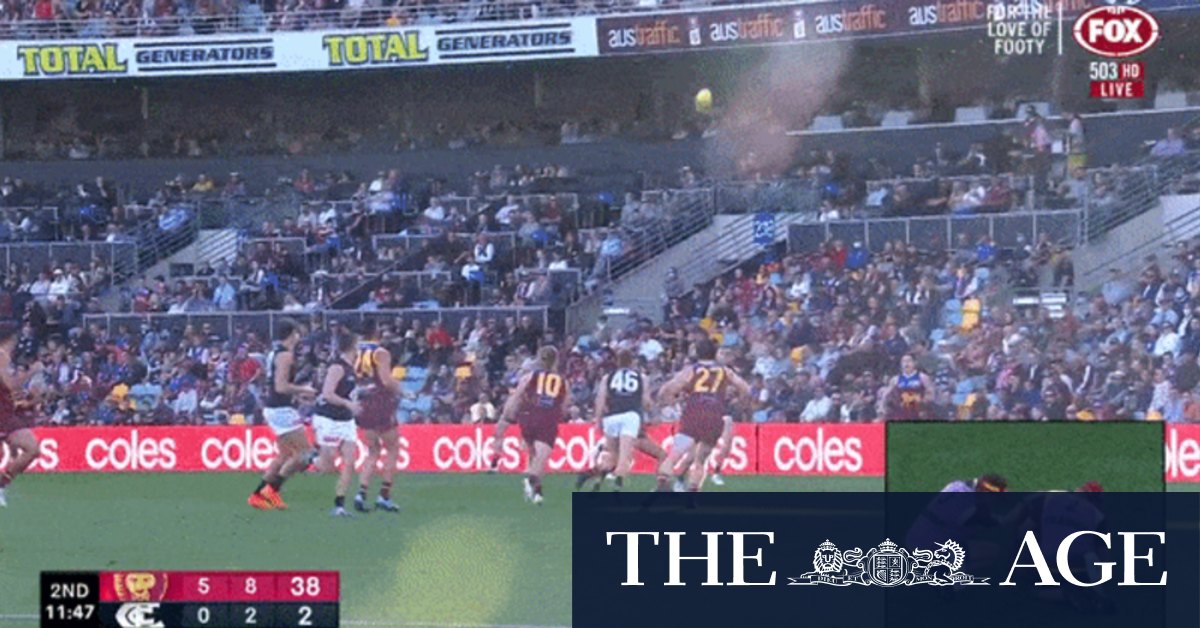
The football world has been split on whether Cripps deserves to be suspended. Should his appeal fail, it will be a major hit to the Blues’ finals hopes. They are clinging to seventh spot and are already missing injured on ballers George Hewett and Matt Kennedy.
Co-vice-captain Sam Walsh said the Blues were embracing the added pressure heading into Saturday night’s clash against Melbourne at the MCG.
“We have to embrace it as an awesome opportunity,” the prolific midfielder said at Ikon Park on Tuesday.
“I’ve been at the club now four years, and this is the opportunity we’ve been asking for to be able to play in these big games in front of big crowds. I’m going to see it as time for us to really stand up and we’re going to take a step forward in the right direction this week.
Harry McKay says the Blues will have had a successful year even if they fail to make the finals.Credit:Getty Images
“We would have killed to be in this position in past years, so we just have to have some optimism in the way we want to go about it.”
The Blues started the year 9-3 and were in the top-four hunt a fortnight ago, before back-to-back losses to Adelaide and Brisbane left them vulnerable to miss the post-season.
They have slipped in several statistical areas, including a marked difference in scores from turnover differential, uncontested marks and overall pressure rating in defeat when compared to victory.
Should they lose their final two games to the Demons and Collingwood, they face the real risk any two of Richmond, St Kilda and the Western Bulldogs jumping them into the eight.
They have won only four of their past 10 matches but reigning Coleman medalist Harry McKay insisted they would still consider their 2022 campaign a success even if they failed to make the finals.
“I judge success in terms of our environment that we’ve created,” McKay told Fox Sports.
“The last couple of years, we’ve probably struggled in terms of culture, environment, putting in a really solid game plan.
“Whatever happens for the rest of the year, that’s outcome-based, but for me as a player that’s been there seven, eight years, this 12 months has been a success and whether that comes [to] finals or whatever it is, we’ve taken a really big step into the right direction.
“[Coach Michael Voss] talked about it, hopefully it’s a long book and this is just chapter one, we want to finish off the chapter really well, but it’s definitely a success.”
While admitting the consecutive losses had shaken the team’s confidence, McKay stressed the importance of quickly regaining composure before two crunch games at the MCG.
The Blues haven’t played in the finals since 2013, with only Ed Curnow from that semi-final among currently listed players.
“The last few weeks have been challenging and after a pretty solid first 16 to 18 rounds, it’s been a little bit disappointing we haven’t been able to play our best football,” McKay said.
Keep up to date with the best AFL coverage in the country. Sign up for the Real Footy newsletter.
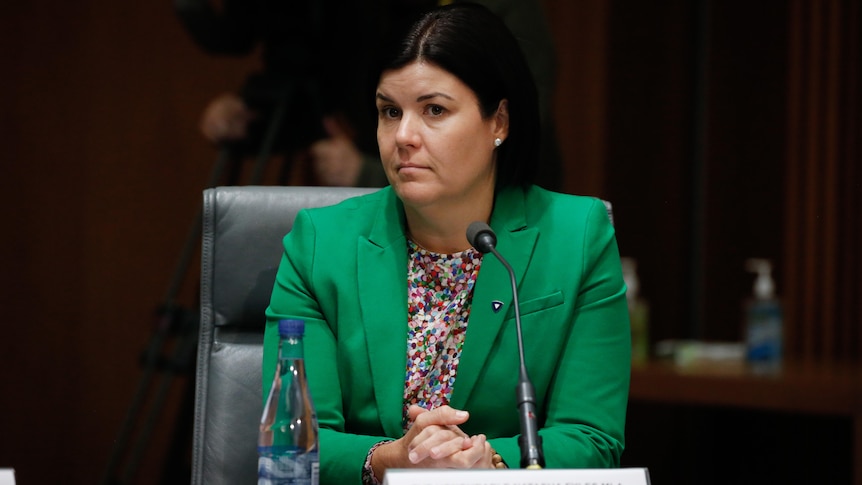
The Northern Territory Chief Minister is under renewed pressure to allow the anti-corruption watchdog to access secret cabinet documents that were the subject of a “serious allegation”.
Key points:
The ICAC was told a cabinet submission was allegedly inappropriately edited by a public officer
Michael Gunner declined a request to give the material to the ICAC, citing cabinet privilege
The Opposition says Natasha Fyles should overturn Mr Gunner’s earlier decision
In a report tabled in parliament last month, Independent Commissioner Against Corruption, Michael Riches, said he initiated an investigation after receiving a claim that a cabinet submission had been “edited” by a public officer “so as to be misleading to the true state of affairs”.
However, because current legislation prevents the ICAC from accessing cabinet-related material, Mr Riches said he “invited” then chief minister Michael Gunner to consider handing over the relevant documents.
Mr Gunner declined the request, which Mr Riches said was his legal right, but he added that doing so prevented further investigation.
Opposition leader Lia Finocchiaro has accused the Chief Minister of trying to avoid scrutiny. (ABC News: Che Chorley)
The Opposition has been calling for Ms Fyles, who took over from Mr Gunner in May, to handover the material, given she later agreed to grant the ICAC access to other cabinet-related documents that were the subject of a different allegation.
But during an interview on ABC Radio Darwin on Tuesday, Ms Fyles deflected repeated questions about whether she would overturn Mr Gunner’s earlier rejection of the ICAC request.
Instead, she said it was her understanding that the ICAC’s requests to Mr Gunner and herself related to “the same issue”, although she said she did not know the specifics of the allegation.
“This was at arm’s length, which is why I sound vague on it, because we allowed [the] cabinet office to talk to the ICAC so the ICAC could ascertain within cabinet privilege what he needed, but at the same time, respecting that process of cabinet privilege,” she said.
Opposition Leader Lia Finocchiaro said the Chief Minister was trying to avoid scrutiny.
“Any leader with integrity would make sure the ICAC Commissioner has the information he needs,” she said.
“And the fact that Natasha Fyles can’t even answer simple questions around provision of that information shows that she’s completely hands-off and running from scrutiny.”
ICAC boss reveals new details
Following questions from the ABC, Mr Riches confirmed his requests to Mr Gunner and Ms Fyles for cabinet-related material related to “two entirely separate matters”.
He said the investigation into the matter he raised with Mr Gunner “remains closed” but that he would be “pleased” if the government were to contact him about it.
“The government has my request. It has made its decision,” Mr Riches said.
“If the government wishes to reconsider its position, I would be pleased to hear from them.
ICAC Commissioner Michael Riches said he was anonymously provided with what “appeared” to be cabinet documents. (Supplied)
“But I will not make the request a second time.”
Mr Riches also revealed new details about the matter he raised with Ms Fyles.
“In the second matter, I was actually provided with documents anonymously,” he told the ABC.
“Those documents appeared to be cabinet documents.
“Because the documents were likely cabinet documents I did not read them [other than the title of each document] and they were stored in a safe.”
Mr Riches said he subsequently wrote to Ms Fyles, who did not press a claim of privilege, which enabled him to view the documents under the ICAC Act.
He declined to say whether he is investigating the matter further.
Ms Fyles said the government is currently reviewing the ICAC Act, which will examine whether changes are needed in relation to cabinet privilege.
Joe Biden’s $740bn package tackling climate, the deficit and healthcare that has just passed the Senate and is almost certain now to become law is a far cry from his original even bigger ambitions, but it still represents a major triumph for the president.
The bill – the Inflation Reduction Act – was virtually dead in the water before a last-minute turnaround by the conservative West Virginia Democrat Joe Manchin saw it suddenly revived.
It then endured another round of political horse-trading as it navigated the choppy waters of a 50-50 split Senate. But, being carried by a tie-breaking vote from Biden’s vice-president, Kamala Harris, it emerged mostly intact. And, after a vote in the House later this week, it is set to land on Biden’s Oval Office desk.
Here is what’s in it and what it means:
Overview
The estimated $740bn package is full of Democratic priorities. Those include capping prescription drug costs at $2,000 out of pocket for seniors, helping Americans pay for private health insurance, and what Democrats are calling the most substantial investment in history to fight the climate crisis: $375bn over the decade.
Almost half the money raised, $300bn, will go toward paying down federal deficits.
It’s paid for largely with new corporate taxes, including a 15% minimum tax on big corporations to ensure they don’t skip paying any taxes at all, as well as projected federal savings from lower Medicare drug costs.
It’s not at all clear the 755-page bill will substantially ease inflationary pressures, though millions of Americans are expected to see some relief in healthcare and other costs.
US Senate passes $739bn healthcare and climate bill – video
What does it mean for Biden?
For Biden, the bill’s passage delivers a much-needed domestic win at a time when his popularity has sunk and key midterm elections loom in November.
Though the bill has been stripped of much of his original ambitious program, it remains a major achievement. Biden can now go to the polls and portray himself as a president able to get things done even in the difficult political circumstances of a deeply divided country.
climate crisis
The bill would invest nearly $375bn over the decade in climate-fighting strategies, including investments in renewable energy production and tax rebates for consumers to buy new or used electric vehicles.
It’s broken down to include $60bn for a clean energy manufacturing tax credit and $30bn for a production tax credit for wind and solar, seen as ways to boost and support the industries that can help curb the country’s dependence on fossil fuels. The bill also gives tax credits for nuclear power and carbon capture technology that oil companies such as ExxonMobil have invested millions of dollars to advance.
The bill would impose a new fee on excess methane emissions from oil and gas drilling while giving fossil fuel companies access to more leases on federal lands and waters.
A late addition pushed by Senator Kyrsten Sinema and other Democrats in Arizona, Nevada and Colorado would designate $4bn to combat a mega-drought in the west, including conservation efforts in the Colorado river basin, on which nearly 40 million Americans rely for drinking water .
For consumers, there are tax breaks as incentives to go green. One is a 10-year consumer tax credit for renewable energy investments in wind and solar. There are tax breaks for buying electric vehicles, including a $4,000 tax credit for purchase of used electric vehicles and $7,500 for new ones.
In all, Democrats believe the strategy could put the country on a path to cut greenhouse gas emissions 40% by 2030, and “would represent the single biggest climate investment in US history, by far”.
Prescription drug costs
Launching a long-sought goal, the bill would allow the Medicare program to negotiate prescription drug prices with pharmaceutical companies, saving the federal government $288bn over the 10-year budget window.
Those new revenues would be put back into lower costs for seniors on medications, including a $2,000 out-of-pocket cap for older adults buying prescriptions from pharmacies.
Seniors would also have insulin prices capped at $35 a dose. A provision to extend that price cap on insulin to Americans with private health insurances was out of line with Senate budget rules and Republicans stripped it from the final bill.
health insurance
The bill would extend the subsidies provided during the pandemic to help some Americans who buy health insurance on their own.
Under earlier pandemic relief, the extra help was set to expire this year. But the bill would allow the assistance to keep going for three more years, lowering insurance premiums for people who are buying their own healthcare policies.
How is it paid for?
The biggest revenue-raiser in the bill is a new 15% minimum tax on corporations that earn more than $1bn in annual profits. The new corporate minimum tax would kick in after the 2022 tax year and raise more than $258bn over the decade.
The revenue would have been higher, but Sinema insisted on one change to the 15% corporate minimum, allowing a depreciation deduction used by manufacturing industries. That shaves about $55bn off the total revenue.
To win over Sinema, Democrats dropped plans to close a tax loophole long enjoyed by wealthier Americans – so-called carried interest, which under current law taxes wealthy hedge fund managers and others at a 20% rate.
Money is also raised by boosting the IRS to go after tax cheats. The bill proposes an $80bn investment in taxpayer services, enforcement and modernization, which is projected to raise $203bn in new revenue – a net gain of $124bn over the decade.
Self-driving buses could hit NSW roads as soon as next year, with trials for the futuristic vehicles preparing to begin.
The Perrottet government has announced it will invest $5m for an on-road connected and automated vehicle (CAV) bus trial to kick off the beginning of the future on NSW roads.
With driverless vehicles predicted to hit our roads commercially in less than a decade, the government is working to set up a CAV-friendly road network to keep up with the likes of San Francisco, Paris and Singapore.
The state government says the trial will be subject to “robust testing” to ensure the buses will operate safely.
A government spokesperson said where and when the vehicles will pop up will depend on proposals from industry groups, which are being called on to get involved with the first 18-month trial in 2023.
Minister for Customer Service and Digital Government Victor Dominello is hoping the project puts NSW on the map as a world-leading adopter of CAV technologies.
“Vehicle connectivity and automation are game-changing technological innovations with the potential to sustainably transform the future mobility of people and goods,” Mr Dominello said.
“Globally, these technologies are advancing rapidly and already appearing in vehicles on the market today.”
He said the move would put NSW “in the front seat” in the race to roll out of the new technology.
The strategy will introduce, test and deploy CAVS on the road network, shape policy, prepare the road network ready for the new models and develop physical and digital testing capabilities for the driverless cars.
Part of the project will also include supporting freight services and increasing knowledge of autonomous vehicles.
Metropolitan Roads Minister Natalie Ward said the strategy would “revolutionise the way we travel”.
“The CAV readiness strategy outlines six priority areas focused on integrating this new technology into our transport system,” Ms Ward said.
“This will include working within the national regulatory framework over the next five years so we’re ready for the safe commercial deployment of CAVS in Australia.”
Ms Ward said adopting the new technology would help the state keep up with constituents’ expectations.
“Getting ahead of the game will make it easier to upskill our transport staff so customers have a seamless service when it is officially on our roads,” she said.
Regional Transport and Roads Minister Sam Farraway said NSW had already set several national and international firsts in autonomous vehicle technology.
“This is big-picture thinking – by putting NSW one step ahead it will bring investment opportunities, knowledge and better customer outcomes,” he said.
The state introduced the world’s first fully automated shuttle service in a public setting through the Coffs Harbor BusBot trial, which was completed late last year.
“This builds on what NSW has already achieved through autonomous shuttle trials, partnerships with local universities and investment in the Future Mobility Testing and Research Center at Cudal,” Mr Farraway said.
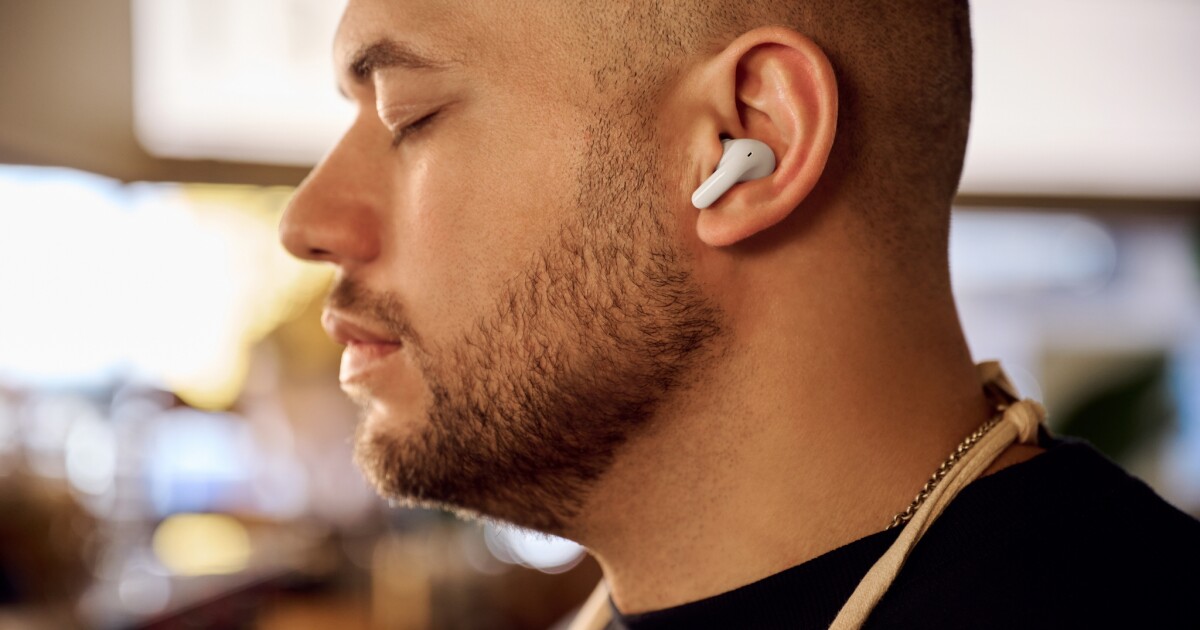
LG has announced the latest Tone Free true wireless earphones, including a flagship pair that combine active noise cancellation with head-tracking spatial audio for an immersive mobile listening experience.
LG is promising an overall sound boost over previous Tone Free releases, thanks to a new internal bud structure and larger 11-mm (0.43-in)-diameter graphene-packing dynamic drivers, but thanks to Meridian Audio’s Headphone Spatial Processing technology listeners can also look forward to a wider, more natural soundstage, while Perfect Balance offers consistent tone at all volumes.
But for the T90 flagship earphones, users also benefit from Dolby Atmos and Dolby head-tracking support, the latter adjusting audio delivery as users move their heads for more lifelike immersion when rocking tunes, watching movies or playing games.
Snapdragon Sound has been cooked in too, for 24-bit/96-kHz high-resolution playback and the promise of robust connectivity with low latency.
The T90 TWS earphones feature Meridian spatial audio, Snapdragon Sound, active noise cancellation and the UVnano charging case can double as a Bluetooth transmitter
LG
A triple-microphone setup plus Voice Pickup Unit technology zone out ambient noises when the user is speaking, and the T90 buds feature improved active noise cancellation (ANC) that makes use of a new high-sample-rate filter for more effective isolation from the sounds of the outside world, while also eliminating unpleasant and distracting feedback. A real-time optimizer, meanwhile, automatically tweaks performance based on the actual position of the buds in the user’s ear.
The earbuds, but not the charging case, are IPX4-rated for safe use at the gym or if caught in a downpour, and come with medical-grade silicone ear gels for reduced irritation while plugged in.
The company’s UVnano charging case blasts docked buds with UV light to kill microbes trying to make a home on the eartips, and can also serve as a Bluetooth transmitter that can cut the cable between legacy audio systems and the earbuds courtesy of an included USB-C -to-aux cable. Each earbud is reckoned good for up to 9 hours of mobile music with the ANC disabled, plus another 20 hours are available from the charging case.
The T90 TWS earphones are due for worldwide release at the end of this month, but no pricing info has been revealed at this time. A version without Dolby head-tracking and the ANC optimizer called the T60 has also been announced, along with a couple of new IP67-rated models aimed at active users.
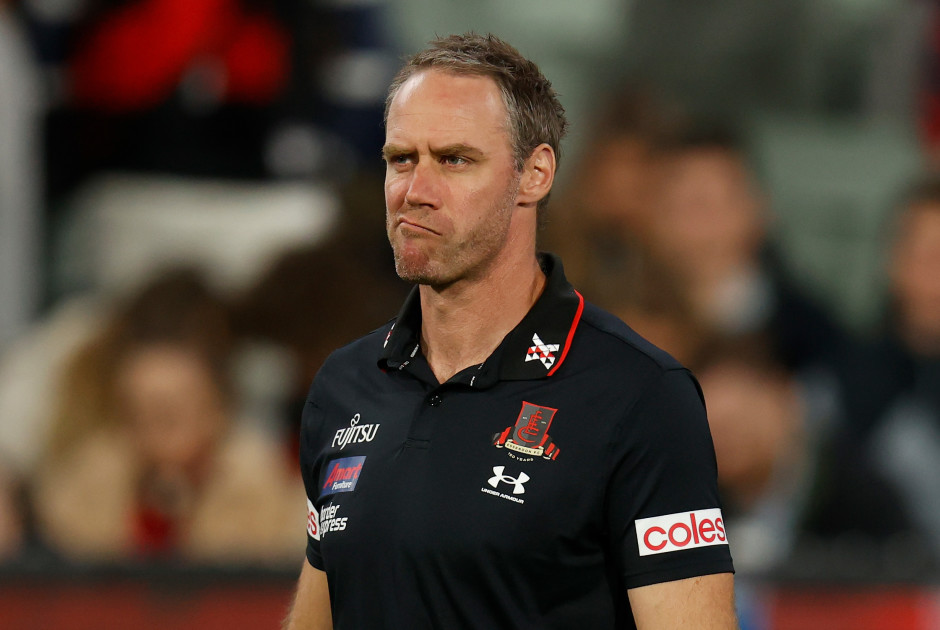
Coleman Medalist Scott Cummings has ranked all 16 current AFL coaches by their job security as we approach the end of the 2022 home-and-away season.
Two coaches have already been sacked this season, with the landscape unlikely to shift further in the off-season, barring further developments.
Obviously, GWS caretaker coach Mark McVeigh and North Melbourne’s Leigh Adams have been excluded from the list.
From most to least safe, here’s Cummings’ list from SEN WA Breakfast.
Subscribe to the SEN YouTube channel for the latest videos!
1. Chris Scott (Geelong)
“He’s on top of the ladder, signed until 2024.”
2. Craig McRae (Collingwood)
“He’s also signed until 2024.”
3. Simon Goodwin (Melbourne)
“He won a flag last year, signed until 2024 and I think he’s got the right people around him and Melbourne is still a good side.”
4. John Longmire (Sydney)
“They love him. The president loves him, the board loves him, the CEO loves him, the players love him, he’s safe. He will decide when he’s done.”
5. Justin Longmuir (Fremantle)
“Signed until the end of next year.”
6. Adam Simpson (West Coast)
“I don’t think he is going anywhere else and I don’t think the Eagles want him to. He’s had as many reasons as a coach has ever had for a poor year and he’s signed until 2024 so I reckon he’s absolutely safe.”
7. Damien Hardwick (Richmond)
“Again, signed until 2024.”
8.Stuart Dew (Gold Coast)
“Just re-signed until 2024.”
9. Sam Mitchell (Hawthorn)
10. Chris Fagan (Brisbane)
“He’s only signed until the end of next year. I remember that’s high. I reckon he could be a bit further down the list. They want a big finals campaign.”
11. Michael Voss (Carlton)
“You know why he’s at 11? Because it’s Carlton and they go through them and they put all these expectations on themselves and if they don’t match them, they sack someone.”
12. Ken Hinkley (Port Adelaide)
“You know why he’s at 12? You know why he’s not at 18 after David Koch’s comments on the weekend? Because Kochie is the barber’s cat. He is full of p–s and wind. He says it every year. Everyone’s safe. He doesn’t make any decisions. Hinkley probably should be sitting at 15 or 16, I’ve got him at 12 because I don’t think Koch has the pills to make a tough decision.”
13. Luke Beveridge (Western Bulldogs)
“He’s signed until the end of next year.”
14. Matthew Nicks (Adelaide)
“I think he’s doing a good job and he’s got some good young players coming through, but I don’t think he’s rock solid. I don’t think his future is set in stone.