Radio 6PR host Liam Bartlett is opposed to group homes opposite his house having clear glass on their balconies because he doesn’t want to look at their washing.
Owners of five terrace homes being built in Nedlands want a condition to have frosted glass on their balcony balustrades — to stop people looking into their houses — removed. The side of Bartlett’s house is opposite the houses, which are being built.
Mr Bartlett — who lives opposite the homes — has objected to the move saying he didn’t want to see the residents’ “bikes” or “washing” on the balconies.
Your local paper, whenever you want it.
Mr Bartlett told the council when the development was approved last year, they had negotiated the preservation of an “important tree” and the frosted glass.
6pr presenter Liam Bartlett has objected to removing a condition for frosted glass. Credit: 6pr.com.au/6pr.com.au
“We were more than happy to see height to see density. To have four separate apartments opposite our house. To lose parking. To see more bins and less amenities,” he said.
Mr Bartlett said his house was elevated behind his wall and had four windows that looked out onto the property.
“I don’t know about you, but I’m not fond of looking out onto people’s balconies and their bikes and their washing or whatever else they want to stick up on their balcony or what they’re doing behind their balconies,” he said.
“That’s the reason we had this compromised position.”
Bartlett said the staff recommendation to allow clear glass was “beyond the pale”.
“I can’t understand why we paid rates for 29 years at that property. The first I hear about this is an email saying administration has recommended it,” he said.
Grouped homes under construction in Nedlands Credit: Jake Dietsch/Perth Now
The City of Nedlands approved the construction of five grouped homes, with one on the corner of a Nedlands street and the other four on the adjoining avenue, in May 2021.
Each was sold for $690,000 last year and are all currently under construction.
City staff have recommended the condition to use “either opaque material or frosted glass” be removed.
They said the “cone of vision” for the home on the corner block was confined to the street and it did not overlook any other residential property behind the street setback area.
“Passive surveillance from the balcony on to (the streetscape) is a positive outcome, as it is generally a good planning principle to promote safety through providing opportunities for ‘eyes on the street’,” staff said.
Grouped homes under construction in Nedlands Credit: Jake Dietsch/Perth Now
Staff said the application for the other four homes “satisfies all the relevant deemed-to-comply provisions” for visual privacy and reiterated “street surveillance is seen as a positive outcome.”
One of the homeowners, Geoffrey Nathan, spoke on behalf of himself and the owners of three other homes being built.
Mr Nathan said the condition for frosted glass was placed after they had bought their homes individually and all the sales material showed clear glass.
“The builders weren’t aware that this motion (to impose frosted glass) was coming through,” he said.
Mr Nathan said it was a “matter of aesthetics” but frosted glass would cut off their natural light and view of the street.
Staff estimated it would cost the city between $30,000 to $50,000 if the council refused to remove the condition and an owner took the matter to the State Administrative Tribunal.
The council is scheduled to vote on whether or not to remove the condition at its August 23 meeting.
“We know with certainty that he has been held by the Syrian regime,” Biden said in a statement. “We have repeatedly asked the government of Syria to work with us so that we can bring Austin home.”
“On the tenth anniversary of his abduction, I am calling on Syria to end this and help us bring him home,” the President said, adding that the “Tice family deserves answers, and more importantly, they deserve to be swiftly reunited with Austin .”
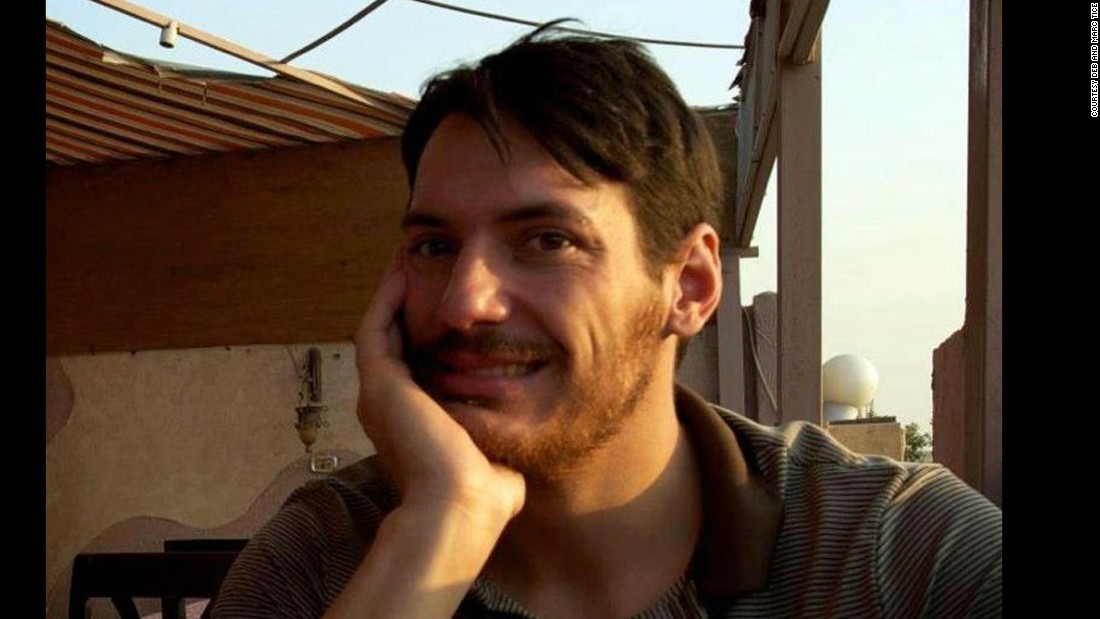
The government of Syrian leader Bashar al-Assad has not publicly acknowledged they are detaining him. Tice, a freelance journalist and Marine Corps veteran, was detained at a checkpoint near Damascus in August 2012 while reporting on the war in Syria.
In a separate statement Wednesday, Secretary of State Antony Blinken said the administration “will continue to pursue all available avenues to bring Austin home and work tirelessly until we succeed in doing so.”
“We continue to demand that Syrian officials fulfill their obligations under the Vienna Convention on Consular Relations to acknowledge the detention of Austin and every other US national held in Syria, a responsibility under international law and an important step in securing their release,” Blinken said . Another American, Majd Kamalmaz, was detained at a checkpoint in Damascus in February 2017 and has not been heard since.
Biden met with Austin Tice’s parents, Marc and Debra, in early May. Following that meeting, Marc Tice told CNN’s Jake Tapper in an interview on the “The Lead” that Biden told them “he supported the efforts that are underway and other efforts that may create a positive movement” to get Austin home.
“One of the efforts underway is pushing to get engagement and engagement that sustained,” between the US and Syria, Marc Tice said at the time. The two nations do not have diplomatic relations.
In his statement Wednesday, Blinken said that “Special Presidential Envoy for Hostage Affairs Roger Carstens will continue to engage with the Syrian government in close coordination with the White House, Hostage Recovery Fusion Cell, and our team here at the State Department.”
Carstens secretly traveled to Damascus and met with Assad regime officials in 2020 under the Trump administration. In May of this year, he met with Abbas Ibrahim, a top Lebanese security official, in Washington “to discuss US citizens who are missing or detained in Syria,” State Department spokesperson Ned Price said at the time. Ibrahim, the chief of Lebanon’s General Security Directorate, has played a role in securing the release of American detainees in the past, including Sam Goodwin from Syria and Nizar Zikka from Iran.
Tesla boss Elon Musk has sold US$6.9 billion ($9.8 billion) worth of shares in the electric vehicle maker, saying the funds could be used to finance a potential Twitter deal if he loses a legal battle with the social media platform.
Key points:
Mr Musk is selling shares in Tesla as he gets his finances in order ahead of a court battle with Twitter
The social media platform is suing the billionaire over his effort to walk away from an April agreement to buy the company
The Tesla boss has filed a countersuit, alleging Twitter misled him about key aspects of his business
“In the (hopefully unlikely) event that Twitter forces this deal to close *and* some equity partners don’t come through, it is important to avoid an emergency sale of Tesla stock,” he said in a tweet late on Tuesday.
Shares of the microblogging site rose 3.5 per cent to $44.35 in pre-market trading, but were still trading significantly below Mr Musk’s offer price of $54.20 per share.
Tesla shares were up 1.6 per cent at $863.1.
Mr Musk in early July tore up his April 25 agreement to buy Twitter for $44 billion.
Twitter has sued Mr Musk to force him to complete the transaction, dismissing his claim that he was misled about the number of spam accounts on the social media platform as buyer’s remorse, in the wake of a plunge in technology stocks.
The two sides head to trial on October 17.
loading
Following the announcement of the share sale on Tuesday, Mr Musk took to Twitter and said “yes” when asked if he was done selling Tesla stock, adding he would buy it again if the Twitter deal does not close.
“The removal of the ‘fire sale’ risk, the fact Musk has already raised cash in case of a Twitter decision going against him and the comment that he’ll buy back stock if Twitter deal gets dropped all builds into a positive bias for Tesla ,” said Mark Taylor, sales trader at Mirabaud Securities.
Tesla did not immediately respond to a request for comment.
The stock comes out shortly after Mr Musk said at the company’s annual general meeting that Tesla was a “buying opportunity”.
“Elon’s sale of (Tesla shares) over the past three days significantly increases odds the (Twitter) deal gets done, albeit at a slightly lower price $50-$51/share,” Gary Black, managing partner of Future Fund LLC, said in a tweet.
Mr Musk, the world’s richest person, sold $8.5 billion worth of Tesla shares in April and had said at the time there were no further sales planned. But since then, legal experts had suggested that if Mr Musk is forced to complete the acquisition or settle the dispute with a stiff penalty, he was likely to sell more Tesla shares.
Mr Musk sold about 7.92 million shares between August 5 and August 9, and now owns just under 15 per cent of the company, according to Reuters’ calculations.
The latest sales bring total Tesla stock sales by Mr Musk to about $32 billion in less than one year.
Space to play or pause, M to mute, left and right arrows to seek, up and down arrows for volume.
Elon Musk vowing to buy Twitter for $61.4 billion.
Tesla shares have risen nearly 15 per cent since the company reported better-than-expected earnings on July 20, also helped by the Biden administration’s climate bill that, if passed, would lift the cap on tax credits for electric vehicles.
Mr Musk also teased on Tuesday that he could start his own social media platform.
When asked by a Twitter user if he had thought about creating his own platform if the deal didn’t close, he replied: “X.com”
The Company’s MX business shares the progress on its commitment to do more with less through Galaxy for the Planet
Samsung Electronics Co., Ltd. announces today that it has made progress towards achieving the 2025 sustainability goals for the MX (Mobile eXperience) Business. Key initiatives include developing and incorporating recycled materials into products, designing more eco-conscious packaging, nd giving new life to older Samsung Galaxy devices to reduce e-waste.
Since announcing the Galaxy for the Planet vision at Unpacked in August 2021, Samsung has worked diligently to create new ways to recycle and repurpose resources that would otherwise become harmful waste, minimize its environmental footprint, and inspire innovation that helps preserve the planet. Today, Samsung is sharing the progress so far on its sustainability journey.
“Samsung is taking consistent and impactful actions that help protect people and the planet. We marry sustainability and innovation in everything we do,” said TM Roh, President and Head of Mobile eXperience Business at Samsung Electronics. “I am proud of our progress to date. At the same time, it’s been a humbling experience that enables us to continue on our journey towards achieving our sustainability vision with even more conviction and rigor than before.”
Expanding the Use of Recycled Materials to the Galaxy Z Fold4 and Galaxy Z Flip4
Developing new, recycled materials is a key focus area for Galaxy for the Planet. The more Samsung recycles, the more resources it preserves. While repurposing materials into Galaxy devices presents many challenges, the benefits for the planet make it well worth the effort.
Samsung designed the new Galaxy Z series and Galaxy Buds2 Pro with repurposed fishing nets, or ghost nets, that could otherwise end up in the ocean.
First integrated into the Galaxy S22 series in February 2022, today there are eleven Galaxy devices that use repurposed fishing nets including the Galaxy Tab S8 series. By repurposing abandoned fishing nets into a high-performance material for Galaxy technology, Samsung helps to minimize the effects of plastic pollution – 640,000 tons of fishing nets are abandoned and pollute the world’s oceans every year.[1]
Repurposing discarded fishing nets is only one example of Samsung’s advancements in increasing its use of recycled materials in its products.
Samsung has incorporated eco-conscious materials including repurposed fishing nets, post-consumer materials (PCM) or bio-based resin into components of 90% of Galaxy devices launched in the past year.[2] For the Galaxy Buds2 Pro, more than 90% of the plastic components of this product is made with recycled materials.[3]
This process requires complex engineering and technical skills to ensure the overall quality, safety and reliability of all new materials for Samsung’s innovative technologies. Samsung plans to make further investments in research and development to source and transform other, new materials for use in Galaxy products and to increase the presence of recycled materials in each device.
Changing the Way Galaxy Products are Packaged
Samsung set a goal to eliminate all single-use plastics in mobile product packaging by 2025, and the company has already reduced a sizeable amount of single-use plastics in its current packaging for Galaxy smartphones including the new Galaxy foldables. Samsung will explore more ways to eliminate single-use plastics in packaging by assessing every aspect of its packaging designs, down to the smallest of details.
Starting with the launch of the Galaxy S22 series, Samsung now uses 100% recycled paper for flagship product packaging.
By doing so, Samsung will be able to save the equivalent of nearly 51,000 trees[4] with the Galaxy S22 series and the new Galaxy Z series this year.
Samsung has also reduced the volume of packaging for Galaxy Z Flip4 by 52.8% and for Galaxy Z Fold4 by 58.2% respectively compared to the first-generation Galaxy foldables. By reducing each device package’s volume, Samsung ultimately reduces its environmental footprint in transporting these units using trucks, planes and ships. The company estimates that this reduction in packaging volume equates to a reduction in carbon emissions from transportation of approximately 10,000 tons by the end of 2022.[5] In addition to continually evolving packaging for flagship smartphones, Samsung will expand eco-conscious packaging to other product categories.
Scaling Solutions that Reduce E-waste
More than ever, reducing e-waste is crucial to advancing a circular economy that preserves and repurposes the planet’s finite resources. According to the World Economic Forum, 57 million tons of e-waste was generated in 2021 and it is expected to grow by 2 million tons per year.[6]
To address this, Samsung has been expanding the Galaxy Upcycling program, which gives new life to older Galaxy smartphones. Through Galaxy Upcycling at Home[7]Samsung repurposes smartphones with a simple software update that turns them into smart home devices that support everyday needs, such as childcare and pet care.
An important part of Galaxy Upcycling is ensuring that these sustainable practices not only support the environment but also improve people’s lives. The company also upcycles secondhand Galaxy devices into medical diagnostic equipment called EYELIKE™ fundus cameras that provide necessary eye care services in underserved communities. This program has already upcycled hundreds of Galaxy devices and provided basic eye care for over 13,000 patients in Vietnam, Morocco, India, and Papua New Guinea.
The Path Forward
Samsung has set clear sustainability goals by scaling solutions across its business. Whether it is repurposing discarded fishing nets for Galaxy devices, striving to achieve plastic-free packaging or moving us forward to achieve zero waste to landfill and zero standby power of smartphone chargers, Samsung is realizing its Galaxy for the Planet vision one step at a time .
There will be more challenges along the way, but Samsung will hold itself accountable and continue to report progress on its mission to effect positive change and inspire others to protect the planet for generations to come.
[1]FAO and UNEP
[2] By number of models. This includes Galaxy smartphones, tablets, laptops and Samsung wearables launched globally from September 2021 to August 2022. There are 37 models launched globally during this period and 34 models include at least one component that is made of recycled materials or bio-based resin.
[3] More than 90% of all the plastic components of Galaxy Buds2 Pro, in weight, are made of recycled materials. 29 grams of plastics are used in the Galaxy Buds2 Pro in total, and it includes more than 27 grams recycled materials. Each of these components contains at least 20% of either discarded fishing nets (ocean-bound plastic) or post-consumer materials. Recycled fishing nets are used in three internal components of the cradle case in its bracket deco front, bracket battery holder and bracket-PCB. Post-consumer recycled materials are used in eight exterior components. Four components in both Ear Buds in its case front left/right, case rear left/right. And four components in the cradle case in its deco front, case-upper, case-upper inner, and case-lower.
[4]A 30-year-old pine tree can produce 59 kg of paper.
[5] This is calculated based on ISO 14040:2006 and 14044:2006 standard, using Ecoinvent 3.8 database for transportation of SM-F700F, SM-F721B, SM-F900F and SM-F936B models from Korea to Europe.
[6] World Economic Forum, “This year’s e-waste to outweigh Great Wall of China,” October 18, 2021. https://www.weforum.org/agenda/2021/10/2021-years-e-waste-outweigh-great-wall-of-china/
[7] Galaxy Upcycling at Home is available in the US, the UK and Korea currently and availability may vary by carrier. This feature is available on all Galaxy S, Note, and Z series released since 2018 (Galaxy S9, Galaxy Note9 or later) running Android 9 and above. More devices will be supported in the future.
Mand dad got dial-up internet in 2005 and it rocked my world. No longer would I have to spend my afternoons doing normal kid things, I could now spend quality time with my cool, very age-appropriate internet boyfriends in the dark shadows of the world wide webs. Not only that, but the era of viral videos was on the come up and I was there for the ride.
I have been shaped by the internet, I have grown beside the internet. It feels like a disgusting and very smart sibling, who I have a love/hate relationship with. I was asked to curate a list of my top 10 internet favorites and these are the first 10 that came to mind… I hope you enjoy them.
1. Snoop Dogg and Paris Hilton rap together
My favorite celebrity collab! I love when two worlds collide to create something that makes you wonder, “Should this have been created?” Sweet P and the DO Double GY!
2. Fabio and the goose incident
I have a complicated relationship with birds. That’s something that Fabio and I have in common, as well as being graceful blondes with immaculate physiques. Fabio had a traumatic run-in with a goose in 1999, during a ride on a rollercoaster, surrounded by beautiful women.
Something that I love about this video is that we never see the incident itself take place, only the aftermath. Goose blood smeared across his face from him, he keeps his composure as the beautiful women ask him if he’s OK. Fabio refers to the event as “a miracle, but not a freak accident” and warns that it will happen again, even calling for the rollercoaster to be shut down. (Definitely not because he’s a little bit embarrassed.) A true man of the people.
3. Kim Cattrall scatting
I love when someone starts passionately scatting with reckless abandon to the twang of a lover’s upright bass. Kim Cattrall is the scatter in question? Say less!
4.Recess Therapy
Allow Instagram content?
This article includes content provided by Instagram. We ask for your permission before anything is loaded, as they may be using cookies and other technologies. To view this content, click ‘Allow and continue’.
Recess Therapy is an Instagram account that interviews kids in New York City about various topics. I’m not a huge fan of kids generally, but I love these kids a lot. Here’s a clip from my favorite episode. If I could birth a kid half as funny as Kiki I might think about having a kid.
5. Let there be a thousand blossoms bloom
The 2017 marriage equality plebiscite is up there with one of the most ridiculous things the Australian government ever decided was an alright idea – but out of it we got this completely unhinged clip of Bob Katter that I can quote word for word to this day. I don’t have much in common with Katter but we do share the belief that a thousand blossoms should be able to bloom.
6. Kermit sings Once in a Lifetime by Talking Heads
One of my favorite songs, covered by my favorite frog.
7. Reducer
Allow Instagram content?
This article includes content provided by Instagram. We ask for your permission before anything is loaded, as they may be using cookies and other technologies. To view this content, click ‘Allow and continue’.
This is one of the funniest pages on Instagram. I almost exclusively communicate with my friends through these images. They always hit right. To call them memes would be a disservice – it’s the unwell gals’ favorite news source.
8. Nina Simone’s story about trying to kill a guy
Nina Simone is hands down one of the most powerful and unique artists of all time. This is a clip from an old interview with the BBC where she spoke about attempting to kill the owner of a record label after he stole from her. She does not have any remorse, and she wipes a tear away after laughing about it; I always laugh along with her. Imagine being that cool.
9. Schwan Attacken
Back to my relationship with birds: I went through a real rough patch when I found out swans have teeth. I was in Berlin at the time and noticed that the birds were more aggressive than others I’d met. I think that really colored my experience of Berlin – the fear of not getting let into Berghain, and the fear of a bird attack at any moment. Anyway, I came across a German Schwan Attacken channel which I would often lie in bed watching. I guess it was some kind of obsessive exposure therapy. However, I still live in fear of the beak, and I never got into Berghain.
10. Jeff Goldblum as the Big Bad Wolf
Jeff Goldblum as the Big Bad Wolf in the 1980s production Faerie Tale Theatre. The smooth jazz and the wolf prosthetics that actually just make him look like a huge rat man always do it for me. “A coward… I like that in a man.”
The most clutch moments of AFL history are among the most memorable. From “Leo Barry, you star” to Barry Breen’s match-winning behind, those who step up in the biggest moments are remembered through history.
loading
Footy is often a game of millimeters despite being played in a glorified paddock.
loading
Whether it’s the luck of the bouncing oval ball or brilliantly executed skill, the ability to pull through when the going gets tough is critical for teams with September dreams.
Just look at Collingwood this year — their 15 wins this year have been underpinned by 10 wins in their 11 games decided by less than two goals.
About a quarter of all games are decided by two straight kicks or less.
Some believe that teams do well late because of good coaching, on-field leadership and training. Others believe it’s a little more down to luck.
How do games change when they heat up late, and who has stood up the most in close games recently?
Clock is ticking
Winning possession is at the core of football. This year, for every 100 times a team wins the ball in a game they score about 71 points. That rises to 91 points from 100 won center clearances, and drops to 30 points from kick-ins.
Where a team wins the ball matters a lot as well. Teams score three times as many points from the ball won in the front half of the ground compared with the defensive half.
Time also matters. Teams generally score more heavily early in quarters — with the exception of the first 10 minutes of a game.
In the fourth quarter of games where the margin is two goals, teams score at just 67 points for every 100 times they win possession. In time-on in the last quarter, that drops to just 65 points per 100.
The potential reasons for this are many: Teams with a lead late in close games tend to try to shut up shop, and try to take time off the clock.
Late game fatigue also plays a role, along with the mental weight of late game football and the weight of the footballing world sitting on the shoulders of 44, mostly young, players.
However, some players thrive when their team needs it the most.
circle of trust
Taylor Walker’s last-minute sealer against the Bulldogs was the Crows’ spearhead’s sixth clutch-time goal in two seasons.(Getty Images: AFL Photos/Dylan Burns)
Clutch time is hard to define. Just 333 minutes of football — shy of two minutes per game — have been played this year where the margin was less than 12 and the clock had passed the 20-minute mark in the last quarter.
Given the large number of players on the field, it’s often hard to stand up late, when it counts. No player has scored more than three goals in clutch time across either of the past two seasons. Taylor Walker’s six goals over the two seasons is the most of any player.
A bit more can be gained from looking at games where the margin was less than 12 points any time in the last quarter.
One name, at a club near the bottom of their rebuilding cycle, has shouldered the biggest burden in late games in the past two years.
Cameron Zurhaar is an imposing beast of a player — not quite the height of a key forward, but with speed and power to burn. His ability to compete both in the air and on the deck makes him more dangerous as the going gets tough.
loading
North Melbourne may not be in contention right now, but if they continue to develop, Zurhaar has the potential to be a matchwinner in big games.
Cameron Zurhaar showed against Richmond that he can be a match-winner for the Kangaroos.(Getty Images: AFL Photos/Michael Willson)
To score, you have to have the ball, and certain players rise to the occasion. More skilful users and experienced players tend to shine in late game situations as teams look to their most-dangerous players.
There appears to be a subtle shift in dynamics in most teams, such as from Jarryd Lyons to Lachie Neale, or Tom Mitchell to Jaeger O’Meara. In raw terms, Patrick Cripps steps up the most for his team late in games, signaling his importance to him for the Blues.
The player who wins more stoppages at the death, compared to the rest of the game, is a less-heralded name: Liam Baker.
Liam Baker’s speed and agility make him a key asset for the Tigers.(Getty Images: Quinn Rooney)
The young Tiger isn’t an imposing player but he is quick and agile, finding momentary creases in the opposition’s defence.
loading
When games become stagnant late it is often those with the most speed and initiative who can break through them, such as Baker can.
Zurhaar and Baker, just like Barry and Breen, aren’t their clubs’ biggest stars but they are making a name late in the game, when the nailbiters are won.
scared of skill
Collingwood’s run of wins in close games has been exciting for fans. (Getty Images: Darrian Traynor)
Collingwood’s rise up the ladder from bottom to top two in has been exhilarating to watch.
The Pies’ run is reminiscent of Port Adelaide last year. Port rode a 5-0 record in close games to second place on the ladder and snag a Preliminary Final appearance.
At the time, the club, its players and supporters put down the success down to the hard work undertaken to prepare for the year.
“We have done a lot of work across a lot of sessions — watching a lot of vision — to put ourselves in the best possible positions to win those close games,” Butters told the Port Adelaide club website last year.
Port Adelaide seem to have lost the knack of winning the close games in 2022.(Getty Images: Daniel Pockett)
This year, Port have won just two of their nine close games. It is the opposite journey taken to that of Collingwood, who won just one of six close games last year.
Collingwood have also stated that they have put a lot of work into how to win in close games.
It’s likely true that all 18 teams use a disproportionate amount of time to work on late game scenarios — and with good reason: All wins are worth four points, and close games are the easiest to flip over.
There’s undoubtedly some skill and strategy to how teams approach tight games. However, when looking at how these results shake out over a long period of time, the pattern is harder to discern.
That’s not to say that the hard work put in at training doesn’t help — it could help tilt the coin slightly in favor of the team that prepares better.
However, just like a coin can land on heads 10 times in a row, a team can win 10 close games in a row.
It’s also true that a coin that lands on heads 10 times in a row is no more or less likely to land on heads at the 11th toss.
For Collingwood fans, it shouldn’t matter if it’s skill, luck or a combination of both.
Collingwood is in the thick of the premiership race, one year after finishing second-last.
They are the most exciting team in the league to watch, coming off an off-season with minimal expectations.
Luck, skill, magic or otherwise — it’s thrilling to watch.
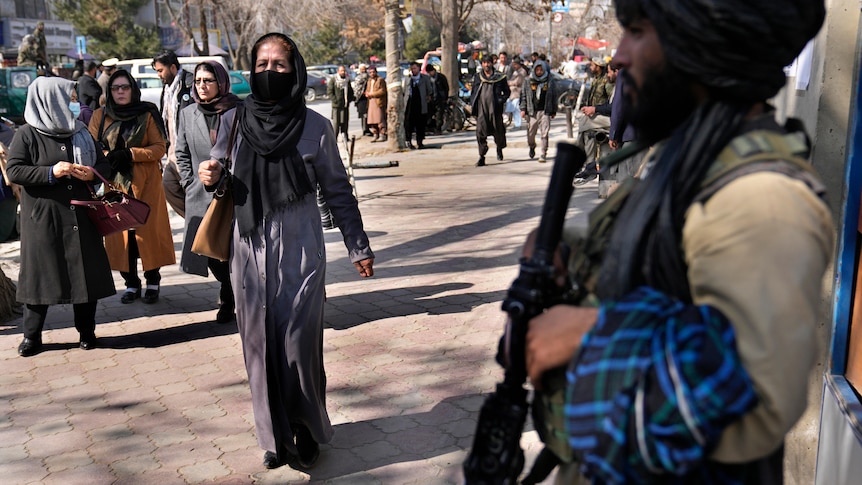
Former Afghan interpreters who worked with the Australian military say their family members are still stuck in the region and at risk, almost one year after the Taliban seized control of the country.
Key points:
An interpreter says they regret working with the Australian government because of the impact it has had on their family
A lawyer helping Afghans with visas says the Taliban is still targeting people who assisted foreign forces in Afghanistan
Visa delays are due to a backlog of applications, according to the Settlement Council of Australia
More than 200,000 Afghans have sought humanitarian protection in Australia since August last year, with almost half of those still waiting for their applications to be considered.
The lengthy delay has led one Afghan interpreter, who spent two years working alongside Australian Defense Force (ADF) troops based at Tarin Kot, to express regret at working with the ADF.
“We now regret why we have even worked for the Australian government because the impact of that is [inflicted] on our family members,” said the former interpreter, who the ABC has not named to protect his family.
“They have been asked ‘why have your family members worked with the Australian Army and the previous government’ and they’ve been questioned about where we are – they are looking for us.
“I feel hopeless as no help has been given to my extended family and they have not been evacuated to get to a safer place like Australia.”
More than 6,000 Afghans have been granted humanitarian visas since the Taliban retouched control, with priority given to locally engaged staff, women and ethnic minorities.
But many of this group are still in Afghanistan or neighboring countries on temporary visas.
Fears for life of former embassy guard
Glenn Kolomeitz, a former Australian Army officer and lawyer helping Afghans with visa applications, says some have already been harmed.
“In the last 48 hours, we had one of our former embassy guards abducted and we expect that he will be killed,” Mr Kolomeitz told the ABC.
“We expect to find his remains dumped outside his house in coming days. That’s the cold hard facts.”
Former Australian Army officer and lawyer Glenn Kolomeitz says some family members of interpreters are at high risk from the Taliban.(Four Corners)
Mr Kolomeitz said the Taliban is still targeting people who assisted foreign forces in Afghanistan.
“The wife of one of our people died recently after moving from safe house to safe house and being hunted,” Mr Kolomeitz said
Mr Kolomeitz said the family of one interpreter who died while serving with Australian troops are still languishing in a Texas refugee camp, 12 months after being evacuated.
“One of their brothers was an interpreter for the Australian Army who was killed by a rogue Afghan Army soldier, alongside three Australian soldiers,” Mr Kolomeitz said.
“If anyone is owed protection by Australia, it is this interpreter’s family.
Enormous backlog of applications causing delay
The ABC contacted Immigration Minister Andrew Giles to discuss these reports, but did not receive a response.
Earlier this week, Mr Giles told SBS News that a taskforce has been established to focus on the resettlement of Afghan nationals.
“We are applying an enormous number of resources to this problem because it is an enormous priority for the government,” he said.
Settlement Council of Australia chief executive, Sandra Elhelw Wright, said visa delays were due to an enormous backlog of applications.
“This is what happens with conflict as demand for resettlement balloons and there are not enough places available for everyone who needs safety,” she told the ABC.
Ms Elhelw Wright said the 6,000 people who have been resettled in the last six months are already contributing to society.
“They are talking about how optimistic they are about their lives in Australia, but the key challenge for them is the concern they have about their family overseas.”
Americans overwhelmingly would like to be able to vote on an abortion measure on their state ballot, an exclusive USA TODAY/Ipsos Poll finds. And if they had the chance, they would oppose efforts to ban the procedure by almost 2-1.
The survey, taken in the aftermath of the stunning defeat in Kansas last week of a proposal to remove abortion rights from the state constitution, is more evidence of a backlash to the Supreme Court’s decision that allows states to sharpen restrictions on abortion or bar it entirely .
More:Kansas abortion vote raises warning signs for GOP nationwide in November.
Seven in 10 say they would support using a ballot measure to decide abortion rights in their state, an idea backed across party lines, by 73% of Democrats, 77% of Republicans and 67% of independents. Democrats are the most energized on the issue; 43% say they “strongly support” putting abortion on the ballot.
If there were a ballot measure in their state, those polled would vote by 54%-28% in favor of making abortion legal. Democrats support legal abortion in their state by 7-1 (76%-10%) and independents by 2-1 (52%-27%). Among Republicans, 34% would support abortion rights and 54% would oppose them, a worrisome fissure for the party that has long been identified with the anti-abortion movement.
At particular risk for the GOP are two groups of swing voters. Suburbanites by 56%-26% say they would vote to support abortion rights in a ballot measure. And women by 60%-25% would support an abortion rights initiative, significantly more than the backing among men of 47%-32%.
How will the abortion debate affect midterm elections?
As the midterm elections approach in 90 days, political strategists are facing this question: Without an abortion measure on the ballot in most states, voters will chose to express their views on the question with the candidates they support or in their decision whether to turn out do you vote?
“With abortion no longer a constitutional right, Americans are looking to the voting booth to have their voice heard on the issue,” Ipsos President Cliff Young says. “However, the divisions that exist across the states could bring legal, medical and lifelong consequences for many parts of the country.”
In the month after the high court’s ruling that overturned Roe v. Wade, 11 states, all in the South or Midwest, have outlawed abortion or implemented a ban at six weeks of pregnancy, according to an analysis by the Guttmacher Institute. At least four states are set to have abortion measures on the ballot this fall: California, Kentucky, Montana and Vermont. A measure is also likely in Michigan.
Abortion laws by state:Searchable database of state-by-state abortion limits and protections
Democrats are most engaged on the issue: 52% are familiar with the Kansas vote, compared with 36% of Republicans.
Overall, 60% of Americans say they believe abortion should be legal in all or most cases; 37% say it should be illegal in all or most cases. Just 9% of those surveyed said abortion should be illegal in all cases, including only 16% of Republicans.
The online poll of 1,018 Americans Aug. 5-8 on Ipsos’ KnowledgePanel has a margin of error of plus or minus 3.5 percentage points for all respondents.
Indiana abortion law:Sweeping Indiana abortion ban enacted, the first such law since Roe overturned
Exclusives: Concern about abortion explodes among Democrats, fueling a push to vote
When you stand in the confectionery isolate, how do you choose a block of chocolate? Is it decided by your taste buds? Or maybe your wallet?
Key points:
The majority of Australia’s chocolate is sourced from the global cocoa commodity market
One southern Queensland chocolate producer is breaking away from this traditional system
Some chocolate makers want to offer full transparency and give credit to their source region’s cocoa farmers
The reality is that few of us consider the farm the cocoa was grown on.
If you do, your mind might reach for hazy images of western Africa’s Ivory Coast.
Yan Diczbalis, chief horticulturalist of the Queensland Department of Agriculture and Fisheries, says the region supplies more than half of the global cocoa commodity market.
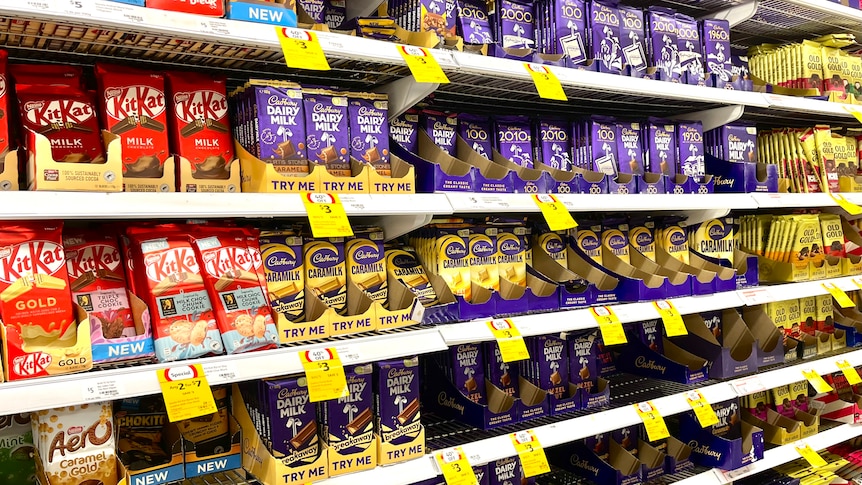
It is a market that feeds the likes of Nestle, Hershey and Mondelez International, which produces the Cadbury brand.
But it is an old market, one long muddied by allegations of child labour, slavery and underpayment of the farmers who grow the beans.
“A lot of the pre-existing chocolate trading houses are out of Europe and have been around for 100, 200 years, which have grown out of this colonial commodity trade,” Dejan Borisavljevic, owner of Indonesian-based trading company Biji Kakao Trading, said.
“It’s an incredibly old trade route, and of course it’s had lots of issues with transparency.”
Almost all the chocolate on supermarket shelves is sourced in bulk from this commodity market — and when you are talking about the trade of over 4.5 million tonnes of cocoa, it can be difficult to trace a bean’s origin any further than the continent it was grown on .
For consumers, this makes it almost impossible to guarantee that any of your dollars make it to the farmer.
“I suppose [payments for cocoa are] beyond the remit of ours — all we know is we can’t influence the commodity market at all,” Mr Diczbalis said.
Cocoa farmers growing for the commodity market rely on corporate morality and schemes like Fairtrade to ensure growers are being justly paid for their product.
Mr Diczbalis says it is a system that lacks accountability.
The cocoa beans grow inside a “mulch”, which is removed before roasting.(Courtesy: Igor Van Gerwen)
A modern take on the historic cocoa trade
While container upon container of cocoa beans is unloaded onto the ports of Amsterdam and Hamburg another, albeit smaller, market is emerging.
Between the tall, corrugated iron sheds that line Toowoomba’s industrial area sits a small, unimposing building — one that you are likely to smell before you see.
That aroma comes from a factory owned by a pair of Swedish chocolatiers who make Australian chocolate using cocoa beans sourced from the Solomon Islands and Indonesia.
Trevor Smith at his Toowoomba chocolate factory only sources cocoa from farms in the Solomon Islands and Indonesia.(Rural ABC: Alys Marshall)
When Magda and Trevor Smith moved from Sweden to Australia, they wanted to continue their chocolate-making, but quickly realized that they would prefer a new trade route.
“Europe has an established cocoa industry, that spice trade has been going on for many hundreds of years,” Mr Smith, co-owner of Metiisto Chocolate, said.
“It makes sourcing cocoa [from Europe] really easy, but what it does is distance you from the actual farms.”
“You can’t check where your cocoa is coming from; you’ve got too many people in between you and the cocoa farmers.”
Instead of buying from the global commodity market, the Smiths buy their chocolate direct from Pacific farmers.
Those farmers include the likes of Robert Waisu, who has been growing cocoa in the Solomon Islands for the past 35 years.
Robert Waisu harvesting cocoa pods in the Solomon Islands.(Supplied: Robert Waisu)
An opportunity for Pacific cocoa growers
Mr Waisu sells his cocoa direct to “bean to bar” chocolatiers like the Smiths of Toowoomba.
“I’m selling my cocoa as premium cocoa that’s sun-dried at an attractive premium price,” Mr Waisu said.
“The domestic market pays us here 12 [Solomon Islands] dollars per kilogram of dry beans; they [the specialty buyers] pay us more like 50 per cent on top of this.”
He and other Solomon Islands cocoa farmers are proud of their cocoa’s quality, something he says the rest of the world is yet to recognize.
“Other people, globally, they don’t really know what’s going on here. But myself, I am really proud; we are really proud,” he said.
Cocoa bean samples displaying the farm’s origins.(Rural ABC: Alys Marshall)
Chocolatiers like the Smiths are working to provide this recognition, labeling each of their bars with the name of the locality the cocoa was grown in.
Heather Smyth, a flavor chemist at the University of Queensland, describes it as something of an emerging market.
“For big companies in the likes of Cadbury, they’re really looking for a very consistent cocoa flavor that matches the flavor that they had before and the year before that and the year before that,” Dr Smyth said.
“SW [major corporations] will actually source cocoa from a whole lot of different regions to come up with a flavor profile which is recognizable to their customers.”
Heather Smyth believes there are growing opportunities to market cocoa by region. (Supplied: University of Queensland)
“But just as we recognize that wine and coffee have diverse flavor types, we need to recognize that with cocoa as well.”
“Within different regions there can be spicy notes, there’s often fruity notes that are present, even citrus notes, then of course your typical chocolate and coffee flavours.”
“It allows the community to receive payment for their specialty beans and for the quality of cocoa that they produce.”
legitimate transparency
While work is being done to reform the traditional cocoa trade system, Mr Diczbalis says that these emerging “bean to bar” trade routes are a good alternative for consumers looking for a transparent supply chain.
“All that sort of plantation cropping — for want of a better term — was sort of instigated during the colonial era,” Mr Diczbalis said.
“We can’t go back and change the way that it was. But what we can do is work with producers currently to improve their outlook.”
“From a high-level view, there are two obvious things that you could try to attack: the signature verification or the hash verification,” Wouters says. The glitch works against the signature verification process. “Normally you want to avoid shorts,” he says. “In this case we do it on purpose.”
Initially, Wouters attempted to glitch the chip at the end of its boot cycle—when the Linux operating system has fully loaded—but ultimately found it easier to cause the glitch at the start of the boot. This way was more reliable, Wouters says. To get the glitch to work, he says, he had to stop decoupling capacitors, which are used to smooth out the power supply, from operating. Essentially, the attack disables the decoupling capacitors, runs the glitch to bypass the security protections, and then enables the decoupling capacitors.
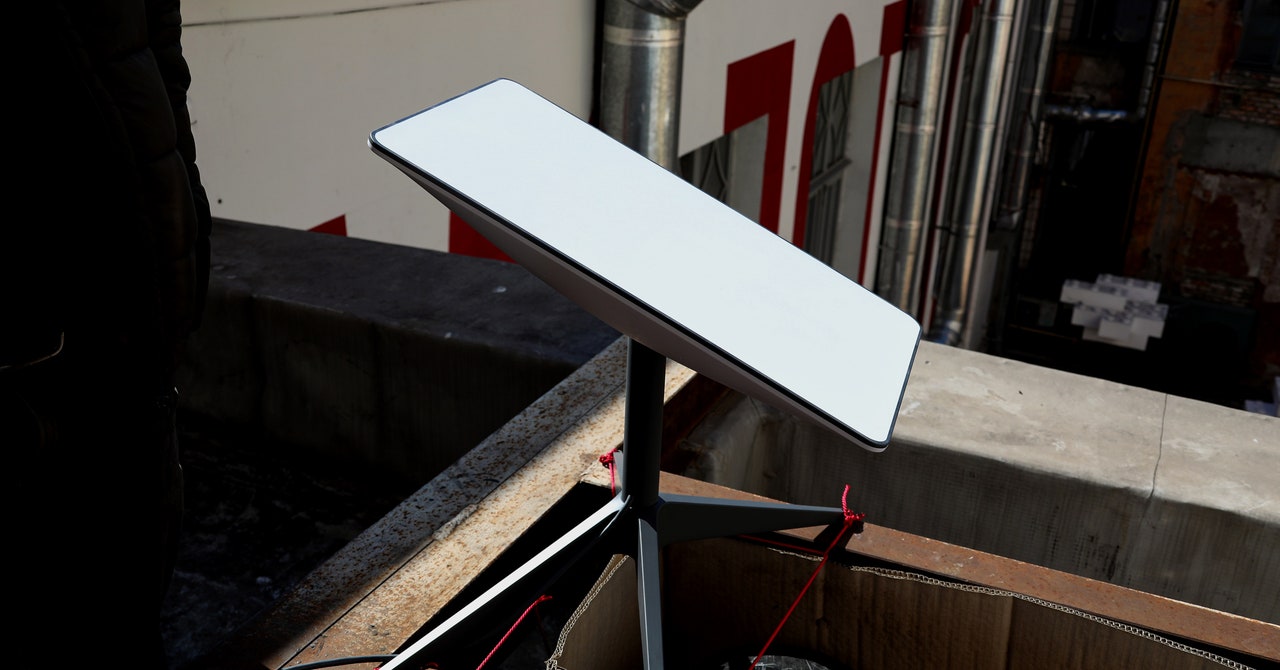
This process allows the researcher to run a patched version of Starlink’s firmware during the boot cycle and ultimately allows access to its underlying systems. In response to the research, Wouters says, Starlink offered him researcher-level access to the device’s software, although he says he declined as he had gone too deep with the work and wanted to build the modchip. (During testing, I hung the modified dish out of this research lab’s window and used a plastic bag as a makeshift waterproofing system.)
Starlink also issued a firmware update, Wouters says, that makes the attack harder, but not impossible, to execute. Anyone wanting to break into the dish in this way would have to put a lot of time and effort into doing so. While the attack isn’t as devastating as being able to take down satellite systems or connectivity, Wouters says it can be used to learn more about how the Starlink network operates.
“What I am working on now is communicating with the backend servers,” Wouters explains. Despite making the details of the modchip available for download on Github, Wouters does not have any plans to sell finished modchips, nor is he providing people with patched user terminal firmware or the exact details of the glitch he used.
As an increasing amount of satellites are launched—Amazon, OneWeb, Boeing, Telesat, and SpaceX are creating their own constellations—their security will come under greater scrutiny. In addition to providing homes with internet connections, the systems can also help to get ships online, and play a role in critical infrastructure. Malicious hackers have already shown that satellite internet systems are a target. As Russian troops invaded Ukraine, alleged Russian military hackers targeted the Via-Sat satellite system, deploying wiper malware that bricked people’s routers and knocked them offline. Around 30,000 internet connections in Europe were disrupted, including more than 5,000 wind turbines.
“I think it’s important to assess how secure these systems are because they are critical infrastructure,” Wouters says. “I don’t think it’s very far-fetched that certain people would try to do this type of attack because it is quite easy to get access to a dish like this.”
Update 5 pm ET August 10, 2022: After Wouters’ conference talk, Starlink published a six-page PDF explaining how it secures its systems. “We find the attack to be technically impressive, and it is the first attack of its kind that we are aware of in our system,” the paper says. “We expect attackers with invasive physical access to be able to take malicious actions on behalf of a single Starlink kit using its identity, so we rely on the design principle of ‘least privilege’ to constrain the effects in the broader system.”
Starlink reiterates that the attack needs physical access to a user terminal and emphasizes its secure boot system, which was compromised by the glitching process, is only impacted on that one device. Wider parts of the overall Starlink system are not impacted. “Normal Starlink users do not need to be worried about this attack affecting them, or take any action in response,” Starlink says.