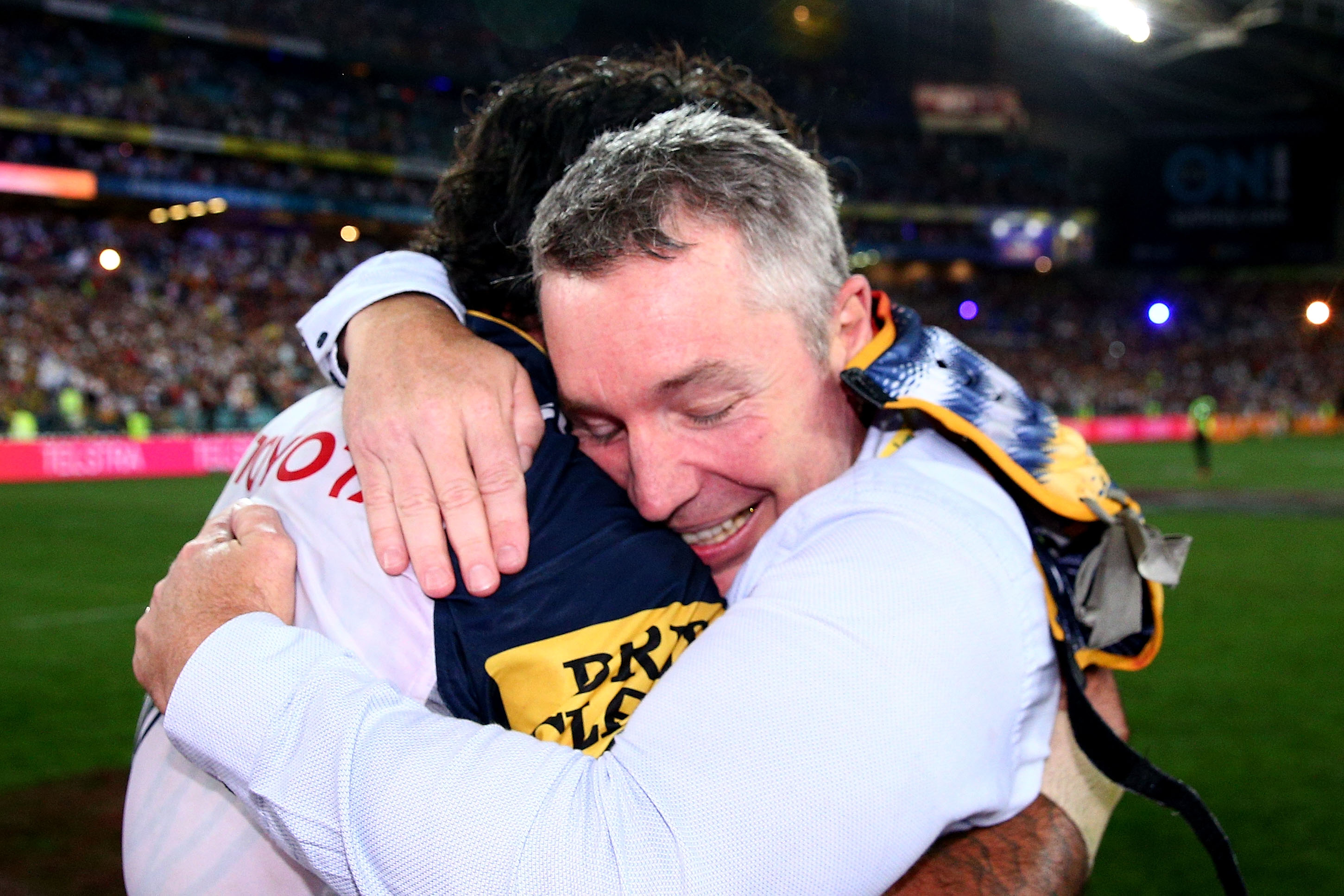
Latrell Mitchell spent most of his post-match press conference praising his teammates, but took the time to issue one clear warning to the rest of the competition: get ready.
“I think it just sends a message to the rest of the competition now,” he said after the Bunnies’ 26-0 win over Parramatta.
“Look over your shoulders, we’re coming. South Sydney.”
READMORE:SJ turns back the years with stunning solo try
READMORE:‘Ridiculous’ Kyrgios demolishes fellow Aussie ahead of US Open
READMORE:Payten’s emotional tribute to Paul Green
It was at this ground two years ago where Souths’ season effectively ended – as Mitchell, in the midst of a virtuoso performance, succumbed to a hamstring injury which put him out for the rest of 2020.
The Rabbitohs’ campaign eventually ended with a close loss to Penrith, where fans were left wondering if a player of his quality would have affected the scoreline.
NRL Highlights: Eels v Rabbitohs – Round 22
Fast forward 12 months and it was the exact same situation, opponent, and thoughts of what could have been – although this time, those wounds were entirely self-inflicted, Mitchell’s season ending after a thick high shot on Joey Manu.
But right now, there’s no such concern. They’ll get star center Campbell Graham back in the next couple of weeks, Dean Hawkins showed he’s capable of deputizing admirably for Lachlan Ilias, and most importantly, Mitchell is fit and firing.
Stream the NRL premiership 2022 live and free on9Now
“Everyone that stood in tonight, Dean Hawkins for instance, really turned up and played his role – and that’s what we want,” Mitchell said.
It’s still Penrith’s competition to lose – but Souths are firmly in that bunch of teams just below them, who, if things went right, could spring an upset.
As long as Mitchell is fit, the sky is the limit – particularly when Cody Walker seems to be an entirely different player when his star fullback is in the team.
“It’s really enjoyable to see him take control of the attack and really do his job. He’s so instinctive, and one of the best in the game,” Mitchell said of Walker.
“Once he’s on, we know he’s playing really good footy and there’s a knock on effect. I know he’s on, and it makes me feel good.”
Latrell Mitchell makes a break against the Eels on Friday night. (Getty)
The stats don’t lie. Since Mitchell’s return, the Rabbitohs have played seven games, won six of them, and scored 224 points along the way.
Only a golden point defeat at Shark Park has prevented them from perfection since an embarrassing loss to the Dragons, which now looms as a turning point for their season.
The games don’t get any easier from here, with their final three matches coming against Penrith, North Queensland, and finishing at the opening of the new Sydney Football Stadium against their arch-rivals, the Roosters.
A couple of months ago, with the team in danger of falling out of the finals entirely, this slate of games may have looked like a murderer’s row – but instead, the hunted have become the hunters.
For a daily dose of the best of the breaking news and exclusive content from Wide World of Sports, subscribe to our newsletter byclicking here!
Paul Green’s life in pictures: From Sharks prodigy to premiership-winning coach
Originally scheduled for the end of July 2022, both the Racin’ USA Pt3 DLC and the V1.4 update have been pushed back due to some issues that cropped up in development.
This newest and final DLC pack for the Racin’ USA bundle will officially include oval racing to the sim with the addition of two new tracks – Auto Club Speedway and World Wide Technology Raceway at Gateway. Also, the Formula USA 2022 is Reiza’s unofficial representation of the NTT IndyCar, and that will also drop in the DLC.
The new Formula USA 2022 that will release in Racin’ USA Part 3 DLC.
With the addition of oval racing, the Racin’ USA Part 1 DLC will now also have the oval configuration for Daytona International Speedway included. Furthermore, all of the open-wheel cars from all of the Racin’ USA DLC packs will have short oval and speedway configurations added alongside the road racing form.
If you remember back more than a year ago, in June 2021 to when the first part of the Racin’ USA DLC dropped, all three of the Racin’ USA DLCs were announced and were available to purchase as an Expansion Pack bundle. Part 2, remember, dropped back in February. Although it will just be a little while longer, AMS2 players who made that purchase will finally get what they paid for when it comes out.
In fact, anyone who has purchased either the 2020-2022 Season Pass, the Premium Expansion Packs or Racin´ USA Expansion Pack bundle, you’ll finally be getting your hands on the awaited product. Anyone who is looking to buy the separate pack, the price point is still up in the air. Parts 1 and 2 are $14.99 each.
Auto Club Speedway (pictured) and WWT Raceway at Gateway will drop in Racin’ USA Part 3 DLC.
In the Steam posting about the DLC and update, it’s also unveiled that full course yellow support is being added to compliment the oval racing being added, along with a visible pace car, marshals that can wave flags, caution lights and even virtual safety cars for road racing. However, the delay for the entirety seems to be because of issues that cropped up in testing.
“The system was still proving somewhat glitchy in Multiplayer during our tests late last month, which ended up being the leading factor in the decision to postpone v1.4 as naturally you can’t successfully bring oval racing to the game without proper full course yellow support,” the post reads. “Luckily, good progress has already been made since, with our more recent tests already going quite smoothly.”
While the delay is unfortunate, the added content will hopefully be worth the wait. Especially the oval racing side, I’m going to have to talk to the community managers about possibly setting up a community event with the new content. Not many sims have proper oval racing besides iRacing, so fingers crossed for a good time when the DLC finally drops later this month.
Images and information found via the AMS2 Steam page
An Australian academic who is being tried with ousted Myanmar leader Aung San Suu Kyi on charges of violating the country’s official secrets law testified in court for the first time on Thursday, a legal official has said.
Sean Turnell, an economist at Sydney’s Macquarie University, had served as an adviser to Aung San Suu Kyi, who was arrested when her elected government was ousted by the army on 1 February 2021.
Turnell was arrested five days later and is being held in the main prison in Naypyidaw, the capital, as is Aung San Suu Kyi. Three of Aung San Suu Kyi’s former cabinet members are being tried with them in a special court at the prison.
A legal official familiar with Thursday’s proceedings said Turnell denied the allegations against him and pleaded not guilty. Further details of his testimony from him were not available because his lawyers from him have been barred from talking about the case.
All the trials involving Aung San Suu Kyi have been held under similar restrictions, with the proceedings closed to the media and the public.
The legal official, who spoke on condition of anonymity because he is not authorized to release information, said Turnell and his co-defendants appeared to be in good health.
The exact details of the alleged offense in the case have not been made public, though Myanmar state television, citing government statements, said last year that Turnell had access to “secret state financial information” and had tried to flee the country.
Turnell is also being prosecuted under the immigration law, which carries a punishment of six months to five years’ imprisonment. Prosecutions under the immigration law are common for foreigners being held for other offences.
The judge added Thursday’s proceedings until next week, when Aung San Suu Kyi is to testify.
The case is one of many faced by Aung San Suu Kyi and is widely seen as an effort to discredit her to prevent her return to politics. The charges against her include corruption and election fraud. She has already been convicted of several minor offenses.
Last year’s military takeover sparked peaceful nationwide street protests that security forces quashed with lethal force, triggering armed resistance that some UN experts have characterized as civil war.
The state government’s shark net program aims to determine three species of sharks – the tiger, white and bull shark – but the nets’ efficacy has been debated for years. Many critics say the technology is almost 100 years old and alternative and less harmful methods should be used.
For those who support the nets, they offer psychological comfort, says Dr Vanessa Pirotta, a marine predator researcher at Macquarie University.
But they offer little protection. Shark nets are not designed to create a complete barrier between swimmers and sharks, but rather they aim to detect sharks from frequenting the site.
Over the years, there have been significant advancements in technology, which include SMART drumlines and drone surveillance. Both are in place along the Central Coast.
Earlier this year, the government announced $85 million to fund the implementation of other shark mitigation tools, including increased shark tagging, improving community awareness and installing shark listening stations that provide real-time tracking of tagged sharks.
Brendan Rogers, who supports the removal of shark nets, has swum for years along the Central Coast.Credit:Brook Mitchell
Central Coast resident Brendan Rogers tries to swim most mornings but the possibility of bumping into a shark is never far from his mind. He says it’s a risk of entering the sharks’ habitat.
loading
“I think that maybe a long time ago, they were one of the better solutions, but I think there are so many other options now that are potentially safer to other wildlife as well,” he says. “There is no one silver bullet; the nets are old-fashioned. If we can use a combination of smart things – like technology [then that is better].”
Perhaps one of the most controversial aspects of shark nets is how many marine animals get caught in the nets. Of the 376 marine animals caught in shark nets during the 2021-22 reporting period, only 51 were the target species. The remaining 203 were threatened or protected species, including sharks, turtles and rays. Of these animals, 156 died, data from the NSW Department of Primary Industries (DPI) shows.
Among these were 16 leatherback turtles – the majority of which were caught on the southern Central Coast. There were also 28 white sharks, 19 green turtles and 52 smooth hammerheads caught, as well as 14 critically endangered gray nurse sharks.
A Sydney seahorse is caught in a shark net, one of hundreds of non-target species each year.Credit:Brook Mitchell
DPI oversees the shark meshing program and employs seven contractors, one in each region shark nets are installed: Hunter, north and south Central Coast, Illawarra and North, Central and South Sydney. The department hires contractors to inspect the nets every 72 hours and release animals.
What happens to injured animals is not entirely clear. If a contractor finds a live animal caught in the nets, they are to free it using instructions from the Shark Meshing Supervisor and contractors may then “disentangle, handle, treat and release any living marine mammal, marine bird or marine reptile in accordance with any relevant national or state guidelines where practical and safe to do so”.
A DPI spokesperson says the nets were actively managed to ensure minimal impact on marine animals and that since the shark nets were introduced in 1937, there had only been one fatality at meshed beaches.
“The NSW government will continue to work with coastal councils to ensure that community preferences are balanced against effective shark mitigation for bathers,” the spokesperson says.
“Contractors are required to check the shark nets within 72 hours of the previous inspection and release live animals with the least possible harm.
“If an injured marine animal is caught in the nets, DPI fisheries will liaise with Taronga Zoo directly and organize the potential drop-off of the injured animal for assessment and treatment.”
However, Taronga Zoo says their wildlife hospital accepts and treats many animals but their records indicate they have not received “any wildlife impacted by shark nets for many years”.
When pressed further, a government spokesperson provided no further clarification about the fate of injured marine wildlife.
Sea Shepherd threatened and endangered species campaigner Lauren Sandeman says the true number of animals impacted by the shark nets is much higher than reporting shows.
“Any released animals that are still alive are left to nature and there is a strong likelihood that they will succumb to their injuries. But those deaths are not recorded in the program,” she says.
“We’ve seen footage from the program of animal releases that sink to the bottom of the water but they count those as a live releases. [The program] doesn’t track animals after they are released.”
Pirotta says the combination of targeted and non-targeted species caught in nets highlighted the push to move towards less invasive shark mitigation methods.
loading
“Sharks are not actively out to target people,” she says. “The majority of people don’t want to see wildlife harmed, so we need to work towards smarter solutions that collect information so we can learn more about them.”
Get to the heart of what’s happening with climate change and the environment. Our fortnightly Environment newsletter brings you the news, the issues and the solutions. Sign up here.
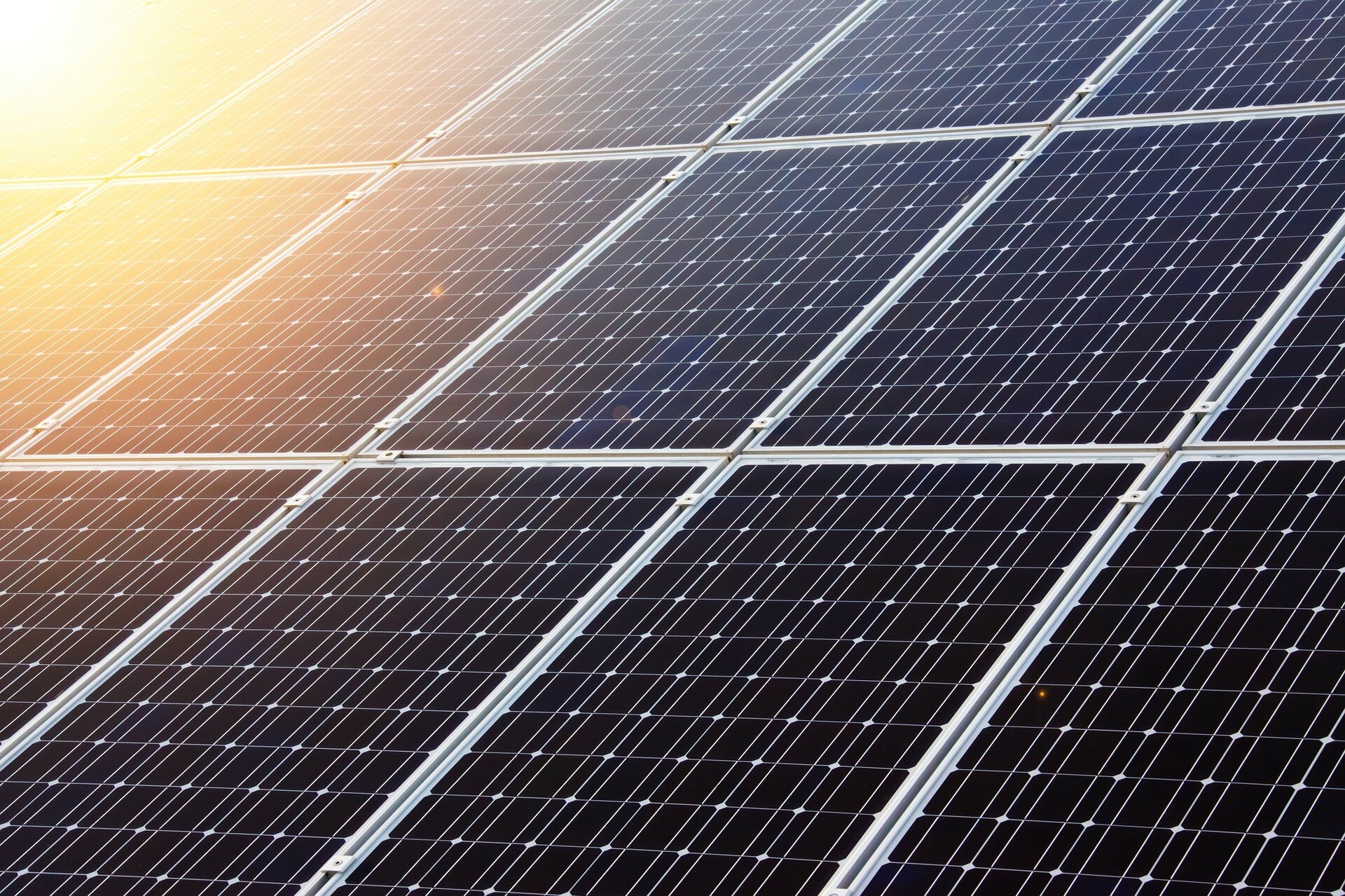
A perovskite solar cell developed by engineers at the University of California San Diego brings researchers closer to breaking the ceiling on solar cell efficiency, suggests a study published Aug. 10 in Nature.
The new solar cell is a lead-free low-dimensional perovskite material with a superlattice crystal structure—a first in the field. What’s special about this material is that it exhibits efficient carrier dynamics in three dimensions, and its device orientation can be perpendicular to the electrodes. Materials in this particular class of perovskites have so far only exhibited such dynamics in two dimensions—a perpendicularly oriented solar cell has never been reported.
Thanks to its specific structure, this new type of superlattice solar cell reaches an efficiency of 12.36%, which is the highest reported for lead-free low-dimensional perovskite solar cells (the previous record holder’s efficiency is 8.82%). The new solar cell also has an unusual open-circuit voltage of 0.967 V, which is higher than the theoretical limit of 0.802 V. Both results have been independently certified.
The open-circuit voltage is a solar cell property that contributes to its efficiency, so this new solar cell “may have the potential to break the theoretical efficiency limit of current solar cells,” said study senior author Sheng Xu, a professor of nanoengineering at the UC San Diego. “This might one day allow us to achieve higher efficiency with more electricity from existing solar panels, or generate the same amount of electricity from smaller solar panels at lower costs.”
The researchers hypothesize that the material’s improved open-circuit voltage might be attributed to a new physical mechanism that they call intraband carrier relaxation. The material’s unique superlattice structure allows different components of the solar cell to integrate in the vertical direction, which creates an atomic-scale double band structure. Under light, the excited electrons could relax from one component (smaller bandgap region) to another component (larger bandgap region) before equilibrating to alter the fermi levels in the superlattice solar cell. This contributes to a higher open-circuit voltage. This process is verified to be related to the built-in potential in the superlattice solar cell. The researchers also acknowledge that there are other possible mechanisms occurring in the unique superlattice structure that might be contributing to its unusually high open-circuit voltage.
To create the new lead-free low-dimensional perovskite solar cell, the researchers used chemical epitaxy techniques to fabricate a superlattice crystal network. The network’s structure is unique in that it consists of perovskite quantum wells that are vertically aligned and crisscrossed. This crisscrossed structure makes the material’s carrier dynamics—which include electron mobility, lifetime and conduction paths in all three dimensions—more efficient than just having multiple quantum wells. These techniques can potentially be used to create perovskite superlattices of different compositions.
“This perovskite superlattice demonstrates an unprecedented carrier transport performance that many researchers in the field have dreamed about,” said Yusheng Lei, the lead author of this paper, who was a Ph.D. student in Xu’s lab at UC San Diego and is now a postdoctoral researcher at Stanford University.
The superlattice consists of a nanoengineered phase separation between Bi3+ alloyed and intact Sn-I regions in vertically aligned multiple-quantum-wells. This composition creates component variations in the atomic scale, which in turn enables hot carriers to quickly cross the multiple-quantum-wells heterostructural interface before they relax–a feat that is usually impossible to achieve, the researchers explained. Here, it is possible because of the short diffusion length required to cross the heterostructural interface.
“This work opens up a lot of new exciting potential for the class of lead-free low-dimensional perovskite materials,” said Xu. Moving forward, the team will work on optimizing and scaling up the fabrication process to make the superlattice crystals, which is currently still laborious and challenging. Xu hopes to engage partners in the solar cell industry to standardize the process.
New record for solar cell efficiency signals bright future for solar tech
More information:
Yusheng Lei et al, Perovskite superlattices with efficient carrier dynamics, Nature (2022). DOI: 10.1038/s41586-022-04961-1
Provided by University of California-San Diego
citation: Perovskite material with superlattice structure might surpass efficiency of a ‘perfect’ solar cell (2022, August 11) retrieved 12 August 2022 from https://techxplore.com/news/2022-08-perovskite-material-superlattice-surpass-efficiency .html
This document is subject to copyright. Apart from any fair dealing for the purpose of private study or research, no part may be reproduced without the written permission. The content is provided for information purposes only.
The Northern Territory’s anti-corruption watchdog has revealed hundreds of government buildings may not comply with their own occupancy regulations, including Parliament House, Royal Darwin Hospital and the Darwin prison.
Key points:
All buildings in the NT are required to have occupancy certificates to ensure they are safe
Parliament, Royal Darwin Hospital, Darwin prison, police stations and school don’t have the accreditation
The ICAC and Ombudsman are investigating the circumstances surrounding the issue
In March, the Independent Commissioner Against Corruption, Michael Riches, launched an investigation into the use of Darwin’s main sporting venue, Marrara Stadium, which has not had an occupancy certificate since it was built in the 1990s.
On Friday, Mr Riches said he has now expanded his investigation after obtaining details about other venues across the territory, which also do not have the required certification.
“I have received information suggesting there may be more than 300 other sites, either owned or leased by the Northern Territory Government, with buildings or structures that do not presently comply with occupancy certification requirements under the Building Act 1993 [NT],” he said.
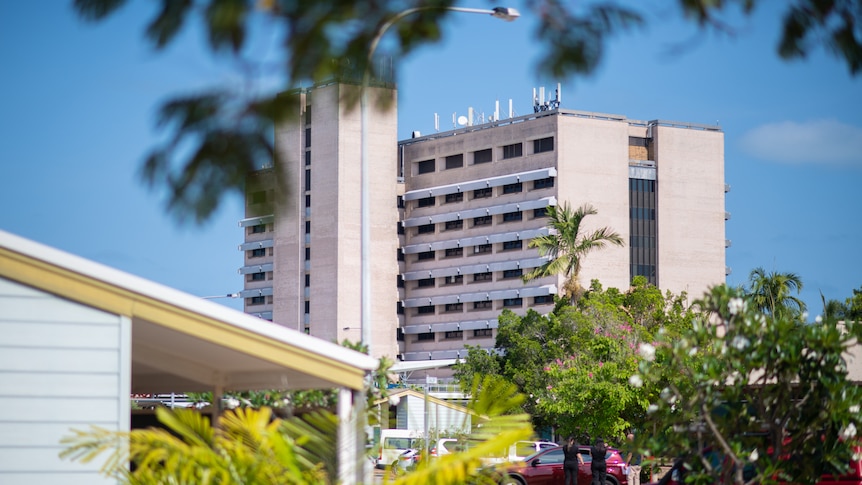
Mr Riches said the affected sites include Parliament House, the prison at Holtze, the Royal Darwin Hospital, the Darwin Entertainment Centre, as well as numerous public schools and police stations.
The seat of the Northern Territory Legislative Assembly since 1994, Parliament House is among the buildings deemed non-certified.(ABC News: Michael Franchi)
Investigation to probe how ‘non-compliance’ has occurred
On its website, the government described occupancy certification as a “statement that building work has achieved a particular level of safety, health and amenity and is suitable to occupy”.
Mr Riches said he would conduct a joint investigation with the Ombudsman “to assess the extent of non-compliance and why and how it had occurred”.
“We want to hear from any person, particularly those who work in building, certification and building insurance industries, who might have information relevant to this investigation,” he said.
The Darwin Correctional Center at Holtze was opened in 2014.(Supplied)
Government says buildings ‘safe for occupancy’
In response to questions from the ABC, Infrastructure Minister Eva Lawler said preliminary investigations showed the buildings affected were “safe for ongoing occupancy”.
She said certification of many government-owned structures was not done for “various reasons.”
“We are the government who is doing the work to rectify these buildings – we are doing the hard work,” she said.
“Some of these buildings are 30 to 40 years old – they’re of a historical nature and the department … and the taskforce has been proactively keeping the ICAC Commissioner informed as to the progress of this matter.”
Following the revelations about Marrara stadium, the government announced the establishment of a building compliance taskforce in June.
Ms Lawler said the taskforce was intending to publish the list of affected buildings “once details are confirmed”.
Concerns about Marrara stadium sparked wider probe
The launch of Mr Riches’ investigation into Marrara Stadium in March came shortly after Ms Lawler triggered a never-before-used clause in the Building Act to temporarily exempt the facility from the key safety certificate.
The stadium is the home of major AFL and NRL games, and part of the Marrara Sports Complex, which is owned by the NT government.
In March, Ms Lawler said the temporary exemption was designed to give a building certifier time to assess the facility and provide the required certificate.
Infrastructure, Planning and Logistics Minister Eva Lawler has previously said authorities were working to certify Marrara Stadium.(ABC News: Felicity James)
She said the stadium was safe and the government was still working to secure certification.
“Territorians have been using and enjoying TIO Stadium [Marrara Stadium] for 30 years,” Ms Lawler said.
“Certification is expected to be finalized as soon as possible … a short-term exemption through a gazette notice has been issued in the interim.”
In a nutshell: Meta’s Portal displays weren’t successful as standalone video calling devices, but the company isn’t wholly killing them off. Some models can now work as secondary screens for PCs. Their future may depend on their advantages over tablets and traditional PC monitors.
On Wednesday, Meta announced that two of its Portal video calling devices now support an app that can wirelessly connect them to PCs. The new feature may save them from total cancellation as the company attempts to pivot the products from consumers to workplaces.
The ultraportable Portal Go and the premium Portal Plus now support Duet Display, an app for wirelessly connecting tablets to PCs as additional displays. Users can drag windows back and forth between a computer screen and the Portal after downloading the Duet app on both devices. However, the function requires a one-time $15 purchase, a premium monthly $2 subscription, or an enterprise subscription.
Though not particularly cheap compared to a decent PC monitor, a Portal might be more convenient in certain situations. Both models are relatively small, and the Duet connection is wireless, which might make for an easy dual-screen setup on a table or countertop.
However, prospective customers should consider the pros and cons of using a Portal for this functionality versus a standard tablet, as Duet Display already works on other similar devices. Furthermore, those with an iPad and a Mac can use Apple’s Sidecar, which offers similar functionality for free.
Furthermore, at $350, the Portal Pro costs about the same as a standard 9th generation iPad. Both devices feature a 12MP front-facing camera and similar screen resolutions, although the Portal Pro’s screen is 14 inches to the iPad’s 10.2 inches. Meta’s device comes with a robust speaker setup but only a handful of apps versus Apple’s iPadOS. The comparison highlights one of the reasons for the Portal’s initial failure as a video-calling assistant — they seem unnecessary in homes already full of tablets.
In June, reports indicated that Meta planned to stop selling Portals after mediocre sales and reviews while maintaining support for existing users. However, the devices saw an uptick in use during the pandemic, as their functionality provided a good fit for remote work.
Meta’s announcement also mentioned a Mac companion app for all touchscreen Portal models. It lets users control video calls on a Portal with a Mac, share screens between the two devices, and send links between them.
Child sexual abuse survivors say a photography course is teaching them to see beauty in the world and help them gain a sense of confidence — all with their smartphones.
After photographer Mitch Dunn taught the six-week course in Ballarat last year, the participants kept in touch, sharing their photos in a private social media group called the Light Seekers.
“The real foundations of photography which support healing are light and perspective, and that can be accessed through any camera,” Dunn said.
“Light is a really beautiful metaphor for healing. When we think about light in terms of photography, when we look at the brightest light source, it creates the darkest shadows.
“When you find yourself in a dark place, when you understand photography, if you turn 180 degrees, you’ll find bright light — it’s also a metaphor for hope.”
Marita finds joy in taking photos on the Great Ocean Road.(Supplied: Marita)
Dunn also focused on composition.
“It’s about narrowing your frame, so when things are overwhelming or you’re seeing a lot of negativity, if you can compose what you’re seeing in a certain way, there is always beautiful hope and inspiration somewhere around.”
New friendships without expectations
Abuse survivor Marita described the course as a “powerful experience”.
“It was my first step back into being a bit social. I had 15 months off work related to a court case and a breakdown,” she said.
Learning about composition, grid lines, lighting and portrait photography changed her approach to how she takes photos or uses her phone camera.
Martia says she finds photographing nature a great way to feel connected.(Supplied: Marita)
“Mitch was really good at getting us to see things from different perspectives; some of mine turned out quite abstract,” Marita said.
She found new friendships with the other survivors where there were “no expectations”.
“It was nice to be in a space that felt safe and supportive of being who you are, not having to justify your behaviour. It felt quite trauma-informed.”
The 43-year-old’s favorite photo is waves crashing over rocks at Johanna Beach on Victoria’s Great Ocean Road.
“It makes me feel peaceful; it sounds weird but it’s a wild and windy place, but whenever I go there I feel really calm because I can feel the sand, the spray of the ocean and the salty air.
“I feel like I’m away from everything and it’s a really calm experience.”
Passion for photography returned
Drew found his iPhone ideal to use as his hands shake due to Parkinson’s disease.(Supplied: Drew)
When Drew was seven years old, he had his camera taken off him by the Anglican Church where he was sexually abused in South Australia.
“They told me they were ‘saving it for the best’ but I never got it back,” he said.
Now 57, the Narungga man said a lot of his photos were in black and white at graveyards.
Drew took black-and-white photos to represent the camera taken off him as a child.(Supplied: Drew)
“The black and white represented the type of camera I had taken away and because one of the places I was taken for walks by the reverend was in cemeteries.
“It’s interesting how some habits are still there subconsciously or otherwise, but they can’t hurt me anymore.”
Drew lives with Parkinson’s disease but finds his phone’s in-built stabilization helps him to deal with his hands shaking.
“The course provided so much joy for people who had been left in the dark and we’ve been friends ever since,” he said.
A mindfulness tool
Mel says she now uses photography as a mindfulness tool.(Supplied: Mel)
Mel is a carer for her husband — both are survivors of child sexual abuse. She said the biggest thing she learned was the mindful aspect of photography.
“If I feel a little bit stressed or overwhelmed, I just take myself for a walk and take my camera,” she said.
“Taking photos of things I see at that moment can be a tool in moving forward.”
Mel has found joy in taking photos while out walking.(Supplied: Mel)
For Mel, the course was the first time she had done something for herself to address her trauma apart from a few counseling sessions.
“It’s a very personal thing. I wasn’t ready to open that can of worms for a long time,” she said.
“But now I love being able to stop myself and be present in that moment when taking photos.”
New views everywhere
Annie finds joy in photographing clouds which she sees a metaphor for her life.(Supplied: Annie)
Annie was sexually abused as a child, which has caused her to experience low self-esteem and a lack of confidence in trying anything new.
However, the Light Seekers book created with the participants’ photos at the end of the course has her beaming with pride.
“It was such a boost to my self-esteem, something we’d achieved out of such adversity,” Annie said.
“It was me getting some recognition for the sorrow I’d gone through in my life.”
Annie found her favorite topic was taking photos of clouds.
Annie says she now sees aspects to photograph in unexpected places.(Supplied: Annie)
“The clouds were symbolic of my life — the different shapes, some days they’re beautiful and others are just smudges across the sky,” Annie said.
The 63-year-old now sees the world in a new way.
“On bad days now I’ll sit and look at the clouds. My eyes have become like my camera and I’m more cued into looking at things differently.
“Even cracks on the sidewalk, I stop and look at them and take photos of them too.”
Note: This is a guest post written by Jeeva Shanmugam
Samsung’s unpacked event is the most well-known occasion by Samsung, usually, the Galaxy Fold, Watch, and Flip line-ups get addressed on that occasion. On the tenth of August of this year, Samsung had its unpacked event.
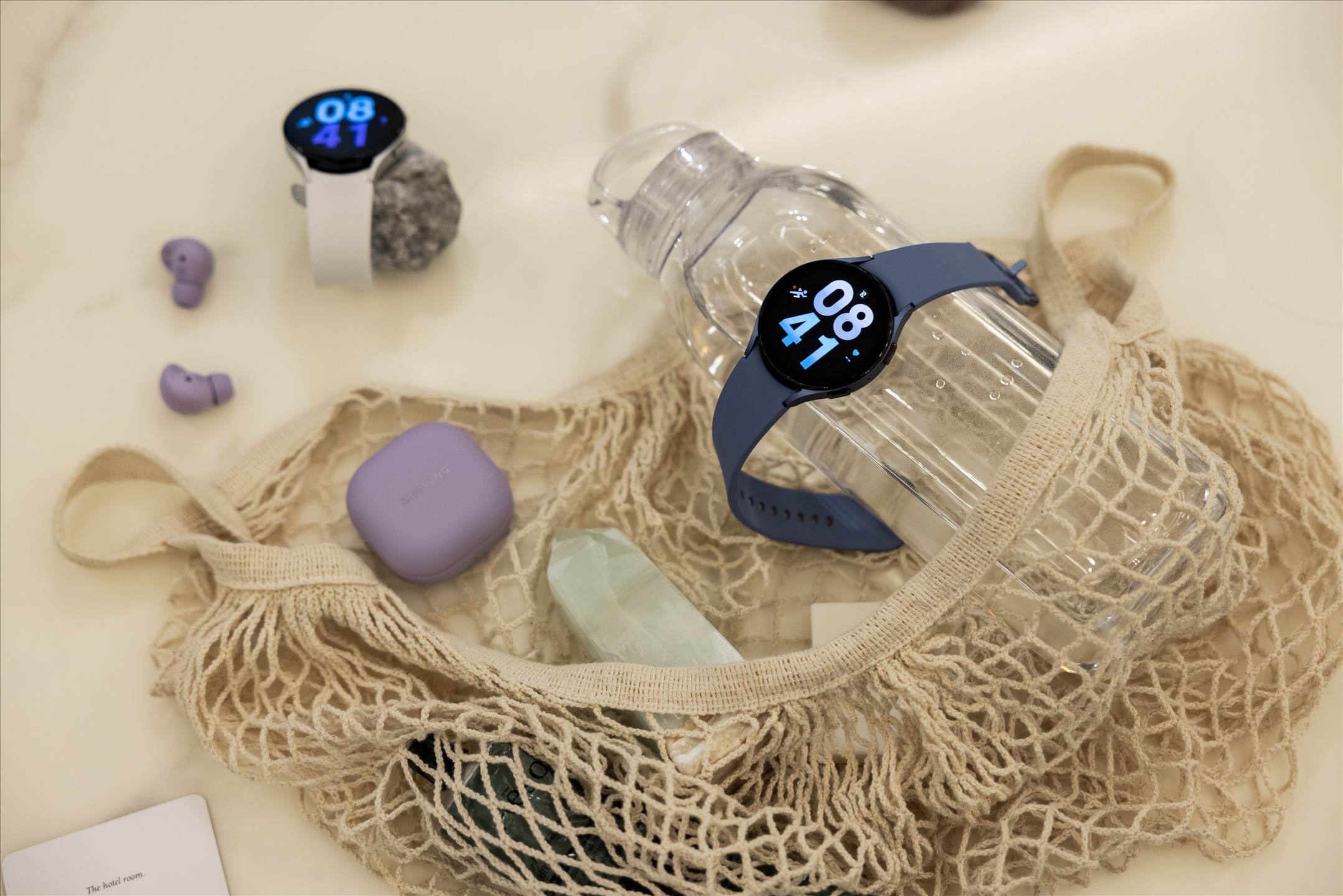
Samsung Unpacked event 2022 you have brought a lot of new items into the overlay. Samsung has revealed the Galaxy Z Flip 4, Galaxy Z Fold 4, Galaxy Buds 2 Pro. and the new Galaxy Watch 5, Galaxy Watch 5 Pro. There’s a ton to process.
In this article, we will have a short glimpse of Samsung’s unpacked event in 2022. We will figure out all the hardware improvements that Samsung has brought to all its successors.
Without further delay, let’s dive into the article
One of my favorite phone lineups from Samsung, I think the Flip phone is more practical than the Fold at an affordable price, either way, as we all expected Samsung announced the Galaxy ZFlip 4 at the event.
Samsung is improving a lot with their Z Flip series. At the initial launch of the Flip 1, I didn’t like the smartphone much, but from their Galaxy Z Flip 3, I have become a huge fan of Samsung’s Flip.
Straight of the rip, let’s move on to the basics specs of the phone, the phone has a Snapdragon 8+Gen 1 processor, with a 6.7″ FHD+ Dynamic AMOLED panel with HDR10+ certified Up to 120Hz refresh rate.
The phone comes with a dual camera setup with a 12MP main sensor, a 12MP Wide-angle Camera with the support of OIS, and a traditional 10MP selfie camera.
Users can shoot videos up to 4K UHD video recording at 30 and 60 fps, 1080p FHD video recording at 30 and 60 fps, and 720p HD video recording at 30 fps.
The phone comes with a 3700mAh battery, with the support of a 25W adapter which is sold separately. From 0% up to 50% charge in around 30 minutes with 25W Adapter or higher.
The phone comes in three variants with a base of 8GB of LPDDR 5 RAM
8GB RAM with 512GB internal storage (UFS 3.1)
8GB RAM with 256GB internal storage (UFS 3.1)
8GB RAM with 128GB internal storage (UFS 3.1)
The phone comes with Android 12 out of the box with One U1 4.1
These are just an outlook of the smartphone, I will discuss the Galaxy Z Flip 4 in the upcoming articles.
The phone comes in 4 basic colors: Bora Purple, Graphite, Pink Gold, and Blue
And the phone also get launched in a BeSpoke Edition with another 4 different colors:
Gold (Frame), Yellow (Front), White (Back)
Black (Frame), Khaki (Front), Khaki (Back)
Silver (Frame), White (Front), White (Back)
Silver (Frame), Navy (Front), Navy (Back)
Gold (Frame), Yellow (Front), Yellow (Back)
The Galaxy Z Flip 4 will start at A$1,499.
Samsung Galaxy Z Fold 4 comes with a Snapdragon 8+ Gen 1 processor, with a foldable Dynamic AMOLED 2X, 120Hz, HDR10+, and 1200 nits of peak brightness.
The phone comes with a Size of 7.6 inches, (~90.9% screen-to-body ratio) with a resolution of 1812 x 2176 pixels. The phone also has Corning Gorilla Glass Victus+ support.
The phone also comes with a traditional S Pen Fold Edition, with Pressure levels of 4096.
The phone has a 12MP Ultra Wide Camera, 50MP Wide-angle Camera, 10MP Telephoto Camera, and a traditional 10MP selfie camera. But surprisingly the phone comes with a 4MP under-display camera. I don’t know about the usage of that 4MP camera, but we can consider this as a feature.
The phone supports 8K video recording at 24 fps, 4K UHD video recording at 30 and 60 fps, 1080p FHD video recording at 30 and 60 fps, and 720p HD video recording at 30 fps.
The Z Fold 4 comes with a 4400mAh battery with a 25W power adapter which is sold separately.
The phone comes in 3 variants with a base of 12GB LPDDR5 RAM
12GB RAM with 256GB internal storage (UFS 3.1)
12GB with 512GB internal storage (UFS 3.1)
12GB RAM with 1TB internal storage (UFS 3.1)
The phone comes with Android 12 out of the box with One U1 4.1. These are just an outlook of the smartphone. I will discuss the Galaxy Z Fold 4 in the upcoming articles.
The phone comes in 3 basic colors: Greygreen, Phantom Black, and Beige. There’s also Burgundy color which is a Samsung.com Exclusive.
The Galaxy Z Fold 4 is the most expensive, starting at A$2,499.
What do you think about the Galaxy Z Fold 4? kindly comment your thoughts in the
comment section.
Samsung is becoming more popular in the watch segment. I love Samsung watches. The display will be amazing. I haven’t used one for personal use but a few of my friends have got it so I have experienced the watch and it was amazing.
The Watch comes with a Titanium frame in a Circle shape design which weighs around 33.5?grams.
It has 1.4” 450×450 SuperAMOLED display for the 44mm and 1.2″ 396×396 SuperAMOLED display for the 42mm. The watch comes with 1.5?GB of RAM with 16GB of Inbuilt Memory.
The watch comes with 5.1 Bluetooth and also supports Calling and GPS. The watch is powered by a 410?mAh Battery, and according to Samsung, the battery lasts for 5 whole days.
The watch has IP68 Water Resistant Certificate so it is waterproof and dustproof it can survive a depth of 50?m.
The watch has all the necessary sensors like Pedometer, Heart Rate Monitor, SpO2 Monitor, Calorie Count, Step Count, Sleep Monitor, and Extra Features like an Alarm Clock, Stopwatch, Timer, and Reminder.
The Galaxy Watch 5 starts at A$499.
What do you think about the Galaxy Watch 5? kindly comment your thoughts in the
comment section.
Let’s start with the processor, the Galaxy Watch 5 Pro has an Exynos W920 with a 5 nm processor. The watch comes with a 1.4 inches Super AMOLED display with a Resolution of 450×450 pixels protected by Sapphire crystal and the watch has an Always-on display.
The Watch comes with an Android Wear OS 3.5, One UI Watch 4.5, the watch comes with a 16GB ROM with 1.5GB RAM.
It supports all the necessary features like Wi-Fi, Bluetooth 5.2, GPS support, and NFC.
The Galaxy Watch 5 Pro has been covered by all the necessary sensors like Accelerometer, gyro, heart rate, barometer, thermometer (body temperature) Natural language commands and dictation Samsung Pay.
The Watch is powered by a Li-Ion 590 mAh, non-removable battery with 10W Qi wireless charging technology.
The Galaxy Watch 5 Pro starts at A$799.
Samsung is doing an extraordinary job with their Galaxy Buds series, I loved the Buds1, of course, it has a few bugs but still, the sound quality is amazing for the price.
Let’s jump to the upgrade, the Buds2 Pro, is powered by 24-bit Hi-Fi audio, so the overall quality is enhanced. The ANC has improved this time, Active Noise Canceling comes with 3 high SNR (Signal-to-Noise Ratio) microphones, and the Galaxy Buds2 Pro tracks and eliminates more outside sound — even soft sounds like wind.
The Buds2 Pro supports 360 Audio ie: it comes with Direct Multi-channel (5.1ch / 7.1ch / Dolby Atmos®) and enhanced head tracking makes every movement stay in sync — creating an immersive experience.
360 Audio can even pinpoint the direction of the sound as you move your head, giving you the spatial experience.
An iPhone-exclusive feature is now available on Samsung too, the Galaxy Buds2 Pro will automatically pop up on your Samsung Galaxy devices and are ready to connect with a tap.
Auto Switch on Samsung Galaxy Buds2 Pro intelligently detects mobile activity and seamlessly shifts its connection to your Samsung Galaxy phone, tablet and watch.
I love this feature actually, switching to answer the phone makes Samsung so unique. I loved the optimization in Buds2 Pro. It works even when you’re connected to a Samsung TV.
Once the Galaxy Buds2 Pro is connected to the Samsung TV via Bluetooth, there is no need to take the earbuds out to answer the phone. Incoming calls can be answered simply by tapping the Galaxy Buds2 Pro twice.
Users can preorder the Galaxy Buds2 Pro now for A$349.
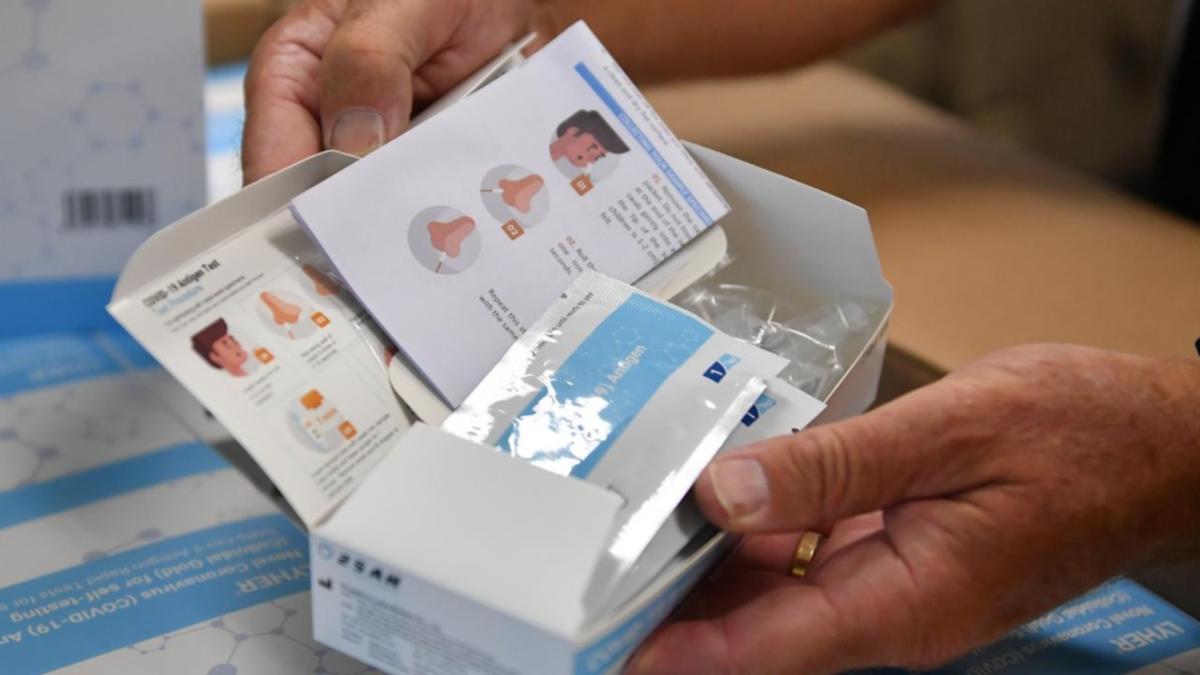
The McGowan Government’s much-vaunted purchase of more than 110 million rapid antigen tests at a cost of almost $600 million is being probed by WA’s Auditor General Caroline Spencer.
The probe comes amid calls for some of the more than 62 million RATs still in the State stockpile to be donated overseas or sold to other States before they reach their expiration date.
Nationals MP Martin Aldridge said WA households had reached a RATs “saturation point”, with constituents refusing to take anymore because they were running out space to store the self-test kits.
He said the 110 million tests ordered over the summer by the departments of Finance and Health ahead of WA’s border opening was “excessive” and equaled to 40 RATs for every man, woman and child.
“The Government should rethink its strategy about what to do with its remaining supplies as they do have a limited life,” Mr Aldridge said.
“We do not know how individual tests will respond to future variants of concern. We will see in time whether they remain effective or whether we end up dumping them into landfill.
“There may well be other jurisdictions or neighboring countries that we could play a role in supporting their COVID-19 response using some of the significant stockpile that we have hoarded in WA, which we are unlikely to use.”
Ms Spencer confirmed her team was examining RATs procurement as part of its annual financial audit of State entities, a standard approach with high-value transactions.
The McGowan Government’s much-vaunted purchase of more than 110 million rapid antigen tests at a cost of almost $600 million is being probed by WA’s Auditor General Caroline Spencer. Credit: chandlervid85 – stock.adobe.com
Given the large amount of money spent, it was highly likely any notable findings would be publicly reported in detail in the Auditor General’s annual results report, she said.
A Government spokeswoman said it had distributed more than 48 million RATs since February and this week it was announced another 21.4 million would be given away.
She said the Federal Government had covered half of the cost and Mark McGowan had previously offered at the National Cabinet to provide some of WA’s stockpile to other States.
“Early testing and isolation remains an important step in protecting vulnerable people from COVID-19 and using a RAT after exposure has been shown to reduce the risk of spreading COVID-19 by 53 per cent,” she said.
“When the challenges of the Omicron outbreak became apparent last year, we acted quickly to ensure WA had an adequate supply of RATs amid global supply shortages, while other states and territories saw their PCR testing clinics overwhelmed by demand.”