ASHLAND, NH (WTNH) – New Hampshire troopers arrested a Danbury man on Sunday after he drove over 160 miles per hour (mph) on a highway. The highway’s speed limit was only 70 mph.
Authorities said that just after 11 am, troopers patrolling I-93 North in Ashland spotted an orange car driving at nearly 161 mph. Due to incredibly high speeds, the patrol officer who spotted the car was unable to pursue it. Instead, officials said the officer placed a Be On the Lookout Order (BOLO).
Minutes later, troopers received multiple reports about sports cars driving erratically and at high speeds, with some reports including an orange sports car. According to these testimonies, the speed nearly caused a few crashes.
The Woodstock Police Department said it heard the BOLO report, and positioned officers on the highway to intercept the orange sports car. They eventually clocked the car going 130 mph.
Officers were able to stop the orange 2021 Chevrolet Corvette at exit 32, when it became stuck in traffic. They held the driver, Alejandro Zapata-Rebello, 30, of Danbury until state troopers could arrive.
Zapata-Rebello was charged with two charges of reckless driving, and one charge of disobeying an officer. Woodstock police said they also charged him with reckless driving.
Officials said Zapata-Rebello was released on a summons to appear in court on September 22.
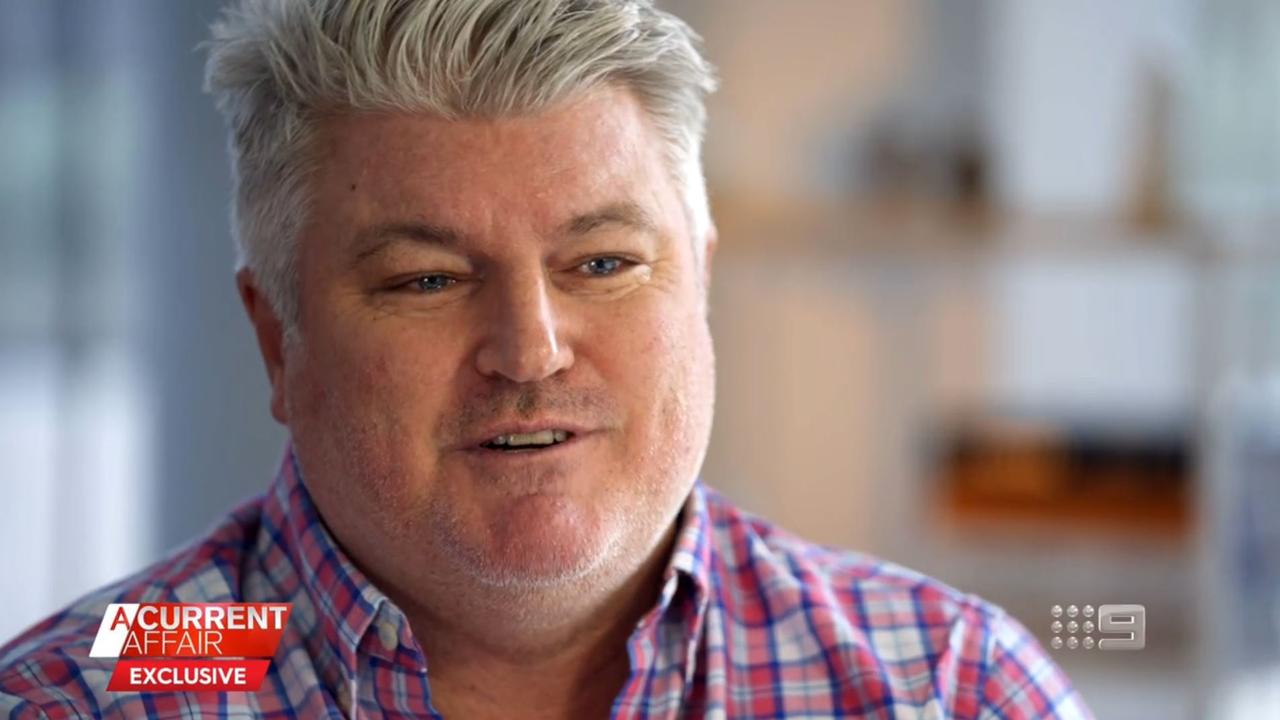
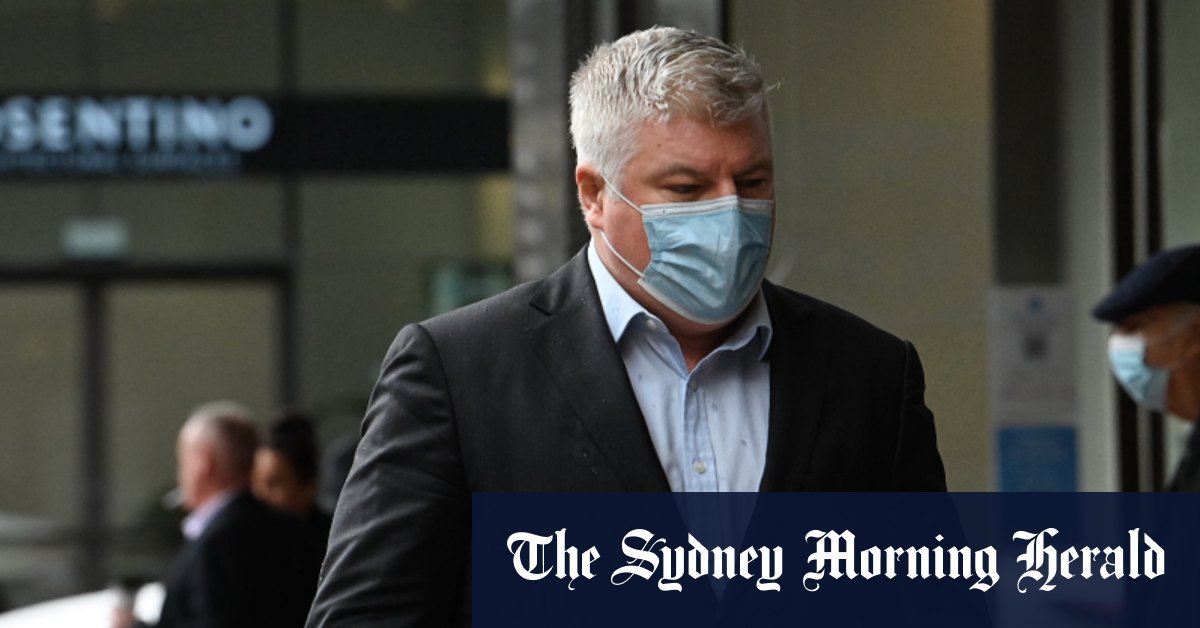
A lawyer for two brothers accused of being hired “muscle” in the alleged kidnapping of Stuart MacGill has told a court that the cricketing great was a regular cocaine user and “actively” involved in a drug deal central to the case.
Richard and Frederick Schaaf are awaiting trial over the alleged abduction of Mr MacGill from outside his home on Sydney’s lower north shore last year.
The pair on Monday appeared before the Supreme Court in an effort to be danced while they fight the charges.
Their barrister attacked Mr MacGill’s credibility, arguing that he went willingly with a group of men to an abandoned house in southwestern Sydney and said there was no physical evidence that he had been brutally assaulted.
Stuart MacGill has alleged he was abducted from outside his Cremorne home. Picture: Adam Yip/Daily TelegraphSource: News Corp Australia
The pair have pleaded not guilty to charges of take/detain in company with attempt to obtain advantage, with the matter expected to go to trial mid next year.
They were arrested along with four other men, including Mr MacGill’s de facto brother-in-law Marino Sotiropoulos, after the former Test spinner alleged that he was taken to a Bringelly property.
He has claimed that he was threatened with a gun, assaulted and demands were made for money over a drug deal gone wrong.
The court was told on Monday that Mr MacGill allegedly introduced Mr Sotiropoulos – the brother of his partner Maria O’Meagher – to a cocaine dealer.
Mr Sotiropoulos has since been charged with a supply of a large commercial quantity of a prohibited drug and will stand trial alongside the Schaaf brothers.
Mr MacGill alleges that a group of men forced him into a car outside his home and confronted him after the drug deal ended in a “rip off”.
The two men watched from Bathurst Correctional Center on Monday as their barrister Avni Djemal argued they should be released on bail ahead of a trial next year.
Mr Djemal said there was evidence that Mr MacGill had willingly participated in a meeting at the Bringelly house and agreed to look at photos in a bid to identify the drug dealer.
Mr Djemal said Mr MacGill was released at Belmore and allowed to get into a cab.
Richard Schaaf has appeared before the Supreme Court in a bid to be released on bail. Pictures: Facebook.Source: SuppliedFrederick Schaaf has pleaded not guilty to allegedly kidnapping Stuart MacGill. Picture: SuppliedSource: Supplied
“The evidence implies Mr MacGill to a high level. I’m surprised he’s not charged with the actual drug transaction that he says, in his evidence, ‘I had nothing more to do with it, I just introduced the brother-in-law, Mr Sotiropoulos, to a person who I knew used to sell drugs’,” Mr Djemal said.
“The gentleman, now a registered source, he says that this gentleman, MacGill, was an avid user of cocaine and said to be on it all the time or drunk or desperate for money.”
Mr Djemal further told the court that Mr MacGill had an “active” role in negotiating the weight of the drugs involved in the deal to the point that the dealer had offered him a gift because he “put this deal together”.
The Bringelly property where Mr MacGill was allegedly held captive. Source: 7 NEWSSource: Supplied
He further said there was no evidence to support Mr MacGill’s assertions that he had been punched to the front and back of his head, knocked to the ground and suffered a concussion.
Mr Djemal said the only evidence of any injuries was Ms O’Meagher saying she felt a lump on Mr MacGill’s head.
“He doesn’t have one physical injury after those events,” Mr Djemal said.
“If the hits to the front of your face have produced no lumps and you say the onslaught was to the front, the side, knocked you to the ground, how could that be?
“How could his word be that there was a kidnapping? What if he went, saw photos and got brought back?”
Mr Djemal argued that Frederick Schaaf should be released so he could undergo dental treatment because he was at risk of losing his teeth.
The hearing before Justice Richard Button continues.
Democrats have been campaigning for 30 years on promises they’d let Medicare directly negotiate the cost of prescription drugs — and after all that time, they might finally be about to achieve it.
Why it matters: The Senate’s reconciliation bill would only open up negotiations for a small number of drugs, but even that is a threshold Democrats have never before been able to cross. And it opens the door to more aggressive policies in the future.
Flash back: Then-president Bill Clinton proposed direct negotiations between drug companies and the federal government in 1993.
Clinton, Al Gore, Barack Obama, Hillary Clinton, Joe Biden — and even Donald Trump — each embraced the idea while in office or as candidates, only to be warned by arguments it would squelch new drug development or limit seniors’ choices.
Federal law has prohibited Medicare from directly negotiating how much it will pay for drugs since 2003.
“Finally eliminating the prohibition and empowering the secretary to negotiate is a historic precedent, and is something to protect and strengthen over time,” said Chris Jennings, a health policy advisor to Presidents Clinton and Obama.
Yes but: The version of price negotiations contained in the Senate’s bill is much narrower than most of those ambitious campaign proposals.
“A baby step is the way I would describe this,” said Zeke Emanuel, a health policy advisor to former President Obama and chair of the department of medical ethics and health policy at the University of Pennsylvania.
“We’re talking about 10 drugs and moving up at the end of the decade to a whopping 20 drugs. And they can get insulin included, how many people are going to be affected unless it is, I think, a big question,” he said.
If negotiations make it into law now, however, future administrations and Congress could expand them and make more drugs subject to negotiations.
And despite the limitations built into the measure, the drug industry is still warning that it will have a disastrous impact.
The otherside: The drug industry and its allies have long argued that these sorts of policies — which they say are more like price controls than price negotiations — would weaken the incentives for smaller biotech firms to take the scientific risks required to develop new drugs.
The Congressional Budget Office estimated that under Democrats’ plan, the number of drugs introduced to the US market would fall by about 2 over the next decade, and by about 5 over the subsequent decade.
But the industry’s arguments aren’t resonating as much now, with prices still on the rise and the public gripped by broader inflationary fears. Polls show large majorities support giving the government the power to negotiate prices.
“In a moment where not just health care costs, but inflation, is the issue of the day, this policy resonates like never before.” Jennings said.
The bottom line: “We only pass things in a hurry when there’s a war, major economic upheaval, a once-in-a-century pandemic,” Emanuel said. “There’s only so long that when 90% of voters, Democrat and Republican, say we want price negotiation, that Congress can stand in the way… this shows you that at some point, that ends.”
The climate crisis risks pushing many Americans into entirely new climatic realities, with a new analysis finding there are 16 US cities at risk of having summer temperatures on a par with locations in the Middle East by the end of the century.
Heatwaves have roiled huge swaths of the US this summer, placing nearly a third of the population under some sort of heat advisory and driving temperatures to as high as 115F (46C) in parts of the Great Plains. Hundreds of heat records have tumbled, from Boston, Massachusetts, which hit 100F (37C)to Portland, Oregon, which reached 102F (38.9C) on Tuesday.
But global heating may plunge many places in the US into the sort of heat extremes previously considered unthinkable, shifting their climates long-term into conditions now common in places far farther south, or even far overseas.
An analysis of temperature trends by Climate Central found that summer temperatures in 2100 for many cities will be more like conditions farther south, 437 miles to the south on average, with Washington DC having summers more like Austin, Texas’; Boston becoming more like Philadelphia; and Billings, Montana, resembling El Paso, Texas.
Map of four US cities, with lines connecting them to cities in the Middle East.
Some US cities could be shifted to the sort of climates now experienced by cities in other countries, such as Los Angeles becoming more like Tuxpan in Mexico. A select few may go on an epic climatic journey by the end of the century, with Austin’s summers becoming like present-day Dubai, Phoenix resembling Saudi Arabia and Las Vegas getting similar to Kuwait.
“The real risks will be in heatwaves that are now occasional extremes that will start lasting longer,” said Peter Girard, a spokesperson for Climate Central, a research organization made up of climate scientists and science communicators. “These sort of heatwaves will become normal and the dangers will be far more present. There will be people who have never needed air conditioning who will face this. It can quickly go from uncomfortable to dangerous.”
Researchers gathered temperature data from 1990 to 2020 to establish today’s “normal” temperature and looked at 20 different projections of temperatures this century under different climate change scenarios. They decided to compare the status quo to a scenario where planet-heating emissions are not radically reduced and the global average temperature rises by about 3.6C by the end of the century.
List of the 16 US cities and the cities in the Middle East whose summer temps they could be similar to in 2100.
The world has already heated up by about 1.2C from preindustrial times, a situation that has already helped spur the sort of fierce heatwaves and wildfires recently experienced in the US and Europe. “Extreme heat is a silent killer, yet it affects more Americans than any other weather emergency, particularly our nation’s most vulnerable,” said Gina McCarthy, the White House’s national climate adviser.
Many analysts expect that the temperature rise will be constrained to below 3.6C, due to the rising use of renewable energy, but Girard said even lower levels of warming will cause shifts in the climatic norms of US cities.
“No matter the scenario, this will be a near-term challenge pretty much everywhere,” he said. “Reducing emissions will slow the temperature rise and give governments and cities more time to take steps to keep people safe.”
“No medical evidence had confirmed his claim that he had lumps at the back of his head,” he said.
According to his police statement when the men let him go “the big fella” said he should wear sunglasses, in effect, to make out as if he was injured, Djemal submitted.
“If you’ve been punched, why the façade?”
MacGill, 51, told police he was forced into a car at Cremorne on Sydney’s north shore and taken to Bringelly, south of Sydney.
Three assailants then allegedly tried to extort money from MacGill before dropping him about 45 minutes’ away in Belmore about an hour later.
He could not identify the men who kidnapped him but said they spoke Tongan.
He waited for a week to report the incident to the police, saying he was so frightened by the experience and had been threatened with a gun.
The Crown on Monday submitted that Frederick Schaaf had two phones, one located inside the car allegedly used in the kidnapping.
But Djemal said his other covert Cipher phone was nowhere near the car, and argued his other overt phone was left inside the car while it was borrowed.
Djemal submitted the car was slow to cousin Elijah Schaaf who then used it for the kidnapping without Frederick’s knowledge, helped by Vaeluagaomatagy Felio.
Justice Richard Button has reserved his decision on the bail applications.
AAP
The Morning Edition newsletter is our guide to the day’s most important and interesting stories, analysis and insights. Sign up here.
The party is going strong on both sides of the world after Australia’s Commonwealth Games Rugby Sevens gold medal triumph.
Taking to the field just before 6am AEST, the Aussies were unstoppable, leading 22-0 before two late tries gave some respectability to the scoreline in the 22-12 result over Fiji.
Stream Over 50 Sports Live & On-Demand with Kayo. New to Kayo? Try 14-Days Free Now >
The Commonwealth gold is the final piece of Australia’s trophy cabinet as the side won the 2016 Olympic gold and are the current Rugby Sevens World Series champions.
And while our stars were living it up, those left back at home were also getting in on the celebrations — just ask Richelle Levi.
The mother of the Levi sisters Teagan, 18, and Maddison, 20, was ready for the win, showing up on Channel 7’s Sunriseafter enjoying the spoils of victory.
Asked if the party was going to go on all day, Richelle was clearly already enjoying herself.
“100 per cent, two bottles of champagne already done — woo!” she said.
Sunrise host Natalie Barr and David Koch were in hysterics over the cross to the Gold Coast.
At a bowls club on the Gold Coast, Richelle said: “This is their little club, they used to sit out on that balcony …”
Weatherman Sam Mac added: “…while you were drinking champagne?”
He added: “I feel like the Olympics was all about Dean Boxall (Ariarne Titmus’ coach) in terms of passionate supporter, well I see your Dean Boxall and I raise you Richelle.”
Back in the studio, Edwina Batholemew said: “Imagine winning a gold medal and waking up the next morning with messages, ‘your mum’s on TV, she’s had two bottles of champagne, and she’s a riot”.
However, it wouldn’t be too much of a surprise for the champion sisters who knew their mum was prepared for victory and was even more loose off camera.
“Mum had a bottle of champagne ready at 6 in the morning — she was ready to celebrate and I think she’ll be on it all day celebrating,” a jubilant Maddison Levi said after Australia’s historic maiden Sevens gold medal win over Fiji.
“I don’t know if I can say it on camera (what mum said) but they were definitely happy.
“There were tears of joy. It was a pretty emotional rollercoaster…. they’ve been with us through the highs and lows and to have two kids standing on that podium is pretty awesome.
“They definitely had tears. But lots of swearing, I can confirm.”
Fans may need to remember the Levi name as the duo are set for long careers in the sporting spotlight.
The Levi sisters have been pursued by rugby, AFLW and rugby league, such is their athletic prowess.
Maddison played eight games for the Gold Coast Suns in the AFLW, kicking three goals, before representing Australia at the Tokyo Olympics. Teagan was drafted No. 6 by the Suns in the 2021 Draft before joining the Rugby Sevens tour.
But before the Games, Maddi revealed she would like to try everything.
“AFLW and NRLW is still there, which later down the track we’d love to give a go, but for now our heart is set on sevens,” Maddi told the Sydney Morning Herald.
“In sevens there is so much opportunity and it’s a growing sport. With the Olympics coming up and World Series [tournaments] every year, traveling the world with your best friend … there’s no other sport that compares to that.”
Teagan adds: “Mads has been my best friend since day one. I guess we do fight a little bit, but as we’ve grown older I wouldn’t change it for the world to finally play in an Aussie sevens team together. It’s a dream come true.”
“It’s very human to kind of want a concrete, tangible solution to something and be able to say, ‘here’s this step we’ve taken, it’s in the curriculum now,” Ms Marson said.
“But comprehensive relationships and sexuality education take so many different moving parts moving in unison to be delivered effectively. There’s no point producing curriculum if the teacher in front of the classroom doesn’t feel confident or isn’t trained to deliver that curriculum.
“It doesn’t work if it’s just a one-off lesson once a year, or if it gets crammed into something because the teaching staff isn’t competent or they don’t have enough time for it or they are concerned there might be backlash from parents.”
The author (her book on the topic, Legitimate Sexpectations is released this week) pointed to the Netherlands as the world leaders in what such education should include, saying it was incorporated into curriculum early and involved learning how to recognize certain feelings and how to respond to them.
This could include playing with different textures in kindergarten and verbalizing how they physically felt to touch, she said, noting that many negative sexual experiences arose when people felt unable to speak up about their feelings.
She also pointed to Germany as a world leader, with the government there setting up infrastructure within its health department to position relationships and sexual education as a wellbeing and public health issue.
Having subject matter experts teach aspects of the programs could also help improve effectiveness, she said, with some successful programs involving getting external providers to teach dedicated days of relationship education.
Ms Marson said pushback from parents was often a barrier to developing meaningful sex education programs, but that parents and carers needed to accept that they also had a responsibility for helping develop children’s understandings of consent.
“It’s a collective responsibility and we need to shift our perspective to see that young people are actually entitled to this [education].
“We recognize that they have a right to learn how to drive and swim and all these other skills that they need to live a safe and fulfilling life, but then we deny them this. So, we can debate how we go about fulfilling that right, but unless we do so we are just letting them down and I just can’t see how we can justify that.”
She added that curriculum commitments were still helpful to give schools “some kind of mandate”, noting the countries she visited with the most advanced sex education programs all had political mandates backing their development.
A woman was randomly slashed by a man with a boxcutter as she walked down a Midtown street Sunday, police said.
The 59-year-old victim was sliced in the right hand by the man who crept up behind her on Seventh Avenue near West 42nd Street in an unprovoked attack around 10 am, according to cops.
Dramatic video shared by the NYPD shows the suspect a few steps behind the woman as she pulls a shopping trolley down the block.
He raises the blade in the air, with his arm outstretched towards the sky, before suddenly lunging at the woman and slashing the blade down on her right hand.
The man uttered no words before stabbing the woman’s hand, police said.
The woman was transported to Bellevue Hospital in stable condition.
The suspect, meanwhile, fled eastbound on East 42nd Street before cops arrived.
The criminal shared no words before slashing the victim’s hand.Paul MartinkaThe 59-year-old victim was sliced in the right hand by the suspect. Paul MartinkaVideo shows the man raising a blade in the air and slashing the woman.DCPI
Police are asking anyone with information in regard to the incident to call the NYPD’s Crime Stoppers Hotline at 1-800-577-TIPS (8477) or for Spanish, 1-888-57-PISTA (74782). The public can also submit their tips by logging onto the CrimeStoppers website at https://crimestoppers.nypdonline.org/ or on Twitter @NYPDTips.
Three months after the last kernel release, Linux Kernel 5.19 is finally here. This exciting release brings plenty of improvements to every aspect of the kernel and opens up opportunities with new hardware.
The most interesting part is that the Linux creator Linus Torvalds used an Apple MacBook, the Arm version, to announce this release.
Don’t get your pitch fork out just yet. Torvalds used Asahi Linux, a project dedicated to adding Linux support to Apple’s Arm-based Silicon Macbooks.
On a personal note, the most interesting part here is that I did the release (and am writing this) on an arm64 laptop. It’s something I’ve been waiting for for a long time, and it’s finally reality, thanks to the Asahi team. We’ve had arm64 hardware around running Linux for a long time, but none of it has really been usable as a development platform until now.
That’s interesting. And this is the third time Torvalds used Apple hardware for Linux development.
Linux Kernel 5.19: What’s New?
As with all previous releases, Linux Kernel 5.19 has a lot of technical changes. However, there are only a few major ones that will have a direct impact on users, so we will focus on those here.
If you are interested in all the low-level code changes, you can refer to the official changelog.
LoongArch CPU Architecture Support
Over the past few years, it has been interesting to see Chinese chip manufacturers attempt to catch up to Intel and AMD. One way they have tried to do this is by creating their architectures, which are generally compatible with existing architectures.
One of the most successful of these companies is Longson. However, due to their new architecture, the software support for these CPUs was pretty limited.
Starting with this release, these CPUs have initial support (it won’t work for booting) and will likely soon have packages ported to them.
We should see more progress on this with Linux Kernel 5.20.
32-bit RISC-V Apps on 64-bit RISC-V
As has been the case for recent releases, Linux Kernel 5.19 greatly improves support for the open-source RISC-V architecture. This time, this comes in the form of allowing 32-bit RISC-V apps to run on 64-bit RISC-V systems.
Very few 32-bit RISC-V CPUs can run Linux, meaning very few Linux packages are designed for them. And those packages already have 64-bit counterparts.
Even if its usefulness is limited, it is good to see RISC-V being treated as a first-class architecture and getting more improvements to bring it closer to mainstream feasibility.
Improved Arc Alchemist Support
It’s no surprise that Intel’s initial Arc Alchemist GPU launch is a disaster so far, Linux Kernel 5.19 is the first release where you could assume these GPUs are usable on Linux.
This release finally brings compute support to the Linux kernel. It is somewhat surprising this code was not merged earlier, but at least the support exists now.
The other major Arc improvement is significantly better power management. This comes in the form of a small tweak in Linux’s PCIe subsystem that treats the Arc GPUs as unlimited, enabling PCI Express Active State Power Management in far more configurations.
In essence, this change means that the GPU can now be put into an extremely low power mode when not in use, yielding some significant power savings.
Improved ARM SoC Support
This release brings support to several new ARM SoCs. This time around, 7 new SoCs have been added to the list, specifically:
Renesas RZ/G2UL (R9A07G043)
Renesas RZ/V2M (R9A09G011)
Renesas R-Car V4H (R8A779G0)
Broadcom BCM47622
Corstone1000
Mediatek MT8195 (Kompanio 1200)
NXP i.MXRT1050
In addition, Apple’s M1 chip also gained some improved support. This comes from a new driver for the on-chip NVMe controller. Now, users wanting to be able of NVMe storage on their Apple Silicon Macs are able to do so, thanks to the contribution by the Asahi Linux project.
Significantly Reduced Boot Times For Azure VMs
Azure users, you are in for a good improvement. Thanks to a contribution by Microsoft, Azure VMs using multiple GPUs can have as many as 3 minutes shaved off their boot times!
To achieve this, Microsoft changed their PCI Hyper-V driver to avoid setting “PCI_COMMAND_MEMORY”, which stops the driver sending/receiving heaps of unnecessary data from each GPU, saving around 14 seconds of boot time per GPU.
Other Changes
In addition to the ones I mentioned above, Linux Kernel 5.19 also includes
Raspberry Pi Sense Hat joystick driver
Various BTRFS improvements
New Intel IFS driver
Intel Raptor Lake P graphics support.
Alder lake improvements.
Initial support for AMD RDNA3 graphics.
Performance optimizations as reported by Phoronix.
Overall, these changes make up for a pretty decent release. Although there aren’t any major changes, Linux Kernel 5.19 continues to build on the great work of the past few Linux releases.
How to Install Linux Kernel 5.19?
If you are using Arch Linux or Fedora, you can easily upgrade shortly. But, if you are using other Linux distributions (Pop!_OS can be an exception to some extent), you may not receive an upgrade.
So, if you are feeling adventurous (and know what you are doing), you can find the newer kernel listed on Linux Kernel Archives. You can download the tarball to test it out.
However, we recommend waiting for your Linux distribution to push an update if you do not want to take any chances. It is best to stick to what’s being offered for your Linux distribution by default.
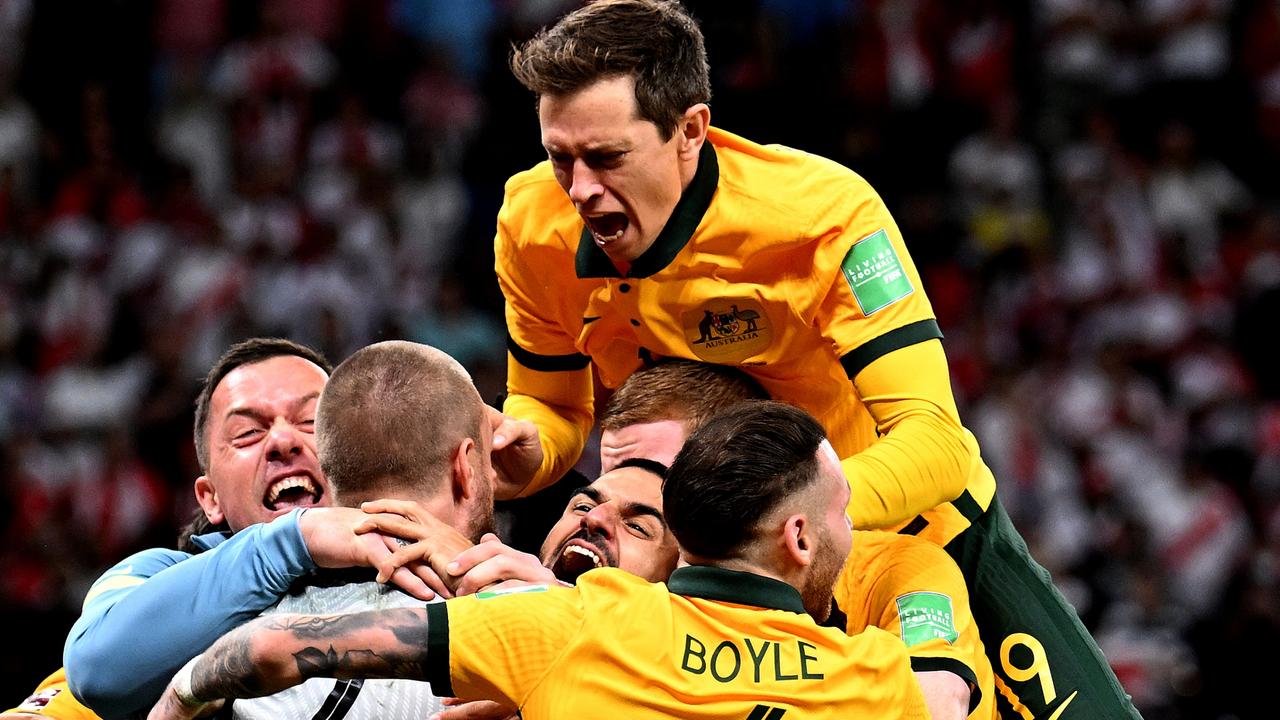
The Socceroos’ path to the 2026 World Cup will be a 16-match journey – provided the Australians are among the Asian Football Confederation’s top six qualifiers.
To be jointly hosted by the United States, Canada and Mexico, the 2026 edition of the tournament will expand to include 48 nations.
With 16 more countries to qualify than the 32 at this year’s World Cup, the AFC will have at least eight representatives and a maximum of nine.
Provided, as expected, the Socceroos are at the time among the AFC’s top 25 nations, they will join the race to reach the 2026 World Cup in the second round of the preliminary qualifiers, which is set to start late next year and will involve 36 teams who will be divided into nine groups of four.
Each nation will play six games in a round-robin, home and away format, with the top two from each group – 18 in total – to advance to the stage known as the AFC Asian Qualifiers.
The 18 teams – who will be divided into three groups of six – will play 10 matches in a round-robin, home and away format, with the top two from each group to qualify directly for the World Cup.
The teams finishing third and fourth in each of the three groups will be drawn into two further groups of three and play two matches in a single round-robin format.
Both of the group winners will qualify for the World Cup.
The two second-placed teams will meet in a playoff, with the winner to represent the AFC in an Intercontinental playoff, where a World Cup berth will be up for grabs.