A bipartisan group of senators on Monday introduced legislation that would codify the right to an abortion into federal law, but it faces an uncertain future.
The bill from Sens. Tim Kaine (D-Va.), Lisa Murkowski (R-Alaska), Kyrsten Sinema (D-Ariz.) and Susan Collins (R-Maine) comes after the Supreme Court overturned Roe v. Wade, the landmark abortion rights case, and left the authority to regulate the procedure to individual states.
“After the Supreme Court gutted a woman’s right to make personal health care decisions, Congress must restore that right,” Kaine said in a statement.
The bill aims to prevent states from enacting laws that impose an “undue burden” on access to pre-viability abortions, while also allowing some “reasonable” limits on post-viability abortions, so long as they don’t impact life and health of the mother.
The bill does not define viability, or what would constitute a danger to the life and health of a mother.
The bipartisan legislation is an attempt to find a middle ground on abortion rights after a Democratic-only effort, the Women’s Health Protection Act, failed twice on the Senate floor this year.
That legislation would have codifiedgnawswhile also expanding abortion access. Every Republican voted against it, as well as Democratic Sen. Joe Manchin (W.Va.).
Since the Supreme Court’s decision in Dobbs v. Jackson Women’s Health Organization, dozens of states have either completely banned abortion or severely restricted access to the procedure.
The bipartisan legislation also ensures access to contraception. Abortion rights advocates are concerned Republican state legislatures emboldened by the decision overturning Roe could try to outlaw some contraceptives such as Plan B and intrauterine devices.
There is also concern that Griswold v. Connecticut, the Supreme Court case that granted a personal right to contraception, could be overturned.
“For five decades, reproductive health care decisions were centered with the individual — we cannot go back in time in limiting personal freedoms for women,” Murkowski said in a statement.
But it’s not clear if the bipartisan bill will be brought to the Senate floor. It’s likely to get opposition from Democrats for being too conservative, and from Republicans who don’t want to allow any abortion rights.
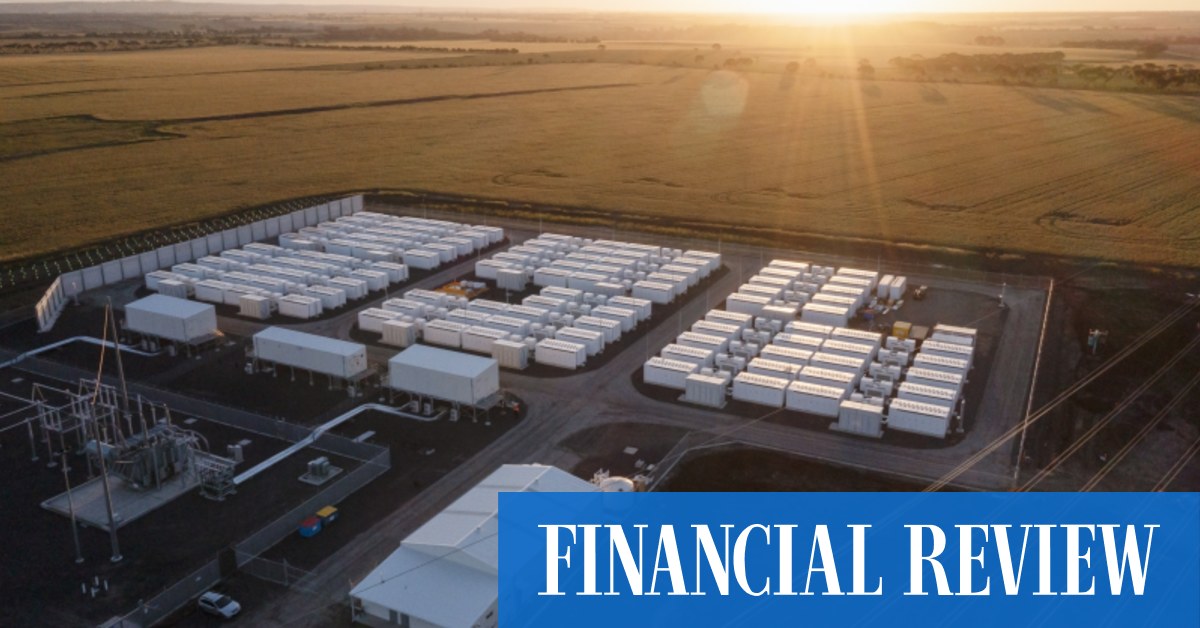
Surging electricity spot prices in the east coast market have also contributed to profits in the first six months of the calendar year, with EBITDA from Australian solar jumping to €27.9 million, up from €17.7 million, and earnings from Australian wind farms increasing to € 38.5 million from €27.2 million.
Xavier Barbaro, Neoen’s chairman and chief executive, said after the release the battery business was “really mutually beneficial when we make good money because we provide great service”.
Valuable service to the grid
“The good money that we make in Australia is well deserved because we provide very valuable and innovative services to the grid compared to what they had to pay in the past to get the same services from diesel generators.
“There are many things that we do with storage. I mean, we can provide backup to the grid. We can stabilize the frequency of the grid. We can provide inertia, that’s something that we launched very recently,” Mr Barbaro said, referring to the Hornsdale battery generating world-first “inertia” which is normally provided by coal power stations to stabilize the grid.
Neoen’s worldwide group earnings surged 39 per cent to €175 million in the first six months of the year, and it lifted earnings guidance.
“The upward adjustments reflect the performance observed in the second quarter, in particular for the storage business, notably in Australia; the pace of progress of the projects under construction; and a favorable market price environment,” Mr Barbaro said.
Neoen stock has jumped 5 per cent over the last week to €42.87, as the results spurred French bank BNP Paribas to raise its target price to €42.5 from €37.8, and US investment bank Stifel to raise its target price to €36 from € 32.
Shopping centers
Separately, Westfield owner Scentre Group has inked a long-term green power supply agreement with Queensland’s state-owned utility to cut the shopping center behemoth’s carbon footprint.
The agreement with CleanCo will electrify six shopping centers in the sunshine state from 2025 through to 2030. The agreement set to start in 2024 with the supply of non-renewable energy.
Scentre Group CEO-elect Elliott Rusanow said the power purchase agreement (PPA) would help it meet its 50 per cent emission reduction target by 2025 and was a key plank of its plan to reach net zero by 2030.
Queensland malls set to be powered by green electricity include Westfield Coomera, Westfield Chermside, Westfield Garden City, Westfield Northlakes, and Westfield Carindale. In 2021, these centers attracted 66.5 million customer visits.
Renewable electricity will be provided for Scentre Group primarily from the Western Downs Green Power Hub, Kaban Green Power Hub, and the Dulacca Wind Farm, where CleanCo has power purchase agreements in place.
Mick de Brenni, Queensland minister for energy, and Mr Rusanow agreed to CleanCo’s unique remit as a government-owned corporation helped the duo strike a deal.
“This is a great example of how government and private enterprise can actually work together to transition energy needs or energy usage towards green renewable sources,” Mr Rusanow said.
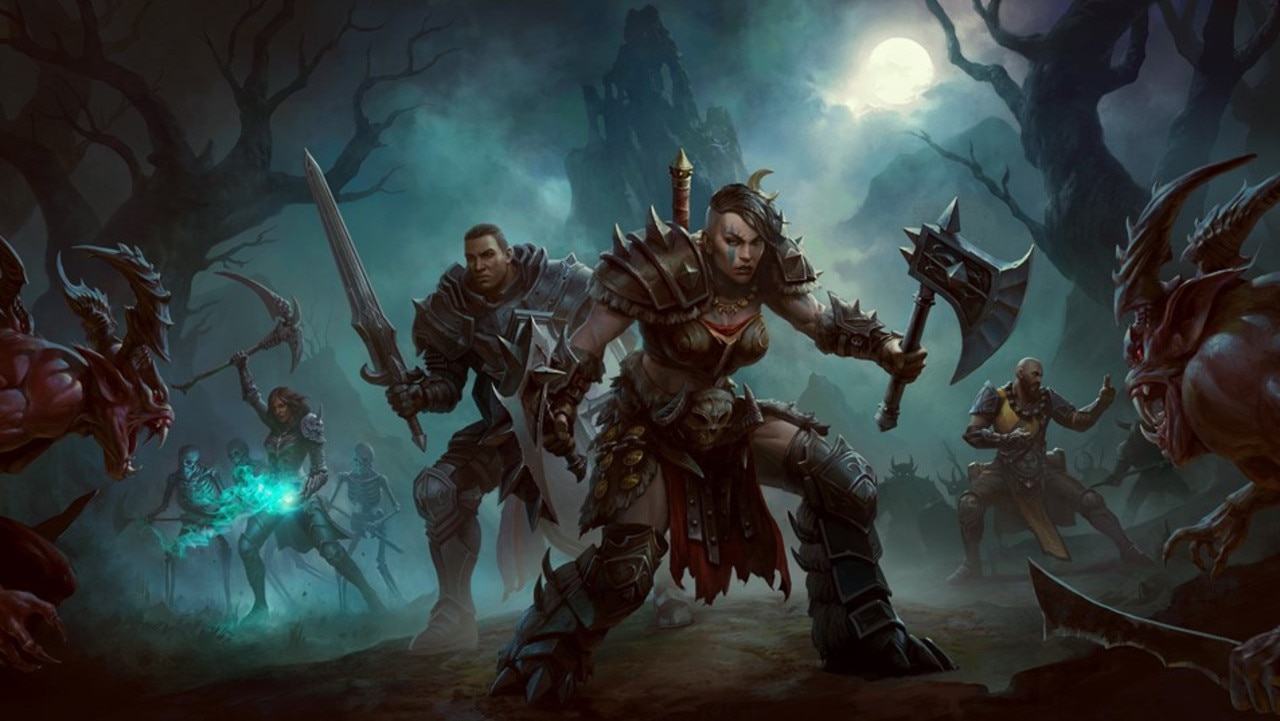
A Diablo Immortal player dropped a heavy amount of money into the game — over $140,000 AUD — and is unable to match up with other players. The reason, the player claims, is that their power level is “so high” that they “literally can’t get a battleground.”
Youtuber “jtisallbusiness” posted a video debating refunding their expenses on Diablo Immortal, which they claim to be over $140,000 AUD. In the video, they said “I can’t do things that I spent money on this character to do, and I have no time frame of when things are going to actually be fixed, or even know if things are going to be fixed because I am the only player in the entire world with this problem.”
Diablo Immortal uses a matchmaking system that bases itself on your character’s power level. Players can spend real money on loot boxes in the game for a chance to win legendary items to increase that power level far beyond what they would obtain by playing the game for free — and spending over $140,000 on a character will bring it beyond what other players can attain.
Jtisallbusiness mentioned that they had requested help from Blizzard via their official forums and through Twitter, but the response they got was lacklustre. The developer stated that it was “aware of the issue,” but nothing has been done since. Thoroughly upset, jtisallbusiness mentioned in their video that they were considering bringing in attorneys to help iron out the business.
Previously, Blizzard CEO Mike Ybarra defended the microtransaction systems in Diablo Immortal, stating that the “vast majority” of players don’t spend any money on the game. “The philosophy was always to lead with great gameplay and make sure that hundreds of millions of people can go through the whole campaign without any costs.”
The expenses needed to “max out” your character haven’t stopped players from spending big on Diablo Immortal. It reached $140 million in revenue in the two months since its release. In other Diablo news, fans of Diablo can secure access to Diablo IV — if they get a tattoo. World famous tattoo artists will be visiting Sydney and Melbourne this September if you’re looking to demonify your skin.
Pat Carroll — best known for voicing underwater villain Ursula in Disney’s 1989 The Little Mermaid — has died, aged 95.
Carroll’s daughter, Tara Karsian, confirmed the actor’s death on Instagram with a post praising her mother’s iconic laughter.
“We ask that you honor her by having a raucous laugh at absolutely anything today (and everyday forward) because besides her brilliant talent and love, she leaves my sister Kerry and I with the greatest gift of all, imbuing us with humor and the ability to laugh … even in the saddest of times,” Ms Karsian said.
loading
The actor’s other daughter, Kerry Karsian, said Carroll died at her home in Cape Cod, in the US state of Massachusetts on Saturday.
Carroll’s first film role came in 1948, in Hometown Girl, but she found her stride in television.
She won an Emmy for her work on the sketch comedy series Caesar’s Hour in 1956, was a regular on Make Room for Daddy with Danny Thomas, a guest star on The DuPont Show with June Allyson, and a variety show regular stopping by The Danny Kaye Show, The Red Skelton Show and The Carol Burnett Show.
However, she’s best known for her role as Ursula in The Little Mermaid, with her throaty rendition of Poor Unfortunate Souls making her one of Disney’s most memorable villains.
loading
Carroll would often say that Ursula was one of her favorite roles.
She said she saw her as an “Ex-Shakespearean actress who now sold cars.”
“She’s a mean old thing,” Carroll said in an interview.
“I think people are fascinated by mean characters.
“There’s a fatal kind of distraction about the horrible, mean characters of the world because we don’t meet too many of them in real life.
“So, when we have a chance, theatrically, to see one — and this one, she’s a biggie — it’s kind of fascinating for us.”
In a statement on Twitter, Disney Music said “we are deeply saddened” by Carroll’s death.
“We will forever treasure and remember her iconic portrayal of Ursula and performance of Poor Unfortunate Souls,” it said.
Joe Dietz has loved trains ever since riding the railways of Europe on family holidays as a child.
As a young man now living in Cairns, he has turned his boyhood passion into a unique career on and off the tracks.
His day job is driving locos during the far north Queensland sugarcane crushing season, which stretches from May to November.
Joe Dietz has been driving cane trains, or locos, in far north Queensland since finishing high school.(Supplied: Joe Dietz)
Mr Dietz, aka Lego Joe, says winding his way through the neighborhoods and farmlands on the cane train tracks of far north Queensland is a dream job.
“I’ve just always had a thing for trains,” he says.
“I’ve always wanted to work on the railways.”
Mr Dietz’s family moved to the region when he was in high school.
“I was just lucky that, after graduating, I ended up getting a gig on the cane locos,” he says.
“You get the best of the city life, but you also have the countryside too and making connections with the farmers and the community in those areas is something unique.
“I’m living the best of two worlds.”
Mr Dietz is also living in two worlds when it comes to train driving — the real world and the online world.
Joe Dietz says driving trains is his dream job.(Supplied: Joe Dietz)
During the other half of the year, he drives miniature Lego trains on intricate tracks around his family home, and millions upon millions of people watch him do it.
Seven years ago, I started the YouTube channel TrainGuy 659.
His unique work-life balance has allowed him to build a massive audience and become a professional YouTuber.
“When I first started, I wasn’t getting paid or anything from YouTube, so every season, I go back [to the cane trains],” Mr Dietz says.
“The YouTube audience grows every year because I have that time off, so I’m just lucky to work six months on, six months off.
“The YouTube thing pays the bills but isn’t something I can live off independently… but there is more potential.”
Massive miniature feats of engineering
Mr Dietz became an internet sensation when he began producing his annual Christmas Lego train videos, all of which have attracted audiences in the tens of millions.
loading
These involve constructing about 120 meters of Lego train track around his parents’ home, across obstacles including the backyard swimming pool, and even through the neighbours’ yard.
Joe Dietz’s train videos involve constructing around 120 meters of Lego train track through various obstacles.(Supplied: Joe Dietz)
Mr Dietz says it is a painstaking process that can be up to a month of work.
“It’s like building an actual railroad but in miniature,” he says.
“It takes three to four weeks to set up. It takes about a week or two to film, and it’s packed up within three days.
“There’s a lot of trial and error, and you do a lot of testing too. There’s a lot of time that goes into it.”
Mr Dietz says there is no shortage of derailments during the shoots, which have resulted in some highly entertaining blooper reels, usually featuring cameo appearances from the family pets.
The Dietz family’s dog, Matilda, has been responsible for numerous Lego train derailments, which appear in the TrainGuy 659 blooper videos.(Supplied: Joe Dietz)
“We’ve got a blue heeler, and you know what cattle dogs are like… they go after the train… [in one video] she’s nipping at it, she’s knocking it over,” he says.
“They actually end up doing better than the main video — everyone loves bloopers.
“There’s one time the train accidentally fell in a pool, which was like, ‘Oh no!'”
loading
He says the odd, stray Lego piece also poses hazards for his supportive but long-suffering family.
“The amount of sore toes around the house during Christmas and New Year’s, it’s not funny,” Mr Dietz says.
The secret building blocks of internet stardom
Mr Dietz’s YouTube channel has amassed 660,000 subscribers, while his combined views are in the tens of millions.
Joe Dietz is a professional YouTuber having attracted an audience in the tens of millions who watch his Lego train videos online.(Supplied: Joe Dietz)
He’s often asked what the secret is to becoming internet famous. His answer to it is relatively simple.
“Find something that’s unique that hasn’t been done before,” he says.
“And if you’re doing something that’s already out there, find what makes you stand out to make it different to the others.”
In addition to his annual Christmas specials, Mr Dietz began producing a series of Lego train road trip videos.
“I started doing these tunnels with some PVC pipe, the Lego train goes through this, and it’d transition to a different scene,” he says.
“I did this one around Australia, and that really took off.”
loading
The initial concept film in 2019 was well-received, attracting 10 million views, but his grand plans were ultimately derailed by COVID-19.
Now that national and international borders have re-opened, Mr Dietz says he’s planning to get his Lego train road trip dream back on track with plans to take his train set through Europe during the crushing is over next season.
WASHINGTON — The United States killed the top leader of Al Qaeda, a key plotter of the Sept. 11 attacks, in a drone strike in Afghanistan over the weekend, according to current and former US officials.
Ayman al-Zawahri, who took over the leadership of the group after the death of Osama bin Laden, was killed in the strike in Kabul, the first attack in Afghanistan since American forces left last year and a significant victory for the Biden administration’s counterterrorism efforts .
Mr. Zawahri was the No. 2 in Al Qaeda on Sept. 11, and American officials considered him a central plotter of the attacks. While I have lacked the charismatic leadership of Bin Laden, I have profoundly shaped Al Qaeda and its terrorist movements with his writing and arguments from him.
US officials said the strike was not conducted by the military. A former official said the operation was carried out by the CIA Agency officials declined to comment.
A senior administration official said that the operation was successful and that there were no civilian casualties. The White House was expected to brief reporters later Monday night, a second administration official said.
“The strike that killed Al Qaeda leader Ayman al-Zawahri is a major success of US counterterrorism efforts. A result of countless hours of intelligence collection over many years,” said Mick Mulroy, a former CIA officer and senior Pentagon official. “He likely believed we would never be able to track him down. But he was wrong.”
Mr. Zawahri had avoided Afghanistan for years. His return from him to Kabul with the Taliban takeover raises questions about the group’s commitment to keeping Al Qaeda out of the country.
With the fall of the Afghan government to the Taliban, the CIA began a secret effort to redouble efforts to find Mr. Zawahri, guessing that the Taliban’s return to power would cause him to let down his guard, according to a person briefed on the effort .
A statement from the Taliban condemned the operation and said the strike was conducted on a residential house in Kabul’s Sherpur area, a wealthy downtown neighborhood that officials from the Taliban government have frequented. An investigation by Taliban authorities concluded that the attack was carried out by American drones, the statement said, though it provided no evidence to support the claims.
Taliban officials believe the Doha agreement — which outlined the terms for the American troop withdrawal from Afghanistan — prohibits American strikes, something US officials dispute. Residents in Kabul blamed Pakistan for possibly helping with the airstrike.
According to one American analyst, the house that was struck was owned by a top aide to Sirajuddin Haqqani, a senior official in the Taliban government whom American officials say is close to senior Qaeda figures.
The analyst said pictures of the strike posted on social media suggested a strike by an RX9, a hellfire missile armed with long blades aimed at killing targets with kinetic energy to minimize major collateral damage.
In the months since the United States withdrew from Afghanistan, American military and diplomatic officials have been discussing with allies where to reposition American forces for strikes on high-value targets in Afghanistan. This so-called over-the-horizon strategy is still in its infancy, and talks about positioning forces in neighboring Tajikistan, Kazakhstan and Uzbekistan have proceeded slowly.
As the United States was evacuating people from Afghanistan, a drone strike based on bad information in Kabul killed 10 civilians. The United States did not initially acknowledge the error, doing so only after reporting by The New York Times. Since then, the Pentagon and the Biden administration have been taking more precautions to prevent civilian casualties in the strikes.
Even without nearby bases, the United States has plenty of capability to send unmanned drones as well as manned attack aircraft within striking distance of Afghanistan, from land bases along the Persian Gulf, the Indian Ocean and even the United States.
Three US officials reached on Monday said that the strikes were not carried out by the Defense Department or United States Central Command, the combatant command with responsibility for Afghanistan, leaving open the possibility that the strike was carried out by the CIAJ Todd Breasseale, the acting Pentagon press secretary, declined to comment on the strike.
The US government is currently reviewing its policy on drone strikes against terrorist targets. While the military generally conducts strikes in established war zones, the CIA carries out the operations in areas where the United States wants a measure of secrecy over its actions.
Because the Taliban government opposes any drone strikes in its territory, the United States may have preferred to use the CIA to conduct the operation.
While the CIA has its own drones, it will also use military drones, with authority of the strikes handing over to the agency as the aircraft enters into airspace where Defense Department aircraft are not authorized to operate.
“We were taking a synthetic position to get exposure to Canva and the best way to do it was through multiple Blackbird funds,” he said.
“When a fund is revalued, we’ll reflect that value.
“So the returns we’ve shown to date will reduce, but our internal rate of return was near triple digits. While it’ll have settled back now [after Blackbird marking down its funds]it’ll have only gone back 5 per cent to 10 per cent… we’re comfortably up in a short amount of time.”
The founders who were honest with themselves and are genuine business people, must have realized that at some point, they’ve got to be able to produce a profit.
— Paul Wilson, Dancer.
As well as marking down Canva by 36 per cent, Blackbird cut the value of some of their funds by 30 per cent compared to the prior quarter.
But, Mr Jasper said the position in Blackbird was an exception, and SecondQuarter was comfortable with the valuations of its other investments. SecondQuarter’s portfolio includes Edrolo and Go1, both of which have raised new rounds in the last two months, but also Culture Amp and SafetyCulture – two unicorns whose valuations have yet to be tested in the current climate.
“We’re investing in high-growth companies. In most cases… we understate the values because if a round was done a year or two ago, the companies are then far bigger than when we invested,” he said.
“We’re not paying crazy multiples, and even if there is some multiple compression, the growth has outweighed it.”
AirTree Ventures will write to its investors this week to update them on portfolio valuations. Jeremy Piper
AirTree Ventures co-founder and managing partner Craig Blair would not comment on the fund’s revaluation intentions ahead of sending its investor letter this week.
However, he said there’s no argument that the tech market “got too hot for a couple of years”.
“It’s just a statement of fact,” he said. “It’s a healthy reset and a reset that we had to have. Valuations got too high, investors underpriced risk, and in some ways it’s a return to what the venture was like for 20 years before the peak.
“But, it changes nothing for companies. And what matters for most investors is what happens in the next five to 10 years, not now, except for super funds.”
The revaluation of start-ups has relevance outside the VC funds themselves, as the biggest local players are backed by superannuation funds including Hostplus, AustralianSuper, Sunsuper, TelstraSuper and Statewide Super.
Hostplus in particular has come under pressure to provide more clarity about the valuations of its unlisted assets.
Dean Dorrell, co-founder and partner at Sydney-based VC fund Carthona Capital, which counts Hostplus among its backers, said his fund conducts valuations of its portfolio companies on a monthly basis, using International Private Equity and Venture Capital Valuation (IPEV) guidelines .
These guidelines are endorsed by the Australian Investment Council, and were last amended in March 2020 to account for impacts from COVID-19 on the market. Revised guidelines are expected by the end of this year.
Carthona has digital debt collector Indebted, payments firm Paytron, New York-based property tech firm Cherre, car financing fintech Driva and carbon accounting and reporting start-up Pathzero among its portfolio companies. Mr Dorrell said its most recent valuation had declined.
“It’s inevitable that the technology industry will have ups and downs. Lower valuations will happen from time to time, but this is a very long-term game and most funds have 10-year lifetimes,” Mr Dorrell said.
Not all doom and gloom
“We have seen some down rounds in our portfolio, but equally there are companies that are raising at higher valuations. It’s not all doom and gloom out there – especially for companies dealing with ESG and especially carbon – and there are companies that have made significant progress but are getting reduced multiples which equates to flat rounds.”
Mr Dorrell said it was important to note that VC firms like Carthona usually hold preference shares that protect their investment.
This means that a $1 reduction in company valuation does not necessarily lead to a proportionate reduction in the value of a fund’s holding.
“Listed companies aren’t allowed to have different preferences, so this makes a comparison between listed and unlisted companies not ‘apples for apples’,” he said.
Citing a report into “megatrends” released by the CSIRO last week, which predicted the next wave of digital innovation would generate between $10-15 trillion globally, Mr Dorrell said he remained convinced that Australian investments in tech start-ups would pay off.
“Australia is in a unique position to invest for the long term through our superannuation system. The industry super funds are really leading the way on this – especially Hostplus,” he said.
Unlike many of the large VC funds, seed-stage investor Rampsersand does not have any superannuation fund LPs, meaning it has less pressure to regularly disclose valuations.
However, his co-founder Paul Naphtali said the fund still does quarterly revaluations to be transparent with its high net worth backers.
The fund also follows AIC standards. It has reviewed its entire portfolio in the last few months and identified companies that are more vulnerable.
“It doesn’t necessarily result in a formal mark down, but we’re honest with investors about where we’re vulnerable, and we’re glad there aren’t many,” Mr Naphtali said.
Bailador Technology Investment is unique in Australia as a publicly listed venture capital fund and its listed status gives it more obligations than other funds to disclose its portfolio valuations.
Bailador had a strong 2021 with a $14.6 million realization in the initial public offering of travel tech firm Siteminder, while retaining a significant stake; a $118.4 million exit from the sale of Instaclustr; and $19.9 million for the sale of its holding in Standard Media Index.
In its most recent review of its portfolio, completed at the end of June, it wrote down the value of e-commerce platform Nosto and Access Telehealth by 20 per cent and 24 per cent respectively, while leaving the valuations of InstantScripts, Mosh, Brosa and Rezdy untouched.
Last week it invested another $5 million in InstantScripts, an online digital healthcare platform, in a deal that raised the company’s valuation by 10 per cent.
Bailador co-founder and managing partner Paul Wilson said his fund had kept its foot off the gas in terms of private company investments in the two years before June 30, with only $48.3 million deployed because valuations were over-cooked.
The recent market downturn, he said, was providing a “necessary correction” in the private tech company market, which presented opportunities for better deals on the horizon.
“Last year our reaction to the market was to say ‘let’s see what we can sell and get cash for at these valuations,’ and we made some investments at good prices,” Mr Wilson said.
“We’ve currently got more than 50 per cent of our NTA (net tangible assets) in cash, and we couldn’t be happier with that because we are seeing more reasonable valuation expectations in the private rounds.”
Bucking the trend
While most venture capital firms are making some valuation markdowns, OneVentures stands out against the pack. Managing partner Dr Michelle Deaker said the fund had no intention of writing down any investments.
“OneVentures took a pretty cautious approach to tech valuations last year. Our auditors saw no reason to bring in external valuers as our portfolio was already conservatively held. We’ve had no write-downs as a result,” she said.
“The auditors said if we wanted to bring in an external valuer for two companies we could do so to potentially write them up (ie too conservatively held) but we felt this was unnecessary.
“Most of our companies are [profitable]or have a path to profitability, and decent cash runways, so there is also limited risk on funding with us also having reserved capital available to support future rounds.”
But with profitability still a long way off for most start-ups, Bailador’s Paul Wilson said founders needed to shift their focus to operating in a “new normal” for a potentially lengthy period of time.
He said quality companies – like Canva – would be able to grow back into their previous valuations by demonstrating performance and continuing to grow sustainably.
“Previously the market was rewarding founders for just trying to grow as fast as they could, and I think it was always going to happen that we would have this correction and an adjustment back towards good unit economics,” Mr Wilson said.
“The founders who were honest with themselves and are genuine business people, must have realized that at some point, they’ve got to be able to produce a profit. And if they weren’t thinking that way, then it probably was not going to end that well.”
Canvas’s response
After its valuation was written down last week, Canva said it was confident that it would work its way back to its higher price, and saw opportunities to grow due to its large cash reserves.
When asked to elaborate on how it intended to grow, and how staff were handling the changing value of their stock options, a Canva spokesman said attitudes remained overwhelmingly positive.
“We’re using this period to continue to double down on efforts like internationalisation, new product offerings and the incredible opportunities ahead as we accelerate our efforts in teams and workplaces,” the spokesman said.
“We’re also seeing more interest than ever before from candidates, and in the last six months, received more than 200,000 job applications and have added over 700 people to our team with plans to continue growing throughout the year.
“Ultimately, we’re not distracted by short-term changes in the market. Instead, our team is hyperfocused on continuing to deliver new products and category expansion opportunities that will grow and strengthen our long-term value. Companies with strong fundamentals will emerge from this period stronger than before.”
Dolph Lundgren has responded after Sylvester Stallone criticized him for attaching himself to the potential Rocky spin-off, Drago.
Lundgren took to Instagram to clarify details of the spin-off after being called out. He revealed there is not an “approved script” for the project, or a director, Fox News reports.
“Just to set the record straight regarding a possible Drago spin-off,” Lundgren captioned a photo of himself and Stallone on Instagram. “There’s no approved script, no deals in place, no director and I was personally under the impression that my friend Sly Stallone was involved as a producer or even as an actor.
“There was a press leak last week which was unfortunate. In touch with Mr Balboa – just so all the fans can relax… There ya go.”
Yesterday, Stallone criticized Irwin Winkler and his sons, Charles and David, for “picking clean the bones” of the Rocky character Drago for the potential series.
“ONCE AGAIN, IRWIN WINKLER, this PATHETIC 94-year-old PRODUCER and HIS MORONIC VULTURE CHILDREN, Charles and David, are once again picking clean THE BONES of another wonderful character I created without even telling me,” he wrote on Instagram.
“I APOLOGISE to the FANS, I never wanted ROCKY characters to be exploited by these parasites,” Stallone added, before making a jab at Lundgren.
“By the way, I once had nothing but respect for Dolph but he NEVER told me about what was going on behind my back with the character I created for him! REAL FRIENDS are more precious than gold.”
Stallone has yet to respond to Lundgren’s recent reply.
Lundgren previously spoke about a possible spin-off to The Hollywood Reporter in 2021.
“By the way, I think there’s some talk about doing a whole spin-off on Drago with MGM. So you may get more of that,” Lundgren told the outlet at the time.
Stallone has also criticized Rocky franchise producer Winkler for keeping revenue generated by the spin-off films from him.
This article originally appeared in Fox News and was reproduced with permission
The disappearance of a New South Wales man who lived a “somewhat reclusive lifestyle” is out of character, police say as they launch a fresh appeal for information this morning.
Allan Bentley, aged 63, was last seen leaving his home on Pindimar Road, in the state’s Hunter region more than a year ago on the morning of April 27, 2021.
A close friend reported him missing two days later after he failed to return home and attended pre-arranged appointments.
Police are appealing for public assistance to locate Allan Bentley, a man missing from the state’s Hunter region. (NSW Police)
An extensive search was launched but police failed to locate Allan.
It’s believed he was driving a white colored Holden combo van with NSW registration plates – UQG 146 – with the word ‘catering’ written on the side at the time of his disappearance.
Port Stephens-Hunter Police District Commander, Detective Acting Superintendent Gerard Lawson, said his mysterious disappearance has left his family and friends “longing for answers.”
Allan Bentley was last seen leaving his home in Pindimar, about 7.30am on Tuesday 27 April 2021. (Supplied)
Police hope a fresh appeal for information will help generate new information.
“Mr Bentley has no bank accounts or other assets investigators can use aside from his vehicle – which has never been located nor has its registration been renewed,” he said.
“We’ve established that he rarely left the Tea Gardens area where he resided and worked locally for cash-in-hand payments to make ends meet.
“He had very little money, had no known enemies and was well liked, (while) his unit was left in a state which implies to investigators that he had planned on returning home.
“We hope this appeal spurs the flow of new information into where he may be.”
Allan is described as being of Caucasian appearance, about 180cm tall, of medium build, with a beard and short brown and gray hair.
Allan Bentley may have been driving a white Holden combo van with NSW registration plates – UQG 146 – and the word ‘catering’ on the side. (Supplied)
The appeal for information comes during Missing Person’s Week 2022, an annual national campaign that runs between July 31 and August 6.
Anyone with information about Alan Bentley or Kathleen Riethmuller are urged to contact Crime Stoppers on 1800 333 000 orhere.
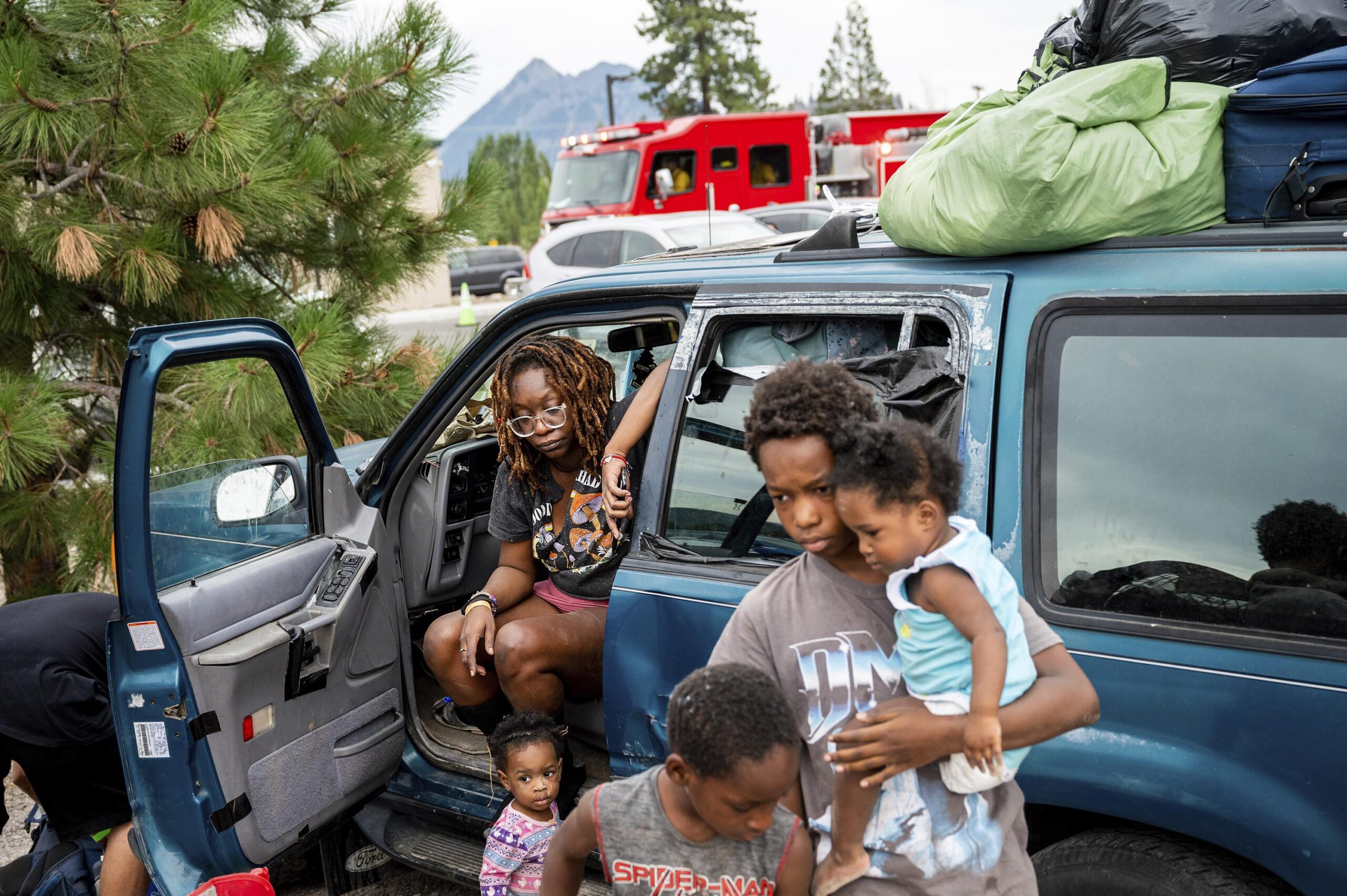
YREKA, Calif. (AP) — Two bodies were found inside a charred vehicle in a driveway in the wildfire zone of a raging California blaze that was among several threatening thousands of homes Monday in the western US, officials said. Hot and gusty weather and lightning storms threatened to increase the danger that the fires will keep growing,
The McKinney Fire in Northern California near the state line with Oregon exploded in size to nearly 87 square miles (225 square km) after erupting Friday in the Klamath National Forest, firefighting officials said. It is California’s largest wildfire of the year so far and officials have not determined the cause.
The vehicle and the bodies were found Sunday morning in the driveway of a residence near the remote community of Klamath River, the Siskiyou County Sheriff’s Office said in a statement.
Nearly 5,000 Northern California homes and other structures were threatened and an unknown number of buildings have burned, said Adrienne Freeman, a spokesperson for the US Forest Service.
The smoky blaze cast an eerie, orange-brown hue in one neighborhood where a brick chimney stood surrounded by rubble and scorched vehicles on Sunday. Flames torched trees along State Route 96 and raced through hillsides in sight of homes.
Valerie Linfoot’s son, a fire dispatcher, called to tell her their family home of three decades in Klamath River had burned. Linfoot said her husband de ella worked as a US Forest Service firefighter for years and the family did everything they could to prepare their house for a wildfire — including installing a metal roof and trimming trees and tall grasses around the property.
“It was as safe as we could make it, and it was just so dry and so hot and the fire was going so fast,” Linfoot told the Bay Area News Group. She said her neighbors have also lost homes.
“It’s a beautiful place. And from what I’ve seen, it’s just decimated. It’s absolutely destroyed,” she told the news group.
Firefighting crews on the ground were trying to prevent the blaze from moving closer to the town of Yreka, population about 7,500. The blaze was about four miles (6.4 kilometers) away as of Monday.
A second, smaller fire in the region that was sparked by dry lightning Saturday threatened the tiny California community of Seiad.
Freeman said “there has been significant damage and loss along the Highway 96 corridor” that runs parallel to the Klamath River and is one of the few roads in and out of the region.
She added: “But just how much damage is still being assessed.”
Erratic storms were expected to move through Northern California again on Monday with lightning that threatened to spark new fires in bone dry vegetation, forecasters said. A day earlier, thunderstorms caused flash flooding that damaged roads in Death Valley National Park and in mountains east of Los Angeles.
In northwestern Montana, a fire on the Flathead Indian Reservation that started in grasslands near the town of Elmo on Friday and moved into forested areas had grown to 20 square miles (52 square km) by Monday, fire officials said. Residents of about 20 homes were told to be prepared to evacuate.
The Moose Fire in Idaho has burned more than 85 square miles (220 square kilometers) in the Salmon-Challis National Forest while threatening homes, mining operations and fisheries near the town of Salmon. It was 23% contained Monday.
And a wildfire raging in northwestern Nebraska led to evacuations and destroyed or damaged several homes near the small city of Gering. The Carter Canyon Fire began Saturday as two separate fires that merged. It was about 30% contained by early Monday.
In California, Gov. Gavin Newsom declared a state of emergency Saturday, allowing him more flexibility to make emergency response and recovery effort decisions and to tap federal aid.
Scientists have said climate change has made the West warmer and drier over the last three decades and will continue to make weather more extreme and wildfires more frequent and destructive.
The US Forest service shut down a 110-mile (177 km) section of the famed Pacific Crest Trail in Northern California and southern Oregon and dozens of hikers in that area were urged to abandon their treks and head to the nearest towns.
___
Weber reported from Los Angeles. Associated Press reporters Amy Hanson in Helena, Montana; Margery Beck in Omaha, Nebraska; and Keith Ridler in Boise, Idaho contributed to this report.