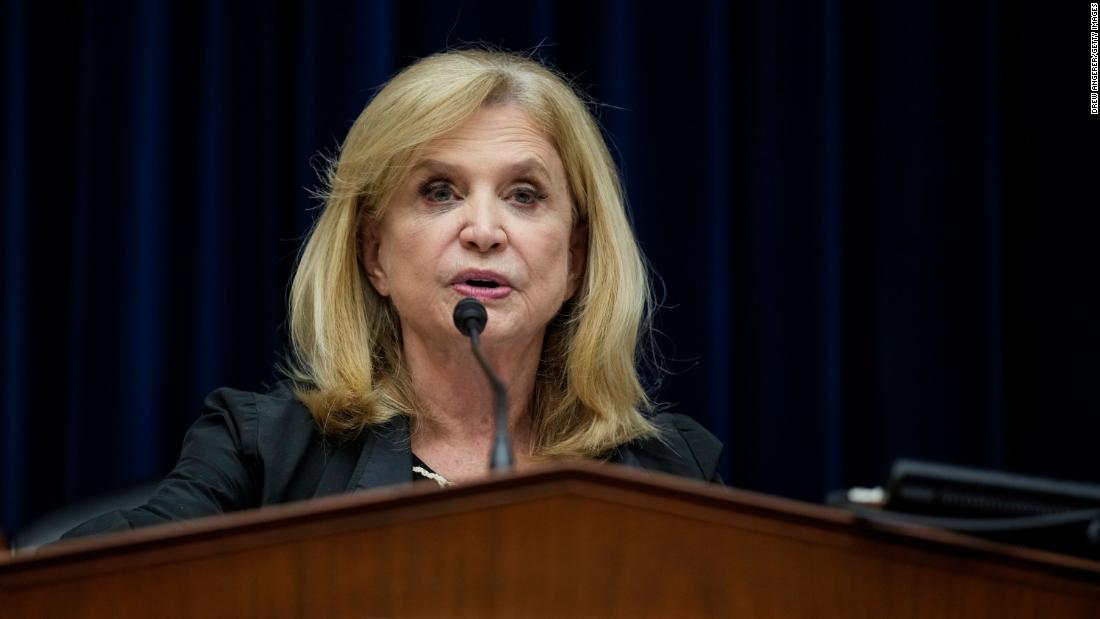
“I don’t believe he’s running for reelection,” Maloney said when asked if the President should run again during a congressional primary debate in New York’s 12th district.
Responding to the same question, Rep. Jerry Nadler, who is running against Maloney following redistricting, said it’s “too early to say” and that it “doesn’t serve the purpose of the Democratic Party” to deal with the question until after midterms . Maloney’s other opponent, Suraj Patel, simply answered, “Yes.”
Democrats have privately shared concerns about Biden, who is 79 and struggling with poor approval ratings, running for a second term in the 2024 election. The President and his aides de el have pushed back on any idea that he wo n’t run for a second term, and most Democrats have publicly said they will support Biden if he runs for a second term.
But a CNN poll out last month found 75% of Democratic and Democratic-leaning voters want the party to nominate someone other than Biden in the 2024 election, a sharp increase from earlier this year.
Democratic Rep. Dean Phillips of Minnesota went further than Maloney in an interview last week, stating he doesn’t want Biden to run for president in 2024.
“I have respect for Joe Biden. I think he has — despite some mistakes and some missteps, despite his age, I think he’s a man of decency, of good principle, of compassion, of empathy, and of strength. But to answer your question directly, which I know is quite rare, uh no, I don’t,” Phillips said in an interview on the Chad Hartman radio show on WCCO-AM.
“I think the country would be well served by a new generation of compelling, well-prepared, dynamic Democrats to step up,” Phillips added.
Egg lovers across the country may have to get used to seeing near-empty shelves, as Coles and Woolworths supermarkets continue to face shortages amid a decreased supply from farmers.
Over the course of the pandemic, Aussie customers have become accustomed to reduced supplies of essential food items, with eggs just the latest to be added to the list.
Coles has placed restrictions on eggs, with customers only allowed to buy no more than two cartons in one shop.
For more Food related news and videos check out Food >>
A Coles spokesperson told 7NEWS.com.au it was continuing to monitor supply and work hard with suppliers to improve availability.
“(We) will keep customers updated on any changes,” the spokesperson said.
Woolworths stores do not currently have any restrictions in place, with eggs continuing to be delivered into stores on a regular basis despite the constrained supply.
Woolies and Coles say they are continuing to work with suppliers to meet demand. Credit: Getty Images
A spokesperson attributed the shortage to a reduction in the output of locally produced eggs at a number of farms across the country.
“While we continue to deliver eggs to our stores regularly, customers may notice reduced availability at the moment and we thank them for their patience and understanding,” the spokesperson said.
“We’re in close contact with our suppliers and are working to increase the availability of eggs in stores as soon as possible.”
Australian Eggs managing director Rowan McMonnies said while some were pinning the blame on free-range eggs for the empty shelves, there is actually a host of contributing factors.
“Free-range production is more complex than other systems as there are more variables to manage, including seasonal weather conditions,” he said.
“Egg farmers are usually able to meet demand across the year through planning but COVID disruption has made this difficult.”
According to McMonnies, when lockdown ended last year, egg demand dropped significantly, which sent a signal to farmers that people did not want as many eggs.
The reason for the decrease in supply should not be boiled down to the production of free-range eggs, says Australian Eggs managing director Rowan McMonnies. Credit: Getty Images
However, demand has bounced back much faster than expected, and demand for eggs has increased over the past 12 months.
“Retail volumes are only down slightly on this time last year, which was at an elevated position due to the COVID lockdowns,” McMonnies said.
“Cafes and restaurants appear to have also bounced back faster than anticipated as diners have made up for lost time.”
McMonnies reassured customers that the egg industry was strong and that a range of production systems meant customers would continue to have a variety of choices.
“Egg farmers will respond to the current shortages to ensure demand will be met going forward.”
Jetpack Joyride, one of my favorite iOS games of all time, is getting a sequel that will be available exclusively on Apple Arcade. You’ll be able to play Jet Pack Joyride 2 on Apple’s $4.99-per-month games subscription service beginning August 19th.
Jet Pack Joyride 2 looks like it will carry over a lot of what you might know from the first; it’s a side-scrolling shooter where the goal is to dodge obstacles, survive as long as you can, and get a lot of coins. But Jet Pack Joyride 2 will also be a “story-driven experience” with new mechanics, according to an Apple press email — which is honestly enough for me to want to play it immediately.
If you want to get an idea of what you can expect, Apple has a trailer and some screenshots on the Jet Pack Joyride 2 App Store page. And if you want to brush up on your jetpacking skills before the sequel is released, check out the Arcade-exclusive Jetpack Joyride Pluswhich has no ads or in-app purchases, or the original Jetpack Joyride.
I look forward to driving the UFO.Image: Apple
If you feel like you’ve heard of Jet Pack Joyride 2 before, you’re not wrong. Developer Halfbrick soft-launched the game in select regions on iOS and Android in March 2021, according to Touch Arcade. Halfbrick pulled it from Google Play and the App Store on February 28ththough, saying it had “entered a new closed phase of development for an indefinite period.”
Apple is adding a few other games to Arcade in August as well, including Amazing Bombermanand Apple Arcade versions of My Talking Tom and Love You to Bits. But Apple announced in July that 15 games would be leaving the service, and as MacRumors observed, they’re now gone.
When Nigel Avery says he hasn’t counted New Zealand’s medal tally at the Commonwealth Games, it’s possibly because he hasn’t the time to.
With just under a week still remaining at the 2022 Games in Birmingham, the New Zealand team were already more than halfway to surpassing their medal tally from the Gold Coast four years ago – which was the country’s second-most successful performance.
Two more gold medals at the track in London on Tuesday (NZ time) by the dominant duo of Ellesse Andrews and Aaron Gate, and a backstroke win in the pool from Andrew Jeffcoat gave the Kiwis 13 gold already – they won 15 in 2018 and 14 at the 2014 event in Glasgow – and New Zealand tallied 26 in total by the end of day five.
Scott Barbour/Getty Images
David Liti is defending his 2018 title in Birmingham early on Thursday (NZT).
“I haven’t really counted them,” Avery, the NZ team’s chef de mission, said in Birmingham on Wednesday morning (NZ time).
“My dad has, he’s telling me ‘I think it’s going to be this’.
“With the cycling crew on the track down in London, that first day must have been one of their best ever – but they’ve had more of them. And likewise with swimming, their success has been outstanding.
“You’d probably have to say, even without ringing up the statistics, that we’re in pretty good shape. the [NZ athletes’] villages are really buzzing.”
So where to from here? New Zealand’s record Commonwealth Games gold medal haul of 17 from Auckland in 1990 is under serious threat and the team still have some huge gold medal chances in Birmingham.
Here are the pick of them, and when they will come for gold, in chronological order, as a big day six beckons for the team in black:
Phil Walter/Getty Images
Sam Gaze wins gold in the mountain biking in 2018.
Sam Gaze: Defends the men’s mountainbike crown he won in sensational circumstances four years ago but without competition from fellow Kiwi Anton Cooper this time, after Cooper withdrew the day before the race (which starts at 10:30pm Wednesday) with Covid-19.
David Litti: The team’s strongman will defend his +109kg weightlifting crown at 5:30am Thursday (NZT), and he might be required at the end of the Games to handle the extra medal baggage coming home.
Paul Cole: The world No 2 will be up against Joel Makin of Wales for men’s singles squash gold around 6am Thursday and then Joelle King will be seeking to rebound from her semifinal loss to chase gold in the women’s and mixed doubles, the latter in a formidable lineup with Coll. That gold medal match is early on Monday (NZT).
Ezra Shaw/Getty Images
High jumper Hamish Kerr of New Zealand.
Hamish Kerr: The men’s high jumper sprung to national attention with his bold showing at the Tokyo Olympics last year and showed that he wasn’t a flash in the pan when gaining bronze at the world indoor champs earlier this year. His final starts at 6am Thursday.
Lewis Clareburt: Already a star of the games, one of Wellington’s favorite sons looks primed to add a third medal in the men’s 200 individual medley at the pool (6.07am Thursday NZT). Out to stop him will be Australians Mitchell Larkin and Brendon Smith (second behind Clareburt in the 400IM), England’s Tom Dean (the Olympic 200 free champ) and Scotland’s Duncan Scott, who took bronze in the 400IM after beating Dean in the 200 free this week.
New Zealand’s Erika Fairweather starts in her best event, the 400m freestyle at 6.37am but is up against superstars Ariarne Titmus (Australia) and teenage Summer McIntosh of Canada.
Simon Stacpoole/Photosport
Maddi Wesche was a confident qualifier in the women’s shot put.
Maddi Wesch: The 23-year-oldis also chasing shot put gold, and she eased through qualifying, with her final scheduled for 7:05am Thursday. Wesche was seventh at the recent world champs and will fight out gold with Canada’s Sarah Mitton and Jamaica’s Daniell Thomas-Dodd. Mitton threw 27cm further than Wesche at the worlds in Oregon to finish fourth.
Aaron Gate and his fellow cyclists: Just because the track events have ridden off into the distance, doesn’t mean NZ aren’t eyeing up a handful more medals on the road.
Gate and fellow team pursuit gold medalist Tom Sexton will set off in the men’s time trial just after 11pm Thursday (NZT), as Gate bids to become the first New Zealand athlete to win four golds at one Commonwealth Games. On current form you wouldn’t bet against him.
The women’s time trial lineup is also stacked with potential winners/medallists: Henrietta Christie, Mikayla Harvey and Georgia Williams. The women race off in staggered starts from 9pm Thursday.
The women’s trio will be joined by Niamh Fisher-Black and Ella Harris in the women’s road race at 7pm Sunday (NZ time), while Patrick Bevin will be one to watch in the men’s event starting at 11:30pm the same day.
Christian Petersen/Getty Images
Tom Walsh is the warmest of gold medal favorites in the shot put.
Tom Walsh: The two-time Olympic bronze medalist is heavily favored to win his second Commonwealth Games men’s shot put gold on Saturday (6:06am NZT) and has fired a pre-competition warning to his rivals, including fellow Kiwi Jacko Gill.
Julia Ratcliffe: One of three NZ women’s hammer throwers in Birmingham, Ratcliffe won the title on the Gold Coast and she and team-mates Lauren Bruce and Nicole Bradley are contenders in Birmingham when the medals get handed out on Sunday (6am NZ time).
Jeremey Gunning admits he is worried people will think the worst of him.
He sits on a chair in the center of Ballarat’s Trades Hall, surrounded by a display of photographs which share the most personal and darkest moments of his life with the world.
“I seem confident, but on the inside, I worry about the judgement,” he said.
The photograph display shows Mr Gunning, with wild hair and a long beard, his dog, a large stack of firewood and his car and a 1970s van parked in the bush near Creswick.
Next to those images taken during his 18 months living homeless are others from some of his proudest and happiest moments.
Jeremey Gunning is sharing his journey through photos in a Ballarat exhibition. (ABC News: Rochelle Kirkham)
He accepts a scholarship at a Federation University event in one image and smiles with a group of people he is now working with in his role as a peer support worker at Uniting Ballarat.
Mr Gunning receives a study scholarship at a Federation University event. (Supplied: Federation University)
Homelessness Week exhibition
Mr Gunning’s story is part of the Experiencing Homelessness exhibition open to the public this week.
It aims to break down the stigmas of homelessness and encourage community action.
Mr Gunning took this photo on his first day of homelessness in the bush near Creswick. (Supplied: Jeremey Gunning)
He said his photo selection highlighted his journey from the bush to a unit in Creswick and how support from Uniting’s Street 2 Home program got his life back on track.
“I thought it was important to show people the generosity that is required to help people out of homelessness. It works,” Mr Gunning said.
Mr Gunning’s experience of homelessness began three years ago when he was battling depression, experiencing deteriorating physical health and lost his job.
Mr Gunning wants to break down stigmas of homelessness to encourage more kindness. (ABC News: Rochelle Kirkham)
He had worked his whole life but said he gave up when his issues felt overwhelming.
He bought a rundown van for $400 and headed out to the bush near Creswick, then Mount Franklin and Slaty Creek, with his dog.
Mr Gunning lived in a 1970s van he bought for $400.(Supplied: Jeremey Gunning)
He had no income and didn’t sign up for Centrelink benefits until Uniting Street 2 Home workers found him camped out and offered practical help and ultimately, a home.
Collecting firewood became a daily job to fuel the large fire that heated his van and cooked his food.
The smell of smoke masked his body odour.
Mr Gunning’s fire was his only cooking source while he was living in the bush.(Supplied: Jeremey Gunning)
“So many of my photos are of my fire,” Mr Gunning said. “It was pretty cold out there.”
He said his disability made it harder to get firewood so he adapted as he went along.
“The fire was a big part of my journey,” he said.
Mr Gunning’s dog was his companion while he lived in the bush.(Supplied: Jeremey Gunning)
Mr Gunning was diagnosed with spinocerebellar ataxia, a degenerative condition which causes problems with balance, co-ordination, slurred speech, muscle stiffness and cramps.
Uniting’s support to move into a unit led to improvements in his physical and mental health, a new study venture in community services and a job as a peer support worker with the program that helped him.
Mr Gunning’s exhibition features pictures taken while he was living rough.(ABC News: Rochelle Kirkham)
“It has been a funny week for me,” Mr Gunning said while looking at his display of photos with his son.
“There has been a lot of reflection and a lot of memories that have come up.”
He said everyone’s journey into, through and out of homelessness was completely different. Yo
“It is emotional, it is ours, we own it,” he said.
“By me doing this, I hope I am challenging the stigma that is attached to homelessness. I need to tell my story because there is stigma, and it needs to go.
Community call to action
Juelz Sanders organized the Experiencing Homelessness exhibition.(ABC News: Rochelle Kirkham)
Street 2 Home case worker and homelessness exhibition coordinator Juelz Sanders said the exhibition was an “incredible opportunity” for the community to listen and understand.
She said the situation was dire and services needed community help because they could not meet demand on their own.
Uniting Ballarat has had to turn away 570 people who were seeking help at reception so far this year, because there were no appointments left to meet them.
Senior manager homelessness Adam Liversage said it was concerning and heartbreaking for staff.
“That unmet demand is increasing, and we are projecting that there will be 1200 people we aren’t going to get to [by the end of the year],” he said.
“This is the first time we are seeing such a demand on our services.”
Adam Liversage says the demand for services is unprecedented.(ABC News: Rochelle Kirkham)
There are currently almost 180 households waiting for housing and support on the over 25s priority list in Ballarat, including 84 families.
“We are seeing interest rate increases and the median rental prices increase to $419 in Ballarat,” Mr Liversage said.
“That is unaffordable on any Centrelink benefit and for those on the average incomes as well.”
People feel judged
The Ballarat Experiencing Homelessness exhibition shares many other heartbreaking stories of homelessness.
Beck, not their real name, spent three years living in her car with her two dogs after a family relationship breakdown and violence and trauma in the family home.
“I think one of the hardest things for me when I was homeless was the way people look at you,” she wrote in a display for the exhibition.
“The way they would stare, or point, or mutter things, or look at you with pity or disgust.
“Many people assume you’re a drug addict or I hear them say ‘something is wrong with her that she is homeless’, but they have no idea what’s happened or is happening in your life.”
Mr Gunning’s photos show how support helped him through homelessness. (ABC News: Rochelle Kirkham)
Uniting Ballarat is hosting a Take Action Day on Friday to encourage residents to sign up to volunteer and donate items like sleeping bags, non-perishable food and blankets.
Ms Sanders said her biggest wish was for people to be kind and understanding of people experiencing homelessness.
“It is an incredible opportunity for us to listen as a community and for the community to really understand,” she said.
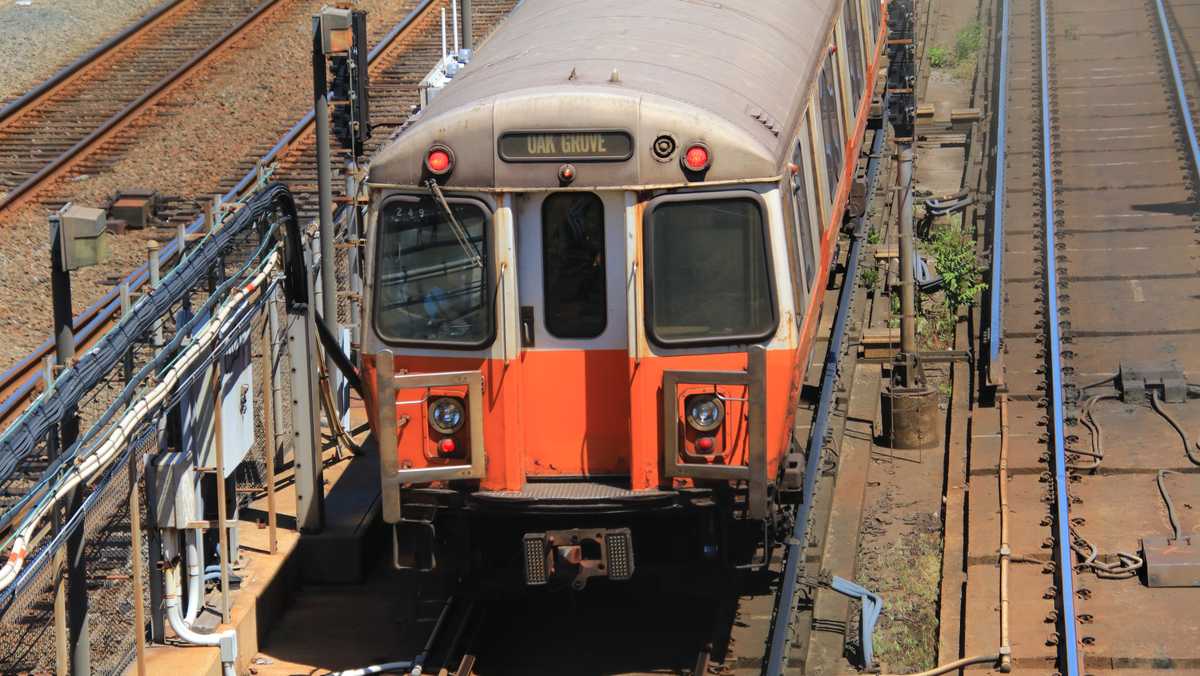
The Massachusetts Bay Transportation Authority is expected to announce a 30-day shut down of the Orange Line on Wednesday to address long overdue maintenance, sources tell 5 Investigates. The expected full-line shutdown comes as the transit agency grapples with federal mandates to improve safety across the system, which includes addressing deferred maintenance across the system. Mass. Gov. Charlie Baker was set to hold a press conference at 12:30 pm on Wednesday with MBTA General Manager Steve Poftak and MassDOT secretary Jamey Tesler to discuss “accelerated infrastructure upgrades to the MBTA to improve service, safety and reliability for riders.”Last week, the MBTA halted plans for a partial monthlong shutdown of a section of the Orange Line to allow officials more time to explore if additional work could be done during an extended shutdown. Service between Oak Grove and Wellington stations on the Orange Line was originally set to be suspended for track and signal maintenance before the MBTA announced the delay to the project. “The MBTA continues to prioritize safety enhancements and address additional track work and maintenance associated with the Federal Transit Administration directives,” the MBTA said in a statement last week. “This includes projects that address track conditions in need of most repair and those that currently have substantial speed restrictions.” One of four safety directives released by the Federal Transit Administration earlier this year highlighted a section of the Orange Line south of Tufts Medical Center that had been under speed restrictions since 2019. The MBTA has used previous short-term shutdowns to install hundreds of feet of new track on the southbound Orange Line tracks between Back Bay and Massachusetts Avenue stations. The construction allowed the MBTA to lift a speed restriction that was approximately 1,500 feet long, raising train speeds from 10 mph to 25 mph. “When all track work is completed in this area, the speed will be able to be increased to 40 mph,” the MBTA said. The Orange Line had an average weekday ridership of 102,358 passengers in May of 2022, according to stats provided by the MBTA. Only the Red Line carriers have more passengers, with an average of 129,050 customers on weekdays, according to MBTA stats. The Green Line averages 82,585 passengers on weekdays while the Blue Line averages 27,732. MBTA ridership stats since 2016Boston Mayor Michelle Wu, who suggested last week that longer MBTA shutdowns could be key to getting the system back to a better state, said it’s time to actually address the issues. “We can’t keep putting band aids on situations and trying to nibble around the edges,” Wu said. “We have to get down to real fixes.”Wu is an Orange Line rider herself. “For me, this is a very personal issue and so I want to make sure we are not just focusing on what needs to be done but doing it with the speed and thoroughness and comprehensiveness that our residents deserve,” Wu said. in service needs to have alternatives that would involve shuttle buses or other options,” Wu said. “That is where the city could be a real partner, so we will work very closely with the MBTA and provide any support if this is to happen.”Last week, an Orange Line train passenger jumped off a bridge into the Mystic River and dozens of other passengers evacuated through the windows of the MBTA train after it caught on fire on a bridge just south of Wellington Station. About 200 people were on the train at the time of the incident. Many evacuated through four windows on the train that were removed.
MEDFORD, Mass. —
The Massachusetts Bay Transportation Authority is expected to announce a 30-day shut down of the Orange Line on Wednesday to address long overdue maintenance, sources tell 5 Investigates.
The expected full-line shutdown comes as the transit agency grapples with federal mandates to improve safety across the system, which includes addressing deferred maintenance across the system.
Mass. Gov. Charlie Baker was set to hold a press conference at 12:30 pm on Wednesday with MBTA General Manager Steve Poftak and MassDOT secretary Jamey Tesler to discuss “accelerated infrastructure upgrades to the MBTA to improve service, safety and reliability for riders.”
Last week, the MBTA halted plans for a partial monthlong shutdown of a section of the Orange Line to allow officials more time to explore if additional work could be done during an extended shutdown.
Service between Oak Grove and Wellington stations on the Orange Line was originally set to be suspended for track and signal maintenance before the MBTA announced the delay to the project.
“The MBTA continues to prioritize safety enhancements and address additional track work and maintenance associated with the Federal Transit Administration directives,” the MBTA said in a statement last week. “This includes projects that address track conditions in need of most repair and those that currently have substantial speed restrictions.”
One of four safety directives released by the Federal Transit Administration earlier this year highlighted a section of the Orange Line south of Tufts Medical Center that had been under speed restrictions since 2019.
The MBTA has used previous short-term shutdowns to install hundreds of feet of new track on the southbound Orange Line tracks between Back Bay and Massachusetts Avenue stations. The construction allowed the MBTA to lift a speed restriction that was approximately 1,500 feet long, raising train speeds from 10 mph to 25 mph.
“When all track work is completed in this area, the speed will be able to be increased to 40 mph,” the MBTA said.
The Orange Line had an average weekday ridership of 102,358 passengers in May of 2022, according to stats provided by the MBTA.
Only the Red Line carriers have more passengers, with an average of 129,050 customers on weekdays, according to MBTA stats. The Green Line averages 82,585 passengers on weekdays while the Blue Line averages 27,732.
MBTA ridership stats since 2016
Boston Mayor Michelle Wu, who suggested last week that longer MBTA shutdowns could be key to getting the system back to a better state, said it’s time to actually address the issues. “We can’t keep putting band aids on situations and trying to nibble around the edges,” Wu said. “We have to get down to real fixes.”
Wu is an Orange Line rider herself.
“For me, this is a very personal issue and so I want to make sure we are not just focusing on what needs to be done but doing it with the speed and thoroughness and comprehensiveness that our residents deserve,” Wu said.
“Any disruption in service needs to have alternatives that would involve shuttle buses or other options,” Wu said. “That is where the city could be a real partner, so we will work very closely with the MBTA and provide any support if this is to happen.”
Last week, an Orange Line train passenger jumped off a bridge into the Mystic River and dozens of other passengers evacuated through the windows of the MBTA train after it caught on fire on a bridge just south of Wellington Station.
About 200 people were on the train at the time of the incident. Many evacuated through four windows on the train that were removed.
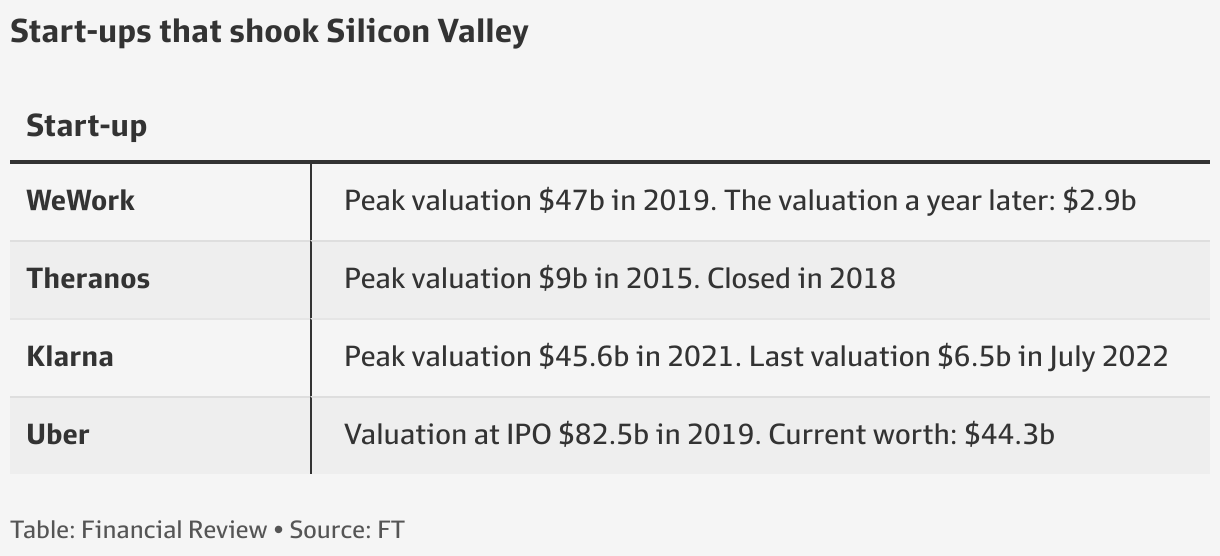
Fast-growing fintech company Block is down 78 per cent, after $US130 billion was wiped from its market value.
Many more will have to follow Klarna’s lead before the full extent of the reset sinks in. Despite some signs that people are getting more realistic about valuations, “we don’t yet have the full puking that’s required,” says Wolfe.
“Many companies are going to be in denial about the change in valuations until they run out of capital,” says David Cowan, a partner at US venture capital company, Bessemer Venture Partners.
Venture Capital’s deferred date with reality, when it comes, will be a watershed moment for the start-up sector. Investors of all stripes have crashed the clubby world of VC in recent years in pursuit of companies promising higher growth rates than those available on the public sharemarket.
Much of that investment poured in last year, as the valuations of private start-ups were hitting a peak. Hedge funds, private equity firms, sovereign wealth funds, corporate VCs and mutual funds between them supplied two-thirds of all the money that went into venture investing globally last year, according to data provider PitchBook.
If those bets sour, it could lead to a retreat by many of the newcomers drawn to venture investing. And that, in turn, could deliver a shock to a sector that has grown used to ever-increasing amounts of capital.
The scale of the most recent venture boom has dwarfed that at the end of the 1990s, when annual investment peaked at $US100 billion in the US. By comparison, the amount of cash pumped into US tech start-ups last year reached $US330 billion. That was twice as much as the previous year, which was itself twice the level of three years earlier.
The flood of money into the private markets was matched by an equal flood into IPOs.
According to US investment manager Coatue – one of a new band of “crossover” investors that moved from the public markets into the VC world – $US1.4 trillion found its way into promising growth companies globally last year, half of it in the form of venture capital and half through IPOs. That single-year surge, it calculated, was almost $US1 trillion more than the average of $US425 billion a year raised over the previous decade.
Fear of missing out
Carried along by this immense tide of capital, many venture capitalists now admit their market was overcome by a race to invest at almost any price – though most like to claim their own funds were able to sidestep the worst of the excesses.
“If there was one word to describe it, it was FOMO,” says Eric Vishria, a partner at Benchmark Capital in California. The “fear of missing out” he points to brought a stampede at the peak of the market. It wasn’t just the high prices investors were prepared to pay not to miss the boat: periods for conducting due diligence were drastically shortened and protections that investors usually build in to protect their investments fell by the wayside.
The steady economic expansion and relaxed financial conditions that followed the financial crisis more than a decade before had led many investors to view venture capital as a one-way bet, says Vishria. “Over the last 12 years, the right answer for almost every company was just to hold, and distribute [the shares] later,” he adds.
“The incentives were lined up for keeping companies private and doing bigger and bigger rounds [of funding]adds Phil Libin, a venture investor and former CEO of Evernote in Silicon Valley.
For company founders and employees, as well as the venture firms that backed them and the limited partners that supplied the capital, it looked like a gravy train. As valuations ratcheted higher, companies set up share-trading programs for employees and executives to cash in, and investors were able to mark up their valuations with each new round of capital.
As a result, according to Vishria, the venture capital industry became bloated. Many companies stayed private far longer than was usual for a start-up, drawing on private investors rather than moving to the share market.
The size of venture funds exploded as investors put ever-larger amounts of capital to work. And investment discipline was loosened, with VCs spreading their bets widely across entire sectors rather trying to single out the small number of big winners that had traditionally provided the lion’s share of the industry’s profits.
The new investors that set the tone as venture investments ballooned included SoftBank’s Vision fund, which ploughed $US100 billion into the market. Tiger Global, which spread its bets widely, at one stage held more stakes in $US1 billion start-ups than any other investor. Both have since disclosed shattering losses: the Vision Fund registered a one-year loss of $US27 billion in May, the same month it emerged that Tiger had lost $US17 billion.
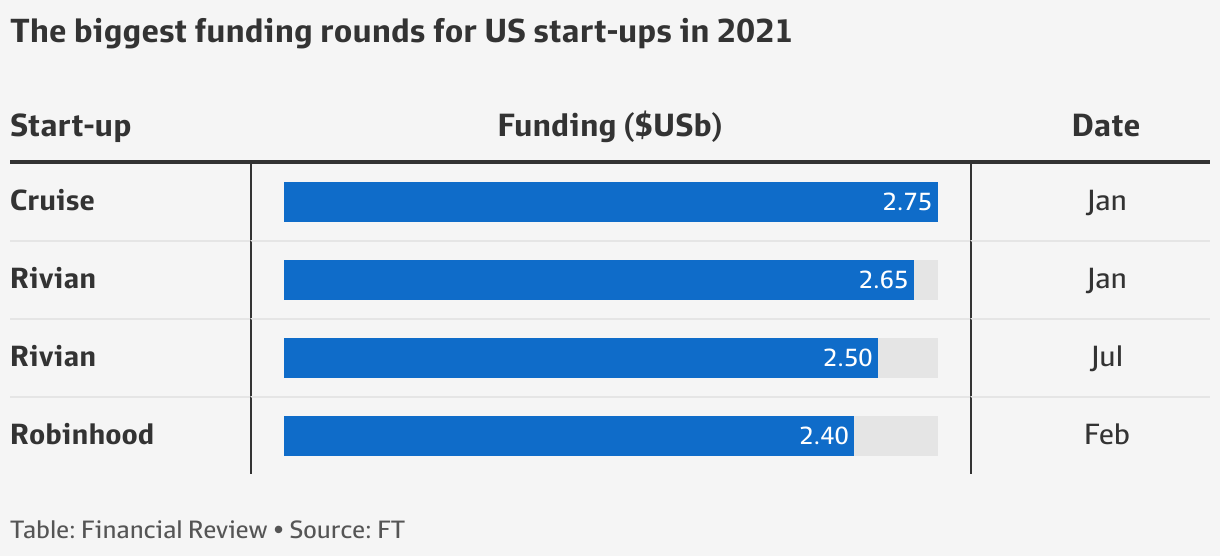
At the height of the boom, investors raced to back everything from electric vehicle companies such as Rivian, which raised more than $US5 billion last year, to fringe tech bets that gambled on significant scientific breakthroughs to generate a return, such as nuclear fusion.
“The inbound [interest] was insane,” with two or three unprompted offers of financing a week, says Jeremy Burton, a former top Oracle executive who now heads a private software company called Observe. Those approaches have stopped, he adds – a reflection of the deep chill that has failed over the venture market as entrepreneurs and investors wait for reality to sink in and a new consensus about valuation levels to take hold.
High-risk projects
The surfeit of capital pushed new fields of science forward at a faster pace. They included technologies such as quantum computing and driverless cars, “moonshot” projects that were once considered too risky or long term even for venture capital funds, which typically take a seven- to eight-year view.
Significant headway has been reported by start-ups in both fields, though the truly transformative breakthroughs that venture investors hoped for remain out of reach.
Block CEO Jack Dorsey, left, with Afterpay co-founders Nick Molnar and Anthony Eisen. Fast-growing fintech company Block is down 78 per cent, after $US130 billion was wiped from its market value.
That treasure chest also helped to open up risky new sectors of the economy to private start-ups. The amount of money flowing into commercial space start-ups, for instance, doubled last year to more than $US15 billion, according to engineering and analytics company BryceTech. In the middle of the last decade, annual investments were about $US3 billion a year.
Private investment has backed a flurry of novel rocket technologies, satellite systems and earth imaging services. But start-ups have also ventured on to the frontier of space exploration, says space analyst Laura Forczyk. With NASA planning a return to the moon, private companies hoping to ride in its wake are already plotting lunar activities that range from mining to building cloud computing centers.
“There’s a lot more commercial activity [in areas of space exploration and research that were once considered the province of governments],” says Forczyk. If the money dries up, “I don’t know if it’s going to be sustainable”.
Venture investors have been left reassessing bets in fields that were once considered among the hottest fields for start-ups.
Howard Morgan, chairman of New York venture firm B Capital, singles out the tech industry’s various attempts to revolutionize the transport sector as one cause of regret. The driverless car and electric scooter companies his firm invested in no longer look like they’re about to change the world, he says.
One company B Capital invested in, scooter company Bird, was valued at almost $US3 billion at the start of 2020. After going public late last year, and taking the total amount of outside capital it had raised to almost $900 million, Bird is now worth just $142 million. “We’ve realized maybe the world isn’t ready for as many of these things as we thought,” says Morgan.
Asked which sectors are likely to prove the biggest disappointments, most venture investors list the same handful: the ultra-fast US food delivery companies, such as Gopuff and Gorillas, that have set out to bring customers their grocery items in as little as 20 minutes ; fintechs that embarked on an expensive campaign to build large consumer businesses; and blockchain-based ventures that have been caught up in the crypto crash.
In a recent presentation to its investors, Coatue depicted the tumbling valuations it expects in the tech world as a series of dominoes that are only just starting to topple. It predicted that big losses would spread, starting with unprofitable internet companies and reaching deeper into the crypto and fintech sectors, before eating into more solid-seeming sectors such as software and semiconductors.
If predictions like these are correct, then investors who put the bulk of their funds to work at the peak of the market could be facing the sort of negative returns that have not been seen since the dotcom crash at the turn of the century.
In venture, timing is everything. The median venture fund that was raised in 1996, when the first internet boom was just gathering steam, returned 41 per cent a year over its life, according to Greenwich Associates, which tracks fund performance. But the median fund raised in 1999, at the peak of the bubble, went on to suffer a loss of 3 per cent a year.
A repeat of that performance could drive away many of the new investors who have recently been drawn to the market. Yet even if some, including SoftBank and Tiger Global, end up being less significant forces in future, several VCs predicted that the big investors who backed those firms will look for other vehicles to invest in, meaning that competition for investments will remain high.
Resetting expectations
For most tech start-ups, meanwhile, the world has just changed drastically. With a large amount of cash still sitting in existing venture funds, start-ups with proven businesses that are at no immediate risk from a weakening economy can still look forward to raising money on favorable terms.
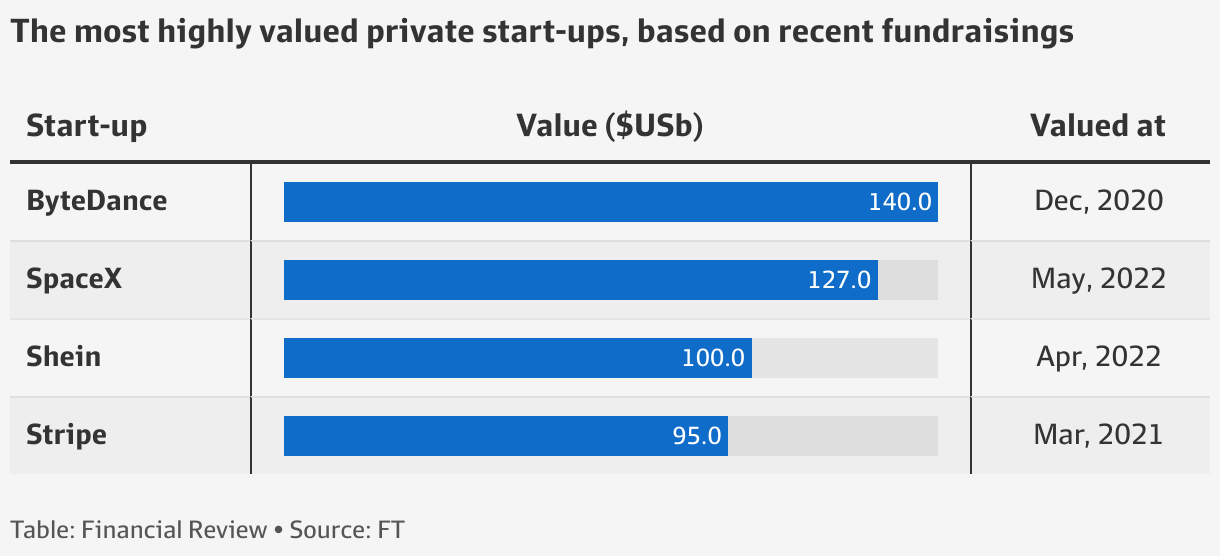
Elon Musk’s private space company, SpaceX, was valued at $US125 billion in its latest round of funding in June, up from $US74 billion in April last year.
But most others have little choice but to adjust their goals. The boom in capital raising has left many with plenty of cash in the bank to get through two or three years of a funding drought. Yet uncertainty about when capital will next be freely available, and on what terms, has fostered an inevitable caution.
Gopuff, which raised $US3.4 billion before the venture wave crested, is among the many well-capitalized start-ups that have moved to lay off staff and close facilities to conserve cash.
According to one Gopuff investor, the basic unit economics of its business – the amount of revenue it can generate on each order, relative to what that order costs – are sound. But the expensive race for growth that was once the goal of start-ups like this, no longer makes sense when capital becomes constrained.
A similar calculation is being made across the start-up world. Payback periods are shortening. Hyper-growth is no longer the order of the day.
Investors became accustomed to seeing successful software start-ups tripling their revenues in the early years, says Burton at Observe. With the reset in expectations, “I’m not sure that still holds.”
When his company gets past its early phase of product development and is ready to ramp up its marketing spending, he is already anticipating a less frenetic dash for growth: “It may be more measured or more economical growth, rather than growth at any cost, ” he says.
“There’s no question, growth at any price is gone for the next few years,” adds Morgan, of B Capital.
For venture investors, it may sound like a big step back after the go-go years are coming to an end. Yet, there is a reason for the equanimity many profess: a reset brings with it the chance to pay lower prices for future investments, to back start-ups that show greater financial discipline, and to face less competition from rival start-ups funded by deep-pocketed interlocutors, such as SoftBank.
Vishria at Benchmark sums up the hope: “All the pretenders and the speculators will get wiped out. We’ll have the believers and the builders.”
It’s an appealing vision that many venture investors – by definition among the professional world’s greatest optimists – subscribe to. But it is still far from clear how long it will take the venture capital market to reset, or how many of today’s investors and start-ups will still be standing when it does.
Last week, co-founder of F45 Training Rob Deutsch said there are “enormous issues” plaguing the gym franchise, after the company’s share price dropped over 60 per cent.
At first thought, I could have been forgiven for feeling like I ‘just got out of there in time’.
But in truth, after officially breaking up with F45 after nearly five years as a foundation member of my local studio just last month, I feel more sadness for a brand I still massively love and support.
“Never in my wildest dreams could I have imagined this,” Deutsch wrote in a since-deleted post on Instagram in response to the apparent downfall of the fitness empire he started in 2013.
READMORE:One thing Kelsey Wells wishes she knew about fitness 10 years ago
I first joined F45 as a foundation member of my studio in 2017. (Nine/Supplied)
“When I exited, and sold out of F45, I left a healthy, phenomenal, beast of a business. All the way from the company culture to the heart beat of the business… The workouts. F45 was special.”
What made F45 so special
I first joined my local F45 back in 2017 shortly after the studio had opened its doors, and was very quickly hooked.
The concept is super simple. Every F45 study in the world runs the exact same 45-minute class each day and no two workouts are ever the same. By varying the exercise type and the number of exercise stations, as well as the work time and rest time, you get something different every day.
The sessions incorporate functional movements (think squatting, lifting, pulling, pushing, jumping and twisting) that are designed to target fat loss and help to build and maintain lean muscle mass.
The classes alternate between HIIT-style cardio, strength training, or a hybrid mixture of the two.
I was completely hooked going five to six days a week. (Nine/Supplied)
It only took a month of attending five to six classes a week and I was all-in. I signed up to my first ‘8-Week Challenge’ and was able to lose over 8kg, even placing second in my studio.
I met F45’s global ambassador Cory George when he visited studios across Sydney during a trip Down Under, and eventually bought into the studio tech, wearing a LionHeart band that monitors performance (and ranks class participants) during each workout.
When COVID hit I remained a dedicated member, joining daily live workout sessions over Zoom, and was over the moon when the doors finally reopened after each lockdown, as I had missed the comradery and motivation that comes from being at a class in person.
READMORE:Is exercising at home as good as going to the gym?
Why I left F45
Deutsch’s post was flooded with comments from F45 franchisees and other devoted members, which provided some insight into the company’s collapse.
“The decisions they made during detrimental lockdowns was crushing to franchises,” one owner wrote.
While another member said: “What would you expect when it went public. It is what it is.”
For me personally, to be honest, the answer is probably a little underwhelming, as there was absolutely nothing wrong at my studio or with the trainers. They supported me through all the ups and downs of my ongoing fitness and health journey.
It came down to the simple fact that I was getting bored, and I wanted to shift my focus to strength training. I didn’t feel like I was progressing anymore.
I eventually said goodbye to F45 to try something new. (Nine/Supplied)
READMORE:Aldi’s new $50 smart watch could help you sleep better
“The body loves and responds most effectively to change. Repeating the same workout can actually reduce the effectiveness,” Ali Cavill, owner of Fit Fantastic, previously told 9Honey.
Plus, more and more research is showing resistance training is the way to go for a variety of reasons.
“If you’re wanting to increase your [muscle] shape and definition, then resistance training is by far the best way to do that,” Greg Stark, owner and trainer from Better Being, also told 9Honey.
In January I did a trial at a new gym that had opened in my area, and I officially canceled my membership with F45 last month.
It was bittersweet – and not as easy as I thought it would be, as I haven’t had to do much breaking up with people in the past. And let me tell you that’s exactly what it felt like!
I’m not saying I won’t ever go back, as I definitely still miss it. But for now, it was time for something new. I only hope the brand can turn it around.
Enter Altitude training
This week I officially hit 100 classes at AirLocker Training Penrith (which, full disclosure, is run by a family friend).
AirLocker provides strength and conditioning training at altitude, which it does by reducing oxygen in the room via innovative technology.
Workouts are set to about 13 to 14 per cent oxygen, as opposed to the regular 20 to 22 per cent level.
READMORE:The reason you might never reach your ‘goal’ weight
I’ve just hit 100 classes at AirLocker Training. (Supplied)
“When training at altitude, your oxygen levels in the blood are reduced and this produces an increase in red blood cell production,” Director of Performance Sandor Earl explains.
“Through that adaptation your body becomes more efficient at utilizing oxygen.”
In my time at AirLocker I have surprised myself with how much my strength and cardio fitness has improved in such a short period of time. And I was a relatively fit person going in.
Would definitely recommend for anyone wanting to mix things up!
For a daily dose of 9Honey,subscribe to our newsletter here.
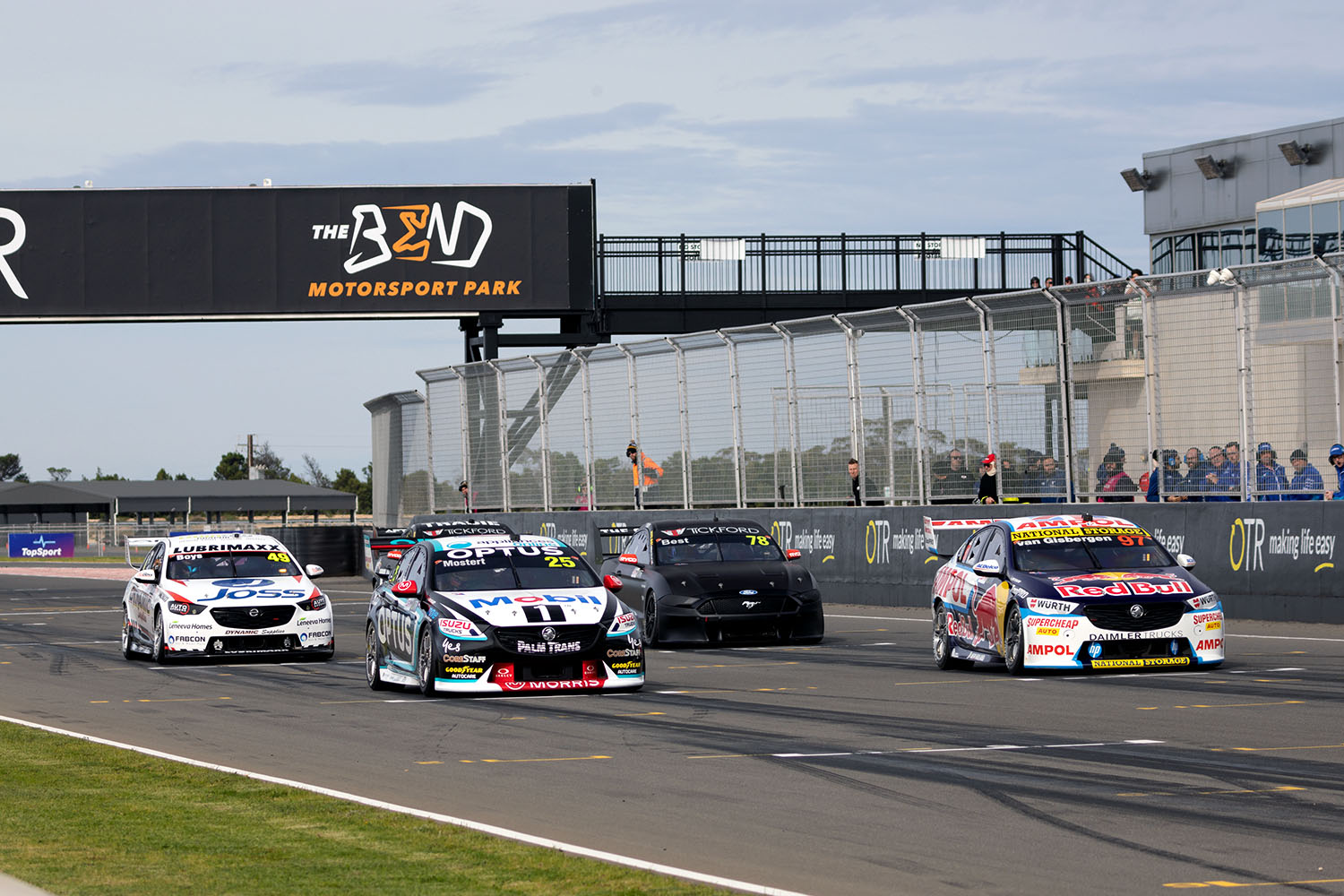
A shareholder in the consortium which owns Supercars is set to sell out.
Speedcafe.com understands that the stakeholder is in fact Sydney property tycoon Brian Boyd, who is also a part-owner in the Australian Racing Group (ARG).
It had been thought that ARG held a 30 percent share of Racing Australia Consolidated Enterprises (RACE), but Speedcafe.com now believes that the 30 percent in question is in fact separate holdings owned by Boyd and the Rogers’ respectively.
It is thus understood, contrary to an earlier report, it is not ARG itself which is selling a stake in RACE.
Barry Rogers has reaffirmed his commitment to Supercars amid the stakeholder sell-out and confirmed the Rogers-owned shares are not on the market.
“No, we’ve we haven’t sold any of our shares,” Barry Rogers told Speedcafe.com.
“We’re committed to the whole…we’re committed to all of motorsport, bloody oath we are.
“At this point, we’re committed to everything we do. We’re committed to a sharing holding in RACE, we’re committed our involvement with ARG and our share holding there.
“That’s sort of where we stand, but I can’t speak for others.”
On the so-called ‘ARG stake’, Rogers explained, “There’s two ARG people, being us, and a fellow called Brian Boyd, who is Payce.
“Between us, we’ve got a percentage of RACE, but they’re in our individual names.”
He elaborated, “I think, between us, we’ve probably got about just short of 30 percent stake; not remove 30 percent combined.”
The news that a shareholder is set to sell out follows a reportedly rejected takeover bid of Supercars from European company FanTech.
At the time, Barclay Nettlefold, Supercars’ chairman, acknowledged that a number of approaches have been made for the business but did not provide further detail.
Rogers penned an email to Supercars team owners in the wake of the reports, obtained by Speedcafe.com.
In that email, Rogers spoke of the fragmentation of the Australian motorsport landscape and a divide between Supercars and ARG, despite the common ownership.
RACE acquired Supercars last October, purchasing Archer Capital’s approximately 60 percent stake and the 35 percent of shares owned by the teams themselves.
A retired public servant has been sentenced to up to 16 years in jail for sexually exploiting children in the Philippines, with police saying his victims will never get back their “stolen childhoods”.
Key points:
Ian Schapel paid girls in the Philippines to perform sexual acts for him online
He was arrested after a routine search of his devices when he came back from overseas
His sentences on separate charges total 16 years
WARNING: This story contains content that readers may find upsetting.
Ian Ralph Schapel, 68, spent 13 years between 2007 and 2020 committing sexual offenses online, often while traveling in countries including America, Singapore and Vietnam.
He had pleaded guilty to 50 offences, including 41 counts of engaging in sexual activity with a child outside of Australia, using a carriage service to access child exploitation material and possessing child exploitation material.
On 74 occasions he engaged in sexual activity with at least 13 children in the Philippines over online platforms including Skype and WhatsApp.
The female victims were aged between three and nine.
Schapel also had more than 52,000 images and videos of child exploitation material in his possession.
Commonwealth prosecutor Krista Breckweg had told the court earlier that he would threaten facilitators or parents of his victims that if they did not meet his requests they would starve.
One of the victims is taken away by Filipino police after the facilitators were arrested.(Supplied: Australian Federal Police)
Australian Federal Police Detective Inspector Rodger Braun said five alleged abuse facilitators were arrested in the Philippines and 15 victims were rescued.
“We cannot give these children back their stolen childhoods, however we hope a conviction of this Adelaide man provides reassurance that the AFP and partner agencies will never stop our fight to bring predators to justice and protect children,” he said.
“Child sex offenders are not restricted by national or international borders, but neither are law enforcement agencies.
“We are united in our commitment to keep children safe.
“I’d also like to issue a warning to any individual who would seek to prey on children: the AFP and its partners will come for you no matter when the abuse occurred and no matter where you are in the world, there is nowhere for you to hide.”
‘Lonely man’ with mental health conditions
District Court Judge Paul Cuthbertson outlined payments for many of the sexual acts for sums of less than $40 on each occasion.
In sentencing, he took into account several factors, including his lonely life, being bullied at school and never being married or in long relationships with women.
There were also diagnoses of several mental health conditions, including schizoid personality disorder, hoarding disorder and adjustment disorder with depression.
But that did not lessen the seriousness of the charges, Judge Cuthbertson said.
“He must have known the consequences of his offending, the seriousness involved and he must have been aware that the financial position of those people would have driven parents and carers to proffer their children as a means to alleviate their economic plight,” he said.
Filipino police with one of the victims (in background) and one of the accused facilitators (foreground in pink).(Supplied: Australian Federal Police)
Material found during routine search
Schapel had flown back into Melbourne in February 2020 from an overseas trip when Australian Border Force officers conducted a routine search of his electronic devices and found child abuse material on his iPhone and iPads.
Released on bail, he went home to Adelaide, but was met at his home by officers from the SA Joint Anti Child Exploitation Team, who found numerous child abuse material inside the property.
A 17-year sentence for Commonwealth offenses was reduced due to his early guilty plea and assistance to authorities. He will now serve 15 years and three months, with a non-parole period of 10 years.
He received another nine-month sentence on state charges, bringing the total to 16 years.


:format(webp):no_upscale()/cdn.vox-cdn.com/uploads/chorus_asset/file/23917902/Jetpack_Joyride_2_Gameplay_06.png)