Categories
US

CDC expected to ease Covid-19 recommendations, including for schools, as soon as this week

A preview of the plans obtained by CNN shows that the updated recommendations are expected to ease quarantine recommendations for people exposed to the virus and de-emphasize 6 feet of social distancing.

The agency is also expected to de-emphasize regular screening testing for Covid-19 in schools as a way to monitor the spread of the virus, according to sources who were briefed on the agency’s plans but were not authorized to speak to a reporter. Instead, it says it may be more useful to base testing on Covid-19 community levels and whether settings are higher-risk, such as nursing homes or prisons.

The changes, which may be publicly released as early as this week, were previewed to educators and public health officials. They are still being deliberated and are not final.

In a statement to CNN, the agency said, “The CDC is always evaluating our guidance as science changes and will update the public as it occurs.”

As part of the expected changes, the CDC would also soon remove a recommendation that students exposed to Covid-19 take regular tests to stay in the classroom. The strategy, called “test to stay,” was recommended by the agency in December, during the first Omicron wave, to keep unvaccinated children who were exposed but didn’t have symptoms in the classroom instead of quarantining at home.
Millions of US children remain unvaccinated as BA.5 spreads and new school year looms

Test-to-stay was resource-intensive for schools, and some districts had voiced concerns about having enough money to continue, one source said.

In schools and beyond, the agency will no longer recommend staying at least 6 feet away from other people as a protective measure. Instead, the new guidelines aim to help people understand which kinds of settings are riskier than others because of things like poor ventilation, crowds and personal characteristics like age and underlying health.

The CDC is also set to ease quarantine requirements for people who are unvaccinated or who are not up to date on their Covid-19 vaccines. Currently, the agency recommends that people who aren’t up to date on their shots stay at home for at least five days after close contact with someone who tests positive for Covid-19. Going forward, they won’t have to stay at home but should wear a mask and test at least five days after exposure.

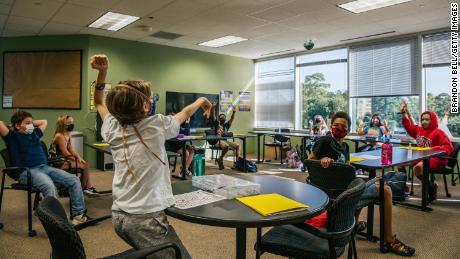
Most US public schools plan to keep masks optional for starting classes

People who are sick with Covid-19 should still isolate, the agency is expected to say.

The agency also plans to re-emphasize the importance of building ventilation as a way to help stop the spread of many respiratory diseases, not just Covid-19. It plans to encourage schools to do more to clean and refresh their indoor air.

Sources say the tweaks reflect both shifting public sentiment toward the pandemic — many Americans have stopped wearing masks or social distancing — and a high level of underlying immunity in the population. Screening of blood samples suggests that as December, 95% of Americans have had Covid-19 or been vaccinated against it, reducing the chances of becoming severely ill or dying if they get it again.

The CDC’s recommendations are not legally binding. Many cities, states and school districts will review them but may ultimately follow different strategies.

One example of this is masks in schools.

More than 200 million people — about 60% of the total population — live in a county with a “high Covid-19 community level” where the CDC warns of a risk of strain on the health care system and recommends universal indoor masking.
Yet most schools have kept masks optional for students this year. Among the top 500 K-12 school districts, based on enrollment, about 98% do not require masks, according to the data company Burbio’s school policy tracker.

Still, the agency’s guidance continues to be important as a baseline. When cities or states try to go beyond what the CDC recommends, they may face pushback.

.

Categories
Business

How a little-known stock soared 21,000 per cent to overtake Costco

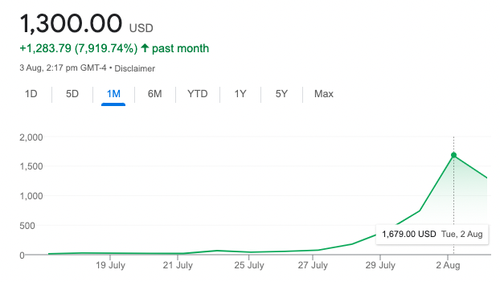
A little-known Hong Kong-based company appears to have become the latest obsession of traders on the popular Reddit forum WallStreetBets, helping its stock shoot up 21,000 per cent since its IPO less than a month ago.

Shares of AMTD Digital have spiked nearly 3,000 per cent over the past week, and were up 126 per cent on Tuesday alone.

The company debuted on the New York Stock Exchange on July 15, listing its shares at US$7.80 ($11.24) apiece. Since then, the price has jumped to US$1,679 ($2,419).

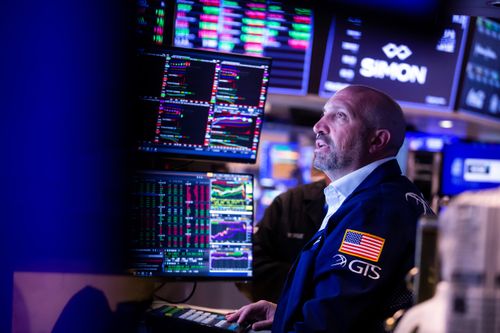
A trader works on the floor of the New York Stock Exchange. Photographer: Michael Nagle/Bloomberg via Getty Images (Bloomberg via Getty Images)

AMTD Digital is a financial services startup that trades on the New York Stock Exchange under ticker symbol “HKD”.

The company is an arm of AMTD Idea Group, an investment bank based in Hong Kong that is also listed in New York and Singapore. The unit was founded in 2019, and provides fintech services in Asia, including a virtual bank called Airstar.

AMTD Digital brought in just over US$25 million in revenue last year, according to a regulatory filing. And yet this week its market cap is more than US$310 billion, surpassing that of Shell and Costco and putting it closer to the size of Walmart and Exxon.

Even the company was scratching its head over the sudden surge.

“To our knowledge, there are no material circumstances, events nor other matters relating to our company’s business and operating activities since the IPO date,” the company said in a statement.
Even AMTD Digital managers were scratching their heads over the sudden surge. (Google Maps)

Its parent company has also benefited from the mania. AMTD Idea Group was the number one trade on Fidelity’s platform on Tuesday, and its stock jumped nearly 237 per cent in New York.

The frenzy is reminiscent of the January 2021 run-up in shares of GameStop and AMC, which both saw historic upticks after retail investors on the WallStreetBets subreddit seized on what they saw as the companies’ undervalued stocks.

One user on the forum pointed to the similarities Wednesday, asking whether this was “another GameStop AMC situation.”

“Where did AMTD Digital come from,” they wrote.

There appeared to be no specific reason for the rally, other than online users in recent days calling for people to pile into the shares.

It worked: on Tuesday, the company was one of the most traded stocks on Fidelity, according to the investment firm.

Categories
Technology

Porsche 911 GT3 R Race Car Revealed

Porsche has revealed the new 911 GT3 R at the 24 hours of Spa-Francorchamps which is based on the 992-generation of the 911 GT3. This GT3 racing series car has a larger engine, a more advanced aerodynamics package as well an optimized weight balance. After the introduction of a professional category for the GT3 class in 2024, the Porsche 911 GT3 R will be competing in the North American IMSA series as well as FIA WEC World Endurance Championship.

The power of the 911 GT3 R comes from a water-cooled, flat-six engine which has now been bored out to 4.2-litres from the road car’s 4.0-litre. This 992-gen-based engine produces 585 hp and is mated to a six-speed sequential constant-mesh gearbox. According to Porsche, this engine is better suited for gentleman racers. Power is sent to the rear wheels and it has steering-mounted paddles for quick shifts. The sports brake calipers by AP Racing have 390 mm front discs and 370 mm rear discs.

The altered suspension of the 911 GT3 R features heavy inspiration from the suspension set-up of the outgoing 911 RSR. Other features include a double-wishbone set-up in the front and a multi-link set-up at the rear. It also has KW shock absorbers with five adjustment settings. While the wheelbase is now 48mm longer. The car also comes equipped with 18-inch single-piece alloy wheels.

The body kit of the 911 GT3 R is balanced in terms of aerodynamics and style. The rear features a massive wing with a huge diffuser housing the exhaust in the center. Huge air intakes can also be seen next to the front and rear wheel arches. The front of the GT3 R is covered with a big splitter with two canards on each side of the bumper. The LED headlights of this car were developed for the 963 LMDh prototypes and the collimator technology of this light works as magnifying glass while in reverse.

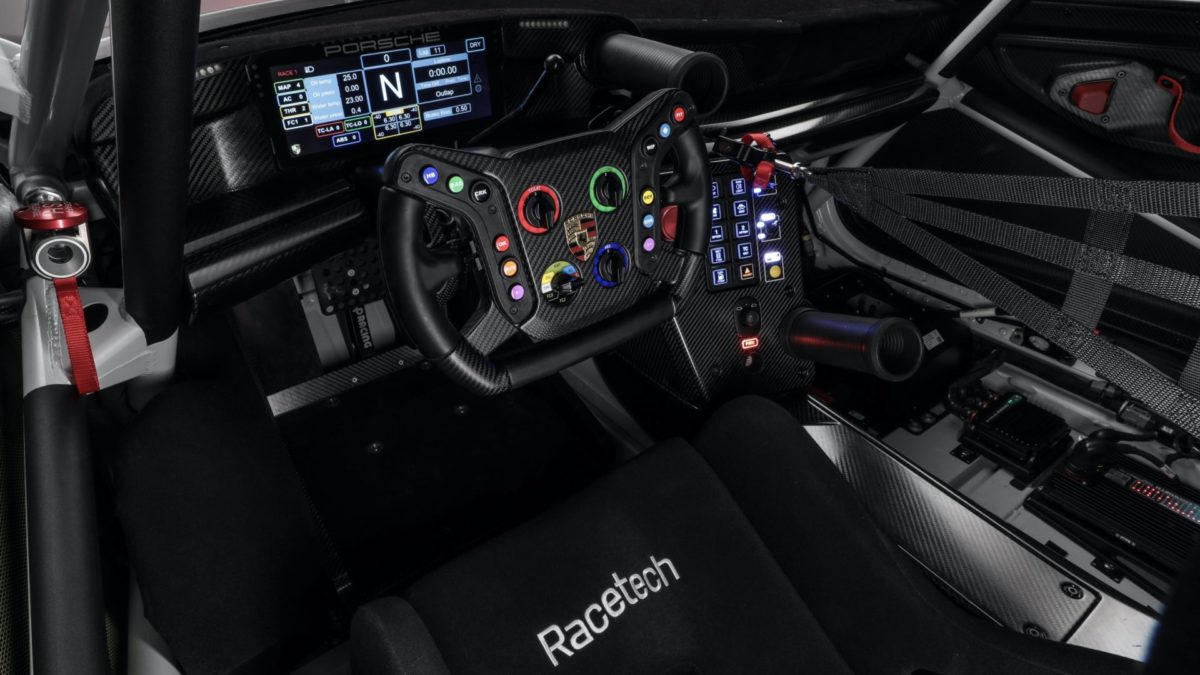
The interior of the 911 GT3 R features inward racing seats for an improved roll cage design and FIA’s newly developed side impact protection. Features include a 10.3-inch display behind the steering wheel with a multi-switch concept of the Le Man’s class winner. Debuted at the 24 hours of Spa-Francorchamps, the 911 GT3 R will participate in the 24 hours of Le Mans, as the FIA ​​WEC World Endurance Championship has made the GT3 class a professional category from 2024. It will also compete in the North American IMSA’s GT3 racing series.

Categories
Sports

Eileen Cikamatana makes history with weightlifting gold for Australia | Commonwealth Games 2022

At the Gold Coast Commonwealth Games, Eileen Cikamatana won weightlifting gold for Fiji. Four years later in Birmingham she repeated the achievement, this time for Australia.

Cikamatana represented her adopted country with a bang in Birmingham, setting new Commonwealth Games records in the women’s 87kg on Wednesday morning (AEST) and becoming the first woman to win gold medals for two different nations.

The 22-year-old made light work of her competition with incredibly heavy lifts. That included a Games-record snatch of 110kg and a second clean-and-jerk lift of 137kg, which was also a Games record.

Her total at that point was an overall Games record in the event and enough to win her the gold medal. But she went on to top that performance with a third clean and jerk of 145kg to bring her combined total to 255kg.

“I don’t know how to describe it… I can’t fit it into words,” Cikamatana told AAP afterwards. “I think it’s floating somewhere. I will need to grab it then I will let you know.”

Cikamatana grew up in a small village in Fiji, the country of her birth. As a child she helped her father de ella carry feed for the pigs he was looking after, and would lift 50kg sacks of meal mix and gas cylinders off and onto his truck.

She started weightlifting on the suggestion of a school teacher, and realized she also had the mental strength to match her physical strength.

“In training, it’s your mind that takes over the body, and you really need to focus because you’re lifting weights,” she told the ABC last week. “You really need to get into that relationship with you and the bar. Because weights are dead weight, they don’t have feelings, but you have feelings.”

Cikamatana’s rise as a teenager was swift, and at 15 she moved to New Caledonia to train with other top Pacific athletes. At 18, she burst onto the international scene with gold for Fiji in the 90kg. But the following year, after a dispute with Fiji’s weightlifting governing body over where she should train, she switched allegiances to Australia.

Visa red tape meant she wasn’t able to represent her new country at the Tokyo Olympics, but the signs in Birmingham point to good things for Australia at Paris 2024.

“If I miss out on this one, we can always go to the next one, which is 2024, and that’s our main goal,” she told the ABC. “This has been the greatest opportunity I’ve ever had, and to me it’s a dream come true,” she said. “To be representing Australia in green and gold is just beyond my imagination.”

Categories
Australia

Record coral cover on parts of Great Barrier Reef at risk from global heating, scientists warn | Great Barrier Reef

Marine scientists monitoring the Great Barrier Reef say they have recorded the highest levels of coral cover in 36 years in the north and central areas, but warned any recovery could be quickly overturned by global heating.

The Australian Institute of Marine Science’s annual long-term monitoring report says the fast-growing corals that have driven coral cover upwards are also those most at risk from marine heatwaves, storms and the voracious crown-of-thorns (COTS) starfish.

Global heating is accepted by scientists as the reef’s biggest long-term threat.

Earlier this year, unusually hot ocean temperatures caused the first ever mass bleaching during a La Niña year – a natural climate phase that should have given corals a respite.

The first ever mass bleaching on the reef was recorded in 1998, but since then corals were hit in 2002, 2016, 2017, 2020 and again earlier this year.

The prognosis for the reef’s future under climate change, the report said, was one of increasingly frequent and longer lasting marine heatwaves, with the ongoing risk of COTS outbreaks and tropical cyclones.

“Mitigation of these climatic threats requires immediate global action on climate change,” the report said.

A diver is towed over a reef as part of the monitoring program
A diver is towed over a reef as part of the Great Barrier Reef monitoring program. Photograph: Australian Institute of Marine Science

Dr Mike Emslie, who leads the Australian Institute of Marine Science monitoring program, told the Guardian: “The fact that we have had four bleaching events in the last seven years and the first one in a La Niña year is really concerning.”

Surveys are carried out by towing divers over reefs at a standardized rate, recording corals, bleaching levels, COTS and the number of coral trout and sharks.

About half of the 87 reefs surveyed for the report were carried out before the most recent bleaching event unfolded in February and March this year.

Sign up to receive the top stories from Guardian Australia every morning

“The effects of the 2022 mass bleaching event are still unfolding, and its impact will only be known over the coming months,” the report said.

Aerial surveys carried out in March by the Australian Institute of Marine Science and the Great Barrier Reef Marine Park Authority covered 750 individual reefs.

The fast-growing acropora Species of branching and plate-like corals that were pushing coral cover up were also preferred prey for COTS, he said.

Image captured by marine scientists during monitoring of Hyde Reef
Image captured by marine scientists during monitoring of Hyde Reef. Photograph: Australian Institute of Marine Science

In the northern parts of the reef, the monitoring data showed coral cover averaged 36% – a record high, with the lowest levels in the region at 13% recorded in 2017.

Coral cover averaged 33% in the central area – another record high compared to the 2019 low of 14%.

In the southern region, the average coral cover dropped from a 2021 estimate of 38% to 34%.

While bleaching was widespread across the reef in February and March, Emslie said the heat stress had not reached levels likely to cause corals to die.

“To get at the impacts [of the latest bleaching] we won’t know until we do in-water surveys over the next few weeks.

“But bleaching does have sublethal affects and will affect the physiology of the corals because while they bleach they have been starving.”

He said there was evidence that even when corals did not die from bleaching, the phenomenon could reduce their ability to reproduce, slow their growth and make them more susceptible to coral disease.

He said it could take a year or more for those sublethal effects to become apparent.

QuickGuide

How to get the latest news from Guardian Australia

Show

Photograph: Tim Robberts/Stone RF

Thank you for your feedback.

As bleaching events were happening more often, future bleaching events could “reverse the observed recovery in a short amount of time”, he said.

The most recent mass bleaching coincided with a UN monitoring mission to the reef that had been requested by the Morrison government as it attempted to fight a recommendation to place the reef on a list of world heritage sites in danger.

The status of the reef will be discussed at the next world heritage meeting, but a date has not yet been set after a scheduled June meeting was canceled due to Russia’s invasion of Ukraine. Russia was due to host the meeting.

Categories
US

Jackie Walorski, Indiana Congresswoman, Is Dead at 58

WASHINGTON — Representative Jackie Walorski, Republican of Indiana, was killed in a car accident in her district on Wednesday, according to her office. She was 58.

Ms. Walorski’s husband, Dean Swihart, was informed of her death by the Elkhart County Sheriff’s Office, her office said in a statement. “She has returned home to be with her de ella Lord and Savior, Jesus Christ,” the statement said ella. “Please keep her family in your thoughts and prayers.”

Ms. Walorski was traveling with two aides who were also killed in the crash, when a passenger car and a sport utility vehicle collided head on: Zachery Potts, 27, her district director, and Emma Thomson, 28, her communications director, according to the Elkhart County sheriff.

The House is in its summer recess, a period when lawmakers often return to their district to meet with constituents.

“Jackie was an instrumental member of our conference, serving as a member of my deputy whip team for several years,” Representative Steve Scalise, Republican of Louisiana, said in a statement. “Jackie and her staffers died serving her constituents. They will be missed, and our nation will miss their service.”

First elected to Congress in 2012, Ms. Walorski served on the House Ways and Means Committee and as the top Republican on the House Ethics Committee.

Before she was elected to Congress, she served three terms in the Indiana State House, spent four years as a missionary in Romania and worked as a television reporter in South Bend, Ind.

Categories
Business

Streets’ Golden Gaytime has teamed up with OAK

Two iconic Australian brands have joined forces to create a frozen treat that many will be lining up to get their hands on.

Golden Gaytime has teamed up with OAK to create a chocolate twist on the iconic ice cream.

The treat has an OAK-inspired ice cream centre, dipped in a layer of chocolate, and is smothered in Golden Gaytime’s famous delicious biscuit pieces with a choccy twist.

Streets spokeswoman Annie Lucchitti said: “Golden Gaytime has been an Aussie favorite for over 50 years and we’re known for some pretty impressive flavor experiences!

“Golden Gaytime OAK brings the iconic elements of Golden Gaytime together with the unmistakeable OAK Choc Milk flavor hit. It’s creamy, crumbly, choccy – delicious.

“It’s a crowd pleaser that’s for sure. We’re ecstatic to be bringing the next level of Golden goodness to market!”

The release of the new ice cream will be staggered, hitting the shelves exclusively at IGA and Ritchies stores on Thursday, August 4.

In September, Golden Gaytime OAK will be available in Coles, petrol stations and convenience stores.

The ice creams can be purchased in a box of four for $9.50.

It’s the latest collaboration from OAK, after Allen’s beloved Milk Bottles were transformed into OAK-flavoured lollies.

The confectionary company revealed in July the beloved brands were collaborating.

The Milk Bottles come in two OAK-inspired packs and come in two flavours.

One is an Oak-inspired iced coffee – a chocolate and malt blend.

The second is strawberry, with the new Milk Bottles being sold as standalone bags of lollies.

.

Categories
Technology

How analog AI hardware may one day reduce costs and carbon emissions

Are you unable to attend Transform 2022? Check out all of the summit sessions in our on-demand library now! Watch here.


Could analog artificial intelligence (AI) hardware – rather than digital – tap fast, low-energy processing to solve machine learning’s rising costs and carbon footprint?

Researchers say yes: Logan Wright and Tatsuhiro Onodera, research scientists at NTT Research and Cornell University, envision a future where machine learning (ML) will be performed with novel physical hardware, such as those based on photonics or nanomechanics. These unconventional devices, they say, could be applied in both edge and server settings.

Deep neural networks, which are at the heart of today’s AI efforts, hinge on the heavy use of digital processors like GPUs. But for years, there have been concerns about the monetary and environmental cost of machine learning, which increasingly limits the scalability of deep learning models.

A 2019 paper out of the University of Massachusetts, Amherst, for example, performed a life cycle assessment for training several common large AI models. It found that the process can emit more than 626,000 pounds of carbon dioxide equivalent — nearly five times the lifetime emissions of the average American car, including the manufacturing of the car itself.

At a session with NTT Research at VentureBeat Transform’s Executive Summit on July 19, CEO Kazu Gomi said machine learning doesn’t have to rely on digital circuits, but instead can run on a physical neural network. This is a type of artificial neural network in which physical analog hardware is used to emulate neurons as opposed to software-based approaches.

“One of the obvious benefits of using analog systems rather than digital is AI’s energy consumption,” he said. “The consumption issue is real, so the question is what are new ways to make machine learning faster and more energy-efficient?”

Analog AI: More like the brain?

From the early history of AI, people weren’t trying to think about how to make digital computers, Wright pointed out.

“They were trying to think about how we could emulate the brain, which of course is not digital,” I explained. “What I have in my head is an analog system, and it’s actually much more efficient at performing the types of calculations that go on in deep neural networks than today’s digital logic circuits.”

The brain is one example of analog hardware for doing AI, but others include systems that use optics.

“My favorite example is waves, because a lot of things like optics are based on waves,” he said. “In a bathtub, for instance, you could formulate the problem to encode a set of numbers. At the front of the bathtub, you can set up a wave and the height of the wave gives you this vector X. You let the system evolve for some time and the wave propagates to the other end of the bathtub. After some time you can then measure the height of that, and that gives you another set of numbers.”

Essentially, nature itself can perform computations. “And you don’t need to plug it into anything,” he said.

Analog AI hardware approaches

Researchers across the industry are using a variety of approaches to developing analog hardware. IBM Research, for example, has invested in analog electronics, in particular memristor technology, to perform machine learning calculations.

“It’s quite promising,” said Onodera. “These memristor circuits have the property of having information be naturally computed by nature as the electrons ‘flow’ through the circuit, allowing them to have potentially much lower energy consumption than digital electronics.”

NTT Research, however, is focused on a more general framework that isn’t limited to memristor technology. “Our work is focused on also enabling other physical systems, for instance those based on light and mechanics (sound), to perform machine learning,” he said. “By doing so, we can make smart sensors in the native physical domain where the information is generated, such as in the case of a smart microphone or a smart camera.”

Startups including Mythic also focus on analog AI using electronics – which Wright says is a “great step, and it is probably the lowest risk way to get into analog neural networks.” But it’s also incremental and has a limited ceiling, he added: “There is only so much improvement in performance that is possible if the hardware is still based on electronics.”

Long-term potential of analog AI

Several startups, such as LightMatter, Lightelligence and Luminous Computing, use light, rather than electronics, to do the computing – known as photonics. This is riskier, less-mature technology, said Wright.

“But the long-term potential is much more exciting,” he said. “Light-based neural networks could be much more energy-efficient.”

However, light and electrons aren’t the only thing you can make a computer out of, especially for AI, I added. “You could make it out of biological materials, electrochemistry (like our own brains), or out of fluids, acoustic waves (sound), or mechanical objects, modernizing the earliest mechanical computers.”

MIT Research, for example, announced last week that it had new protonic programmable resistors, a network of analog artificial neurons and synapses that can do calculations similarly to a digital neural network by repeatedly repeating arrays of programmable resistors in intricate layers. They used an “a practical inorganic material in the fabrication process,” they said, that enables their devices “to run 1 million times faster than previous versions, which is also about 1 million times faster than the synapses in the human brain.”

NTT Research says it’s taking a step further back from all these approaches and asking much bigger, much longer-term questions: What can we make a computer out of? And if we want to achieve the highest speed and energy efficiency AI systems, what should we physically make them out of?

“Our paper provides the first answer to these questions by telling us how we can make a neural network computer using any physical substrate,” said Logan. “And so far, our calculations suggest that making these weird computers will one day soon actually make a lot of sense, since they can be much more efficient than digital electronics, and even analog electronics. Light-based neural network computers seem like the best approach so far, but even that question isn’t completely answered.”

Analog AI not the only nondigital hardware bet

According to Sara Hooker, a former Google Brain researcher who currently runs the nonprofit research lab Cohere for AI, the AI ​​industry is “in this really interesting hardware stage.”

Ten years ago, she explains, AI’s massive breakthrough was really a hardware breakthrough. “Deep neural networks did not work until GPUs, which were used for video games [and] were just repurposed for deep neural networks,” she said.

The change, she added, was almost instantaneous. “Overnight, what took 13,000 CPUs overnight took two GPUs,” she said. “That was how dramatic it was.”

It’s very likely that there’s other ways of representing the world that could be equally powerful as digital, she said. “If even one of these data directions starts to show progress, it can unlock a lot of both efficiency as well as different ways of learning representations,” she explained. “That’s what makes it worthwhile for labs to back them.”

Hooker, whose 2020 essay “The Hardware Lottery” explored the reasons why various hardware tools have succeeded and failed, says the success of GPUs for deep neural networks was “actually a bizarre, lucky coincidence – it was winning the lottery.”

GPUs, she explained, were never designed for machine learning — they were developed for video games. So much of the adoption of GPUs for AI use “depended upon the right moment of alignment between progress on the hardware side and progress on the modeling side,” she said. “Making more hardware options available is the most important ingredient because it allows for more unexpected moments where you see those breakthroughs.”

Analog AI, however, isn’t the only option researchers are looking at when it comes to reducing the costs and carbon emissions of AI. Researchers are placing bets on other areas like field-programmable gate arrays (FPGAs) as application-specific accelerators in data centers, that can reduce energy consumption and increase operating speed. There are also efforts to improve software, she explained.

Analog, she said, “is one of the riskier bets.”

Expiration date on current approach

Still, risks have to be taken, Hooker said. When asked whether she thought the big tech companies are supporting analog and other types of alternative nondigital AI future, she said, “One hundred percent. There is a clear motivation,” adding that what is lacking is sustained government investment in a long-term hardware landscape.

“It’s always been tricky when investment rests solely on companies, because it’s so risky,” she said. “It often has to be part of a nationalist strategy for it to be a compelling long-term bet.”

Hooker said she wouldn’t place her own bet on widespread analog AI hardware adoption, but insists the research efforts are good for the ecosystem as a whole.

“It’s kind of like the initial NASA flight to the moon,” she said. “There’s so many scientific breakthroughs that happen just by having an objective.

And there is an expiration date on the industry’s current approach, she cautioned: “There’s an understanding among people in the field that there has to be some bet on more riskier projects.”

The future of analog AI

The NTT researchers made clear that the earliest, narrowest applications of their analog AI work will take at least 5-10 years to come to fruition – and even then will likely be used first for specific applications such as at the edge.

“I think the most near-term applications will happen on the edge, where there are fewer resources, where you might not have as much power,” said Onodera. “I think that’s really where there’s the most potential.”

One of the things the team is thinking about is which types of physical systems will be the most scalable and offer the biggest advantage in terms of energy efficiency and speed. But in terms of entering the deep learning infrastructure, it will likely happen incrementally, Wright said.

“I think it would just slowly come into the market, with a multilayered network with maybe the front end happening on the analog domain,” he said. “I think that’s a much more sustainable approach.”

VentureBeat’s mission is to be a digital town square for technical decision-makers to gain knowledge about transformative enterprise technology and transact. Learn more about membership.


Categories
Sports

Newcastle Knights, Adam O’Brien, David Klemmer future, news, latest, transfers, Sam Walker, Rabbitohs, Latrell Mitchell

The divide in the Newcastle dressing room has been simmering for the past few months with Knights coach Adam O’Brien telling the playing group after a recent loss: “I know what you blokes are saying about me. I’m going nowhere.”

The point blank message from O’Brien can be revealed as the Knights go into damage control in the wake of the coach’s loose carry press conference last Sunday.

O’Brien fronted the media again on Tuesday to try and walk things back off the cliff but by that stage the cracks in the Newcastle dressing room had been prized wide open.

The David Klemmer situation has only driven a further wedge into the struggling club which has only managed five wins out of 19 games this year.

Stream every game of every round of the 2022 NRL Telstra Premiership Season Live & Ad-Break Free During Play on Kayo. New to Kayo? Start your free trial now >

The Knights started this season full of optimism after back-to-back wins over the Sydney Roosters and Wests Tigers before going on a run of seven losses leading into Magic Round.

It’s been slim pickings since with Newcastle now having the worst defensive record in the NRL having leaked 522 points at an average of 27.47 points per game along with currently having the worst differential in the competition of minus 238 points.

There’s no question O’Brien’s penchant for a blow-up is wearing thin with elements of the Newcastle playing group.

The problem for O’Brien is in 2022 it’s so much easier to get rid of a head coach than it is to completely try and turn over a roster.

The old saying goes you’ve never really been a head coach until you’ve lost four games in a row and the heat is on – which is exactly where O’Brien finds himself now.

‘AT A TIPPING POINT’: Knights at a crossroads, O’Brien feels for running ‘soft ship’

David Klemmer’s future at Newcastle is clouded. NRL PHOTOSSource: The Daily Telegraph

The Knights are adamant O’Brien will remain as the head coach next season but the biggest immediate challenge the Newcastle coach faces is getting the playing group all back on the same page.

New Director of Football Peter Parr has arrived at Newcastle and could only be shaking his head at the bun fight he’s walked into.

O’Brien is signed with Newcastle until the end of 2024 which if the Knights stay the course would mean he’s had a five-year tenure at the club.

After the events of the past week it’s now become blatantly clear the Knights coach needs a fast start to next season to ensure his own job security.

Let’s call the Klemmer play from Newcastle for what it is – the Knights are clearly trying to free up some money to try and go in a different direction next season.

Klemmer is on $800,000-plus which would give Newcastle some serious money to go to the open market with.

Plenty of ex-players are happy to tell you middle forwards often protest against being dragged from the field.

Newcastle have clearly identified they no longer want the ex-NSW and Australian prop at the Knights and so have started the process of steering him towards another club.

Adam O’Brien has come under scrutiny this week. (Photo by Ian Hitchcock/Getty Images)Source: Getty Images

ROOSTERS MOVE TO LOCK UP WALKER

The Sydney Roosters are set to launch a multi-million dollar play aimed at keeping young gun halfback Sam Walker at the Tricolours long-term.

Walker, 20, will be a free agent for rival clubs to approach as of November 1 but like all the good clubs the Roosters will try and make sure they strike a deal well beforehand.

The other rookie who has everyone talking at the Chooks is emerging superstar Joseph Suaalii. The Roosters clearly value his contribution to the team at the point where champion frontrower Jared Waerea-Hargreaves has been bringing him into leading the club’s team song over the past fortnight.

Jared has long been the Roosters leader in charge of leading the team song. Even after the Roosters were disappointed with their round 20 win over Manly, JWH still insisted on Suaalii riding shot gun with him leading the celebrations.

Nofoaluma vows to honor Tigers deal | 01:16

MORE NRL NEWS

‘DONE 100’: Roosters star Keary’s confession reveals NRL big hip-drop problem

STADIUM WARS: NRL’s $800m threat to NSW govt over stadium funding backflip

‘VERY FEW LIVE BY 10 COMMANDMENTS’: Anonymous player blasts Manly seven

‘EMBARRASSING’: NRL slammed for ‘dumbest explanation’ over star’s non-charge

DRAGONS CHASE ROOSTERS HOOKER

THE Gold Coast Titans aren’t the only club having a crack at signing Sydney Roosters hooker Sam Verrills.

The St George Illawarra Dragons are also making a play for the premiership-winning no.9.

Where it gets interesting is the Dragons have had a tough conversation with current hooker Andrew McCullough.

McCullough, 32, still has a year to run on his contract next season but the Red V are clearly exploring going in a different direction.

McCullough is one of the ex-Broncos clique of Dragons players who enjoys a close rapport with Red V coach Anthony Griffin.

The hooker, Dragons captain Ben Hunt and Josh Maguire all played in an under 20s grand finale with the Broncos in 2008 when Griffin was the coach.

‘This is what gives me the s****!’ | 02:04

FARAH GETS HANDS ON IN TIGERS FRONT OFFICE

The Wests Tigers putting the band back together with Tim Sheens, Benji Marshall and Robbie Farah is a smart play from the struggling club.

What’s equally as smart is Farah’s new contract stipulating that he’s also set to learn the ropes in terms of front office administration with the club.

The Tigers have long been laughed at by rival clubs about the way the club has been run.

Getting a figurehead like Farah who has bled for the club more hands-on in this department makes a lot of sense.

SOUTHS MOVE TO KEEP LATRELL, CODY AT REDFERN

We told you last week how South Sydney had a delicate $6 million balancing act on their hands around the re-signings of superstar fullback Latrell Mitchell and five-eighth star Cody Walker.

We were told there was a big chance the two key position players would wait until after November 1 to re-commit to South Sydney.

The Rabbitohs have swiftly moved to try and nip the scenario in the bud by meeting with the star duo earlier this week.

Both Latrell and Cody are off-contract at the end of next season but with talks progressing positively there’s every chance they can soon re-commit to the Bunnies.

It will be a huge coup for the red and green club and also for CEO Blake Solly.

.

Categories
Australia

Mildura Airport says instrument landing system will be used only a handful of times per year

Mildura Airport bosses have revealed a new multi-million-dollar navigation system will only be used “a maximum of two or three times” per year outside of training purposes.

The $4 million category 1 instrument landing system (ILS) began to be installed at the airport last year with a promise that it would reduce flight delays caused by fog and low visibility.

It was funded by the federal government, local council, and the airport, and is expected to be operational by early next year.

loading

Airport chief executive Trevor Willcock said the system was installed primarily for safety to help land planes when visibility is low, but he said this may only occur “a maximum two or three times per annum.”

“But there’s no price you can put on safety,” he said.

“We at all times want this to be the safest airport possible.”

foggy rationale

In July, a QantasLink plane arriving from Melbourne was forced to fly west of Mildura for 40 minutes before flying back to Tullamarine airport due to foggy conditions.

Passengers were stuck on the flight for more than three hours.

Mr Willcock said it was “very hard to say” if the system would have helped in that instance because fog changes quickly in depth and density.

“But that’s what the ILS is for, so we have to assume that they would have been able to land [if the ILS was operational],” he said.

“Most airports in the world have [an ILS] so they certainly do enhance the ability to land in poor weather conditions.”

Maintenance and testing of the ILS is also expected to cost the airport more than $100,000 per year.

Pilot says system won’t work

However, Mildura-based airline captain Andrew Carrigan, who has more than 20 years of experience flying regional airliners, said the ILS would not have made a difference in July.

“It really annoys me that they are putting it out there as a safety thing, it’s not really,” he said.

“It won’t allow us to land in fog.”

a tree and two houseboats on a river are visible in the foreground with the background shrouded in fog
Mildura is affected by foggy mornings during winter, such as on this occasion in July 2020.(ABC Mildura-Swan Hill: Christopher Testa)

Mr Carrigan said to legally land an airplane with the assistance of an ILS in Mildura, visibility would need to be at least 1,500 meters.

“I was supposed to work that day so I was monitoring the automatic weather service,” he said.

“The fog was ranging from 300-900 meters for most of the day, with the occasional foray to around 1.2 kilometers or 1.3km.

“But they were very narrow windows. So the chances of plans getting in on that morning were minor.

“You would have to be extremely lucky to get a five or 10-minute window where the visibility would get close to a level where you could land.”

Mr Carrigan said in addition to a category 1 ILS larger airports like Sydney Airport also had high-intensity approach and runway lighting which allow pilots to land with a minimum visibility of 800 metres.

He said without the lighting the ILS would make minimal difference to passenger planes in Mildura.

“What I’m scared of is when [the ILS is] operational and we aren’t able to land in fog. People are going to ask, ‘Why not when we were told it would allow that?'”

Mr Carrigan said these were his personal views and not the view of his employer.

Nothing to do with flying school

Anne Webster, Simon Clemence and Michael McCormack smiling in a photo with Chinese pilots.
Anne Webster, Simon Clemence, Michael McCormack, and three pilots at Mildura Airport when the first funding announcement was made for the ILS in 2019. (Facebook: Dr Anne Webster MP)

Mr Willcock said a secondary reason the ILS was installed was to help flying school students train in Mildura.

To receive a commercial pilot’s license students are required to have experience using an ILS.

Mr Willcock said nine flying schools were within range of the airport and could use the ILS for training purposes, with a booking system and strict restrictions on what times it could be used.

A sign that reads "Mildura Welcomes You" along with a photo of a group of people smiling outside the Mildura Airport.
A plane flying in the air over Mildura Airport in 2020.(ABC News: Christopher Testa)

Chinese-owned company International Aviation Alliance also started training pilots at Mildura Airport in 2019 under a 10-year tenancy agreement.

However, Alliance CEO Simon Clemence said the ILS would be of minimal benefit to its flying school.

He said students were required to undertake “long navigation” flights which they would combine with ILS training at airports in Melbourne or Adelaide.

“It has absolutely nothing to do with the flying school,” he said.

Worth the funding, MP says

The ILS first received funding from the federal government in April 2019, 21 days before a federal election.

Mildura Rural City Council committed $1 million in June 2020 and the airport also contributed $1 million.

Nationals Mallee MP Anne Webster said Mildura Airport deserved the same safety standards as other airports and even if it was used only once a year the ILS was worth funding.

.